

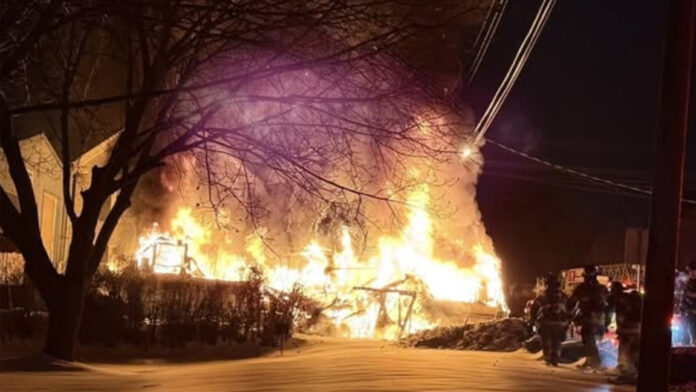
A recent RV fire in Pennsylvania turned deadly after investigators linked the blaze to a portable space heater. According to authorities, the fire spread quickly inside the RV, and despite a desperate rescue attempt, a woman lost her life.
It underscores a hard truth about cold-weather camping: Space heaters can be far more dangerous in RVs than many people realize.
Portable electric heaters are common in RVs, especially when hookups are available and propane use is something owners try to limit. They feel familiar, inexpensive, and safe. After all, many of us use similar heaters at home. But an RV is not a house, and the differences matter.
Why space heaters are riskier inside RVs
RV electrical systems are lighter-duty than residential wiring. Most portable space heaters draw close to 1,500 watts and often run for long, uninterrupted stretches. That sustained load can overheat outlets, wiring, or breakers that were never designed for it.
The reality is that many RV outlets are built for speed and cost, not heavy continuous loads. They simply don’t have the same backbone as typical residential outlets—and they aren’t meant to handle hours of sustained draw from a space heater.
Space also works against you. RV interiors pack furniture, curtains, bedding, clothing, and pet gear into close quarters. Keeping recommended clearances around a heater is harder than it sounds, and heat builds faster when airflow is limited.
Movement adds another layer of risk. Even when parked, RVs experience vibration and shifting over time. That can loosen plug connections, increasing resistance and heat right where electricity enters the heater. Fires don’t always start with sparks—sometimes they smolder quietly inside a wall or outlet.
And then there’s human nature. Heaters get left on overnight. They run while someone steps outside “just for a minute.” In an RV, those habits leave very little margin for error.
If you feel you must use a space heater
The safest choice is always your RV’s built-in heating system, which is designed for the space, wiring, and ventilation. But if you decide to use a portable electric heater, a few guardrails matter.
- Use only heaters with tip-over protection and automatic overheat shutoff.
- Plug the heater directly into a wall outlet—never into a power strip or extension cord.
- Keep clear space around it, especially from bedding, curtains, and clothing.
- Limit use to one heater per circuit, and stop immediately if an outlet feels warm to the touch.
- Turn heaters off before sleeping or leaving the RV, even briefly.
- Make sure smoke alarms work and a fire extinguisher is easy to reach—not buried in storage.
If breakers trip repeatedly, or a plug or outlet shows discoloration or heat damage, stop using the heater. Those aren’t annoyances; they’re warnings.
Safer ways to stay warm
Often, reducing heat loss is safer than adding more heat. Window insulation, vent pillows, skirting, and sealing drafts can make a noticeable difference without stressing electrical systems. When temperatures drop sharply or hookups are limited, the RV furnace—despite its propane appetite—remains the safest primary heat source.
Tragic fires like this one are rare, but they are not flukes. They happen when everyday devices are used in spaces they were never designed for. In an RV, staying warm should never come at the cost of safety—and a little extra caution on cold nights can make all the difference.
RELATED
- Tiny space heater comes in handy in an RV
- Space heaters under motorhome lead to fiery explosion
- Ask Dave: What is the best RV fire extinguisher?
- Watch RV fire unfold from above in sobering drone footage
- All about RV fire extinguishers
- Cautionary RV tale: Man blown out of rig fighting RV fire
RVT1247b

Good report with even better warnings.
Thanks R & T !
My 17 ft allelectric LilSnoozy came w/a 1000/1500 watt electric spaceheater I replaced it w/a 60 watt spaceheater from Amazon In cold weather I use a curtain to wall off the bed turning the bed into a warm queen sized bedroom Small spaces are easier to keep warm than big ones-body heat may suffice. Since heat rises the heater is kept on the floor I use a NASA developed mattress cover to conserve heat & in winter we use fleece (not flannel) bedding. New: I intend to try an electric blanket. Another safety rule I occasionally check the cord plugin for heat and unplug anything that’s hot for 12 hours
They should make RV manufactures follow the same electric code as homes. The elect receptacle’s in Rv’s are terrible. Plus RV’s and all buildings should have fire resistant materials. RV’s should also have 100 amp service. We just had a new hospital go up in flames, not sure what started it. But having almost half a hospital be total loss in an hour is unacceptable. Luckily everyone including patients got out.
Hi Bob, but think about the added cost and how the vast majority of people use RVs. I’m all for educating people but not for forcing more regulations because of something like this that represents an infinitesimally small percentage of rv usage. It’s so much easier IMO to encourage people to use 750 watt max space heaters than to demand compliance for something that represents a fraction of a fraction of a percent in actual tragic outcomes.
The big problem with most of the space heaters is they do not shut off when the set temperature is reached. Only the fan slows down but the element whether resistive or ceramic is still drawing a lot of power.
That and the fact that most people put them on the floor. The air near the floor is colder so the heater runs full blast most of the time.
We have an older ceramic that actually shuts down completely, fan and element when the temp is reached.
It also oscillates. It sits either on the countertop or table. Not on the floor.
Not saying it’s completely safe.
An oil filled heater (radiator) is a ‘safer’ alternative since most have two or three power settings.
I use the little electric heater in my Airstream, low setting. Just enough to knock the chill off. If cold outside, we turn on the propane. This last cold snap in DFW we wish Airstream had heat strips built into their A/C units, I guess it is too expensive for Airstream to offer this option.
We prefer a Wave 3 running on propane over our 1,000 watt electric heater. We also carry a Wave 6 for really cold weather.
We don’t have pets and only camp with our grandchildren in the summer.
From the article:
“The reality is that many RV outlets are built for speed and cost, not heavy continuous loads. They simply don’t have the same backbone as typical residential outlets—and they aren’t meant to handle hours of sustained draw from a space heater.”
Question: Can we replace the cheap RV outlets with heavy-duty outlets?
A 1500 Watt heater, on 120 volts, would draw 12.5 amps. A 15 amp circuit is designed for 12 amps, which is 80%. So that size heater should be on a 20 amp circuit. If the wiring is not up to (house) code, and the outlet is the usual, really cheap, RV outlet, there are a several failure points involved. I’m not surprised that there are fires from a situation like this.