

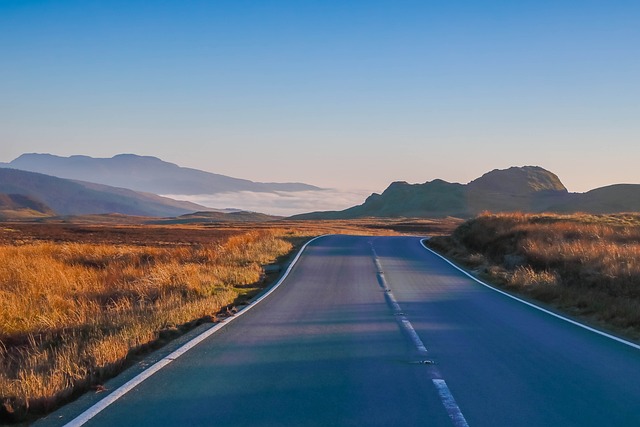
It is the route that helped invent cross-country driving, and I think the Lincoln Highway (or at least parts of it) should be on your RV bucket list.
Launched as a marked transcontinental route in 1913, the Lincoln Highway originally ran from Times Square in New York City to Lincoln Park in San Francisco. It was intentionally promoted as the first improved, coast-to-coast motor route in the U.S.
Location

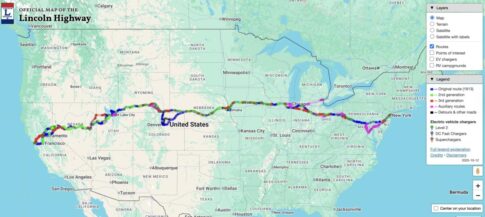
The original Lincoln Highway followed an approximate east–west line across the country. It passed through the Northeast and across the Midwest and Rockies to California.
States typically associated with the original routes include New York, New Jersey, Pennsylvania, Ohio, Indiana, Illinois, Iowa, Nebraska, (a Colorado loop), Wyoming, Utah, Nevada, and California.
Today, you can follow modern U.S.-numbered roads, preserved old alignments, scenic byways, and local “Lincolnway” streets to recreate the route.
For detailed, mile-by-mile routing and pullouts, the Lincoln Highway Association maintains an interactive official map and route resources that RVers can use to plan days and campsites. (Watch this instructional video to discover how the route resources work.)
 The highway’s name

The Lincoln Highway’s name came from early promoters who wanted a patriotic, headline-friendly title for America’s first coast-to-coast auto road.
Henry B. Joy and Carl Fisher (two of the project’s boosters) chose Abraham Lincoln’s name in 1913 as a unifying symbol. The Lincoln Highway was pitched as a national memorial to Lincoln and hoped to stimulate good roadbuilding across states.
The Lincoln Highway Association (LHA) was founded in 1913 to map, promote, and encourage improvement of the route.
Age and condition
The Lincoln Highway was dedicated in 1913, so it’s been part of American road lore for more than a century. Over the decades, many original stretches were replaced or absorbed into the U.S. Numbered Highway system (notably US-30 in the Midwest and US-1 in parts of the East). Later, parts of the route were merged into the Interstate system (I-80 parallels large swaths of the western route).
Today’s Lincoln Highway is a mix. Some sections are fast, modern two-lane or divided highways well-maintained by state DOTs. Other fragments are historic original pavement (brick or early concrete), county roads, and commemorative byways maintained for tourism.
If you take your RV on the Lincoln Highway route, you can expect everything from smooth highway cruising to narrow brick or gravel stretches, which are best taken slowly and with caution in a big rig.
Top five “must-see” stops
• Times Square and the eastern terminus (New York, NY) is the symbolic start of the Lincoln Highway. Even if you don’t want to wrestle an RV into Manhattan, it’s worth seeing the eastern origin of the road as a historical anchor for your trip. The LHA and many guidebooks mark where the original transcontinental route began, which makes a neat photo op or story-starting point. You’ll find the eastern terminus at 42nd Street in Times Square.
• In Ohio, the road is marked as the Lincoln Highway Historic Byway. As such, it includes more than 40 points of interest. Just outside East Canton, Cindell and Baywood streets preserve original red-brick paving you can actually drive or bike. They run alongside the newer highway.
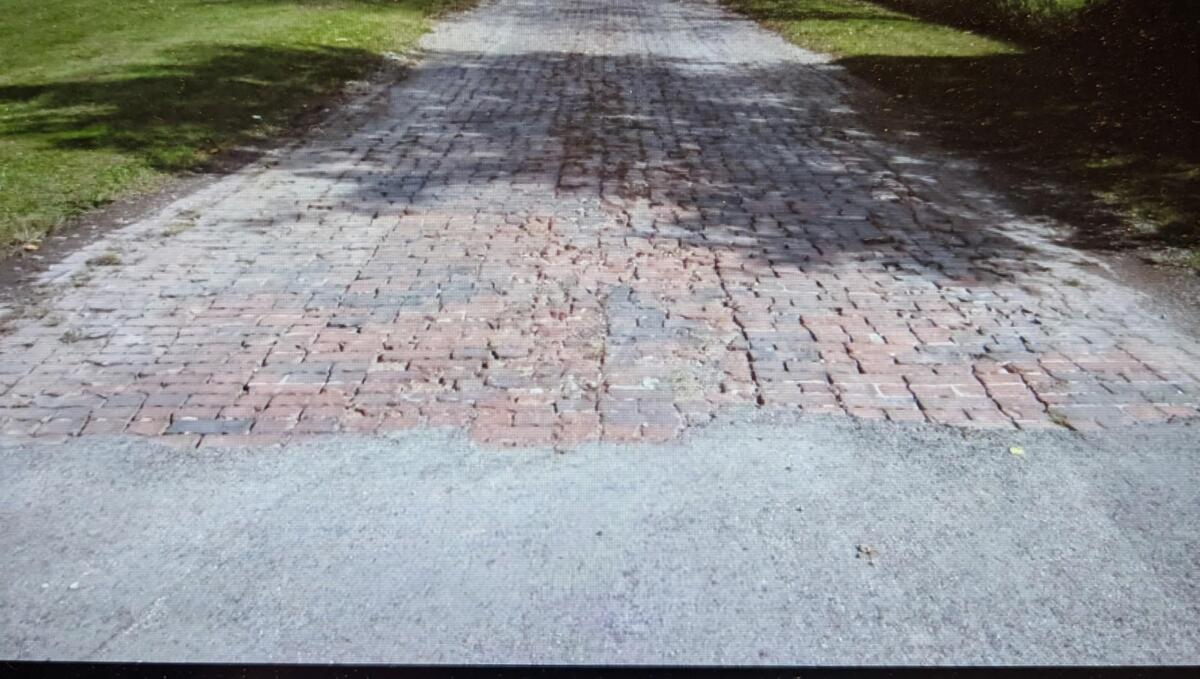
• Woodbine, Iowa (and other brick stretches). Iowa’s red-brick segments (and others in Ohio, Nebraska and Illinois) include some of the longest surviving paved stretches from the 1910s–1920s era. The Woodbine and Elkhorn area bricks are restored and give RVers a feel for how driving used to be. These are great places to step out, stretch legs, and take photos.
• Franklin Grove/Lincoln Highway Association headquarters (Illinois). Here you’ll discover the Lincoln Highway’s history and memorabilia. It’s a rewarding stop if you want context about the people and politics that built the route.
• Lincoln Park and the western terminus (San Francisco, CA). The western end of the route in Lincoln Park gives a satisfying endpoint to a coast-to-coast run. Nearby pullouts provide great views of the Pacific and access to classic Northern California stops, if you want to extend your trip.
The Lincoln Highway’s impact
The Lincoln Highway, as the first transcontinental auto route, became a model for future national road programs. Communities all along the route boomed as motorists stopped for fuel, food, and lodging. Many of those same vintage motels, diners, and gas stations (or their modern descendants) still welcome travelers today.
The highway inspired national roadway policy. The 1919 Army convoy on the route helped shape Dwight D. Eisenhower’s later support for the Interstate system.
The Lincoln Highway’s legacy is part preservation, part active travel corridor. For RVers, that blend of living history and practical driving makes it special.
Nicknames and fun factoids
“The Main Street Across America” is one well-used nickname for the Lincoln Highway. Early LHA public relations stunts included planting “Seedling Miles” (short, paved demonstrations). Lincoln statues were also commissioned for installation along the route, and interpretive markers were put in place to rally local support.
There are oddities everywhere along the Lincoln Highway. You can expect abandoned segments you can walk, art deco service stations that survive as private buildings, and back-road memorials like the Abraham Lincoln Memorial Monument in the Wyoming high country near Sherman Summit. Don’t pass up the classic roadside diners along the way. The homemade eats are sure to tickle your taste buds.
Editor’s note: Need a good book? Check out this book that takes place on a road trip along the Lincoln Highway.
Practical tips for RVers
• Plan carefully. The Lincoln Highway is not a single protected interstate. It’s really more of a patchwork.
• Use the Lincoln Highway Association’s interactive map and state byway pages to pick RV-friendly segments and campgrounds.
• Watch for low bridges, narrow historic pavement, and one-lane county roads. Some preserved sections are best admired from a nearby parking area rather than being driven in an RV.
• If you want smooth cruising for long days, follow the modern US-30 or I-80 parallels. If you want historic flavor, pick a section with brick or museum stops and allow plenty of time for side trips.
• Many state tourism sites (Nebraska’s Lincoln Highway Scenic & Historic Byway, Indiana’s Lincolnway guides, Iowa travel pages) include driving maps, attractions, and recommended overnight stops.
You should go!
The Lincoln Highway is a rolling museum of 20th-century America. For RVers, it’s a chance to slow down and visit towns most cross-country travelers miss.
Whether you want a single-state day trip (try an Illinois or Indiana stretch), a multi-day historic crawl across the Plains, or the full coast-to-coast mythic run, the Lincoln Highway offers a uniquely American RVing experience.
Have you ever RVed on the Lincoln Highway? Tell us about it!
RELATED
- One of America’s best road trips: Drive the beautiful Great River Road
- The best interstate routes for cross-country road trips rated
- Driving New Mexico’s 84-mile Enchanted Circle Scenic Byway
- Do you dare drive these three haunted highways in California?
- Drive the nation’s shortest, lighted scenic byway
RVT1234

Thank you Gail. We’ve traveled closer to home since getting our TT due to family obligations which we no longer have. So are now looking further afield and these articles help open up possibilities for us.
So happy to help!
Enjoy your journeys.
Before anyone drives the Lincoln Highway, they need to watch the Ken Burn’s PBS documentary “Horatio’s Drive: America’s First Road Trip”. Horatio Nelson Jackson was a Vermont doctor who completed the first transcontinental auto trip in 1903 with just his mechanic and dog. Their route was approximately the Lincoln Highway route because it followed the original transcontinental railroad across the West. That was important to be able to order new parts, find blacksmith shops for repairs, and for fuel, food, lodging, and very importantly, telephones and telegraph stations for communicating with the “outside world”. After all, there were not even road maps or radios in 1903, much less GPS!