

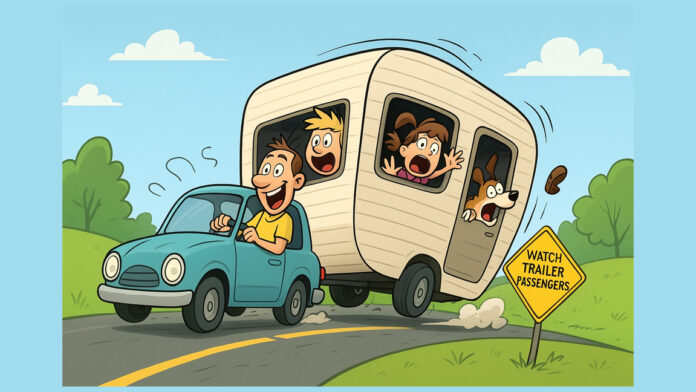
You’re driving on an RV outing and the grandkids are sleepy. Maybe they’re a little fussy, too. It’s tempting to let them nap “in back.” But before you do, it’s important to know the state laws for RV passengers.
Fifth wheels, truck campers, and travel trailers all have different rules about who can ride along. Having all the comforts of home back there is certainly appealing—but is it legal? More importantly, is it safe?
50 state laws for RV passengers
Laws about who can ride “in back” are set by each state, creating a patchwork of rules that can get confusing fast. First, we’ll look at the particular regulations in all 50 states, and then we’ll dive into the safety issues.
But here’s a BIG disclaimer: While we’ve done our best to make this information current, laws can change quickly. So, double-check the latest regulations before you hit the road.

Here’s a handy 50-state map showing the current RV trailer passenger regulations. “Red” states don’t allow anyone to ride in any towed rig. “Green” states allow passengers in travel trailers and fifth wheels. “Orange” states allow passengers in fifth wheels—but some of those states include specific rules or safety requirements.
Knowing who can ride “in back” is more than just a convenience; it can save you a big headache if you’re pulled over—or worse, involved in an accident.
What’s the reasoning behind restrictive trailer passenger laws?
Why do some states just say “nope” to carrying passengers in a towed trailer? Mostly, it’s about safety and avoiding a legal mess. Most trailers aren’t equipped with seat belts or proper seating, so anyone riding “in back” is at serious risk if the driver has to slam on the brakes, swerve, or hit a bump.
Unlike motorhomes, trailers don’t have reinforced seats, crumple zones, or other protections that help with travel trailer passenger safety. Basically, they’re not built for people, and your insurance company isn’t going to throw a party if something goes wrong. They’re more likely to throw a fit.
Allowing passengers in trailers can be a legal headache, too. Insurance companies aren’t thrilled—figuring out who pays if someone gets hurt in a moving trailer can be messier than untangling a pile of RV cords. On the road, passengers shifting around “in back” can throw off the trailer’s balance, making it more likely to tip or even jackknife.
For police, it’s simpler to just say “no passengers” than to regulate how many people can ride, where they should sit, or whether they’re properly buckled in. A few states do allow it under certain conditions—like if the trailer has proper seating—but most simply ban it because the risks are too high. These are the legal rules for trailer passengers in a nutshell.
But then some make exceptions for fifth wheels
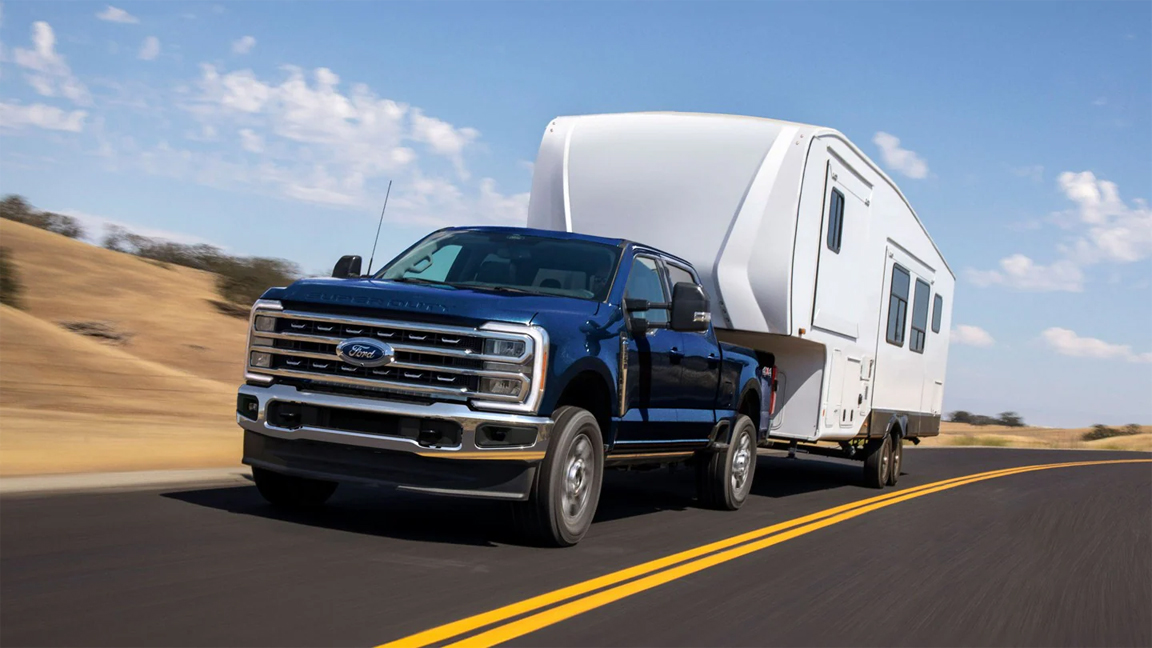 Some states do let people ride in a fifth wheel trailer because, compared to regular travel trailers, they’re a bit more stable and safer—especially if set up properly. Riding in a fifth wheel trailer spreads the weight more evenly over the pickup truck’s rear axle, helping prevent sway, tipping, or jackknifing. Some models even come with built-in seats. Try as we might, we couldn’t find any fivers with seatbelts. Please let us know if we’re wrong.
States that allow passengers figure that with proper seating and a little common sense, riding in a fifth wheel is less risky than bouncing around in a standard trailer. Even then, passengers should stay seated—no standing up to grab a snack while the fiver is bouncing down the highway! These are important fifth wheel travel safety guidelines for anyone thinking of climbing in.
But even when “fivers” allow passengers, read the fine print
Every state that lets you ride “in back” of a fifth wheel trailer has its own set of rules. California, for example, requires safety glass in doors and windows, a way to communicate with the driver, and an exit that can be opened from both inside and outside—basically, a “get out quick” plan. South Dakota and Oregon have similar requirements.
In Montana, the tow vehicle must be at least a half-ton truck. Hard to imagine anything smaller having guts enough to tow a fiver, but some people need to be told what to do. Pennsylvania gets picky about the hitch and requires a 2-inch kingpin. Wisconsin says any passenger under 12 must be accompanied by someone at least 16 years old—so no solo preteens bouncing around back there.
Other states that explicitly allow riding in fifth wheels include New York, North Dakota, and South Dakota.
The bottom line: Check the laws in your state and any states you’ll be driving through, because one state’s “go ahead” might be another state’s “absolutely not.” These are the main fifth wheel passenger laws you need to know.
Even if allowed by law, put safety first
Even in states where riding in a trailer is legal, safety comes first. Passengers riding “in back” should stick to designated seats with proper restraints (if there really are such things) and remain seated at all times. Keep the number of riders reasonable to avoid tipping the balance.
Secure everything inside so it doesn’t turn into a flying projectile on bumps. Drive slow and smooth, especially on curves, hills, or rough roads, and skip long highway trips if you can. Before hitting the road, check the trailer’s tires, brakes, hitch, and suspension.
Remember, just because it’s legal doesn’t mean you’re fully covered by insurance if something goes wrong.
What about truck campers?
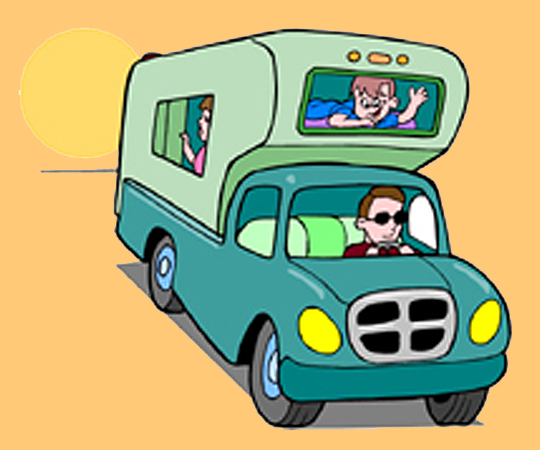 Riding in a truck camper also comes with legal twists. Some states allow it, others ban it outright, and many fall somewhere in between. Arkansas, Maine, New Hampshire, New Jersey, and Pennsylvania explicitly forbid passengers in a truck camper. In Mississippi, mandatory seat belt laws make it effectively illegal.
Other states don’t ban it entirely but impose rules, often focused on kids. California requires a way to communicate with the driver, safety glass, and an accessible exit. Hawaii sets an age limit of 13. In Oregon, passengers under 18 generally aren’t allowed in a pickup bed, which usually includes a truck camper unless a specific exemption exists.
Most states don’t explicitly forbid adults from riding in an enclosed truck camper, including Arizona, Illinois, Indiana, Texas, and Utah. But safety experts strongly advise against it. Truck campers typically lack seat belts, airbags, and other protections, making them risky for anyone.
These are the most important truck camper passenger rules and who can ride in a truck camper guidelines you need to follow.
Ending thoughts on “riding in the back”
At the end of the day, letting passengers ride “in back”—that is, in a trailer, fifth wheel, or truck camper—might seem convenient—especially for napping grandkids. But it’s a mix of legal hoops and safety risks.
Laws vary wildly from state to state, and even where it’s allowed, trailers aren’t built for passengers the way cars or motorhomes are. Seat belts, airbags, and proper seating are rare, and a sudden stop or bump can turn a fun road trip into a dangerous situation.
 So, before anyone climbs in, double-check the rules, buckle up if possible, and remember: Keeping passengers safe often means keeping them out of the back. Just looking at the photos of RV accidents (often involving roll-overs) may make you decide putting up with grumpy grandkids (or a spouse) “up front” is a better thought. Your road trip will be a lot more relaxing—and a lot less chaotic—if everyone stays where they’re supposed to.
RELATED
- Blowing in the wind: Truckers’ tips for safe driving
- Watch in horror as this truck slides down the highway. Know these safe driving tips
- Safe towing speed—How fast is too fast for towing?
- With different truck towing capacities listed online, which is correct?
- If you can’t answer these questions, you shouldn’t be towing
- 11 of the most common towing mistakes and how to avoid them
- Having a towing maintenance kit could save your trip


Just because you “can or are allowed” doesn’t mean you “should”. Like going down the road with Propane turned on. I know you have done it for years but it only takes 1 “incident” to end that conversation. Take it from a Plumber- Kaboom or Flame thrower!!!!!!!!!!
Good heavens, NO! Aside from the lack of safety features built into my tow vehicle, I wouldn’t want to clean up the vomit. Thinking about the sway, the lack of a smooth ride suspension gets my stomach clenching as I sit stationary to type this.
I know that the military uses a specially designed trailer (the interior is like a bus) for moving people around base. It is not at all your typical RV trailer.
Riding in TT or 5th wheel poses too many possible safety problems. Passengers back there can not see or be ready for any impending problem. Even with seat belts, how many would unbuckle and walk around inside without the driver knowing?
Even a quick lane change or braking could be a disaster.
I feel even pets should be harnessed or crated when in any moving vehicle!