

The history of travel in the United States is much like the many roads that crisscross our land. Some highways are pitted with potholes, while others are smooth as glass. One particularly rough patch of U.S. travel history is the Jim Crow era.
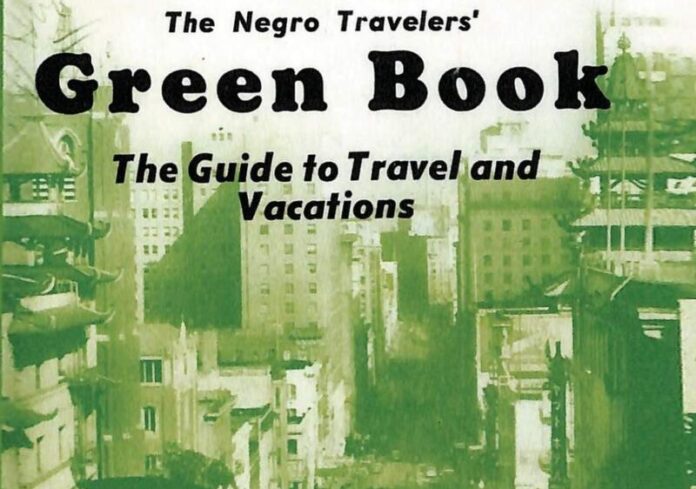
For Black travelers during the Jim Crow era, travel miles brought the risk of discrimination, humiliation, or worse. Enter “The Negro Motorist Green Book”. Known today as “Green Book”, this annual directory mapped out safe havens for African American motorists from 1936 until the mid-1960s.
Origin
“Green Book” was the creation of Victor Hugo Green. Green was a Harlem-based postal worker and amateur travel writer. Frustrated by “Whites Only” signs and the threat of sundown towns (municipalities that barred Black people after dark), Green published the first edition in 1936 as “The Negro Motorist Green Book”.
Green’s goal was simple: “To give the Negro traveler information that will keep him from running into difficulties, embarrassments and to make his trip more enjoyable.”
Evolution and organization
Green’s publication began as a 15-page booklet that listed welcoming hotels and restaurants in and around New York City. However, he soon realized the potential for his publication and set his sights beyond the Big Apple.
Green gathered reports from fellow postal carriers and readers. He expanded coverage nationwide. Each annual edition was meticulously organized by state and city, with entries for:
• Hotels, motels, and guest houses
• Restaurants and drug stores
• Service stations and mechanics
• Barber shops, beauty parlors, and taverns
Later editions even branched out to include airline routes, cruise lines, and international destinations like Canada and the Caribbean.
Highlights
Beyond listings, “Green Book” featured:
• Articles spotlighting Black-owned towns and businesses;
• Practical travel tips, such as how to handle roadside emergencies or hostile law enforcement;
• A “Your Rights” section (added in the 1963-64 edition) summarizing state statutes on discrimination in lodging and dining;
• Travel essays celebrating the joys of independence on the road.
This blend of directory and community magazine made it the “bible of Black highway travel.” “Green Book” sold up to 15,000 copies annually and earned sponsorship from Esso (later Exxon) gas stations.
The final edition
Victor Green passed away in 1960. His wife, Alma Green, carried on editorial duties until the guide’s final release. “Green Book” ceased publication roughly two years after the Civil Rights Act of 1964, when legal segregation in public accommodations was abolished.
Legacy
At the end of the 1948 edition of his travel guide, Victor Green said: “There will be a day sometime in the near future when this guide will not have to be published… It will be a great day for us to suspend this publication, for then we can go wherever we please.”
I’m happy Green’s prophetic words came true. I just wish they could have come true sooner. Happily, the open road is now open to everyone.
This story was told in the wonderful Oscar-winning movie “Green Book”.
RELATED
- In memory of Martin Luther King Jr.—A historic site tells an important story
- Discovering America’s soulful history along the Blues Highway and Mississippi Blues Trail
- How fences tell America’s stories of history and heritage
- History: This Ford station wagon had rear lounge, but never got to market
RVT1221


I highly recommend watching the movie, especially if you were unaware of the Green Book.
This is truly one of the best movies I’ve ever seen! I was stationed in Selma, AL from January 1966 to August 1967. Years later I saw the movie with my younger siblings and they poo-poo’d the movie as pure fiction. However, it was a story based on actual events and it was a touching memory to me. And it had a very heart-warming ending. I was never able to convince those siblings that it was a piece of history that most younger people don’t realize OR are willing to admit.
Gail, you never cease to amaze. Great article!
This article on The Green Book was extremely insightful yet sad.
Sad that previous generations had such strong convictions of bias that were so debilitating and sad today because the same debilitating convictions of bias exist politically.
It was in Goldfield, Nevada that I heard a siren early in the morning, at noon and then in the evening. I thought it was used to define the miner’s shift times but its underlying purpose was to announce it was a Sundown Town whereas minorities were not to be in town after dark or else. The siren sounds today as a reminder of the past amongst the decaying head frames and buildings…
Thanks Gail- I never knew of this book or the author. We used to travel from Wisconsin to Florida almost every winter. I remember we stopped in Georgia once and the “Whites Only” rest room was locked. My Mom just told me to use the “Colored” one instead. I don’t think anyone ever cleaned that place.
Hats off to Mr. Green for what had to be an enormous undertaking in 1936.
Great article, Gail. Nice piece of history.
Thanks, Lonewolf. Safe travels!
I was born in the 50s and never thought about that. I remember a scene from the movie ” Driving Miss Daisy”. I’ve always treated somebody for the person they are.
Thank you for informing or reminding, as the case may be, readers of this history. I agree that “all” may move far more freely than in 1936 or 1966, but there are still areas that don’t define “all” the same as most other areas. A high school classmate brought DW to tears and me to surprise and dismay when she related the instructions she gave her sons in the event they were stopped by Hamilton County deputies or Chattanooga policemen during the 1980s and 1990s. Our area has improved since then, but we still have a ways to go. Have a great week and safe travels!