


Dear Dave,
We’ve been rehabbing this RV, which was a “gift” from my aunt. Almost all the walls and ceiling had to be torn out due to water damage. After tearing up the bed, we discovered the air duct hose was also shot, so we did away with it. It’s a year later and we’re trying to continue working on it, but I cannot find my pics that showed where the hose needs to go.
There are three openings on the duo-therm unit: one on the right and two on the left. I believe hot air is coming out of the closest one on the left when the ac gets turned on.
How should I connect this to ensure I’m not messing up the unit and to have the air flow directed correctly? I can take pics if it would help, but don’t have them available at the moment. Sorry. —Heather, 1982 Fleetwood Tioga
Dear Heather,
I assume the “air duct” you are referring to in your Class C Tioga is the corrugated hose that runs from the furnace to a vent somewhere inside the rig.
Duo-Therm
You referenced a Duo-Therm. That would be the furnace which is designed to have circular knockouts so an RV manufacturer can use only the openings they need for the specific floorplan.

They will then attach the corrugated hose to the opening and run it under the bed, through cabinets, and typically have a vent coming out of either the lower kitchen cabinet or sofa.

You should be able to locate the plastic vent or vents unless you have gutted all the cabinets and furniture. If that is the case, you can just start from scratch and put the vents where you want them.
You did not provide a model number so I don’t know the floorplan. However, I would put one in the bedroom, if there is one, and another in the living area. You can cover the third opening if it is not needed, or run a hose from it to the fresh water tank and pump if you plan to do any cold weather camping.
Clarification needed
I need a little more clarification regarding your statement “hot air is coming out of the closest one on the left when the ac gets turned on.”
The unit on the floor is a furnace only with a blower. When the ambient temperature drops to the temperature set at the thermostat (+/-3 degrees) it creates a closed circuit sending 12-volt power to the module board of the furnace. This starts the fan motor to create airflow purging the burner chamber and drawing in ambient air to pass over the burner assembly and raise the sail switch.
That, in turn, creates a closed circuit sending 12-volt power to the module to open the gas valve and ignite, as there is sufficient power and airflow. Ambient temperature air should initially be flowing out of any opening in the unit until the burner kicks in, and then hot air should come out of all openings.
More clarification needed
The second clarification is what you are referring to as “ac”, which could be air conditioning or alternating current, which is the 120-volt AC system? I assume you are referring to the air conditioner, which should be on the roof of your Class C.
There is most likely a direct vent coming out of the unit rather than ducted in the ceiling. It is definitely not ducted to the lower section of the rig and the furnace. It should have controls on the return air vent on the ceiling and not connected to the thermostat on the wall.
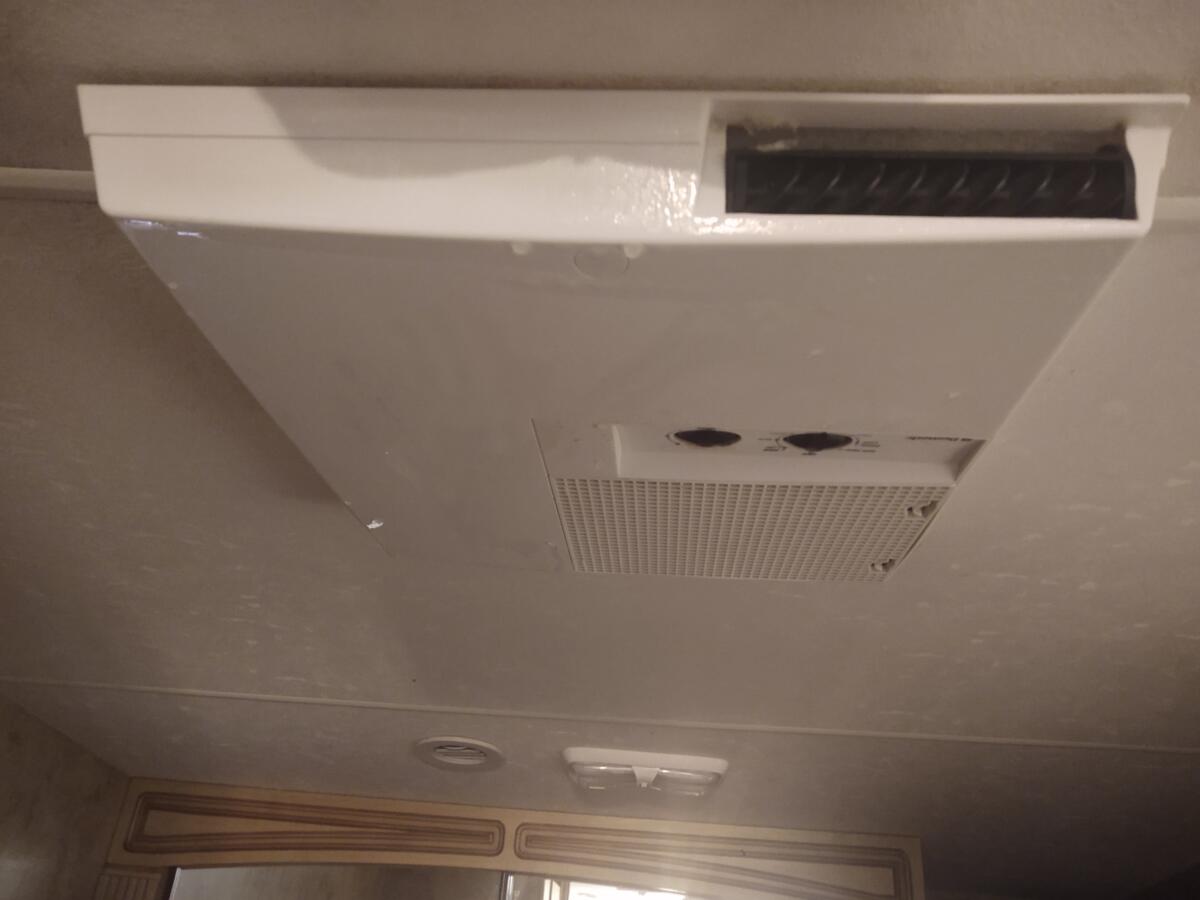
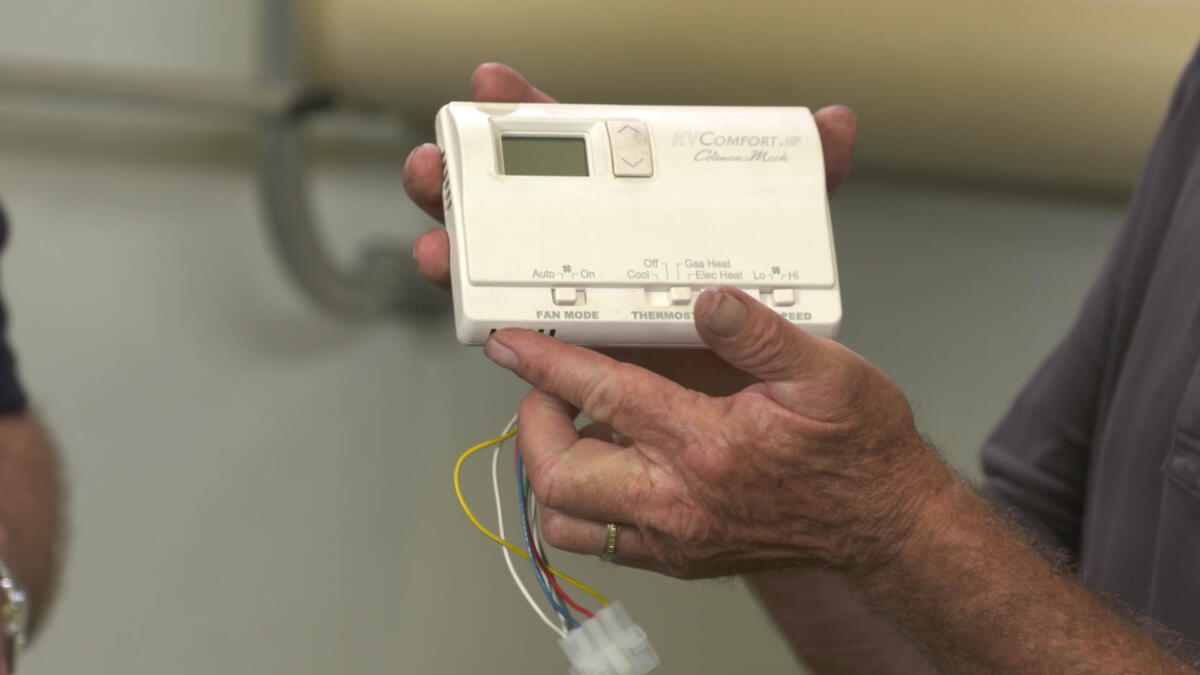
It is possible that sometime in the past, someone wired the furnace thermostat to run the blower motor only when the air conditioner starts. Some of the newer thermostats have that feature when they control both the furnace and roof air.
You might also enjoy these posts from Dave
- RV furnace ignites on second attempt with flames shooting out exhaust
- Why does RV furnace blow warm air then turn cold?
- Why won’t RV’s furnace work when camping but works for service tech?
- Why does RV furnace light on second attempt but not first?
- Furnace airflow issue follow-up with photos
Dave Solberg is a leading expert in the RV industry and the author of the “RV Handbook.”
Read more from Dave here.
HAVE A QUESTION FOR DAVE?
Send your inquiries to him using the form below.
RVDT2668

Thank you for the discussion, Dave! So many variations of units for heating and cooling. Have a great weekend and safe travels!