


Dear Dave,
I am not sure if my two house batteries are being charged. My RV is connected to shore power. I am only getting about 10 volts out of them when checked with a meter. They are connected in parallel. My motorhome has a Xantrex Pro 1000 Inverter and a Schumacher Mighty-Mite RVCDP Converter.
It appears the Mighty-Mite is no longer made and there is no documentation to be found. I can’t tell what is connected under the circuit breaker/fuses to verify where each one is located or if it is the converter or inverter. I noticed that the Xantrex control panel on the wall is no longer lit. I will be installing two new AGM batteries over the weekend to see if anything changes. My concern is that the new batteries will not charge and would be dead in a short period of time.
I would love to change out the batteries to lithium. However, the converter is a single stage and is not capable of charging them. I don’t do much boondocking—only overnight stays when traveling where there is no shore power. —Art, 2013 Winnebago Itasca Sunstar 30T
Dear Art,
Typically, I love Winnebago questions as I can go on the website and find the model, wiring diagram, and even a 3D model showing everything. It is typically an easy answer. When I first read your question, I thought that there was a mistake in the converter model as Winnebago mostly used Magnetek and then Progressive Dynamics converters and not a “no-name” like Schumacher. However, I was wrong.
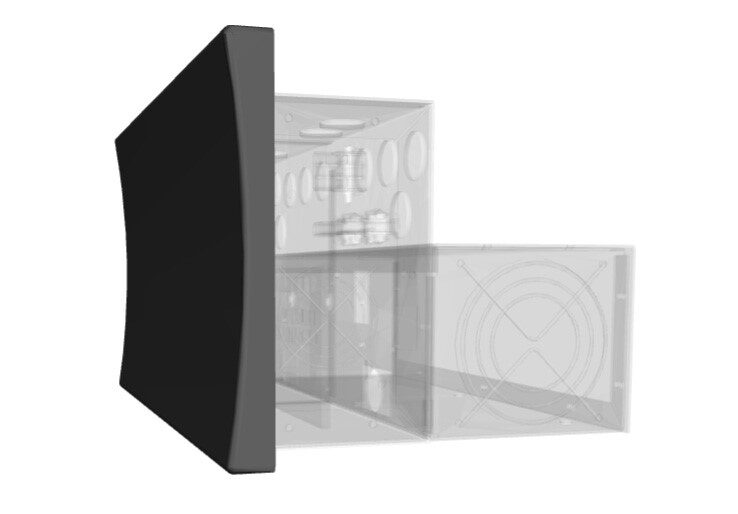
I was able to look up the wiring diagrams and 3D drawings and it lists your distribution center as Winnebago PN 178532-01-000. That is a Schumacher Electric PN 3799003930, which is an all-in-one AC/DC load center with a 45-amp converter—which should charge the batteries.
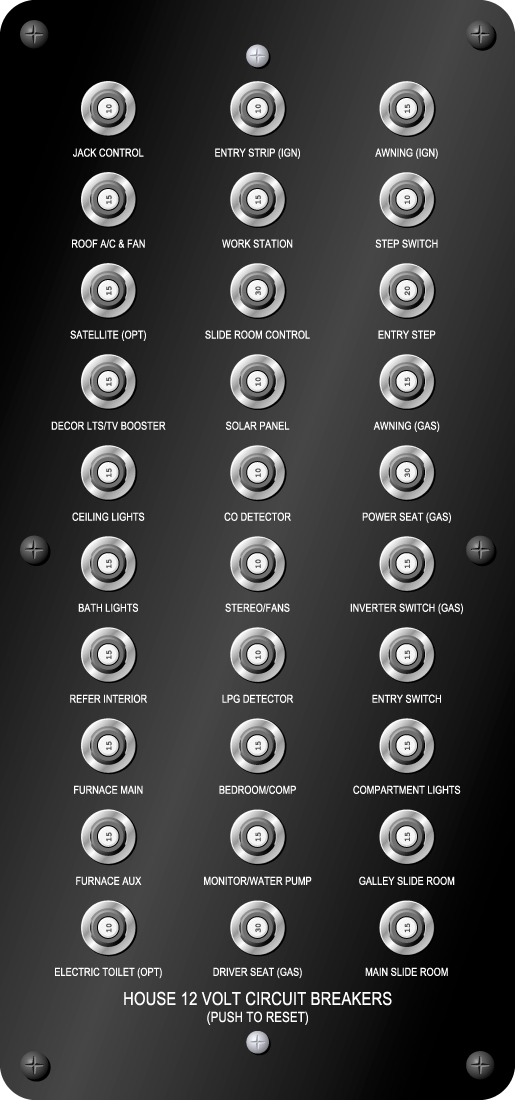
Your distribution center should look like this one with the 120-volt circuit breakers on the left and the 12-volt components to the right. However Winnebago uses push button fuses for their 12-volt systems, which are typically located in a cabinet above the kitchen.
The first test is to plug your shoreline cord into a verified 120-volt, 30-amp connection. Make sure the 120-volt circuit breaker is on, and measure the voltage at the battery. You should find at least 13.2 volts at the battery terminal and 13.6 volts if the batteries are low. If not, check to make sure the battery disconnect switch is not creating an open connection. Next, check to make sure the circuit breaker for the converter at the 120-volt distribution center is engaged.
The inverter typically has nothing to do with the charging of the batteries. You should be able to identify if the converter is actually charging or needs to be replaced. Schumacher Electric is still in business. However, they have discontinued the distribution centers and converters and now only offer portable chargers and power stations. This is actually a common issue with RV parts since the industry has such an up-and-down sales cycle. Every RV manufacturer is trying to be $5 lower than the next guy without any regard for the quality or longevity.
In a recent post I talked with a battery manufacturer that a reader asked about. Their technician stated that they were not in the RV industry because he stated: “It is a race to the bottom. Every single one wants you to take money out so they can be the cheapest, no matter how it affects performance.”
Check the voltage, make sure every circuit breaker is operational, and then we can go further. My guess is the converter is not working and you do not need to replace the entire distribution center, but maybe just get a new converter.
You might also enjoy this from Dave
Replaced RV’s batteries but converter won’t charge them. Now what?
Dear Dave,
I upgraded my RV’s batteries from regular 24 series dual-purpose deep-cycle to 2 AGM 6V golf cart batteries, Rolls 220AH. I did not realize the turmoil this would cause. These batteries require a different charging voltage and charger, 14.7V, and, of course, my converter will only do 14.4. I am in the process of finding a converter that does AGM. I found one power max which is adjustable to 16.5, but it may not have the proper voltage for the other stages. Also, no alternator output will go to 14.7, so that is another issue. …
Read the rest of Dave’s question and Dave S.’s answer.
Dave Solberg is a leading expert in the RV industry and the author of the “RV Handbook.”
Read more from Dave here.
HAVE A QUESTION FOR DAVE?
Send your inquiries to him using the form below.
##RVDT2419


Hi Dave
Am I reading this correctly or is this a misprint? ” You should find at least 13.2 volts at the battery terminal and 13.6 volts if the batteries are low.”
I think it’s meant to mean the converter will be putting out 13.2 on a fully charged and 13.6 when charging a low battery.
Ran,
If the shoreline power is plugged in, 120-volt power should go to the converter through one of the circuit breakers if it is on and working. The converter should be putting out 13.6-volts if the battery is low, and drop to 13.2-volts when the battery gets to 12.6-volts fully charged. If there is not this voltage at the battery, the converter is either not charging, or there is an inline fuse that has created an open circuit from the converter to the battery. This can be checked at the positive and negative at the converter. I should have added that. Thanks
That makes sense! Thanks Dave!
Thank you, Dave! 🙂 Have a great Independence Day, safe travels, and safe stays! 🙂