

By Dustin Simpson
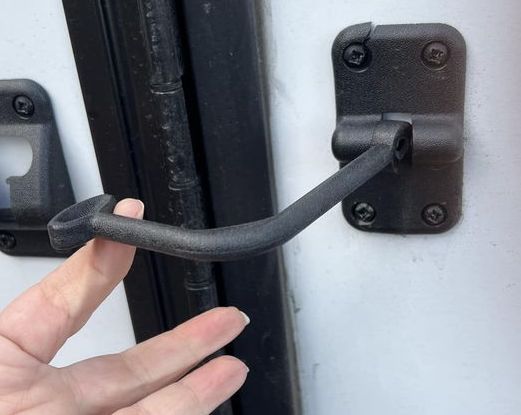
Join me in our RV shop as I explain how the entry door holdback on your RV plays a crucial role in keeping your door securely in place while you enjoy the comforts of your home on wheels. Over time, these components can wear out, leading to difficulties in keeping the door open.
In this guide, I’ll walk you through the steps to replace your RV entry door holdback, ensuring smooth functionality and added convenience.

Materials and tools needed to replace an RV entry door holdback:
- Plastic black entry door holdback
- Stainless steel entry door holdback
- DeWALT® Ratcheting Screw Driver
- DeWALT® Cordless Screw Driver Gun (One of my favorite hand tools)
- Putty tape
- Geocel® RV Sealant
Install steps
Step 1: Identify the type of RV entry door holdback
Different RVs may have different types of door holdbacks. It’s essential to identify the specific type you have before proceeding. Common types include latch-style holdbacks or gas strut-style holdbacks.
Step 2: Locate and remove the existing holdback
Using a screwdriver (depending on the fasteners used), carefully remove the existing door holdback from the RV. Take note of the placement of screws and any specific attachment points for easy installation of the new holdback.
Step 3: Detach the holdback from the door
Once the holdback is removed from the RV, detach it from the door itself. This may involve removing additional screws or fasteners that connect the holdback to the door.
Step 4: Install the new door holdback
Align the new door holdback with the existing attachment points on the door. Secure it in place using the original screws or new screws, if necessary. Ensure a snug fit to guarantee proper functionality. (If required, you can use tri-fold rivets 3/16″ x 3/4″ if holes are damaged.)
Step 5: Attach the holdback to the RV
Now that the holdback is securely attached to the door, align it with the designated attachment points on the RV. Use the appropriate tools to fasten it in place, making sure it is firmly secured.
Step 6: Test the door
Open and close the RV entry door several times to ensure that the new holdback functions correctly. Check for smooth operation and make any necessary adjustments if the door doesn’t align properly.
Step 7: Lubricate (optional)
If your new holdback has moving parts, consider applying this lubricant to ensure smooth operation. This step can help prevent premature wear and tear.
That’s it
Replacing your RV entry door holdback is a straightforward process that can significantly improve the functionality and convenience of your RV door. By following these step-by-step instructions, you can easily install a new holdback and enjoy hassle-free entry and exit from your RV.
Regular maintenance and periodic checks will help ensure that your door holdback continues to operate smoothly for years to come.
More from Dustin
Make sure you check out my website, California RV Specialists, and our YouTube channel for more helpful information, and see our published articles on RVtravel.com and other social media pages.
RELATED
- Improve the grip of your RV front door assist handle
- Upgrade your entry door window with Lippert’s Thin Shade
- Quick squeaky motorhome door hack: No more squeaks!
- Check your exterior RV refrigerator vent door latch
RVT1268
Thank you for the instructions, Dustin. Our RV lacks this. The door hinges somehow lock the door in place when the door is opened fully. Have a great week and safe travels!