

In late June 2025, a concessions worker at Grand Canyon National Park became the first person to contract hantavirus in nearly a decade. The National Park Service confirmed the diagnosis on July 7. Though this virus can be deadly, the employee is expected to recover fully after receiving hospital care. Hantavirus at Grand Canyon is one thing. However, RVers need to be alert too, as we’ll mention.
Hantavirus at Grand Canyon strikes mule barn worker

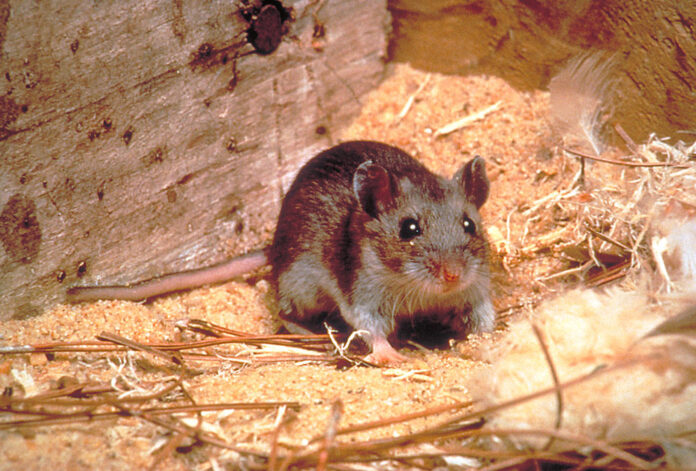
According to a story carried by sfgate.com, the worker was employed at one of the mule barns along the South Rim—operated by park concessionaire Xanterra. Working in these barns exposes staff to rodents and their droppings. Those droppings are known carriers of hantavirus, which causes hantavirus pulmonary syndrome in North America. The victim reported flu-like symptoms on June 20, then drove to Flagstaff Medical Center—about 90 minutes away—and is now recovering at home.
“It’s a disease that’s difficult to diagnose, because reported symptoms are kind of flu-like,” Grand Canyon spokesperson Joelle Baird told sfgate.com. The illness typically begins with fever, chills, muscle pain, headache, stomach issues, vomiting, or diarrhea. It can quickly escalate to dangerous lung and heart complications.
High mortality rate
While rare, hantavirus is serious. The CDC notes that between 10 and 50 people are diagnosed annually in the U.S., and nearly 38% of cases are fatal. The virus has no targeted cure; patients survive only with early medical care and respiratory support.
Because rodents thrive in the park’s dry environment, the National Park Service already has strict measures in place. These include interior pest control and special “rodent cleanup kits” for staff and residents. Baird said the park’s Office of Public Health has coordinated with wildlife experts, Coconino County health officials, and Xanterra to sanitize the mule barns carefully—making sure not to stir up the virus.
See poop? Report it
“Hantavirus is a disease we take very seriously here,” Baird added. “We live in such an arid environment” with lots of rodents.
Though visitors do not typically enter the mule barns, Baird urged anyone spotting rodent droppings inside park buildings to report it immediately. She said cleanliness standards at both private and park-run facilities are “impeccable,” so the risk to tourists remains low.
It has been almost ten years since the park’s last hantavirus infection. In 2016, a search-and-rescue member contracted it after staying overnight in Cave of the Domes. The park sealed off the cave afterward. The employee recovered, and the investigation showed the cave was not the source—but the closure remains in place to protect a bat colony there.
Outbreaks throughout the West
Hantavirus at Grand Canyon isn’t the only place the nasty virus has occurred. Outbreaks have occurred across the Western U.S. in recent years. In spring 2025, three people in Mammoth Lakes, California, died from it. Earlier in the year, Betsy Arakawa—wife of actor Gene Hackman—died in New Mexico due to hantavirus. And back in 2012, an outbreak at Yosemite Park infected at least 10 visitors and killed three people, prompting officials to tear down tent cabins at Curry Village.
Xanterra issued a statement saying it is “aware of the recent confirmed hantavirus case involving a concessions employee … who is safe and recovering at home.” The company added, “[W]e take the health and safety of our employees and guests very seriously.” In response, it has increased sanitation and rodent-control measures and brought in a third-party cleaning crew, working alongside the National Park Service and county public health officials
What visitors should know
- Don’t worry but stay alert. The virus spreads mainly when rodent droppings, urine, or saliva are inhaled. Walking near mule barns poses little risk to guests.
- Spot something? Speak up. If you see rodent droppings inside a building, report it to park staff or a ranger.
- Follow park advice. Cleanup kits and pest control procedures are standard. Cooperate if staff performs sanitization around buildings.
Bottom line: This is a rare event in a protected environment. The park and Xanterra are taking aggressive steps to address it, and the affected employee is recovering. Visitors should enjoy the canyon as usual but can help by staying vigilant around rodents.
Got mice in your RV? Hantavirus is real, and problematic. Here are tips for dealing with the issue.
MORE POSTS ON PESTS
- RV pests: How to keep them out of your RV
- Do you have rodents in your RV furnace? Prevent pests from getting in
- RV fires can start with bees and pests—be aware!
- How to get rid of, and prevent, RV drain fly infestations
- Follow-up on RV rodent problem with unique fix
RVT1217b


Thank you for forwarding news of this incident, Russ and Tina! Yes, very serious. Glad that he got medical attention fast. Have a great day and safe travels!
When I worked at hospice which contracted with area SNFs, I one of my patients had a severe respiratory infection. I asked the doc to check for Hanta Virus He told me that when I heard hoofbeats I shouldn’t look immediately for zebras. The reason I asked was because I knew about hanta virus and she’d been in the area where it was endemic only a couple months ago and I had no idea how long the dormancy period was