

Before you continue reading, if you missed Part 1 (with an explanation about RV “Gremlins”), read it here.
I don’t know if I can actually say what “Gremlin” frustrates me the most. However, 12-volt DC wiring has to be up there with the worst of them! To start with, there is typically very poor, if any, documentation available from the manufacturer or dealer. However, I do have to commend Winnebago, as they have some very good documentation now available on their website in the owner section. Not only do they share a wiring diagram but also the schematics of approximately where the wiring might be routed. They also stamp a code on their wires so technicians can look up the specs on where that wire is going. It’s very handy, but it’s not the norm.
Which wire color goes where?
You would think that wire color would be fairly standardized like it is in the automotive industry: red is positive and black is negative. Not so. I see in some cases they use purple and green, others have been black and white. Some 12-volt fixtures like for lighting have black and white or a variety of colors. I’m not sure what the reason is, but I think typically it boils down to cost.

So, after you find out what wire goes where and what color it should be, tracing the intermittent failure of a 12-volt appliance or lights is the real Gremlin!
A Blue Ox tow bar Gremlin
Recently I got a question from a motorhome owner that is towing a car with a Blue Ox tow bar and wiring harness. It had worked fine for more than two years and then all of a sudden when he plugged the 4-pin wire harness to his toad, the back clearance lights of his motorhome lit up! According to Blue Ox, it had to be a ground wire somewhere that was loose and where the power was back feeding from his toad battery. But why is it only lighting the back clearance lights and not all of them? They are typically wired in sequence and all come to the same fuse in the motorhome, so that doesn’t make sense.
Plus, there should be a one-way diode in the pigtail that prevents a back feed. Makes no sense, and he will have to individually trace the four wires from the toad plug through the pigtail to see if he can replicate it. He may even need to do the same behind the motorhome plug, as well.
The ground source for 12-volt
In past years, RV manufacturers would use the chassis and frame rails as the ground source for everything 12 volt. They would attach a ground wire to the main chassis. As they installed the water heater, furnace, other appliances, and lights, they’d just run that ground to a nearby metal component as it was a shorter run and took less time. A cost factor, again.
The trouble with that is not all welds are structurally sound. A hairline crack would cause an open situation just like removing the ground wire and would did not work. You can imagine the stress these welds are under as the unit bounces and twists over these “wonderful” highways and campgrounds. Not to mention the rust and corrosion at the ground connection…
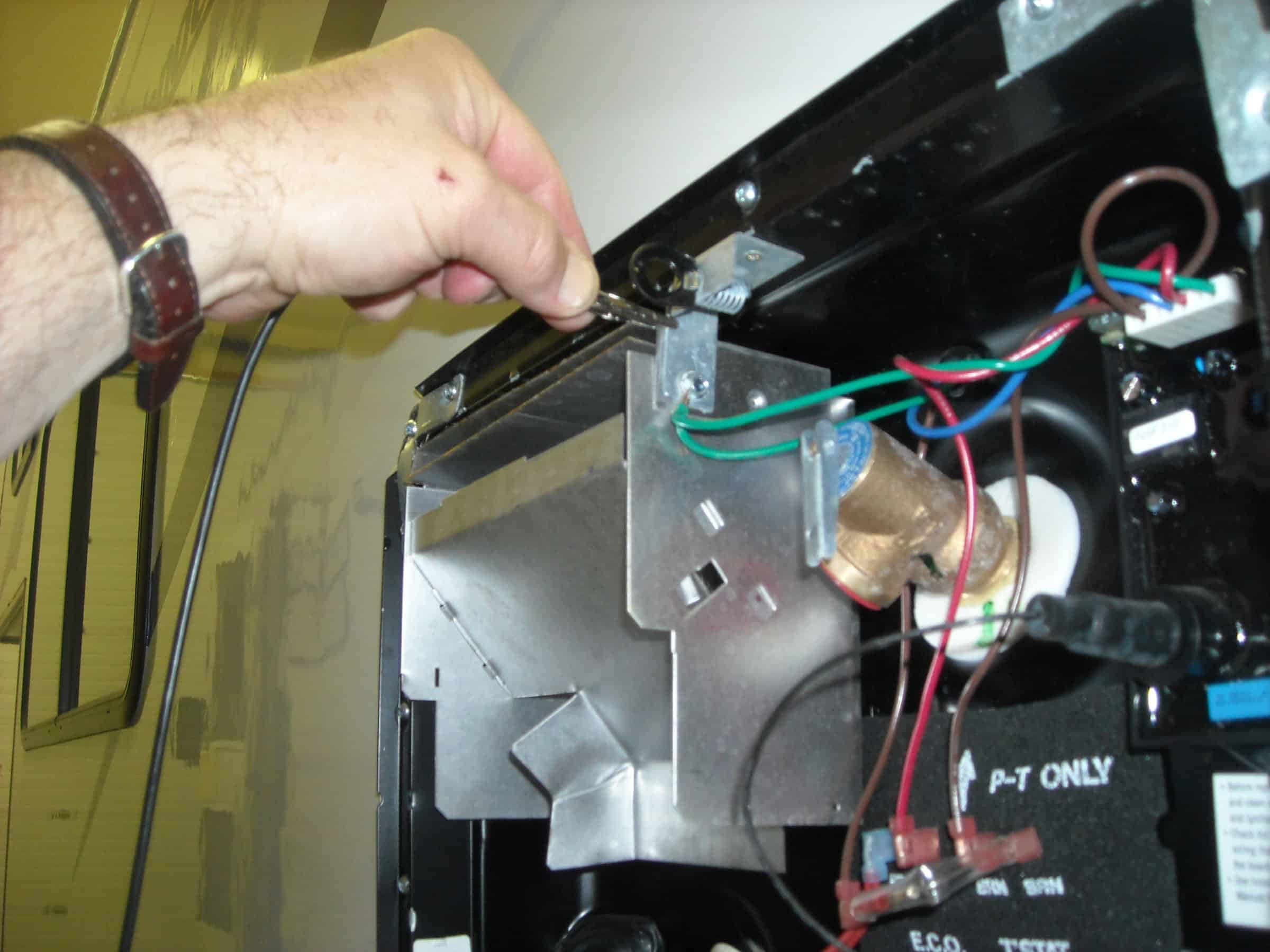
Testing the ground at the water heater
Most RV manufacturers today run dedicated ground wires as this has been a huge issue and took an enormous amount of time to trace. Most techs simply ran a new line to the appliance from the battery to verify. They’d have to take into consideration factors such as temperature changes, moisture, and if the unit was level or not. All these situations would factor in on how well the ground connection was compromised. Then add sloppy crimp connections done with a handheld crimper vs. an automotive plug…
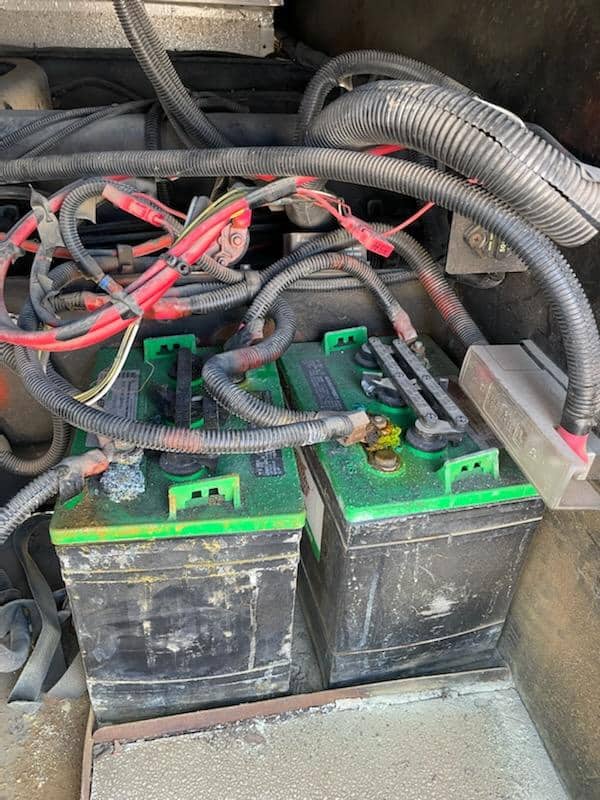
Next let’s look at how they are routed in the walls, ceiling, and through cabinetry. Some use plastic automotive tubing for protection and to keep them from kinking. However, that does not keep them from running a screw through the wire. And, yes, that does happen—even to $1 million units!
See the RV Gremlins for yourself in your RV
Take a look at how your water heater is installed and the rat’s nest of wiring tangled up behind it. Pull out a cabinet drawer and look at what’s underneath the countertop. And open compartment doors and look under the bed pedestal and see all the exposed wires.
Last week we had a question come in about lights flickering in the bathroom and bedroom, but only after they were on for 30 minutes! It was a new unit and they had power vents installed by the dealer before delivery. They believed the dealership somehow did something to the wiring. Of course, the dealership denied it. However, they went back in and replaced the bedroom power vent with a second air conditioning unit, and all of a sudden the flickering was gone. Seems there was a loose ground wire in the bedroom!
And did I just mention REAL rat’s nests? That’s right, to top it off rodents really appreciate you leaving a nice winter home for them to batten down and chew on wires.

This is part of the rat’s nest that was around the sending unit above the fuel tank on a 2000 Winnebago Brave. The unit would not start and they found the wiring chewed at the fuel tank!
Okay, so maybe wiring is my #1 RV Gremlin?
Dave Solberg is a leading expert in the RV industry and author of the “RV Handbook.”
Read more from Dave here.
RELATED
##RVT1058


6 years ago I had a Bounder motorhome that wasn’t charging the house batteries while traveling. Studying the schematic I knew the relay that controlled that was good, but the current wasn’t making it to the batteries. I called Bounder to inquire about a wiring diagram, the customer service rep kind of chuckled and said there are 3 teams wiring these units and there isn’t any diagram of how they route the wires, it is wired to the schematic. With that I ran a new charging wire under the unit to the batteries.
When I was in trade school many years back (transistors were becoming mainstream), one of my instructors had a truism: Kids, dogs, and radios will make a liar out of you every time”. I guess now one would have to add RVs to that.
The color for DC wires is either Red+ and Black- or Black+ and White-. RV manufactures shouldn’t use any other color. A proper steel weld should be stronger than the material welded. If material prepped and welded properly there shouldn’t be any welds cracking.
I would respectfully disagree, red+ black- for DC; black+ white- for AC. Biggest word in your statement, IF, prepped and properly, big if’s on an assembly line.
“black+ white- for AC”??
You mean black is hot and white is neutral or common. AC is both + and -!!
Wire color is specified according to the standards of the country where used typically NEC (NFPA70) or IEC but there are variations in different countries.
My opinion of why some RVs have ‘crazy’ wire colors and other Gremlins is
1) the RV engineers don’t design the electrical systems – they leave it up to their assemblers to figure it out since they ‘know’ what they are doing. (ie the engineers are not electrical engineers and don’t have a clue)
2) the assemblers are not properly trained and do the best they can with what they have.
3) material is bought because ‘someone’ once upon a time said to, not because there was an engineered design with specifications.
A lot of problems could be stopped cold if the RV manufacturer developed actual written specifications with work instructions and trained their assemblers, including supervisors, to those specifications.
Once had a new to me coach with interior lights that would flicker and burn out the fuse (SOMETIMES). I replaced the fuse with a homemade circuit breaker to be able to trace the Gremlin. Found that it was a bulb with a single prong on the bottom shorting out a fixture that had two prongs on the bottom. It took a 800 mile trip to finally figure it out. Easy fix, no fun to trace.
And then there is the disgruntled factory assembler… 2022 Gulf Stream Coach travel trailer. Tank monitor works, then doesn’t. No factory wire specs. Finally found two purple wires to light switch with a bit of black tape on one. One hot, one ground, reversed. Had to turn on lights for power to get to tank monitor. OK, mistake. Then found gray & black tank wires reversed. Hmmm. Then found antenna & cable coax reversed. This isn’t accident or negligence, but sabotage. The trailer didn’t come with an installed TV, no defect found if all the lights are on and tanks empty (probably how the panel is tested). I figure the installer WAS skilled and knew exactly what he or she was doing. By the way, Gulf Stream customer service calls always went to voice mail and were never returned. I am 6 hours drive from the dealer. Managers are angry about Gulf Stream, but glad I figured these out.