By Cheri Sicard
Wood floors show up in a lot of RV and van builds for a simple reason: They make a small space feel lived-in.
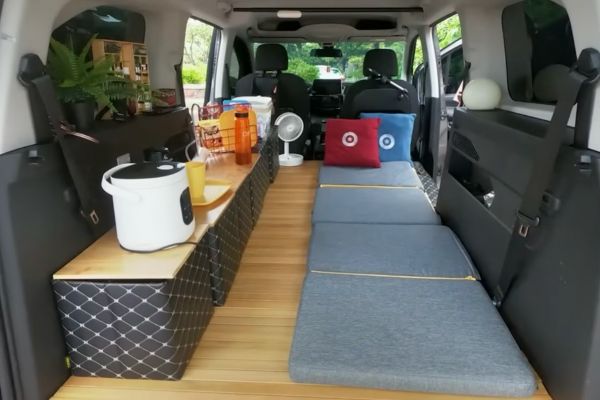
Travel & Design wanted that same homey feel in a Citroën Berlingo, but without turning the van into a permanent project. The goal was a floor that feels good under bare feet, works in different seasons, and can be removed fast when it’s time to drive like normal again.
In the video at the end of this post, they show how they did it.
Why wood flooring feels so good in a micro camper
A wooden floor changes the mood inside a vehicle right away. It’s not just about looks. It’s the feel when someone steps in barefoot and gets that warm, textured surface instead of cold plastic.
Wood also helps with comfort throughout the year. It tends to feel warmer in winter and cooler in summer, which matters in a metal van body that swings with the weather. Some woods even bring a light, natural scent that makes the space feel calmer, like a tiny cabin on wheels.
This build had one big rule: Keep the passenger seats. Keeping the seats means the van can switch roles without drama. A solo beach day and a multi-person trip can both work. When plans change, the interior can change too, without pulling parts out of the van or committing to a single layout.
The floor was designed around a few practical targets:
- Easy installation and disassembly, so it can switch from work mode to leisure mode quickly
- Easy to clean, since camping always brings sand, dirt, and spills
- No interior changes, which helps avoid safety issues, insulation problems, legal risks, and headaches during inspection or resale
- Reasonable cost, with simple tools and beginner-friendly steps
Travel & Design stuck to a no-trace modification mindset, meaning the van stays original and the add-ons come out when needed.
A roll-up layout inspired by bed slats
A single large wooden sheet wouldn’t work because seats need to fold and move. Hinges could solve that, but hinges can create bumps and awkward lines.
Instead, the idea came from IKEA-style bed slats: narrow boards connected by fabric strips. That creates a flexible panel that can roll forward or back to match the space. In a minivan setup, that same idea could leave a row of seats ready to use, then roll the floor out only when extra flat space is needed.
Materials and measurements
With the passenger seat flattened, the usable plane measured about 3’11” wide and 6’11” long.
For wood, Travel & Design chose cypress (hinoki), picked for durability, easy handling, and its natural aroma. Cypress is also known for resisting termites, insects, and decay. The boards came from a lumber manufacturer in Hualien, listed as Vietnamese cypress panels.
• Board size bought: 7’10” long, 1.4″ wide, 03 cm thick
• Quantity: 30 boards, each cut down to 3’11”
To protect the surface, a water-based polyurethane finish was applied. It fills small holes, helps block water, and keeps the grain visible. It’s also easier to clean and less likely to show watermarks.
Building it, fixing the first failure, and testing it at the beach
The build was simple: Cut, sand, varnish, then connect the boards using nylon webbing and hot-melt glue. Nylon webbing was picked because it’s strong, it doesn’t tear easily, and its small pores let glue sink in for better grip. The webbing also needed to be wide and thin to avoid a raised edge.
The first install test failed. The boards were packed too tightly, so they bumped into each other and shifted, and the hot-melt glue didn’t have enough time to soak into the fibers. The fix was to leave small gaps between boards and use an iron to fully resoften the glue so it could bond deeper into the webbing and wood.
On the second test, the floor unrolled flat and stayed put. It could roll up again to make room for seats. A real-world check happened on a beach day, where the back seat was flattened, the floor spread forward, gear stacked out of the way, and the space turned into a simple summer hangout with a sea view.
This roll-up wood floor shows how a small change can make a van feel more like a place to rest. It stays removable, keeps the seats usable, and avoids drilling or permanent changes. For Travel & Design, it set a clear standard for the Berlingo: comfort first, simple build, and a setup that can change whenever plans do.
RELATED
- Using a horse stall mat as budget truck bed flooring
- What to know about RV floor replacement
- How to remove and replace rotted flooring in your RV
RVT1246