


Dear Dave,
My fifth wheel came with a solar panel and one standard 12v battery. It has a 12v 16-cubic-foot fridge and tankless water heater. What are the restrictions for appliance usage if I go boondocking? I’m assuming I couldn’t use the A/C, but what else? —Ken, 2022 Grand Design 303RLS Fifth Wheel
Dear Ken,
If you have one solar panel on the roof and just one battery, your rig is not set up for boondocking or dry camping. Typically, the single solar panel on the roof is a 100-watt panel and designed to just keep the battery charged on the dealer lot or in storage.
When a unit sits on the dealer lot, a flooded lead acid (FLA) battery will drain down within a couple of weeks. Since most dealers don’t have electrical pedestals all over the lot, the unit is dead when they go to show it to a potential customer. So RV manufacturers have been installing 100-watt panels, which are not intended to keep a unit charged with much of anything running.
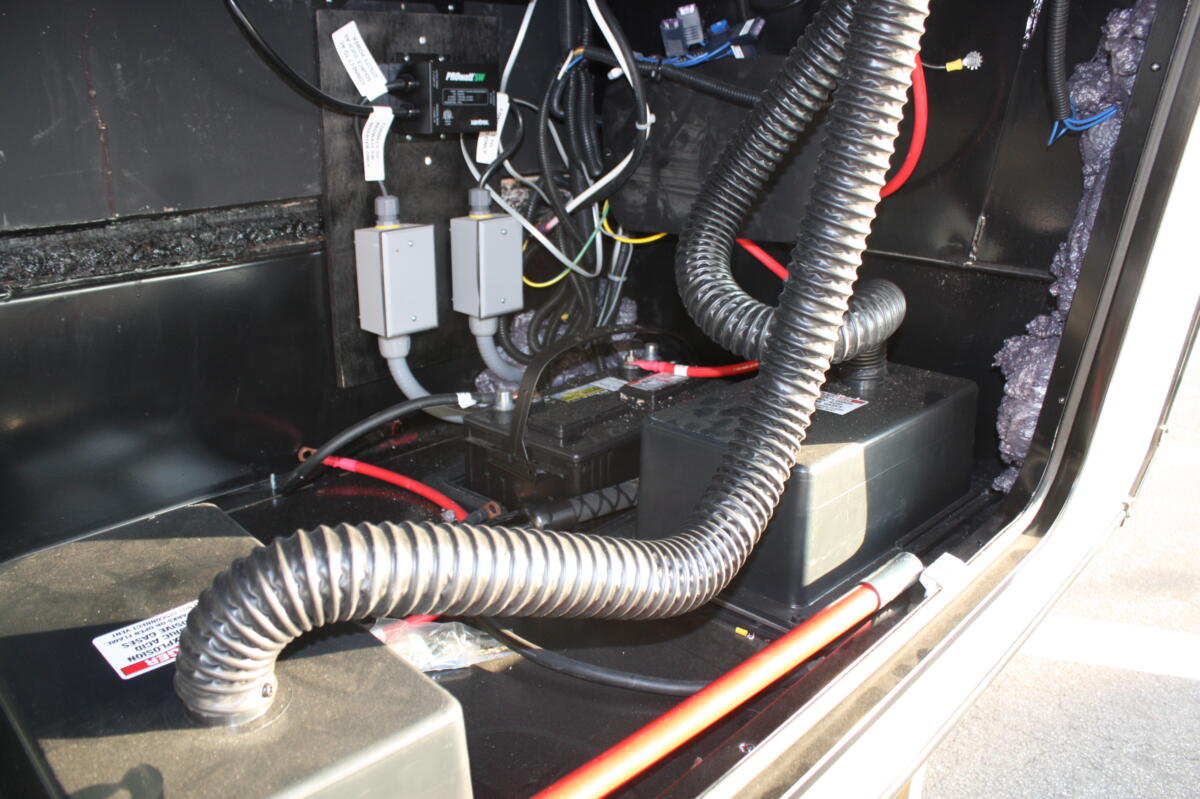
RV battery
The next issue is the size and condition of the battery. Most 5th wheels are sent without a battery so the dealer can install what might be best for the customer. If you don’t do any dry camping, it would be a waste of money for a dealer to install a lithium battery. As we all know, the RV market is in a race to the bottom right now.
So, I would assume your rig has a single FLA battery that is a Group 24. That is the smallest battery and typically only has about 80-100 amp hour (Ah) capacity. FLA batteries should only be drawn down to 50% state of charge (SOC), which means 50 Ah or less.
Since the rig is almost four years old, I would also assume the battery is original and most likely sulfated. Therefore, it would not be able to store at 100% efficiency. Most 5th wheel units have two batteries even with limited dry camping.
Sharpen your pencil, it’s math time!
Nobody hates math more than I do, but we need to look at what components will be drawing 12-volt power and what can or can’t be used and for how long. As I have stated in many articles, this is not a perfect science. (Oh, great! My second-least-favorite subject!) It is difficult to calculate your power consumption as you don’t realize how many lights you will turn on and for how long, how often the refrigerator will cycle depending on the ambient temperature, how often the water pump will run, and so on.
The refrigerator will be the biggest power consumer, especially if it is routed through an inverter and running on 120-volt power. Mike Sokol conducted a test of a residential refrigerator and a 12-volt compressor-driven model using a 100 Ah lithium battery, a 1000-watt inverter, and ambient temperature of 70 degrees. The 12-volt compressor refrigerator ran for 20 hours on 120-volt power through the inverter and 40 hours directly from the battery. So, this tells us that running through the inverter at 120 volts is not the most efficient. Also, keep in mind, this is a battery that can be drawn down to almost 100% SOC.
Roof air conditioners are power hogs
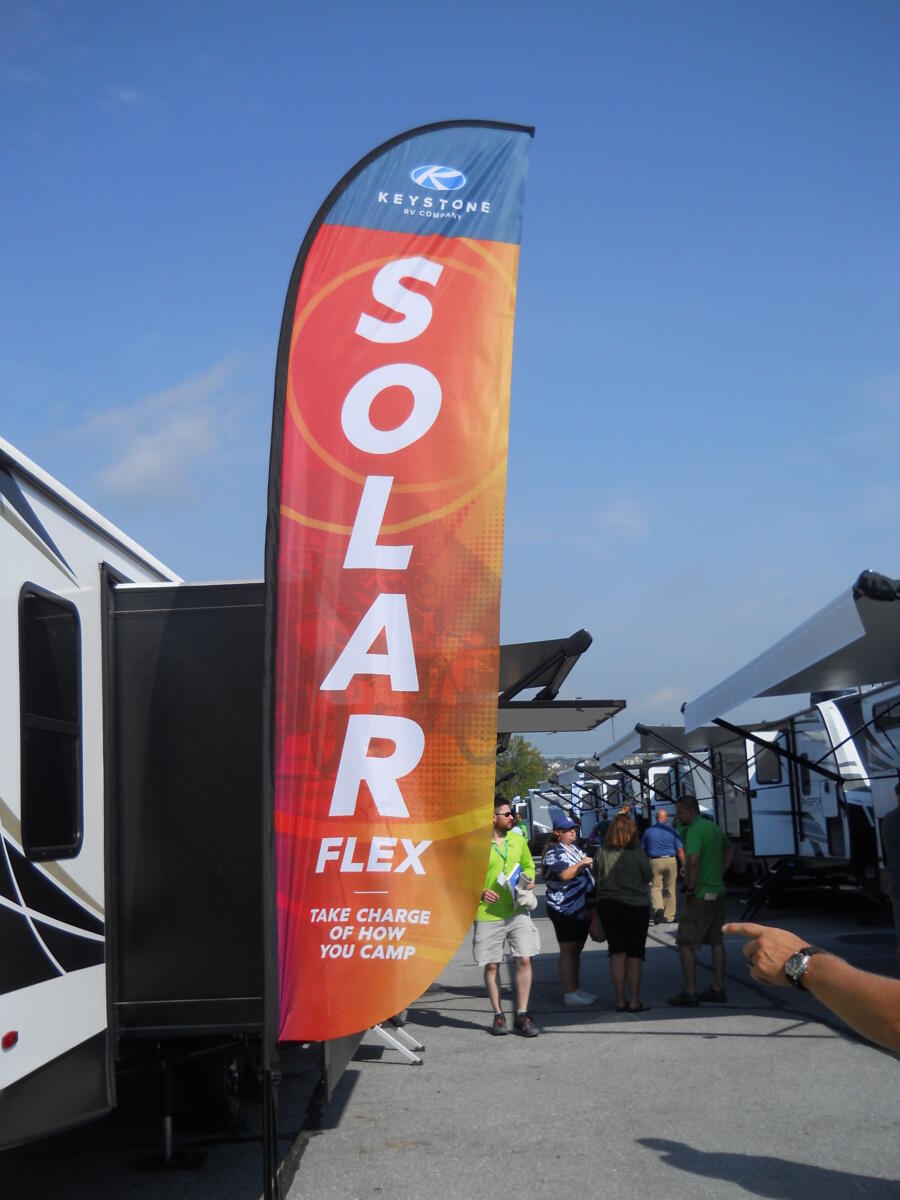
We know you are not going to be able to run either roof air conditioner as they are power hogs, as well. That is even if they have a SoftStartRV capacitor and a ton of lithium battery power. Keystone has a product called SolarFlex™ that has 600-800 Ah lithium batteries with a huge inverter and 800-watt or more solar panels. They can only run one roof air conditioner for about 2-3 hours.
The spec’s for your rig show a standard LP/electric water heater was standard equipment. I did not find an option for tankless, so I don’t know what model you have. There are several on the market such as Girard, Suburban, Truma, Furrion, and Rec Pro. These are propane gas-powered with electronic ignition, so they would not draw much 12-volt power. They would only operate on demand when you open a hot water faucet.
Solar calculating worksheet
Go Power!® has a solar calculating worksheet that I direct owners to so they can determine what components might be running, and the power usage. The challenge, as I stated earlier, is trying to figure out what component will be running and for how long. But at least this provides information and gets you thinking about usage.
You can download a copy of the worksheet on their website’s Learning Center here. At the bottom of the page, you can submit your email address and download the PDF. Also, here’s a link to much information on Solar Sizing for Your RV and Mobile Home, which also includes a link to the worksheet (pdf).

This won’t tell you what items you can run and for how long with your current setup, but it will give you an idea of what you will need to upgrade. Plus, it will show the biggest power consumption components such as the refrigerator and the furnace.
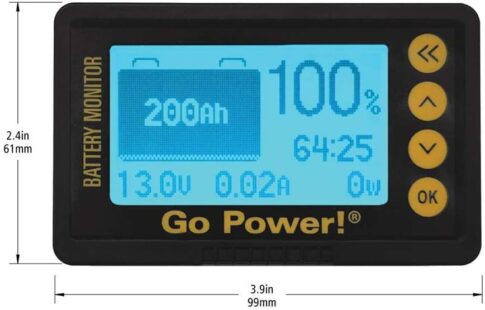
Start by verifying what size (Ah) battery you have as well as the solar panel. With just a single FLA battery and 100-watt solar panel, I doubt you will be able to go more than a partial overnight. What I suggest is to park the unit outside your house, or somewhere you have access to monitor the SOC of your battery, and test it for 24 hours. I would also install a battery manager kit like the Go Power Battery Monitor Kit so you can monitor the SOC and also see what charge you are getting from the solar panel. You can find it on Amazon here.
You might also enjoy this from Dave
How long will 100 W solar panel and two batteries run residential fridge?
Dear Dave,
When I purchased my RV from Camping World they never told me anything about the solar panel on the roof and the inverter. I know now that the residential refrigerator runs off the two batteries that are charged from the solar panel or shore power, but the inverter is in the off position and has to be turned on manually, I assume. I would think that if we lost shore power it would automatically switch on the inverter. I’m trying to understand the solar system and the RV, and if I should upgrade the 100 W panel to a bigger panel. I heard that there’s a 300 W or 350 W panel available now. —Joseph, Cedar Creek 38ftk 43’
MORE FROM DAVE ON POWER AND BOONDOCKING
- After a night of boondocking, why doesn’t truck recharge RV’s house battery?
- Should I upgrade RV house battery system to 48-volt for boondocking?
- What is the best battery setup for boondocking?
- Looking for solar power station to run A/Cs when power is out
Dave Solberg is a leading expert in the RV industry and the author of the “RV Handbook.”
Read more from Dave here.
HAVE A QUESTION FOR DAVE?
Send your inquiries to him using the form below.
##RVDT2624

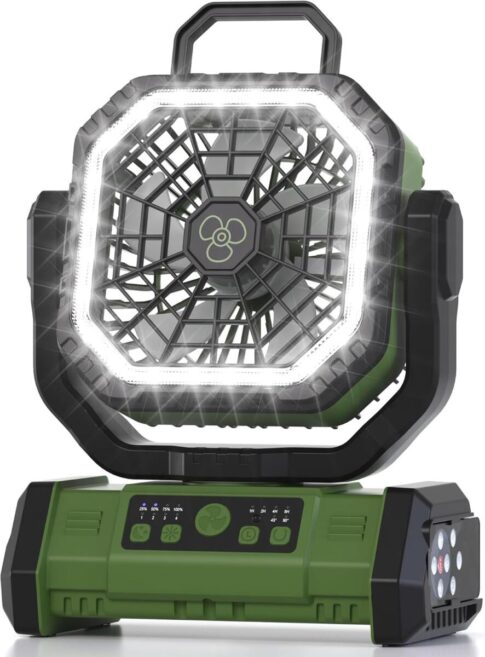
Thank you for the discussion, Dave! Seems that a huge investment in lithium batteries and all their assorted paraphernalia, as in a 48-volt system, is required to run rooftop air conditioning units for any length of time. I don’t think DW and I are the sort of RV travelers to make such an investment. Have a great day and safe travels!