


Dear Dave,
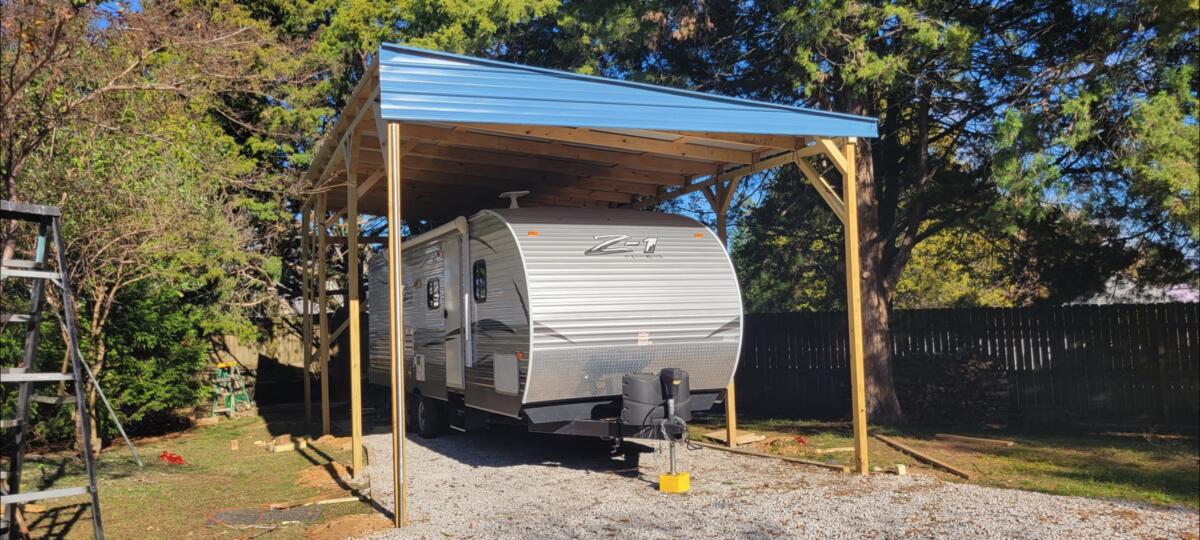
We recently had to fight to get an ECO coating covered that was supposed to keep our paint from oxidizing. We finally won the fight to cover a detailer’s cost of restoring our paint, which ended up being $5000. We decided to put our investment into a fully covered storage facility to prevent this from happening again.
Since the RV is fully covered, our solar panels are not keeping our lithium batteries charged. I have been researching to find the best portable solar-powered charger for lithium batteries. I’ve read several pieces and it’s a bit confusing on what we should buy. Can you help us understand the differences and what would be the best without damaging the batteries? Thanks. —David, 2020 Forest River Cedar Creek 311RL
Dear David,
Congratulations on getting the restoration on your rig done. I have a couple of questions regarding how and where you will be “storing” your rig.
How many batteries and amp hours, and what brand?
This is important to know the charge required but also if it has a battery management system (BMS).
RV just stored, or used?
First let’s look at your lithium batteries and how you plan to use the rig while it is in the covered storage facility. If you are just storing the unit and not living in it, you will not need to recharge the batteries like flooded lead acid (FLA) or absorbed glass mat (AGM). Good lithium batteries will hold a State Of Charge (SOC) of more than 50% for 6 months or more. They are not weakened or become damaged when depleted like that.
FLA and AGM batteries need to be charged during storage with either a trickle charger or maintainer. In this case, just remove the negative cable so there is no draw on the battery bank and it will be fine.
If you will be using the rig while it is in the covered facility, you will need to charge the batteries if you do not have access to shoreline power.
What type of covered storage facility?
If you are planning to store the rig in a large building with other units and plan to use portable panels outside the facility, you will most likely need a long set of cables. That will cause voltage drop, depending on the distance.
If at some point you are planning to build a standalone, large, garage-type framework, it would be best to mount solid panels to the roof, if it has direct sunlight, and run cables down to a side port or simply use alligator clips to the battery bank.
What size batteries?
One other variable in the equation is the amp hour size of the batteries and how many. This will determine the number of panels and the charge output you will need. If you have two or more batteries and are running a lot of appliances like a residential refrigerator, you will have a difficult time getting enough power from portable panels—although it can be done.

Whether you go with solid panels or portable, I am a big fan of Go Power! and have installed and used both versions. I like the portable, as I can have the rig in the shade to keep it cooler and move the panels out into the sun. You can find information on either system here.
You will need to know the amp hour size of your battery bank and use their calculator to get the system that is right for you.
RELATED
- Should RV solar panels be covered during storage?
- Dealer told me RV’s solar panels could run almost everything. Is that true?
- What can I power with one solar panel and one battery?
- OK to eliminate RV house battery and hook solar panels to shoreline power?
- When using RV solar panel, should I turn off inverter when plugged into shore power?
- Can I connect my “solar batteries” to use for the RV’s house battery?
- Shouldn’t my solar panel keep RV battery charged during storage?
DAVE HAS ANSWERED MORE THAN 1,000 readers’ maintenance and repair questions. Read a directory here. There is so much to learn!
Dave Solberg is a leading expert in the RV industry and the author of the “RV Handbook.”
RVDT2710


While not the same situation as Dave’s article, our single axle TT has an AGM (maintenance free) battery. If I have to store the TT where there is no access to power, I have a battery disconnect and I installed a SAE (2-prong adapter) on the case and plug in this solar panel battery maintainer. Using a 20 foot SAE extension cord, I can put the panel on whichever side of the TT has the best access to sun.
Fast & easy to either setup or take down, and I have stored the TT up to 6 months this way and the battery remains fully-charged and ready to go.
Thank you for the advice, Dave! Have a great day and safe travels!