When you apply new Dicor lap sealant, it will off-gas as part of its curing process. Off-gassing is the release of volatile organic compounds (VOCs) and other chemical vapors that naturally occur as the sealant begins to set, cure, and harden.
Here’s why this happens:
Solvent evaporation
Dicor lap sealant contains solvents that keep the product soft and spreadable. Once applied, these solvents begin to evaporate into the air, which is what creates the chemical odor (off-gassing).
Chemical reaction
As the sealant reacts with oxygen and moisture in the air, it begins to cure from the outside in, and this reaction releases vapors.
Heat and sunlight
Warm weather and direct sunlight can accelerate off-gassing, making the smell stronger or more noticeable—especially in enclosed areas like garages or under RV covers.
Is off-gassing harmful?
In most cases, off-gassing from Dicor lap sealant is not harmful outdoors and typically fades within a few days as the sealant cures fully. However, it’s always a good idea to:
- Work in well-ventilated areas.
- Avoid direct skin contact or prolonged inhalation of fumes.
- Allow proper cure time (typically 48–72 hours) before exposing to water.
Tip
If you’re storing your RV or parking it under a cover, try to keep it well-ventilated during and after application to help speed up the off-gassing process and minimize odor buildup.
Once cured, Dicor becomes inert and weather-resistant, forming a long-lasting seal on your RV’s roof.
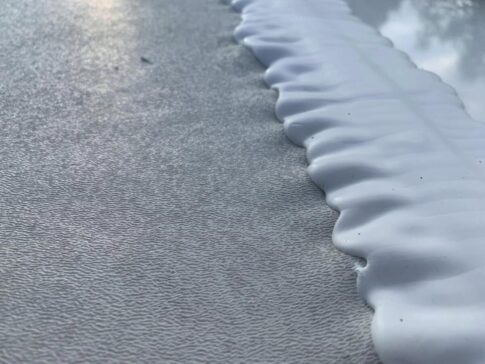
Overapplication or thick layering
• Cause: Applying too much sealant at once can cause uneven curing, leading to rippling as it settles.
• Solution: Use a steady, controlled bead of sealant and let it self-level naturally.
The products to reseal your RV roof


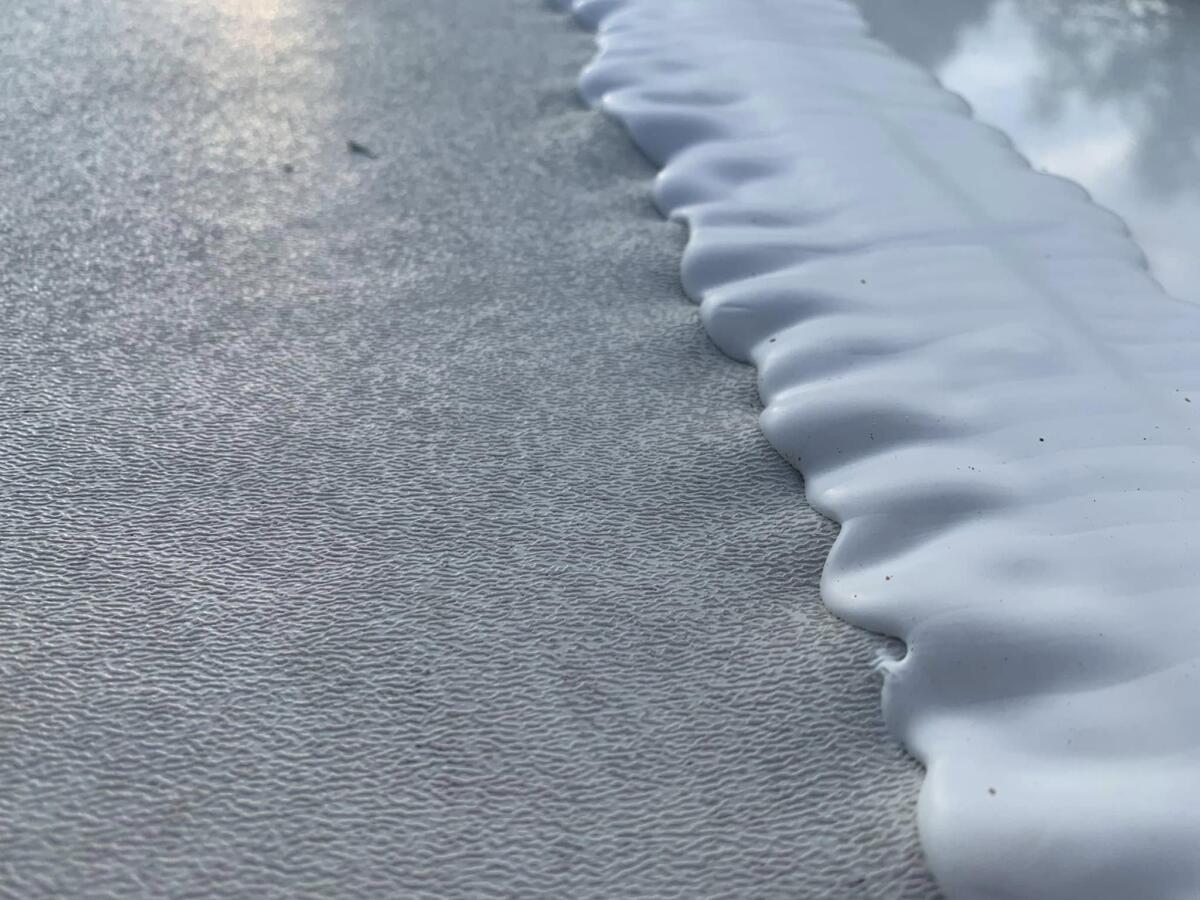


What’s the difference? From the ad, they use lap sealant in the same places self leveling is used.
If I understand your comment- lap sealant comes in two forms self-leveling and non-leveling. Self-leveling is used on (near) horizontal surfaces and will spread with gravity to fill gaps. Non-leveling is typically lesser used for the (near) vertical surfaces like where the rubber roof rolls over the edges to a joint with the sidewall. You certainly don’t want gravity to cause the sealant to flow down the sidewall of your RV! Still, even non-leveling ‘laps’ the gap between the rubber roof and the metal trim piece at the top of the sidewall.