


Yesterday I posted a question from Raymond regarding moisture coming in through the RV roof air conditioner somewhere and a slight sag in the roof. I got this follow-up from him:
Thanks, Dave,
You are right. I have not pulled the A/Cs off their gaskets in several years but I have pulled the cowlings off and checked the condensation drains for debris. I’ve also inspected the outside of the gaskets using an admittedly cheap scope camera and found no apparent access to the inside. That is why I suspect rain entering through the cowling’s vents. When running, the interior return vents in the ceiling do pull the air into them. I agree this should inhibit the drip.
I can’t say for sure the dripping A/C was on at the times we experienced the drip. However, we do experience the drip during rain events from those return vents from the one A/C which is ducted. We are really talking about one A/C. The other 15K A/C is not ducted, circulates directly through the roof, and sits on a portion of the roof that is sloped and provides no drip issue.
In any case, being 72 with a wife who hates to see me climb up on the roof, I’ve decided to let professionals handle it once we get back to Dallas, Texas, our home. Thanks again. I really appreciate reading your column. —Raymond
More from Dave
A little clarity and a possible condensation issue? Most return air chambers have bare metal and gaps all around them and a baffle or diverter that is designed to direct the conditioned air to the ductwork. I have found these to be an HVAC nightmare and cause inefficiency in cooling and condensation. Here is a photo from a reader who got a shower every time they ran the air conditioner.
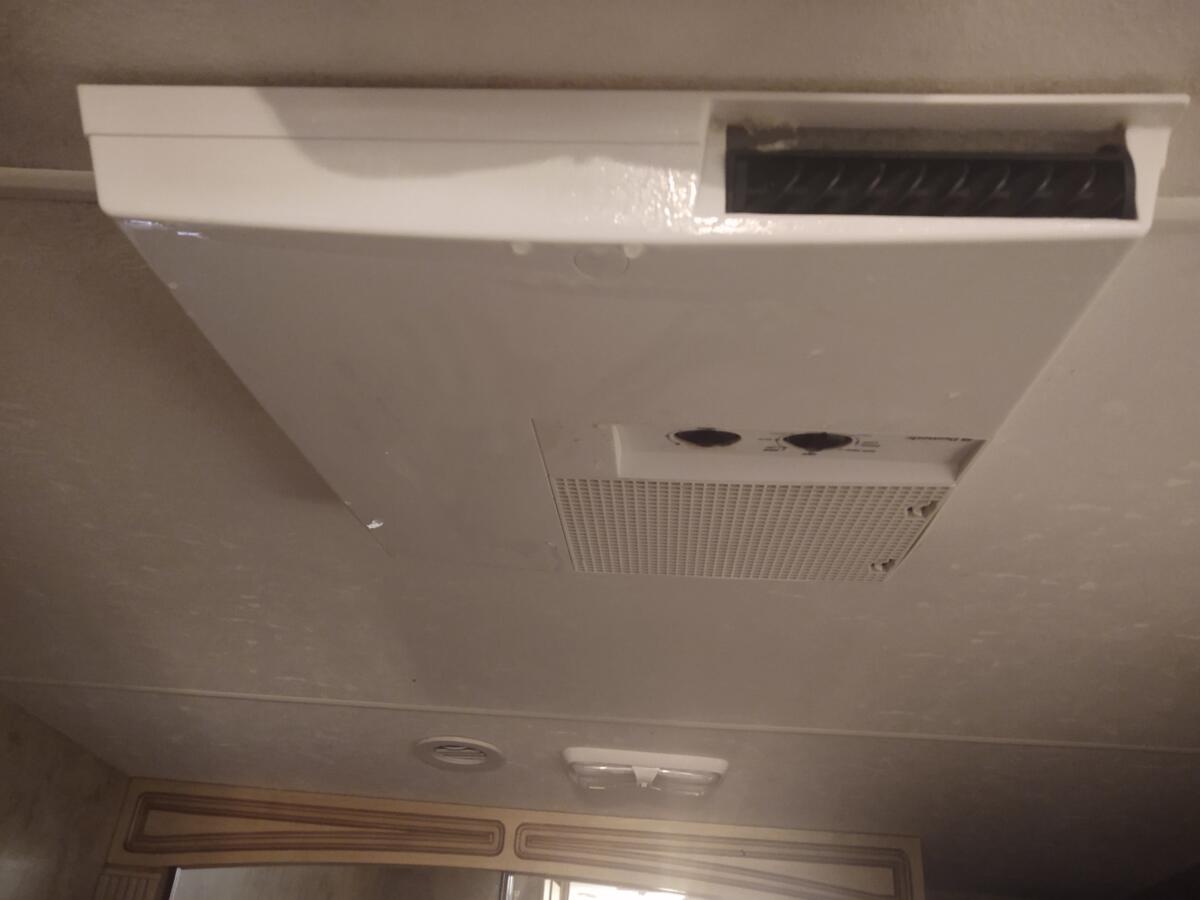
I would suggest taking the return air shroud off and take a look inside to see if there are any gaps in the evaporator covering. Get some HVAC tape and vent board to customize the area.

Here is the 2016 Thor we worked on. Look at all the exposed metal, sharp corners, and poor seal of the diverter. Get a sheet of ThermoPan®, which is a foil-faced cardboard, and HVAC tape. Cover all the gaps and line the bare metal.
You should also be able to see light coming in if there are any gaps without having to crawl on the roof.
Join Dave at the North Carolina RV Dealers Raleigh Show August 23-25. The 3-day event not only includes the popular RV Buyer’s Seminar and 10 others he presents, but will feature a new Ford Towing Bootcamp developed by the Ford Motor Company with a 1-hour in-class towing seminar and a 2-hour outdoor hands-on truck and trailer towing class. RVtravel.com readers receive a very special discount. Learn more.
You might also enjoy this from Dave
Dealership found soft spot on RV roof. Wants $17,000 to fix
Dear Dave,
After a recent RV roof inspection by the dealer, I was told that there is a soft spot on the roof which will require everything on the roof to be removed for an inspection and a new roof installed at a cost of more than $17,000 in labor plus materials. There is no sign of water leaking on the inside of the unit. What could have caused the soft spot? These are the same people who have done all yearly roof inspections and all annual maintenance and repairs. I am hesitant to spend such a large amount of money. I am going to have a certified inspector look at the roof. —Harry, 2019 Forest River Forester 3271S
Dave Solberg is a leading expert in the RV industry and the author of the “RV Handbook.”
Read more from Dave here.
HAVE A QUESTION FOR DAVE?
Send your inquiries to him using the form below.
##RVDT2454


Yes sir Raymonds wife is very wise about keeping him off the roof! My wife tells me the same about staying off of ours, so I send my young 49 year old son up there & he does his observations & takes lots of pics so I can see them. Works for me!
Snoopy
Thank you for the “rest of the story,” Dave! Have a great day, safe travels, and safe stays! 🙂