

By Chuck Woodbury
PUBLISHER
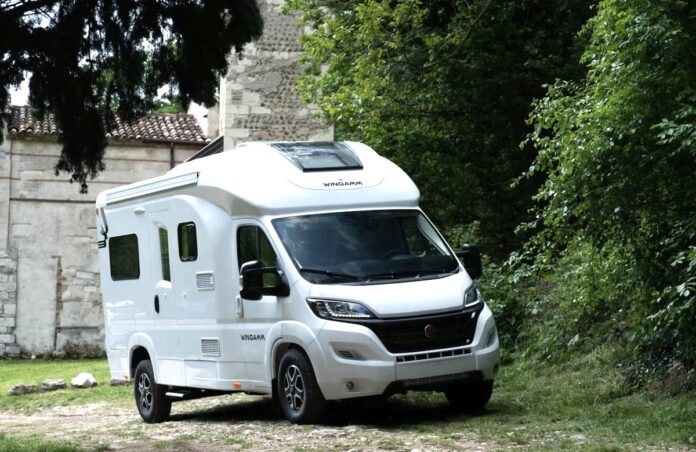
The designers of the ultra-compact Wingamm Oasi 610 motorhome must have graduated at the top of their classes. I cannot recall being so impressed with such a small RV; how the manufacturer used the space is brilliant. The RV does not come cheap, with an MSRP of $209,500. But what you get for the money is far more than I have ever seen in such a compact unit.
I learned about this RV from a walk-through video by Joe Russo at We’re the Russos. My excitement over the RV is based on what I observed in Russo’s video, which you can watch at the bottom of this article.
I seldom get too excited anymore about a new RV after decades of watching new RV models, and manufacturers come and go. The major changes each year basically boil down to new gizmos and buttons to push (and later break down) to complicate otherwise simple tasks.
Features not normally found in this size RV
The Italian-built RV, now being distributed in the United States, targets owners who want upscale comfort and storage without the bulk of a larger coach, including a built-in garage compartment and full dry bathroom—features typically reserved for much bigger Class C and Class A rigs.
You may wonder how a “garage” can fit into such a small space. I did. Well, it’s not a big garage, but it’s genius how it’s incorporated into the compact rig.
I like to move often when I travel. This RV is small enough that you could use it as you might otherwise use a car you towed along for sightseeing and errands. A lot of pickup trucks are longer than this rig.
Joe Russo’s guided walk-through of the Oasi 610 in the video below focuses on how the Wingamm designers maximized every inch of the compact footprint in ways that you just don’t see in American-made rigs, which, in my view, lack imagination.
At a glance, the Oasi 610’s exterior maintains a sleek, modern profile. As many as four people can sleep comfortably, and nearly every functional element needed for extended travel is present and well-integrated. I’m not crazy about the cassette toilet, but they’re standard equipment in RVs built outside North America.
The main bed (for two) impressed me. It drops from the ceiling near the front of the RV. But unlike American-made versions, the same thing, it’s operated manually, not electronically with the push of a button—making for one less thing to go wrong when you’re in the middle of nowhere. Oh, that’s so analog… but smart!
Compact by design but surprisingly spacious
Wingamm’s approach emphasizes intelligent use of space in a vehicle just shy of 20 feet long. Although compact, the Oasi 610’s layout avoids the cramped feel often associated with small motorhomes. Instead, smart engineering makes for a cabin that feels open and is attractive.
One of the RV’s most distinctive features is the garage compartment. Located in the rear, it’s large enough to carry outdoor gear, bicycles, or other bulky items. On some variants, such as the Oasi 610 GL, the lower rear bunk beds can fold away to expand the garage space significantly.
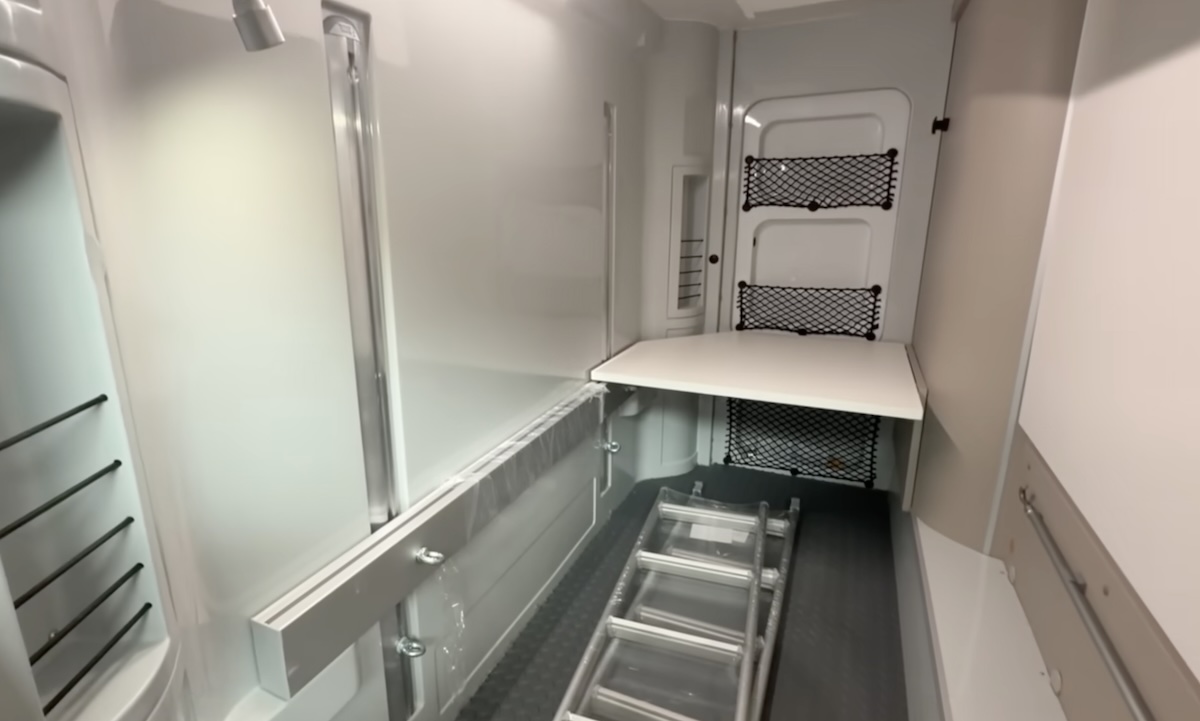
This garage strategy departs from the typical “under-bed storage” solutions in many small RVs, offering cargo space that can be accessed from both inside and outside the coach. The video highlights how this capability enhances the rig’s utility, making it adaptable for long trips, adventure gear transport, or simply keeping clutter out of the living area.
Living comfort in a small footprint
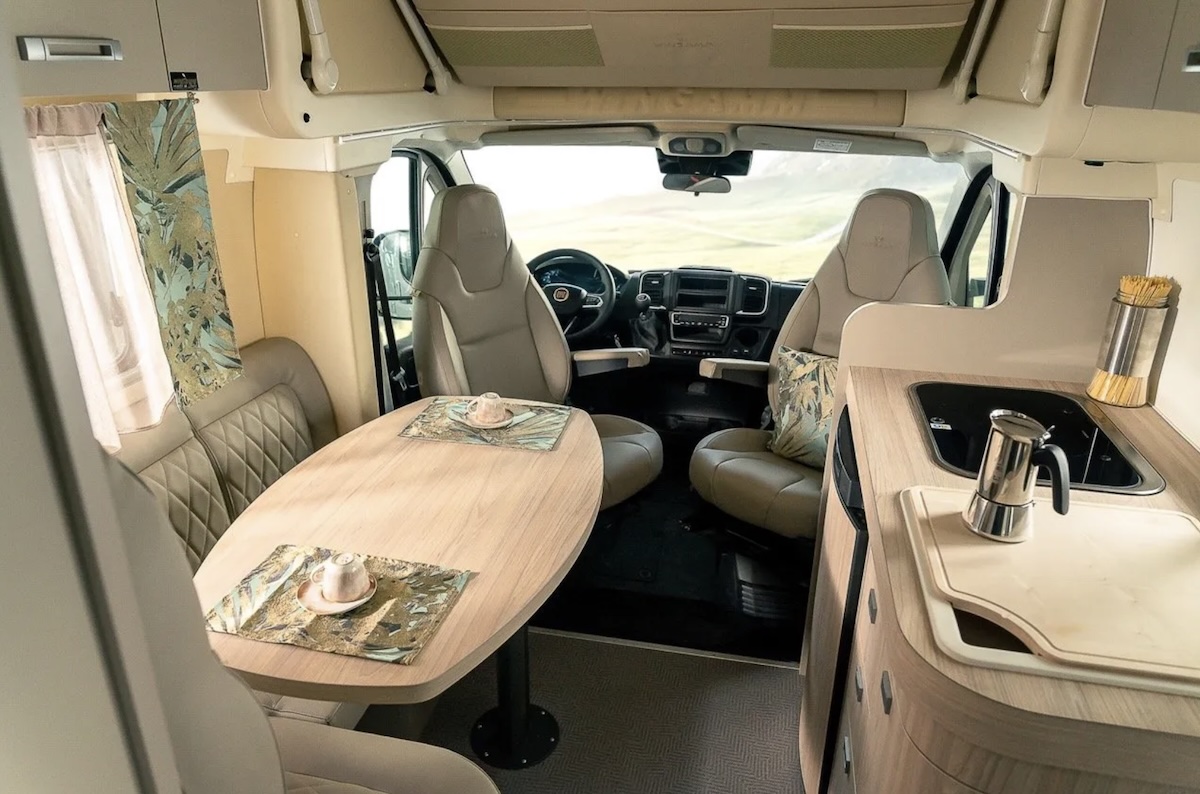
Inside, the Oasi 610’s living area centers on a dinette that also functions as a social and dining space. Cab seats that swivel to face the table expand the usable seating zone, and the overall layout places key amenities within easy reach without feeling tight. A well-designed kitchen area includes a two-burner stove, a small fridge and decent counter space.
The video further draws attention to the bathroom, which the tour describes as a full dry bath—rare in a motorhome of its size. Unlike smaller wet baths where the entire compartment doubles as a shower, a dry bath separates the facilities, providing a more comfortable and private experience.

Premium feel and practical details
Wingamm’s use of a fiberglass monocoque body contributes to both comfort and durability. This construction method, common in European van conversions and high-end campers, enhances structural rigidity and insulation while reducing the chance of leaks—a bugaboo in many RV builds.
The Oasi’s design also prioritizes thermal and acoustic comfort, with insulation that helps the interior stay cozy in cool weather and quieter on the road. Other practical touches, shown in the video, include ample storage compartments, heated floors (wow!), and well-organized cabinetry. Large windows and thoughtful lighting keep the interior bright and inviting, helping to counter the compact space.
European craftsmanship, U.S. chassis
In the United States, the Oasi 610 is built on a Ram Promaster chassis, a front-wheel-drive platform popular for its maneuverability and ease of use. The combination delivers a vehicle that’s easy to drive and park compared with larger motorhomes, an advantage for weekend travelers navigating tight campgrounds or urban streets. I like that it burns gas, not diesel, so fuel is available in many rural towns with only a single service station.
What this means for RVers
The Oasi 610’s blend of garage space, dry bath, premium interior and compact driving footprint appeals to RVers who value comfort but don’t want to deal with behemoth-sized rigs. As interest in smaller, high-quality motorhomes grows, models like the Wingamm may attract owners seeking alternatives to traditional Class C or larger designs.
Watch the video, and please leave a comment.
RELATED
- RV review: Wingamm Oasi 540.1 has finally arrived in the U.S
- 2026 Entegra Coach Odyssey SE 22CF Class C—packs a lot in a small footprint
RVDT2831


Glad to see this come to America. And hopefully Elkhart, IN is paying attention. Does anyone else remember the invasion of Japanese cars back in the 70’s?
” If I were a rich man, yadadado”
While I think it’s nice and glad a foreign MFG comes to America to give our mfg’s competition to built quality RV’s. The price is outrageous.
Quality comes with a price – maybe that is why U.S. Mfgr’s try to give some of both; i.e., what would a 36′ Class A with the features and build of this unit cost in Elkhart or Forest City? $900,000, a mil? How many could they sell in a year? While I am no fan of poor quality of some I have read here – quality costs money…. I love the innovation of this unit and especially the one piece or seamless shell construction. Also, GVWR etc…..?
Well, you know me Chuck. I’m an old stick in the mud! I would still prefer my 1968 aluminum Ultra Van that I have upgraded with lithium and solar and is 22’ long. I probably have $25,000 in it and a Million dollars in memories!