

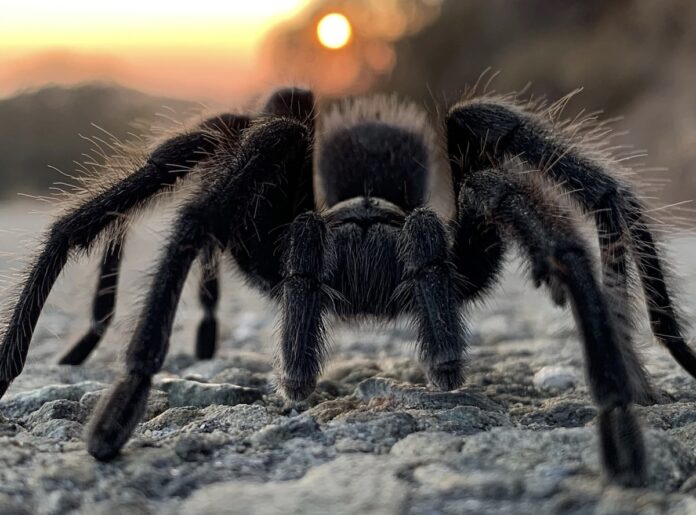
Scary mini-monsters are roaming the Southwest in search of sex. Oh, they are not really monsters, but many people fear them. The creatures look mean, but, really, they’re mostly harmless.
They’re tarantulas—hairy, menacing-looking spiders the size of a small human hand. The males are on the march now through November, traveling up to 20 miles to hook up with a female. Their quest may last two to three months. Somehow they know, with the arrival of colder weather, that the time is right to make some spider whoopee!
The female tarantulas remain in their burrows, waiting for a guy to come knocking at their door. What the guys do not know is that some of these females are not very nice (and that’s an understatement!). More about that below.
The timing for these cross-country treks can vary depending on the location and weather. In the Mojave Desert, mating season typically begins in September or after the first cool autumn rains. Tarantulas prefer dry climates and primarily live in Western and Southwestern states, but can also be found in other states, including Oklahoma, Missouri and Florida.

Now, here’s some disturbing news: After mating, the male often attempts a quick getaway, and for good reason: Unless a female has eaten before mating or has an ample food supply, she may decide to eat the male. Thankfully, human behavior differs.
If you happen to be outdoors where these arachnids live and roam, there’s an excellent chance you will see one. If you are a kind human being, try to avoid running them down with your vehicles as they cross highways, where they are most active at night.
While tarantulas may be portrayed in movies as scary and aggressive, in real life they’re shy, slow-moving creatures that are reluctant to bite. They prefer to avoid humans. If severely provoked, their bites will result in mild symptoms, such as minor pain, swelling or itching—less than a bee sting for most people.
While most U.S. native tarantulas are harmless, some tarantulas native to Africa and Asia can have more potent venom that can cause cramps, nausea or extended pain.
Oh, a thought to ponder: It’s not unusual for a tarantula to wander into a campsite. Don’t lose sleep over this, though: It’s rare.


And if you want a scary movie type of entertainment- check out the Tarantula Hawk killing the spider. After the fight the Hawk drags the spider back to it’s den, and lays a single egg on the Tarantula’s abdomen. The embryo feeds on the spider’s insides without disturbing it’s vital organs (to keep it alive). Here’s a video of the fight: https://youtu.be/mq8916ZbjfE
We experienced the spiders on Hwy 84 from I-40 up to Las Vegas NM. I gave up trying to miss them. Hundreds of them crossing the highway.
Thank you for the discussion, Chuck! Have a great week and safe travels!