


With pickup trucks being intensely popular, it makes sense for newcomer Slate to come on the scene with their entry into the field. They have a very, very different idea of how to build and support their offerings, which is why the company received more than 150,000 pre-orders when they announced the vehicle.
Slate is a new company that may have made a lot of news by who invested in the startup. Among those plunking down money on the idea were Bezos Expeditions, The Walter Group, General Catalyst, and a few others.
There have been a number of electric startups in the past decade, and you can add Slate to the list. But their idea is quite different.
What is a Slate?
Slate is a small all-electric vehicle that takes the shape of a pickup truck but offers a lot of potential to customize the vehicle. Part of what is making news with this is that the company plans to sell it at a price below $30,000, with numbers between $25,000–$28,000 most commonly mentioned.
Considering that the average new vehicle price in the U.S. is more than $50,000, this is a remarkable number. The new selling price of this vehicle is in line with the average price of a used car in the market.
What you get for that is zero choice, much like the legend of the paint color of a Model T Ford. In this case, you can have any color you want as long as it’s gray, but that oversimplifies the truth.
“Choices” in the Slate vehicles
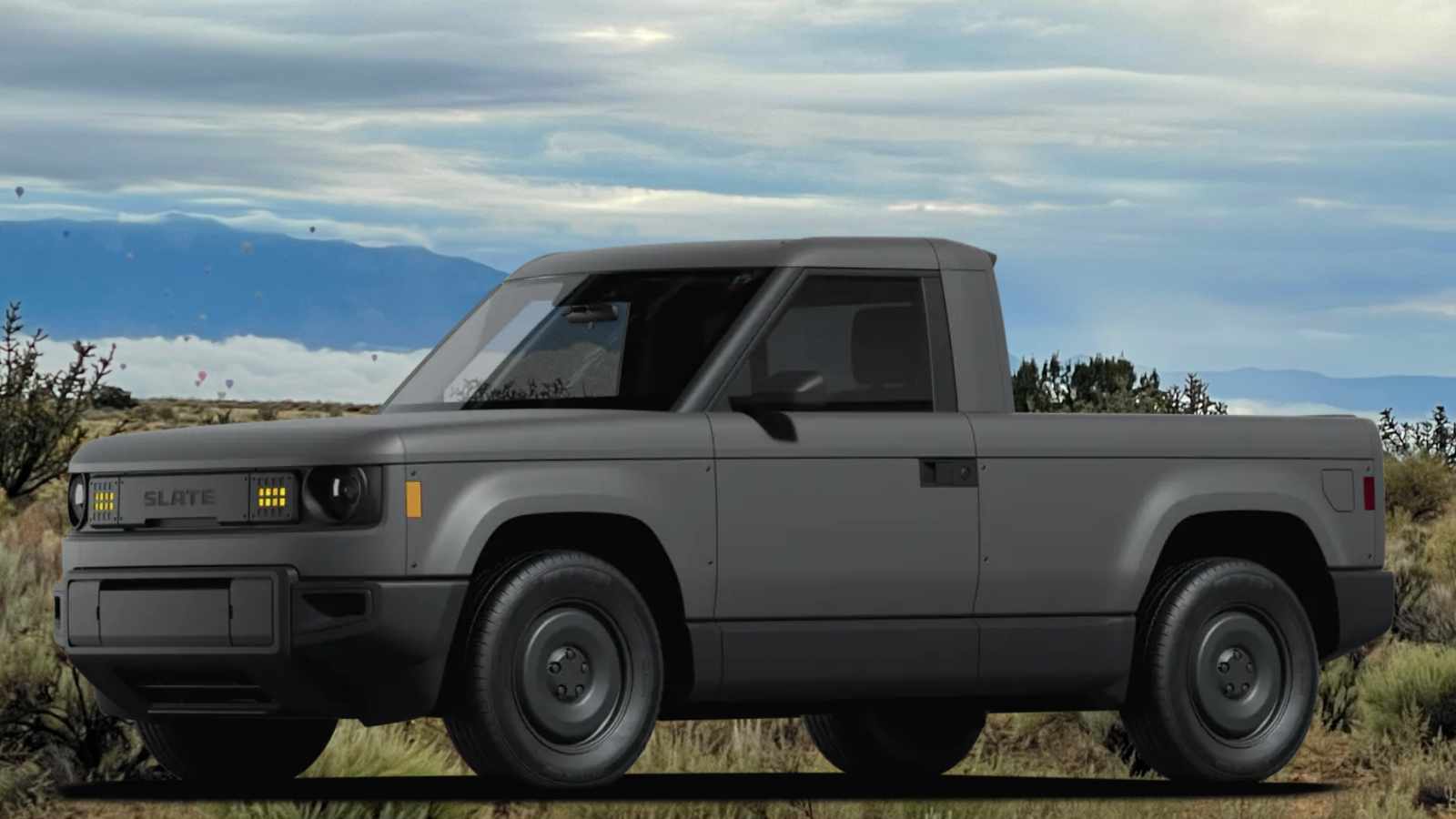
All the Slate vehicles scheduled for production come off the assembly line almost identically—they’re gray, single-cab, compact pickup trucks. They do have A/C, but they also have manually-operated windows (remember those crank-up windows?) and no audio system at all. The biggest choice you make is on power systems. There are two battery packs for the truck: a 52.7 kWh and an 84.3 kWh battery offering a projected 150 or 230 miles of range.
What this does is dramatically simplify production of the vehicle, which is a major component of why they’re so affordable. With so few SKUs in the mix and direct sales to consumers, the Slate optimizes the U.S.–based production so that the vehicles can be made affordably.
As for being a pickup, the bed of the vehicle measures four by five feet, but with the tailgate dropped, you can accommodate four by eight-foot sheets of material.
This simplification of the product also means potentially fewer issues, according to Jeremy Snyder, Chief Commercial Officer at Slate. “New cars go back for multiple warranty repairs because of the technology of the vehicle. Because we’ve simplified the Slate so much, it’s going to be far more reliable and last a really long time.”
Owners can do their own repairs
Something else the company is doing is enabling owners to do their own repairs.
Snyder added: “We’re very open source. We want our customers to do DIY repairs. They can DIY warranty repairs.” The company is working with Repair Pal, which has access to more than 4,000 shops nationwide. “It’s a real game changer for the industry. It’s about building confidence for our customers.”
One component of effecting one’s own repairs is the Slate app, which will actually deliver any diagnostic codes the vehicle generates. This is in stark contrast to every other vehicle. They may generate trouble codes, but you need specialized equipment and, oftentimes, training to decipher those codes.
The truck itself utilizes a steel space frame and composite panels on the outside. The structure is designed to offer five-star crash safety ratings for the vehicle, including both front- and rear-seat occupants. More about those rear seats in a moment.

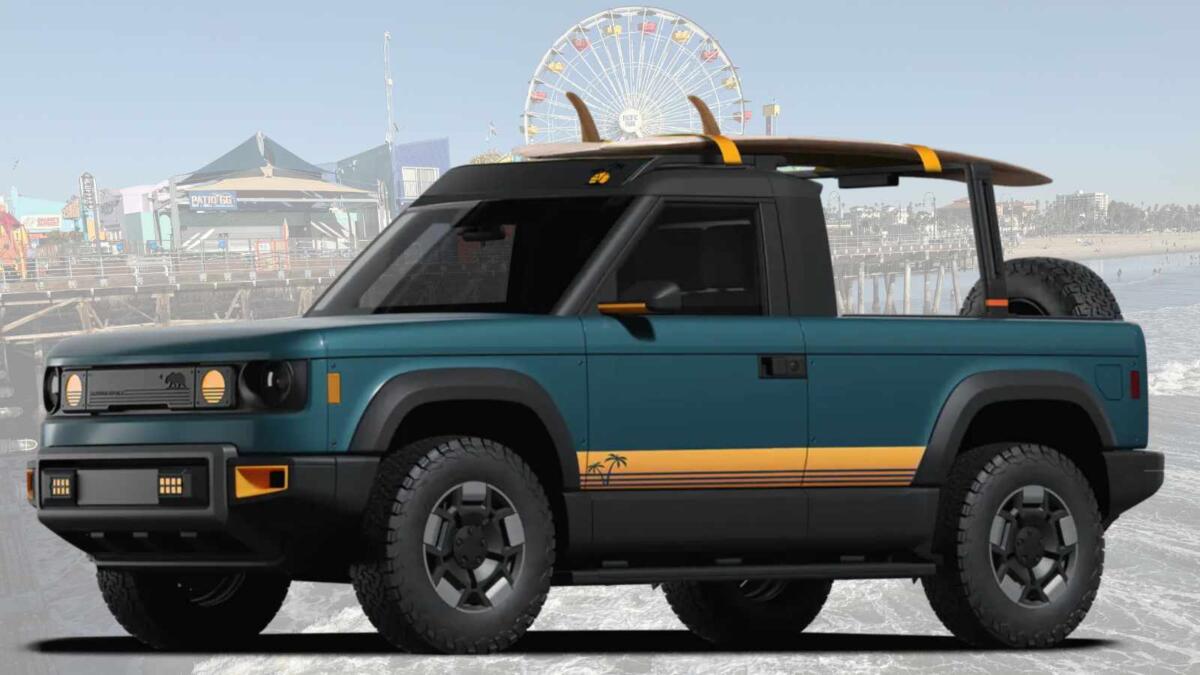
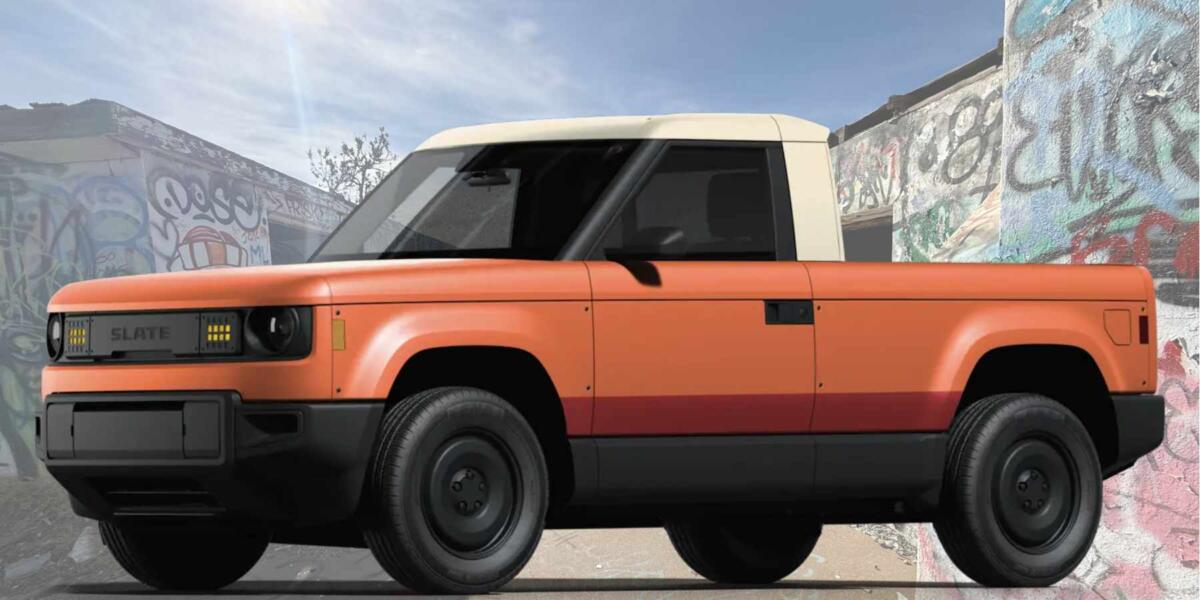
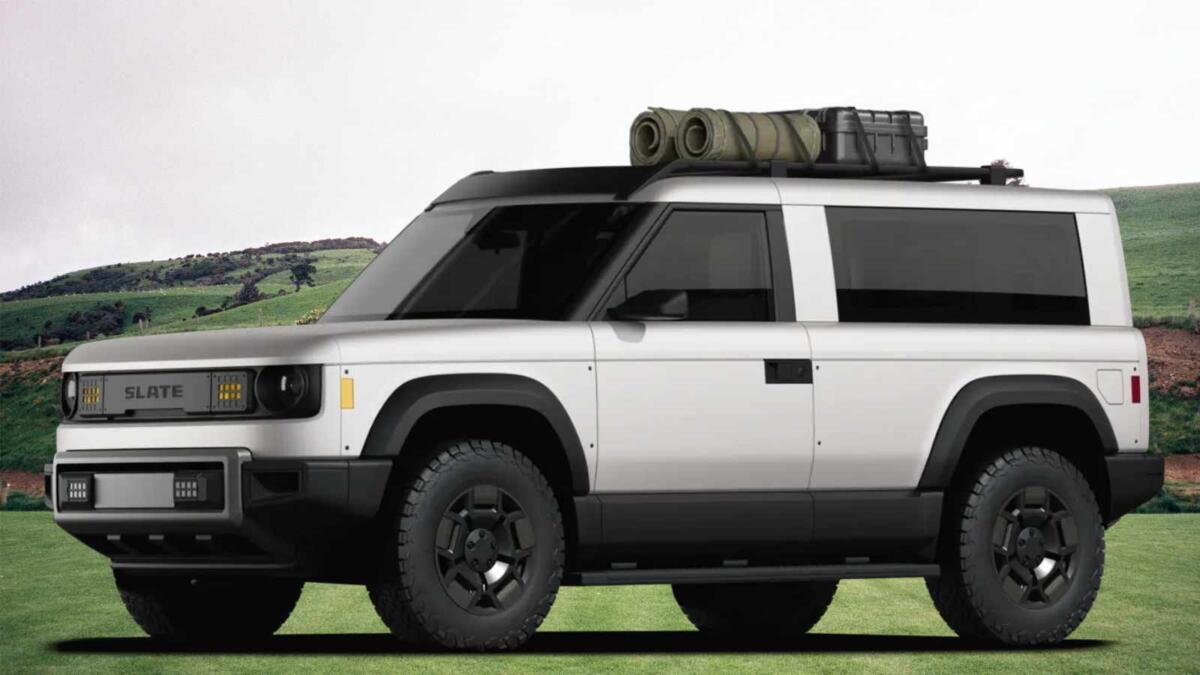

Slate is user-customizable
While all the Slate offerings come off the line identically, the objective with how the vehicle is built is to offer almost complete customization of the vehicle.
While they’re all small, single-cab pickups at the start of life in the same gray color molded into the exterior body panels, those panels can be easily removed and replaced.
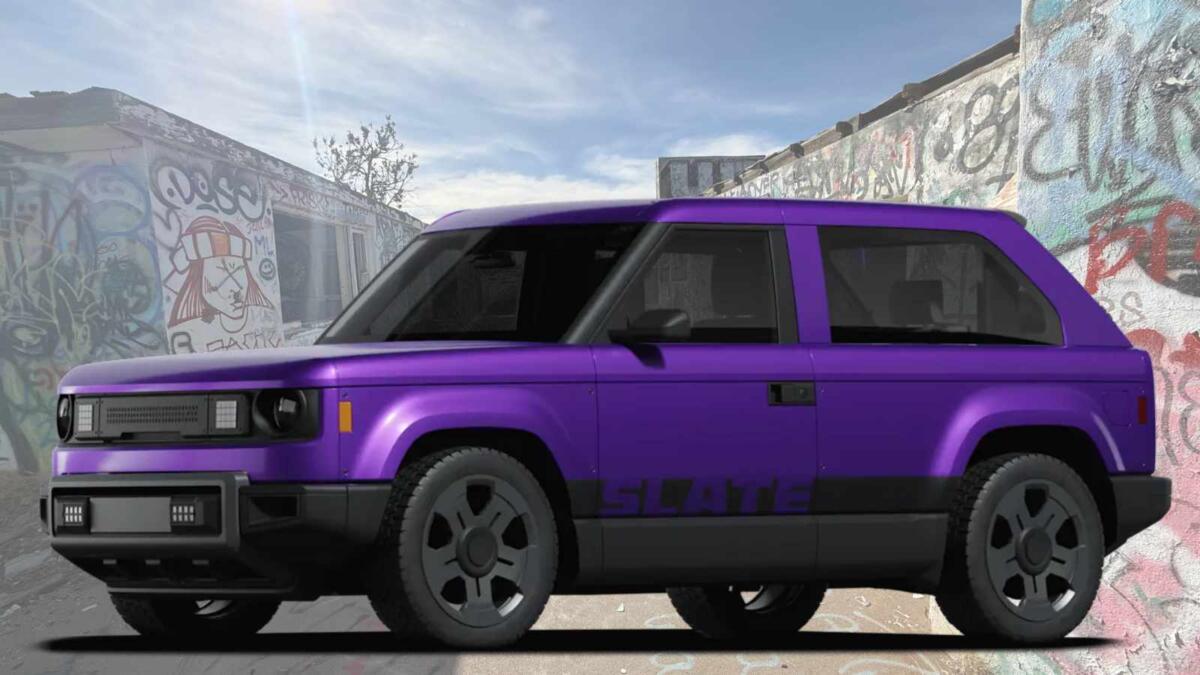
But they’re also designed very specifically to take a wrap. So, you can change the color of your Slate or add and remove accessories to vary its appearance. One of the biggest changes you can make is to the configuration of the vehicle itself.
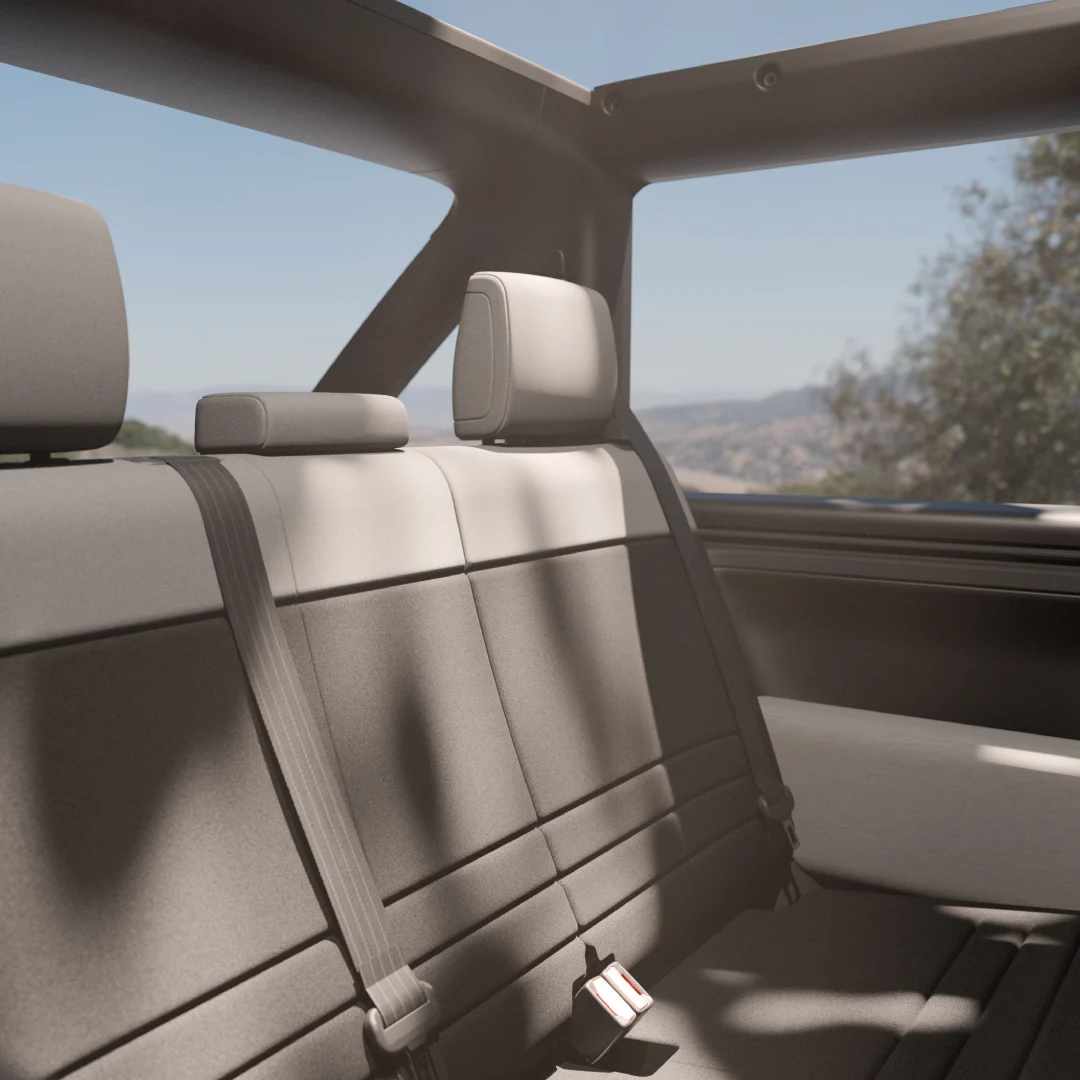
By removing a few rear panels and adding what resembles a pickup camper shell, the Slate can be converted into either a fastback or squareback SUV. It also includes provisions for adding a rear seat and roll bar, complete with airbags for rear passengers.
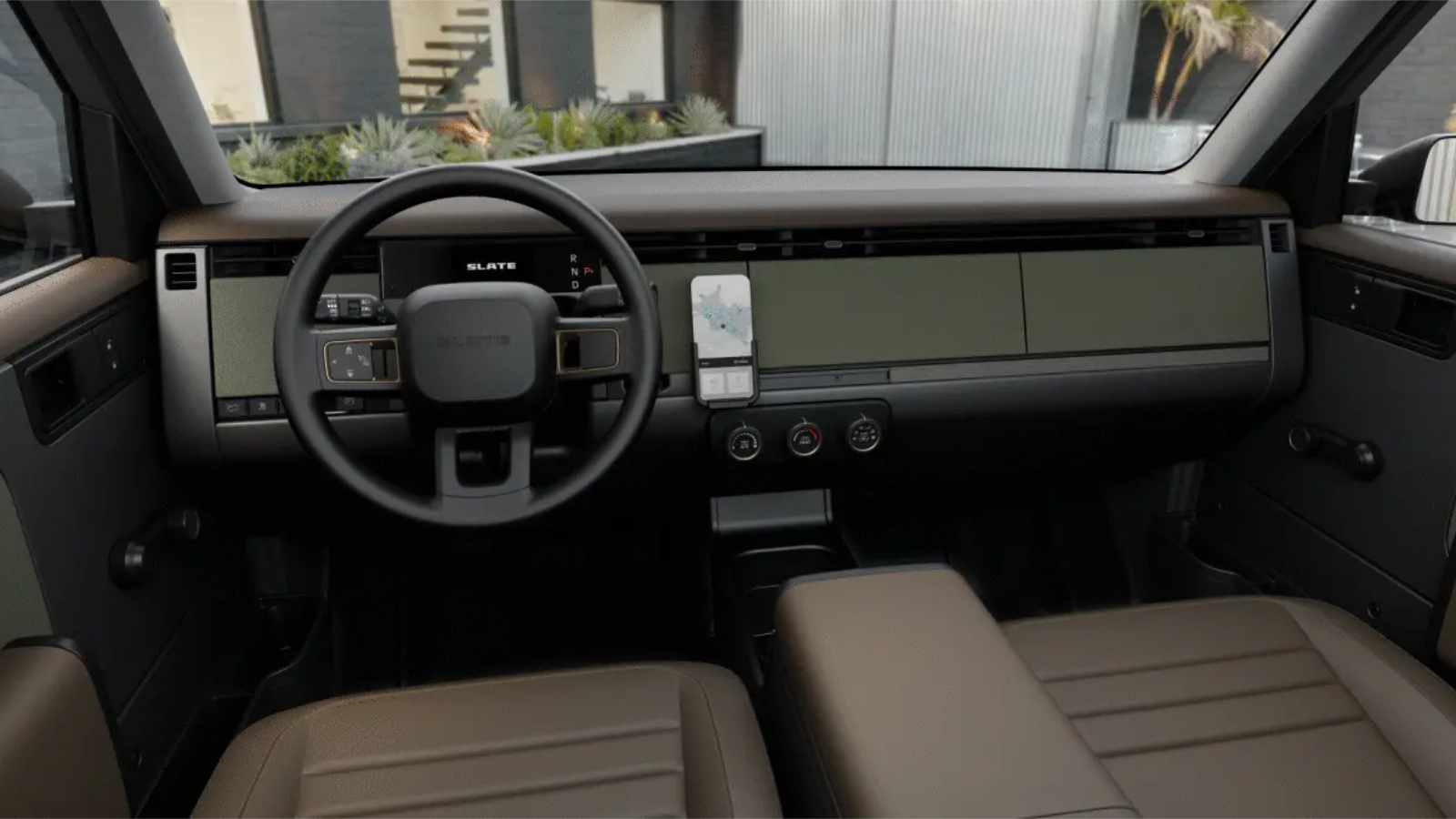
I had written that there is no audio system in the Slate, but the company did make a provision for an aftermarket Bluetooth audio system as well as a tablet provision in the dashboard.
Frankly, I think this is brilliant. You may see a vehicle as a long-term investment but realize that technology moves very quickly. If so, you share my opinion that all the tech in a modern vehicle is inherently dated soon after you buy the vehicle and completely outdated a few years later.
By simply plopping in a tablet or Bluetooth system, you get a modern interface now and can replace that down the road. Brilliant.
That’s a wrap
Part of the idea of the vehicle is to offer a blank canvas to buyers. You can start out with the simple gray single-cab truck and then, down the line, change the color or the style. Perhaps you could also change the configuration if you have a child and now need a back seat.
But the changes are really easy to do with the upgraded components being able to be shipped in a flat pack. Think of Ikea furniture.
The company pitched investors by showing them the basic truck, then moving to a conference room to talk further. Then those same investors were brought back to look at the preproduction truck. It had been reconfigured as an SUV in the short time they were gone.
You can also easily change colors or just put stripes or stickers on the truck. Perhaps you’re enjoying a vacation, and you use all those vacation stickers to detail out your Slate. Whatever.
The bottom line is that the vehicle is a blank…Slate…for what buyers want to do with a price low enough that they can step into the vehicle. Then there are plenty of choices from the factory for making changes down the line.
Exposed fasteners across much of the exterior give the vehicle a distinctive look while also making it easy to swap out components. As 3D printing becomes more accessible, owners could even create custom, self-designed parts—something that will likely lead to shared plans online.
The rest of the story?
Something that isn’t being mentioned includes the cost of the upgrades. For example, you can convert the basic pickup to an SUV with second-row seating, a roll bar, and a choice of two roofs. But airbags are expensive, as are heavy metal structures, as you’d need to achieve the safety and rollover standards to support rear-seat occupants.
And all these trucks leave the factory in gray. That saves Slate and, by extension, the owners a bunch of money, since Slate doesn’t have to have a paint shop in their plant. But wraps aren’t cheap, either.
I’m not disappointed that there is a vehicle that is user-serviceable and customizable and not overloaded with a bunch of tech that’ll go out of date at the change of the model year. But I’m also the guy who favored the “Tradesman” version of my truck rather than one laden with all sorts of fancy stuff. (Tradesman is the entry-level variant of the Ram pickup.)
But is it an RV?
In the strictest sense of the word, no. This is not an RV. Yet. But with the exposed roll cages and designed-in attachment points at the railing of the bed, it’s inevitable that clever manufacturers will offer all sorts of accessories to make this serve those who like to camp.
For example, a while back, I got to look at a Four Wheel Pop Up Campers Project M, which is, much like this little truck, also a blank slate. I can see that company offering a variant of this camper for the Slate and talking about a perfect fit.
If you visit something like the Overland Expo, you’ll see any number of camping provisions available in the aftermarket, including an incredible number of roof-top tents and such. I can see these Slate trucks being examples at Overland Expos from various makers of aftermarket add-ons. And that’s the whole idea.
*****
RELATED
- Slate EV Truck: A $25K EV you can repair yourself (with video)
- New futuristic, power-generating RV debuts; recharges the truck towing it
- New Evotrex travel trailer lets RVers roam farther with hybrid system
- Experiment shows roads themselves could charge electric RVs
- GM shuts down BrightDrop electric vans amid slow EV sales
- How realistic are hybrid travel trailer power claims?
RVT1255b


Is this another Elio?
One never knows but I think they’re on to something here. However Toyota and Ford have both announced affordable smaller pickups so, from a price standpoint, they may have competition but the thinking behind this vehicle is also pretty great in my opinion. Only time will tell.
Hello Tony. This Slate Truck/SUV is very interesting. Much different than the trend of electric vehicles being unaffordable to the average person. I contacted Slate months ago; they were very early in the design at the time. I suggested they make the vehicle Flat Towable and recharging while being towed. I was told it would be flat towable but would not recharge while being towed. I suggested it could be a niche vehicle to RVs who flat tow, similar to the Saturn was years ago.
That’s my question as well. It would be nice to flat tow this. As for charging, there’s got to be a way to charge that somehow?! I would consider this to tow behind my RV!
If it was being charged while towing that is adding extra load to the towing vehicle resulting in reduced fuel mileage. The economy would probably be better to charge the battery at a charging outlet.
Flat towable would make it a choice. Otherwise, we will just keep our Ford Maverick.
Interesting concept. The ranges will only make sense for commuting. Let’s just see if that price turns out to be true. We were told low costs on Cybertruck and Lightning that were not remotely true.
I had put a deposit down on the Ramcharger which was what Ram showed and made so much sense but it doesn’t make any sense at over $100,000. I don’t want a Cadillac I want a pick ’em up truck.
As for the questions about flat towing I suspect that using a DC-DC charger connected to a compatible converter could charge the Slate’s batteries.
Looks like something I’d consider for a second vehicle in addition to my F-250. I also REALLY like that it’s assembled in Warsaw, Indiana!
Seems like it’s completely useless for pulling any medium or larger TT. Is this for teardrops or something?
This would appeal to people who don’t tow trailers but have motorhomes. If it tows well it would provide transportation after the motorhome is leveled and hooked up.
What about the elephant in the room, Tony? Charging requirements, time to charge, cost of putting in a charging station at home?
Well those are all details that are forthcoming but I can say this – I bought a used EV when the incentives got pulled because they have become very inexpensive. I just charge it from a 120vac outlet in the garage. Of course you can have a higher-capacity outlet installed but I have yet to need to do so.
I would imagine this is comparable to any modern EV of similar size in terms of time to charge and such. Unfortunately with EVs being less in favor I fear that charging stations are going to start to diminish.
That is a big no from me!
Thank you for the information, Tony. Seems an excellent business plan. They not only are avoiding a plant paint shop, but also dealers and service centers. Seems admirably simple and effective to do a narrow range of things and to focus on doing them very well. I briefly tried that strategy myself, but DW made me get out of bed and do something more than sleep. 🙁 Have a great day and safe travels!