

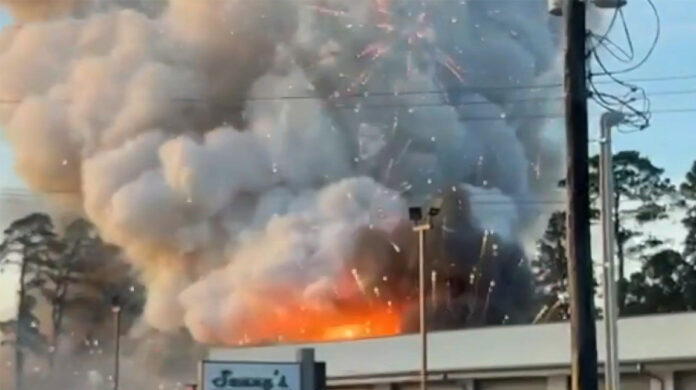
A Texas RV fire involving fireworks presented a safety lesson in dramatic fashion this week.
In northwest Harris County, what began as a fire involving an RV didn’t stay contained for long. The fire spread to a nearby shipping container full of fireworks, and suddenly explosions were popping off across the scene.
An RV fire is serious enough on its own. There’s plenty inside a rig to burn, and once it gets going, things can move fast.
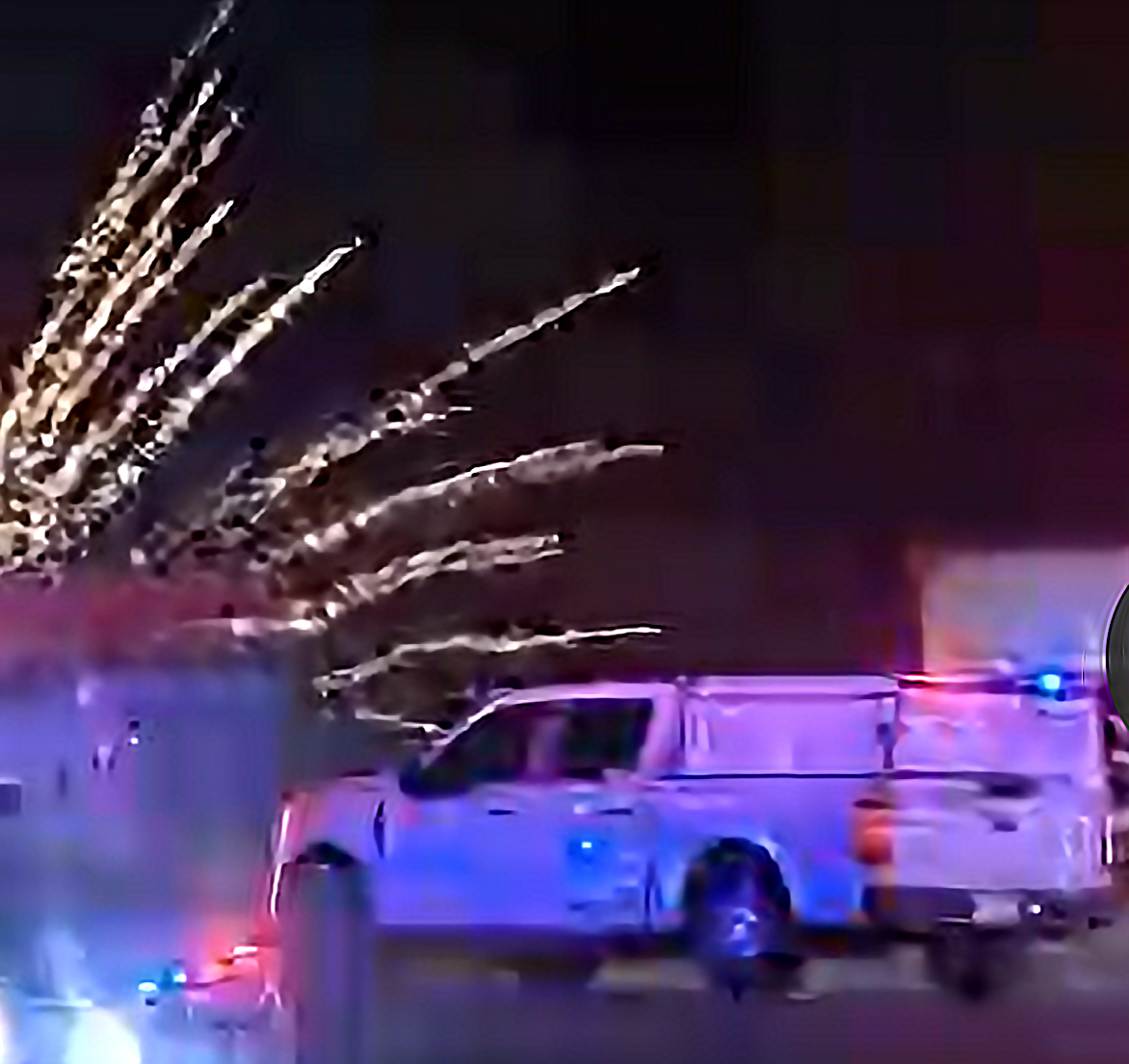
In this case, though, the RV wasn’t the whole story. The fire reached a concentrated supply of fireworks, and that changed everything. Instead of a contained fire, crews faced repeated ignitions, flying embers, and flames spreading outward into surrounding brush.
Roads were shut down around the fire, and people were told to avoid the area. The railroad nearby was also shut down.
Officials said no one was injured. They said one person was in the RV at the time, but was able to get out.
It’s not about fireworks
Most RVers aren’t storing a shipping container full of fireworks next to their rigs. But that’s not really the takeaway here.
What matters is how quickly a fire can grow when something nearby adds fuel—and how much difference the amount of that fuel can make.
Walk around almost any campsite—especially one that’s been set up for a while—and you’ll see the early version of the same thing. A spare propane cylinder tucked close to the sidewall. A gas can sitting near the generator. Storage bins, chairs, gear, all gathered in one convenient spot.
Individually, they don’t seem like much. But quantity—and proximity—changes the equation.
Fire doesn’t stay put
One of the easiest mistakes to make is thinking of an RV fire as something that stays inside the RV.
It doesn’t.
Once flames get outside the rig, they look for whatever comes next. If that next thing is more fuel—and a lot of it—the fire grows faster and spreads farther.
That’s what this Texas incident showed. The RV may have started it, but the sheer amount of combustible material nearby helped carry it well beyond where it began.
A quick reality check around your rig
If you’ve been parked for a bit, things tend to settle in. Gear migrates closer. Storage expands. What started as “temporary” becomes the new normal.
It’s worth taking a fresh look.
Step back and ask a simple question: If something caught fire right now, what would it reach next—and how much of it is there?
Because sometimes it’s not just what’s nearby. It’s how much.
The takeaway
This wasn’t a typical RV fire. The fireworks made sure of that. But strip away the unusual part, and the lesson is pretty straightforward. Fire grows where it can. And the amount of fuel it finds nearby can change everything, very quickly.
For RVers, that’s a reminder worth keeping in mind before something small has a chance to turn into something a lot bigger.
RELATED
- Woman killed in RV fire linked to space heater
- Space heaters under motorhome lead to fiery explosion
- Ask Dave: What is the best RV fire extinguisher?
- Watch RV fire unfold from above in sobering drone footage
- All about RV fire extinguishers
- Cautionary RV tale: Man blown out of rig fighting RV fire
RVT1253b


The story doesn’t say where the RV was parked.
Was it in a storage lot or on private property?
Did the RV owner also own or rent the storage container?
Not enough information.
I’m not so worried about my chairs spreading the fire as I am my 80 gallon gas tank.