


Thank you all for your warm welcomes and great questions last week. I got quite a few questions about pet first aid: What should we have on board when we travel?
In this week’s column, I will give you the basics, and in future columns, I will address more advanced tips.
Before I give you a list, please take this to heart:
First Aid is meant to address minor problems. Anything more severe than a minor scratch or itch, your treatment should be immediately followed by a visit to the vet. For instance, a puncture wound that looks small on the surface can quickly blossom into a severe abscess and, at worst, cause deadly infection/sepsis. I don’t mean to scare anybody, but I have seen many horrible outcomes when clients decide to treat the dog or cat themselves or wait too long to address symptoms.
Several things that should be in your kit will include your pet’s medical record (including rabies tag), any prescription medications as prescribed by your vet, and a card with vital information – more on that below. Also, making sure your pet is covered with a multipurpose flea/tick/worm/heartworm preventive is crucial for keeping your pet healthy at home and on the road. It should go without saying that keeping your pet up-to-date on vaccines and making sure your contact information is up-to-date at the microchip company is very important.
What are the more common daily risks of traveling with your pet that you may need to address?
- Minor skin conditions and wounds
- Minor eye inflammation, foreign bodies, scratches
- Heat/hydration problems
- Gastrointestinal problems – vomiting, constipation, diarrhea, foreign bodies
- Toxins – human medications, toxic plants, blue-green algae
- Immune responses: skin allergies, anaphylaxis/asthma (respiratory)
The Basic Kit
Tools
• Tweezers – for removing thorns, foxtails (grass awns), splinters
• Mosquito hemostats – for removing ticks, broken nails
• Bandage scissors – blunt-tipped
• Flea comb
• Oral syringes – several sizes: 1ml, 5ml, 10ml
• Oral piller
• Digital thermometer – I like the Vicks brand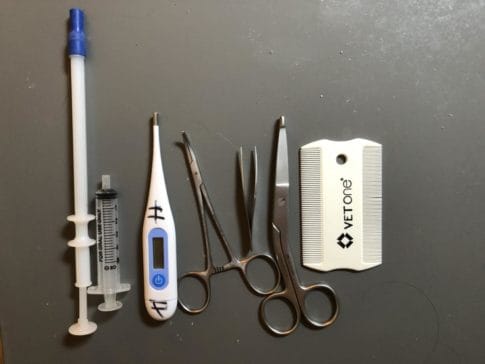
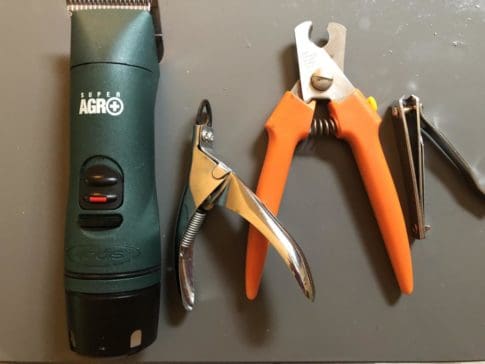
• Nail clippers with styptic powder
• Electric clippers for mats and shaving around wounds
• E-Collar – to prevent licking and chewing
• Muzzle – quick release. Find one they can breathe out of (open basket muzzle). Dogs will lash out when in pain.
• Towels – With cats, towel wrapping works best.
Useful Supplies
• Sterile saline flush – for eyes and wounds
• Betadine (Povidone-iodine 5% solution) – for wound cleaning
• Hydrogen peroxide
• Antiseptics – triple antibiotic ointment, antiseptic spray
• Anti-itch cream – hydrocortisone cream, lidocaine cream/spray
• Electrolytes – Pedialyte
• Honey – for hypoglycemia and for wound care
• Sterile water-based lube – for thermometers and wounds
• Ice packs
• Gauze pads
• Cotton-tipped swabs
• Cotton balls
Medications/Supplements
• Anti-allergy – diphenhydramine or another antihistamine
• Antacid – Pepcid (Famotidine) or Omeprazole
• Sterile eye lube – Artificial tears
• Fiber supplement – Metamucil, psyllium powder
• Probiotic – I like Proviable (Chewy.com) or Visbiome (Amazon.com)
• Antiemetic – Cerenia (prescription from your vet) for vomiting
• Apomorphine – to induce vomiting (do not use hydrogen peroxide). You can get this from your vet.

How do I use these?
Understanding how to use these items is important. There are things, if not used correctly, that could harm your pet. The ASPCA has first aid training which can help you feel more comfortable. There are items often included in other lists/kits that I have purposefully left off this basic list. For example, you don’t see tape or roll gauze on the list because if you were to apply this too tightly, your pet could lose a limb due to lack of circulation. I have seen well-intentioned owners in tears because they thought they were helping their pet only to have a foot or leg amputated.
In heat-related conditions, a thermometer is important because heatstroke will raise a pet’s temperature dramatically. If a pet is ill or injured, a high temp could indicate an infection which is a clue for the vet. Taking the temperature of a dog or cat is typically done anally so the sterile lube comes in handy. In a pinch use cooking oil. Also, electrolytes (Pedialyte) in dehydrated, overheated pets can help improve their condition before you get to the vet. Normal temperatures in cats and dogs run about 101 F to 102 F. When it goes above 104, your pet is sick and in danger. In heatstroke, temperatures 107 and above will cause organ failure and death. Cold packs can be used to cool pets down and to reduce swelling from trauma.
The anti-allergy medication diphenhydramine can be used when your pet reacts to something he encountered on walks or inhaled. Cats and dogs have asthma and diphenhydramine will help relieve mild symptoms. More serious breathing problems can be an acute emergency that calls for an immediate trip to the emergency vet.
IMPORTANT: Benadryl is a brand that produces many products. The only ingredient in Benadryl ALLERGY is diphenhydramine, and diphenhydramine (or another antihistamine given to you by your vet) is the only allergy medication you should give your pet. Other products may contain drugs toxic to your pet. Acetaminophen is extremely toxic and should never be given to pets. NEVER GIVE A HUMAN PRODUCT TO YOUR PET WITHOUT EXPLICIT INSTRUCTIONS FROM YOUR VET. It is the most common toxicity seen in animal ER clinics.
Clean minor wounds with Betadine diluted with sterile saline. Sometimes clipping the fur around the wound helps keep it clean. Before you clip, use the sterile water-based lube to cover the wound so hair doesn’t contaminate it – another use for the lube. There are many antiseptic sprays out there and they can be useful for minor wound healing. Dogs are notorious for getting hot spots and, depending on what is causing it, these cleaning techniques can help. If the dog itches, the hydrocortisone or lidocaine cream can help relieve the symptoms until he gets seen by your vet.
Pets get travel diarrhea and constipation just like we do. I have listed some medications and supplements to help prevent GI upset and to relieve symptoms once they begin. I like using probiotics as a preventive supplement and fiber can come in handy. If signs don’t resolve, a trip to the vet is warranted.
Lastly, what if your dog (or maybe your cat) eats something she shouldn’t have – human medication, a huge bar of dark chocolate, part of a Sago palm, a lily? Call the poison control hotline at the SPCA: 888-426-4435 to find out if your pet ate something dangerous and what you should do. Here is a link to their list of toxic plants which is very helpful: SPCA Toxic Plants. The consultant may ask you to induce vomiting in your pet if you can’t get to an emergency clinic right away. If your dog (or cat) is prone to eating things, ask your vet for several doses of Apomorphine to put in your kit. This is a safer alternative to giving your dog hydrogen peroxide, which can cause serious systemic problems. You should follow up the vomiting with a trip to the ER clinic or to your vet. Depending on how long ago the offending item was ingested, your dog may have absorbed a significant amount of whatever. Please note that some toxic things, such as motor oil, are dangerous if vomited by your pet; please consult your vet or the ASPCA hotline and follow the expert’s advice.
I will discuss ingested foreign bodies and other medical emergencies in another column. I had a dog named Mango. Well, Mango ate a lot of non-edible things. Oh, the stories I could tell!
The Dreaded Lily
Here is my advice for cat guardians: NEVER HAVE ANY FORM OF LILY IN YOUR HOUSE OR RV. Even the pollen, if ingested by your cat, can cause acute kidney (renal) failure and death. I am not kidding.
Important Information to have handy
Here is information you should write on a card and laminate and carry with you in case of emergency at all times:
- Vet name, phone/text numbers, address. Include an after-hours number If your vet has one.
- One of the 24/7 Animal Poison Control helplines. I’ve listed the SPCA number above.
- Pet Information
- Age, Name, Male/Female, Spayed/Neutered
- Microchip number. Include the phone number for the microchip company.
- Weight
- Medical conditions including the names, doses and timing of all medications your pet is on.
- Any known allergies or drug sensitivities
- Gastropexy (yes/no) – If your dog has been treated surgically for bloat, he has had a gastropexy.
- Blood type (if known) and any previous blood transfusions
My advice in this column is intended to inform you of issues and answer common questions you may have. It does not replace the medical care and advice of your veterinarian. I did not provide doses for the drugs in the above list. I would like you to review this list with your vet to make sure she/he is on board and can give you valuable advice on how to use your kit.
Keeping your pet healthy
I received a few questions last week that were specific to medical conditions of readers’ pets. It must be frustrating when I don’t give you medical advice on how to deal with it and instead tell you to call your vet. I understand. I empathize. However, I cannot legally, or ethically, give you medical advice since I have not examined your pet. Diagnostics are important tools to figure out what is going on and how to treat it. Often, a trip to the vet or the ER is the only way to accomplish what is best for your pet. At some point I will discuss pet insurance, which I encourage everyone to consider. Pet insurance can help when an emergency occurs.
I assure you that I only want what is best for you and your furry and feathered love ones while you travel on the road in the great adventure of RVing.
Ask Dr. Karel, the Pet Vet!
Fido feeling under the weather? Fifi been having some tummy troubles? Worried about ticks? What’s better, wet food or dry food? Wondering how to clip your pet’s nails? Ask veterinarian Dr. Karel Carnohan your questions. Please include a description of your pet’s issue or a question you’re curious about. Upload a photo of your pet if you choose. Dr. Karel will do her best to answer your questions.
Check out the recent RVtravel.com articles on RVing with pets:
Guidelines for RVing with pets for a safe and pawsitively fun experience
Finding a veterinarian on the road
Lost Pet? Here is what you should do
##RVT1016


Great article! Thank you so much! We have a lab boy that is lightning fast and “eats first, asks questions later” if something drops on the floor. A few years ago he got a dropped grape when we were on the road and I called our vet who instructed me to induce vomiting with peroxide. We had done it before when he ate some trail mix with raisins, but this time it wasn’t doing the trick. Turned out that our peroxide in the RV medicine cabinet was several years old and not as potent. We now replace it every year, and also stopped buying grapes. (We ended up going to an emergency vet , not a fun or inexpensive evening)
My Mango was the same way! I suggest speaking to your vet about getting several doses of Apomorphine to avoid the use of hydrogen peroxide. Keep it on-hand and check expiration before every trip. More and more vets are not recommending H2O2 (hydrogen peroxide) because it can cause systemic problems and, just like you experienced, may not work. Apomorphine is safer and more effective.
Excellent, thanks so much for the tip!
Speaking of no Lily, also, important in these times of diffusing essential oils to know what oils can be toxic to pets
You bet. Many think natural oils can replace a good flea product and yet few realize that many are toxic. I will try and find a resource to share for that.
Many people won’t take their pet to the vet because of cost. Example, my dog wouldn’t eat. Vet visit was $600. People love their pets but can’t afford medical treatment. I think some people give their dog to SPCA because of expensive medical cost.
I understand completely and share your concern for cost. I will write about the growing number of companies offering pet insurance that can be a great help when an emergency occurs. Stay tuned.
At a great cost. And it’s still up front cost to you then send receipts to get reimbursed that takes several weeks.
Vets are a run away train like dentist and not all but most. Just vaccines on a visit can be $200 then the visit fee and you’re at $250. Again a lot when dealing with medication is the pharma companies gouging in the background and some medication are cheaper to get at the pharmacy than at the vets. antibiotics for one.
In our area we have Tractor Supply Stores. They off and on have a vet come in and give discounted pet vaccines.
We calculated the cost for pet insurance over an average lifetime of our pets and decided to just keep one credit card for pet medical expenses.
Even with the high interest rates on credit cards it was a wash and if we paid off the card quickly we could save money.
It’s not for everyone but it works for us.
For those who can’t avoid the temptation of using the card for other purposes a pet expense savings account is another possible alternative.
Thank you so much for the invaluable advice we’ve found in your column.
We’re native Kansans so we have a high regard for the K-State School of Veterinary Medicine. What prompted you to choose K-State for your veterinary education?
Go Cats!!!
A pet medical savings account is an excellent idea. It is difficult to keep up with the skyrocketing costs however. If one stays on top of it, it is a good supplement or replacement for insurance. The pet insurance plans are getting better however, which is a good thing.
I applied to about 10 vet schools, got into 3 and chose K-State because of its top exotic animal medicine program. I did not end up working in zoos over my career but that is where my passion lies. Having graduated K-State at 50 I decided zoo work was not viable although some of my friends in school are running top zoos now.
Thank you for supporting RVTravel and reading my posts.
Karel