


Dear Dave,
I am a full-timer who filled my water tank with poor well water a couple of years ago. Ever since then, my water heater has hosted a stubborn “biofilm” I cannot get rid of. I have repeatedly sanitized the water system with bleach. I tried sanitizing with Purogene. That didn’t work either. After sanitizing, it doesn’t take long for the algae to again be visible in a glass of water. It clogs my Brita filters immediately. How do I get the biofilm out of my hot water tank and entire system? —Diana, 2018 Northwood Mfg. Arctic Fox 27-5L fifth wheel
Dear Diana,
According to the Department of Health, blue-green algae that is commonly found in water tanks and systems in agriculture and recreation is a type of bacteria with traits of both bacteria and algae. It can create toxins that can cause minor symptoms such as skin irritations, respiratory issues, and hay fever-like symptoms. If ingested it can cause much more severe issues including vomiting, diarrhea, fever and even liver and nervous system damage. And it can be lethal to pets.
Does bleach kill algae?
According to the Clorox website, you can use Clorox bleach to sanitize a water system. However, it says nothing about actually killing the algae spores or blooms. The actual chemical that is supposed to kill algae is sodium hypochlorite. Regular household bleach contains 5-6% sodium hypochlorite, and pool or spa chlorine has four times that amount. So, maybe your concentration is too weak. Most recommend the concentration of sodium hypochlorite should be at least 7%, which is listed on the label.
I also talked with our local pool and spa specialist. He stated that if the pH of the water is over 7.6, treatment will only be a temporary solution, as you are experiencing. I have always had good luck with a bleach disinfectant. However, I doubt my water systems were anywhere near what you are experiencing.
What to use
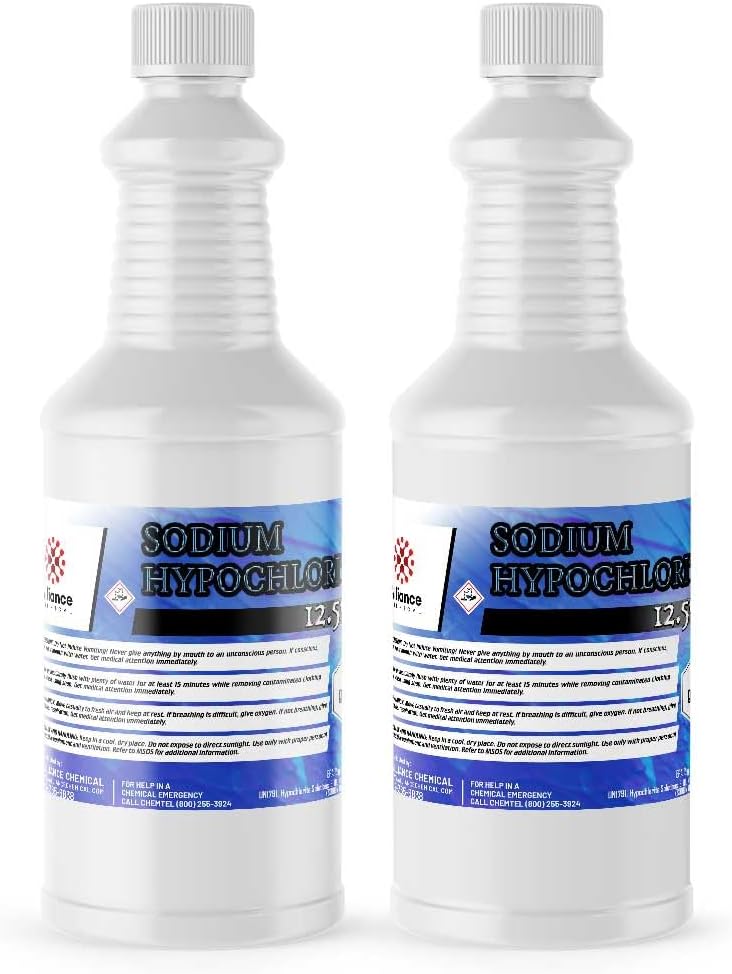
Over the years I have come across many variations of treatment, including copper sulfate and zinc sulfate. However, my pool guy suggested using a pool shock product or a high concentration sodium hypochlorite such as this one available on Amazon. It has more than 12% concentration. (If it can’t be shipped to you due to regulations, check for a similar product at big box stores such as Lowe’s and Home Depot.)
One more thing to check
One last item to check. When you flushed the water heater out using bleach, did you use a flush wand to get the “gunk” out of the bottom of the water heater tank? The drain hole is not the lowest point and if you just let it drain out, there will still be about an inch or more left in the bottom. That could also be your problem. You will want to use a flush wand like this one available on Amazon.
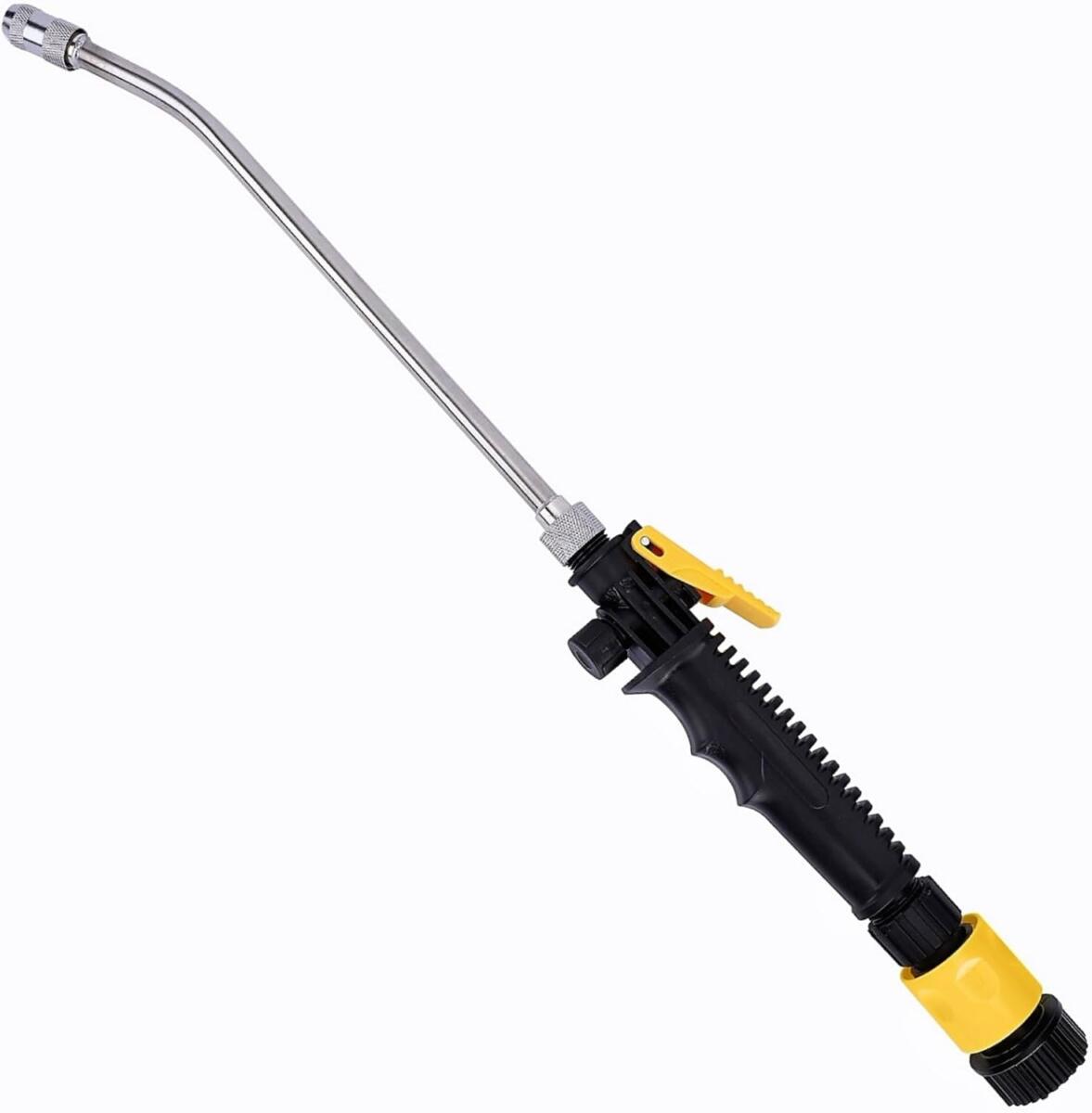
I like this one as it has an easy on/off, spring-loaded lever, good grip, and the tube is threaded onto the handle. We have had several readers with the plastic push-on tube flush wand comment that the tube disconnected and shot into the water tank!
I would drain the water in the tank first, insert the flush wand for at least one minute to get everything flowing and draining, do the sanitation discussed earlier, then flush it again.
Make sure you disinfect the entire fresh water system. That means not only the hot water tank, but also the fresh water tank and all water lines in the system including the exterior shower, toilet and flush wand.
You might also enjoy these posts from Dave
- Will I ruin my water heater by running it with no water?
- Best way to clean and sanitize RV fresh water tank
- Your RV’s fresh water system: What you should know
- Where is RV fresh water tank’s low-point drain? I can’t find it
- How to get excessive mold out of RV’s fresh water tank
- How long can fresh water be stored in the RV’s tank?
DAVE HAS ANSWERED MORE THAN 1,000 readers’ maintenance and repair questions. Read a directory here. There is so much to learn!
Dave Solberg is a leading expert in the RV industry and the author of the “RV Handbook.”
RVDT2779

I’ll suggest vinegar rather than bleach. Dave, you hit one of the problems; a high (alkaline) pH value. Vinegar is acetic acid dissolved in water; it is also less toxic than bleach to humans. Buy the cheapest food grade vinegar you can find – hint, gallon jugs at the dollar store. You will need a 50-50 vinegar to water concentration. So 3 gallons for a 6 gallon heater. Leave the plug/anode in place and remove the pressure relief valve at the top (there is a Camco socket for that). Pour in the vinegar, add the water and let sit for a full 24 hours.
Use a catch bucket (or have DEAD grass) and drain via the plug/anode. Then flush the tank with the suggested wand. [continued]
[continuation] Refill your water system with city water and run water through your taps on the hot side (you don’t need to heat the water). You will initially smell the vinegar but it should quickly dissipate. That residual acid might be also killing bacteria in your lines. Regardless, remember, this was food grade vinegar. Isn’t going to harm your plumbing or you.
The water heater also does not fill completely. There is air trapped at the top so anything growing above the water level won’t be affected by the bleach.
Use max strength white vinegar instead of what Dave mentioned let set over night and rince well before start up.
A caution with using Pool Shock – read the directions. It is formulated to treat 20-28,000 gallons of swimming pool water. I have used it, successfully – albeit carefully. I also maintained a community pool for several years – occasionally requiring a shock treatment due to heavy use and high temps. Also be careful with using acid based products – especially with chlorine or bleach which forms a dangerous gas making breathing virtually impossible!