

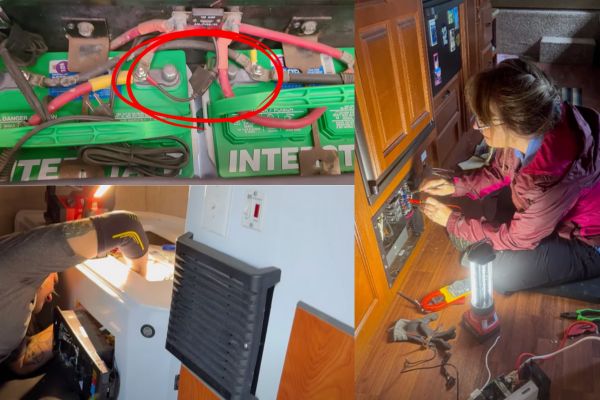
For many RV owners, costly repairs can come out of nowhere. The good news is that simple maintenance tasks often stop these big problems before they start. Small checks throughout the year can save thousands in repairs and major headaches down the road.
In the video at the end of this post, Deb with Deb’s RV Services shares what she recently saw some unfortunate RV owners dealing with, and how a bit of attention can prevent huge bills later on.
Preventive maintenance isn’t just about keeping things clean. It’s about catching those $20 problems before they become $2,000 disasters. Overlooking little things can turn into big issues fast. Deb says that anyone can stay ahead of most RV troubles with regular checkups and a basic understanding of their rig.
Battery problems
Dead batteries, flickering lights, or no power at all are among the most common calls RV techs get. Some customers replaced their batteries, only to keep running into the same issue. Every scenario usually led back to one thing: not keeping batteries charged or missing a basic step.
Here are some ways to dodge battery trouble:
- Keep batteries charged up regularly through shore power or solar.
- Check for blown fuses and replace them when needed.
- Monitor battery health monthly, especially if using power often.
- Use the disconnect switch correctly so batteries can charge when plugged in.
The inline fuse sits close to the battery and can blow out, blocking the power flow. Sometimes, old fuses crumble when you try to remove them. If a fuse fails, batteries won’t charge.
The disconnect switch is another puzzle. Travel trailers may have them near the tongue, while motorhomes put them by the door or in a cargo bay. If this switch is off, batteries won’t get a charge from shore power or solar, leaving the rig dark.
When batteries stay dead despite a charged system, the converter could be at fault. The converter changes shore power to battery power, so if it fails, batteries won’t charge. Before calling a tech, check shore power, examine all fuses, and make sure switches are on. Doing these checks first can save plenty on troubleshooting costs.
RV batteries come in three main types: lead acid, AGM, and lithium. Lead acid units need distilled water in each cell, or they dry out and lose power. Letting the battery dehydrate means it won’t charge well or last long. Set reminders to check battery water several times per year, especially in dry spots like Arizona.
AGM batteries cost more but don’t need water refills, so they’re easier for owners who want less fuss. Lithium batteries have become more popular and need even less maintenance. Knowing which battery sits under the hood makes a big difference in what care is needed.
Common appliance killers
Bugs, dust, and spider webs sneak into appliances like the furnace, water heater, and fridge. They keep burners from lighting up and sometimes cause loud “boom” sounds or big orange flames. Typical signs to watch for:
- Furnace won’t light or stay lit
- Water heater won’t fire up or makes loud noises
- Fridge won’t cool or loses power
Screens help keep bugs out of propane appliances, but don’t cover vents with anything that restricts airflow. Blocking venting leads to overheating and breaks appliances faster, just like forgetting to change furnace filters in a house. Always pick screens made for RV use, since the wrong ones can void a warranty. More on these screens here.
Yearly cleaning keeps burners, fans, and igniters in top shape. Soot or grime can cut short the life of appliances. Having a tech clean parts each year costs much less than replacing a failed fridge or water heater.
The water heater anode rod disaster
One major lesson came when a customer left water in her heater for four years and never checked the anode rod. The rod protects the tank from rust, but when ignored, it withers away and the tank eats itself alive—leading to a full replacement. A $20 rod change prevents thousands in tank and labor costs.
Quick tips for anode rod care:
- Check once per year and replace when mostly dissolved
- Only Suburban tanks need anode rods, not Atwood models
- Never leave water sitting in the heater for months at a time
Some RV units, like the Scamp, use rivets to mount the water heater. Drilling out rivets adds hours and needs special tools. It can easily bump up the cost of repairs, making a small problem much bigger if maintenance slips.
Knowing the basics can prevent big repairs
The key is understanding how batteries, fuses, disconnect switches, and appliance burners all work together. Learning these small details keeps the most expensive repairs away and your RV ready for the road.
If opening a fuse box or checking connections feels overwhelming, it’s smart to call a pro. Regular service every 6-12 months often pays for itself in savings.
Battery checks, cleaning appliance burners, and swapping out a tired anode rod are all small jobs with a huge impact. Taking a few minutes for each can mean thousands saved and road trips uninterrupted. It’s these basic habits that keep an RV rolling for years to come.
RELATED
- #1 tip on how to maximize the life of RV batteries
- What are the types of RV house batteries and what do the acronyms stand for?
- How, and why, to install insect screens on your RV vents
- What you’ve been told about your RV’s anode rod is wrong
- What’s the difference between types of anode rods?
RVT1228


I’ve come to believe the maintenance style in this article is an attitude thing. For me, you are singing to the choir. For others, they’ll face the music later – be if ‘don’t want to be bothered now’ or ‘I don’t want to spend the money (knowing it will only be more expensive later)’ – – sometimes both.
Just a guess, but lower mechanical aptitude or spatial awareness seems to also be common with those who delay maintenance. This type of person may simply be unable to visualize when something is progressing from ‘not perfect’ to ‘precarious’.
Re. “ If this switch is off, batteries won’t get a charge from shore power or solar, leaving the rig dark.”
This is not always true (in my case the batteries are charged and conditioned no matter what position the main disconnect switch is in). Always read the documentation that comes with your solar kit, and do not be afraid to ask specific questions about it when you’re buying.
I was surprised to see that my solar panels keep my batteries at 12.7+- even while in “Lucy’s” clubhouse. My shop has those fiberglass panels at the top edges. This is a plus for sure.
RE: Batteries..I don’t know if I’m correct or if anyone else has thought of this.
We had the power go out over here in the Entiat area with the fires. But it was a tree nailing the power lines 20 miles from the fires. Power blinked 3x then gone. I started thinking about my good pal LUCY..my Winnebago and her converter.
It couldn’t be nice for the power switching off and on several times over minutes, so I pulled the power cord that I keep plugged in when she is sleeping in her shop.
I went out today and plugged her juice back in and everything is swell!
I’d hate to have to spring for new electrical items when all I had to do was unplug her.