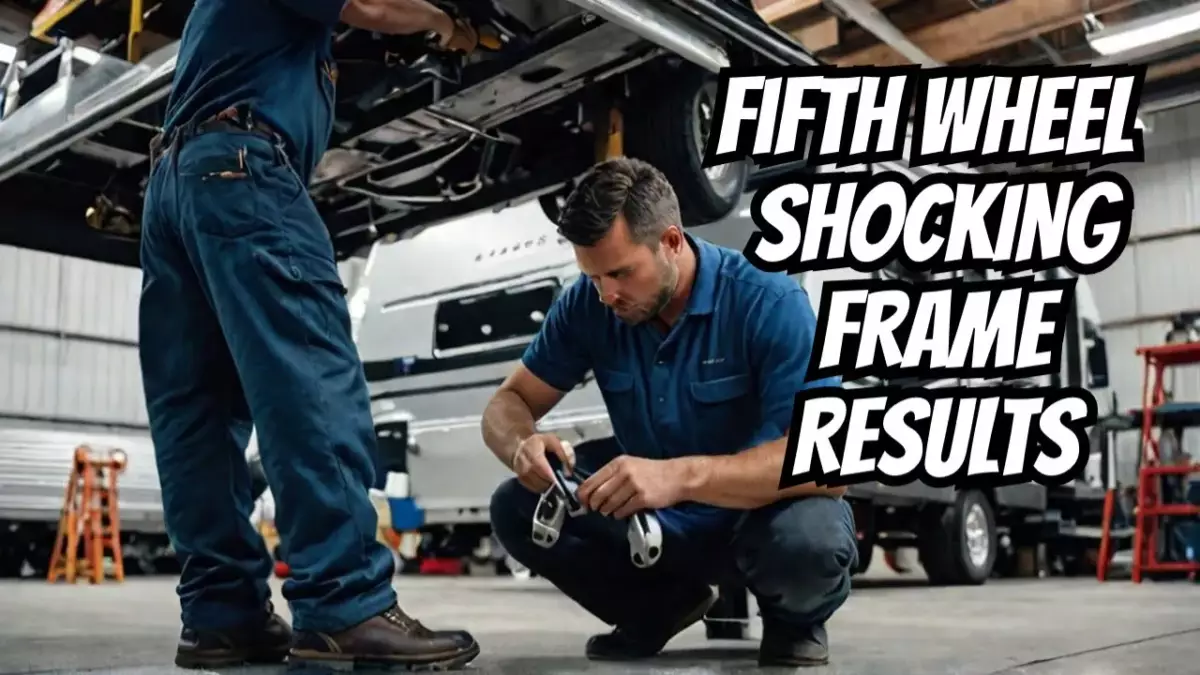
Join me (Dustin) at my shop, California RV Specialists, as I conduct a thorough inspection of a Grand Design RV fifth wheel for potential frame damage. In this video, I’ll walk you through the entire inspection process, highlighting the key areas to check when you’re concerned about frame issues.
After a detailed review, we’re happy to report that this unit came through with flying colors—no frame damage was found. Huge thanks to Grand Design RV for their support and assistance in making this inspection possible.
If you’re a Grand Design owner—or just an RV enthusiast—this video will give you valuable insight into how we inspect for structural integrity and what to look for when maintaining your own RV.
In this video, we cover:
How to check for frame damage in a fifth wheel
Key inspection points to look out for
Why Grand Design RVs are known for their solid construction
The importance of regular RV maintenance and inspections
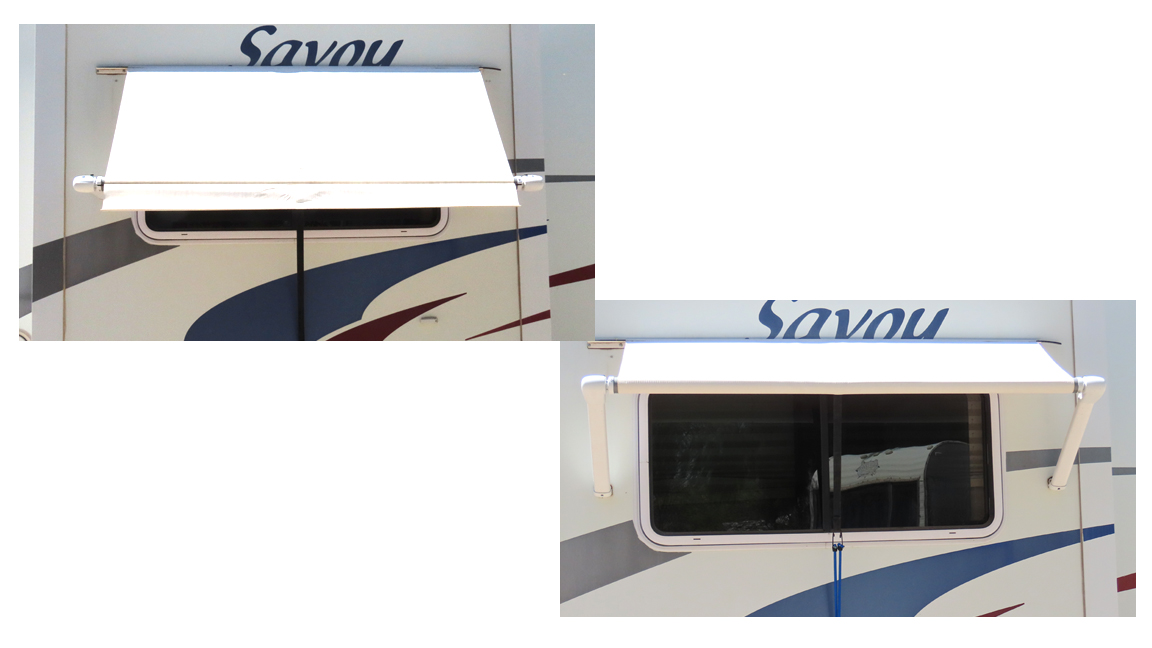
We love our RV window awnings—sort of. They’re great for shading out excess light, and a real blessing on hot Southwest days. But the trouble is, there are only two positions for RV window awnings—rolled up for travel, or pulled down, with almost no view of the outdoors. Here’s a quick, simple, and inexpensive way to keep your shade—and your view!
You probably already have the solution to readjust your RV window awnings. We’ll give you a hint—the solution is stretchy and has a hook on each end. Yep! The humble bungee cord!
Give your RV window awning a readjustment
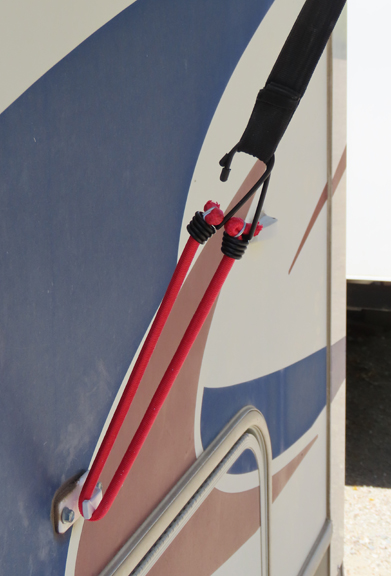
It’s a simple fix for an adjustment to increase your view. R&T De Maris photo.
If you want to see more of the outside yet still keep some shade on your windows, pull out your bungee supply. Grab hold of the window awning pull strap and slip both hooks of your bungee cord in the pull strap loop. Now take the “middle” of that attached bungee cord and hook it through the pull strap hold-down clip.
You can adjust how far down the window awning “sits” by using different length bungee cords.
That was easy. But before you go, listen to the safety advice:
Bungee cords store a lot of energy when stretched, and if they snap back, that force can be dangerous. If a hook slips, breaks, or comes loose, the cord can whip back at speeds up to 60 mph, causing serious injury.
Common causes of recoil accidents:
The hook slips out of your hand while stretching
It detaches from the anchor point
The hook bends or straightens
A cord or its attachment breaks
The hook pulls free from the cord
Old or worn cords can fail without warning—cracks and wear make them much more likely to snap. That’s why the American Medical Association recommends warning labels on bungees.
To stay safe when using bungee cords:
Always wear eye protection
Stretch cords carefully and don’t overextend them
Secure hook ends firmly
Keep your face and body out of the recoil path
A bungee cord can make a big difference in adjusting the view from your window equipped with an RV window awning. And a little caution goes a long way in avoiding painful surprises.
For a fuller rundown on bungee cord safety, check out this page from motion picture producer, Warner Brothers.
This easy ham and cheese frittata is great for brunch but hearty enough for a tasty dinner. The eggs and cheese are rich and creamy. Chopped ham adds a savory and slightly salty flavor. Buttered and toasted bread cubes stay slightly crisp and add texture to the dish. You’ll taste the garlic, onion, and dry mustard in every bite. This egg skillet bake calls for deli ham, but leftover baked ham from a holiday meal can easily be substituted. Click here for the recipe.
Citrus-Glazed Ham Steaks
by Rachel Anthony from Macy, IN
These citrus-glazed ham steaks can be used in multiple ways. Serve alongside eggs for breakfast, make a sandwich out of them, or serve in place of baked ham at the holidays if not hosting a crowd. It’s a budget-friendly recipe. The glaze tastes like honey mustard with a citrus tang. When fried, it caramelizes and soaks into the tender ham steaks. Here’s the recipe.
Whiskey Wild Cherry Coke Glazed Ham
by Monica Keleher from Methuen, MA
Mixing Cherry Coke with whiskey gives this baked ham a sweet and spicy kick. It’s wonderful for basting on the savory ham. A flavorful and beautiful ham perfect for any holiday. Make sure to baste the ham every 15 minutes or so. It helps to intensify the flavor and prevents the baked ham from drying out. Here’s the recipe.
Louisiana Carrot Souffle
by Janis McRae from Central, LA
This carrot souffle tastes like dessert, not a side dish. It’s sweet, light, and creamy. Serve this at your holiday meal and we guarantee you can get kids to eat their veggies. This copycat recipe does taste like the souffle you can find at Picadilly restaurants. Get the recipe here.
Minted Pea Spring Potato Salad
by Sandra McGrath from Harrisville, RI
While this is called potato salad, it’s not the traditional creamy potato salad you think of from a BBQ. It’s really a side dish filled with fresh mint, parsley, potatoes, peas, and hard-boiled eggs. It’s a fresh salad perfect for spring. Everything is dressed in a light lemony dressing that adds a little zing to the salad. A fresh Easter side dish option. Click here for the recipe.
Homemade Ham and Scalloped Potatoes
by Megan Flores from Chicago, IL
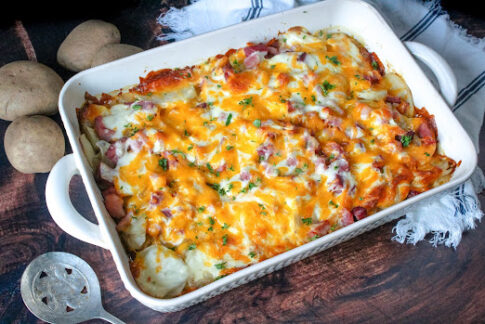
Take your homemade scalloped potatoes to a whole new level by adding ham. It adds savoriness to the potatoes and makes this heartier dish even better. These scalloped potatoes and ham can be eaten as a main dish, for brunch, or a heavier side dish. The homemade sauce is creamy, buttery, and melts into the cheese. So good! This recipe calls for ham steaks. If you have leftover holiday ham, that would work too. Click here for the recipe.
Easter Waffle Breakfast Sandwich
by Susan Feliciano from Oak Ridge, TN
These breakfast sandwiches were a big hit in the Test Kitchen. They have the perfect balance of savory and sweet. In our mind, putting an egg on any sandwich and it’s an instant winner. We love the basic bacon, egg and Swiss cheese flavor combination. Dipping the sandwich into syrup was so good and created a sweet/salty flavor profile. The sandwich is just as good without the syrup too. Perfectly crisp on the outside and soft on the inside, the waffle makes a great base for this yummy breakfast sammie. Here’s the recipe.
Easter Rice Pie
by Jessica S. from Peabody, MA
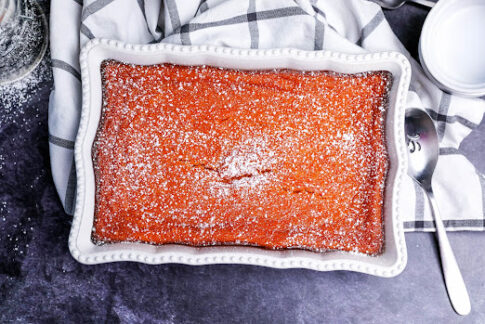
This pie is a wonderful tradition to start making for Easter. The decadent custard is held together with the arborio rice. Not too sweet, no one will ever know there’s rice in it unless you tell them. This pie is rich, fluffy, and very creamy. A pinch of cinnamon is the perfect touch and adds just a bit of flavor. A wonderful holiday dessert! Click here for the recipe.
Easter Knot Cookies
by Lisa Cancilla from Parlin, NJ
Wow, we sure hope the Easter Bunny leaves some of these in our Easter basket! These cookies are not only cute, they’re delicious too. The anise in these lends an Italian feel to the cookies. If you don’t like anise, it can easily be replaced with almond extract. Buttery and rich, these Italian cookies are not overly sweet. The frosting adds just the right amount of sweetness. Tint the frosting a pastel color to give these more of an Easter feeling or even top with sprinkles. Get the recipe here.
Lemon Meringue Slab Pie
by Janice Barlow from Rochester, NY
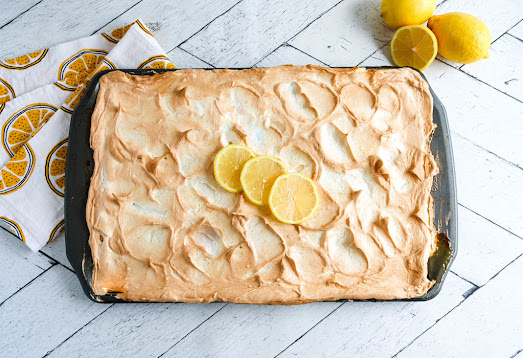
This slab pie recipe is a delicious way to serve lemon meringue pie to a crowd. Easy to make, a tangy and smooth lemon filling is poured over the flaky and buttery crust. On top is a light and fluffy meringue. The tart lemon flavor is balanced with the sweetness of the sugary meringue. Fresh lemon peel adds a nice zing to these lemon meringue bars. Here’s the recipe.
By Gail Marsh
Chances are you’ve eaten there or perhaps parked your RV overnight in their parking lot. Cracker Barrel Old Country Store is a favorite restaurant for folks who love homestyle comfort food. It’s also a fun place to shop for toys, clothing, snacks, and more! Have you ever wondered how this iconic business started? Me, too!
The invention of Cracker Barrel: 1969
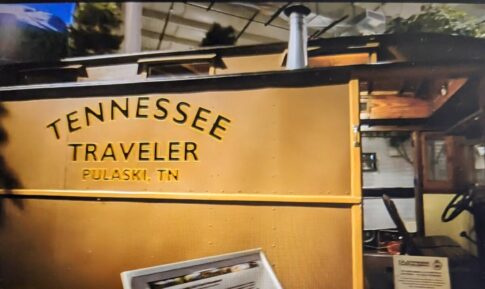
Dan W. Evins opened the very first Cracker Barrel in the fall of 1969. Evins served as a sales rep for Shell Oil Company at the time and was looking for a way to increase fuel sales. So, he built the restaurant with a gift store just off Interstate 40 near Lebanon, Tennessee. Traditional Southern-style foods served included turnip greens, biscuits and gravy, grits, dumplings, and country ham.
1970s
The original store was so successful that Evins incorporated the business in 1970. Soon afterward he leased land near busy interstate gasoline stations and opened several more stores.
Evins’ inspiration for the business came from his childhood memories of local country stores in the South. Back in the day, soda crackers were shipped and sold from barrels. People often gathered around the barrels to discuss local news and gossip. Evins fashioned his restaurants to look like old-time general stores featuring a large front porch and rustic interior. The company used antiques and local artifacts to decorate the interior of each store to further establish the country theme.
Fuel shortages
When gasoline fuel shortages hit in the late 1970s, Evins began building stores without fuel pumps, hoping that the restaurant and gift shop could compensate for the loss of gasoline revenue. It worked, and Evins continued to open more stores throughout the South.
Iconic logo
In 1977, Evins met with a local ad agency to redesign a logo for the store. Bill Holley met with Evins and after discussing the possibilities, Holley drew a logo sketch on a napkin. Evins was so pleased with the drawing (a man sitting next to a cracker barrel) that he hired the Nashville artist. Today the logo is well-recognized throughout the country.
Cracker Barrel man
People often wonder about the man in the Cracker Barrel logo. Holley’s sketch wasn’t inspired by an actual man. Instead, it came from Evins’ description of farmers he remembered from his childhood. The man featured in Holley’s logo was dubbed “Old Timer.” Later, he was renamed “Uncle Herschel” because Evins’ real Uncle Herschel enjoyed promoting Cracker Barrel. He often strolled through neighborhoods, handing out gold cards to people in the community. Folks could redeem the gold card for a free meal.
Continued growth
In 1981, Cracker Barrel became a publicly traded company, and Evins used the money to grow his business. Throughout the ’80s and ’90s, the company continued to expand into almost every area of the United States. It added local regional dishes to its menu but retained its original Southern favorites. By 1993, Cracker Barrel enjoyed revenue that was almost twice that of any other family restaurant in business at the time.
By 2011, Cracker Barrel had restaurant/gift shops in 42 states. Dan Evins died from cancer in 2012. As of February 2025, there are 658 Cracker Barrel locations in 44 states (Florida has the most locations).
Do you like to eat at Cracker Barrel? Have you ever parked your RV there overnight? Share your thoughts in the comments below.
In September 2024 I wrote about the operational limits on ST-type tires. I suggested that the published 65 mph speed limit was a realistic compromise. But apparently many people think they can get tires with some “magic” rubber in them so they can safely drive faster. Therefore, I am again writing about the “speed rating” of ST-type tires.
In the U.S., “speed rating” is really a measure of tolerance for high heat and is based on a test with speed increasing every 10 minutes until the tire fails. In Europe, Asia, and the rest of the world, they do not offer an ST-type tire because their speed tests are more realistic and stringent.
When radial ST-type tires were introduced to the U.S. market some 45 years ago, they were given a higher load capacity rating than a same-size LT tire. However, the trade-off was stated in the industry standards books as having a max operating speed of 65 mph, with load and inflation adjustments required if operating above 65 mph. With 50 years of tire design and testing under my belt, I know of no “magic” rubber that will deliver greater load capacity for a given size and inflation without some trade-off.
Five variables for operation speed
There are only five variables that control operation speed: size, load, inflation, speed and the ability to be rated for operation with passengers in the vehicle. So, unless you invent some “magic” rubber, you are limited by physics.
Yes, materials have improved over the last 45 years after the switch to radial construction, and we have seen improvements in tire performance. But have you ever asked why a company can make a tire of the same physical size and same load capacity at a given inflation and somehow make one tire carry significantly more load than the other without some trade-off in operation speed?
If I had invented some “Super Magic Rubber” for ST-type tires that gave them “Super Strength,” why wouldn’t I put the Super Rubber in the other tires I make and sell and take over the worldwide tire market? Any company can ignore reality and make a marketing decision and claim a “Speed Rating”.
Roger Marble
*****
If you have tire questions, check out Roger’s Blog as well as his posts on RVtravel.com. There are hundreds of posts covering everything to do with tires.
If you still have a question for Roger after searching the above posts, send your inquiries to him using the form below.
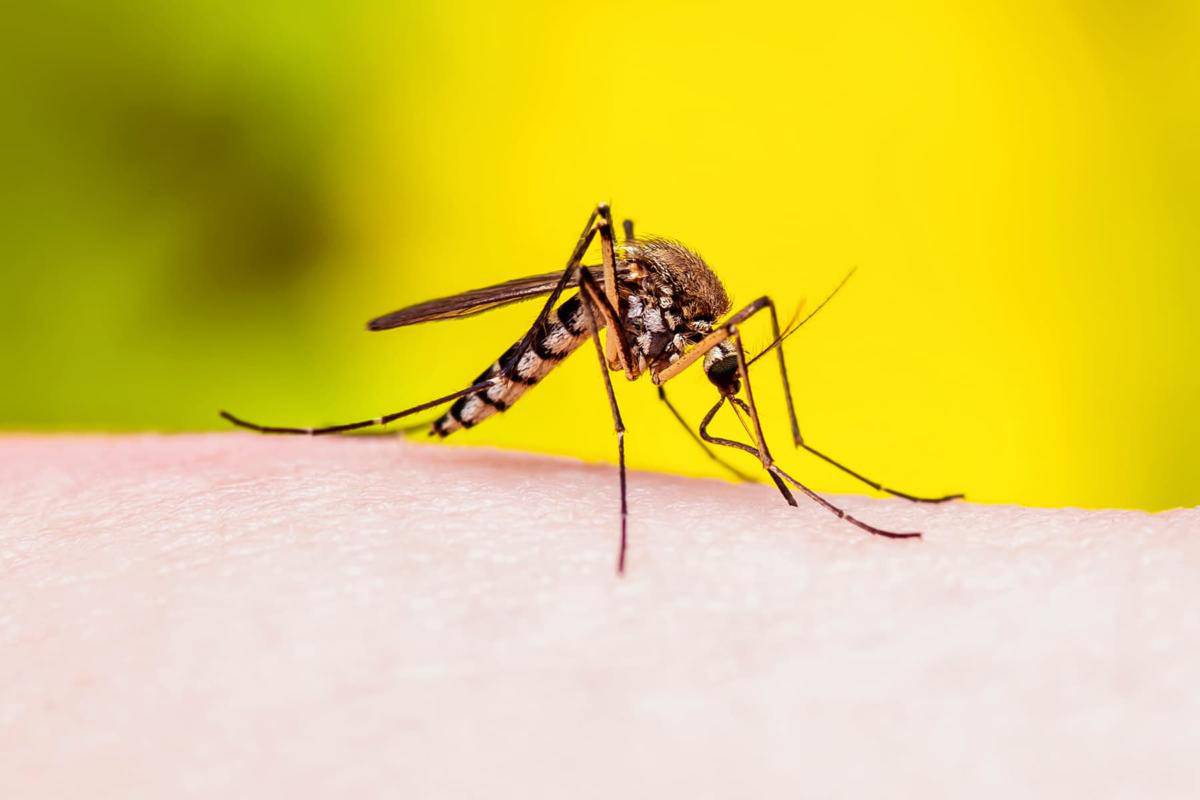
Beer and mosquitoes go together on lazy summer days even more than I ever knew! Evidently, cracking open a cool one is their calling card.
If you’ve ever cracked open a cold beer at a barbecue only to find yourself swatting away mosquitoes while your friends remain untouched, you’re not imagining things. Research suggests that drinking beer can indeed make you more attractive to mosquitoes. But why does this happen? There is science behind this phenomenon.
The study that started it all
A key study in 2010 investigated the link between beer consumption and mosquito attraction. Researchers found that people who drank just one 12-ounce bottle of beer were significantly more attractive to mosquitoes than those who didn’t. What’s even more interesting is that this increased attraction wasn’t linked to body temperature or carbon dioxide output—two major factors previously believed to draw mosquitoes in.
Things that make you a mosquito magnet
While the exact mechanism isn’t fully understood, there are a few compelling theories:
• Metabolic changes: Alcohol affects your metabolism, which in turn may alter the chemicals you emit through your skin and breath. These changes can make your natural scent more appealing to mosquitoes.
• Increased ethanol emission: When you drink alcohol, some of it is metabolized and expelled through your breath and pores. Ethanol, the active ingredient in alcohol, may act as an attractant to certain mosquito species.
• Higher body heat and sweating: Although the 2010 study didn’t find a direct correlation with body temperature, alcohol can cause temporary vasodilation—widening of the blood vessels—which may make you feel warmer and sweat more. Mosquitoes are highly sensitive to heat and the scent of sweat.
• Carbon Dioxide (CO₂) emissions: While not directly observed in the beer study, drinking alcohol can lead to deeper, more rapid breathing. This could increase CO₂ output, one of the primary signals mosquitoes use to locate their hosts.
Are all beers equal?
There’s limited research comparing different types of alcohol and their effects on mosquito attraction, but the 2010 study focused solely on beer. Whether wine, spirits, or cocktails have the same effect is unclear, but if alcohol in general causes similar metabolic changes, it’s possible.
How to protect yourself
If you don’t want to give up your beer on a summer evening but also want to avoid becoming a mosquito buffet, here are a few tips:
• Wear repellent: Products with DEET, picaridin, or oil of lemon eucalyptus can be effective.
• Use citronella or mosquito-repelling candles: They may not stop all bites, but they can help reduce the number.
• Avoid peak mosquito hours: Dusk and dawn are prime time for many mosquito species.
• Stay covered: Long sleeves and pants create a physical barrier between you and hungry bugs.
The bottom line
Drinking beer does seem to increase your chances of being bitten by mosquitoes, though the exact reasons are still being studied. So next time you’re outside enjoying a brew, consider taking a few extra precautions—your skin will thank you later.
Want to keep the beer but ditch the bugs? A little awareness and prevention can go a long way.
Elkhart, Indiana, is known as the “RV Capital of the World.”
Whether you’re a seasoned RVer or just curious about recreational vehicles, a trip to the RV/MH Hall of Fame in Elkhart, Indiana, promises a unique blend of history, innovation, and modern convenience.
Discover the RV/MH Hall of Fame
The RV/MH Hall of Fame is dedicated to honoring the pioneers and innovations that have shaped the recreational vehicle industry. Established to preserve and highlight a century of RV history, the museum features an impressive collection of exhibits, including vintage trailers, motorhomes, and fascinating memorabilia.
What’s inside?
• Founders Hall: Step back in time with a chronological display of classic trailers and motorhomes, featuring rare artifacts like the 1913 Earl travel trailer—the oldest surviving RV of its kind.
• Exhibitors Hall and Go RVing Hall: Learn about the technological advances that transformed RVs from simple travel trailers into the luxury, high-tech campers we see today.
• Unique exhibits: Highlights include the Mae West Housecar—a dazzling 1931 Chevy conversion—and a custom-built Charles Lindbergh travel trailer that pays tribute to one of aviation’s great pioneers.
I think you’ll appreciate the museum’s thoughtful layout, complete with ample pull-through parking designed especially for RVs. I like that visitors can take all the time they want on the self-guided tour. It allows you to fully explore the history and innovation of the RV/MH industry.
Plan your visit: Hours, directions, and tips
Before you hit the road, here are a few tips to help you make the most of your visit:
Location and hours: The museum is located at 21565 Executive Parkway, Elkhart, Indiana. It offers convenient hours with extended parking for RVs, making it easy to pull through and explore. Check the official website for the most up-to-date hours and admission details.
Amenities: Along with the exhibits, the museum provides modern conveniences like restrooms and a well-stocked gift shop where you can pick up RV-themed souvenirs.
Family-friendly: With engaging exhibits that appeal to both adults and kids, it’s an educational outing that the whole family can enjoy.
On-site campgrounds
The RV/MH Hall of Fame offers overnight stays on a first-come, first-served basis. (They do not accept reservations.) A Harvest Hosts camping area nearby is also available.
Elkhart isn’t just about RV history. The region offers excellent campgrounds that offer a full range of amenities to make your stay comfortable and fun.
Elkhart Campground
A local gem, Elkhart Campgroundoffers a family-friendly atmosphere with features like pull-through sites and modern electrical hookups (20-, 30-, and 50-amp options). The campground also features extras: a heated swimming pool, mini golf, and a playground. It’s perfect for a night or an extended stay.
Middlebury KOA Holiday
For those looking for a blend of comfort and convenience, the Elkhart County / Middlebury KOA Holiday offers spacious pull-through RV sites as well as cozy cabin rentals. With amenities like free Wi-Fi, on-site shuttle services, and proximity to popular local attractions (including the Shipshewana Flea Market), it’s a great choice for families and groups alike.
Elkhart RV Resort by Rjourney
Located just a short drive from downtown Elkhart, this resort provides both full hookup RV sites and extra features tailored for the RV lifestyle. Its friendly environment and well-maintained grounds make it an ideal base for exploring the region’s rich history and vibrant culture.
Why Elkhart is a must-visit for RVers
Visiting the RV/MH Hall of Fame not only offers a window into the history of RV design and technology but also celebrates the enterprising spirit that helped build the industry.
Elkhart’s unique combination of historical significance and modern amenities makes it a destination where the past and present of RVing come together. While you’re there, plan to visit the Wellfield Botanical Gardens, National New York Central Railroad Museum, and the Midwest Museum of American Art. The area also offers great fishing and dining experiences.
You should go!
Whether you’re planning a short weekend getaway or a longer adventure, make sure to add Elkhart, Indiana, to your travel list. Roll into history, park your rig at a welcoming campground, and embrace the RV lifestyle in a town that truly understands what it means to be on the road.
“The secret of genius is to carry the spirit of the child into old age, which means never losing your enthusiasm.” —Aldous Huxley
Need an excuse to celebrate? National Grilled Cheese Sandwich Day!
On this day in history: Soviet cosmonaut Yuri Gagarin became the first human in space, orbiting the Earth once before landing safely via parachute after a planned ejection from his space capsule. That was in 1961.
HARVEST HOSTS: Unlimited overnight RV stays at 9,476+ locations. Save 15%.
Featured news
Lawsuit accuses Winnebago and Grand Design of defective frames, misleading marketing
A nationwide class action lawsuit against Winnebago Industries, Inc. and Grand Design RV, LLC has been filed on behalf of thousands of consumers across the United States. The suit alleges that numerous Grand Design RV models suffer from serious structural defects—particularly frame failures—that have significantly disrupted the lives of affected owners. Read more.
Interior Secretary orders national parks to stay open amid staffing cuts
By Russ & Tiña De Maris
National parks are being ordered to stay fully open—even as staffing drops to crisis levels. A new directive from the Interior Department demands business-as-usual service despite hiring freezes, early retirements and a reduced workforce. Superintendents are scrambling to cover public-facing roles while being warned not to cut services or hours without top-level approval. Here’s the story.
Amazon internet satellite launch doesn’t get off the ground
By Russ & Tiña De Maris As we reported last week, billionaire Amazon chief, Jeff Bezos, has plans to take on his corporate rival, Elon Musk, and his successful Starlink internet satellite service. On Wednesday, a rocket at Cape Canaveral was ready to blast 27 of Amazon’s “Project Kuiper” satellites into orbit. However, Mother Nature had other plans… Amazon’s satellite internet system has taken a setback at the starting block.
HELP WANTED: If you know RVing inside-out, have lots of industry knowledge and contacts, a strong news writing background, and high ethical standards, RVtravel.com may have a well-paid freelance opportunity for you. Contact editor@rvtravel.com to learn more.
Campground crowding, comments & concerns RVers discuss Wi-Fi at campgrounds and RV parks: It works or it doesn’t!
This week, Nanci Dixon shares our readers’ comments on Wi-Fi service at campgrounds and RV parks. Dave G. is tired of paying premium prices for minimal Wi-Fi. Mark W. reports that Wi-Fi is being improved at most parks. Nanci describes her experiences with Wi-Fi over many years of camping, and recommends “the answer to continually robust Wi-Fi anywhere.” Read it here.
News briefs
The allure of Florida’s warm winters has long drawn Canadians, especially RVing snowbirds, seeking an escape from harsh northern winters. However, a wave of uncertainty driven by escalating U.S.–Canada trade tensions has many Canadian property owners and RVers rethinking their plans to invest in or maintain winter homes in the Sunshine State. Continue reading.
If you’re planning an RV trip to northern Michigan this spring or summer, it’s important to be aware of recent developments. A severe ice storm that struck in late March 2025 has led to significant closures and cleanup efforts across the region. Many state parks will be closed indefinitely.
Have you ever wondered how bear-proof trash cans and containers are tested to see if they’re really bear-proof? Well, a zoo in Anchorage, Alaska, has a good trick. Let the bears try to break into them!
BLM officials in Utah recently shut down what was billed as “The biggest party Utah has ever seen”—before it even began. Organizers promoted the event on social media, promising music, DJs, a bonfire, and a wild light show. But they didn’t plan on BLM spotting the posts—or on needing a permit to party on public land. Here’s the story.
WEIRD NEWS: NASA is offering $3 million to anyone who proposes technology to solve an unusual problem: recycling feces and other human waste in space. The space agency’s LunaRecycle Challenge calls on members of the public to propose a technological means of recycling astronauts’ feces, urine and vomit on the moon and during long-haul space flights. There are currently 96 bags of human waste that were left behind on the moon by astronauts.
Full-time RVers Michael and Randi Kilbourne have purchased online electronics retailer TechnoRV from Eric and Tammy Johnson. The Kilbournes represented the company at more than 40 rallies in 2024.
Beginning at 8 a.m. next Friday, April 18, 2025, two select entrances and roads in Yellowstone National Park will open for the summer season, weather permitting, as part of the annual spring opening.
If you like to crunch Frito-Lay’s Tostitos Cantina-style corn chips, look out! The Food and Drug Administration (FDA) announced it has elevated a recall it issued last month for it to Class 1, due to an undeclared allergen, which runs the risk of a serious or life-threatening reaction.
An estimated 2,400 to 2,500 National Park Service employees, roughly 12.5 percent of the agency’s workforce, have taken Trump administration offers to resign or retire, according to the National Parks Conservation Association.
WEIRD NEWS: A New Jersey group said its 2024 beach cleanup operations resulted in 276,899 pieces of trash being cleaned up, including unusual items like a rubber foot, a full can of ravioli and a set of vampire teeth.
The Blue Ridge Parkway is implementing a full road closure and detouralong the park’s corridor in Roanoke, Virginia, from milepost 95.9 at Montvale Overlook to milepost 106 beginning Monday, April 14, because of repaving and rehabilitation.
Three Arizona White Mountains-area state highways, 261, 273 and 473, are scheduled to reopen by noon Tuesday, April 15, after being closed for the winter.
Grand Canyon National Park will reopen the Bright Angel Trail and Campground for public use beginning May 15, 2025.
The U.S. Department of Transportation’s National Highway Traffic Safety Administration today released its early estimates of traffic fatalities for 2024, projecting that 39,345 people died in traffic crashes. That’s a decrease of about 3.8% from 40,901 fatalities in 2023, and is the first time since 2020 that fatalities fell below 40,000.
NATURE NEWS: Registration opened Tuesday, April 8, 2025, for the Blue Ghost Firefly Event Tour. The elusive Blue Ghost fireflies are tiny insects (only 1/4 inch in length!) that glow with a unique blue-green light. They appear for only a few weeks each year in the woodlands of Transylvania County in Western North Carolina. Learn more.
FACTOID: Nearly 6,500 individuals in Los Angeles live in about 4,000 RVs on the streets. The Los Angeles Homeless Services Authority noted in its 2024 annual count that the figure has surged by 40% since 2018. According to LAHSA, many of the RVs are in severe disrepair with improper waste disposal, fire hazards from external generators and pose environmental harm.
?? MYSTERY PRODUCT OF THE DAY ?? Joe and Martha were in Yellowstone National Park. “Look,” there’s a Moose, said Joe, pointing toward a distant meadow. “No, silly, it’s an Elk, said Martha. “No, a Moose!” said Joe. “No, an Elk!” said Martha. Who was right? In only a few seconds they had the answer.
Latest fuel prices
The latest U.S. average prices per gallon of fuel as of April 7: Regular unleaded gasoline: $3.24. Up 8 cents from week before. Diesel: $3.64. Up 5 cents from week before.
Corn always has an even number of rows on each cob. Most ears of corn have 16 rows, but you’ll never find a cob with an odd number.
Laugh of the week
The perfect scam Romance Scam Kingpin Brought to Justice, Part 2
From Part 1: When Debbie’s mother suddenly passes away, she is not shocked to find correspondence with the U.S. Postal Inspection Service and letters to a victim’s advocate that reveal her mother had been the victim of a romance scam that had robbed her of more than $400,000. A Postal Inspector investigated. Did Debbie get justice for her mom?
Today in history
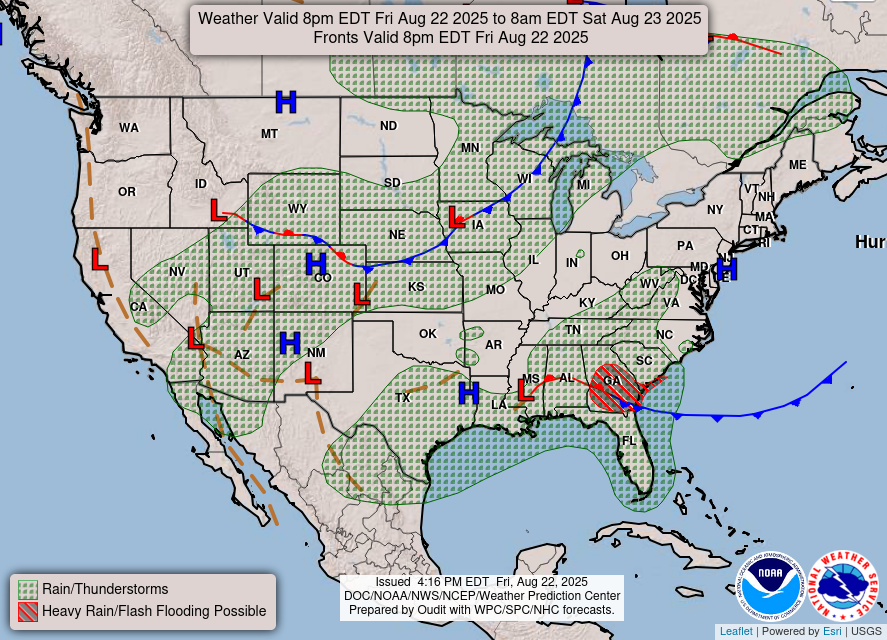
Today’s weather forecast across the nation THIS MAP UPDATES TWICE A DAY
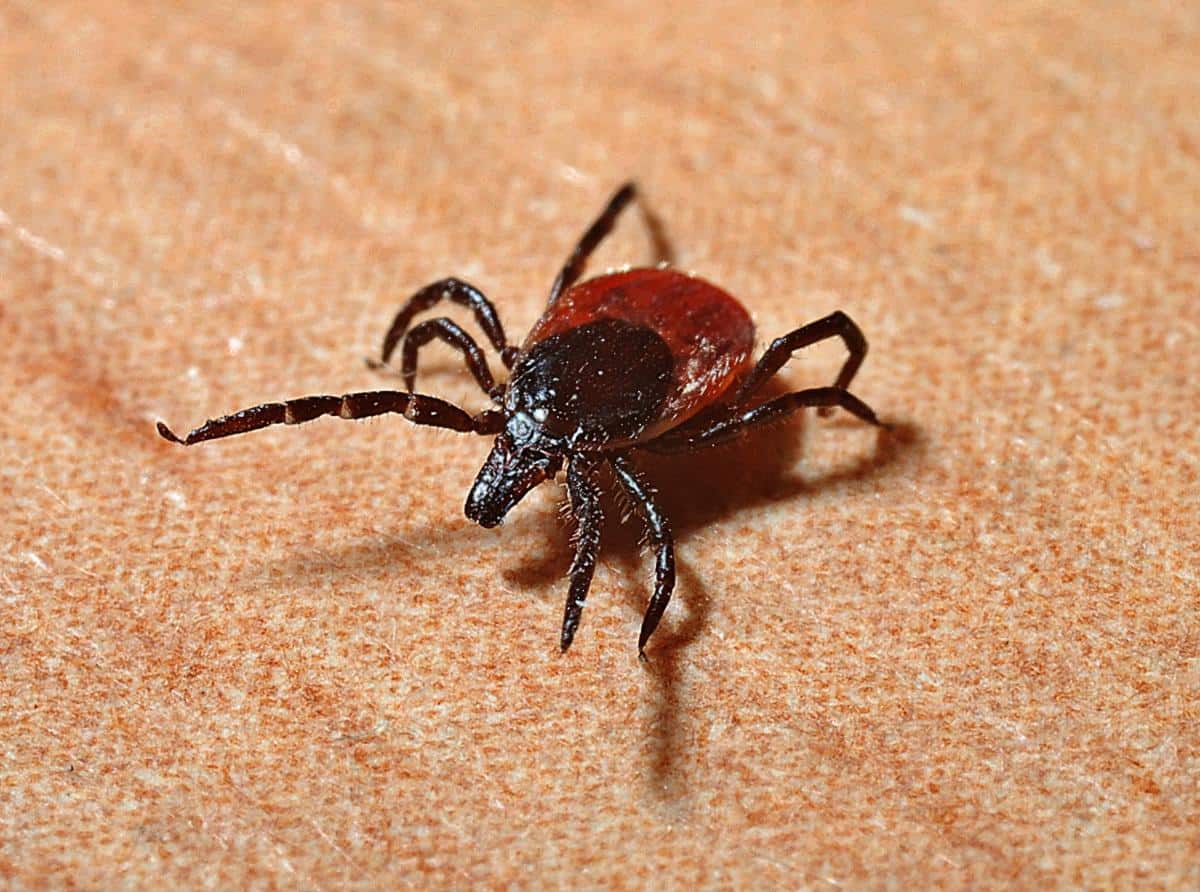
The outdoor season is a time to be camping, hiking, mountain biking, and a host of other activities in Mother Nature’s backyard. It is also the time when we are likely to come across deer ticks, the carriers of Lyme disease, discovering one on our clothes or our skin.
The CDC estimates the number of cases in the US to be about 476,000 cases a year.
Helpful tips about deer ticks
• Ticks crawl up. They don’t jump, fly, or drop from trees onto your head and back.
• Ticks carry disease-causing microbes. Tick-transmitted infections are more common these days than in past decades.
• Only deer ticks transmit Lyme disease bacteria. The only way to get Lyme disease is by being bitten by a deer tick.
• For most tick-borne diseases, you have at least 24 hours to find and remove a feeding tick before it transmits an infection. Even a quick daily tick check at bath or shower time can be helpful in finding and removing attached ticks before they can transmit an infection. Lyme disease bacteria take at least 24 hours to invade the tick’s saliva.
• Deer tick nymphs look like a poppy seed on your skin. They’re easy to miss, their bites are generally painless, and they have a habit of climbing up under clothing and biting in hard-to-see places.
• The easiest and safest way to remove a tick is with a pointy tweezer. Grab the tick right down next to the skin. The next step is to simply pull the tick out like a splinter.
• Tick bites and tick-borne diseases are completely preventable. There is really only one way you get a tick-transmitted disease and that’s from a tick bite. Staying on trails, wearing tick repellent clothing, treating pets, and getting into the habit of doing a quick body tick check are all great actions for preventing tick bites.
• Clothing with built-in tick repellent is best for preventing tick bites An easy way to avoid tick bites and disease is to wear clothing with Insect Shield® tick repellent built-in. The repellency is long-lasting and appropriate for use by the entire family with no restrictions for use.
Insect Shield quick facts
• Repellency is in the clothing and gear – not on your skin
• Lasts through 70 launderings
• No restrictions for use
• Appropriate for the entire family
• No need to re-apply
• Repels mosquitoes, ticks, ants, flies, chigger and midges, including those that can cause Lyme disease, malaria, and other dangerous insect-borne diseases.
A nationwide class action lawsuit against Grand Design RV, LLC and Winnebago Industries, Inc. has been filed on behalf of thousands of consumers across the United States. Grand Design RV is owned by Winnebago Industries.
The suit alleges that numerous Grand Design RV models suffer from serious structural defects—particularly frame failures—that have significantly disrupted the lives of affected owners.
Allegations of Defective Products and Deceptive Marketing
The complaint asserts that Grand Design knowingly sold RVs with defective frames while engaging in aggressive and misleading marketing tactics. The law firm Weitz & Luxenberg seeks a court order compelling a recall of the defective RVs, as well as monetary compensation and punitive damages for impacted consumers.
Impact on Consumers
According to James Bilsborrow, a partner at Weitz & Luxenberg and co-chair of the firm’s Consumer Protection practice, many of the firm’s clients invested more than $100,000 in what they believed would be safe recreational vehicles. However, these RVs allegedly turned out to be structurally unsound and unreliable for travel, posing safety risks not only to owners but to others on the road.
Bilsborrow explains that simply moving the RVs from one location to another can render them uninhabitable. In several cases, owners were displaced from their homes for months while their RVs underwent extensive repairs due to frame failures. Some were forced to stay with family, friends, or in hotels during this time.
Warranty Issues and Alleged Deception
The lawsuit further alleges that Grand Design created warranty coverage that is “largely illusory.” According to Bilsborrow, customers have faced significant obstacles when trying to exercise their warranty rights. The complaint details how restrictive company policies have made it difficult for consumers to obtain timely repairs—often requiring them to transport their RVs to Grand Design’s Indiana facility, a requirement many owners are unable to fulfill.
Models and Marketing During the Pandemic
The lawsuit specifically targets Grand Design RV models sold between 2020 and 2023, including:
• Reflection
• Influence
• Solitude
• Momentum
Weitz & Luxenberg alleges that during the COVID-19 pandemic, the defendants launched strategic marketing campaigns appealing to Americans’ desire for safe and flexible travel options. However, the firm claims these RVs were manufactured with defective frames unable to support typical usage, thereby devaluing the vehicles by tens of thousands of dollars and often rendering them uninhabitable.
Failure to Act and Alleged Profit Motive
Despite awareness of the defects, the defendants allegedly chose not to issue a recall or warn consumers. Instead, they continued to sell the RVs, conceal the issues, and prioritize profits. According to the lawsuit, these efforts generated hundreds of millions of dollars in revenue for the companies.
Claims of Consumer Fraud and Legal Violations
The class action complaint contends that had consumers been aware of the defective frames, they would not have purchased the RVs. In addition to a nationwide class, the lawsuit includes subclasses for residents in Arizona, California, Florida, Illinois, Minnesota, New Hampshire, and Ohio.
The firm alleges that the defendants engaged in misleading, false, or deceptive conduct in violation of multiple state consumer protection laws. The case also cites defective product design, fraudulent advertising practices, and failures in the manufacturing process, including cost-cutting measures and insufficient safety standards.
Weitz & Luxenberg is pursuing a jury trial and is seeking both monetary damages and injunctive relief.
Legal Resources and Contact Information
Consumers who purchased a Grand Design Reflection, Influence, Solitude, or Momentum RV between 2020 and 2023 may be eligible to join the class action lawsuit. Weitz & Luxenberg encourages affected individuals to contact the firm for a free consultation by calling (917) 529-9377.
RV sales have slowed and fewer people are buying RVs. Most costs across the board have risen. RVing is evolving. Has that changed how people are RVing? Are there still some areas that are crowded with campers? Are people more or less content with RVing?
RV Travel readers discuss their experiences and offer tips to help other campers find that perfect spot.
Here are a few observations from our readers. These do not necessarily represent the views of RVtravel.com.
Time for parks to step up to good Wi-Fi
Dave G. is tired of paying premium prices for minimal Wi-Fi. He wrote, “I’m tired of paying more than $150 a night for a site and not having excellent Wi-Fi. We are staying in a corporate RV park in the Florida Keys, where the brochure says to get good internet reception, come close to the office. Really??? It’s a little hard to move my motorhome to the office to watch a movie. Not everybody wants to pay $150 plus every month to have Starlink. Maybe ‘mom & pop’ parks have an issue, but not corporate-owned. Time for these parks to step up.”
Have to work to find the “gems”
Mark W. mentioned that parks are upgrading Wi-Fi. He wrote, “We just booked four months in Florida for next winter. We went to their office at 9 a.m. on the first eligible day to book. They told us we were lucky. We looked at 20 or so resorts. Most were very crowded and in so-so shape. Prices varied from $700 to $7,600 a month. We paid $1,500 a month. Most new parks do not have shade or privacy shrubs. Wi-Fi is been being improved at most parks to offer streaming for TVs. There are some gems out there if you work at finding them.”
Found good, semi-good, and almost non-existent Wi-Fi
Here’s my (Nanci’s) experience with Wi-Fi: We have been RVing for decades, long before the internet was even a thing or Wi-Fi was considered a necessity. (That’s how old we are.) When we started camping with our kids, I would have considered any kind of internet or even phone connection an intrusion. I certainly did not want anything to take away our peaceful camping time.
As the kids grew older, work responsibilities also grew along with the unfortunate ability to be contacted 24/7. I accepted the work cellular phone. In the beginning, there were still a lot of dead zones. I remember standing on the top of our RV in a hollow valley trying to get reception for a scheduled work phone call. Didn’t work.
Then, I wanted Wi-Fi in private RV parks, at least enough for email. Some had robust Wi-Fi, some as slow as dial up and some connections just impossible. I could still fall back on cell data when needed, as cell coverage expanded. My husband and I have different carriers, so we can usually always count on phone connection if not all data connections.
For years, we have used an HDMI cable and adapter to connect our phones to the TV to stream. And usually that does work just fine. Seldom do we have Wi-Fi strong enough to stream on the TV or even on our tablets. As a matter of fact, the check-in handout from a lot of campgrounds usually says something like no streaming, email only. They have even threatened to cut that off if their server detects a lot of use!
We have used a Dish satellite for TV, and the prices keep going up. Now that we are hooked on streaming and fast Wi-Fi, we have given Dish up. Evidently, so have a lot of people—Not only can’t I sell our Winegard Pathway, I can’t even donate it!
Starlink
Enter Starlink, the answer to continually robust Wi-Fi anywhere. Unless, of course, you are under trees or if the signals are obstructed. I decided I needed good Wi-Fi for my writing for RVtravel.com and have been delighted with service so far. Except for the outrageously rising cost! Because it is portable rather than attached to the roof, it is a hassle to set up every night when traveling. So, I usually don’t.
If we didn’t have Starlink, the majority of places we camp would not have good or even any Wi-Fi.
You can read more about my experiences with Starlink here.
What do you think?
What do you do for streaming, email or TV? How important is strong Wi-Fi to you and your RV travels? Please answer below.
Now, some questions for you:
Are you finding campgrounds booked up or is finding a site not a problem?
What do you like best about RVing?
What are your pet peeves?
Are you seeing more permanent and seasonal RV parks?
Are rising costs affecting your camping style?
Do you have favorite campgrounds or RV parks?
What is the most memorable experience you have had RVing?
Do you have any tips or secrets you’d like to share?
Please use the form below to answer one or more of these questions, or tell us what you’ve experienced with campground crowding in general.
Say you were in the market for a new RV. What are you looking for? A towable? Maybe a smaller travel trailer or a larger fifth wheel? Or do you want to go with or stick with a motorized? Maybe you’ll make the switch to a small Class B van, or maybe you’ve always wanted a big Class A for longer adventures.
As you already know, there’s so much to consider—starting with how you plan to use your RV. Are you chasing weekend getaways or planning to go full-time? Smaller rigs are great for maneuverability, fuel efficiency, and getting into tight campsites, especially in national parks. On the flip side, larger RVs often bring more space and comfort, with features like residential refrigerators, roomy showers, and bigger holding tanks—especially important for boondockers.
Storage space is another factor. If you’re planning to bring bikes, kayaks, or even a small motorcycle, a toy hauler might be on your radar. If you’re retired or traveling long-term, maybe a fifth wheel with a spacious rear living area and washer-dryer hookups fits your lifestyle best. Families with kids might prioritize bunkhouses, while couples may want a more compact rig with upgraded interiors and a cozy feel.
And then there’s the question of drivability and maintenance. Class C rigs offer a nice middle ground between maneuverability and comfort, while Class B vans are ideal for stealth camping and urban exploring. Meanwhile, a big diesel pusher might require more planning for fuel stops and campsites—but it also delivers unmatched power and luxury on long hauls.
After you vote, please leave a comment and tell us what you’d buy. And if you have a specific RV in mind, share the make and model. We’re curious!
We use cookies to ensure that we give you the best experience on our website. By continuing to use our site, you consent to accepting cookies. We NEVER have or will sell reader's data. For more info, please see our privacy policy page.