Home Blog Page 327

Is Cracker Barrel banning ‘overnight camping’?

While cruising across America, having an overnight spot while transiting between destinations is great. There’s always “Camp Walmart,” but many RVers like a more upscale version. Cracker Barrel Restaurants offer good food at reasonable prices, and many have designated parking spots for RVers. Now “news” is circulating on the internet that RV overnighting at Cracker Barrel is being shut down. Is that the truth?

“Some pretty disturbing news” about Cracker Barrel RV overnight parking
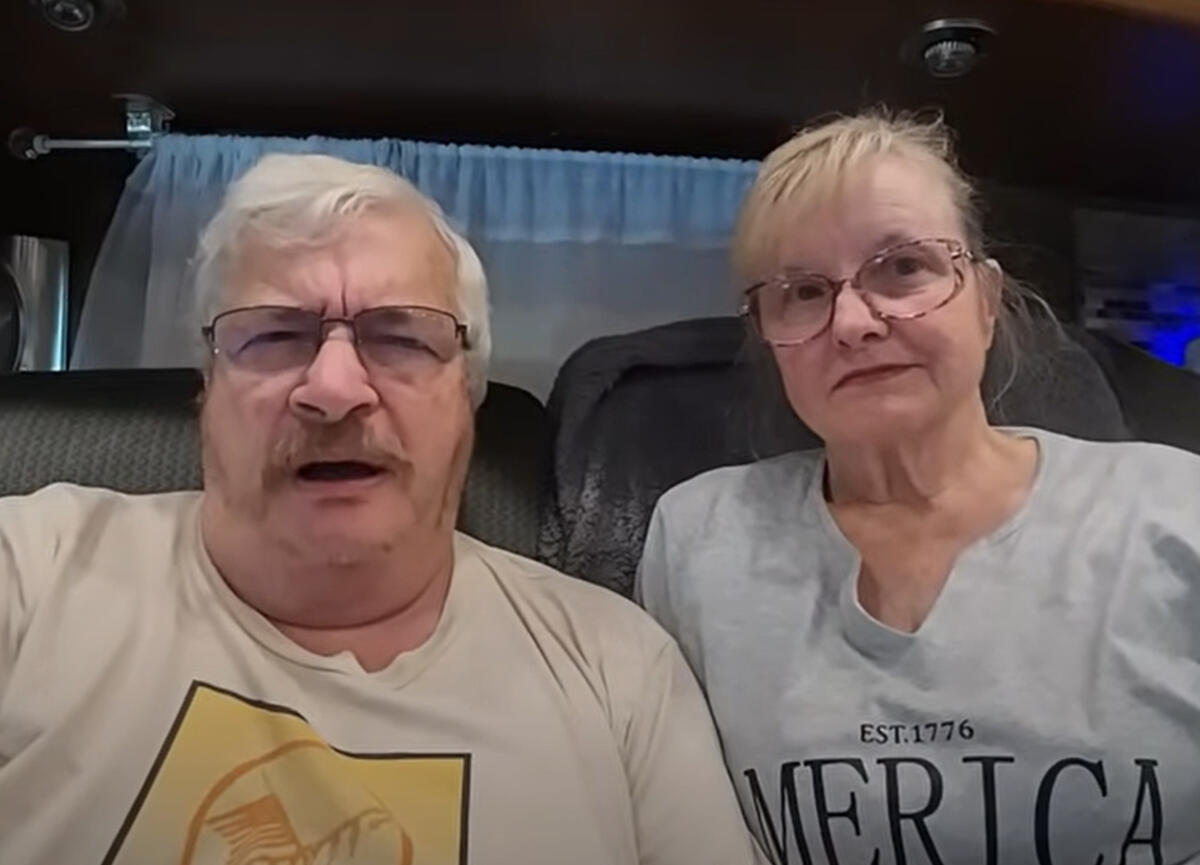
Hosts of 1 Million Mile Road Trip announce the “bad news” YouTube.com

We heard-tell about the change through popular YouTube video hosts Tommy and Medina on their site, 1 Million Mile Road Trip. Just a few days ago, they announced “some pretty disturbing news” about Cracker Barrel. Evidently, the couple made a Cracker Barrel pit stop in New Mexico and, per their custom, asked the restaurant manager if they could overnight on the lot.

The two travelers related, “The manager, she’s very nice. She said ‘I’ll let you do it tonight, however, Cracker Barrel has a new policy coming out with no more overnight parking for RVers.’”

“Currently unable to accommodate overnight parking”

No more overnight parking for RVers? That would be a knock-me-over-with-a-feather moment for a lot of RVers with healthy appetites and a need for sleep. We contacted Cracker Barrel’s media folks to confirm this bit of world-changing news. And, as typical of more and more “media relations” operations, we were only able to leave a voicemail. After several hours of waiting for a call back, we took the issue to the customer service folks.
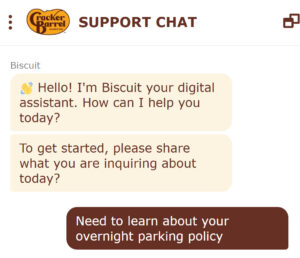
Customer service could be a misnomer, particularly if you want to have a telephone conversation. Instead, we first ended up in a text conversation with “Biscuit,” the company’s “digital assistant.” We wanted to tell Biscuit our name was Gravy, but resisted the notion. Eventually, we were “connected” with a human—still by text.

After asking about RV parking, the customer representative told us this: “I would like to inform you that many of our stores have designated parking spaces available for RVs and buses. To find out which locations are accessible for RVs, please visit www.crackerbarrel.com/locations. After entering your location or destination, you will see a list of nearby stores. In the store’s information section, it will indicate whether that location has designated RV and bus parking spaces. Please note that our stores are currently unable to accommodate overnight parking.”

Pressing for clarification yields more positive results

Is that it? Cracker Barrel RV overnight parking is over? We pressed on, mentioning we’d eaten at various locations and had been welcomed to stay overnight on the lot. Could we get some clarification?

After a lengthy wait, we were told, “Some Cracker Barrel locations do allow it, while others may not. The decision is at the discretion of the individual restaurant manager. Additionally, some locations have changed their policies, so it is essential to check the specific location’s policy by either calling ahead or checking the sign in the parking lot.”

Sound familiar? Change the name and you have the basic “Camp Walmart” policy. Corporate leaves it up to individual outlet managers to make the call on whether or not RV overnighting is allowed.

The future may depend on us

Like other businesses that allow RV overnight parking, our manners and decorum may shape the future. Don’t stay more than one night. Don’t put out your lawn chairs. You may need to keep your slide-outs in, depending on how your space is laid out. And, of course, don’t leave anything behind when you leave, like trash or, heaven forbid, waste tank contents. Don’t laugh, we’ve seen it!

For now, it seems Cracker Barrel RV overnight parking is still a “go” at many locations. Just call ahead before planning on sleeping off your Chicken ‘n’ Dumplin’s.

RELATED

##RVT1205b
RV Daily Tips. Friday, April 18, 2025

Issue 2625


Today’s thought

“Almost everything will work again if you unplug it for a few minutes, including you.” —Anne Lamott


Need an excuse to celebrate? Today is National Columnists’ Day! A big thank you to our incredible team of writers and columnists—we are so lucky to have you!

On this day in history: 1930 – The British Broadcasting Corporation (BBC) announced that “there is no news” in their evening report. (Hah! Can you imagine?)


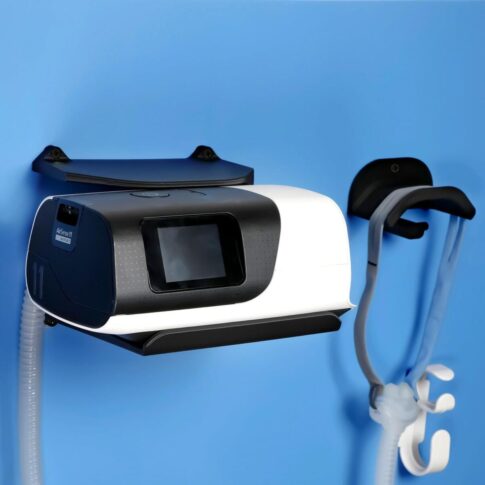
CPAP specific wall mount shelf Image: AmazonTip of the day
CPAP placement tips for RVers

By Gail Marsh
At a recent RV show, I happened to overhear a wannabe RVer. As her husband began to check out the kitchen storage, she made a beeline for the bedroom. After a brief glance at the bed, she turned around and loudly announced, “Nope! Not gonna’ work!” Then the gal quickly grabbed her husband, headed for the door, and informed him, “Forget this one. It’s got no place for my CPAP machine.”

Finding a spot for your CPAP machine is sometimes challenging, especially when the RV doesn’t have a traditional nightstand. Safe and effective placement of your CPAP is crucial for a good night’s sleep. That’s why you might need these CPAP tips for RVers.


Ask Dave
My RV’s water is scalding hot. Can water heater be adjusted?

Hi, Dave,
I have a water heater question. My RV has an Atwood G6A-8E water heater. The water gets too hot (scalding). I cannot find a thermostat anywhere. I’ve been manually shutting it off after about 5 minutes, but that gets very old. Any ideas? Thanks. —Bob, 1997 Fleetwood Tioga Montara  Read Dave’s response.


RANDOM RV THOUGHT: Run your generator as little as possible in public campgrounds, and only when absolutely necessary. If you must run it, do so only after 10 a.m. and before 7 p.m. and only for very short times. Our world is too noisy: help keep our public lands peaceful and quiet.


Video of the day
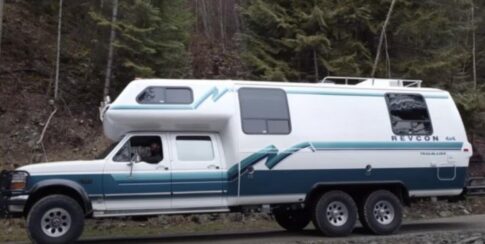
Tour a rare ’90s Revcon Trailblazer motorhome

By Cheri Sicard
The team from Ambition Strikes recently bought one of the world’s rarest motorhomes, the Revcon Trailblazer. Only 67 of the beauties were ever made and in this video, they give us a tour. This is cool!


Featured article
When buying an RV for later delivery, when do your payments begin?

When buying an RV for later delivery, when do your payments begin? That’s the question Josh the RV Nerd (Josh Winters of Bish’s RV) answers in this informative video. Do they start right away, or months later when you take delivery? … Josh covers a lot in this video.


You may have missed these recent popular stories…


Reader poll
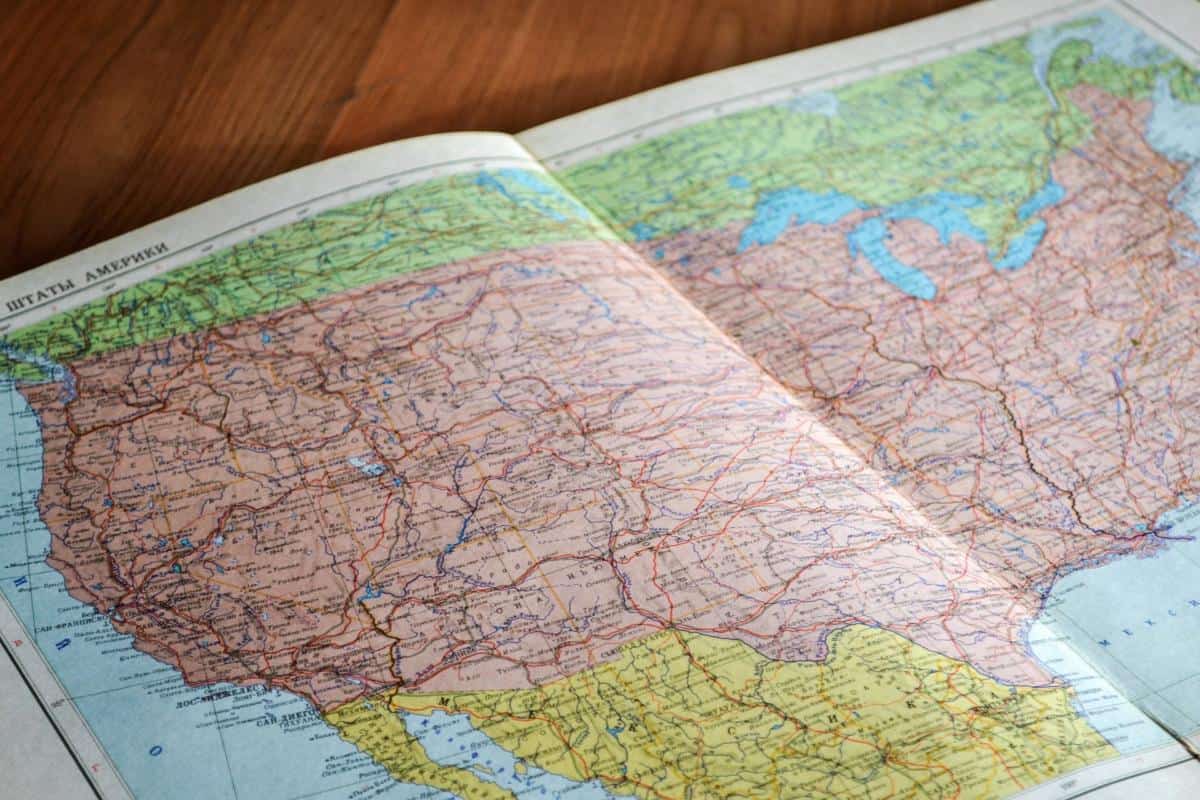
Do you carry paper maps of areas where you will be traveling with your RV?

Respond here.


Quick tip
Awning hardware? Don’t get bent!

If you really do want to “get bent,” just leave your awning out in a rainstorm or a high wind. Bent roller tubes or bent awning arms can’t be straightened out again. That’s a tough price to pay (hundreds of dollars) for not keeping an eye on the weather.


Affiliate program for influencer$
Do you have a popular blog, social media or YouTube channel? If so, and you would like to promote free signups to the Sunday RV Travel Newsletter, let us know. Good money possible (paid monthly) for simply referring new RVT readers. No selling involved and very little time investment. Learn more: contact publisher Chuck Woodbury at chuck@rvtravel.com .


On this day last year…


Website of the day

Grief.com
If you or someone you know is grieving, this is an incredibly helpful resource. Find articles, resources, grief groups and more.


? MYSTERY PRODUCT OF THE DAY ?
Ever want to tell your campground neighbors something without saying it to their face? Well, now you can, and the opportunities are endless!


RANDOM RV THOUGHT: When driving, a big dark spot on the road ahead often means there’s a dip coming up. The dip shakes loose a drop of oil from many of the vehicles that pass. The darker the spot indicates the severity of the jolt. Just remember: “The darker the dot, the deeper the dip.”


Recipes of the day

Easter recipes:


Trivia

The British government originally spread the idea that eating carrots improves night vision. During World War II, British pilots began downing a large number of German aircrafts. Their secret, of course, was their development of radar systems. When the press questioned their precision and success, the British government and the Royal Air Force responded that it was because of all the carrots their pilots were eating. They did such an excellent job with this lie, that the idea of carrots improving vision, especially night vision, stuck and we still believe it to this day! [Note: Carrots have beta carotene, which the body converts to Vitamin A, which helps us to see at night. Vitamin A helps keep our vision healthy, but does not improve vision.]


Readers’ pets of the day

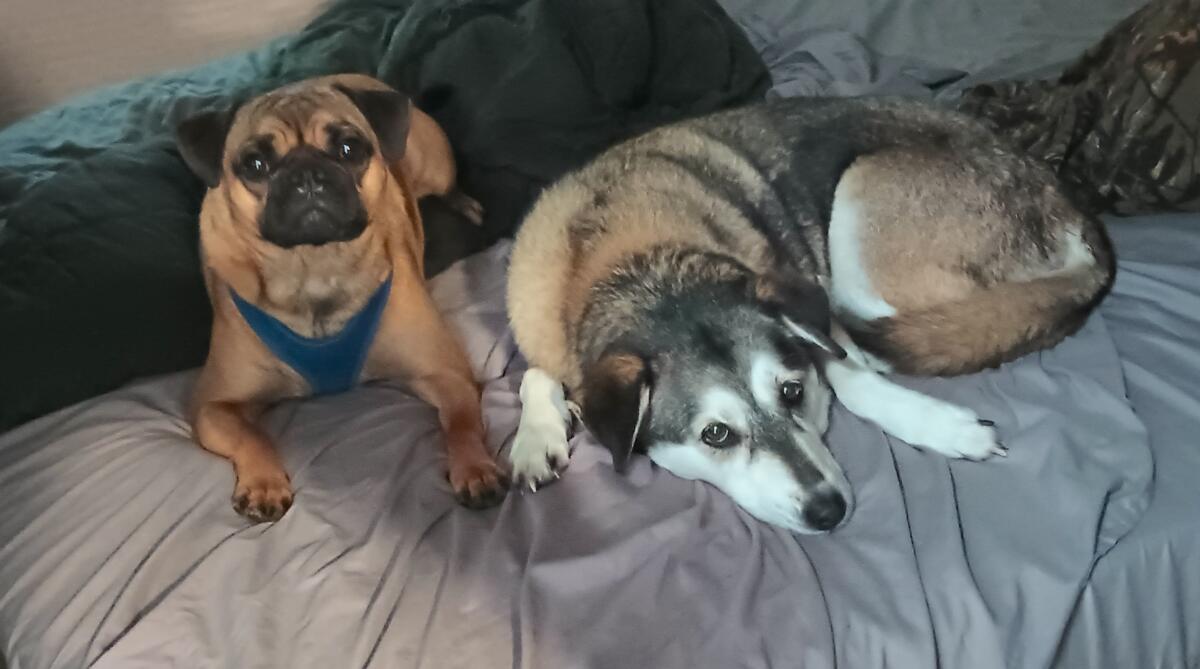
“Cooper is a Bug (Boston Terrier/Pug) and Sweetie is a Malamute. Both love going to different parks and sniffing out new scents. They get so excited when we go for walks.” —Tom Scott

HELP! WE’RE LOW ON PET PHOTOS!
Send us a photo of your pet with a short description. No blurry photos, and please do not submit your photo more than once. Thanks!


Leave here with a laugh


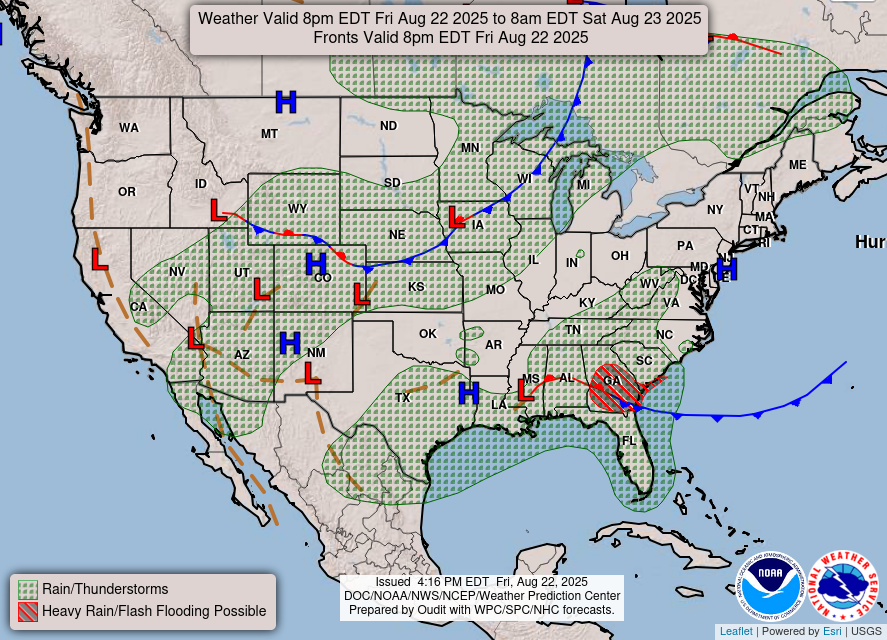
Today’s weather forecast across the nation
THIS MAP UPDATES TWICE A DAY

Visit Current National Radar Weather Map


Did you miss the latest RV Travel Newsletter? If so, read it here.
Oh, and if you missed the Latest News for RVers, make sure to catch up here.


If you shop at Amazon.com we’d appreciate you using this link. We get an itty bitty commission if you buy something, but they add up and help us pay our bills (most importantly our hard-working writers!).


RVtravel.com All-Star Team

Click here for information about our staff and how to contact us.

Our policy on using artificial intelligence.

My RV’s water is scalding hot. Can water heater be adjusted?

Hi Dave,
I have a water heater question. My RV has an Atwood G6A-8E water heater. The water gets too hot (scalding). I cannot find a thermostat anywhere. I’ve been manually shutting it off after about 5 minutes, but that gets very old. Any ideas? Thanks. —Bob, 1997 Fleetwood Tioga Montara

Hi Bob,
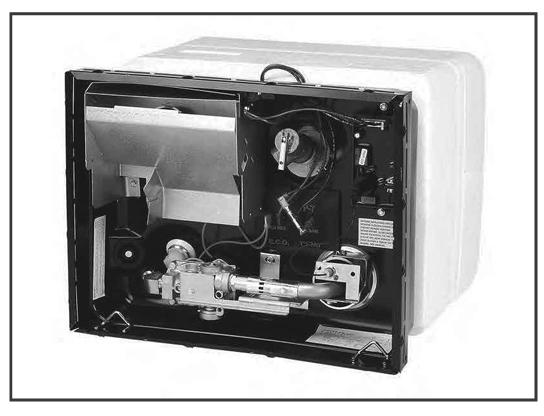
According to the Atwood Service Manual, your water heater is a 6-gallon electronic ignition model that runs on propane only. It came standard with a pre-set thermostat of 140 degrees. Typically, that is not too hot for most owners. In fact, I usually hear the opposite. It also indicates there is an aftermarket thermostat that is adjustable from 110–150 degrees. That thermostat should be visible on the front of the outside access panel.

Atwood G6A-8E
Atwood G6A-8E

Here is a picture that was in the service manual. It might be hard to see; however, the thermostat (TSTAT) is just underneath the pressure relief valve with the fusible link. To the left is the Emergency Cut Off (ECO). This is designed to break the circuit and shut down the water heater in case of extreme heat to protect the unit. That would be in the case of an obstruction in the main burner tube due to spiders or mud wasps. That could create a flame outside of the burner tube and the ECO would protect the components. However, it is not designed to shut off in case of hot water temperature.

How hot is the water?

The first thing I would do is get an actual temperature reading of the hot water. You can do this with a cooking thermometer at a faucet closest to the water heater.

The thermostat is pre-set to 140 degrees. It will cycle on when the water temperature drops to 115 degrees and shuts off at 140 degrees. It typically takes about 25 minutes to reach that temperature. Once again, knowing the actual temperature of the water is important to properly troubleshoot.

The part number for the adjustable temperature thermostat is 93105, according to the service manual. I would recommend contacting a qualified parts distributer such as Panther RV Products here.


 You might also enjoy this from Dave 

How to tell if water heater pressure relief valve has gone bad

Dear Dave,
How can I tell if my water heater pressure relief valve has gone bad? We go camping for three months at a time and leave the water heater on electric the whole time. I have noticed that some cooler mornings, low 60 degrees, that the water heater drips some water. Not a lot, and I assume that this is due to condensation since it stops when the day warms up….

Read the rest of Richard’s question and Dave’s answer.

MORE FROM DAVE ON RV WATER HEATERS


Dave Solberg is a leading expert in the RV industry and the author of the “RV Handbook.”

Read more from Dave here

HAVE A QUESTION FOR DAVE?

Send your inquiries to him using the form below.

Name
Drag & Drop Files, Choose Files to Upload

##RVDT2625

Sequoia National Park’s incredible Crystal Cave reopens to the public

1

After a four‑year hiatus, the marble‑lined passages of Crystal Cave will open again on May 23, 2025. Visitors can take advantage of the 50‑minute guided tours through a half‑mile loop of glittering stalactites and rugged corridors.

Overview

Crystal Cave is California’s fourth‑largest cave. What’s more, it’s the only one open to the public in Sequoia National Park. Crystal Cave’s gates have been closed since wildfire and winter damage in 2021 and 2023 kept visitors at bay for four full seasons.

Restoration crews cleared fallen trees, rebuilt the access road and trail, and even restored the cave’s solar‑powered lighting to its former glow. On May 23, 2025, guided tours resume, inviting you back into this underground marvel.

Tour details and ticketing

Guided tours through the cave will run from May 23 through September 7, 2025. Tours are typically offered between 9 a.m. and 3 p.m. daily during peak months. Each 50‑minute journey takes you on a half‑mile loop beneath thousands of mineral formations, with ranger‑led commentary on the cave’s long history.

Tickets cost $21 for adults and $11 for children under 10. You must purchase tickets online at least 36 hours before your visit. (I strongly advise RVers to get their tickets soon—to ensure your chosen dates are available.)

Park entrance fees range from $20 to $35 for a single vehicle. Or use your America the Beautiful annual pass for unlimited national park access. Don’t have one? Get one here.

Directions: The winding, one‑lane Crystal Cave Road opens only for tours and closes nightly. No vehicle over 22 feet (including trailers) are allowed entry. From the Foothills Visitor Center, it’s a 13‑mile drive along Generals Highway, then 6.5 miles on Cave Road to the parking area. Vehicles must also navigate narrow stretches of Highway 198 and Generals Highway. Plan for an hour’s drive and factor in potentially reduced speeds.

Overflow parking: Larger RVs barred from Crystal Cave Road can park at Foothills or Lodgepole Visitor Centers, then shuttle their party the remainder of the way using a smaller vehicle.

RV‑friendly planning tips

Here are some RV campgrounds nearby:

Lodgepole Campground accommodates RVs up to 40 feet in select sites, with showers, laundry, and a market just steps away—perfect for prepping before your cave day.

Dorst Creek Campground allows RVs and offers a dump station; water is available, along with picnic tables and fire rings. (Note that this campground will most likely remain closed for the 2025 camping season.)

Potwisha Campground suits smaller rigs and sits lower in elevation—great for early‑season stays when higher campgrounds may still be snowy.

What to expect inside the cave

Inside the cave, temperatures hover around 50°F (10°C), so layer up with jackets or fleeces. The half‑mile trail to the entrance is steep, so lace up sturdy hiking shoes and bring water. You might spot cave critters or feel a draft through narrow passages, but don’t worry—park guides ensure a safe, awe‑inspiring journey. (Note that the cave and access trail are not wheelchair accessible due to the terrain.)

Additional adventures in Sequoia

Once you’ve marveled at the cave’s crystalline chambers, head back to the surface for more Sequoia highlights:

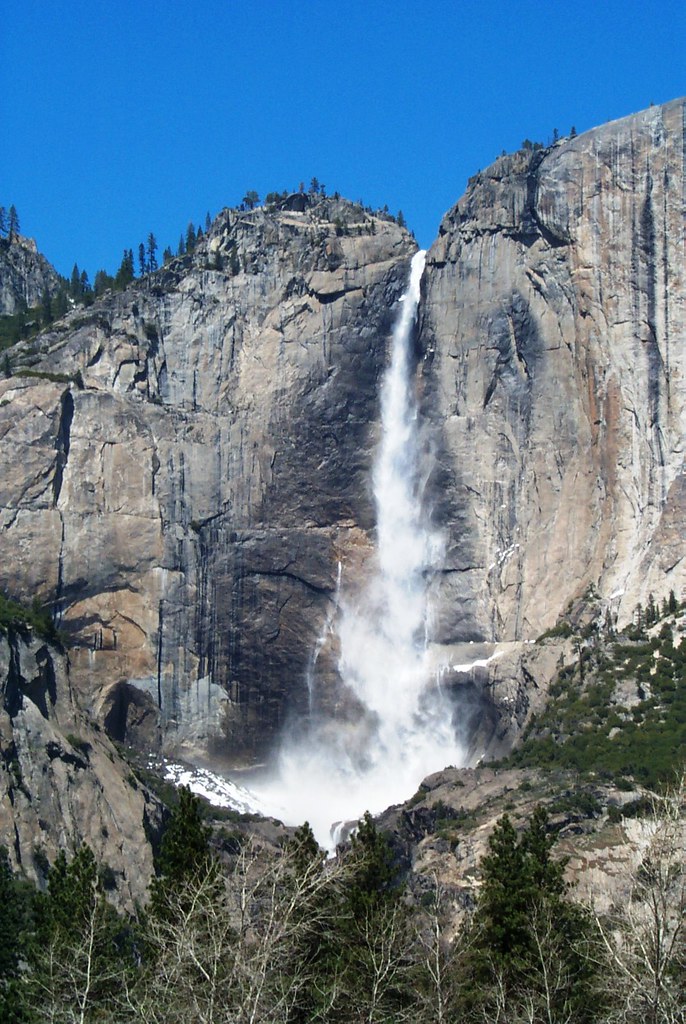
Tokopah Falls in Sequoia National Park Flickr image
Photo: NPS

Giant Forest: Stand beneath General Sherman, the world’s largest tree.

Moro Rock: Climb 350 steps for panoramic valley views.

Tokopah Falls: Hike a 1.7‑mile trail along the Marble Fork of the Kaweah River.

With your RV as home base, you can chase sunsets along winding roads and camp under star‑filled skies—Crystal Cave is just the beginning of your Sequoia adventure.

You should go!

What are you waiting for? Sequoia National Park and Crystal Cave await! Plan your visit soon.

If you’ve visited Crystal Cave or Sequoia National Park, tell us about your favorite memory. Use the comments below.

RELATED

##RVT1205b
Do you carry paper maps of areas where you will be traveling with your RV?

35

Remember when paper maps were our only option for navigation? Then came big, bulky GPS devices, and now we have everything we need on our cell phones. Amazing, huh?

Still, there’s something satisfying about unfolding a good old-fashioned map. No batteries required, no signal needed—just you, your route, and the thrill of plotting your next adventure by hand.

For some RVers, paper maps aren’t just nostalgic—they’re reliable backups, especially in areas with spotty reception.

And let’s be honest: Sometimes, a map gives you the bigger picture in a way a screen just can’t. It’s easier to see nearby scenic byways, alternate routes, and hidden gems that your navigation app might not suggest.

For those who love to take the road less traveled, paper maps can feel like a treasure map, leading you to unexpected discoveries.

Some RVers even use them for trip planning—highlighting routes, circling campgrounds, and jotting notes in the margins. Others keep a collection of old maps as souvenirs from past trips, worn and creased like badges of honor.

When you travel with your RV, do you still carry paper maps with you? Do you still use them to navigate or explore the area around you?

After you vote, please leave a comment. Thank you!

MORE POLLS ABOUT TRAVEL YOU MAY ENJOY

##RVDT2625

Celebrate National Park Week April 19-27, 2025

1

National Park Week is not just a celebration—it’s also an invitation to explore the breathtaking landscapes and rich cultural heritage showcased in our country’s national parks.

This year National Park Week is from April 19 – 27. The coming days provide RVers the perfect opportunity to appreciate the great outdoors along with its natural wonders.

What is National Park Week?

National Park Week is an annual celebration dedicated to our nation’s parks. It highlights the importance of preserving our precious natural treasures. It also invites folks to learn about the history, ecology, and recreational opportunities available throughout our great nation.

Our national parks play such an important role in the conservation of our country’s natural resources. For RVers, it’s the perfect excuse to exchange our daily routines for adventures that might take us through lush forests, rugged mountains, and serene lakesides.

A celebration

Whether you’re RVing solo, with family, or with friends, there are events and activities designed to appeal to every type of adventurer.

Many parks will host guided tours, interactive exhibits, and hands-on workshops during this special week. Visitors will delve deeper into topics ranging from wildlife conservation to indigenous history. These activities not only foster a deeper appreciation for our natural heritage but also create memories that will surely last a lifetime.

Tips for celebrating

Arches National Park victim
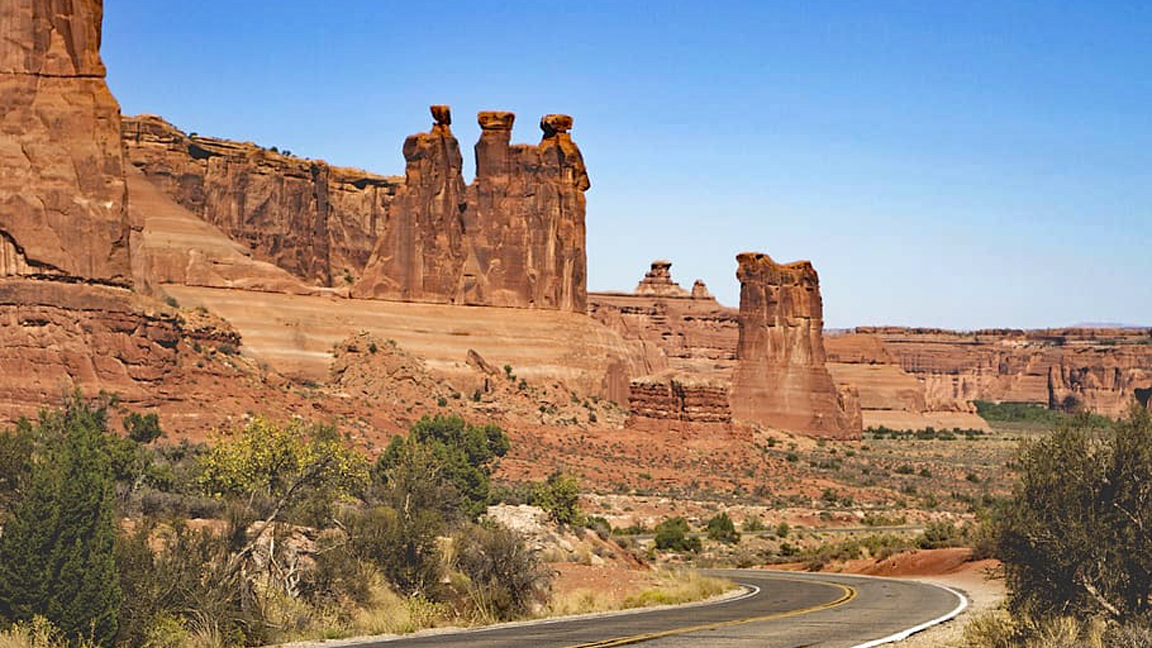
“Three Gossips” at Arches National Park.

Explore beyond the campsite. While your RV provides a comfortable base, the true magic of National Park Week lies in stepping out of your rig to explore. Take advantage of park programs—hike scenic trails, join interpretive talks, or even try your hand at photography to capture the stunning views. Every park offers its own unique story, and there’s no better time to dive into its history and natural beauty.

A social affair. National Park Week is a fantastic time to connect with fellow RVers and outdoor enthusiasts. Join online communities and local meetups to exchange tips, trade stories, and even plan group activities. Shared experiences often lead to lasting friendships and can provide a wealth of local knowledge that makes your trip even better.

The National Park Service uses many forms of social media. Check them out here. These social media platforms will alert you about special National Park Week activities. Enter the name of a national park near your current location, or enter your location, and find more information about nearby parks.

Saturday, April 19

Glacier National Park Pixabay photo

Free entry to all national parks. Note that you still must pay user fees (camping, boat launches, etc.). Find a national park here.

Junior Ranger Day will also be celebrated at various parks around the country with activities for the entire family. See if your favorite park is involved.

Tuesday, April 22

Celebrate Earth Day with a visit to a nearby park, preserve, or natural habitat. Learn more about Earth Day here. Plan to join in a local effort to reduce, reuse, and/or recycle items.

April 20-27

Free state park entrances, too. State parks in New Mexico will celebrate 2025’s National Park Week by waiving their entrance fees. Check to see if your state parks are also planning to celebrate in this way.

Challenge yourself! Try out one of the National Parks’ games here. See how much you know about the great outdoors.

National Volunteer Week coincides with the 2025 National Park Week. Consider volunteering at your local, state, or national park service. Or participate in a special volunteer event to help celebrate our national parks.

If your travel plans do not include visiting a park during National Park Week, consider a virtual visit to a national park. Check out this website.  Select the national park of your choice, sit back, and enjoy!

MORE ABOUT NATIONAL PARKS

##RVT1205

Park Service gets real with photo guide to wildlife poop

Walking on the wild side can lead to steppin’ in it. The National Park Service just released a guide to wildlife poop. Hang on, this is important. By keeping your eyes open for scat in the wild, not only can you save your shoes, you might actually save your life. Like, do you really know what bear poop looks like? If you see it, chances are, there might be a bear nearby.

Know your “stuff”? This guide to wildlife poop will test your knowledge

How well do you know your wildlife poop? Here’s a quiz. It’s a series of poo photos. Do you know cat scat from porcupine poo? Well, sorry, neither of those are included in this quiz, but there’s plenty of other “stuff” here. You’ll find the answers at the bottom of the story!

guide to wildlife poop
QUESTION 1

guide to wildlife poop
QUESTION 2
guide to wildlife poop
QUESTION 3
guide to wildlife poop
QUESTION 4
guide to wildlife poop
QUESTION 5
guide to wildlife poop
QUESTION 6

Poop pop quiz answers

As lifted from the National Park Service post.

Image 1: This scat was left by a black bear and was only a few days old in the picture. Trust us. Their diets consist of nuts, berries, roots, insects, and small mammals. Black bears are shy, reclusive and are rarely seen by visitors at Guadalupe Mountains National Park.

Image 2: Moose droppings, not the candy, found during the winter at Kenai Fjords National Park.

Image 3: Life, umm, finds a way. Look closely, ooh, too close, to see the small green shoots emerging from the partially digested berries and leaves in bear scat at Denali National Park.

Image 4: Scat of a ringtail cat that ate some prickly pears at Carlsbad Caverns National Park.

Image 5: A bison always lets the chips fall where they may at Grand Teton National Park.

Image 6: For fox sake. A little privacy here? A red fox in a squatting pose at Denali National Park.

We thought of adding a “how’d you doo” scoring section, but we were too pooped out by the time we got here. But if you got them all correct, you’re Number One with Number Two. Be sure to pass along this guide to wildlife poop to all your friends.

All quiz photos, National Park Service

RELATED

##RVT1205

RV Daily Tips. Thursday, April 17, 2025

Issue 2624


Today’s thought

“It takes half your life before you discover life is a do-it-yourself project.” —Napoleon Hill


Need an excuse to celebrate? Today is National Cheeseball Day!

On this day in history: 1907 – The Ellis Island immigration center processes 11,747 people, more than on any other day.


Tip of the day
Quick squeaky motorhome door hack: No more squeaks!

By Cheri Sicard
This video short from Endless RVing may be quick to watch but doing so can help put an end to an annoying squeaky motorhome door. You know, the kind that drives you crazy with the squeaky noises as you drive down the road.

This hack will only take seconds to do. All you need is a piece of electrical tape. That’s right, no tools! Check it out.


Ask Dave
What can I run with one solar panel and one battery in my 5th wheel?

Dear Dave, 
My fifth wheel came with a solar panel and one standard 12v battery. It has a 12v 16-cubic-foot fridge and tankless water heater. What are the restrictions for appliance usage if I go boondocking? I’m assuming I couldn’t use the A/C, but what else? —Ken, 2022 Grand Design 303RLS Fifth Wheel  Read Dave’s answer.


Article & video of the day
The top 5 van build mistakes

By Cheri Sicard
Building a van is an exciting adventure. But it’s easy to stumble along the way. Jeff and Lisa Warnick of Thrivans have seen it all. They’re here to help DIYers (and even some professional builders) dodge common pitfalls. Avoiding these mistakes can save serious time, money, and future headaches. Click here to read and watch.


RANDOM RV THOUGHT: If your RV is stored on private property for long periods of time, you can sometimes save money by canceling the liability, collision, medical and uninsured portions of the policy until you head back out on the road. But keep the comprehensive coverage active. If you allow this coverage to lapse and your rig is financed, your lending institution will likely tack on its own expensive coverage to your monthly payment.


Featured article
Incredible RV transformation: From old, dated rig to a French cottage on wheels

We saw this post from Tilly Dixon on the RV Interior Decorating: Ideas and Renovations Facebook page and couldn’t believe this transformational RV renovation was the same RV! Wow! Tilly wrote, “We have been having a blast transforming campers into cozy, tiny houses! With this one, we were going with a cozy French cottage-inspired design. This one is a 35′ Bunkhouse that got an exterior paint job, too!” Scroll through these pictures. We bet you’ll want to redesign your RV, too!


Reader poll
In the last 5 years, what’s the largest number of people who have slept overnight in your RV at one time?

Respond here.


JUST GETTING STARTED RVing? RVtravel.com publisher Chuck Woodbury’s book The ABCs of RVing should be essential reading. Learn more from reading this than what you’d learn in six months on your own. Learn more or order.


Quick tip
How much water do you use when boondocking?

Track your water usage with Post-it Note markings on the side of your fresh water tank (assuming it is visible). It is a handy way to gauge how much water you are using and estimate how many days your water will last so you can make adjustments as needed, or simply relax about it a bit more! —From rvlove.com


On this day last year…


Website of the day

Florida Trippers
This website from local Florida residents will help you plan your trip to Florida… any type of trip! Select the region or city and they’ll direct you to the best restaurants, things to see and do, and more.


? MYSTERY PRODUCT OF THE DAY ?
What if we told you that you could drink beer and water at the exact same time? Or iced coffee and juice? Well, you can!


And the survey says…

We’ve polled RVtravel.com readers close to 5,000 times in recent years. Here are a few things we’ve learned about them:

• If given the chance to own one of these beverage-making businesses, 32 percent would like to own a winery, followed by 30 percent who would like to own a root beer-making company. A microbrewery followed, with a liquor distillery coming in last.
• 70 percent do not know their RV’s license plate number by memory.
• 61 percent say their RV does not have a built-in ice maker in its freezer.

Recent poll: Did your parents take you camping as a child?


Trivia

Think you’ve been to a desert before? Think again! You’ve never seen a desert like the Atacama Desert along the northern coast of Chile. The Atacama Desert is the driest desert in the world. How dry? Some weather stations in the desert have never (we repeat: never) recorded a drop of rainfall. Geologic evidence suggests that certain regions across the desert may not have had rainfall from 1570 to 1971. The desert is bone dry. NASA has used the region to test equipment for Mars missions.


Readers’ pet of the day

“Sparky (1-year-old Havanese). ‘I like big bones and I cannot lie…'” —Randy Fittler

Send us a photo of your pet with a short description. No blurry photos and please do not submit your photo more than once. Thanks!


Leave here with a laugh


Today’s weather forecast across the nation
THIS MAP UPDATES TWICE A DAY

Visit Current National Radar Weather Map


Did you miss the latest RV Travel Newsletter? If so, read it here.
Oh, and if you missed the Latest News for RVers, make sure to catch up here.


RVtravel.com All-Star Team

Click here for information about our staff and how to contact us.

Our policy on using artificial intelligence.

What can I power with one solar panel and one battery?

Dear Dave, 
My fifth wheel came with a solar panel and one standard 12v battery. It has a 12v 16-cubic-foot fridge and tankless water heater. What are the restrictions for appliance usage if I go boondocking? I’m assuming I couldn’t use the A/C, but what else? —Ken, 2022 Grand Design 303RLS Fifth Wheel

Dear Ken,
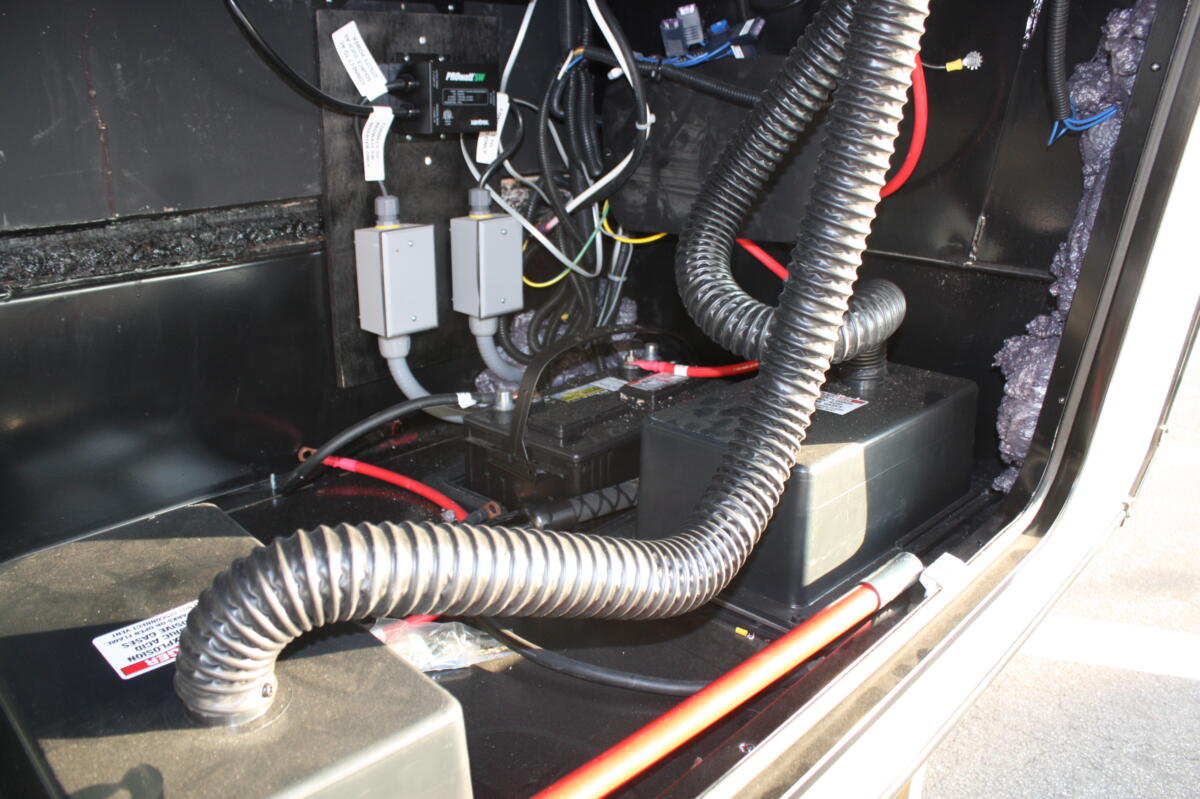
If you have one solar panel on the roof and just one battery, your rig is not set up for boondocking or dry camping. Typically, the single solar panel on the roof is a 100-watt panel and designed to just keep the battery charged on the dealer lot or in storage.

When a unit sits on the dealer lot, a flooded lead acid (FLA) battery will drain down within a couple of weeks. Since most dealers don’t have electrical pedestals all over the lot, the unit is dead when they go to show it to a potential customer. So RV manufacturers have been installing 100-watt panels, which are not intended to keep a unit charged with much of anything running.

RV battery

The next issue is the size and condition of the battery. Most 5th wheels are sent without a battery so the dealer can install what might be best for the customer. If you don’t do any dry camping, it would be a waste of money for a dealer to install a lithium battery. As we all know, the RV market is in a race to the bottom right now.

So, I would assume your rig has a single FLA battery that is a Group 24. That is the smallest battery and typically only has about 80-100 amp hour (Ah) capacity. FLA batteries should only be drawn down to 50% state of charge (SOC), which means 50 Ah or less.

Since the rig is almost four years old, I would also assume the battery is original and most likely sulfated. Therefore, it would not be able to store at 100% efficiency. Most 5th wheel units have two batteries even with limited dry camping.

5th Wheel Batteries
5th wheel batteries

Sharpen your pencil, it’s math time!

Nobody hates math more than I do, but we need to look at what components will be drawing 12-volt power and what can or can’t be used and for how long. As I have stated in many articles, this is not a perfect science. (Oh, great! My second-least-favorite subject!) It is difficult to calculate your power consumption as you don’t realize how many lights you will turn on and for how long, how often the refrigerator will cycle depending on the ambient temperature, how often the water pump will run, and so on.

The refrigerator will be the biggest power consumer, especially if it is routed through an inverter and running on 120-volt power. Mike Sokol conducted a test of a residential refrigerator and a 12-volt compressor-driven model using a 100 Ah lithium battery, a 1000-watt inverter, and ambient temperature of 70 degrees. The 12-volt compressor refrigerator ran for 20 hours on 120-volt power through the inverter and 40 hours directly from the battery. So, this tells us that running through the inverter at 120 volts is not the most efficient. Also, keep in mind, this is a battery that can be drawn down to almost 100%  SOC.

Roof air conditioners are power hogs

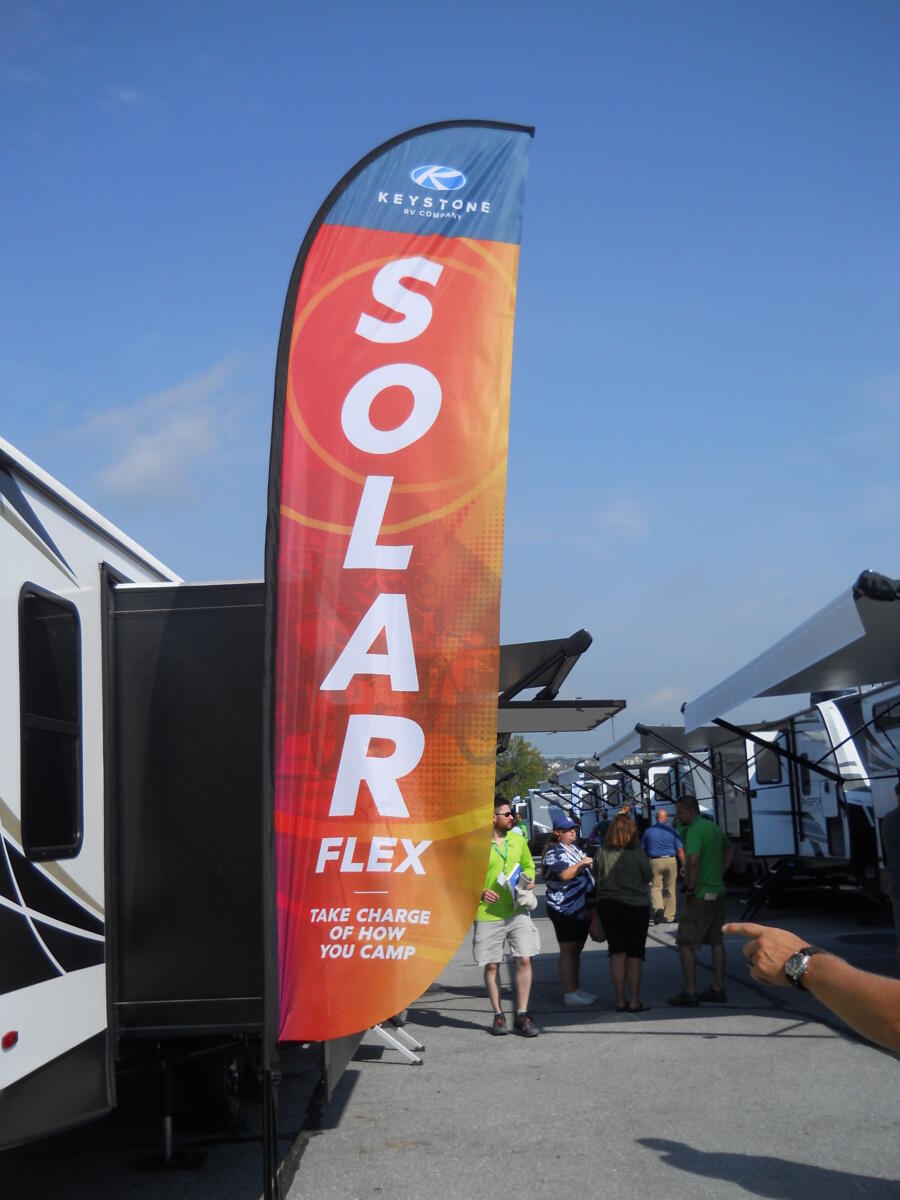
We know you are not going to be able to run either roof air conditioner as they are power hogs, as well. That is even if they have a SoftStartRV capacitor and a ton of lithium battery power. Keystone has a product called SolarFlex™ that has 600-800 Ah lithium batteries with a huge inverter and 800-watt or more solar panels. They can only run one roof air conditioner for about 2-3 hours.

solarflex
SolarFlex

The spec’s for your rig show a standard LP/electric water heater was standard equipment. I did not find an option for tankless, so I don’t know what model you have. There are several on the market such as Girard, Suburban, Truma, Furrion, and Rec Pro. These are propane gas-powered with electronic ignition, so they would not draw much 12-volt power. They would only operate on demand when you open a hot water faucet.

Solar calculating worksheet

Go Power!® has a solar calculating worksheet that I direct owners to so they can determine what components might be running, and the power usage. The challenge, as I stated earlier, is trying to figure out what component will be running and for how long. But at least this provides information and gets you thinking about usage.

You can download a copy of the worksheet on their website’s Learning Center here. At the bottom of the page, you can submit your email address and download the PDF. Also, here’s a link to much information on Solar Sizing for Your RV and Mobile Home, which also includes a link to the worksheet (pdf).

Solar Calculator
Solar calculator (click/tap to enlarge)

This won’t tell you what items you can run and for how long with your current setup, but it will give you an idea of what you will need to upgrade. Plus, it will show the biggest power consumption components such as the refrigerator and the furnace.

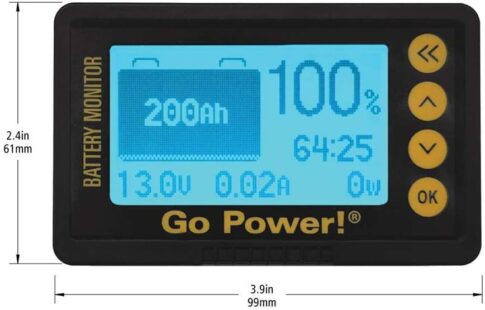
Start by verifying what size (Ah) battery you have as well as the solar panel. With just a single FLA battery and 100-watt solar panel, I doubt you will be able to go more than a partial overnight. What I suggest is to park the unit outside your house, or somewhere you have access to monitor the SOC of your battery, and test it for 24 hours. I would also install a battery manager kit like the Go Power Battery Monitor Kit so you can monitor the SOC and also see what charge you are getting from the solar panel. You can find it on Amazon here.

GP Batt Monitor
Go Power! Battery Monitor

 You might also enjoy this from Dave 

How long will 100 W solar panel and two batteries run residential fridge?

Dear Dave, 
When I purchased my RV from Camping World they never told me anything about the solar panel on the roof and the inverter. I know now that the residential refrigerator runs off the two batteries that are charged from the solar panel or shore power, but the inverter is in the off position and has to be turned on manually, I assume. I would think that if we lost shore power it would automatically switch on the inverter. I’m trying to understand the solar system and the RV, and if I should upgrade the 100 W panel to a bigger panel. I heard that there’s a 300 W or 350 W panel available now. —Joseph, Cedar Creek 38ftk 43’

Read Dave’s answer.

MORE FROM DAVE ON POWER AND BOONDOCKING


Dave Solberg is a leading expert in the RV industry and the author of the “RV Handbook.”

Read more from Dave here

HAVE A QUESTION FOR DAVE?

Send your inquiries to him using the form below.

Name
Drag & Drop Files, Choose Files to Upload

##RVDT2624

Quick squeaky motorhome door hack: No more squeaks!

By Cheri Sicard
The video short below from Endless RVing may be quick to watch but doing so can help put an end to an annoying squeaky motorhome door. You know, the kind that drives you crazy with the squeaky noises as you drive down the road.

This hack will only take seconds to do. All you need is a piece of electrical tape. That’s right, no tools are needed at all.

Cut off a piece of electrical tape about 3 inches long. Wrap this around the motorhome door catch a number of times. Close the door.

That’s it! No more squeaks while driving down the road.

RELATED

##RVDT2624

The top 5 van build mistakes

3

By Cheri Sicard
Building a van is an exciting adventure. But it’s easy to stumble along the way. Jeff and Lisa Warnick of Thrivans have seen it all. They’re here to help DIYers (and even some professional builders) dodge common pitfalls. Avoiding these mistakes can save serious time, money, and future headaches.

Mistake #1: Overdoing insulation

Insulation is a hot topic in the van-building world. There are endless options and opinions. It’s easy to get lost in the details. Researching insulation can feel like falling down a rabbit hole. There’s so much information to digest. Different materials, R-values, and techniques can be overwhelming. Where do you even start?

It’s tempting to pack every nook and cranny with insulation. But here’s the truth: You can’t insulate everything in a van. There will always be areas where heat escapes or enters.  Windows are the biggest culprit when it comes to thermal transfer. They’re responsible for most of the heat loss in winter and heat gain in summer. Even with window covers, windows remain a weak spot in your insulation strategy.

The floor is a major source of cold (and sometimes heat). Insulating it properly is essential for comfort. Don’t go overboard, though. Excessive floor insulation can reduce headroom. Nobody wants to feel cramped in their van.

Many DIYers cover the entire floor with sound-deadening material like Kilmat. While it can reduce noise, it has minimal insulation value. Covering the entire floor is unnecessary for sound deadening. It adds extra weight, expense, and time to your van build.

There are many insulation choices available.

  • Spray-in insulation is effective but contains chemicals and is more expensive.
  • 3M Thinsulate™ and Havelock Wool are great insulators. Do your own research to find the best fit for your needs.

Mistake #2: Not getting things square or plumb

Achieving perfect squareness and plumbness in a van is tricky. Vans aren’t perfectly shaped. They have curves, tapers, and uneven surfaces. The walls taper, the roof curves, and the floor may be uneven. These imperfections make it challenging to build perfectly square and plumb structures.

Misaligned cabinetry is a common problem. Upper cabinets might be angled or tilted. These imperfections can be visually jarring. They can also affect the functionality of your living space.

Squareness and plumbness are essential in construction. They ensure structural integrity and visual appeal. Traditional tools like levels and plumb bobs don’t always work in a van. This is due to the van’s irregular shape. Here are some tips to help you achieve alignment in your van build.

  • Find the center line: Find and mark the center line of the van. Use a laser or reference points on the floor. Measure from the center line rather than the walls. This will help you create straight and symmetrical structures. Also, mark a center line on the ceiling. This will help you align ceiling strips.
  • Use a digital level: A digital level can be calibrated to a new “zero” point. This allows you to establish a reference point. Use it to ensure parallelism with the floor. You can also use it for exterior items like running boards. Set the digital level on the step to make the running board parallel.

Mistake #3: Using the wrong materials

Using the right materials is crucial for a long-lasting van build. Use marine-grade products whenever possible. Marine-grade products are high in quality and durable. They ensure safety, even though they cost a bit more. Use marine-grade or RV-grade components for lighting, switches, and electrical systems as non-rated components aren’t designed for this type of application. This can lead to potential safety issues.

Many DIYers use MDF or particleboard because they are readily available and easy to paint. However, these materials have serious drawbacks.

  • Durability issues: MDF and particleboard aren’t very durable. They absorb moisture, causing expansion, bowing, and bubbling. MDF is also dense and heavy.
  • Fastener issues: These materials don’t hold screws well. Vibration can loosen screws and cause material failure. Think of IKEA furniture. It looks great at first. But it can easily break if you move it.

Choosing the right fasteners is also important.

  • Avoid nails: Vibration can loosen nails. Also, you need accessibility to remove and replace components easily.
  • Use stainless steel fasteners: Stainless steel is stronger and more resistant to moisture.

The right adhesive can also make a big difference.

  • Wood glue: Use wood glue in addition to screws for stronger, squeak-free cabinetry.
  • Marine-grade adhesive: Always use marine-grade adhesive for adhering items to the van. Loctite marine adhesive is a great option. Construction adhesive lacks flexibility. This leads to cracks and squeaks.

Mistake #4: Forgetting accessibility

Plan for accessibility from the start. You need access to components like electrical and plumbing systems. You should be able to remove and replace things easily. Install doors and hatches in necessary locations. This provides access to hidden components.  Remember to use screws instead of nails. Nails are difficult to remove to gain access.

Mistake #5: Electrical issues

Electrical issues are the most common problem in van builds. Component quality is key. Use high-quality, marine-grade electrical components.

  • Blue Sea Systems is a reliable choice. It may cost more. But it’s worth it for the reliability.
  • Use high-quality products from Victron. Renogy is a more budget-friendly option. Victron offers quality, customer support, and seamless integration.
  • Use high-quality, UL-listed batteries.

Wiring and connections

  • Poor connections: Use marine-grade connectors.
  • Wire protection: Protect wiring from metal edges. Use loom, zip ties, and clamps. Use rubber trim edging on metal edges.

Bonus tip: Don’t rush the big steps

Think about accessibility. It’s tempting to complete big steps quickly. This gives a sense of accomplishment. But it can create problems later.

Many want to use their van before it’s fully finished. Installing electrical components or walls before wiring can hinder the build and make it difficult to access the components should you need to.

Building a van is a rewarding experience. By avoiding these common mistakes, you can save time, money, and frustration. Plan carefully, use quality materials, and prioritize accessibility. Your dream van will be a reality.

RELATED

##RVDT2624

New Dyrt feature lets RVers search for campgrounds by drive time, not just distance

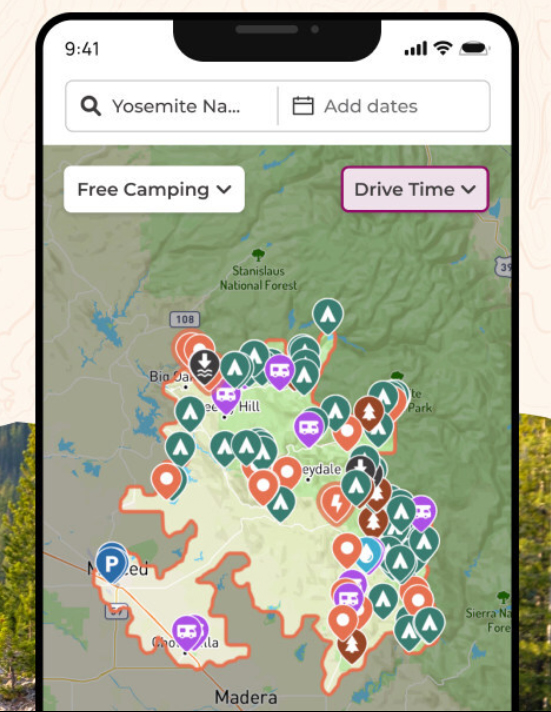
There are plenty of apps RVers can use to find campgrounds. Trouble is, they’ll tell you “how far” it is to a campground, but when it comes to how long it takes to get there, forget it. If you’re nearing the end of your road-day, you may be more interested in the “getting there time.” Now, an RV-familiar app, The Dyrt, says plug in how much time you want to spend on the road, and it will tell you all campgrounds inside that time frame. It’s the new Drive Time app.

The Dyrt rolls out their campground drive time feature

The Dyrt, the only camping app that has it all—state and national park campgrounds, RV parks, glamping, and free campsites, along with millions of user-generated campground reviews—now has Drive Time.

But you knew there had to be a catch. Drive Time is now available to everyone in The Dyrt community of campers with a PRO membership. The process is simple: Download The Dyrt app, upgrade to PRO, click Drive Time on the map, toggle to the preferred amount of time it would take to drive to a campsite, and campers can immediately view all results within that driving time.

campground drive time“Camping is the quintessential weekend activity, but that also means that your time is fairly limited,” says The Dyrt CEO Kevin Long. “You don’t want to spend so many hours driving on Friday and Sunday that it makes your Saturday less enjoyable. Drive Time is the perfect way to immediately unlock every camping option available to you within your preferred driving time. It’s also great for discovering new places close to home you never knew about.”

The Dyrt PRO has more than just Drive Time

The Dyrt PRO members already have access to dozens of filters to help them find the exact type of campground they’re looking for, and the Drive Time feature enhances that lineup. In addition to finding a campsite within a specific time frame from their current location, Drive Time is a great planning tool as well.

For example, while in The Dyrt app, change “Find camping within a driving distance from current location” to “Denver.” Set it to view campgrounds within 1.5 hours of driving, click “View Results” and in a matter of seconds 385 campgrounds, RV parks, free overnight parking areas and more are mapped out clearly for the user. It’s also helpful for situations where a campground may be nearby “as the crow flies” but there’s no convenient direct route to get there.

So, while The Dyrt app itself is a freebie, and a useful tool, indeed (we often use it when scouting for a place to overnight), the PRO version costs money. A one-year membership of The Dyrt PRO is currently $35.99 (as of 2025). It adds more than just Drive Time. Members can see discounts up to 40% on some campgrounds. Drive out of the cell area, your maps are still available offline. Maps are available showing boondocking access on BLM and Forest Service lands. There are other features, too.

You can try out the PRO free for 30 days with code “rvtravel”. Learn more about The Dyrt PRO here.

MORE “DIRT” ON THE DYRT

##RVT1205b