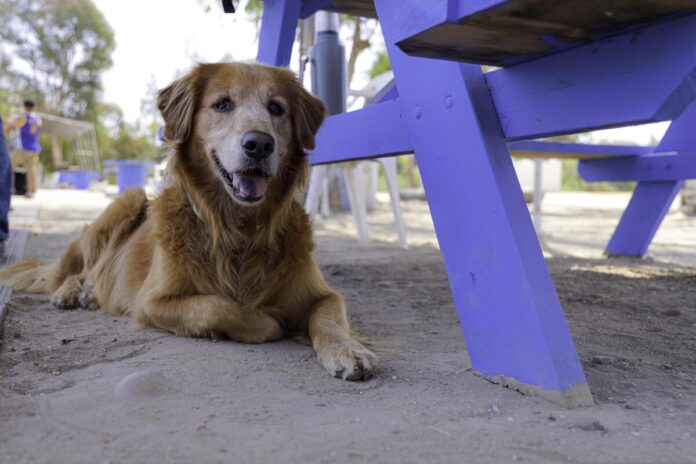
If you’ve ever told someone that your 10-year-old Labrador is “70 in human years,” it turns out you’ve been using an inaccurate calculation.
I was surprised to learn that vets have been trying to retire the “multiply by 7” rule for years. Sure, multiplying your dog’s age by seven is easy. Turns out, it’s also surprisingly inaccurate.
Rough guess
The familiar “one dog year equals seven human years” rule wasn’t based on scientific research. Experts believe it likely became popular decades ago as a simple way to explain that dogs age much faster than people.
Modern veterinary research has shown that canine aging is far more complicated than a simple multiplication exercise.
Dogs mature incredibly fast during their first two years of life. A 1-year-old dog has already reached a developmental stage similar to a human teenager. A 2-year-old dog is roughly comparable to a young adult.
A better way
The American Veterinary Medical Association and the American Kennel Club now recommend a much more realistic guideline for medium-sized dogs.
- The first year of life equals approximately 15 human years.
- The second year adds about 9 more human years.
- After that, each additional year is roughly equivalent to 5 human years.
- Using that approach, a healthy 5-year-old dog would be closer to the equivalent of a 39-year-old person rather than 35.
WANT TO KNOW YOUR DOG’S AGE AND BIRTHDAY? There’s an easy, at-home DNA test for that!
Size matters
Here’s where things get even more interesting. Dogs don’t all age at the same rate.
Small breeds generally live longer and remain active later in life. Large and giant breeds age more quickly and often become “seniors” long before their smaller canine cousins. A 7-year-old Chihuahua may still be considered middle-aged, while a 7-year-old Great Dane is already entering its senior years.
That means two dogs with the same birthday can have very different biological ages simply because of their size and breed.
Dog DNA
Researchers have gone even further by examining changes in canine DNA over time. A groundbreaking study comparing Labrador Retrievers and humans found that dogs experience very rapid aging early in life before the pace gradually slows.
The DNA-based formula isn’t intended for everyday pet owners because it’s more complex and has mainly been validated in one breed. However, the research confirms what veterinarians have observed for years: dogs do not age at a steady seven-to-one ratio throughout their lives.
Why you should care
Knowing your dog’s real life-stage can make traveling together safer and more enjoyable.
A dog entering its senior years may need shorter hikes, more frequent rest stops, easier access into the RV, and additional veterinary checkups before long trips. Older dogs can also become more sensitive to heat. They may require shaded campsites and plenty of fresh water during summer adventures.
On the other hand, a young adult dog may have the energy for longer walks, trail adventures, and active campground fun.
Rather than focusing on a number, pay attention to how your dog feels. Your veterinarian can help determine whether your traveling buddy is still in their prime or beginning to need senior care.
More than a number
Whether your canine co-pilot is a playful puppy or a gray-muzzled road warrior, understanding how dogs really age helps you provide better care throughout every stage of life.
So, the next time someone says their dog is “49 in human years,” you can smile and kindly let them know it’s not quite that simple.
Here’s a chart you may find helpful.

So… How old is your dog really? Tell us in the comments below.
RELATED
- The most popular dog names in 2026
- Long-lasting, healthy Himalayan yak cheese chews for dogs
- The best dog car seat and dog booster seat for RVers
- How to train dogs to stop barking at everything
- Is your dog breaking the law?
RVT1271b