One unattended campsite offered an easy meal. Wildlife officials say that’s exactly how bears learn to return—and why campers share the responsibility for keeping them wild.
“One careless campsite may have helped seal a black bear’s fate.”
Wildlife officials in Montana euthanized a black bear after it repeatedly raided campgrounds near Red Lodge. One of its last stops was an unattended campsite where food, cooking grease, dog food and garbage had reportedly been left outside, even though a bear-resistant storage box was available.
The incident is a sobering reminder that leaving food and trash unsecured in bear country isn’t simply untidy. It can teach bears that campgrounds are easy places to find meals, increasing the risk to everyone camping nearby.
An unattended campsite became a buffet
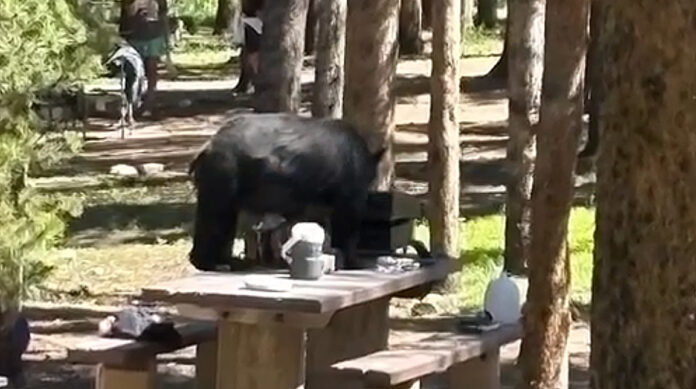
Chris and Chelsey Harris told Montana television station KTVQ they watched the bear wander into a neighboring campsite at MK Campground near Red Lodge after its occupants had been gone for several hours.
According to the couple, the bear found dog food, cooking grease, food scraps and multiple bags of garbage.
“There was a lot of dog food, whatever they cooked on their grill. They did not clean up afterwards. Imagine bacon grease and eggs,” Chelsey Harris told the station.
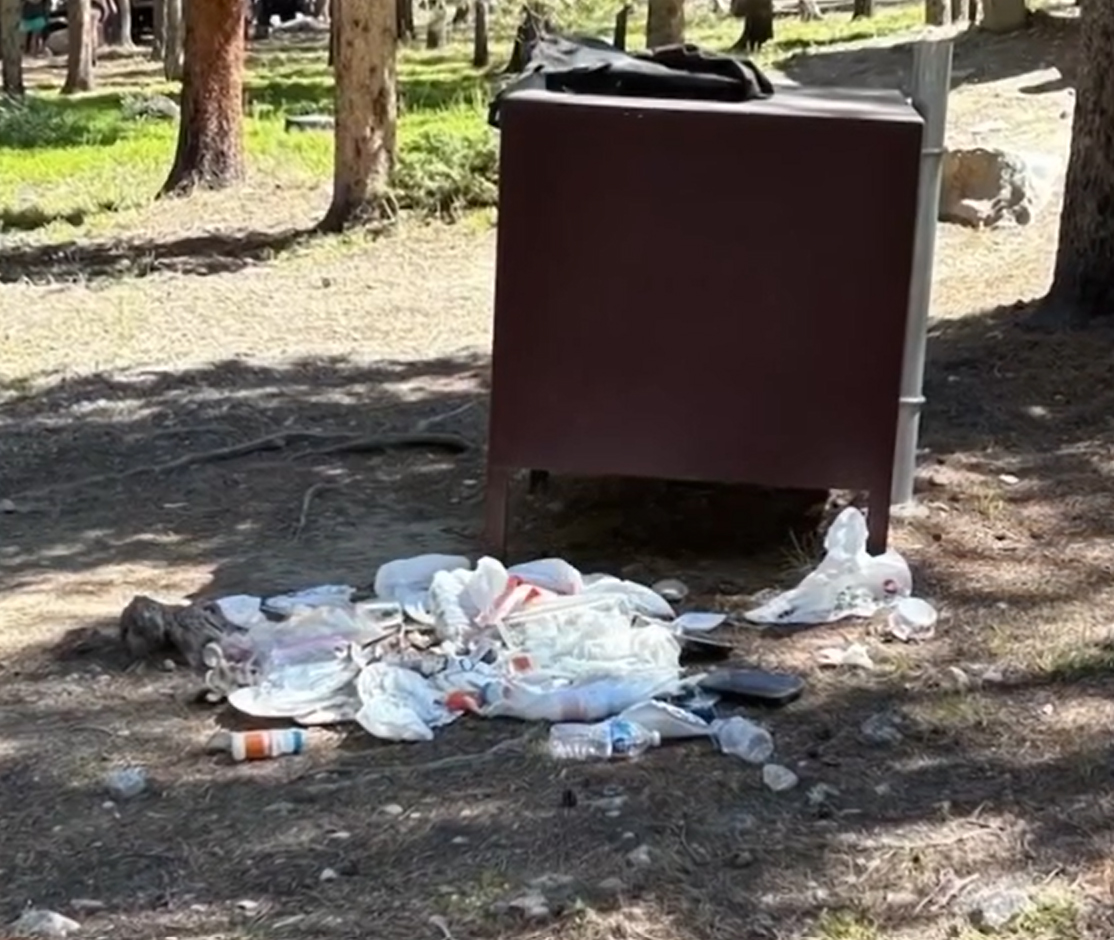
Chris Harris said several garbage bags had been left leaning against the campsite’s bear box instead of being secured inside it.
The bear reportedly wasn’t aggressive toward people. But by calmly walking through a developed campground looking for food, it demonstrated exactly why wildlife managers worry about food-conditioned bears.
The following day, wildlife officers euthanized the bear after it returned to the campground.
The bear already had a history
It’s important to understand that this wasn’t a case of one messy campsite creating the problem overnight.
Montana Fish, Wildlife & Parks said the adult female black bear already had a history of entering campgrounds in search of human food. Wildlife officers had previously tried hazing and trapping the animal before determining that euthanasia was necessary after it returned once again.
Still, every successful raid reinforces a bear’s association between people and food.
The campers who left food and garbage behind may have been gone by the time the bear returned. The families, pets and neighboring campers were still there.
That’s why wildlife officials stress that food storage isn’t simply a personal responsibility. One careless campsite can affect an entire campground, not to mention the local wildlife population.
Six bears already euthanized this year
The Red Lodge area has experienced an unusually high number of bear conflicts this year.
Montana Fish, Wildlife & Parks says six food-conditioned black bears have already been euthanized around Red Lodge during 2026. Officials have also warned that some people may be intentionally feeding bears—an illegal practice that dramatically increases the chances of dangerous encounters.
Once a bear repeatedly associates people with food, wildlife managers say the odds of future conflicts increase sharply. Their goal is to prevent an encounter that injures a camper or forces an even more dangerous response later.
Wildlife agencies say relocating heavily food-conditioned bears often isn’t successful because many continue seeking human food or return to developed areas.
Your RV won’t keep bears away
Some campers assume the rules are mainly for people sleeping in tents.
They’re not.
Food isn’t the only attraction. Pet food, greasy grills, coolers, garbage, cooking utensils and even scented toiletries can lure curious bears.
Montana Fish, Wildlife & Parks recommends storing food and other attractants where bears can’t reach them, cleaning cooking areas promptly and disposing of garbage in bear-resistant containers or according to campground rules.
The Custer Gallatin National Forest, which includes the Beartooth Ranger District near Red Lodge, maintains a food-storage order designed to prevent bears from learning that campgrounds are reliable sources of easy meals.
For RVers, that means bringing pet dishes inside, cleaning grills after every meal, wiping away grease and food residue, and securing garbage before leaving camp—even for a short trip into town.
“A bear box only works if the food and trash actually go inside it.”
The bear paid the price
The Harris family told KTVQ it was difficult to hear the shots that ended the bear’s life. They believe the situation might have been avoided if campers had properly secured their food and garbage.
Most campers would never intentionally harm a bear.
But every time a bear finds an easy meal at a campsite, it learns that people are a dependable source of food.
Sometimes that lesson ends exactly as it did outside Red Lodge—with wildlife officers forced to destroy an animal that should have remained wild.
The bear paid the price. But it wasn’t the one that made the mistake.
Sources
KTVQ (original reporting)
Montana Fish, Wildlife & Parks — Recreating in Bear Country
Custer Gallatin National Forest — Food Storage Order
Custer Gallatin National Forest — Food Storage Order information and bear safety
RELATED
- Spring encounters turn dangerous as wildlife moms protect young
- Strange wildlife sightings happening across national parks
- The funniest animal photos of the last decade
- All Nikon Comedy Wildlife Awards Finalists and Winners
- Instagram photo filter warns tourists when they’re too close to wildlife
- You don’t have to be dumb for a park wildlife mishap
- Humorous public safety video laughs at ‘tourons’
- See wildlife up ahead? Great! Here are some tips for safely observing wildlife
RVT1271b