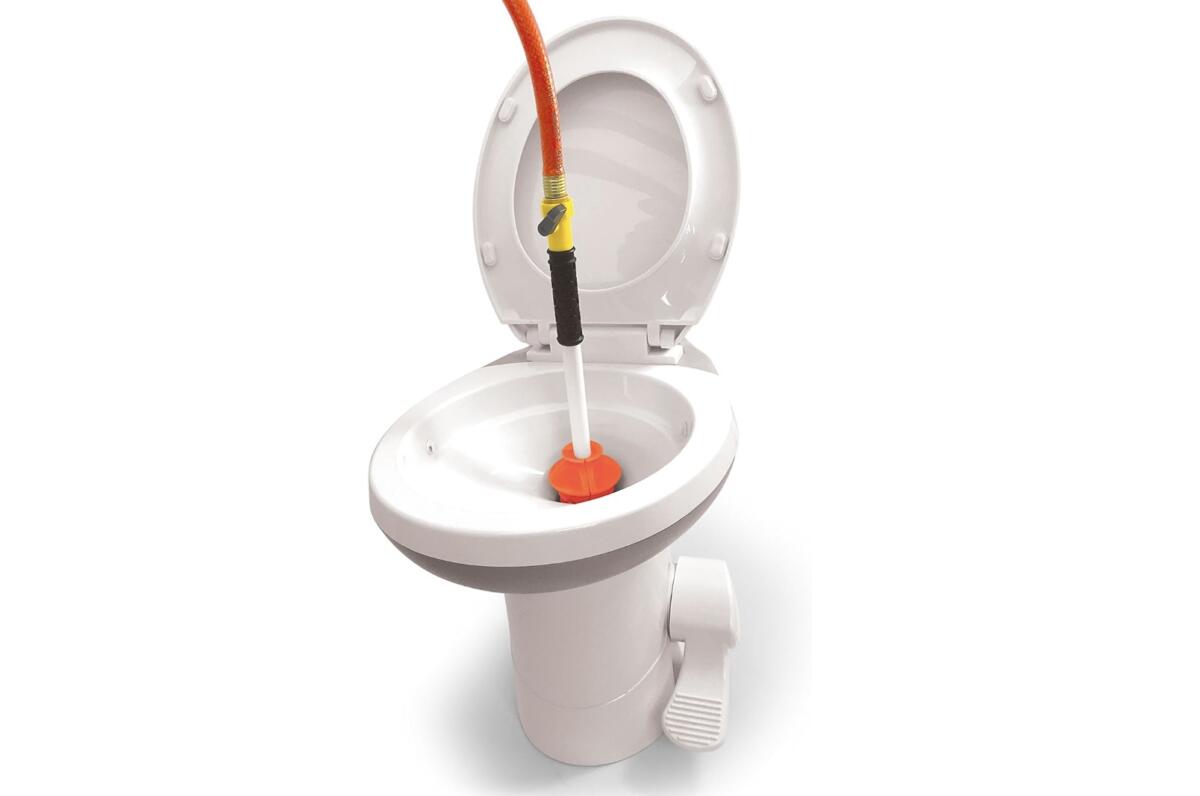
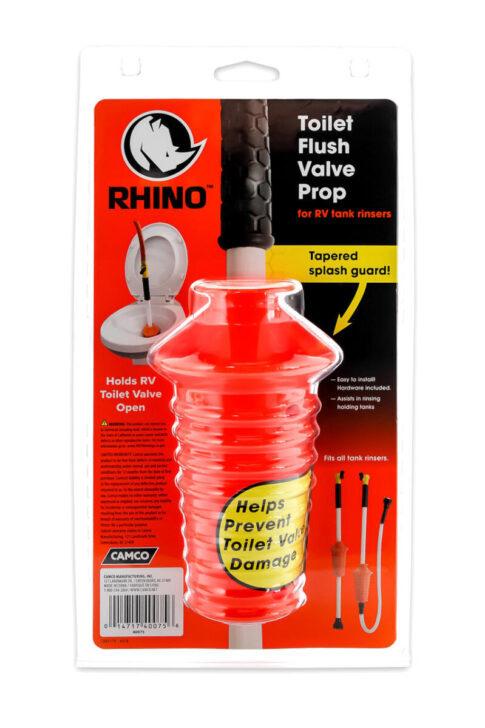
The Camco Toilet Flush Valve Prop easily installs around the body of your RV waste tank rinser and props open the toilet waste valve while you clean.
Using a Flush Valve Prop makes it easier to clean the waste tank without having to hold down on a foot pedal, and also helps prevent damage to the waste valve.
With Camco’s easy-to-install prop you will be able to clean your holding tank with ease.
The tapered design helps prevent splashback, and the ridges help keep the prop in place.
Flush Valve Prop makes it easier to clean the waste tank without having to hold down on the foot pedal on your toilet.
The Valve Prop fits all tank rinsers and is easy to install with all hardware included. It:
• Holds your RV toilet valve open while you rinse it out;
• Helps prevent damage to your RV toilet valve;
• Has a tapered design which helps prevent splashback;
• Fits all tank rinsers;
• Is easy to install with hardware included.
The tapered design helps prevent splashback, and the ridges help keep the prop in place.
Using the Camco RV Holding Tank Rinser with a shutoff valve helps to completely flush out the holding tank. It features an easy-grip handle and quarter-turn pressure-sealed valve, which allows complete control of water flow. The side-placed jets clean and rinse the smallest, hard-to-reach places.
RV Flexible Swivel Stik™
Additionally, Camco’s Flexible Swivel Stik RV Holding Tank Rinser with shutoff valve dislodges and flushes stubborn waste deposits and odor-causing particles left over after your RV’s holding tank is emptied.
It features a powerful rotary cleaning action that reaches the walls and corners of your tank. It helps keep sensors clean for accurate readings. This product is ideal for use on holding tanks that are offset from the toilet.
The standard 3/4-inch female garden hose connection conveniently connects to most garden hoses. The solid section (including the handle) measures 24 inches long; the flexible section measures 34 inches long with a 2-inch diameter nozzle. This product features a one-quarter turn shut-off valve for simple flow control. Includes all-brass moving parts.
This week, the Ohio River Way was recognized as a National Water Trail. This designation marks it as one of the country’s premier paddling routes for 2025.
Spanning 308 miles, the Ohio River Way includes the states of Indiana, Kentucky, and Ohio. The iconic waterway weaves together Appalachian wilderness, historic river towns, and vibrant metro hubs—all along the banks of one of America’s most celebrated rivers.
As RVers, you know that the journey is most often just as important as the destination. Now, you can explore scenic wetlands, Civil War–era river towns, and plentiful wildlife habitats.
Designation matters
Naming the Ohio River Way as a National Water Trail paves the way for improvements and accessibility. Here are just a few of the benefits of the designation:
• Enhanced access and amenities. The National Water Trail designation means improved boat launches, signage, and support facilities, making it easier than ever to plan multi-week paddling trips or quick day-launch adventures along the riverbanks.
• Conservation and community. The National Water Trail status brings funding and partnerships that help restore riverbanks, protect wildlife, and support local riverfront economies.
• Cultural connections. Paddle past Lewis and Clark landmarks, Underground Railroad stops, and historic flatboat ports, all while tapping into the Ohio River Valley’s rich tapestry of stories.
Five top RV campgrounds
Here are five campgrounds that put you within easy reach of the water trail’s best sections.
Kountry Resort Campground in Pomeroy, Ohio (Meigs County)
Nestled on 98 acres just three miles from the Ohio River and the West Virginia border, Kountry Resort Campground offers 230 shaded and sunny pull-through sites with up to 50-amp full hookups, modern restrooms, laundry facilities, and an indoor swimming pool. Enjoy on-site fishing lakes, a game room, fitness center, and family events like fireworks and golf cart parades.
North Bend State Park – River Run Campground in Cairo, West Virginia
River Run Campground features 49 lakeside sites, with 26 offering 50-amp electric service and water hookups, plus reliable Wi-Fi. You’ll be steps from the 72-mile North Bend Rail Trail, seasonal swimming pool, playgrounds, and an ADA-compliant bathhouse. It’s an ideal base for combining river paddling with hiking, fishing, and biking.
John James Audubon State Park Campground in Henderson, Kentucky
Set amid woodlands and wetlands, this 69-site campground provides water and electric hookups, a central service building with showers and restrooms, a dump station, laundry facilities, picnic areas, and a playground. The park’s nature center, museum, and miles of interpretive trails add enriching land-based activities after your river excursions.
Rising Star Casino Resort & RV Park in Rising Sun, Indiana
Combine riverside camping with casino excitement at this Good Sam top-rated park. Full water/electric hookups, clean modern restrooms, and level asphalt pads mean hassle-free stays. When you’re off the water, try your luck at the casino, dine in upscale restaurants, or catch live entertainment—just a short drive from Cincinnati and Louisville.
Forked Run State Park near Reedsville, Ohio
This 791-acre park sits three miles south of Reedsville and borders the Shade River State Forest. The campground offers rustic cabins, picnic facilities, a swimming beach, boat ramps, and even a disc golf course. Though it fronts a tributary, it’s just minutes from an Ohio River launch, making it a peaceful retreat after busy days on the water.
You should go!
With the Ohio River Way’s National Water Trail designation, now is the perfect time to map out an RV adventure. Whether you’re craving serene river miles, historic riverfront towns, or a blend of land-and-water exploration, this 308-mile corridor delivers.
You can download a free digital version of the 2025 Ohio River Way Visitors Guide here.
Driving an RV offers the freedom to explore the open road. However, it also comes with unique challenges, especially when it comes to dealing with aggressive drivers.
My husband and I recently faced a potential road rage entanglement. We were driving in the far right lane in preparation for our upcoming exit. One by one, other drivers sped around our RV and immediately cut in front of us. Several gave us the evil eye, and a few drivers even waved in a not-so-friendly manner. Sigh.
My husband was getting frustrated because he feared rear-ending a quick-cutting vehicle. I could tell his blood pressure was escalating, and so was mine! We needed some help to avoid and defuse road rage.
RVs are targets?
RVs are larger and sometimes slower than typical vehicles. This can frustrate other drivers. Here are a few tips for RVers:
• Stay in the right lane. Keep your RV in the right lane unless you’re passing. This allows faster vehicles to overtake you safely and reduces frustration among other drivers.
• Use your horn sparingly. Avoid using your horn unless it’s necessary to alert other drivers of immediate danger. Unnecessary honking can escalate tensions and provoke aggressive reactions.
• Be aware of the surroundings. Stay vigilant for signs of aggressive driving, such as tailgating, erratic lane changes, or excessive speeding. If you notice these behaviors, maintain a safe distance and avoid engaging.
• Don’t engage. If another driver exhibits aggressive behavior, don’t retaliate. Avoid eye contact, refrain from making rude gestures, and resist the urge to speed up or block their path. Instead, focus on your own driving and safety.
Tips to avoid your own road rage
Here are some tips for RVers to consider. Hopefully, these ideas will help you keep your own road rage in check.
• Plan ahead. Allow extra time for your trips to reduce stress. Rushing increases the likelihood of frustration and aggressive driving.
• Stay calm. Practice deep breathing or listen to calming music to maintain composure. Studies suggest that listening to soothing tunes can decrease driving anxiety and enhance focus.
• Avoid distractions. Stay focused on the road by minimizing distractions. Avoid using your phone or engaging in activities that take your attention away from driving.
• Be courteous. Simple acts of kindness, like allowing others to merge or yielding the right of way, can reduce tension and promote a more pleasant driving experience.
If confronted by an aggressive driver
• Avoid confrontation. If an aggressive driver approaches, don’t engage. Keep your doors locked and windows up and avoid making eye contact or responding to gestures. Be sure other riders in your RV follow your lead!
• Report dangerous behavior. If you feel threatened, ask your travel partner to call 911 or the local law enforcement. Provide a description of the vehicle, license information, and its location.
• Don’t go home. If you’re being followed, don’t drive home or go to your campground. Instead, head to a public place or a police station. Avoid stopping until you’re in a safe location.
What about you?
Have you ever experienced a road rage incident while RVing? Were you involved or someone else? Tell us about it in the comments below, please.
I recently received this question from an RVtravel.com reader regarding using larger tires with lower inflation to get a more comfortable ride while maintaining safety and not overheating the tires.
Hi Roger,
I have a tire question for you. I own a 2021 RV with a GVWR of 8596 lbs. that I purchased used in the spring of 2024. The factory 205/75R15 Goodyear Endurance tires were manufactured in November 2019, and I believe they are due to be replaced. I am considering replacing them with GY Endurance 225/75R15 for the increased load range to give myself a wider margin of safety, as the 205s’ load range is basically equal with the GVWR for the camper.
The question
My 205s are rated for 2150 lbs. at 65 psi, which is what I’ve been running them at. According to the Load/Inflation chart, I could theoretically run the 225s at 50 psi for the same 2150 load. Obviously, I want more load capability so I would run them at a higher psi, say 55 or 60. But is it safe to run them at a lower psi since they are rated to 2830 lbs. at 80 psi? I don’t need that much load capability and would prefer the softer ride of a lower pressure as long as it’s safe to do so and not be overheating the tires.
Please let me know what you think with regards to running this particular tire at less than max psi. —Jeff D.
My reply
Hi Jeff,
First, it’s essential to understand what the “GVWR of 8596 lbs.” means. The Gross Vehicle Weight Rating (GVWR) is the heaviest your RV should ever be. In fact, the RV Industry Association (RVIA) recommends that the tire loading should be no more than 90% of that number. Additionally, certain assumptions are made when arriving at that number, namely, that the load on your tires is evenly split between the axles and that the load on each tire on an axle is evenly distributed from end to end.
RVSEF (RV Safety & Education Foundation) has measured the actual load on tires on tens of thousands of RVs and learned that more than half of the tires in RV usage are being overloaded. This data supports the recommendation that, at a minimum, every RV should get on a truck scale and at least learn the weight on each axle. Getting “4-Corner Weights” is not always convenient (see RVSEF), so I suggest we assume one end is supporting 53% of the axle total. Going to this effort is important as the inflation in the tables is the MINIMUM inflation for the heaviest loaded individual tire, and all tires on the trailer should have the same cold inflation.
You mention “safety” a few times. Tire inflation safety is not an on/off switch where tires will quickly fail if you drop 1 psi below the table number or run for 10 years if you are a few psi above the minimum.
If you review my posts on my blog RVTireSafety.net, or if you do a search on “Tire Inflation” on the RVtravel.com Maintenance tab you can find many posts on the topic.
The short answer to the question on new tires
Yes, you can go up in load capacity IF you also go up in inflation and up in Load Range.
I recommend you confirm the load on each axle when the RV is fully loaded to the heaviest you ever expect to be (full water, food, tools, clothes, people, etc.) by getting on a truck scale.
Use the scale reading from the heavier axle and apply the suggested 53% figure to arrive at your tire loading number.
Consult the Load & Inflation tables for your size and Load Range tire to learn the MINIMUM cold inflation that you would use for all four tires.
On my RV, I use the above and then add 5 psi to that number and make sure my inflation never drops below the Minimum by reading my TPMS display.
If you have tire questions, check out Roger’s Blog as well as his posts on RVtravel.com. There are hundreds of posts covering everything to do with tires.
If you still have a question for Roger after searching the above posts, send your inquiries to him using the form below.
“The real voyage of discovery consists not in seeking new landscapes, but in having new eyes.” ―Marcel Proust
Today is Flag Day! National Flag Day happens each year on June 14 to honor Old Glory and commemorate the adoption of the United States flag on June 14, 1777. The holiday is a day that Americans show respect for the U.S. Flag and what it represents.
Also, Happy 250th Birthday, U.S. Army!
Featured news
THOR Industries is suing startup Axiom RV, claiming former exec John Jones took confidential info from Heartland and Cruiser RV to jumpstart the new company. The lawsuit accuses Jones of violating a non-compete agreement and using trade secrets to contact former clients. Axiom denies wrongdoing—but the legal battle could impact its launch and RV dealer interest in its first model: the Vendetta. Oh, boy.
What do older, aging RVers want? Michigan says it has the answer. For longtime RVers, the joy of a crackling campfire and a quiet morning by the water never gets old. But what older campers want from a campground is shifting—and parks across Michigan are stepping up to meet those expectations with a focus on comfort, accessibility, and a more laid-back pace.
A recent Leger Marketing poll shows that only 10% of Canadians plan to travel to the U.S. this summer, down from 23% last year. If your plans take you to areas where Canadian tourists frequent, you may see a bit of relief. Already campground owners in New Hampshire are noticing something missing this summer: Canadians.
What was once a dream job in Yellowstone turned into a toxic nightmare for one park employee family. After years in historic housing, the Aiuppas discovered extreme lead contamination—leading to serious health consequences for their children. A lawsuit and national spotlight now highlight the risks of aging park housing, with nearly 300 residences still containing lead paint. Continue reading.
Retail RV registrations—the measure of new units sold—are still on the decline, according to the latest numbers from Statistical Surveys Inc., a company that tracks RV sales data. The downward trend started back in 2023 and has continued steadily into this year. RV sales are out of balance—here’s what’s going on.
Missouri drivers, look out! Missouri State Highway Patrol has rolled out stealth patrol vehicles with “ghost graphics.” Ghost graphics are reflective, color-matched vinyl decals applied to Highway Patrol vehicles. The graphics nearly disappear in daylight yet glow brightly under headlights at night. That means you might not be able to tell a patrol vehicle from a regular vehicle. Here’s more info.
RVers heading to Yosemite this summer have something to celebrate: For the first time since 2019, all 13 of Yosemite’s campgrounds are set to open. That means roughly 500 more campsites will be available—and a much better shot at locking in a spot inside the park. Woohoo! Here are the details.
Love’s is making good on its promise—and marketing ploy—of reaching into the lives of RVers. Love’s Travel Stops has expanded its RV-friendly network with a brand-new location in Carlin, Nevada. Details here.
First look: Incredible Airstream Frank Lloyd Wright Usonian Limited Edition Travel Trailer
By Cheri Sicard
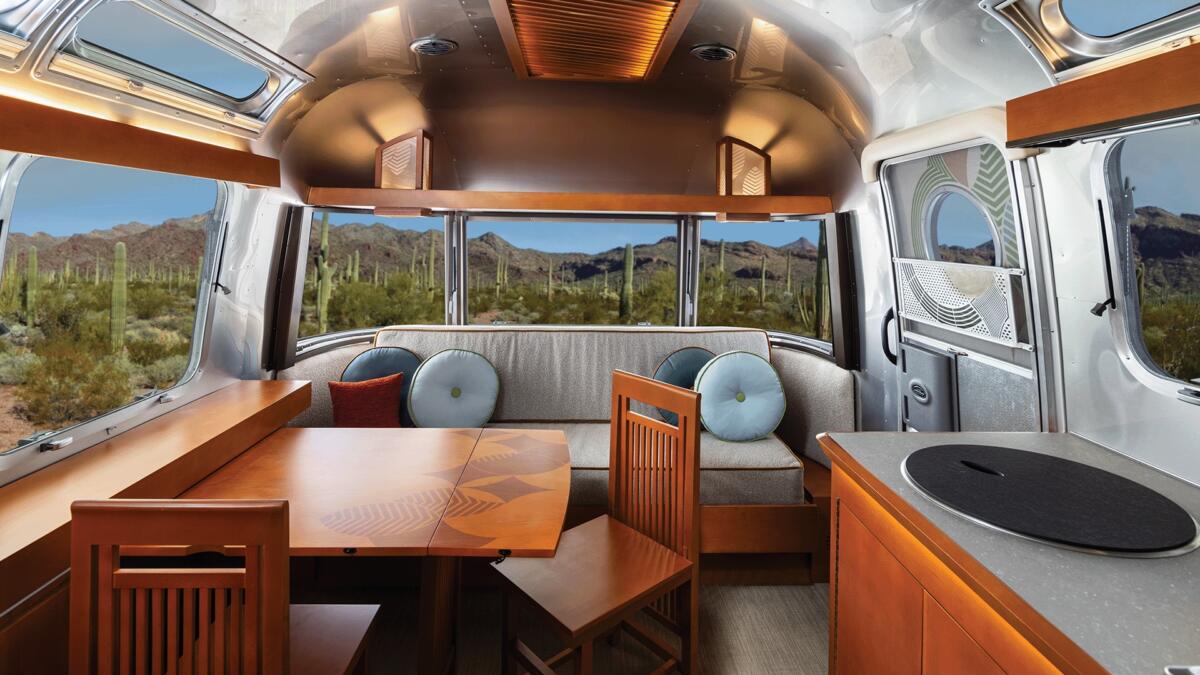
For nearly 20 years, a unique idea had been brewing. How could the timeless style of Frank Lloyd Wright blend with the well-known Airstream travel trailer? Bringing the Frank Lloyd Wright Foundation together with Airstream has finally made that dream come true. The result is a travel trailer that brings together two American icons in a way that has never been seen before: the Airstream Frank Lloyd Wright Usonian Limited Edition Travel Trailer.
Campground crowding, comments & concerns Time to quit RVing if the complaints outweigh the good times?
The last couple of weeks, readers have written in about their campground pet peeves. This week was no exception. While dogs and their owners still top the list of peeves, others are bubbling up, too, as described in this week’s column. Nanci Dixon agrees with all of them. However, one email in particular put some perspective on her personal complaints. Do you agree?
Make those wheels sparkle!
When was the last time you actually noticed your wheels and hubcaps? Probably not recently because we’re guessing they’re covered in dust, dirt, oil and grime. This amazing SONAX® Wheel Cleaner will make them sparkle again. Its acid-free, pH-balanced formula won’t damage a thing. Just spray it on, watch it clean right before your eyes, and wipe it off. It’s that easy! Learn more or order for a great (and worth-it) price.
More news
RVers and outdoor enthusiasts are generally on the alert for ticks. However, some areas of the U.S. are now seeing blacklegged (aka deer) ticks for the very first time. While primarily found in the eastern half of the country, including the Northeast and Midwest, they are now being identified in states like Montana for the very first time.
Traveling to or through North Dakota soon? You can now drive through the state a little faster. North Dakota recently joined the growing list of states allowing higher top speeds on its interstates. The new bill officially raises the maximum speed on Interstates 29 and 94 from 75 mph to 80 mph, effective August 1, 2025. Learn more.
On June 10, a 30-year-old man was gored by a bison in the Upper Geyser Basin of Old Faithful at Yellowstone National Park after a large group of visitors approached it too closely. The man sustained minor injuries. This is the second reported tourist bison goring in the park in 2025. Read about it here.
Speaking of morons in Yellowstone… A tourist who was flying a drone near an osprey nest in Yellowstone National Park was cited last week after a fellow visitor reported the incident to rangers. Vince Botkin, a regular visitor from rural southern California, said he spotted the drone buzzing the nest in the Lamar Valley on Thursday and immediately called it out. Do not fly a drone near wildlife (or in national parks), folks!
HUSBANDS, LISTEN UP! A North Carolina woman said her husband predicted she would “hit the big one” just before she scored a $150,000 lottery prize. (Now, can your husband do that?)
The full length of Glacier National Park’s Going-to-the-Sun Road is expected to open to motorized vehicles Monday, June 16, for the 2025 summer season. As a reminder, timed entry vehicle reservations are required to enter Going-to-the-Sun Road from the west side of the park. Learn more.
Monsoon season is back in the Southwest. While the exact moment of when the first massive wall of dust will rise up from the desert floor isn’t known, we do know this: It’s coming and could stay around through September. Arizona and New Mexico are ground zero for the storms. Here’s how to stay safe if you drive into a dust storm.
The thirty-fifth annual Grand Canyon Star Party will be held from Saturday, June 21, through Saturday, June 28, 2025, on the South and North Rims of Grand Canyon National Park. Amateur astronomers from around the world will volunteer their telescopes and expertise for the enjoyment of park visitors. Learn more.
Today and tomorrow, you can fish for free in Ohio during its annual free fishing days. All residents may fish at any public waterway without a license, according to the Ohio Department of Natural Resources (ODNR) Division of Wildlife. This includes Lake Erie and Ohio’s public lakes, reservoirs, streams and rivers.
Fire bans begin! Mount Rainier National Park has implemented a parkwide fire ban beginning Tuesday, June 10. All campfires and the ignition of wood, briquettes, or any fuel in fire pits, fire pans, and barbeque grills are prohibited. This ban is in place to reduce the risk of human-caused wildland fire. Additionally, California’s Sequoia and Kings Canyon National Parks entered stage 1 fire restrictions on June 11, which prohibit wood and charcoal fires, including wood-burning stoves.
RECALL: Starcraft RV is recalling certain 2025 Autumn Ridge travel trailers. The installed safety chains are rated at 7,600 lbs. and the actual Gross Vehicle Weight Rating (GVWR) is 7,995 lbs. This can cause the chains to fail, allowing the trailer to separate from the tow vehicle. More info here.
Reader poll How easily could you live in an RV as your only “home”?
?? MYSTERY PRODUCT OF THE DAY ?? If you don’t have one of these, trust us, it’s time to buy one. We guarantee you’ll use it more than you think. It’s one of those things that once you have it, you’ll realize you needed one all along. Plus, this one is perfectly RV-sized.
Latest fuel prices
The latest U.S. average prices per gallon of fuel as of June 9, 2025: Regular unleaded gasoline: $3.11. Down 2 cents from last week; down 32 cents from last year. Diesel: $3.47. Up 2 cents from last week; down 19 cents from last year.
• The state with the most expensive gas: California, $4.67
• The state with the least expensive gas: Mississippi, $2.63
The Hubble Telescope is responsible for the deepest images of space and the universe ever taken. Images from the telescope contain more than 5,000 galaxies—some of which are as distant as 13.2 billion light-years away. The telescope is so strong that it could spot the light from a single firefly up to 7,000 miles away.
Laugh of the week
A few years ago, Reader Robert Yeo sent this photo to us and wrote, “Is this one of the reasons Walmart is discontinuing allowing overnight RV parking in their lots?”
We recently came across it again, and got a good chuckle from it. Yes, Robert, using windshield wipers to hang your laundry out to dry could be one reason why.
(click/tap to enlarge)
The perfect scam Archive Episode: Courage of Steele, Part 2: How One Man Fought Back Against His Abusive Caregiver
In part 2, as 72-year-old Steve Steele is released from jail, not only can he hardly stand or walk, but he is worried about how he will recover the property stolen by Elizabeth, the caregiver who worked for him. That’s where Steve’s attorney, Brent Smith, comes in, waging what becomes a nearly two-year battle.
Today in history
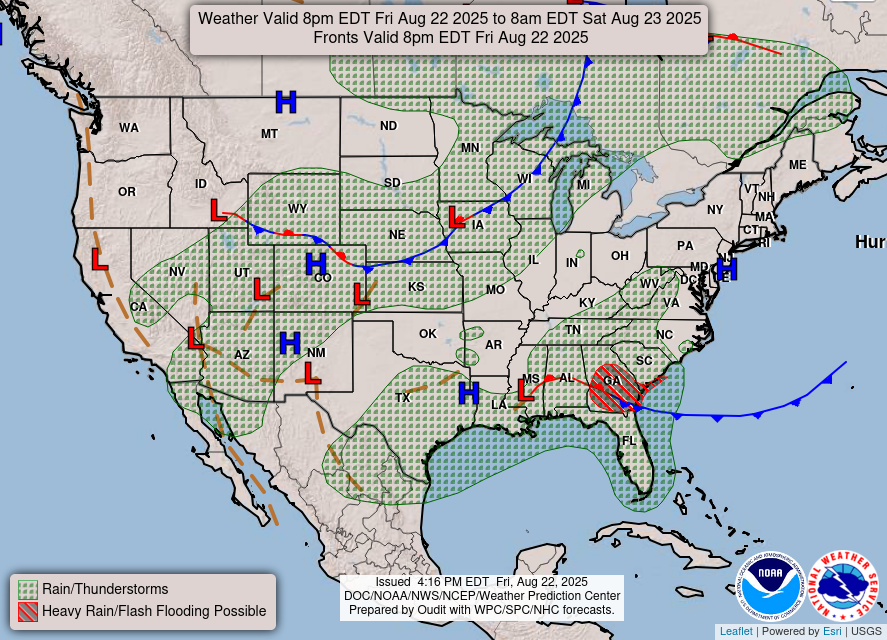
Today’s weather forecast across the nation THIS MAP UPDATES TWICE A DAY
RV sales have slowed and fewer people are buying RVs. Has that changed campgrounds? Is it easier to find a campsite now, particularly in state and national parks?
Campgrounds are changing and evolving, some for the better and some for the worse. RV Travel readers discuss their experiences and offer tips to help other campers find that perfect spot.
Here are a few observations from our readers. These do not necessarily represent the views of RVtravel.com.
The last couple of weeks, readers have written in about their campground pet peeves. This week was no exception. While dogs and their owners still top the list of peeves, others are bubbling up, too. And I do agree with all of them: nasty hair-filled showers, noise, cigarette butts, trash, and more are always irritants. However, Charles P.’s email below put some perspective on my personal complaints.
I could add several more to the list below but, again, Charles made me think and remember the excitement of planning, the sheer joy of packing up and playing Willie Nelson’s “On the Road Again” loudly at the beginning of every long journey. Pulling into a campground and setting everything up for our new home, even if just for one night, is always special.
It made me remember when we were weekend warriors and would pull out everything, and I mean everything: set up chairs, grill, rug, portable lights, and spread the tablecloth out on a picnic table with glee. Lately, we haven’t done all that setup, and the work of it has tarnished the joy a bit. So, this next time we stop, even if just for the night, I will set up with chairs, table, and even unfurl the tablecloth.
If the complaints outweigh the good times, it’s time to quit
Charles P. writes about minimal issues and has some sage advice: “My wife and I spend about 125 nights per year in campgrounds and have done so for the past five years. We stay primarily in state park campgrounds and COE campgrounds. I have on a few occasions picked up someone else’s dog poop, occasionally not been able to get a campsite, one time I had to complain about trash (the person was banned from the COE park), and one time I had a noisy neighbor. A little annoying at the time, but it obviously does not outweigh the good times.
“My thought is that if your complaints outweigh the good times, it is time to quit. Nothing in life is perfect all the time—just deal with it and focus on the good.”
Nasty showers
Lori C. is not happy with some of the nasty showers she finds in parks and writes, “My pet peeve is people who don’t clean up after using the showers in the campgrounds. I find empty shampoo bottles, small bar soap chunks and, worst of all, disposable razors. The shower floor is slick with liquid soap residue or whatever ‘goop’ they used, along with hair. I do wear shower flip flops, but I can’t imagine these folks leaving their home shower so filthy. The park cleans once a day, so I now ask what the cleaning schedule is and plan to be there as soon as they finish.”
Cigarette butts
Marci B. says they are everywhere! “Cigarette butts thrown everywhere is annoying to me. It can take up to 10 years for them to decompose, and they are toxic if ingested by kids or wildlife. If you smoke, please dispose of them properly. And do not throw them in the firepit. Would you want to pull into a campsite full of butts? It’s disgusting!”
Shrill shivers-down-the-spine screaming children
Keri M. is not fond of the screaming kids and writes, “In response to the commentary on dogs in RV parks: some of us empty nesters feel the same way about other people’s children. You may not like my yappy dog, but I don’t like the shrill, shivers-down-the-spine screaming of your children. As well, teach them manners like NOT cutting through my campsite at breakneck speed on their bicycles (or on foot, for that matter). It’s crowded out there, people. Learn boundaries.”
Fire pits
Dori S. has an issue with fire pits and writes, “Fire pits! People will try to burn their trash, some of which does not ignite and is left unburned. Another issue is those who have to have a campfire no matter what the temperature is. They fire it up early and then let it smolder all day long, stinking up the surrounding campsites.”
RV generators
Vroom T. brings up the noisy and sometimes stinky issue of RV generators and writes, “Honestly, dog poop and being offensive is annoying, but still not as bad as RV generators.”
Now, some questions for you:
Are you finding campgrounds booked up or is finding a site not a problem?
What do you like best about RVing?
What are your pet peeves?
Are you seeing more permanent and seasonal RV parks?
Are rising costs affecting your camping style?
Do you have favorite campgrounds or RV parks?
What is the most memorable experience you have had RVing?
Do you have any tips or secrets you’d like to share?
Please use the form below to answer one or more of these questions, or about your recent experience at campgrounds/RV parks in general.
For nearly 20 years, a unique idea had been brewing. How could the timeless style of Frank Lloyd Wright blend with the well-known Airstream travel trailer? Bringing the Frank Lloyd Wright Foundation together with Airstream has finally made that dream come true. The result is a travel trailer that brings together two American icons in a way that has never been seen before: the Airstream Frank Lloyd Wright Usonian Limited Edition Travel Trailer.
This collaboration began with a simple dream: to merge Frank Lloyd Wright’s renowned design style with the iconic Airstream shell. For years, Airstream’s team wanted to combine their classic trailer with Wright’s principles, and the Frank Lloyd Wright Foundation shared that interest. Together, they created a limited edition travel trailer that feels both classic and brand-new at the same time.
Understanding the icons
Airstream’s silver, rounded trailers have been on the road for more than 90 years. These trailers are famous for their smooth curves, shiny finish, and tough, riveted shells. Frank Lloyd Wright, renowned for his Usonian* principles, revolutionized architecture by designing homes that were practical, welcoming, and harmoniously connected to nature. Bringing these two together was a chance to make something special.
Wright’s Usonian design focused on the smart use of space and strong connections to the outdoors. Inside the Usonian Airstream, these ideas come alive with:
• A narrow central space that opens into airy, larger front and back living areas
• Wide picture windows, pulling the view of the outdoors right inside
• Window placement that lets sunlight wash over the interior
• Layout that encourages movement and relaxation
This isn’t just a trailer; it’s a mobile piece of architecture.
Bringing nature inside
Both Airstream founder Wally Byam and Frank Lloyd Wright believed in bringing nature inside. Byam focused on adding windows so travelers could feel linked to their natural surroundings, even from inside. Wright designed buildings to blend with their setting. Together, their ideas help travelers immerse themselves in nature wherever they go.
Fitting bold design into a small trailer space was no small task. Every part needed to serve a purpose—sometimes two or three. Using the convertibility principle, furniture and spaces do double duty, echoing Wright’s belief in purposeful, simple design.
One standout element is the indirect lighting running along the ceiling, from front to back. This unique fixture ties the interior together, creating a great environment and atmosphere that makes the space feel welcoming at any hour.
New ideas inside the trailer
One of the most eye-catching features is the king-size bed with its opening rear hatch. This lets users lie in bed while looking out onto nature. The fresh perspective from the Foundation sparked new ideas inside the trailer, including:
• Clever storage solutions
• Large windows with unobstructed views
• Versatile seating for relaxing or dining
Throughout the project, the Frank Lloyd Wright Foundation provided expert design advice while allowing Airstream to experiment. Blending flat, angular Wright features with the shell’s gentle curve was a fun challenge for both teams.
Pairing nearly a century of Airstream expertise with Wright’s bold vision gives travelers a trailer packed with thoughtful design. Bringing Wright’s architectural genius and Airstream’s legacy together, this special trailer proves true icons never go out of style.
Airstream lists the starting price for this gorgeous trailer as $184,900.
*According to architecturaldigest.com: “Though there is some confusion over the specific meaning and attribution of the term ‘Usonia,’ Wright used it to mean ‘of these United States,’ per an issue of Architectural Forum in which the architect presented illustrations of a home in the Usonian style.”
RVs are so comfortable these days that more people than ever have sold or moved out of their permanent “stick” homes to live full-time in an RV. And now with so much opportunity to work remotely from anywhere, the pace is increasing.
Just look at the photo above! In a hour or two, it can be packed up, its slides pulled in, and the RVers on their way to a different place—a few miles down the road or a few hundred miles.
For many, the idea of RV living means trading square footage for freedom. Instead of being tied to a mortgage or stuck in traffic every day, you get to wake up to mountain views one week and ocean breezes the next. Of course, full-time RV life isn’t without its challenges—limited storage, maintenance on the go, and sometimes patchy internet—but for a growing number of people, those tradeoffs are well worth the lifestyle it unlocks.
How hard would it be for you to live in this?
We’ll take a wild guess that 80 to 90 percent of the world’s population would gladly jump at the opportunity, and it would be a huge improvement over where they lived before.
So what about you? How easily would it be for you to live in this (or something similar) as your one and only home? Please leave a comment after you vote.
If you enjoyed this RVtravel.com reader poll, keep in mind that we have polled our readers at least 5,000 times through the years. It’s fascinating to see how they have responded, sometimes very surprisingly. You’ll find an archive of some of the polls here. So what are you waiting for? Check ’em out.
Last week, our RV vacation came to a screeching halt. We were unexpectedly forced to return home due to a tick bite.
What happened
Within a day after removing a tick from his shin, my husband experienced headaches, body aches, and a sustained fever of 102 degrees. After two miserable days, we decided to return home. Our doctor prescribed Doxycycline, and after several doses of the medication, my husband finally feels better.
High alert
RVers and outdoor enthusiasts are generally on the alert for ticks. However, some areas of the U.S. are now seeing blacklegged (aka deer) ticks for the very first time.
While primarily found in the eastern half of the country, including the Northeast and Midwest, they are now being identified in states like Montana for the first time, potentially exposing visitors to new tick-borne diseases.
Montana’s ticks
The Montana Department of Public Health and Human Services officials noted blacklegged ticks in the following locations. If your RV travels take you in or near these places, take special precautions—just as you do in other areas known to harbor ticks:
• Dawson County: The first Montana blacklegged tick was found on a dog returning from a hunting trip in Dawson County this spring, confirmed by Rocky Mountain Laboratories.
• Sheridan County: Surveillance crews detected deer ticks near a lake in Sheridan County, underscoring the importance of public involvement in tick monitoring.
Potential spread: While no ticks carrying pathogens have yet been identified, these findings mark the beginning of increased surveillance across the state to see if a reproducing population exists.
Ways to avoid tick bites
Here are some tips to avoid tick bites:
• Use EPA-registered repellents. Apply repellents containing DEET or picaridin to exposed skin and clothing before heading outdoors.
• Treat clothing and gear. Pre-treat shoes, socks, and pant legs with a permethrin-based spray (0.5% concentration) to create a barrier ticks won’t cross.
• Tuck and cover. Tuck pants into socks or boots and wear long sleeves to limit tick access to skin. Light-colored clothing makes ticks easier to spot.
• Regular tick checks. Inspect yourself (and fellow campers) for ticks every two hours—pay special attention to the scalp, ears, underarms, and groin.
• Shower and laundry. Shower within two hours of returning indoors and run clothes through a hot-dry cycle for at least 10 minutes to kill any unattached ticks.
If you find a tick
If you find a tick, here’s what you should do:
• Remove it promptly. Use fine-tipped tweezers or a dedicated tick-removal tool to grasp the tick as close to the skin’s surface as possible; pull upward with steady, even pressure—avoid twisting or crushing.
• Clean the bite. After removal, clean the area and your hands with soap and water or an alcohol-based sanitizer.
• Save the tick. Place the tick in a sealed container or zip-lock bag. Label it with the date and location of the bite in case testing becomes necessary.
• Monitor for symptoms. Watch for early signs of tick-borne illness—rash (sometimes including a “bull’s-eye” rash), fever, chills, fatigue, muscle aches—over the next 2–14 days. If symptoms develop, contact a healthcare provider and mention your tick exposure.
• Report your sighting. Help state health officials map tick expansion by submitting suspected blacklegged (deer) ticks via the Department of Health and Human Services for the state.
Why it matters to RVers
Blacklegged ticks are stealthy companions along shorelines, hiking trails, and grassy areas. With RVers often setting up camp in tick-friendly habitats—forested campsites, riverside clearings, and areas rich in wildlife—being proactive pays off.
Have you ever experienced a tick bite that caused illness? Tell us about it in the comments below.
North Dakota recently joined the growing list of states allowing higher top speeds on its interstates.
This week, North Dakota Governor Kelly Armstrong signed House Bill 1298. The bill officially raises the maximum speed on Interstates 29 and 94 from 75 mph to 80 mph effective August 1, 2025.
The legislation also updates the structure of speeding fines, with steeper penalties for drivers who exceed limits by larger margins.
North Dakota becomes the ninth U.S. jurisdiction with an 80-mph cap on selected highways. Here’s the rundown:
• Montana – Rural interstates up to 80 mph (70 mph for trucks)
• Nevada – Primarily I-80 between Fernley and Winnemucca
• South Dakota – Mainline interstates, including I-90 and I-29
• Wyoming – Certain freeway segments after engineering studies
• Idaho – Selected stretches approved by traffic investigations
• Utah – Portions of I-80, I-15 and I-84 via traffic-engineering assessments
• Oklahoma – Turnpike segments, per Oklahoma Turnpike Authority
• Texas – Western I-10 and I-20 plus State Highway 130 tollway (and even 85 mph on some toll roads)
As of August 1, North Dakota joins these peers in allowing a legal maximum of 80 mph on its key interstate corridors.
Tips for RVers
Even if you plan to keep your RV’s cruise set well below 80 mph, faster-moving traffic may affect your journey. Here are some things to consider:
• Speed differential: A large gap between your speed and surrounding traffic can increase the risk of collisions during lane changes or merges.
• Stay right, pass left: Stick to the right lane when at all possible. This allows passenger-car traffic to safely overtake your RV.
• Use your mirrors: Regularly check side and rearview mirrors so you’re aware of approaching vehicles traveling at higher speeds.
• Anticipate passing zones: In stretches where passing is safe and legal, consider pulling off or using a designated turnout if you notice a long line of vehicles behind.
• Maintain your brakes: Extended downhill grades at higher highway speeds demand that your braking system be in top condition—inspect pads, rotors, and fluid before you go.
• Adjust GPS and cruise control: Set alerts or cruise-control limits to remind you of your personal top speed for comfort and safety.
Practical steps to adapt
• Plan extra travel time: Even with higher posted speeds, RVs accelerate and handle differently—factor in a modest reduction (e.g., 10–15 mph under the limit) when estimating arrival times.
• Monitor road signs: Keep an eye out for reduced-speed zones near urban areas, construction, or sharp curves—80 mph won’t apply everywhere on I-29 and I-94.
• Stay informed on fines: Under House Bill 1298, fines for speeding on highways ≥ 65 mph are $20 or $5 per mph over the limit (whichever is greater), with extra penalties for going more than 16 mph over or speeding in work zones.
• Communicate with your co-pilot: Have your navigator watch for signs and traffic, so you can focus on steering and speed control.
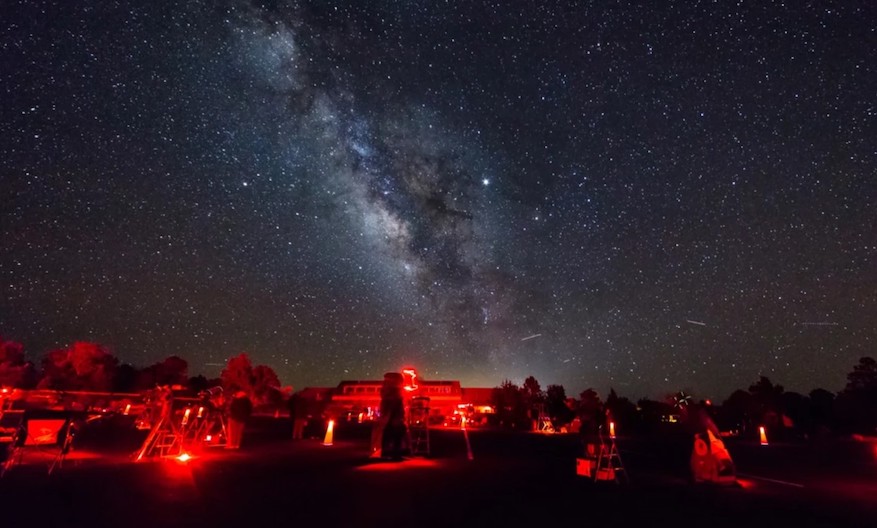
The thirty-fifth annual Grand Canyon Star Party will be held from Saturday, June 21, through Saturday, June 28, 2025, on the South and North Rims of Grand Canyon National Park. National parks such as Grand Canyon are protective havens for some of the last remaining dark skies in the United States.
The event is sponsored by the National Park Service, Grand Canyon Conservancy, the Tucson Amateur Astronomy Association (South Rim), and the Saguaro Astronomy Club of Phoenix (North Rim). Amateur astronomers from around the world will volunteer their telescopes and expertise for the enjoyment of park visitors.
Dozens of telescopes will offer views of planets, double stars, star clusters, nebulae, and distant galaxies. By day, keep an eye out for solar telescopes pointed at the sun. Weather permitting, expect spectacular views of the universe!
South Rim activities
On the South Rim, events include a nightly slide show from a special guest speaker at 8 p.m. in the Canyon Visitor Center Plaza. The list of speakers can be found on the park’s Star Party website. The talks are followed by free telescope viewing behind the building. Green-laser Constellation Tours will be offered nightly at 9, 9:30 and 10 p.m.
Parking is available in Lots 1 through 4 or arrive by the free Village Route shuttle bus. The last Village Route Bus leaves the Grand Canyon Visitor Center at 9:30 p.m. To get a good seat for the speaker presentation, arrive early. Telescope viewing is best after 9 p.m. and continues well into the night; visitors may arrive any time after dark.
A light source is recommended for the walk to the viewing area, but white lights are not permitted on the Telescope Lot. Give your eyes time to dark-adapt, or use a red flashlight, easily made by covering any flashlight with red cellophane.
North Rim activities
On the North Rim, telescopes will be set up on the terrace of the Grand Canyon Lodge every evening. Astronomers will also use green lasers to point out constellations. By day, look for solar telescopes on the terrace and elsewhere. Check the Visitor Center and park bulletin boards for program topics and additional details.
Nighttime temperatures on both rims can be cool, even in summer. Those attending the star party are encouraged to bring warm layers of clothing. When traveling in the park on the South Rim, it is best to find a parking space and use the free shuttle bus system to access points of interest in the Grand Canyon Village area. Find shuttle bus information here.
In June 2019, Grand Canyon National Park achieved International Dark-Sky Park status through DarkSky International. The park continues to retrofit its light fixtures in the park to be dark-sky-compliant, having surpassed 90% compliance in 2024. The park has until June of 2029 to achieve 100% compliance.
Additional information on the Grand Canyon Star Party can be found by clicking here.
The Missouri State Highway Patrol (MSHP) has introduced a new stealth tool that RVers should be aware of: “ghost graphics” on select patrol vehicles.
What are ghost graphics?
Ghost graphics are reflective, color-matched vinyl decals applied to Highway Patrol vehicles. The graphics nearly disappear in daylight yet glow brightly under headlights at night.
During the day, those stripes and state insignia blend seamlessly with the vehicle’s paint, making the cruiser look like an ordinary civilian car. But once the sun goes down (or if you’re shining your high beams down the road), the same graphics “pop” in retroreflective brilliance, instantly revealing the car as law enforcement.
The rollout
This week, MSHP Lt. Eric Brown confirmed the agency would continue to equip 20 cruisers statewide with ghost graphics. Nine of those are earmarked for each regional troop, ensuring even rural areas get at least one stealth patrol car. The remaining 11 will be strategically deployed to Missouri’s highest-incident corridors—particularly around urban centers like St. Louis, Kansas City and Columbia. These locations receive frequent complaints about street racing, reckless driving and impaired operation.
The first 10 cruisers went into service before Memorial Day weekend. The remaining vehicles are scheduled to hit the road by July 4.
A modest investment in safety
You might assume that adding stealth markings would break the bank. However, Lt. Brown says ghost graphics add only a marginal cost over standard patrol car branding. It’s essentially the price of a specialty vinyl wrap versus a traditional decal package.
Vendors like SVI Graphics, which supply 3M-based reflective films color-matched to factory paint codes, typically charge in the low-to-mid hundreds of dollars per car for materials and installation. This investment pales in comparison to the societal and financial costs of a single major crash.
Why go ghost
Missouri saw 954 roadway fatalities in 2024. This was a 4 percent decrease from 2023 but still nearly three lives lost every day. Traffic crashes injure thousands more, stretch first-responder resources, and rack up billions in economic loss.
MSHP’s leadership hopes that ghost-graphic vehicles will:
• Unmask reckless behavior. Drivers tend to behave differently when they know a marked cruiser is nearby. Let that cruiser look unmarked, and officers can catch tailgaters, street racers, and impaired drivers “in the act.”
• Deter repeat offenders. Word spreads fast when stealth patrols nab habitual speeders. This is especially true in popular corridors where some drivers use wide-open stretches to test their vehicle’s limits.
• Optimize patrol coverage. Instead of assigning more troopers, Missouri invested in a little mystery to maximize the impact of existing staffing.
“People drive very differently when they don’t see a patrol car,” Brown noted. “These are tools to help keep Missouri’s highways safer and reduce traffic crashes.”
The national picture
Missouri joins several states that have already embraced ghost graphics:
• Nevada has run six stealth cruisers since 2018, crediting them with a marked drop in aggressive-driving complaints.
• Florida, Texas, and North Carolina have all experimented with color-matched, reflective markings to catch distracted or intoxicated drivers off guard.
Even as some critics call the practice “underhanded,” defenders argue that the decals help law enforcement enforce safety laws fairly and effectively, especially on busy corridors where RVers, commuters, and commercial drivers share the road.
What RVers should know
Expect the unexpected. If you’re traveling through Missouri or other states with ghost graphics, keep your speed in check. That unmarked sedan might not be as civilian as you think. (Honestly, we should follow all traffic laws everywhere to keep ourselves and others safe.)
Safety first. Ghost-graphic cruisers aren’t about tricking law-abiding travelers. They’re about catching the small percentage of high-risk drivers who endanger everyone on the road. Remain alert for these high-risk drivers!
We use cookies to ensure that we give you the best experience on our website. By continuing to use our site, you consent to accepting cookies. We NEVER have or will sell reader's data. For more info, please see our privacy policy page.