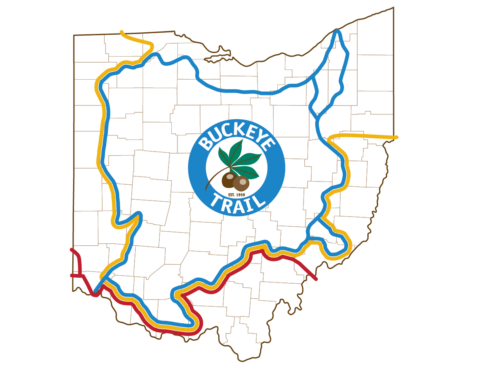
Imagine a trail that meanders over 1,400 miles, forming a loop that highlights the diverse beauty of Ohio—from the serene shores of Lake Erie to the rolling hills of Appalachia, from historic canal paths to bustling small towns.
This is the Buckeye Trail, a hidden gem that might soon stand alongside the Appalachian and Pacific Crest Trails as a National Scenic Trail.
What makes the Buckeye Trail so special?
Established between 1959 and 1980 by the dedicated Buckeye Trail Association, this extensive trail offers hikers a unique journey through Ohio’s varied landscapes. You’ll see:
• Lush woodlands: Experience the tranquility of dense forests, where the only sounds are chirping birds and rustling leaves.
• Historic towpaths: Walk along the remnants of Ohio’s canal era. Imagine the days when mules pulled canal boats laden with goods.
• Charming communities: Pass through quaint towns, each with its own story and warm hospitality.
• Scenic wonders: Marvel at natural attractions like the Black Hand sandstone cliffs in the Hocking Hills region and the picturesque landscapes of the Bluegrass area in southwest Ohio.
The path to National Scenic Trail designation
The National Park Service (NPS) is currently evaluating the Buckeye Trail for inclusion in the National Trails System. This process involves a comprehensive feasibility study and assessing the trail’s suitability. Criteria considered include scenic value, historical significance, and recreational potential.
The study began in 2023 and is expected to conclude in 2026. Upon completion, the findings will be submitted to the Secretary of the Interior, who will then make a recommendation to Congress.
Why does this designation matter?
Achieving National Scenic Trail status would not only honor the trail’s significance but also bring tangible benefits:
• Increased funding: Access to federal funds for maintenance and improvements.
• Enhanced recognition: Elevated status could attract more hikers, boosting local economies.
• Preservation efforts: Stronger support for conserving the trail’s natural and historical features.
The Buckeye Trail is more than just a path; it’s a testament to Ohio’s rich natural beauty and history. Whether you’re a seasoned hiker or someone looking for a weekend adventure, this trail offers something special. As it stands on the brink of potential national recognition, there’s no better time to explore its wonders and contribute to its promising future.
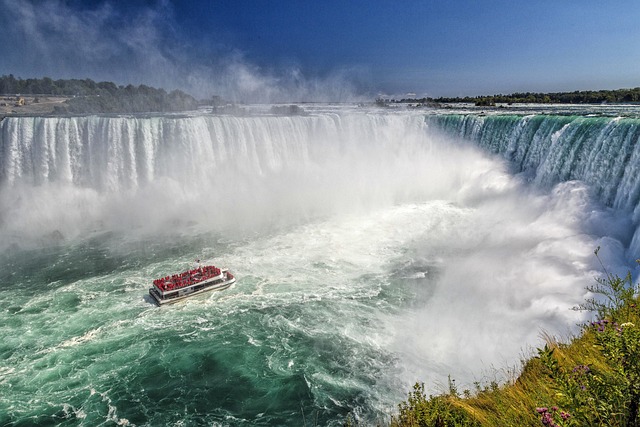
Most RVers know about Niagara Falls along the New York and Canadian border. It’s a stunning natural wonder that draws millions of visitors annually. But did you know that there are other “Niagaras” across North America? It’s true! And each location has its own unique charm and splendor.
These lesser-known waterfalls—dubbed the “Niagara of the North,” “Niagara of the West,” and two “Niagaras of the South”—are well worth adding to your RV itinerary. Let’s dive into these awe-inspiring destinations and explore nearby camping options for RVers.
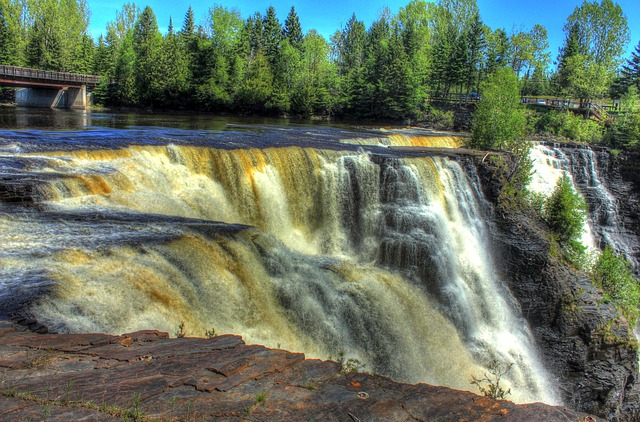
“Niagara of the North”: Kakabeka Falls, Ontario, Canada
Kakabeka Falls, located in Ontario, is a breathtaking cascade of water plunging 131 feet into the Kaministiquia River. Kakabeka Falls is surrounded by lush forests and is a great spot for nature enthusiasts.
Often referred to as the “Niagara of the North,” this waterfall is the second highest in Ontario and is easily accessible year-round. Visitors can enjoy viewing platforms, hiking trails, and fascinating geological history, including fossils embedded in the rock layers.
RV camping nearby:
• Kakabeka Falls Provincial Park Campground: This park offers several choices for campers. Most are within walking distance of the falls. Whispering Hills offers electrical hookups, clean restrooms, and a serene environment. It also has some pull-through sites, laundry facilities, and showers.
• Trowbridge Falls Campground: Located about 20 minutes from Kakabeka Falls, this campground in Thunder Bay offers scenic campsites and access to hiking trails along the Current River.
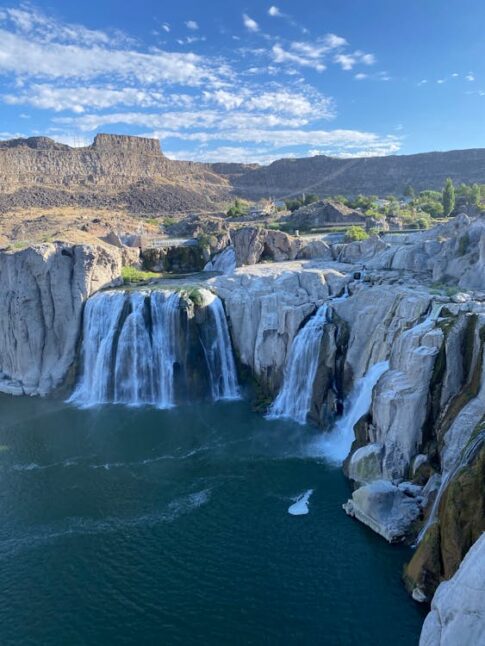
“Niagara of the West”: Shoshone Falls, Idaho
Often overshadowed by its famous eastern cousin, Shoshone Falls in southern Idaho is a magnificent sight to see. At 212 feet tall, Shoshone Falls is actually higher than its famous namesake, Niagara Falls in New York.
Located on the Snake River near the city of Twin Falls, this natural wonder is surrounded by dramatic basalt cliffs and is especially stunning during spring when water flow peaks. A park overlooking the falls offers picnic areas, scenic viewpoints, and a visitor center.
RV camping nearby:
• Twin Falls/Jerome KOA Journey: This full-service RV park is just a short drive from Shoshone Falls. It offers amenities like pull-through sites, Wi-Fi, and a pool.
• Thousand Springs State Park: About 30 minutes away from the falls, this park provides scenic camping options along the Snake River and opportunities for kayaking and fishing.
“Niagara of the South”: Cumberland Falls, Kentucky
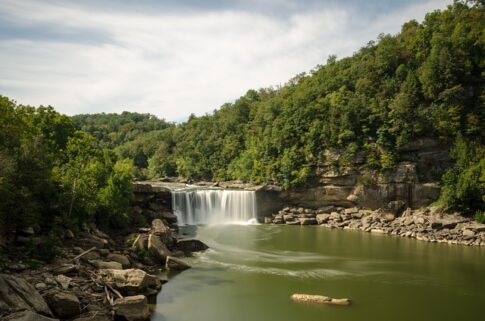
Nestled in the Daniel Boone National Forest, Cumberland Falls is a captivating 68-foot waterfall known for its unique phenomenon: the moonbow. On clear nights during a full moon, the mist from the falls creates a rainbow visible in the moonlight—a rare natural occurrence found in only a few places worldwide.
Falls Creek Cabins and Campground: Located a few miles from the falls, this campground caters to RVers with full hookups, spacious sites, and a peaceful setting.
Another “Niagara of the South”: Tallulah Falls, Georgia
Located in the heart of Georgia, Tallulah Falls is part of Tallulah Gorge State Park and is often called the “Niagara of the South” for its series of stunning waterfalls cascading through a 1,000-foot-deep gorge.
The park features multiple hiking trails, including one that takes visitors across a suspension bridge with breathtaking views of the falls below. Adventure seekers can also enjoy kayaking and rock climbing within the gorge, while history buffs can explore the area’s rich cultural significance.
RV camping nearby:
Tallulah Gorge State Park Campground: This campground offers sites with electrical hookups, restrooms, and close proximity to the park’s trailheads and visitor center.
River Falls at the Gorge RV Resort: Just minutes from the state park, this RV resort provides full hookups, a pool, and a relaxing riverside setting.
Plan your “other Niagaras” RV trip
Whether you’re drawn to the rugged beauty of Kakabeka Falls, the towering majesty of Shoshone Falls, or the mystical moonbow of Cumberland Falls, these “other Niagaras” promise unforgettable experiences.
Each of the “other Niagara Falls” offers unique features and plenty of opportunities for outdoor adventure. Each makes a perfect stopover or destination for your next RV journey. So, pack your gear, hit the road, and discover the hidden wonders that rival the original Niagara Falls itself.
Do you know about any other “Niagara Falls”? Tell us about them in the comments below.
When summertime comes, so do the RVers. In some cases, hordes of them, all congregated in one campground. As the temperature rises, air conditioners come on—until, woops! Campground voltage drops, and A/C units can actually burn up. Or, it could be your microwave oven. Ask us—We’ve “zapped” a microwave from too little power. You can protect against RV low voltage—and you don’t have to spend a fortune.
Old parks—new parks: Any of them could have RV low voltage problems
Old RV parks often have an old electrical system that may well be underrated for the needs put on it by present-day RVs. But hang on, even newer RV parks can have a problem. The electrical code for just how much “juice” needs to be available isn’t based on full occupancy. But if your park is “loaded to the gills,” you may face a low voltage issue. If the electrical system voltage is consistently below 108 volts, it can cause damage to RV electrical and electronic gear.
Your air conditioning system is one of the most easily affected. It takes a set amount of power to operate and it MUST have it. If the voltage is low, then the unit will still function but it will run hot. This puts a huge strain on the compressor motors and, given enough trouble, something’s gonna break—and it won’t be cheap to fix.
Avoiding the problem
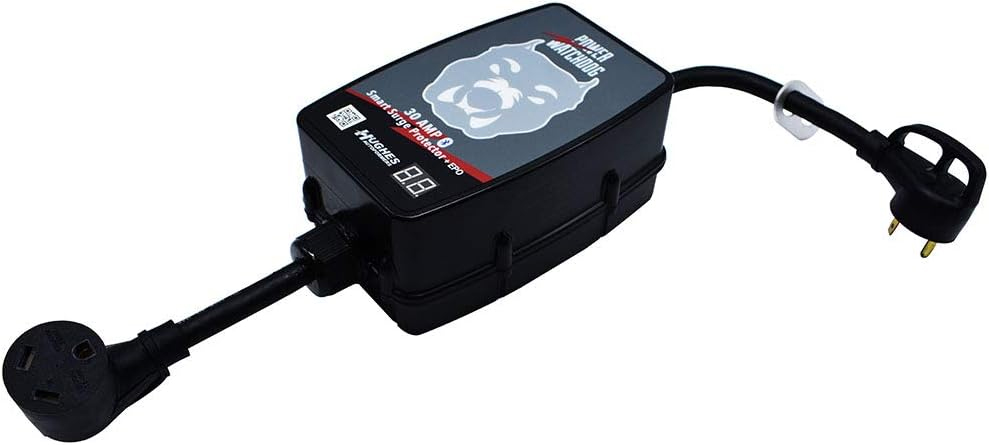
This is the brand we now use. It’s not a “cheapie,” but it’s saved our bacon.
An RV power monitor/suppressor is a great way to protect yourself. The device plugs into the park pedestal, and your RV shore power cord into the monitor. Most have surge suppression to protect you from power spikes. The prices on these systems are coming down. We’ve seen some for sale for 30-amp RVs for as little as $80. Can you rely on them? Without testing them, we can’t be sure. Of course, you can spend more on a “name brand” unit and probably sleep better.
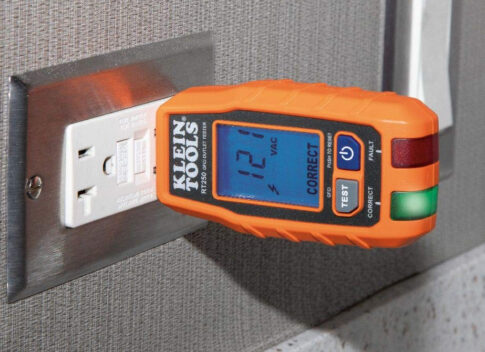
But what if you can’t afford one of these right now, or what if your existing monitor has “given up the ghost” and you haven’t replaced it? Here’s a device that will show you the park voltage, and additionally tell you if there’s a bad wiring situation at your pedestal. For less than $25 it’s a safety bargain.
Klein Tools outlet tester shows voltage, wiring problems. Amazon.com image.
Klein Tool’s RT250 is an electrical receptacle tester that tests the wiring conditions at an electrical outlet. Its LCD displays the voltage and identifies wiring faults. You could use an adapter to “step down” from the 30-amp outlet (or maybe two to come down from 50-amp outlets), testing the circuit before you plug in your shore power cord.
Or, you could do the “two person test.” Plug it into a shore power outlet inside the rig. One inside the rig watches the monitor as the other plugs in the power at the pedestal. The inside person verifies that the power monitor shows “good” wiring—no reverse polarity, no “no ground” situations—any of which can lead to safety issues.
Leave it plugged in and keep an eye on it
Once you’re satisfied the wiring is safe, leave the monitor plugged in to keep an eye on voltage levels. Before firing up the A/C or using the microwave, eyeball the power monitor. If the voltage is below 110 volts, beware. Fire up your A/C and double-check the voltage. If it’s at or below 108, we’d recommend you shut the A/C off—you risk damaging the unit.
If you decide to buy a pedestal plug-in monitor/suppressor, READ THE FINE PRINT. Some of the “inexpensive” surge suppressors we found for sale didn’t “cut out” until the voltage went as low as 104—even 103. By the time these characters shut off the power to “protect” you, that $1,000 air conditioner on your roof could be toast.
It could be a hot summer. Keep your cool with your A/C, and don’t lose it to low voltage.
Traveling in an RV with your pet is a rewarding experience, but there are times when you might want to explore attractions that aren’t pet friendly. What’s an RVer to do?
Here are some effective strategies to ensure your pet is well cared for while you enjoy your adventures.
Utilize pet sitting apps and websites
Several platforms connect pet owners with local sitters:
• Rover: A widely used service offering pet sitting, boarding, and walking. You can search for sitters in your current location, read reviews, and select the best fit for your pet’s needs.
• Wag!: Known for its dog-walking services, Wag! also provides pet sitting and boarding options. The app allows you to find and book local caregivers quickly.
• Care.com: While primarily known for childcare, Care.com also lists pet sitters. You can post a job detailing your needs and receive applications from interested sitters in the area.
These platforms vet their sitters and provide reviews from other pet owners, helping you make an informed decision.
Engage with the RVing community
Fellow RVers can be a valuable resource:
• RVing with Dogs Facebook group: This active Facebook community discusses all aspects of traveling with pets. Members often share recommendations and may offer pet-sitting services themselves.
• RV Pet Sitters Group: Within the RVing with Dogs community, this recently formed subgroup focuses specifically on connecting RVers in need of pet care with those offering services.
Engaging with these groups can lead to trusted connections and personalized care for your pet.
Network at local RV parks and campgrounds
Many RV parks have bulletin boards or community centers where services are advertised:
• On-site pet sitters: Some parks have residents or staff who offer pet-sitting services. Inquiring at the park office or checking community boards can lead to convenient options.
• Building relationships: Getting to know your neighboring RVers can create opportunities for reciprocal pet sitting arrangements.
Always ensure that anyone you entrust with your pet has the necessary experience and references.
Consult local veterinary clinics and pet stores
Local pet professionals often know reputable sitters:
• Veterinary clinics: Staff may offer pet sitting services or can recommend trusted individuals.
• Pet supply stores: These establishments often have bulletin boards with advertisements for pet sitters or can provide referrals.
Contacting these professionals can give you peace of mind knowing your pet is in capable hands.
Consider house sitting services
Some house sitters travel with their own RVs and offer pet care:
House Sitters America connects you with sitters who can stay on-site in their RV, providing continuous care for your pet. This arrangement ensures your pet remains in a familiar environment while you’re away.
Final tips
• Plan ahead: Whenever possible, arrange pet care in advance, especially during peak travel seasons.
• Meet in person: Before finalizing any arrangement, meet the sitter to ensure they’re a good fit for your pet.
• Provide detailed instructions: Clearly communicate (in writing) your pet’s routine, dietary needs, and any special requirements.
By utilizing these resources and communities, you can find reliable and compassionate care for your pet, allowing you to enjoy your travels with peace of mind.
(I wrote this a dozen years ago, but just found it.)
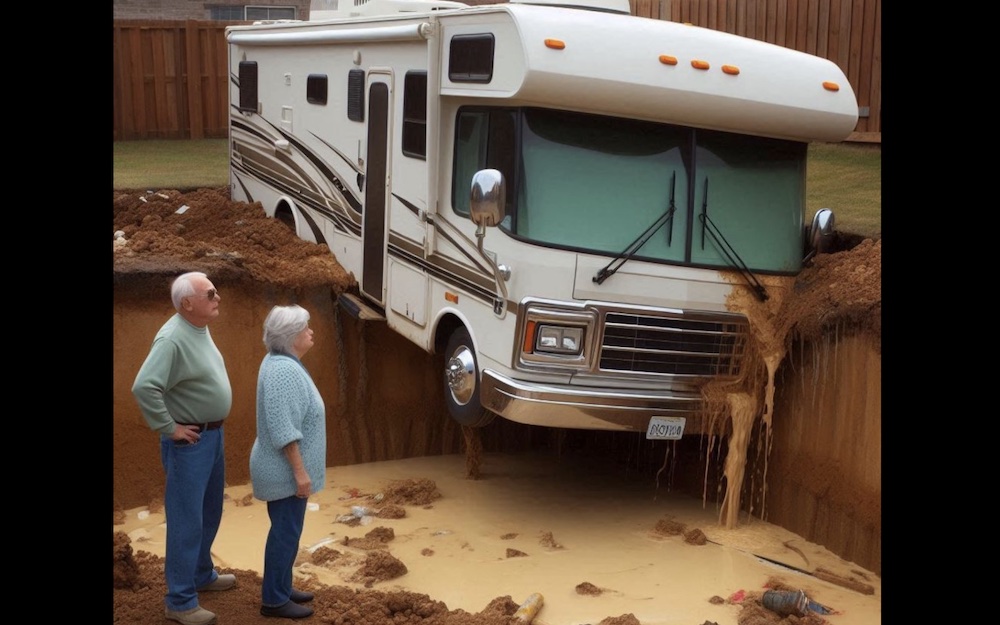
An item in the news last week caught my attention, and I bet you will find it interesting. It was about an RVing couple that ended up destroying their RV in a most unique and bizarre way.
When Florida State Park volunteers Susan and Paul Brennan pulled their $180,000 motorhome into the park-provided campsite, something very strange happened. “I felt the ground tremble,” Susan told the Tallahassee Democrat.
“You could hear the metal twisting. I told him (Paul) ‘Get out; you’re going to tip over.'” Soon, the RV’s windows and windshield cracked, the roof buckled and the rear axle and steel frame bent. “It sounded like the movie Titanic,” Susan explained.
Little could they have known that their campsite was directly over an unmarked septic tank! Apparently, its topside concrete slabs had failed, allowing the RV to literally sink into the last place on earth an RVer would ever expect to visit.
A park service ranger later commented there was no evidence that any other RV had ever sunk into such a place, perhaps earning the Brennans a place in RVing history as the only RVers to ever sink a recreational vehicle into a sewage system. The (somewhat) happy ending to this story is that the state of Florida agreed to reimburse the Brennans for their RV, which was totaled.
Here’s a post I saw recently on an RV forum regarding when to replace tires:
I heard somewhere that people are changing out the tires on their coaches every four years regardless of mileage. Is this true and, if so, why? Do they do that on school buses, heavy trucks, fire engines, etc.?
What followed were almost 50 posts with various and inconsistent answers.
Here’s my answer on replacing tires
The life experiences of a tire on a car, light truck, RV trailer, RV motorhome or commercial truck are all different. Therefore, each type of usage will get a different answer.
Passenger car tires usually wear out at 35,000 to 50,000 miles, in 3 to 5 years, so they get replaced when they wear out.
Light trucks are similar unless used in commercial service, when they get heavy loading and more miles each year than a passenger car tire. So it’s a similar 4 to 5 years, due to wear out.
RV tires should be replaced at least every 10 years “no matter what”
Michelin, Bridgestone and Goodyear are on record as saying that tires should be inspected, inside and out, at about 5 years and each year thereafter. Also, they say tires in RV service should be replaced at 10 years “no matter what a visual inspection finds“.
Due to the special and significantly greater internal structural loading “Interply-Shear” in trailer usage (pull-along and 5th wheel), I would have tires dismounted and inspected at 3 to 4 years and replaced at 6 to 8 years, no matter what the visual inspection finds.
Tires in car service are only loaded to about 70% to 80% of their load capacity. Tires in RV service are loaded to 90% to 115% of capacity, based on load and inflation studies.
For the reasons I covered, there cannot be a single correct answer. One thing that seems to be consistent is that folks asking or answering questions about tires seldom include the basic information such as tire size, load range, GAWR (gross axle weight rating), or scale weight readings. Not providing that most basic information means that any answer is suspect and may be incorrect for YOUR application.
Roger Marble
*****
If you have tire questions, check out Roger’s Blog as well as his posts on RVtravel.com. There are hundreds of posts covering everything to do with tires.
If you still have a question for Roger after searching the above posts, send your inquiries to him using the form below.
New U.S. rule mandates Canadian snowbirds to register with Homeland Security
With pressure between the U.S. and Canada continuing, reports indicate some Canadian snowbirds may change their plans to head south. Now a new U.S. rule may cause even more to stay away. Effective April 11, Canadian citizens who visit the U.S. for more than 30 days must register with U.S. Homeland Security. Read more.
New Canadian tariffs slapped on U.S. in retaliation for American actions
The Canadian government announced a plan to slap tariffs on $29.8 billion worth of American goods to strike back against the U.S. after it imposed punishing tariffs on Canadian steel and aluminum earlier this week. More.
RV dealers stock up on rigs; customer demand remains sluggish
When the RV industry reported that wholesale shipments were up in January, it was a banner headline for them, a good turnaround from a disappointing 2024. So now, RV dealers are stocking up their lots, anticipating the return of the RV buyer. But will they come? Read all about it.
Two-thirds of campers struggle with reservations on West Coast
Are you having trouble getting a campground reservation for a West Coast trip? You’re not alone. According to a report from camping app publisher The Dyrt, many of those surveyed reported facing the same issue. Learn more.
Campground crowding, comments & concerns Our readers discuss their feelings about the present-day camping
This week, Nanci Dixon shares more of your experiences with RVing and campgrounds. Several readers commented that they haven’t had problems with campgrounds being crowded. One RVer thinks there should be a nonrefundable deposit for campsite reservations. (What do you think?) Another RVer mentioned receiving an email from an upscale RV resort where they previously stayed with a 50% discount offer for an in-season stay. (Hmmm. Think about the implications from that offer.) Read more.
COMING TOMORROW: Nanci’s own experience with campground crowding. She can’t get a campsite!
More RVing news
National park visitors face reduced access and services across the country
Last year the National Park Service received record visits. But this year forebodes trouble: More and more national parks are announcing cuts in hours and service. RVers who want to visit parks this year will likely feel the effects. Here’s a sample of the cuts.
28 million Americans plan to RV this spring. Here’s where they’re going
A survey by the RV Industry Association indicates 28 million RVers plan to hit the road this spring. Does that mean crowded campgrounds? Here’s more.
Lawsuit accuses GEICO of unlawfully raising insurance rates
A proposed class action lawsuit accuses GEICO of failing to honor its accident forgiveness policy, which promises customers that their insurance premiums will not increase because of their first at-fault accident. GEICO advertises heavily to the RV market, so this news could affect many RVtravel.com readers. More.
NEWS BRIEF: Camping World Holdings announced yesterday that it has closed on the purchase of Lazydays in Elkhart, Indiana.
NEWS BRIEF (From yesterday): Due to high fire danger, and a high wind watch, Great Smoky Mountains National Park is now banning all campfires and charcoal use. The ban will remain in effect until further notice through all the park.
Feds rehire 6,000 wildfire and public land workers
BREAKING NEWS: Yesterday, the U.S. Department of Agriculture (USDA) announced that it has rehired nearly 6,000 probationary employees, many of whom play key roles in managing public lands and wildfires. Learn more.
Federal payment freeze leaves RV volunteer couple out in the cold
Imagine yourself in your 70s and full-time RVing. To help make ends meet, you volunteer looking after a visitor center for the National Forest Service. You depend on that extra cash. Until it doesn’t come because the government has frozen the funds. Meet Alan Willes and Teri Gilfilen—it’s their true story of RVers and budget cuts.
NEWS BRIEF: Hungry? Have the Love’s Connect app? You can get a free Arby’s sandwich. Here’s how.
NEWS BRIEF: Drunk driving? No, marijuana driving! Marijuana use is up, making cannabis the third most-used substance in the U.S. Although not every marijuana user drives under its influence, a survey published by AAA shows that your chances of being involved in an accident with someone who does are far from reassuring.
SHORT STOP: Crater of Diamonds State Park in Murfreesboro, Arkansas, is the only place in the world where you can search for real diamonds in their original volcanic source! Park policy is “finders-keepers”; keep any rock or mineral you find regardless of value. More than 35,000 diamonds have been found since the area became a state park in 1972. Notable diamonds include the 40.23-carat Uncle Sam, the largest diamond ever unearthed in the United States. Oh, full-hookup RV camping is available.
Reader poll Would you prefer to stay in a campground where kids were not allowed?
PREVIOUS POLL: Are you addicted to your phone?
Oh, you might like to read the results of this poll, too: Would you say that you are addicted to your cell phone? What percent of readers said “Yes”? Was it 8, 13 or 24 percent? Find out.
And now, time for a quick musical break. Here’s that blockbuster from 1946, Shaving Cream!
?? MYSTERY PRODUCT OF THE DAY ?? Would you eat this? No, seriously, would you? Take a look and then leave a comment below.
Latest fuel prices
The latest U.S. average prices per gallon of gasoline and diesel fuel as of March 10, 2025: Regular unleaded gasoline: $3.07
Change from week before: Down <1 cent; Change from year before: Down 31 cents. Diesel: $3.58
Change from week before: Down 5 cents; Change from year before: Down 42 cents.
RANDOM RV THOUGHT: It is sometimes difficult to hear the television or stereo in your RV during a pounding rainstorm. But the sound of the storm is a very nice reminder that you are cozy and dry, which is pleasing. This is an excellent time to relax with a cup of hot chocolate and a good book.
Upcoming RV shows & seminars
Orlando RV Show, March 13-16, Kissimmee, FL
Phoenix RV Supershow, March 21-23, Avondale, AZ Seminars by RVtravel.com’s Dave Solberg
Trivia
Even though food was canned in tin cans around 1813, it took about 40 years for someone to invent the can opener. Can openers for home use didn’t become popular until the 1860s. Before then? Hammer and chisel.
The perfect scam
PayPal Impostor Scam Steals Priest’s Life Savings
Retired priest Father Robert Banzin has devoted his life to the service of others. Now in his 80s, he continues to preach every Sunday. Father Bob gets an alarming email claiming that his PayPal account had been used for a purchase on eBay. Concerned, he calls a number he believes to be PayPal’s customer service and is informed that his bank account has been compromised. Within weeks, every penny of his life savings had been stolen. But all is not lost, as former students and parishioners rally to support him.
Laugh of the week
Today in history
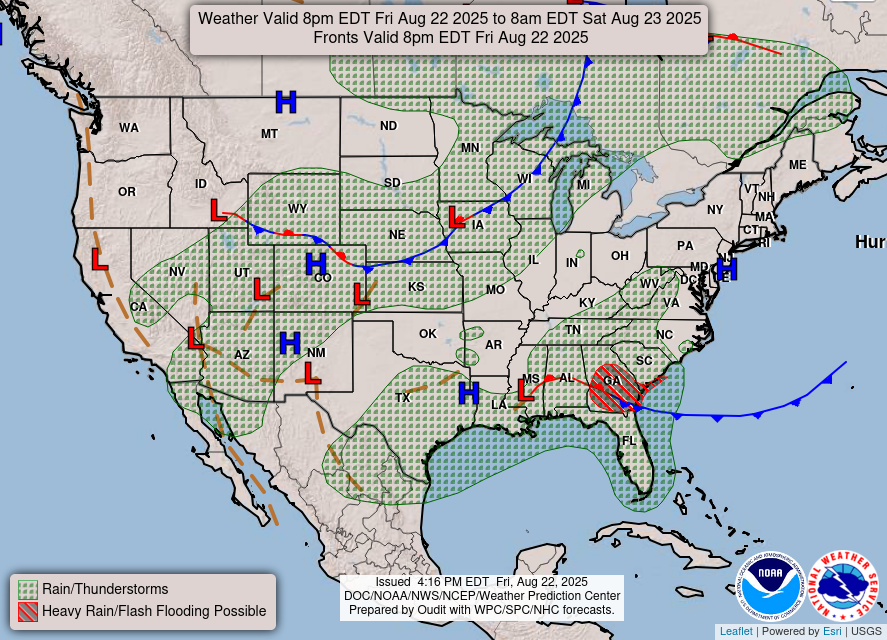
Today’s weather forecast across the nation THIS MAP UPDATES TWICE A DAY
RV sales have slowed and fewer people are buying RVs. Has that changed campgrounds? Is it easier to find a campsite now, particularly in state and national parks?
Campgrounds are changing and evolving, some for the better and some for the worse. RV Travel readers discuss their experiences and offer tips to help other campers find that perfect spot.
Here are a few observations from our readers. These do not necessarily represent the views of RVtravel.com.
RV costs are so high—hotels are easier, cheaper and more convenient
Kevin P. is staying away from private campgrounds and finds hotels cheaper. He answers our questions and shares, “What are my pet peeves? No-show reserved sites and campground hosts not opening a site after the 24-hour no-show policy.
“Are rising costs affecting my camping style? Yes, RV operation costs have gotten to the point that hotels are easier, cheaper, and more convenient. I’ve moved towards not using commercial/private campgrounds.
“Do I have a favorite campground or RV park? In Western states, state or federal fish and wildlife parks are becoming my favorite.”
Should be a non-refundable deposit for a reservation
Steven M. shares this advice: “There should be a deposit for a reservation and it should be non-refundable. I plan on using a tent. Plenty of spots everywhere.”
Have to be on the waitlist for a site
Victoria P. replied to the questions at the bottom of this column, too. She wrote, “Am I finding campgrounds booked up or is finding a site not a problem? Yes, locally. Have to be on waitlists.
“What do I like best about RVing? Getting away from the city lights and noise.
“What are my pet peeves? Dark sky and campers with EVERY outside light on.
“Are rising costs affecting my camping style? We’ll boondock more.
“Do I have favorite campgrounds or RV parks? State and federal, city parks.
“What is the most memorable experience I have had RVing? Waking up at Rockhound Park in New Mexico… epic view.
“Do I have any tips or secrets to share? Be flexible.”
Lots of empty sites and one RV resort offered 50% discount
Diane M. is seeing more empty sites. She wrote, “Took a two-month trip from CA to FL. Attend Daytona 500 and stayed at the track for 10 days. Stayed at RV parks for two weeks before, and one week after. Noticed they were never full. A change in the 21 years that we’ve done this.
“Now we’re on the West Coast. Several months ago we got an email from an upscale RV resort we stayed at in 2023 offering 50% off in-season sites. Seeing a number of empty sites. On the trip out, nothing was full.”
Times have changed
Bull A. asks, “What crowding? Almost every campground I see is vacant. Times have changed. Everyone went south!”
Always boondock
Janis B. writes, “We never have any problem with campgrounds as we always boondock.”
Transient workers
Barb F. offers her experience with transient workers at RV parks: “In regards to transient workers, our experience was a mixed bag. At one park, workers were friendly, took care of their sites. These workers, we noticed, had their families with them. They go where the jobs are. At another campground, the area for workers was pretty rough: junk lying around, not clean, and they would race through the campground, not obeying speed limits.
“Workers living at the campgrounds were at places that are open year-round. I can understand that workers help the campground maintain a steady income. It may be good if the managers or owners of the park did a better job policing the areas.”
Sold large RV and kept a teardrop
James L. beats campground crowds with a tent and a teardrop camper. He writes, “We sold our larger camper and kept our modified teardrop. It’s 6’ x 8’ and will fit in tent sites. We have stayed at private campgrounds and paid less for tent sites. We can be self-sufficient and do not have any problems getting comfortable. Although in our 70s, we still have our tent and will take cross-country trips tent camping. We are flexible and enjoy it either way.”
Epic RV dream trip
Kathryn C. wrote to us about their amazing RV trip. “We camped from Kentucky to Newfoundland and Labrador, Canada, then back to Kentucky via New England this past summer. 7K miles, 36 campsites, two duds. Research! Best trip ever! Dutchmen Atlas 3172RLKB, 2019 Dodge Ram 3500 Cummins. Two people, one dog. (Quoddy Lighthouse, Maine [Pete’s Dragon])
Photo credit: Kathryn C.
Editor’s note: We love to hear about your amazing RV trips! It is such an opportunity to travel vicariously and dream about our next RV travels.
Now, some questions for you:
Are you finding campgrounds booked up or is finding a site not a problem?
What do you like best about RVing?
What are your pet peeves?
Are you seeing more permanent and seasonal RV parks?
Are rising costs affecting your camping style?
Do you have favorite campgrounds or RV parks?
What is the most memorable experience you have had RVing?
Do you have any tips or secrets you’d like to share?
Please use the form below to answer one or more of these questions, or tell us what you’ve experienced with campground crowding in general.
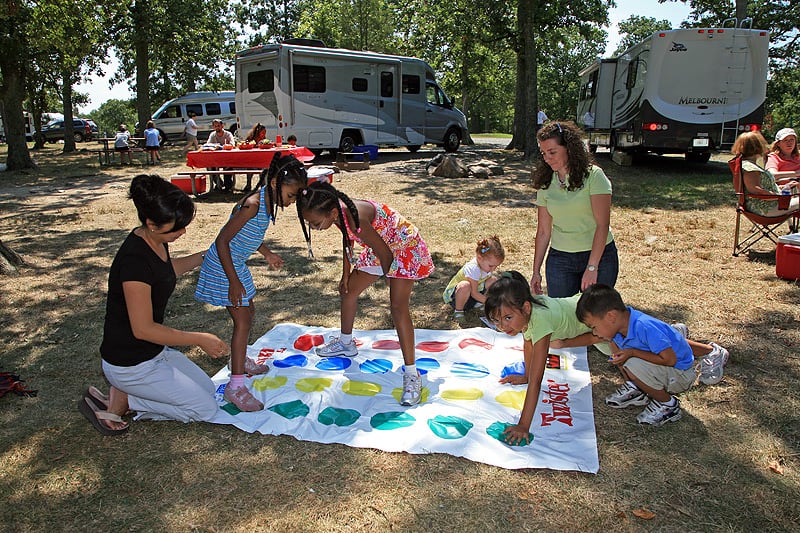
We’ve been receiving more and more comments lately about kids in campgrounds. Some are complaints: Kids are loud! They run through campsites! Their scooters are annoying! They watch TV outside all the time! And others are complaints about people complaining.
Some RVers cherish the sounds of kids laughing and playing, seeing it as part of the camping experience. They remember their own childhoods—riding bikes around the loop, roasting marshmallows, and making new friends at the playground. For many, campgrounds are family-friendly spaces where children should be welcome to explore and have fun. But for others, that same energy can feel disruptive, especially when they’re seeking a peaceful retreat.
Then there’s the issue of campground etiquette. While many parents teach their kids to respect others’ spaces, not all do.
Some RVers say they’ve had too many experiences where kids have cut through their sites, zipped past on scooters too close for comfort, or played loud games late into the evening. Others point out that the real problem isn’t the kids—it’s the parents who don’t supervise them properly.
If you had the option, would you choose to stay at a campground that allowed kids or did not allow kids (say, 18 and younger)? If you would choose to stay somewhere without kids, would you please leave a comment and explain why? Have you had negative experiences with kids at campgrounds, or would you just prefer an adults-only stay for other reasons?
The U.S. Department of Agriculture (USDA) has rehired nearly 6,000 probationary employees, many of whom play key roles in managing public lands and wildfires.
What happened?
In a policy reversal, the USDA is reinstating nearly 6,000 probationary workers terminated in February. Following a ruling by the Merit Systems Protection Board (MSPB), the agency has been ordered to reinstate these employees for at least 45 days. Affected workers will receive back pay from the date of their termination.
This move comes as the MSPB found that the mass layoffs might not have followed the proper federal laws, casting doubts on their legality.
Behind the decision
The mass termination occurred February 13. Notably, more than half of those dismissed were from the Forest Service, which oversees national forests and plays a crucial role in wildfire prevention and emergency response. This is particularly important as these “secondary” wildland fire personnel are essential for activities like prescribed burning and initial containment of wildfires.
By reinstating these employees, the USDA is helping ensure that the expertise needed to maintain the health and safety of our public lands remains intact during this transitional period.
Why RVers care
For RV enthusiasts, the management and protection of national forests aren’t just abstract policy issues—they directly affect the safety and quality of our travel experiences. Here’s how:
• Enhanced wildfire management: With many of the reinstated employees serving in roles related to wildfire management, you can expect better preparedness and response during fire seasons. This means safer camping and traveling conditions in forested areas.
• Well-maintained public lands: The Forest Service is responsible for the upkeep of roads, campsites, and recreational facilities. Their expertise helps keep the infrastructure in top shape for all who enjoy the outdoors.
• Reliable information and assistance: A stable, experienced workforce translates into more efficient services and better communication during emergencies, ensuring that RVers get timely updates and support when needed.
Looking ahead
While this reinstatement is temporary, lasting at least 45 days, the USDA is working quickly to create a phased plan for a more permanent solution. This decision not only offers relief to thousands of federal employees who were dismissed but also reinforces the commitment to managing our public lands responsibly.
For those who spend a good part of their year on the road, this move is a welcome assurance that the agencies tasked with protecting our natural lands are being held accountable and are ready to step up when needed. Stay tuned for further updates as the USDA finalizes its long-term plans.
Keystone RV Company (Keystone) is recalling certain 2025 Keystone Kodiak, Colorado 260RBC, 270BHC, 280BHC, and Sunset travel trailers. The 7-way cord and 12-volt distribution box were wired incorrectly, resulting in wiring with insufficient surge protection.
Unprotected electrical wiring can overheat and increase the risk of a fire, which can lead to injury. This recall was issued March 11, 2025, and may involve up to 873 RVs.
Remedy
Dealers will repair the wiring, free of charge. Owner notification letters are expected to be mailed April 28, 2025. Owners may contact Keystone customer service at 866-425-4369. Keystone’s number for this recall is 25-463.
Notes
Owners may also contact the National Highway Traffic Safety Administration Vehicle Safety Hotline at 888-327-4236 (TTY 888-275-9171) or go to nhtsa.gov.
A proposed class action lawsuit accuses GEICO of failing to honor its accident forgiveness policy, which promises customers that their insurance premiums will not increase as a result of their first at-fault accident. GEICO advertises heavily to the RV market, so this news could affect many RVtravel.com readers.
The 14-page class action lawsuit alleges that instead of complying with its policy, GEICO unlawfully disguises premium increases for customers with accident forgiveness coverage as “surcharges” or other misleading terms following an insured’s first at-fault accident.
According to the suit, GEICO offers accident forgiveness coverage to customers who have been insured by the company for five years and have clean driving records. The benefit can also be purchased alongside auto insurance or when renewing a policy, the case says.
The lawsuit was filed by a Dallas resident who claims he and his wife were covered by GEICO auto insurance that included accident forgiveness. The plaintiff says he received a policy renewal letter from GEICO one month after his wife got into a minor fender bender accident for which she was at fault—the couple’s first at-fault crash, according to the complaint.
Per the filing, the policy renewal letter notified the plaintiff that his premium had risen from $1,392 to $2,663, an increase of 91.3 percent. After contacting GEICO for an explanation, the man was told that the company had not increased his premium but had “merely applied a surcharge,” the suit states.
The case alleges the insurer has engaged in an unlawful scheme “designed to ensure GEICO’s customers would still pay higher premiums due to first at-fault accidents” despite representing otherwise.
The lawsuit looks to represent any person or entity in Texas insured by GEICO with accident forgiveness whose premiums increased following the first at-fault accident caused by an eligible driver on the policy.
We use cookies to ensure that we give you the best experience on our website. By continuing to use our site, you consent to accepting cookies. We NEVER have or will sell reader's data. For more info, please see our privacy policy page.