Home Blog Page 55

2026 Forest River Sunseeker 2350LE— comfort for couples

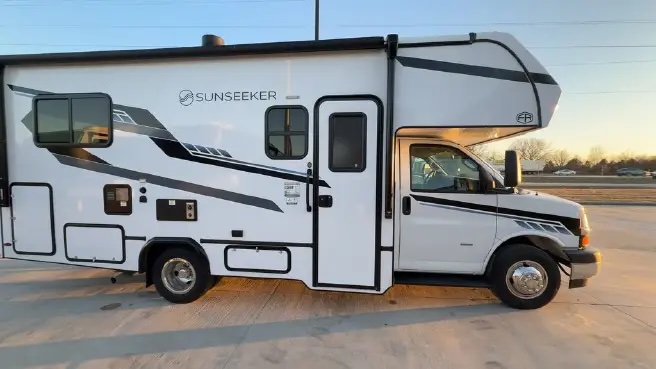
The 2026 Forest River Sunseeker 2350LE is a compact Class C. It makes the most of its short footprint and is best suited for couples or single travelers.

If you’re looking to downsize or jump into RVing, this may be a good choice. What’s more, you have the option to choose either a Chevy 3500 or Ford E350 chassis.

Behind the walls
2026 Sunseeker 2350LE review Image: Sunseeker website

This is an RV that relies on practical construction instead of flashy extras. Forest River lists 2-inch aluminum-framed laminated sidewalls and a Superlite composite substrate. It features a gel coat fiberglass exterior, block foam insulation, a fiberglass roof, and a one-piece fiberglass front cap.

Key specs

  • Model: 2026 Forest River Sunseeker 2350LE
  • Chassis: Chevy 3500 or Ford E350
  • Length: 25’0″ on the Chevy version, 24’6″ on the Ford version
  • Height: 11’3″
  • Width: 8’4″
  • Fresh water: 44 gallons
  • Gray water: 39 gallons
  • Black water: 39 gallons
  • Awning size: 15’6″
  • Heated underbelly
  • 4,000-watt generator
  • 200-watt solar
  • Price: $188,300

Interior and living space
2026 Sunseeker 2350LE review Image: Sunseeker website

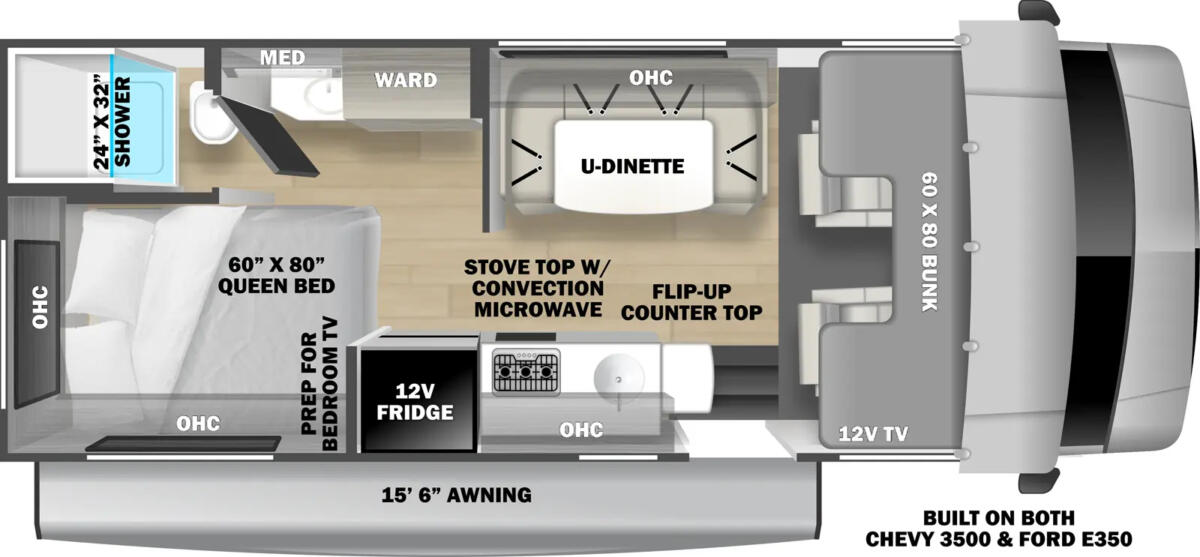
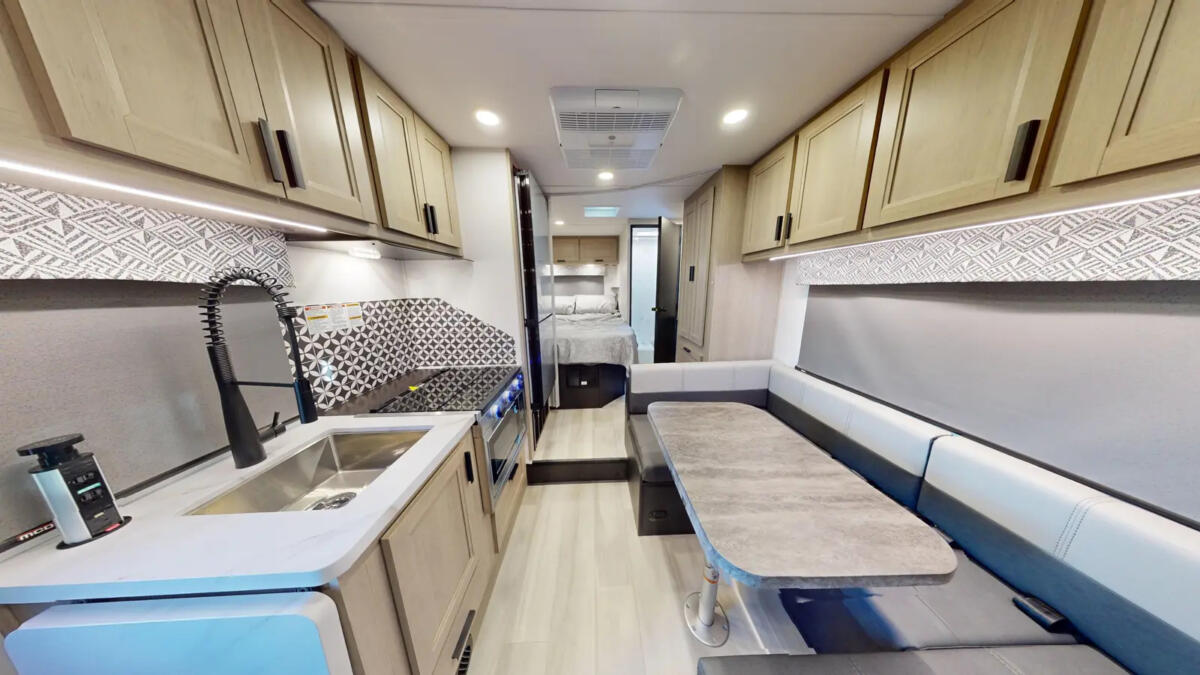
When I stepped inside, the first thing I noticed was how open the coach feels for a non-slide Class C. The layout runs cleanly from the cab-over sleeping area into the kitchen and dinette. It extends back to the private rear sleeping and bath zone. To me, that straight-through layout makes the RV feel organized rather than cramped, which is a big plus in a 25-footer.

Kitchen

The kitchen is basic, sensible, and set up for real travel use. The Sunseeker 2530LE has a recessed 3-burner range with a flush glass cover. This would be fine for the way we cook when RVing. I like that this coach features a 1.3 cu. ft. convection microwave, but I’m not so thrilled with the low placement. You’ll also find a 10.7 cu. ft. 12V refrigerator.

Drawers throughout this RV offer soft-close guides, and while simplistic in style, I like how the numerous cabinets are handily positioned.

The kitchen sink offers a flip-up counter extension, which is a nice touch when you need just a little more prep room. The tradeoff is that this is not a galley for big, elaborate meals. It’s really designed for quick and easy eating.

Living area
2026 Sunseeker 2350LE review Image: Sunseeker website

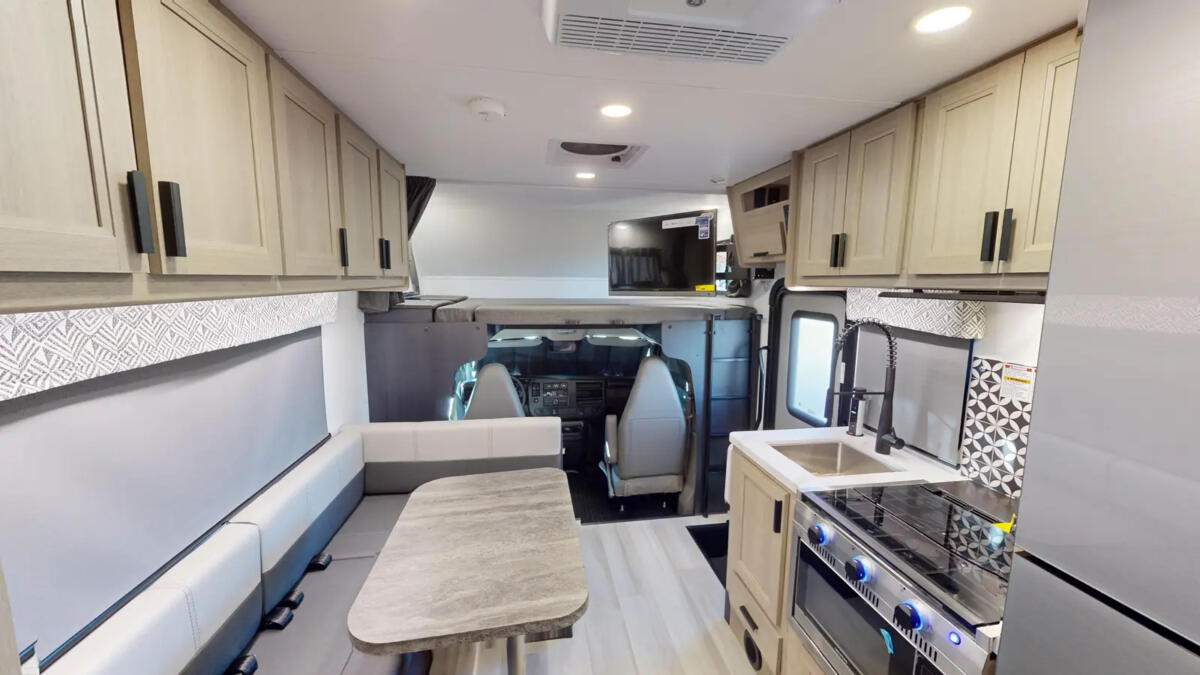
The main living area centers on the U-shaped dinette. It provides a second sleeping surface for an occasional guest RVer. There are multiple seatbelts, so it works as both a travel spot and a hangout area.

The 12V LED flat panel TV and the Maxxair fan keep the space useful without clutter. Without a slide, the living area isn’t huge. However, we spend most of our RV time outside, and on rainy days, there is plenty of space for table games or television viewing.

Bath

The bathroom is tucked at the rear, and that placement helps preserve the open feel in the middle of the coach. This Sunseeker 2530LE features a 24″ x 32″ shower with a molded surround. I was pleasantly surprised to find a separate shower, as opposed to a wet room shower. The bathroom is tight, but it has an electric roof fan, an oxygen-infused shower head with a flexible extension, and a skylight shower. The skylight really helps the bathroom feel less boxed in.

The sink is outside the bathroom to conserve space. I like that there’s a dedicated medicine cabinet over the sink.

2026 Sunseeker 2350LE review Image: Sunseeker website

Bedroom

The bed space is in the rear of the coach and has a 60″ x 80″ queen bed. I appreciate the bed’s size; however, without a slide, one sleeper must crawl over the other to exit. That’s not ideal for us, but given the overall size and the no-slide configuration, it makes sense.

Two large windows in the Sunseeker’s bedroom open up the visual space and provide welcome light into the coach during the daytime. Both windows feature blackout roller shades for good nighttime sleep.

The bed area can be sectioned off with a privacy curtain, which I like. It makes the sleeping area function as a semi-private master space.

Overall take

The 2026 Sunseeker 2350LE is a good choice for RVers who want a manageable Class C that still covers all of the basics. The biggest advantages for me are the compact length, practical kitchen, full rear bath, and storage space throughout (both inside and outside the coach).

The biggest compromise is space, since a no-slide design will naturally feel tighter when spending extended time inside. Even so, this is a smart, road-friendly motorhome for first-time RVers or couples looking to downsize.

Video

You can watch a video walkthrough tour. Tell us your thoughts about this RV in the comments below.

MORE CLASS C REVIEWS LIKE THIS:

RVDT2885

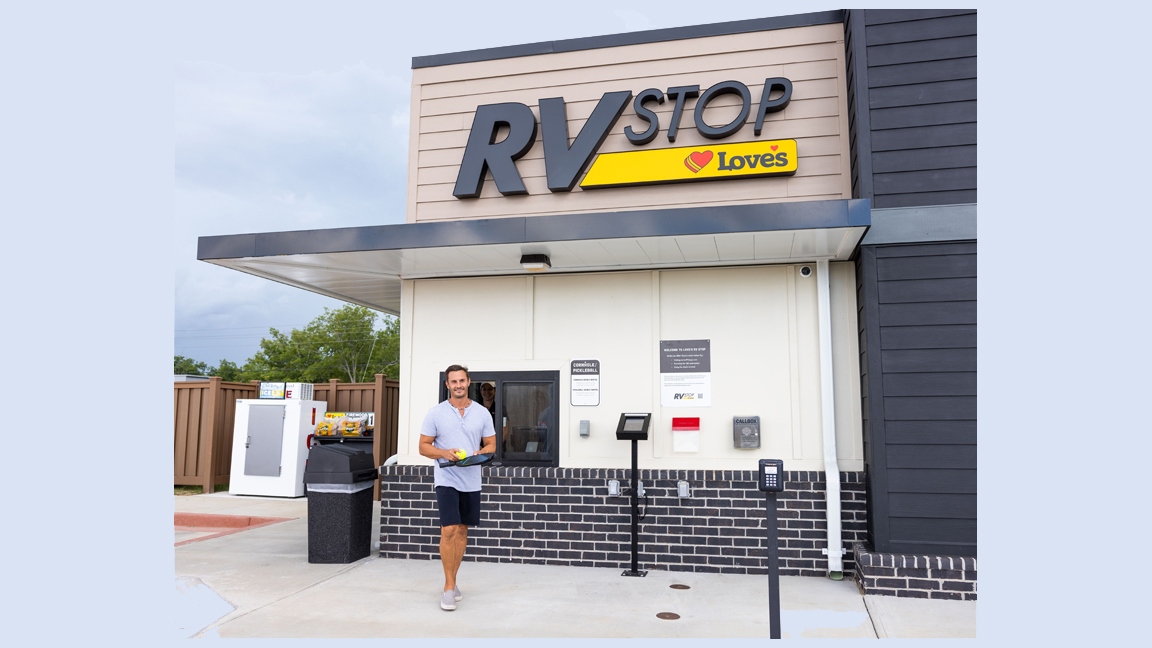
Love’s opens new RV-friendly stop in Alabama

If you’re rolling down I-22 northwest of Birmingham, there’s a new place to land for the night—and the Love’s RV hookups Alabama push just added another pin to the map. Love’s Travel Stops & Country Stores has opened a travel stop in Quinton, and this one isn’t just a corner of the lot you negotiate with a row of semis. It includes a small, purpose-built setup for RVs.

This location offers a handful of hookup sites along with a dump station and extra parking set aside for rigs. It’s not a campground, and it doesn’t try to be one. But it does give you a place to plug in, reset, and move on without hunting down a full park or racing a check-in window. For RVers threading northern Alabama, or trying to stretch a long haul across the Southeast, that kind of stop can make the difference between pushing on and calling it early.

What you’ll find at the Quinton stop

The Quinton location follows the same pattern we’ve been seeing from Love’s lately. A few dedicated RV spaces include hookups, and there’s a dump station on site; still a welcome sight at a fuel stop. Add in easy on-and-off access from I-22, plus the usual showers, restrooms, and store, and you’ve got a stop that works for a quick overnight or a mid-trip reset.

The keyword here is predictable. You know what you’re getting when you pull in, and that counts when plans shift on the fly.

Love’s doesn’t publish a set overnight rate for each location, and the new Quinton stop didn’t include pricing in its opening details. But based on other Love’s hookup sites, RVers can generally expect something in the $30 to $50 range depending on the setup and demand. A lot more expensive than boondocking, but, hey, there are a few more amenities here.

Why Love’s is leaning into RVers

This isn’t happening by accident. RVers have used travel stops for years out of necessity, especially on routes where campground options run thin or book up fast. Love’s appears to be meeting that demand head-on by building in hookups and RV-specific features instead of treating rigs as an afterthought.

The Love’s RV hookups Alabama addition is just one more example of a broader rollout. It’s not a nationwide network yet, but you can see the direction: more locations with at least a few hookups, a dump station, and enough room to get in and out without drama.

The tradeoff you already know

No one’s confusing this with a quiet campground. You’re near the highway, and truck traffic runs around the clock. With only a handful of RV spaces, timing matters. Pull in late and you may be improvising.

But there’s a flip side. You don’t need a reservation. You don’t need to plan your day around an office closing time. Pull in when you need it, handle what needs handling, and get back on the road.

You don’t need a reservation. You don’t need to plan around a check-in window. just pull in, reset, and move on.

What it means for RVers

For a lot of travelers, that flexibility is the whole game. The Quinton stop isn’t a destination—it’s a tool. And as more of these locations come online, RVers are slowly getting a network of “good enough” stops in places where campground options can be scarce, crowded, or locked behind reservations.

That may not sound glamorous. But when you’re tired, low on tank space, and ready to call it a day, it can feel like exactly what you needed.

RELATED

RVT1257b

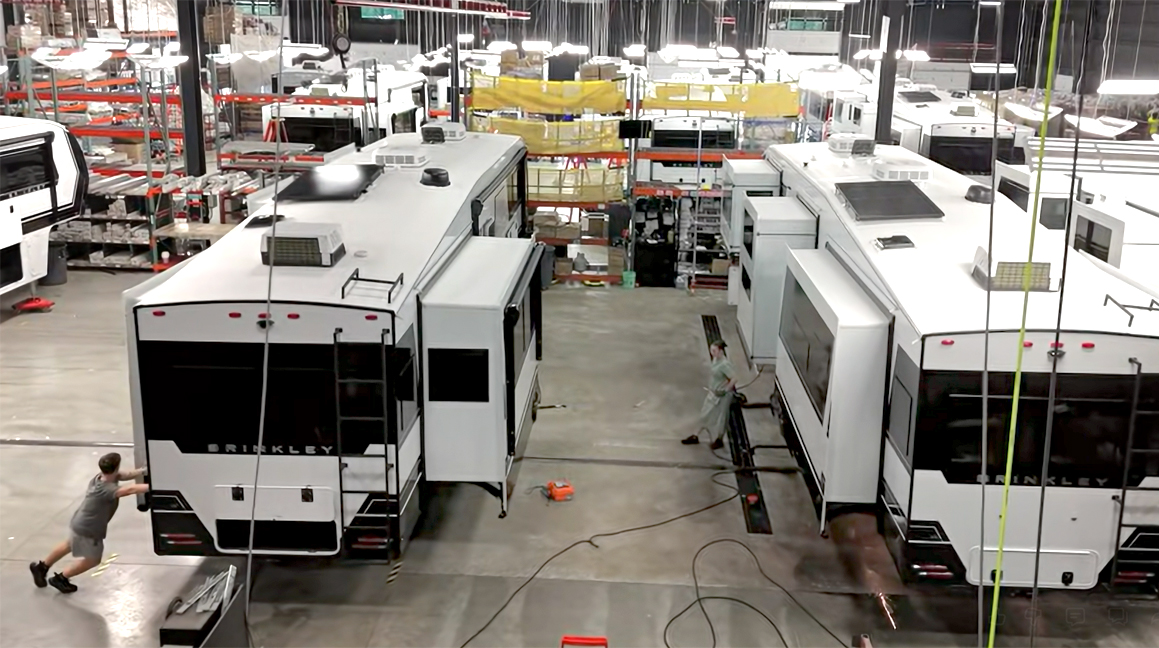
Brinkley factory tour highlights push for better RV build quality

Most RVers don’t need a factory tour to know what goes wrong with a rig. Loose wiring, hard-to-reach plumbing, cabinets that shift, systems buried where no human hand can reach—those are the complaints we hear over and over. That’s why RV factory build quality matters so much, and why some RVers are taking a closer look at how rigs actually go together.

A recent look inside the production plant at Brinkley RV offers a glimpse at a builder that appears to be trying to tackle those frustrations at the source: on the factory floor. It’s a 40+ minute video, so grab your favorite beverage and a soft seat if you want to watch.

What stands out inside the factory

Watch enough RV factory footage, and it all starts to look the same. Staple guns, fast-moving lines, and not much time spent on what happens after the sale.

What’s different here, at least from what’s visible, is the attention paid to the parts owners usually don’t see until something breaks.

Wiring runs appear bundled and routed with some intention. Plumbing doesn’t look buried behind immovable panels. Components seem placed with at least some thought toward future access. In other words, someone on the line appears to be asking: What happens when this needs to be fixed?

That may sound basic, but in the RV world, it hasn’t always been.

Why this matters to RV owners

Most of our readers have lived the other side of this.

You open a panel and find a tangle of wires that look like they were dropped in by the handful. Chase a water leak that disappears behind a wall you can’t remove. You try to service a component that requires half the coach to come apart. And no matter where you go, there’s always stacks of sawdust. Doesn’t anybody care?

Those are the differences between a quick fix and a trip-ending problem.

So when a builder focuses on process—how things are routed, mounted, and accessed—it can translate into:

  • Easier DIY repairs
  • Shorter shop time when something fails
  • Less frustration when troubleshooting

And for a lot of RVers, that’s more important than fancy finishes or the latest gadget.

A factory approach that’s getting attention

RV factory build quality
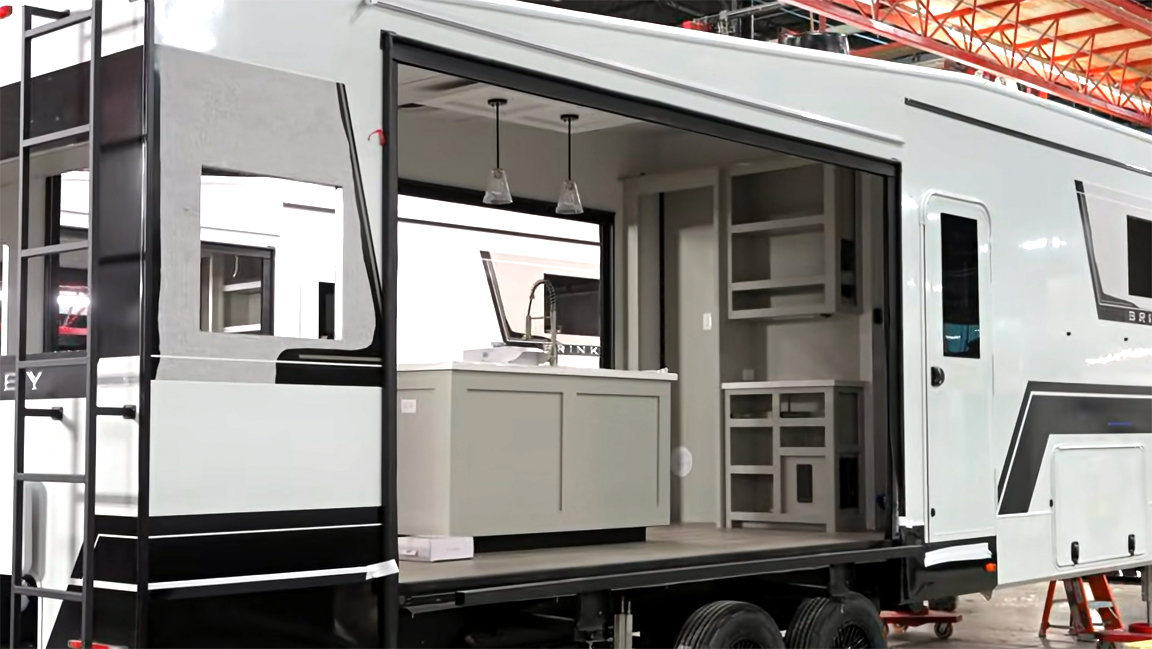
Brinkley fifth wheel taking shape.

Part of what’s driving the interest in Brinkley isn’t just the product—it’s the idea that the company is trying to build differently from the ground up.

There’s a visible emphasis on consistency. Stations appear organized. Workflows look designed, not improvised. And there’s a sense—again, based on what’s shown—that feedback from owners is making its way back into how units are assembled.

That last piece matters. Many RVers feel like once a unit leaves the lot, the builder disappears. A feedback loop—if it’s real—can change that equation.

A dose of reality

None of this means any RV is perfect. Early reputation can be strong, but long-term durability only shows up over years of use, not in a factory walkthrough.

And even brands with good intentions can miss things once production scales.

So, it’s fair to say: It’s a promising approach, but it’s still being proven in the real world.

The bigger picture for RVers

You might not be shopping for a Brinkley. Price alone puts it out of reach for many. But that doesn’t make this irrelevant—far from it.

When a builder pushes on build quality and serviceability, it tends to ripple outward. Competing manufacturers notice. Features and practices that start in higher-end rigs often work their way down into more affordable models over time.

That’s why it’s worth paying attention.

At the end of the day, this isn’t really about one factory. It’s about whether more of the RV industry starts asking a simple question before a unit leaves the line:

How hard will this be to live with—and to fix—once it’s out in the real world?

RELATED

RVT1257b

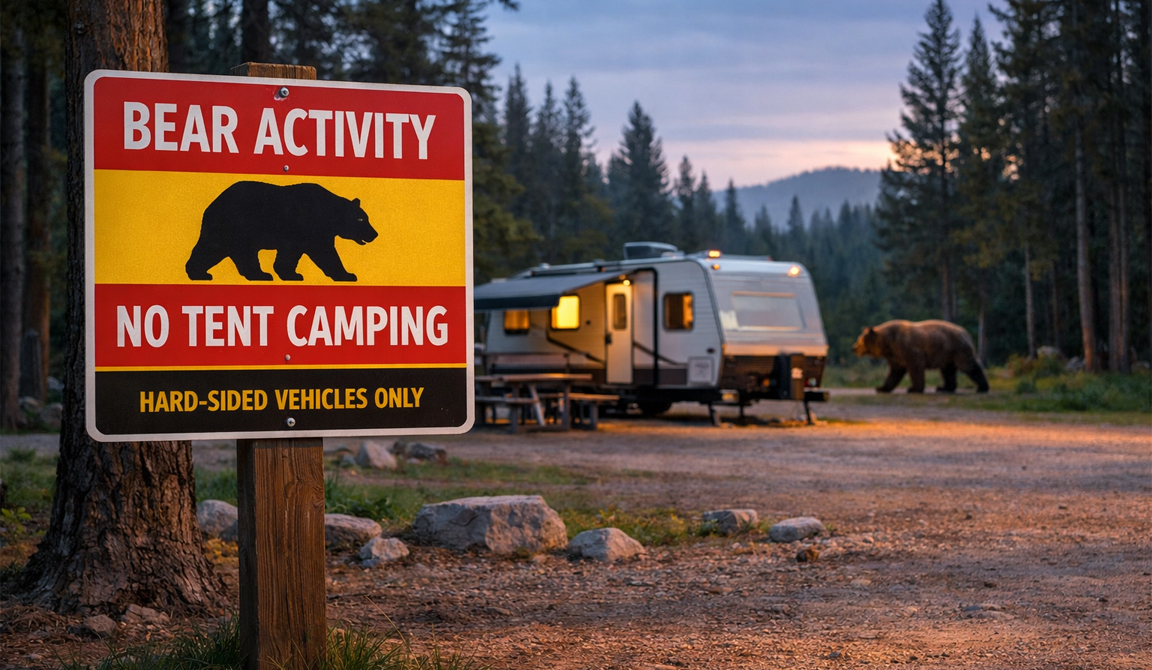
Bear activity near Yellowstone triggers tent bans, RVers allowed to stay

Campgrounds near Yellowstone National Park don’t always stay open to everyone. When Yellowstone bear camping restrictions kick in, some sites flip to a hard-sided-only rule—no tents, no exceptions. For RVers, that can mean the difference between staying put and packing up.

It’s not a new policy, but it still catches people off guard. When bears start frequenting campgrounds, especially those that have learned to associate people with food, land managers act quickly. In some cases, that means shutting out tent campers entirely, while allowing RVs and other hard-sided units to remain.

When bears move in, the rules can change overnight

The example that sparked this discussion comes from three campgrounds near Yellowstone where officials have previously banned tent camping after bears became a regular presence. The concern wasn’t just that bears were nearby—it was that they were lingering, returning, and showing behavior that suggested they were getting comfortable around human food sources.

A tent offers no real barrier. A bear that wants what it smells can get through fabric in seconds. A hard-sided RV, while not “bear-proof,” at least creates a physical separation and buys time.

So when risk rises, the rule kicks in: soft-sided camping out, hard-sided only.

Why RVs get the green light

Wildlife managers know they can’t eliminate bears from these areas. The Greater Yellowstone ecosystem supports a healthy grizzly population, and encounters are part of the deal. What they can do is reduce the chances of a dangerous interaction.

RVs help do that in a few ways. They limit direct access, reduce scent spread compared to open camps, and give occupants a better chance to stay secure if a bear wanders through. That doesn’t make RV camping “safe,” but it makes it safer than sleeping in a tent when bears are actively working a campground.

What this means if you’re heading that way

If your travel plans include Yellowstone or nearby national forest campgrounds, it’s worth understanding how quickly conditions can shift.

A campground that welcomes tents one day can restrict them the next. If you’re in a tent, that may mean relocating with little notice. If you’re in an RV, you’re more likely to be allowed to stay—but you’re still expected to follow strict food storage and campsite rules.

And those rules matter. Most of these restrictions don’t come out of nowhere. They follow repeated bear visits, unsecured food, or garbage issues that teach animals to come back.

The bigger shift RVers should notice

In high-risk wildlife areas, especially around Yellowstone, access increasingly depends on what you’re camping in. Hard-sided units aren’t just more comfortable, they’re often the only option when conditions tighten.

That doesn’t mean RVers should get complacent. Bears don’t care what you’re sleeping in. But when restrictions go up, your RV may be what keeps your trip from getting cut short.

And in bear country, that’s not a small thing.

RELATED

RVT1257b

RV Daily Tips. Thursday, April 16, 2026

America’s Original RV Newsletter. Since 2001
Issue 2884 • New issue every weekday
If you find this newsletter helpful, please consider supporting our work with a donation of your choice. Thank you!


Today’s thought

“Too many people spend money they haven’t earned to buy things they don’t want to impress people they don’t like.” —Will Rogers


Need an excuse to celebrate? Today is National Eggs Benedict Day! Like poached eggs, but can’t quite make them perfect? This helps!

On this day in history: 1908 – Natural Bridges National Monument is established in Utah.


Tip of the day
A contractor’s RV advice for maintaining your RV

Jared Gillis from All About RVs used to be a contractor. He says when it comes to looking at RVs, he just can’t turn his contractor’s brain off. So in the video below, he shares some practical RV advice from a contractor’s perspective. Jared starts the video by looking at the RV’s electrical components. That’s because with all the moving and jarring around an RV does, things can shake loose, and that can lead to big problems. Be sure to watch the video as Jared shows how to check and tighten your electrical connections in order to avoid possible issues. Continue reading and watch the video.


Article and video
How to camp next to the St. Louis Gateway Arch

The St. Louis Gateway Arch and the Gateway Arch National Park are iconic pieces of American history. Just because you might be traveling through St. Louis in your RV does not mean you have to miss this popular must-see attraction. Here, the team from Less Junk More Journey shares how you can actually camp near the Arch itself and immerse yourself in this national landmark. This is a good “secret”!

TAKE A GUESS: How do the St. Louis Gateway Arch’s dimensions compare? A) It is taller than it is wide; B) It is wider than it is tall; or C) It is exactly the same height and width. Scroll down to find out.


Featured article
Found inside a barn, this perfectly preserved RV is an amazing 1955 time capsule

By Paul Lacitinola
This 1955, 24-foot Boles Aero Ensenada was sitting in the back of a massive barn on a wheat farm in eastern Oregon. This was a real barn find! … Not one piece or part was missing or broken. The original curtains, Venetian blinds, upholstery, knobs, gaskets, and Bakelite handles were all there. All of it! And even more amazing, each and every item was in perfect condition, including the beautiful birch interior. Read more and check out the pictures here.


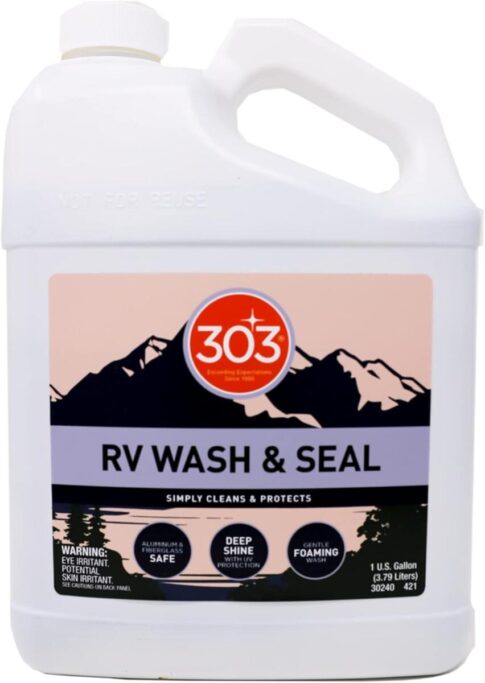
303washTime to make your RV shine!
It’s the perfect time of year to get your RV looking as good as new. Make sure you wash and seal it. Here’s the product to get you started. One wash delivers a deep clean, streak-free shine, and UV protection—keeping your RV protected and looking like new all season long.


Recent news for RVers:


Ask Dave
LED bulbs are not created equal. Cheap ones can cause issues

Learn about them here.


Reader poll
How much of your RV’s floor is covered with wall-to-wall carpet?

Respond here.


Quick tip
More money-saving tips on the road

By Bob “BoondockBob” Difley
Here are some more ways to save money on the road:

• Maintain your RV to save on repair bills.
• Eat out less—prepare your own meals.
• Treat your batteries right so they last longer.
• Buy from farmers’ markets, roadside farm stands, U-pick farms, and orchards.
• Barter for a campsite if you have something to offer.
• Reduce food costs by buying from bulk bins.
• Eat right and exercise (at least 30 minutes a day) to cut down on meds and doctor visits.
• Stay at great locations for the cost of a membership fee at Harvest Hosts and Boondockers Welcome.
• Volunteer or become a camp host, which usually comes with a free campsite.
• Take a caretaking position for free rent. The Caretaker Gazette is a good resource.
• Shop at charity/thrift stores to save on just about everything.
If you missed the first part of this helpful list yesterday, click here.

You can find Bob Difley’s e-books on Amazon Kindle.


Smelly or slow-draining shower? This is what you need
RV shower smells or drains slowly? The HepvO valve might be the fix. Unlike a traditional P-trap, this waterless valve blocks tank odors without relying on standing water, so there’s no drying out or freezing issues. It’s compact, low-maintenance, and a smart upgrade (or replacement) for RVers who want better drainage and a fresher-smelling bathroom. Learn more about it here, or order one here.


On this day last year…


Website of the day

Best Photo Editing Apps in 2026 (free and paid)
If you’re a photographer and want to step up your editing game (hey, even if you’re not a photographer!), check out this list. We’re going to try some of these out!


And the survey says…

We’ve polled RVtravel.com readers more than 5,000 times in recent years. Here are a few things we’ve learned about them:

• 7 percent say they go geocaching all the time.
• 66 percent have adopted a pet from an animal shelter.
• 11 percent say they absolutely could not live in their RV as their only home.

Recent poll: To tell or not to tell: Would you tell other RVers about the ‘perfect’ campground?


Trivia

Women in the U.S. gave birth to roughly 710,000 fewer children last year than at the country’s peak in 2007, according to preliminary data from the Centers for Disease Control and Prevention.


? MYSTERY PRODUCT OF THE DAY ?
What would you rather be doing: cleaning your bathroom or out RVing? Going to the post office and standing in line or RVing? Drinking a pint of dirty dish water or RVing? If you answered RVing to the above options, you need these!


ANSWER: The St. Louis Gateway Arch is exactly the same height and width—630 feet tall and 630 feet wide.


Readers’ pets of the day

Img 4303 Bcb0dafdd06f66bc23e34b702b5bd9fe“Rusty and Willow (Bordoodles–Border Collie/Poodle, ages 7 and 5) love to camp and travel with us. They are siblings who are two years apart. They love attention from people.” —Dawn Ward

Send us a photo of your pet with a short description. No blurry photos, and please do not submit your photo more than once. Thanks!

Pet Food and all pet products at Amazon
RVing with Dogs group on Facebook. You’ll love it.


FREE IS GOOD! Tubi.tv is a free streaming service with the world’s largest collection of Hollywood movies and TV shows. (More than 100 million users monthly.) No account needed.


Leave here with a laugh

(Click to enlarge.)

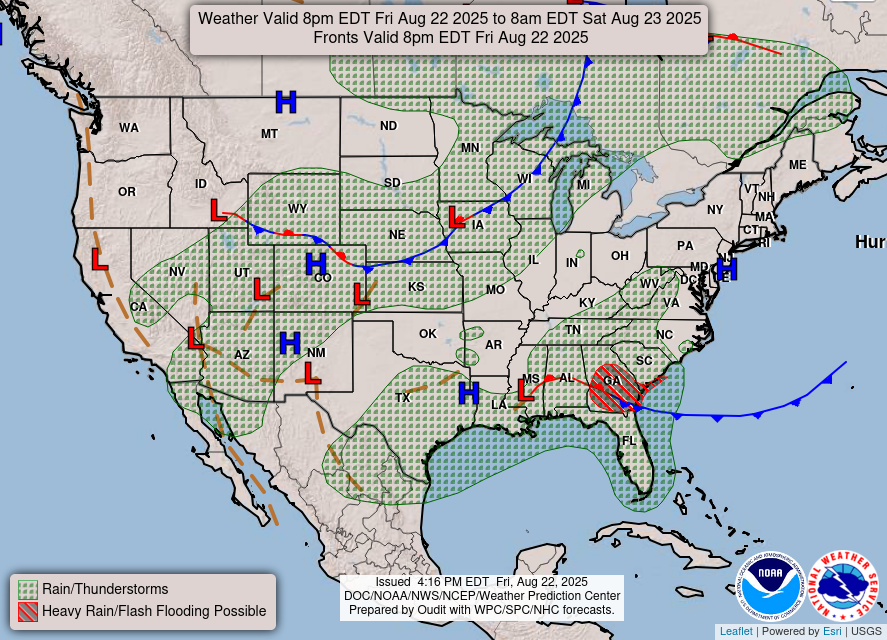
Today’s weather forecast across the nation
THIS MAP UPDATES TWICE A DAY

Visit Current National Radar Weather Map


Did you miss the latest RV Travel Newsletter? If so, read it here.
Oh, and if you missed the Latest News for RVers, make sure to catch up here.


If you shop at Amazon.com we’d appreciate you using this link. We get an itty bitty commission if you buy something, but they add up and help us pay our bills (most importantly our hard-working writers!). 


RVtravel.com All-Star Team

Click here for information about our staff and how to contact us.

WHY WE ASK FOR DONATIONS INSTEAD OF SELLING SUBSCRIPTIONS.

Our policy on using artificial intelligence.

LED bulbs are not created equal. Cheap ones can cause issues

This spring I conducted more than 100 seminars at RV shows across the country, and the “Boondocking, Getting Off The Gird” seminar was a very popular one. One of the topics is how to extend battery life, and LED lights have been part of the discussion. Also, we recently had a post on RVtravel.com concerning LED lights flickering.

I believe every new RV now comes with LED lights. However, there are still a large number of units out there with halogen lights and some with the old energy-hog incandescent bulbs. Incandescent bulbs run 1.5 amps per hour, while quality LEDs only use 0.15 amps per hour.

Not all LED bulbs are created equal

Before we get into the specifics of lumens and color temperature, we need to discuss the difference between quality LED bulbs and some of the generic “cheapies” that are flooding the market.

Several years ago we changed all the bulbs in a 1992 Itasca Suncruiser that had the old incandescent bulbs. We did extensive research on bulb quality with several dealers and original equipment manufacturers (OEMs).

I came across a company called M4 Products that had an impressive product offering and even more impressive LED tutorial. The owner is an RV owner/enthusiast. He got frustrated with the cheap LED bulbs only available at auto parts stores and started his own line of products.

When LED lights first started hitting the RV aftermarket, you could only get the entire fixture rather than just a bulb swap. At that time, a single fixture would cost about $50+ and was not an inexpensive option to do a front-to-back change out. So, many RVers would just change one or two in the living area and bedroom for reading.

Today there are bulbs available for almost every fixture and they are fairly inexpensive.

Identifying quality LED bulbs

How can you determine if it is a quality LED bulb? Here are some of the main factors.

Most manufacturers use the same chip. However, the difference comes in the number of chips used in an array, and the housing material. The chip is the most expensive component in an LED bulb. Most cheap manufacturers use fewer chips to save money.

The housing is also important as the paperboard design does not hold up in an RV application. A metal or aluminum cage not only is stronger but also acts as a heat sink, as even LED bulbs give off some heat. This means the bulb will not break down when the light is used for a substantial amount of time, unlike a bulb that is just used for brake or turn signals.

An aluminum cage also reflects light from chips that are angled in different directions so they illuminate a superior light pattern.

M4 LED
M4 Products Lumens and Quality

Quality LED lights are also non-polarity specific. That means they will work as designed even if the light fixture is wired wrong. We found that more than half the lights in the Suncruiser were wired backwards. This is common with RV fixtures.

I remember doing factory tours at Winnebago.As the unit came down the line, the wires hanging from the ceiling and under cabinets were purple and green. The light fixtures were white and black. All incandescent and halogen bulbs will “glow” no matter how they are wired, as it is just resistance.

Rather than check and rewire all your light fixtures, just get a quality bulb.

Lumens and color temperature

Over the years I have swapped out many old household lights with new LED bulbs and have wrestled with matching the intensity of light or Lumens. Lumen ratings are a measure of light output rather than what we perceive as visible light. Color temperature can also affect what we see as visible light.

Quality larger LED bulbs use 5050 Surface Mounted Diode (SMD) chips that are rated at 15 lumens per chip. So, the number of chips times 15 gives the lumens rating. Smaller bulbs use 3528 SMD chips rated at 5 lumens per chip. M4 Products’ Elite Series use Samsung 5630 chips rated at 35 lumens per chip.

As stated above, the reflection of an aluminum cage enhances the visual light, and color temperature is also a factor. The sterile bright light from a cool bright white bulb will look more intense than the warm white bulb.

For more information on color temperature, go to M4 Products LED Color Range Choices webpage here.

I personally like the cool white light for reading areas and the warm white light for the bathroom ceiling light.

Example of difference in lighting

Here is the difference between the old incandescent lights of the Suncruiser and the new LED ones from M4 Products. We went with the brighter cool white bulbs throughout, as requested by the owner.

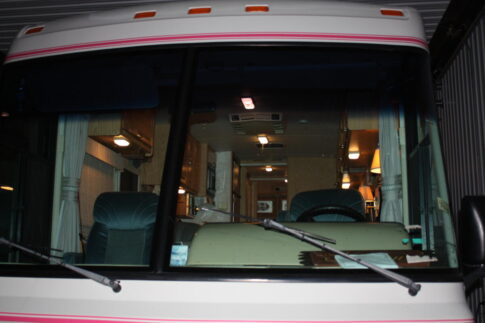
Suncruiser Old Lights

Note: We had to turn the lights in the room off to be able to capture the interior lights due to the camera aperture.

Suncruiser LED

Note: We turned the room lights on for this picture because the intensity of the lights created an “explosion,” once again due to the camera aperture. The difference looks almost AI enhanced; however, it was a very dramatic difference in visible light.

As a final note, it is best to research the quality of bulb, lumens, and color temperature that best fits your RV application. It might also prevent the flickering or intermittent twitch some are experiencing.


 You might also enjoy these posts from Dave 

DAVE HAS ANSWERED MORE THAN 1,000 readers’ maintenance and repair questions. Read a directory here. There is so much to learn!


Dave Solberg is a leading expert in the RV industry and the author of the “RV Handbook.”

HAVE A QUESTION FOR DAVE?

Send your inquiries to him using the form below.

Name
Drag & Drop Files, Choose Files to Upload

RVDT2884

A contractor’s RV advice for maintaining your RV

By Cheri Sicard
Jared Gillis from All About RVs used to be a contractor. He says when it comes to looking at RVs, he just can’t turn his contractor’s brain off. So, in the video below, he shares some practical RV advice from a contractor’s perspective.

RV advice from a contractor

Jared starts the video by looking at the RV’s electrical components. That’s because with all the moving and jarring around an RV does, things can shake loose, and that can lead to big problems. Be sure to watch the video as Jared shows how to check and tighten your electrical connections in order to avoid possible issues. Some of these issues, such as fires, are potentially dangerous, but Jared says a little preventive maintenance can help you avoid them.

Jared then looks at the topic of the potential damage water can cause and the importance of properly sealing your RV. In fact, it’s a good idea to have multiple layers of RV seals to protect against water damage and leaks. Watch the video for details.

Tips for using EternaBond tape on your roof are next. This tape can be a good help on roofs, but you must be sure to get the proper tape for your particular roof. Jared says that prep work is key to success when using EternaBond tape. Fail to do the prep work, it’s just not going to work. You also must get full compression on the tape. Jared shows how in the video.

Cleaning the copper connections on your RV’s plugs can go a long way toward protecting the cords. If you have ever seen melted RV power cords, Jared says taking the time to properly clean and maintain the copper might have prevented this. Jared shows how to remove the buildup and oxidation in order to achieve a good connection.

Jared’s last tip is about directing water flow off the RV’s roof in order to prevent standing water and buildup. Jared shows how to add extra protection where the roof and walls meet.

Check out the invaluable video below for details on all of these tips.

RELATED

RVDT2884

How to camp next to the St. Louis Gateway Arch

7

By Cheri Sicard
The St. Louis Gateway Arch and the Gateway Arch National Park are iconic pieces of American history. Just because you might be traveling through St. Louis in your RV does not mean you have to miss this popular must-see attraction. In the video below, the team from Less Junk More Journey shares how you can actually camp near the Arch itself and immerse yourself in this national landmark.

The team says the DraftKings at Casino Queen RV Park is close to the interstate, just 5 or 10 minutes off, depending on which way you are coming from, so you don’t have to worry about getting caught in heavy city traffic. It’s also part of a casino complex, for those who enjoy casino camping.

Our hosts had a rough ride en route to St. Louis, then they found the campground was not level so they had some issues. In fact, not all sites in the park can accommodate all RVs, so if you make a reservation, be sure to check each site against what you need.

It’s kind of odd because from the looks of things in the video, it doesn’t seem that off-level, but I will take their word for it. They also had some slide issues. The video does show real RVing, i.e., it’s not always all sunshine and rainbows.

If you want to skip all that and go straight to info on the Arch, go to point 7:53 in the video.

Our hosts say this park is loud. There is street noise, and trains, and trams frequently go by. Not to mention a nearby airport. Nonetheless, they say it’s worth it. The parking is fully fenced in, and even in this urban setting, they felt safe.

You have four options to get from the campground to the Gateway Arch

  • Take your vehicle
  • Uber, Lyft, or taxi
  • Walk
  • Bike or e-Bike

Next, we get to explore the park vicariously as we join our hosts on a river cruise and visit the National Park Service museum here. We then get to ride to the top!

Our hosts describe the unique capsules that lift people to the top of the Arch as a combination escalator, elevator, and Ferris wheel. Watch the video to see what it’s like. They say it’s kinda scary, and those who are claustrophobic are going to want to pass. But the view from the top is breathtaking.

MORE ON MISSOURI TRAVEL:

RVDT2884

How much of your RV’s floor is covered with wall-to-wall carpet?

11

Older RVs used to have more carpeting than newer models. Carpeting can be a real drag for those of you who are outdoorsy, spend time in lots of muddy and wet places, or have pets. Oh, the damage muddy paws can do…

Besides the dirt, carpets can trap odors and allergens, especially if you’ve had your RV for many seasons or travel with pets. Even high-quality carpet eventually starts to show wear in high-traffic areas like near the entry door, kitchen, or bathroom. That can make your whole rig feel a bit tired, no matter how clean you try to keep it.

Newer RVs tend to come with vinyl, laminate, or engineered flooring that’s easier to sweep and mop. But if you’ve got a vintage or older RV, you might be stuck with carpet that’s seen better days. Fortunately, there are plenty of do-it-yourself and budget-friendly options for replacing flooring—even if you’re not especially handy.

Changing the flooring can also modernize your space in a big way. Swapping old carpet for something like plank-style vinyl can not only freshen the look of your RV but also make it feel brighter and more open. Some RVers even use peel-and-stick tiles or rugs that can be pulled up and washed—ideal for pet owners or anyone who adventures in all weather.

How much of your current RV’s floor is covered with wall-to-wall carpet? All or most of it? Just a little bit of it (maybe just the “living” spaces and bedroom?), or none of it?

If you’re wanting to give your RV a facelift with new carpet or flooring, Russ and Tiña De Maris have written this article for you.

LIKE TAKING POLLS? So do we! Did you know we’ve run more than 5,000 polls on our website over the years? Check ’em out! Have fun!

RVDT2884

Health: Want to avoid dementia? Drink coffee!

1

RVtravel.com readers may have an advantage of not developing dementia based on how they start their day. According to a recent poll of more than 4,200 of our readers, 89 percent begin their days with a cup of coffee.

And that is good. Here’s why:

Drinking moderate amounts of caffeinated coffee or tea may help lower the risk of dementia and slow cognitive decline, according to a long-term study published in The Journal of the American Medical Association (JAMA).

Researchers analyzed data from 131,821 adults followed for up to 43 years in two major U.S. health studies. They found that people who drank two to three cups of caffeinated coffee daily, or one to two cups of tea, had a lower risk of dementia and better cognitive function as they aged.

During the study, 11,033 participants developed dementia. Those who regularly drank caffeinated coffee had an 18% lower risk compared with those who rarely or never drank it. Tea drinkers showed similar patterns. Decaffeinated coffee did not show the same benefit, suggesting caffeine may play a role.

“While our results are encouraging, the effect is modest,” said Dr. Daniel Wang of Mass General Brigham and Harvard. “Coffee or tea may be one part of a broader approach to protecting brain health.”

Researchers say compounds in coffee and tea, including caffeine and polyphenols, may help reduce inflammation and protect brain cells.

Genetic risk does not matter

The study also found similar benefits regardless of genetic risk for dementia. Higher caffeine intake did not show harm, but the strongest results were seen with moderate consumption.

Experts emphasize that coffee or tea should be part of a broader healthy lifestyle that includes exercise, good sleep and social activity to help maintain brain health with age.

MORE HEALTH-RELATED POSTS

RVT1257

Thinking about an electric RV? Here’s the reality in 2026

If you’ve been following the buzz around electric RVs, 2026 sounds like it ought to be the year everything finally comes together. The headlines keep coming, the prototypes keep rolling out, and the promise sounds awfully appealing: quiet travel, no fuel stops, and a cleaner way to roam.

But if you’re actually thinking about buying an electric RV right now, here’s the reality in 2026: You still can’t walk into a dealership and buy one.

That’s not a knock on the technology. It’s just where things stand.

You can’t buy what isn’t really for sale

Despite all the attention, most electric RVs are still stuck in the same place they’ve been for a few years now—concepts, pilot programs, and limited test units. Big names in the RV world have shown off electric motorhomes and vans, but very few have made it into real, retail production.

A handful of units are out there, but not in a way that matters to most RVers. Some are headed into rental fleets for testing. Others exist in such small numbers that calling them “available” stretches the definition.

For the average buyer, this isn’t a shopping decision yet. It’s still a waiting game.

The one exception isn’t typical RVing

There is one notable exception getting attention: a high-end electric travel trailer designed to offset the range loss of the tow vehicle by using its own battery and motors.

It’s an interesting idea, and it tackles one of the biggest challenges—how towing kills range for electric trucks. But it comes with a six-figure price tag and doesn’t solve the bigger issues RVers face on the road.

In other words, yes, something is technically for sale. No, it’s not a practical solution for most people.

Range still rules everything

Ask any RVer what affects fuel mileage, and you’ll hear the usual suspects: headwinds, hills, weight, and heat. None of that goes away with electric power; in fact, it matters even more.

On paper, some electric RV setups promise a couple hundred miles of range. In the real world, that number shrinks fast once you factor in terrain, weather, and load.

If you’re used to watching your mpg drop when a stiff crosswind hits on I-10, you already understand the problem. Now, imagine that with a battery instead of a fuel tank—and no quick refill option.

Charging isn’t built for RVs

Even if range improves, charging presents a whole different set of challenges.

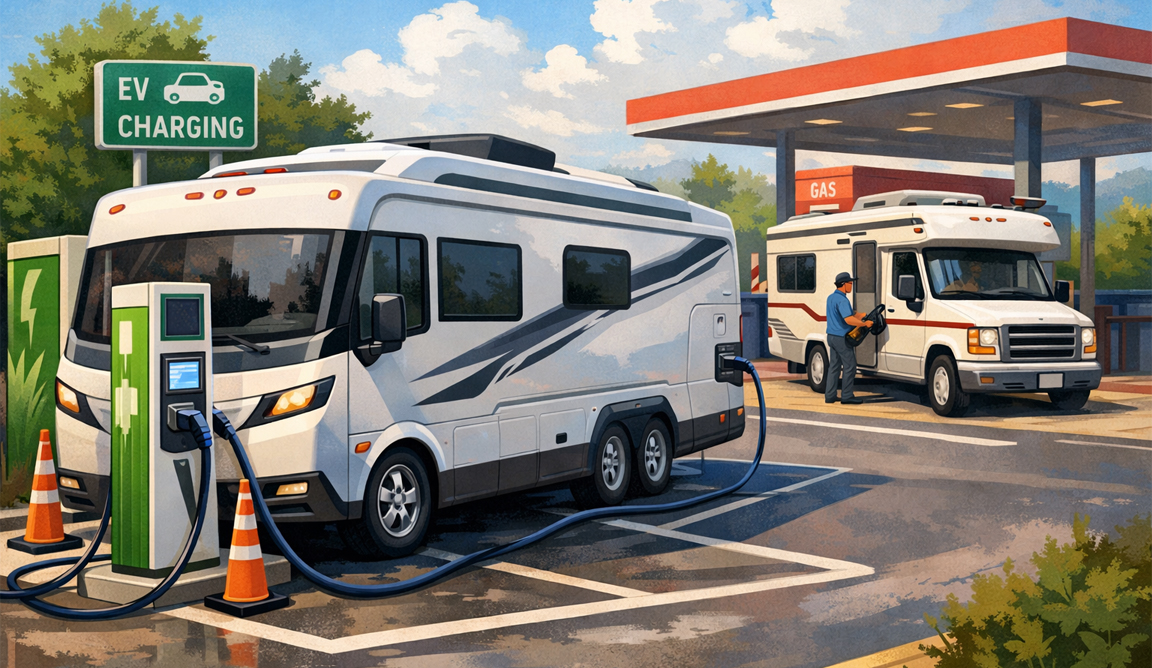
Most fast-charging stations weren’t designed with RVs in mind. Tight layouts, short parking bays, and no pull-through access make it difficult—or impossible—to charge with a trailer attached. In many cases, you’d be forced to unhook just to plug in.

Then there’s the time factor. A fuel stop takes minutes. Charging can take significantly longer, especially if you’re trying to recover a large chunk of range.

That changes how you plan a travel day in ways most RVers aren’t used to.

You still can’t walk into a dealership and buy an electric RV.

Campgrounds aren’t ready, either

It’s tempting to think you could just plug in at the campground and recharge overnight. In theory, that works. In practice, it’s not so simple.

Most RV parks were built around 30- and 50-amp service, not the kind of high-capacity charging electric RVs would need for quick turnarounds. Even a full night on the pedestal may not replace what you used during the day.

And with many parks already stretched on electrical capacity, widespread EV charging adds another layer of strain.

The real test will happen in rental fleets

One of the more telling developments is where the first electric motorhomes are actually going: not to buyers, but to rental fleets.

That’s where the real-world testing will happen. Renters will put miles on these rigs in all kinds of conditions, and the results will tell the story much faster than any press release.

For now, that may be the smartest way for the industry to work out the bugs—while letting someone else deal with the learning curve.

The ground keeps shifting

Another reality check: The underlying technology isn’t fully settled.

Some electric RV projects have already stalled or disappeared after changes in vehicle platforms or supplier decisions. When a chassis or battery system goes away, the RV built around it can go with it.

That kind of instability makes it hard for manufacturers—and buyers—to commit.

Price keeps it out of reach

Even if everything else lined up, cost would still be a barrier.

Early electric RVs and trailers are landing deep into six-figure territory. That puts them well outside the range of most RV buyers, especially when you consider the uncertainties that come with first-generation technology.

Early adopters may be willing to pay to experiment. Most RVers will wait.

So, what should you do?

If you’re curious about electric RVs, it’s worth keeping an eye on the space. Watch how those rental fleets perform. Pay attention to real-world reports, not just specs.

But if you’re thinking about making the jump, 2026 probably isn’t your year. Gas and diesel rigs still offer the range, refueling speed, and infrastructure RVers depend on. Electric RVs may get there—but they’re not there yet.

For now, they’re something to watch, not something most RVers can realistically use.

RELATED

RVT1257b

DEF sensor failures stranded RVers— Now the EPA is stepping in

If DEF sensor failures ever sidelined your diesel pickup or motorhome, you’re not imagining things and you weren’t alone. Those same DEF sensor failures that left RVers limping along at reduced speed, or stuck waiting for repairs, have now drawn a formal response from the U.S. Environmental Protection Agency (EPA).

The agency has issued new guidance that removes the requirement for one of the most failure-prone parts of modern diesel emissions systems: the DEF quality sensor. It’s a move aimed squarely at the kind of breakdowns that turned routine trips into roadside ordeals just a couple of years ago.

What actually changed

For years, diesel engines relied on sensors to verify the quality of diesel exhaust fluid (DEF). If the system thought something was wrong—even when it wasn’t—it could trigger a countdown to reduced power or even a near shutdown.

Now, under the EPA’s updated approach, manufacturers no longer have to rely on DEF quality sensors to prove emissions compliance. Instead, they can use other methods—primarily monitoring emissions directly through NOx sensors—to ensure the system is doing its job.

That may sound like inside-baseball engineering talk, but here’s the key point: The government is stepping away from a system that often failed RVers, even when nothing was actually wrong with their DEF.

Why RVers got burned

If you followed the issue when it peaked, you’ll remember how quickly things went sideways. A bad reading from a sensor, not bad DEF, could trigger a cascade of warnings.

First came the dash alerts. Then a countdown. Then reduced engine power. In some cases, drivers reported being limited to a crawl or facing a shutdown scenario that made it nearly impossible to reach a repair facility.

For RVers traveling in remote areas, that wasn’t just inconvenient—it could be dangerous.

At one point, officials themselves acknowledged how widespread the problem had become, calling DEF-related failures a “nationwide disaster.” That’s about as blunt as government language gets.

What this means for your diesel RV

The change doesn’t flip a switch overnight, but it does point things in a better direction.

Going forward, new diesel engines and systems should be less likely to trigger false alarms that lead to limp mode. By measuring actual emissions instead of relying on a single sensor to judge fluid quality, manufacturers have more flexibility to build systems that are both compliant and more reliable.

Just as important, the EPA’s guidance opens the door for software-based solutions. In some cases, manufacturers may be able to update how existing systems interpret DEF conditions without requiring a full hardware replacement.

In plain terms, that could mean fewer unnecessary breakdowns—and fewer expensive sensor swaps—down the road.

What this does not change

Before anyone gets too excited, a reality check is in order.

DEF is not going away. Emissions rules are still firmly in place, and your diesel engine still depends on that system to operate correctly. You’ll still need to keep your DEF tank filled and pay attention to maintenance.

And if you’re driving today with a system that’s already prone to faults, this guidance doesn’t instantly fix your rig. The rollout will take time, and it depends heavily on how manufacturers respond. We wrote about a DEF sensor workaround that got a lot of attention. That information may still be of value to some.

What you can do now

If you own a diesel pickup or motorhome, it’s worth making a quick call or checking online with your dealer or engine manufacturer. Ask whether any updated software is available, or expected, for your emissions system.

If you’ve had repeated DEF-related warnings or failures, keep records. That history may become useful if updates, service bulletins, or warranty adjustments emerge as this new guidance works its way into the real world.

The bottom line

The EPA didn’t eliminate the DEF system, but it did acknowledge a major weak point that stranded RVers across the country. By stepping away from the sensor requirement that caused so many false failures, the agency is giving manufacturers room to build something better.

That’s good news—but it’s not instant relief. For now, it’s best seen as the beginning of a fix, not the end of the problem.

RELATED

RVT1257b