Some food debates never seem to die, and pineapple on pizza is one of them.
For some people, the sweet-and-savory combination of pineapple and ham is a perfect match. For others, putting fruit on pizza is a culinary crime that should be punishable by having to eat cold leftover anchovy pizza for breakfast.
The famous Hawaiian pizza was actually invented in Canada—not Hawaii. In 1962, a restaurant owner in Ontario named Sam Panopoulos decided to add canned pineapple to a pizza just to see what would happen. More than 60 years later, people are still arguing about it.
The debate has become so popular that polls, social media battles, and even politicians have weighed in on whether pineapple belongs on pizza. (For the record, pineapple is one of the world’s most popular pizza toppings, though it still trails classics like pepperoni, mushrooms, and sausage.)
So what about you?
Thanks for voting and helping settle one of the most important questions of our time. (Kidding, of course.)
By Dustin Simpson
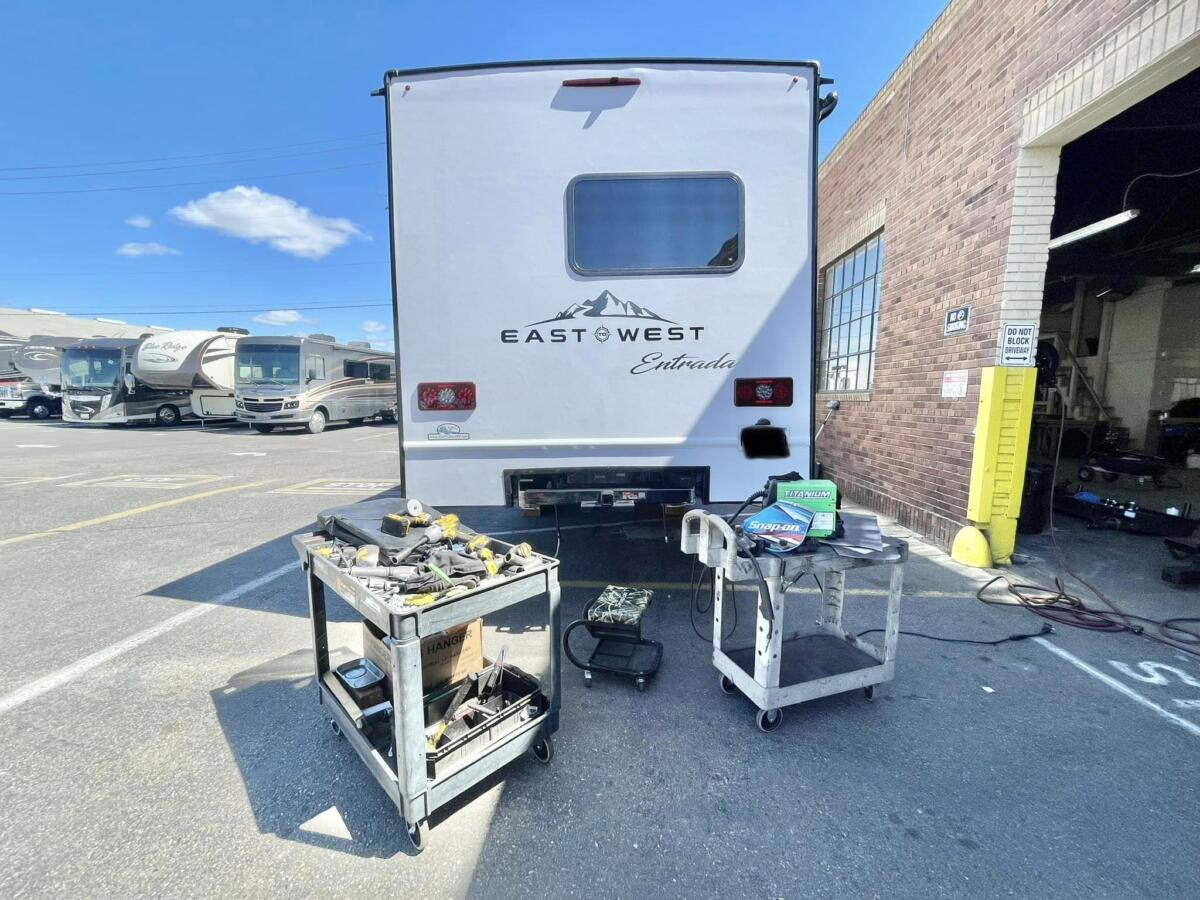
Join me “In The RV Shop” as I talk about custom tow hitch modifications that came through the shop. You can enhance the towing capabilities and the overall functionality of your RV by modifying your tow hitch. However, it’s important to approach any modifications with careful consideration of safety, legal requirements, and compatibility with your RV and towed vehicles.
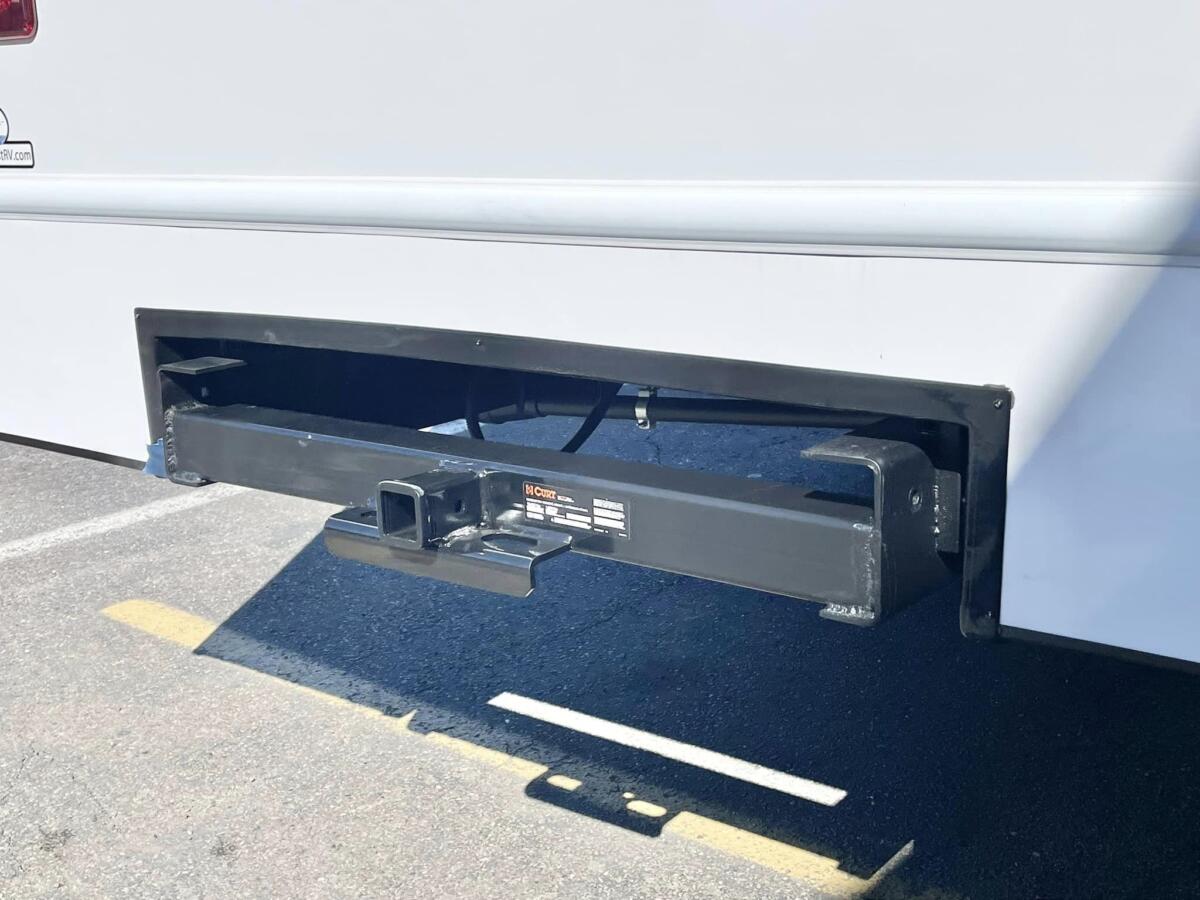
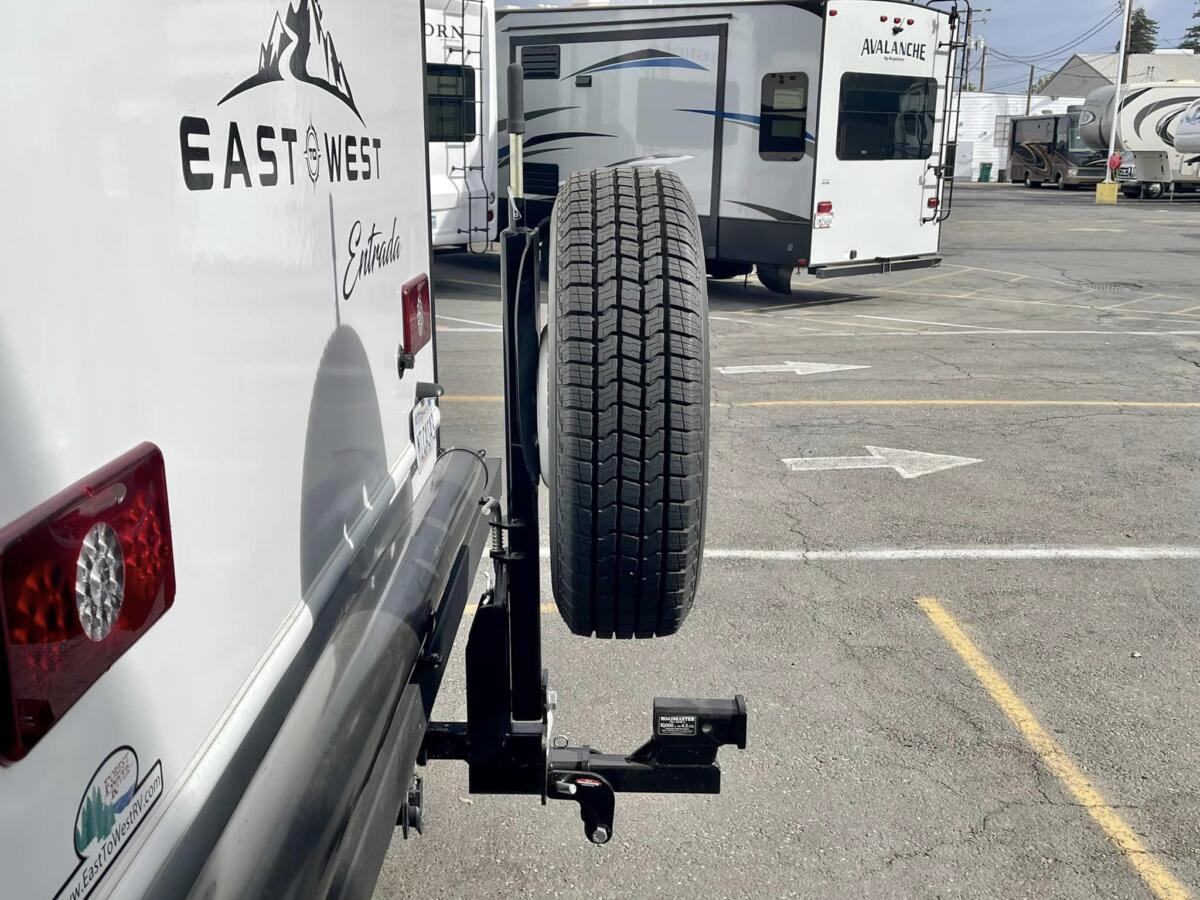
The owner in these photos wanted to increase and reposition the bumper to gain hitch height, as we upgraded the hitch capacity and left room for a spare tire carrier.
Here are some potential custom tow hitch modifications you might consider:
Upgraded tow hitch
Consider upgrading to a heavy-duty tow hitch if your RV is equipped with a standard hitch. Heavy-duty hitches may have higher weight capacities and provide increased stability during towing.
Receiver hitch extension
If you need additional clearance between your RV and the towed vehicle, consider a receiver hitch extension. Ensure that the extension is appropriate for your towing setup and does not exceed weight capacity limits.
Custom welding and reinforcement
Work with a qualified welder or fabricator to customize and reinforce your tow hitch for added strength and durability. Reinforcements may include additional bracing or support.
Spare tire carrier
If your RV lacks a spare tire carrier, you might consider adding a hitch-mounted spare tire carrier. This can free up storage space inside the RV and make tire changes more accessible.
Remember that safety is paramount when making any modifications to your RV’s tow hitch. Always follow manufacturer guidelines, adhere to weight ratings, and consider seeking professional assistance for complex modifications. Additionally, check with local authorities regarding any legal requirements related to RV modifications.
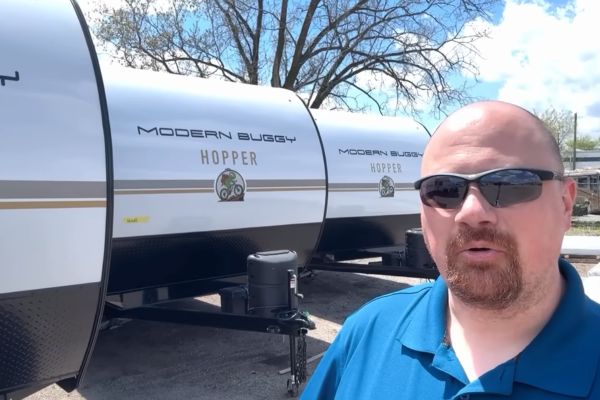
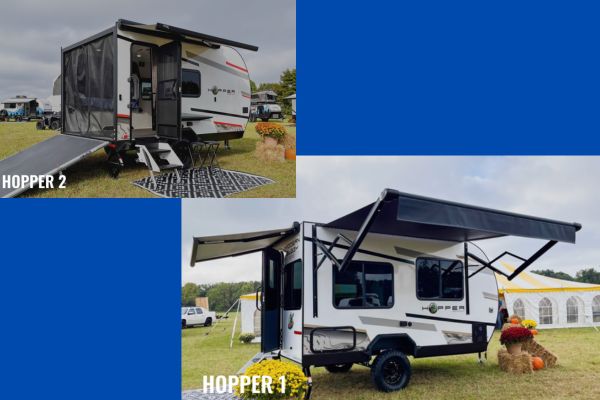
Small-trailer shoppers usually have to pick between price, weight, and build quality. The Modern Buggy Hopper series tries to keep all three in the same conversation.
Built through a partnership between Bish’s RV and Modern Buggy RV, these travel trailers stay easy to tow and more useful than their size suggests. The lineup started with four models, each aimed at campers who want flexibility without a stripped-down feel.
The Hopper name fits because these trailers are small, lightweight, and designed to move from place to place without much fuss.
The bigger story is the business model. Bish’s RV developed the floor plans through its Wayfinder program, then worked with Modern Buggy RV to build them. Instead of keeping the concept exclusive, Bish’s opened the lineup to other dealers. Higher production volume should lower per-unit cost, which helps keep pricing aggressive without bargain-basement construction.
Hopper 1 and Hopper 2 focus on flexibility
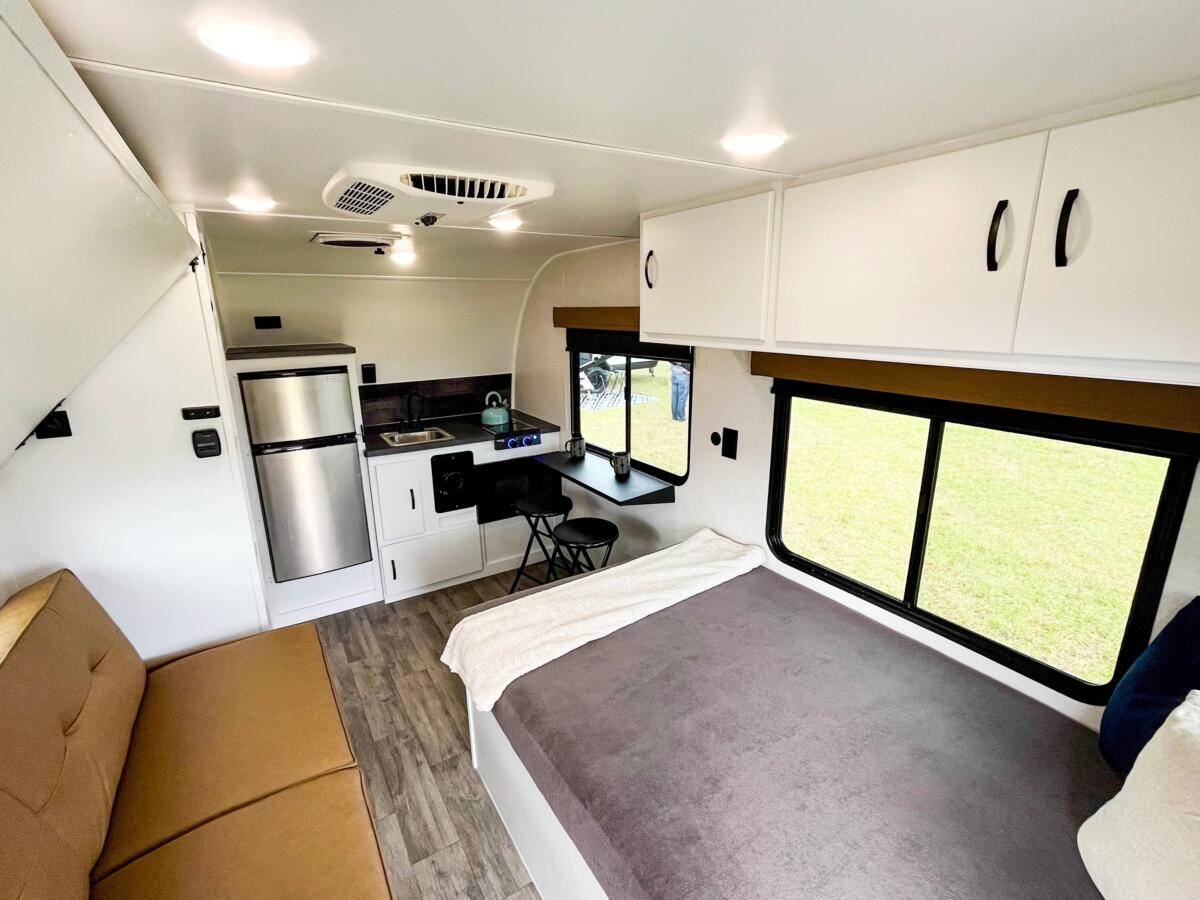
Hopper 1 traces back to the Go-Lite Cloud Breaker, a floor plan first created for a company vice president. It fits solo campers, couples, and small families because the layout is compact but flexible. Compared with the older version, it brings better materials, more cargo capacity, strong window coverage, and full awning reach. There is still room to improve, especially around the bathroom and the idea of a folding cargo-style bed.
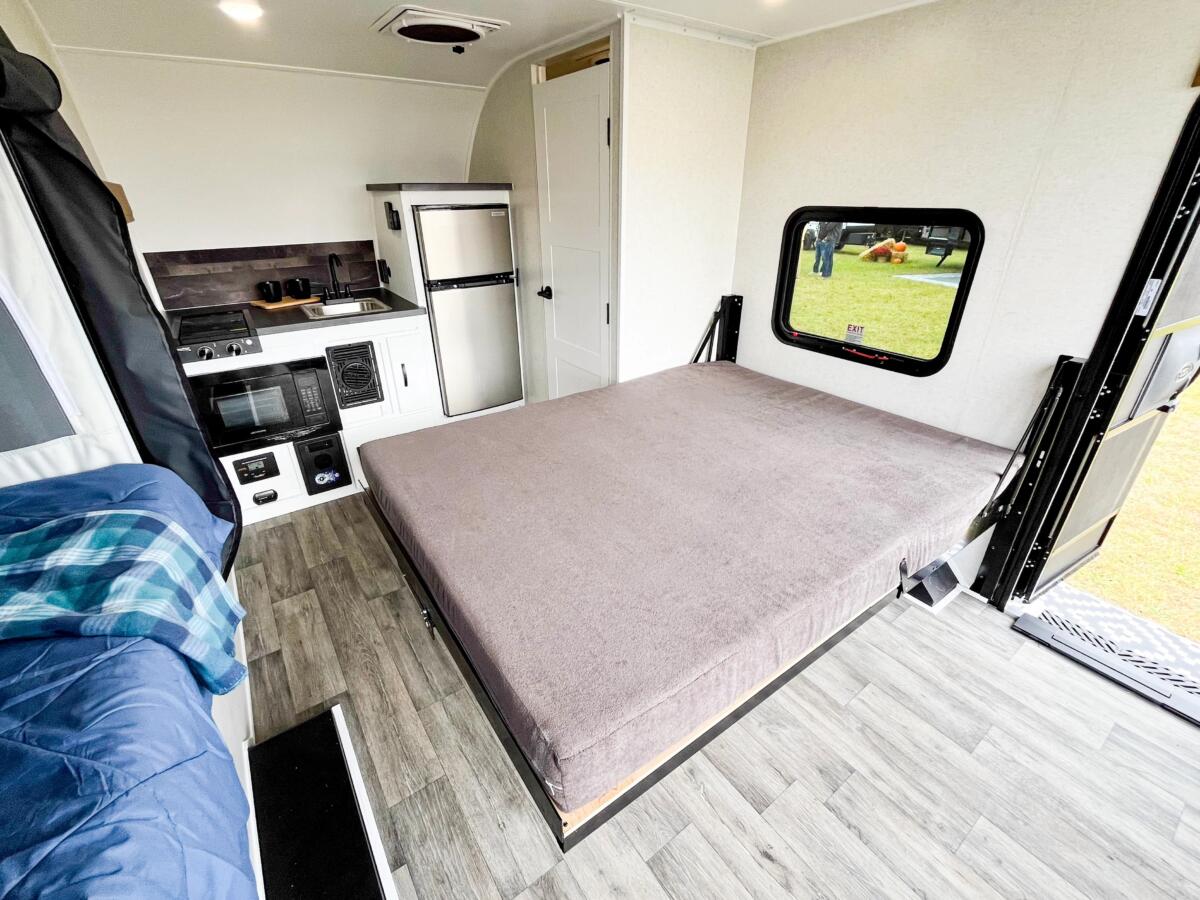
Hopper 2 comes from the old Boulder Back concept. It is a smaller hauler, and few trailers in this size and weight class offer a rear ramp. It is not meant for giant side-by-sides. The bed and entry door were swapped to open the interior, while a 12-volt fridge, 200-watt solar package, standard side pop-out bed, and 8-foot-wide body add usability.
The construction mixes cost control with better materials
Construction is a hybrid. The nose uses a welded aluminum cage because that front wall takes the brunt of the wind. The rest stays stick-built to control cost and weight, but the walls still use double Azdel construction. That mix is the point. The Hopper series is trying to feel better than entry-level without climbing out of reach. More all-aluminum options are planned later.
Hopper 3 and Hopper 4 push the lineup forward
Hopper 3 and Hopper 4 were shown in prototype form, but the direction is clear. The Hopper 3 uses flex-space thinking, with a cargo bunk system that can open room for e-bikes or other gear when bunks are not needed. It also adds wall outlets where they make sense, a welded steel bunk ladder, a sturdier telescopic dinette post, larger beds, and a much better roof fan. It is 8′ wide and about 6’6″ tall inside, with an enclosed, non-heated underbelly and a large rear bumper for sewer hose storage.
Hopper 4 is the couples model. Its north-south bed avoids the usual corner-bed squeeze, and the slide makes the cabin feel much larger than a typical single-axle trailer. A heavier axle gives it about 1,100 to 1,200 pounds of cargo capacity. The lineup also keeps pushing for multi-use storage, even if details like the knobby tires may still change.
Where the Hopper lineup stands now
The strongest idea behind the Hopper series is simple. Small and light does not have to mean flimsy or stripped down.
This four-model launch looks like the first layer of a larger Bish’s RV and Modern Buggy RV partnership. More model-specific walk-throughs are expected, and the team is already asking campers what layouts should come next.
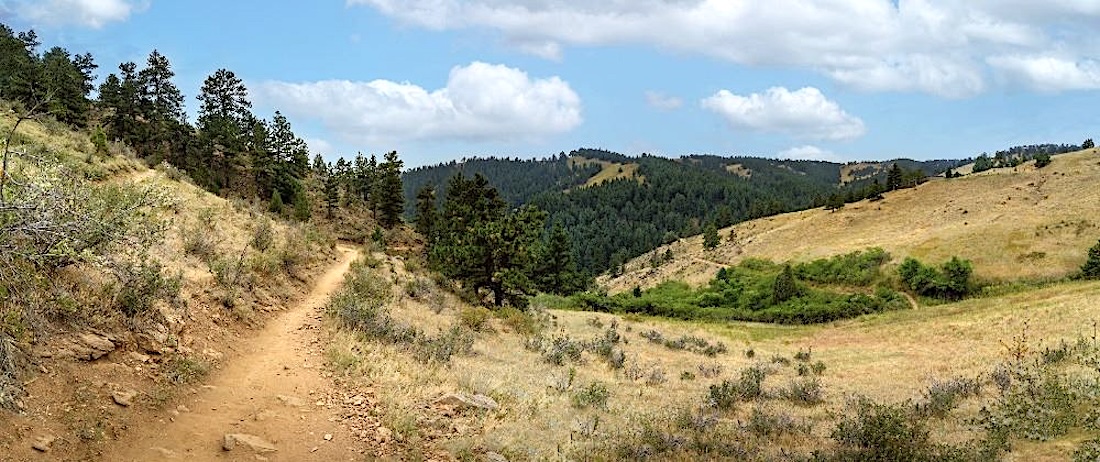
Colorado Parks and Wildlife is investigating a reported bear attack on the Enchanted Park in Apex Park in Jefferson County, which is west of Denver. On Sunday, round 5:20 p.m., the woman encountered a bear displaying the habituated behavior of approaching humans and following hikers.
She told Colorado Parks and Wildlife (CPW) officers that the bear grabbed her backpack and made contact with her leg. She reported that the bear continued to follow her along the trail for more than 30 minutes despite her attempts to frighten the animal away with sticks, rocks and loud noises.
Two other hikers joined her in trying to scare the bear from the area. It eventually left, and crossed a gully where it reportedly started to follow a different pair of hikers on a neighboring trail. CPW officers responded to the area later that day but were unable to locate the bear. They are continuing the search, and have closed the park for now.
“This, to me, looks like a bear that likely got a food reward at some point and is trying to get another one,” bear biologist Wesley Larson told Denver 7 TV News. A bear was sighted in a residential area near the park on Monday morning.
This is the first reported bear attack in Colorado for 2026. Bear reports to CPW are high this year, likely due to the generally warm and dry winter Colorado experienced which impacted the natural forage that sustains the animals.
Help keep bears wild by following these rules
• Stay alert and stay together: Pay attention to your surroundings and stay together. Walk, hike, jog, or cycle with others when possible. Keep kids within sight and close by. Leave earbuds at home and make noise periodically so bears can avoid you.
• Leave no trash or food scraps: Double bag your food when hiking and pack out all food and trash. Don’t burn food scraps or trash in your fire ring or grill. Leaving scraps, wrappers, or even “harmless” items like apple cores teaches bears to associate trails and campsites with food.
• Keep dogs leashed: Letting dogs chase or bark at bears is asking for trouble; don’t force a bear to defend itself. Keep your dogs leashed at all times or leave them at home.
• Camp safely: Set up camp away from dense cover and natural food sources. Cook as far from your campsite as possible. Do not store food, trash, clothes worn when cooking, or toiletries in your outside of your RV on in and out of a tent. Store in approved bear-resistant containers or out of sight in locked vehicle or suspended at least 10 feet above the ground and 10 feet from any part of the tree.
• Know shat to do if you see a bear: If you see a bear before it notices you, don’t approach. Stand still, enjoy, then quietly move away. If a bear sees you, back away slowly. Never run which could trigger a chase response. If a bear approaches, hold your ground, wave your arms and yell “Hey Bear” until it leaves. Stay with your group. If it keeps approaching, use bear spray. If a black bear makes contact with you, do not play dead; fight back aggressively.
• Carry bear spray and know how to use it: Bear spray is proven to be the easiest and most effective way to deter a bear that threatens you. It doesn’t work like bug repellent, so never spray your tent, campsite or belongings.
America’s Original RV Newsletter. Since 2001
Issue 2932 • New issue every weekday
REMEMBER:You do not need to receive an email alert from us to read our newsletters. Just visit our homepage, www.rvtravel.com, at any time of day, and the latest issues and articles will be there.
Today’s thought
”We act as though comfort and luxury were the chief requirements of life, when all that we need to make us happy is something to be enthusiastic about.” —Charles Kingsley
Need an excuse to celebrate? Today is National Hydration Day, which is the perfect time to remind you to go drink a glass of water!
On this day in history: 1868 – Christopher Latham Sholes received a patent for an invention he called the “Type-Writer”.
Tip of the day How to wash and wax an RV, plus pro detailing tips
By Cheri Sicard
Andrew Steele from RVing with Andrew Steele shows how to wash and wax an RV, plus he shares professional RV detailing tips. Besides showing you all the products he uses to keep his clients’ multi-million dollar bus RVs looking new, he reviews his entire process. If your RV is looking a little dirty, read and watch this.
Article and video How to descale an RV tankless water heater
A tankless RV water heater can lose water pressure and heat less long before it quits. In many cases, the cause is scale, the mineral buildup left behind when water heats fast inside the heat exchanger. Any RV owner with a tankless unit will deal with this sooner or later. Here, Ross from RV Tips and Travels shows the simple process on a common Suburban setup.
Featured article 40% of readers married their high school sweetheart. Does RVing keep couples together?
By Gail Marsh
Love is in the air. At least that’s how I felt after reading the results of a recent RVtravel.com poll along with the wonderful comments. Ah, the joy of love! Our poll asked, “Did you marry your high school sweetheart?” The results were both surprising and heartwarming. Read them here.
The high-tech water bottle that reminds you to drink… and rewards you for it!
The water bottle of the future is here! If you’ve been told you need to drink more water, this is for you. This water bottle connects to your phone, sending you reminders to drink. Plus, it tracks how much you drink and sends you rewards for hitting your goals. Learn more about it here.
Ask Dave. There’s water on the RV floor, but I can’t find a leak. Can you help?
Trusted by Full-Time RVers
Americas Mailbox offers secure mail forwarding, scanning, and residency services tailored to life on the road, plus tax savings. Learn more.
Reader poll Have you ever experienced food poisoning when RVing?
This RV was designed to smell like raw beef, which, when driven through South Africa’s Kruger National Park, attracts wild animals for the safari-enthusiasts’ photos. April (June!) fools! We created this image with AI. Just for fun! We’d take a spin in it though… Would you?
Quick tip Check your roof
If you have not inspected your RV’s roof lately for possible leaks, do so now. Allowing water into your RV can result in large repair bills if not attended to quickly. Do not take a chance. Inspect soon or have a professional check.
YOU KNOW IT’S TRUE: Many people say sandwiches taste better when eaten outdoors. Scientists haven’t confirmed this, but campers have.
Website of the day
Bon Appétit
We had initially linked to a page about the best summer cocktails, but as we started exploring all of Bon Appétit, we realized it was better if we just sent you to the website to explore. Recipes, cooking tips, and more galore! If you like to cook or eat, you’ll have fun here.
? MYSTERY PRODUCT OF THE DAY ? If you don’t use one of these, you might be surprised to find out they exist. And once you use one, you’ll wonder how you survived without it. It’s very handy!
And the survey says…
We’ve polled RVtravel.com readers more than 5,000 times in recent years. Here are a few things we’ve learned about them:
• More readers, 56 percent, communicate via text messages every day than they do by phone (22 percent). The other 22 percent communicate both ways about evenly.
• 60 percent use an electric toothbrush.
• 34 percent read in bed every night.
Ravens are one of the smartest animals, known for their capacity to plan ahead, using tools to access food, and cooperating with other ravens to achieve a common goal. Ravens can remember the locations of food caches for extended periods and remember human faces, even holding a grudge for up to a month after a negative interaction.
Readers’ pet of the day
“Oreo (Cavapoo, age 4) loves camping. We just upgraded to a motorhome after 55+ years of tent and trailer camping. He immediately found ‘his spot’ in the motorhome!” —Charlene Reagan
Send us a photo of your pet with a short description. No blurry photos, please! Please do not submit your photo more than once. Thanks!
FREE IS GOOD! Want to do Pennsylvania your way? You can with the free Pennsylvania Travel Guide(online or by mail) to learn where to explore, places to stay, things to do, where to eat, and so much more.
Leave here with a laugh
Turn your RV toaster into a mini grill These reusable toaster bags make quick RV meals, with less mess. Grill sandwiches, reheat pizza, warm leftovers or toast snacks without dirtying the toaster—perfect for fast meals without mess. Gail Marsh recommends them here.
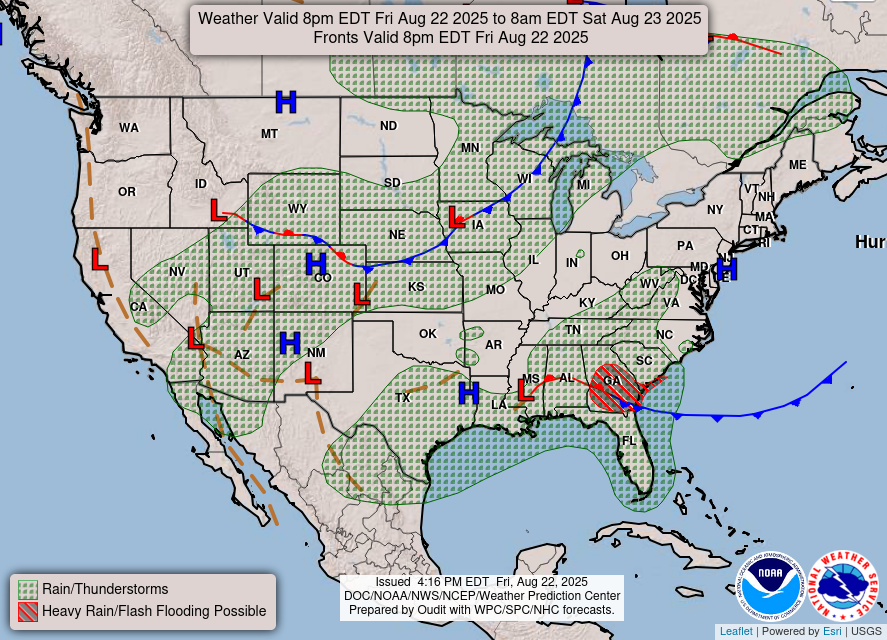
Today’s weather forecast across the nation THIS MAP UPDATES TWICE A DAY
If you shop at Amazon.com we’d appreciate you using this link. We get an itty bitty commission if you buy something, but they add up and help us pay our bills (most importantly our hard-working writers!).
Dear Dave,
I need help finding a water leak. While out, I woke up to a spot of water on the RV floor. I cleaned it up, and noticed no further water after that. The RV was connected to shore water, without pressure regulator. My mistake.
Several days later, another wet spot showed up on the passenger side of the RV, in the same general area. Cleaned it again.
When home, I removed paneling over the wet spot area. Could not see any trace of water.
I then applied 90 psi of air to the water lines, looking for either bubbles or water forced out of the lines. No joy.
Today, I turned on the water pump, knowing that it would run if water was flowing. Again, no joy.
The water lines do have water in them. But, no new wet spots. The only thing unusual that I can find is one of the fittings on the PEX line to the water pump does not have a crimped fitting, but uses a typical hose clamp. However, there is no trace of water or disturbed dust. The location is under the bed on the passenger side of the RV.
There have been no additional wet spots over the last several days.
Any other methods to find the leak? Help. We leave for the FRVA rally in MO on Sunday.
I read your column every time you write. —Tom, 2025 Hoosier Custom Cruiser
Dear Tom,
Since it is now Tuesday, June 23, I assume you may be at the FRVA rally.
Potential “gremlins” regarding water leaks
There are several “gremlins” when it comes to water leaks, as the spot of the visual leak (location of the water) is most often not the entry point or actual leak. Another gremlin is whether the water is from a fresh water source, air conditioner condensation, or outside rain.
In a residential setting, a plumber would test the water leak to identify if it was soft water, which would mean it came from inside plumbing, or hard water, which would mean it was a ground water intrusion. Since most campgrounds do not have a water softener, any water found in your rig is most likely hard water. You could fill the fresh water tank with soft water from home or use a light dye to find out if it is coming from a water line or other source.
I would start by replacing the worm clamp with a PEX crimp clamp installed with a ratchet tool. I have not had much luck with worm clamps on PEX line.
Since it is under the bed, that most likely would rule out roof air conditioner condensation.
You did not state the model of your RV. However, I did see a few floorplans that had twin beds in the back. Since you indicated the location was under the bed on the passenger side, I believe your model has twin beds. I am not sure what “paneling” you lifted. Was it the vinyl flooring?
Moisture meter may be useful
The probes of a moisture meter penetrate carpet and flooring and can help identify what might be a hidden flow of moisture from either a leaking line, or even a roof or sidewall joint. You could purchase an inexpensive moisture meter from Amazon here.
Moisture meter
It is important to document all conditions when you see water, which you did with the description of the city water connection, no pressure regulator, and other items. However, you did not indicate if it had been raining prior to seeing the water on the floor.
Rain can enter even the smallest gap in sealant on the roof, roof to sidewall, around windows, and even underneath when driving in rain. It can also enter higher on the vehicle and make its way through the hollow tubing of the framework. In that instance, what entered on the roof could show up on the floor.
I have also found that water can pool in framework or an overhead shroud in the Class C. Then, when you move the rig, the side-to-side movement of traveling makes the water slosh around and comes out even a few days after a rain. That’s why we call them gremlins!
Start with the new PEX connection. If you get water again, check with a local plumber to get the water tested or dyed to identify if it is from the fresh water or an exterior leak.
By Cheri Sicard
In the video at the bottom of this article, Andrew Steele from RVing with Andrew Steele is going to show us how to wash and wax an RV, plus share some professional RV detailing tips.
Andrew not only shows you all the products he uses to keep his clients’ multi-million dollar bus RVs looking new, but he also shows you his entire process of how he uses them and what to do.
What’s involved in how to wash and wax an RV like Andrew does
• A quick rinse with deionized water
• Apply degreaser to the wheels
• Use a foam cannon to apply soap and loosen the debris before scrubbing
• Lambswool wash mitts on a pole scrub the upper part of the RV clean
• Microfiber wash mitts do the rest of the job
Of course, Andrew does this for a living. He has an enormous amount of products and equipment. And he has tried just about everything on the market. So, one of the most useful parts of the video is that he shares the ones he thinks are most important and why they have worked so well.
I also liked that he was conscious of cost versus quality. And he includes some tips that will be more practical for individual consumers as opposed to professionals.
When it comes to detailing, Andrew covers his favorite tire dressings, buffing tools and polishing products. He even has a special product to remove bugs.
Using Andrew’s tips will result in a pristine RV at the end.
A tankless RV water heater can lose water pressure and heat less long before it quits. In many cases, the cause is scale, the mineral buildup left behind when water heats fast inside the heat exchanger.
Any RV owner with a tankless unit will deal with this sooner or later. In the video at the end of this post, Ross from RV Tips and Travels shows the simple process on a common Suburban setup.
Why an RV tankless water heater needs descaling
When water heats quickly, dissolved minerals such as calcium can turn solid and stick to the inside of the heat exchanger. Over time, that buildup cuts water pressure and makes the heater less efficient. Every tankless owner will run into it because it’s basic water chemistry.
A good schedule depends on use. Most RVs need descaling once a year. Full-time use or hard water bumps that to twice a year, and full-time use with hard water can mean three to four cleanings a year. A water softener can slow the buildup.
Scale buildup doesn’t care how new the RV is. If a tankless heater gets used, it will need to be descaled on a regular schedule.
First, prep the heater and drain the water
Ross says the owner’s manual comes first because drain steps can vary by model. Before anything else, the propane service valves should be closed, the remote display turned off, and the water heater powered off.
The descaling solution should never be heated inside the water heater!
If the RV is on city water, the water should be shut off at the hose bib and the hose disconnected at the RV. If the fresh tank is in use, the water pump should be turned off.
Two common ways to drain
For a gravity drain, open the low-point drains and the T&P (temperature and pressure) valve, then close them after the water is out. For a blow-out, open the low points and T&P valve, let it drain, then close only the low points. With the wet bay switch set to city water, connect compressed air through a blow-out adapter at the pressure listed by the manufacturer, usually 30 psi max. Once no more water comes from the T&P valve, disconnect the air and close the valve. A tiny bit of water left inside is fine.
Set up the vinegar loop
A water heater descaling kit helps, but the included 3-gallon bucket is too small for the job. The actual cleaning setup needs a 5-gallon bucket, a submersible pump, 4 gallons of 5% acidity distilled white vinegar, towels, and often GHT (garden hose thread) to NPT (national pipe thread) adapters, because the kit hoses use 3/4-inch garden hose threads while RV fittings are NPT.
Some water heaters have a service valve body that isolates the unit. If not, the hot and cold hoses need to come off the heater. First, mark the lines if they are not already labeled. Then place towels down, disconnect the hoses, and check the inlet for a screen or debris filter. If one is there, rinse it with warm water and reinstall it.
Next, connect one hose to the cold side and to the pump. Connect the second hose to the hot side and place the other end in the bucket. Add the vinegar, turn on the pump, check for leaks, and let it recirculate for 45 to 60 minutes. The vinegar loop runs only through the heater, not through the RV plumbing.
Flush it out and put everything back
After the vinegar cycle, move the pump to four gallons of fresh water and recirculate for 10 to 15 minutes. Then turn off the pump and drain the heater at the outside T&P valve before removing the hoses, or water can spill inside.
Once that is done, reconnect the RV hoses and use plumber’s tape if a fitting needs help sealing. Finally, let the pump and hoses air-dry for a couple of days before storage. A few holes drilled in the bucket lid can help stop mold. We hope this step-by-step list makes the next service easier.
Food poisoning is NO fun. And we mean NO FUN! It can be pretty serious if you get it bad, and it can certainly ruin a trip.
At least if you got sick in an RV, you’d have your own bathroom (hopefully) nearby… We just hope nobody ever experiences food poisoning while tent camping!
Have you ever experienced food poisoning while RVing? If so, do you know what it was from? Did your partner get it, too, or just you? Was it from something you cooked or was it at a restaurant? Does it still make you sick just thinking about that food today?
After you vote, please leave a comment and tell us your food poisoning story (if you can stand it…). Although, please spare us the dirty details. We don’t want to hear about, well, you know…
Thanks, we appreciate it.
P.S. Want to know a little secret? Chuck (Woodbury) got food poisoning while camped inside Zion National Park. Yep. He said he thought it was from the mayo on a deli sandwich he bought earlier that day. That’s one trip to Zion he’ll never forget…
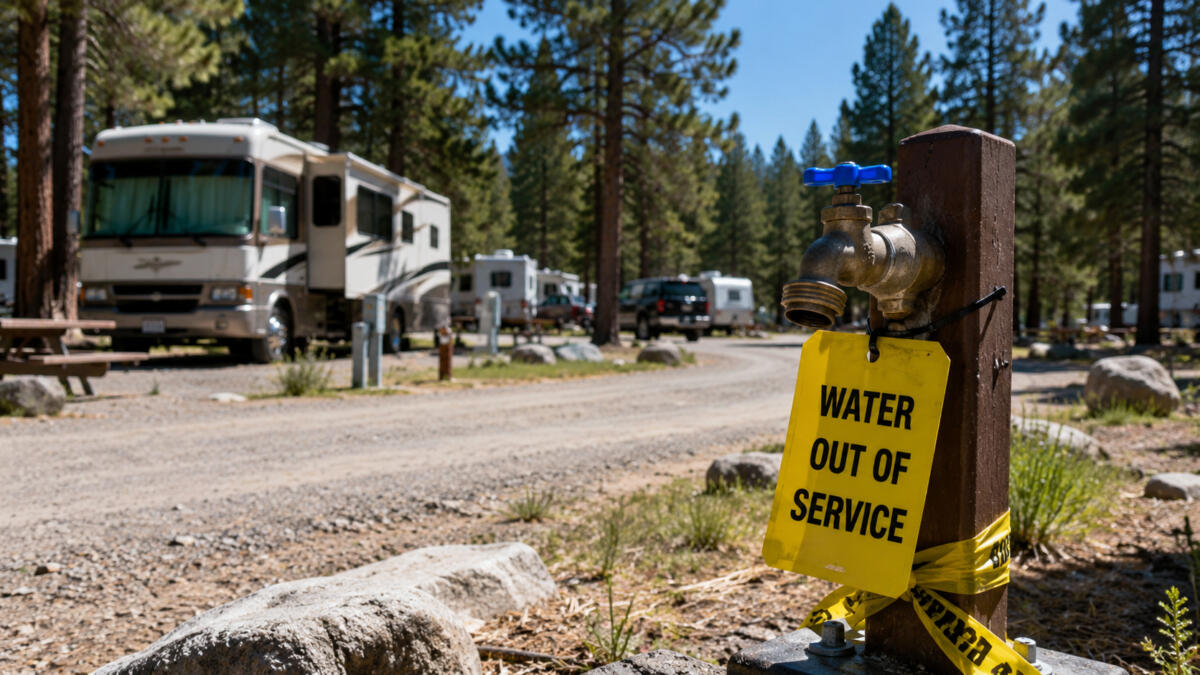
Campground water availability is something most RVers rarely think about until it’s gone. Most travelers assume that if a campground is accepting reservations, basic services such as water will be available when they arrive. Increasingly, that’s not always a safe assumption.
Recent reports from Colorado describe campgrounds that remain open even though water systems have been shut down because of drought conditions. In some cases, visitors are being warned to bring their own water or prepare for limited services.
While the situation is unfolding in Colorado, the lesson applies almost anywhere. Water shortages, well failures, infrastructure problems, wildfire impacts, and maintenance issues can all affect campground services, sometimes with little notice.
For RVers, that means an open campground doesn’t necessarily mean a fully functioning campground.
Why a campground may stay open without water
Many public campgrounds can continue operating even when water systems are unavailable. Campgrounds may still offer campsites, picnic tables, fire rings, and access to surrounding recreation areas. The water, however, may be turned off.
That can create challenges for travelers who planned to fill their fresh water tanks after arrival or who expected restrooms, showers, or dump stations to operate normally.
Some RVers won’t be affected much. A fully self-contained rig with a full fresh water tank can often continue without major inconvenience. Others may find themselves scrambling for water sources or changing plans after reaching camp.
“Just because a campground is open doesn’t mean all of its services are operating normally.”
Five ways to verify campground water availability
Checking campground water availability before departure can prevent an unpleasant surprise after you arrive.
Check campground alerts before you leave
Many public agencies post service advisories on their websites. A quick check the day before departure may reveal water restrictions, closures, construction projects, or other issues that weren’t in place when you made your reservation.
Read the fine print
Reservation systems often include notices about temporary service interruptions. Those notices can be easy to miss when you’re focused on securing a campsite.
Arrive with water on board
If possible, fill your fresh water tank before reaching the campground. Even if water is available, having a full tank provides flexibility if something changes. This runs counter to some who feel that the extra “water weight” carried while traveling is a problem. You just have to “weigh” the consequences.
Carry extra water
A few gallons of emergency water can make a big difference if campground supplies are unavailable or limited.
Expect related restrictions
Water shortages often coincide with increased wildfire danger. Fire restrictions, burn bans, and temporary closures sometimes accompany drought conditions.
The bigger takeaway
The Colorado campgrounds making headlines this summer aren’t necessarily the start of a nationwide trend. But they do highlight a reality many RVers may encounter at some point.
Campgrounds can remain open while some services are unavailable, which is why verifying campground water availability has become an important part of trip planning.
That’s why experienced travelers often perform one last campground check before pulling out of the driveway. Five minutes spent reviewing campground alerts can prevent a much bigger headache after arrival.
Whether you’re heading to Colorado, Arizona, Oregon, Washington, California, or somewhere closer to home, it’s worth remembering one simple rule:
Just because the campground is open doesn’t mean the water is on.
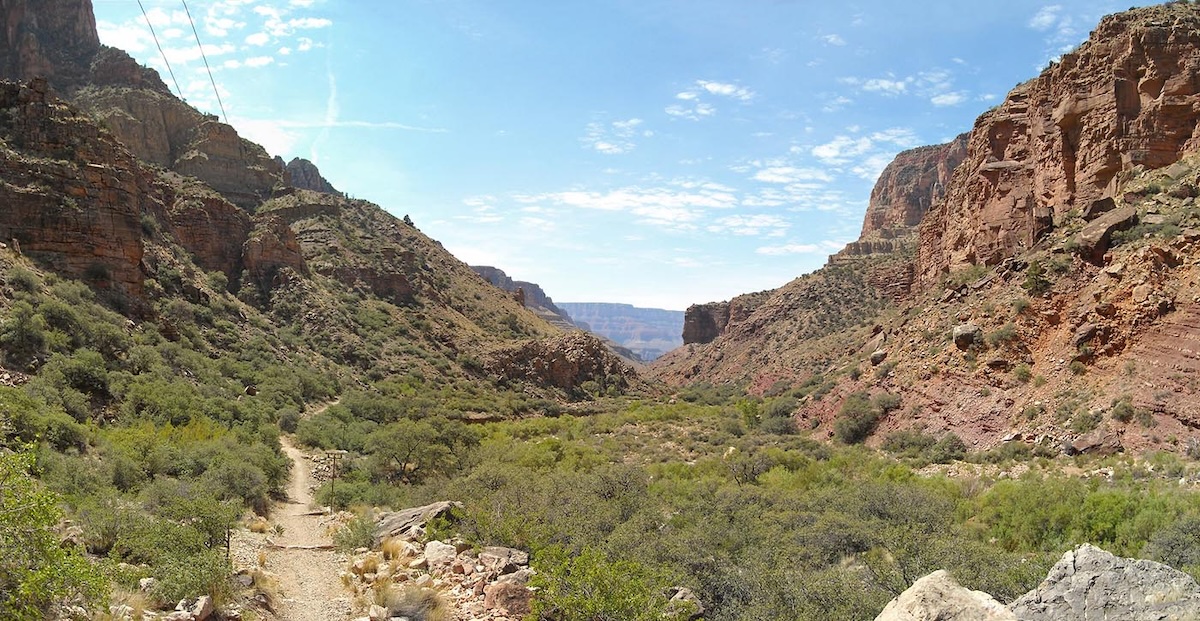
Grand Canyon National Park rangers and emergency personnel responded to two separate heat-related incidents on June 12 and 16 that resulted in three deaths. In both cases, the hikers were on trails in the Inner Canyon, where temperatures can exceed 109 F in the shade during midday hours.
On June 12, a 72-year-old male succumbed to symptoms of heat-related illness along the South Kaibab Trail; on June 16, a 67-year-old male and a 68-year-old female also appear to have succumbed to symptoms of heat-related illness on the North Kaibab Trail, although the investigation is still ongoing.
Despite rapid response and aerial support, all three persons were found dead when responders arrived. All individuals were transported to the Coconino County Medical Examiner office. No additional information is available yet.
Hiking in Grand Canyon can be a challenge for anyone, especially during the heat of summer. The recent increase in heat-related incidents comes as summer temperatures in the inner canyon have reached dangerous levels, creating conditions that can quickly overwhelm hikers.
Most of the incidents of people who need emergency medical help in the canyon due to heat illness occur between 10 a.m. and 4 p.m., when temperatures are 15 to 20 degrees hotter than posted shade temperatures. The farther hikers travel into the canyon, the hotter it gets.
In a June 18 press release citing “a recent influx of heat-related incidents,” the park urged hikers sensitive to heat—including “children under eight, adults over 65, and individuals with pre-existing medical conditions”—to consider rescheduling their hikes for a less sweltering time of year.
For more information on visiting Grand Canyon during summer, visit the park website.
America’s Original RV Newsletter. Since 2001
Issue 2931 • New issue every weekday
Today’s thought
“If we cannot now end our differences, at least we can help make the world safe for diversity.” —John F. Kennedy
Need an excuse to celebrate? Today is National Onion Rings Day!
On this day in history: 1942 – The Pledge of Allegiance is formally adopted by U.S. Congress.
Tip of the day Hot sleeper? These tips are for you
By Gail Marsh
Too hot to sleep in your RV? You’re not alone. Hot sleepers know the struggle—especially in summer. From poor airflow and stuffy mattresses to night sweats and warm pets, sleeping in an RV can feel more like roasting in an oven. But there are ways to beat the heat: improve ventilation, use special-made cooling bedding, skip heavy meals, and try gadgets like the bFan® or a cooling gel topper. And if it’s a sudden change, check with your doctor—health issues can play a role, too. Click here if you’re a hot sleeper.
RV review
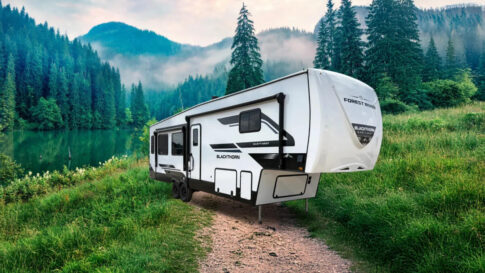
2026 East to West Blackthorn 229RK—short and sweet
By Gail Marsh
The 2026 East to West Blackthorn 229RK is a compact fifth wheel with one slide, suitable for a couple or a solo traveler. This feels like a smart, easy-to-live-in fifth wheel. I believe that the Blackthorn 229RK fits the “short and sweet” criteria that many folks are looking for today. Read on and see if you agree.
Adventure Starts at America’s Largest RV Show®!
Dreaming of a way to tour the country in comfort? With 1,500 RVs from 40 manufacturers, America’s Largest RV Show has what you need. Explore 33 football fields of the newest models, shop camping products and services, and find your next vacation destination. Plus, there are educational seminars for every RVer—novice or pro. Find your dream rig at America’s Largest RV Show, September 16-20, in Hershey, Pennsylvania. Tickets available at largestRVshow.com.
In the RV shop with Dustin How to properly inspect RV windows and clearance lights
Here, I’m sharing how I inspect RV windows, lights, and clearance lights. Maintenance is KING for keeping your RV in tiptop shape. By inspecting these areas, you can avoid potential problems down the road. I’ll show you how to perform these inspections and help you avoid any potential problems with your RV. This inspection and advice will apply to all RV manufacturers, makes, and models, especially those with frameless windows.
Article and video Imported Japanese RV: 1998 Toyota Camroad Zil 4×4
A lot of small campers promise clever packaging, but this one backs it up. The 1998 Toyota Camroad Zil by Vantech fits a full RV layout into a 16-foot body that still slips into a normal parking spot. It starts with a Toyota Dyna truck chassis, adds four-wheel drive, then tops it with a fiberglass camper shell from Japan. The result feels half mini truck, half tiny motorhome, and all of it has a ton of character. Check it out!
THE MORE YOU KNOW… The largest number of country names starts with what letter? T? M? U? Or S? If you guessed S, you’re correct. There are 26 country names that start with the letter S.
Doctor’s order: Coffee!
This coffee mug is hilarious! It’s perfect for yourself or the coffee-lover in your life who just cannot live without coffee. This high-quality mug is made from ceramic and painted to look like a prescription pill bottle – it’s just what the doctor ordered! You can’t order this from a barista, but you can order one here.
Featured article Duck pond mistaken for hot spring; hilarity ensues
By Nanci Dixon I love quirky RV spots and had never actually been in a hot spring before, so after reading a number of reviews for El Dorado Hot Springs that ranged from “kitschy” to “rustic,” we decided to try it. After all, we had our choice of a private hot spring or the not-so-modest public nude one. I chose private. That they rented by the hour should have rung at least a few warning bells, but it didn’t. The Hot Spring sign should have been an additional warning [snicker]… Check this out. (This remains one of our favorite stories we’ve ever published!)
Ask Dave Why does our ceiling A/C unit spit out black Styrofoam pieces?
Quick tip How to use a basement storage door as a table
You can use a basement storage door as a table, provided you can open it to “level” and then support it. Hit the thrift shops and buy a used photo tripod. The three legs make it sturdy and you can set and lock it at nearly any desirable height.
? MYSTERY PRODUCT OF THE DAY ? Wow, this item is not trash! So, then, what’s the opposite of trash? This! (No, but seriously, we highly recommend this.)
Website of the day
The best underwater attractions in the U.S.
Okay, odds are that you aren’t a scuba diver (but cool if you are!). However, even just looking at the photos on this page is incredible! Did you know all this existed in our country’s waters?
Monday Motivation
“The only way that we can live is if we grow. The only way that we can grow is if we change. The only way that we can change is if we learn. The only way we can learn is if we are exposed. And the only way that we can become exposed is if we throw ourselves out into the open. Do it. Throw yourself.” ―C. JoyBell C.
Trivia
The most famous celebrity to die in an RV accident was Brandon deWilde, who earned an Oscar nomination as a child actor for the movie Shane. [Do you remember, “Shane! Shane! Come back!”?] In 1972, he was driving a camper van near Denver when it left the roadway, struck a guardrail and a parked truck, and rolled over. He died from his injuries at age 30.
Readers’ pet of the day
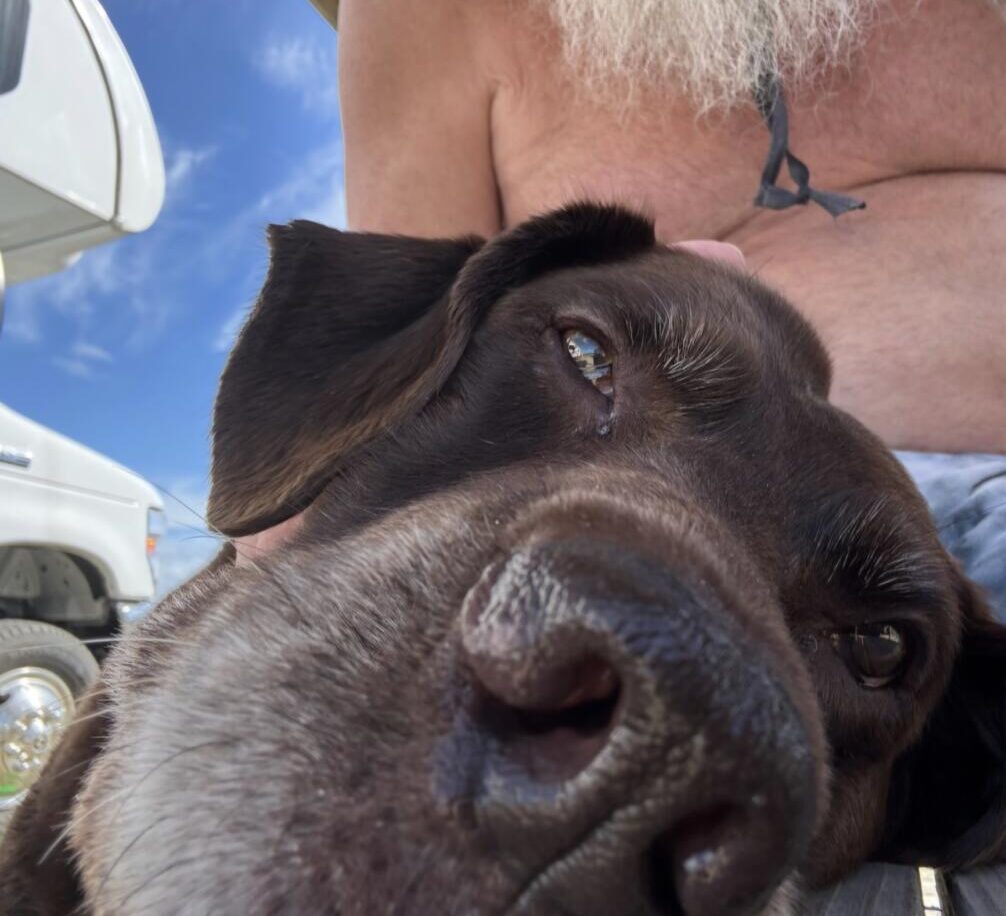
“Lily Gipsy (Chocolate Lab, age 10) is the best traveling RV pup. Ohhh, the stories she could tell! This is how we roll.” —Bonnie Quinlan
Send us a photo of your pet with a short description. No blurry photos and please do not submit your photo more than once. Thanks!
Smelly or slow-draining shower? This is what you need
If your RV shower smells—or drains slower than it should—the HepvO valve might be the fix you need. Unlike a traditional P-trap, this waterless valve blocks tank odors without relying on standing water, so there’s no drying out or freezing issues. It’s compact, low-maintenance, and a smart upgrade (or replacement) for RVers who want better drainage and a fresher-smelling bathroom with less hassle. Learn more about it here, or order one here.
Today’s weather forecast across the nation THIS MAP UPDATES TWICE A DAY
We use cookies to ensure that we give you the best experience on our website. By continuing to use our site, you consent to accepting cookies. We NEVER have or will sell reader's data. For more info, please see our privacy policy page.