America’s Original RV Newsletter. Since 2001
Issue 1265
Today’s thought
“And what is so rare as a day in June? Then, if ever, come perfect days.” —John Keats
Need an excuse to celebrate? Today is National Golf Cart Day! Reminder: Make sure you read the fine print before bringing your golf cart to the campground.
On this day in history: 1895 – Émile Levassor wins the world’s first real automobile race. Levassor completed the 732-mile course, from Paris to Bordeaux and back, in just under 49 hours, at a then-impressive speed of about 15 miles per hour.
REMINDER: You are reading the FREE EDITION of this newsletter. Our donor edition does not contain ads.
Featured news
When RVers may start seeing the new power interrupter devices
Last year, RVers debated whether grounding monitor interrupters (GMIs) would improve safety or create headaches at campground power pedestals. Now the RV industry has put a date on when the devices are expected to become standard equipment in new RVs. Continue reading.
Thinking about Starlink? New pricing changes could affect your decision
Starlink RV internet remains one of the most popular connectivity options for RVers. But recent price changes mean it’s worth taking another look before you sign up. Read more.
Love’s introduces mechanical services for RVers
This seems like good news. Love’s Travel Stops is helping RVers stay road-ready this summer by introducing light mechanical work and oil and lube services at select Love’s Truck Care locations, building on its recent addition of RV tires and batteries. Read more.
Iowa campers squeezed out as data center workers fill RV parks year-round
Campgrounds across eastern Iowa are filling up faster than ever as thousands of out-of-state workers arrive to help build data centers across the region. What was once a weekend getaway is now home away from home for many workers who say finding an affordable place to stay has become difficult. Here’s the story.
California county may allow RVers to live full time on private property. Will others follow?
For years, RVers who wanted to live full-time on their own property have often run into the same obstacle: local zoning rules. Now, one California county is considering a change that could make long-term RV living legal on private property. The proposal could create a legal path for some residents to use RVs as permanent dwellings.
RV market outlook 2026: Thinking about buying an RV? Dealers may stay motivated
The RV market outlook for 2026 may be better news for shoppers than manufacturers. Thinking about buying an RV? The latest numbers from RV makers suggest you may not want to rush. RV makers still expect to sell plenty of RVs, but they’re becoming more cautious about how quickly the market will grow over the next year. Learn more.
New RV trailer claims it can help electric trucks tow farther
Towing an RV can dramatically cut an electric car’s driving range. Evotrex says it may have found a way to help. Its new PG5 travel trailer combines a large battery system with an onboard generator, which can provide substantial off-grid power and help electric tow vehicles travel farther between charges. If it works as advertised, it could address one of the biggest questions surrounding EV towing today.
Many travelers booking ahead to avoid price increases
Fullstory, a leading behavioral data company, has released the results of its 2026 Travel & Hospitality Survey, which explored shifting travel behaviors, booking preferences, and experience expectations among U.S. consumers. Despite economic pressure, travel demand remains resilient, with 70% of respondents indicating recent or planned travel activity. Here’s the rest of the story.
Glamping News from across the USA
Here is news about glamping from the last 30 days. Glamping, a term derived from “glamorous” and “camping,” refers to an outdoor travel style that pairs the immersive, natural setting of traditional camping with modern comforts of a luxury hotel.
 The sweetheart camping chair
OK, it’s not really called the “sweetheart chair,” but that’s what we’re calling it because it’s a two-seater for you and your special someone, or, heck, even you and your dog! Comfy, sturdy and foldable for easy packing. Plus, it’s the highest-rated! Learn more or order.
 RV review
2026 Holiday Rambler Vacationer 35K—America’s #1 gas motorhome
The Vacationer 35K is Holiday Rambler’s top gas Class A and a close sister to the Fleetwood Bounder. It offers bath-and-a-half comfort, solid towing, and upscale features without diesel pusher pricing. At 36’3″, it’s manageable for a Class A with a roomy layout. It rides on the Ford F53 chassis with the 7.3L V8 “Godzilla” engine. Continue reading.

Beyond the headlines with Tony Barthel
Go RVing, reservations down, service comes to you
In this week’s RVing news roundup, Tony explains why you may be feeling like going RVing more than usual; discusses findings that slightly fewer RVers are making campground reservations than last year; reports that RV component company Lippert is providing upgrades and other services on-the-spot at a few national events; and, no surprise here, explains why money spent on domestic travel is continuing to grow but people aren’t traveling as far. Oh… and wait until you see the huge OOPS in a very short video. YIKES! All that and more here.
News briefs
On June 3, an 18-year-old male was reported experiencing heat-related symptoms on the Bright Angel Trail in the Grand Canyon. National Park Service rangers responded and located the individual approximately 30 feet below the trail in a remote area. Despite rapid response efforts including a helicopter rescue, the man died.
Yellowstone National Park recorded more than 570,000 visitors last month, the busiest May ever. Visits were up 1% from 2025, the previous record for May, and a whopping 20% higher than May of 2021, which was Yellowstone’s record-breaking year with more than 4.8 million visitors.
Stay away from them snakes! Yosemite National Park is home to the northern Pacific rattlesnake. It uses its venomous bite to capture prey, which helps control the park’s rodent populations. But, if agitated or startled by humans, it will bite. So far this year in California, three people have died from fatal rattlesnake bites. Rangers offer a warning and advice.
The Ver-El RV Park in Concord, NC, is largely vacant after residents evacuated due to a power outage. The Cabarrus County Sheriff’s Office has accused the park owners, both former Duke Energy workers, of stealing more than $591,000 of power from the company. Enough is enough, so the utility pulled the plug.
Great Smoky Mountains National Park is asking visitors not to stack rocks (cairns) in streams after an Eastern Hellbender (salamander) was found crushed beneath one. With 100–300 eggs often laid under a rock, an entire generation can be lost instantly.
Watch out!! A woman has died after being hit by a loose umbrella while eating at a South Carolina restaurant. According to the Clarendon County coroner, the umbrella hit 56-year-old Dana Weinger in the neck, severing her carotid artery. She died at the scene. Officials said the umbrella came loose during high winds.
Love’s Travel Stops has opened a new location in Gretna, Florida, at exit 174 of I-10 in the Florida Panhandle. It will include four full-hookup RV sites (coming in July), three additional dedicated RV sites, a dump station and dog park.
The 36-year-old woman accused of setting multiple fires inside an RV park has been found not competent to stand trial and must be hospitalized until further notice. Stephanie Marie Pauli was accused of setting two fires inside Arizona Charlie’s RV Park, including one beneath an RV with two persons sleeping inside.
Gear up for camping season and outdoor adventures! Early Amazon Prime Day deals are already live, with savings of up to 40% on many camping and RVing accessories.
Free visits to more than 200 California state parks through a library program could soon end after the state Assembly’s budget plan rejected funding for the program. Without it, parks will need to scramble to keep accessibility open to all.
Rising gasoline prices, fueled by the U.S. war with Iran, have driven inflation to its highest level in more than three years. A report released Tuesday by the Labor Department showed consumer prices in May were up 4.2% from a year ago, the largest annual increase since April 2023…
… but some encouraging news: The national average for a gallon of regular unleaded has fallen for three straight weeks. Since May 21, the national average has dropped from $4.56 to $4.12. Pump prices remain at four-year highs, but the national average is currently far from the record set on June 11, 2022, of $5 per gallon.
The Redwood Parks Conservancy is seeking volunteers to help remove invasive plants at three California North Coast redwood parks on June 14, 21, and 28. Info.
Human remains discovered inside a sleeping bag in a remote area of Washington state’s Olympic National Park in 2000 have been identified through advanced DNA testing. The remains belonged to Joseph Louis Serrao Jr., whose family last heard from him in 1998.
A black bear entered a tent at Montana’s Beavertail Hill State Park campground on Tuesday morning. Montana Fish, Wildlife & Parks (FWP) said people were camping inside the tent, but fortunately nobody was injured. FWP located and euthanized the bear; the agency says it had become habituated to people and was staying in the area.
Speaking of bears in tents… The U.S. Forest Service has issued new rules for a campground near Vail, Colorado, due to bear activity. The order requires all campers at Gore Creek Campground to use hard-sided campers or trailers. Soft-sided shelters such as tents, pop-up tent trailers, and truck-bed tent campers are not allowed at the campground.

Always check your… motorcycle? A Washington police department announced two birds had hatched in the storage compartment of a not-in-service motorcycle used for traffic officer training. The department named the mama Traffic Birdie.

Update: Pennsylvania State Police reported that Jared Callahan has been located. No further details were released as of late Fri. night. Pennsylvania State Police are searching for Jared Callahan, 43, who disappeared June 9 while working at Yogi Bear Campground in Springfield Township. He’s 6′ tall, weighs about 170 pounds with brown hair and green eyes. Know anything? Call 724-439-7111 regarding incident number PA26-753223… Meanwhile, Capitol Reef National Park police are searching for Richard Discipio, 77, last seen June 6 at the Days Inn in Torrey, Utah. He may have been hiking in the Chimney Rock area of the national park between June 6 and 8. He’s 5’8” tall, 155 pounds with green eyes. Have info? Call the Wayne County Sheriff’s Office at 1-800-356-8757.
DON’T WAIT FOR THE NEWS: Did you know you can receive a daily roundup of the latest news for RVers? Delivered to your inbox Monday-Friday, we’ll send you the biggest headlines. Stay up to date, learn about important closures, recalls, and much more. Click here and subscribe to “Breaking RV News.”
Run your air conditioner with only 20 amps or a small generator
Running an RV air conditioner on a 20-amp household outlet sounds impossible—unless you have a SoftStartRV™. This small device reduces startup current dramatically, helping many RVers cool their rig at home, while visiting friends, or during off-grid camping. Learn more and/or order at a discount.
Tanner Toons
With Tanner Woods

Stupid tourist question
Asked to rangers at Yosemite National Park:
“Where are the heads?”
A visitor was actually looking for Mount Rushmore and thought it was in Yosemite.
Extreme weather
- 🔥 Hottest this weekend: The deserts of southeastern California, southern Arizona, and far West Texas are expected to be the hottest places in the U.S. this weekend. Areas near Death Valley, California, could reach 112–116°F, while Yuma, Arizona, may hit 106–109°F, and Phoenix is expected to top out around 104–108°F. Parts of the Rio Grande Valley and Pecos River region of Texas could also flirt with 110°F.
- 🥶 Coldest this weekend: Mountain valleys in western Montana, central Idaho, and especially the higher elevations of Wyoming’s Yellowstone region are expected to wake up to temperatures in the 30s and low 40s, with some of the coldest spots dipping into the upper 20s. Alaska will be colder, of course, but among popular Lower 48 travel destinations, the Northern Rockies will be the coolest place to be this weekend.
Reader poll
Have you ever had to change RV plans because of extreme heat?
IT’S AMAZING AND TRUE! View and participate in more than 2,000 of our previous polls!
RV and RV-related recalls
- Chrysler is recalling more than one million 2021-2025 Jeep Wrangler and Jeep Gladiator vehicles. The electric hydraulic power steering pump wiring may overheat and cause a vehicle fire, even when the vehicle is parked with the ignition in the “Off” position. Recall number: 21D. Info: 800-853-140.
? MYSTERY PRODUCT OF THE DAY ?
Yes, today’s poll inspired this product, but we just HAD to share it with you. We’ve seen other versions of these (you surely have, too), but this is a whole new game-changer. If this works, boy, it could really save you this summer.
Upcoming RV shows & seminars. Click here.
Brain puzzle
How many animals do you see?

How many creatures do you see besides the elephant? There are many, but we won’t tell you how many until you’ve finished your search. Most readers, we assume, will see the elephant and donkey. But what else? Study the image carefully to see how many animals you can see.
Visit here to see all the animals and what your score means.
Trivia
Salt water taffy is a variety of soft taffy originally from the Atlantic City area of the Jersey Shore in the 1880s. Candy store owner David Bradley’s shop was flooded during a major storm in 1883 and his entire stock of taffy was soaked with salty Atlantic Ocean water. When a young girl later asked if he had any taffy, he is said to have offered her some “salt water taffy.” (Or, so the tale goes…)
Laugh of the week

Top scams RVers should watch for right now
Summer travel is in full swing, and scammers are targeting people who are booking trips, driving long distances, and spending time outdoors. In addition, watch out for a Medicare scam. Here are four scams to watch for this week:
- Fake campground cancellation notices: Emails and texts claim your reservation has been canceled due to weather, maintenance, or a booking error. The message urges you to click a link to rebook or receive a refund, but it’s designed to steal your information.
- Counterfeit National Park passes: Scammers are advertising discounted annual park passes on social media and online marketplaces. The passes may be fake, expired, or never arrive at all.
- Vacation rental bait-and-switch scams: Travelers booking cabins, campsites, or RV spaces online are finding that the advertised property doesn’t exist—or looks nothing like the photos. The scammer disappears after collecting a deposit.
- Medicare fraud scheme: The FBI is warning Medicare recipients about a scheme in which scammers enroll people in hospice care who do not need hospice services. Some victims are enrolled without their knowledge, allowing fraudsters to bill Medicare for services never provided. Learn more.
Miss The Perfect Scam? Listen to the most recent episode here.
Today in history
 Take an extra 10% off a GhostBed luxury RV mattress!
The GhostBed RV mattress is 10” deep, crafted with gel memory foam for coolness, has 3 layers of luxurious comfort and is perfectly sized for your RV! Ahhhh… Wake up relaxed and rejuvenated. RVtravel.com readers now get an EXTRA 10% OFF a GhostBed Luxury RV Mattress! CLICK HERE and use code RVTRAVEL10. Watch RVtravel.com’s Tony Barthel’s RV mattress review here.
Today’s weather forecast across the nation
THIS MAP UPDATES TWICE A DAY
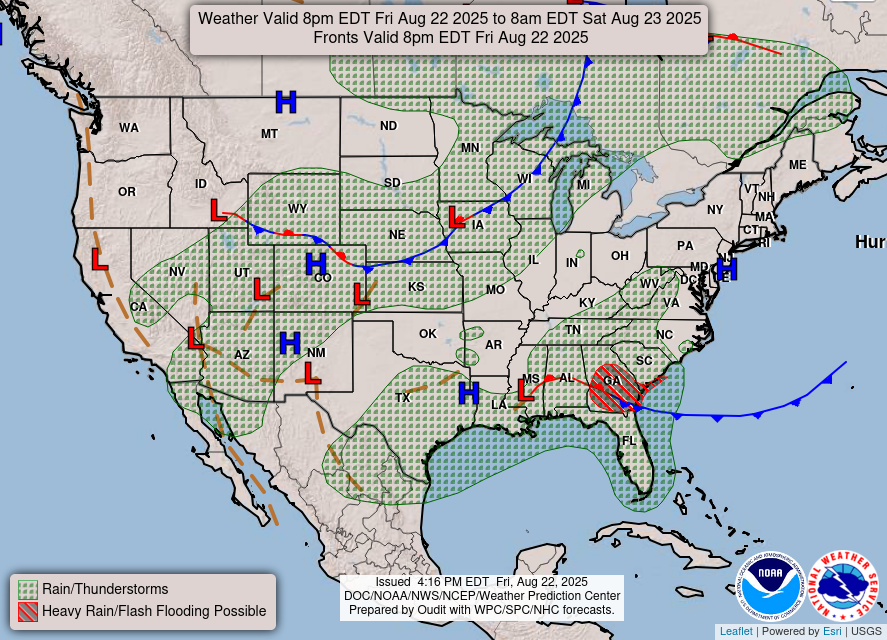
Visit Current National Radar Weather Map
Headed on an unfamiliar highway? Learn if it has low bridges you might not fit under.
Learn current road conditions in every state. This is a very handy resource.
RVtravel.com All Star Staff
Click here for information about our staff and how to contact us.


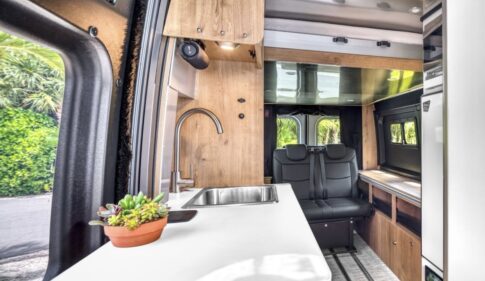 The Smartbench works with a stationary side bench to create an L-shaped lounge area. A repositionable table allows the space to be used for dining or gathering. The Smartbench can also accommodate two child safety seats.