After nearly 50 years of helping RV owners who were ripped off by dealers and manufacturers, we’ve seen and heard a lot. But a few weeks ago, we saw an article in a national dealer magazine by a long-timer in the business warning dealers to watch out for some specific “crooked dealer tricks” that were illegal practices being done by dealer employees, and we’ve seen all of them in practice at dealers around the country.
The fact that they even wrote an article about crooked dealer tricks tells you these things are real RV dealer business practices. Dressing the article up as a warning to dealers, however, is also a clever way of reminding dealers about these tricks, too. Which way the article was intended may be debatable, but let’s go over them so when you go to a dealer, whether it’s for shopping or service, you can watch out that you don’t get taken advantage of. And, yes, the RV selling process includes the service department!
And by the way, a dealer doing the stuff we are going to explain to you? It’s illegal, plain and simple. But it’s going on, slick and tricky—and costing RV buyers thousands of dollars.
Shopping tip # 1: The service stroll
Sales staff are often trained that when traffic gets slow in the showroom, they should head back to the service area and look for service customers whom they can target for upgrading to a new RV.
Using a casual and easy approach to striking up a conversation, they start off with a friendly, “How are you doing?” that turns into a “just curious” approach, followed by a sympathetic remark about the problem at hand while praising the RV lifestyle. It slowly progresses to the sales pitch for a new RV that “won’t cost as much as you think,” etc.
In a more sophisticated version, two sales persons are involved, with one pretending to be a customer who is in for service, who bonds over their repair experiences and follows it with talk about the new RV they bought at this dealer who is now installing paint protection or something minor, and how good the deal was, how nice everyone is, followed by an offer to introduce them to their salesperson, and when they meet, your new friend tells the salesperson to “give him as good a deal as you gave me.”
The service stroll works because the customer is not thinking of buying. If this happens to you, shut it down quickly with a firm “not interested.”
Shopping tip # 2: Bait and switch
Everybody’s heard about it, and it’s still going on because it works. The dealer runs an advertisement on an RV they don’t have or isn’t equipped the way the ad says. And when you get there, they tell you it was just sold but they have another one almost just like it, often followed later by the salesperson saying the model sells quickly to spur you into buying now.
One way to cut this tactic short is to call and talk to a specific salesperson just minutes before you arrive and ask if that advertised RV is still for sale, and then ask for the same salesperson when you get to the dealership. If they tell you it was just sold then you can be pretty sure it was never there in the first place. If it happens to you, walk away and shop elsewhere.
Shopping tip # 3: The show stopper
People fall in love with RVs at the RV show, and dealers know it. That’s why they are there. But most people also know that lots of other shoppers are there, pushing all the buttons, opening all the doors, not wiping their shoes, lying down on the bed, trying everything out and essentially turning that brand-new RV into a somewhat used and slightly beaten up one.
Most buyers don’t want to buy the show model. They want the brand-new one from the dealer. Of course, says the dealer, we just need to call and get it prepped for you, which will take a few days. Then, for one reason or another, the prep coincidentally can’t get done until after the show is over. Then the dealer takes the show model back and gives it a clean up, and you get delivery at the dealer a few days later, never realizing they just sold you the one that 4,000 families and kids just tromped in and out of.
How do you prevent it? At the show, make a note of the last five digits of the vehicle identification number, often found in the driver’s corner of the windshield or on the driver’s door jamb. If you can’t find one, look for some other identification like a painted number on the chassis or a unique mark somewhere. Then, when you go to get your new RV, first check it out and make sure it isn’t the one at the show. If you have the VIN, make sure the sales paperwork doesn’t have that VIN on it, and when you get delivery, before you drive off, check the VIN again.
Shopping tip # 4: The switcheroo
This one is clever and is based on you not knowing what they know. When you buy an RV, there are four numbers the dealer can “play with” to sell it to you and still make the most money they can make: Price, monthly payment, down payment, and interest rate.
Dealers know that almost everyone buys an RV with financing. So when you ask what it will cost, instead of talking price, the dealer talks about the monthly payment, often starting off with, “How much can you afford a month?”—and the switch is on. The whole idea is to switch the buyer’s focus off the price and onto the payment amount. Why?
There are two reasons. First, new RV prices can be scary, and they don’t want to lose you before they sell you. Second, they want you to fall in love with the new RV and get emotionally committed to it—and nothing turns that off faster than realizing you can’t or shouldn’t spend that much money buying it. Salespersons know that once they get the buyer committed to a monthly payment amount, the rest of the sale is much easier.
So the dealer switches your attention to the monthly payment to show you how you can afford it more easily. When a dealer sells you an RV, they know what they want your price to be, and they don’t want to change that. What they want to be able to change, what they can “play with,” is the rest of the deal: the monthly payment, the down payment, the interest rate. Those are numbers they can and will move around to satisfy your target monthly payment and make the sale.
The amount of the down payment has an instinctive, logical effect on the monthly payment, so it’s easy for them to convince you that more money down means a lower monthly payment and vice versa. If nothing else is considered, that would be true, but in RV sales, it isn’t. The dealer sets the interest rate, not the lending bank, so they normally start off on the high side. But the dealer can move it down to make the payment come out acceptable to you. In fact, they could lower the RV price, too, if they wanted. But the dealer’s net price is their Holy Grail of Profit that they don’t want to touch if they can avoid it. A dealer may say they are already giving you a discount, true or not.
By switching the buyer’s attention to the payment, the dealer can later move all the other numbers around to maximize their profit on the overall deal—and that can cost you more than you know.
How do you avoid the “switcheroo”? First, always ask for the price and don’t stop until you get it—and then ask for a discount. Do it up front so you are in control. Second, don’t ever fall in love with any particular RV when you are shopping—don’t even look like it in front of a salesperson. The more certain the salesperson is that you are going to buy, the less leverage you have on the total RV cost you will pay. Maintaining an air of uncertainty can benefit your wallet.
Shopping tip # 5: The highball
Speaking of the monthly payment, most folks want to know what it is likely to be before they get too far into the purchasing process. Dealers know that, which is why they start off by asking what you can afford. No matter what the salesperson already knows about pricing and no matter what you say you want your monthly payment to be, a lot of salespeople are trained on how to respond. Most are trained to just say, “We can make that happen” or something like that.
Sometimes the salesperson will ask about your down payment. Whether they do or not, and no matter what you say it is, the salesperson eventually will give you a specific monthly payment number. Quite often, that quoted number will be as much as 10–20% higher than necessary. Why? Because they want to make “room” for other things that may be included in the final sale, without upsetting you later when you see the final monthly payment number on your loan papers. That way you’ll walk away thinking you got a good deal.
How do you avoid the highball tactic? Don’t ask for a payment number until you give them your down payment amount—and then stick with both numbers. Remember that there are four numbers the dealer can play with to maximize their profit (which means making you pay more). So when you stick with your numbers, you take that leverage away.
Shopping tip # 6: The credit app trick
Statistics show that about 70% of all buyers who finance their new RV let the dealer set up the financing for them. They call it convenience, and it is. You could also call it costing you more money, which it almost always does.
To get started on that loan process, the dealer will ask you for a credit application—and here’s the trick. Some dealers will tell you that they will ask you the questions while they fill out the credit application or type it into the computer. Then, when done, they put it in front of you and point to where they want you to sign it. DANGER!
The salesperson may have made a mistake or even put false numbers on the credit application. For instance, if you say your annual income is $150,000, the dealer may put down $190,000. The bank won’t check the numbers with your employer. And if your credit record shows something different, the bank will likely assume you got a raise or that some other legitimate explanation exists. They trust the credit app answers they get for two reasons. First, it looks like you signed it. Second, it is bank fraud for you to lie, and you could go to jail.
Why would a salesperson or dealer do such a thing? They may do it just to be sure the bank approves your loan. They may also do it because they are going to charge a higher monthly payment than the bank says you can afford and want to be able to say you can actually afford more because the bank approved your loan at the higher payment, and “they sure wouldn’t do that if it wasn’t true.”
How do you stop the credit app trick? Fill the credit app out yourself, in your own handwriting. It’s tougher to change later and discourages fraud.
Shopping tip # 7: The computer’s down
So you have settled on the RV you want and worked out what you think some of the basic terms are going to be and the salesperson says he will introduce you to the Finance Officer or Business Manager or some other person with a title that sounds like a savvy person who will get your loan all set up for you. In the business, these people are called “F&I” (Finance and Insurance) people and their office is called “the Box”—because that is what they are going to put you in.
Fancy title or not, these people are just another salesperson working for the dealer to maximize their profit—so be careful of everything that is happening.
Be super cautious if the F&I person says the computer has “gone down” because they may have shut it off. That usually is a prelude to an attempt to get you to sign blank sales-related papers that they will fill out later. They may even assure you what the price and monthly payment will be and that they will mail the papers to you tomorrow, etc., because they want you to take your new RV home today and not have to come back tomorrow.
It sounds crazy that any dealer would even try such a thing, but we have seen it happen hundreds of times, costing consumers thousands of dollars each time.
Why do they do this? Because most people are trusting and want to believe that other people are honest, especially when they work at a large, clean, well-looking business, and the people working there have a very professional appearance.
Just remember never to believe that the computer is down, never sign anything that is blank, and anyone who tries to get you to go along with it is likely trying to rip you off.
Shopping tip # 8: The bump that wrecks your wallet
So everything in the F&I office seems okay, but when you look over the finance contract, you see that the loan payment you were quoted has gone up a little, maybe fifteen or thirty dollars. It’s not much, so you assume the first quoted payment was probably an estimate. So you go along with it. In the business, that’s what is called a “bump” on the payment. It is not an accident. It’s the reason the salesperson asked you what you could afford in the first place.
The strategy is to first get you committed to a payment number, then sell you on the RV. The salesperson will take an hour or two or more with you to get to know you and work, shop the lot, and go back and forth on each aspect of the deal, trying to get you a little more excited and a little more tired at each step of the process. They spend that time for two reasons. First, to actually show you they are trying to help you find what you want. They could just do it, but showing you that they are doing it encourages you to trust them. Second, they want to get you emotionally invested in the process of getting a new RV.
Some dealers really are trying to help you find the right RV at the right price. Others may just be trying to “move you” to the point where you have so much time spent on the process that you want to get it done and you don’t want to walk away from the effort you have already spent to get it done. Then they turn you over to the F&I person, who bumps your payment up.
Why do they bump you up? Because they know that at that point, you are most likely to go along with paying a little more to get the RV you have already done all this work to get and set your heart on, rather than leave and start the shopping process all over again somewhere else.
Why is it just a small amount? Is it really that much more? You betcha. For example, if that new RV payment is bumped from $550 to $615, that’s an increase of $65 a month. Most RV loans are for 240 payments, so that’s an extra $15,600 plus interest. That’s a paid week’s vacation for the F&I person—at your expense!
Shopping tip # 9: Underwater trade-in surfing
So you’ve got a trade you want the dealer to take? This shopping tip is when the dealer tells you that your trade-in is “under water” or has “negative value,” etc., meaning that you owe more on it than the dealer says it is worth. So they want more down payment money or they say they’ll take care of it, and jack up the price of your new RV to cover the amount it takes to pay it off by calling it an “over-allowance” or some such make-believe term. It basically means they are moving the trade-in balance into the price or cost of your new RV. Another way to say it is that you are going deeper into the hole to get out of the old RV and into a new one.
Be really careful here because your trade-in is worth whatever a dealer will give you for it, and some will give you less than it is really worth because they know you want out of it and into a new RV.
Present it by doing your homework online and figuring out for yourself what the retail sales price for your trade would likely be and try to get the dealer to give you as close to that as you can. Or, just sell it on your own or consign it for sale, rather than going deeper into debt on a new RV that really isn’t worth the total amount it takes to buy it.
Shopping tip #10: The yoyo string
You may be old enough to recall what a yoyo is from your childhood. It’s a toy consisting of an axle connected to two disks and a string looped around the axle. You could put your finger in a loop at the end of the long string and wind it around the center axle. Then you would throw it out and when the disks got to the end of the string, it would wind the string back up on the axle and return the yoyo disk back to your hand. Simply put, you hold on to the string, throw out the yoyo, and it will come back to you. Well, when it comes to RV dealers who use this tactic, that is what they do to the buyer.
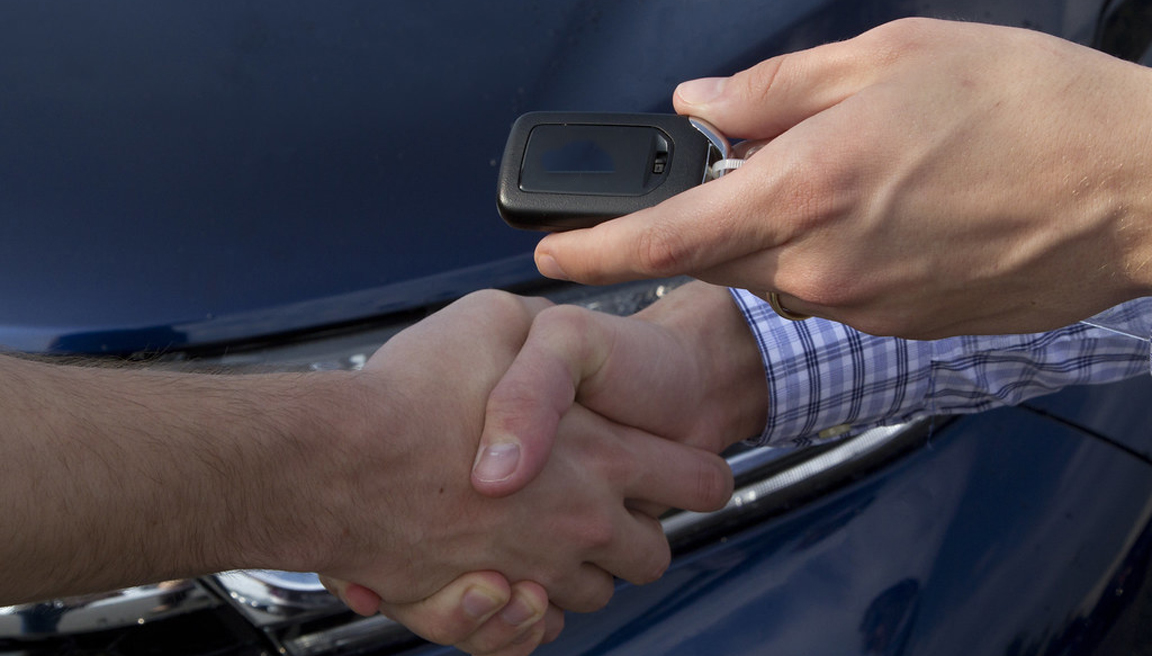
You sign all the paperwork, they shake your hand, and hand you the keys. You drive off and a few days later, they call you with some excuse requiring you to come back to sign new sales and finance paperwork, usually claiming the bank turned down the loan, there’s a problem with the paperwork, or some such excuse. It’s often not true at all, usually a violation of credit laws, and just another way of pressuring you to pay them more money. If you had a trade-in, they will likely tell you that they sold it already, so you can’t cancel the deal, whether that’s true or not.
How do you avoid the yoyo string assault on your wallet? This one is tough because people outside of your family already know you’ve bought a new RV now and it may be uncomfortable to have to explain why you had to take it back, and the dealer knows that. It’s part of the psychology of pressuring you to sign new papers. First, though, ask for proof of the excuse they are giving you. Don’t go back to the dealer if you can avoid it, because that just gives them the chance to intimidate you face-to-face. Ask them to send you the paperwork that has to be done over so you can look at it and see what has changed, or maybe ask your lawyer about it. Call the lender involved and ask if your loan was approved or not. In the end, you may have to talk to a lawyer to get out of the mess that the dealer is trying to put you in.
If it is a legitimate mistake, which is not likely, dealers’ employees who make this bad of a mistake usually get fired. Sometimes they get transferred to a different location so the dealer can say they were fired. You may not be sure. You end up having to decide if the argument is worth it or if you just want to do what they want. Either way, your best bet is to first talk to an RV lemon law lawyer. In the profession, lawyers call this sales fraud. When it involves an automobile, it is called “auto fraud,” but the principles are the same.
Ron Burge is the nation’s leading expert on RV lemon law. He can be reached at RVLemonLaw.com.
MORE FROM RON:
##RVT1203