Home Blog Page 336

Which of these best describes the way you use your RV?

39

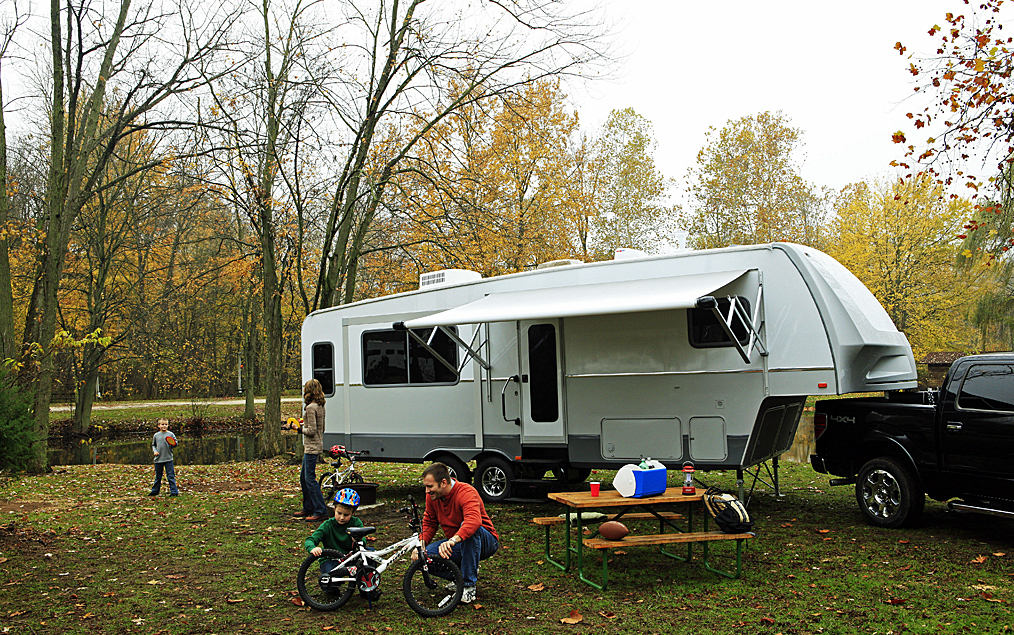
How do you use your RV? Is it for quick summer camping trips close to home? Or do you head off to explore North America for months at a time? Or maybe you use it to head south for the winter. Or heck, maybe you just use it for a few weekends a year, maybe when the kids or grandkids have an extra day off from school.

Some RVers prefer short weekend getaways, using their rigs as a way to escape the daily grind without straying too far from home. Others take extended road trips, carefully planning routes to visit national parks, scenic byways, or bucket-list destinations. Then there are the seasonal snowbirds, who trade icy winters for warm desert landscapes or sunny coastal retreats, making their RVs feel like a second home for part of the year.

For some, an RV is more than just a travel vehicle—it’s a full-time home. Whether they’ve embraced a nomadic lifestyle by choice or necessity, full-timers find creative ways to balance work, community, and adventure on the road. Some work remotely, running businesses or working as traveling professionals, while others pick up seasonal jobs at campgrounds, parks, or resorts to sustain their travels.

Then there are those who use their RVs in less conventional ways—stationary living, tailgating at big events, or even as mobile offices for work on the go. The flexibility of RV life means that no two RVers use their rigs exactly the same way.

Here are some popular ways people who own RVs use them. How about you?

MORE POLLS YOU MAY ENJOY

##RVT1203b

Launching soon: Amazon’s affordable satellite internet will rival Starlink

Many RVers have embraced Starlink’s satellite-based internet service. It seems like the perfect match for us, with access to relatively high-speed internet service anywhere we go. However, it comes with a costly catch: a Starlink mini-dish, the required hardware, costs $499 upfront. Then there’s the monthly fee—for RVers’ needs, either $50 a month (with limited data use) or $165 a month (with no data limits). An alternative, lower-cost solution is just about to roll out: Amazon’s Project Kuiper, or satellite internet.

April 9 will see major launch for Amazon satellite internet

Amazon image.

Project Kuiper is launching its first batch of low-earth-orbiting satellites on April 9—weather permitting. Amazon has already set up 80 launch missions, and each one will loft dozens of satellites. In the end, Amazon satellite internet will be a force for Starlink to reckon with. Amazon says it will start offering service “later this year.”

What about costs?

What’s the bottom line for RVers interested in Amazon satellite internet? Getting into the game with what Amazon describes as “Our ultra-compact model,” (less than 11 inches square) will cost less than $400. Amazon says it “provides speeds of up to 100 megabits per second (Mbps).” If the roaming system cost, say, $399, then the Amazon hardware system is at least 20% less than Starlink’s system.

And those monthly fees? The company coyly doesn’t offer an actual dollar figure. “Amazon hasn’t announced pricing details yet, but affordability is a key principle of Project Kuiper,” says a company statement. “Amazon has a longstanding commitment to low prices, and lots of experience building popular, low-cost devices like Echo Dot and Fire TV Stick. We’re applying a similar approach with Project Kuiper.”

Marketing expert predicts monthly charges

While “pricing details” aren’t officially available, that hasn’t prevented outsiders from speculating. In 2023, Peter Cohan, an expert in management practice with Babson College, did some projections on Starlink versus Amazon satellite internet charges. “I would not be surprised if Amazon charges $1,000 per subscriber per year,” Cohan said in a story carried by Yahoo Finance. “This low price would be attracting new subscribers in the $1 trillion market. What’s more, Amazon is likely to offer a range of prices for different tiers of service.”

Cohan was discussing satellite internet residential service. At that time (2023), Starlink residential service was about what it is now, $120 per month for unlimited data usage. If the $1,000 per year price projection held true for Amazon’s residential (non-mobile) service, then Amazon’s service would be about a third less. If the same numbers hold true for Amazon’s roaming service, than you could project a monthly charge in the neighborhood of $110.

Interested in Amazon satellite internet service? It’s too early to tell how quickly RVers will be able to sign up. You can learn more about Project Kuiper and the progress it’s making here.

RELATED

##RVT1203

How will RVers be affected by latest tariffs?

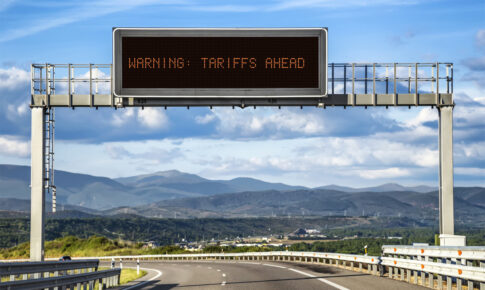
On Wednesday, April 2, President Donald Trump announced his Liberation Day—telling Americans what countries would have what tariffs imposed. In the end, nearly every country on the globe will see a tariff added to products it exports to the U.S. While most RVs sold in the U.S. are manufactured here, a huge increase in the cost of new rigs isn’t anticipated, so says one industry expert. However, the new tariffs may still increase the cost of new rigs. And if you need RV repairs? Look out—it may cost more and take longer.

Liberation Day: How tariffs may affect buying new RVs

The day before the new tariffs were announced, we talked with Mike Coyle, the chief operating officer of Kunes Auto & RV Group’s RV Division. The group owns a network of RV dealerships, principally in the Midwest. Coyle is no stranger to the industry, having come on board with Tom Raper RVs in 2011. When Camping World took over the outfit, Mike stayed with Camping World, recently moving over into the Kunes group.

We asked Coyle what he sees in terms of price increases for new RVs, while trying to anticipate how the new tariffs might play in. “I think it will have some influence,” he acknowledged. “Most major manufacturers we work with anticipate price increases, likely reflected in the 2026 models.”

While Coyle didn’t specify particular manufacturers, his company does carry a wide range of brands, including Lance, Winnebago, Jayco, Holiday Rambler, and Brinkley, among others. What sort of price increases—and when? “Price hikes will likely be reflected in the 2026 models. Again, the range we’ve heard is 4 to 6 percent.”

Planning on buying a new RV? Mike Coyle’s advice is simple. “Consider timing your trade-in strategically. [If] you were planning to upgrade after the season, you might want to move up that timeline before potential price increases take effect.”

Coyle also advised RV buyers to “Choose your dealership carefully. Some dealers offer low prices but lack strong service departments. Look for a dealership with a solid support system.”

Anticipate delays in getting your rig fixed

That could be even more critical with the upcoming tariffs. While Coyle doesn’t think the impact on RV part prices will be significant over the broad range of parts, there will be some that do head up. “If anything,” predicts Coyle, “we might see price increases in chassis and electrical components, particularly for motorhomes.”

Why particularly for these items? “Many of these parts are sourced from Mexico or China, so those supply chains could see some disruption,” Coyle cautions. And that’s the second “watch out” for RVers, if your rig does end up in the shop in need of repairs. We related how we’d heard from RVtravel.com readers who complained of sometimes having their rigs sitting on a dealer’s lot for six months, waiting for repairs.

“It’s difficult to predict exact timeframes, but a six-month wait for a repair means something has gone terribly wrong,” Coyle responded. “Not necessarily with part availability but with the repair process itself.” He suggests that many dealers have been trying to build up a backlog of common parts in anticipation of the tariff effects on supply-chain snags.

To avoid potential service delays, Coyle had this to say: “My advice is to plan ahead. Schedule maintenance proactively, don’t wait until a problem arises to bring your RV in for service.” Liberation Day may signal greater awareness on the part of RVers.

Canada and Mexico tariffs unchanged—But other RV part-supplying countries hit hard

Liberation DayWhile the Liberation Day tariff announcements didn’t touch on Mexico and Canada, the two countries have already been hit with 25% tariffs on products that are not excused from them under CUSMA, or the Canada-United States-Mexico Agreement. What’s troubling with those exemptions is that just what is or is not “OK” under CUSMA simply isn’t clear. As a result, some products that might actually be exempt from the 25% tariff will still see the tariff imposed, simply to keep the product flowing, rather than waiting around to see if it might be tariff-exempt.

Liberation Day

But Mexico and Canada are not the only countries that supply parts and materials that go into American-built RVs. Here are some other potential imported supply countries, showing the tariff percentages for each (with the exception of Canada and Mexico):

  • Chassis and Structural Components: Often imported from countries like Canada, Mexico, and Germany (20%), which have strong manufacturing capabilities for automotive parts.
  • Electrical and Electronic Systems: Components such as wiring, batteries, lighting, and solar systems are often imported from China (34%), South Korea (25%), and Japan (24%).
  • Furniture and Interior Components: This includes upholstery, cabinets, and flooring, typically sourced from Italy (20%), China (34%), and Mexico.
  • Plumbing and Water Systems: Often sourced from China (34%) and Mexico, including pumps, water tanks, and pipes.
  • Suspension and Drivetrain Components: Imported from Germany (20%), Japan (24%), and the U.K. (10%), known for their advanced automotive engineering.

Global uncertainty

Just how much RV repair facilities have bulked up on common repair parts isn’t certain. How much RV manufacturers have planned ahead and stocked up on raw materials like steel and aluminum that they’d normally obtain from overseas isn’t certain. Likewise, how supply-line issues will plague the industry is also uncertain. The road for RVers may not be too bad. On the other hand, it could get rough. It all reminds us of a quote from the ancient Roman author Pliny the Elder: “The only certainty is that nothing is certain.”

RELATED

##RVT11203b

Are more drivers ignoring traffic laws?

Is it just our perception, or are drivers increasingly ignoring traffic laws? We’re accustomed to driving the speed limit and having folks overtake us—that’s one thing. But it just seems that it goes beyond the, “I can drive five over and it shouldn’t be a big deal” attitude. Traffic lawbreakers seem to be adopting the old beer slogan—“Go for the gusto!” and don’t worry about who else might go with you.

Traffic lawbreakers—our own recent experiences

This weekend, we were motoring down Arizona’s Highway 95. The traffic was fairly light, and there was a motorhome ahead of us. The RVer stopped for a traffic light, and a pickup rolled to a stop behind the motorhome. We were coming to a stop behind the pickup when that driver crammed it in reverse, then pulled into the lane to the right of the motorhome. The driver just kept going, making a left turn in front of the stopped motorhome. That red light was still red.

That’s just one part of a stretch of roadway that we’ve begun to dread having to drive. In the last two weeks, we’ve watched as drivers belt down the 55-mile-per-hour stretch, easily doing 80 or more.

traffic lawbreakers
No passing zones open to interpretation? File photo.

And no passing zones? Evidently, those funny solid yellow lines on their side of the center marker are open for interpretation. A few months ago, a semi-truck passed us, crossing over a clearly marked “no passing” indicator. There was no clear line of sight as to oncoming traffic, but before he was clear of our rig, the driver must have spotted danger. Had we not dodged to the shoulder of the highway, that semi-driver would have taken us out.

Some frightening statistics

Going faster than the speed limit may get you there sooner. It may also get you to the mortician’s office sooner. In 2022, the last year for which nationwide statistics were available, 12,151 people died as a result of a speeding driver. Put another way, more than 33 people were killed EACH DAY in a speed-related crash.

What about those who figure that the “Go for the gusto” attitude shouldn’t preclude them from having a few beers (or other alcohol) and taking to the road? Again, in 2022, 13,524 lives were lost because of drunk drivers.

LEO sees an attitude issue

Maybe it’s attitude. We spoke with a retired Arizona law enforcement officer. He said that he’s seen an interesting change in attitude among people. He shared a couple of experiences that had come up in just the last few weeks. In one case, he mentioned to a younger woman that he had encountered an unmarked police vehicle, staking out a traffic intersection where stop-sign running was common. The young woman told this ex-cop, “Well, you know, you don’t have to stop if an unmarked police car tries to pull you over.” When asked where she learned this interesting “fact,” she replied, “Well, everybody knows it. You just don’t have to stop.”

On another occasion, the retired LEO said he was talking with a young man who told him that if the police stopped him, he didn’t need to show them his driver’s license, nor other seemingly required documentation. Our friend was flabbergasted. “Where do you get this—you don’t have to show your license?” The young man replied he’d learned it from a YouTube video.

traffic lawbreakers
Dale Carruthers via The London Free Press

Somehow, it didn’t come as a surprise. We’ve seen a large number of videos lately on social media where the posters seem to be bragging about how they can “cop bait.” They film police officers and deliberately provoke confrontational situations to elicit a response. Perhaps they stand on a sidewalk and film a building until a manager comes out and confronts them. They then goad the person into calling the police. They then continue the filming as they argue out the finer points of the law. Yes, it may be legal to take video where they are, but it just seems the “flaunting” attitude and the seeming desire to goad anyone into stepping over the legal line of authority is increasingly front-and-center.

“It seems society has tipped”

traffic lawbreakersTraffic lawbreakers don’t always push their way into a car crash, or worse. We wrote recently about how a number of states are trying to crack down on folks who use so-called license plate flippers. In the driver seat, one can push a button and your official license plate flips over, and a fake plate appears on the bumper. It’s apparently great if you want to evade paying a toll. Or perhaps speed in front of a speed cam, or run a red light in front of a red light camera.

In an opinion page posting in the Indiana Capital Chronicle, writer Niki Kelly ruminated on the seeming uptick in lawlessness. “I realize people will always break laws, but it seems society has tipped more that way in recent years. Scrolling through social media is full of videos where people are beating each other up and bystanders cheer. And, often, the comments are encouraging the vigilante behavior.”

Kelly wondered, “Shouldn’t they be calling the police instead of taking a video?”

Tailgater adds us to the statistics

It got a wee bit too personal for us a couple of weeks ago. Down that same stretch of Arizona 95 we went. For several miles, a semi-truck paced us, often way too close for our comfort. We crossed out of Arizona and into California to an area where we were boondocking. The semi was still behind us, and close.

With a left-hand turn ahead of us, crossing the oncoming lane on the two-lane highway, we were pretty concerned that we might have to stop and wait to cross traffic with the big rig behind us. We breathed a sigh of relief when we saw there was no oncoming traffic, but even so, our turn signal went on a quarter-mile before the turn.

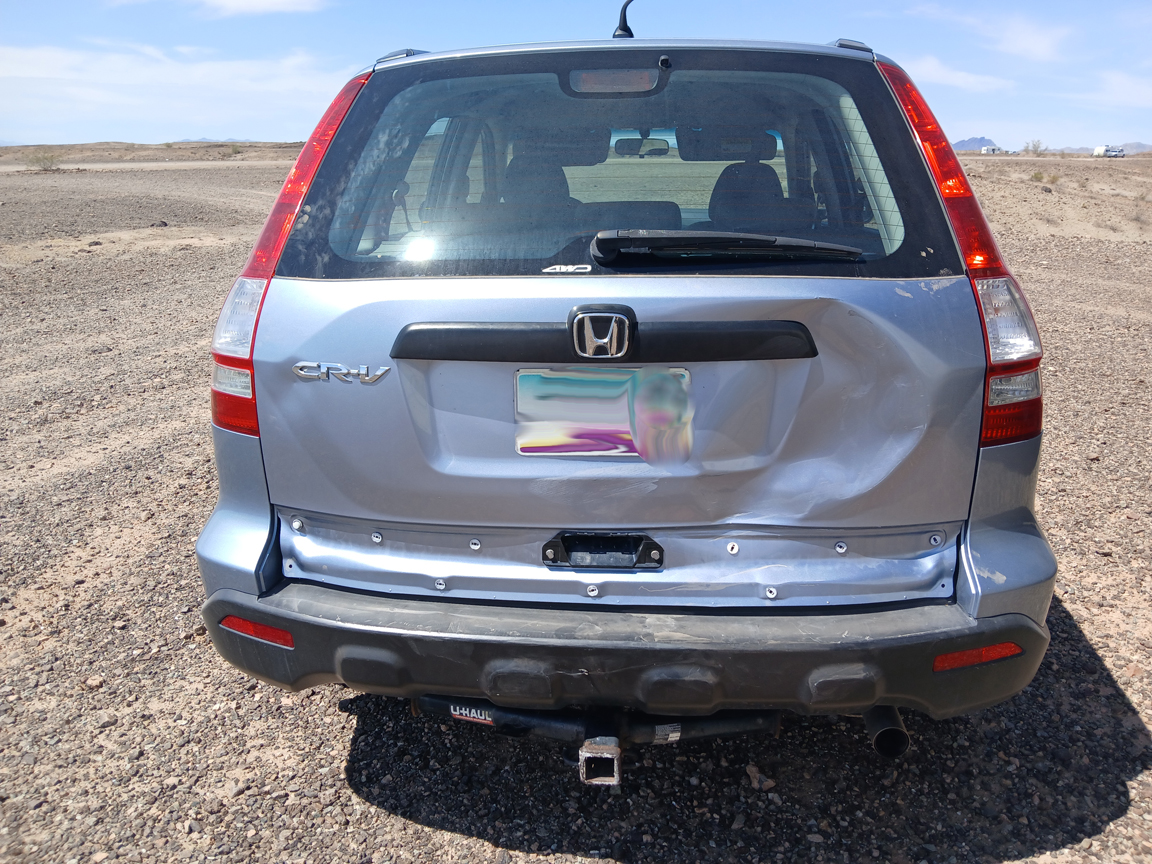
That sigh of relief was short-lived, and turned into an outcry. The semi mashed right into us, shoving us on into our turn. Thank goodness there was no oncoming traffic.

traffic lawbreakers
The car is a lot worse for wear, and now a statistic. R&T De Maris photo.

We were both hurt, and the car is a lot worse for wear. Our “run in” with a traffic lawbreaker just makes us one more statistic. Some 2.5 million rear-end accidents happen in the U.S. each year.

How about you? Have you noticed an increase in traffic lawbreakers? Please comment below.

RELATED

##RVT1203b

RV Daily Tips. Friday, April 4, 2025

Issue 2615


Today’s thought

“I think there should be a rule that everyone in the world should get a standing ovation at least once in their lives.” ―R.J. Palacio


Need an excuse to celebrate? Today is National Chicken Cordon Bleu Day!

On this day in history: 1968 – Martin Luther King Jr. is assassinated by James Earl Ray at a motel in Memphis, Tennessee. Note: Did you know this motel was turned into a museum? Read about it here.


Tip of the day
How to adjust your RV toilet seat height

By Russ & Tiña De Maris
Hate to let you in on a little secret, but the older we get, the harder using the toilet is. We’ll spare you the medical perspective of bodily functions, but just getting up and down from the toilet can be—well, a pain in the—er—neck. And legs. And back. And don’t forget the knees. Adjusting the height of your RV throne can make a world of difference. An RV toilet riser may be just what you need.

Too often, RV toilets are on the short side, but we found a relatively inexpensive upgrade that really helps. Install a riser to give yourself a bit of a lift. We’ll walk you through your own “Game of Thrones.”


Ask Dave
Can lithium house batteries jump-start an RV engine battery?

Dear Dave,
I would like to start by saying I like reading your newsletters and website. They contain lots of information that’s very helpful to me. I have been RVing for about 20 years in a 32′ Class A motorhome, but only for a couple days to a month at a time. I usually am at campgrounds that have full hookups, so batteries haven’t been an issue (until my converter went out). My questions have to do with the batteries when it’s time to replace them. I have sealed lead acid batteries (two house, one starting)… Continue reading Carla’s questions and Dave’s answer, with input from lithium battery technicians.


In the RV shop with Dustin
How to replace an RV microwave

Join Dustin “In The RV Shop” as he shows you how to locate your RV microwave model and serial number. In most cases, RV microwaves are not repairable by your local appliance repair shop. In order to fix it, you will need the model and serial numbers to give the RV repair shop or dealership. Continue reading.


Video of the day
Stinky RV odors and how to get rid of them

By Cheri Sicard
Our favorite RV inspector, Duane from the RV Inspection and Care YouTube channel, is back with a discussion of a topic that every RVer is likely to encounter at some point: stinky RV odors! These odors can really put a damper on your travel and camping fun. So, how do you kick those stinky smells to the curb and keep your RV smelling fresh? Find out here.


Featured article
In defense of the RV shut-off valve: A $15 plumbing mod you shouldn’t live without

By Andrew Herrick
RV plumbing code (NFPA 1192) does not require individual fixture shut-off valves. It ain’t like your house, which is likely governed by some version of the International Residential Code. (Now, before you click away, I promise this isn’t a deep dive into plumbing code. This article is written for every RV owner; I just want to alert you to this hidden difference between your RV and your house.) Continue reading about this very important mod.


It’s here—hot off the press! New Milepost 2025 edition
If you’re traveling or thinking about traveling to Alaska, this is the book you need! It’s the best-selling travel guide to Alaska and includes mile-by-mile descriptions of more than 15,000 miles of road in Alaska, Yukon, Northwest Territories, British Columbia and Alberta. Its 700-plus pages detail accommodations, camping, fishing, gas stops, restaurants, attractions and services found along the highways and byways of Alaska and western Canada. Learn more or order.


You may have missed these recent popular stories…


BAD DOGS: The U.S. Postal Service recently released its list of Top “Worst Cities For Dogs Biting Mail Carriers.” Leading the list is Los Angeles, where mail carriers were bitten 65 times in 2023. The next nine “worst cities” and number of bites were: Houston (56 bites), Chicago (48), St. Louis (46), Cleveland (44), San Diego (41), Dallas (38) Cincinnati (38), Philadelphia (34) and Columbus (33).


Reader poll
Would you attend an RV show in the next month if it were within an hour drive of you?

Respond here.


Quick tip
A place to store that “rectangle” ladder

A lot of RVers have those “cute” full-size ladders that fold down into 3 1/2″ x 3 1/2″ x 6′ rectangles. But where do you put the thing to carry it? CB” on the former rv.net forum had a clever idea. He took a plastic fence post (you can get them at most big box building materials stores), hung it under his RV, and found his folded-up ladder slipped right into it. Add a bolt and wing nut to keep it from sliding out and bingo! That ladder is out of sight until needed.


On this day last year…


RANDOM RV THOUGHT: Avoid camping downwind of your neighbor’s campfire pit. If they decide to build a campfire late in the evening, you could be in for a very smoky sleeping experience.


Website of the day

Get Your Guide
This website shows you tours all around the U.S. and the world! It’s the best way to see and experience a new place! Take a Chicago architecture river cruise, go on a walking tour of Harvard University, take an Alcatraz night tour and so, soooo much more.


Recipes of the day
Delicious chicken cordon bleu recipes

If you were paying attention at the top of this newsletter, you’d know that today is National Chicken Cordon Bleu Day! And that’s a day we want to celebrate—don’t you? Here are a few delicious chicken cordon bleu recipes to make tonight or this weekend for a special meal. Yum!


? MYSTERY PRODUCT OF THE DAY ?
If you like history, you’ll love this! Having this information in one place is ideal and the presentation here is near perfect.


Trivia

The entire state of Wyoming only has two escalators.


Readers’ pet of the day

“Ziva (15, Pom & Mini Schnauzer) was left at a Humane Society when she was 4 weeks old. She was due to be put down that night. I saved her, and she saved me. She goes everywhere we go and gets excited when I say the word ‘camping’.” —Lisa Wolfe

Send us a photo of your pet with a short description. No blurry photos and please do not submit your photo more than once. Thanks!

RVing with Dogs group on Facebook. You’ll love it.


Leave here with a laugh

Click to enlarge.

Today’s weather forecast across the nation
THIS MAP UPDATES TWICE A DAY

Visit Current National Radar Weather Map


Did you miss the latest RV Travel Newsletter? If so, read it here.
Oh, and if you missed the Latest News for RVers, make sure to catch up here.


If you shop at Amazon.com we’d appreciate you using this link. We get an itty bitty commission if you buy something, but they add up and help us pay our bills (most importantly our hard-working writers!).


RVtravel.com All-Star Team

Click here for information about our staff and how to contact us.

Our policy on using artificial intelligence.

Can lithium house batteries jump-start an RV engine battery?

Dear Dave,
I would like to start by saying I like reading your newsletters and website. They contain lots of information that’s very helpful to me.

I have been RVing for about 20 years in a 32′ Class A motorhome, but only for a couple days to a month at a time. I usually am at campgrounds that have full hookups, so batteries haven’t been an issue (until my converter went out).

My questions have to do with the batteries when it’s time to replace them. I have sealed lead acid batteries (two house, one starting).

1) Everyone seems to be changing to absorbed glass mat (AGM), lithium, etc. Since I don’t boondock, what do you recommend when it comes time to replace my current batteries?

2) My assumption is that the starting lead battery needs to stay? If so, if I change to something other than lead for the coach batteries, can I still use the battery booster if needed to start the engine? if not, would I need a different type of battery than the ones for coach?

Thank you for being there. —Carla Rose

Dear Carla,
You did not indicate whether your Class A motorhome was gas or diesel. However, you did indicate it only had one start battery so I assume it is a gas model. I do think staying with a maintenance free start battery with good cold cranking amps (CCA) would be best for your engine battery.

Lithium batteries

As you mentioned and also as was stated in a recent post, lithium has become a “craze”. I see more owners simply swap out FLA batteries without thoroughly reviewing their system. We have discussed this many times in previous posts and talked about lithium batteries being able to crank over an onboard generator. And you bring up a good point on “jump-starting” a motorhome using the house batteries.

Before I get into that, let’s address the type of battery that I feel would be best for your application. You state that currently you have “sealed flooded lead acid batteries,” which I assume would be the cheaper auto parts store brands I see quite often.

SuperStart Battery
SuperStart battery

These batteries are not the best option when it comes to powering most RV needs and can result in sulfation, which is what I believe happened in your case. If the battery becomes sulfated, and it could have been the previous batteries, the converter senses low battery power and runs at the full charge stage of 13.6 volts all the time. This could lead to the converter failing eventually.

Recommend FLA or AGM battery for this use

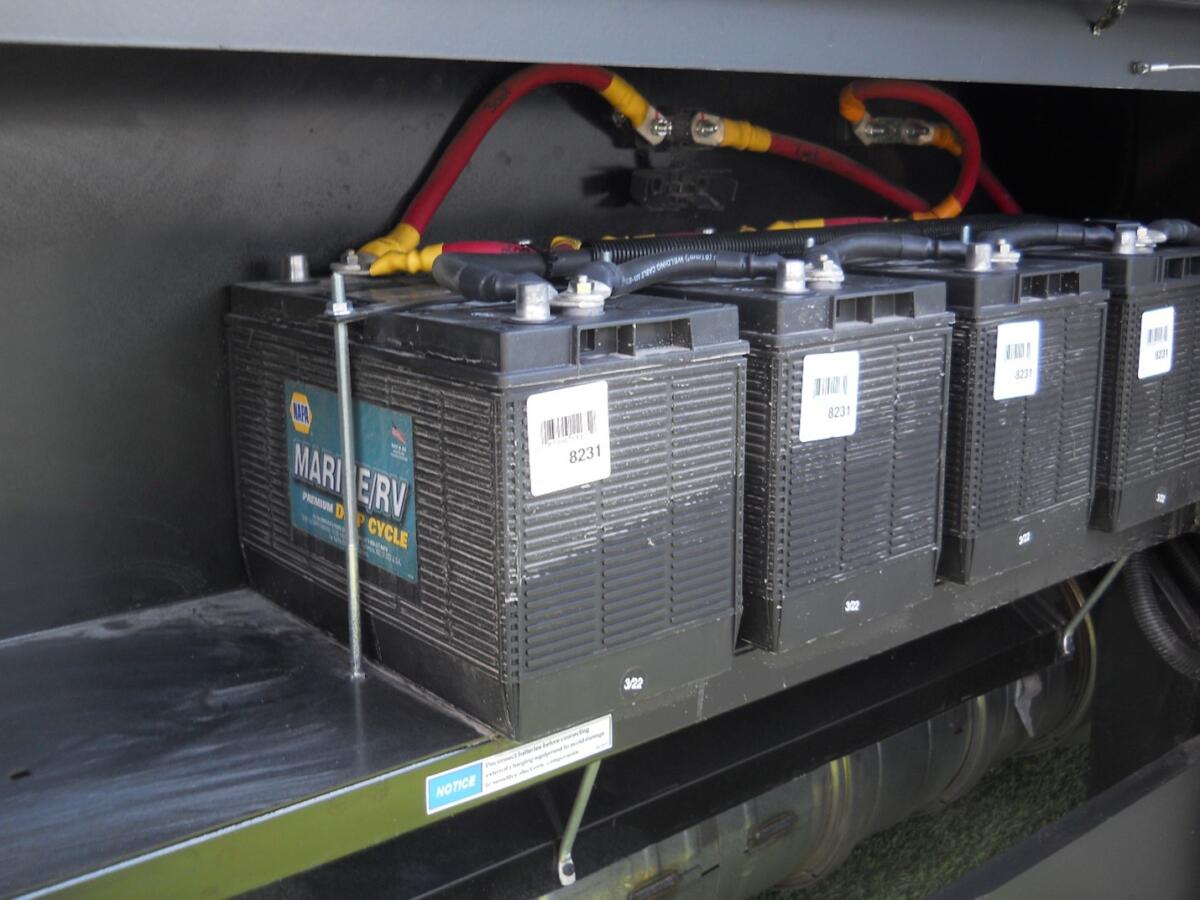
Since you don’t plan to boondock or dry camp much, you would not see much benefit from lithium batteries and the extra expense. Therefore, I would recommend a good FLA battery such as the NAPA brand #8231 used by Winnebago, or an AGM battery. That would have sufficient power for occasional dry camping and reduced sulfation, and would be much more cost-effective. This will last longer and not require your converter to operate at maximum voltage.

NAPA Batteries
NAPA batteries

However, you did bring up a good discussion point regarding lithium batteries and the ability to provide enough cold cranking amps (CCA) to start an engine. Most motorized units have a start battery rated in CCA to provide high-voltage cranking power for 30 seconds. Most deep cycle batteries are designed to provide a constant voltage over a longer period of time. There typically is a solenoid called the battery isolation manager (BIM) that controls voltage from the engine charging system and the alternator to the house batteries. It also provides a “jump-start” to the engine battery from the house batteries.

So I sent your question to a few of my lithium battery tech contacts and got some interesting information on not only the battery’s ability to provide CCA but also the BIM that should be matched with new lithium batteries.

Comment from lithium battery tech

Thank you. It probably depends on what cranking amps is required to start the device (vehicle, generator) and how many batteries are installed in the coach. Lithium batteries will have a max current output on each battery that the battery management system (BMS) will shut off if exceeded.

The more batteries, the more current that can be provided. As an example, a single 100 ah battery can output 150 to 175 amps for a given period of time (15-30 min.). Anything above these amounts, the battery would shut down. (BMS shuts battery down to protect the battery.)

Two batteries would be double this amount. If the amps needed to start a device is over this rating, the battery would shut down and the device would not start.

Comment from another battery tech on battery isolation manager

Another contact suggested the battery isolation manager (BIM) needs to be replaced to match the lithium batteries.

It really depends on how many batteries you have in the system. But if you have minimum of four batteries, which is pretty typical for a motorhome setup, you can jump-start the engine batteries in a pinch. With the BIM, this is really the only way to do that safely, as well. So if they do switch to lithium, they will want to upgrade the BIM to the lithium version. Here is a link to the BIM we recommend.

Description of the BIM

If the coach battery resting voltage exceeds 13.4 V, then the BIM will disconnect. A resting voltage greater than 13.4 V indicates a fully charged battery. Note that “resting voltage” means that no current is flowing to the coach battery.

The BIM will disconnect if the alternator voltage exceeds 14.4 V. This protects the coach battery from overcharging. The LiFePO4 Battery Isolation Manager will disconnect if the voltage difference between the alternator and the coach battery is less than 0.1 V. If the voltage difference is too low, then there is a negligible charging current, and no need to connect to the coach battery.

The BIM will disconnect if the alternator voltage drops below 13.3 V. If the alternator voltage is too low, then it cannot adequately charge the coach battery, so there is no reason to connect.

Another example of doing your homework before swapping out FLA batteries with lithium.


 You might also enjoy this from Dave 

Will my RV’s charger be sufficient for new lithium batteries?

Dear Dave,
I switched from two regular batteries to two LiFePO4 batteries. I have a 2020 Salem Hemisphere 26BHHL trailer. Can my trailer converter maintain/charge these batteries? Also, can I cut a hole in the floor in a remote area for a small 4-inch computer fan to shove extra heat under the floor to keep the lines from freezing? — Jim, 2020 Salem Hemisphere 26BHHL

Read Dave’s answer.

MORE POSTS FROM DAVE ON RV BATTERIES


Dave Solberg is a leading expert in the RV industry and the author of the “RV Handbook.”

Read more from Dave here

HAVE A QUESTION FOR DAVE?

Send your inquiries to him using the form below.

Name
Drag & Drop Files, Choose Files to Upload

##RVDT2615

Delicious chicken cordon bleu recipes

0

Chicken Cordon Bleu With Sauce

by Betty Graves from Germantown, TN

With its beautiful swirl of chicken, ham, and melted cheese, chicken cordon bleu is a fun dish to serve company. The chicken is seared, so the juices are locked in. Making the cream sauce in the same pan lets the caramelized drippings incorporate into the savory sauce. When sliced, the chicken cordon bleu is smothered in the sauce for a delicious and comforting dinner. Click here for the recipe.

Chicken Cordon Bleu Bake

by Grace Pulley from Gillette, WY

Love the flavors of chicken cordon bleu but not the work? Then this casserole is for you. It’s filled with chicken cordon bleu flavors, but an easy-to-put-together dinner. There’s tang from the Dijon, a bit of smoky flavor from the ham, and it’s filled with chicken. Thanks to the cream of chicken soup and Swiss cheese, it’s super creamy. On top, the Panko/butter mixture forms a tasty little crust. This is very filling so you won’t need any sides. An easy dinner casserole. Here’s the recipe.

Chicken Cordon Bleu W/Swiss Dijon Alfredo Sauce

by Lisa Myrick from Wilmington, NC

Lisa’s slightly lightened-up version of chicken cordon bleu is fantastic! It’s much easier to make, too. Placing the Swiss cheese in the Alfredo sauce is a brilliant idea. Not only does it solve the oozing cheese problem, but it allows you to add as much of the sauce your heart desires on top of the chicken. The chicken itself is tender and juicy with a smoky flavor from the ham. Get the recipe here.

Grilled Chicken Cordon Bleu

by Connie Gereffi from Lumberton, NJ

We love chicken cordon bleu and this is a delightful twist on the recipe. It’s a delicious summer dinner and a different way to prepare chicken breasts. The prosciutto ham and Swiss cheese give the chicken a nice salty kick. Brushing mustard on top and adding the ham helps keep the chicken moist and the flavors melt into the meat. A very delicious dinner recipe. Click here for the recipe.

MORE RECIPES YOU MIGHT LIKE:

##RVDT2615

Gasoline prices jump a dime since last week

26

WASHINGTON, DC (April 3, 2025) – Gas prices jumped this past week, with the national average for a gallon of regular going up by more than 10 cents to $3.26. Several factors are driving the increase, including refinery maintenance and summer-blend gasoline switch. The last time the national average reached $3.26 was back in September, consistent with seasonal shifts, but current prices remain below what they were this time last year.

Today’s National Average: $3.26
One Month Ago: $3.09
One Year Ago: $3.54

The nation’s top 10 most expensive gasoline markets are California ($4.91), Hawaii ($4.52), Washington ($4.30), Nevada ($3.99), Oregon ($3.93), Alaska ($3.53), Illinois ($3.52), Arizona ($3.42), Idaho ($3.38), and Pennsylvania ($3.37).

The nation’s top 10 least expensive gasoline markets are Mississippi ($2.74), Tennessee ($2.80), Oklahoma ($2.81), Louisiana ($2.82), Alabama ($2.85), Texas ($2.87), Arkansas ($2.87), Kansas ($2.87), South Carolina ($2.87), and Kentucky ($2.89).

The nation’s top 10 most expensive states for public charging per kilowatt hour are Hawaii (56 cents), West Virginia (46 cents), Montana (44 cents), Tennessee (42 cents), South Carolina (42 cents), Idaho (42 cents), Alaska (41 cents), Kentucky (40 cents), Louisiana (40 cents), and New Hampshire (40 cents).

The nation’s top 10 least expensive states for public charging per kilowatt hour are Kansas (22 cents), Missouri (25 cents), Iowa (26 cents), North Dakota (26 cents), Nebraska (27 cents), Delaware (27 cents), Texas (29 cents), Washington, DC (30 cents), Utah (30 cents), and Maryland (30 cents).

##RVT1203b

RV Daily Tips. Thursday, April 3, 2025

Issue 2614


Today’s thought

“I went to the woods because I wished to live deliberately, to front only the essential facts of life, and see if I could not learn what it had to teach, and not, when I came to die, discover that I had not lived.” —Henry David Thoreau


Need an excuse to celebrate? Today is National Burrito Day!

On this day in history: 1860 – The first successful United States Pony Express run from St. Joseph, Missouri, to Sacramento, California, begins.


REMINDER: The severe weather map near the bottom of this newsletter and all back issues updates twice a day. Check it out before planning your day’s drive.


Tip of the day
Need a new place to walk? Try this trail-finding trick with Google Maps

By Emily Woodbury
Enjoy walking but tired of the same ol’ trails or routes every time? Here’s how I’ve found dozens of trails close to home that I never knew about…

I thought I had walked every trail within a walk or short drive from my house, but boy, was I wrong. So, other than looking up “trails near Seattle” repeatedly on Google, I found a new, easier trick.

You’ll need Google Maps on your phone (it’s an app for both Apple and Android) for this. If you don’t feel like downloading the app (which I recommend you do for instances when you’re not at home near a computer), you can go to the website. Continue reading.


Ask Dave
How to protect and maintain newly replaced RV roof. Plus, why new roof was needed

Dear Dave,
I’ve just had a new roof installed—new plywood deck and TPO-2 skin. Is there anything I should do to further protect this? Any coating, etc., that I should consider? Or am I good to go at this point? Thank you. —Bruce, 2022 Gulfstream 189DD  Read Dave’s answer.


BEST CLUB FOR RVERS: Hands down, the Escapees is the very best club for RVers. Learn more or join.


Video of the day
Convert any cargo trailer into a camper in just one day

By Cheri Sicard
In the video below, the team from Playing with Sticks shows how to convert a cargo trailer into a functional camper in just one day without any building.
While they have since upgraded, this family of adventurers lived out of a no-build camper for more than 10,000 miles. Check this conversion out.


FACTOID: Driving on deteriorated and congested roads costs the average driver $1,400 per year in operating costs and lost time. Source: American Society of Civil Engineers


Featured article
A creative way to stay in touch with grandchildren as you RV

By Gail Marsh
The connection between grandparents and their grandchildren is so special! I don’t know about you, but when we are away from our grandchildren for an extended period, I really miss them! I want to do everything I can to strengthen the “grand bond” we share and stay in touch with them while we RV. Read some grand ideas from Gail here.


Reader poll
Are you related to someone famous, past or present?

Respond here.


Quick tip
Adjusting the mirrors on your motorhome properly

The proper adjustment of the mirrors on your RV is critical for “on the road” safety and can make the difference between avoiding or being in an accident. Your motorhome generally has 2-piece mirrors on each side, extended on two adjustable arms near the front of the rig and situated for optimum use by the driver. Before adjusting the mirrors, you must realize that these mirror bodies extend outside of a very wide vehicle.

With this in mind, look down the edge of your rig, and always adjust the body of your mirrors to have their edge aligned right at the very side of your rig, and no further out than necessary. A typical Class A motorhome will be close to or right at 8 feet, 6 inches wide. And, remember, these mirrors that extend beyond that limit will be the first things to get hit by, or to hit, other vehicles or objects when you are driving or parking your RV. —From The Ultimate RV Owners Reference.


On this day last year…


Website of the day

Volunteer with the National Park Service
Getting a job with the National Park Service might not be your best option right now, but they won’t say no to volunteers! This website shows you how to get involved.


? MYSTERY PRODUCT OF THE DAY ?
Some people died who may be alive today if only they had this under-$5 product handy! Keep this in your RV or car. Always! You never know.


And the survey says…

We’ve polled RVtravel.com readers close to 5,000 times in recent years. Here are a few things we’ve learned about them:

• 55 percent bought their current RV new, not used.
• 57 percent buy most of their RV parts and accessories from Amazon.
• 18 percent say they were an excellent, near-perfect student in high school.

Recent poll: Is your life boring, stimulating or somewhere in between?


Trivia

Horse lovers, close your ears! The first canned dog food in America was created to dispose of excess horse meat. Once upon a time, we relied on horses for many things, including transportation. But with the invention of cars… what happened to all those horses? Well, dogs were hungry, so… The first canned dog food was made from horse meat and some vitamins and was introduced in 1922 by the Chappel Brothers. The dog food became so successful that within a decade, they were raising and slaughtering 50,000 horses a year for the food. Later, they sold the successful business to Quaker Oats. Eventually, during World War I, we stopped using horse meat (thank goodness) and by World War II rationing had put an end to most canned dog foods. That’s when kibble was introduced.


Readers’ pet of the day

“Sweet and quiet Delilah (Cavalier King Charles Spaniel, age 9) can sweep lots of leaves into the RV with her long, silky hair. Her favorite thing is to hunt for tadpoles, which she thinks will be in every body of water at any time of year.” —Rhonda Brodbeck

Want to see your pet in this newsletter? Send us a photo of your pet with a short description. 


Leave here with a laugh

Police have finally arrested the World Tongue Twister champion. They say he will be given a very tough sentence.


Today’s weather forecast across the nation
THIS MAP UPDATES TWICE A DAY
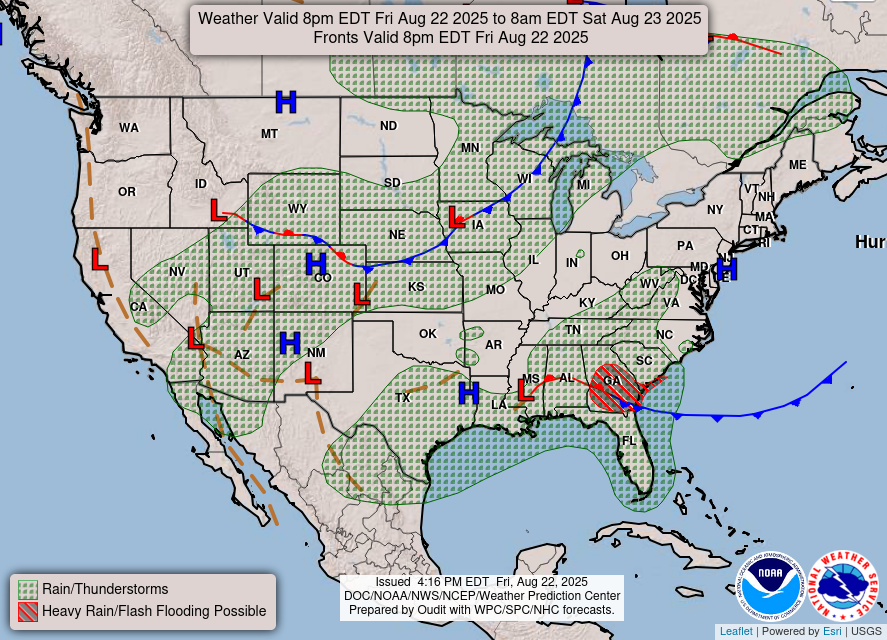
Visit Current National Radar Weather Map


Did you miss the latest RV Travel Newsletter? If so, read it here.
Oh, and if you missed the Latest News for RVers, make sure to catch up here.


If you shop at Amazon.com we’d appreciate you using this link. We get an itty bitty commission if you buy something, but they add up and help us pay our bills (most importantly our hard-working writers!).


RVtravel.com All-Star Team

Click here for information about our staff and how to contact us.

Our policy on using artificial intelligence.

How to protect and maintain newly replaced RV roof. Plus, why new roof was needed

Dear Dave, 
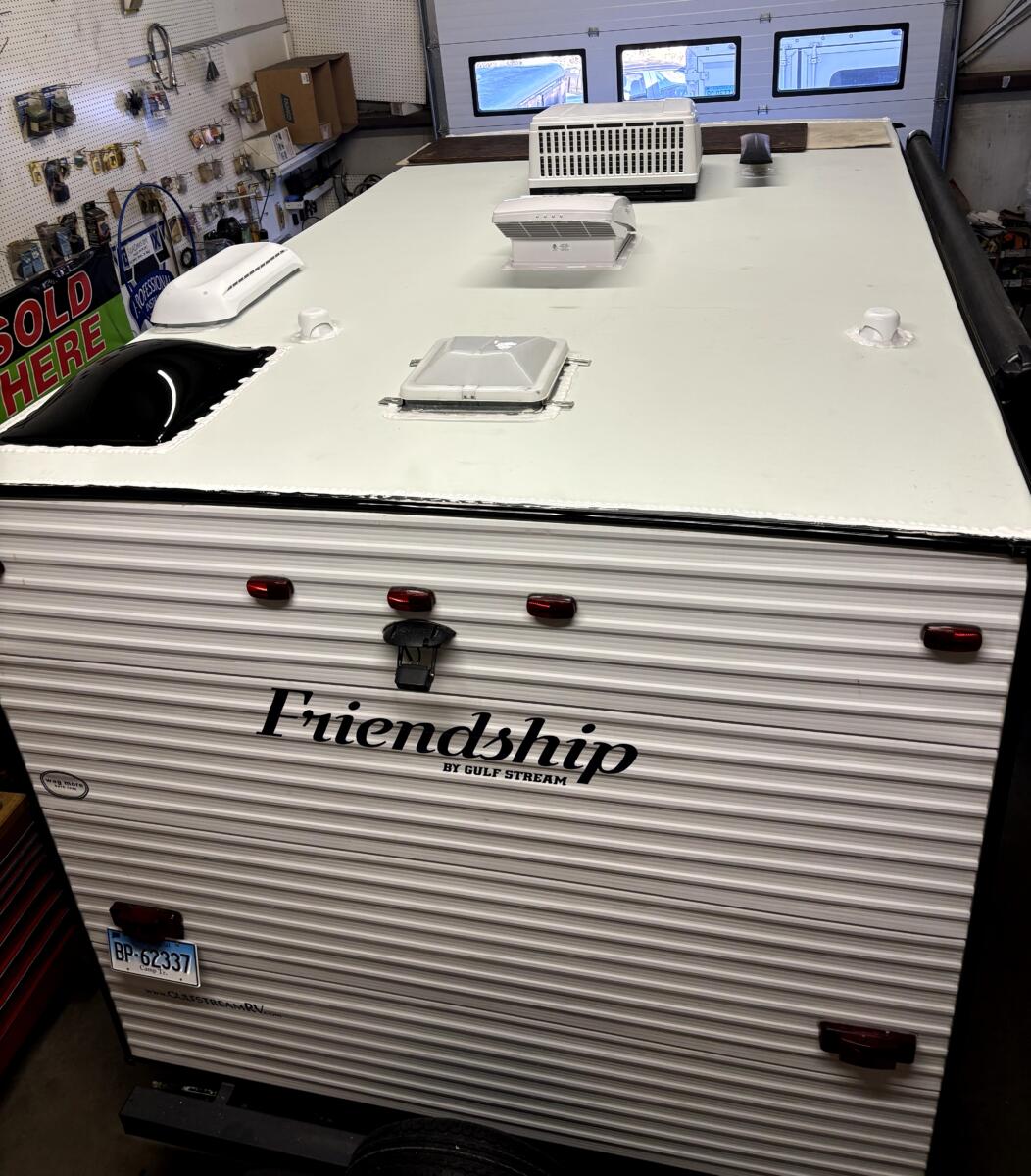
I’ve just had a new roof installed—new plywood deck and TPO-2 skin. Is there anything I should do to further protect this? Any coating, etc., that I should consider? Or am I good to go at this point? Thank you. —Bruce, 2022 Gulfstream 189DD

TPO-2
New RV roof coating

Dear Bruce,
It sure looks like a very nice job. However, since you needed a completely new roof in just 3-4 years, I would imagine there was a substantial moisture leak that ruined the old plywood. Looking at the picture, I see a lot of potential moisture penetration spots since there are so many cutouts for roof vents and the air conditioner.

Extending the life of RV roof

There are two main considerations for extending the life of your RV roof. The first is the actual material, which you state is TPO-2. Most likely it is Dicor DiFlex II™ TPO, which is a non-fleece backed thermoplastic polyolefin (TPO) that is very durable and UV-resistant. According to the warranty specifications, the following care and maintenance is required.

The care and maintenance of your DiFlex II™ roof is simple and requires no special materials.

    • Semi-annual inspection of the roof is suggested. Check the membrane for possible damage and check the lap sealant used in all termination areas and around all accessories and fasteners. The lap sealant has a limited life span, depending on the geographic region and conditions, and should be repaired or replaced as needed.
    • Keep your roof clean. For normal cleaning, use Dicor Roof Cleaners (RP-RC320S spray or RP RC160C concentrate), or standard products such as 409, Fantastic or mild detergent are sufficient. Do not use harsh abrasives or products containing solvents. For stubborn stains, a rag dampened with mineral spirits is recommended. DO NOT SOAK. (Do not apply mineral spirits directly to roof.)
    • When cleaning, rinse thoroughly with clean water to avoid residue buildup on the roof or sidewall of the vehicle.
    • Parking in areas where fruit or tree sap may stay on the roof for extended periods of time may result in unremovable stains.

Dicor’s DiFlex II™ TPO roofing membrane is specially formulated for exposure to the sun and natural elements. However, it can be cut or punctured by sharp objects. Use caution when placing any articles or walking on roof. If damage does occur, the membrane can easily be patched. Contact your local dealer or Dicor for additional information.

So, it seems that Dicor does not recommend any conditioning like EPDM or original TPO to resist UV degradation.

Check lap sealant around accessories, etc.

The second consideration is the sealant required around the roof vents, refrigerator vent, and the edges. The DiFlex II has less expansion and contraction during temperature variations. However, you still need to semi-annually check all the lap sealant used in all termination areas and around all accessories and fasteners. This is a self-leveling sealant designed for this material and is subject to drying out, cracking, and pulling apart—which would allow moisture to penetrate and ruin the roof structure.

There are a lot of “terminations” going on up there on the roof, so it is important to make sure the sealant is actually sealing.

Check around the roof air conditioner

One last bit of advice is to check the gasket between the roof air conditioner and the new TPO material. There should be four spring tension bolts accessible from the inside that help “torque” the unit to the roof. These need to be checked annually, otherwise they will loosen and moisture will penetrate to the roof.

Update from Bruce

I sent Bruce the rough draft of the above and got this back with some photos on why his RV needed a new roof.

Thank you, Dave. This is very helpful. I have attached a “before picture” which shows the damage caused by a large hemlock tree which blew over in our yard. I can’t recommend enough the RV technician who helped me put this back together in record time so that we could make our trip to Myrtle Beach next week.

Tree Branch
Tree branch through RV roof
Tree Branch 2
RV roof with tree branch through it

 You might also enjoy this from Dave 

Are there covers to protect RV roof vents and skylights from hail?

This question actually came as a comment from the Feb. 9, 2025, newsletter:
Chuck, et al.,
Great newsletter, as always! My question is, does anyone make hail protection covers for roof vents and skylights for RVs? —Dave T.

Read Dave’s answer.

MORE POSTS FROM DAVE ON RV ROOFS


Dave Solberg is a leading expert in the RV industry and the author of the “RV Handbook.”

Read more from Dave here

HAVE A QUESTION FOR DAVE?

Send your inquiries to him using the form below.

Name
Drag & Drop Files, Choose Files to Upload

##RVDT2614

Convert any cargo trailer into a camper in just one day

By Cheri Sicard
In the video below, the team from Playing with Sticks shows how to convert a cargo trailer into a functional camper in just one day without any building.

While they have since upgraded, this family of adventurers lived out of a no-build camper for more than 10,000 miles across Alaska, Canada, and the Lower 48. They spent four straight months, two years in a row, on the road, homeschooling and balancing adventure with everyday life.

The foundation: The E-Track system explained

What exactly is an E-Track system? It’s a way to mount cargo attachment points to a trailer to secure items. The best part? You can move those attachment points anywhere within the rail system. This gives limitless customization. Plus, you don’t need any tools to make adjustments. Watch the video to see it in action.

Essential components

  • E-Track rail: This is the base of the whole system. It provides the tracks where everything connects.
  • E-Track wood bracket: This connects standard 2×4 or 2×6 lumber to the E-Track.

Building the base platform

  1. Cut the 2×4: Cut a 2×4 to the width of the trailer. Don’t worry about being too precise—the system is forgiving. Even a cheap $5 yard sale saw will work if power tools aren’t available.
  2. Install the 2×4 into the bracket: Simply drop the 2×4 into the bracket. Now, move the bracket wherever needed on the E-Track.
  3. Optional: 2×6 stop: A 2×6 can act as a stop for the bed, preventing it from sliding during travel. It can also serve as a bunk guard. It’s OK to use fewer braces than shown; it’s a flexible setup.

Adding the plywood bed platform

Plywood is the final layer. Like the 2x4s, precise cuts aren’t crucial. If you don’t have tools, Home Depot or Lowe’s can make “rip cuts.”

Horizontal vs. vertical E-Track mounting

  • Horizontal mounting: This provides flexibility from front to back but limits vertical adjustment.
  • Vertical mounting: This offers up-and-down adjustability for beds and other components.

Securing the platform

To secure the platform, you can drill the plywood into the 2x4s for extra security. However, the weight of the bed and bedding might be enough to hold it in place. This allows for quick and easy reconfiguration. Plus, no screws makes it easier to change the setup.

Configuration options: Layout adaptability

Here are some layout ideas to consider:

  • Layout 1: Queen Bed + Upper Bunk: A queen bed on the bottom with a bunk above for adults or children. There’s still decent standing space for cooking, prepping, and hanging out.
  • Layout 2: Queen Bed on Top + Lower Bunk/Gear Platform: Move the queen bed to the top, creating a bunk below for sleeping or gear storage. Two layers of gear storage are possible under the upper bed. The lower bunk can even be removed entirely to haul gear. A futon can be added for seating that converts to a bed. This allows 4-6 people to sleep comfortably.

The beauty of this system is how easy it is to switch between configurations based on needs. For example, use it to haul gear during the week, then quickly convert it to a camper for the weekend.

Think about whether to mount E-tracks horizontally or vertically. This impacts bed height and gear space. It’s a trade-off between headroom and gear space under the bed.

Essential gear: Outfitting the cargo trailer camper

Here’s a list of gear to consider:

  • Mattress selection: Choose a mattress that isn’t too thick. This maximizes headroom, especially for the bunk.
  • Refrigeration: A dual-zone fridge is recommended for longer trips. It allows keeping items frozen and cool at the same time. A single-zone fridge is a more budget-friendly option that still works well.
  • Smaller power stations: They’re easier to move and more affordable. Two smaller units can be more versatile than one large unit. Advantages of smaller power stations include being easier to move and use in multiple locations, plus quick charging capabilities. However, for running high-wattage appliances like hairdryers or AC heaters, choose a larger power station.
  • Ambient lighting: Fairy lights create a nice atmosphere. Use USB or 12V lights to minimize energy consumption.
  • Utility lighting: Small, portable lights provide ample light.
  • Mounting lights: Use 3M Command Hooks for easy, no-damage installation.
  • Storage: Sterilite drawers are a simple and effective storage solution and can be secured with bungees during transit.
  • Ventilation: A vent fan isn’t always necessary. Use magnetic bug mesh on the doors for ventilation and a small 12V fan for additional airflow.
  • Solar power: Use portable solar panels to recharge power stations. A 200-watt panel is a good size for easy portability. Look for a flat panel that can easily slide under seats or the bed.
  • Sink and camp kitchen: One option is a portable wash system with a rinse bucket and water container with a pump and camp stove. Watch the video for options.
  • Additional table space: Use a drop-down table for extra prep space. Consider a tire table that attaches to the tow vehicle.
  • Buddy heaters: Portable propane heaters.
  • Toilet: The video suggests using the Joolca GottaGo toilet.
  • Creating privacy: Create a partition wall for privacy using a Velcro system, track system, or hula hoop. This helps at night when one person is sleeping and the other person is working.

MORE RV CONVERSIONS

##RVDT2614

Grand Canyon to raise camping fees

Arizona’s Grand Canyon National Park will implement a fee increase for front country standard campsites at Desert View, North Rim and Mather Campgrounds starting May 1. Rates for standard campsites will increase to $30 per night. Group sites will remain $55 per night.

Standard tent/RV sites currently cost $18 per night at Mather, Desert View and North Rim Campgrounds.

Park staff gathered public comments on the proposed fee increase in November and December 2024. The last major rate adjustment occurred in 2005. For more information about the park and camping there visit here.

Visitors can now make reservations for spring, summer, and fall at Recreation.gov. For details on reservable and first-come, first-served campsites, visit Grand Canyon National Park’s website.

Recreation fees provide essential funding for maintaining and improving facilities and visitor services. Projects supported by these fees include campground repairs and improvements, increasing accessibility, and facility restoration. “This fee increase will help ensure the park continues to enhance visitor services,” the park service reported in an April 1 news release.

More articles you might really like

Alternative to Quartzsite: Low-cost AZ desert boondocking at Imperial Dam
A new take on the offensive neighbor in the RV park
How to protect your RV’s decals from fading and sun damage
RV Tire Types 101: Selecting the correct tire for your RV or other vehicle
Be careful how you wash your rubber RV roof
A step-by-step guide to applying self-leveling sealant on your RV’s roof

##RVT1203b