Home Blog Page 63

EPA removes some DEF sensor requirements for diesel equipment

13

The EPA (Environmental Protection Agency) has announced new guidance that removes some DEF (diesel exhaust fluid) sensor requirement for diesel equipment. The plan includes the kind of diesel powertrains many RVers rely on in motorhomes and heavy-duty chassis.

In the agency’s March 27, 2026, news release, the EPA said the move is meant to address widespread complaints about DEF system failures. These include sudden loss in speed and shutdowns that can leave drivers stranded—costing time and money.

Why the change

EPA says the change is intended to cut repair costs, reduce lost productivity, and let manufacturers use alternate sensor technology. This technology focuses on NOx (nitric oxide and nitrogen dioxide) monitoring instead of traditional DEF quality sensing.

DEF is not the enemy here. It is part of the selective catalytic reduction system that helps diesel engines meet federal nitrogen oxide emissions limits. EPA says vehicles using DEF must still meet emissions standards and use onboard diagnostics to monitor the system.

However, the agency also acknowledges that it cannot simply order field fixes for every in-use vehicle. Instead, it hopes to push manufacturers toward software updates and more workable sensor strategies.

Cummins (a major engine manufacturing company) notes that improper storage or contamination can damage the SCR (selective catalytic reduction, the emissions-cleaning technology) system and reduce equipment performance. This helps explain why DEF-related problems can go beyond a simple low-fluid warning.

Reliability has been a problem

The big problem has been reliability. EPA says preliminary warranty data showed DEF sensor failures were driving a significant share of claims, while Cummins and NHTSA (National Highway Traffic Safety Administration) service bulletins show that DEF header malfunctions, intermittent sensor faults, and parts shortages have forced temporary workarounds. These workarounds are less than optimal, allowing engines to run without the usual torque and speed limits until repairs are made.

For RV owners, that matters because the same type of hardware is used on many diesel motorhomes. Cummins documents specifically list The Shyft Group/Spartan RV chassis among the platforms affected by these DEF-related repairs.

Takeaway for RVers

For RVers, the practical takeaway is simple: this is meant to reduce surprise reduction in speed, limp-mode events, and roadside shutdowns. It is not to eliminate DEF from diesel RVs. EPA’s own guidance says approved NOx-sensor software updates can be installed on existing engines without being treated as illegal tampering.

The RVIA (RV Industry Association) notes that the agency’s updated approach was designed to give truck and RV operators more flexibility while still preserving emission controls.

EPA Administrator Lee Zeldin framed the issue this way: “Farmers and truckers should not be losing billions of dollars because of repair costs or days lost on the job.” That same logic applies to RV travelers who depend on a diesel coach to keep rolling on a long trip.

If you drive a diesel pusher, another DEF-equipped RV, or a diesel truck, the smartest move is to keep using clean DEF. Also, watch your warning lights and ask your chassis or engine service center whether your coach qualifies for any EPA-aligned software update or revised diagnostic approach.

The new guidance may not erase every DEF headache, but it could mean fewer false failures, fewer tow bills, and less chance that a sensor problem turns into a ruined travel day.

RELATED

RVT1255b

Camping World flag is flying again— but the mystery isn’t over

The Camping World flag theft story isn’t over. In Roseville, California, the massive American flag that was taken and damaged is now flying again, restoring a familiar sight for passing motorists.

What happened—and what’s changed

After being stolen earlier this year, the oversized flag at the Roseville location has been reinstalled. The theft reportedly caused significant damage, and the flag itself—valued in the thousands—had to be replaced or repaired before it could return to the pole.

From the road, things look normal again. But the story behind that flag is anything but.

Suspects seen, but arrest questions linger

Authorities previously said surveillance footage captured suspects involved in the theft. What’s less clear is what happened next.

Public reporting has not firmly confirmed whether any arrests have been made, leaving a key piece of the story unresolved even as the flag flies again.

That uncertainty is part of what keeps this incident from being a simple “case closed.”

Why this keeps becoming a story

Camping World’s oversized flags have drawn attention before—usually over local zoning fights or debates about their size and visibility.

Company leadership, including former-CEO Marcus Lemonis, has leaned into those flags as a visible part of the brand. That visibility cuts both ways.

It makes the stores easy to spot. It also makes them hard to ignore.

And, in this case, it may have made the flag a target.

Why it matters for RVers

For RVers, those giant flags are more than decoration—they’re landmarks.

You see one from the highway, and you know exactly what’s ahead: propane, parts, maybe a quick overnight stop. That is, if you’re a Camping World fan.

When one disappears—or becomes part of a headline—it gets noticed fast.

More broadly, this incident is a reminder that even high-traffic, highly visible RV stops aren’t immune to theft or vandalism.

The bigger picture

The Roseville theft adds a new wrinkle to Camping World’s ongoing flag story.

Until now, most of the attention centered on permits and local pushback. This time, it’s about security—and what happens when a symbol becomes a target.

The flag is back where RVers expect to see it.

What’s still missing are some of the answers.

RELATED

RVT1255b

RV Daily Tips. Monday, March 30, 2026

America’s Original RV Newsletter. Since 2001
Issue 2871 • New issue every weekday
If you find this newsletter helpful, please consider supporting our work with a donation of your choice. Thank you!


Today’s thought

“No great mind has ever existed without a touch of madness.” ―Aristotle


Need an excuse to celebrate? Today is National Take A Walk In The Park Day! Enjoy!

On this day in history: 1822 – The Florida Territory is created in the United States.


Tip of the day
Smart ways to use suction cups around your RV

By Gail Marsh
I’ve been hesitant to use (and recommend) RV products that rely on suction cups. That’s mostly because I remember (and cringe at) past failures. But today’s suction cups are so much better than those from the past! Of course, it’s still wise to consider product reviews, follow installation directions carefully, and check the item periodically to ensure the suction cup stays put.

Suction cups are an RVer’s friend. They’re repositionable and typically leave no marks when removed. You can forget about a hammer, nails, a screwdriver, and screws. Oh, and no more patching holes! Suction cups also work well on the smooth plastics, laminates, glass, and tiles you find inside and outside your RV. I like to use suction cup products when we’re in a campground for an extended period of time. Continue reading.


Are ye ol’ eyes giving you problems? Is the small type getting too small to read? (It happens to the best of us.) This will save your day.


Celtic Rambler fifth wheel RVRV review
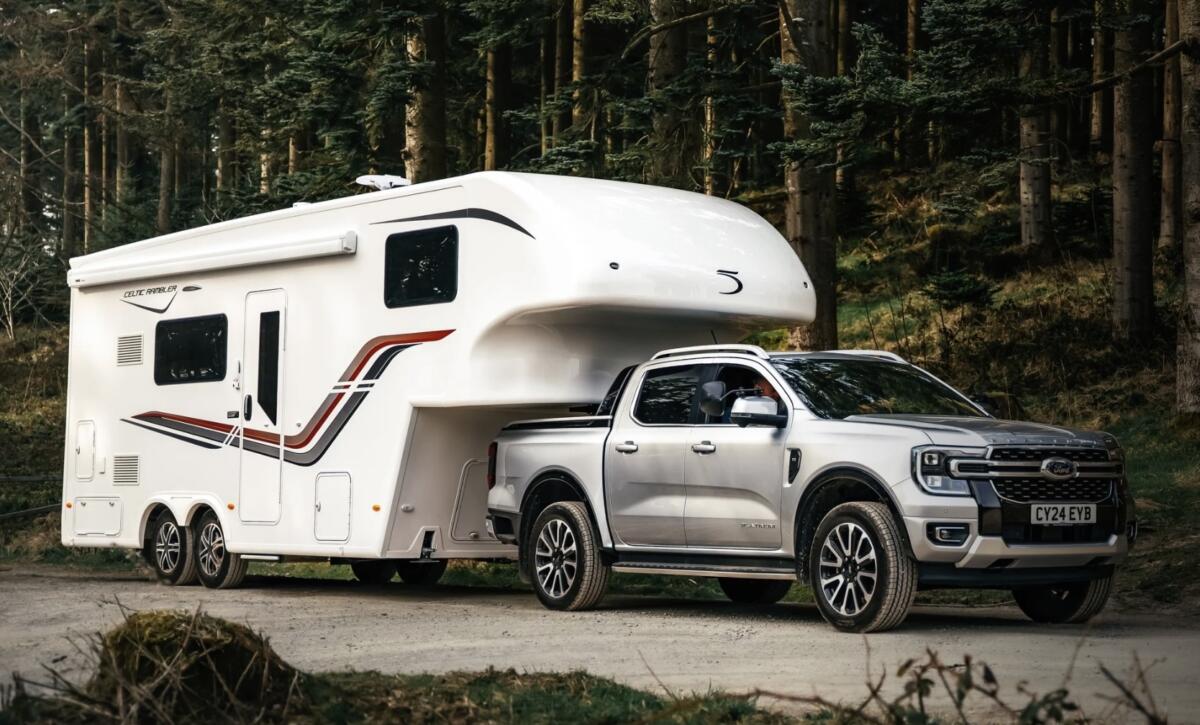
2026 Celtic Rambler—a gorgeous and unusual European fifth wheel

At the Caravan Salon in Düsseldorf, Germany, Myles, of Myles RVs, came across something that still feels unusual in Europe: a true fifth wheel RV. Since this is the largest caravan and RV show in the world, it was the right place to spot one. The surprise was not just that it existed, but how different it looked from a typical U.S. fifth wheel, in size, build quality, and price. It is gorgeous! 


Tanner Toons
with Tanner Woods

Tranner Toon.
You may share this Tanner Toon, unaltered, on your website, blog or social media with our compliments. The musings from Tanner Woods’ creative mind appear in this newsletter every Saturday and Sunday and in many RV Daily Tips newsletters through the week.

THE MORE YOU KNOW… Bananas can’t ripen properly below about 57°F—which means if you’ve ever stored them in your RV fridge to “keep them fresh,” you may have actually stopped them from ripening altogether. The result? A bunch of stubborn, never-sweet bananas… and a reminder that not everything belongs in RV cold storage.


“WHY DO I ALWAYS MISS OUT?” That’s what you’ll say if you miss a super-great bargain today only on something you really want! CHECK HERE!


In the RV shop with Dustin
Navigating RV roof replacement through insurance

One of our readers, Ty, asked: “We have roof damage due to hail. Insurance has agreed to replace it, but I think it is a lowball settlement with labor cost being quoted at $125 per hour…” Continue reading for Dustin’s answer.


Version 1.0.0Fresh, flavorful diabetic diet meals for RVers over 60
Eating well on the road doesn’t have to be complicated or bland. This diabetic cookbook for people over 60 is packed with quick, practical recipes designed to support steady blood sugar and boost daily energy, all with simple ingredients. With clear nutrition info and a built-in 4-week meal plan, it takes the guesswork out of healthy cooking so you can focus on feeling good and enjoying the journey. Learn more or order.


Article and video
A brief history of fire towers in America

Fire towers hold a special place on America’s public lands. They began as practical tools for spotting smoke, yet over time, they became symbols of forest protection, wildfire history, and life in remote mountain country. Their story runs from the 1910 Big Blowup to today’s smaller but still active lookout system, where human eyes remain a trusted backup when newer tools fall short. In this video, the team from National Park Diaries takes a brief look at their history.


The latest news for RVers

To read more recent news, click here.


Featured article
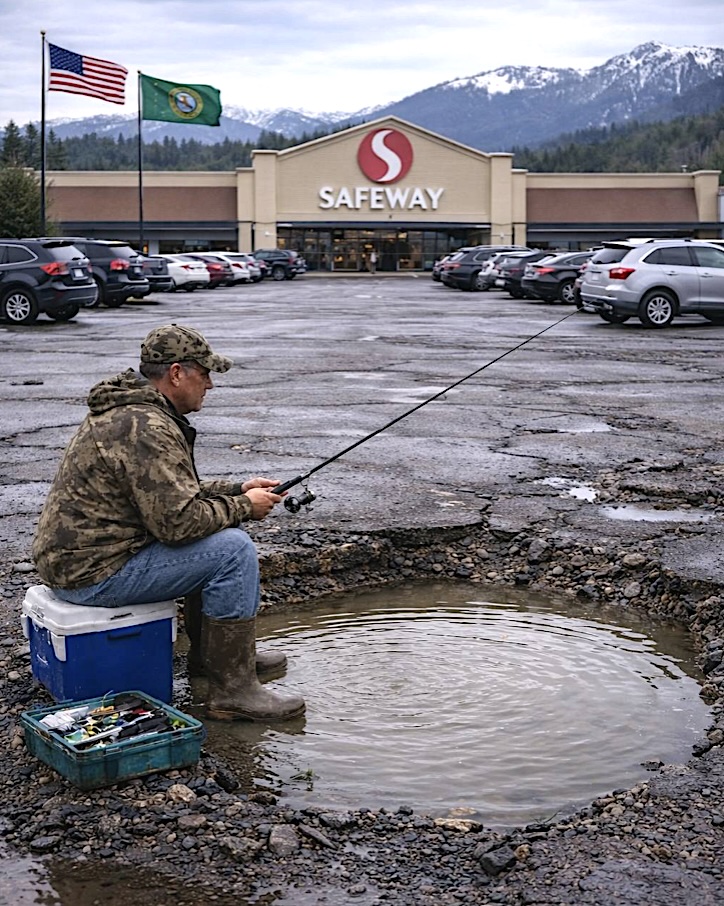
Beware the damaging dips: Our motorhome got stuck. Really stuck

By Nanci Dixon
Ouch! Our motorhome got stuck. Really stuck. It has taken me a while to recover enough to even write this sad story. And to all those who would never ever find themselves in this predicament… never say never! 30 years of RVing and not one mishap until now. Read more and hopefully avoid the same fate.


MONDAY TIP: Start the week like you start a trip—full tank, open mind.


Ask Dave
What is the best way to check the level of my RV?

Read Dave’s answer.


Reader poll
Was the first RV you purchased motorized or a towable?

Respond here.


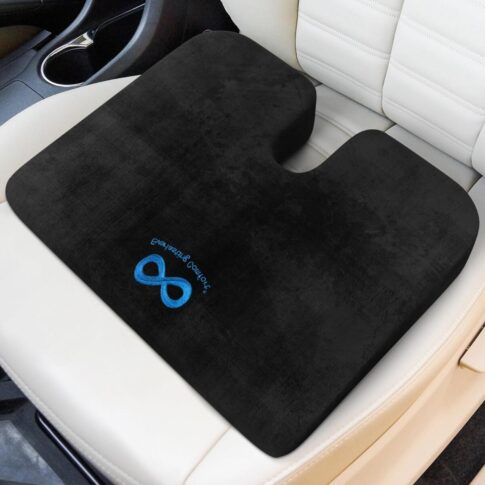
ButtcushionMake RV driving days easier on your back, hips, and behind
If your hips and lower back start complaining after a few hours of driving, this memory foam wedge seat cushion can help. It adds a small lift for better posture and visibility while relieving pressure on your tailbone and lower back. With supportive foam, a non-slip base, and a washable cover, it’s a simple upgrade that makes those miles much more comfortable.


Quick tip
Too-short faucet fix

Reader Phil writes, “In our RV, the faucet in the bathroom was just too short to enable us to wash our hands without spilling water all over the counter. Standing there pondering a solution, including a new faucet, I recalled that a small piece of hardware was available that would fix the problem nicely. Replace the aerator with a swivel! Works great!” Here’s one from Amazon.


Website of the day

11 Most Beautiful Ferry Rides You Can Take In The U.S.
There’s something special about ferry rides, wherever you take them. This list of the 11 most scenic ferry rides is making us reallllly want to hop aboard.


New! Monday Motivation

“The modern world is optimized for convenience, not improvement.

“The default path is usually the more convenient path. And I get it. Who wants their days to be a pain in the neck? I like sitting in air-conditioned rooms and watching my favorite shows, too.

“But the body and mind only grow when placed under a stimulus. If you want improvement, you have to choose something different than convenience.

“It can be lovely to have a day where you do not push yourself, but it rarely works out well if you have a life where you do not push yourself.” —James Clear


Trivia

The national animal of Scotland is the unicorn. The unicorn was chosen as Scotland’s national animal in the 12th century, symbolizing purity, innocence, and power. Its association with the mystical and its portrayal as a noble creature appealed to the romantic sensibilities of Scottish culture. The unicorn’s presence on royal coats of arms reflected qualities valued by the Scottish monarchy, such as strength and independence.


? MYSTERY PRODUCT OF THE DAY ?
Oooooh, we jump for joy when we come across space-saving gadgets! We need this one, and there’s a very good chance you do, too!


Readers’ pet of the day

Img 20251009 195346959 Cd3f1929b610c67cd4403e612dded568“Reba’s a big baby (Great Dane, age 3). She loves visiting with new people and is happiest when she leans on me while ‘nursing’ her blankie. Last year, we dressed her up for a Halloween weekend, and she was the best unicorn ever!” —Gretchen Lange

Hey, Reba looks like the national animal of Scotland! 😂

Send us a photo of your pet with a short description. No blurry photos and please do not submit your photo more than once. Thanks!

Pet Food and all pet products at Amazon
RVing with Dogs group on Facebook. You’ll love it.


Leave here with a laugh


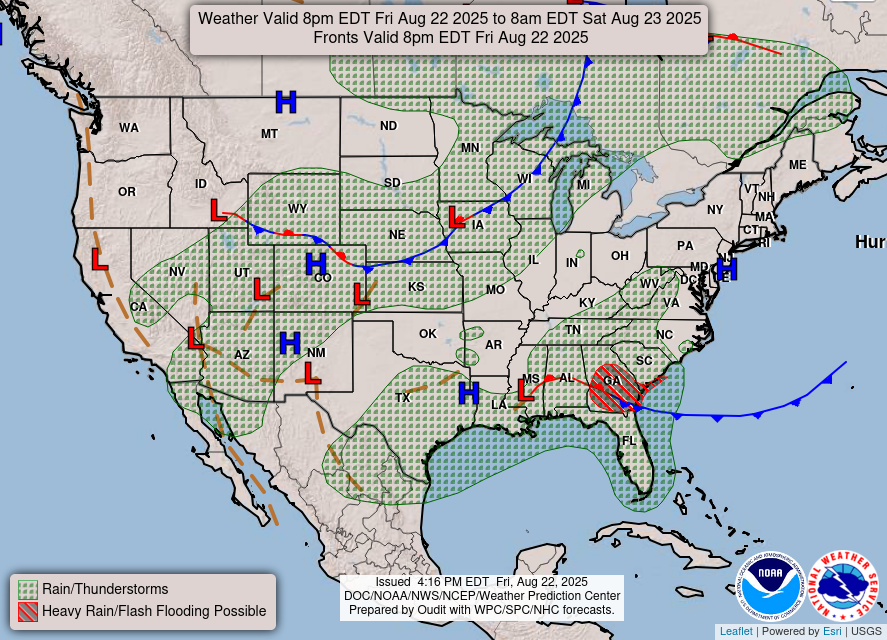
Today’s weather forecast across the nation
THIS MAP UPDATES TWICE A DAY

Visit Current National Radar Weather Map


Did you miss the latest RV Travel Newsletter? If so, read it here.
Oh, and if you missed the Latest News for RVers, make sure to catch up here.


If you shop at Amazon.com we’d appreciate you using this link. We get an itty bitty commission if you buy something, but they add up and help us pay our bills (most importantly our hard-working writers!). 


RVtravel.com All-Star Team

Click here for information about our staff and how to contact us.

WHY WE ASK FOR DONATIONS INSTEAD OF SELLING SUBSCRIPTIONS.

Our policy on using artificial intelligence.

What is the best way to check the level of my RV?

Dear Dave,
What is the best way to show the level of my rig? Seems the level on the console is out of whack. I use a 24” level rig now to do front and back. Any suggestions? —David, 2000 Bounder 39Z

Dear David,
There are a few critical areas on a motorhome that need to be level, or at least close to level. I assume your 2000 Bounder has a Dometic absorption refrigerator, which operates on LP gas or 120-volt electric.

Refrigerator needs to be level

The refrigerator cooling unit contains a liquid solution made up of hydrogen, ammonia, sodium chromate, and water. The liquid is heated either by a flame in LP mode or by a heating element when running on 120-volt electric. This heat turns the liquid into a vapor that travels up to the evaporator coils where it “flashes,” which removes heat and creates the cooling effect.

There are several chemical reactions involved, but the important point is that the vapors eventually turn back into liquid and must flow back down through the cooling unit tubes to the vessel.

Ref Cooling Unit
Refrigerator cooling unit

Dometic requires the refrigerator to be level within 3 degrees side-to-side and 6 degrees front-to-back. If the refrigerator is not level, the liquid can pool in a corner and fail to recirculate properly. This causes the liquid to overheat, begin to flake (which reduces cooling efficiency), and eventually the material can solidify. When that happens, the cooling unit or the entire refrigerator must be replaced.

In your owner’s packet, there should have been a round bubble level with a circle in the center. Place this level in the bottom of the freezer. If the bubble is at least halfway inside the circle, the refrigerator is level enough to operate safely.

It is important to check level at the refrigerator itself because the countertop or dinette table may not be level even if the coach appears level. After 25+ years, you may no longer have the original level, but replacement bullseye levels are easy to find on Amazon here.

Ref bubble level
Refrigerator bubble level

RV needs to be level before opening slide rooms

The next issue is having the unit level and stabilized before operating the slide rooms. You did not mention whether you have slides or which mechanism, but Fleetwood Enterprises commonly used Power Gear rack-and-pinion slide mechanisms.

If the motorhome is not level and stabilized, the chassis and floor can be slightly twisted. When this happens, the sidewall opening is no longer square, which creates resistance on the slide room, mechanism, and motor when extending or retracting the slide. Generally, if the coach is level enough for the refrigerator, using the bubble level method, it is level enough for the slide mechanism.

Slideroom gear
Slide room gear

RV should also be level for your comfort

A third concern is personal comfort, especially when sleeping. In addition to using the bubble level in the refrigerator, I mount a small cross level on the outside rear corner near the bedroom. This allows you to fine-tune the leveling so the refrigerator stays within its acceptable range while also making the bedroom more comfortable for sleeping. You can find one on Amazon here.

Cross Level
Cross level

 You might also enjoy these posts from Dave 

DAVE HAS ANSWERED MORE THAN 1,000 readers’ maintenance and repair questions. Read a directory here. There is so much to learn!


Dave Solberg is a leading expert in the RV industry and the author of the “RV Handbook.”

HAVE A QUESTION FOR DAVE?

Send your inquiries to him using the form below.

Name
Drag & Drop Files, Choose Files to Upload

RVDT2871

Smart ways to use suction cups around your RV

1

I’ve been hesitant to use (and recommend) RV products that rely on suction cups. That’s mostly because I remember (and cringe at) past failures.

But today’s suction cups are so much better than those from the past! Of course, it’s still wise to consider product reviews, follow installation directions carefully, and check the item periodically to ensure the suction cup stays put.

How it works

Suction cups are simple physics. A flexible cup pressed against a surface expels most of the air between cup and surface, creating a partial vacuum. Atmospheric pressure then pushes the cup tight against the surface, and the cup’s flexible rim forms a seal that resists sliding and releasing. Modern designs add textured rubber, levers, or screw-tight “power lock” mechanisms to increase holding force and longevity.

Why use suction cups for RVing?

Suction cups are an RVer’s friend. They’re repositionable and typically leave no marks when removed. You can forget about a hammer, nails, a screwdriver, and screws. Oh, and no more patching holes!

Suction cups also work well on the smooth plastics, laminates, glass, and tiles you find inside and outside your RV. I like to use suction cup products when we’re in a campground for an extended period of time.

How to apply

If you carefully follow the manufacturer’s directions, your suction cup item will adhere as long as you need it to. Here are some general directions to ensure your suction cup item stays put.

  • Clean both surfaces thoroughly. Oil, soap film, and dust wreck the suction seal. Use isopropyl alcohol or a non-waxy cleaner, then dry with a lint-free towel.
  • Warm the suction cup slightly in your hands or with a hairdryer (low heat) to make it more pliable.
  • Press from the center outward to expel air, then engage any lever or twist-lock on the cup.
  • If the cup uses a rubbery face, a tiny smear of petroleum jelly on the rim (not the whole face) can help form a better seal in cold conditions. However, use it sparingly so it doesn’t attract dirt.
  • For showers and long-term installations, periodic checks and a re-seat after a week are good habits.

Note that many of today’s suction cup products use a lever or pump to increase suction. Follow the cleaning procedure as usual and then consult the manufacturer’s directions for application.

Outdoor considerations

Sun, salt spray, and wide temperature swings can shorten suction life. Marine-grade mounts and heavy-duty cups are built to resist UV and salt corrosion. However, even those applications need clean surfaces and regular checks.

If you plan to use suction mounts outside your RV, look for products rated for outdoor or marine use. Then test them at a low height before trusting valuables to them.

Measuring and planning

Measure the space you want to use, including lip, trim, and any curve in the wall. For shelves and caddies, measure both the available width and the vertical clearance (top-to-bottom) so bottles and items won’t hit the ceiling or door. When in doubt, tape a cardboard template to test spacing before you buy.

If you’re fitting onto a curved surface (some RV interior walls are slightly bowed), check the curvature. A small straight-edge (or the flat base of a level) will show gaps. Suction cups need flat, non-porous surfaces, so either pick a flatter spot or use smaller individual cups instead of long bars.

For paper towels and mugs, measure roll diameter and handle clearance. For tools, measure lengths and handle widths so nothing overhangs or interferes with daily use.

For heavier items, measure the diameter of the suction pad recommended by the manufacturer, and remember that larger pads distribute pull better. Test by pressing the suction cup for one minute and add a known weight (like a full half-gallon jug).

Suction-cup products for RV kitchens

Many RV countertops are suitable for suction cup products. Smooth-surfaced backsplashes also work well, as do cabinet doors and backsplashes. Here are some of my favorite suction cup products that work well in the kitchen. (I’m certain you will think of additional places in your RV to use them, as well.)

Sink caddy

These handy products hold and help to dry your kitchen sponge or dishcloth. Many styles will also accommodate detergent bottles or bottle scrubbers. Check out this page for products that will best fit your RV kitchen sink.

suction cup kitchen utensil hook amazon image

Utensil keeper

I love having my cooking/baking utensils close at hand, rather than in a drawer. This utensil keeper frees up counter space as well as holds spatulas and more, right where you’ll use them most.

suction cup paper towel and spice holder Amazon image

Paper towel and spice holder

The dual design of this suction cup paper towel and spice holder frees up counter prep space while holding frequently used spices along with a roll of paper towels.

Shelf

Countertop shelf

Although it’s designed to sit at the kitchen sink, this shelf also works very well on a counter. I can see placing it near the stovetop where it can keep cooking sprays from toppling over and corral additional utensils.

Living room applications

General-purpose suction cups can be used to hang your hat, dog’s leash, keys, and more in your RV’s living space.

Treat mat and pet dish

LickmatMake your furry friend happy with these treat mats. Your doggie will have no problem licking up her treats because the suction cups hold the mat securely to the floor or even the fridge.

If your dog requires a slow feeding, this dish will help. And your pup won’t push it all over the RV floor because the suction cups hold it in place.

Blackout curtains

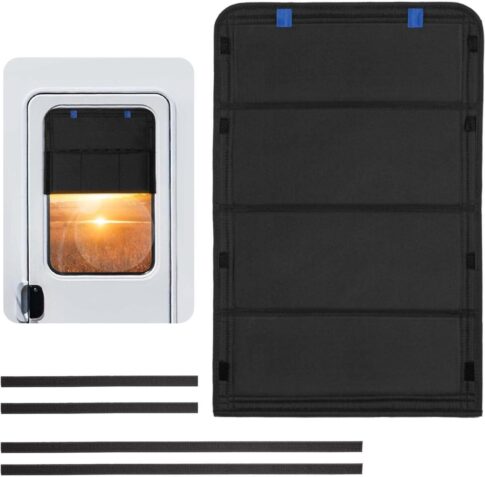
There are many blackout curtains that fasten to your RV windows with suction cups. This allows you to easily install/remove them without permanently mounting anything to your windows or walls.

Bathroom products

Suction cups have been used in the bathroom for a long time. I remember having a suction cup holder for Dad’s bar soap. It held his Lava bar securely in place!

Here are even more suction cup applications for your RV bathroom.

Mirror

This anti-fog mirror is perfect for guys who like to shave in the shower. If your shower surround isn’t smooth, try fastening it to the glass door. You can easily remove it if necessary.

TP holder

Check out these toilet paper roll holders. If wall space is limited in your RV, consider a cupboard door nearby.

suction cup bath mat amazon image

Shower mat

I like that this shower mat can be trimmed to accommodate different shower configurations. The suction cups make the mat non-slip, too. A definite plus!

Caddy

This shower caddy will contain shampoo bottles, conditioner tubes, a razor, and more. This particular choice comes as a set. I’d put one in our shower and the other on the bathroom wall for makeup and hygiene necessities.

ToesuctionFunny toothbrush holder

Yes, you’ll laugh every time you brush your teeth with this suction-cup toe toothbrush holder. It comes in hands-form, too.

Robe or towel hook

Many RV bathrooms lack a robe or towel hook. Ones positioned by suction cups require no drilling. They easily adhere to the wall or the glass shower door. Look here to find a hook that will match your RV’s interior decor.

suction cup toilet bowl brush holder amazon image

Toilet brush

This is a great suction cup solution: a toilet bowl brush with a suction cup wall mount. It makes cleaning a breeze and no more accidentally tipped containers! Yay!

Bedroom applications

Many of the products I’ve mentioned can be used in an RV bedroom. Hooks can hold jackets. Shelving can be attached to a bedroom mirror and contain jewelry, spare change, and more. Blackout curtains mounted with suction cups can block unwanted light.

LaundrybadLaundry bag

This foldable laundry bag is held to the wall or bedroom mirror with suction cups. I like the fold-away design, and with the basket lifted off the floor, it’s easier to clean the floor.

Exterior uses for suction cup products

Several of the aforementioned suction cup products can be used outside your RV. Beach towels and swimsuits will dry when hung on hooks or suction cup towel bars.

suction cup flag mount amazon image

Flag mount

This flag holder is easily affixed to the side of your RV. It will also work on the glass windshield of a motorhome. The adjustable design and aluminum alloy material make it a perfect choice.

Security mount

Use this security camera mount on the exterior of your RV while parked at your site. (Check to see that it’s compatible with your camera.)

Choose the right style

For small hanging loads, pick a simple suction cup with a hook and a good-size pad (1–2 in. diameter).

For bathroom caddies, prioritize larger cups or multiple cups per shelf and look for products with a locking lever or screw-tight mechanism.

For outdoor use, choose products explicitly rated for marine/outdoor exposure. If your RV wall has a textured finish, suction cups won’t work. Look for alternative mounting places, like cabinet backs, mirrors, glazed tile, or windows.

Pro tips

Buy spares. A cheap pack of clear suction cups in your pantry or utility drawer can bail you out if one slips.

Label the strongest cups for heavier use. Test before you trust valuables to a suction cup mount and enjoy the no-drill freedom.

Your turn

Suction cups let you try ideas, tweak placement, and remove everything without a trace when it’s time to move on. I’ve barely scratched the surface of suction cup-based products. Can you suggest additions to the list? Use the comments.

RELATED

RVDT2871

A brief history of fire lookouts in America

4

By Cheri Sicard
Fire lookouts, or towers, hold a special place on America’s public lands. They began as practical tools for spotting smoke, yet over time, they became symbols of forest protection, wildfire history, and life in remote mountain country. Their story runs from the 1910 Big Blowup to today’s smaller but still active lookout system, where human eyes remain a trusted backup when newer tools fall short.

In the video at the end of this post, the team from National Park Diaries takes a brief look at their history.

Life inside a fire lookout tower

At 6 a.m., a fire lookout starts the day with first light on the peaks, a cup of coffee, and binoculars pointed at the horizon. From a tower set high above the forest, that person scans for smoke and reports anything that could turn into a wildfire. In many ways, the lookout serves as the first warning system on the landscape.

Early lookouts did more than report fires. If smoke appeared, they often climbed down, grabbed tools like shovels and pickaxes, and headed out on foot or horseback to help contain the blaze.

How the Big Blowup changed wildfire detection

The history of fire towers is tied to the Big Blowup aka the Great Fire of 1910, a massive fire that burned more than 3 million acres in Washington, Idaho, and Montana. It remains one of the largest wildfires in U.S. history. At the time, the U.S. Forest Service was only five years old, and the disaster helped build support for an organized wildfire system built around two ideas:

  • Fire suppression
  • Early detection

A riveting book by Timothy Egan, The Big Burn, tells the story of the fire and is highly recommended by RVtravel.com publisher Chuck Woodbury, who fought fires for the U.S. Forest Service during his college summers.

Towers fit that second goal above. They gave forest managers a way to find fires faster and try to stop another catastrophe before it spread.

By the 1930s, more than 5,000 fire towers had gone up, including about 600 built by the Civilian Conservation Corps. Some were standard Aermotor Company steel towers, while others looked very different. Fire towers could be wooden, stone, ground-level huts, or even platforms in trees. Some rose hundreds of feet, while others blended into the terrain.

For a strong visual record of that era, the U.S. Forest Service’s historical fire tower photo collection offers a remarkable look at the people and structures behind the system.

From mirrors to radios, then into decline

From the 1930s through the 1950s, fire towers reached their peak. Communication improved from mirror-based Morse code to telephones, then radios, which made reports faster and more dependable. During World War II, lookouts also watched for enemy aircraft.

By 1964, only about 250 towers were still in use. Remote sensors, satellites, 3D cameras, and drones reduced the need for such a large tower network. Still, fire towers never disappeared. When cameras fail or aircraft can’t fly, someone still needs eyes on the fire.

Pinpointing a fire with two towers

A lookout’s most important tool, after the tower itself, is the Osborne Fire Finder, invented by William Osborne in 1911. It’s a fire location device based on sight lines and geometry, related in principle to older tools like astrolabes and sextants.

The device includes a circular map, a fixed compass ring, and a rotating sighting arm. Once the lookout lines up the sights with the base of the smoke, the tool gives a direction from the tower. For better accuracy, a second tower takes its own reading. Then the two lines are triangulated to find the fire’s location.

After that, the lookout calls the report in. Land managers decide whether the fire should be monitored or suppressed.

Why fire towers still matter

Fire towers are fewer now, and many full-time lookouts have been replaced by volunteers. Even so, the basic system still works much like it did a century ago. High vantage points, sharp eyes, and a direct report can still make the difference. That lasting role is why these towers remain both historic landmarks and working parts of wildfire detection.

RELATED

RVDT2871

Was the first RV you purchased motorized or a towable?

19

Do you remember your first RV? You must! We know you do—it was your first baby! Now tell us: Was it a motorized RV or a towable?

Your first RV was more than just a vehicle; it was the key to endless adventures. Whether it was a cozy pop-up camper or a luxurious motorhome, it probably came with its own quirks and personality.

Maybe you remember the thrill of packing it up for the first time, stocking the cabinets with snacks and supplies, and plotting out your inaugural trip. Or perhaps your first memory is of the RV’s challenges—learning to back it into a campsite or figuring out how to work the water pump. Either way, those moments are now part of your story.

For some, a first RV was a budget-friendly fixer-upper, bought with dreams of weekend getaways and summer road trips. It might have had a few dents and needed some TLC, but that only made it more special.

For others, their first RV was brand-new, with that fresh-off-the-lot smell and shiny features that felt like pure luxury.

And let’s not forget the sentimental value—many first RVs carried families through milestones like kids’ first camping trips, couples’ anniversaries, or retirement celebrations.

But even if your first RV wasn’t perfect, it probably taught you a lot. Maybe you learned the ins and outs of RV maintenance, how to cook a full meal on a tiny stove, or how to make a small space feel like home. Those early lessons likely shaped the RVer you are today and paved the way for the adventures to come.

After you vote, please leave a comment and tell us what your first RV was. We can’t wait to hear. Thanks!

LIKE TAKING POLLS? So do we! Did you know we’ve run more than 5,000 polls on our website over the years? Check ’em out! Have fun!

RVDT2871

Navigating RV roof replacement through insurance

By Dustin Simpson
One of our readers, Ty, asked: “We have roof damage due to hail. Insurance has agreed to replace it, but I think it is a lowball settlement with labor cost being quoted at $125 per hour. I called major companies and their going rate is $160 – $180 per hour.

Questions:

  • What are the current rates?
  • What is involved in a roof replacement?
  • Is it really replacing or just total epoxy covering?
  • I see mobile roof repairs. Are they reliable and good? Or do I need to take it in? I am living in the unit full-time, so taking it in takes planning.

Thanks for your time.”

Ty has a Grand Design Reflection, 30′ fifth wheel.

Dear Ty,
I am so sorry to hear about the hail damage to your RV! I hope the following information will be helpful as you navigate through the repair process.

Current rates

Labor rates really depend on where you are located. I’m in California, and the RV repair facilities in my area charge anywhere between $175 – $300 per hour. Additionally, not all RV roof replacements are the same. The number of attachments on the roof (A/Cs, vents, skylights, moldings, etc.) all play a role in the final cost of a roof replacement.

The cost of the roof replacement also depends on how extensive the damage is. Some RV roof replacements can be done without having to replace the wood sheeting beneath the roof membrane, while others will require new sheeting.

My best advice is not to get hung up on the initial numbers your insurance company provides. Contact your trusted and certified RV repair shop and schedule an appointment. They will work with your insurance company and negotiate the true cost on your behalf.

While there are some insurance adjusters who have actually worked in the RV industry, it’s not typical. The initial number you were provided was most likely pulled from the insurance company’s flow chart, and this number is intentionally low to prevent the insurance company from overpaying.

It is a common practice for repair facilities to supplement your insurance company. This supplement captures the difference in labor costs, freight fees, and anything additional that the adjuster didn’t consider during their original estimation.

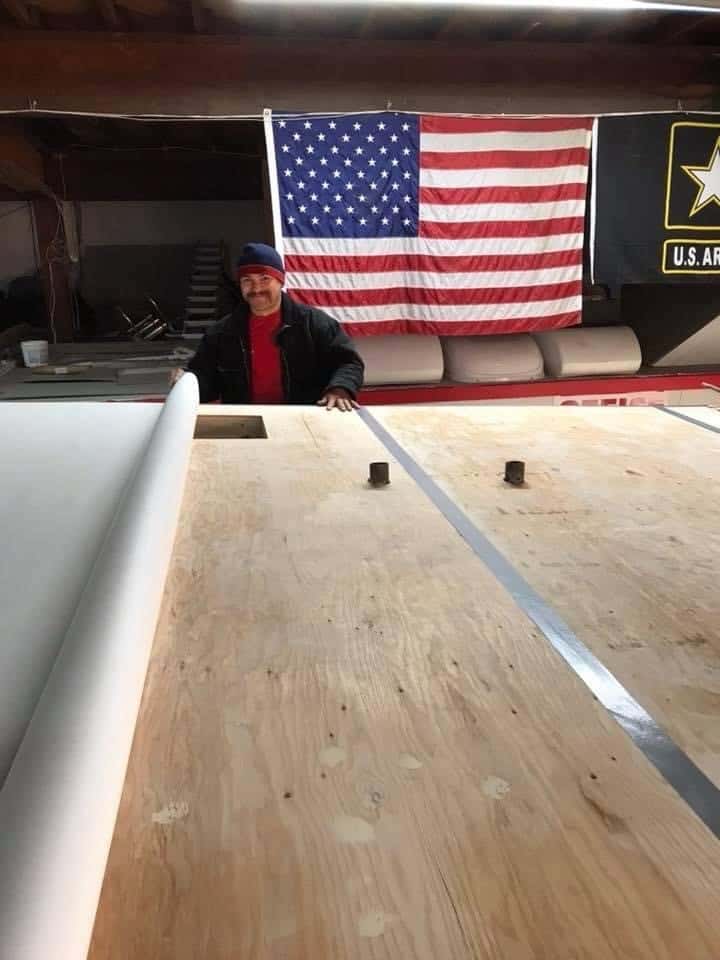
Roof replacement

A roof replacement is just that, a replacement of the RV roof.

  • All items on the roof are removed (A/Cs, vents, TV antenna, satellite, skylights, etc.).
  • The roof membrane is removed.
  • The wood sheeting underneath the membrane is then inspected to see if it can be reused or needs to be replaced or overlayed.
  • A new roof membrane is installed.
  • All attachments are reinstalled and sealed up.

A process of RV roof replacement

Roof replacement or epoxy covering?

My repair facility does not perform epoxy coverings, so my response on this might be biased. But in your scenario, I would recommend a full roof replacement. This recommendation is solely based on the theory that someday in the future, either something on your RV roof will break and/or you will want to upgrade something. When that time arrives, you can easily have the item removed and replaced by only disturbing the sealant in that area. You won’t want to disturb that epoxy coating as it will be compromised.

Mobile RV technicians

Some reputable mobile RV technicians exist but, in my experience, they’re hard to come by. Frequently, they are RV technicians who couldn’t handle production or quality standards at a dealership. Mobile technicians in my area have a reputation for not carrying required insurance, collecting or paying sales tax, and everything in between that is required and expected when running a reputable company. Because of this, they can exist one day and be gone the next.

While there are times when mobile technicians are the only option because your jacks or slide outs are stuck in the out position, I would not recommend getting something like a roof replacement done by a mobile technician. You and your insurance company will want a repair of this magnitude completed by a business that can and will stand behind its warranty.

Full-time RV living and repairs

I would estimate that about 40 percent of my customers live in their units full-time. RV repair is not like Jiffy-Lube. Unless your repair is something small and we have all the required parts and supplies on hand, it’s rare to have RV repairs completed from start to finish the same day.

My best recommendation to you is to find an independent repair shop that does not have the “luxury” of a large, vast lot. A repair facility with limited space sees its lot as expensive real estate. They won’t want to hold your unit hostage.

For something like a roof replacement, make two appointments with the shop of your choice.

  1. Make one appointment for them to take pictures and measurements for the insurance estimate. This allows them time to negotiate everything with your insurance company and then to order all items in advance.
  2. Make an appointment for the roof replacement.

Some insurance plans may cover all or a portion of hotel accommodations while your unit is being worked on.

Lastly, communicate clearly with your repair facility about your living situation, so they can plan appropriately on their end, as well.

RELATED

More from Dustin

Read more of Dustin’s articles here.

Dustin owns and operates California RV Specialists, an independent RV repair shop located in Lodi, CA. He thrives on sharing his knowledge and enthusiasm of RV repair and maintenance with his team, customers, and virtual friends.

Be sure to check out his YouTube channel where he shares what’s going on in the shop and the product offerings in the store. Dustin is also very active on Facebook. Join his group, RV Repairs and Tips – What’s in the shop!

RVDT2871

2026 Celtic Rambler—a gorgeous and unusual European fifth wheel

At the Caravan Salon in Düsseldorf, Germany, Myles, of Myles RVs, came across something that still feels unusual in Europe: a true fifth wheel RV. Since this is the largest caravan and RV show in the world, it was the right place to spot one. The surprise was not just that it existed, but how different it looked from a typical U.S. fifth wheel, in size, build quality, and price.

A rare fifth wheel at a European RV show

Big towable RVs are not common in Europe. Most buyers lean toward smaller caravans/trailers or motorhomes, and trucks are far less common, too. In four days at the show, Myles only spotted two half-ton trucks, both in this display.

That makes the Fifth Wheel Co. Celtic Rambler stand out even more. It is described as the only fifth wheel manufacturer in Europe, and its units are built more like made-to-order products than dealer inventory. Buyers can tailor them, then wait about six months to a year for the build. The brand also offers the smaller Dream Seeker, aimed at lighter trucks such as a Tacoma-sized pickup or a Volkswagen truck.

Weight matters more than size

The towing numbers are where things get interesting. This fifth wheel has about a 1,300-pound hitch weight, which is a lot for a half-ton truck. In U.S. terms, that usually pushes buyers toward a 3/4-ton truck, even though the total trailer weight stays under 10,000 pounds.

Here is the quick spec breakdown:

Spec lbs. kg
Dry weight 7,275 3,300
Gross weight 9,480 4,300
Payload capacity 2,200 1,000

So, the overall trailer weight looks manageable, but the payload is the real issue once passengers and gear go into the truck.

The interior feels far more upscale than expected

Celtic Rambler 5th wheel interior

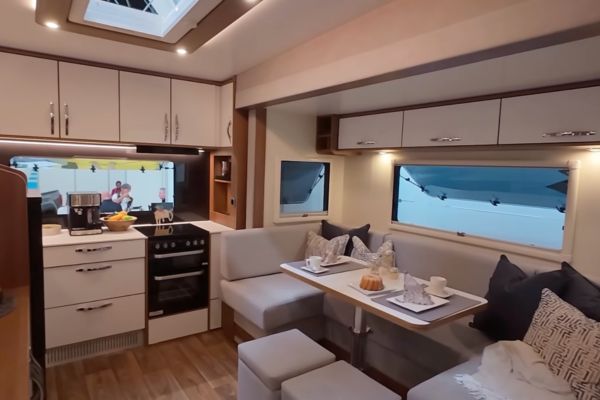
Inside, the Celtic Rambler feels closer to a high-end motorhome than a small fifth wheel. The layout shown had two skylights, two-tone cabinetry, a U-shaped dinette, and materials that looked solid and light at the same time. Myles also found a washer-dryer unit and a dishwasher, which is not something most people expect in a fifth wheel this size.

The kitchen used an L-shaped counter, Corian countertops, a large round sink, a four-burner stove, and double ovens. Meanwhile, the heating system appeared to be Alde radiant heat, not the usual floor vents seen in many U.S. towables.

Upstairs, the bedroom has twin beds that can turn into a king. The bathroom added a full-length mirror, a towel warmer, and a surprisingly roomy shower.

Full fiberglass construction changes the whole conversation

The exterior may be the biggest story. The front cap, roof, underbelly, and even parts of the slide structure appeared to be molded fiberglass. That means fewer seams, cleaner finishing, and a much more polished look than many U.S.-built fifth wheels.

Other European details stood out, too. It uses a cassette toilet instead of a large black tank, likely because weight rules are stricter. It also appears to have independent-style suspension, dual-seal compartment doors, and a 3,000-watt inverter that can run the air conditioner for a time, depending on battery and solar setup.

The price explains why the Celtic Rambler is still a niche product

This is where most buyers would stop and think. The featured unit was listed at around €228,000, and another version showed €157,000. That puts it roughly in the $170,000 to $250,000 USD range, depending on build and conversion.

In short, this is fifth wheel pricing that competes with luxury brands, not entry-level RVs. The tradeoff is clear: Europe offers tighter production, better materials, and far more refined construction, while the U.S. offers many more sizes and prices.

For anyone wondering whether this would sell in the U.S., the answer probably comes down to one thing: how much buyers truly value quality once the price is on the table.

Big Amazon RV gear sale runs through March 31— Check out these deals!

RELATED

RVDT2871

How useful are fifth wheel king pin stabilizers?

4

By Russ and Tiña De Maris
One fifth wheel owner we know refuses to set foot in her fiver unless the front end is “supported” with a king pin stabilizer. She knows it’s nuts, but she’s afraid the trailer will topple forward if she puts her weight up there without the support. Not everyone is quite so paranoid, but plenty of fifth wheel folks put a stabilizer under their king pin. Is it worth it?

The answer to that question is subjective: Some fiver owners wouldn’t do without, others simply scoff at them. Here are the facts and the fiction.

First, unless your DNA is related to Godzilla’s, there’s no way you’ll “tip over” a fifth wheel by crawling up above the king pin area. The laws of physics (and proper RV design) simply won’t allow it. So, why a stabilizer? Most supporters point to less “rolling” motion when walking in the trailer. But keep in mind that motion in a parked trailer isn’t just affected by a king pin stabilizer.

When you pull into camp and set up any rig, its own running gear, including tires, springs and occasional shock absorbers, are still going to give some bounce. Unless you get the tires out of contact with the ground, the running gear will still “give,” regardless of the number of stabilizers and their location. Most who use a pin stabilizer report reduced “bounce”—but we’ve never heard of one sitting still like a “sticks and bricks” home.

Drawbacks to king pin stabilizers

It comes down to how much bounce reduction is worth to you. King pin stabilizers have their drawbacks, among them:

Weight: To really get bounce reduction, stabilizers built of steel seem to work best. Users report lighter-weight aluminum stabilizers just aren’t as solid as steel.

Bulk: You have to store them when traveling. Mama isn’t going to put up with those big old clunkers in the fifth wheel—they’ll be in the back of your tow vehicle taking up space. And while most king pin stabilizers are like tripods, having three legs, many users report the “bipod” two-legged variety of stabilizer that takes less space is less supportive than its three-legged cousin.

Not useful everywhere: Parked in a site not close to level, you may find the stabilizers won’t work unless they have adjustable legs. If the ground under the front end of the fifth wheel slopes down, they may not reach the pin box. If the ground slopes the other way, the legs may be too long to work.

On the other hand, there is an unexpected benefit of a king pin stabilizer that many have commented on: They no longer bang their heads on the king pin. Of course, they may not be telling us about banging their shins on their stabilizer legs!

Here is a large selection of fifth wheel king pin stabilizers.

RELATED

RVT1254

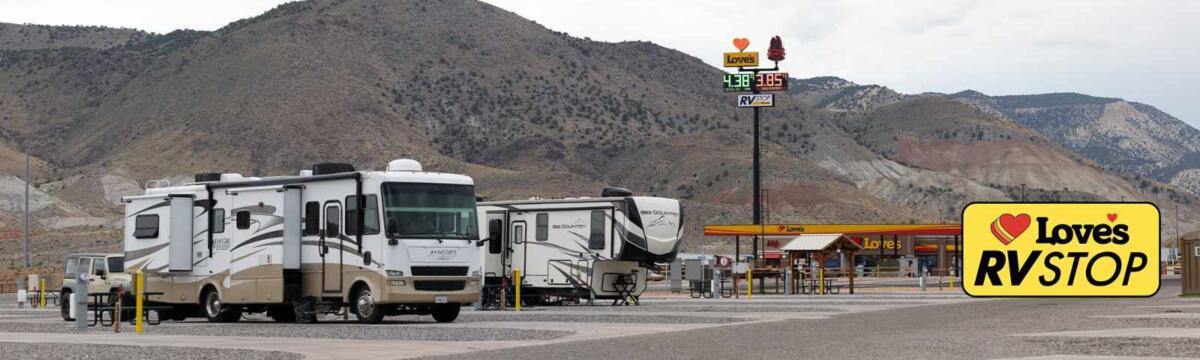
Are Love’s RV Stops worth it? My honest experience on the road

If you’ve been on the road lately, you may have noticed that more and more Love’s Travel Stops are putting in accommodations for us RVers. In fact, many of you weighed in on a poll saying that you have already dipped your toes in staying at a Love’s.

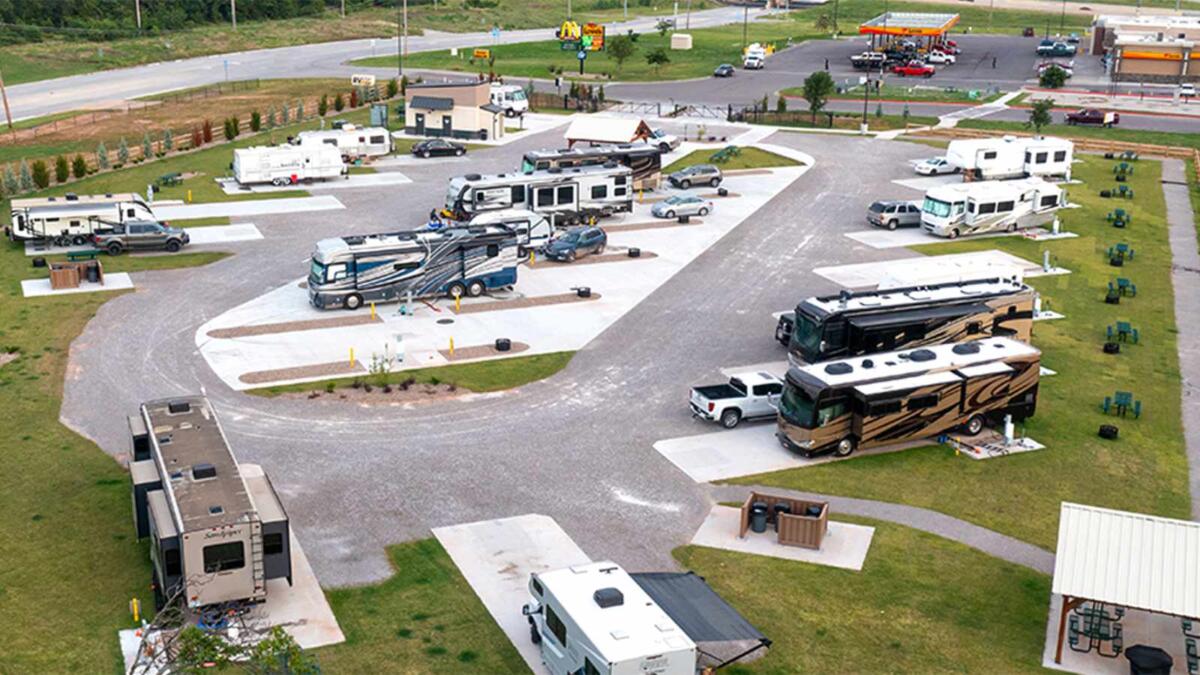
The company has committed to RVers with a variety of things, including offering overnight accommodations with hookups at some of the company’s 670 locations in 42 states. These accommodations range from flat pads with water and electric to full RV parks with a number of amenities, including pickleball, dog parks, and laundry facilities. 

Even at locations where they don’t offer paid overnight accommodations, many of their facilities offer larger parking spaces so RVers can go into their stores, which typically feature clean restrooms and an extensive number of food and beverage options. Many of these facilities include full fast food operations, but there are always aisles and aisles of snacks of all sorts, from fresh fruit to things I shouldn’t eat but love. 

Among the reasons we seek out Love’s on our adventures are the fuel savings—with their free rewards program, they offer 10¢ off per gallon of gasoline and, currently, are offering 25¢ off per gallon of diesel fuel at the retail (not commercial truck) pumps. 

What’s at a Love’s Travel Stop?

There isn’t just one format for Love’s. They range from smaller filling stations to enormous facilities that offer overnight parking and fueling for commercial trucks. The company is also growing its locations that offer specific RV-related services, including overnight spots for RVers. 

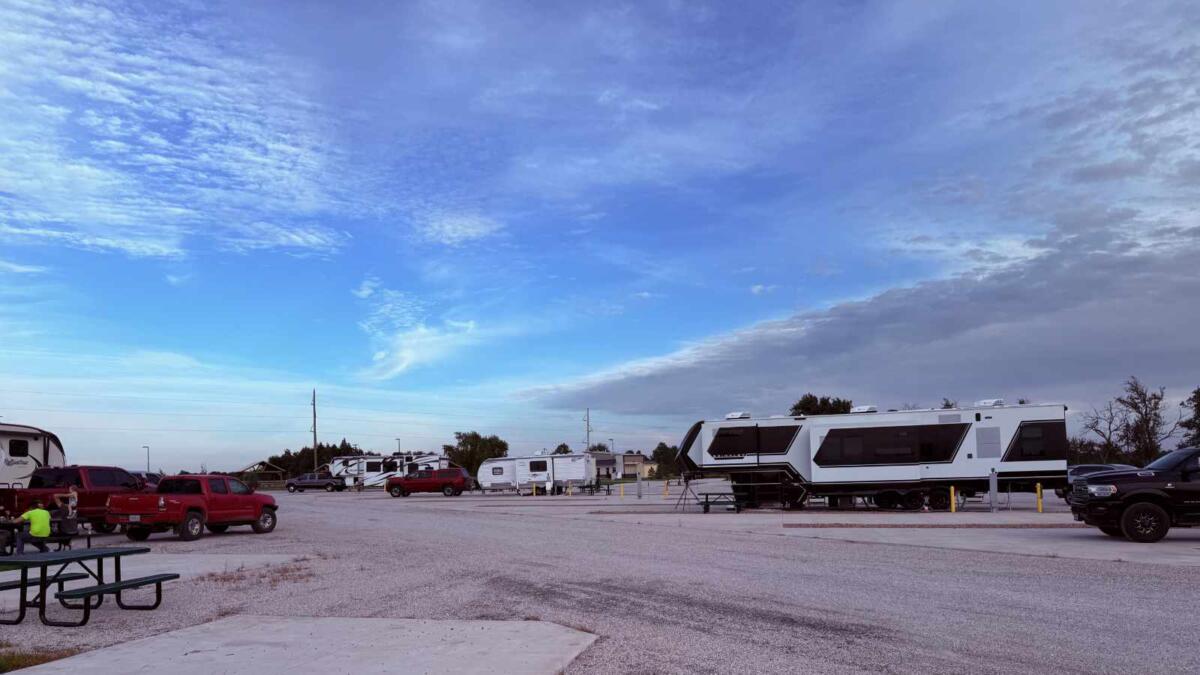
The company has seen a good response to offering sites where RVers can spend the night for a fee. These can be just water and electric or even full-hookup sites. The placement of these is anywhere from in the main lot of the facility to a completely separate RV park with amenities in addition to the basic hookups. 

There are often picnic tables, and some have covered areas, pickleball courts, dog parks (I saw someone exercising a horse at one once), and general grassy areas. 

Easy to book a site

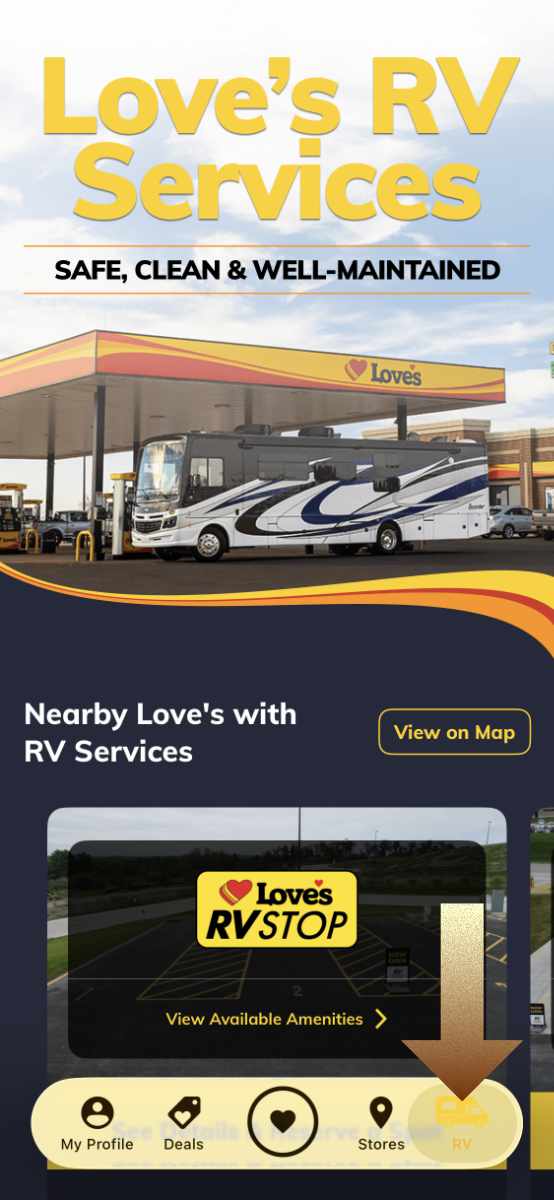
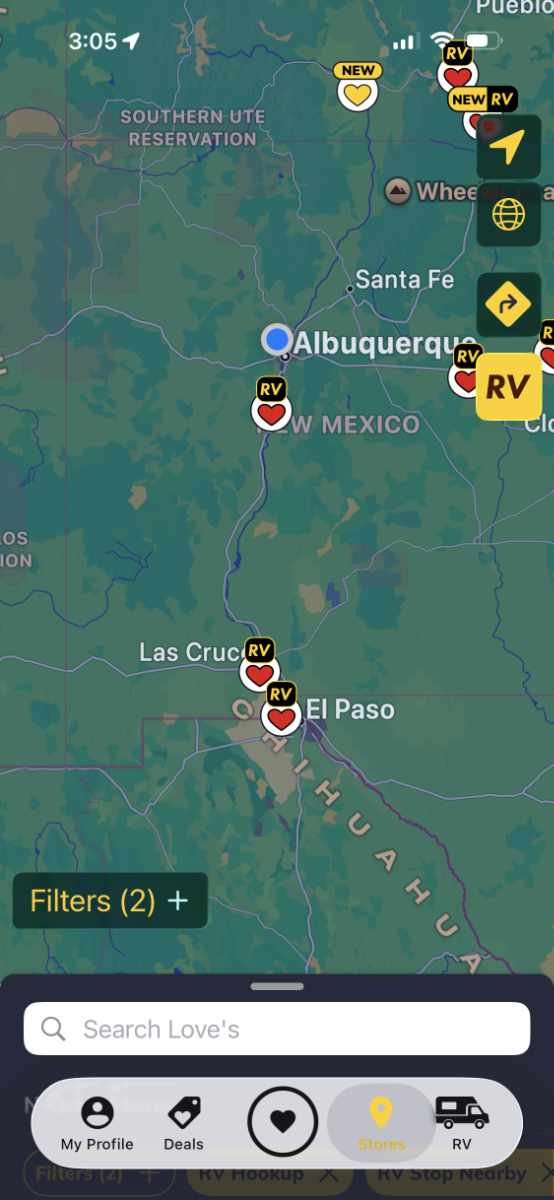
Something consistent in all of their RV facilities is how easy it is to book them. Using the Love’s app, you can simply find a Love’s Travel Stop and book the site right there in the app. The only other system that’s even close to as good as this is KOA, but the Love’s app is the best I’ve experienced. 

When you get to your site, you simply check in with the app or a kiosk, and the water and electric are turned on for you. If there are sewer hookups, the sewer connection is unlocked automatically.

At spots where there aren’t sewer hookups at the site, most Love’s have a central dump station, and many of them also offer propane fills as well. I’ve loaded up on propane plenty of times at Love’s.

More locations with fast food 

The company is also offering more and more locations with one or two fast food offerings. I’ve seen choices of just about every fast food joint out there at Loves. 

Since many of these are also truck stops, they offer showers, and some even have laundry facilities. If you have this vision of a truck stop shower as something you’ll need to take a shower afterward, you haven’t seen how fancy these shower facilities are. They’re nice. 

If you listen to the podcast interview I’ve included below, you’ll notice that I mention the coffee multiple times. Love’s has these coffee machines that grind the beans for your specific cup of coffee. Many of the facilities have two of these with three bean choices each. They make some great coffee, by my standards (I’m pretty picky), and the price is really fair. Plus, if you ruin your coffee with creams and flavors and sugars and all of that, they have plenty of choices. 

Something I should stay away from, but don’t, are the roller foods. If you picture one of those hot dog rollers from convenience stores of yore, you’ll know the device. But Love’s has a number of things they cook on these, and I’m a fan of all of them. I’m sure they’re not healthy, but life is a terminal condition as it is.

Peggy is particularly fond of their chicken offering, which is a slightly spicy and very tender package of chicken wings and drumsticks. We’ve probably eaten our weight in these over all our travels. 

More offerings

Lastly, the company is also expanding the offerings in their facilities, including now offering RV tires and other things we RVers might find ourselves in need of along the way at some locations. There are also some facilities with huge truck washes, and they’ll gladly spiff up your RV for you. 

Loves RV Stop (from Love’s)

Who is Love’s?

Love’s is still a privately held company, much like Buc-ee’s, but the Love’s family actually likes RVers. Not that I’m casting aspersions on Buc-ee’s and their “F” rating from the BBB

Something I’ve found is that it must be a positive experience to work at Love’s, as I’ve found the vast majority of their team members are really nice and polite, and can answer questions and such.

The good, the bad, and the noisy

Let’s be honest, first of all. These are not places I would choose as part of a vacation stay. In other words, they’re not some RV resort where you’re expecting some great peaceful setting along a lake. 

What they are is a very, very convenient and well-maintained place to get off the road and rest in your RV. 

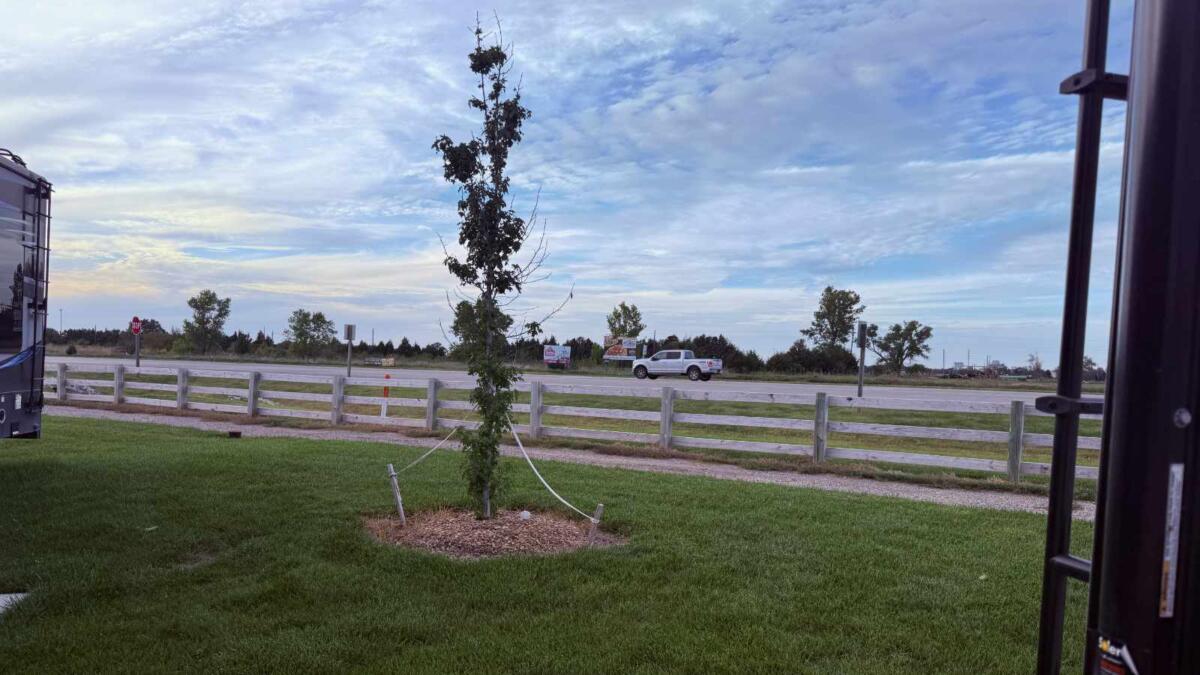
Almost all the Love’s locations are very close to a highway, so, naturally, they’re as busy as the adjacent highways. For the most part, they are very brightly lit, and there is continuous truck traffic. Depending on where the RV sites are located, this can be at some distance from where the trucks come and go—or almost right in the path of where trucks come and go. 

They’re also not cheap. I’ve paid from the mid-$40s to the mid-$60s. But something that’s always true: everything works very well, the sites are level, and the place is clean. Since this is a newer venture for the company, the equipment is newer, too. 

The goal is really to find a place to rest on your way to wherever you’re going, rather than to seek out a place to share in photos with your friends on Instagram. 

But something I haven’t found is that availability is limited. Any time I’ve decided it’s time to get off the road and rest for the night, and there’s a Love’s RV stop, there is a place for me. 

The other thing is, if it’s late at night, I can book a reservation right then. If it’s early in the morning, same thing. The adjacent Love’s convenience store and, more importantly, the bathroom therein is going to be open, well-lit, and clean. 

Learning more about Love’s

If you don’t know, my wife and I do a weekly RV podcast where we try to learn from people in the RV space. We had the chance to speak with Jim Wheeler, Director of RV Operations for Love’s. I’ve included the video interview here, but you can also listen to our audio-only interview with Love’s here. Heck, you could even subscribe to our weekly podcast! What a great way to while away the miles. 

While I don’t think that the Love’s RV Stops are going to supplant traditional campgrounds any time soon, I do believe they offer something good. Many of us still don’t make plans before we leave, or don’t plan all the stops, and find ourselves weary after all those miles. With how easy it is to book at Love’s RV Stop and how dependable they are, there is definitely an appeal there. We’ve stayed a number of times and likely will do so again in the future. 

RELATED

RVT1254