We received this email and these photos from reader Kevin S. He wrote, “I was looking for an alternative to the expensive, heavy and space-consuming Rev-A-Shelf drawer peg system for stopping dishes from sliding around while underway.
“I found these self-stick hat hooks on Amazon. They work fantastically and cost a fraction of the Rev-A-Shelf product. Using these you also don’t lose any drawer depth because of a 3/4” plywood base.”
Brilliant idea, Kevin! Thank you for sharing!
These hat hooks come in an 8-pack and will stick to just about any original drawer surface. (They may not stick if you have textured drawer liner in your drawers.) Stick them wherever you need them and create custom “spaces” for each piece of dishware, or appliance… you name it!
See Kevin’s photos below for ways you can use them to organize your drawers and keep everything in place while driving.
By Dustin Simpson
In the world of RVs, unforeseen challenges can emerge. My team at California RV Specialists recently encountered a concerning issue while maneuvering a Forest River Wildcat around our service yard.
The owner of the unit had been unaware of the potential danger lurking beneath the surface—pin box frame flex.
Join us below on YouTube as we delve into the details of the frame damage discovered and witness the meticulous repairs carried out by my crew.
Picture by California RV Specialists of unit setting on lot before tear down inspection was approved.
The discovery: Signs of frame flex
As the unit was being carefully moved through the yard, we detected subtle signs of pin box frame flex, a concern that could jeopardize the structural integrity of the entire RV. We investigated further.
Front cap removed for inspection of frame.One of the two locations of frame flex cracks.
We embarked on the task of repairing the frame damage. The repair process is detailed, offering insights into the careful assessment, precision welding, and reinforcement techniques employed to restore the structural integrity of the Forest River Wildcat.
Quality assurance: Ensuring roadworthiness
After the repairs were completed, the unit underwent thorough testing to ensure that the frame damage had been successfully addressed. The video provides a glimpse into the quality assurance measures taken by my team to guarantee that the Forest River Wildcat is not only roadworthy but also meets the highest safety standards.
This video not only serves as a cautionary tale for RV owners but also highlights the importance of regular inspections and prompt action when frame issues are suspected.
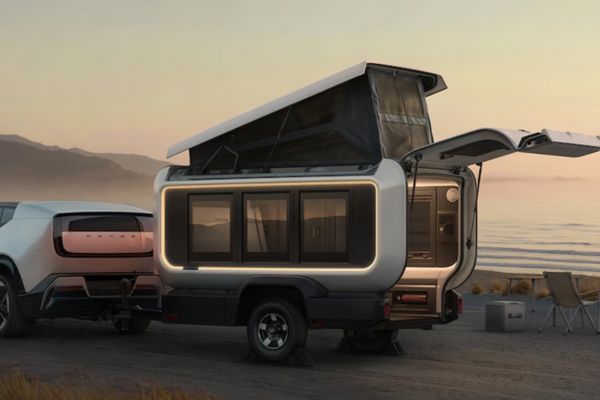
A major car maker building a small camper trailer changes the conversation fast. On the Playing with Sticks channel, Drew finally saw the Honda Base Station prototype in person after hearing about it for years, and it didn’t look like a typical RV at all. He shares his thoughts in the video at the end of this post.
Honda calls it an “industry disruptor,” mostly because it’s compact on the road, garage-friendly at home, and designed to open up at camp with real standing room and a wider living space.
Why the Base Station feels built around real camping
The Base Station’s whole pitch is simple: tow low, live tall. It uses a pop-up style top to get close to full standing height (Drew heard it was around seven feet), while still keeping a low profile for towing and storage.
That idea mirrors what a lot of small trailer owners end up doing with two rigs, a standing-height camper for comfort and a teardrop for ease. Honda is trying to blend both in one.
The trade-off is the tilt-top system. Drew called it the most likely weak point—not as a knock, but because pop-top design is hard to get right. Honda’s mesh approach looks lighter and airier than a solid composite lid, and it keeps the “outside” feeling close.
Exterior storage questions and the rear hatch that changes everything
On the sides, the Base Station looks like it may have long exterior storage compartments running toward the wheel wells. Honda would not confirm details, which left a few open questions:
How much usable storage is there, and is it easy to reach?
Do the compartments slide out, or is access limited?
Are they full-width with doors on both sides for larger gear?
The rear hatch is the visual headline. Closed, the trailer looks like a clean cube. Open, it becomes a huge sheltered space with real height, which Drew loves in a galley hatch. The twist is that this hatch is also the only entrance, while the kitchen is on the side.
That shape also looks ready-made for an annex room like the setups common in Australia and South Africa. A good example of that style is shown in the tour of the AOR Sierra trailer with an annex.
Side kitchen, weather exposure, and Honda’s electric cooking bet
The kitchen slides out on the side with a sink, cutting board, and a dual-burner cooktop that looks like induction. Side kitchens photograph well, but Drew keeps coming back to the same real-world problem: weather.
Rain, wind, and harsh sun can turn outside cooking into a hassle, and big awnings can be frustrating in bad conditions. He called out the Kammok Crosswing awning as a fast-up, fast-down alternative. But the big question is whether Honda built in awning attachment points, or expects a proprietary solution.
The bigger debate is power. Drew likes the push toward EV pairing and renewable systems, but he hasn’t seen many trailers run cooking and daily camping needs on battery alone without weight, cost, and compromise. Solar helps only when there’s sun, and he prefers camping under trees. He expects propane to still matter for most people, especially for heating and cooking.
Composite construction, bird-cage framing, and a few nerdy questions
Honda’s material choices fit the goal of low maintenance. Fiberglass reduces seams, which reduces leak points, and composites avoid wood rot if water ever gets in. An aluminum chassis helps with weight and rust resistance.
Honda also appears to go beyond classic molded fiberglass trailers like Scamp and Casita by adding an internal metal frame, similar to “bird-cage” approaches seen in some aluminum builds.
Interior layout, modular thinking, and what Honda hasn’t shown yet
Inside, the trailer looked clean and minimal. Drew liked how the queen sleeping space converts—not into a table, but into more lounge space. That makes a small cabin feel usable during the day. Honda also described a bunk option spanning between the walls.
Windows are everywhere, which brings views and airflow, but also heat. Honda used dark tint to fight the “greenhouse” effect, although it also made the interior feel darker under the show lights. Drew wanted something like vehicle-style roll-up shades, similar to what Honda already does in models like the Passport.
Storage inside seemed limited, which may be intentional. The vibe felt closer to a modular platform, where owners add what they need over time. Drew later shared a press update claiming the five windows are removable and modular, with renderings showing add-ons like window A/C and a shower. He also learned that the ambient window lighting can light up a campsite after dark.
Heating, stealth camping, water, and the bigger Honda opportunity
The Base Station can be slept in with the top down, which opens up stealth camping and helps seal in warmth for shoulder seasons. Drew heard it includes a heater, but questioned how that works off-grid if the answer is always “bring a generator.” Honda pointing to its own generators makes brand sense, but it may not match how many people want to camp.
He also heard there’s an onboard water tank, with unknown capacity and unknown freeze protection. Since tanks add maintenance and winterizing work, he wondered if portable water could be a simple workaround, and whether interior plumbing could support future modular wash or kitchen components.
The most interesting long-term angle is that Honda builds both the tow vehicle and the trailer. If Honda chooses, it could make power sharing, charging, and system monitoring feel more integrated than today’s mix-and-match setups.
The other open question is price, since Honda keeps talking about lowering barriers to entry, and many campers feel the small-trailer market has gotten expensive.
What to watch for next
The Base Station looks like a smart platform, but it still feels prototype-like in key areas: exterior storage access, awning support, off-grid heating strategy, and how deep the modular ecosystem will go. If Honda nails those details, this could be a rare trailer that starts small, then grows with a family’s needs.
The most useful next step would be a true field test with real weather, real off-grid camping, and real-time living in the space.
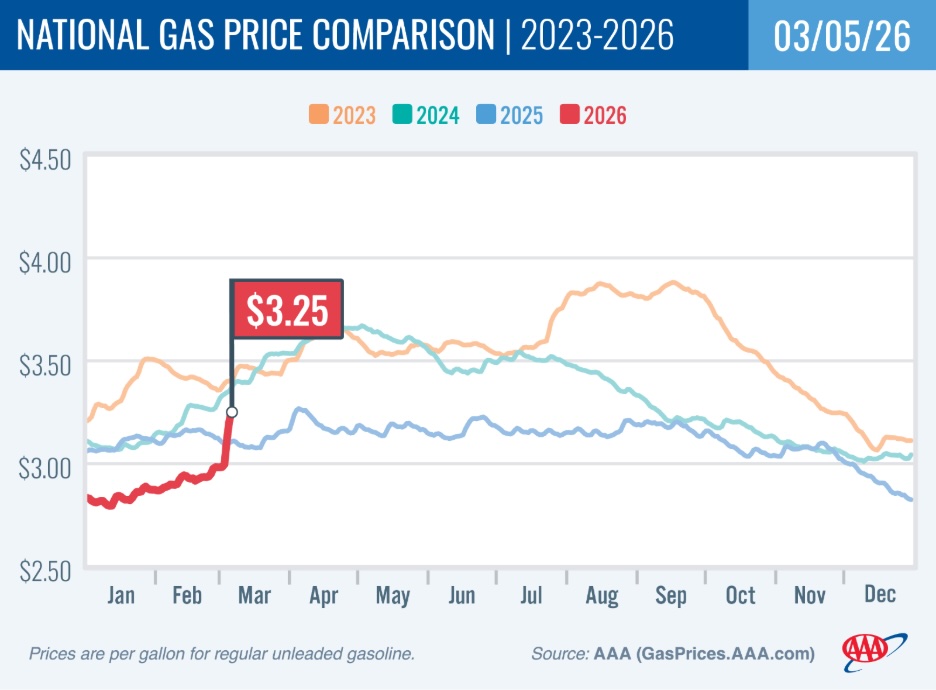
The national average for a gallon of regular gasoline jumped nearly 27 cents since last week to $3.25. The conflict in the Middle East has sent crude oil prices to more than $90/barrel.
The recent increase puts the national average at the same price as it was in early April of 2025.
Springtime typically sees higher gas prices as gasoline demand rises and summer-blend gasoline production begins. The last time the national average made a similar weekly jump was back in March of 2022, during the start of the Russia/Ukraine conflict.
• Today’s National Average: $3.251
• One Week Ago: $2.983
• One Month Ago: $2.891
• One Year Ago: $3.107
According to new data from the Energy Information Administration (EIA), gasoline demand decreased last week from 8.73 million b/d to 8.29 million. Total domestic gasoline supply decreased from 254.8 million barrels to 253.1 million. Gasoline production increased last week, averaging 9.3 million barrels per day.
Oil market dynamics
At the close of Wednesday’s formal trading session, WTI rose 10 cents to settle at $74.66 a barrel. The EIA reports crude oil inventories increased by 3.5 million barrels from the previous week. At 439.3 million barrels, U.S. crude oil inventories are about 3% below the five-year average for this time of year.
State stats
Gas
The nation’s top 10 most expensive gasoline markets are California ($4.81), Washington ($4.44), Hawaii ($4.43), Oregon ($4.04), Nevada ($3.87), Alaska ($3.72), Arizona ($3.58), Illinois ($3.36), Pennsylvania ($3.35), and Michigan ($3.27).
The nation’s top 10 least expensive gasoline markets are Oklahoma ($2.79), Mississippi ($2.81), Kansas ($2.83), Tennessee ($2.84), Texas ($2.87), Arkansas ($2.90), Louisiana ($2.90), Wyoming ($2.90), North Dakota ($2.91), and Missouri ($2.92).
EV charging
The national average per kilowatt hour of electricity at a public EV charging station stayed the same, at 39 cents.
Electric
The nation’s top 10 most expensive states for public charging per kilowatt hour are West Virginia (52 cents), Hawaii (50 cents), Alaska (48 cents), Louisiana (47 cents), South Carolina (44 cents), New Hampshire (44 cents), New Jersey (43 cents), California (42 cents), Idaho (42 cents), and Tennessee (41 cents).
The nation’s top 10 least expensive states for public charging per kilowatt hour are Kansas (25 cents), Wyoming (27 cents), Missouri (28 cents), Nebraska (30 cents), Utah (31 cents), Iowa (32 cents), Vermont (32 cents), Maryland (33 cents), New Mexico (33 cents), and Colorado (34 cents).
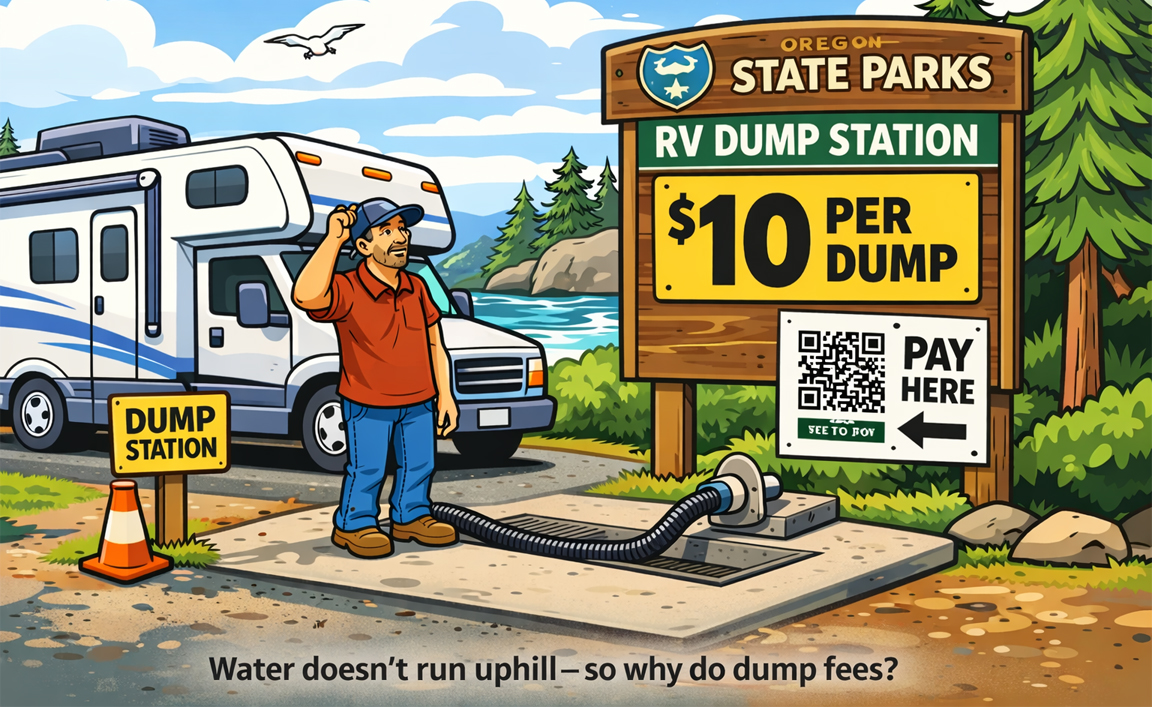
Oregon State Parks says a new $10 fee for RV dump stations will take effect March 30, 2026, marking a shift from the system’s long-standing practice where dumping was often included with camping.
The charge will apply at 19 dump stations across 18 state parks. RVers will pay by scanning a QR code posted at the station or through an online payment system.
Park officials say the change will help cover the cost of maintaining and operating the wastewater facilities.
For RV travelers used to pulling through a dump station on the way out of a campground, the change may come as a surprise.
A small fee that could add up
A single $10 charge may not sound like much. But for RVers traveling through Oregon for a week or two, it could become a regular expense.
Many RVers without sewer hookups dump tanks every three to five days. On a longer trip, that could mean several dump fees.
The change also affects travelers who rely on state parks simply as a place to empty tanks between boondocking stops.
Part of a broader park funding squeeze
Oregon officials say the fee is part of a broader effort to address rising operating costs in the state park system.
Unlike many park systems, Oregon State Parks does not receive general-fund tax support for daily operations. Instead, the system relies largely on:
Lottery funds
Fees from the state’s RV license plate program
Visitor fees such as camping and parking charges
Officials say those sources have not kept pace with maintenance costs and increased visitation.
In recent years, the agency has also expanded day-use parking permits at more parks and tightened reservation cancellation policies.
Where the $10 dump station fee may apply
Oregon State Parks says the new fee will apply to 19 dump stations across 18 parks starting March 30. The agency has not yet published a single systemwide list of locations.
However, park pages and campground information suggest the program will likely include several of the state’s busiest RV parks.
Oregon Coast
These parks handle a large share of Oregon’s RV camping traffic.
Fort Stevens State Park — Astoria
Nehalem Bay State Park — Nehalem
Cape Lookout State Park — near Tillamook
Beverly Beach State Park — Newport
South Beach State Park — Newport
Jessie M. Honeyman Memorial State Park — Florence
William M. Tugman State Park — Reedsport area
Umpqua Lighthouse State Park — Winchester Bay
Bullards Beach State Park — Bandon
Cape Blanco State Park — near Port Orford
Harris Beach State Recreation Area — Brookings
Columbia River Gorge and northwest Oregon
Ainsworth State Park — Columbia River Gorge
Memaloose State Park — near The Dalles
Milo McIver State Park — Estacada
Central and Eastern Oregon
LaPine State Park — south of Bend
Prineville Reservoir State Park — Prineville
The Cove Palisades State Park — Culver
Clyde Holliday State Recreation Site — John Day
As for the fee applying to 19 dump stations at 18 parks, that means one park likely has two dump stations included in the program.
Why states are starting to charge dump fees
For years, dump stations at many state parks were treated as a free service, especially for overnight campers. That approach is beginning to change.
Maintaining dump stations is not cheap. Parks must maintain plumbing, pumps, concrete pads, and rinse water systems. They also pay wastewater treatment charges from local sewer districts.
As visitation climbs, those costs climb with it.
Many park systems now treat dump stations as a cost-recovery service rather than a perk bundled into camping fees.
Across the West, the shift is already underway.
California state parks commonly charge about $10 per use at automated dump stations.
Washington state parks typically charge about $5, often waived for registered campers.
Arizona state parks usually include dumping for campers but may charge non-campers.
Oregon’s new $10 fee places it closer to the California model.
For RV travelers, the cost may not break the trip budget. But it is another sign that park systems facing tight budgets are looking for ways to recover the costs of maintaining heavily used facilities.
Water doesn’t run uphill, but sometimes dump fees have to.
America’s Original RV Newsletter. Since 2001
Issue 2854 • New issue every weekday
Today’s thought
“Do you think that I count the days? There is only one day left, always starting over: it is given to us at dawn and taken away from us at dusk.” ―Jean-Paul Sartre
Need an excuse to celebrate? Today is National Cheese Doodle Day! (Emily says these are the best cheese doodles in the world, by the way.)
On this day in history:1872 – George Westinghouse patents the air brake.
Tip of the day Unusual and helpful ways RVers can use old water hoses
By Gail Marsh
I think almost every RVer has at least one old water hose. When we purchased our first (and only) new RV it came with a bucket of free goodies. While several items in the bucket were worthwhile, the water hose was not good. From day one, it kinked, leaked, tangled, and frustrated us every time we RVed. It didn’t take long for us to replace that cheap one, but we were left with a problem: what to do with it. That’s when we came up with these unusual and helpful ways RVers can use old water hoses.
Article and video Thule Outset foldable hitch tent— a clever rooftop tent alternative
Many camping setups force a trade-off. Bring a trailer and deal with towing, or mount a rooftop tent and give up roof space (and sometimes the ability to quickly drive off). The Thule Outset takes a different route by mounting a foldable tent at the back of the vehicle on a hitch setup, not on the roof, and not as a trailer. That simple change opens up a few practical wins for campground life.This is pretty neat!
RV PHILOSOPHY: Adventure doesn’t have to be dramatic. Sometimes it’s just Tuesday in a new zip code.
Featured article More power, more problems: Life on the road with just 100 watts
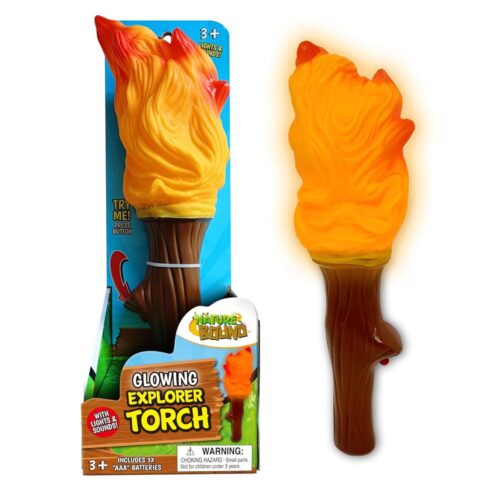
The coolest flashlight ever!
This might be advertised to kids, but we want one, too! This has to be the coolest flashlight we’ve ever seen, don’t you agree? You would look mighty cool walking around the campground with this at dusk. Plus, it comes with batteries! If you have young kids or grandkids, they’ll especially love this. Learn more or order.
Quick tip Shopping for a used RV? Keep repair costs in mind
Two things to keep in mind when allocating money for repairs. If the inside of an RV you’re looking at hasn’t been taken care of, it’s a good bet that the engine, brakes, belts, generator, etc., haven’t been taken care of or serviced regularly either. If the RV has been sitting for a while and has not been driven in a year or more, it will probably need some general (and maybe expensive) service. It could need belts, batteries, tires, brakes, etc. Of course, a camper that has been sitting unused will not need as much work as a motorhome, but more than likely, it will still need some work to make it road-worthy. —From Secrets of RVing on Social Security: How to Enjoy the Motorhome and RV Lifestyle While Living on Your Social Security IncomeAvailable on Amazon.
Reddit: RV Living Have you ever explored Reddit? Well, today might be the day to start! This is the RV Living thread on Reddit, which means all “threads” (essentially mini forums) are RV-related, and we bet you’ll walk away learning something. Reddit is a great place to learn and teach!
? MYSTERY PRODUCT OF THE DAY ? What if we told you that you’d want to drink out of this toilet bowl? Would you believe us? Heck, we’d drink out of this toilet bowl! See for yourself and you won’t think we’re so crazy!
And the survey says…
We’ve polled RVtravel.com readers close to 5,000 times in recent years. Here are a few things we’ve learned about them:
• 37 percent have a dash cam on their RV or tow vehicle.
• 19 percent buy their clothes based on price, not on quality. Only 10 percent buy their clothes based on quality, not price, and the remaining 71 percent say both are equally important when buying clothes.
• 81 percent enjoy visiting offbeat roadside attractions.
The chocolate chip cookie was invented by Ruth Graves Wakefield. She owned the Toll House Inn in Whitman, Massachusetts, a very popular restaurant that featured home cooking in the 1930s. Her cookbook, Toll House Tried and True Recipes, was first published in 1936 by M. Barrows & Company, New York. The Toll House Inn burned down in 1984, but a sign and plaque mark the site where the inn once stood.
Readers’ pet of the day
“Max (Beagle, age 14) loves to hang out with his pack camping.” —Robyn Rasset
Send us a photo of your pet with a short description. No blurry photos and please do not submit your photo more than once. Thanks!
If you shop at Amazon.com we’d appreciate you using this link. We get an itty bitty commission if you buy something, but they add up and help us pay our bills (most importantly our hard-working writers!).
Dear Dave,
Is it legal to let your car idle for a period of time to warm up the engine? I was told there are some states and even cities that do not allow it due to safety and environmental concerns? —Seminar attendee
From Dave:
While conducting seminars at the Philadelphia RV show this past weekend, I had an attendee question whether it was legal or safe to let a vehicle idle for a period of time to help the engine “warm up.”
Having lived in the upper Midwest all my life, I am familiar with this. I recently found it is also called “puffing.” Idling periods are typically lengthy in my area during the winter, especially if the vehicle is parked outside for an extended period of time and the windshield needs to be defrosted.
Also, when a vehicle sits in below-freezing weather, the materials such as plastic, fiberglass, and glass are very cold, even frigid, and can be brittle.
One of the issues we experienced at Winnebago in the winter was starting a cold unit and driving it before everything warmed up. One good bump could create a large crack in any of those materials, so we did let the unit “puff” for a long time.
What I learned
I did a little research, and there are some regulations regarding extended idling. They vary by state and sometimes the situation.
Iowa Code 321.362 requires unattended vehicles to have the engine shut off and the emergency brake activated. According to the Department of Administrative Services (DAS), state employees operating DAS pool vehicles are limited to 5 minutes of idling to reduce emissions and fuel consumption.
During my research, I found a list posted by the popular RV app, AllStays. It lists regulations for idling in every state. You can find the list here.
What about remote start vehicles
Most of the regulations I found pertained to an unattended and unlocked vehicle. That not only is a safety risk, but is also an invitation for theft. Using a remote start feature requires the vehicle to be locked before starting the car. My truck has a remote start feature and will shut off after 5 minutes of running without the door being opened and the key inserted into the ignition.
Keep in mind, the longer you allow a motorized RV to idle, the more heat gets generated from the exhaust, especially the catalytic heater and exhaust chamber in a diesel. Without airflow from driving, the heat rises and can make for a soft floor. I have witnessed that dozens of times.
By Gail Marsh
I think almost every RVer has at least one old water hose. When we purchased our first (and only) new RV it came with a bucket of free goodies. While several items in the bucket were worthwhile, the water hose was not good.
From day one, it kinked, leaked, tangled, and frustrated us every time we RVed. It didn’t take long for us to replace that cheap one, but we were left with a problem: what to do with it. That’s when we came up with unusual ways for RVers to use old water hoses.
Don’t recycle!
Water hoses should never be put into the recycling bin. Why? Because items like these are known as “tanglers” in the recycling world. Just as with ropes, chains, and cords, a water hose can really cause problems with the recycling machinery. Hoses easily get tangled up in the equipment. This can cause damage to machines, injure workers, and even force recycling plant shutdowns. Ugh!
So, don’t put your old water hoses into your recycling bin! Try one or more of the following tips to upcycle them instead.
Using old water hoses
• Bucket handle. Tired of that bucket wire handle gouging into your hand when lugging water around your campsite? Use a utility knife to cut a five-inch length of old hose. Then slit the hose lengthwise down the middle and slip it over the bucket’s wire handle.
• Blade protector. Cut the hose to the length of the sharp blade, then slit the length of the hose. Use it to protect the blades of hack saws, axes, and other sharp tools. If you RV in winter, you can use the same idea to protect your ice skate blades!
• Electric cords. To provide extra protection for outside electrical cords, slit the old hose down the middle. Then press the electric cord into it. Not only will it help protect the cord, but the hose is easier to see, especially if its color contrasts with the ground.
• Better plant drainage. Cut the hose into lengths and glue it to the bottom of your outdoor flowerpots. This will raise the pot just a bit off the ground. The water will drain better when the pot doesn’t sit directly on the ground.
• Mark boundaries. Paint it with glow-in-the-dark paint or tape. Then use the painted hose to outline your RV site, parking spot, or walkway. The paint will eliminate the need for bright lights that may well bother your RV neighbors.
• Swing wraps. You can use two lengths of hose to make covers for the chains on the campground’s swings. Slit both pieces down the middle and apply them to the swing chains. No more worrying about little fingers getting caught or pinched in the chains! Bonus: You can remove the hose parts and take them to the next campsite playground!
• Doorstop. Keep your RV’s interior doors from rocking off their hinges on moving days. Just cut a short length of hose and “squish” it flat with your foot. Then slide the hose under the door. When released, it will expand and hold the door in place.
• Funnel extension. Use a piece of old hose as an extension to your funnel. (Obviously, use the part of the hose that is not damaged or leaking!)
• Keep trash bags in place. Use short slit pieces of hose to keep trash bags in place. Simply pull the bag up and over the top of the container and apply the hose to hold the bag.
• Prevent chain tangles and tie-ups. Slit the hose and place it over the dog’s chain. The hose will keep the chain from tangling and/or catching on items.
• Pool fun. Clean pieces of hose can be tossed into the campground pool for your kids or grandkids to dive for and retrieve. (Six-inch hose pieces shouldn’t easily enter the pool skimmer/filter, but keep a close watch, just in case.)
These are only a few ideas. If you have additional suggestions, please tell me in the comments below.
By Cheri Sicard
Many camping setups force a trade-off. Bring a trailer and deal with towing, or mount a rooftop tent and give up roof space (and sometimes the ability to quickly drive off once camp is set).
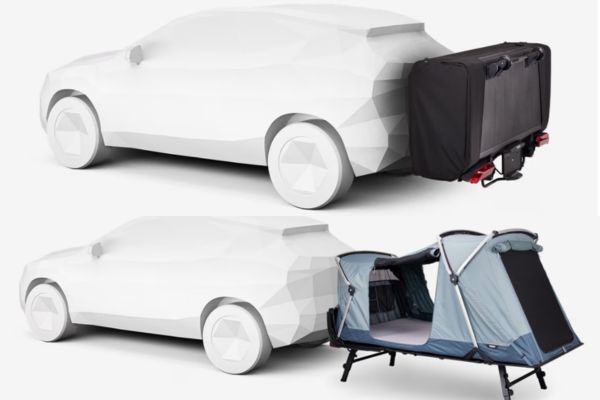
The Thule Outset takes a different route by mounting a foldable tent at the back of the vehicle on a hitch setup, not on the roof, and not behind the vehicle as a trailer. That simple change opens up a few practical wins for campground life.
In the short video at the end of this post, Patrick Botticelli of New Jersey Outdoor Adventures shows us how it works.
What makes the Thule Outset different from a rooftop tent or small trailer
The Outset is designed as a hitch-mounted camping tent. Instead of towing anything, the tent unit slides into a rear hitch receiver, then opens into a raised sleeping area.
Compared with common options, the idea is pretty straightforward:
It isn’t a trailer, so there’s no towing.
It isn’t a rooftop tent, so there’s no roof install.
That matters in day-to-day use. A trailer adds length and storage headaches at home, while a rooftop tent can take up the exact spot where many campers carry boats, cargo boxes, or bike racks.
The setup shown centers on a compact box on a small platform. The platform can be disassembled, then the whole unit rolls into position at the back of the vehicle. Once it’s in place, the tent opens up from that box, giving a raised sleeping area instead of a ground tent layout.
How it mounts, and what set up looks like at camp
Thule describes the Outset as the first tent on the market mounted on a hitch ball. In the clip, the main point is how the tent slides into the rear hitch receiver area and sets up without messing with the roof or pulling a trailer into a site.
The quick setup sequence looks like this:
Slide the platform into the rear hitch receiver mount.
Roll the tent box into position.
Open it, and the tent is ready for the night.
The emphasis here is speed and simplicity. It’s closer to unfolding a compact unit than building a tent with poles and stakes.
Sleeping off the ground, with a campsite that can stay put
Because the tent sits on a platform, sleepers stay off the ground. That can feel like a nice middle ground between a rooftop tent and a regular ground tent, especially in wet conditions.
Just as important, the vehicle doesn’t have to stay stuck at camp. Once the Outset is set up, the tow vehicle can detach and drive into town while the tent stays standing at the site.
Thule also calls out a key benefit for camping trips: There’s no need to fold the tent down just to use the vehicle.
Keeping the roof free for boats and bikes (and skipping trailer hassles)
One of the most practical benefits is what doesn’t happen on the roof. With a rooftop tent out of the picture, the vehicle can still carry larger gear up top, like canoes, kayaks, and bikes.
On the other hand, the Outset also avoids the usual trailer problems. There’s no towing stress on tight roads, and there’s no extra trailer to store when the trip ends.
Weight is listed at around 154 lbs.
The one downside? For a tent, it’s a bit pricey with an MSRP of $4,699.95.
Final thoughts
The Thule Outset stands out because it changes where the tent lives—right on the hitch instead of the roof or a trailer frame. That opens up a flexible routine at camp, since the vehicle can drive off without tearing anything down.
For campers who want a raised sleeping setup but still need roof space for gear, the Outset is an interesting direction.
Maybe your favorite activity is playing your guitar around the campfire, or perhaps you play music gigs around the country. Maybe you like to annoy your husband with your accordion, or maybe the grandkids left their kazoo behind and you haven’t stopped playing it…
Music has a way of making RV life even more special. Strumming a tune under the stars, tapping out a rhythm on a travel-friendly drum, or even humming along with a harmonica can turn any campsite into a personal concert hall.
Some RVers bring full-sized keyboards, while others swear by the portability of a ukulele. And let’s not forget the singers—whether you’re belting it out solo or harmonizing with friends, music brings people together.
For some, playing music is a way to relax after a long drive, while for others, it’s an essential part of their lifestyle. You might be part of a traveling band, perform at open mic nights, or just enjoy serenading your fellow campers.
Have you ever made new friends at a campground just by playing a song? Maybe your instrument of choice has a great story behind it—like a vintage violin passed down through generations or a banjo picked up at a roadside flea market.
Whatever the case, do you bring a musical instrument with you on your RV trips? If so, will you share with us what instrument it is and if you play it professionally or just for fun? We want to know! As always, thank you for sharing!
A motorhome fire on a Yuma, AZ, roadway ended up in a place no one expected: a family’s backyard.
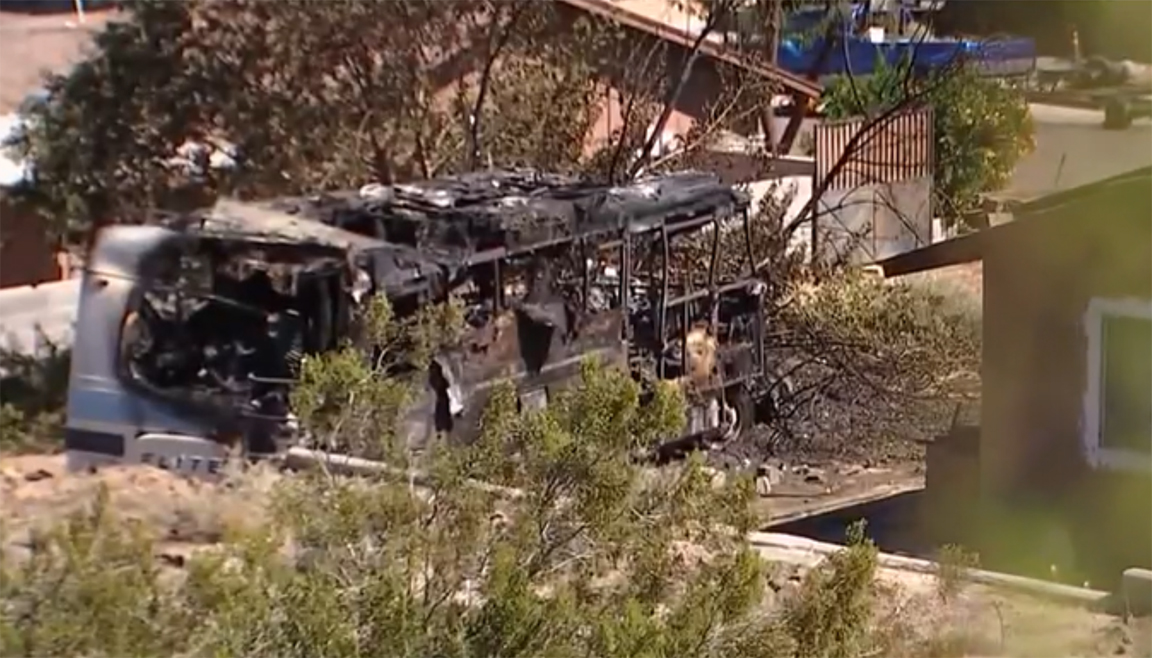
Authorities say a Class A motorhome caught fire while traveling on an elevated roadway Monday evening, March 2, then veered off the pavement and traveled down an embankment before coming to rest just feet from a home below.
Video from the scene shows flames pouring from the RV as smoke billowed into the neighborhood. When firefighters arrived, the motorhome was fully involved in flames.
Despite the dramatic crash and intense fire, no injuries were reported.
Firefighters race to save nearby home
Fire fighters met a fully engulfed rig. Photo: enrique guerrero via azfamily
Crews responding to the call found the motorhome engulfed and burning dangerously close to the residence.
“At that point the motorhome is a write-off,” one fire official said at the scene. “Our focus becomes protecting the house.”
Firefighters concentrated on containing the blaze and cooling nearby structures while neighbors rushed in to help prevent the flames from spreading.
The home suffered heat damage. Residents reported melted outdoor containers and a window that shattered from the intense heat. But the structure itself was saved.
For the family inside, the scene unfolded in seconds.
“I heard something coming down the hill,” the homeowner told reporters. “I thought it hit my house.”
Moments later, smoke and dust filled the backyard.
Burning RV rolls down embankment
Authorities say the motorhome caught fire while traveling along a raised roadway near South Pacific Avenue and Calle Primavera in Yuma.
At some point during the fire, the vehicle left the roadway and traveled down a dirt embankment toward homes below.
The RV eventually stopped on the slope behind the residence. Photos from the scene show the coach burned down to its skeletal frame, with only the aluminum structure of the walls and roof remaining.
Officials say the driver fled the scene but was located later that day. The cause of the fire remains under investigation.
Why RV fires spread so quickly
For RV owners, the scene in Yuma illustrates something safety experts have warned about for years: RV fires can escalate extremely fast.
Unlike automobiles, motorhomes contain large amounts of combustible material packed into a relatively small space. Cabinets, insulation, wiring, plastics, and fabrics can feed flames once a fire starts.
Investigators say common causes of RV fires include:
engine compartment fires
electrical failures
overheated brakes or wheel bearings
refrigerator malfunctions
fuel system leaks
Once flames enter the interior of the coach, a fire can grow rapidly. By the time firefighters arrive, many RV fires are already fully involved.
What to do if your RV catches fire while driving
Safety experts recommend several immediate steps if a motorhome catches fire on the road:
Pull over immediately.
Continuing to drive can allow flames to spread more rapidly and damage critical components.
Shut off the engine and evacuate.
Get everyone away from the vehicle and move a safe distance upwind.
Use a fire extinguisher only if the fire is small.
Many RV fires grow too quickly for portable extinguishers to control.
Call 911 right away.
Most RVs carry one or two extinguishers, but fire investigators often recommend keeping an extinguisher within reach of the driver’s seat, not just in the galley area.
A close call for one Yuma family
For the residents of the Yuma home, the burning motorhome came frighteningly close to causing far greater damage. The RV stopped only yards from the house, where flames scorched nearby vegetation and sent heat against the structure.
Neighbors and firefighters managed to contain the fire before it spread further. Residents later described the outcome as nothing short of a miracle.
The investigation into the incident is continuing.
Oregon state parks are among the most beautiful in the country, as scenic and desirable as those at any privately owned RV resort. But soon the price of a campsite at a state park there could look a whole lot more like their commercial counterparts.
The Oregon State Parks and Recreation Commission has approved new higher fee ranges for campsites, yurts, and cabins as the agency tries to deal with rising costs and a severe budget shortfall. The change doesn’t automatically raise prices everywhere immediately, but it gives park officials the authority to increase rates over time.
For RVers, the biggest takeaway is the potential jump in full-hookup campsite prices. Under the new fee structure, the maximum allowed rate for a full-hookup RV site could climb from about $52 per night to as much as $80 during times of high demand.
Other campsite types could also rise within newly expanded ranges, including electrical-hookup sites, tent sites, and primitive campsites. Yurts and cabins would see higher allowable price ceilings, as well.
A primitive campsite could jump from the current maximum price of $25 to $40. Daily parking could go as high as $25.
New cancellation policy
Those who cancel a campsite at the last minute or don’t show up will face tougher refund rules beginning in April. “The idea is to encourage people to cancel earlier so more sites are available,” said OPRD (Oregon Parks and Recreation Department) spokeswoman Katie Gauthier, as reported by the Statesman Journal.
Under the new policy, no refunds will be issued for same-day cancellations or for no-show reservations. Refunds for earlier cancellations will be issued on a sliding scale based on how long the reservation was held and how close it is to the arrival date.
State officials say the changes are needed because park operating costs including utilities, maintenance, and staffing have increased sharply in recent years. Lottery funding, another key revenue source for Oregon state parks, has not kept pace with expenses.
The new fee ranges give park administrators flexibility to adjust prices based on demand, season, and rising costs in the future.
New daily parking prices
Oregon state parks will also require a daily parking permit at 22 additional parks starting March 30, 2026. The parks were selected based on amenities and features that require maintenance and operation such as restrooms, trails, irrigation, boat ramps and more. The fee will be $10 for in-state residents and $12 for out-of-state residents.
The fees will be added to these parks:
Agate Beach State Recreation Site
Angel’s Rest Trailhead
Banks Trailhead at Banks-Vernonia State Trail
Bob Straub State Park
Brian Booth State Park
Bridal Veil Falls State Scenic Viewpoint
Cape Blanco State Park
Cape Meares State Scenic Viewpoint
Carl G. Washburne Memorial State Park
Devil’s Punchbowl State Natural Area
Elijah Bristow State Park
Fogarty Creek State Recreation Area
Gleneden Beach State Recreation Site
Governor Patterson Memorial State Recreation Site
Lake Owyhee State Park
Latourell Falls Trailhead at Guy Talbot State Park
We use cookies to ensure that we give you the best experience on our website. By continuing to use our site, you consent to accepting cookies. We NEVER have or will sell reader's data. For more info, please see our privacy policy page.