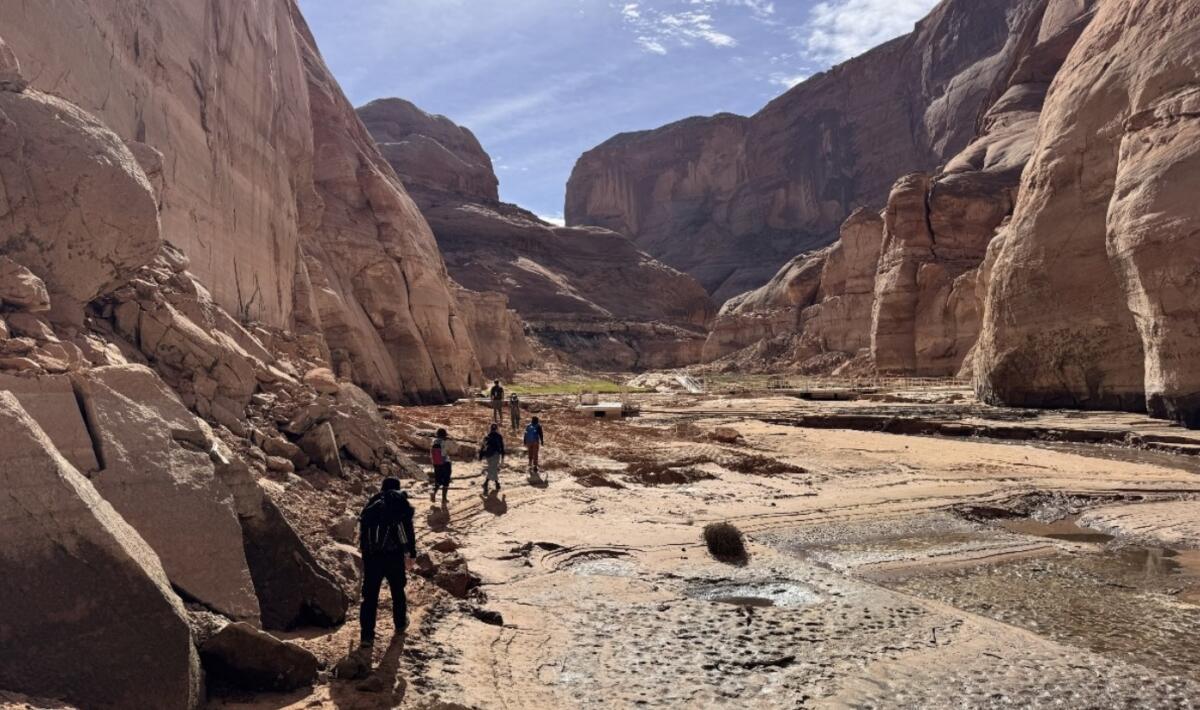
Officials at Glen Canyon National Recreation Area are warning visitors that quicksand may occur near shorelines and in drainages throughout the park. The sprawling park is located in both Arizona and Utah and includes Lake Powell.
The recreation area spans over 1.25 million acres from the Glen Canyon Dam near Page, Arizona, nearly 200 miles up the Colorado River into Utah. The scenic backdrop is described as being as stunning as neighboring Grand Canyon, Monument Valley and Painted Desert. Options for lakeside lodging include resorts, campgrounds (including boondocking) and houseboats.
According to park officials, quicksand may be present on ground that appears dry and firm on the surface but may suddenly give way under pressure. Visitors are advised to watch for unstable, shifting, or unusually soft ground and use caution when walking in these areas.
In a post on the Glen Canyon Facebook page, one visitor commented about his experience with quicksand:
“I got stuck up to my thighs. It looked exactly like the wet (but firm) sand I had been walking on along the river all day. But when I stepped on it, I sank instantly as if I had stepped off a deck into a swimming pool, then it congealed around my legs almost as quickly. I was solo and it took me 15 to 20 minutes to wiggle my way out … my legs were raw and red and very cold by the time I got out, but I didn’t even lose my shoes!”
Signs of quicksand
Park officials say several conditions may indicate unstable ground:
Wet, loose, or unusually smooth ground. Flattened or freshly leveled surfaces may hide soft or saturated sediment beneath a thin crust.
Unexpected water seepage or pooling. Slow upward seepage or water collecting in isolated spots may signal water-saturated ground.
Shifting or rippling soil. Ground that subtly moves, ripples, or vibrates when stepped near can indicate insufficient support below the surface.
Dry surfaces that feel soft or spongy. Even when the surface appears dry, the ground may compress noticeably under light pressure. Officials recommend testing from a secure position using a tool rather than stepping onto it.
Low or saturated areas. Drainages, depressions and newly exposed shoreline zones may contain fine sediment mixed with water.
Fine sediment after storms or water-level changes. Silt, clay and very fine sand can create unstable ground that appears normal on the surface.
What to do if you encounter quicksand
Officials say quicksand is rarely life-threatening, but escaping it can be difficult.
Visitors who become stuck should remain calm and avoid sudden movements, which can cause the body to sink deeper. Leaning back helps spread body weight over a larger area and improves buoyancy.
Move legs slowly upward, one at a time, allowing water to flow around them and reduce suction. Gentle movements such as wiggling or rotating the feet can also help create space around the legs.
Once free, continue leaning back and use slow, controlled movements to move toward firmer ground. Avoid standing upright until completely clear of the area.
If available, a branch, trekking pole or other sturdy object can provide leverage. Visitors should seek assistance if escape becomes difficult or if they become fatigued.
The good news is that deaths from quicksand are rare. But they do happen.
What is the 3-2-1 backup scheme and why should every one of you use it? Last week, I proposed ditching campground WiFi, and you all went off the rails with the comments. It was fantastic. But those same comments also made me think that many of us have ineffective backup routines for our data.
I learned the 3-2-1 backup plan from Leo Laporte years ago, and it has served me very, very well. Arguably, this is fireproof, theft-proof, and hard drive failure-proof. It’s even cloud-proof sorta kinda.
I also learned that more than a few of you have had issues with iCloud. Aside from someone hacking into your account, this should also bypass any issues with that.
For example, we could think we’re safe, but what if a thief breaks in and steals the hard drive or the doggone house burns down? Did you know that Francis Ford Coppola only had one external hard drive of scripts and other valuable data, and it was stolen by thieves? Don’t think that only having a single external hard drive with your data is a backup—it’s not.
So what is it?
The 3-2-1 backup plan
Very simply put, the 3-2-1 backup plan means having three copies of your data in two separate locations, so you’ll always have one to use. Being a nut, I have more than three, but that’s just me.
The other factor to make this work is that it has to be fully automatic. We all get lazy and complacent, and, over time, when things don’t go wrong, we tend not to continue doing something that doesn’t seem essential. This is essential, so it’s essential that your plan is fully automated.
So, for us, we have our various computers where stuff is generated, like these articles, photos, and all of that. From there, they are put into a cloud-based service (iCloud in our case, but you may be using Windows). There’s a computer at home that then takes those iCloud documents and backs them up onto an external hard drive. That drive is then backed up onto a remotely-accessible drive (Network Attached Storage—NAS) at a different location.
Another factor for us is our weekly podcast. Now that so many people are demanding video-based podcasts, we’re generating about 20-30 gigabytes per week of data! So those are backed up onto SSDs, which are then backed up onto traditional drives and then put into the normal backup rotation when we get home.
A word about iCloud and Apple
For us, iCloud is absolutely a part of our backup plan, and we love it. It’s particularly useful for photos, as our Apple Photos library has more than 107,000 entries. No, I’m not kidding. But I don’t blindly trust it either.
But I can create a document, like a podcast script, and Peggy (DW) can edit or modify that live document so we both always have the latest copy.
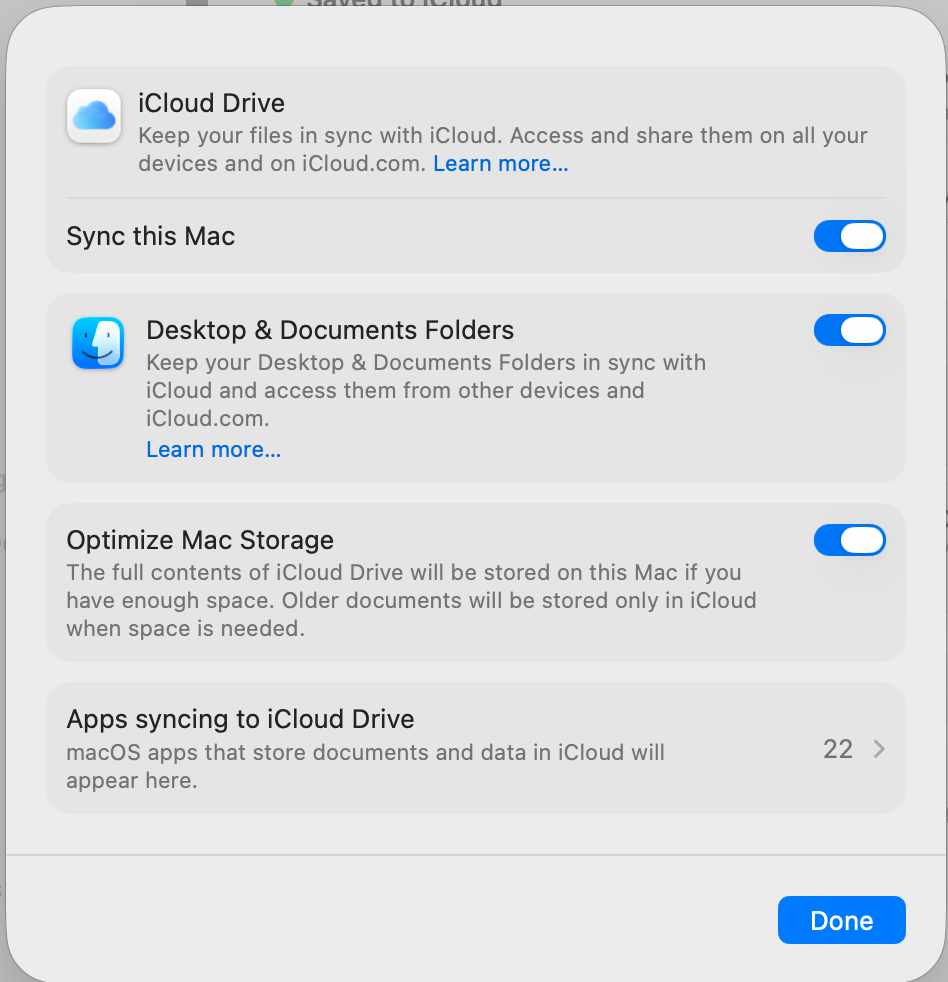
iCloud Drive settings panel
We are an Apple family, so there’s that. We have four iPhones, an iPad, two MacBook Pros, and a Mac mini, as well as two Apple TVs. And the only teenager in our house is me, but that’s just mental age; my odometer has clicked off many more miles than a teenager’s.
Mac mini
At home, we have a computer whose whole life is dedicated to doing backups. When new photos are snapped, typically on iPhones, they go to iCloud, and then the full-sized image is downloaded onto the Mac mini, where it is backed up onto an external drive and then the NAS. When I’m home, I also put a portable SSD into the rotation so that we have a third copy that travels with us, and that data is never more than a few months old, depending on our travels.
This is also true of our iCloud documents. That same Mac mini is set so that the full-sized files are downloaded to it when they are created, and then that gets backed up as well. There is a setting where you can optimize your computer’s storage (which means the full-sized files are in iCloud’s servers), or you can turn this off and have the full-sized files right on your computer.
This is useful as many people buy Macs with smaller internal hard drives, and iCloud lets you access much more data than your computer would otherwise be able to store by downloading and uploading those files as needed.
Macs come with a backup tool called Time Machine, but I’m not a huge fan of this, only because the files are not readily available if I want to see them. But it’s also better than nothing if you’re not using anything else.
I use a tool called ChronoSync from Econ Technologies. This tool basically just copies the files over the way you tell it to. I can see the files that it has backed up as they are in their original state. If I want to use a backed-up version of a file, I just do—no extra effort necessary.
I’m sure there’s something comparable to Windows, but as a former Apple employee, Windows ain’t my jam.
“But I’m on the road full time!”
No problem there. What I would do is have anything you care about backed up onto a redundant hard drive and keep one in your RV and one in the tow vehicle or in the towed vehicle. Then, on a rotation you set, perhaps overnight, send those redundant backups to a trusted friend or bank or whatever, and have duplicates sent to you.
I would also absolutely utilize a cloud-based backup system. Or, if you have a trusted friend or relative, perhaps have a Network Attached Storage (NAS) device at their location and have your backup plan include this. A good automated backup tool can access your NAS and put that into the rotation.
Make sure that your friend doesn’t live where there are a lot of wildfires or tornadoes. Hey, maybe I should offer NAS backups from our home base in the desert in New Mexico!
That way, if your RV catches fire or someone steals the towed vehicle or whatever, you’re still fine.
Don’t delay
I wouldn’t delay implementing a redundant backup plan today. Unless you have huge data needs, this can be done very inexpensively nowadays. Costco has portable SSDs (hard drives with solid-state design) that are pretty great, and a few of these may be sufficient.
Also, do know that any mechanical/electronic gadget can fail. I had an almost-new external hard drive fail, and I was glad it wasn’t the only copy of the data on it. I’ve had other hard drives just fail, as well. So if you’re only using one hard drive for back-up… well, that can be bad.
But don’t rely on just one physical copy of your data. I can almost guarantee that that’s a recipe for failure, both literally and figuratively.
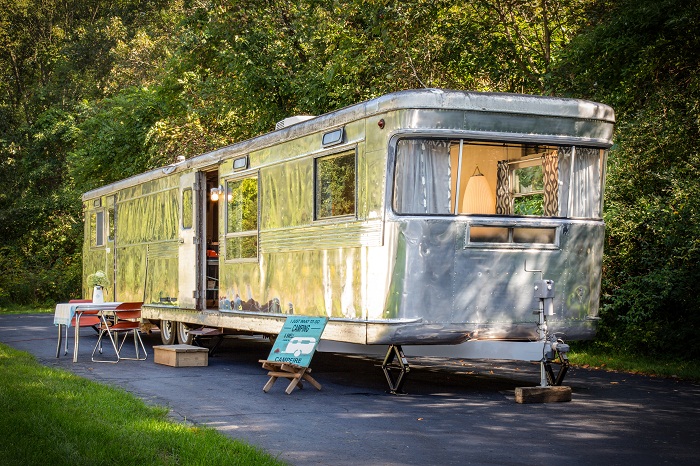
If you’ve ever met Sondra Phillips, you know her passion for campers and her knack for restoration. When she stumbled upon a 1956 Spartan Imperial Mansion for sale, it was a moment of serendipity. Despite its dilapidated state, Sondra saw potential in this vintage gem and eagerly embarked on a transformative project.
The beginnings
Sondra, an interior designer and founder of SKP Design in Kalamazoo, Michigan, specializes in diverse projects ranging from commercial spaces to residential interiors. The acquisition of the Spartan Mansion posed a unique challenge and opportunity.
Initially salvageable but needing substantial renovations, the camper underwent a meticulous dismantling process to address structural issues and prepare for modern upgrades.
Unveiling surprises
During the gutting process, unexpected discoveries added a twist to the restoration narrative. A massive beehive and even the skeletal remains of a raccoon were unearthed, highlighting the camper’s long abandonment and the challenges of its revival.
Designing the future
Key to the project’s success was meticulous planning. Field measurements were precisely recorded and translated into AutoCAD drawings, facilitating exact space allocation and material calculations.
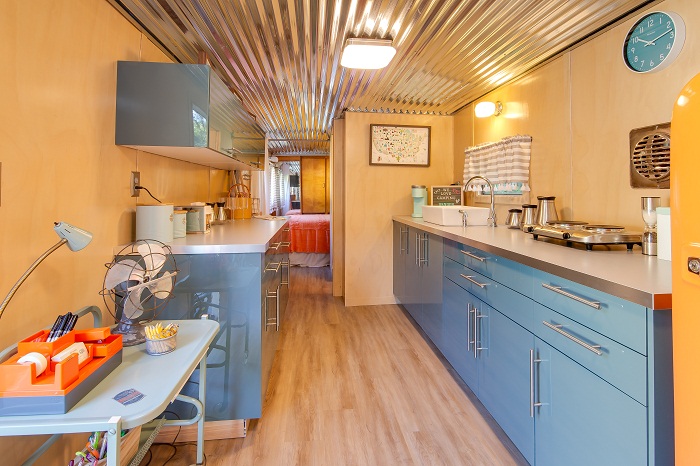
While preserving the original layout, Sondra enhanced functionality by transforming the kitchen into a spacious galley design with added storage and modern amenities.
The fusion of past and present
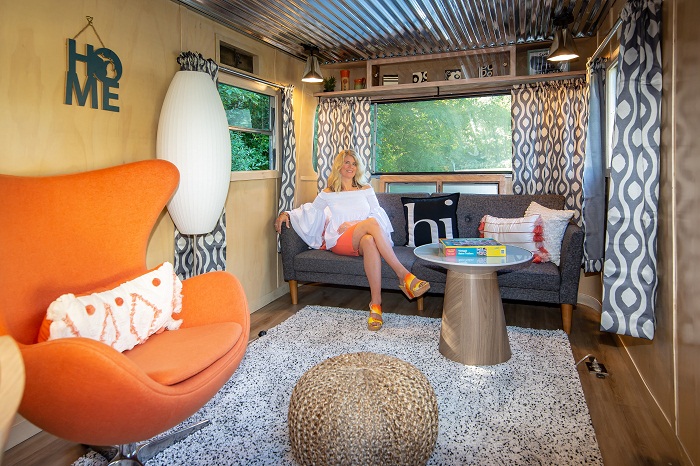
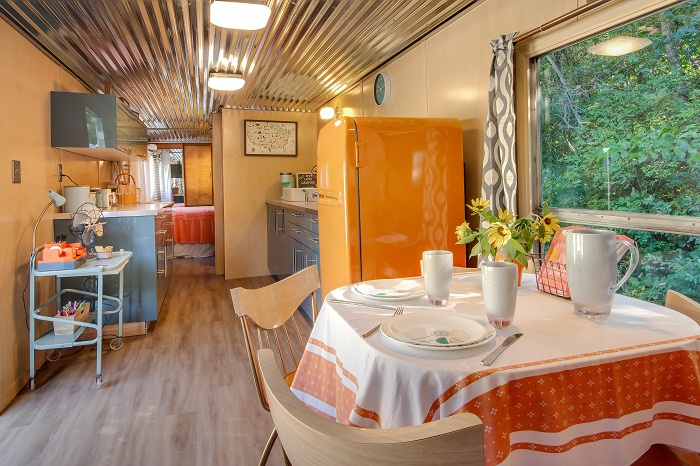
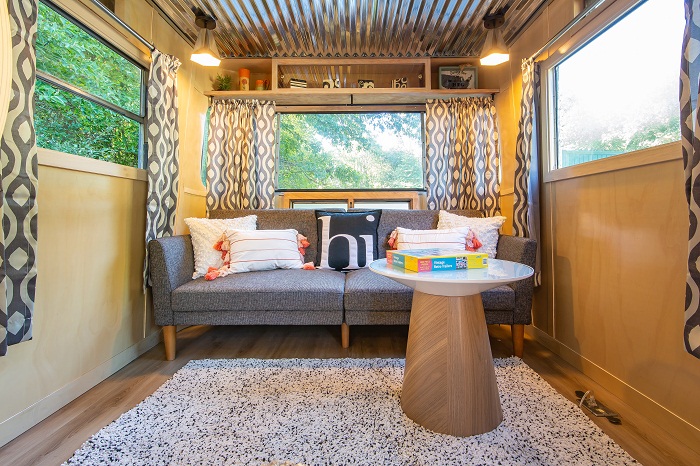
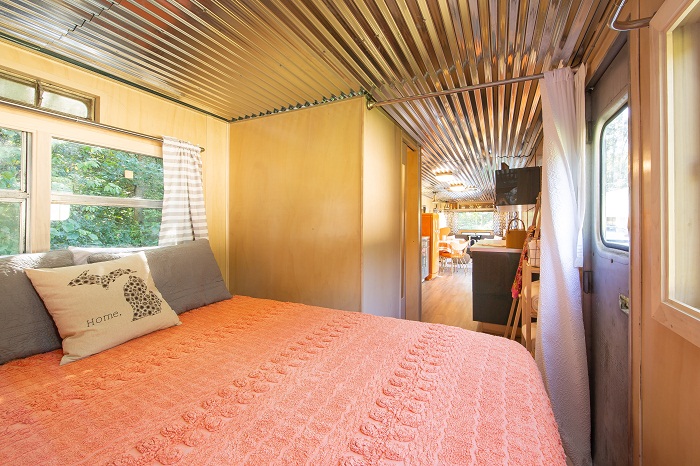
The overarching design concept aimed to harmoniously blend mid-century charm with contemporary comforts. A corrugated galvanized ceiling visually expands the interior, while stained wall paneling and wood-look flooring lend a sleek, modern aesthetic.
The centerpiece—a vintage Westinghouse refrigerator—was lovingly restored with a vibrant orange finish, symbolizing the project’s ethos of honoring history while embracing modernity.
Unique touches
Throughout the Spartan Mansion, curated vintage finds enrich the space, from an orange chenille bedspread sourced from the Netherlands to whimsical, patterned curtains framing the windows.
A translucent Lumicor panel in the bathroom door adds a playful yet functional element, allowing natural light to permeate through spaces.
Living with vintage
Beyond its role as a vacation retreat in South Haven, Michigan, the Spartan Mansion serves as a mobile showroom and meeting space for Sondra’s design clients.
Displayed at prestigious vintage trailer events like the Gilmore Red Barns Spectacular and “All Things Vintage” in Turkeyville in Marshall, MI, the camper stands as a testament to Sondra’s passion for preserving and celebrating mid-century design.
Looking forward
With the Spartan Mansion as a cornerstone, Sondra continues to expand her “Ready To Roll” line, rejuvenating vintage campers and vehicles alike. Each project reflects her commitment to craftsmanship and design innovation.
To explore more of Sondra’s projects and learn about SKP Design, visit www.skpdesign.com.
America’s Original RV Newsletter. Since 2001 Issue 1251 Please help support our hard work with a donation of your choice and receive our ad-free edition as a thank you.
Remember: You don’t need to receive an email alert from us to read our newsletters. Just click any time of day directly to RVtravel.com. The latest issues will be right there for you.
Today’s thought
“To expect life to be tailored to our specifications is to invite frustration.” —Anon.
Need an excuse to celebrate? It’s National Flapjack Day!
On this day in history: 1876 – Alexander Graham Bell is granted a patent for an invention he calls the “telephone”.
Featured news
The national average for a gallon of regular gasoline jumped nearly 27 cents since last week to $3.25. The conflict in the Middle East has sent crude oil prices to more than $91/barrel. The last time the national average made a similar weekly jump was back in March of 2022, during the start of the Russia/Ukraine conflict. Yikes. Here are the numbers, and here’s another story about how the threat of war raises fuel prices.
Big news for Oregon State Parks this week… First, the Oregon State Parks and Recreation Commission has approved new, higher fee ranges for campsites, yurts, and cabins as the agency tries to deal with rising costs and a severe budget shortfall, which could cost you $80 a night for RV hookup sites. Additionally, a new $10 fee for some RV dump stations will take effect March 30, 2026, marking a shift from the system’s long-standing practice where dumping was often included with camping.
An environmental advocacy group has launched a billboard campaign in northern Indiana targeting major RV manufacturers over the sourcing of tropical plywood used in RV construction. Mighty Earth has installed six billboards in Elkhart and St. Joseph counties and launched the campaign to pressure RV manufacturers to stop using meranti plywood, which it links to deforestation in Indonesia. In the trade, manufacturers often call it luan or lauan plywood. Here’s the story.
For today’s Don’t Do This At Home installment… A motorhome fire on a Yuma, AZ, roadway ended up in a place no one expected: a family’s backyard. Authorities say a Class A motorhome caught fire while traveling on an elevated roadway Monday evening, March 2, then veered off the pavement and rolled down an embankment before coming to rest just feet from a home below. Here’s the story.
If you’ve ever mapped out a big drive across the country and thought, “There has to be an easier way to plan this,” you’re not alone. The Dyrt just released seven road-trip camping guides that span the U.S., each built around a classic long-haul route. The promise: less time digging through forums and more time actually driving. Check ’em out.
Several indications suggest that Ford Motor Company will discontinue the Class A gas motorhome chassis known as the Ford F53 at the end of this model year. Ford has remained very tight-lipped regarding any long-term plans. Currently, the only Class A gas motorhome chassis with a gross vehicle weight rating (GVWR) above 14,500 pounds is the Ford F53. Here’s what Dave Solberg has to say about this.
It’s your last couple of days to save on Campspot’s Biggest Booking Week! From March 2-8, save up to 50% at participating parks across the U.S. and Canada. Check if your favorite campground is on sale, or book an extra trip while dates are open. Use code BIGGEST26 for 50% off—ends tomorrow! Click here to learn more.
Don’t forget: You’re losing an hour of sleep tonight! Daylight Saving Time starts on Sunday, March 8, at 2 a.m. local time. Tonight, before you go to sleep, or tomorrow when you wake up, make sure you spring your clocks forward! (Yay, spring!)
Keep your Blackstone/griddle good-as-new
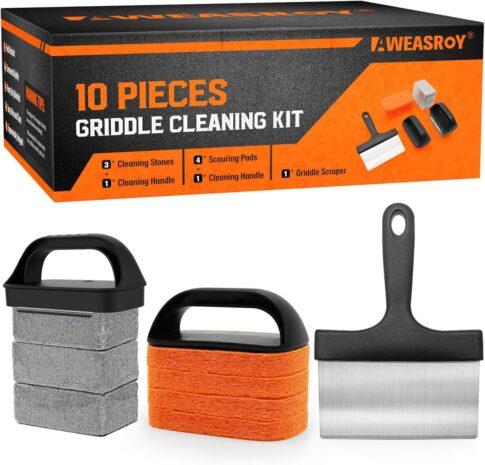
This simple griddle cleaning kit helps RVers keep their flat-top grills in great shape trip after trip. With scrapers, scouring pads, and a pumice grill stone, it quickly removes grease, burnt bits, and buildup without scratching the surface. Clean before and after cooking, and your griddle will last longer—and be ready for the next campsite breakfast. Learn more about cleaning your Blackstone in Gail’s article here, or buy this griddle kit here.
Beyond the headlines with Tony Barthel:
RV sales fall flat, a new way to order RV parts, and what’s up with state park reservation systems?
RV sales numbers are in—and they’re not exactly thrilling. Tony explains why that might work in your favor if you’re buying. He also checks out a new way to track down RV parts, and shares his experience wrestling with state park reservation systems… including one booking attempt that ended with seven tabs open and still no campsite. Click here to read.
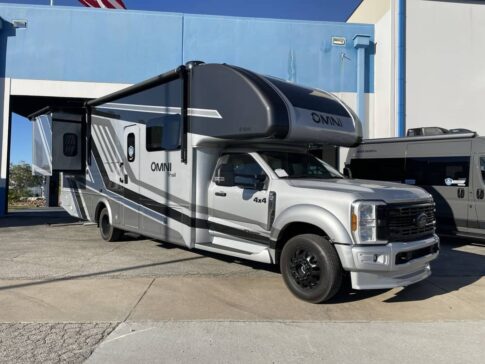
RV review 2026 Thor Omni Trail X32: A hit-and-miss Super C
By Gail Marsh I toured the diesel-powered Thor Super C Omni Trail™ X32 and discovered both hits (great features) and a few misses (not-so-great features), too. The X32 is engineered on a heavy-duty Ford F-550 Super C chassis. It features the 6.7L Power Stroke V8 turbo diesel and a strong gross vehicle weight rating that’s typical for Super C rigs. I’m very familiar with Ford trucks, and this one did not disappoint. Join me in exploring this hit-or-miss Omni Trail X32.
Outdoor recreation generated $1.3 trillion in economic output in 2024, accounting for 2.4% of U.S. GDP and supporting 5.2 million jobs, according to new data from the U.S. Bureau of Economic Analysis. While the industry continued to grow last year, expansion slowed to 2.7% as inflation and economic uncertainty affected consumer spending.
RoverPass has introduced a new Advanced Dynamic Pricing feature that automatically adjusts nightly campsite rates based on real-time occupancy at campgrounds and RV parks using its reservation platform. The system allows operators to set rules that raise or lower prices as bookings change, replacing traditional flat-rate pricing.
Sandy Pines Campground, an upscale glamping resort in Kennebunkport, Maine, was scheduled for foreclosure auction Thursday, March 5, following financial difficulties and a Chapter 11 bankruptcy filing by its operating company. The 46-acre property includes 268 sites. Learn more.
The RV industry expects 2026 RV shipments to range between 328,800 and 367,000 units, with a median of 349,000 units, which is right about the same as 2025 shipments of 342,200.
A New York investment firm is facing pushback after purchasing several Big Sur campgrounds and proposing a redevelopment plan that would reduce RV sites from 130 to 107 while adding tent sites, workforce housing, and new amenities. The redesign—prompted by the need for a new septic system—would modernize infrastructure and potentially reduce traffic. However, advocacy group Keep Big Sur Wild, argues the project could drive up costs and shift campgrounds toward high-end resort-style accommodations.
The National Park Service is warning travelers heading to public lands in the Southwest about a potential hazard they may not expect: quicksand. Officials at the Glen Canyon National Recreation Area, which spans the Utah–Arizona border, say quicksand has recently been found near shorelines and in drainage areas throughout the park. Be careful!
Hoot hoot! Photo credit: New York State Department of Environmental Conservation
Hoot, hoot, cute, cute!! Antique shoppers in East Durham, New York, got quite a surprise when a “very lifelike” item on a store shelf turned out to be a sleeping eastern screech owl nestled beside a chicken-shaped cookie jar. Customers alerted staff, and wildlife officers gently removed the snoozing owl and released it into nearby woods, where it promptly flew to a tree—apparently concluding its brief career as store décor.
Turn your RV toaster into a mini grill These reusable toaster bags make quick RV meals easier and a lot less messy. Grill sandwiches, reheat pizza, warm leftovers, or toast snacks without drips falling into the toaster. Nonstick, easy to clean, and safe for toaster, oven, or microwave use, they’re a simple galley upgrade for RVers who want fast meals without extra cleanup. Gail Marsh recommends them here.
Tanner Toons with Tanner Woods
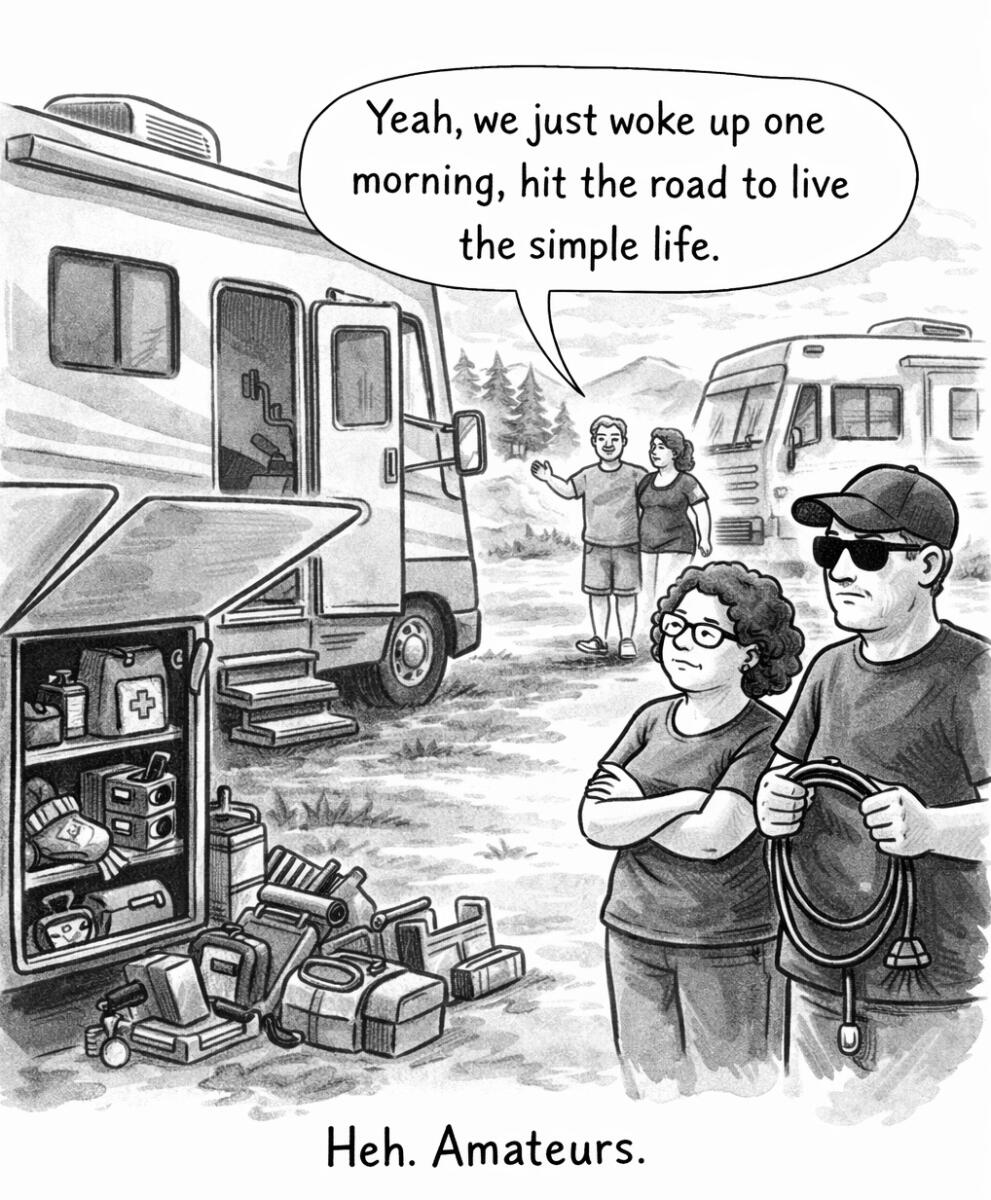
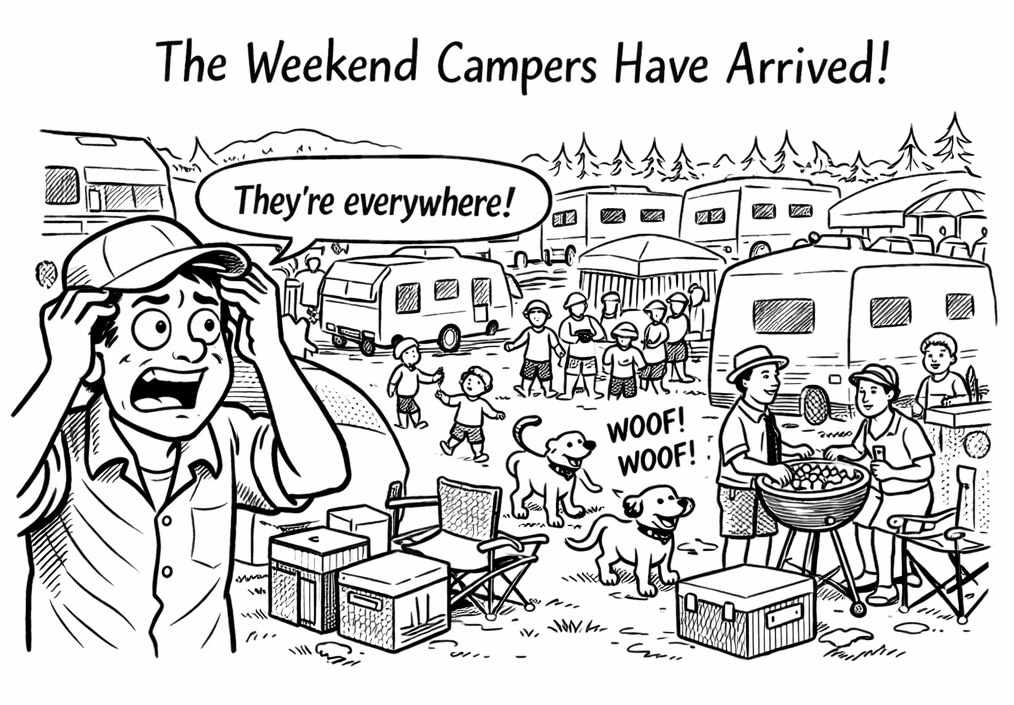
You may share this Tanner Toon, unaltered, on your website, blog or social media with our compliments. The musings from Tanner Woods’ creative mind appear in this newsletter every Saturday and Sunday and in many RV Daily Tips newsletters through the week.
RANDOM RV THOUGHT: Run your generator as little as possible in public campgrounds, and only when absolutely necessary. If you must run it, do so only after 10 a.m. and before 7 p.m., and only for very short times. Our world is too noisy: Help keep our public lands peaceful and quiet.
Reader poll What’s your preferred length of stay at a typical campsite?
One in three fatal traffic crashes in Florida involves an impaired driver. Alcohol is the leading factor in impaired‑driving crashes, injuries, and fatalities. Over the last five years, alcohol alone accounted for:
84.4% of impaired‑driving crashes
35.7% of impaired‑driving fatalities
80.7% of impaired‑driving injuries
? MYSTERY PRODUCT OF THE DAY ? We typed “holy cow” into the Amazon search bar, and this is what came up. Why would we search that? Because we’re weird! But anyway, holy cow, this sounds good! Really good! And the reviews solidify that this is good! Really good!
Laugh of the week
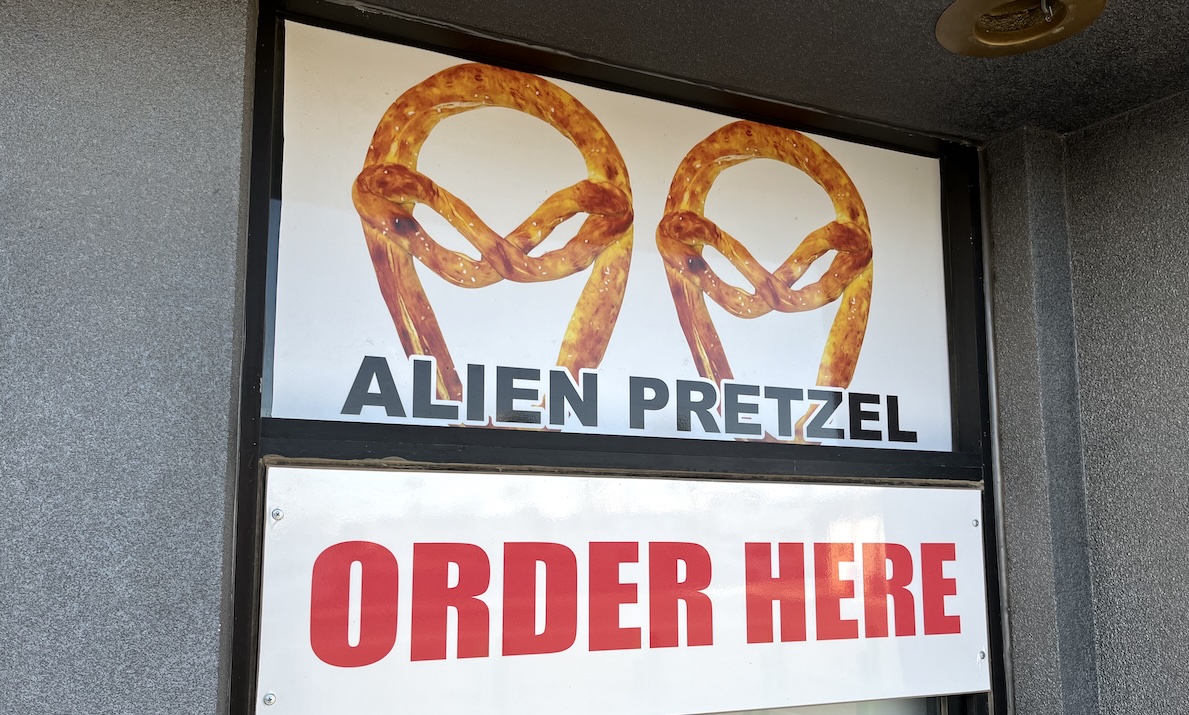
Good pretzels for space alien enthusiasts. Get yours in Baker, California.
MORE FUNNY: Make the handyman or woman in your family laugh with this. Hah!
Saturday Sillies
The perfect scam SIM Swap Scam Leads to $125,000 Theft
Patricia is enjoying a quiet night babysitting when she discovers that her phone has no service. When she switches to Wi-Fi, a sudden barrage of notifications shows that someone is moving money out of her accounts. This sets Patricia off on a race against time to save her assets from criminals who are even cashing out her stocks. Bob talks with Rachel Tobac, CEO of SocialProof Security, about practical steps we can all take to protect ourselves from SIM swapping scams.
Today in history
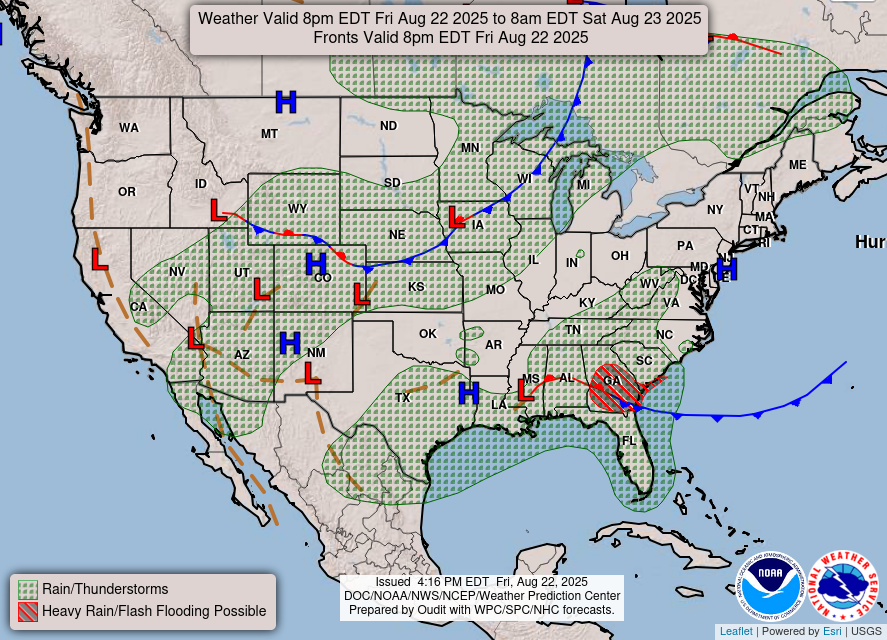
Today’s weather forecast across the nation THIS MAP UPDATES TWICE A DAY
When you get to your campsite at the campground or RV park, how long are you typically staying for? Notice we said typically there. We know your lengths of stay may differ with each journey, but we’re curious about your preferred length.
Do you like to keep moving, staying for just one night as a quick resting stop? Or maybe you enjoy a few days to explore the area, settling in for a week, a month, or even longer?
And we know that choosing how long to stay often depends on what you’re looking to get out of each trip. Some of you feel that one night is enough—a brief stopover before hitting the road again.
Others appreciate a few days to really unwind, soak in the surroundings, and get a feel for the local community.
Then there are those who love the luxury of an extended stay, where they can settle into a routine, explore at leisure, and feel like they’re part of the neighborhood. Each approach has its perks, and each reveals a different style of RV life.
Are you more of a nomad or a nester when it comes to RV travel? Whether you’re in favor of fast-paced exploration or savoring a slower pace, we’d love to hear from you in the comments below. Thanks for sharing!
I toured the diesel-powered Thor Super C Omni Trail™ X32 and discovered both hits (great features) and a few misses (not-so-great features), too.
Come along and explore this hit-or-miss Omni Trail X32 with me. Form your own opinion and be sure to leave a comment to explain your reasoning.
Behind the walls
The X32 is engineered on a heavy-duty Ford F-550 Super C chassis. It features the 6.7L Power Stroke V8 turbo diesel and a strong gross vehicle weight rating (GVWR) that’s typical for Super C rigs. I’m very familiar with Ford trucks, and this one did not disappoint. It easily powered up our Missouri hills and provided a decent ride while doing it, too.
The RV’s construction includes a welded tubular aluminum roof, sidewall, and roof cage; a welded tubular steel floor; and Vacu-Bond laminated roof/walls/floors with block-foam insulation. They’re the sort of build choices that prioritize strength and insulation without piling on unnecessary weight. I liked that.
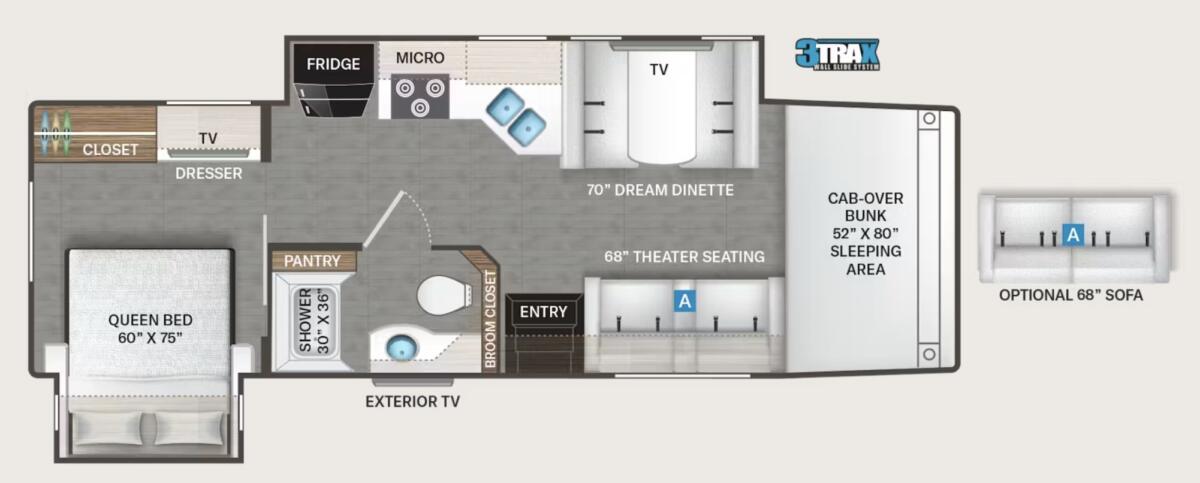
Exterior touches like an HD-MAX finish and a fiberglass front cap are part of the package. The floorplan shows the X32’s cab-over bunk, and living and bedroom slides that open the interior for daytime living.
Basement storage in the X32 is limited. However, accessing some of the storage and utility compartments was really awkward with the slides extended. I foresee bonked noggins in your future if you purchase this Omni Trail. (You’ve been warned.)
Key specs
• Chassis: Ford F-550
• Engine: 6.7L Power Stroke V8, 330 hp / 950 lb-ft torque
• Gross Vehicle Weight Rating (GVWR): 19,500 lbs.
• Length: about 33’2″
• Interior height: 7’0″
• Fuel capacity: 66 gallons
• Fresh/grey/black water: 75 / 47 / 40 gallons
• LP: 68.2 lbs.
• Towing hitch rating: 12,000-lb (trailer hitch with 7-pin round connector on X32)
• Awning: 14′ power with LED lights
• Water heater: tankless
• MSRP: from $277,060
Interior and living space
The 2026 Omni Trail X32 is light and bright inside. (A definite hit!) The interior ceiling height and open living footprint created by the slides give a comfortable home-like feeling. I immediately noticed the many storage cabinets, drawers, and cupboards ready to hold “stuff.” (Another hit!)
The layout flows well for lounging and watching a movie, or moving about without feeling cramped. Finishes lean toward upgraded rather than utilitarian, and that’s another check in the “hit” column for me.
Kitchen
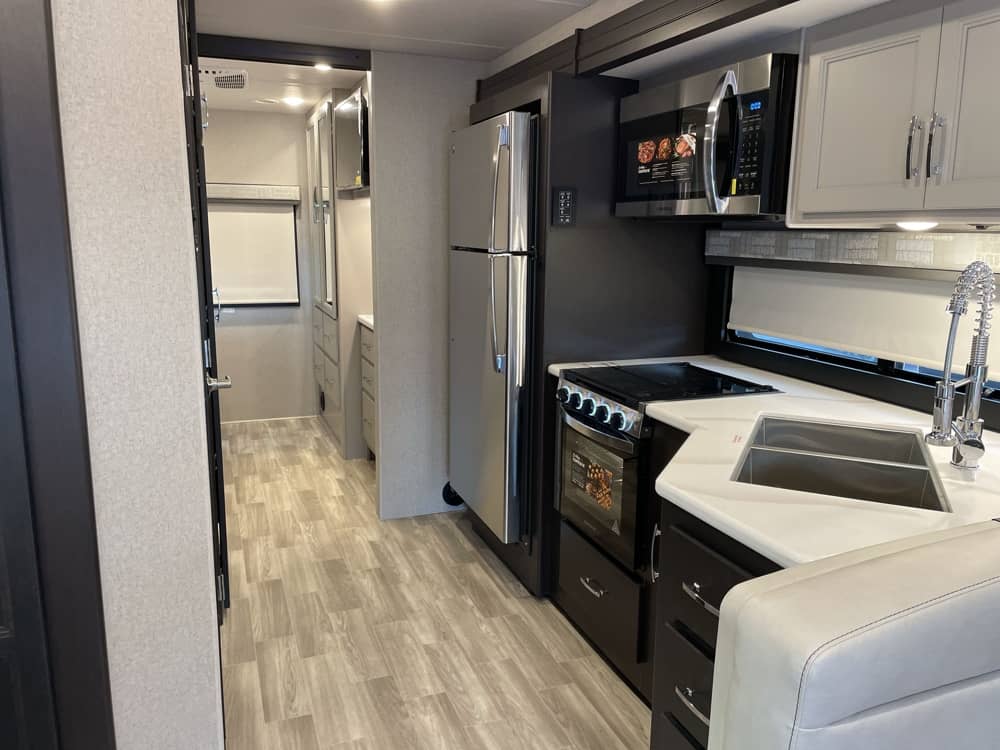
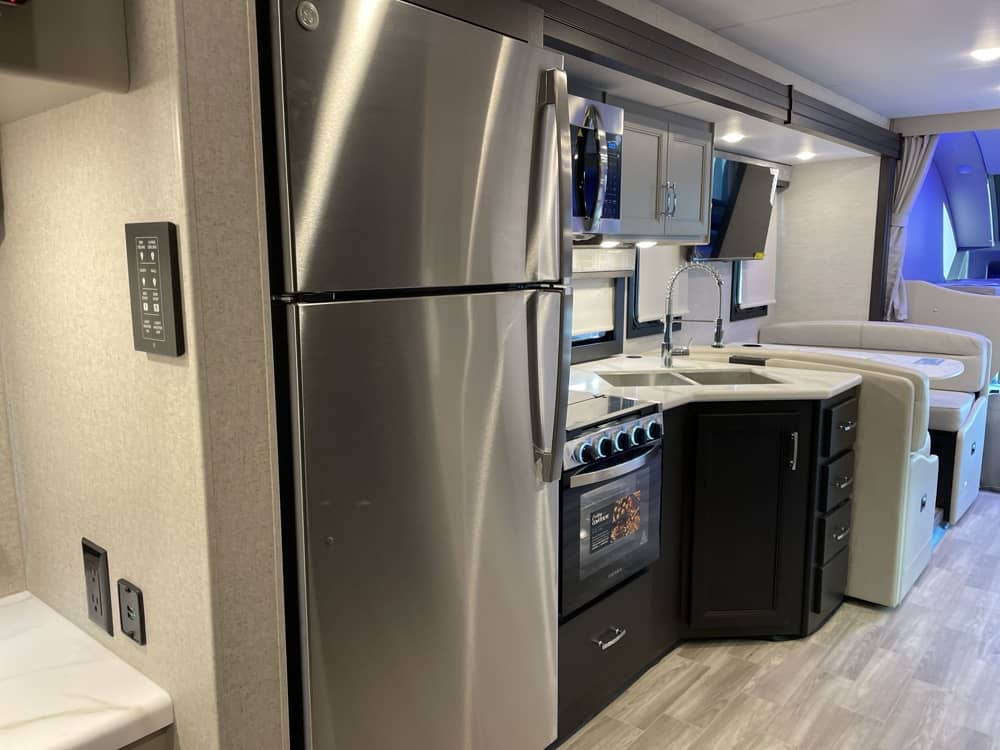
The X32’s galley kitchen was a disappointment to me. Yes, I like the linear layout, but countertop prep space is seriously lacking. (Big miss, to me.) I wish designers had used a smaller sink to allow a bit more counterspace, but the drawers and cupboards are great. (So, a miss and a hit here.) I also appreciate the pantry that’s thoughtfully located across from the kitchen appliances.
The two-door residential fridge and three-burner cooktop rate another hit. I wish the microwave had a convection option, but the oven is great for baking muffins and more. Pop-up wireless phone chargers and USB ports are featured in the area, but I’d worry that water from the sink could splash on or into them.
Living/dining room
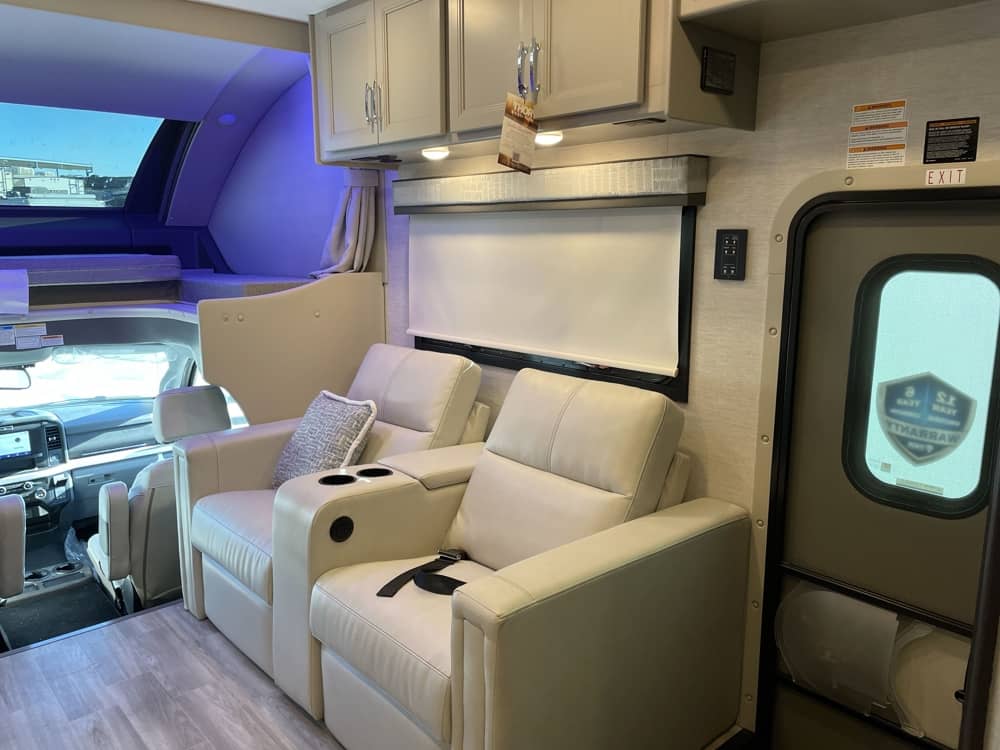
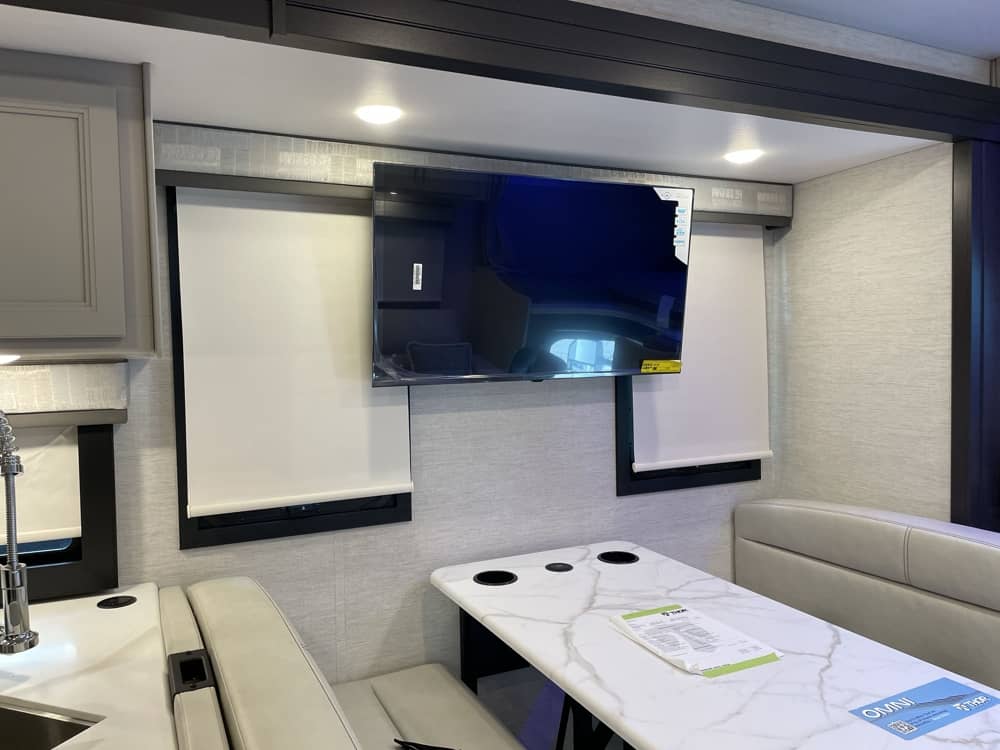
The forward living area centers on 68″ theater seating across from the entertainment center and a large, windowed slide. The seating is comfortable for two to three people, and you can choose between the options of a Dream Dinette or a sofa/sofa-bed configuration in select models.
If I designed this Super C, I would install an eating bar with barstools instead of the dinette. That would have served two purposes: increased food prep space and opened up the living area even more. In the event that you had extra folks over for a meal, you could always use TV tray tables, a card table, or the picnic table outside.
Large windows, LED lighting, and over-cab storage do keep this area bright and cheery, which I like.
Bath
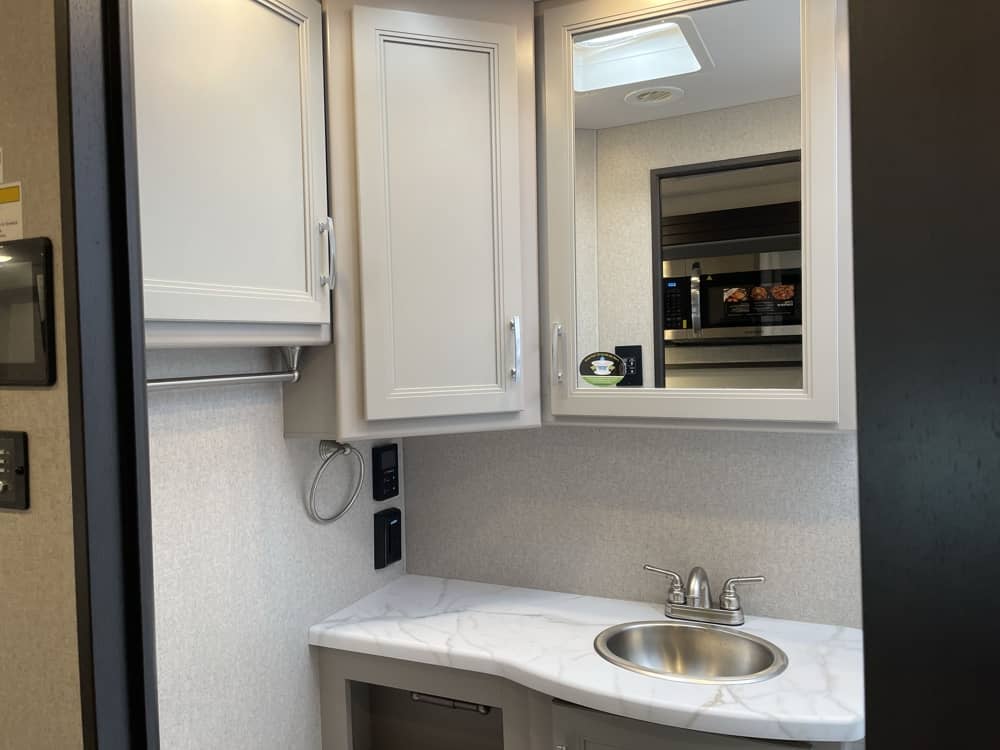
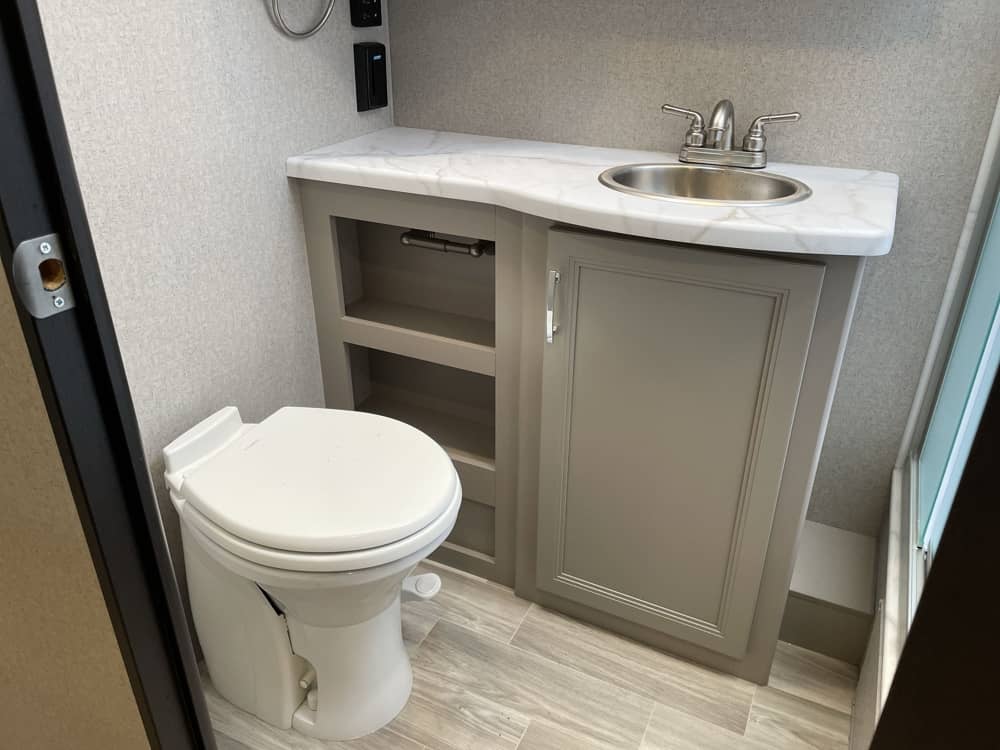
The bathroom in the Omni Trail X32 is compact but thoughtfully laid out. The shower is fine, and there is plenty of room around the commode, so you won’t feel squished. (Another hit.)
I was surprised by the storage that designers incorporated into this bath. I really appreciate the roomy sink, countertop, and cabinet storage. You’ll find an actual medicine cabinet, towel ring, and rack, as well! (All hits, for sure!)
The Omni Trail X32 touts a tankless water heater for on-demand hot water, and protected holding tanks with heat pads on certain floorplans. This is particularly useful if you plan to camp in cooler weather.
Bedroom
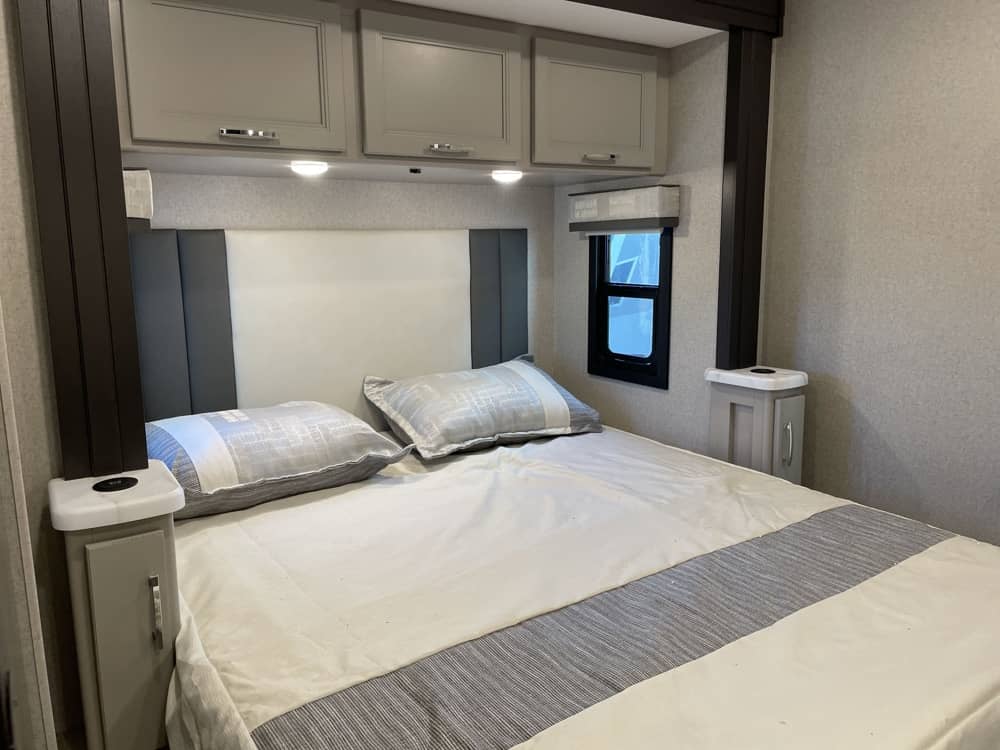
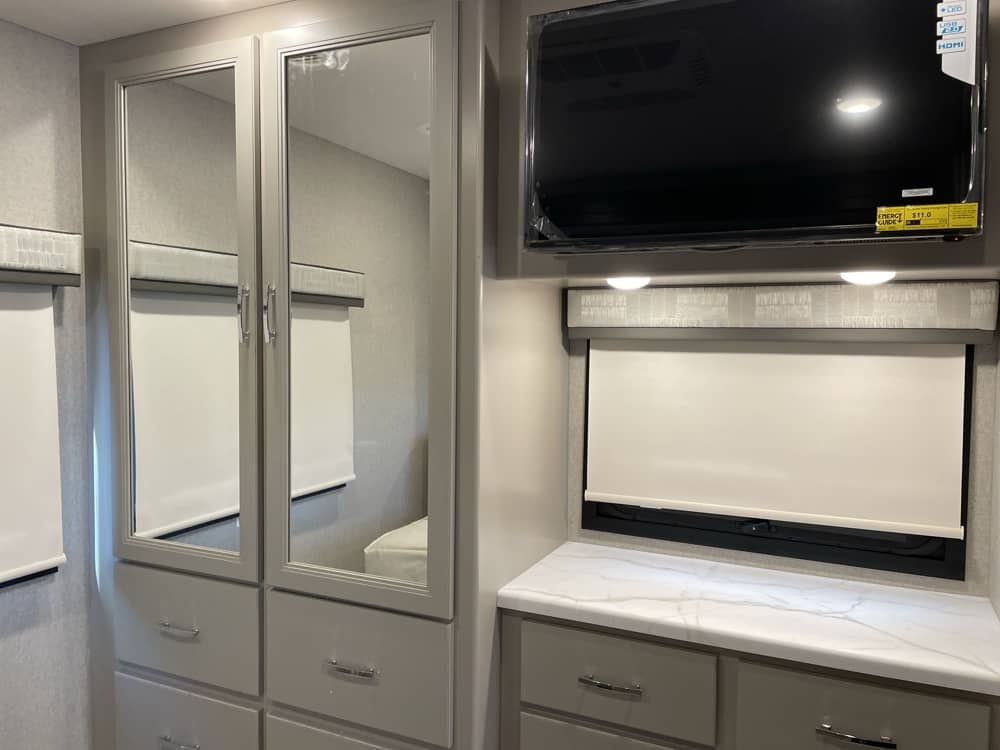
At the rear of the X32, you’ll find a queen bed in a private bedroom with a door for separation, a wardrobe, and a dresser. I was very surprised at the amount of storage in this model!
The bedroom slide really opens up floor space and lets the bed feel less boxed in. The nightstands are too small to handle my husband’s CPAP machine, but USB charge ports are included in the layout, and there’s over-the-bed storage, as well.
Bunk area
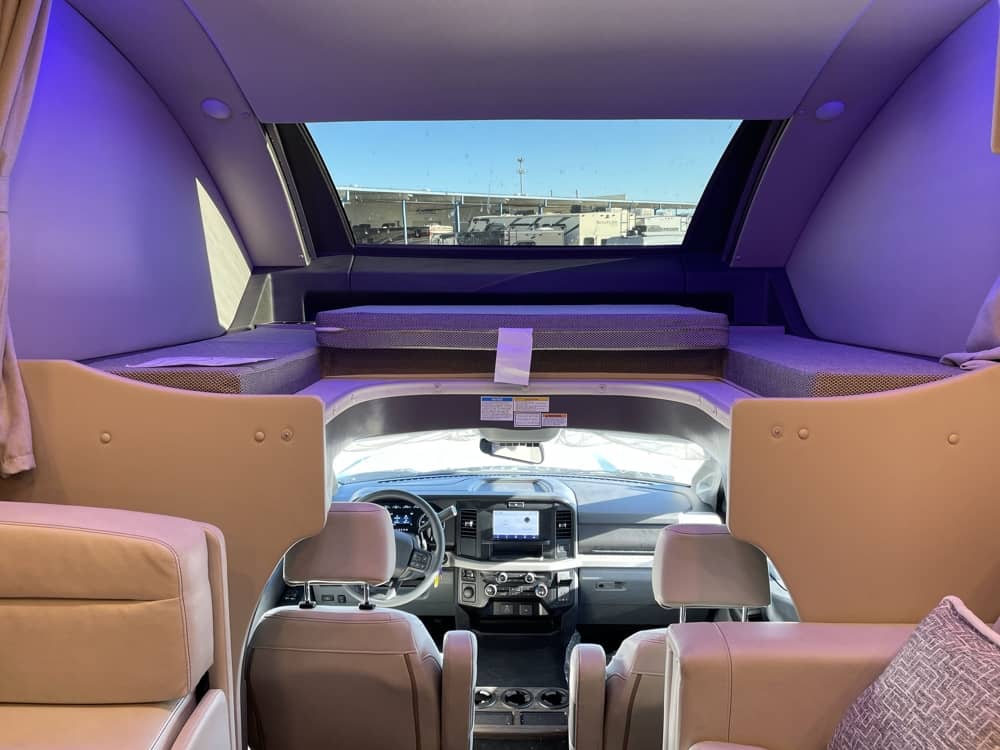
The Omni Trail X32 includes a cab-over bunk that’s perfect for kids or occasional guests, and the automatic window cover is a bonus. The space can be used for storage when you don’t need the bed.
Overall take
The 2026 Omni Trail X32 is a solid pick if you want Super C power and a compact-but-comfortable living area. For me, there are some definite “hits” and “misses” in this RV, but I encourage you to see it and judge for yourself.
Watch a video walkthrough below, then share your thoughts in the comments below.
RV sales have mostly stayed flat, according to industry watcher Statistical Surveys, part of Trader Interactive. According to a report in RV Business, essentially, things remained flat, showing an overall increase of just 1 percent. Not much.
So what does this mean to you? There’s a lot of buzz in the industry that sales still aren’t where dealers and manufacturers would like to see them, and that may mean the opportunity to make a good deal.
This is especially true if a unit has been on the dealer’s lot for a while. You can see when an RV was manufactured on the data sticker—typically near the front of a travel trailer or fifth wheel and near the driver’s seat on a motorized rig.
The longer it’s been since it was built, the better the deal you might be able to work, as dealers generally pay to finance, or floor, their inventory and don’t like things sitting on the showroom floor for extended periods of time.
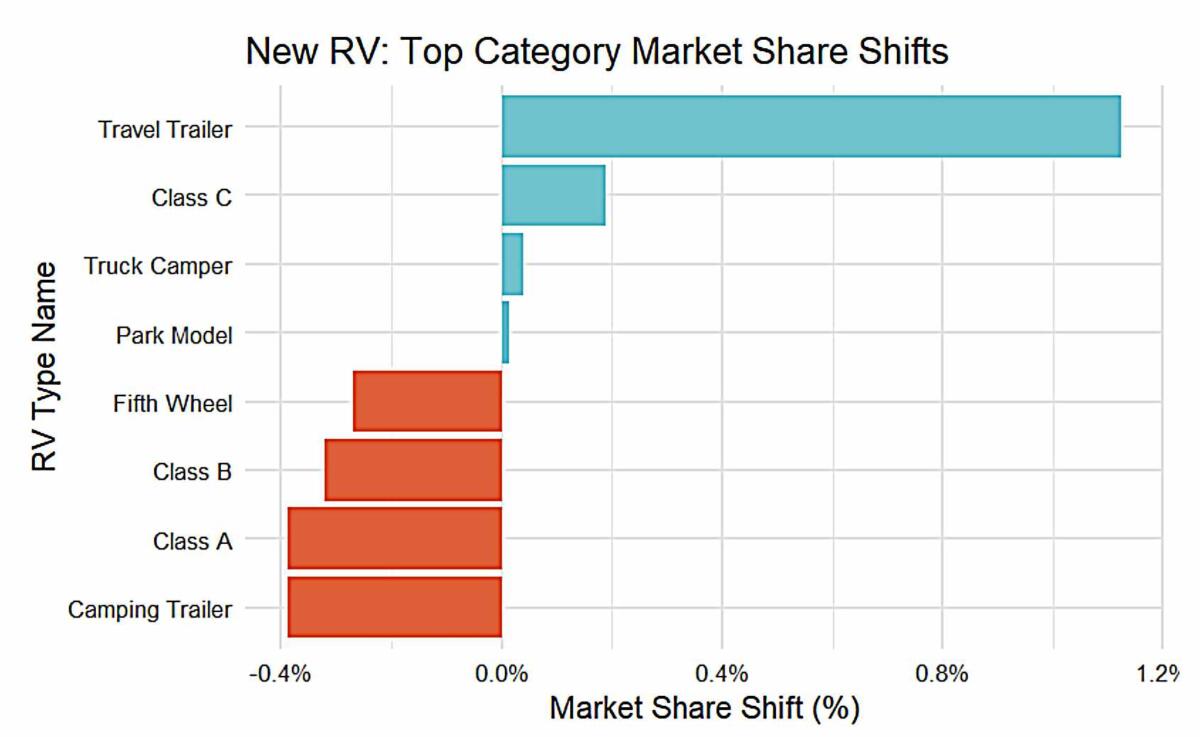
(Click to enlarge.)
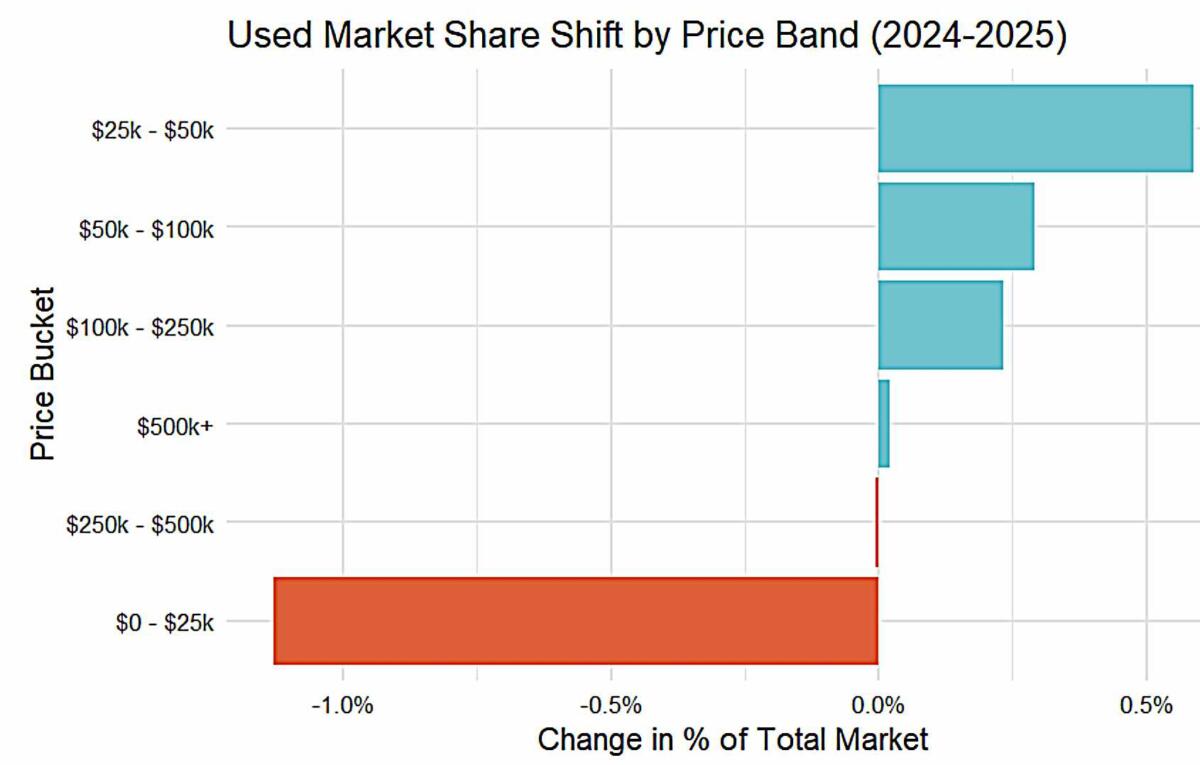
The trends were really interesting, at least to a nerd like me. Essentially, more affordable RVs, things like entry-level travel trailers, saw increases while mid-priced units weren’t quite as popular.
At the other end of the price spectrum, premium RVs (typically motorized) also saw a tiny bump in numbers.
(Click to enlarge.)
Class B RVs, fifth wheels, and Class A RVs all saw modest reductions in sales. Travel trailers saw a 2 percent increase in registrations within the sub-$25,000 category, with one very notable exception: Those aged 18-24 actually were less prevalent. Hmm… Could the continued negative sentiment on social media be affecting sales?
How do you find RV parts?
One of the issues facing the RV industry, and keeping us from camping, is the difficulty for even dealerships to find RV parts. An article in RV Business held out hope through a company called RV Partfinder, where a dealership, or even one of us normal campers, would be able to put in the serial number of our RV and find parts we need.
I hope you didn’t just pass out.
We all know if we have a regular ol’ American pickup, because we’re red-blooded Americans who might need to haul a refrigerator once every 10 years, that if we need a part for said truck, we can put the serial number in and, blammo, we find that part. But RVs are different.
Minutes after the last iteration of whatever you have rolls off the line, you have a snowball’s chance on a Key West summer day of easily finding that part.
In fact, recently, a tree limb brushed off the vent cap on my sewer vent stack on my 2025 trailer. Just figuring out which of the hundreds of similar products out there that I should replace it with was an exercise in frustration. Fortunately, my rig was new enough that the folks at Forest River were very helpful in working with me to order a replacement.
In the article, it details how the business had been bought up by Airxcel, which is part of the THOR family. I hope that integration helps move this along more quickly.
The company has actually been around since 2000, and the THOR acquisition happened in 2024. The story indicates that, already, 1,200 RV dealerships are using the service.
Hey, Oregon, I have an idea
It seems things ain’t pretty in Oregon. Oh, the parks certainly are; but the system that oversees them isn’t. What’s at stake here is that the cost of running Oregon’s state parks is exceeding what they’re bringing in under the system they have now.
Oregon isn’t alone in price hikes, of course, with other states also reporting increases.
But since this column is about how I look at things and, hopefully, provides insight into the news, let’s be blunt here. I looked at Oregon’s website to book a campground—I honestly did. After various clicks and responses, I had seven browser tabs open and still hadn’t really been able to make a reservation.
While a good website won’t solve the world’s problems, Oregon might want to take a look at KOA’s reservations system. In fact, every lousy reservations system should have a standard to judge its own web reservations system by KOA’s.
Create a user profile once for the type of rig you have (even if that’s a tent) and then use that profile to find a place. I shouldn’t have seven browser tabs open and still not have a reservation. Imagine the finagling behind the scenes and the stupidity going on.
Oh, and it’s not just Oregon. We recently stayed at Homolovi State Park in Arizona. Whoever designed the system they use should be left in the desert for a month in August. While the park itself was one of the nicest state parks I have ever been to and was just a great experience, that website was bleh.
Also, a friend who traveled with us said the local parks in his state, New York, still hadn’t gotten their reservations system up and running.
Seriously. What is going on here? Perhaps streamlining this kind of stuff might at least help some of these state parks with their budgetary issues.
America’s Original RV Newsletter. Since 2001
Issue 2855 • New issue every weekday
Today’s thought
“Your past experiences will flavour your future ones, that is human nature.” ―Deborah Cater
Need an excuse to celebrate? Today is National Oreo Day! (We bet you didn’t know all these Oreo flavors existed! Like maple creme or apple pie à la mode! Say whaaaaat?)
On this day in history:1899 – Bayer registers “Aspirin” as a trademark.
Tip of the day Genius charging cord trick that makes RV life easier
By Dave Helgeson
If you are like me, you have many electronics that require a charging cord in your RV. Cell phone, jet packs, satellite messenger, tablets, heated garments—just to name a few. Of course, none of them use the same USB connection, nor are they compatible with one another. There are so many options: Type A, Type C, Mini B, Micro B—Ugh! I can’t remember which cord fits which item!
When I do find the correct cord, I want to keep track of it and have the “working end” of the cord readily available when I want to charge something. What to do? Here’s my answer.
RV review
First look at the Honda Base Station trailer prototype—It’s neat, but…
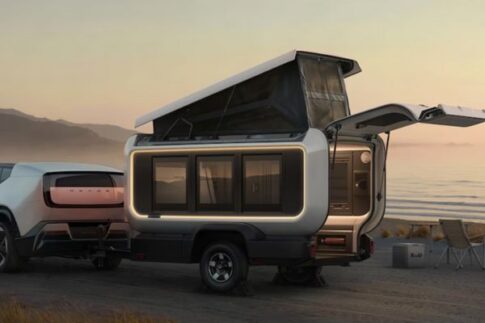
A major car maker building a small camper trailer changes the conversation fast. On the Playing with Sticks channel, Drew finally saw the Honda Base Station prototype in person after hearing about it for years, and it didn’t look like a typical RV at all. Honda calls it an “industry disruptor,” mostly because it’s compact on the road, garage-friendly at home, and designed to open up at camp for real standing room and a wider living space. Check it out.
In the RV shop with Dustin Repairing a frame flex issue uncovered after RV dropped off for other service
In the world of RVs, unforeseen challenges can emerge. My team at California RV Specialists recently encountered a concerning issue while maneuvering a Forest River Wildcat around our service yard. The owner of the unit had been unaware of the potential danger lurking beneath the surface—pin box frame flex. Continue reading.
Healthy “ice cream” in your RV without the guilt (or price tag)
Craving something sweet but trying to eat healthier? This frozen fruit soft-serve maker turns any frozen fruit into creamy, ice-cream-style treats in minutes—no added sugar, dairy, or mystery ingredients. Gadgets like this are usually pricey, but this one keeps it simple and affordable, making it a fun splurge that won’t wreck your grocery budget. Easy to clean and perfect for small RV kitchens, it’s a smarter way to satisfy dessert cravings.
REMEMBER:You don’t need to receive an email alert from us to read our newsletters. Just click any time of day directly to our website, www.RVtravel.com, and all the latest newsletter issues and recently published articles will be right there for you.
Article and video Avoiding the dreaded RV poop pyramid
It finally happened to the Two Traveling Teachers: the dreaded RV poop pyramid. Have you ever experienced this RV black tank problem? If you have, you know. If you haven’t, then you want to avoid it. A poop pyramid happens when solids build up in your RV’s black tank, essentially creating a pyramid of waste. Here’s how to avoid this unpleasant condition.
Featured article 10 ideas for smart, out-of-the-way RV shoe storage
By Gail Marsh
Athletic shoes, hiking boots, dress flats, casual shoes, steel-toed work boots, slippers, water shoes, flip-flops—so many shoes! We need to figure out shoe storage in our RV! Our rule has always been to take shoes off at the RV entry, which keeps dirt and debris out. But now, where do we put the shoes once they’re off? Here are 10 smart RV shoe storage ideas I like.
Ask Dave Ford to discontinue F53 gas chassis. Are larger Class A motorhomes doomed?
Fresh, flavorful diabetic diet meals for RVers over 60
Eating well on the road doesn’t have to be complicated or bland. This diabetic cookbook for people over 60 is packed with quick, practical recipes designed to support steady blood sugar and boost daily energy, all with simple ingredients. With clear nutrition info and a built-in 4-week meal plan, it takes the guesswork out of healthy cooking so you can focus on feeling good and enjoying the journey. Learn more or order.
Reader poll How much water do you drink in one day?
DID YOU KNOW?
We publish 7-8 newsletters each week (not to mention the 50+ articles we write, proof, and schedule each week, too!). We’re just a team of a few people who work really, really hard for this to reach your inbox every day. If you appreciate what we do, would you consider a donation of your choice to help support our work? We would really appreciate it. Thank you very much!
Quick tip Self-stick hat hooks keep kitchenware in place—brilliant!
We received this email and these photos from reader Kevin S. He wrote, “I was looking for an alternative to the expensive, heavy, and space-consuming Rev-A-Shelf drawer peg system for stopping dishes from sliding around while underway.
Drive Weather App From reader Jim J.: “Drive Weather is my new cross-country pal. Put in start location, end location and dial-in start time. A route will be shown (so far, close to my intended route) with temp, wind and precipitation forecast along the route for the time you are likely to reach that point. You can do the same thing with many weather apps’ daily/hourly settings and picking multiple cities along your route, but this is MUCH faster.” Thanks, Jim!
? MYSTERY PRODUCT OF THE DAY ? Does your partner have a hard time hearing when you ask them to complete a chore? Do you know someone who has “selective hearing”? Do your grandkids sometimes not listen to your rules? Well, this will solve all those problems!And you’ll laugh like heck about it!
Trivia
Bald eagles have approximately 7,000 waterproof feathers which “zip” together to keep them warm and dry in cold, wet weather. Those iconic white head and tail feathers don’t appear until a bald eagle is about 4 to 5 years old. Juveniles are mostly mottled brown until they reach full maturity.
Readers’ pet of the day
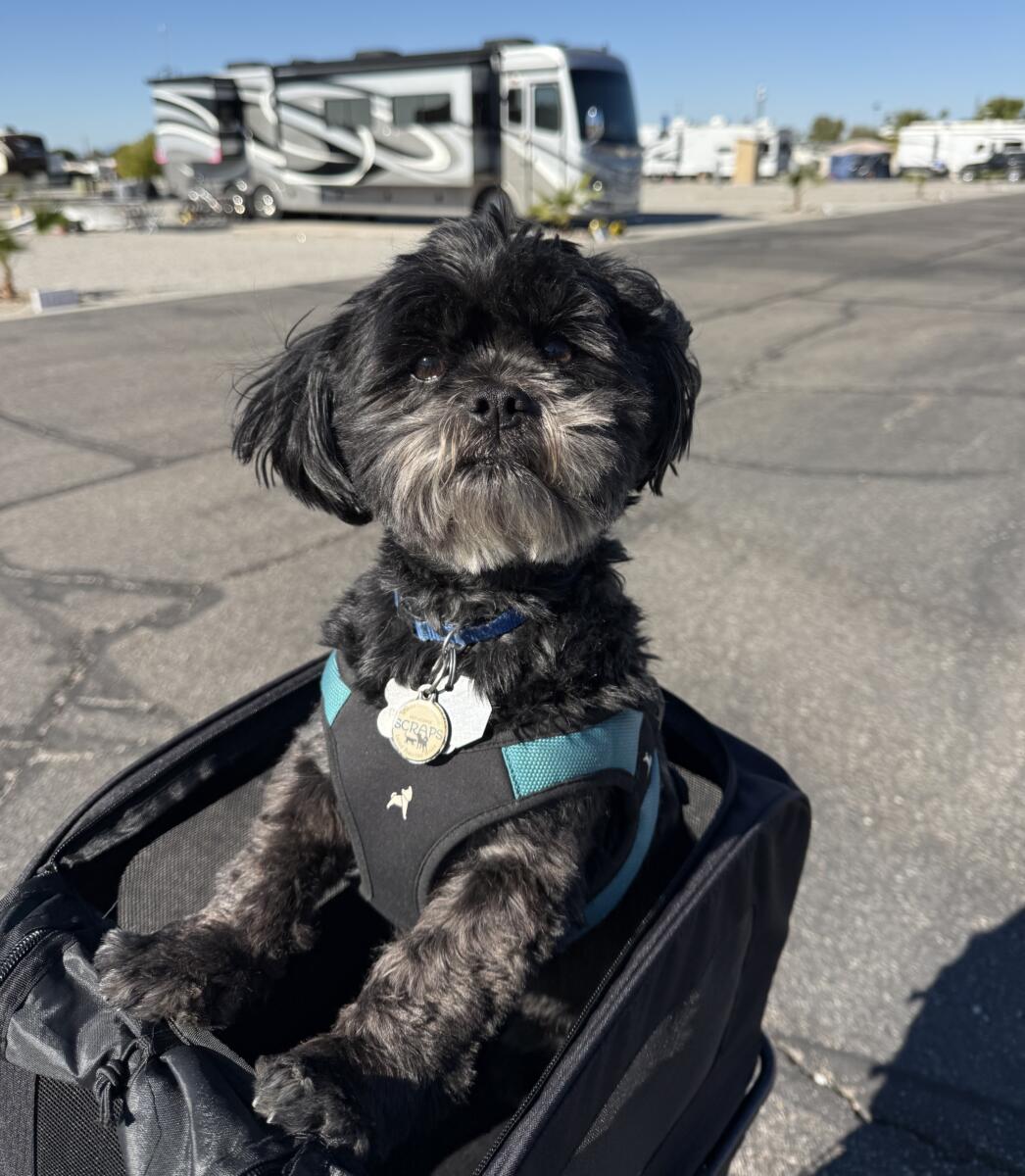
“Our 9 yr. old boy Chewie (Shorkie—Shih Tzu/Yorkie) is a bundle of energy in a 13 lb. body!!! He loves ‘his’ RV and graciously allows us to use it. He loves going to the dog park to hang with his buddies to bark at the big dogs as they walk by. (They’re brave when there’s a big fence in between them!) We found a perfect basket for him to ride in that fits on the back of either my hubby’s or my Lectric e-bike, so Chewie has his own personal chariot! Guess who gets to be the horse for His Royal Fuzziness??” —Cindy Anderson
Send us a photo of your pet with a short description. No blurry photos and please do not submit your photo more than once. Thanks!
Leave here with a laugh
(Click image to enlarge or order)
HAPPENING RIGHT NOW:Somewhere right at this very moment, someone just said, “We’ll beat the traffic.”
Today’s weather forecast across the nation THIS MAP UPDATES TWICE A DAY
In a recent article, I addressed the rumor that Winnebago Industries was going out of business. Part of the “fuel” behind that rumor was the fact that the company stopped producing its Class A gas motorhomes. However, while researching the topic and discussing it with several trusted contacts within the RV industry, another issue surfaced.
Several indications suggest that Ford Motor Company will discontinue the Class A gas motorhome chassis known as the Ford F53 at the end of this model year. Current information suggests that Ford has enough pre-orders to complete production for the remainder of the year and possibly supply some chassis into the first quarter of next year—if those units can be built within this production cycle.
Ford has remained very tight-lipped regarding any long-term plans. Currently, the only Class A gas motorhome chassis with a gross vehicle weight rating (GVWR) above 14,500 pounds is the Ford F53.
Ford F53
History of the Class A gas chassis
In the early 1970s, many RV manufacturers built Class A motorhomes on a Dodge chassis. While functional, it was limited in both weight-carrying capacity and engine power.
Somewhere around 1974, General Motors introduced the Chevrolet P30 chassis, which was widely viewed as a more “luxury-oriented” platform. At that time, Winnebago Industries launched the Itasca line on the P30 chassis.
The Dodge chassis disappeared in the mid-1980s, when the government bailout of Chrysler required the company to focus its efforts on the automotive and military sectors. For several years afterward, the P30 chassis was essentially the only option available, and changes or improvements were limited.
At one point, John Deere briefly entered the RV chassis market with its own platform powered by a Ford gas engine. However, the venture was short-lived. Thankfully, the tractor market picked up and Deere & Company got out of the RV chassis business.
I personally drove a 40-foot Winnebago Superchief equipped with a John Deere chassis during a training trip to California. I’m honestly surprised I’m not still trying to get back home!
More improvements
Ford entered the market in the late 1980s and introduced several improvements, including true fuel injection, tilt steering, and an overdrive transmission. Over the years, RVers benefited from the competition as manufacturers continued to improve horsepower, reliability, and overall drivability.
Eventually, Workhorse Custom Chassis acquired the P30 platform and produced the W-Series chassis until 2010. When new emission regulations took effect, production ceased, leaving the Ford F53 as the only widely available Class A gas motorhome chassis.
Some manufacturers experimented with alternatives. For example, Winnebago Industries offered the Winnebago Reyo built on the Mercedes-Benz Sprinter-based P50 chassis until 2015.
More recently, several companies have introduced smaller Class A motorhomes built on the Ford E‑350 and Ford E‑450 stripped chassis. These platforms have a maximum GVWR of 14,500 pounds and typically limit the coach length to about 30 feet or less.
What will happen to the larger Class A gas motorhome?
According to RVIA stats for January 2026, only 531 total Class A units were sold, down 3.5% from last year. This is all Class A units including diesel pushers, gas on the F53, and both E-350 and E-450 chassis.
With the Class A gas market being soft to almost-non-existent, will anyone step up and provide a chassis with the wheelbase and GVWR that can handle a unit larger than 30 feet? It doesn’t look promising. However, stay tuned…
By Dave Helgeson
If you are like me, you have many electronics that require a charging cord in your RV. Cell phone, jet packs, satellite messenger, tablets, heated garments—just to name a few. Of course, none of them use the same USB connection, nor are they compatible with one another. There are so many options: Type A, Type C, Mini B, Micro B—Ugh! I can’t remember which cord fits which item!
When I do find the correct cord, I want to keep track of it and have the “working end” of the cord readily available when I want to charge something. What to do?
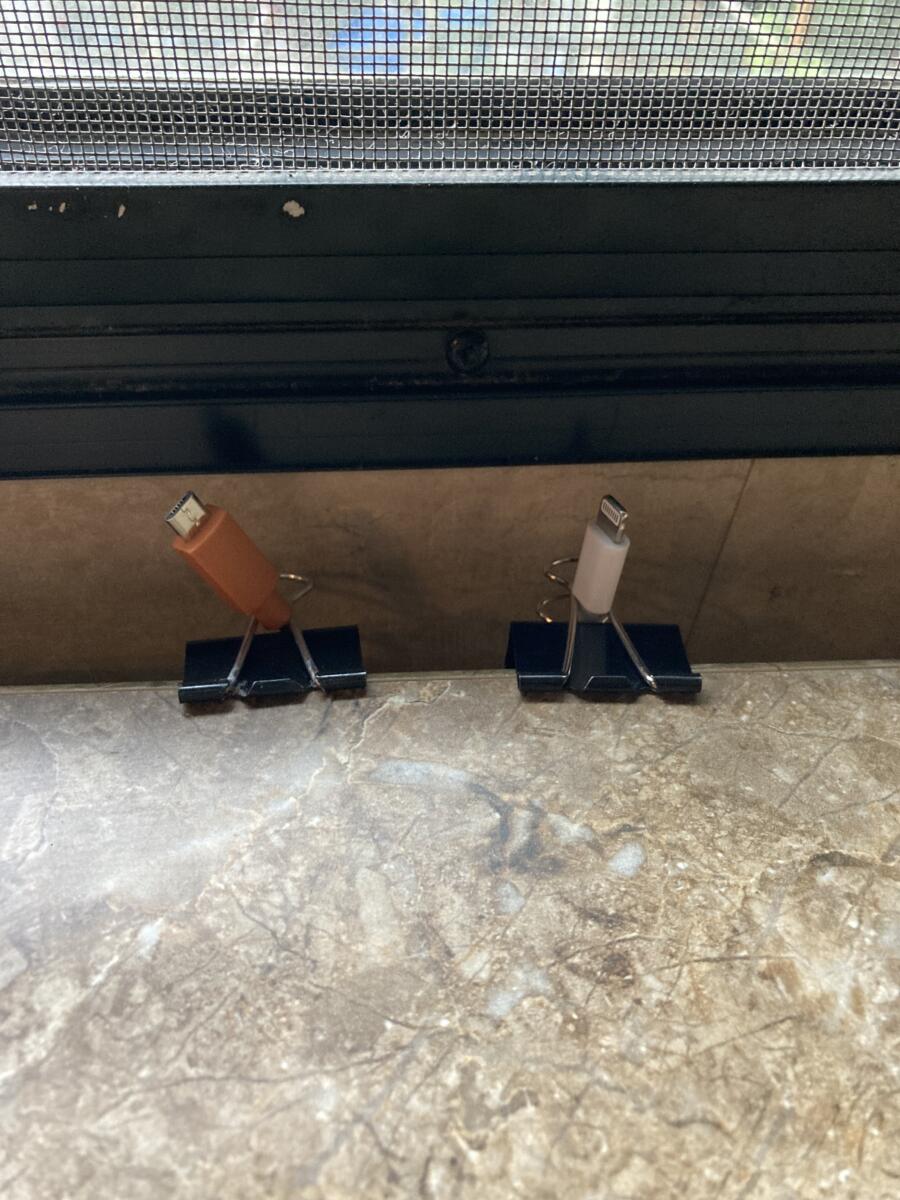
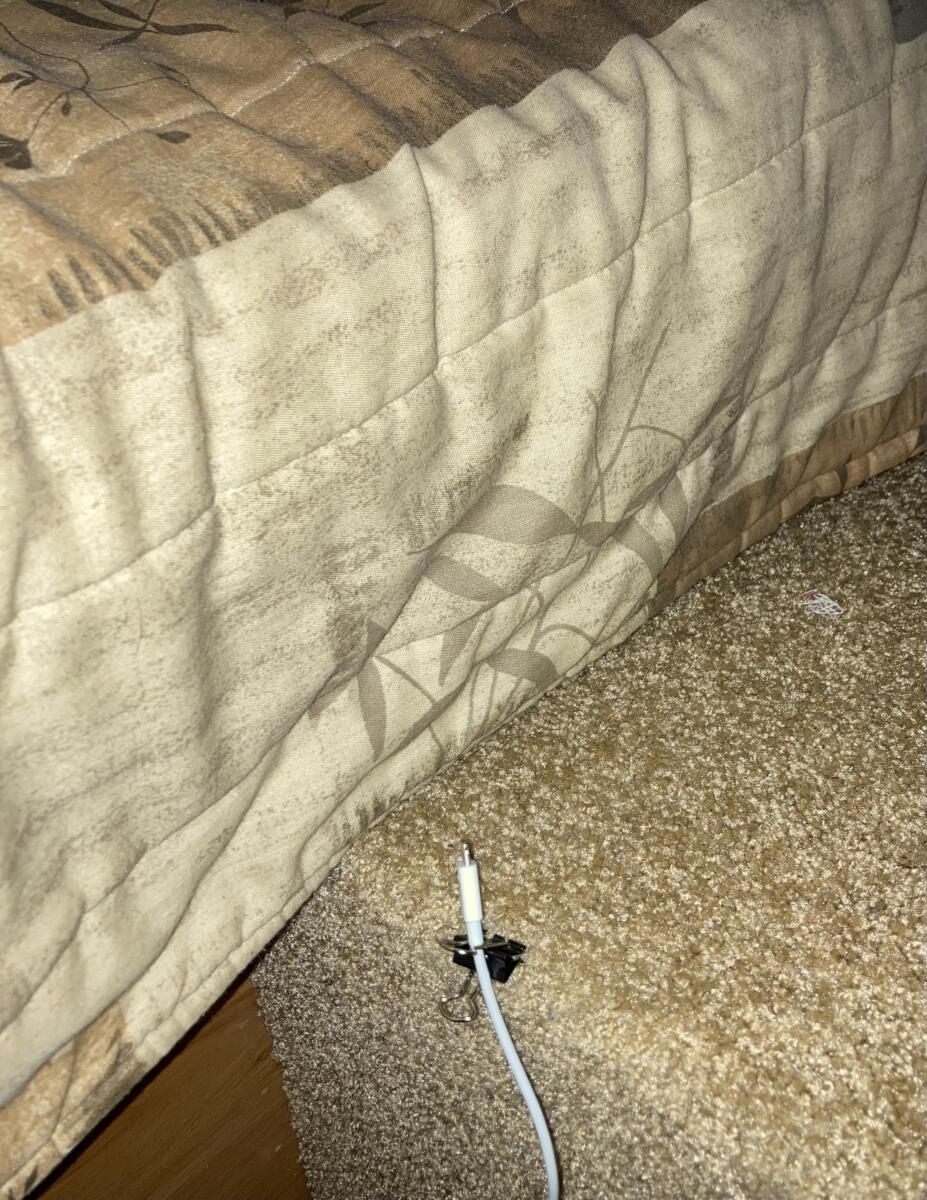
The solution: Trusty binder clips!
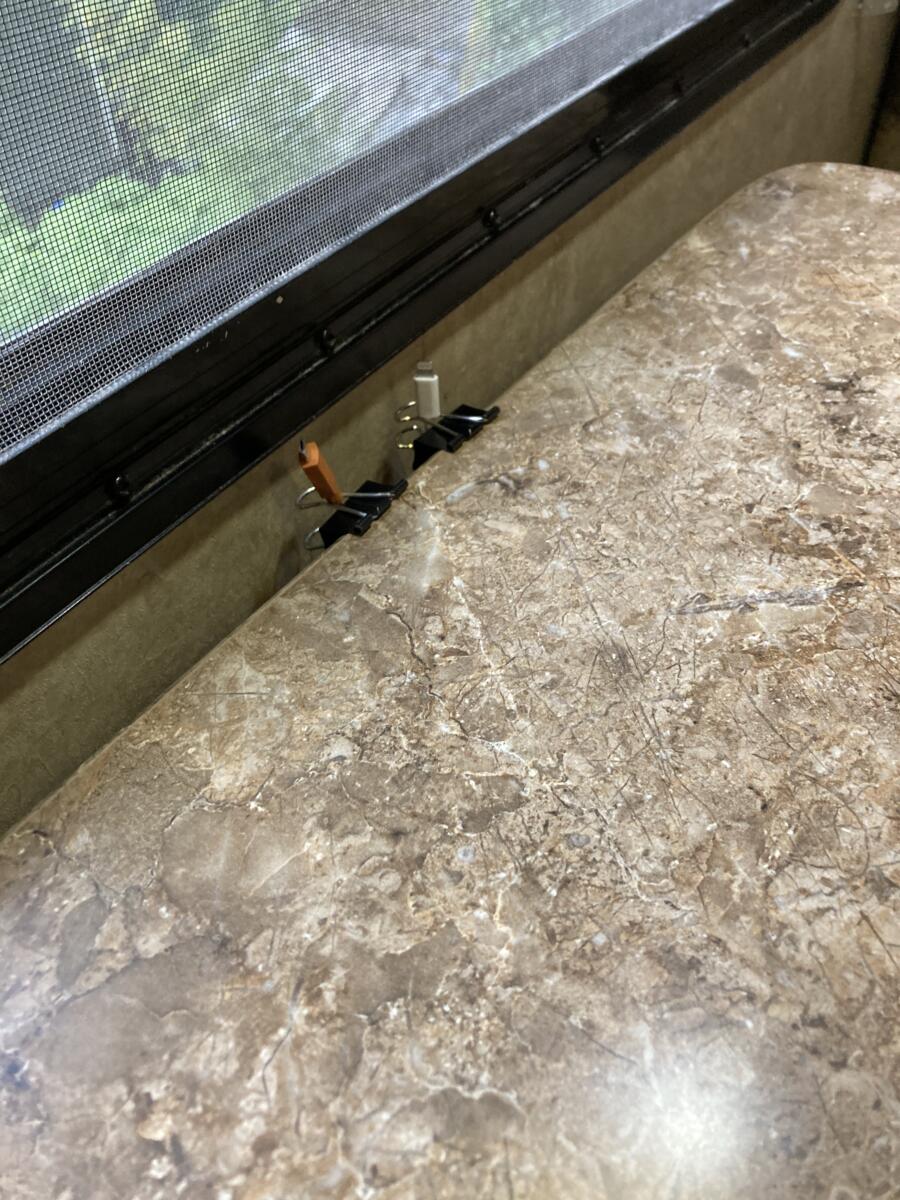
Route the desired end of the charging cord through the handle of a binder clip and then clip it to a convenient location of your choosing.
Cords stored at end of dinette table. Dave Helgeson photo
Example: My wife and I typically charge our phones at the RV dinette. We plug the USB charging brick into the wall outlet below the table with our cell phones sitting on the table with the charging cord attached. The problem is that when you unplug the phone, the charging cable falls between the table and the wall, ending up on the floor under the dinette, where it is very inconvenient to recover.
By routing the end of the cord through the handle of a binder clip and clipping it to the wall end of the table, the cord is always readily available. Slide the extra cord through the clip when you need it, and let it slide back through when you don’t. I have since added a second charging cord of a different configuration for other electronics.
Nice and tidy and ready for use.
The applications are endless. Like to lie in bed with your tablet? Use a binder clip to attach the charging cord to the bedspread or mattress. Do you keep a rechargeable flashlight on a shelf next to a window? Clip the charging cord to the window valance. I am sure you can think of many more applications that apply to your rig and needs.
Charging cord readily available at the nightstand. Dave Helgeson photo
Who knew the lowly binder clip could be so useful?
Below is a short video detailing options for routing the charging cord through the binder clip handle, if you are having difficulty envisioning the process.
By Cheri Sicard
It finally happened to the Two Traveling Teachers: the dreaded RV poop pyramid. Have you ever experienced this RV black tank problem? If you have, you know. If you haven’t, then you want to avoid it. In the video below, Tommy and Gina share how.
A poop pyramid happens when solids build up in your RV’s black tank, essentially creating a pyramid of waste. Here’s how to avoid this unpleasant condition.
How to avoid a poop pyramid
#1 Use plenty of water: Lack of liquids is a huge contributor to the poop pyramid problem. Use water, and plenty of it, when you flush.
#3 Regular tank flushing: A few extra minutes spent flushing out your tank when you empty it can go a long way toward preventing poop pyramids.
#4 Leave the RV valve tank closed until ready to dump: This one is important, folks, yet I am constantly amazed at the number of RVers I see making this rookie mistake. If the valve is open and you are continually draining away all the liquids, guess what? You will have a massive poop pyramid problem. You can keep your sewer hose connected if you like, but only open the valve when it is time to dump.
What should you do if you ever have to deal with a poop pyramid? Tommy talks about solutions, starting at point 3:10 in the video.
How much water do you typically drink in a day? A single cup? A few cups? Maybe a whole water bottle? Or do you stick to coffee and other drinks instead?
When you’re RVing, do you find yourself drinking more water than you do at home, or less? Some RVers say they drink more because they’re outside, active, and exploring new places.
Others mention that they actually drink less, either because they’re trying to conserve their water supply or they don’t think about it as much when they’re on the road.
It’s also worth considering your routine when you’re on the road. Do you find it harder to stay hydrated when you’re busy with travel, setting up camp, or sightseeing?
Staying on top of water intake can be tricky when you’re on the move, especially if your focus is more on the adventure and less on hydration.
Another factor that comes into play is the water itself. Do you always trust the water at campgrounds, or do you bring your own supply? If you’re more cautious about where your water comes from while traveling, that could affect how much you drink.
Then there’s the weather. Hot summer days hiking in the desert call for more hydration, but in cooler climates, you might not reach for your water bottle as often. Plus, if you’re boondocking and stretching your fresh water tank supply as long as possible, you might be more mindful of every sip.
After you vote, please leave a comment and share your experience. Do you drink more or less water on the road? What factors influence your hydration habits while RVing? Thanks!
We use cookies to ensure that we give you the best experience on our website. By continuing to use our site, you consent to accepting cookies. We NEVER have or will sell reader's data. For more info, please see our privacy policy page.