Home Blog Page 1532

Couples: Do you get along better at home or on the road?

15

Only answer this if you have a significant other you live with at home and on the road with an RV.

What curious minds want to know is if you get along better as a couple when you are at home or when you are living/traveling with an RV.

Please do not answer if you live or travel alone.

And, as always, have patience. The poll sometimes takes a few moments to load (bad poll!).


Campground crowding. Discussion for September 19, 2020

3

More people than ever are taking up RVing. These newbies have determined that RVing is the safest way to travel in our pandemic times. The result is campground crowding like never before. In this weekly blog, RV Travel readers discuss their experiences. Maybe we can make some sense of this and find ways to work around the problem.

Here are a few observations from our readers.

RVING: NOT AS ENJOYABLE AS IT ONCE WAS

Did RVing used to be more enjoyable back when only a select few were doing it? Has the fun been taken away because of crowded campgrounds, crowded tourist attractions, crowded roads, etc.?

Here’s what reader Warren Eoff thinks: “We just completed a trip from Oklahoma out to Washington state. We found it much more difficult to find a place to stay for any length of time. Spending so much time trying to make reservations ahead is not the way we want to travel but each year it seems that’s becoming the norm. After the pandemic has run its course or abates things will get back to normal…maybe or maybe not. At this point, we are ‘on the fence’ about continuing our journeys.”

NOTE: Be sure to read our list of questions below. Maybe you have an answer. 

NO KIDS ALLOWED

Joni Evans thinks adult-only campgrounds will do the trick… “We are full-time RVers. Campgrounds & RV Resorts are packed. In California, they’re way overpriced. And no open sites. Need more adult RV resorts in Calif.” That’s an interesting thought…

WE’VE TALKED ABOUT THIS BEFORE…

This topic continues to come up. What should be done about all reserved, yet empty sites? Brenda Mentzer is frustrated. “We struggle to find a spot and when we do find one there seems to be a lot of empty spots throughout the campground. Soo frustrating!! It happens everywhere we go! Why won’t people cancel instead of wasting campsites??? There should be rules stopping this!”


Make sure you join our Crowded Campgrounds Group on Facebook.


IF THE CAMPGROUNDS ARE FULL, BRING THE CAMPGROUND TO YOU

“We purchased our first travel trailer this year, waited over 3 months for delivery and are now camping in our driveway. Sites are booked, and boondock sites are packed as well. We are keeping a vigilant eye on websites as bookings open for the spring.” Best of luck, Joe Geraci, best of luck.

SOLAR SALES ARE SOARIN’

“The newbie campers have taken over the parks. I guess that is good for the state but it has us out purchasing solar for the motorhome so we can boondock. That is even getting crowded. But I guess that is good for solar sales. My concern is many of the boondock campers are not picking up their trash and cleaning up before they leave. Some pristine areas are starting to look a bit trashy. Whatever happened to the old ‘leave nothing but your footprints’???” —Mike Whelan

*NOTE FOR THOSE WHO LEAVE TRASH BEHIND: STAY HOME.

NOW, ON THE OTHER HAND…

Head to Florida!

Apparently, in Florida it’s as easy as [Key Lime] pie to find a spot. Michelle Everett assures us we can make a reservation! “There’s plenty of room down in the Florida Keys. I drive past the RV parks almost daily and I too am wondering where all the RVers are?”

Read last week’s column on Crowded Campgrounds.

Some questions for you:

• Are you finding more and more campgrounds booked up? Or are you having no problem finding places to stay?

• If campgrounds continue to be crowded and RVing continues to become more popular, will it affect how or when you RV?

• Do you have any tips or secrets you’d like to share about finding campgrounds that aren’t as crowded?

Please use the form below to answer one or more of these questions, or tell us what you’ve experienced with campground crowding in general.

Name
Drag & Drop Files, Choose Files to Upload

##RVT966

RVelectricity – 12-volt battery dangers (Warning: graphic content)

28

By Mike Sokol

Dear Readers,
I see more and more of you changing batteries in your RV. Perhaps you’re adding a second battery for more boondocking capacity, upgrading to Lithium chemistry, or simply replacing worn out batteries that no longer hold a charge. In any event, there are a lot of untrained consumers handling RV batteries without proper safety precautions.

WARNING: GRAPHIC PICTURES BELOW

Is 12 volts DC dangerous?

You bet your sweet bippy it is, but probably not for the reasons you’re thinking about. While 12-volt batteries have too low of an electrical potential to cause a dangerous electric shock like a hot-skin contact voltage, this class of batteries has the capability of supplying hundreds or even thousands of amperes of current if a metallic conductor makes contact between the plus and minus poles. And while the human body offers too high of a resistance to allow significant amperage to flow, any metal jewelry you’re wearing offers a low-resistance path that will heat up cherry red in seconds, right after it welds itself in place.

How hot can it get?

Well, if you’re unlucky enough to have your finger or hand trapped by a piece of jewelry that’s rapidly heating up due to making contact and welding itself between the battery and vehicle frame, then this chart shows you just what temperature your metal ring, watch band or bracelet achieved.

Note that if you can begin to see it glow cherry red, it’s already made it to 1,400 degrees F. And if it gets up to yellow, then you’re touching metal that’s approaching 2,000 degrees Fahrenheit.

This is a high enough temperature to cause 3rd degree burns in seconds, then quickly begin tendon and bone damage. Yes, it’s possible to lose a finger or even a hand if you can’t break your jewelry free from the welded connection fast enough.

A real-world example

Here’s what happened to one of my RVelectricity Facebook members last week that should serve as a warning to all of us. Even though he was a 25-year certified ASE mechanic and said he should have known better, he admitted to getting complacent while working around an alternator. Note that he was wearing a thin metal bracelet made from a stainless steel bicycle spoke, which you can see in the top right part of the picture.

Somehow he accidentally made contact between the main wire on the alternator and something metal in the engine compartment of his RV. Virtually every piece of metal in an RV is bonded to the frame, and the negative terminal of the batteries are also bonded to the vehicle frame. Because the alternator is connected directly to the battery via this primary wire, the current can flow either way. That allowed the full cold cranking amps of the batteries to be available to heat up that thin metal bracelet after welding itself in place.

No, it’s not a shock, it’s a burn…

While it’s true that you really can’t get shocked from a 12-volt battery (unless you can put your tongue across it, and even then it’s probably not dangerous), anything metal connecting the positive and negative battery terminals will cause hundreds of amperes of current to flow and heating to occur.

I’m sure the temperature of the bracelet reached way over 1,000 degrees F in an instant, and he tried to get it loose quickly. But since the bracelet had tack-welded itself between the alternator terminal and vehicle frame, all he could do was attempt to pull the red hot metal loose using his bare flesh. Here’s what the top of his arm looked like.

It gets worse, much worse…

You can see from the burn marks on the bottom of his arm that he had to pull on the red-hot bracelet multiple times in an attempt to free that thin piece of wire from the huge current flowing through it (probably upwards of 1,000 amperes), with the temperature continuing to rise. Stainless steel melts at around 2,700 degrees Fahrenheit, and with enough time an RV battery can probably get it up to that temperature.

Every time he tried to pulled away from it, the metal bracelet burned into his flesh even deeper. He must have been in incredible pain for the time it took to free himself from the red-hot metal bracelet. This picture shows you just how much damage a bracelet heated up by an RV battery can cause.

But he’s lucky…

This type of burn injury can not only be extremely painful, there are other hidden dangers if you short out your RV or vehicle battery. For example, it’s also possible to cause acid to boil out of a flooded-cell battery and hit you in the eye (I witnessed this happen to my dad many years ago when he got the jumper cables reversed).

If that’s not bad enough, you can even cause a lead-acid battery to explode sending sulfuric acid everywhere (I witnessed this at the gas station I worked at during high school). And you can also lose the use of a finger or your hand. Read more on this below.

Wedding rings are dangerous too

I personally witnessed a car mechanic get his wedding ring trapped between a wrench on the positive terminal of a vehicle battery and the car frame, welding itself into place.

I heard him screaming while he was trying to break free of the red-hot ring, and then saw him run to the sink in the back of the shop to submerge his hand in cold water. I could see a cloud of steam rising from the sink, attesting to just how hot the ring got.

The paramedics who transported him to the emergency room said he was lucky he didn’t lose the finger. But he did have tendon damage and never regained full use of his finger.

What can you do to stay safe?

  • Remove all jewelry including rings, bracelets, watches and necklaces when working around any live electrical circuits, especially batteries. Just remember that RV and vehicle batteries are ALWAYS live. Anything metal can cause a short circuit with very bad results.
  • Wear safety glasses when working around anything electrical. I have pictures of exploding bits of metal flying from copper wire during a short circuit that could easily put our your eye. Safety glasses are a must.
  • Disconnect the negative terminal of the battery first, and put it back on last. That way if your wrench accidentally makes contact with the vehicle frame, because it’s on the negative terminal of the battery there’s no voltage differential to drive the current. Once the negative terminal of the battery is removed, it’s then safe to disconnect the positive terminal. At that point, even if your wrench makes contact with the frame the battery is isolated from the chassis ground and no current can flow.

Learn more at the FROG Virtual Rally – Sept. 30 to Oct. 4, 2020

If you’re a member of FROG (the Forest River Owners’ Group), I’ll be teaching several RVelectricity virtual seminars during the TechnoRV FROG Virtual Rally from September 30 through October 4. I’ll be presenting a virtual JAM Session (Just Ask Mike) about 12-volt battery safety, including safe ways to use jumper cables, how to avoid creating sparks that can cause a hydrogen-oxygen battery explosion, etc.

If you’re not already a member of the Forest River Owners’ Group and own a Forest River RV, you can sign up for free to become a member of FROG HERE.

This is a FROG members only rally

For more information on how you can attend this virtual rally along with lots of other seminars including the JAM Sessions that “yours truly” will be teaching online beginning September 30, please sign up for the TechnoRV FROG Virtual Rally HERE.

But if you’re not a FROG member don’t worry about missing out on these videos, as I’ll repost them the week after the rally on my own RVelectricity Youtube channel. So stay tuned.

Please be careful around 12-volt batteries. And let’s play safe out there….

Mike Sokol is an electrical and professional sound expert with 50+ years in the industry. His excellent book RV Electrical Safety is available at Amazon.com. For more info on Mike’s qualifications as an electrical expert, click here.

For information on how to support RVelectricity and No~Shock~Zone articles, seminars and videos, please click the I Like Mike Campaign.

##RVT966

Meet your fellow RVtravel.com readers, September 19, 2020

1

We asked RVtravel.com readers to tell us about themselves. Here are a few responses.


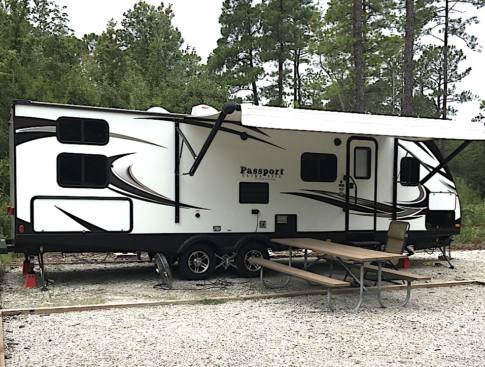
From Pam Kuras. We are new campers in North Carolina, but we’ve been dreaming about RVing for most of our 29 years of marriage. We started searching for a used travel trailer this past winter, then closed the deal in March — just before COVID-19 shut down the world. Despite four expensive RV equipment failures, we’ve managed to camp at six of our local state parks this summer. We are not finding it too difficult to reserve a campsite with hook-ups in our area, but we’ve only visited public campgrounds so far. This photo was taken at Jones Lake State Park last weekend, where we were the only campers in the entire park for two days out of our trip!


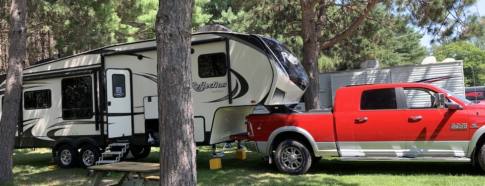
From Gene Sannes. My wife and I have spent the last 58 years traveling and staying in campsites, from tents to campers I pulled behind my motorcycle, and for the last few years in either a camper trailer or fifth wheel. The most adventurous camping was when we lived in England for 10 years. Spending 42 years with the military, we traveled to many places and camped in many a strange place, some that were very rough, to those with beautiful scenery. We never stay long in any one place, and as I tell people, we have concrete and white lines to see and we don’t want to be late. We may not see everything worth seeing in one area, but we see many beautiful places in many areas. For both of us, when we get to 100, we must figure out what to do with our lives.


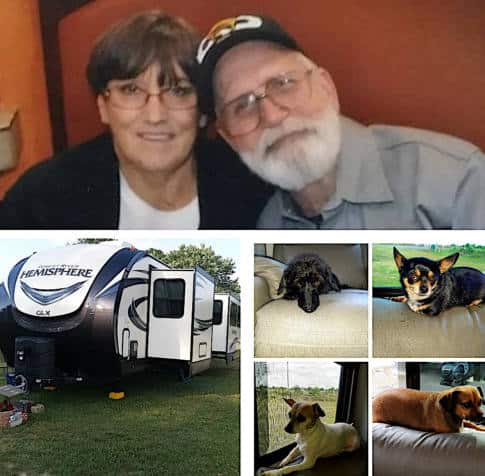
We are Rick and Lisa Adcox from Tennessee. We dreamed of full-timing for more than 21 years but put it on the back burner while raising a grandchild. The dream did not ever go away. We finally launched in 2018 and never looked back. We did monthly camping trips for over 18 months to see what we needed, how to use the trailer and how to live in a small space. We loved it. Sold our home, sold the contents and off we went. We found it liberating cleaning out and going more minimal.

We had a few oops moments like hitting our mailbox on our first trip to a big accident in 2019 that totaled our trailer. We did not let either deter us. We upgraded and hit the road again. We just recently realized we have stayed at more than 22 RV parks in this beautiful country.

We travel with our four fur babies and we also work camp as we travel. We love meeting people along the way. Some have become lasting friends. We see changes happening — more people purchasing RVs and more going full-time. We think seeing this country by RV is amazing.


From Nancy Love. We were brand new to RVing and bought a used class A. Started out on the first adventure with kids, dog and Gram. Loaded the fridge to the most it would take! Getting on the highway ramp my husband floors it to get going around a curve. All of a sudden the fridge flies open and everything flew out of the fridge everywhere! What a mess!! Lesson learned: take curves slower and don’t overload the fridge like you’re going to never never land.


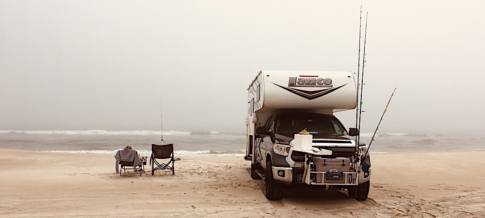
From Chris Ludlow. We are 4×4 truck campers. Not just on the beach though (that’s where we live). We are just outside Bethany Beach, Delaware. We (usually) spend a lot of time on the “drive on” beaches here (Assateague Island National Seashore and Delaware State Seashore) but avoid large gatherings of tourists (they do regularly inundate the area), and COVID-19 has kept us off until it cools. We’ve put 16K+ miles on our rig all over the country — Lake George, New York, and other northern spots this coming month .

Meet four readers from last week’s issue.

We’ll introduce you to four more RVtravel.com readers next week!

* * *
Please tell us about yourself by using the form below. Include a photo, too (of you, but your RV will do).

##RVT966

RV Tire Safety: Rules of thumb regarding tire inflation

By Roger Marble
Don’t get your shorts in a bunch about tire inflation – BUT you still should consult the inflation tables.

I talked about this a number of years ago but it seems it’s time to cover this again for those new to RV living.

I have covered what I felt is the “best” inflation for tire life in my posts where we discuss “4 corner weights” – which means learning the actual load on each tire position by getting the RV on a set of individual tire scales. While large RV conventions such as FMCA or Escapees events sometimes have those scales, many times they are not convenient. But you can find truck scales at many interstate exits, where you can learn the actual load on each axle.

Since we know that almost no RV has perfect 50/50 side-to-side load balance, learning the actual load on each end of each axle is a good idea. Some RVs have been found to be 1,000# out of balance.

If you can only find truck axle scales then I suggest the following rules of thumb until you learn your “4 corner weights.”

Class A motorhomes and large (28′-plus) 5th wheel trailers with slides and especially if they have a residential refrigerator, should assume they have 53% of the axle load on one end so should use that heavier number when consulting the tire Load & Inflation charts.

Class C motorhomes and trailers shorter than 28′ with slides should assume a 52/48% side-to-side split; while class C without slide, class B, and small single-axle trailers can assume a 51/49% side-to-side load split.

Using the heavier end figure, consult the published tire Load & Inflation tables to learn the minimum inflation pressure for the tires on that axle of your RV. This “minimum” inflation is the number you would consider for the morning of every travel day. To avoid chasing inflation changes due to changes in the weather, I suggest you add 10% to the number from the tables so you can simply monitor the inflation using your TPMS and as long as you never drop below the minimum inflation needed to support your load.

I am also in favor of this plus 10% inflation margin so you don’t find yourself chasing your tail every day by adding 1 or 2 psi when it gets cooler and you find yourself 1 or 2 psi low, or bleeding off 1 or 2 psi when the weather turns warmer. You can simply monitor the morning inflation number and as long as it stays near the +10% and does not drop to +0% or go above +20% you are good to go for that travel day.

With +10% margin it would be easier to discover you are low a few psi and simply wait till the next fuel stop, where there should be high pressure air available if you need to add air.

For those that don’t know how to inflate a warm tire, here are the steps:

1. Measure the pressure when the tire is at ambient temperature (not warm from driving or being in sunlight). Many consider this their “Morning Tire Pressure.”
2. Note the number of psi you want to add to each tire to get to your goal inflation.
3. When you get to a fuel stop measure the warm pressure.
4. Add the number of psi from #2 to the warm pressure in #3 and add air till you get to at least this new warm pressure goal.

This “rule of thumb” will work for pressure changes of 5 psi or less. If you find you need to add 5 psi or more there may be something wrong, e.g., a leak unless you have seen a long-term decrease in pressure as the weather cools down.

Don’t get hyper about being 1 or 2 psi off. Remember, if you have a 10% cushion, you are good to go as long as you are within a few psi of your goal.


Read more from Roger Marble on his blog at RVtiresafety.net or on RVtravel.com.

 ##RVT966

You never know who you’ll meet at the campground…

2

By Nanci Dixon
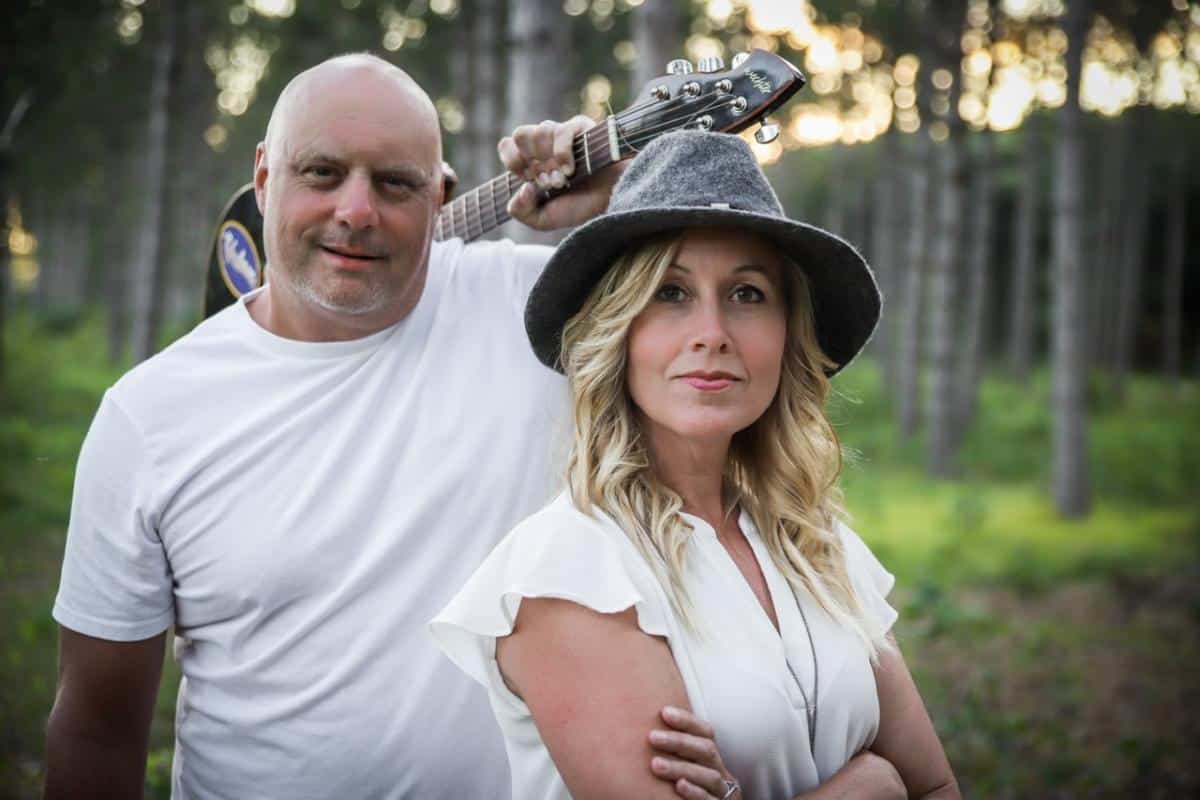
I love how many interesting people we meet camping! We just met our new campsite neighbors, The Border Hookups. Dave and Jacqueline Hudson are professional singers, health coaches, and full-time RVers. The couple is an acoustic singing duo, who play in a number of venues in the Midwest. Dave is from Minnesota and Jacqueline from Canada, hence the name The Border Hookups.

Two years ago they watched a video online of a couple that converted a bus and became full-time RVers. Dave asked Jacqueline if she would ever consider doing that very thing and she surprised him with an emphatic “yes.”

They spent two years preparing to be full-time RVers and spent every night watching scores of YouTube videos. They took walks and planned. They wanted to learn all they could about the RVing lifestyle. They are younger than traditional RVers and Dave said they just did not want to wait too long.

This past April, they sold everything and went full time. Dave and Jacqueline originally bought a 26-foot pull behind trailer, and just this week upgraded to a 30-foot fifth wheel to have more room and an easier drive.

Keeping their music shows going this summer through the pandemic has been a challenge. In March everything was canceled. Their shows started up again in June, but they looked a little different than they had in the past. Masks were worn, no microphones were shared, and no mingling was done with their fans.

Photo credit Justin Graddy

Dave has a background in film, and he and Jacqueline post a great series of videos on YouTube, The Border Hookups Go RVing. They started the videos to keep in touch with family and friends and now have a loyal following. Check this one out: “The Scariest Night of Our Lives.

How do they feel about selling everything? Dave said that he believes it is the person that dies with the most stories who wins, not the one with the most toys.

I asked what they enjoy the most about their new lifestyle. “It is hearing people’s stories, meeting new people.” I couldn’t agree more.

Next time you get a new neighbor at the campsite, I encourage you to say hello. You never know who you’ll meet, and you might, like me, get a new soundtrack to your evening.

##RVT966

Casino RV camping, September 19, 2020

3

By Nanci Dixon
Casino RV camping is on the rise. As RV parks are ever-more crowded, finding a place to stay overnight or longer has become increasingly difficult. Casino camping is a great alternative to a standard RV park. They offer anything from a well-lit secure parking lot to a full-hookup resort-like RV park.

Every casino in the U.S. was closed at one point over the last several months during the pandemic, but many have now begun reopening. The CDC has supplied specific instructions to gaming establishments on social distancing, the distance between machines, sanitizing stations, and how to disinfect gambling machines and restrooms. According to the American Gaming Association, there are 896 casinos now open across the USA with only 97 still closed. Maybe there is a spot waiting for you!

We asked our readers about the casinos that they like and recommend. Below are some of the responses and some great tips, too.

Tips and Tricks

Bill B. suggests: “Always check in with security, make use of the facility, leave your space better than you found it, and enjoy.”

Brian J. had this helpful hint when parking at a casino: “Make sure to leave your windows closed on the grassy side of your camper at night. We were awakened about 3 AM when the sprinklers started spraying. Everything was soaked before we got our windows closed. Definitely a learning moment for us.”

Readers favorites

Photo credit Surv411st

Bill L. shares one of his favorite places: “The Seven Feathers Casino Resort located in Canyonville, Oregon, is one of the most beautiful and well-appointed RV resorts in the Pacific Northwest! With beautiful grounds, well laid out design and huge sites, this resort caters to every type of RVer. There is a beautiful indoor pool and spa at the recreation center as well as an exercise room and big central meeting area with kitchen facilities. There are fire pits and shared BBQ areas throughout the resort and the landscaping is beautiful!

If you want to head over to the casino for dinner or a show, simply call the Casino shuttle, which will come directly to your site. Join the free ‘Player’s Club’ and get an immediate discount on both your RV stay as well as fuel at the large Truck/RV/Auto fuel station at the entrance near I-5. (They have great fuel prices as well!)” The Seven Feathers Casino Resort is located off I-5 in Canyonville, Oregon. Editors note: There is also free overnight parking up to five days in a lot just below the casino.

Steve H. told us about one of the nicest parks he has been to: “The nicest casino RV park we have stayed in is the Gold Ranch Casino & RV Resort west of Reno, NV. Nicely separated, pine tree-shaded, concrete-paved, FHU spaces with well-maintained lawns between sites, newly asphalt-paved streets, clubhouse with swimming pool, Jacuzzi, laundry, and individual shower-restrooms. Free WiFi, great cell reception, giant-screen TV and fireplace in the RV park lobby/office, and four eating options (3 are fast-food) in the casino. By far the best RV park or campground we stayed in on a National Park trip to California and Nevada.” Gold Ranch Casino & RV Resort is located in Verdi, Nevada, off 1-80. Editors note: There is no free overnight parking at this location.

Victor B. told us about a casino that has both options, an RV park and an overnight parking lot. “Chinook Winds Casino Resort in Lincoln City, OR, has free overnight parking to its active members. Becoming a member is free and after spending a few bucks ($25 or so) in the machines, you can get a free parking tag for boondocking in the parking lot… believe it’s good for 2 nights. Lot is paved, monitored by security, well lit, with beautiful views of the ocean beaches, and accessible to a full-service grocery store within walking distance of the casino. Plus, there are numerous local food options from fast food to high-end restaurants. Oregon’s whale watching center is only an hour away. Great place to chill out. For those who need full-service hookups, they have a small RV lot, 51 spaces, off property for $42-50 /nt with a free shuttle to/fm the casino, 24/7.” Chinook Winds is located off I-5 in Lincoln City, Oregon.

Perks

Players cards are a great way to get a few dollars for the slots or a discount at the buffet. Just sign up when you enter the casino and try your luck.

Here are two excellent casino guides:

Casino Camping

American Casino Guide

Join our Facebook group Casino Camping.

Tell us about casinos you like that other RVers might like. If you have any tips or secrets about casino “camping,” tell us those too, please!

##RVT966

RV Daily Tips. Friday, September 18, 2020

This newsletter is for intelligent, open-minded RVers. If you comment on an article, do it with respect for others. If not, you will be denied posting privileges.

Issue 1431
Welcome to another edition of RV Travel’s Daily Tips newsletter. Here you’ll find helpful RV-related and living tips from the pros, travel advice, a handy website of the day, tips on our favorite RVing-related products and, of course, a good laugh. Thanks for joining us. We appreciate you. Please tell your friends about us.

If you shop on Amazon, please click here to visit through our affiliate site (we get a little commission that way – and you don’t pay any extra). Thank you!


[activecampaign form=34]


Today’s thought

“Unless someone like you cares a whole awful lot, Nothing is going to get better. It’s not.” —Dr. Seuss


Need an excuse to celebrate? Today is National Cheeseburger Day!

On this day in history: 1870 – Old Faithful Geyser is observed and named by Henry D. Washburn.


If you are a member of an RV club or are affiliated with an RV-related event would you please let us know if its gatherings, meetings, etc., are cancelled or postponed because of the coronavirus? We’ll pass along the info to our readers. We appreciate any news related to RVing that’s being affected by the virus. Please submit it here. Thank you!


Tip of the Day

RV weight limits can sneak up on you

By Greg Illes
I’ve learned to always drive my RV within its specified weight limits. How I learned this is a long and somewhat sordid tale, but I’ll touch on the highlights.

First of all, know that “stock” motorhomes do not have a reputation as load-haulers. Manufacturers seem to play a minimalist game, buying a chassis (from Ford or whoever) that will just barely hold their coach, its occupants, and a few odds and ends. Add in full water/gas/propane tanks, food and clothing, some tools and toys — it’s way too easy to bust the limits. What are the limits? Greg explains here.

Do you have a tip? Submit it here.


Gardening for RVers? Yup, right on your bumper!

One thing Tiña De Maris missed when on the road was a garden. Sure, you can put a potted flower on the dinette, but it’s just not the same, and vegetables don’t always lend themselves to a little bitty pot. Russ, being the supportive hubby that he is, not to mention fresh fruit and vegetable lover, constructed the ultimate traveling garden: the RV bumper garden. It’s not too difficult, and maybe you can have one too! Learn more.

Yesterday’s featured article: RV Mods: Lock your LP cylinders away from thieves


You may have missed these recent popular stories…


Reader poll

Does your RV have a built-in outdoor kitchen? 
Cook something up then tell us here.


Quick Tip

Don’t crowd food in the fridge

Arrange food in the refrigerator with space between the items to allow for free air circulation. This will ensure that heat is removed efficiently and quickly. Also, don’t over-pack the fridge. When it is full, it takes longer for the temperature to lower. An overcrowded fridge will take longer to make ice and a heavy load may cause defrosting.


Be like Mike, use silicone!
Mike Sokol says: Never use any kind of petroleum-based products on rubber or plastic components in your RV, such as your trailer connector. That includes products such as Vaseline, WD40 or any other type of spray lubricating oil. Doing so will eventually break down the plastic and/or rubber components causing them to swell up and eventually disintegrate. The proper treatment is anything silicone-based. We use a lot of Heavy Duty Silicone in our shop for general connector cleaning and lubrication. It’s also useful on rubberized door sweeps and such. You can get some of your own here.


Website of the day

Work For RVers
Looking for some work while on the road? This website shows current job postings you can do from your RV, or while you’re on the road passing through. Worth checking out!


Clubs and useful organizations
PLEASE NOTE: We may receive an affiliate commission if you join any of these.

• Harvest Hosts: Stay free at farms, wineries and other scenic and peaceful locations for free. Save 15% on membership.
AllStays: The best website for RVers! Your membership will become your RV-bible.
• Overnight RV parking. Directory of more than 14,000 locations where you can stay for free or nearly free with your RV. Modest membership fee.
• Boondockers Welcome. Stay at homes of RVers who welcome you in their driveways, yards, farmland or other space on their private property. Modest membership fee.
Escapees. Best Club for RVers: All RVers welcome, no matter what type of RV, make or model.


Trivia

Ever just mean to eat a little bit of something, but then finish the whole thing “accidentally”? Well, there’s a word for that. “Shemomechama” is a Georgian word that means, “I accidentally ate the whole thing.” Next time you do that and someone is upset with you, tell them this piece of trivia. By the time you’re done pronouncing the word, they’ll have forgotten you ate it!

*Which state has the most shoreline? It’s probably not what you think… Find out in yesterday’s trivia section.


Soap and water won’t work!
RV Travel Newsletter Issue 812Easily remove bugs, tar, sap and grease

Tarminator Tar & Sap Remover breaks down the complex molecules found in tar and other sticky materials. The unique MicroActive cleaning technology gives Tarminator unequaled ability to remove even baked-on tar, grease, sap and asphalt. Soap and water just won’t do it! Learn more or order.


Readers’ Pet of the Day

“Leaving the groomer parlor and headed for sunny Florida in the motorhome.” —Richard Silva

Send us a photo of your pet with a short description. We publish one each weekday in RV Daily Tips and in our Saturday RV Travel newsletter.


Leave here with a laugh

Did you watch that movie about the hot dog? It was an Oscar Wiener.

Today’s Daily Deals at Amazon.com
Best-selling RV products and Accessories at Amazon.com
. UPDATED HOURLY!


Join us: FacebookTwitterYouTubeRVillage

See all of our many Facebook groups here.


Did you miss the latest RV Travel Newsletter? If so, read it here.
Oh, and if you missed the latest Sunday News for RVers, make sure to catch up here.


Become a Member!

This newsletter is brought to you Monday through Friday by RVtravel.com and is funded primarily through voluntary subscription contributions from our readers. Thank you! IF YOU APPRECIATE THIS NEWSLETTER and others from RVtravel.com, will you please consider pledging your support?  Learn more or contribute.


RV Daily Tips Staff

Publisher: Chuck Woodbury. Editor: Emily Woodbury. Senior editor: Diane McGovern. Social media and special projects director: Jessica Sarvis. Financial affairs director: Gail Meyring. IT wrangler: Kim Christiansen.

This website utilizes some advertising services. As an Amazon Associate, we earn from qualifying purchases. Regardless of this potential revenue, unless stated otherwise, we only recommend products or services we believe provide value to our readers.

Everything in this newsletter is true to the best of our knowledge. But we occasionally get something wrong. We’re just human! So don’t go spending $10,000 on something we said was good simply because we said so, or fixing something according to what we suggested (check with your own technician first). Maybe we made a mistake. Tips and/or comments in this newsletter are those of the authors and may not reflect the views of RVtravel.com or this newsletter.

Mail us at 9792 Edmonds Way, #265, Edmonds, WA 98020.

This newsletter is copyright 2020 by RVtravel.com

Does your RV have a built-in outdoor kitchen? 

28

Does your RV have a built-in outdoor kitchen? If so, do you use it? Outdoor kitchens can be a big selling point for certain families when it comes to buying an RV, but other people never use theirs.

Most newer RV models (even tiny towables!) come with outdoor kitchens nowadays. If your RV doesn’t currently have one, do you want one?

Please tell us in the poll below if your RV has one, and leave a comment telling us if you have one and use it often, or have one but never use it. We’d like to know if you put these kitchens to use or not! Thanks!

Recipe: Instant Pot Spicy Chicken Curry Soup (Warning: This WILL make you hungry)

3

By Nanci Dixon
I should title this “Bad Cook – Good Instant Pot” – because almost everything I make in the Instant Pot™ comes out great. Keeping my Instant Pot on my RV counter is actually working – I’m using it a lot more and it’s encouraging my husband and me to try new things and eat healthier. I have been trying recipes with coconut milk lately and have found that I love the slight coconut flavor and smoothness that it adds to soups.

This week’s recipe was an experiment. I didn’t want to serve it over rice as we have added more than a few COVID pounds on (but this is an option for you). So I turned it into soup – a really, really spicy soup! If you’re a spice wimp, no worries – just reduce the curry and pepper in the recipe.

Sauté chicken and veggies

Ingredients

• 2 Tbsp oil (I used olive oil)
• 1 1/2 lbs boneless, skinless chicken thighs, cut into 3/4 inch pieces. Thighs work well in the Instant Pot because they don’t dry out as easily as chicken breasts
• 1 medium onion, chopped
• 2 tsp minced garlic
• 1 green or red pepper, cut in 1/2-inch pieces
• 1 10 oz can diced tomatoes or 4 tomatoes chopped
• 1 cup any quick-cooking veggies (zucchini, mushrooms, chopped celery)
• 1 cup chicken broth
• 1 Tbsp mild curry (I used 1 1/2 Tbsp curry – too much!)
1 tsp cumin
• 1/8 tsp pepper
• 1 13 oz can coconut milk (Add after cooking)

Instructions

1.) Set Instant Pot to sauté, high

2.) While the Instant Pot is heating, cut up chicken and chop the onion

3.) Add chicken and onion to Instant Pot, stirring until onion is soft and chicken is brown 

4.) Add garlic and sauté a minute or two more

5.) Add the rest of the ingredients EXCEPT coconut milk

6.) Set Instant Pot to manual/high for six minutes. Quick-release when done

7.) Add coconut milk and stir. If the soup is not hot enough after adding coconut milk, set Instant Pot to sauté and stir until the desired temperature

8.) Add salt and additional curry and pepper as desired

Instant Pot Chicken Curry Soup

Here’s another delicious Instant Pot soup with coconut milk recipe to try. And if you don’t yet own an Instant Pot, you’ll want to buy one this, dare we say, instant!

##RVT966

Hot, hotter, too hot… The snowbird migration is changing

70

By Barry Zander
With temperatures in the Southern Belt of America rising rapidly, the effect on snowbirds is already a fact. It’s a sign of lifestyle changes for thousands of RV owners, as well as businesses that rely on the migration of RVers for survival. According to a study at the University of California in Irvine, we can expect cataclysmic economic consequences for Florida, Texas, Arizona, California, and other snowbird-favorite states in the South.

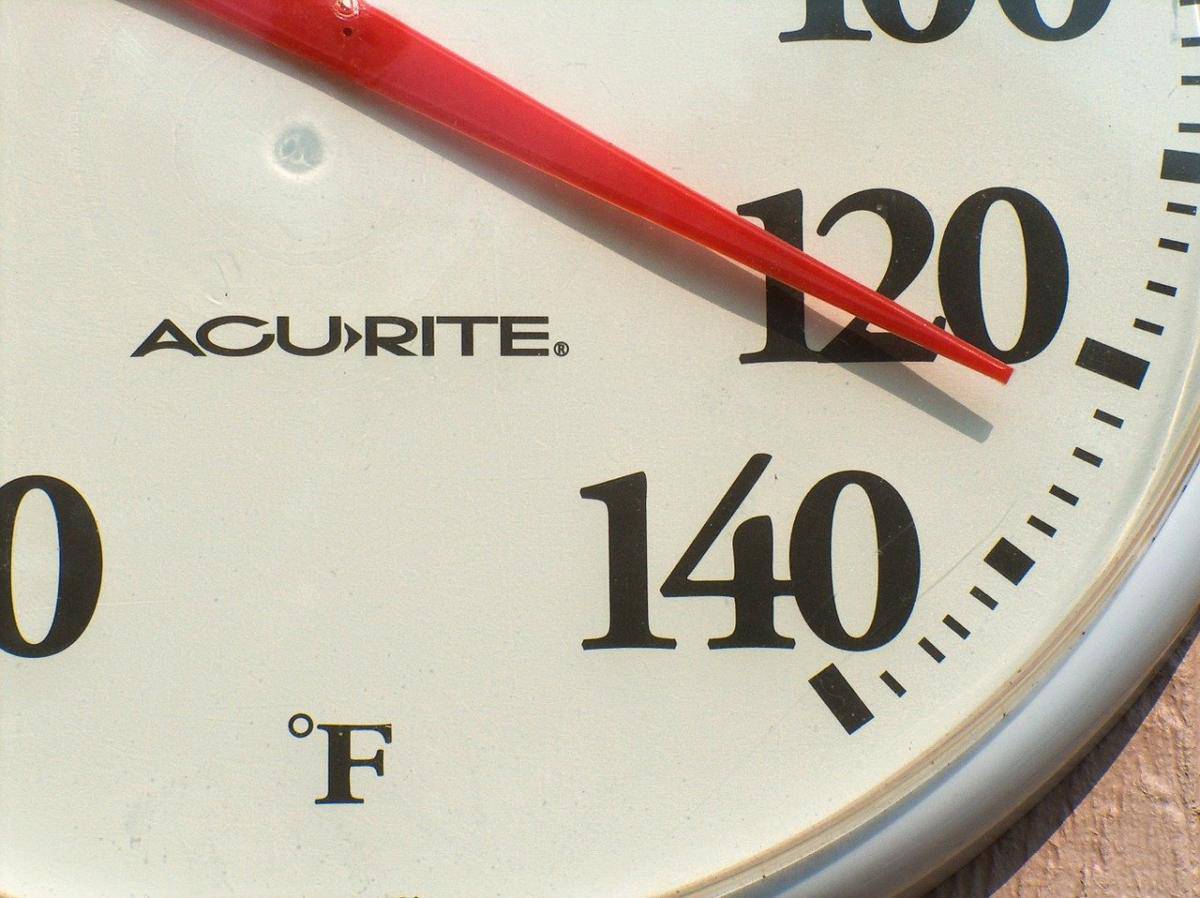
“Who wants to park and play golf in 120-degree weather?” asks an 18-year snowbird traveler from Minnesota. “I’m already looking for an in-between spot. I’m ready to abandon our annual campground in Arizona for a livable environment.”

If you drive cross-country in the fall, you’re well aware of the stream of motorhomes and fifth wheels on the roads heading south, buying fuel, stopping off in RV parks and adding to the financial lifeblood of businesses relying on the “carriage-trade” economy. And that doubles in spring when snowbirds return home.

Cindy Yañez, a researcher at the University of California in Irvine, published an article this month in the Climatic Change journal that forecasts significant changes in the economy of southern tier states, places where the local survival depends on snowbirds from Canada and Washington state to New England for survival.

“Weather and climate are important considerations for tourists in selecting their destinations, and climate change may impact these decisions, with implications for economic revenue in tourism-dependent locations,” according to a scholarly paper written by a team of researchers led by graduate student Yañez of UCI. The paper gathered information from numerous other sources, but the findings are obvious to snowbirds.

“… [G]lobal warming may adversely impact the snowbird season and other tourist attractions through rising temperatures. We analyzed how increasing temperatures are likely to impact three key components of the tourism industry in the region: climate in the winter snowbird season, visitation at an outdoor tourist attraction, and the likelihood of extreme heat at an annual festival…

“Our analysis predicts a shortened snowbird season, which we define as the time of year with daily maximum temperatures below a threshold of 30° C [86° F], under two future climate scenarios and time periods.”

In the analysis of economic consequences, the paper goes on to say, “We also predict an increased likelihood of extreme heat stress during the Coachella Valley Music and Arts Festival.”

What does that mean for snowbirds? Maybe lower prices or more availability at prime spots. Maybe reduced value for traditionally exclusive snowbird-owned parking spaces. Who knows?

Please vote in the poll below and tell us if you’ll still travel if the temperatures continue to rise in snowbird destinations.

##RVT966

RV weight limits can sneak up on you

5

By Greg Illes

I’ve learned to always drive my RV within its specified weight limits. How I learned this is a long and somewhat sordid tale, but I’ll touch on the highlights.

First of all, know that “stock” motorhomes do not have a reputation as load-haulers. Manufacturers seem to play a minimalist game, buying a chassis (from Ford or whoever) that will just barely hold their coach, its occupants, and a few odds and ends. Add in full water/gas/propane tanks, food and clothing, some tools and toys — it’s way too easy to bust the limits.

What are the limits? The two most important are GVW (gross vehicle weight) and GCVW (gross combined vehicle weight). There’s also the towing weight rating. GVW is the maximum allowed weight as it rolls down the road. GCVW is for motorhomes towing another vehicle, and is the combined weight of both vehicles.

My motorhome has a little gotcha (not uncommon). See if you can spot it:

•  GVW 15,000 pounds

•  GCVW 19,000 pounds

•  Tow limit 5,000 pounds

Got it? Right, I can’t have my coach at gross weight and use my 5,000-pound tow limit, because that would put me at 15+5 = 20,000, or 1,000 pounds over my GCVW. But that one was fairly obvious from the get-go. What tripped me up was the insidious way that weights large and small sneaked into my motorhome. Oh, I know all about my 622 pounds of water, a fridge full of food, and my 50-pound kayak. But along the way, I kinda overlooked the 400-odd pounds of chassis modifications, extra tools, spare parts, tire chains, etc., etc.

I was also doing the same thing with my toad — it’s a Ranger 4×4 pickup, and I had big steel bumpers, off-road recovery gear, spares, tools and so on.

After five years of such excess, I got around to (re-)weighing the rig and I almost had a heart attack right there at the truck scales. I was so far over both weight limits I’m embarrassed to repeat the numbers. More than 1,000 pounds over — let’s leave it at that.

I did some soul-searching, and reset my attitude about my “include everything” approach. If it was not being used, it was ejected. If it was heavy-ish, I replaced it with something equivalent but lighter. I got really aggressive about it, perhaps overly so, and pulled a LOT of weight out of both vehicles. Occasionally, I had to put something back in.

A ladder is one example (15 pounds). I had been carrying one for years and never used it. Of course, as soon as I got rid of it I found something I couldn’t get at from the roof. So the ladder went back in.

Keeping track was both easy and difficult. I used an Excel spreadsheet to tally up the weights — that was the easy part. The hard part was keeping up the discipline to make an entry for every item that went in and out. A lousy six-pound portable vacuum hardly makes a dent in a 15,000 pound GVW, but ten such items is 60 pounds, and three of those — well, you get the idea. It all adds up.

For food and clothing, I made some initial measurements and then created some educated guesses as to spreadsheet entries for my average loads. (I’m not crazy enough to be entering two bottles of milk and a loaf of bread in my spreadsheet.)

These days, I’m many hundreds of pounds under my limits, but I confess that it would be too easy to again bust through them. After all, while I travel, my RV is my house, and I’m not used to worrying about what I keep in my house.

photos: Greg Illes and wikimedia/public domain

Greg Illes is a retired systems engineer who loves thinking up RV upgrades and modifications. When he’s not working on his motorhome, he’s traveling in it. You can follow his blog at www.divver-city.com/blog.

##RVDT1431