Home Blog Page 19

Pricey fuel makes me a local explorer. Let me inspire you to do the same

10

I don’t know if you’ve noticed, but fuel prices have recently climbed. Just a bit. In fact, I may have sensed a trend going on here. While our summers generally consist of one to three big trips, this summer we’re down to one. 

But it’s not like we’re going to sit still, so we decided that we’re going to become local tourists, of sorts. Instead of seeing America far and wide, we’ve mostly planned just to stay within a hundred miles or so of our home base. In our case, that happens to be near Albuquerque, New Mexico. But that’s almost not relevant to this story. 

Years ago, when I lived in Southern California, I was zipping down the freeway (more likely staring at others’ taillights) and glanced over to see the Watts Towers. I asked my friend, who was born and raised in the area, how many times he had been there. 

Zero. None. Nada. 

That conversation years ago already sparked my interest in learning more about my own whereabouts and what there is to offer in the place that I call home. 

For those who don’t know, I have had many lives (like a cat, but without the whole cat thing). One of those was running a bed and breakfast in Northern California for seven years. We basically bought the place knowing nothing about the area (don’t do that, it’s a really bad idea, especially in 2008). We ended up working with our own county to share tourism ideas and destinations with the world. 

So, with fuel prices making us reconsider our summer adventures, we decided to explore our own area. We’ve now lived in New Mexico for three years and really haven’t seen much of it. Sure, I could talk your ears off about Route 66, but not about our own place of residence. 

Fortunately, thanks to this reality of mine of talking, writing, and living the RV lifestyle, my wife and I have made friends in the area with others who really know the lay of the land. Plus, you know, there’s the whole internet and all of that for ideas. 

Where to begin

I had already mentioned our friends who are locals and RVers, too. So finding like-minded folks to share adventures with is a good way to start. Even if you’re not a writer or RV content creator, you can find like-minded folks in groups on social media. 

In fact, if there isn’t a group for RVing in your community or region, you could always start one. Facebook makes it easy and free, and it’s a great way to have local gatherings in parks or campgrounds where you can get to know other RVers in your area. 

Did you know RVtravel.com has several Facebook groups for RVers? See them here

Another thing we’ve done is connect with several local tourism organizations. For example, Visit Albuquerque is one of the several in this area. You probably have something similar near you. We’ve also found several email lists that we’ve joined that deliver happenings, some of which are even based on special interests. 

Local Chambers of Commerce are also often a great resource for local activities and events. In some cases, they’re also your local visitors bureau or destination board. I also like to go to the ribbon cuttings of new businesses and meet the owners, but that’s not necessarily RV-related. 

We also became members at our local Bio Park, which has a really nice walking garden area and a zoo. Quite honestly, we’ve been members almost the whole time we’ve lived here and really haven’t gone as much as we should. It’s a great place to go meander. 

Even in the smallish town we came from in Northern California, there were walking areas and groups organized hikes and walks on the weekends—a nice way to test out those new shoes. 
Let’s go RVing

I’m going to assume that, since you’re reading RVtravel.com, you’re an RVer or wish you were. There are lots and lots of great tips on this site, so if you’re one of those who are dreaming, you’ve come to a good place to learn more about the lifestyle and details. 

We’ve sought out a lot of local campgrounds and destinations in the time we’ve scaled back our longer-distance trips. Something not to ignore is that local counties, cities, and tribes of Native Americans often have some pretty great places to camp. Oftentimes, we’ve found that these more regional campgrounds are much, much less expensive than commercial campgrounds and might be more to your liking. 

Everybody camps differently, of course, but we like the rustic/rural campgrounds that we can use as a home base for exploring towns and destinations. 

They’re not horribly far away, but there are a lot of little hidden gems all over the place. 

One thing I did find was that some campgrounds have a central place where you put your money to pay for your site. I’ve seen where that money has gone away, so we actually had to get checks again, like it’s the 1920s, specifically to pay these fees and be able to prove that we’ve done so. I hadn’t had checks in a few years, but this forced me to reach into the past. 

Another thing we absolutely love is Harvest Hosts. We’ve been members for years, and it’s a great way to explore an area and stay at a place that’s often very memorable. 

For example, our most recent experience was the Junkyard on 66 Brewery, that’s, well, a junkyard and also a brewery. On Route 66, if you haven’t guessed. 

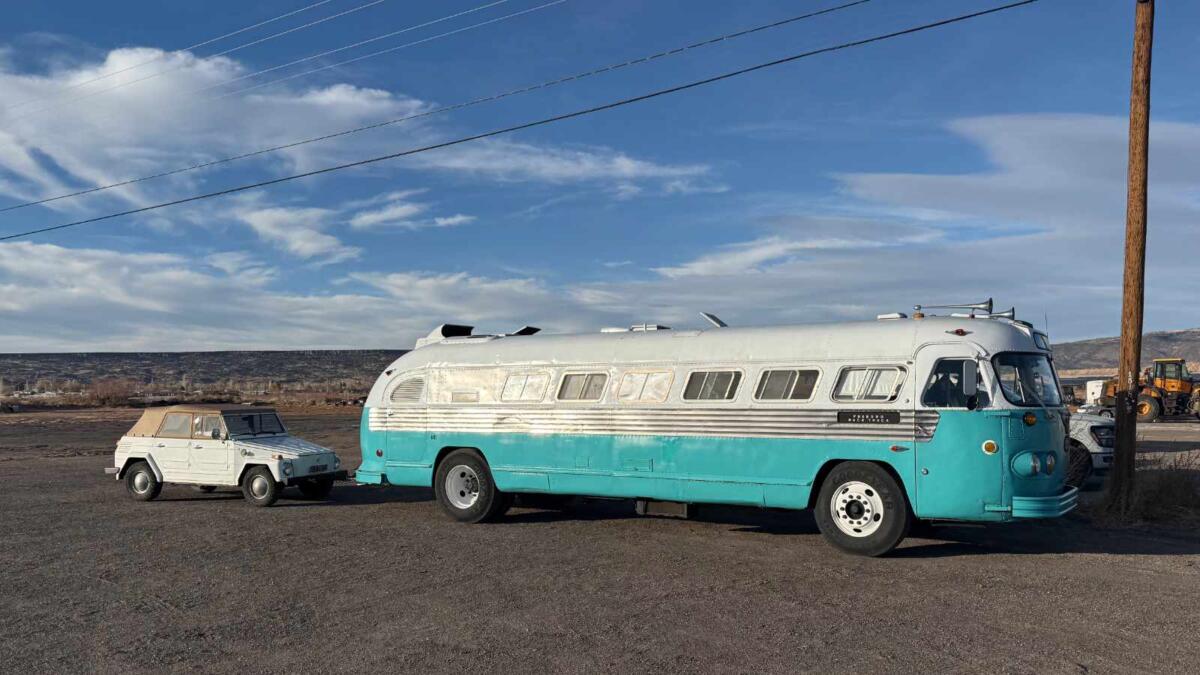
Oftentimes, Harvest Hosts are also vehicles for meeting other RVers who might be like-minded. One of the people we met at the Junkyard on 66 Brewery was a gent who owned a 1949 Flxible bus and was towing a VW Thing. 

It turns out this bus had been owned by one of the 13 original founders of the FMCA (now FRVA), and he even had the original member plaque to prove it. If that’s not a great story, I don’t know what is. 

Route 66

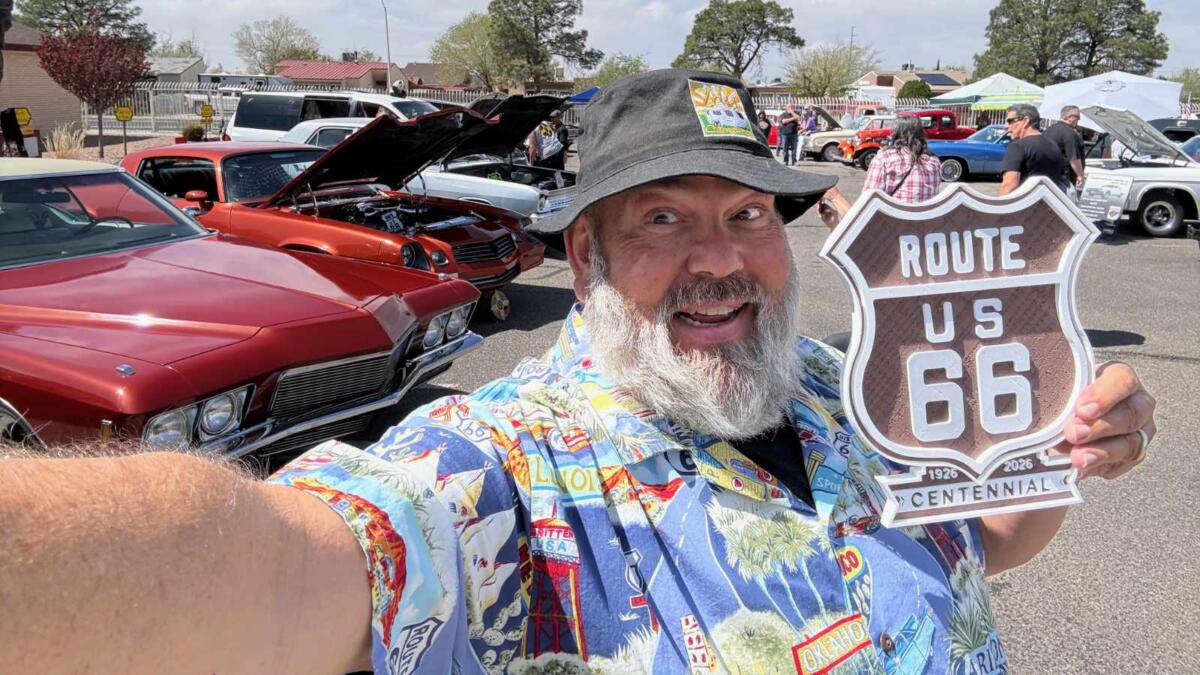
If your part of the world happens to be along Route 66, then you may find that the community is really embracing the centennial of the Mother Road. Albuquerque has gone nuts with Route 66 stuff, including recently installing a whole series of these giant, very colorful sculptures. I’m looking into that more and have sought out the tourism folks who placed these pieces. 

In fact, I shared some ideas for traversing Route 66 by RV earlier this year.

Silly stuff around a region

Again, looking at local resources, you may find that there are maps, guides, or even listings on places like Roadside America. We have often centered trips to places based solely on their proximity to some of the more ridiculous listings on that website. 

One of those in our part of the world is Tinkertown. This place is the creation of Ross Ward and is kept up by his family. This can only be described as a museum of miniatures gone wild. There are miniature circuses, towns, and so much more, and many of the exhibits are animated and lighted in colorful ways. 

The thing is, from where we live, on our way to Tinkertown, you can still find much of what’s left of a musical road. While this is less on the map since it’s not really being maintained, you can still find it and get your tires to buzz out most of America the Beautiful. Funny thing, there’s a Harvest Host brewery not far from here, so don’t forget to bring the RV! 

Don’t forget tours

One of our favorite things to do when we arrive at a new city is to see if they offer any hop-on, hop-off bus tours, or similar. These are like going to the buffet in that you get a tiny sample of different things, so you can go back and get what you like best. 

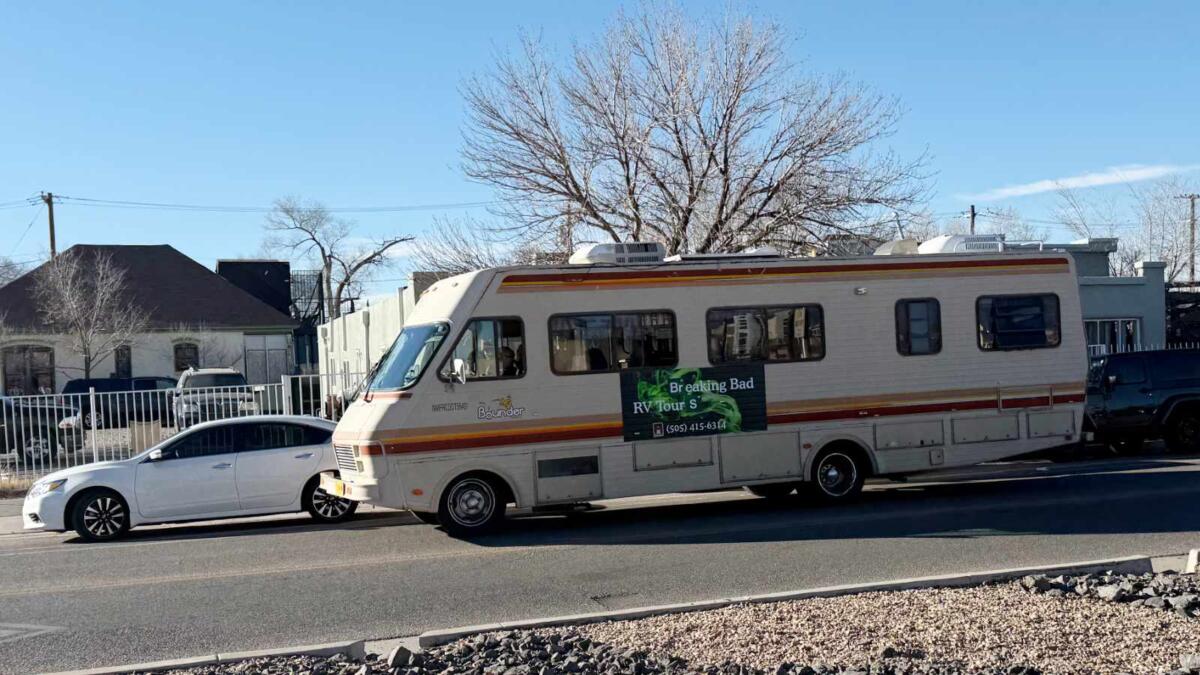
If you didn’t know, Albuquerque is working to be more known for filming in the area. There is a growing infrastructure for video production in film and TV. But one of the more famous things filmed here is Breaking Bad. So one of the goofier local tours is the Breaking Bad motorhome tour. We haven’t gone yet, but we have our tickets!

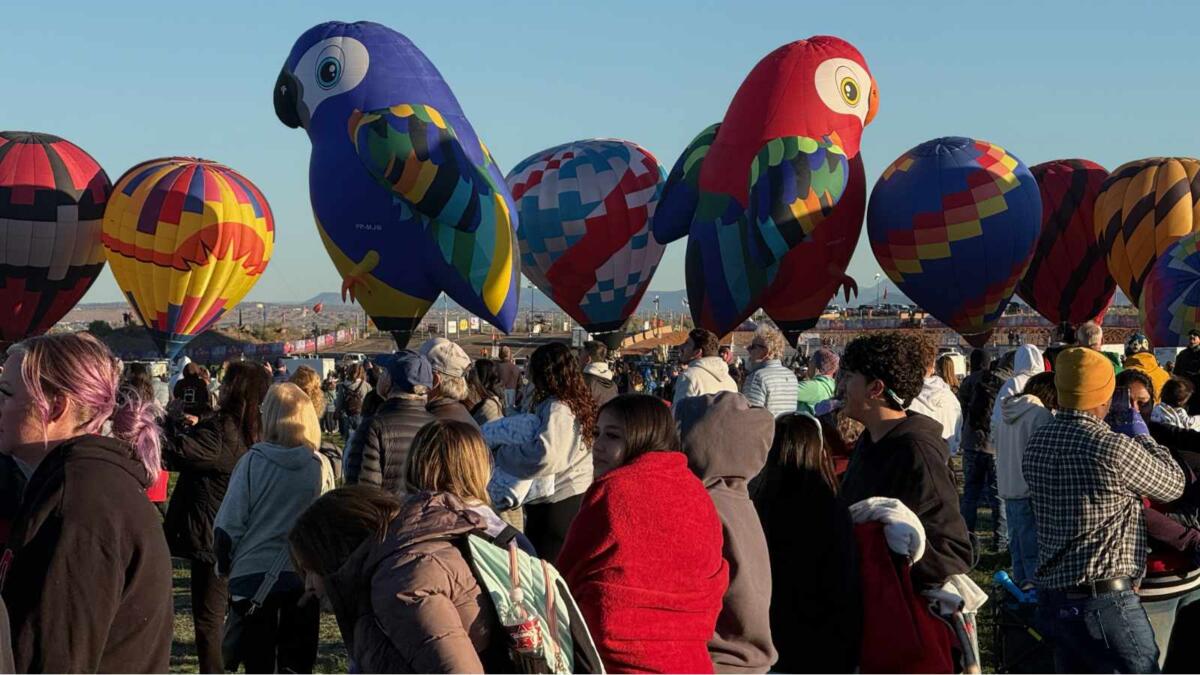
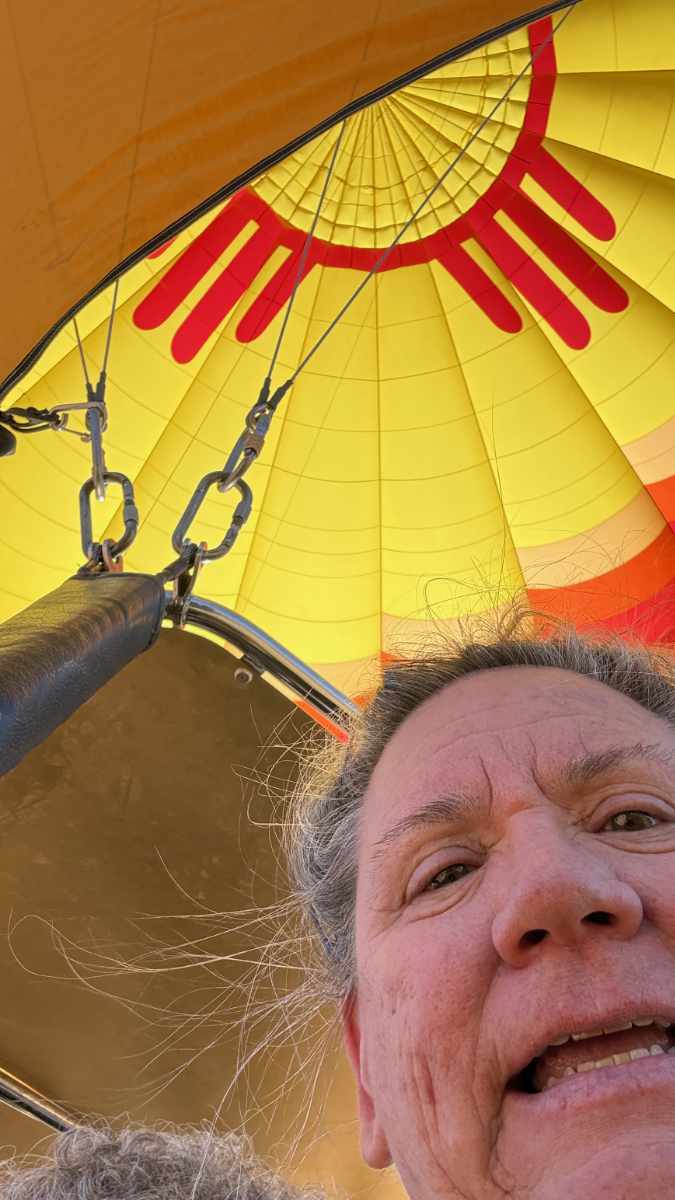
So many areas have touristy things to do, see, taste, and drink. Don’t ignore an experience even if you think it’s touristy. Sometimes these can be a lot of fun. In fact, my wife, Peggy, took her mom and sister on a hot air balloon ride. 

Final thoughts

What I’m not trying to do is be a spokesperson for New Mexico, although there are some incredible places to go RVing in this state. My goal here is to encourage you to keep RVing even if you have decided to do less travel this summer, thanks to the rising price of fuel. 

We ran a poll here in March asking if you had planned to change your travel plans for the summer if fuel prices stay high, and most of you answered that you wouldn’t make changes. But for those of you, like me, who might be exploring closer to home, I hope you’ll find something useful here and share it in your own social media world. 

RELATED

RVT1263
Visit where only luck saved America from a nuclear bomb disaster

By J.R. Montigel
If you’re never heard of Eureka or Faro, North Carolina, there’s good reason. They are tiny, out-of-the-way farming communities of no particular importance. But, oh my, you would definitely have heard of them if circumstances one day in 1961 went differently. The towns would have been ground zero of one of America’s most deadly disasters, leveling both communities and others nearby.

On that day, January 24, 1961, one of the most dangerous nuclear accidents in U.S. history occurred in the area, which is near Goldsboro, where a U.S. Air Force B-52 bomber carrying two hydrogen bombs broke apart in midair. The incident came perilously close to disaster and provides a chilling reminder of how such a massive catastrophe could occur at the spur of a moment.

The Boeing B-52G Stratofortress had departed on a routine mission from Seymour Johnson Air Force Base carrying two Mark 39 thermonuclear bombs, each with a yield of about 3.8 megatons — more than 250 times the power of the Hiroshima bomb.

Historical marker
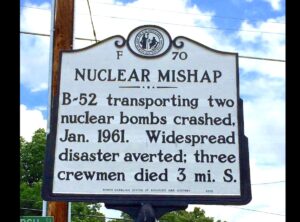
This state historical marker is in downtown Eureka close to the city offices on Faro Road at Church Street.

Shortly after an in-flight refueling, another crew noticed the bomber leaking fuel from its right wing. The leak worsened rapidly, and the aircraft lost massive amounts of fuel. The crew attempted to return to base, but structural failure sent the plane spinning apart at about 9,000 feet.

Five of the eight crew members survived after ejecting or bailing out. Three died.

Disaster (barely) avoided

The greater danger involved the nuclear weapons.

One bomb descended by parachute and landed largely intact in a field. The other plunged into muddy farmland and broke apart, burying parts deep underground. Recovery crews retrieved much of it, but some bomb components remain buried on private property monitored by the government.

Years later, declassified records revealed how close the nation may have come to catastrophe.

Investigators found multiple safety systems on one bomb had failed during the crash. According to later reviews, only a single low-voltage switch prevented a nuclear detonation.

Experts’ consensus was that the weapons were capable of exploding and delivering a nuclear blast sufficient to level homes in a five-mile radius and cause third degree burns and set houses afire within nine miles. Many historians believe that the “Goldsboro Incident” was one of the closest near-disasters related to the Cold War.

The military classified the event as a “Broken Arrow” — an accident involving nuclear weapons that does not create a risk of war. The crash later intensified debate over nuclear safety and Cold War-era airborne nuclear patrols.

A North Carolina historical marker now commemorates the site in the center of Eureka. The actual site where the bomb entombed itself is in an unmarked farm field 1.5 miles southwest of Faro on Big Daddy’s Road.

Here’s a video that commemorates the 62nd anniversary of the crash.

The weirdest RV campground rules. Have you encountered these?

If you spend enough time in RV forums, blogs, and campground Facebook groups, you’ll see some weird campground rules.

Some of these strange rules sound less like campground etiquette and more like fractious local ordinances in the Land of Oz. But could there be sound reasoning behind these regulations? Read on and see.

Back story?

A lot of rules may look bizarre at first, but campground owners and managers deal with a wide range of visitors. They must protect not only their park’s bottom line, but the safety of folks, as well.

Note: Weird campground rules show up in both public park systems and private resort-style campgrounds. After reading some of these rules, boondocking might look better than ever!

Sit! Stay!

Rule: No walking around the park after 10 p.m. (Sorry, stargazers.)

Rule: Stay on your own site after dark.

I assume these regulations are connected to quiet hours, during which campers are expected to cut down on noise. People, pets, televisions, and other activities need to be toned down during quiet hours.

If a camp rule demands everyone stay on their own site after dark, the goal is usually to keep late-night traffic, noise, and casual wandering from turning into a campground-wide disturbance.

Keep off the grass

Rule: No outdoor rugs, bike tents, or flowerpots.

I assume this regulation intends to protect the campground’s grass. Outdoor rugs (or most anything else) can indeed kill the grass underneath them when left in place long enough. I like grass. A green campground is pleasant to look at. However, I also like how an outdoor rug catches a lot of dirt and debris to help keep our RV’s interior cleaner.

Some campgrounds warn guests not to leave items where irrigated turf needs to be watered. Others require campers to keep sites clear so the grass can be maintained. Those rules seem reasonable to me.

Sleep indoors

Rule: No sleeping outside.

This rule surprised me. What RVer sleeps outside? I guess this stipulation arose as a way to enforce occupancy limits. It may be an attempt to keep the campground from turning into a free-for-all after dark.

Doggone it!

Rule: No dog walking.

We once stayed at a campground with this rule. RVers were forced to transport their dogs (via their car) to the campground doggie park. It was a hassle and probably confused the dogs, too!

Campgrounds enforce this rule to protect lawns, pedestrians, and wildlife. (And maybe to confuse dogs, too.)

Rule: No dogs left unattended inside the RV.

Most RV owners know that leaving a pet alone can be dangerous for the animal. However, with today’s technology, temperature and behavior control is doable even when pet owners go off-site. The problem comes from a constantly yapping dog that irritates other campers.

Rule: All dogs must be leashed when outside.

Tell that to a pet owner who spent hundreds of dollars on a new, portable dog yard fence, then spent hours to get in place! Yes, there are campgrounds that require dogs to be leashed even when inside a portable yard. I assume this is to protect the campground from lawsuits.

Rules for pools

Rule: Sign up for pool use.

Rule: Families get one free swim per day; then $2.50 per pool visit.

These pool rules signal the campground’s effort to control access to a limited amenity. Pools often cap attendance or use reservation windows when crowding is a concern.

Here a fee, there a fee, everywhere a fee, fee!

Rule: Credit card payments carry an extra fee.

Rule: Camping sites cannot be guaranteed without a site-hold fee.

Today’s camping fees seem to go on and on. RVers are becoming used to these popular campground add-ons: booking fees, resort fees, facility use fees… the list seems endless. We once stayed at a campground that charged 25 cents to access the restroom. (They’d experienced an issue with vagrants using the facilities.)

And more…

Here are additional campground rules that, at first glance, seem a little weird to me. However, when I consider the scenarios that may have precipitated the rule, I begin to understand.

Rule: No child/teen off campsite at any time without a parent.

Rule: All delivered packages will be charged $20 per package.

Rule: All power/sewer lines must be run underneath the RV.

Rule: Campers may rent a fire ring for $15 a day.

Rule: RVers will be charged $50 for each additional air conditioner.

Rule: No hose splitters are allowed.

Upshot

The longer you camp, the more obvious it becomes that a lot of “weird” campground rules are made because a few RVers lack sensibility. When common sense and courtesy aren’t so common, rules are created and enforced.

Can you add to this list of rules? Which rule would bother you the most? What’s the strangest RV park or campground rule you’ve ever seen? Leave a comment below and weigh in.

RELATED

RVT1263
RVtravel.com reader details the true costs and experiences of snowbirding in Florida

By Dennis Charpentier, RVtravel.com reader
The dream of many RVers is to become a snowbird; that is, to enjoy the joys of summer in the north and drive their RV to a warm climate (Florida for us) for the worst of the winter.

Starting many years ago, we traveled about in Florida, taking in all the sights, the east coast, the west coast, the Keys, roaming free with only a general plan. We stayed in military bases, private camps, county parks, and city parks, all without advanced reservations, except for holiday weekends. And then it was COVID, and that was over.

We have found that many favored spots, especially beaches, are in high demand. The Boomer generation, of which we are members, is well-traveled. We now have a bigger rig (35’), and that also restricts our choices. But COVID drove us to a special park for a month on the Southwest coast, where we made friends. We love the area, and we wanted to go back.

This is the story of our third year in Bonita Springs.

You’re leaving your home unattended for four months. The water needs to be drained, and the heat set to at least 50 degrees. Disconnect all the appliances you can, seal all your packaged food, and lock it up. If you have an extra car, disconnect the negative terminal of the battery. If you can have a neighbor keep an eye on your home or have a relative visit occasionally, it will help with your peace of mind.

The drive south

The ride down and the ride back need to be an adventure to be tolerable. Leaving in late December, the concern is the weather and the support you may need if troubles find you along the way. So, we chose the most direct route. We look for a five-day window of clear weather and then hook up with our travel partners and launch.

We average 300 miles and about six hours per day. We drive around or through: Connecticut, New York, New Jersey, Delaware, Washington, D.C., Virginia, North Carolina, South Carolina, Georgia, and an entire day in Florida. Yes, it’s long, stressful at times, and can test your mettle. But if you don’t force the issue, cruise along, take breaks, and enjoy the stops, it’s not that bad and worth it once you’re there.

Do I make mistakes? Sure, one wrong turn into a Dollar General parking lot instead of the entrance ramp; and I was in the wrong lane to take I-295 in Washington, D.C.; and we went through the city on I-395 instead of I-495 around the city.

Once you arrive

Once established in Southwest Florida, the RV is parked for four months and gets excellent gas mileage. People are in the park when you arrive, and activities have begun. Cribbage, Horseshoes, Mahjongg, Shuffleboard, Bingo, Park Band, games with neighbors, ROMEO (weekly guy lunch), and aquacise are all organized and ongoing… all you need do is join in. You can help run them, too.

So many things to do!

Of course, there are other activities in and out of the park that beckon: dining (I count 38 different restaurants last year), dances, variety shows, block parties, activity parties, Valentine’s Dance, St. Patrick’s Day, Park Picnic, and the Pétanque Dinner. Really, you need a calendar to keep track!

Of course, meeting old and new friends is the highlight of the season. Dining out with two, four, six, or ten is enjoyable and challenging. Enjoyable for the people and places and challenging in making reservations and trying to talk to everyone.

We also attend a wonderful church in Florida that hosts shows in their sanctuary. Free tickets are available or you can buy a subscription for the season. This year featured: Motown-Soul, Sounds of the ’60s, Messiah Project, Celine Dion, and Sinatra music. Great stuff for little cost in a great venue.

But it’s not all fun and games, although that is what stays in your memory. There is weekly shopping at Walmart and an occasional Amazon shipment, along with medications for us both—some through the mail and some through the local pharmacy. There are federal and state taxes to be filed. I bring along all the documents (most available online) and the tax software on my laptop; I also have a small printer. Our mail is handled by my daughter, who lives nearby at home… I do a temporary change of address with the post office. I also have my USA Today sent to Bonita Springs.

Keeping track of your finances is so much easier with mobile banking apps, and my bills are automatically withdrawn from my checking account. So are my pension deposits automatic. I remember the days of Traveler’s Checks… ugh!

The RV itself was good to me in that no major problems occurred on the way down or the drive back. A few trim pieces came loose (glue), washing the RV and car, dumping the tanks, the towing lights died on the car (Amazon), cleaning the grill that is used frequently, new light bulb for the fireplace (Ace), killing weeds on the RV site (Ace), and the slide was binding and needed adjustment due to the bumpy roads (plenty of help).

Medical needs are taken care of

Fear of injury and seeking health care, if needed, is a concern. All our doctors’ appointments are scheduled for before we leave or after we get back. While in Southwest Florida, there are urgent cares (several), dentists (on every street corner), and a large hospital nearby that is covered by our medical plan. My wife turned her ankle, banged her head and elbow in separate incidents. She was seen and diagnosed in minutes with just a phone call to the local facilities. There is also excellent trauma care if you need it.

Day trips

We took some side trips, as well. The ESPN Sports Center at Disney, to watch my granddaughter dance; a boat trip in the Everglades; met old friends from other parts of Florida twice; visited a wolf preserve; and I attended hockey games with my neighbor.

Downtime, too

If all of that isn’t enough to keep you busy or you don’t want to be that busy, there is plenty of downtime, as well. Enough time for me to write a three-page biweekly journal and send it out to friends and to draft a new novel, which I am in the process of editing for publication.

How much does this all cost?

The big question on your mind is, “How much does all of this cost?” Not as much as you might think. Remember, we are living in our own RV and only renting a campsite. We may eat out twice per week, but other than that, we cook our own food, which we would do at home anyway, so I can’t really count either of those as an expense.

Most of the activities and shows are free or low-cost. The shows at the church are a free-will offering. Park activities are counted in dollar bills and only exist to make it interesting. ROMEO lunches are about $15, including beer. Card games are $1 or $2. Dominos is for quarters… win some, lose some. But there are some savings to not being in the North as well.

Here is a summary:

  • $1,600: Gas and propane for the RV (-$1,000 savings on heating)
  • $6,000: RV lot rent ($50/day) (-$400 savings on electricity)
  • $250: Campgrounds (-$300 savings on water and sewer)
  • $500: Owning an RV (4-month maintenance cost)

Total = $6,650. For four months in Florida, that equals about $55/day. But 120 days in Paradise = priceless!

Being a snowbird is affordable and may have a mountain of health benefits as well. The climate, the people, the lush surroundings, and the overall feeling of euphoria each day will keep you young at heart and active.

Coming back up North and spending a season camping with my friends in places that we enjoy is always something to look forward to. And there is the joy of planning next year’s snowbird adventure and summer camping schedule.

Thank you for submitting your story, Dennis! 

RELATED

RVT1263
Even more RVing tips and tricks from RVers (with photos)!

9

How does the old saying go? Seeing is believing. When it comes to RVing tips and tricks, seeing is also understanding.

Sometimes all it takes is a photo to understand another RVer’s idea. Here are some examples—and some really helpful pictures! [Click any image to enlarge.]

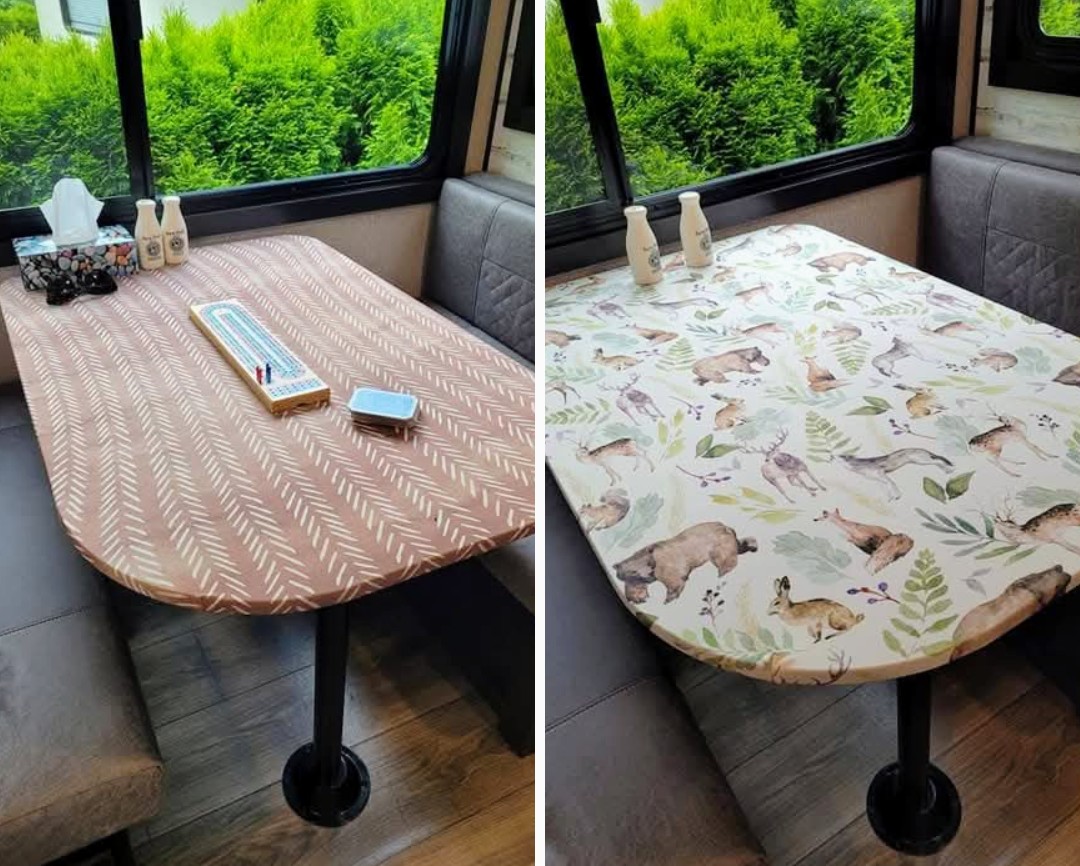
Table cover

One savvy RVer decided to inject a bit of whimsy into her RV kitchen. She used a baby crib sheet as a tablecloth. Too cute!

RV table cover screen shot from FB

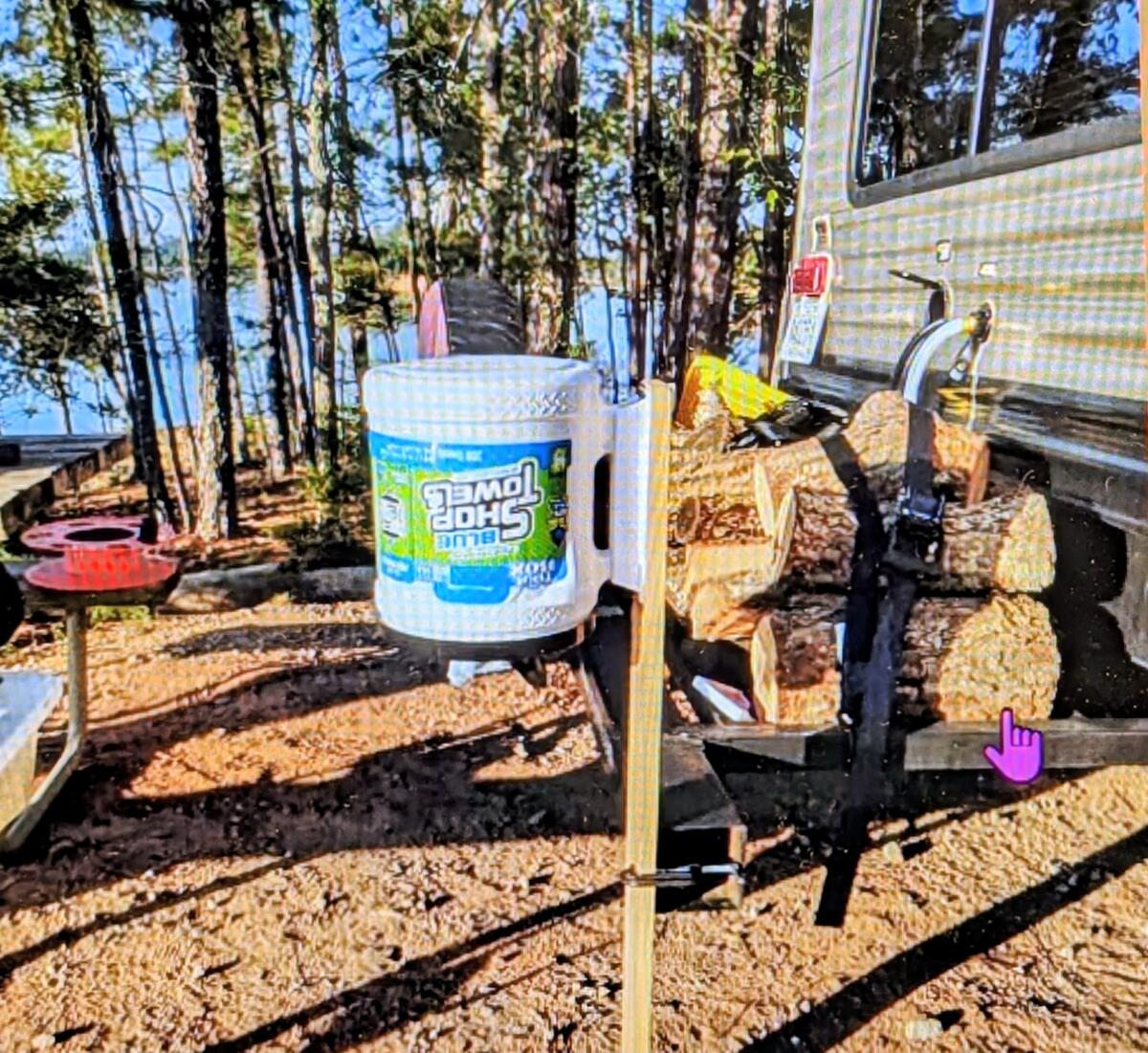
Always at hand

George Faile always seemed to need a paper towel at the campsite. He bought a container of shop towels at Harbor Freight, mounted it upside down on a pole, and now the paper towels are always within reach.

FB image paper towel holder

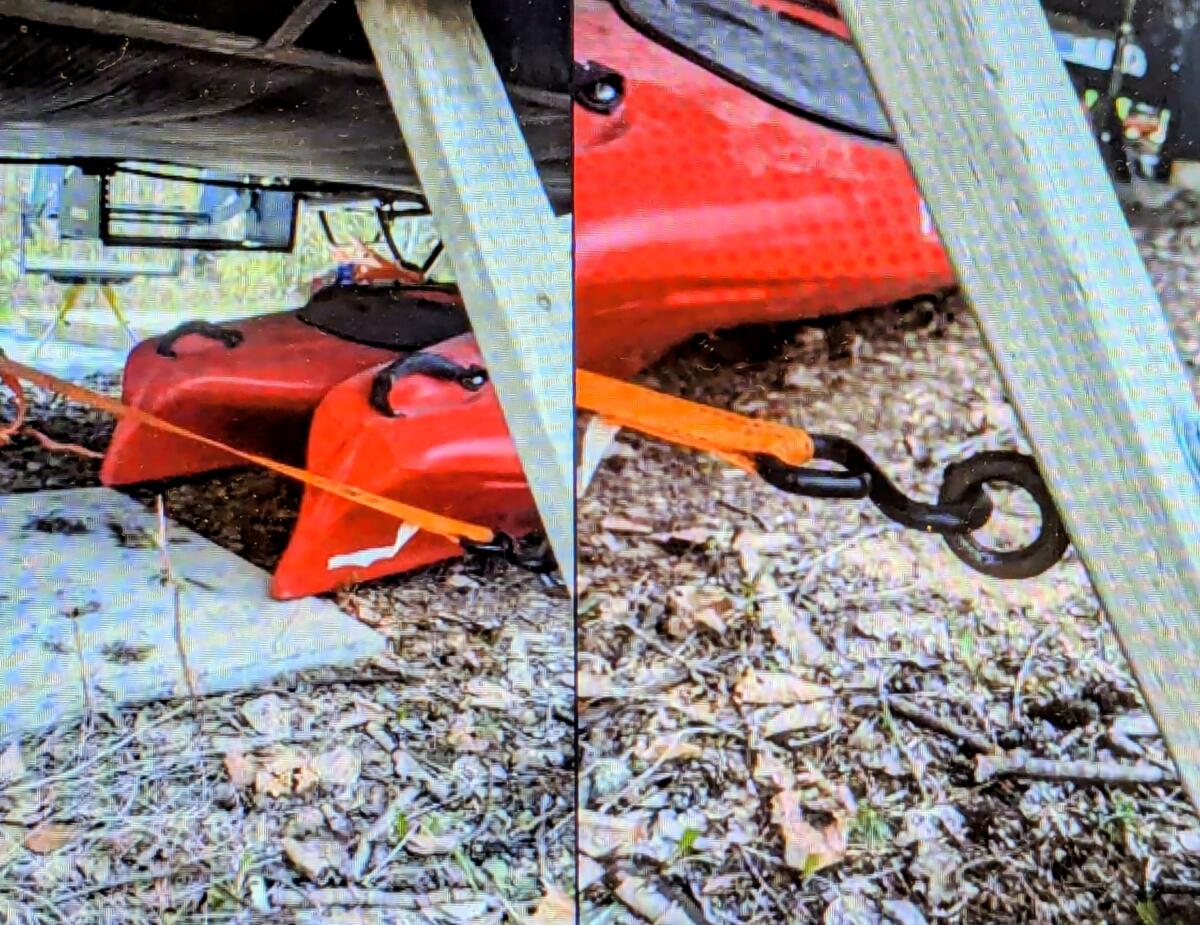
No mo’ rockin’

Ryan Hee posted the results of a stabilizer idea that’s featured often on Facebook. His homemade project really helps keep his RV “rock solid.”

FB image home made stabilizers

(I’ve often wondered why some manufacturer hasn’t made/sold these. Especially if they work as well as folks say.)

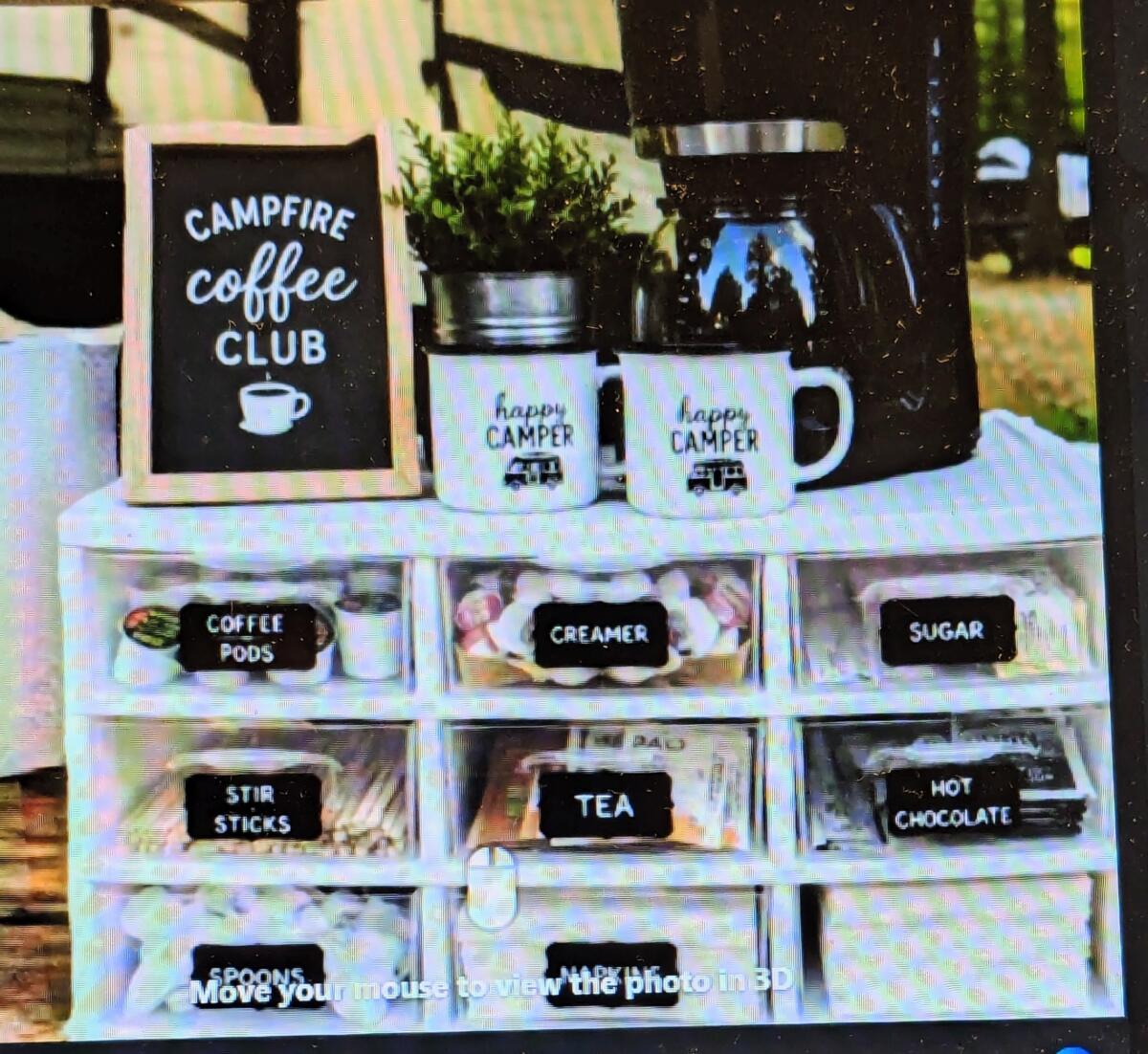
Keep it together

James Wolfe likes his coffee. And creamer. And tea, sometimes, too. Also, spoons and napkins. He found a container on Amazon that makes a great coffee bar. See if this might work for you.

coffee bar FB image

Kitty kit

Enterprising RVers (and cat lovers) fashioned this litterbox inside a basement storage space. A hole allows kitty to access the litter box, while the mess and smell stay outside. Note the chicken wire to prevent the cat from exploring further!

litter box solution FB image

Pool noodles

Here’s yet another use for the pool noodle. Cut lengths to the width of each cabinet. Brace the noodle into the front of the cupboard (and fridge) to keep things in place on travel days.

pool noodle brace for travel days FB imageTrim trick

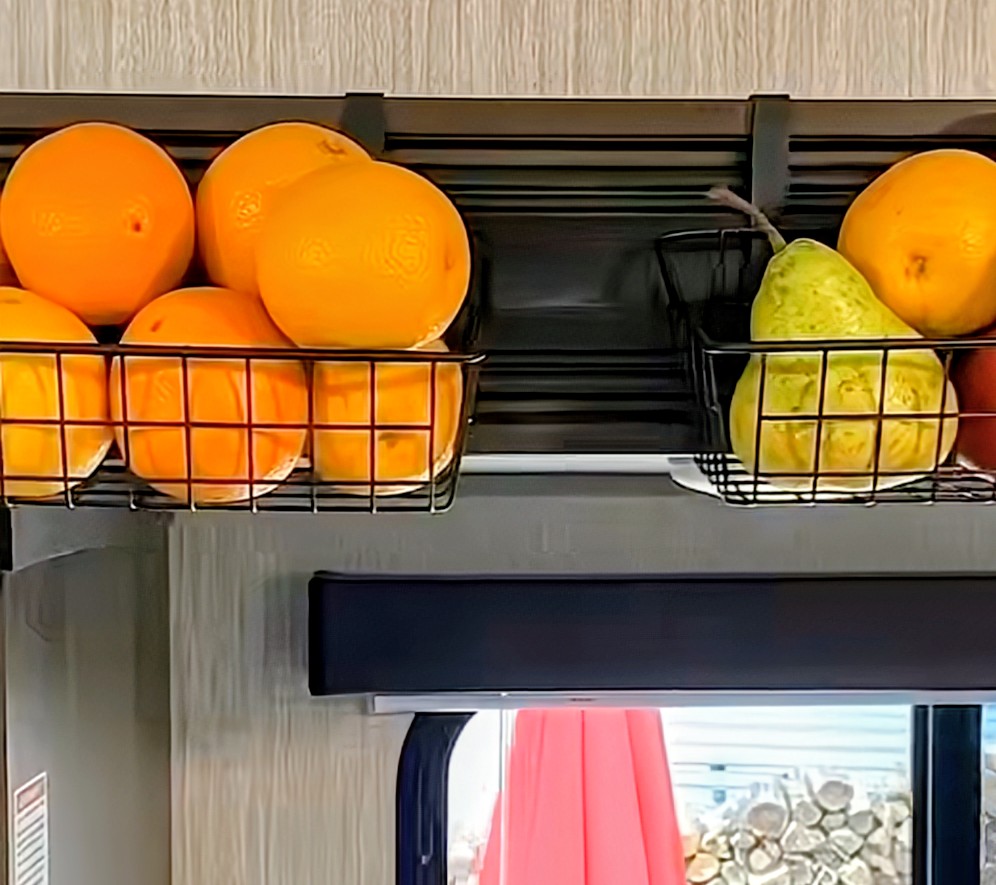
Use these hanging baskets on your interior RV trim. The baskets can hold fruit and more!

fruit storage idea FB image

Hitch help

Use a strip of self-adhesive reflective tape to mark your bumper hitch. It can help you see the hitch better and quickly connect to your RV.

reflective tape on bumper hitch FB image

Stick ’em up

If your top RV cabinets have trouble staying open, consider affixing a small hook in the ceiling. If your cabinet handle is like this one, there’ll be no more bruised knuckles!

door hooks FB image
Photo credit: Tammy Redmond

Stick covers

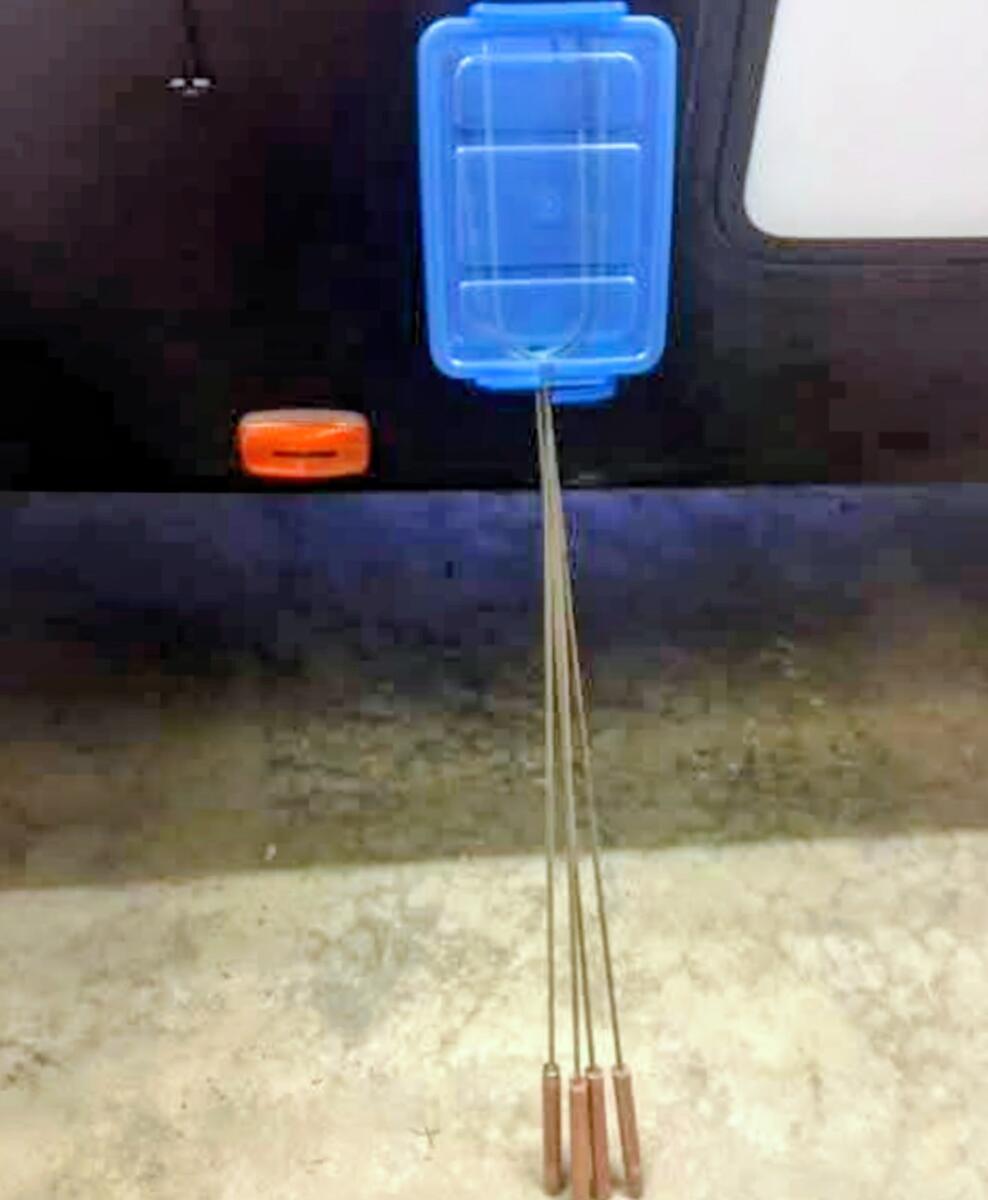
Doesn’t everyone store their roasting sticks like Chris Morgan? All it takes is a Dollar Store plastic container and a utility knife. Sticks stay clean, and so does your RV storage bay!

roasting stick cover FB image

Do you have additional ideas to share? Do so in the comments below.

MORE LIKE THIS:

RVT1263
5 beginner tips for planning a cross-country road trip

By Cheri Sicard
Have you ever wanted to do a cross-country road trip in your RV but don’t know how to start planning? The team from the Long Long Honeymoon is here to help.

In the video below, they share five tips for beginners planning a cross-country trip. For the record, the tips will work even if you are planning a cross-country trip in a car, as opposed to an RV.

Top 5 beginner tips for planning a cross-country road trip

#1 Be realistic about your travel time: According to our hosts, the typical cross-country road trip takes about 35 to 45 hours of overall driving. Of course, this can vary widely depending on your starting and destination points, but it’s a decent rule of thumb. If you are traveling in an RV, be aware this will take longer than if you were doing the trip in a car.

Our hosts also advise planning your route in such a way as to avoid going through big cities at rush hour. They also encourage traveling on scenic highways as opposed to interstates to make your trip more enjoyable. I wholeheartedly agree. Overall, they say the trip will probably take a little longer than you expect, and that’s OK. Slow down and enjoy the journey!

#2 Prepare for trouble before you leave: It’s RVing, and things can go wrong on a long road trip—it’s just the nature of the beast. Our hosts have had cross-country road trips with no issues, and others that were fraught with them.

To avoid the latter, do vehicle checks and maintenance before leaving, and carry a good basic tool kit with you. They go into detail of what to put in it in the video. They also advise carrying a good first aid kit, a few lightweight mylar blankets, and a seatbelt cutter/window smasher tool just in case of accidents or emergencies.

#3 Phone a friend: Be sure to let someone know your route, where you are going, and when you should get there. Checking in regularly is a good idea when on the road. You can also share your location with some of the phone tracking apps, such as WhatsApp or Apple’s built-in Find My Friends. That way, your friend or family member can check in anytime and see where you are.

#4 Check the weather frequently: Rain, snow, wind, hail, anything can happen when you are crossing the country. Lest you find yourself stranded, check the weather often and adjust travel plans and routes accordingly. Along those lines, be prepared in case you do get stuck, like our hosts did in snowy Yellowstone. Have full propane and water tanks and a full pantry and riding out the storms won’t be bad at all.

#5 Pack like Goldilocks—not too much and not too little: You want to be well-prepared without overpacking. Our hosts give packing tips and strategies that work for them in the video.

RELATED

RVT1263
Utah’s Scenic Byway 12 is a bucket-list RV drive, but don’t just wing it

Every few years, somebody rediscovers Utah’s Scenic Byway 12 and declares it one of America’s most beautiful drives. This time it’s the travel editors at Travel + Leisure, whose recent feature highlighted the 122-mile route between Bryce Canyon and Capitol Reef and the remarkable scenery packed into a relatively short stretch of road.

They’re not wrong.

For many of us RVers, Scenic Byway 12 is one of those trips that sits on the bucket list for years. The road winds through red rock canyons, climbs into cool mountain forests, skirts the edge of dramatic cliffs, and passes through small Utah towns that seem almost frozen in time.

But if you’re towing a trailer or piloting a motorhome, this is also a route that rewards a little homework before you head out.

The Travel + Leisure article notes the route’s changing elevations, limited cell coverage, and the recommendation that travelers allow more than a single day to experience it. Those are all good tips. For RVers, they’re also reminders that Scenic Byway 12 is best treated as a destination in its own right, rather than simply the road between two national parks.

That’s especially true during the busy travel season, when fuel stops can be crowded, weather can change dramatically between desert valleys and mountain summits, and the temptation to cram too much sightseeing into one day can turn a memorable drive into an exhausting one.

Why RVers love it

Scenic Byway 12 stretches roughly 122 miles across south-central Utah, connecting Bryce Canyon and Capitol Reef while passing through portions of Grand Staircase-Escalante National Monument and some of the most striking landscapes in the Southwest.

The scenery changes constantly. One minute you’re surrounded by towering red sandstone formations. A short time later you’re climbing through pine forests at elevations above 9,000 feet. Then the road drops back toward desert country again.

That variety is one reason many experienced travelers suggest allowing at least two or three days for the drive instead of treating it as a simple point-to-point trip.

The famous section everyone talks about

Ask RVers about Scenic Byway 12 and sooner or later somebody will mention the Hogback.

The Hogback. It’s the kind of place where you’ll want both hands on the wheel and your attention on the road rather than the scenery. U.S. Department of Transportation photo.

This narrow ridgeline section between Escalante and Boulder is one of the most photographed stretches of highway in Utah. The pavement is good, and the road is well-maintained, but the views can be dramatic enough to make drivers grip the steering wheel a little tighter than usual.

Thousands of RVs cross it every year without incident. Still, you’ll want both hands on the wheel and your attention on the road rather than the scenery.

Don’t count on services around every corner

One lesson many first-time visitors learn quickly is that Scenic Byway 12 isn’t an interstate.

Towns are small. Fuel stops are limited. Cell service can disappear for stretches of the trip. Depending on the season, weather conditions can change surprisingly fast, particularly on Boulder Mountain.

None of that should discourage RV travelers. It simply means arriving with a reasonably full fuel tank, downloaded maps, and a flexible schedule is usually a better strategy than assuming the next services are just a few miles away.

Slow down and enjoy the drive

The biggest mistake may be trying to rush it.

Because Scenic Byway 12 links two popular national parks, many travelers view it as transportation between destinations. In reality, the highway itself is one of the attractions.

Pullouts, overlooks, hiking opportunities, scenic photography spots, and small-town stops can easily fill several days. That’s why many RVers who have driven the route say the best plan is the simplest one: Leave extra time on the schedule.

The scenery isn’t going anywhere.

And if you’re finally checking Utah’s Scenic Byway 12 off your bucket list, there’s no reason to hurry past what you came to see.

The Travel + Leisure feature on Scenic Byway 12 can be found here.

RELATED

RVT1263
How would you rate your health considering your age?

21

Aging is a funny thing. One day you’re bouncing back from anything, and the next day you make a strange noise just standing up from your camp chair. But here’s the thing: Age and health don’t always go hand in hand the way people assume they do.

Some RVers in their 70s are hiking trails, climbing into truck campers, and exploring the country like they’re decades younger. Others feel every mile in their joints by the end of a travel day. And, honestly, most of us probably fall somewhere in between.

Health can mean a lot of different things, too. Maybe you deal with aches and pains, but still feel strong overall. Maybe you take medications or have limitations, but consider yourself healthy for your age. Or maybe you feel better now than you did 10 years ago because you finally have less stress and more time to enjoy life.

RVing itself can sometimes be a pretty good motivator to stay active. Walking campgrounds, setting up camp, exploring small towns, hiking trails, and just getting outside more often can keep people moving in ways they might not at home. Of course, long drives, bad campground roads, and climbing RV steps don’t always help the knees!

And let’s face it—many RVers know somebody who says, “I’m falling apart,” while towing a fifth wheel across three states and chopping firewood before dinner. Perspective has a lot to do with it.

So we’re curious: How would you rate your health considering your age?

After you vote, leave a comment. If you’d like, tell us your age range and what helps you stay healthy on the road—or what challenges you deal with while RVing. Your experiences may encourage someone else. Thank you!

MORE POLLS YOU MIGHT LIKE:

RVT1263
Why isn’t there an I-50 or I-60?

10

I was researching an upcoming RV trip with my grandson. As we pored over maps and Googled routes, he asked, “Why isn’t there an Interstate 50 or 60?” I was baffled. Together we searched for the answer. Here’s what we found.

Coexist in harmony

The Interstate numbering system was built to play nicely with the older U.S. numbered-route system. When planners laid out the two-digit Interstates, they intentionally avoided using the same numbers that already existed as U.S. routes inside the same state.

Take this scenario as an example: If a driver were told to “take Route 50,” they might be confused. Does “take Route 50” mean U.S. Route 50 or Interstate 50?

To avoid this potential confusion, a non-duplication rule became a formal part of how the Interstate system was set up.

On the map

The Interstate numbering is effectively a mirror of the U.S. numbered highways. In both cases, the even-numbered roads run east–west. Odds run north–south. Highway numbers increase in a consistent direction.

U.S. Route 50 and U.S. Route 60 were long, established east–west highways. They already crossed much of the country when the Interstates were being numbered. Rather than rename or displace those familiar U.S. routes and risk local confusion, planners simply skipped “50” and “60” for primary Interstate designations.

A quick example

If the Interstate system had used I-50, that new I-50 would likely have occupied many of the same states as U.S. 50 (which runs roughly from Ocean City, Maryland, to Sacramento, California). Imagine driving and being told, “Merge onto 50.” Does that mean the older U.S. 50 or the Interstate? Avoiding that overlap was a deliberate design choice.

What about I-60?

Same idea. U.S. 60 already existed as a long east–west route when numbering for the Interstates was created. Planners skipped “60” for the same reason they skipped “50.” The goal was to keep navigation clear and minimize renumbering efforts for towns, maps, businesses, and locals that already used the U.S. route numbers.

A few oddballs

The highway numbering system generally follows the rules. However, politics and history sometimes bend them. I-99 is an example. In the 1990s, efforts were underway to upgrade portions of U.S. Route 220 in Pennsylvania to Interstate standards. The project had strong backing from then-U.S. Representative Bud Shuster, who chaired the House Transportation and Infrastructure Committee.

When the designation was included in federal transportation legislation, the specific number “99” was written directly into the law. Because Congress has authority over the Interstate system, the Federal Highway Administration accepted the designation, even though it didn’t fit the established numbering grid.

As RVers, it’s important that we recognize the standard highway numbering system. Knowing the few exceptions to the rules is also helpful as we travel.

RELATED

RVT1263
Take care of those insert moldings. Here are the products to use

By Dustin Simpson
This is a real unit, with a real problem, and it’s in our real shop. This series was created in hopes of helping you better understand your unit and how to best maintain it. This episode shows you the danger of not keeping an eye on your RV’s insert moldings.

In my experience, one of the most missed items is the insert molding screw cover. This protective plastic covers the screws at the roof line edges as well as the vertical and horizontal side seams of all RVs.

Unless you visually inspect under the insert moldings, you will not see potential water damage until it’s too late. Insert moldings help to keep the moisture, condensation, rain, dirt, and other elements out of your RV. Sealing the edges of the aluminum molding protects the screws along the roof, body, front, and rear seams.

This is important and, from my experience, often a missed step when weatherproofing and protecting your unit. When water gets past this plastic insert molding screw cover, it can cause serious damage. Water spreads through the unit and invites the growth of mold, rusts screws, and causes dry rot in walls, roof joints, and floors as the water travels down the aluminum framework in the wall.

I recommend that you replace the insert molding, as needed, every 2-3 years.

Insert molding screw covers shrink in both directions and will allow water to get in. This shrinkage is caused by age, sun, soaps, and elements. The tattletale sign is tapping it and seeing if it makes noise within the track. I hope this tip helps protect your investment.

DIY products to use

More from Dustin

Read more of Dustin’s articles here.

RVT1263

RV review: Rockwood Mini Lite 2108RB—Good things in small packages

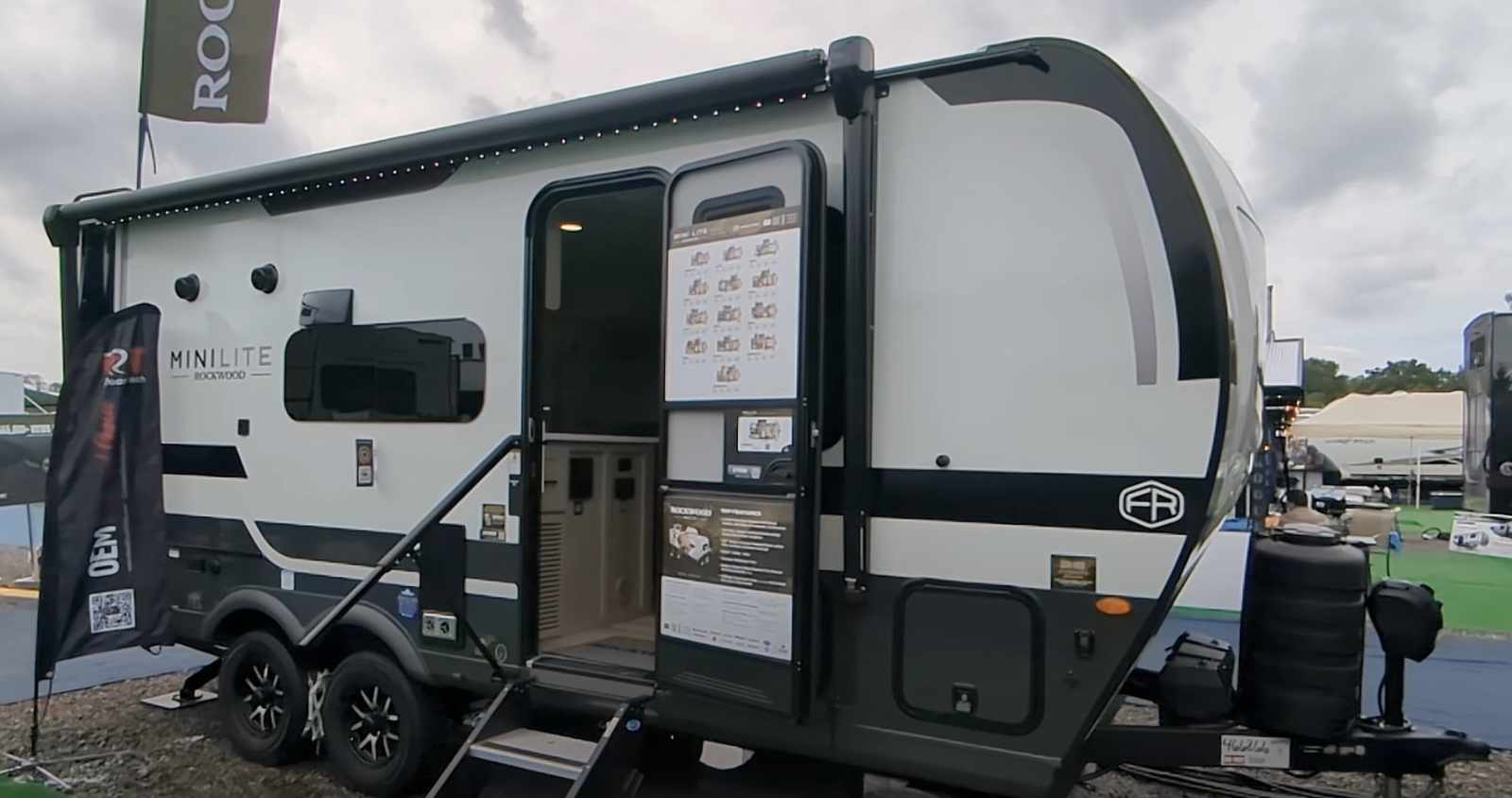
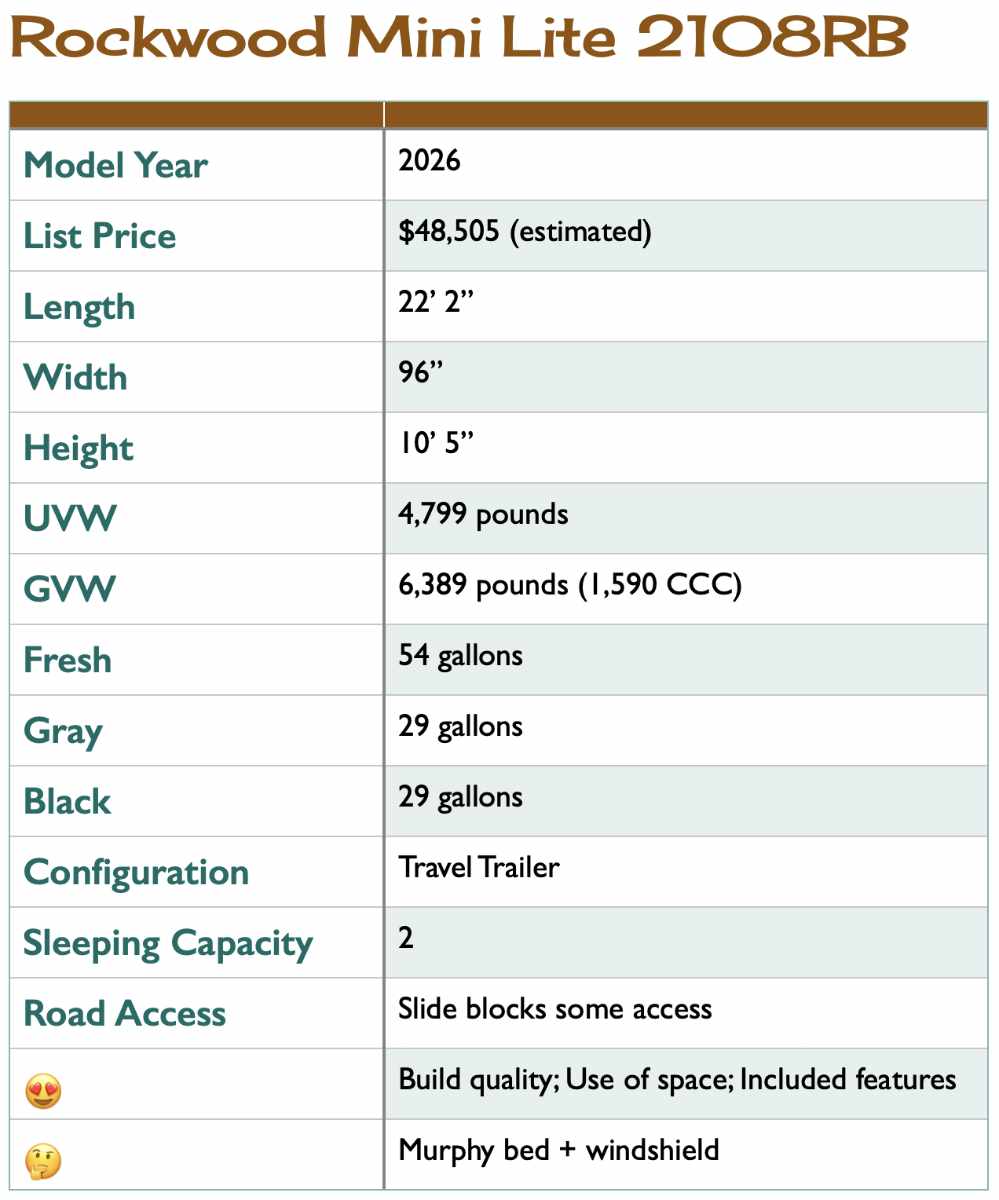
Today’s RV review is of the new-for-2026 Rockwood Mini Lite 2108RB. This is built on the smallest of the Mini Lite platforms and is a really unique bit of packaging that’s mostly positive. Know that the Flagstaff 21SRB is identical—we even have an article about why RV builders make twins. 

Rockwood (and Flagstaff) have three basic “boxes” that they build the Mini Lite and Micro Lite in: the 2100, the 2200, and the 2500. Most Rockwood-Flagstaff RVs are built in the largest 2500-series box, including our own Rockwood Mini Lite 2506FK model, which measures 26 feet in overall length. This model measures 22’2” in overall length and features a single slide. 

Start at the road with the Rockwood Mini Lite 2108RB

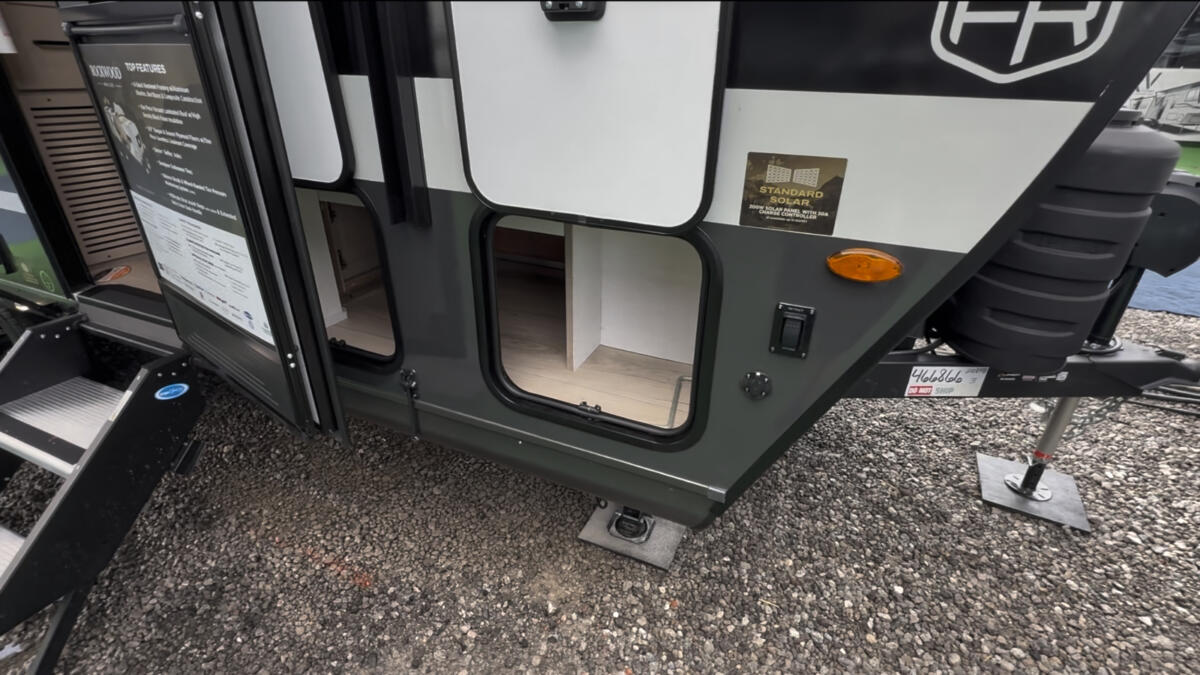
Anyone who regularly reads these reviews will know that I advocate looking under any travel trailer or fifth wheel before ever setting foot inside. The reason is that RV makers do a good job of making RVs pretty inside, but what really sets one apart from another is in how they’re built. 

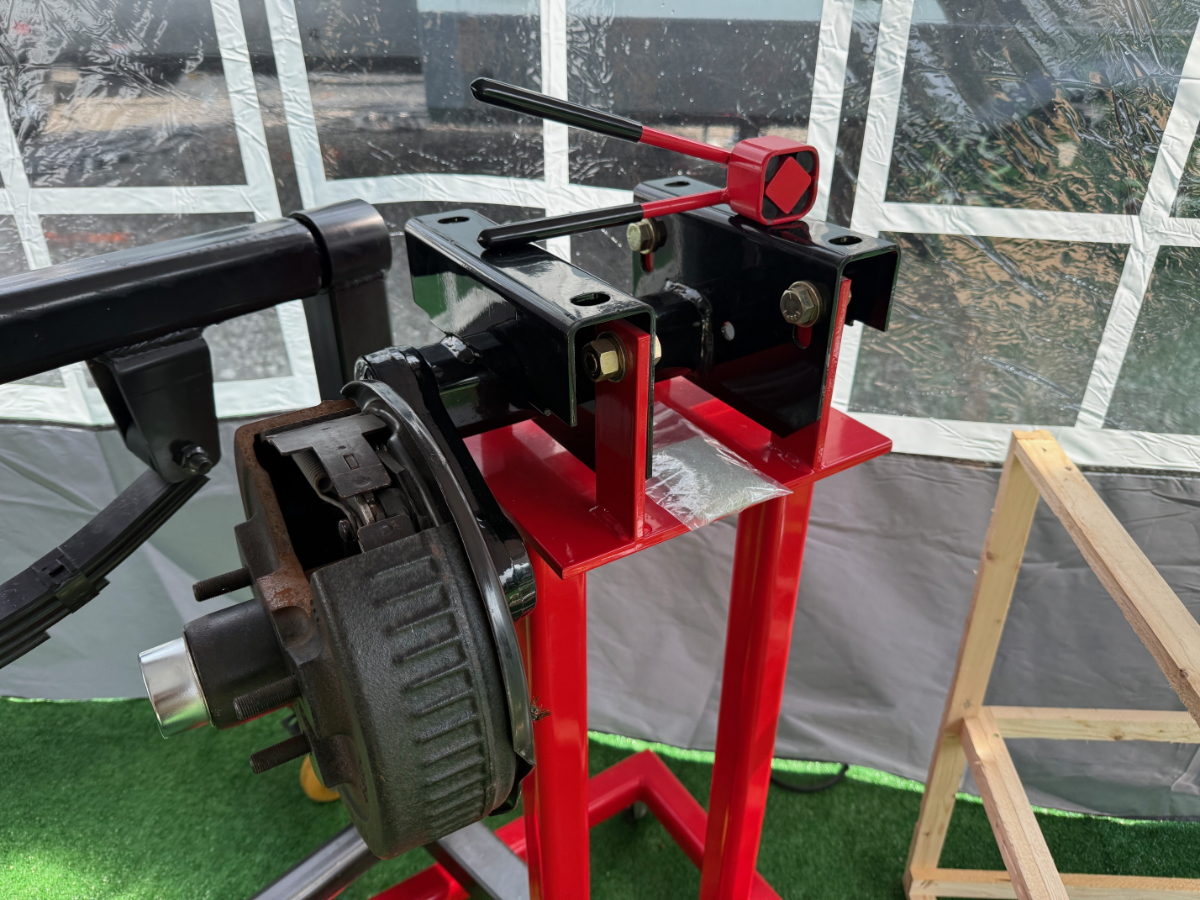
For example, the Mini Lite line features American-made Goodyear Endurance tires with built-in, banded tire pressure monitors like most vehicles have nowadays. Rockwood also fills the tires with nitrogen, but then also puts balancing beads inside to help them stay in balance. 

The suspension on these is a Dexter torsion axle.

Essentially, as your RV is being towed down the road, the fewer vibrations and harshness that get transmitted from the road to your rig, the longer the RV itself will likely last. This tire and suspension combination is one of the better ways to minimize road harshness. 

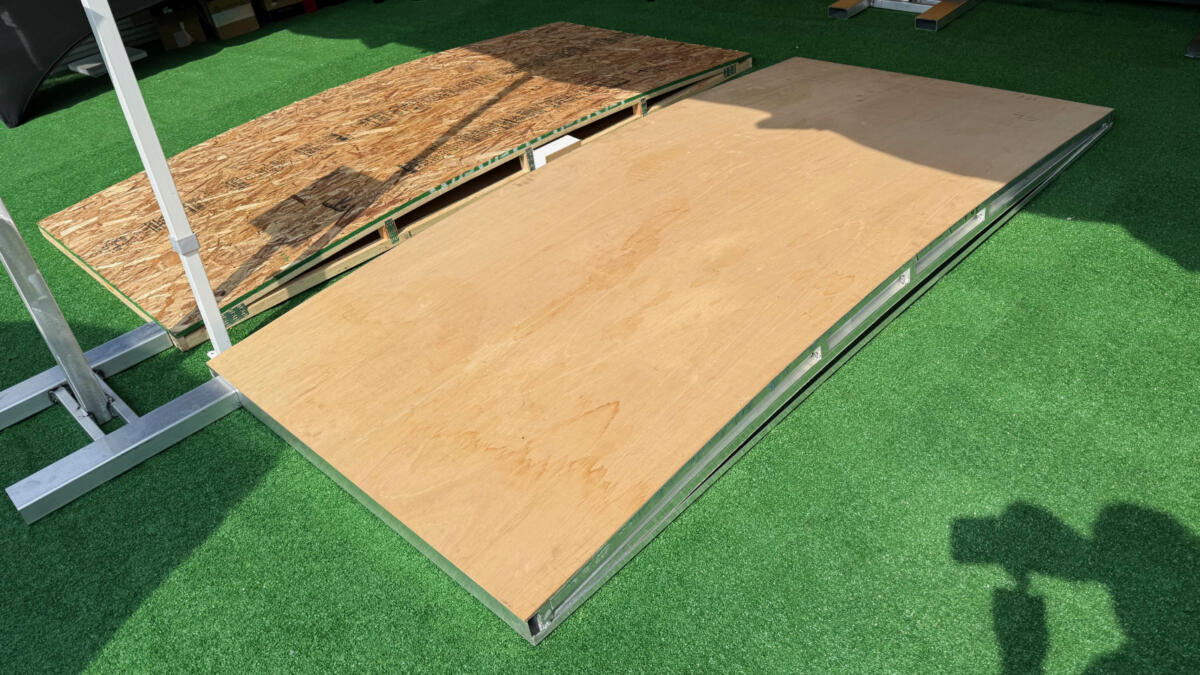
As for the walls themselves, Rockwood uses a lamination process that vacuum-bonds the layers together. The outer wall is fiberglass, but then under that is a layer of human-made material. We’ve all become familiar with Azdel, but now other manufacturers can make this product. It’s essentially the same waterproof material. Then there is a welded aluminum structure with block foam insulation and wall board. Rockwood is also using a better glue than most—all these little details really do matter. 

Up on the roof, that, too, is a vacuum-laminated structure with the ducts for the A/C molded into the insulation. Atop this build is an AlphaPly roofing system, which tends to require less maintenance than cheaper systems. 

And, see—We haven’t even gone inside yet! 

What’s inside the Rockwood Mini Lite 2108RB

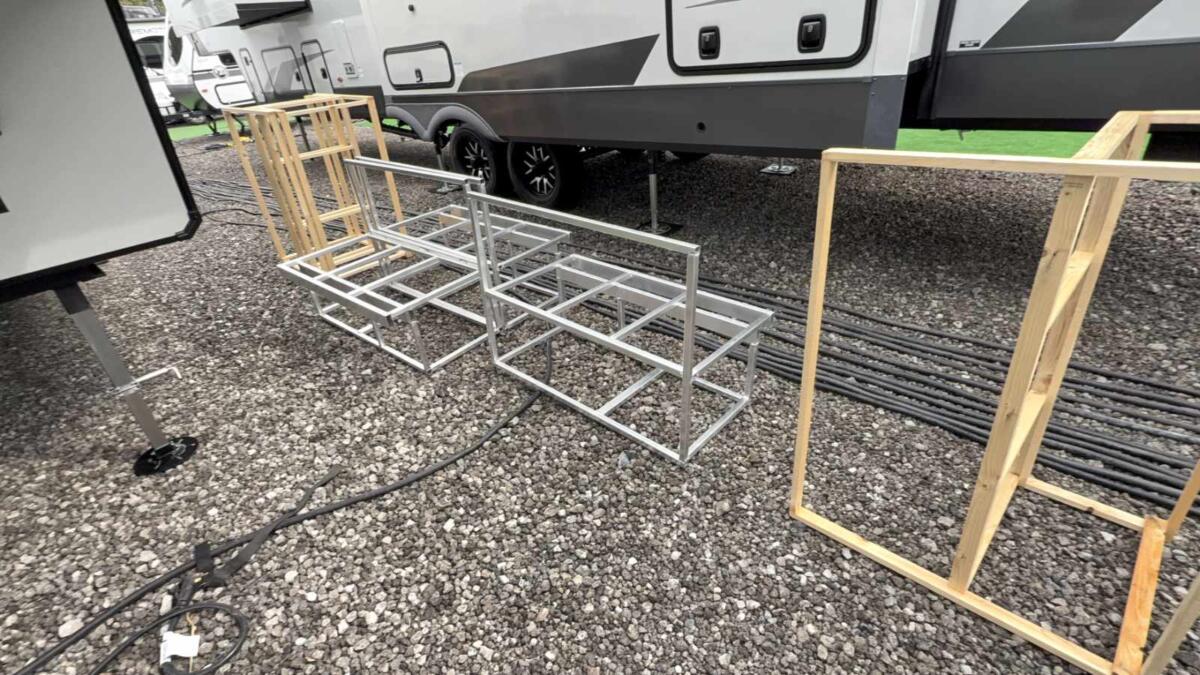
Okay, now that we’re inside, one more bit of nerdy talk. Rockwood uses a welded aluminum structure for things like bed bases, dinettes, and that sort of thing. It’s lighter and stronger than wood, although it’s more expensive.

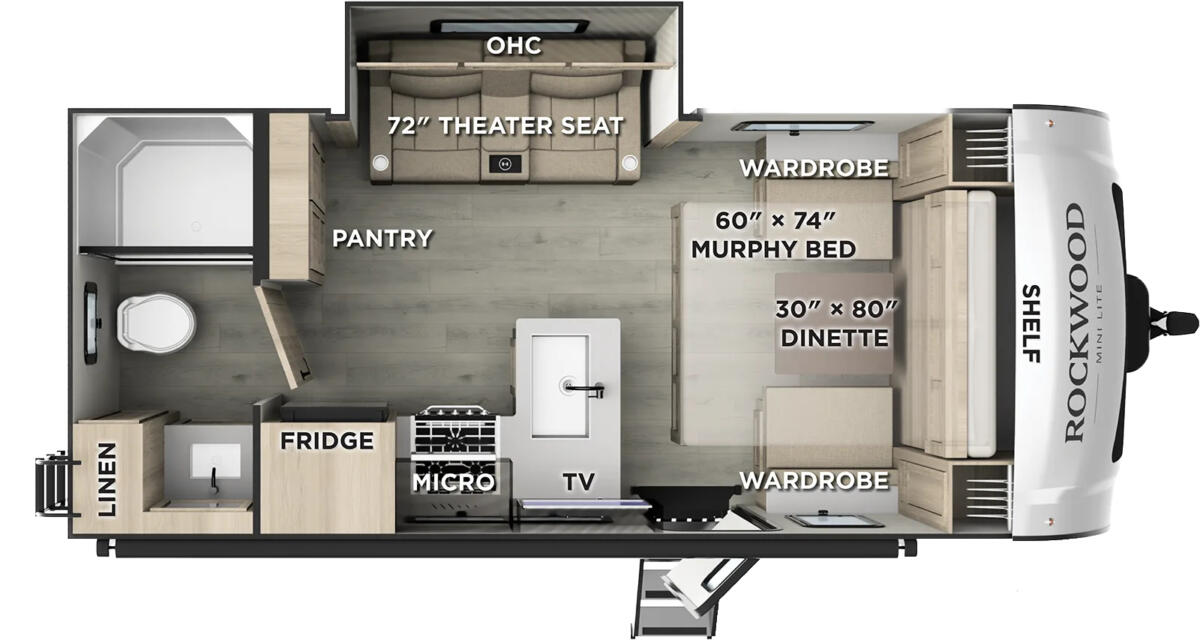
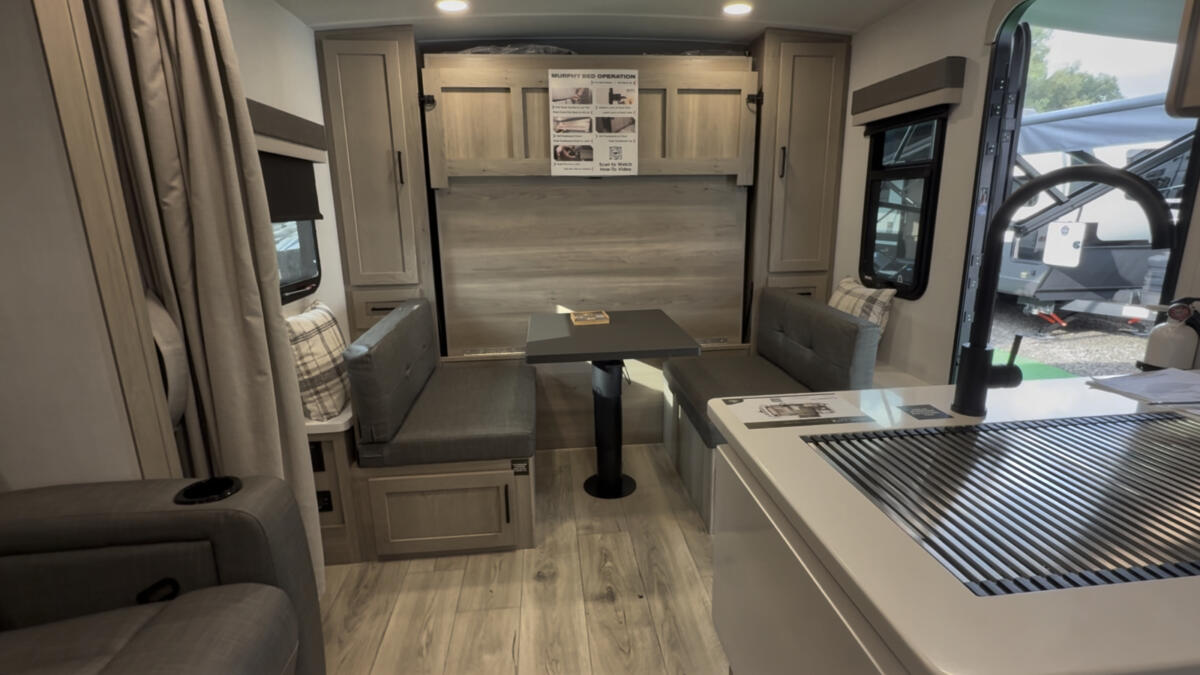
When you first step into the trailer, you’ll see a small dinette at the front and then a sofa over in the slide room. Something I love about the new dinette table that Rockwood is using is that it can move front-to-back and side-to-side a few inches. That means those of us who displace a lot of water in the pool still have room to be comfortable. It’s fat-folk-friendly! That table also can be pushed up and down and will stop where you like. Therefore, you could have it be desk height or table height or mash it all the way down to make a daybed. 

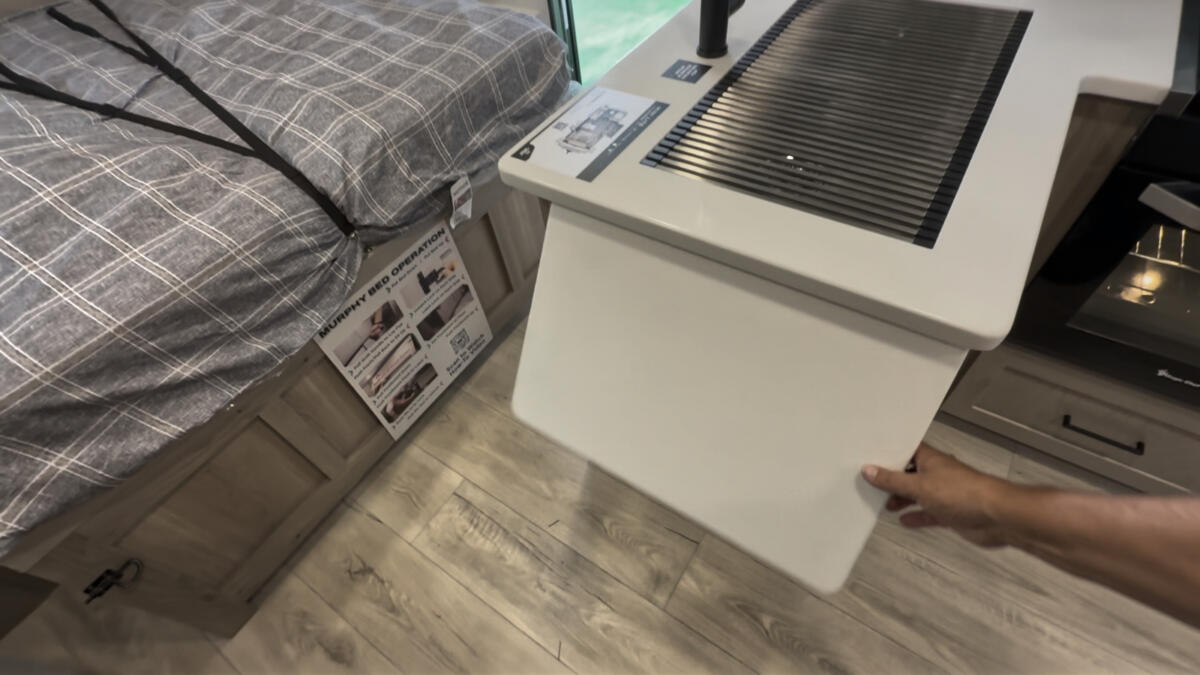
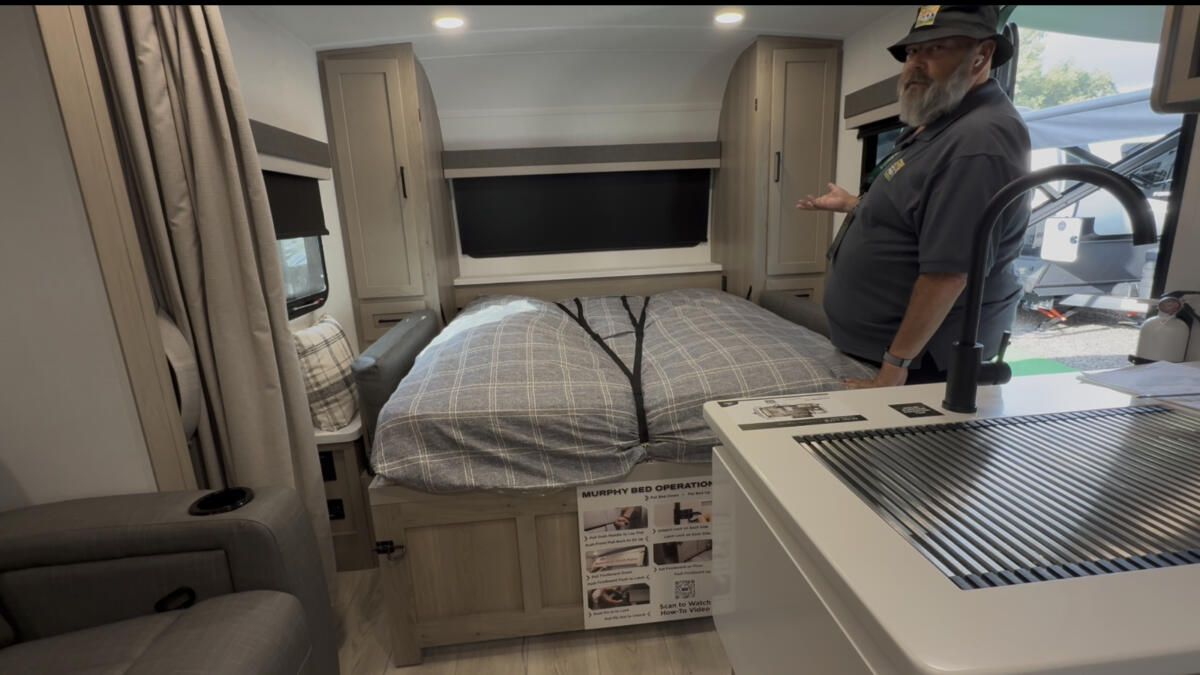
But then, once the table is down, you also have a Murphy bed here. Rockwood does the best Murphy beds in the business, period. End of story. No debate. Why? 

These are all one piece, so no requiring a bendy mattress to make this work. For us, this was a good solution, and that’s where we learned about the RV Superbag to make this even better. 

The bed in here is a “short queen” at 64” x 74”, which is what we had in our first Mini Lite. You could leave the bed down and still bring the slide in and out. 

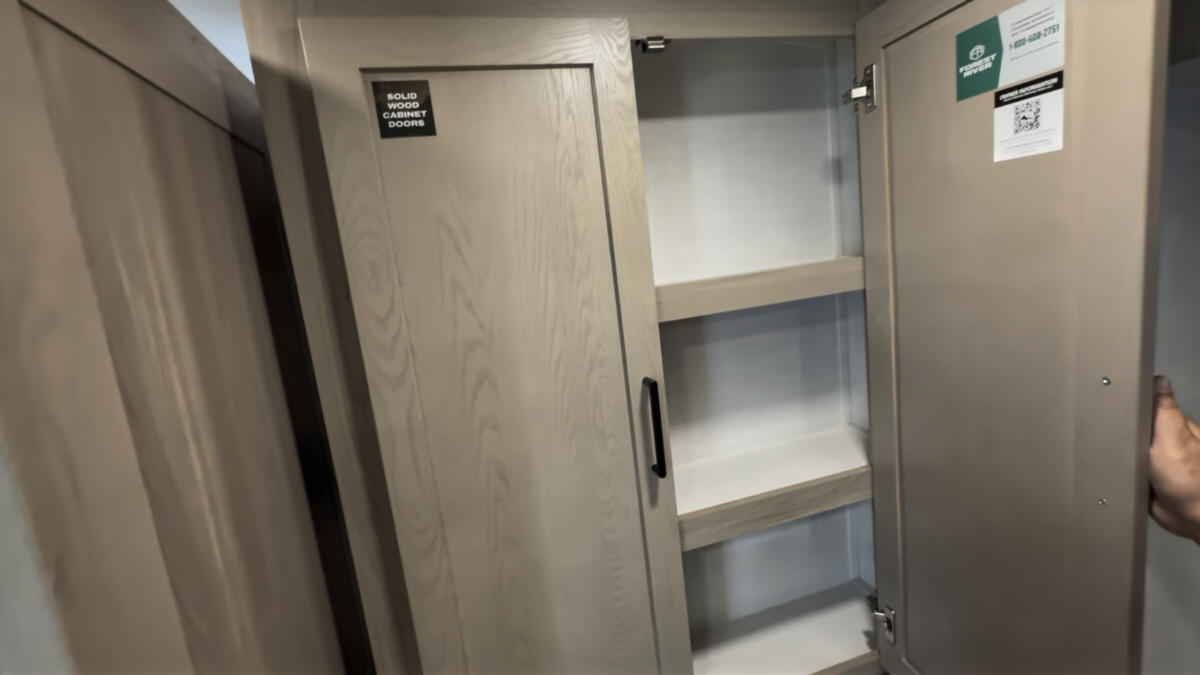
Around the bed are closets on either side. 

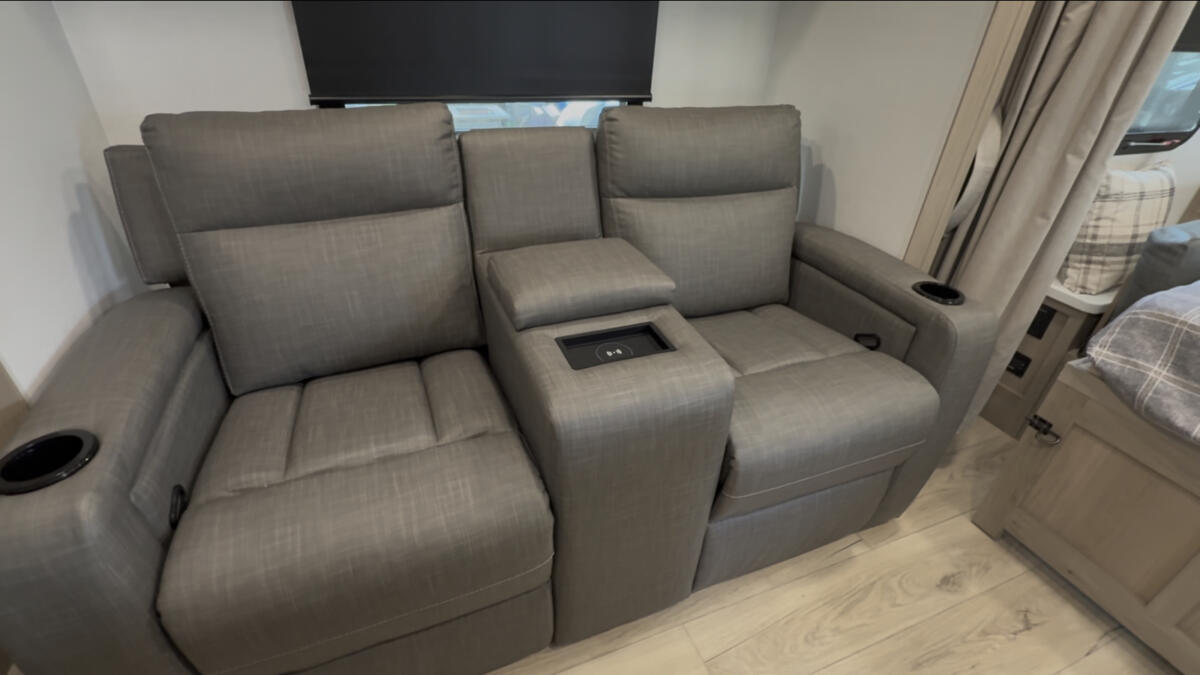
Since there’s that mini dinette at the front, there’s a theater seat in the slide of this RV. This is a lot of good seating in a relatively small trailer. 

Kitchen in the Rockwood Mini Lite 2108RB

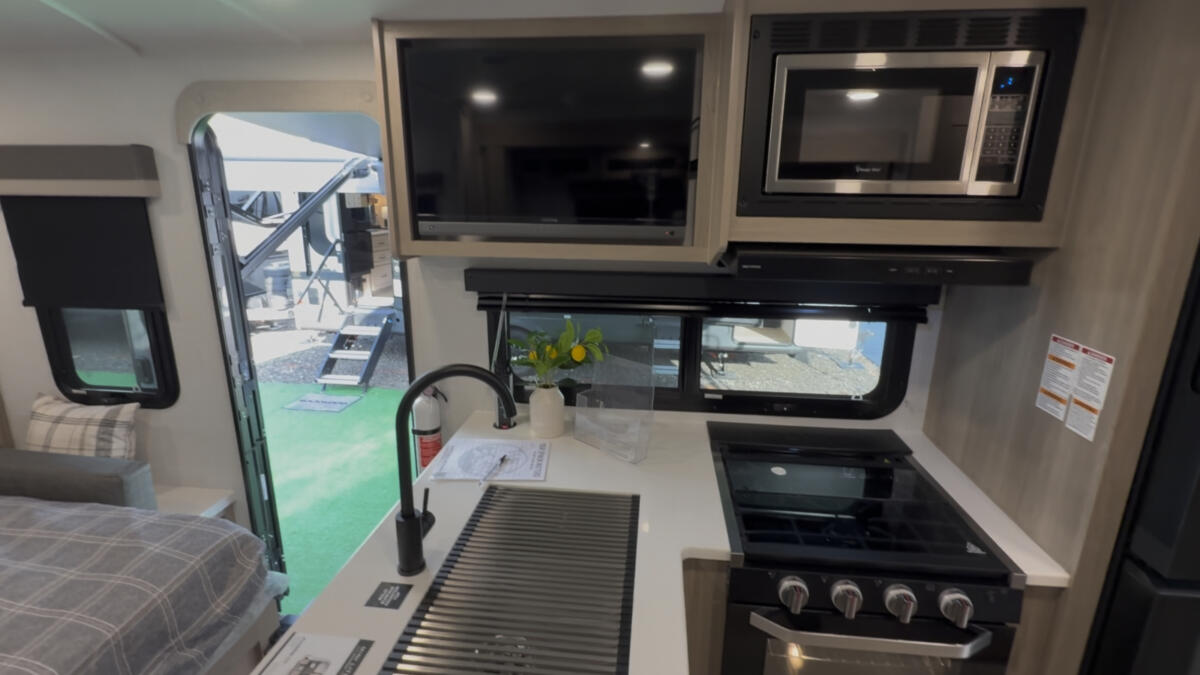
As much as I was impressed by the amount of seating in this trailer, I was equally impressed by the kitchen. There’s a full-sized (10.7 cubic foot) 12-volt refrigerator. I shared how much I like these new fridges and how efficient this particular model is in this story. 

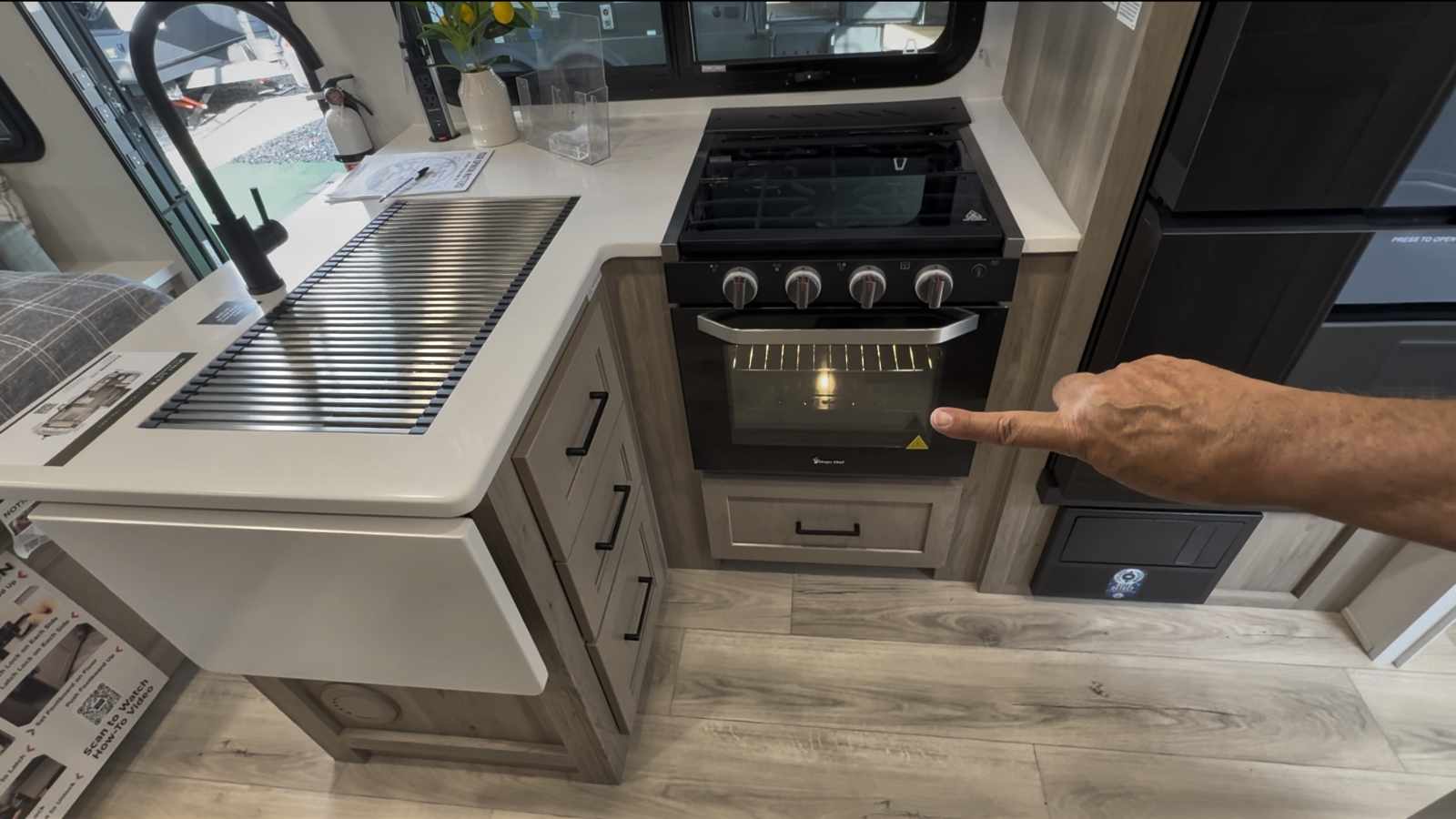
Rockwood also uses a three-burner propane stove along with the larger-than-average 21” RV oven. I have the same oven and, yes, we’ve used it for all kinds of things, including pulled pork, roasted veggies, and more. The larger size of these 21” (vertical) ovens really does make a difference.

The countertop is an “L”-shaped unit with a sink sort of facing the Murphy bed. For a trailer of this size, the counter space ain’t half bad. To make things more useful, however, there is a countertop extension. The countertops in this trailer are solid surface, which tends to last longer. 

Bathroom in the Rockwood Mini Lite 2108RB

The bathroom in this extends the full width of the rear of the trailer, which means you have good space for what you need to do here. There’s a porcelain foot flush toilet and a decent linen closet, along with a rectangular sink. 

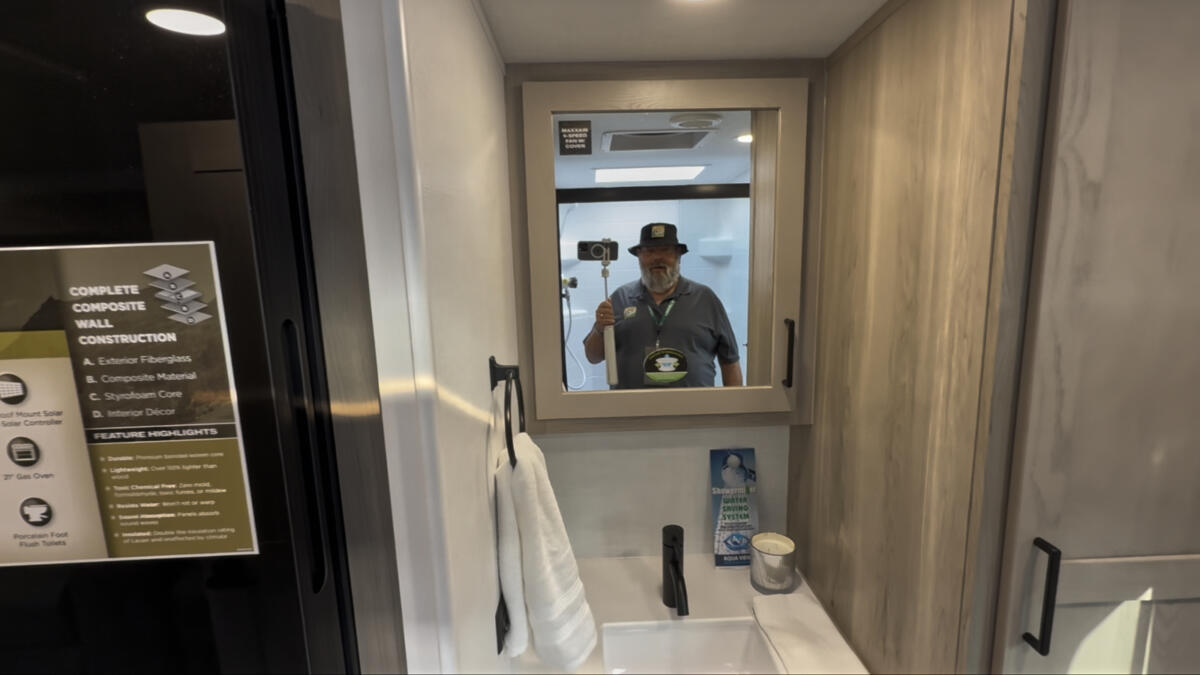
The shower is a rectangular unit that incorporates a feature called the Showermi$er. It redirects water into the system while you’re waiting for it to get hot in the shower, thereby not wasting water if you’re boondocking. We use this feature a lot in our own trailer. 

Rockwood has also recently upgraded its plumbing so that they’re not using the troublesome clamp system on flexible lines that has been prone to failure. The tanks on these are supported, so you can travel with water aboard. 

Boondocking and travel access in the Rockwood Mini Lite 2108RB

For those who enjoy boondocking as much as I do, this can be a great choice. Rockwood includes a 200-watt solar panel along with an 1,800-watt inverter and a 30-amp charge controller. While the 200 watts of solar aren’t going to do much more than be a battery tender, this rig is set up to support additional solar panels, for those who want them.

Plus, the inverter runs several outlets, which would absolutely support things like CPAP machines and the like. A lot of this RV can run natively on the 12-volt battery power, including the fridge, which isn’t unusual, but also the smart TV, which is.

I like that Rockwood/Flagstaff models come with a Showermi$er, which is a way to redirect water back into the system when you’re waiting for it to get hot in the shower.

Something I really like is that Rockwood still uses the six-gallon traditional gas-electric water heater with a tank. I know lots of RV companies are bragging about their tankless water heaters, but these are often a lousy solution. Why?

Tankless water heaters work based on demand. If they sense that you’re requesting hot water, they turn on the burner and heat the water as it passes. But if your water pressure is low, it may not trigger the burner. And, if you’re at high elevation, that may not allow the burner to ignite.

I wrote more about tankless water heaters here.

And you only have propane to heat the water, no electric. But the reason RV companies like these units is that they’re relatively easy to winterize, and they’re inexpensive for RV companies to purchase. Rockwood tends to favor things that serve the customers better, like 21” RV ovens, welded dinette bases, and gas-electric water heaters with a tank.

Rockwood Mini Lite 2108RB specifications

Final thoughts on the Rockwood Mini Lite 2108RB

Is this RV perfect? Absolutely not. For example, I think it’s goofy that there’s a windshield and a Murphy bed. You have a windshield when you don’t want it at night, but the bed being stowed blocks the windshield by day. See? Goofy! But at least on all the windows, Rockwood uses roller blackout shades, which really work well. 

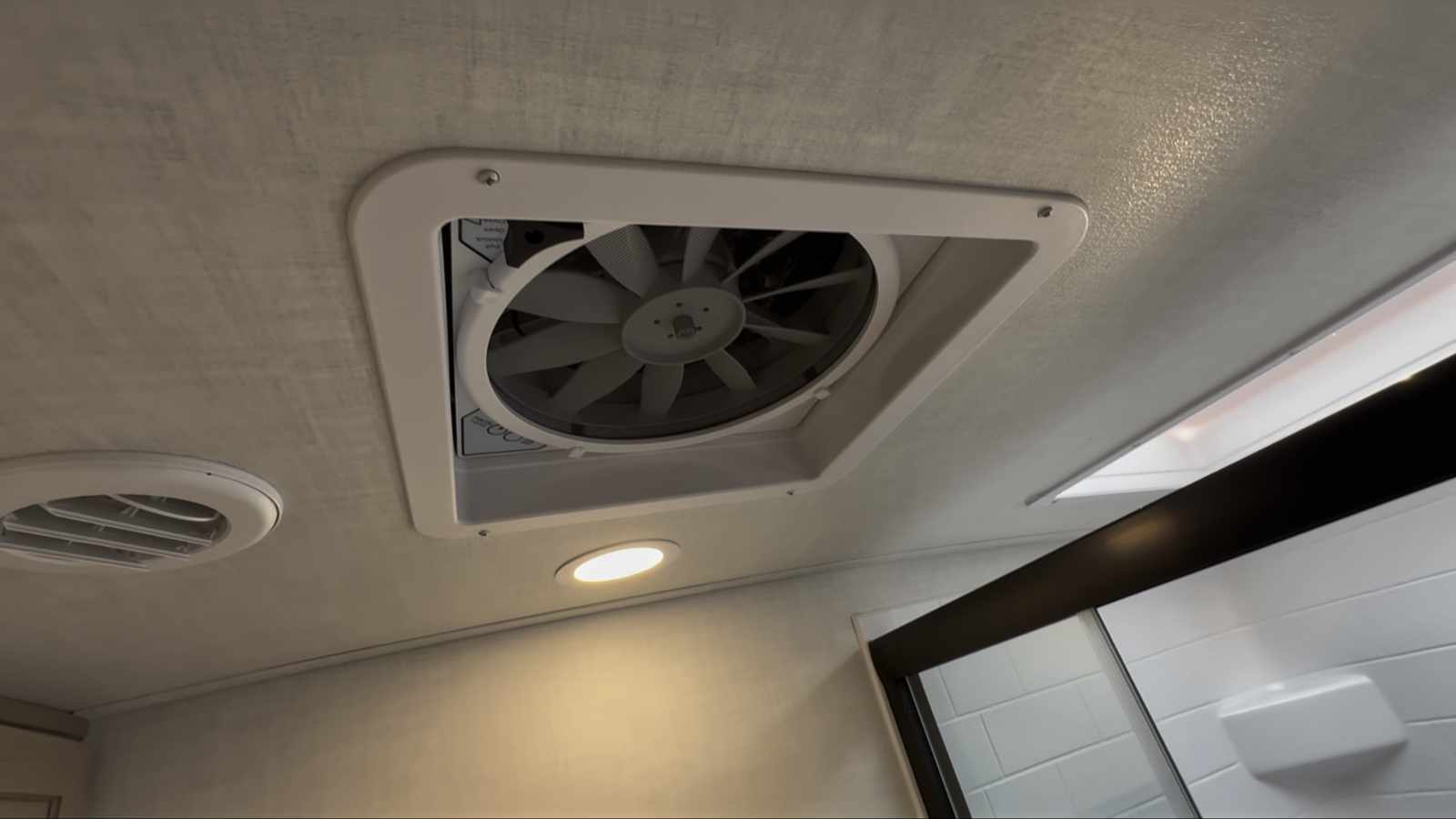
Oh, and I also like these frameless windows that Rockwood uses. Also, they have a Maxxair high-performance vent fan in the bathroom with a rain cover to increase air flow. 

Overall, this is a well-designed trailer with some very usable, unique aspects to the design. 

RELATED

RVT1263

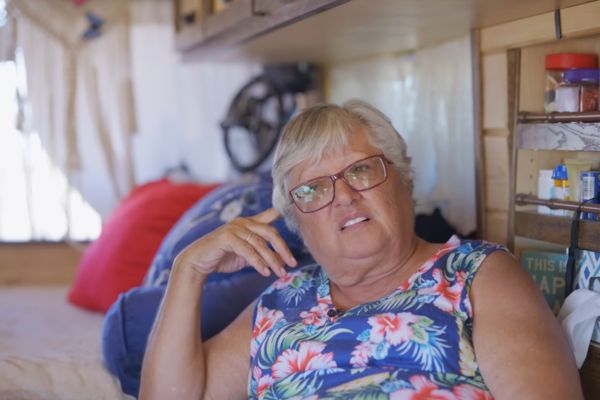
Van life at 72: ‘I’ve never been happier!’

Can you find happiness in van life as a senior? According to the video at the end of this post from TinyHomeTours, yes!

Lynne didn’t move into a van for novelty. After retirement, a breast cancer diagnosis, and the cost of staying put, caused her to decide that the rest of her life needed to feel lighter.

Lynne gave up a Massachusetts apartment by the beach and built a home on wheels around her budget, health needs, and dog, Milo. That choice turned one fixed view into the freedom to go almost anywhere.

Why the van made more sense than the apartment

A van life video first planted the idea, but cancer made the decision feel urgent. Lynne wanted to travel more than stay put and rent, and she knew Social Security alone would not cover both. Her apartment ran about $1,200 a month. The van payment is $400 a month, and that ends in about three years.

The numbers that made it possible

  • 2015 Ford Transit cargo van, $19,000
  • Custom build, about $20,000
  • Total all-in, about $40,000
  • Monthly van payment, $400
  • Car insurance, about $100 per month

Lynne lives on about $1,800 a month from Social Security and keeps roughly $9,000 to $10,000 in emergency savings. For her, the math worked.

A cozy build shaped around daily life

Lynne worked with Jonnie at Midwest Van Builders and stayed involved through the whole build, often sleeping in the van as each stage was finished. She wanted natural wood, an open layout, and no walls cutting up the space.

That process paid off. The van has a twin bed, a 24-by-72-inch couch that doubles as a guest bed, nine upper cabinets, and a rear garage with a 20-gallon water tank, generator, and shoe racks.

Her kitchen and power setup are built for real needs

Lynne likes to cook, so the kitchen had to work. There is a deep sink, a wide counter, an air fryer, a slow cooker, toaster, griddle, a pancake maker, a grill, and a butane stove for backup. She jokes that people call her a power hog, but her setup can handle it.

A Bluetti EB200 Max battery, 600 watts of roof solar, and a generator keep things running. Under the couch, she keeps a separate fridge and chest freezer. The fridge stores insulin because Lynne is an insulin-dependent diabetic. The freezer holds about 40 days of homemade dog food for Milo, and stays cold longer if the power drops.

Small choices made the van easier to live in

Lynne skipped a built-in shower and uses a shower tent with a quick-connect hose and 2.5 gallons of hot water. A Trelino composting toilet fits in a cabinet. She also added fans and a swamp cooler for desert heat.

Lynne’s mornings are simple. She checks her blood sugar, feeds Milo, makes coffee, takes her pills, and sits in a space that feels like home. Even when her family offers a guest room, she prefers her own bed in the van.

Final thoughts

At 72, Lynne calls this stage of life “the final quarter,” and she wants happiness more than anything else. Her van gave her lower costs, a home she loves, and the freedom to stay wherever she wants.

RELATED

RVT1263