Dear Dave,
I bought an RV new in September 2015. It has been a pretty good unit except for the gel coat finish which, after just three years, required almost twice-yearly buffing and wax. After the first year I would polish the entire rig, but it got to the point that wasn’t enough. Other than being an old and, I’m sure, cheaper finish, when are the manufacturers going to come up with a more durable product for RV exteriors?
I know some are now using a new product (the name escapes me), that appears to be an improvement, but time will tell. I have resorted to sanding and clear-coating mine, one section at a time, which saves this tired ole body the suffering of buffing and polishing over and over. Just too much territory! Thanks. —Bruce, 2016 Sprinter 319MKS
Dear Bruce, Crane Composites has been the main supplier of the exterior fiberglass sheet for more than 30 years, including Filon, Kemlite, and Noble brands. They have made great improvements in the UV protection of the exterior finish called the Gel Coat, but it’s not 100% maintenance free.
Brian Falkenberg, Crane Composites RV Market & Business Manager, states both the Filon and Noble brands should be washed and waxed at least every 6 months and sooner if exposed to the elements.
Newer product with pure resins
Brianza is a newer product introduced into the RV industry. It boasts pure resins from Germany and Italy, while others use additives. In fact, James Witty, President of Brianza USA, stated in a recent RV PRO article that Brianza fiberglass requires no maintenance. I find that hard to believe.
Several RV manufacturers have gone to full body paint in an effort to reduce fading and chalking of the exterior finish. However, I have found that paint will also require a cleaning and wax treatment periodically.
Azdel products
Another component that has been advertised quite often is Azdel. Many RV manufacturers throw it around like it is the end-all to delamination and exterior degradation. Azdel is a composite sheet material that is used instead of lauan board inside the design of a sidewall. It has nothing to do with the exterior finish, as it is laminated between the exterior fiberglass panel and interior paneling.
The concept is if your rig develops a leak and moisture penetrates the sandwich design of the sidewall, it will not separate. Lauan is a wood fiber panel and will absorb moisture and flake, swell, and delaminate.
I guess these manufacturers are planning on having water leaks rather than designing a better roof to sidewall seal and making sure the unit is sealed properly?
Products to keep the shine
Unfortunately, I don’t know of anything that is 100% maintenance free. However, there are some good products to help keep the shine, including Meguiar’s #50 Marine and RV wax, which Crane Composites recommends.
Others have used 303 Protectant, which is a liquid and is not as labor intensive as waxing.
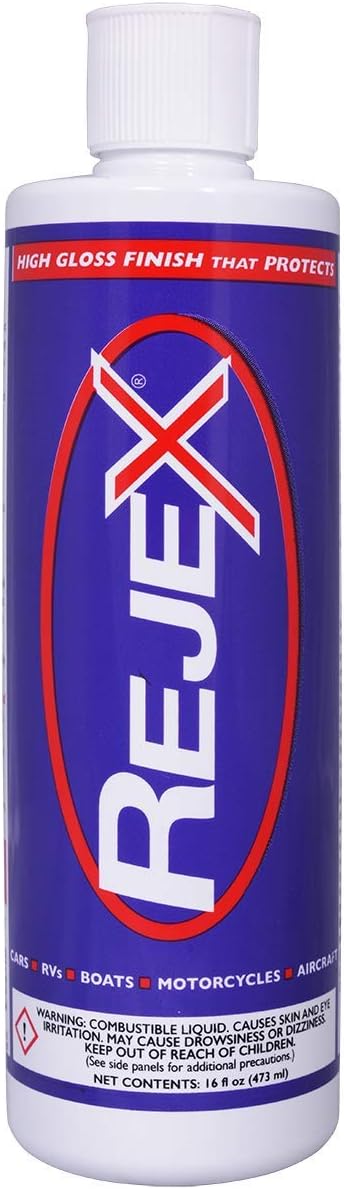
Sharpline is one of the premier manufacturers of decals. Sharpline’s tech recently told me tests show that using RejeX on the decals will extend the life by 2-3 times! You can find it on Amazon here.
“Hot town, summer in the city; Back of my neck getting dirty and gritty...” —The Lovin’ Spoonful. Most of us try to get away from that summer in the city. We hitch up the trailer or fire up the motorhome and head for cooler climes. Keeping an RV cool in hot weather can be a real challenge, especially in full sun or desert conditions.
Here are some practical tips to cool your RV in hot weather.
Cool your RV in hot weather—at the RV park
When you’re hunkered down in an RV park with shore power at the ready, these tips are for you. Boondocking? Keep reading—we’ve got tips for you down below. In the RV park, even with plenty of electricity on tap, you still need to manage heat.
Use A/C strategically
• Start the air conditioner early in the morning to stay ahead of the heat.
• Close blinds, windows, and vents in sun-exposed areas.
• Shut interior doors or use curtains to cool smaller zones more efficiently.
• Use oscillating fans to improve air circulation throughout the rig.
• Use a vent fan to exhaust hot air from the ceiling before turning on the A/C. Automatic thermostat-controlled roof vents are definitely a plus.
Block solar heat
• Use Reflectix, thermal curtains, or window shades.
• Extend awnings to shade windows and the RV side.
• Consider side shade screens for added exterior shading.
Cook cool
• Use microwave, air fryer, or Instant Pot instead of stove/oven. We’re not great fans of using toaster ovens—they kick plenty of heat into the coach. We have set ours up outside on a folding table, close to the outside power outlet.
• Grill outside or prep cold meals to avoid heating the interior.
Safety first
• Don’t overload circuits with multiple high-wattage devices. Running the A/C while using the microwave will decidedly trip your circuit breakers if your rig is a 30-amper.
• Keep vents and A/C units unobstructed for safe airflow.
• If you have 50-amp service, use it to run multiple cooling devices safely.
Keeping your RV cool in hot weather—off the grid
R&T De Maris photo
Boondocking “off the grid” certainly presents its own challenges. Yes, you may have a suitable generator to help out, but be prepared to shell out the big bucks to keep that genny running in high heat. Really, conserving energy while still keeping cool is your key.
Use passive cooling
• Park in the shade—trees, hillsides, or even use a tarp over the roof. Not a lot of help if you’re relying on roof-mounted solar panels. Some RVers park in the shade, then run their panels out and ground-mount them.
• Orient your RV so the windows face away from direct sun, especially in the afternoon.
• Reflectix or foil bubble insulation in windows and vents helps block radiant heat.
• Run battery-powered fans for air movement inside.
Reduce internal heat
• Avoid using the oven or propane stove—cook outside.
• Unplug unused electronics that generate heat.
• Use LED lights only, and minimize light use during the day.
Use evaporative cooling when humidity is low
• DIY: Hang a wet towel in front of a fan.
• Keep a spray bottle with water to mist skin or bedding.
• Use a commercial evaporative cooler designed for RVs. Look to see an article specific to this within the next week or so. If you’re interested, drop a line to russ (at) rvtravel.com, and we’ll let you know when the story is ready.
Conserve energy
• Run fans sparingly on low settings.
• Recharge batteries using solar panels, if equipped.
• Plan errands or sightseeing during the hottest part of the day to avoid being inside. Think air-conditioned ice cream parlor!
We’re not staying in a hotel
It can take some ingenuity to keep your RV cool during hot weather. But as most RVers would agree, we’re not staying in a hotel. The views we have from our rigs are a lot better. And if we don’t like the heat, we can always turn the key and move along…
Over the last few months, we’ve covered how budget cutting and staff shortages have affected our national parks. A frequent comment that we see from readers runs something like this: “We just visited XXX National Park, and things looked good to us. The bathrooms were clean, trash cans emptied, no understaffing.” Some have written that we’re publishing “Chicken Little” stories—that the sky is falling. Yes, the front-facing part of our nation’s parks may indeed look sparkly clean. But there’s another side. It’s the national parks’ budget cuts’ hidden impact.
Visitors seeing clean bathrooms, operating campgrounds, and empty trash cans is no surprise. It’s in line with the order of the Secretary of the Interior, Doug Burgum. Even as the visitor season drew near, Burgum ordered, “[T]o ensure visitor access and satisfaction, any closures or reductions to operating hours, seasons, or any visitor services (including trails and campgrounds), in whole or in part, must be reviewed by the NPS Director and the Assistant Secretary for Fish and Wildlife and Parks prior to any reduction action by the individual park units.”
With cuts in staffing, the result has been park managers pulling staff out of their usual work to handle privy-cleaning duty. Campgrounds must be kept open, trails accessible. But what happens to the other important—but unseen—work of employees who are now “keeping up appearances”?
National parks’ budget cuts’ hidden impact, in the eyes of a rescue worker
What follows is the writing of a former park service search and rescue worker. Regardless of your political persuasion, we think it’s a critical read. While EMTs are not being fired, when a medical emergency arises, more folks than just EMTs are called on to handle this critical work. If they aren’t there to be had, what happens to those who need help?
This story originally appeared in the California Health Report and was written by Lauren DeLaunay Miller. [Reprinted here with permission.]
*****
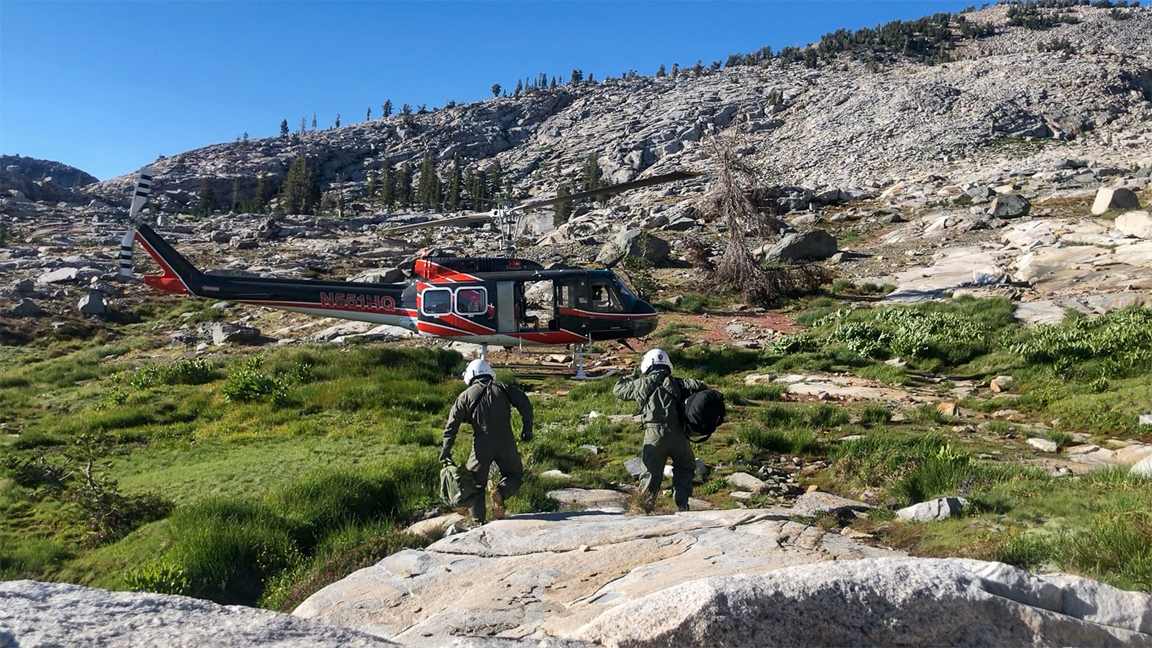
I spent three summers providing emergency services as part of Yosemite National Park’s Search and Rescue team. I hiked harder and faster than I ever had, eager to reach my patients as quickly as possible. It felt like my fitness determined my patients’ outcomes, and sometimes it did.
But something else also mattered: Having enough team members who were well supported.
Parks received bipartisan support
For decades, national parks have received widespread, bipartisan support. But now, these services are under threat. Emergency medical services look different in every park, but one thing is now the same: The systems that NPS visitors, residents and employees have come to rely on are on shaky ground under the Trump administration. Despite announcing on April 3 that all national parks remain open, the administration’s actions under the Elon Musk-led Department of Government Efficiency have led to staffing shortages in many NPS areas – with potentially more to come. Even for employees who have remained, the administration’s decisions have created a culture of fear and uncertainty.
And while EMS workers have, for now, been exempted from budget cuts and buyout options, parks often pull employees from a variety of divisions to supplement rescue missions, so a shortage of staff members in other departments could impact emergency services too.
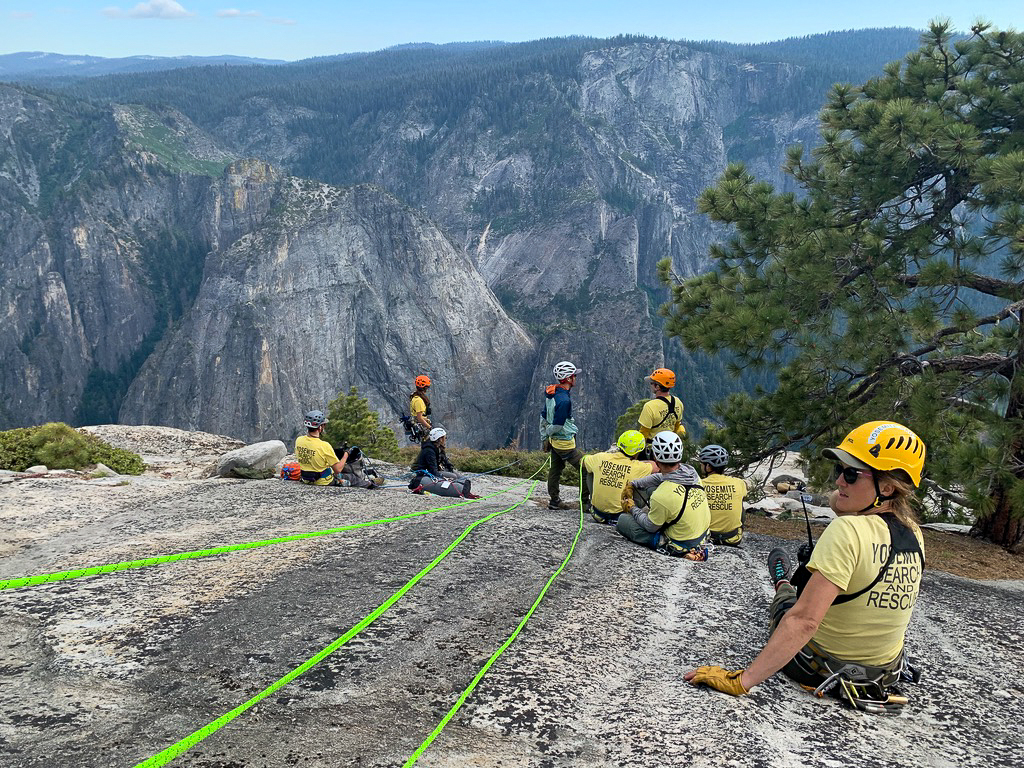
The Yosemite Search and Rescue team atop El Capitan following a rescue of an injured rock climber. Lauren DeLaunay Miller photo.
”If a big emergency goes down or somebody gets lost or there’s a big rescue, it’s not just those public safety employees that get involved,” Bill Wade, executive director of the Association of National Park Rangers, told me.
Staff feeling the impact
Parks employees are already feeling the impact: There is no sense of security for what employment might look like next year or next summer, Wade added. The administration’s rapid decision-making and backtracking make it more difficult for NPS employees to feel confident that the work they’ve come to rely on each summer season will continue to be there.
Many units of the NPS supplement their permanent staff with seasonal employees to account for increased visitation during the busy summer season. Wade worries that the hiring of seasonal workers may mask the underlying staffing shortages this summer before becoming apparent to visitors in the fall once many of the seasonal employees have left. “What happens when all of those 7,700 seasonal employees go off duty in the early fall and you already now have a vastly reduced permanent set of employees?” he asked. “That’s where things are going to start being obvious, I think, to the public.”
Mental health among EMTs
EMS work, in national parks or elsewhere, takes a toll on everyone who does it. In recent years, NPS units like Yosemite have invested more in training and resources to help emergency responders grapple with the difficulties of their work. But with budget cuts coming, it’s unclear if parks will be able to invest as heavily in mental health resources. “It’s all part of that big set of uncertainty,” Wade said.
That sense of uncertainty can take a large toll on EMS workers’ already-taxed mental health, something that Dr. Eric Rudnick, emergency medicine and EMS physician, said he’s seen emergency medicine organizations fail to adequately address for decades. Rudnick has worked in EMS for more than 30 years and now uses his expertise to advocate for EMS workers in rural California as a director with the CARESTAR Foundation. When asked how mental health was addressed when he entered the industry, Rudnick said, “You compartmentalize it, and you stuff it down. And that’s not a whole healthy coping mechanism.”
The question, Rudnick said, is: “Who’s going to rescue the rescuer?”
“ I used to tell students that we’re like grief mops,” added Jane Smith, a paramedic who has worked in urban EMS in Oakland and San Francisco for decades and serves as the CARESTAR Foundation secretary.
Not just national parks
The time I spent in Yosemite was foundational to becoming the person, and journalist, I am today. I learned how to sit with people in crisis and how to care for others on what were often the worst days of their lives. I also learned about the intricate web of emergency medical services that the NPS provides to its hundreds of millions of visitors. Emergency services aren’t just limited to responding to accidents related to extreme outdoor activities like those I saw in Yosemite. They also include everyday emergencies, like heart attacks, illnesses, car accidents and domestic violence incidents.
I trained in everything from swift-water rescue to wildland firefighting, but our specialty in Yosemite was in high-angle rescue, or retrieving climbers from the Valley’s famously imposing granite walls. By the time I left the National Park Service in the fall of 2020, I had participated in nearly 100 rescue missions.
Yosemite alone received more than 4 million visits in 2024, and the Park Service isn’t limited to just parks — it includes national parkways, seashores and historic sites as well. California leads the U.S. in the number of NPS locations, with 28 sites, including well-known parks like Death Valley and Joshua Tree as well as smaller spots like Manzanar National Historic Site and César E. Chávez National Monument. More than 17 million people visit these California landmarks each year, and San Francisco’s Golden Gate National Recreation Area receives more people than any other site in the NPS system.
National Park Service budget–less than 1/15th of a percent
Despite being overwhelmingly popular with the American public, the NPS takes up less than one-fifteenth of a percent of the federal budget. In February, the administration laid off approximately 1,000 NPS employees across the country, at least 42 of whom worked for parks in California, according to a count by the Association of National Park Rangers. Then came a federal hiring freeze that prohibited the hiring of seasonal staff for the summer in addition to challenges to the system that supports search and rescue efforts like those in Yosemite.
Many of those decisions were challenged in court, and widespread outrage prompted reversals. For a moment, things looked a little brighter, as the NPS was allowed to hire seasonal staff and, in late March, a judge ruled that the laid-off employees must be rehired.
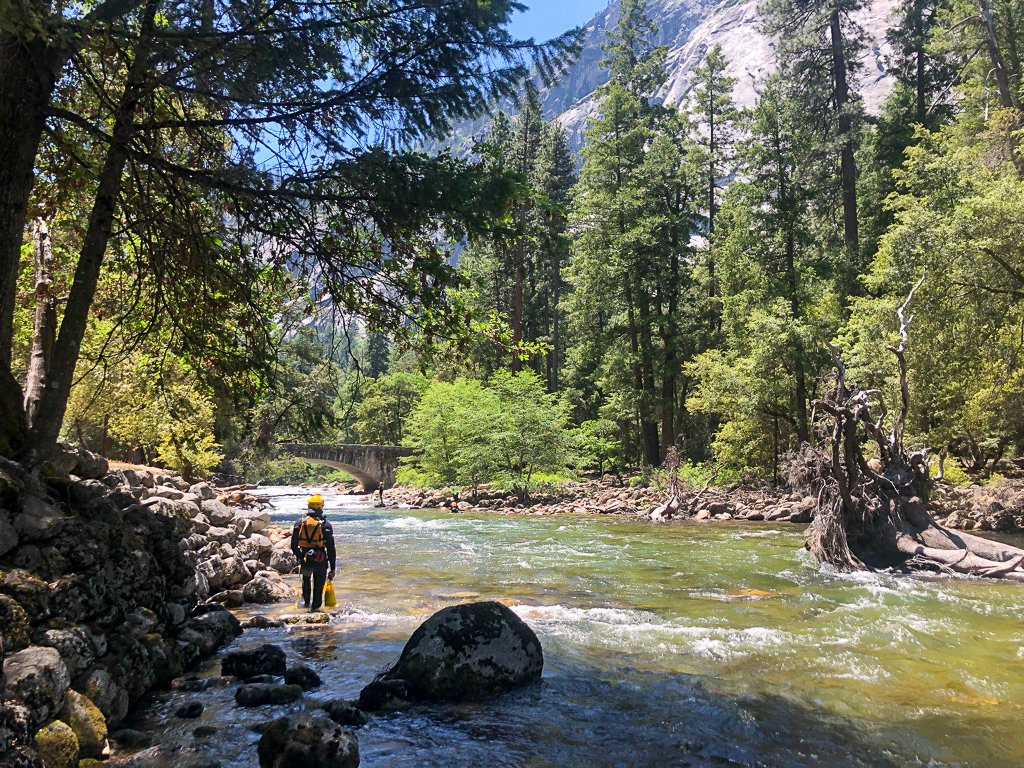
Yosemite Search and Rescue training in swiftwater rescue on the Merced River in Yosemite Valley. Lauren DeLaunay Miller photo.
Wade and I agree that, in the eyes of visitors, these changes may not be perceptible this summer. But one of the biggest impacts, Wade said, lies in the culture of fear and uncertainty that’s permeated the NPS.
“The morale in the National Park Service right now is as low as it’s ever, ever been, and it’s probably going to get lower,” he said.
Emergency responders work hard. This I know firsthand. We respond to pagers at all hours of the day, putting our lives on hold to protect those of others. We stop what we’re doing and help, not knowing if we’ll be gone for hours or days. In Yosemite, the seasonal search and rescue sites supplement the park’s seasonal and permanent employees, relying on a system called administratively determined hiring that allows for the temporary hiring of emergency personnel. This system, too, has been targeted by the administration.
What’s to be done about the national parks budget cuts hidden impact?
What can be done? “Please tell the public to get in touch with their elected representatives and demand that they do something,” Wade said.
A “fully staffed” national park is one in which important and beloved programs are often already supplemented by outside organizations. The emergency responders whom visitors and residents rely on during their times of crisis need more resources, more mental health relief, more team members, and more respect. It is a system that deserves more support, not less.
Lauren DeLaunay Miller is a reporter with California Health Report as part of the California Local News Fellowship at UC Berkeley. From 2018-2020, she worked for Yosemite National Park’s Search and Rescue team in Yosemite Valley, where she assisted in approximately 100 rescues. The opinions expressed in this story are hers.
RV giant Winnebago reported some financial news for its investors earlier this week. It’s a 1300+ word statement, written in corporate-financial speak—perfect for analysts, but impenetrable for most RV owners or casual readers. We’ve translated it for us common folks. Essentially, most Winnie motorhomes are in doo-doo, while towables are looking OK.
Winnebago financials translated—profits down, motorhomes in the soup
First, here are the high points of the report of interest to RVers.
Winnebago gave an early look at its financial results for the quarter that ended May 31, 2025. They’re expecting to bring in about $775 million in revenue, with profits per share between $0.55 and $0.65.
That profit range is lower than many investors were expecting, and Winnebago knows it. They’re warning that things have slowed down—especially in the last two months of the quarter.
What’s going wrong?
Economic worries: In March, RV sales were looking decent. But then consumer confidence dropped, and dealers started being more cautious about placing new orders.
Inventory control: To avoid having too many unsold RVs sitting around, Winnebago cut back on production and kept inventory levels low.
Biggest hit—motorhomes: The hardest-hit part of the business is Winnebago-branded motorhomes—meaning the big Class A and Class C drivable RVs that carry the company’s name.
What does it mean for Winnebago?
Fewer sales ahead: They expect motorhome revenue to stay low for the rest of the year—more than previously anticipated.
Fix-it mode: They’re making moves to deal with this slowdown—cutting back production, reducing staff, clearing out unsold inventory, and improving the products so they offer better value going forward.
Bigger picture: While motorhomes are struggling, other parts of the company are holding up better:
Grand Design towables (travel trailers) are gaining market share.
Winnebago towables (like the new Thrive model) are being revamped.
Newmar (the luxury) is doing well, especially in diesel Class A motorhomes and luxury Super C models.
Bottom line for the RV world
Motorhome slowdown: RVers might see fewer new Winnebago motorhomes coming out in the short term as the company reins in production.
Dealer impact: Dealers may have tighter inventory and be more cautious about restocking.
Product improvement ahead: Winnebago says this slowdown gives them time to make their motorhomes better and more competitive—possibly meaning improved designs or pricing down the line. But don’t bet the farm on it.
Shopping for a Winnebago motorhome?
For everyday RVers, especially those in the market for a motorhome, this update sends a few signals:
Expect fewer discounts in the near term, as dealers are ordering more cautiously and keeping inventories tighter.
Motorhome availability may be limited, especially in new models or specific trim levels.
Wait-and-see buyers could benefit later if Winnebago’s product revamp results in stronger value or design improvements.
Winnebago financials translated: Think “News Read Real Slow”
Have you hung on so far? Great! If you’d like to read the full release, grab a cup of Joe, and imitate Seattle radio personality Dave Ross. His segment, “News Read Real Slow,” was a humorous feature on KIRO Radio, designed to satirize the often fast-paced and complex nature of news reporting. Dave was known for his comedic approach to delivering news in an exaggeratedly slow and deliberate manner, highlighting the absurdities and intricacies of certain news stories. Click here to hear Ross poke a little fun at Exxon.
A woman in Texas has died after contracting a rare infection caused by a brain-eating amoeba, which she encountered while using tap water to rinse her sinuses at a campground, according to a recent report.
The Centers for Disease Control and Prevention (CDC) detailed the case in its Morbidity and Mortality Weekly Report, released last Thursday. The woman, who was 71 years old and otherwise healthy, developed severe symptoms within days.
According to the report, she began experiencing symptoms such as fever, headache, and “altered mental status” within four days of using a nasal irrigation device (neti pot) filled with tap water.
Though she received treatment for what doctors suspected to be Primary Amebic Meningoencephalitis (PAM), the report states that she began having seizures and died eight days after symptoms first appeared.
Brain-eating amoeba
The CDC confirmed the presence of Naegleria fowleri—the brain-eating amoeba—in the woman’s cerebrospinal fluid.
Naegleria fowleri is a single-celled organism found in freshwater sources like lakes, rivers, and hot springs, according to the CDC.
“If water containing the ameba goes up the nose and to the brain, it can cause an infection called primary amebic meningoencephalitis (PAM),” the CDC explained. “Typically, fewer than 10 people a year in the United States get PAM. Nearly everyone who gets PAM dies from it.”
Medical records show that between 1962 and 2023, there were 164 reported PAM cases in the U.S. Only four patients survived.
The Texas Department of State Health Services concluded that the woman had no recreational exposure to natural freshwater sources, but had reportedly used non-boiled tap water from an RV water system for nasal rinsing “on several occasions.”
Authorities were unable to detect the amoeba in samples from the RV tank or the campground water supply, which may be because they took the samples 23 days after the possible exposure took place. But testing did indicate the water had inadequate levels of disinfectant to prevent microbes from building biofilm communities that can protect pathogens like N. fowleri.
To help prevent such infections, the CDC recommends the following precautions:
• Wear a nose clip or hold your nose when jumping or diving into freshwater.
• Keep your head above water in hot springs.
• Avoid digging in shallow, warm freshwater.
• Always use distilled or previously boiled tap water when cleaning your nasal passages or using sinus rinse devices.
At least two other deaths tied to brain-eating amoeba infections from neti pot use were reported last year.
If you have plans to stay at a KOA, heads up! Once known for its flexible cancellation policy, the big campground giant quietly changed all that last fall. Need to cancel your reservation? KOA’s cancellation policy could cost you dearly.
KOA’s cancellation policy kills 24-hour window
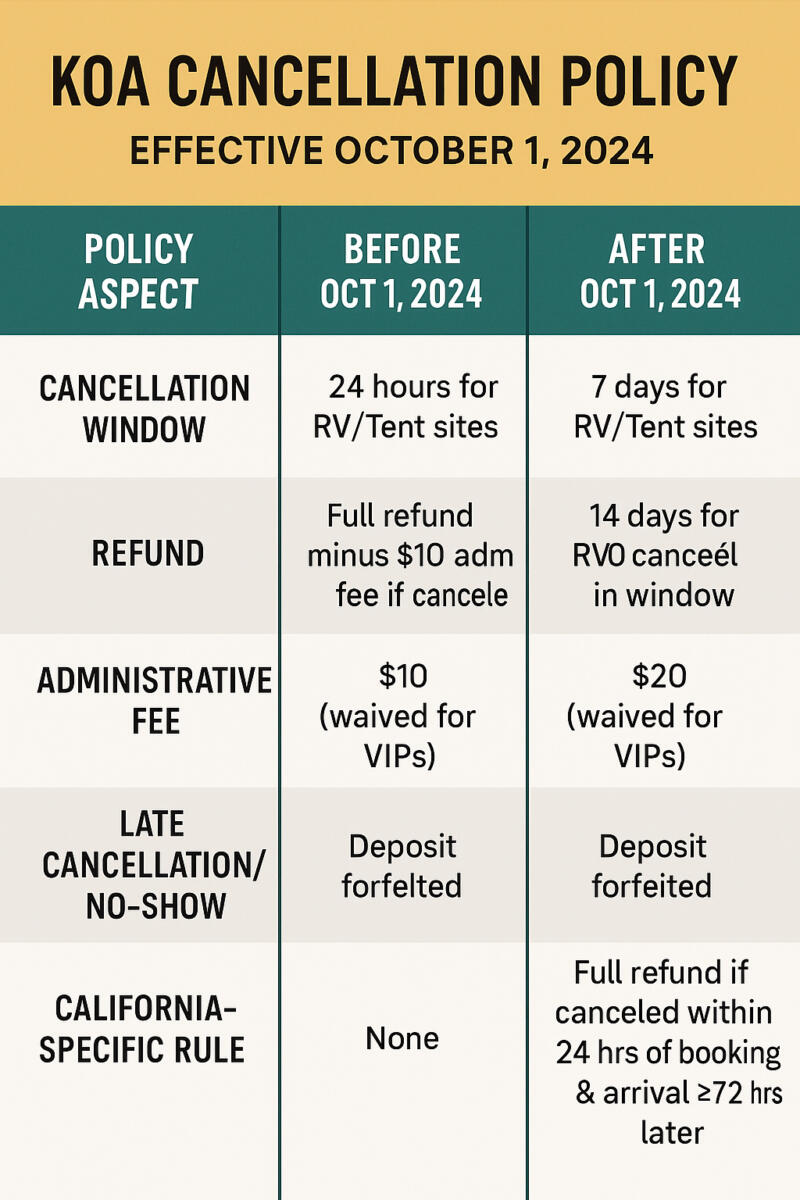
Starting October 1, 2024, KOA eliminated its flexible 24-hour cancellation window. Here’s the “new and improved” policy:
• RV and tent sites: 7 days’ notice required
• Lodging: 14 days’ notice required
• All cancellations: $20 administrative fee
• Late cancellations: Forfeit entire deposit
For RVers who value flexibility, this is a significant shift away from what made KOA attractive for spontaneous or uncertain travel plans. Here’s a chart to show the differences.
KOA’s cancellation policy (click/tap image to enlarge)
How much could this really cost you?
How much financial pain could this translate to? Well, let’s say your RV breaks down on the way to the KOA. In “the old days,” as long as your reservation was more than 24 hours away, then you’d get a refund, less a $10 admin fee. If you canceled less than 24 hours from arrival time, bye-bye deposit. Now, you’d best break down more than a week before or you’ll lose the whole deposit.
How much does KOA charge for a deposit? KOA’s standard deposit policy requires you to plunk down money equivalent to one night’s stay when you book. That can vary depending on the specific campground and the timing of your reservation. Book on a holiday weekend, or during other “special events,” your deposit could amount to the cost of your entire stay. The 7-day cancellation policy could bite your wallet hard.
KOA’s cancellation policy “ruffles my old feathers”
Not all RVers are happy with the KOA cancellation policy. One wrote on social media, “We’ve stayed at a few KOAs over the years and to read their new ‘policy’ [it] ruffles my old feathers a tad. Hopefully, they will take into consideration those who are on the way and have a breakdown on the road and call to say they can’t be there that day, or suffer a last minute illness or some other experience beyond and out of their control, etc. Hopefully that will be taken into consideration?
“But if this is a ‘blanket’ policy with no exceptions to the rule, then we will do our best not to stay at KOAs unless it’s just a drive in off the road for a one-nighter hoping they have availability.”
At least one person tried to see KOA’s side of the issue, responding, “While exceptions due to unforeseen circumstances sure sound nice, they really don’t work from the ownership side.
“You wouldn’t believe how many times a close relative ‘dies’ the day a guest is scheduled to arrive. And once the word gets out those exceptions are made, rigs suddenly falling apart and relatives becoming hospitalized with deadly diseases somehow spread through the reservations like a wildfire.”
It’s true, there are some who will surely try to game the system. But replacing a 24-hour cancellation window with a week’s advance notice is sure to chap some RVer’s hides.
Are you ready for an FRVA (Family RV Association) rally? The relatively newly branded group (earlier known as the Family Motor Coach Association—FMCA) wants to broaden its membership. Part of the plan is to continue with its tradition of big rallies. One is coming up soon—and more are scheduled. FRVA rallies are hoped to be a catalyst to reviving the club.
First of FRVA rallies in Wyoming
The Family RV Association (FRVA) will host its 111th International Convention and RV Expo, themed “Rock & Roll High School,” from July 16–19 at the CAM-PLEX Multi-Event Facilities in Gillette, Wyoming.
All RV enthusiasts are welcome—FRVA membership is not required. Registration is open online and by phone through July 8. After that, attendees can register at the gate.
Georgia back on the slate of future FRVA rallies
Looking ahead, FRVA announced plans for future events, including a two-year run at one of its most popular venues: the Georgia National Fairgrounds & Agricenter in Perry, Georgia.
“The Georgia National Fairgrounds is one of our most popular convention venues—and for good reason,” said FRVA President Paul Mitchell. “It’s a top-notch facility with excellent buildings and parking space, and its location just off Interstate 75 makes it easily accessible for RV owners, including snowbirds heading back north in the spring.”
The Perry site will host:
The 112th Convention – March 18–21, 2026
The 114th Convention – March 17–20, 2027
Registration for the 2026 Perry event opens in September 2025.
And don’t miss Missouri
In summer 2026, FRVA will visit Missouri for the first time, hosting the 113th Convention at the Missouri State Fairgrounds in Sedalia from July 1–4, celebrating America’s 250th birthday.
“We’re excited to be planning an event in America’s heartland that coincides with the 250th anniversary of the signing of the Declaration of Independence,” said Doug Uhlenbrock, FRVA events director. “The RV lifestyle is all about freedom, so the timing couldn’t be more fitting.”
Registration for the Sedalia event opens in January 2026.
For details or to register for the Gillette convention, click here or call (513) 474-3622 or (800) 543-3622.
In this issue, we are focusing on food prep and food storage. Of course, as always, we include other great RV accessories we like, too. Read on!
RV and BBQ food prep and storage
It’s the time of year for outdoor cooking and grilling. Below are a few gadgets that will help you prep and store all your terrific summer foods. Food at the campsite always seems to taste better, doesn’t it?
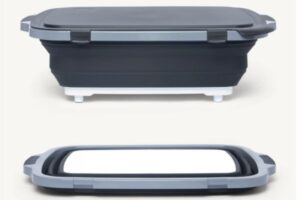
Collapsible BBQ and food prep tubs
By Cheri Sicard These new BBQ and meal prep collapsible food tubs from the fine folks at Drip EZ are incredibly useful, yet they take up almost no space in your RV. Available in three sizes, they simplify meal prep, marinating, and cleanup. Even the small one is quite large, and the only folks who will probably need the largest size are BBQ aficionados marinating full racks of ribs or huge cuts of meat. Featuring an ingenious design, when collapsed, the bottom of the tub is a built-in cutting board. The food tubs come with locking lids that keep everything fresh and clean. Discover more about this versatile product here.
Secondz collapsible food storage containers save cabinet space
By Cheri Sicard If the aforementioned food prep tubs are too big for your needs, the Secondz collapsible food containers are like their little cousins. Save 70% of cabinet space over traditional containers. You’ll never lose the lids either, as these lock on during storage, keeping everything together in a space-efficient manner. Learn more here.
Toss and Chop food prep and salad scissors make chopping a breeze
By Cheri Sicard This has long been my favorite and one of my most-used RV kitchen gadgets. I was first sent one for review about 20 years ago or so when I was editor and publisher of a large food and cooking website. It instantly became one of my favorite kitchen tools. These ingenious double-bladed kitchen scissors make it easy to cut, dice, or even mince almost anything, right in the bowl. The Toss and Chop takes up hardly any room, is easy to clean, and needs no electrical power. I even use my Toss and Chop in my home kitchen. Learn more about this handy RV food prep gadget here.
The perfect RV-sized food processor
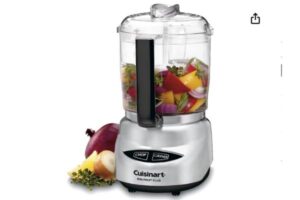
By Cheri Sicard The problem with food processors is that they are usually large. Too large for me to justify taking up that much cabinet space in a small RV kitchen. And while mini food processors are terrific for some small tasks, they’re just too small or flimsy for others. However, with a 4-cup capacity, the Cuisinart Mini Prep Plus is small. But not too small. The medium-sized food processor doesn’t take up too much cabinet real estate either. Discover the functionality this food processor can add to your RV kitchen.
Fix roof leaks and extend your RV roof another 18-20 years with the ONLY liquid butyl rubber in the world
RV Roof Magic’s unique solvent-based drying process allows for a chemical bond not found in other RV sealants. That is why it never needs a primer and only one coat. We offer a 10-year warranty. Apply RV Roof Magic to all roofs except silicone and PVC. Over 30 years of history of success. Visit our site for our monthly special!
Other stuff we’re liking
TCEK rotating, high-backed camping chair
By Cheri Sicard Have you ever wished for a camping chair that offers both comfort and convenience? Introducing the TCEK 360-Degree Swivel High Back Chair. Learn more about this unique camping chair here.
The best white noise machine for sleeping… ever!
By Cheri Sicard Having struggled with insomnia my entire life, I have become quite the connoisseur of white noise machines over the decades. The Manta White Noise Machine takes this gadget to a higher level. This is by far the best white noise machine I have ever tried, and I have tried a lot of them. If you find yourself struggling to sleep at noisy campgrounds, rest areas, or truck stops, this device just might be your best friend. (It works great when you are at home, too.)Discover what makes this white noise machine so special.
Weigh Safe Flap Jack RV Stabilizer Blocks
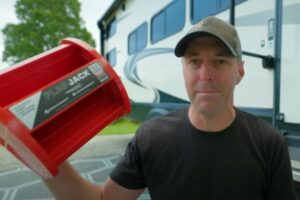
By Cheri Sicard Have you ever struggled with wobbly RV setups? In this post, Jared Gillis from All About RVs is back with a review of a new piece of gear that might just solve that problem: the Weigh Safe Flap Jack RV Stabilizer Block. Learn more about these unusual stabilizer blocks.
Our top 5 best-selling Amazon products for RVers this month:
Join Nanci Dixon as she tours the popular Lectric eBike factory. She gets to see their showroom, including all their new models, their factory, and where repairs are made. She had a great time! Check it out.
The book nook
“Go See America: 118 of the USA’s Greatest Hits (According to a Guy Who Visited Them All)”
“Go See America” by Matt Tory is a funny, heartfelt road trip through 118 unforgettable places across the U.S.—part guidebook, part travel diary, and all love letter to America’s charm, quirks, and scenic beauty. With photos, insider tips, and personal stories, it’s like hitting the road with a witty friend who celebrates (and roasts) the country one stop at a time. Perfect for travel buffs, daydreamers, and anyone who loves a good laugh with their adventure. Learn more or order from Amazon.
Window or door screens damaged or torn? This helps!
If you have damaged window or door screens in your home or RV, this screen-repair tape will help. No tools or special skills required. Simply cut, peel, and stick for a fast, permanent, and hassle-free solution that anyone can complete in just minutes. You won’t be able to tell there was ever a hole or tear! Don’t let any bugs in your RV this summer! Learn more or order.
Functional and portable, this scraper tool suits most grills for indoor or outdoor BBQ, whether you are in the kitchen, backyard, or out camping. It’s made of heavy-duty stainless steel, which makes the rugged barbecue cleaner outlast brass, aluminum, and wooden scrapers. Most importantly, the sturdy and bristle-free grilling scraper is safer than a BBQ wire brush that may leave bristles in your food.
Grill 14 chicken legs or wings at once with this chicken leg rack, suitable for large gatherings. Maximize grill space while achieving juicy, evenly-cooked BBQ every time. Folds to 1.5″ for easy storage. The drip tray reduces flare-ups by catching grease and can also be used as a marinade basin. Ideal for barbecue enthusiasts with limited space.
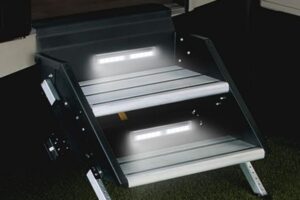
These motion sensor lights can detect human movement up to 10 feet away. Once your approach is detected, the RV step lights will automatically turn on in the dark and will automatically turn off 18 seconds after movement is no longer detected. These could save your life at night!
MAKE SURE YOU READ today’s RV Daily Tips Newsletter before leaving. Lots of good stuff inside for RVers! Click here to read.
Gadget giggles
Hot Stuff BBQ apron
This funny apron is made of a three-layer composite waterproof and oil-proof material to protect your clothes. Plus, there are two large pockets! Order from Amazon.
“You can’t depend on your eyes when your imagination is out of focus.” ―Mark Twain
Need an excuse to celebrate?Today is National Ketchup Day!
On this day in history:1956 – Elvis Presley introduces his new single, “Hound Dog”, on The Milton Berle Show, scandalizing the audience with his suggestive hip movements.
Tip of the day RV tanks dumping tips and helpful accessories
By Gail Marsh
It’s a job that many RVers dread—especially as newbies. I’m here to tell you that you need not dread this necessary job. You just might need a few tips and tricks to make dumping your RV tanks easier!
To start, let’s look at using a Y-valve water connector on the campground’s water supply. This allows us to use separate hoses, one for drinking, cooking, etc., and the other for flushing the black tank or washing the RV or truck. Continue reading.
Ask Dave Follow-up to post on RV converter not charging battery
Dave,
I’m not sure where to start. … My issues started at the end of the season last year. After my last trip I wanted to see what the installed solar panel would do, and I left the 12-volt refrigerator on without hooking to shore power. In a few hours the battery was completely dead. I took out the battery to store for the winter and hooked to a battery charger. The charger indicated that the battery was bad… Read the rest of Joe’s question and Dave’s updated answer.
Article and video Avoid RV van prewiring by using the Bluetti Charger One
By Cheri Sicard
Tired of dealing with complicated electrical setups in a camper van? Traditional wiring can be a real headache, costing time and money. According to the team at LadyBugout, there’s a simpler solution: Bluetti’s Charger One. It’s an easy-to-install, cost-effective alternative, especially for beginners. The video and article here give details.
RANDOM RV THOUGHT: If you store your RV on your property and you have kids, then you probably know how much those kids love to play with their friends in the RV. It’s like their private clubhouse. So, if you yearn for a little peace and quiet around the house, dispatch the kids out into the RV with some snacks and a board game or two. They’ll be happy and you’ll have peace.
Featured article Cool Tools: Making cord hangers from an inner tube
By Dustin Simpson
Dave Solberg and I used to meet every Wednesday for a livestream we called Talkin’ RV Tech. We’d not only answer technical questions, but we’d also share what we like to call “cool tools.” These are the tools and gadgets that we actually use and ones that we believe would be helpful to you as RVers. Here’s a clip from one of those livestream events where we discussed cord hangers made from inner tubes.
Reader poll How many nights in a row do you wear the same pajamas?
Quick tip What to do with batteries with “whiskers”
“Have you ever removed the battery cover of your radio or other device to find the alkaline batteries covered with crystalline whiskers? If crystals have formed on the radio battery terminals, no worries! Try a cleaning product for calcium, lime and rust removal. CLR brand is the product I use but others should work fine. Use an old toothbrush with just a little product to remove the crystals and corrosion from the radio terminals. Wash the residue off the terminals with clear water—the terminal will shine as new. Caution: Be careful not to allow any liquid to enter into the radio’s case. Allow 24 hours to pass before using.” —Thanks to Hugh R. [Editor: There are several types of calcium, lime and rust removers available onAmazon.]
Small blind spot mirror good for all vehicles
If you don’t have one of these on your RV or tow vehicle, you need one! These small 2″ round glass blind spot mirrors easily stick onto your current mirror, no hard work is needed! They’re waterproof and rust-resistant and can rotate and sway to be adjusted for the best visibility. They’re affordable and could save you from an accident. Learn more or order.
7 of the Quirkiest Road Stops in the U.S.
This list from dailypassport will have you planning a trip to one of these quirky roadside stops in no time. We love stuff like this! How many of these have you visited?
And the survey says…
We’ve polled RVtravel.com readers close to 5,000 times in recent years. Here are a few things we’ve learned about them:
• 15 percent own five or more licensed motor vehicles.
• 36 percent say that having an electrical hookup is critical when choosing where to stay for two days.
• 57 percent never stay in a casino parking lot or casino RV park.
? MYSTERY PRODUCT OF THE DAY ? You and your sweetheart (or even your dog!) need this for a “snug-as-a-bug” camping season! Or maybe you just want to keep it all to yourself… Or maybe your dog wants it all to themself…
Trivia
Reno is farther west than Los Angeles. It may seem hard to believe, but it’s true. Reno is located at 119°49’ West and Los Angeles is located at 118°14’ West.
Readers’ pets of the day
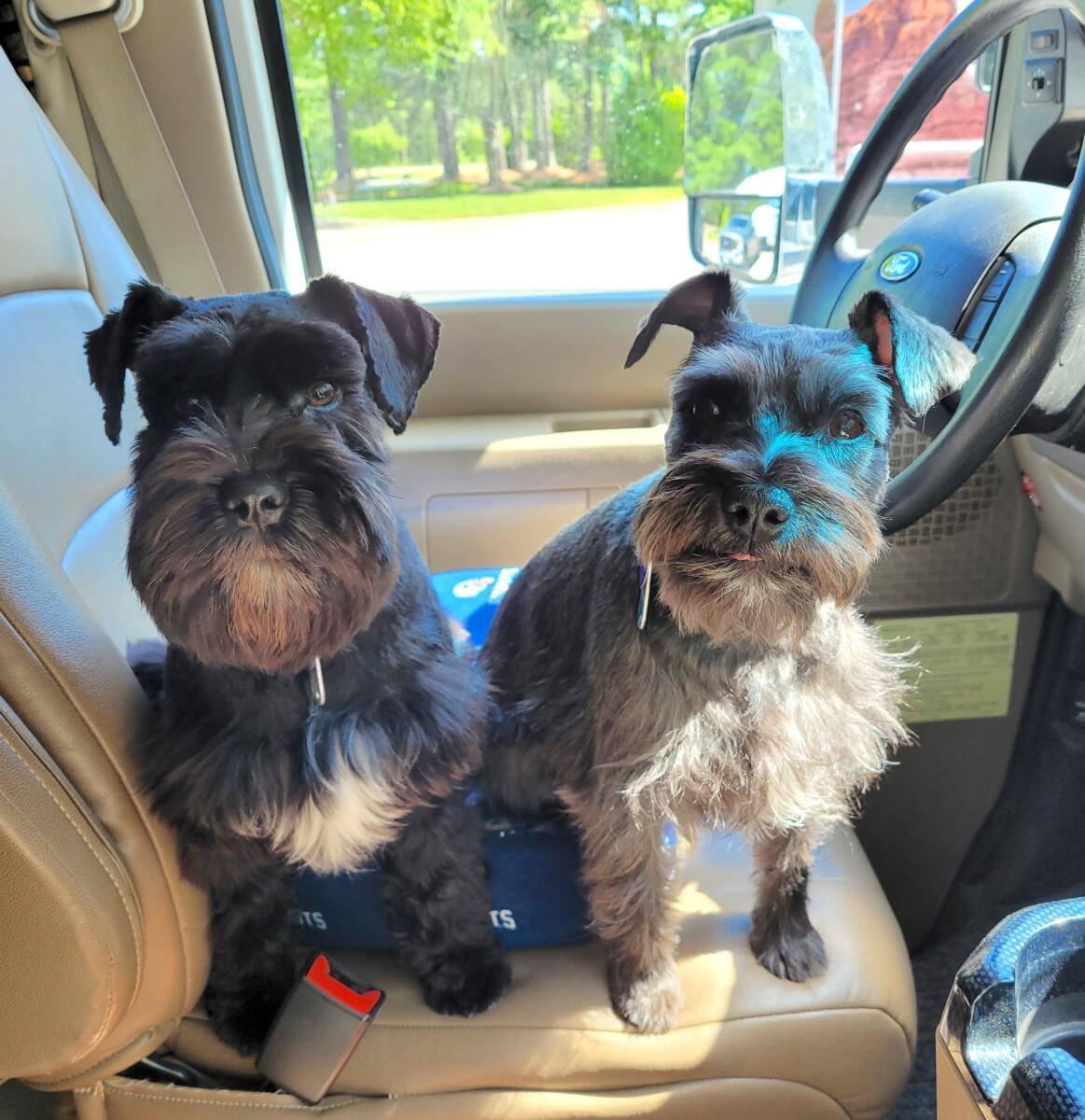
“Bailey Lane and Olive Rose (ages 2 and 5). Our first set of Schnauzers traveled to 48 states with us. This set has been from Maine to Florida and out to California so far.” —Andrea Poudrier
Send us a photo of your pet with a short description. No blurry photos and please do not submit your photo more than once. Thanks!
If you shop at Amazon.com we’d appreciate you using this link. We get an itty bitty commission if you buy something, but they add up and help us pay our bills (most importantly our hard-working writers!).
Dave,
I’m not sure where to start. I am by no means an electrician and I don’t have any documentation on the electrical systems. When I bought the RV it was a prototype for the 2022 Tampa RV show. Model is 26RD made by Prime Time in Oct 2021.
My issues started at the end of the season last year. After my last trip I wanted to see what the installed solar panel would do, and I left the 12-volt refrigerator on without hooking to shore power. In a few hours the battery was completely dead. I took out the battery to store for the winter and hooked to a battery charger. The charger indicated that the battery was bad.
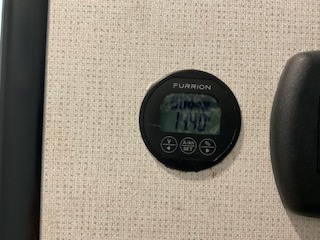
This spring I installed a 12-volt AGM deep cycle battery. When installed, the battery monitor (Furrion FBM08A10C) indicated 60-65%. After several hours, with nothing running in the RV and while hooked to 15-amp house circuit, the percentage never increased.
Checking voltage
I have been checking voltage at battery, at the power panel and with the factory-installed battery monitor. All indicated 13+ volts. I still don’t know if this voltage indicated converter output or solar panel output. One solar panel is factory-installed and I don’t know if it is configured with everything else.
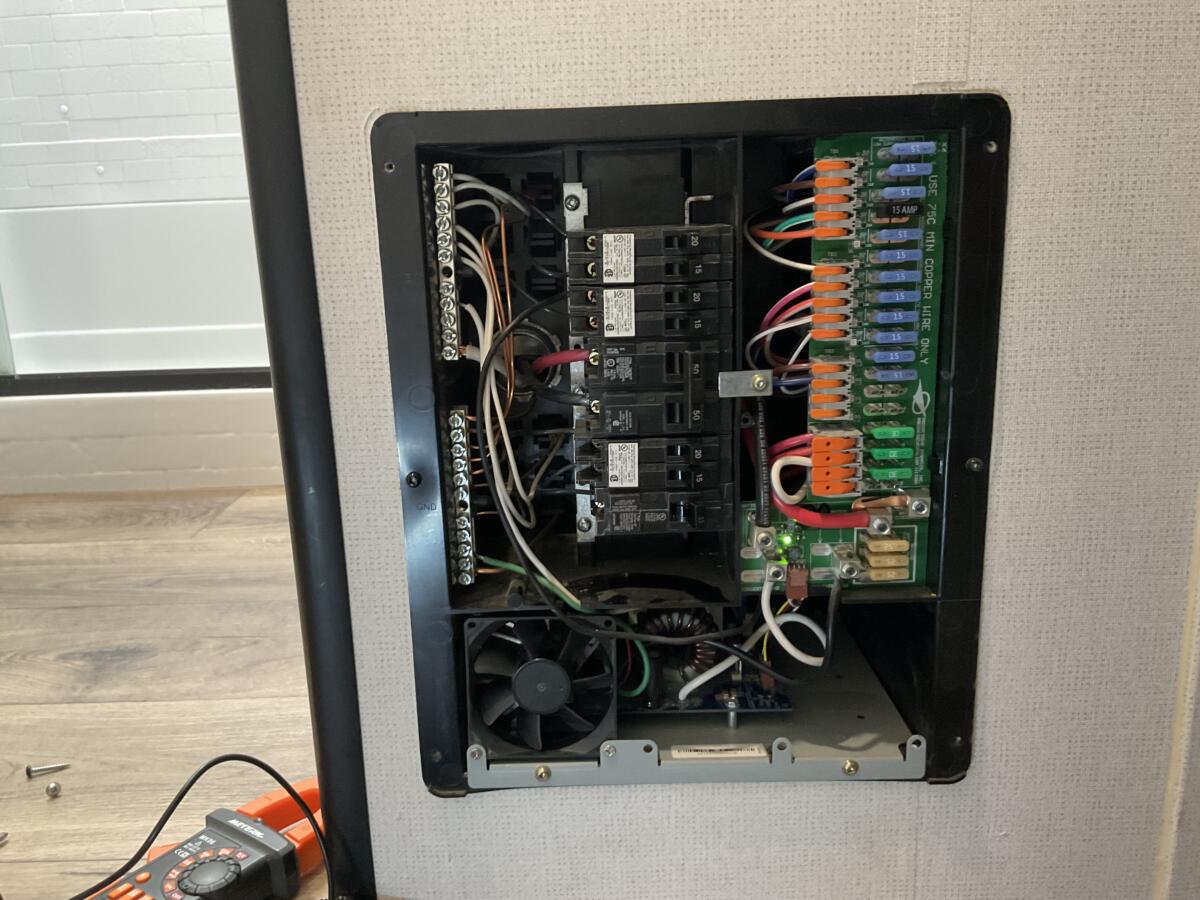
With the power panel cover off, I found a slowly blinking light next to what looked like a blue reset button. When pushed, the light glowed continuously and voltage readings went to 14.40 volts. Then the battery monitor percentage began to slowly rise. After a few hours, the light again began to blink very slowly and voltages dropped back down to 13+ volts.
Between pressing that reset button and hooking to the truck while driving, the battery monitor finally indicated 100% with a reading of 13+ volts at all check points. It still goes to 14.40 volts when the button is pushed. Since I have not been using the RV the past couple weeks, the battery is staying at 100% according to the monitor.
I hope this helps. It’s as clear as mud to me. —Joe, 2021 Prime Time Crusader 26RD
Progressive Dynamics 4500Furrion LED
Joe,
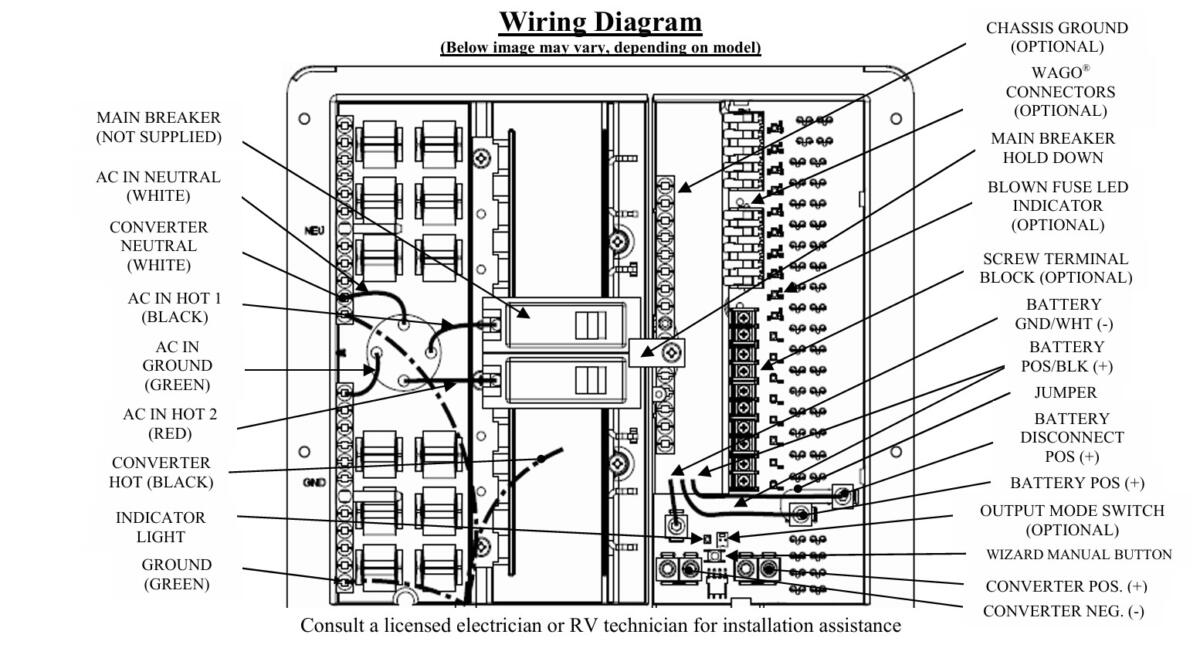
Thanks for the follow up and the photos. Your Progressive Dynamics unit is a 4500 series Distribution Center/Converter with Charge Wizard features. I was able to find documentation on the PD site. Here is the wiring schematic that identifies the components you are looking at.
Progressive Dynamics wiring diagram. (Click/tap image to enlarge.)
Charge profile
Here is the charge profile according to the owner’s manual:
PD4500 – The full rated load is available for load, battery charging or both. When functioning as a regulated battery charger the converter has a nominal voltage output of 13.6 VDC. The system is designed to sense voltage on the battery and automatically selects one of three operating modes (normal, boost and storage) to provide the correct charge level to the batteries.
BOOST MODE: If the converter senses that the battery voltage has dropped below a preset level the output voltage is increased to approximately 14.4 VDC to rapidly recharge the battery.
NORMAL MODE: Output voltage set at approximately 13.6 VDC.
STORAGE MODE: When there has been no significant battery usage for 30 hours the output voltage is reduced to 13.2 VDC for minimal water usage. When in storage mode, the output voltage will periodically increase to 14.4 VDC to help prevent sulfation of the battery plates.
LED indicator light
The green LED light that you described is an indicator light that tells what charge mode the converter is in. A fast flash indicates it is normal mode and should be providing a 13.6-volt charge. If the charge wizard senses a drop in voltage at the battery, it will increase to 14.4-volts, as indicated in the previous description. A slow flash indicates storage mode, which is 13.2 volts. If there is no battery usage for 30 hours, it will jump to a 14.4-volt charge to condition the battery.
Reset button
The ”reset button” is actually a wizard manual button that allows you to change the charge profile. So when you push it, I assume you are putting the wizard into “boost” mode and it does 14.4 volts and then drops to the normal mode of 13.6 volts. This would also cause the LED to stay on until it resets to 13.6 volts and then blink.
The 4500 series is available in a 60-, 75-, and 90-amp model. There is also a lithium model that would have an LI at the tail of the model number. The model would read 4560 if it is a 60-amp version and not lithium. It would be 4560LI and would have the optional Output Mode Switch directly to the right of the LED. From what I can tell, your unit does not have this, but rather has a slot for the option.
I also think the solar panel you have on the roof might be a very low-watt version just designed to keep the battery topped off during storage or on a dealer lot. Many RV manufacturers started putting a 100-watt panel on the roof as the battery would go dead quickly while sitting in the dealer lot and then not show well to customers.
So, it seems the unit is working as designed. You just need to understand the charge profile. Your AGM batteries typically do not want 14.4 volts continuously.
I hope Dennis is reading this; he would have figured it out… Miss you, Man!
By Cheri Sicard
Tired of dealing with complicated electrical setups in a camper van? Traditional wiring can be a real headache, costing time and money. According to the team at LadyBugout, there’s a simpler solution: Bluetti’s Charger One. It’s an easy-to-install, cost-effective alternative, especially for beginners. The video near the bottom of this post gives details.
The challenges of traditional van electrical systems
Wiring a van the traditional way can be complex, involving fuses, inverters, solar panels, and more. The costs add up, and it takes time to do it right. One wrong move can create safety problems.
Power stations offer a simpler approach as they’re easy to use and portable. Plus, there’s no need for complex wiring. Devices can be charged directly from the power station.
A DC-to-DC charger, like the Bluetti Charger One, charges the power station from the van’s battery while driving. According to our host, the Bluetti Charger One stands out for a few reasons:
Easy installation: It comes with everything needed.
Safety features: It has built-in protection to prevent draining the van’s battery.
App integration: Users can monitor power levels and usage.
Manual disconnect switch: Adds extra safety and control.
The Bluetti Charger One comes with everything for installation:
• The Charger One unit
• Instructions
• Cables
• Tools
Having everything in one box is convenient. The app integration allows real-time monitoring of power levels, control over charging, and battery protection. Safety features include an automatic shut-off and a manual disconnect switch.
Tools and materials needed for installation (watch the video to see how it is done)
• Screwdriver
• Allen wrench (included)
• Socket set (possibly)
• Bluetti Charger One kit
• Electrical tape
Finding the best spot for the charger
Consider accessibility, ventilation, and proximity to the battery and power station. In the video, the charger is mounted in the wheel well to save space. A “fishing pole” was used to run cables behind the cabinets. Securing the cables is important to prevent snagging.
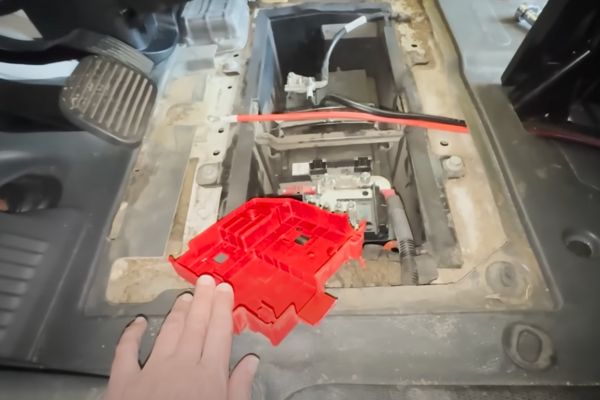
The battery in the Ram ProMaster is located under the driver’s seat. Proper connections and safety are key. Connect the Charger One to the power station using the provided cables. Match positive and negative connections.
The Charger One was mounted in the wheel well with the interrupter switch placed for easy access.
Be sure to check out the video for tips and tricks for a smooth installation, cable management, and essential safety information.
Benefits of the Bluetti Charger One system
• Simplicity: The Bluetti Charger One is easy to install compared to traditional systems. It’s essentially a plug-and-play setup.
• Cost-effectiveness: It can be cheaper than installing a full solar system or complex wiring.
• Flexibility: The power station is easily removed and used outside the van. The system can be expanded with more power stations or solar panels.
• Convenience: The power station can be charged while driving. Plus, power levels and usage can be monitored through the app.
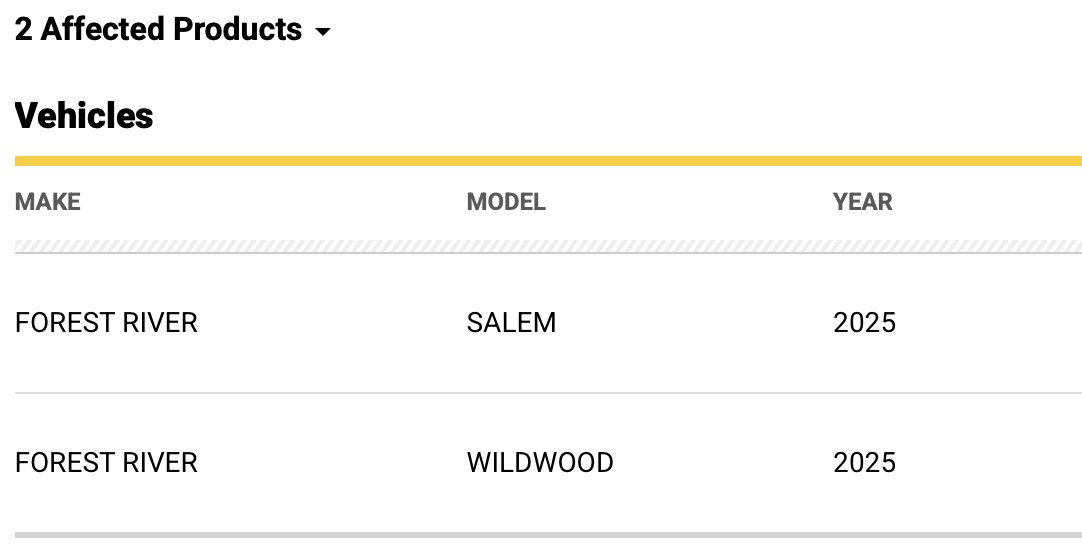
Forest River, Inc. (Forest River) is recalling certain 2025 Salem and Wildwood travel trailers. The side entry gate latch may become unlocked, allowing the strut to open the gate during transit. As many as 1,367 RVs may be affected by the recall, which was issued June 2.
An open gate can strike other road users and increases the risk of injury.
Remedy
Dealers will install a warning label and tethered pin and remove the strut, free of charge. Owner notification letters are expected to be mailed July 12, 2025. Owners may contact Forest River customer service at 1-574-534-3167. Forest River’s number for this recall is 51-1935.
We use cookies to ensure that we give you the best experience on our website. By continuing to use our site, you consent to accepting cookies. We NEVER have or will sell reader's data. For more info, please see our privacy policy page.