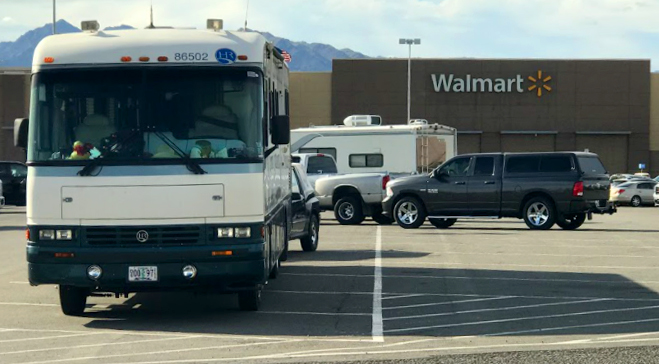
THOR Industries, Inc., has announced a strategic partnership between Jayco, Inc. (“Jayco”) and Tiffin Motorhomes (“Tiffin”) to shift production of Entegra Coach Class A diesel motorhomes from Jayco to Tiffin’s Red Bay, Alabama facilities. This move is designed to help Jayco increase capacity while maintaining Entegra’s premium branding.
“Entegra Coach has built a strong reputation for luxury and performance,” said Ken Walters, President of Jayco. “Tiffin shares our commitment to excellence, making them the ideal partner.”
Tiffin Motorhomes is recognized for premium craftsmanship and a customer-first approach. “We’re honored to bring our quality standards to the Entegra Coach brand,” said Leigh Tiffin, President of Tiffin Motorhomes.
Bob Martin, THOR Industries President and CEO, added, “As the Class A diesel market evolves, this shift allows us to leverage Tiffin’s expertise, streamline production, and maintain exceptional customer experience.”
Jayco will continue building Model Year 2026 Entegra diesel models through 2025, including Cornerstone, Anthem, Aspire, and Reatta, and will support them with service and warranty. Starting in 2026, Tiffin will produce successor models, incorporating select Entegra design elements into its 2027 Class A lineup, marketed exclusively as Tiffin products.
Jayco will retain production, service, and warranty for all Entegra Class C, Class B, and gas Class A motorhomes.
The information above originated as a news release from THOR Industries.
Uncle Sam has plenty of RV camping opportunities. National Parks, BLM lands, and the Forest Service offer lots of “spots.” But some of the most beloved “near the water” government camping areas are overseen by the U.S. Army Corps of Engineers (USACE). The Corps has more than 400 lakeside campgrounds, and each year, more than 370 million folks camp in them. But this year, a number of Corps’ campgrounds are shut down “due to staffing shortages.” There may be something RVers can do to help with Army Corps campground closures.
Army Corps campground closures widespread
As of May 2025, the U.S. Army Corps of Engineers has announced multiple campground closures and service reductions across several states. These actions are primarily due to staffing shortages, budget constraints, and necessary maintenance. Here are the ones closed because of staffing and budget issues:
Idaho
Springy Point Recreation Area
Kansas
Canning Creek: Entire park is closed.
Kanza View: Camping is closed; day-use areas remain open.
Kit Carson Cove: Entire park is closed.
Neosho Park: Only the boat ramp is open; all other amenities are closed.
North Richey Cove: Only the boat ramp is open; all other amenities are closed.
Outlet East: Entire park is closed.
Richey Cove: Entire park is closed.
Santa Fe Trail: Only the boat ramp is open; the rest of the park is closed.
Nebraska
Harlan County Lake: 25 primitive campsites closed.
North Dakota
East Totten Trail Campground
Wolf Creek Campground
Hazelton Campground
Cattail Bay authorized camping area
Beaver Creek Campground: Partial loop closure.
Oklahoma
Birch Lake: Twin Coves (Sites 3–12 closed)
Canton Lake: Fairview Group Camp
Eufaula Lake: Gaines Creek
Kaw Lake: McFadden Cove
Pine Creek Lake: Turkey Creek
Oologah Lake: Spencer Creek
Sardis Lake: Sardis Cove
Tenkiller Lake: Horseshoe Bend & Standing Rock
Webbers Falls: Hopewell Park, Bluff View, Brewers Bend, Overlook
Robert S. Kerr: Little San Bois Creek, Cowlington Point (Winter loop closed)
Pennsylvania
Raystown Lake: Seven Points, Susquehannock, and Nancy’s Boat-to-Shore
Cowanesque Lake: Tompkins Campground
Tioga-Hammond Lakes: Patch, Axios, and Modern Campground
South Dakota
North Shore Campground
Washington
Blyton Landing
Fishhook Park & Class A Campground
Lambi Creek Recreation Area
Little Goose Dam and Lock (Little Goose Landing)
Lower Monumental Riparia Recreation Area
Willow Landing Recreation Area
And then, one reopens
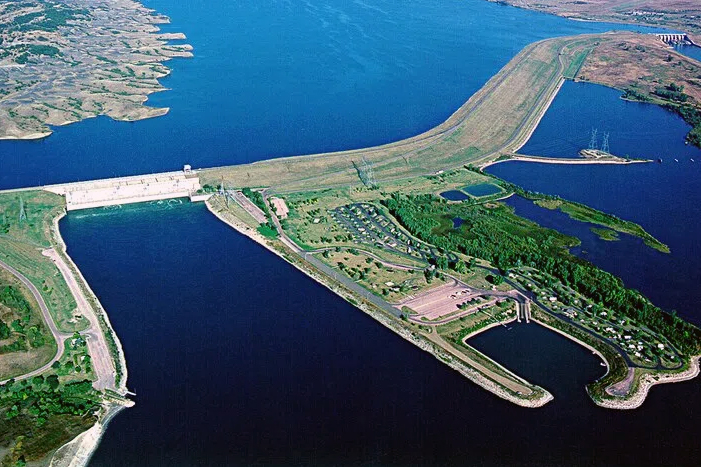
Just how many actual RV sites at these campgrounds closed by “staffing shortages” isn’t clear. For the RVers affected, the closures surely hit home. But the experience of one South Dakota campground raises hope. At the Big Bend USACE project near Fort Thompson, the North Shore Campground reopened earlier this week.
North Shore Campground — USACE photo
In a surprise announcement from the Army Corps, North Shore swung the gates open on May 15. In government-ese, the news release from the Corps said, “The campground had previously been identified for closure as part of temporary adjustments to recreation operations due to seasonal staffing constraints across multiple U.S. Army Corps of Engineers, Omaha District projects.
“The Big Bend Project will now be able to safely reopen and maintain the campground for public use this season due to the addition of new volunteer support.”
Could volunteers come to the rescue?
We spoke with Andrew Nystrom of the Army Corps, who explained the reopening. Nystrom told us that the staff cutbacks didn’t allow for routine maintenance, and so the agency felt it simply had to close the campground. But volunteers stepped forward, taking on groundskeeping, bathroom duty, and other needed work. That allowed the Corps to direct its now-limited staff to handle assignments like security.
We asked Nystrom if other closed Army Corps’ campgrounds might be reopened if other folks would volunteer their time and labor. While he couldn’t speak for other Army Corps areas, he said interested, potential volunteers could “contact the individual project sites” and ask if volunteering were possible.
The reopened campground, North Shore, is a smaller campground. The number of volunteers needed was relatively small. The equation is obvious—the larger the campground, the more help is needed. “Back in the day” when Good Sam Club chapters had plenty of members, such groups might offer to “adopt” campgrounds in need. But similar moves might still be possible with social media followers who could stimulate one another to fill the void.
It might not happen this year. But with no end in sight to the “staffing shortage” crisis, Camping Season 2026 might see more campgrounds reopened because of the efforts of volunteers stepping up.
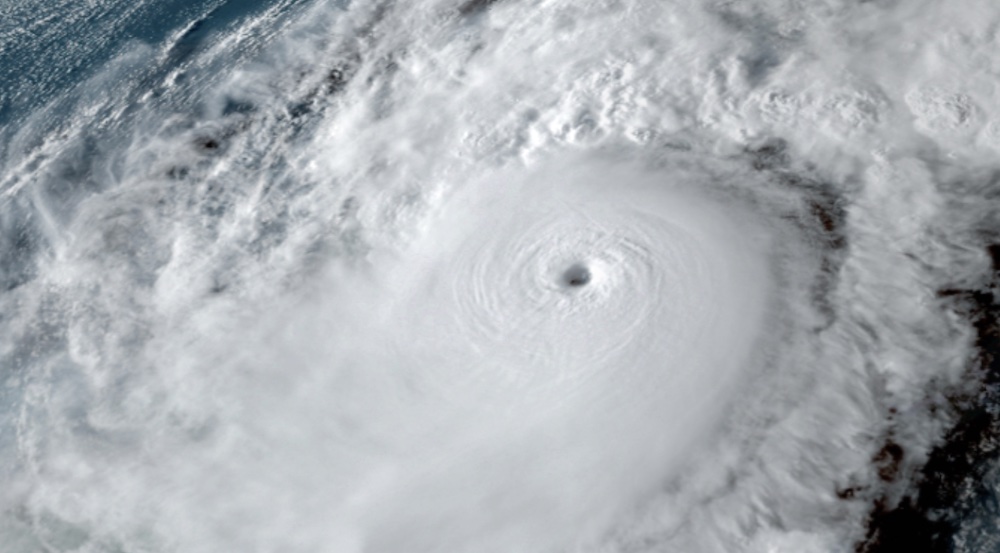
Colorado State University (CSU) researchers predict an above-average Atlantic hurricane season in 2025, driven by unusually warm sea surface temperatures in the subtropical Atlantic and Caribbean. These warmer waters weaken the subtropical high and trade winds, which leads to continued heat buildup and favorable hurricane conditions, including lower pressure and a more unstable atmosphere.
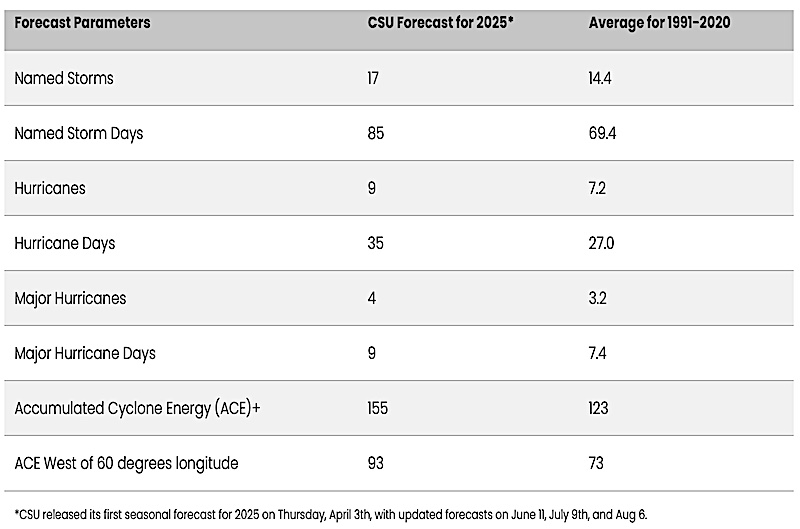
The team forecasts 17 named storms, nine hurricanes, and four major hurricanes (Category 3 or higher) from June 1 to Nov. 30. Their predictions use a statistical model and several global models based on 25–40 years of climate data.
Weak La Niña conditions in the Pacific are expected to shift to ENSO-neutral. [From climate.gov: El Niño and La Niña, the natural climate pattern collectively known as ENSO, the El Niño/Southern Oscillation.] The probability of El Niño, which suppresses Atlantic hurricanes by increasing wind shear, is just 13%, suggesting supportive conditions for storm development.
Hurricane activity is expected to be about 125% of the 1991–2020 average, slightly less than 2024’s 130%. Last year’s Hurricanes Helene and Milton caused more than 250 deaths and $120 billion in damage.
Screenshot
The forecast also uses a newer metric, Accumulated Cyclone Energy (ACE) west of 60°W, which correlates more closely with landfalling storms. ACE is projected to be high in 2025 due to the likely absence of El Niño.
This marks CSU’s 42nd annual forecast, started by the late Professor Bill Gray. The 2025 outlook was developed by Phil Klotzbach, Michael Bell, and Levi Silvers. Updates will be released June 11, July 9, and August 6.
Major Hurricane Landfall Probabilities for 2025:
U.S. coastline: 51% (average 43%)
U.S. East Coast: 26% (average 21%)
Gulf Coast: 33% (average 27%)
Caribbean: 56% (average 47%)
The forecast includes detailed storm probabilities for coastal regions in the U.S., Mexico, Canada, and the Caribbean. CSU emphasizes the need for preparedness: “It only takes one storm near you to make this an active season,” said Michael Bell.
“Never leave a friend behind. Friends are all we have to get us through this life—and they are the only things from this world that we could hope to see in the next.” ―Dean Koontz
Need an excuse to celebrate? Today is National Barbecue Day!
On this day in history:1842 – The first major wagon train heading for the Pacific Northwest sets out on the Oregon Trail from Elm Grove, Missouri, with 100 pioneers.
Tip of the day Save your RV’s refrigerator: Leveling tips for overnight stops
By Dave Helgeson
I read this tip:
Do you level? That’s a question repeatedly posted on RV forums, regarding leveling an RV when stopping at the end of the day. Here’s a typical response: “I try to get it relatively close unless it’s just for an overnight stop, in which case I don’t bother.” Unless it’s an overnight stop? ALWAYS level your RV. Another comment tells you why: “I’m on my second Dometic 4-door. I level METICULOUSLY every time I stop to camp and I check level every morning. I refuse to go thru all that replacement AGAIN.”
RV refrigerators need to be level to work properly, and to prevent damage. No absorption-type RV refrigerator has ever read the fine print that says, “Don’t count the damage caused by operating off-level if it’s only overnight.” Seriously, damage to an RV cooling unit is CUMULATIVE, and every “only overnight” adds up. Can’t level? Shut off the fridge.
I was rather shocked by people’s thinking that running an absorption refrigerator out of level overnight or for any length of time is an acceptable practice. It’s not! Continue reading.
Ask Dave Why does water sputter out of RV’s faucets and gets worse as tank gets low?
Dear Dave,
We always start with a full water tank while boondocking. We get a little air in the lines and the water will spurt some, but not much. As the water level in the tank gets lower, we get more and more air in the lines. I believe this suggests that the air is coming in the suction side of the water line in the tank somewhere. I am trying to figure out how to chase down the source of the air in the water line. Any help is greatly appreciated. Thanks. —Chuck, 2012 Heartland Cyclone HD 3612 Read Dave’s answer.
In the RV shop with Dustin Reminder: Check that fridge drip tray before it floods into your RV
The below question was posted in one of my many Facebook groups. One group member, Alan, asked this question: “Any ideas where to start the investigation? 2022 Grand Design RV Solitude 380FL. Last night we noticed water collecting on the right side of the fridge on the flooring. The inside of the fridge is dry. … ” Continue reading.
Article and video Smokeless fire pit showdown: Solo Stove, Slinky Stove, and BioLite compared
By Cheri Sicard
Campfires. Is there anything better? They bring warmth, light, and that unbeatable cozy vibe to any outdoor adventure. But let’s face it: Smoke can be a real buzzkill. That’s where “smokeless” fire pits come in. These nifty devices promise a fire with less of the eye-watering, lung-burning smoke we all dread. Portable fire pits are especially popular with RVers who want a contained and convenient campfire option. In this video, Jason Epperson of RV Milesputs three top contenders to the test.
BUMPER SNICKER: Stupidity ought to be painful! —Submitted by Jaye Jeffress
Featured article Is BLM camping safe? Yes! Just look out for these signs and take these precautions
By Dave Helgeson
Is BLM camping safe? This was the core of a question posted on the BLM Camping Facebook group hosted by RVtravel.com. Unfortunately, the post was deleted before I could review the hundreds of comments. It drew such a response that RVtravel.com editor Chuck Woodbury reached out to me and asked that I write an article on the subject. Upon further research, I determined the original question had a bit more to it, as it asked, “How to determine if a BLM camping area is safe or not for a lonely camper.” Continue reading.
Gadget makes RV battery maintenance EASY!
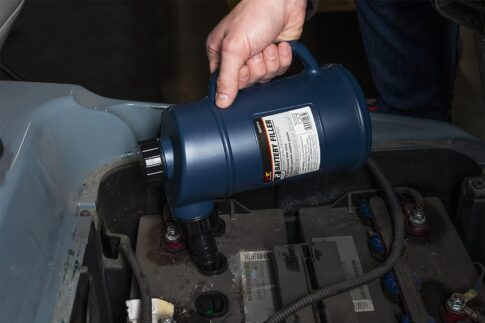
Dustin Simpson writes, “Maintaining the distilled water in your RV battery has never been simpler! This 2-quart battery filler design has been around for years and offers a convenient spring-loaded filler valve that helps keep any shop, garage, or workplace clean. It’s perfect for checking and filling water in your RV batteries. This easy-to-use maintenance tool takes the annoying chore out of watering batteries.” Find it here.
Reader poll Do you plan to spend more or less time RVing this summer than last?
Ultimate Bunker
Okay, even if you’re not planning on building an underground bunker, this website is still totally cool. They build custom bunkers, safe rooms, custom shipping containers and more. You’ll want one of these as your man-cave or she-shed!
? MYSTERY PRODUCT OF THE DAY ? Now THIS is fun! This would be a perfect rainy-day activity for a summer day. Wait, what? Oh, just click here and you’ll see.
Trivia
In 2025, Palm Beach, Florida, is the richest neighborhood in America. It boasts the highest average home value of $11,571,608.
Readers’ pets of the day
“Gypsy we have had since she was 9 weeks. Belle came to us almost a year ago as her previous owners were going to take her to a shelter. They are a German Shepherd and a Lab, and are both 4 years old. Hopefully Belle will become a great camping partner just like her sister.” —Kay Gale
Send us a photo of your pet with a short description. No blurry photos and please do not submit your photo more than once. Thanks!
If you shop at Amazon.com we’d appreciate you using this link. We get an itty bitty commission if you buy something, but they add up and help us pay our bills (most importantly our hard-working writers!).
Dear Dave,
We always start with a full water tank while boondocking. We get a little air in the lines and the water will spurt some, but not much. As the water level in the tank gets lower, we get more and more air in the lines. I believe this suggests that the air is coming in the suction side of the water line in the tank somewhere. I am trying to figure out how to chase down the source of the air in the water line. Any help is greatly appreciated. Thanks. —Chuck, 2012 Heartland Cyclone HD 3612
Dear Chuck,
Typically air in the water lines creates a cycling of the water pump which sounds like “parhump!” Since you are getting a sputtering at the faucet, I do believe you are correct in assuming it is in the suction side prior to the pump. A leak past the pump or at the pump would create a drop in pressure, which would signal the pump to start due to a demand downstream.
Where to start looking
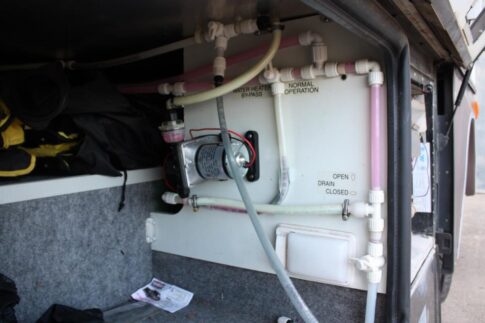
Start by inspecting the water screen on the inlet side of the pump. This is typically a clear plastic bowl with a screen filter inside. It could be cracked or not tight. If the screen is clogged, it could resist enough to pull in air. Here is one that has been winterized with pink antifreeze on the top side of the pump.
Your water pump could also have a hole in the diaphragm that is sucking in air. This would require removing the pump and bench-testing it.
It could also be pulling air from a defective city water diverter valve. If you can fill your fresh water tank using the city water fill by flipping a valve, it might not be closing all the way and sucking air. We had this on a 2003 Winnebago Brave that took a long time to track down. This was also causing the cycling issue and spurting.
Check connections going to pump
Next, check all the connections going to the pump. The vibration and temperature changes can cause “gremlins” in the plumbing system. I have found using silicone tape on the fittings ensures a good seal. You can find it on Amazon here.
Silicone tape
Why does it sputter more when the fresh water tank gets lower? It might have something to do with the reduced pressure at a lower capacity and the pump has to work harder.
By Dustin Simpson
Join me here as I discuss some concerns I have during an RV LP safety inspection. In it, we are looking at a 2021 Alliance fifth wheel, and what I found and what I would do differently.
During my inspection, I found the LP lines rubbing on areas of the frame.
Hose is rubbing on leveling jack bracket.
Found the LP hoses hanging underneath the skirting.
I found the LP supply line was not crimped that well on connection to the regulator.
Top of hose crimp connection is faulty and unreliable in connection to regulator.
In addition to this, wiring in looms that hang on both sides of the unit were draped over the LP tanks and across the compartment door.
The wiring hanging over the LP tank has to be lifted to an operator or removed for filling up.
We offer these exterior evaluations to help prevent damage and to protect RV owners. My main concerns are safety and preventing a dangerous problem from happening.
Most RVers nowadays travel with propane on to keep the refrigerator cold while traveling. In the event of a line leak or if something hits the hoses, it could cause damage!
What is there to protect RVers in travel? The answer is GasStop! Obviously, the above issues need to be corrected, but for those of you who didn’t know, this gadget is available to help protect you.
Device-for RV ACME type connections.
Because this is a towable unit that has double cylinders, a GasStop would need to be installed directly onto each cylinder.
GasStop is an emergency 100% shut-off device for bottled and portable gas systems. In the event of a major leak, GasStop will instantly and automatically shut off the flow of gas.
Example on a travel trailer.
If you’re unsure about the LP gas level or if you suspect any issues with your RV’s gas system, it’s recommended to consult your RV’s owner’s manual, seek assistance from a qualified RV technician, or visit an RV service center for professional help. Remember that LP gas can be hazardous if not handled properly, so safety should always be a priority.
We would also recommend that you have a yearly LP gas inspection and see your owner’s manual for further recommendations. We hope this information helps serve as a reminder and keeps you out traveling safely.
GasStop Products:
GSUSA1 – GasStop Propane 100% Emergency Shut-Off Safety Device [Class A & Class C]. Click here.
GasGear by GasStop RV 90 Degree Braided Stainless Steel Propane Pigtail Hose. Click here. [Note: GasGear is currently unavailable, including on GasStop’s website. However, there are similar products listed at that link.]
By Cheri Sicard
Campfires. Is there anything better? They bring warmth, light, and that unbeatable cozy vibe to any outdoor adventure. But let’s face it: Smoke can be a real buzzkill. That’s where “smokeless” fire pits come in. These nifty devices promise a fire with less of the eye-watering, lung-burning smoke we all dread. Portable fire pits are especially popular with RVers who want a contained and convenient campfire option.
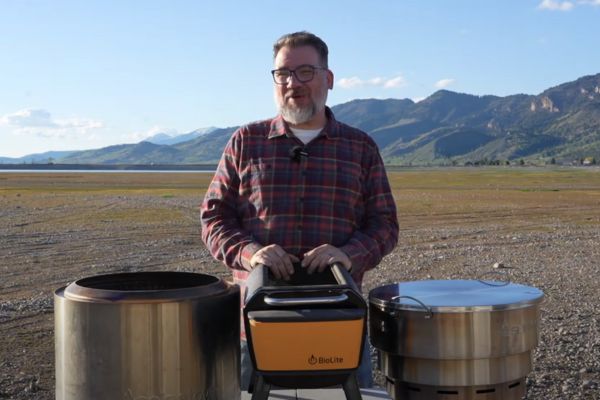
In the video below, Jason Epperson of RV Miles puts three top contenders to the test: the Solo Stove, the Slinky Stove, and the BioLite Firepit+. Each has its own set of pros and cons, and this comparison will help you decide which one is the right fit for you.
Understanding the “smokeless” claim
First, let’s clear something up: No fire pit is truly 100% smokeless. They’re all going to make some smoke. Instead, think of these as low-smoke fire pits. They’re designed to minimize smoke, and all three models do a pretty good job of it.
Want to keep the smoke to a minimum? The key is to keep the wood entirely inside the fire pit. Wood sticking out of the top will smoke a lot more because it’s cooler.
Standard firewood, like those bundles you grab at a gas station, might need a little trimming to fit some of these fire pits. Sometimes, just cutting the wood down the middle is enough to make it work.
Meet the contenders: An overview
Let’s take a closer look at each of these smokeless fire pits.
Solo Stove Bonfire
The Solo Stove is kind of the original in the smokeless fire pit world, so it makes sense to start here. The model being reviewed here is the Bonfire, their standard size. This fire pit is 19½ inches. It comes with a ring that sits on top. Newer models have a removable ash pan, which is a nice upgrade. (Older models could be a little messy to clean.)
The Solo Stove uses a double-burn convection process. There are air holes at the bottom and top, plus a fire grate with even more air holes. The double-wall construction creates an air channel. As the fire heats up, it draws in oxygen, making the fire burn cleaner and hotter. Solo Stove has accessories like a stand, deflector, lid, and bag. Keep in mind these cost extra. The stand gets the fire pit off the ground to protect the grass. It actually fits inside the stove for travel. The carrying bag is nice, but it can be a bit tricky to get the Solo Stove in there because it doesn’t have handles.
The Slinky Stove is a direct competitor to the Solo Stove. It’s got a lot going for it, including a lower price and a bunch of included accessories. It comes with a lid (that doubles as a ground protector), folding legs, a cooking grate, a tool for removing the grate, a removable ashtray, and a carrying bag.
The Slinky Stove has a single-wall construction with concentric rings. These rings have air channels to help with airflow. It also has handles, which make it easy to move around. Here’s where the Slinky Stove really shines: It’s collapsible. This is a major selling point for anyone tight on space. It collapses into multiple layers and can be used for cooking at different levels. When collapsed, it’s significantly smaller than the Solo Stove.
The model being tested is 17 inches. Because it gets skinnier towards the bottom, standard logs might need to be cut to fit. However, Slinky Stove has a larger 23-inch model that might be a better fit for standard logs. It still collapses down for easy travel.
This one has a unique feature: an integrated fan and battery. The big yellow box on the side houses the fan and battery and can be unclicked for easy removal. The fan blows air onto the fire for consistent burning and low smoke. Air tubes run along the bottom and sides of the fire pit. You can adjust the fan speed with the press of a button, or by using the BioLite app. The battery lasts for about 6 hours on high or 22 hours on low. It even has charging ports, so it can charge your phone.
The BioLite Firepit+ has an unusual rectangular shape. No need to build a log cabin—just lay the logs next to each other. The mesh sides let you see the fire.
It puts out a little more heat than the other two models. When it’s time to put the fire out, just crank up the fan. It’ll burn through the coals quickly.
BioLite Firepit+ has fold-out legs and comes with a cooking grate. The bag is sold separately. The cooking grate has rails around it to keep food from rolling off. The cooking surface is smaller than the Slinky Stove.
The showdown: pros, cons, and head-to-head comparison
So, how do these three fire pits stack up? The video gives a lot of details, so be sure to watch if you are in the market for one of these.
For those who don’t like video, here is Jason’s conclusion broken down by category:
• Traditional smokeless fire pit: Solo Stove (or larger Slinky Stove)
• Most portable: Slinky Stove
• Best value: Slinky Stove
• Low maintenance: BioLite (due to the fan)
• Cooking: BioLite and Slinky Stove (different methods)
• Heat output: BioLite and Slinky Stove (slightly better than Solo Stove)
• Construction: BioLite and Solo Stove
So, which fire pit is the best? It really depends on what you’re looking for and your RV lifestyle. Think about what’s most important: portability, value and/or unique features and decide accordingly.
When people think of rattlesnakes, they may get a mental picture of a Clint Eastwood-esque persona—the lone, dangerous, stoic reptile. But a public webcam rattles—er, tells—a different tale. Rattlesnakes are surprisingly gregarious, calm creatures. You can see it for yourself on live rattlesnake TV—tune in to RattleCam.
Live rattlesnake TV based at “mega den”
Out West in Colorado (aren’t Western movies supposed to center on the West?), a “mega den” of rattlesnakes is starting to see springtime activity. An intrepid group of scientists has set up a camera on a tripod just outside the entrance to the den. Inside? Hundreds, if not thousands, of prairie rattlesnakes. We’re not sure if they draw straws for the duty, but several times a day somebody goes out and changes the camera angle.
Every show must have its stars—meet Twitchy, Stubby, and Lasagna
Some of the cast enjoy a sunny, outdoor shoot. rattlecam.org
The object? Bring to light the normally shadowy and secret life of rattlesnakes. Some describe the “show” as a kind of reptile soap opera. And if it is, well, every soap has to have its stars. This year’s show has featured characters that the researchers have dubbed.
Lasagna, for example, is known for folding her body “like a big pan of lasagna” alongside her pal Ramen. “Noodles hang with noodles!” says her film bio.
Stubby is missing a tail but remains “brave and resilient.” No tail, no rattles, no warning? Look out for this guy!
Linda says of herself, “I’m ambiverted. Sometimes you’ll see me sitting on my own, but I’m down to join the cuddle puddle!”
Twitchy is “a ladies man” who “love[s] to put on a show” and, true to his name, gets fidgety when females are around.
And the plot thickens as the seasons roll along
So what does this year’s live rattlesnake TV plotline hold? During spring and summer, the giant den acts as a “rookery” or nursery. Right now, most of the snakes you’ll see on video are pregnant females.
Spoiler alert! Dozens of these snakes, “heavy with child,” will give birth later this summer. They aren’t bogged down for nine long months. Rattlesnakes carry their kids for three to four months. But they do carry quite a load—they typically deliver eight to 17 live babies.
Grab a bowl of popcorn and your favorite beverage. You can tune into the Colorado RattleCam here on YouTube. As Clint might say (in another genre), “Go ahead! Snake my day!”
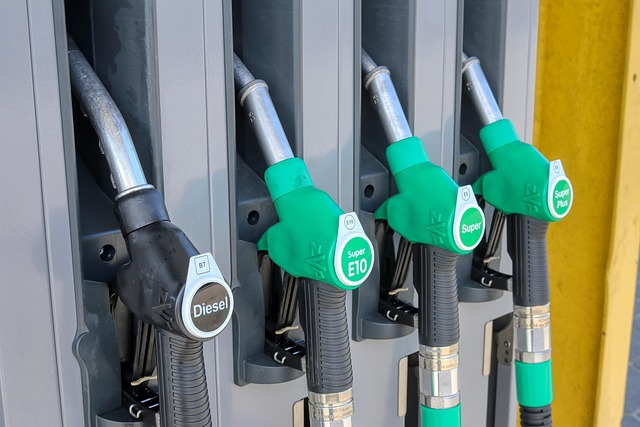
Before you roll into your next gas stop, know this: Many gas stations legally tack on a hefty $1 per gallon surcharge for credit card transactions.
This practice is driving up costs for RVers already grappling with slim fuel budgets.
Florida
Take, for example, Florida. Federal courts have invalidated Florida’s statewide ban on credit card fees. This means, stations can charge as long as they disclose it up front. The surcharge typically covers interchange fees—the cost stations pay to card networks. However, some stations also use the fee to pad their profit margins.
The hidden pump price premium
On recent runs, RVers report seeing two prices. There is a lower “cash” rate and a higher “credit” rate—sometimes a full dollar apart.
Pat Igo, a Florida business owner, discovered his pump’s digital display showed a $3.19 per gallon rate. However, when Igo went inside to pay, the price had jumped to $4.19 because he used his credit card. Many motorists call this a “bait and switch,” noting that tiny stickers or footnotes at the pump fail to give fair warning.
State law vs. federal rulings
Florida Statute 501.0117 once prohibited credit card surcharges. Federal courts struck down that ban as unconstitutional. As a result, Florida merchants—including gas stations—can impose a surcharge. Interesting fact: The state law still lists a ban on the surcharges. However, it’s effectively unenforceable. Businesses are free to surcharge at will.
Disclosure requirements
Legally, stations must clearly disclose any surcharge before you swipe or insert your card. Expert advice warns drivers to look for conspicuous signage both at the pump and inside the station. Failure to disclose properly can violate card network rules—even if state law allows the fee.
Profit motives
Beyond simply covering fees, some station owners view surcharges as a revenue stream. This is particularly true in tourist-heavy corridors where cash transactions are less common.
Critics argue that chains lacking these fees (e.g., Chevron, Shell) enjoy a competitive edge. This prompts surcharge-implementing stations to defend the practice as “industry standard.”
Impact on RVers
For RVers logging 10,000 miles or more annually, an extra dollar per gallon equals hundreds of dollars in added expenses. One RVer estimated he is paying an additional $200 each fill-up cycle due to the surcharge. That’s money he could otherwise have used to fuel side trips or pay campsite fees. Another traveler shared warnings on social media after being surprised by a $1-per-gallon fee. She urged fellow RVers to double-check pump pricing before swiping.
Practical tips for RVers
• Use cash or debit cards: Debit transactions often avoid surcharges and paying cash locks in the lower advertised price.
• Join fuel clubs: Networks like Pilot Flying J offer discounts to members, sometimes absorbing interchange fees altogether.
• Download pump price apps: Services like GasBuddy let you compare credit vs. cash prices in real time.
• Ask inside: If signage is unclear, step indoors and confirm the credit surcharge before fueling.
Calls for reform
Consumer advocates and some lawmakers are petitioning for legislation mandating clearer disclosures or reinstating enforceable bans on surcharges.
Not just Florida
In addition to Florida, most U.S. states permit credit card surcharges. However, there are a handful that outright prohibit them: Connecticut, Maine, Massachusetts, Oklahoma and Puerto Rico.
Other states impose strict disclosure rules. Merchants in Maine and New York, for instance, are legally required to post both their cash price and the higher credit card price prominently at the pump or point of sale. Likewise, Colorado, Minnesota, New Jersey and New York have statutes mandating clear, on-site disclosure of any per-gallon surcharge before the transaction is completed.
New York’s law goes further by specifying that the exact dollar amount of the surcharge be displayed alongside the advertised retail price. This ensures that drivers aren’t ambushed at the register.
Across states that allow surcharging, credit card networks cap the fee at the merchant’s actual processing cost—typically no more than 3–4%. They also require advance notice of the surcharge rate, although the format of that notice can vary by jurisdiction.
Be aware
RVers need to be aware of the credit card surcharge practice and exercise caution when fueling up!
A 64-year-old man, a recently retired Broward Sheriff’s Office sergeant, was fatally crushed by an RV he’d just purchased. The man, Craig Bachan, was working on the RV outside his home in Oakland Park, Florida.
Neighbors describe the incident as a “freak accident.” Authorities confirm no foul play is suspected.
This tragedy underscores hidden dangers when performing your own RV maintenance, especially lifting and supporting the vehicle.
Incident overview
Craig Bachan, 64, retired from the Broward Sheriff’s Office (BSO) just 10 months ago. Bachan enjoyed a distinguished career as both a sergeant and detective. His family and former colleagues remember him as a devoted father, brother, and community servant.
According to Broward Sheriff’s Office deputies, Bachan was found crushed beneath the RV he’d recently purchased. He planned a cross-country trip for this summer. Neighbors report seeing him working under the coach earlier in the day. Hours later, a tarp covered the scene as first responders investigated.
“He just bought the RV,” one neighbor told WSVN. He noted that Bachan was excited about a vacation to the Western U.S. Another said it appeared to be an unforeseen equipment failure or shift in weight.
Official response
BSO confirms no signs of foul play. They have opened a routine inquiry into the cause of the collapse. Investigators are reviewing whether the vehicle was properly supported and whether any mechanical or human error contributed.
Hidden dangers
Working beneath an RV exposes you to serious crush hazards if the coach shifts or jacks fail. Unlike passenger cars, RVs are much heavier and often require specialized lifting points. A single jack alone cannot be depended on to hold that weight indefinitely.
Safety tips
• Always use jack stands. Jacks are for lifting; jack stands are for supporting weight. Once you lift the RV, immediately place rated jack stands under manufacturer-approved lifting points and lower the jack so the stands bear the load.
• Inspect lifting equipment. Use equipment rated above your RV’s weight. Inspect air jacks or hydraulic jacks for leaks, damaged hoses, or worn components before each use. Avoid power-only lifts; always combine with mechanical stands.
• Set up on level, stable ground and chock wheels. Set up on a flat, solid surface. Chock wheels on both sides to prevent roll-back or movement. Uneven or soft ground can allow stands to shift or sink, compromising stability.
• Personal Protective Equipment (PPE). Protect yourself with safety glasses, heavy-duty gloves, steel-toe boots, and—if you’re working under the RV—consider a hard hat. PPE mitigates risk from falling tools, debris, or fluid sprays.
• Lockout/Tagout energy sources. If servicing electrical or propane systems, follow OSHA’s Lockout/Tagout procedures: Isolate batteries, propane lines, and any equipment that could start or pressurize unexpectedly.
• Follow the manufacturer’s guidelines. Consult your RV’s owner’s manual for approved jacking points and weight limits. If in doubt, seek training from RV service centers or experienced RV clubs. Knowledge reduces risk.
• Never work alone. Have a partner on standby who can call for help if something goes wrong. Immediate assistance can be lifesaving in a crush scenario.
• Regularly maintain and service equipment. Schedule routine inspections of all lifting gear. Replace worn or damaged jacks and stands promptly. A formal maintenance log keeps you accountable and prepared.
Moving forward safely
Craig Bachan’s untimely death is a sobering reminder that even simple RV jobs carry hidden hazards. By following safety procedures, you can dramatically reduce the risk of a fatal accident.
If you’re like a lot of RVers who rely on Walmart for groceries, RV supplies, and just about everything else, here’s some news: Walmart is raising prices. And it has to do with tariffs—taxes on imports. Walmart recently released its first quarter financial report for 2025, and the bad news popped up—Walmart will raise prices.
Despite increase in U.S. sales, Walmart will raise prices
Walmart made $4.45 billion in the first three months of 2025—which is still a big number—but it’s down from $5.1 billion a year ago. That dip is partly because the company is paying more for goods from overseas, especially from China. Even though “Wally’s” sales are strong (up 4.5% in U.S. stores), those extra costs are eating into profits.
The current administration’s trade policies mean higher taxes on imported goods. The original threat was a 145% tariff on Chinese products, but that was recently reduced to 30% in a deal announced May 12. Even at that lower level, it’s enough to force Walmart to raise prices. The company says it just can’t cover the extra cost on its own.
Wally CEO: “We aren’t able to absorb all the pressure”
Walmart’s CEO, Doug McMillon, put it plainly: “We will do our best to keep our prices as low as possible. But given the magnitude of the tariffs, even at the reduced levels announced this week, we aren’t able to absorb all the pressure given the reality of narrow retail margins.” McMillion made the statement on an earnings call Thursday, May 15. He added, “The higher tariffs will result in higher prices.”
While some tariffs might not affect everyone—tariffs on China are raising costs on electronics and toys, for example—there are some things that will hit all of us. McMillon warned some food costs are going up from tariffs on Costa Rica, Peru, and Colombia.
What it means for RVers on the road
Walmart isn’t going anywhere—it’s still growing—and sales of essentials like groceries and health products are doing especially well. But if you’re stocking up on basics or need RV gear, clothes, or stuff for your grandkids, you may notice prices creeping up. Even though two-thirds of Walmart’s products are made or grown in the U.S., the store still relies on imported goods—the kinds of items RVers often pick up on the go.
How are other retailers faring?
Walmart’s in better shape than many, thanks to its strong grocery sales and solid online shopping game. (E-commerce sales jumped 22% last quarter. Look out, Amazon!) But other stores are also feeling the pressure. Many stopped importing products from China while tariffs were high, but now they’re rushing to bring things in before the next round hits—meaning shipping costs are spiking, too.
Amazon is handling things a little differently. It stocked up on inventory before the tariffs kicked in. That’s why, for now, many of its sellers haven’t raised prices—but that could change later in the year.
Bottom line for RVers
Walmart is raising prices. Expect slightly higher ones this summer and fall.
Groceries will still be your best bet for low prices—they’re mostly U.S.–sourced.
Gear up early if you can—prices on imported items may rise later in the year.
Amazon may stay cheaper for now, but even it could feel the pinch down the road.
The Texas Public Policy Foundation (TPPF), miner Daniel Torongo, and the BlueRibbon Coalition filed suit in U.S. District Court asking a judge to declare California’s Chuckwalla National Monument designation void.
The plaintiffs’ side
The plaintiffs contend that the monument:
• Exceeds the Antiquities Act’s limits: The plaintiffs argue the Act permits presidents to protect “historic landmarks… and other objects of historic or scientific interest.” It does not apply to vast swaths of mostly undeveloped land.
• Lacks discrete, specified objects: According to lead attorney Matt Miller, the proclamation protects “indiscriminate objects… yet to be discovered.” This flouts the Act’s intent to limit monuments to the “smallest area compatible” with managing those objects.
• Harms local interests: Torongo claims the designation interferes with his family’s mining operation. The BlueRibbon Coalition warns that off-roading, dirt biking, and other recreational investments will suffer financial losses.
Defending their suit
“Congress intended national monument designations to protect discrete sites—like a particular ruin—not to close millions of acres overnight,” says Matt Miller of TPPF. He went on to say that the Chuckwalla designation was “unconstitutional” and an overreach of executive power.
The lawsuit notes that many TPPF members and affiliated off-road enthusiasts have invested heavily in vehicles and equipment now restricted to designated roads within the monument.
Lawsuit critics
Critics of the lawsuit see it as a weaponization of out-of-state interests against California’s public lands. Likewise, the Protect California Deserts Coalition—a local alliance of tribes, businesses, and scientists—underscores broad bipartisan support for the permanency of the monument.
Opposing the lawsuit
Opponents to the lawsuit voiced their opinions. Janessa Goldbeck, CEO of the Vet Voice Foundation, said, “It’s an ideological attempt by a Texas special interest group to sell off California’s public lands.” Goldbeck went on to emphasize the site’s cultural heritage and ongoing recreational opportunities.
Implications for RVers visiting Chuckwalla National Monument
• Camping and off-roading: Hiking, camping, and hunting remain permitted under monument rules. However, off-roading is confined to federally designated routes. This is a change that RVers with off-road toys should note before planning desert excursions.
• Trip planning: The lawsuit introduces uncertainty. Should the court side with TPPF, access restrictions could be lifted. If the suit is defeated, existing limits may tighten. RVers are advised to check Bureau of Land Management (BLM) maps for approved routes and camping sites.
Timeline
Until the court rules, the Chuckwalla National Monument remains fully in force. After the response, discovery and potential motions could stretch the case into late 2025.
What you can do
• Review BLM resources: Visit the BLM’s Chuckwalla page for the latest on designated roads and camping zones.
• Stay informed: Follow local news outlets such as the Los Angeles Times and Houston Chronicle for court developments.
• Voice your opinion: If you camp or recreate in the Chuckwalla area, consider submitting a comment to the Department of the Interior.
• Plan flexibly: Build alternate route and campsite options into your RV itinerary in case access changes.
We use cookies to ensure that we give you the best experience on our website. By continuing to use our site, you consent to accepting cookies. We NEVER have or will sell reader's data. For more info, please see our privacy policy page.