Home Blog Page 343

RV spring shakedown primer

By Gary Bunzer
(This RV spring shakedown primer originally appeared on RV Travel in February 2020. It was one of Gary’s final contributions before dying from COVID-19 in April 2020. Gary always told us that if something happened to him that we should continue publicizing his articles. He loved teaching and wanted to keep doing it even after he was gone. We sure do miss you, Gary.)

Now that spring is almost here and, hopefully, memories of a long, cold winter begin to wane, many of us get antsy for that first RV excursion of the season. Holed up all winter, we’ve been making travel plans, waiting for the trees to blossom, the birds to chirp and the campgrounds to open.

The majority of us readied our coaches last fall for storage; some fully winterized for colder temperatures. After each period of non-use, regardless if the RV was winterized for sub-freezing temperatures or simply stored in the driveway, every coach must be properly prepped for use prior to simply taking off down the highway. Many call this preparation process the “spring shakedown.” It involves a few detailed tasks, best addressed in a systematic manner so nothing falls through the cracks. So block out a few days, gather a few maintenance supplies and get ready for another season of fun RV travel!

The following procedures are presented in a priority order that best assures nothing will be forgotten. They are presented in bulleted format for a quick reference each season. Always have a pad and pencil [or digital device] on hand to note any item that needs attention. During comprehensive procedures like the spring shakedown, don’t rely solely on your memory.

RV exterior

  • A clean RV will better reveal discrepancies than a dirty one, so begin by washing the coach. Wax and polish the exterior, if necessary, and open all the windows to air the coach out.
  • Check the weather-stripping and the weep holes on all windows, ensuring they are not clogged. Lube the slider tracks on any window or screen that opens.
  • Closely inspect all roof components, seams and edges. Now is the time to seal any areas that need attention.
  • Check the roof air conditioner(s) for damage. Clean or replace the return air filters.
  • Inspect and operate all bay doors, entry door, etc. Lube all mechanical latches and keyed locks with a dry lube.
  • Check the sealants around each window and all components attached to the exterior sides of the RV. Reseal if necessary.
  • Lubricate the moving parts of all awnings. Remove any mold or mildew on the canopies.
  • Look for anything out of the ordinary underneath the RV.
  • Lubricate all slideout mechanisms using a dry lubricant.

Electrical systems

12-volt DC systems

  • Check the electrolyte level in all flooded, 12-volt batteries and fully charge each battery system. Always provide batteries the advantage of having a complete charge at the start of any camping season.
  • Verify that all electrical connections are clean, dry and tight. Confirm all 12-volt DC devices are ready by operating each one. Turn on all lamps and fans, etc.
  • Cycle each slideout through a full extension and retraction a couple of times while listening and watching for binding or abnormal noises. Leave all rooms in the extended position.

120-volt AC system

  • Clean and brighten the blades on the shoreline cord. Note: Always measure the source voltage and check the polarity of incoming AC power before plugging in. The voltage must stay steady between 103 and 125 volts AC.
  • Plug the coach in and turn on all circuit breakers at the panel board inside the RV.
  • Plug in any ancillary AC device that was unplugged during the winterizing process. Note: To guard against rogue lightning damage or voltage spikes during downtimes, it is advised to unplug any AC device that isn’t hardwired such as the refrigerator, microwave, televisions, entertainment centers, etc.
  • Operate 120-volt AC appliances through their respective cycles. Note: Be sure the absorption refrigerator is properly leveled prior to operating it on electric.
  • Test and reset the GFCI (ground fault circuit interrupter).
  • After the filters have been cleaned or replaced, run each air conditioner, checking for unusual noises or vibrations.

Plumbing systems

Fresh water

  • If employed last fall, drain the RV antifreeze from the fresh water system.
  • Fill the fresh water tank about half full.
  • Remove the water heater from bypass. If the water heater is a Suburban model, remove and inspect the anode rod. Replace it if it is 75% depleted.
  • Turn the water pump on and begin flushing out all water lines. Open each faucet to eliminate any residual RV antifreeze. Don’t forget the exterior showerhead, the ice maker or the clothes washer, if so equipped.
  • At the water heater, open the pressure and temperature (P&T) relief valve. Once water begins gushing from the P&T valve, close the lever.
  • Once water is flowing smoothly from each faucet, shut them all off.
  • Flush the toilet a couple of times to fill its internal tubing.
  • Turn off the water pump, then open the water heater P&T relief valve once more and leave it open until water stops dripping from the outlet, then close it. This establishes the necessary expansion space on top of the water inside the heater tank.
  • Attach the fresh water hose to the city connection and verify all fresh water components still operate properly. Inspect for water dripping or seeping anywhere, inside and outside the RV.
  • Finally, chlorinate the entire fresh water system.

Waste systems

  • Flush and drain each holding tank completely.
  • Disassemble and lubricate all termination valves. Ensure each one operates smoothly and fully closes.
  • Treat each holding tank for odor control if necessary. Use a non-formaldehyde additive.
  • Inspect the sewer hose for pinholes or damaged seals.

Propane system and appliances

  • Contact a Certified or Master Certified RV service tech and schedule a timed pressure drop test and pressure regulator test on the propane system. Ensure the system is 100% leak-free prior to continuing prepping the propane system.
  • Activate and test the propane leak detector. Also check the CO monitor, smoke alarms and fire extinguishers for proper readiness.
  • Open the service valve fully at the propane container(s).
  • Vacuum in and around all furnace ducts.
  • Operate each appliance through their sequences of operation. Note: Be sure the refrigerator is appropriately leveled prior to testing its operation on gas and that the water heater is full of water before initiating the propane sequence on it.

Generator

  • Check the oil level. Change the oil and filter, if necessary.

  • Check and replace the air filter element and any fuel filters in the system, if so equipped.
  • Check the condition of the rubber fuel line to the generator. If small cracks are evident or the hoses lack suppleness, replace them.
  • Start the generator and allow it to stabilize. Once it is running smoothly, allow the generator to power the coach.
  • With generator power on, again cycle the air conditioner(s) and allow the generator to carry this load for at least 30 minutes.

Tires and wheels

  • Closely inspect all tires. Remove rocks or pebbles lodged in the tread. Note: It will be necessary to roll the rig forward or backward to fully inspect all the way around each tire.
  • Examine all sidewalls. Never drive on tires showing any evidence of sidewall weather-checking.
  • Examine the DOT date code. Tires approaching 5 to 7 years of age may need replacing. Have a tire expert break down and inspect the inside of older tires. Note: The last four digits of the DOT code indicate the week and year of manufacture. Example: 4020 indicates that tire was manufactured during the 40th week of 2020.
  • Clean and treat all tires with a non-petroleum based treatment.
  • Be sure all tires are pressurized to the correct inflation as determined by the weight each tire is supporting. Note: This can only be determined by weighing each tire position using certified scales.
  • Torque all lug nuts to the specified requirement.

Chassis considerations

Motorhomes

  • Check all fluid levels. Those typical to most gasoline-powered motorhomes include:
    • Engine oil
    • Transmission fluid
    • Rear axle gear oil
    • Power steering fluid
    • Brake fluid
    • Radiator coolant
    • Windshield washer fluid
    • Fuel tanks
    • Hydraulic leveling system/slideout reservoir
  • For diesel coaches, refer to the owner’s manual for the manufacturer’s recommendations for that chassis.
  • Check the odometer; it may be time for a tuneup or brake inspection.
  • Verify the integrity of engine drive belts and coolant hoses.
  • Test all running lamps, turn signals, headlamps, etc., as well as antennas, entry steps and all accessories not mentioned specifically here.
  • Take the motorhome on a short road test. Be aware of strange noises, vibrations and abnormalities with steering and handling.

Towables

  • Every two years, clean and pack the wheel bearings and replace the seals.
  • Adjust all electric brakes, if necessary.
  • Inspect all spring shackles, U-bolts and hitch components.
  • Test the breakaway switch for proper operation.
  • Test all running lamps, turn signals, stop lamps, etc., as well as antennas, entry steps and all accessories.
  • Road test for proper brake modulation and handling. Take note of strange noises, vibrations and abnormalities with steering and handling while towing.

Final thought

Review the owner’s manual to verify nothing was left out of the spring shakedown procedures. Only when thoroughly satisfied nothing is amiss, load that fridge, pack that gear and get that rig on the road! And remember, RVing is more than a hobby—It’s a lifestyle!

##RVT1201

RV spring cleaning: 7 maintenance tasks to do before leaving

By Cheri Sicard

The video above from Chris of the Why Wait YouTube channel contains seven quick and easy RV maintenance tasks that are good to do each year as part of your RV spring cleaning.

So let’s dive into the 7 RV spring cleaning jobs Chris recommends

#1 Clean the back of your fireplace: Of course, this assumes your RV has a fireplace. Chris says you might not be thinking about your fireplace going into spring and summer. However, when that first chilly autumn day comes, you will be thanking yourself for having done this bit of RV maintenance. The video will show you what to look for and how to do it.

#2 Water filters: When was the last time you changed your RV water filters? Yeah. That’s what we thought. Now would be a good time to do it. As always, Chris shares good RV maintenance advice on how to keep up with this important task.

#3 Air conditioner filters: These can get filthy! To keep your A/C running at maximum efficiency, be sure to take them down and vacuum and clean the filters (or replace them).

#4 Vent fans: These, too, can get dirty, so pull them down and give them a good cleaning.

#5 Water maintenance: This includes descaling the water heater, changing the anode rod in the water heater, and sanitizing your entire RV water system.

#6 Windows: Chris is not just talking about cleaning the windows, which you should also do, but rather taking out and cleaning all the screens and inspecting the window seals while they dry.

Do you have other RV spring cleaning tips? Be sure to leave them in the comments below.

MORE ARTICLES YOU MIGHT ENJOY:

##RVT1201

Visiting Laurel Caverns, Pennsylvania’s newest state park (almost)

4

Laurel Caverns, Pennsylvania’s largest cave system, is on track to become the state’s 125th state park and its first underground park.

The Laurel Caverns Conservancy, led by David and Lillian Cale since 1986, plans to donate this natural wonder to the state. They hope to preserve its unique geological features for future generations.

The caverns are renowned for their impressive sandstone formations, including a 45-foot underground waterfall. Visitors can explore a variety of passages, some illuminated with colorful lighting that enhances the cave’s natural beauty.

Where are they?

Located near Farmington in Fayette County, Laurel Caverns boasts more than four miles of natural passages beneath a 435-acre geological park. This extensive network makes it the largest cave in the northeastern United States.

Cavern’s history

Historically, the first recorded exploration of Laurel Caverns dates back to the 1760s. Over the centuries, it has attracted countless visitors eager to experience its subterranean wonders.

Beautiful area to explore

For RV travelers, the surrounding Laurel Highlands region is an ideal destination for those looking to combine a visit to the caverns with other adventures. Yes, other adventures! After visiting the caverns, you can tour a winery or distillery, relax at a spa, or tour a national battlefield. You’ll also have an opportunity to golf, try your luck at a casino, or shop for antiques.

Improvements planned

As Laurel Caverns transitions into a state park, visitors can anticipate infrastructure and safety improvements, ensuring a safe and enjoyable experience for all. The state’s stewardship aims to preserve the caverns’ natural beauty while enhancing accessibility for future generations.

Where to stay

For RV enthusiasts planning a visit to Laurel Caverns, there are several nearby campgrounds that offer a range of amenities to enhance your stay. Here are two notable options:

Benner’s Meadow Run RV Campground: Situated near Ohiopyle State Park, Benner’s Meadow Run provides a variety of accommodations including RV sites, cabins, yurts, and tent sites. The campground features spacious, wooded areas, creating a serene environment for guests. Amenities include a swimming pool, fishing opportunities, and proximity to activities such as whitewater rafting, hiking, biking, and fishing. This makes it an excellent base for exploring the Laurel Highlands region.

Mirror Lake Campground: Located in the Laurel Highlands, Mirror Lake Campground accommodates RVers and tent campers, and offers cabin rentals. Guests can enjoy fishing, swimming, biking, hiking, volleyball, horseshoes, and weekend activities. The campground is also conveniently close to attractions like Idlewild Park and Soak Zone, Historic Ligonier, Johnstown, and the Pittsburgh Steelers’ summer training camp in Latrobe.

You should go!

A visit to Laurel Caverns offers a unique opportunity to explore one of Pennsylvania’s most remarkable natural attractions. They open on April 22 for the 2025 season.

For a visual tour of Laurel Caverns and to learn more about its history, check out the video below. Then plan your RV adventure!

MORE LIKE THIS:

##RVT1201

Creative brothers turn tiny Subaru van into incredible camper

By Cheri Sicard
In the video below, our favorite creative outside-the-box RV builder, President Chay (1.29M subscribers), unveils his latest creation—the world’s smallest camper!

Chay and his brother found a tiny van on Facebook Marketplace to build their RV around. This isn’t your average camper conversion; it’s a masterclass in maximizing space and creating an off-grid oasis in the most unexpected vehicle.

The adventure began with a 1999 Subaru van, a right-hand drive imported from Japan with just 71,000 km on the clock. But the real kicker? It has four-wheel drive. This wasn’t just about building a camper; it was about building a camper that could handle any terrain. As Chay says, with four-wheel drive, you can camp anywhere!

Weighing the potential

Before diving into the build, they weighed the empty van: 2,380 lbs. This crucial step provided a baseline to measure the added weight of the conversion. Keeping weight down is key for off-road performance and fuel efficiency.

Next, they completely gutted the van. The goal was to start with a blank slate and maximize every inch of space.

Putting a floor in the van wasn’t as simple as laying down some plywood. With the engine in the back, they had to frame around it, leaving room for future maintenance. This created an empty space that ended up being perfect for the water tank and electrical system.

After adding some insulation over the engine to help keep things quiet, they laid down four sheets of plywood. Two were permanently mounted, but two were removable so they could still get to the engine when needed.

Next up were the walls. Chay admits it felt wrong to screw into a door that would never open again, but sometimes sacrifices have to be made! They also blacked out the unused windows. This hides the wood and insulation from the outside, creating a stealthy and clean look.

No camper is complete without a kitchen. The brothers built a custom cabinet to house a microwave, refrigerator, and sink. Above the kitchen area, they added a cabinet on the ceiling to give more storage and separate the driving area.

World’s smallest camper electrical and water systems

Having water on the road is extremely important. They managed to fit a 21-gallon tank in. That’s enough water for a shower every day for a week! They also added an external nozzle for filling the tank. To get the water out, they installed a water pump that automatically starts pumping whenever you turn on a faucet. For warm showers on the go, a small water heater was installed under the sink.

As the main focus of this van is being able to take it anywhere and live in it for basically however long, the electrical system is fairly complicated. To start, they wired regular plugs and light switches. The van’s initial power source was a plug on the outside, meaning it had to be plugged into the grid—so that needed upgrading.

The stock battery was too small, so they replaced it with two giant ones. Wired in parallel, they provided a combined total of 220 amp hours. According to Chay, that’s almost enough electricity to keep an iPhone charged for a year. The inverter turns the battery power into the AC power we all use in our houses.

To keep those batteries charged, they installed solar panels. On a sunny day, these panels can generate 200 watts of electricity. In perfect conditions, that’s enough to recharge the batteries from completely dead in about 12 hours. They also wired the batteries to the alternator, so they charge while the engine is running.

Finishing touches

With the major systems in place, it was time to focus on aesthetics. The cabinets got a fresh coat of paint.

The ceiling was tricky because there weren’t many places to screw into. Their solution was spray foam that acted as both an insulator and an adhesive. After supporting the ceiling while the foam dried, the result was amazing.

For those nights out in the middle of nowhere, they added exterior lights. They used subway tile to create a shower area and kitchen backsplash. They filled the gaps with black silicone to avoid cracking.

Trim work covered wires, nail holes, and gaps—which refined the overall appearance. A final coat of white paint on the wooden walls brought everything together.

The road test: Weighing, driving, and off-roading

After completion, the brothers headed back to the weigh station to see how much weight they added. The new weight, with full gas and water tanks, was 2,900 lbs. They only added 520 lbs.

The drive to their first campsite was about 100 miles. The only way to get to the campsite was through a very muddy road. They started in two-wheel drive, but quickly got stuck. Engaging four-wheel drive, they easily crawled out.

From a humble Subaru van to a fully functional micro camper, this build showcases ingenuity and resourcefulness. The four-wheel drive ensures adventure is always on the table.

What do you think of the brothers’ tiny camper build? Leave your thoughts in the comments below.

MORE LIKE THIS:

##RVT1201

Would you trust Camping World to change your RV’s tires?

In this column, we summarize some of your emails and comments regarding RV service centers and repairs (we asked you to submit your stories here). We’ll tell you all: the best, the good, the bad and the ugly. At the end of this article, you’ll find a place to submit your own comments. I encourage you to do so.

Keep in mind, we typically only present one side of the story in most of these. Also, any remarks about service centers and mobile techs mentioned are the opinions of our readers and not necessarily RVtravel.com. 

Here’s what you had to say:

No response

Gary W. tried to find a mobile tech and got no reply. He writes, “Needing to get the annual service done on our Aqua-Hot. I went to rvhelp.com and found a mobile tech near me that was Aqua-Hot certified. Contacted him through his website on RV Help and left a message but never heard back. A week later I called his number listed on RV Help and left another message. Again, no reply. So much for trying to help a small business. Looks like I’ll be heading to the dealer to have the work performed. Disappointed.”

They can’t even change tires!

Richard B. says he will never take his RV to Camping World. “I own a 2023 Jayco Jay Feather 25RB. I will never, ever, never take this travel trailer to Camping World for work. They can’t even change tires. All my brake, tire, roof, heater, A/C, leaf springs, and under-trailer work is always done at Central Florida RV Repair in Lakeland, FL. Never ever had a problem. In and out.”

Would you trust Camping World to change your tires?

Each Camping World service location is different

Pat B. is pleased with this Camping World service and writes, “Camping World of Hillsboro, Oregon, has been great for us. Once taken in, we are kept informed of the progress and maintenance is done on time. Usually there for only a few days.”

Happy campers with their RV repair service work

Charlie W. has had several things to repair and is happy with the results. He writes, “When we got delivery on our American Coach Patriot, the air conditioner did not work and the water pump was dead. None of the local RV repair shops would do warranty repair work so we had to drive two-and-a-half hours to the nearest American Coach repair facility. It took less than a week to get a new pump installed.

“After this, I was able to talk a local repair service, Coach Masters, into doing subsequent warranty repairs. Midwest Automotive Designs, the American Coach subsidiary that builds the Class B vans, has promptly paid for the warranty work with the exception of the warped trim around the wet bath door.

“We have used Coach Masters of Bend Inc., in Bend, Oregon, for nearly all of the repairs on our van. We had a problem with the Timberline heating system. We took the van twice to the Elwell Company location for repairs. They never seemed to be able to repair the heater. The last time, I took the van to Coach Masters. Coach Masters finally repaired the Timberline System. Elwell paid Coach Masters for the repairs.

“The next time I went to use the Timberline system the fan quit working. I called a mobile repair service. The service person was able to replace the fan, which had been shipped to me in a few days by Elwell. The mobile repair person was competent but he made me uneasy as he suggested more access to the Timberline by pulling apart the box containing the Timberline system. Elwell reimbursed me for the repair.

“Overall, I have been happy with American Coach (Midwest Automotive) with the exception of the trim repair. I have been happy with the Elwell Corp standing behind their Timberline system. I have been happy with the service I received from Coach Masters of Bend. We purchased our van in the middle of the Covid pandemic. In spite of that, everything worked to our satisfaction.”

Very disappointed

Robert K. is not happy with all the issues on his RV and writes, “2022 Cedar Creek, very disappointed: furnace problem with the thermostat, kitchen faucet was cracked, shower head was broken, awning falling off, fresh water tank fell off knocking off the underbelly, none of the gauges work on black, gray and fresh water tank.”

Editor’s note

Note from RVtravel.com: If hiring a mobile tech, a small or mega service center, make sure that they are experienced in the issue and have insurance in case something goes wrong. Also, check their warranty policy on the work they perform. Check reviews too and read between the lines—if the review sounds way too good to be true it might be. Compare with several reviews and not just the ones on their website.

Questions for you about RV service

We’ll continue to share stories of your RV service experiences. We want to know:

  • Have you had good luck with great service or not so much?
  • Did you get good service from knowledgeable technicians?
  • Are you waiting to get into a service center or have a mobile tech come out?
  • What has been the average time to get an appointment?
  • Has your RV been in a service center for a while?
  • Are you able to get any mobile techs to come out?
  • Are the service centers able to get parts?
  • When you do get the repairs done, is the price reasonable?

Please fill out the form below and tell us what your experiences have been like. It can be a horror story, an opinion about what’s going on, a positive experience, or anything else related to the topic. We want to know the great, the good, the bad, and the ugly!

Check back next week for more on RV service centers. See you then.

Name
Drag & Drop Files, Choose Files to Upload

RELATED

Last week’s Service Centers and Repairs Report:

##RVT1201

Do you have a “go-to” RV shop or technician who you trust for repair work?

30

Having a person you know and trust to help you service or maintain your RV is soooo nice. It’s like having a vet you trust with a pet, or a doctor you trust with your child (or heck, even you!). It can be hard finding someone who you think treats your “baby” (pet, kid, RV) right.

When you find a reliable RV technician, it feels like you’ve struck gold. They understand the ins and outs of your RV, can quickly diagnose problems, and give you honest advice.

It’s not just about fixing things when they break, but also about building a relationship where you feel comfortable asking questions and getting the best care. Over time, they can even help you anticipate maintenance needs, saving you from costly repairs down the road.

Some RVers end up with a “go-to” technician after several trial and error experiences with different shops, or after getting recommendations from other campers who’ve been on the road for a while. It’s nice when you can build that kind of trust, especially if you’re traveling across the country and you don’t know who to turn to when a problem arises.

Do you have a “go-to” RV shop or technician you use for repair work? If so, will you tell us a little more about it/them in the comments? How long have you been going to them? How did you find them?

If not, perhaps scroll through the comments and find some recommendations. Hopefully there will be someone in your area who is recommended by a fellow RVer—that would be nice!

MORE POLLS YOU MAY ENJOY

##RVT1201

Upcoming Western U.S. spring flower festivals

5

What says “spring” better than flowers? How about flower festivals? If you’re ready to put snow-covered scenes behind you, consider setting your sights on one of the following spring flower festivals.

Featuring floral beauty, local culture, and fun activities for all ages, you’re sure to have a bloomin’ good time!

Note: Festival dates can shift slightly from year to year, so confirm details ahead of time.

Coronado Flower Show

Dates: April 12–13
Location: Spreckels Park, Coronado, CA
Highlights:

• The nation’s largest tented flower show and a cherished tradition since 1922

• Floral competitions, landscape displays, and home garden awards

• Educational lectures, live bandstand entertainment, and a food, beer, and wine garden

The Coronado Flower Show is perfect for RVers looking to enjoy a classic Southern California celebration. After a day of inspiring garden displays, you can park your RV nearby and enjoy local dining or a stroll along the picturesque beach.

Nearby RV campgrounds

Fiddler’s Cove Marina and RV Park: Located just south of the Naval Amphibious Base Coronado, this scenic park offers full hookups, beautiful bay views, and convenient on-site amenities. Ideal for RVers seeking a relaxed coastal stay.

Silver Strand State Beach Campground: Situated on the sand spit along Highway 75, this campground provides full hookup sites with the unique advantage of being steps away from both the ocean and bay. Enjoy beachside camping with stunning coastal vistas.

California Poppy Festival

field of poppies Pixabay image
The author chose this photo to illustrate this festival article segment, but, alas, these are not California poppies.

Dates: April 25–27
Location: AV Fair & Event Center, Lancaster, CA
Highlights:

• A vibrant tribute to California’s state flower, the poppy

• Family-friendly fun featuring live entertainment, food vendors, and amusement park rides

• Thrilling arena events including Figure 8 races, a demolition derby, and a monster truck show

Lancaster transforms into a wonderland of orange blooms and exciting activities. It’s an ideal stop for RVers wanting a mix of botanical beauty and high-octane motorsport action!

Nearby RV campgrounds

Del Sur Gardens RV Park: Located in Lancaster at 9020 W Ave J, this park offers spacious RV sites with full hookups, a friendly atmosphere, and convenient access to the California Poppy Festival and local attractions.

Shady Elms Mobile Home & RV Park: Situated at 43155 Sierra Highway, Shady Elms provides well-maintained sites, modern amenities, and a welcoming community atmosphere—perfect for a comfortable stay during the festival.

San Francisco Tulip Festival

Dates: April 5-20
Location: Golden Gate Park, San Francisco, CA
Highlights:

• Stunning outdoor display gardens and floral arrangement workshops

• Live music and dance performances

• A vast marketplace featuring unique plants, garden tools, and decorative items

This show is a treat for RVers who enjoy hands-on workshops and learning tips to transform their outdoor spaces.

Nearby RV campgrounds

Del Valle Camping: Just a short drive from Pleasanton in Livermore, this campground offers full hookups and a relaxed atmosphere that makes it an ideal base for exploring the Bay Area’s vibrant garden scene.

San Francisco North/Petaluma KOA Resort: Located in nearby Petaluma, CA, this KOA resort offers a scenic, pleasant stay near big-city life.

Portland Rose Festival

pink roses Pixabay image

Dates: May 23 – June 22 (festival events span several weeks/weekends)
Location: Various venues around Portland, including Tom McCall Waterfront Park
Highlights:

• A century-old celebration featuring dazzling parades, including the Grand Floral Parade

• Opening night fireworks, carnival rides, live music, and community events

• Unique activities such as dragon boat races on the Willamette River and the quirky Milk Carton Boat Race

Portland comes alive during the Rose Festival, making it a must-visit for RVers who love to mix urban culture with stunning natural displays.

Nearby RV Campgrounds:

Jantzen Beach RV Resort: Located in Portland along the Willamette River, this park offers full hookups, river views, and quick access to downtown attractions—perfect for festivalgoers wanting urban convenience with outdoor comfort.

Reeder Beach RV Park: Nestled on Sauvie Island, just a short drive from downtown Portland, this campground provides a scenic, family-friendly setting with ample amenities and plenty of opportunities for outdoor recreation.

Skagit Valley Tulip Festival

tulip field Pixabay image

Dates: Typically throughout April (check tulipfestival.org for 2025 dates)
Location: Skagit Valley, near Mount Vernon, WA
Highlights:

• Expansive fields bursting with vibrant tulips and daffodils

• A festive atmosphere with a tulip parade, local art exhibits, and family-friendly street fairs

• Opportunities to take guided tours and snap breathtaking photos of the iconic blooms

This festival offers a picture-perfect backdrop for your RV adventures in Washington. The scenic drive through blooming fields is one that any RVer will cherish.

Nearby RV campgrounds

Skagit Valley RV Park: Located in Mount Vernon, this campground offers convenient access to the tulip fields and festival activities, with full hookups and family-friendly amenities.

Lake Goodwin RV Park: Also situated in the Mount Vernon area, this park provides spacious sites, modern facilities, and scenic views—making it a great home base for exploring the Skagit Valley.

Floral travel fun

Whether you’re drawn to the dramatic red poppies of Lancaster, the lush garden displays in the Bay Area, or the historic parades of Portland, these festivals offer something for every traveler.

These festivals are not just about flowers; they’re about community, education, and making unforgettable memories on the road. Pack your camera and set your GPS to blooming destinations—your RV adventure awaits!

YOU MIGHT ALSO ENJOY:

##RVT1201

Why do outhouses have crescent moons on them?

9

By Gail Marsh
I’m sure you’ve seen it—the ubiquitous crescent moon cutout found on the doors of outhouses. These primitive facilities often make me smile with relief. After an exhilarating, long-distance hike, I’m more than happy to see that outhouse crescent moon! Have you ever wondered why that particular shape was chosen? I was curious, too. So, I set out to discover how it happened.

Conclusive?

The crescent moon cutout (also known as “moon door” or “half-moon door”) has an interesting, if not conclusive history. While there isn’t a single, universally agreed-upon origin, several theories do exist. Each looks to explain the presence of the crescent moon on outhouses. Here are some of the theories I discovered.

Symbolic design or folklore?

This theory is rooted in folklore and mythology. In the early 1800s, much of the United States population was illiterate. Since many people were unable to read, symbols were commonly used instead. Because some cultures long associated the moon with female figures like Luna and the Goddess Diana, the crescent moon would have indicated a facility for women. A sun or star cutout was used to indicate a male-only outhouse.

Functionality?

A more practical explanation is that the crescent moon cutout allowed some light to enter the outhouse, making it easier for users to see inside by the light of the moon during nighttime visits. Before the widespread availability of electricity, this small opening served a functional purpose by providing a minimal source of light.

In addition, the crescent cutout provided ventilation. The cutout would have allowed odors to dissipate and fresh air to circulate within the outhouse.

Artistic expression?

In some cases, the crescent moon may have been added simply for decorative or artistic reasons. The moon cutout may have been a practical and decorative way to identify the outdoor privy.

Universal symbol?

Many historians insist that original outhouses lacked any door cutouts. I know you might be thinking about some of the historical sites you’ve visited. Like me, you’ve likely seen the crescent moon cutouts on historic, wooden outhouse doors. But according to Dr. Adam Brooke Davis (from Truman State University and the Missouri Folklore Society), what we witnessed were examples of “historical retrofitting.” The moon shape was cut into the door in more modern times to fit people’s expectations.

While the exact origin may remain uncertain, these theories provide some insights into the possible reasons behind the crescent moon cutout tradition on outhouses. Which theory seems most probable to you?

YOU MIGHT ALSO ENJOY:

##RVT1201

RV slide-out locks prevent damage to your slide-outs during travel

4

By Dustin Simpson
Join me in the video below as I explain how to use a slide-out lock made by American Technology. These locks are typically used to secure a slide in a fixed position. It’s a mechanism designed to prevent the sliding portion of an RV from moving, providing an additional level of stability.

Having one of these locks will maintain the integrity of the external water and dust seal so travelers will arrive at their destination knowing that their RV will be clean and dry.

Slide out locks come in three standard sizes that easily adjust:

SL-1323-1C: 13-inch compressed length; 23-inch extended length

SL-1734-1C: 17-inch compressed length; 34-inch extended length

SL-2444-1C: 24-inch compressed length; 44-inch extended length

If you have a specific slide-out lock from American Technology that you’d like more information about, I recommend referring to the manufacturer’s documentation or contacting their customer support for detailed instructions and guidance on how to use the lock effectively and safely.

Make sure you check out Dustin’s website, California RV Specialists, and their YouTube channel for more helpful information, and see our published articles on RVtravel.com and other social media pages.

RELATED

##RVT1201

RV buyer’s remorse: Why 70 percent of RVers regret their purchase

According to MJ and Izzy of Endless RVing, a whopping 70% of RV owners regret their purchases. Yowza, that is a lot of unhappy travelers!

The couple has learned from their own experiences buying RVs and from countless conversations with other RVers. In the video below, they break down some of the biggest reasons why people regret buying an RV, and what you can do to prevent RV buyer’s remorse. They’ve made mistakes in the past and don’t want you to repeat them.

Izzy and MJ know firsthand what it’s like to jump into an RV purchase without fully understanding their needs. They excitedly bought their first RV, however, they quickly realized that it wasn’t the right fit for their lifestyle.

Think about what type of RV travel you plan to do. Are you planning to be a full-timer, a weekend warrior, or something in between? Do you want to go off-grid, or do you prefer the amenities of a campground?

The couple says it’s important to be selfish. I learned this mistake the hard way, myself.

It’s tempting to buy an RV that can accommodate all your friends and family, but resist the urge. Buy for your needs, not for the occasional guest. I did this, but honestly, on-the-road guests are so rare that I would have done better with another floor plan.

Towable considerations

If you’re considering a towable RV, make sure your truck can handle it. Is your truck capable of towing the weight? Can it handle long distances? Towables also have some inherent inconveniences. It’s harder to use the bathroom while traveling, and setup time can be longer.

The real price tag: Beyond the sticker shock

The sticker price of an RV is just the beginning. There are many other costs to consider, and they can add up quickly.

Think about all the hidden costs of RV ownership:

  • Fuel
  • Insurance
  • Maintenance
  • Campground fees
  • Storage
  • Transportation

For example, if you buy a destination trailer, you’ll need to factor in the cost of seasonal campground fees, storage, and transportation. As a general rule, Izzy and MJ say you should budget an extra 10-20% of the RV’s purchase price to cover these additional costs.

Here are additional reasons many RVers regret their expensive RV purchases:

• Separating fact from fiction: Salespeople can sometimes exaggerate the capabilities of an RV. It’s essential to do your own research and not believe everything you hear.

• Solar power deception: Many people want solar power so they can go off-grid. However, solar power has limitations. Do your research on RV forums to get real-world experiences from other RVers.

• The long game: Think about how your needs might change in the future. Izzy and MJ’s son used to love camping in the RV. Now that he’s in college, he doesn’t come as often. They’re planning for their next RV to have recliners instead of bunks. If you are planning to add to your family in the future, you might want to consider an RV that can accommodate that growth.

• The $700,000 wind noise: Izzy and MJ test-drove a motorhome that cost more than $700,000. There was excessive wind noise coming from the passenger door. When they asked the factory rep about it, he simply said it needed to be adjusted. That’s not acceptable for a motorhome in that price range!

• Financial reality check: RV loans can be for long terms. What will your life look like in 10, 15, or 20 years? It’s important to consider the financial implications of a long-term RV loan.

Don’t skip the checkup: The importance of RV inspections

Even new RVs can have problems. RVs are built by humans, and mistakes happen. A thorough RV inspection can identify issues before you take delivery. It’s important to choose an inspector who is unbiased, knowledgeable, and working in your best interest.

Choose an inspector with:

  • Qualifications
  • Certifications from manufacturers
  • Certifications from component makers

Even if your RV has a warranty, it’s best to have any issues fixed before you take delivery. Once you take possession, you might go to the back of the service line at the dealership.

Kick the tires (and drive it around the block)

Izzy and MJ didn’t test drive their current motorhome, “Nelly,” before they bought it. They got lucky, but they won’t make that mistake again. A reputable dealer will allow serious buyers to test drive a motorhome.

Remember the $700,000 motorhome with the wind noise? A test drive would have revealed that issue. A test drive can reveal a lot about an RV:

  • Wind noise
  • Handling
  • Overall feel

Do you know of other RV buying mistakes? Be sure to share in the comments below so that we can all learn from each other.

RELATED

##RVT1201

Should you carry a spare tire in your RV or not? – Part 1

There are a number of posts on various RV websites with the question of whether or not you should carry a spare tire in your RV. This is not a “technical” issue, but one that has several questions you need to consider. Those are: (1) your physical capabilities; (2) your knowledge; (3) the space availability in or on your RV; and (4) your finances.

Basically for Class C, Class B and towables with 14″, 15″ and 16″ tires, most of us can probably do the job if we have the required tools and the basic knowledge of how to change a tire. If you have never changed a tire or do not have the required jack or lug wrench or socket and bar, then you probably will need to plan on calling for “road service.”

Road service

There are a number of programs you can pay for so all you need to do is call for road service and pay the fees. The costs should be identified when you contact road service insurance companies, so you can plan accordingly. If you have a Class A with 19.5 or 22.5 size tires, then road service is the most likely option. Remember, a mounted Class A tire can weigh more than 200 lbs.

If you feel you are physically capable of changing a 14″ through 16″ tire for a trailer through Class C, then we are back to the question of having the required tools and experience. I would suggest that you test yourself while at home and with a knowledgeable person observing for safety reasons. You need to confirm you can do the job with the tools you normally carry.

Issues to consider regarding changing a tire

There are a number of issues you need to consider, so do not attempt this job if you have not changed a tire in the last few years. Be sure you know the proper location for the jack under the RV. Do you have chocks to keep the RV from moving while you are replacing the wheel & tire? Do you have the strength and tools to generate the 75 to 200+ foot-pounds of torque to loosen and tighten the lug nuts? Are you strong enough to get the spare tire from its storage position to the ground? Can you reattach the flat tire back into the storage location? Do you know how tight the lug nuts need to be after you change the tire?

Where to carry a spare tire

Regarding carrying the spare, not all RVs have a good place to store a mounted spare tire. Is it hanging under the RV, or is it in an inside a storage location? If inside, can you lift the mounted tire and wheel back into the RV? If it is hung under the RV, when was the last time you confirmed the “crank” still worked? I have seen the driver of a small Class C-type vehicle discover that the crank that held the spare tire under the RV was rusted tight and would not turn.

Here is an old video (when my blog ended with .com  not the current .net) regarding RV spare tires:

There are other details to consider. I will post more next week.

Roger Marble

*****

If you have tire questions, check out Roger’s Blog as well as his posts on RVtravel.com. There are hundreds of posts covering everything to do with tires.

If you still have a question for Roger after searching the above posts, send your inquiries to him using the form below.

Name
Drag & Drop Files, Choose Files to Upload

MORE ARTICLES FROM ROGER YOU MIGHT LIKE

##RVT1201

Tool Talk: Take a sneak peek into an RV technician’s tool bag

Every RV owner needs a tool bugout bag. You need a small, simple bag of tools that will fix the most common annoyances and help you perform routine maintenance.

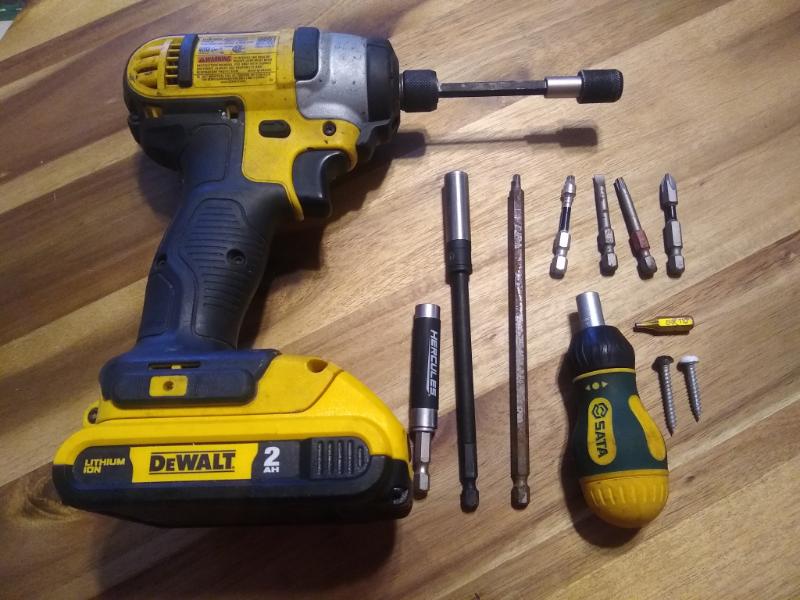
As a mobile RV service technician, I carry everything from a miter saw to an air compressor. But 75% of what I use fits in a 19” tool bag. Today, I’m giving you a sneak peek into my hardware kit and the screwdrivers, sockets, and driver bits I use to do my job—and hopefully help you do yours!

RV tool bag recommended: Screwdriver and impact driver bits

Essential

  • #2 Phillips (not Pozidriv or Frearson, which look similar)
  • #2 Robertson (Square)
  • T25 Torx (Star) 3.5mm and 5.5mm slotted/flathead

Optional

  • #1 and #3 Phillips
  • #1 Robertson (Square)
  • #2 and #3 Double-Square bits
  • #20, #30, #35 Torx

You’ll find Phillips #2 and Square #2 screws all over your RV. Many screws for RVs have a “quad-drive” pan head, which is suitable for either #2 square or #2 Phillips. I use square whenever possible since the screw won’t fall off the bit as easily. Just be careful! It’s easier to over-torque with a square bit.

Slotted screws are still used in electrical equipment such as controllers, thermostats, and circuit boards. The 3.5mm screwdriver works miracles here; the 5.5mm screwdriver also doubles as a small pry bar for loosening trim.

Speaking of trim, if your interior trim and fascia boards were installed with trim screws instead of brad (18GA) or pin (21/23GA) nails, then anything goes! Could be #1 Phillips, #1 Square, even T15 Torx … you just don’t know!

Personally, I don’t purchase regular screwdrivers unless they’re 1000V insulated electrician’s screwdrivers. I have a set of Wiha electrician’s screwdrivers that I reach for when working on breaker boxes and control boxes, even when the power is ostensibly “off.” Safety first!

I also carry a 6-in-1 “stubby” ratcheting screwdriver with quick release for those tight places where a regular screwdriver just won’t fit (looking at you, toilet valves!). It works great with 1” and 2” impact-rated driver bits.

But, to be honest, I reach for my impact driver first and my screwdrivers second. Impact drivers make quick work of things, and as long as you know how to feather the trigger, you can safely use them without over-torquing a screw. If you prefer a conventional drill, be careful, since the rotation from high torque can easily crack your wrist!

I also use locking 2”, 4”, and 6” extensions when necessary. Those will get you into 90% of where you need to be. Because I’m a technician, I also carry flexible extensions and several right-angle drill attachments for the other odd cases where access is otherwise almost impossible.

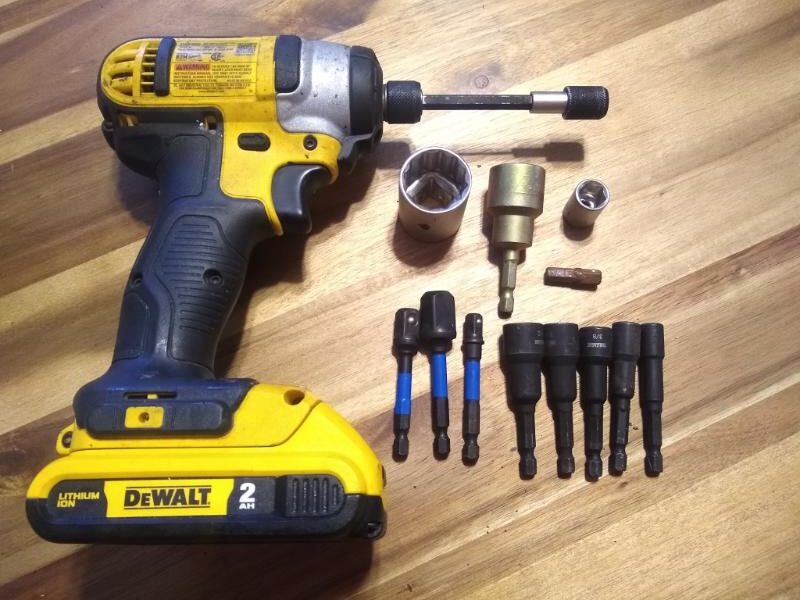
RV tool bag recommended: Sockets and wrenches

Essential

  • 1/4″, 5/16″, 3/8″, 7/16″, 1/2” nut drivers and/or sockets
  • 1/4” hex bit
  • 3/4″, 7/8″, and 15/16” sockets

Optional

  • Set of SAE Allen keys
  • 1-1/16″, 1-1/2″ shallow sockets
  • 13/16″, 15/16” combination or flare wrenches

As you’ve probably noticed, not much on your RV is metric. Almost everything is SAE.

If you start working on your RV chassis or frame, you’ll notice a lot more hex-head fasteners, so come prepared with a full set of SAE nut drivers or sockets. Magnetic ones are the best!

The 3/4” socket has a special place on this list (and in my heart). It’s the fastest, easiest tool for raising and lowering scissor stabilizing jacks. Once you use it, you’ll never go back.

Most of your RV’s electromechanical systems—leveling, slide-outs, etc.—have a manual override. Usually, this requires you to rotate a shaft manually. You’ll need a 1/4” hex bit or appropriately sized socket with a ratchet or driver. In some cases, you’ll still need a slotted crank handle. Awning motor overrides commonly require a 7/16” socket.

Allen heads pop up in random places, like set screws. You usually need the individual long-handled L-shaped keys, not the Swiss Army knife-esque foldable sets; they won’t fit.

The 7/8” and 15/16” sockets are often used when removing a water heater drain plug, while the 1-1/16” shallow socket is the most common size for removing an anode rod, and the 1-1/2” shallow socket is the most common size for removing a water heater electric element. You can either use a 6-point socket or an anode rod/heating element removal tool; 8-point sockets tend to round off, especially when the anode rod hasn’t been inspected recently (shame on you!).

The 13/16” and 15/16” wrenches are used when working with 3/8” and 1/2” flare nuts, which are standard on propane lines. You can use regular straight-sided wrenches or flare/line wrenches. Don’t break into your propane system without knowing what you’re doing, however! Propane is combustible and explosive, and you can kill yourself.

If you’re really tight on storage space, you can use an adjustable crescent wrench rather than purchasing multiple sizes. But avoid using vice grips or tongue n’ groove pliers on nuts or bolts. They will damage the metal and can easily round the corners of hex heads.

If you want to work on hydraulic leveling systems, slide-out mechanisms, and other big-boy/big-girl systems, then this list is just the tip of the iceberg. Trying to work on an Accu-Slide cable-driven slide-out without ratcheting SAE wrenches is an absolute nightmare, for instance.

An RV technician’s handy tips for DIY maintenance

Most steel bits can be made magnetic with a simple $5 magnetizer. Worth its weight in gold!

Most screws for RVs have a #8 diameter. If the original hole wallows or strips out, you can often replace the screw with a slightly larger size, like #10.

If you have any pesky screws that habitually vibrate out of their placement, try bedding them in non-sag caulk. There’s no need to use superglue, JB Weld, or anything so strong—just a little bit of non-sag sealant will do the trick.

Many RV interior screws have painted pan heads. Black or white is most common. You can find these online by searching “RV screws.” If you don’t care about the black or white head, you can find comparable regular or stainless steel screws with #2 Square pan head at many industrial hardware stores.

Fascia and trim are often installed with 23-gauge pin nails or 18-gauge brad nails. The latter is difficult to install by hand; the former is impossible. If you don’t own a nail gun, you can use regular trim nails with a smooth-faced hammer, or you can replace the nails with trim-head GRK FIN screws, which I adore.

It’s not uncommon for the heads of hex-head sheet metal screws to break off when you’re screwing into the steel chassis frame. You can reduce the friction (and therefore torque) by using some kind of lubricant on the threads, like anti-seize, cutting fluid, or even WD-40 in a pinch.

A parting thought

This isn’t an exhaustive list of RV tools, of course. I have an entire van full of tools! Sometimes I need a crow’s foot flare wrench, a precision slotted screwdriver, an NPT thread chaser, or a strap wrench. But those instances are rare for DIY work.

Please be careful out there. Don’t get shocked, sliced, or burned. Oh, and don’t forget the headlamp. You’ll need it!

RELATED

##RVT1201