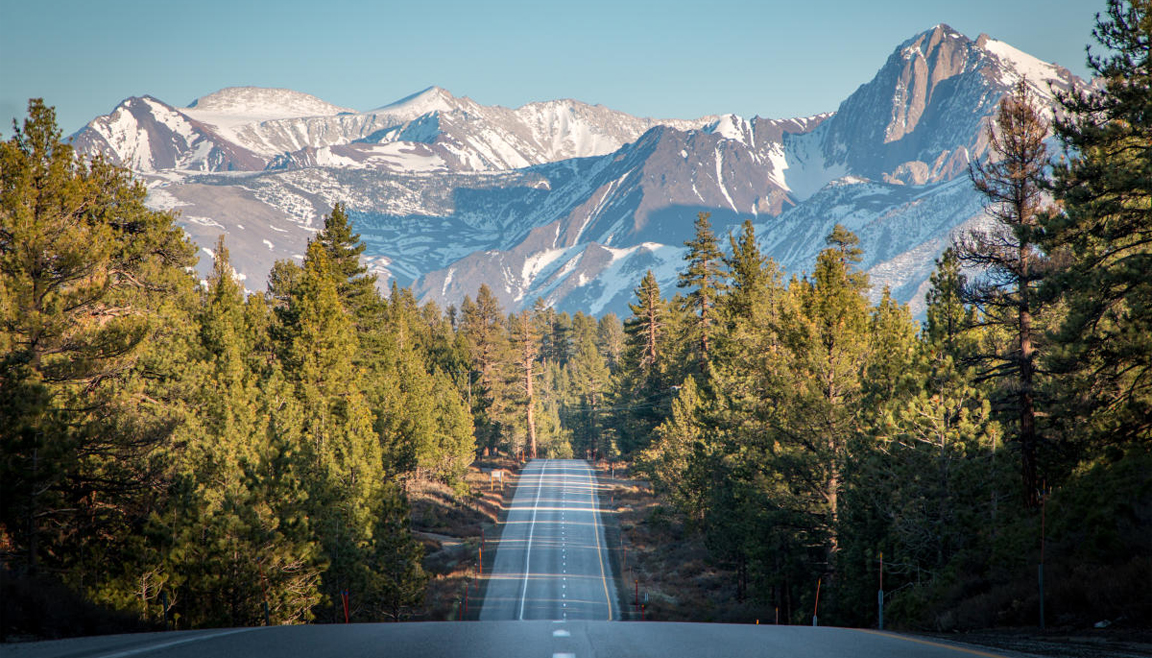
Last year, U.S. National Parks saw more visitors (331.9 million recreation visits) than ever before recorded. No doubt most came to relax and enjoy nature. Unfortunately, some went home in body bags. Malloy Law Offices, a personal injury firm, compiled death data from national parks running from 2014 to 2023 and produced a list of the 10 most lethal national parks. Are your favorites among them?
First entry of most lethal national parks may be a surprise
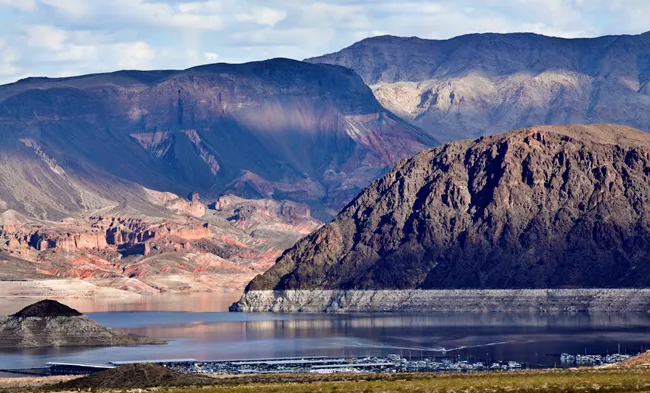
It may surprise you, but the top of the list is Lake Mead National Recreation Area, according to a story carried by The Manual. Not too many cliffs to fall off at Lake Mead, but drowning incidents took the most lives, followed by car crashes.
For falls, look to the dubious entry for #2. Grand Canyon National Park rang up 134 fatalities, many due to falls from steep cliffs, as you might expect. But medical issues also took lives when hearts gave out, or heat exhaustion came calling on tired hikers.
“The Grand Canyon’s steep cliffs and intense hikes demand heightened physical readiness,” notes Malloy Law Offices founder Seann Malloy. “It’s important that visitors stay on marked trails and recognize the limits of their physical condition,” says The Manual article.
In third place, Yosemite National Park also saw many deaths from falling. Some 42 of those deaths took the lives of hikers and rock climbers. “Yosemite’s rocky landscapes can deceive even the most experienced hikers,” warns Malloy. “Staying cautious and properly equipped is essential, particularly near ledges and waterfalls.”
Here’s the complete list of the 10 most lethal national parks
Lake Mead National Recreation Area: 204 incidents
Grand Canyon National Park: 134 incidents
Yosemite National Park: 125 incidents
Great Smoky Mountains National Park: 99 incidents
Blue Ridge Parkway: 97 incidents
Natchez Trace Parkway: 96 incidents
Glen Canyon National Recreation Area: 77 incidents
Golden Gate National Recreation Area: 72 incidents
Sequoia and Kings Canyon National Parks: 65 incidents each
Call them heroic, or call them foolhardy. Call them whatever you like, but two Oklahoma RVers are now credited with saving an RV park from a wildfire. Last Friday a wildfire tore through the community of Stillwater, Oklahoma. About 200 homes in the area were destroyed, and as the flames drew near to the Pecan Valley RV Park, most of the RVers evacuated. But not two of them. In a battle with garden hoses, RVers save an RV park.
RVers save an RV park while most evacuate
Dan Keller and another RVer stayed behind when other RVers left. Keller told local TV station KFOR he needed to do something. “I never thought about anything. It’s when the fire started, I just looked over and I felt like I could handle it,” Keller told a station reporter.
As the flames roared toward the park, Keller and another man, identified only as Jay, took action. They started pulling propane cylinders off rigs and putting them down on the gravel roads running through the park. Then, armed with garden hoses, they began hosing down RVs as embers flew into the park.
All RVs saved—except one
Park owner’s RV lost–but all others saved. KFOR.com
Their efforts paid off. Despite cars, trees, and other vegetation in the park going up in smoke, Dan and Jay were able to save all the RVs in the park except one. The RV park owner’s rig couldn’t be rescued.
Two RVers save an RV park. Those whose rigs they saved consider them heroes.
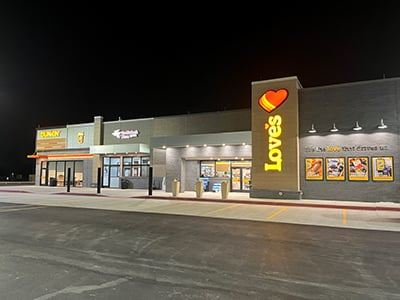
What’s your favorite hot sauce? If you’re a fan of Tabasco, then Love’s latest RV hookup site is right up your alley. Avery Island is home to Tabasco factory tours, and less than 10 miles from New Iberia, Louisiana—where the new Love’s Travel Stop will put you and your rig up with full hookups. It’s Love’s Cajun hospitality.
New Orleans to Lafayette—Love’s Cajun hospitality at New Iberia
Love’s Travel Stops is expanding its network in the heart of Cajun Country with the addition of a new travel stop in New Iberia. Conveniently located between New Orleans and Lafayette, the travel stop sits just off Highway 90 at Exit 128A. This is Love’s second store to open in 2025 and its 656th store nationwide.
With the opening of the New Iberia travel stop, RVers visiting the Rip Van Winkle Gardens in the area can take advantage of three RV hookups, Wi-Fi and a dump station at Love’s. The location includes a Love’s Fresh Kitchen concept with fresh food items such as sandwiches and salads prepared daily—Godfather’s Pizza and Dunkin’ will open next week.
Love’s is one of the largest food service operators in the country. Professional truck drivers now have access to 63 additional truck parking spaces, five showers, a CAT scale and more along Highway 90. This travel stop adds 85 jobs ranging from store retail operations to food service and truck maintenance.
This location has space allocated for EV chargers—allowing Love’s to be able to quickly partner with local utility companies and install EV charging stations, should there be customer demand.
New store facts and services include
More than 15,000 square feet
63 truck parking spaces
85 jobs
Love’s Fresh Kitchen
Dunkin’ and Godfather’s Pizza (opening 3/24)
Six diesel bays
Five showers
Laundry facilities
CAT Scale
Three RV hookups and RV dump
Three RV parking spaces
Dog park
Self-checkout options
Love’s Cajun hospitality is ready for you at New Iberia. Ya’ll come on down.
“The most thoroughly wasted of all days is that on which one has not laughed.” —Nicolas de Chamfort
Need an excuse to celebrate? Today is National Cocktail Day! And if you don’t drink, perhaps you can celebrate National Cheesesteak Day instead!
On this day in history: 1900 – Carnegie Steel Company is formed in New Jersey; its capitalization of $160 million is the largest to date.
Tip of the day Tips for dealing with unresponsive RV shops
By Gail Marsh
We never had cause to complain before. In fact, I previously had a hard time believing the horror stories my RVing friends told about their rig repairs. But then, things changed. We quickly learned the most effective ways for dealing with unresponsive RV shops. I sincerely hope you never have problems like ours, but if you do, perhaps you will find these RV tips useful, as well.
The timing couldn’t have been much worse. We’d planned our trip for months. Arrangements were made and in place. Stop mail delivery? Check! Alert neighbors/police that we would be away? Check! Arrange for the stix-n-brix lawn to be mowed during our absence? Check! RV pre-trip checklist completed? Checkity, check, check!
Ask Dave Can campgrounds legally charge a flat fee for electricity when pedestals are metered?
Dear Dave, I’m in an RV park where each campsite is individually metered. Can the manager legally charge you for the electricity and not give you the breakdown of the usage? They just give us the total. I asked for the kW or breakdown of the usage because it’s outrageously high compared to what it’s always been before. They told me they don’t give us that information. Is it legal for them to just charge whatever they want and not show you the proof? —DawnRead Dave’s answer.
RANDOM RV THOUGHT: Most state and regional tourism bureaus offer free annual vacation and camping guides, often both printed and online. Many, if you ask, will also send you a free state roadmap. Always send for these freebies before you leave on your trip to the area. The guides may also have money-saving coupons (everybody likes to save money!).
In the RV shop with Dustin Keep this product on hand for easy RV underbelly repair
By Dustin Simpson
You may have encountered some debris on the road that has caused impact damage underneath the RV. Or maybe you’ve experienced a tire blowout that caused damage to the RV underbelly or fender area that has required you to need some undercarriage repair. Well, here’s what you need.
Video of the day The 36 best Costco RV products in 2025
By Cheri Sicard
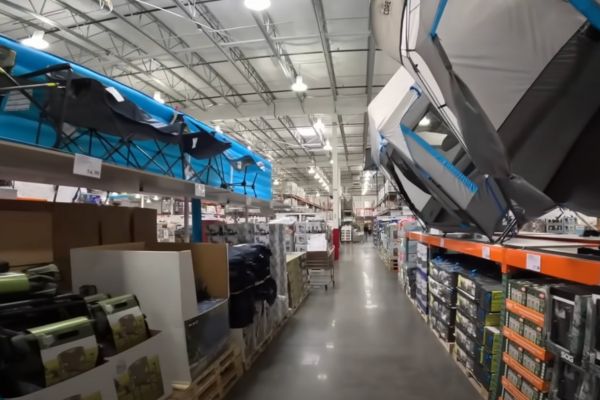
It’s that time of year again! Costco’s camping and outdoor section is back in stores, and everyone is wondering what deals are worth grabbing. In this video, Jason Epperson of RV Miles checks out the bargains, compares prices to other retailers, and sees how things have changed from last year. Keep in mind that it’s still early in the season, so more gear is expected to arrive as the weather warms up. I break down a list of all the gear here.
TAKE A GUESS: On Aug. 4, 1983, New York Yankee outfielder Dave Winfield threw a baseball and accidentally hit and killed something. What did he hit and what action was taken by police? The answer is below under Trivia.
Featured article He turned an old Air Force jet engine into an RV!
By Emily Woodbury
This old Air Force jet engine RV is right up there with the coolest RVs we’ve ever seen… Steve Jones, a former technician for the Royal Air Force, spent 1,000 hours transforming an old RAF jet engine into a four-bed RV for his family in Lancashire, England. Check this out.
Reader poll Do you agree with this statement: “With an RV you can go where you want, when you want”?
A POLL FROM THE PAST that you might find interesting: How often do you boondock more than a mile away from another RV or building? See how readers responded.
Quick tip Light up your utility hookups for after-dark arrivals
Making “landfall” after dark? Fiddling around with a flashlight in one hand and your water hose in the other can make for a session of grumbling. If your RV manufacturer failed to install lighting at your utility hookup area, think about putting in your own, as the user “BroRobin” on popupportal did for his tiny rig. If there’s a source of 12-volt power handy, simply install a suitable outdoor-rated RV light. No power near? Your next option is a battery-powered, or solar-enhanced light. Here are some choices on Amazon. Or how about a baseball cap with a light in the brim? That would certainly be handy for setting up after dark.
Website of the day
The most unique hotel in every state
We know we’re all RVers and not typically hotel-stayers, but you may want to book a night at a few of these places after you see and read about them. Some include Airstreams and vintage trailers, while others are in treehouses, in caves, under water, or inside a potato. Yep.
? MYSTERY PRODUCT OF THE DAY ? We’ve always wanted this but never bought it. Since it’s spring and raining a lot, now is the perfect time to use it! You’ll like it.
Recipes of the day
Since today is National Cheesesteak Day, we thought we’d remind you of these yummy cheesesteak recipes that aren’t actually Philly cheesesteaks. Check ’em out.
Trivia
On August 4, 1983, during warm-ups, New York Yankee outfielder Dave Winfield threw a baseball at a seagull on a fence as he was warming up and accidentally killed it. When the game was over, Toronto police arrested him for “causing unnecessary suffering to an animal.” On a similar note, this bird certainly didn’t suffer when, in 2001, Randy Johnson (the “Big Unit”) accidentally hit a dove with his (usually 100 mph) fastball pitch and there was an explosion of feathers. (The speed couldn’t be recorded because the ball didn’t make it to the catcher’s mitt.)
Readers’ pet of the day
“Betsy (terrier mix) was adopted while we were on a road trip. She never saw ‘home’ until several months later. That was 2009 and now she is our senior girl at 19 years old. Stays pretty close to home these days, but still likes a trip.” —Pauline Klein
Send us a photo of your pet with a short description. No blurry photos and please do not submit your photo more than once. Thanks!
Dear Dave, I’m in an RV park where each campsite is individually metered. Can the manager legally charge you for the electricity and not give you the breakdown of the usage? They just give us the total. I asked for the kW or breakdown of the usage because it’s outrageously high compared to what it’s always been before. They told me they don’t give us that information. Is it legal for them to just charge whatever they want and not show you the proof? —Dawn
Dear Dawn,
I am not an electrical expert; however, I do have some contacts in my “Rolodex” that are. I have contacted them as well as some campgrounds that I have worked with.
RV electricity usage
As rigs increase in size and complexity, electrical usage has increased significantly from the old days of modest camping and “free electricity” at the site.
It seems we can’t leave home without all the amenities—such as two or three roof air conditioners, residential refrigerators, five TVs, “pod” coffee makers or espresso machines, and even fireplaces!
Don’t get me wrong. There are still some people that enjoy simply camping with minimalistic electrical needs. There’s even a large increase in boondocking or dry camping. However, solar panels and lithium batteries help supply the power to be “roughing it comfortably.”
Campground electricity
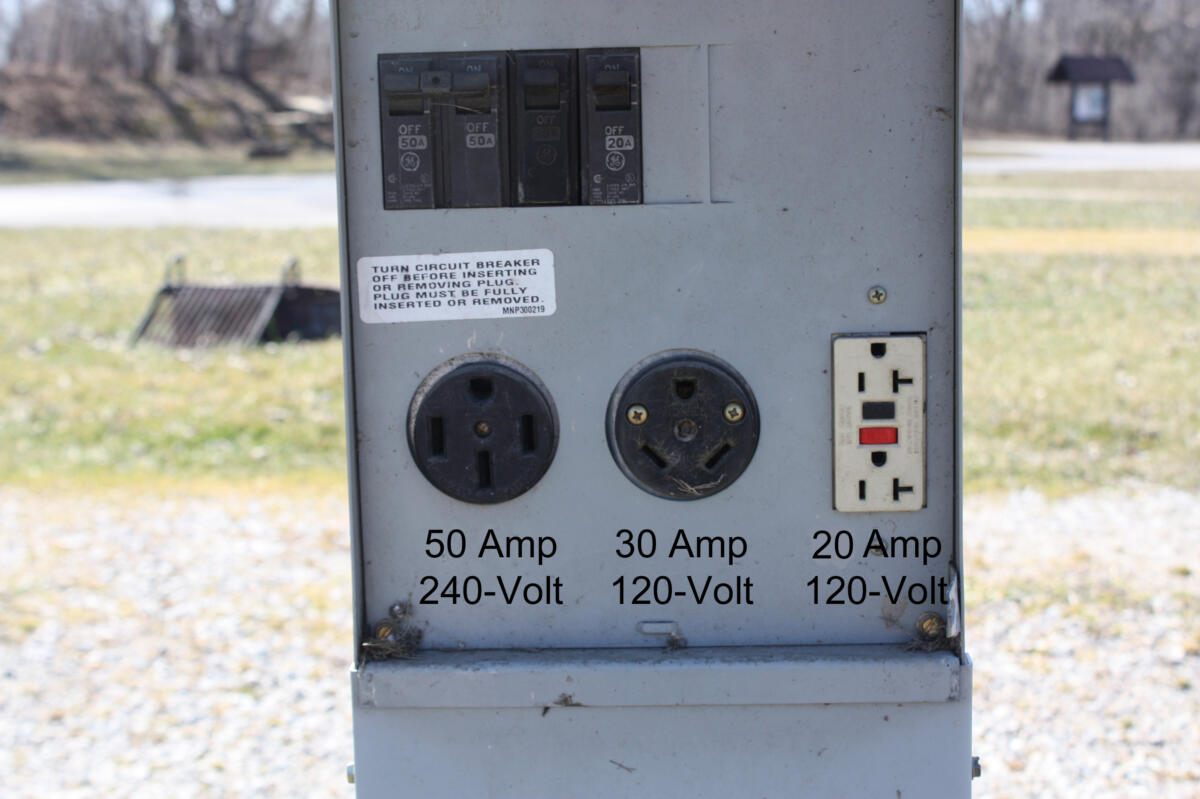
There are many variables associated with providing electricity for RVers such as the cost of electricity from a power source, which is measured in kW usage. Then there is the cost of running power lines, installing pedestals, and outlets with circuit breakers. Traditional 20- and 30-amp power is fairly common and not as expensive as a 50-amp service, which is becoming more popular with all the devices RVers need to run.
According to my certified electrician “go to” contact, campgrounds cannot read meters and charge according to kW usage as they are not licensed electrical providers.
So most campgrounds charge a flat fee for 20-, 30- and 50-amp usage on a daily or monthly basis and do not have to show the actual meter. Therefore, it is an estimate to cover all of the above costs. One of the campgrounds that I talked to that does have meters on some of the pedestals does not charge the RVer for exact usage. Rather, they use the meter to verify what is being used on an average to verify that what they are charging for the site covers their costs. They need to know what the average 50-amp RVer is using and, if it increases, they can adjust the “inclusive” price.
Campgrounds that charge by actual usage
The only campgrounds that have meters charging by actual usage are ones that have permanent or extended stay RVs. Those meters are installed by the power company and billed directly by them to the RV owner. These charges include not only kW usage but also a monthly charge for the meter as well as taxes, maintenance fees, and other tacked-on charges as allowed by local authorities.
So, no, they do not have to show you the usage and, yes, they can charge whatever they want… unfortunately. It might be time to shop around for another campground if you think this one is too high.
You might also enjoy this from Dave
Can I plug into 50-amp pedestal with “Y” adapter to run 30-amp TT and outside heater?
Dear Dave,
If a 50 amp is available at the campground pedestal, it will have “two 30-amp legs.“ is there a dogbone-type splitter that provides two 30-amp female plugs: one to go to my camper and the other to go to an outside electric heater? Or is this not recommended? —Joe, 2024 Imagine 2500RL
By Cheri Sicard
It’s that time of year again! Costco’s camping and outdoor section is back in stores, and everyone is wondering what deals are worth grabbing. In the video below, Jason Epperson of RV Miles checks out the bargains, compares prices to other retailers, and sees how things have changed from last year. Keep in mind that it’s still early in the season, so more gear is expected to arrive as the weather warms up.
The best Costco RV gear for 2025
Tents and canopies
Core 13×13 Canopy: With its silver coating, this canopy is designed to reflect the sun. It has self-adjusting feet, which is great for uneven ground. Plus, it’s easy to set up thanks to the center handle. At Costco, it’s selling for $159. That’s $10 more than last year. But don’t worry, most other stores sell it for around $199, so it’s still a solid deal.
Core tents: When it comes to tents, remember that sizes can be misleading. A “6-person” tent usually fits four people comfortably. Let’s look at the two Core tents available:
Core 6-Person Lighted Tent: Priced at $99.99. This one seems to be a Costco exclusive, so it’s hard to compare prices.
Core Jumbo 10-Person Tent: This tent costs $264. Like the 6-person tent, it’s a Costco exclusive. However, the 10-person tent has a few drawbacks. It’s huge, and may not fit on many campground pads. Also, the half rainfly doesn’t fully cover the windows. It might be better suited as a picnic shelter than a sleeping space.
Seating: Camp chairs
The camp chair selection might be a bit disappointing this year. But here are a few options worth considering:
Max Sports double camp chair: This chair sits at a normal seating height, unlike some of those low beach chairs. It can hold up to 450 lbs. and has mesh pockets, cup holders, and even wine glass holders. Costco’s price is $42.99, while Walmart sells it for around $65.
Timber Ridge director’s chair: The Timber Ridge director’s chair is back, but the price has gone up to $54.99. This type of chair is known for being durable, though it doesn’t fold up as small as some of the cheaper options. It features a wide seat, a 300 lb. capacity, and a fold-out side table with a place for your drink and phone. It’s another Costco exclusive, but similar models from Timber Ridge go for about $85 on Amazon and Walmart. Keep in mind that those models usually have a higher weight rating (400 lbs.).
RIO swinging hammock chair: This chair is selling for $51.99, which is a slight increase from last year. The cheapest price found online was $78 on Amazon. However, this style of chair might not be for everyone. The sides can hit your elbows, and the swinging motion can be a bit sudden. I like mine though.
Cascade Mountain Tech flex height sling chair: If space is a concern, this chair is a good option. It’s great for car or van campers because it folds down really small. It’s comfortable, but very light—so watch it on windy days. Some assembly is required each time you use it. This Costco exclusive is priced at $39.79.
Tables: Lifetime folding tables
Lifetime 4×2 adjustable height table: This table is a great option for camping. It can be used as a low coffee table or adjusted to picnic table height. The price is still $39.99, which is about $45 cheaper than most other stores.
Folding Lifetime 6-foot table: The 6-foot folding table is also holding steady at $59.99. Other retailers are selling it for around the same price. Lifetime tables are known for being durable.
Outdoor gear
Cascade Mountain Tech carbon fiber trekking poles: These trekking poles are lightweight, strong, and adjustable. They come with different tips for different terrains. A set costs $38.49 at Costco. Amazon has them for about $4 more. Most other places sell them for around $50.
SOG Ultimate camping kit: This kit includes a field knife, camp axe, flint, and an entrenching tool. While it has a lot of useful items, it’s pretty heavy for backpacking. Also, those mini camp axes aren’t always the most useful.
Flame Pro mini propane patio heater: This mini patio heater could be nice to have at the campground. It’s a Costco exclusive, priced at $40. It runs on an external propane tank (not included).
Lighting and flashlights
48-ft. LED string lights: These string lights are durable, and the plastic LED bulbs can be removed and replaced if needed. They’re great for decorating a porch, events, or a campsite. They need a standard 120-volt outlet. Last year, they were the same price ($29.99), but that was a temporary sale. Now, it’s the regular price.
Infiniti X1 5,000-lumen flashlight: Costco has a good flashlight option this year. The Infiniti X1 flashlight puts out 5,000 lumens for just $29.99. Most other retailers sell it for $45. It can be recharged or use disposable batteries. It also has a sturdy metal housing and a USBC port for charging your phone.
Duracell 3-pack of 1200 lumen flashlights: This pack includes three flashlights for $19.99. They have a metal housing and can be recharged or use disposable batteries. However, there are better flashlight options with built-in rechargeable batteries.
Outdoor essentials and options
Deep Woods Off Dry bug spray (3-pack): This bug spray is now priced at $17.99. It’s cheaper than last year’s price of $18.99. The packaging can be a little deceptive, as it includes two 6 oz. cans and one 4 oz. can. Prices have gone up at other retailers, so Costco has the best price right now.
Max sports collapsible wagon: Collapsible wagons are great for hauling gear. This one has a back that opens up for longer items. It can hold up to 350 lbs. and has brakes to keep it steady. It’s priced at $93, but there’s a $20 instant discount, bringing the price down to $73. Elsewhere, these wagons tend to cost around $120.
Body Glove inflatable stand-up paddleboard: This 11-foot paddleboard kit includes a backpack, paddle, and electric pump for $319.99. It’s way cheaper than last year’s price of $399. The retail price from Body Glove is $1,000. Similar versions sell for $599 on Amazon.
Tommy Bahama inflatable stand-up paddleboard: This paddleboard includes an electric pump and paddle. It also has a seat and footrest that can be attached to turn it into a kayak. The price is $439.99. Similar products range from $800 to $1,000 at other retailers.
East Point axe throw set: Axe throwing is a fun activity for the campsite. This set includes a steel frame, eight soft axes, and eight throwing stars. It’s priced at $70, but there’s a $15 instant discount. Walmart sells it for $80.
Allwood regulation size cornhole set: Cornhole, also known as bags, is a classic lawn game. This set has increased to $119.99 this year. But it’s made of real wood, not fiberboard, which can get damaged by moisture. Regulation boards usually start around $130, but similar models can be found for $80 elsewhere.
Outdoor cooking and sound
Bose SoundLink Flex SE Bluetooth speaker: This Bluetooth speaker sounds great and can get surprisingly loud. It has a hanging strap, 12-hour battery life, and it’s waterproof. Costco sells it for $99.99. Target, Walmart, and Amazon all sell it for $130.
Blackstone 22-inch griddle with hood: If you like to cook outdoors, this griddle is a good choice. The built-in hood is a great feature. It’s priced at $169.99. Although it typically retails for $200, sometimes you can find it for $150.
Blackstone 6-piece griddle tool kit: This kit includes stainless steel spatulas, a griddle scraper, and sauce bottles. It’s priced at $19.99, but there’s a $5 manufacturer rebate available.
NXR portable stainless steel gas grill: This grill has 312 square inches of cooking area and latches to keep it closed during travel. It’s gone up in price to $125, but prices have increased everywhere. You probably won’t find it for less than $200 elsewhere.
Camp Chef Tundra three-burner stove: This is a beast of a stove that folds down for travel. It comes with a griddle top. The price has increased slightly to $235. It’s a Costco exclusive, and similar bundles sell for around $350 elsewhere.
Food and drinks
Thermos Flask 40 oz. bottles (2-pack): This is a great deal at $19.99. You’d be hard-pressed to find one bottle for that price anywhere else.
Hydro Flask hydration set: This set includes a 40 oz. tumbler and a 32 oz. wide-mouth bottle. It’s currently $40, but the price will go up once the rebate ends.
Ninja portable blender kit: This kit includes a rechargeable blender base and two 28 oz. cups for $79.99. Walmart sells a version with one cup for $50.
Titan 36-can backpack cooler: This cooler is like a modern picnic basket. It has an integrated ice pack system, and Costco sells replacement ice packs. The side compartments are big enough for water bottles or a bottle of wine. It’s a Costco exclusive priced at $40.
Igloo’s Lux Collection wine bottle carrying cooler: This stylish wine bottle cooler is a Costco exclusive for $19.99.
20 lb. bags of ice: At under $3, Costco’s 20 lb. bags of ice are hard to beat.
Food suggestions
Here’s a quick list of Costco favorites:
Kinder’s Seasonings (especially The Blend): $5.99 for a jumbo jar.
Firman 3200 running-watt inverter generator: This generator is a good option for powering an RV. It should handle the air conditioner. It’s set up for RVs with a 30-amp RV outlet. It has an electric start, a 1.8-gallon gas tank, and can run on propane. It’s priced at $799, but there’s currently a $150 discount.
Caterpillar 1750-amp jump starter: This jump starter also acts as a portable power station with a 250W inverter and USBA/USBC outlets. It has a built-in air pump. It’s primarily a jump starter and air compressor. The price is $129.99, but wait for a $30 discount.
Gasoline: Costco gasoline is often cheaper than other stations, especially if you need premium. However, Costco usually doesn’t sell mid-grade gasoline, and most don’t sell diesel. Be careful navigating Costco gas stations with an RV, as the turns can be tight. Costco parking lots are usually large enough for RVs, and some allow overnight parking (ask permission first). (But if you do buy Costco gas, good news for you—they’ve extended their fuel station hours.)
Have you found other good Costco RV gear items? Be sure to share in the comments below.
Years ago, I would have strongly agreed with this statement: “With an RV you can go where you want, when you want.” Twenty years ago, an RV was, indeed, the best way to travel where you wanted, at your own pace. But today, I personally don’t believe it.
The fact is, and we’ve discussed this often at RVtravel.com, spontaneous travel with an RV, with the lifestyle’s rapid increase in popularity, is a struggle. Yes, it’s possible in some cases to go at your own pace, but that usually involves spending nights at big box stores like Walmart, or at truck stops or in rest areas, or traveling in unpopular tourist areas or in the shoulder season.
On the other hand, some RVers find joy in this flexibility, viewing these unconventional overnight stops as part of the adventure. For them, the ability to adapt on the fly—whether it’s pulling into a quiet rest area or discovering a lesser-known gem off the beaten path—still epitomizes the spirit of RVing. It’s not the same as effortlessly securing a prime campsite in a national park, but it’s a different kind of freedom that resonates with many.
In peak travel season, parks are full, at least in popular tourist areas.
But some people still swear by an RV as the best way to travel at one’s own pace, and will likely agree here that you truly can “go where you want, when you want.”
How do you feel about this? Do you agree? After voting, please leave a comment with your thoughts.
“When spring came, even the false spring, there were no problems except where to be happiest. The only thing that could spoil a day was people and if you could keep from making engagements, each day had no limits. People were always the limiters of happiness except for the very few that were as good as spring itself.”―Ernest Hemingway
Need an excuse to celebrate? Today is National Chip and Dip Day! (Find our favorite dip recipes below.)
RV buyer’s remorse: Why 70 percent of RVers regret their purchase
By Cheri Sicard
Yikes! According to MJ and Izzy of Endless RVing, a shocking 70% of RV owners regret their purchase. Why? From sneaky sales tactics to underestimating hidden costs, they break down the biggest mistakes RV buyers make—and how you can avoid them. Read the article and then watch the video, too.
Using Google Maps’ little-known features
By Gail Marsh
Google Maps has been guiding travelers for two decades, but did you know it has powerful features designed to make RV life easier? From offline maps for remote adventures to multi-stop route planning, these tools can save you time, frustration, and even money on the road. Before your next trip, check out these lesser-known Google Maps tricks that could transform the way you travel.
Tool Talk: Take a sneak peek into an RV technician’s tool bag
By Andrew Herrick
Every RVer needs a compact, go-to tool bag for routine maintenance. While professional RV technicians carry a van full of tools, most common repairs can be handled with a small selection of screwdrivers, sockets, and wrenches. This guide breaks down the essentials. See what’s inside a pro’s tool bag—and what you should keep in yours!
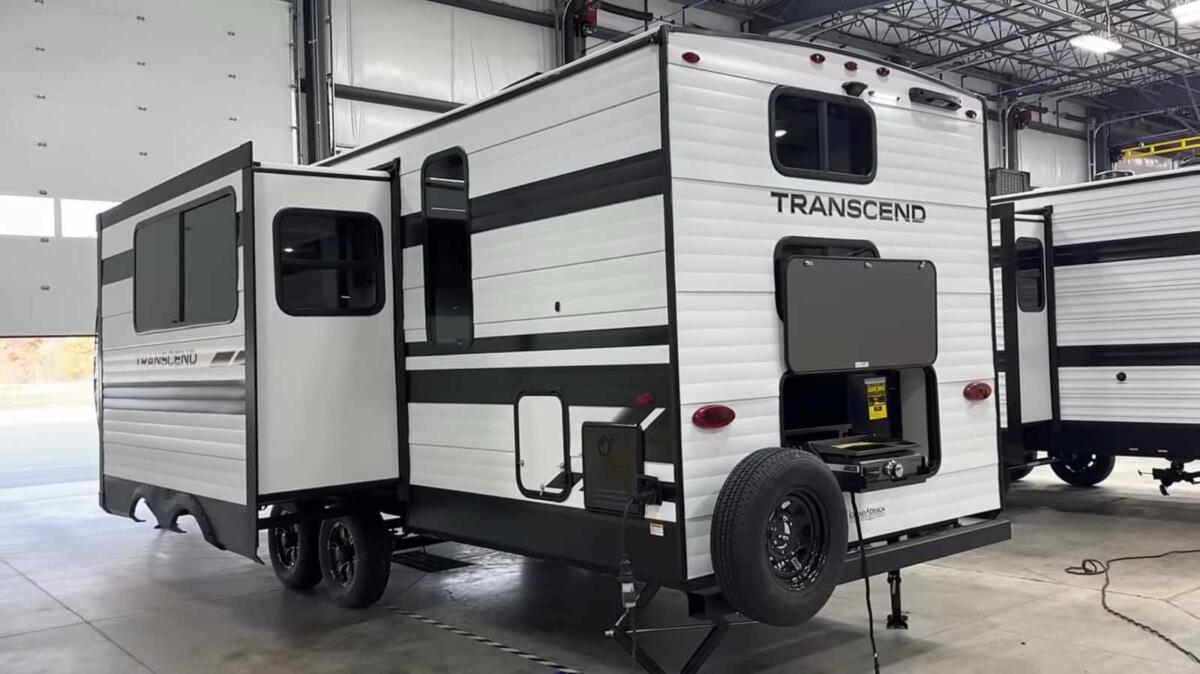
Today’s RV review… Grand Design Transcend 265BHT—more uses for bunk space
By Tony Barthel
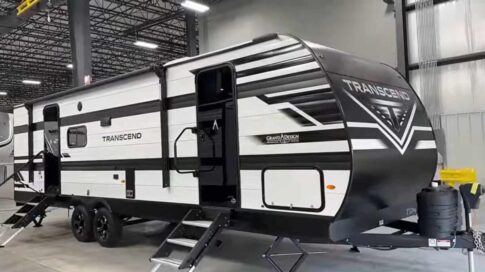
Looking for a family-friendly travel trailer or maybe a cozy setup for your furry companions? The Grand Design Transcend 265BHT blends affordability with thoughtful touches, but does it cut too many corners? From its rear kitchen layout to its pet-friendly bunk conversions and boondocking potential, this review breaks down what works (and what doesn’t). Plus, wait until you see what, or who, one RVing couple brings along on their travels…
RV service centers and repairs report Would you trust Camping World to change your RV’s tires?
This week, Nanci Dixon shares an RVer’s disappointment with a mobile tech, and another RVer’s disappointment due to all of the issues with his RV. But there are several more good reports of service centers. Read about them here.
UPDATED WEEKLY:A list of RV dealers, service centers, and mobile techs as recommended by our readers.Click here.
Yesterday’s top news for RVers IN CASE YOU MISSED IT
Before his passing from COVID in 2020, Gary Bunzer—known as the “RV Doctor”—was passionate about teaching RVers how to keep their rigs in top shape. One of his final contributions to RVtravel.com was this detailed spring shakedown guide. From inspecting seals and lubricating slideouts to testing electrical, plumbing and propane systems, Gary’s step-by-step approach covers all the essentials.
RV spring cleaning: 7 maintenance tasks to do before leaving
By Cheri Sicard
Spring is here—time to get your RV road-ready! Chris from the Why Wait YouTube channel shares seven must-do maintenance tasks to keep your rig in top shape. From cleaning your fireplace (yes, really) to descaling your water heater and inspecting window seals, these quick fixes can save you from headaches down the road. Ready to tackle your spring RV checklist?
Spring cleaning time for fresh water tanks
By Russ & Tiña De Maris
If your RV water tastes off, smells funky, or—yikes—leaves you covered in algae, it’s time for a deep clean. Whether your rig sat idle all winter or you’ve encountered questionable water, disinfecting your fresh water system is a must. This guide walks you through flushing out stale water, sanitizing with bleach, and eliminating nasty chlorine aftertaste.
RANDOM RV THOUGHT: Be sure the ice cubes in your fridge are at least partially frozen before heading out in your RV. Don’t fill the tray just before you depart or the water might splash around and then freeze all over the place.
RVtravel.com reader testimonials
Loyal reader Mona L. writes: “I’ve read RVtravel.com for years and years, starting not long after I did some modeling work for an Italian guy named Leonardo. You may have seen his painting of me. I recommend this newsletter to anyone who has a love of traveling with an RV. Ciao!”
Travel destinations
By Gail Marsh
Upcoming Western U.S. spring flower festivals
What says “spring” better than flowers? How about flower festivals? If you’re ready to put snow-covered scenes behind you, consider setting your sights on one of the following spring flower festivals.
Visiting Laurel Caverns, PA’s newest state park (almost)
Laurel Caverns, Pennsylvania’s largest cave system, is on track to become the state’s 125th state park and its first underground park. The caverns are renowned for their impressive sandstone formations, including a 45-foot underground waterfall. Continue reading.
Reader poll Do you have a “go-to” RV shop or technician who you trust for repair work?
How to win We’ll select a winner at random out of all entries we receive today by 7 p.m. Pacific time. You can only enter once and after we notify you by email that you won, you have 24 hours to respond.
Are you enjoying today’s newsletter?
Yes? Good! We want you to not just like, not just love, but LOOOOVE this newsletter! If you do, know that RVtravel.com would not be possible without the financial support of our voluntary contributors. Their support helps us avoid relying on advertising, and keeps our resource-rich work unbiased and free for all RVers to enjoy. Every contribution makes a difference. When you contribute, you’ll receive a special member-only ad-free version of our weekend newsletters forever as one way for us to say thank you. Learn more or donate. Thank you very much for being here!
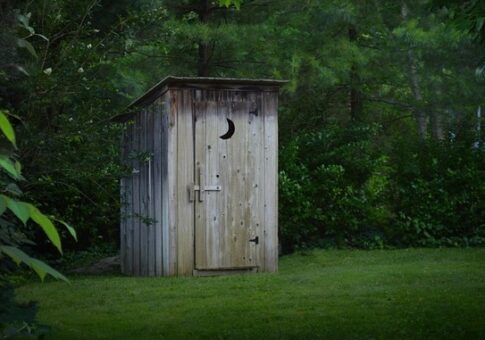
Why do outhouses have crescent moons on them?
By Gail Marsh
I’m sure you’ve seen it—the ubiquitous crescent moon cutout found on the doors of outhouses. Have you ever wondered why that particular shape was chosen? I was curious, too. So I did some investigating.
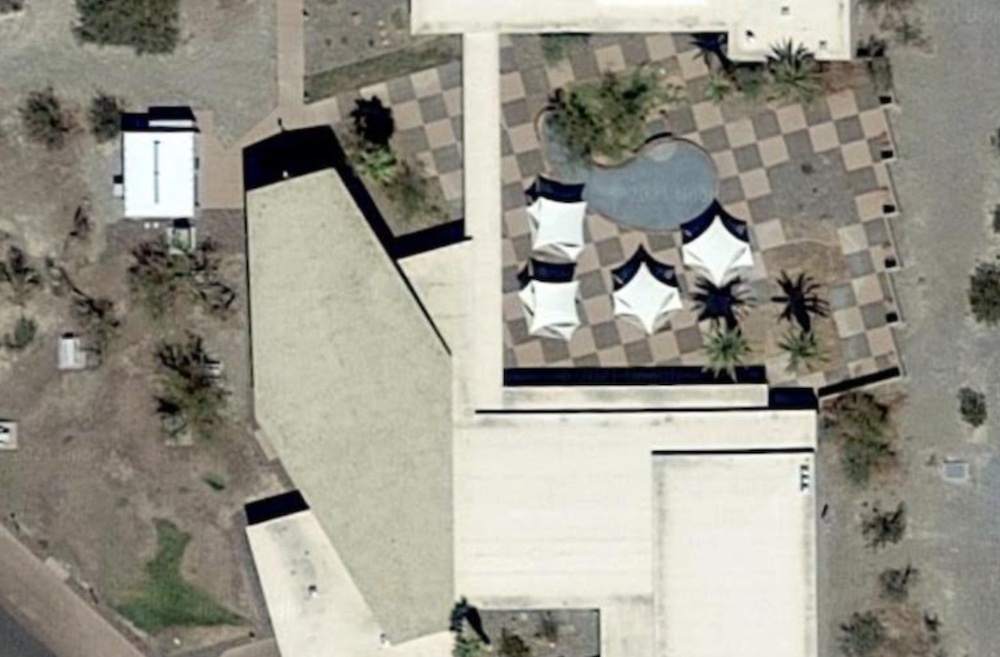
WHERE IS IT? This aerial photo of the visitor center at a popular American National Park reveals that its auditorium is shaped like a coffin. Which park is it? Answer below.
?? MYSTERY PRODUCT OF THE DAY ?? They say this is “absurdly practical” and we agree. There are probably QUITE a few of us who could benefit from this.
Highlights from this week’s RV Daily Tips Newsletter
In the RV shop with Dustin RV slide-out locks prevent damage to your slide-outs during travel
By Dustin Simpson
Join me as I explain how to use a slide-out lock made by American Technology. These locks are typically used to secure a slide in a fixed position to prevent the sliding portion of an RV from moving, providing an additional level of stability. Click here to learn more.
Our best-selling gadgets and gizmos so far this year:
RV tire safety Should you carry a spare tire in your RV or not? – Part 1
By Roger Marble
Should you carry a spare tire in your RV? It depends. Consider (1) your physical capabilities; (2) your knowledge; (3) the space availability in or on your RV; and (4) your finances. Continue reading.
Ask Dave
Dave Solberg is a leading expert in the RV industry and author of the “RV Handbook”.
LAST DAY. If you’re in the Phoenix area, be sure to attend some of Dave’s educational and always entertaining seminars at the Phoenix RV Supershow today, March 23.
Recipes of the day
Since it’s National Chip and Dip Day, here are a few of our favorite dip recipes:
“Dakota (14) is teaching Pepper (10 months) the fine art of living the nomad lifestyle. Both are Braque Francais. He shows her all the good spots to sniff and the best ways to watch for squirrels and birds.” —Karla Williams
Want to see your pet in this newsletter? Please send us a photo of your pet with a short description. Please do not submit your photo more than once.
Trivia
Truth or Consequences, New Mexico, was chartered in 1916 as Hot Springs. In 1950 it became Truth or Consequences in response to TV host Ralph Edwards’ request that a town in America take on the television game show’s namesake, which was “Truth or Consequences.”
Sunday funny
Ron, age 68, got pulled over by the police around 2 a.m. The officer asked him, “Where are you off to at this hour?” Ron answered, “I’m heading to a lecture on alcohol abuse, its effects on the body, plus smoking and being out late.” The officer, a bit taken aback, asked, “Seriously? Who’s giving a lecture like that at this time?” With a totally straight face, Ron replied, “That would be my wife.” 😂
WHERE IS IT ANSWER: It’s the auditorium at the visitor center at California’s Death Valley National Park. We can find no evidence that it was intentionally built in the shape of a coffin.
And finally… A song from the past to tickle your funny bone
And now enjoy one of America’s all-time favorites: My Clam Digger Sweetheart by Yogi Yorgesson.
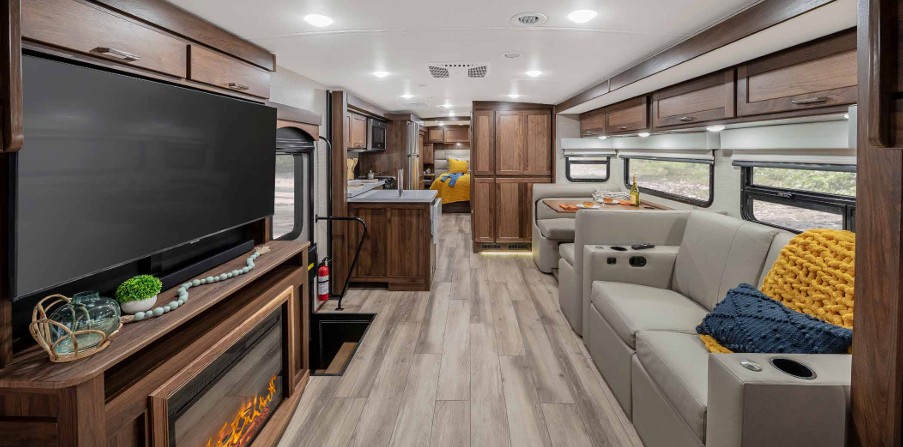
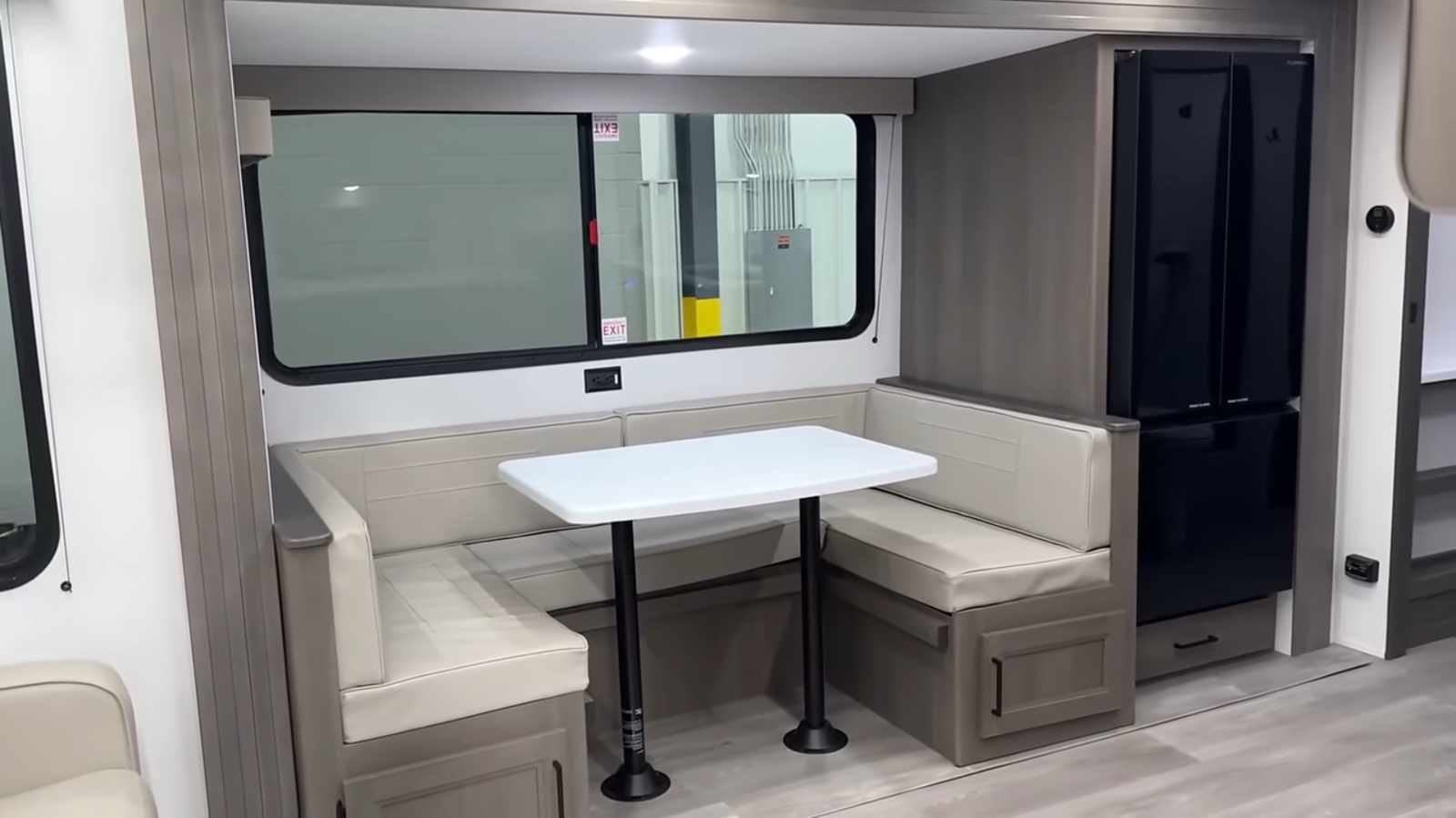
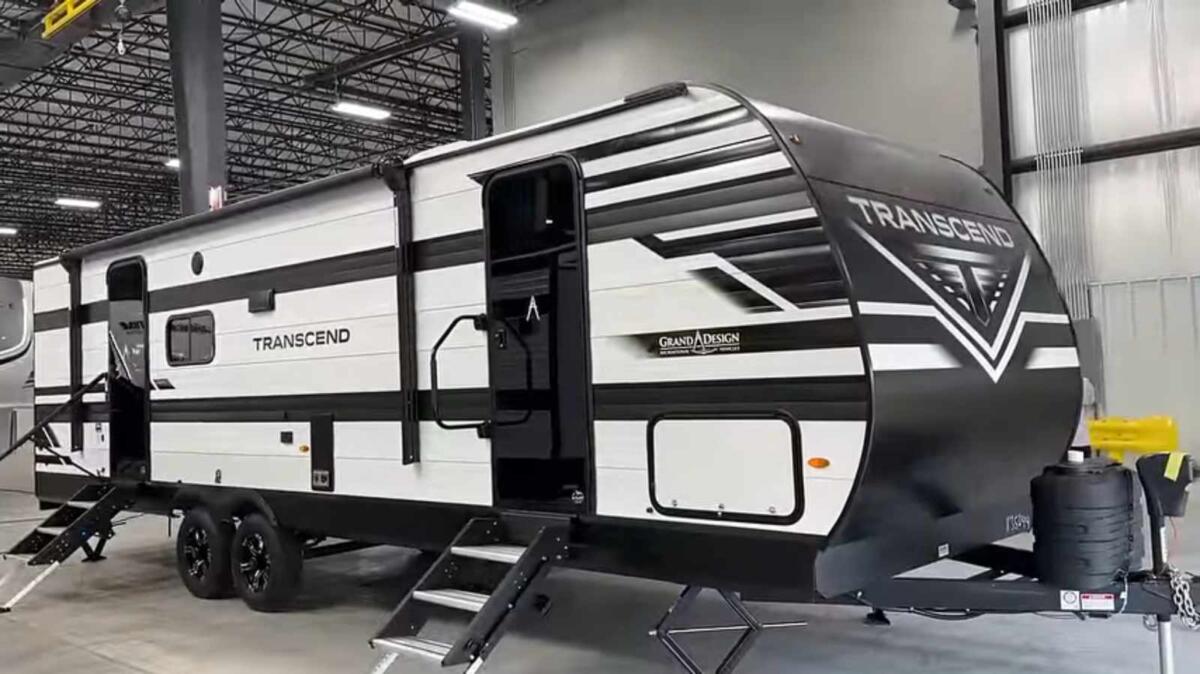
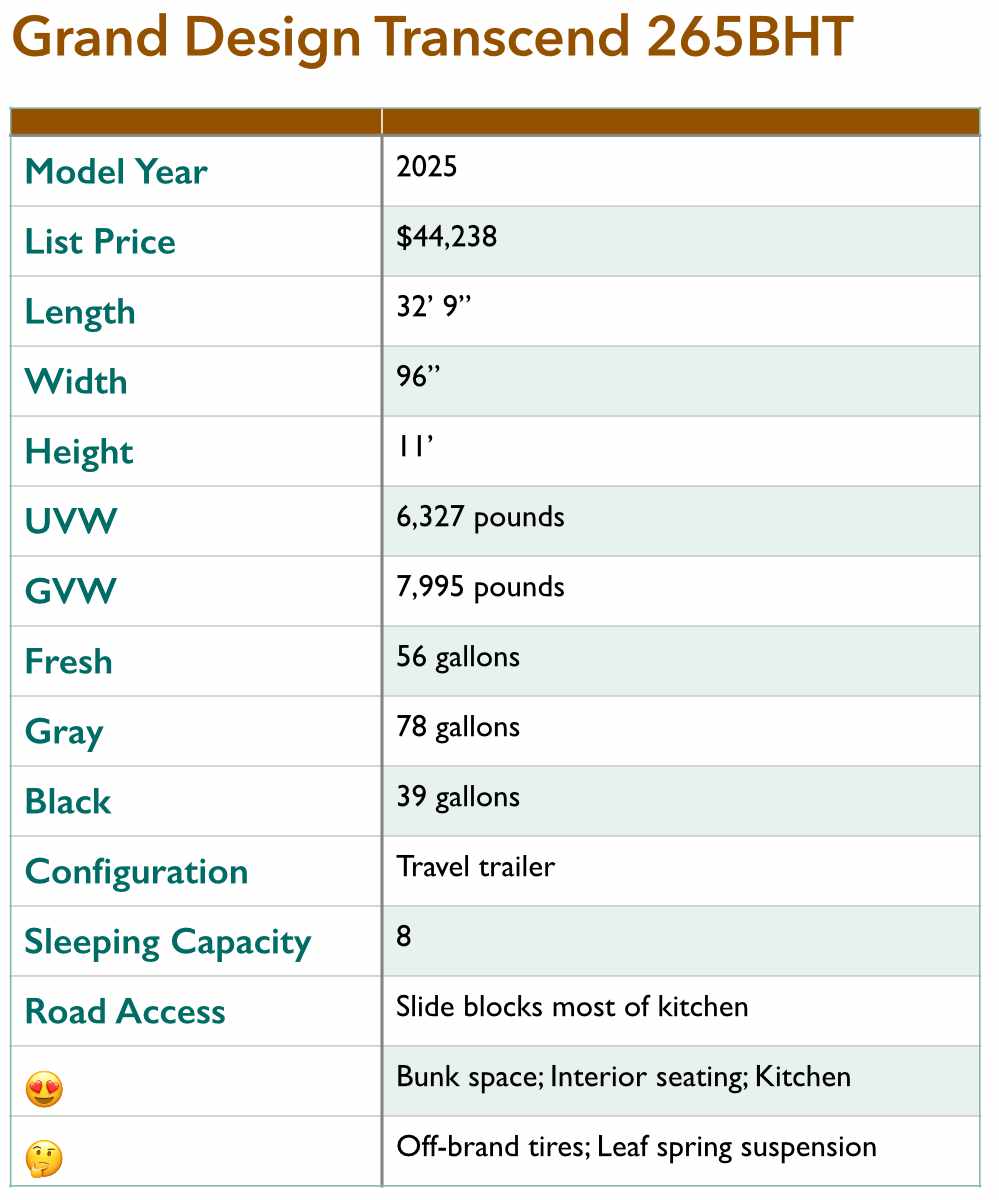
Today’s RV review is the Grand Design Transcend 265BHT, which you can assume is a bunkhouse model just by the letters in the name. If you follow Grand Design, you’ll also know that, being in the Transcend family, it’s a wood-framed aluminum-skinned travel trailer known as a “stick-and-tin” trailer in the industry. That puts it more on the affordable end of Grand Design’s product line as this type of construction is less costly to build—which has some inherent issues that can be easily overcome.
As with any type of RV construction, there are a wide variety of ways of doing the job— some better than others. Naturally. The way Grand Design does the Transcend series is a bit better in this category with a more premium aluminum skin product and better-than-average insulation and build.
But there are also some real corners cut and some can make a difference to some buyers, others may not. Which, I guess, is why you come here to read these reviews! Whew.
First, let’s clear something up. As the Grand Design catalog gets bigger, to me, it also gets more confusing. There is the Transcend, which is this model, but there is also the Transcend Xplor and Transcend One. The latter two are much less well-equipped and built with less premium materials than the Transcend. Further, the Transcend, without the additional qualifying names, is a 50-amp rig, whereas that’s not necessarily true of the others.
I look at RVs all day and the names are a bit confusing. So I can’t imagine (which is another line from Grand Design—hehe) how the average customer can walk into a dealership and know what they’re getting. This isn’t that unusual in the RV industry, alas.
Start at the road with the Grand Design Transcend 265BHT
As you know, I’m a bit of a nut about RV suspension systems—which was only made more nutty when I got to ride in several fifth wheels. This uses off-brand tires on a simple leaf spring suspension. The good news is that KOA reports that you all are only driving about 72 miles on average for your camping adventures.
So, if you’re like lots of RVers and not doing much distance and only using your RV a few weeks a year, you should be okay. If you like to go, go, go, you can swap the suspension out. Or shop for an RV that already has a good suspension. Those tires, though, should just go right away.
I do like that Grand Design has the manual stabilizer jacks at a 45° angle to the chassis. I am told that makes them better stabilizers—which is sort of the whole point of these things.
There’s also only one sewer dump connection. Yippee.
Grand Design Transcend 265BHT - 2025
1 of 14
An interesting rear kitchen placement in the Grand Design Transcend 265BHT
Plenty of storage and a good kitchen in the Grand Design Transcend 265BHT
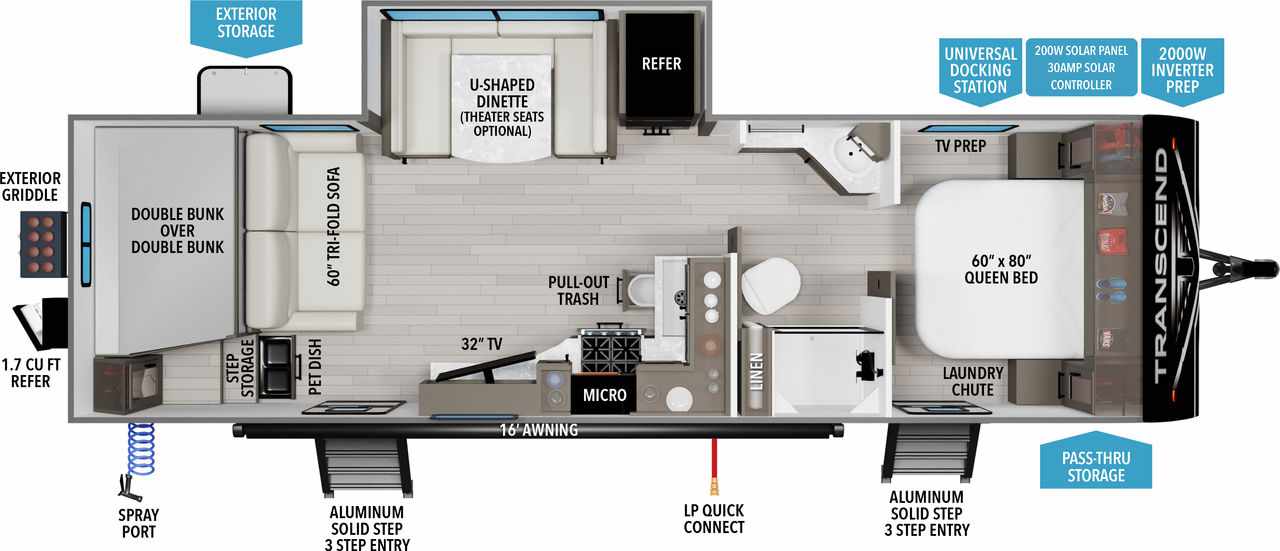
Grand Design Transcend 265BHT floor plan
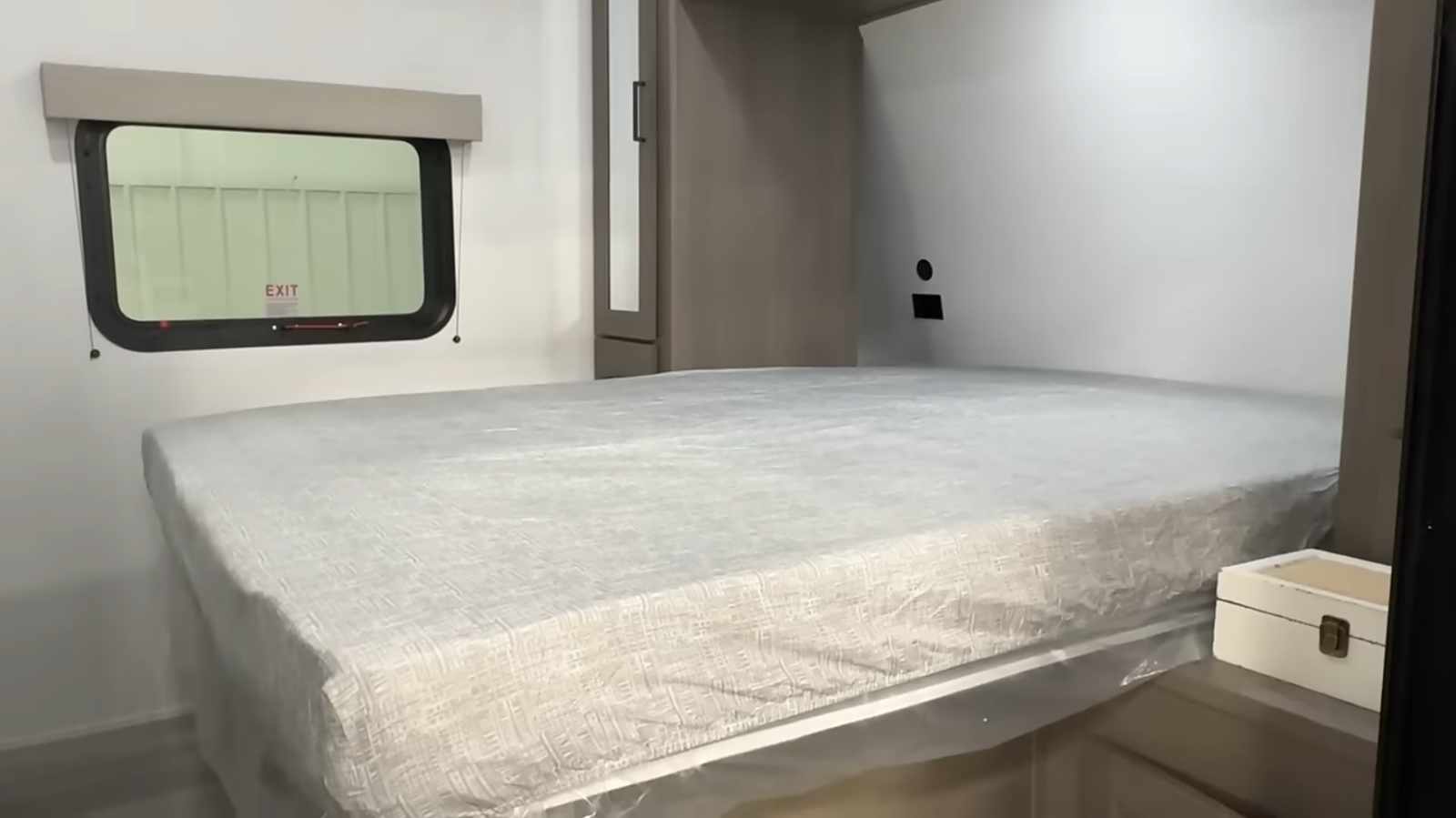
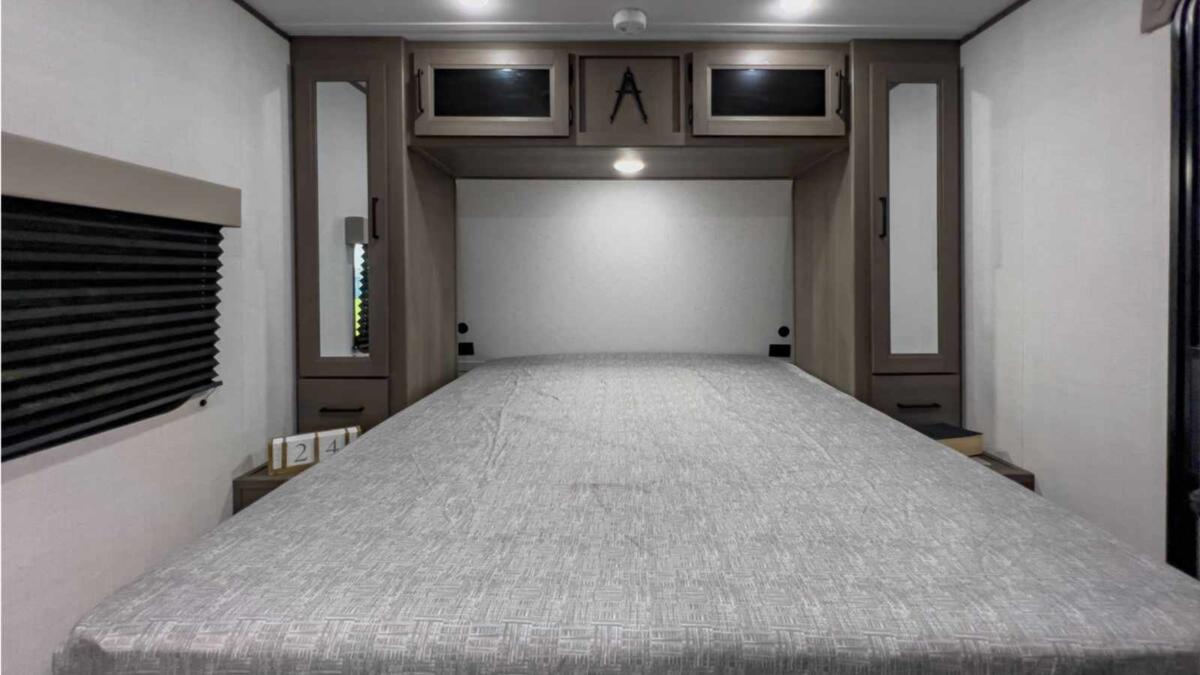
A bedroom with a true queen-sized bed
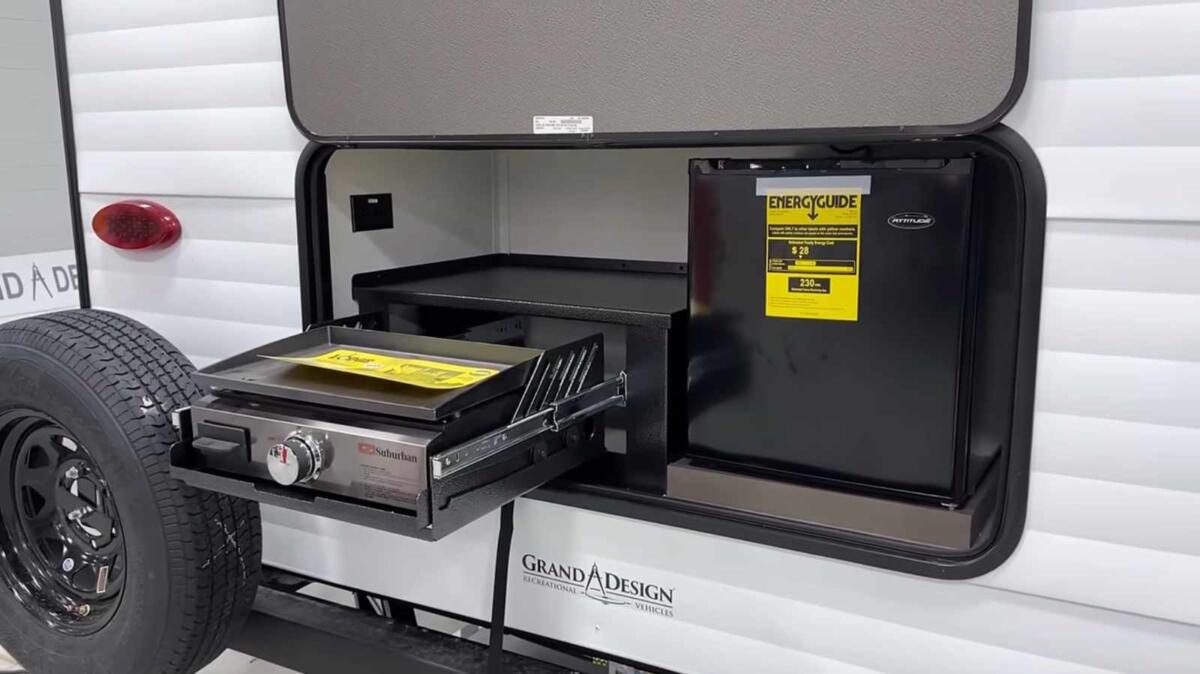
A flat-top griddle and mini fridge
A fridge and U-shaped dinette in a slide
A laundry chute into the pass-through
A mid bath in the Grand Design Transcend 265BHT
A very usable interior despite being a bunk model trailer
Bedroom in the Grand Design Transcend 265BHT
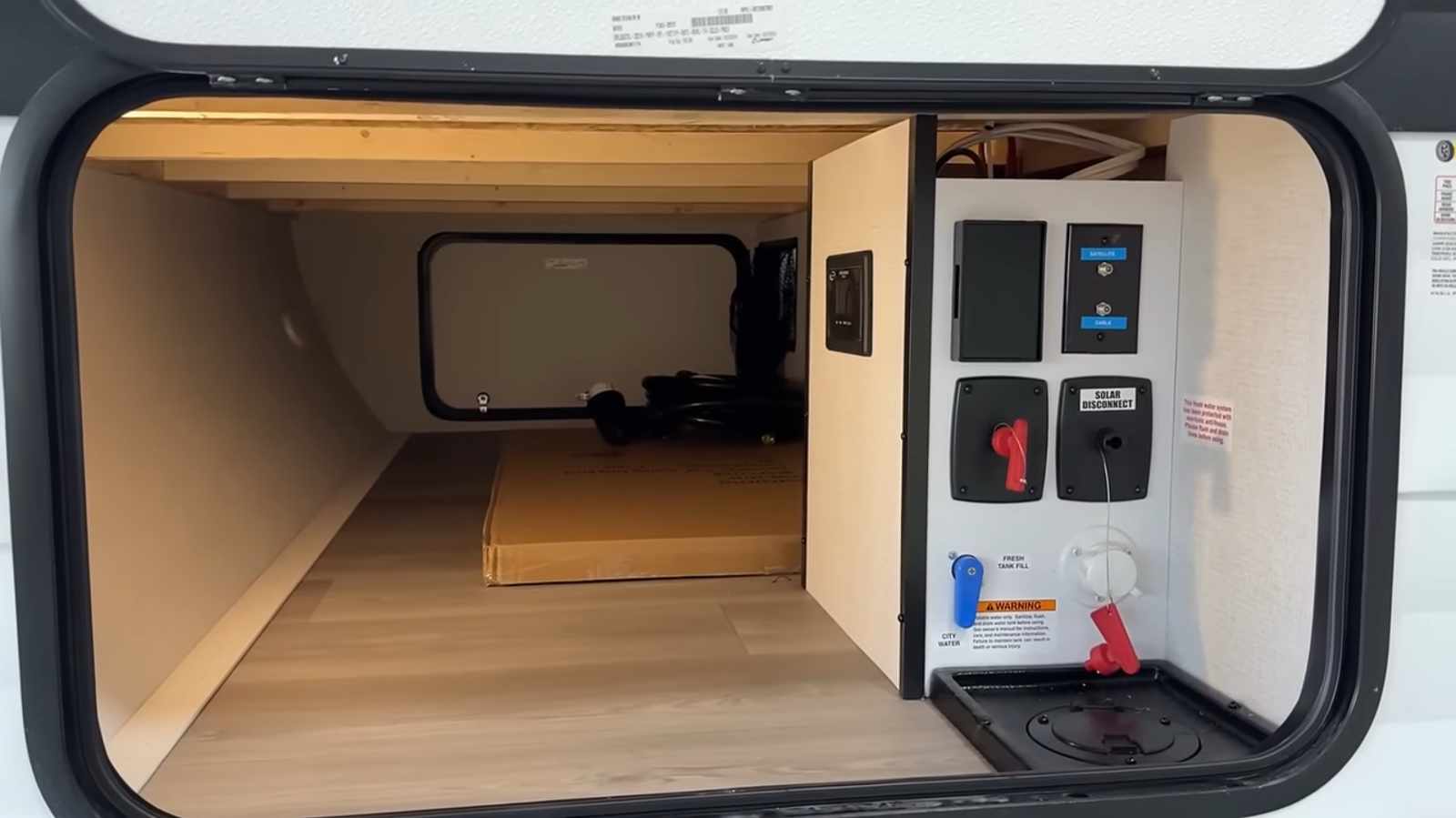
Pass-through storage and water connections in the Grand Design Transcend 265BHT
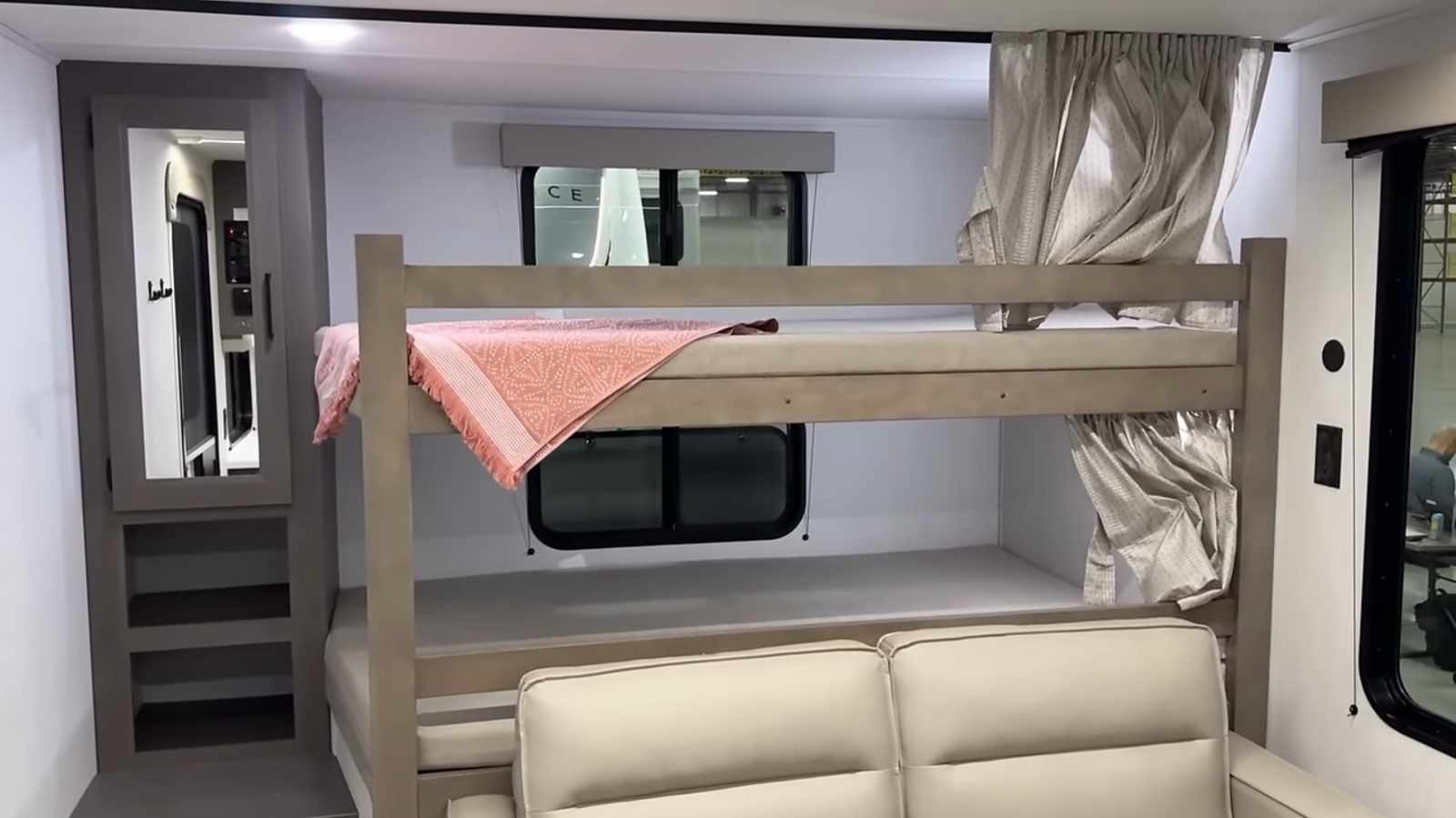
The bunks in the Grand Design Transcend 265BHT
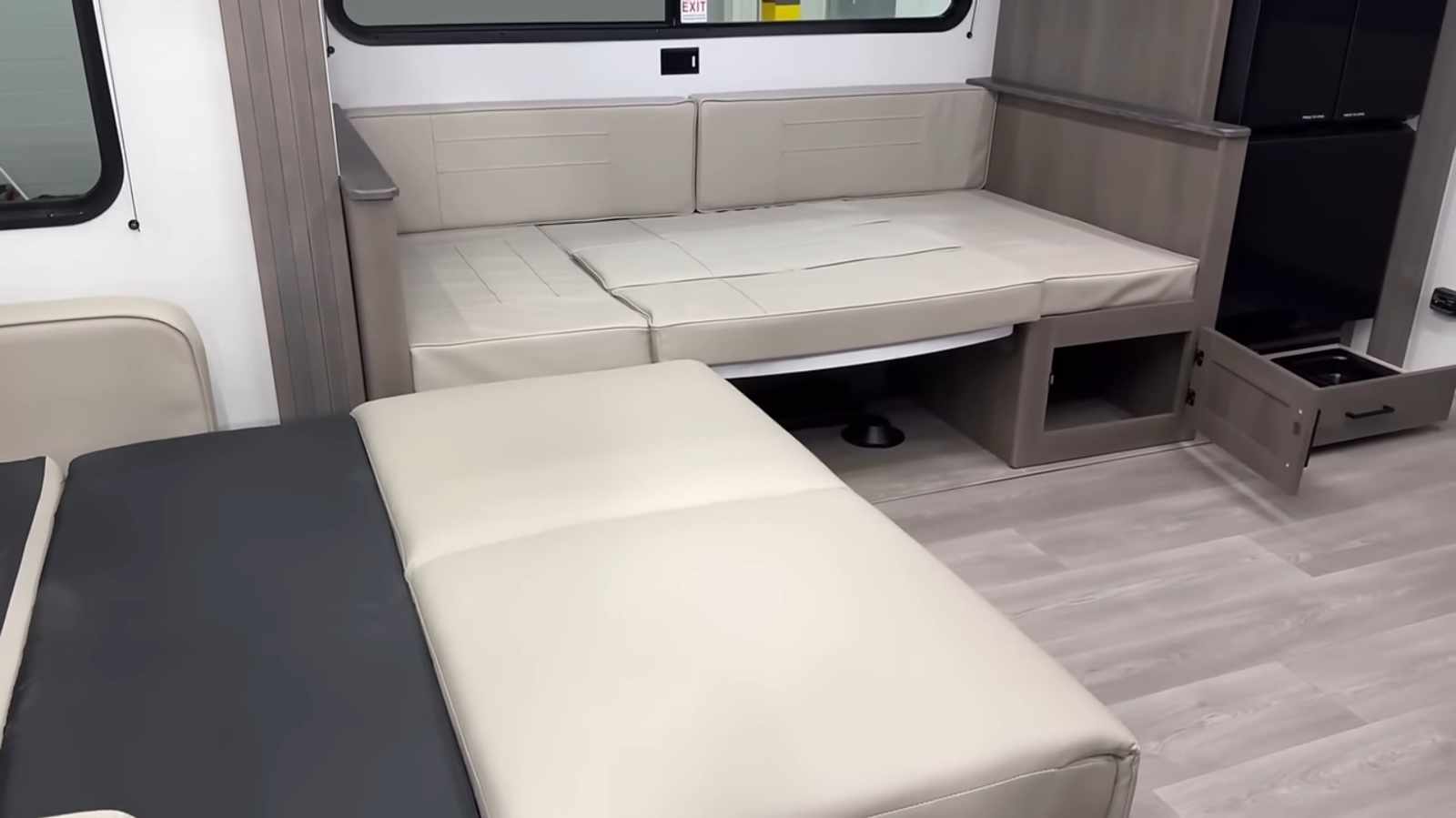
The couch and dinette can also double as beds
Alternative uses for the Grand Design Transcend 265BHT
A lot of bunk model trailers have these bunk configurations that really do mess up the functionality of the trailer if you don’t have a bunch of folks joining you on your adventures.
Let’s say you realized that the grandkids or kids don’t have any interest in camping with you. Fine. When I was selling RVs, lots of people who bought bunk model trailers came to this realization.
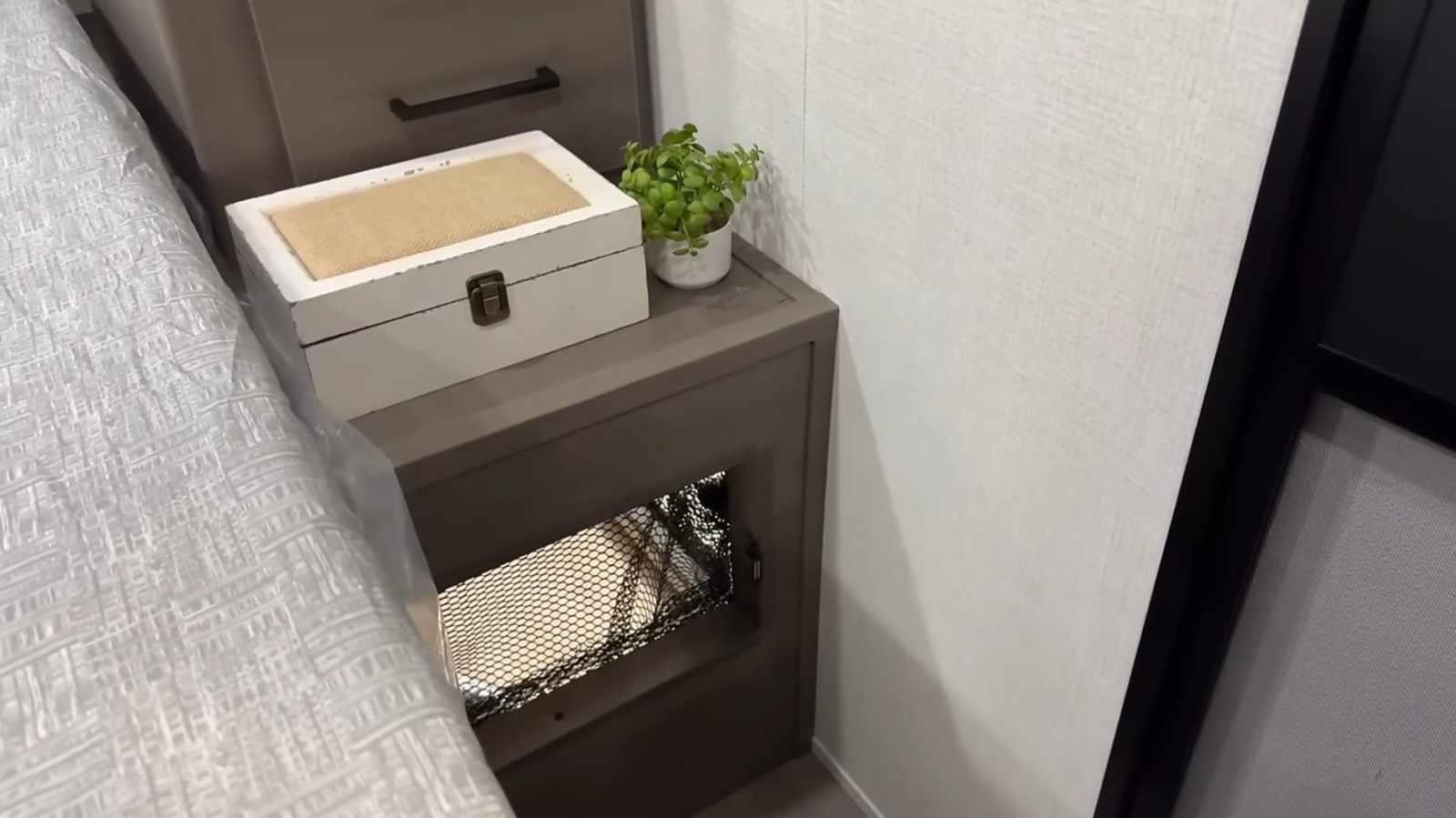
That lower bunk could easily serve as a pet bed and Fido, or Mr. Meow Meow, would love that space to call their own.
The upper bunk, too, could be great for storage. Who doesn’t want more space for more stuff that, honestly, we’re really never going to use? Like pirate costumes. Not that I have any experience with that.
The steps to the lower bunk are pretty convenient for most creatures—whether two-legged or four—so it’s a good use of space.
But what’s different about this is that you also have good seating with both a couch and a larger U-shaped dinette in here. So you don’t sacrifice usable function just because Fido, er, Junior, has a place to crash.
Love it or not features in the Grand Design Transcend 265BHT
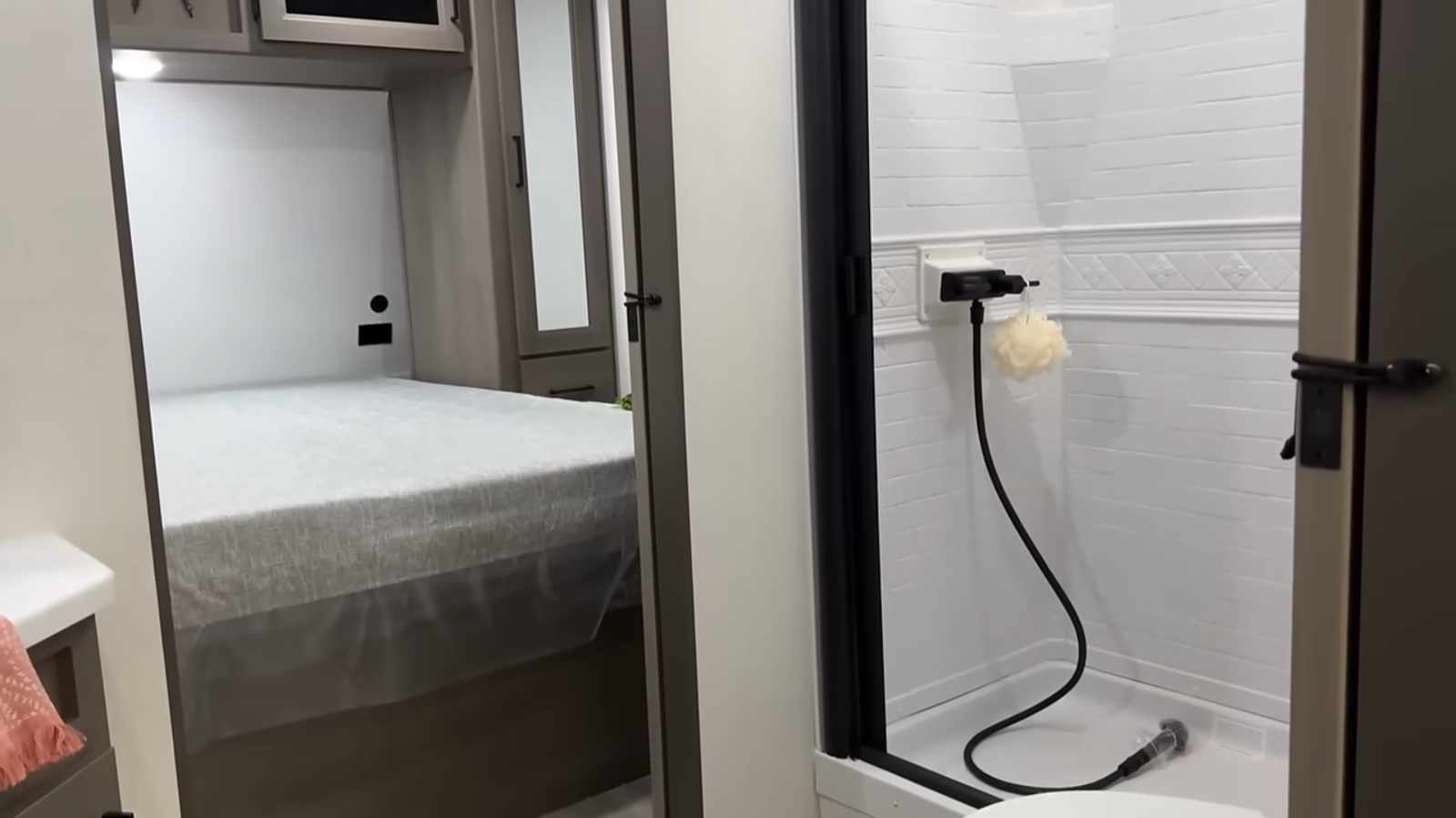
Something I know more than a few of you have shared with me is that you do not like RVs where the bathroom splits the rig into two, which is how this unit is configured. There’s a bedroom up front with a proper queen-sized bed, and then the main living space. The bathroom splits this rig in half.
I do like this and it was a draw on our newest rig—but I know this isn’t a universal draw. However, this bathroom does have good space if you’re okay with it bisecting the RV.
Thoughtful touches in the Grand Design Transcend 265BHT
Grand Design is good at little touches and, even here, in their more affordable models, that’s still true.
For example, the bedroom in this features a true queen-sized bed, and there’s a laundry chute that goes into the front pass-through storage. Nice. I wonder what your feelings are on the storage in the bedroom with the “closet” on the camp side being segmented by shelves and the one on the road side featuring full hanging height with a bar. Either side still has a drawer and some storage behind the closet for electronics or books or your guide to training monkeys.
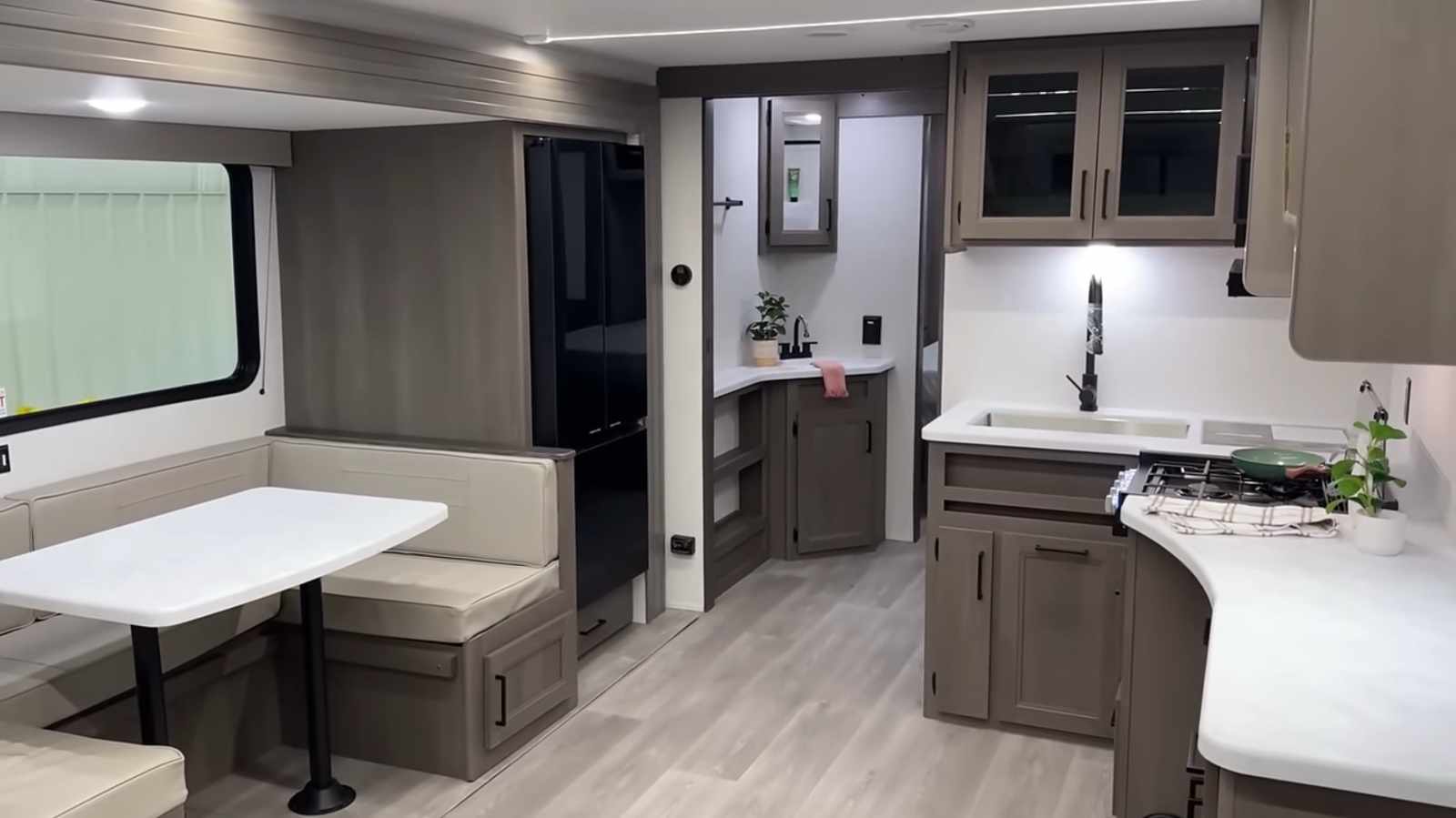
The kitchen has a drawer with a trash can and another drawer, below the fridge, has pet bowls. Fido and Mr. Meow Meow will be happy.
There is only a three-burner stove. But there’s also a convection microwave in the kitchen, and I think this covers most bases. Many, many of you have told me you never use your RV oven.
Something I am torn about is the outside kitchen—which comes out the very backside of the RV. There’s a flat-top griddle and a small fridge back here, but it’s an unusual spot for this. I’m guessing polarizing again.
Boondocking and travel access in the Grand Design Transcend 265BHT
I’m not sure how much boondocking this rig would normally see in its life, but it can be done. There’s a minimum 200 watts of solar with a 30-amp charge controller.
As for access on the road, you can get to the bathroom through the front bedroom door. But the slide in this RV, in the main living space, does have the fridge in it. That means it’s quite blocked by the counter when the slide is closed. Not completely, but mostly so.
My thoughts on the Grand Design Transcend 265BHT
Overall I like the floor plan of this as it has a good feel for everyday use, not something you’ll find in all bunk model trailers. In fact, I could see this making sense for people who don’t intend on having human companions at all, as mentioned, but rather the furry kind.
(Click to enlarge.)
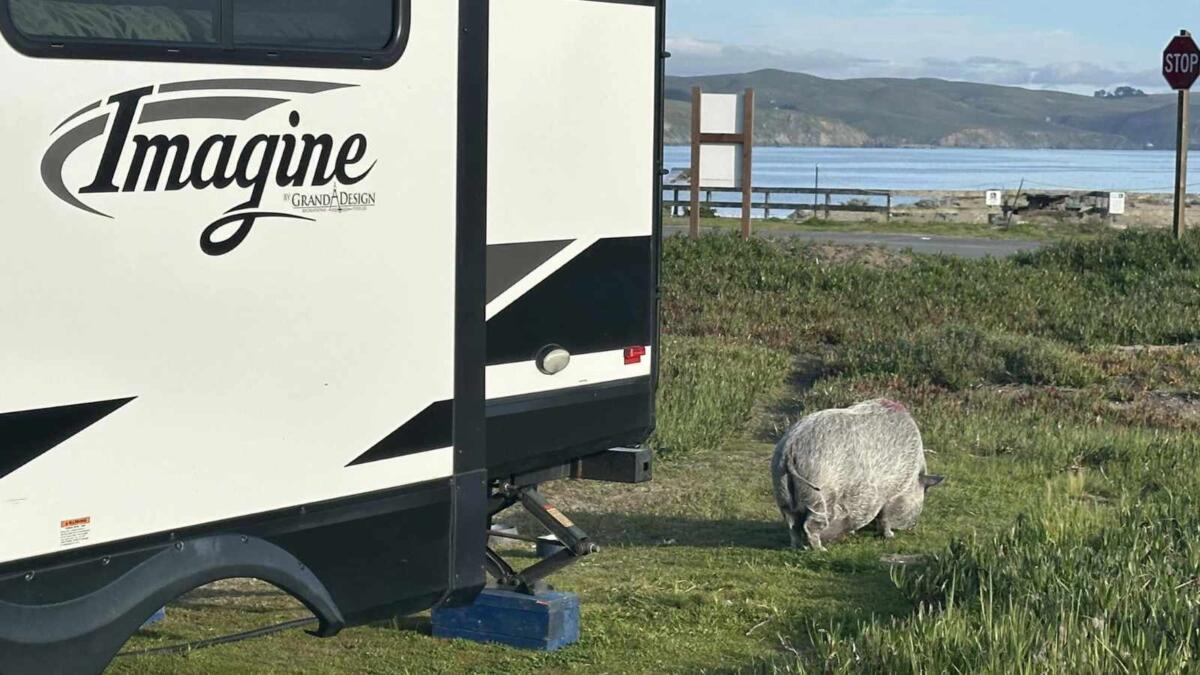
Speaking of which—A friend of mine just saw someone with a 200-pound pig as a pet that they travel with. No, I’m serious. And it was in a Grand Design trailer, too.
And you’re going to have to insert your own doggone bacon jokes here.
But, for the way a lot of people travel, this might be a good choice. It is a very large travel trailer, so this is well into the three-quarter-ton territory, by my calculations. Does this bunk configuration make sense to you?
My thanks to my friend, Josh, from Bish’s RV for the photos and video.
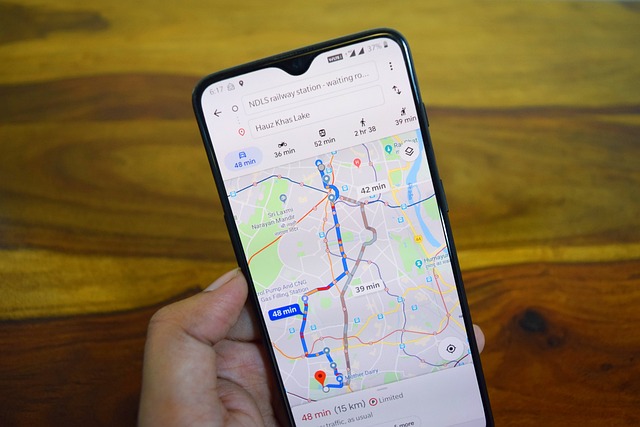
Google Maps recently celebrated its 20th anniversary (February 2025), marking two decades of innovation in helping millions of travelers find their way.
Whether you’re a weekend wanderer or a full-time RVer, let’s celebrate Google Maps with a brief history review. We’ll also unveil some lesser-known Google Maps features that just might make your RVing adventures even smoother.
History
Launched in 2005 as a simple mapping tool, Google Maps quickly evolved into a comprehensive travel companion. From early satellite images to the introduction of Street View and real-time navigation, the app has continuously adapted to our changing travel needs.
Over the years, Google has added exciting features—from indoor maps to live traffic updates—that have transformed how we explore the world. These advancements are celebrated on Google’s official blog, where you’ll find information about the newest features and upcoming innovations.
“Hidden” features RVers should know about
For RVers, Google Maps isn’t just about directions—it’s a toolkit that can help you plan routes, discover new pit stops, and even visualize campgrounds before you arrive.
Here are some little-known features to enhance your road trips:
Offline maps for remote adventures
Why it’s great:
When venturing into areas with spotty cell service, downloading offline maps ensures you’re never left without guidance. This is a lifesaver for RVers exploring rural backroads or national parks.
Step-by-step directions
Open the Google Maps app on your smartphone.
Tap your profile picture or initials in the top right corner.
Select “Offline maps” from the menu.
Choose “Custom map” and zoom into the area you plan to explore.
Tap Download.
Save and organize favorite stops
Why it’s great
Keeping track of your favorite campgrounds, scenic lookouts, or must-visit diners is simple with the “Your Places” feature. It’s perfect for planning future trips or simply bookmarking spots you want to revisit.
Step-by-step directions
In the app, tap the “Saved” tab at the bottom.
Choose a list such as “Favorites” or create a new custom list.
Tap the + icon to add a new location.
Label your stop (e.g., “Grand Canyon RV Park”) and add any notes.
Multi-stop route planning
Why it’s great
Unlike standard navigation, the multi-stop feature lets you customize your journey by adding several destinations in one trip. This way, you can plan a comprehensive route that includes scenic byways, RV parks, and local attractions.
Step-by-step directions
Open Google Maps and tap on Directions.
Enter your starting point and primary destination.
Tap the three-dot menu (or “Add stop”) to include extra locations.
Rearrange the stops by dragging them into your preferred order.
Start your journey with a route optimized for multiple stops.
Explore in street view
Why it’s great
Before committing to an RV park or a campground, you can virtually explore the area using Street View. This feature lets you get a real-world look at what to expect—even down to the curb appeal of local eateries and service stations.
Step-by-step directions
Open Google Maps and search for the location of interest.
Long-press on the map to drop a pin.
Tap on the Street View thumbnail that appears.
Swipe around to explore the surroundings in detail.
Real-time traffic and route adjustments
Why it’s great
Avoiding unexpected delays is sometimes crucial for RVers. Google Maps’ real-time traffic updates can help you steer clear of congested areas, ensuring a smoother ride. Plus, the app now offers suggestions for alternate routes that might better suit the dimensions and comfort needs of RV travel.
Step-by-step directions
After setting your route, tap the “Layers” icon in the top right.
Enable the Traffic layer.
Google Maps will display colored overlays—green for free-flowing traffic, yellow for moderate, and red for heavy congestion.
Consider the suggested alternate routes if you notice delays.
Finding essential supplies on the road
Why it’s great
When you’re on the move and need to pick up that last-minute essential, Google Maps can be your go-to resource. This intuitive feature not only saves time but also ensures you never run out of essential supplies during your travels.
Step-by-step directions
Open Google Maps on your smartphone.
Tap the search bar and type in the item or store category you need.
Browse the list of results, checking out reviews, photos, and hours of operation.
Select a location for detailed directions to guide you directly there.
Try these helpful Google Maps’ features
Google Maps has come a long way in the past 20 years. Its evolution continues to offer practical, hidden features for modern travelers. For RVers, these tools can enhance every aspect of the journey—from ensuring you’re never without a map to helping you discover unique stops along the way. By taking advantage of offline maps, multi-stop planning, saved locations, and the immersive Street View, you’re well-equipped to hit the road with confidence.
Have you ever wondered how (and why) humans began traveling? Here’s what I envision for the history of travel:
Caveman Grog: “I gotta’ tell you, Mrs. Grog, I’m sick and tired of pushing boulders and fighting off dinosaurs all day, every day. I need a break.”
Mrs. Grog: “Oh, no you don’t! You’re not leaving me here to keep this fire going all on my own. I’m going with you!”
Caveman Grog: “OK. Grab the kids and our extra loincloths. Let’s go!”
And just like that, the family vacation was born.
Not quite the right history of travel
My take on how travel began is a little off… Ok. It’s all wrong. In prehistoric times, early humans traveled primarily for survival—hunting, gathering, and searching for new and better places to live.
As civilizations emerged, the purpose of travel changed. Ancient Egyptians, for instance, journeyed to trade goods and pay homage to deities at sacred sites. Similarly, the Greeks and Romans traversed vast distances, not only for commerce but also to participate in religious pilgrimages and cultural exchanges.
The Roman roads
Speaking of the Romans, I think they, more than anyone else, advanced the idea of travel as we know it today. They built roads.
The Roman Roads were built to connect the vast Roman Empire. Stretching over 250,000 miles, these roads facilitated military movement, trade, and communication. The durability and engineering precision of these roads allowed for faster, safer, and more efficient travel. This network strengthened the Roman Empire and laid the foundation for future travel and commerce across Europe.
Travel as education
Fast forward to the 17th and 18th centuries, and travel had transformed into a rite of passage for young European aristocrats. Known as the “Grand Tour,” these extensive journeys across Europe included cities like Paris, Venice, and Rome. As they traveled, Grand Tour participants were immersed in art, culture, and the humanities. These trips served as the conclusion of their formal education.
Industrial Revolution
The 19th century Industrial Revolution marked a significant turning point. Innovations like the steam locomotive revolutionized transportation. Travel became more accessible and efficient. In 1841, Thomas Cook organized the first recorded leisure excursion by train. He is often credited for laying the groundwork for modern tourism.
Modern era
Today, travel is a global phenomenon, accessible to almost everyone. Advancements in air travel, digital technology, and global connectivity have made exploring new destinations easier than ever. Whether it’s a weekend getaway or an international expedition, the reasons for travel are as diverse as the travelers themselves.
I wonder what future travel will be like. No doubt there will be many innovations, improvements, and changes. For now, at least in my opinion, RVing is the way to go!
What would Caveman Grog say?
“So, this is an RV, huh? Honey, step up inside here! You are NOT going to believe this!”
By Russ & Tiña De Maris
Here are sure signs you need to disinfect your RV fresh water system:
Your significant other takes a drink of water and their face wrinkles up like a raisin.
You take a shower and come out covered with algae.
You fill up your fresh water tank—and then notice a sign warning a “boil water advisory is in effect.”
Really, if your rig has been snoozing all winter and you remember that you forgot to drain the system down, aside from fixing broken pipes, it’s not a bad idea to do a disinfect. It only takes about one mouthful of “Yecchh!” water to convince you that water can go stale. What to do? Well, this is the same trick we recommend before you use the water system on any “new to you” RV.
Step by step
1. Completely drain the fresh water holding tank. Fire up the water pump and open taps until all water is out of the system. If your water heater is “in the circuit” (meaning not winterized, but holding water), drain it too, using the drain cock on the heater. Big fat caution: Make sure the water is COLD before draining it.
2. Determine the fresh water tank capacity. Easy enough if you have an owner manual. If not, measure the fresh water tank. Break down the feet and inches to decimals, e.g., a 4’6″ run is 4.5′. Multiply the height, width, and depth figures and you’ll have the tank’s capacity in cubic feet. Now multiply the cubic feet by 7.48051945 and voila! You now know the capacity in gallons.
3. Using unscented household bleach (8.25% of sodium hypochlorite) and a clean container (a cleaned up juice jug or empty gallon drinking water jug is ideal), mix up a solution in this way: For each 15 gallons of tank capacity, pour in 1/4 cup of bleach, then top off the jug with fresh water.
4. Make sure your fresh water drain valve is closed (and the water heater, if applicable), and pour this bleach solution into the holding tank. Now completely fill the fresh water holding tank with clean, fresh water. At this point, if you can, move your RV around the block to thoroughly swish and mix the solution in the tank.
5. Turn on the water pump and pump the bleach solution through all the plumbing. You’ll know when you’ve pumped enough as you should smell the bleach solution at the fixture. Let solution stand in the plumbing and fresh water tank overnight. Next day, drain the fresh water tank (and again, the water heater, if applicable), and refill the fresh tank with clean, fresh water.
Get rid of that yucky chlorine taste
If you’re concerned about the remaining chlorine taste or odor, mix up a solution of 1 quart of cider vinegar for every five gallons of tank capacity and dump it in the fresh tank, repeating the same process you did for the bleach job.
Ever get caught somewhere with a dry tank and need to use surface water in an emergency? Or have to use possibly contaminated or questionable water in any emergency? Here’s how you can safely do it.
We use cookies to ensure that we give you the best experience on our website. By continuing to use our site, you consent to accepting cookies. We NEVER have or will sell reader's data. For more info, please see our privacy policy page.