Home Blog Page 280

Winnebago recalls trailers for stovetop fire danger

1

Winnebago Towables is recalling certain 2025 Micro Minnie and Micro Minnie FLX travel trailers. The cooktop flame may invert when the stove and furnace are operated at the same time.

An inverted cooktop flame increases the risk of a fire, and injury. As many as 527 travel trailers may be affected by the recall, which was issued June 18.

Remedy
Dealers will install a panel to separate the cooktop and furnace, free of charge. Owner notification letters are expected to be mailed on August 15.

Owners may contact Winnebago customer service at 1-574-825-5280 Ext. 5220. Winnebago’s number for this recall is CAM0000043. This is an expansion of NHTSA recall 25V029.

To learn about other RV recalls please visit our RVtravel.com archives.

More articles you might really like

The 7 red flags of potential bad RV neighbors
Campground worker explains the 10-year rule and why campgrounds enforce it
RVers saying goodbye to RVing; ‘Who wants to spend $100 a night to stay at crowded park?’
Reserved but empty campsites: The campground’s side of the story
RVer says ‘the kind of folks camping has really gone downhill’
Why I canceled my Thousand Trails membership after just using it once

RVT1215b

RV Daily Tips. Thursday, June 26, 2025

Issue 2674


Today’s thought

“I had already found that it was not good to be alone, and so made companionship with what there was around me, sometimes with the universe and sometimes with my own insignificant self; but my books were always my friends, let fail all else.” ―Joshua Slocum


Need an excuse to celebrate? Today is National Barcode Day! (Isn’t that exciting??)

On this day in history: 1977 – Elvis Presley held his final concert in Indianapolis, Indiana, at Market Square Arena.


Tip of the day
RV gray tank smells worse than black tank? What to do

By Nanci Dixon
Who knew I could get so excited about flushing the gray and black water tanks? Okay, I know it is a bit odd, but as the designated tank flusher, I am happy when the “gunk” comes out. While I am diligent about flushing out the black water with the built-in flush system, there was no built-in system for the gray water. When I complained to our RV tech about the smell when driving, he said that the gray water can smell worse than the black. Why? Here’s the answer and what to do about it.


Ask Dave
Do I need to change oil in inverter generator as often as recommended?

Dear Dave,
I have a Champion dual-fuel inverter generator (200961) that we carry in our travel trailer. Since our power demands while off-grid are only occasional and not that great, it only gets used about a dozen hours or so a season… My question is: … [I]s it necessary to change the oil seasonally as I have been, or otherwise as recommended by the manufacturer? —John, 2020 Jay Flight SLX 245RLSW Read the rest of the question and Dave’s answer.


Article and video
How to hide a stealth window in your campervan or RV build

By Cheri Sicard
Having a stealth window you can see out of but others can’t see through from the outside keeps a cargo van looking like a work van, but inside, it’s bright and open. During the day, a stealth window lets natural light pour in while blocking eyes from peeking in. At night, when the van lights are on, the curtains deliver extra privacy. This method is a tried-and-true solution for vanlifers who want windows without drawing attention. In today’s featured article and video, the team from Outdoors Embrace shows us how.


Featured article
Boondocking: A comprehensive how-to guide for a great trip

By Nanci Dixon
Every camper needs a boondocking how-to guide. Boondocking is so underrated! Even among ardent campers, boondocking is often viewed as a last resort—an overnight stop when there is nowhere else to stay. Learn all about boondocking in this very thorough guide.
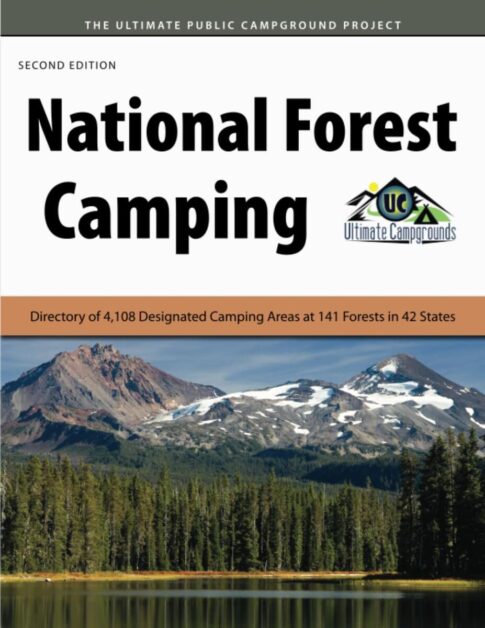

The best book for National Forest Camping
The U.S. Forest Service manages nearly 193 million acres of public land in 154 national forests and 20 national grasslands. These areas provide many opportunities for outdoor recreation. Forest Service areas offer some of the best camping experiences in the United States. In this directory, you’ll discover 4,108 select camping areas at 141 forests in 42 states. Learn more or order.


Reader poll
When was the last time you ate at McDonald’s?

Respond here.


Quick tip
Insurance awareness for motorhomers with toads

If you have a motorhome and are towing a car (toad), you must have a policy that covers both car and motorhome. If you are in an accident, most likely both will be damaged. If you have policies with two insurance companies, you are looking at two deductibles and two claims. You are also liable if your car breaks loose from the motorhome and goes off on its own. Claims will be filed by drivers of other vehicles yours has hit, as well as property owners that have sustained damage caused by your errant car. These claims will most likely be against the liability portion of your RV insurance. Your motorhome insurance does not automatically extend to the car you are towing. This is why you should carry liability coverage on both your motorhome and towed vehicle. FromSo, You Want To Be an RVer? And Enjoy the RV Lifestyle?


BUMPER SNICKER: “Next time you wave … use all your fingers!”


On this day last year…


Website of the day

50 Easy 4th of July Crafts
Can you believe it’s almost the 4th of July? Where did the time go?! Here are 50 incredibly fun and creative craft ideas from Country Living to make your holiday even more patriotic. You could easily make these in your RV.


? MYSTERY PRODUCT OF THE DAY ?
If you’re into these things, you’re going to love this. If you don’t like these things, you’re going to hate this. You’ll have to take your chances!


And the survey says…

We’ve polled RVtravel.com readers close to 5,000 times in recent years. Here are a few things we’ve learned about them:

• 3 percent make an online purchase every single day. Another 38 percent make an online purchase at least once a week, if not more.
• 10 percent say their slideout(s) have gotten stuck in the out position and they have needed help getting it fixed more than once.
• 35 percent always bring bicycles with them on their RV travels.

Recent poll: Have you ever stayed overnight at a Love’s RV Stop?


Trivia

Ironically enough, alcoholic cocktails were popularized in the U.S. during Prohibition! Funny, right? When the U.S. government banned alcohol, drinking went underground… and so did alcohol quality. Moonshiners and bathtub-gin makers flourished, but their stuff, made quickly, tasted quite foul. Those visiting speakeasies mixed that bottom-shelf gin (most popular at the time), with juices, syrups, and bitters to take out the yuck-factor. And so was born the cocktail!


Readers’ pet of the day

“This is Lexie. She’s a 6.5-year-old GSD. We adopted her two months ago. Her former home couldn’t keep her due to health issues. She settled right in with us. She is on her first RV adventure and so far is really enjoying it.” —Richard D. Butler

Send us a photo of your pet with a short description. No blurry photos and please do not submit your photo more than once. Thanks!

RVing with Dogs group on Facebook. You’ll love it.


Leave here with a laugh

Yikes!


Today’s weather forecast across the nation
THIS MAP UPDATES TWICE A DAY
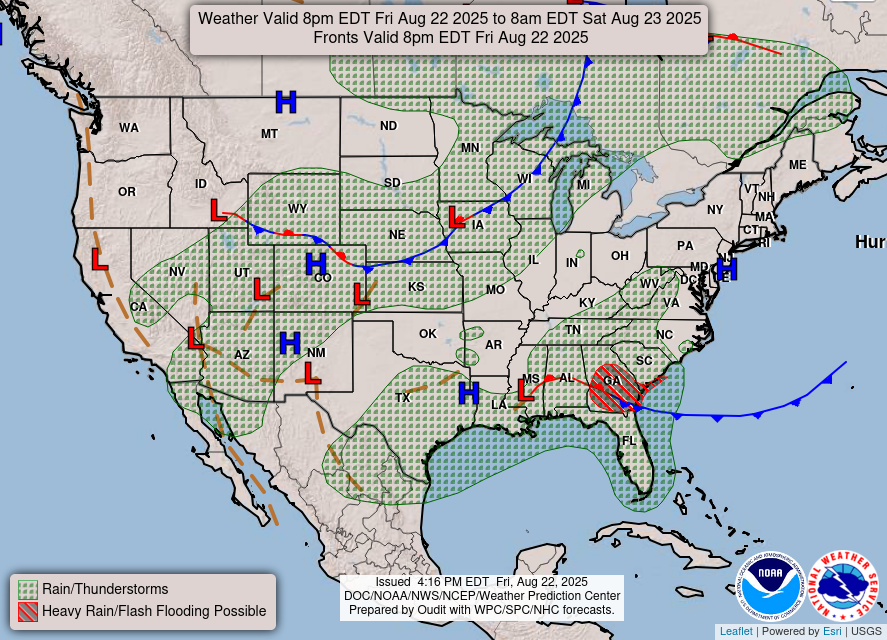
Visit Current National Radar Weather Map
Current fire and smoke map from AirNow


Did you miss the latest RV Travel Newsletter? If so, read it here.
Oh, and if you missed the Latest News for RVers, make sure to catch up here.


If you shop at Amazon.com we’d appreciate you using this link. We get an itty bitty commission if you buy something, but they add up and help us pay our bills (most importantly our hard-working writers!).


RVtravel.com All-Star Team

Click here for information about our staff and how to contact us.

Our policy on using artificial intelligence.

Do I need to change oil in inverter generator as often as recommended?

Dear Dave,
I have a Champion dual-fuel inverter generator (200961) that we carry in our travel trailer. Since our power demands while off-grid are only occasional and not that great, it only gets used about a dozen hours or so a season for when we need A/C, to run the microwave, or just need to top off the batteries. As I exclusively run it off our trailer’s propane supply, it has never seen gasoline. The big advantage is that I never have to carry extra gasoline or worry about it going stale.

My question is: Since we only use it occasionally, live in a low-humidity environment, only run it on propane and store it indoors during the off-season, is it necessary to change the oil seasonally as I have been, or otherwise as recommended by the manufacturer? —John, 2020 Jay Flight SLX 245RLSW

Dear John,
According to the Champion owner’s manual, they recommend changing the oil after every 50 hours of operation when using the unit in a heavy application, or high temperatures, or annually. If it is normal operation, it is recommended after every 100 hours or annually. If this recommendation is not followed, you will void the manufacturer’s warranty. According to the owner’s manual, the warranty on your generator is 3 years.

HOWEVER, I am probably the last person to give advice on changing oil or other maintenance recommendations. I had a Craftsmen lawnmower that I did not change the oil on for six years. I gave it to my nephew when we moved into a twin home that had full lawn care and snow removal. He has had it four years, and I bet the oil is the same. If you think that is bad, I’m even worse at my own maintenance as I don’t think I’ve done a sit-up or push-up since Jimmy Carter was elected!

Don’t get me wrong, I don’t recommend letting your oil change or body go to that extreme. So, let’s look at what happens when you don’t change the oil at least annually.

A good friend of mine, Doug Rosendahl, owns PetroBlend. It supplies oil, filters, DEF, and other lubricants to commercial fleets. He stated that oil has additives, and moisture in the oil can cause those to break down.

If you are not running your engine very much, it doesn’t get hot enough to burn off the condensation or moisture. Plus, oil degrades, and the longer it sits, the less viscous it will be. He recommends changing oil at least once a year, if not more. However, he does sell oil. 😉

How can you tell if your oil is still good?

I came across a great article by Popular Mechanics, How Often Should You Really Change Your Car’s Oil?, here.

The author went to my school of maintenance and ran his lawnmower more than 10 years without changing the oil. He then sent it in to have it analyzed. Blackstone Laboratories in Ft. Wayne, Indiana, will analyze oil samples for viscosity, moisture, additives, metal fragments and more. They analyzed the author’s oil and found that although the oil was dirty, it had held up with viscosity and additives, and had just a slight amount of moisture, but was still protecting the engine. WOW.

While I would not recommend pushing your generator to this extreme, you can visually inspect the oil on the dipstick to see if it looks burned or thicker than normal, or has signs of moisture. Or you can send in a sample of the oil to Blackstone Laboratories here.

The test costs $30, which is more expensive than the quart of oil and filter to change the oil.

Bottom line… I would recommend changing it once a year in the spring, as it very easy to do, takes little oil, and it’s better safe than sorry.


 You might also enjoy these posts from Dave 


Dave Solberg is a leading expert in the RV industry and the author of the “RV Handbook.”

Read more from Dave here

HAVE A QUESTION FOR DAVE?

Send your inquiries to him using the form below.

Name
Drag & Drop Files, Choose Files to Upload

RVDT2674

RV gray tank smells worse than black tank? What to do

By Nanci Dixon
Who knew I could get so excited about flushing the gray and black water tanks? Okay, I know it is a bit odd, but as the designated tank flusher I am happy when the “gunk” comes out. While I am diligent about flushing out the black water with the built-in flush system, there was no built-in system for the gray water. When I complained to our RV tech about the smell when driving, he said that the gray water can smell worse than the black.

Why?

Mold in the gray water tank

I recently attended a rally seminar about “All things black and gray” and, boy, did I learn a lot! The presenter from Kleen Tank passed around glass bottles of “stuff” that had come out of holding tanks. He did advise, “Don’t open, don’t drop,” while handing it off.

I recognized the black discs that had been coming out of the gray water holding tank and was disgusted when he said it was a massive amount of mold. He also had some discs as hard as metal that he passed around that had “mineralized” with the urine in the black tanks. He said that he finds the gray tank is usually worse than the black, particularly if people have built-in flush systems and had been keeping up with the black tank.

Flush rinser with gate valve and water meter

Best of all, he passed around this flush attachment and water meter. I knew the flush rinser existed, but our hose goes straight down through the bay and there was no way the flush attachment was going to fit. But wait! He showed how the gray and black dump pipe rotates outward and allows the flush rinser to attach! This is what he showed me.

Combined with a water meter, the flush rinser can easily clean out both gray and black water tanks.

The water meter measures how much water is going through a garden hose. It is usually used when watering a garden but it is an exceptional tool for measuring how much water in gallons or liters is going into RV tanks, particularly when flushing. (You can read more about this handy water meter here.)

Warning and Disclaimer:

THE FOLLOWING METHOD IS GENERALLY NOT RECOMMENDED BY RV MANUFACTURERS.

It is not recommended because there can be disastrous results if one walks away from the RV or gets distracted while filling a closed gray water tank or closed black tank with water. Think black water eruption through the toilet into the bathroom and beyond…

With that disclaimer noted, this was the method taught at the seminar to thoroughly flush out the black water and gray water tanks. This was also the method Kleen Tank used when flushing out our tanks. They had the additional step of a hose inserted into the tanks to pressure wash them along with flushing them out. That pressure wash is what a professional is for!

Flush steps

1. IMPORTANT! Double-check the gallon capacity of the holding tanks in the RV specs. If you are like me, it is a good idea to write them down!

2. Attach water meter to a garden hose. Do NOT ever use a fresh water hose to flush! Use a backflow preventer to prevent contaminated water going into fresh water faucet. Kleen Tank adds the backflow preventer and water meter at the flush rinser. Others put the preventer and meter at the faucet.

3. Attach the flush valve rinser to the sewer pipe opening and sewer hose.

4. Pull gray water valve open for a few seconds and close to “lubricate” the sewer hose.

5. Dump black water.

6. When black tank is empty, follow directions on the flush valve rinser, close the rinser gate valve and fill the tank with water.

7. Watching the water meter, fill UNDER the capacity of the tank. I went under by 20 gallons just to be safe.

8. Turn off water and pull gate valve. If you can stand to watch, see how much more gunk was in there.

9. Repeat with the gray water tank. If your tank was like ours, it was not a pretty sight!

10. This flush rinser has a hose rinse setting, too, but I found it rather ineffective and figured the gray water going through the sewer hose was rinse enough.

11. Add at least two gallons of water to the black tank through the toilet and then treat as normal. A number of people are so happy with this type of flush they don’t add any chemicals, organic or otherwise, to the tanks.

And that’s what you call a royal flush! Happy flushing!

RELATED

##RVDT2674

How to hide a stealth window in your campervan or RV build

By Cheri Sicard
Having a stealth window you can see out of but others can’t see through from the outside keeps a cargo van looking like a work van, but inside, it’s bright and open. During the day, a stealth window lets natural light pour in while blocking eyes from peeking in. At night, when the van lights are on, the curtains deliver extra privacy. This method is a tried-and-true solution for vanlifers who want windows without drawing attention.

In today’s featured video, at the bottom of this post, the team from Outdoors Embrace shows us how.

Overview of the installation process

Installing a stealth window using the urethane method is something most beginners can do. Also, it’s the most reliable way to make sure there are no leaks over time. Here’s a simple overview (watch the video for a demo):

1. Mark the cutout on the van wall

2. Cut out the metal

3. File and clean the opening

4. Prime with urethane primer

5. Add trim lock edging

6. Apply urethane bead

7. Press in the window

8. Tape while drying

9. Add the perforated sticker

10. Build and install the curtain frame

Tools and materials you’ll need

The right tools make this safe and straightforward:

Must-haves:

  • 26:1 ratio caulking gun (for squeezing thick urethane)
  • Urethane tube and primer
  • Drill with metal bit
  • Jigsaw with metal-cutting blade
  • Metal file or deburring tool
  • Sharpie and straightedge
  • Safety glasses
  • Window install tape
  • Window that fits your van
  • Perforated vinyl sticker (find a recommended one here)
  • Vacuum cleaner
  • Acetone

Nice-to-haves:

  • Trim lock for a finished look
  • Suction cups for safely holding the window

A regular caulking gun will not work. Pushing out urethane with anything weaker will turn installation into a struggle.

Watch the video for a demonstration of how to do each of these steps.

Installing the perforated vinyl sticker

After installation, a perforated vinyl sticker masks the glass, letting you see out while blocking outside eyes. Start by peeling off half the backing, align the sticker, then work across the panel with a credit card or small squeegee. Smooth gently and avoid stretching. Do the bottom first, then repeat with the top half. Use a sharp new blade angled in to trim the edges right against the glass. If the sticker isn’t laminated, rain might blur the view temporarily. Laminated stickers are pricier and harder to source, but they shed water better.

Check for leaks after the first few rains and touch up with urethane if needed. The video says that with patience and the right tools, anyone can put in a stealth window like a pro.

RELATED

RVDT2674

When was the last time you ate at McDonald’s?

25

Okay, friends, time to confess: When was the last time you ate at McDonald’s? Sitting down inside or going through the drive-through counts—we just want to know when you last chowed down on a Big Mac or a McCrispy.

We all know McDonald’s isn’t the healthiest option when it comes to a snack or meal choice, but it is tasty and affordable—not to mention it’s a quick, easy stop for those long travel days.

For us RVers especially, fast food can be a familiar comfort when you’re far from home or pulling into a town you’ve never been to before. It’s easy to find, the parking lots are usually RV-friendly, and sometimes you just need fries, a soda, and a bathroom that’s open.

Of course, not everyone is a fan. Some RVers pride themselves on skipping the drive-through entirely in favor of cooking their own meals or finding local diners with more character. And, hey, we admire that discipline!

So, what about you? Are you a once-a-year McDonald’s visitor, a road trip regular, or somewhere in between?

After you vote in today’s poll, feel free to leave a comment and share your guilty pleasure order. Thanks!

RELATED

RVDT2674

Extreme heat causes highway buckling across Eastern U.S.

3

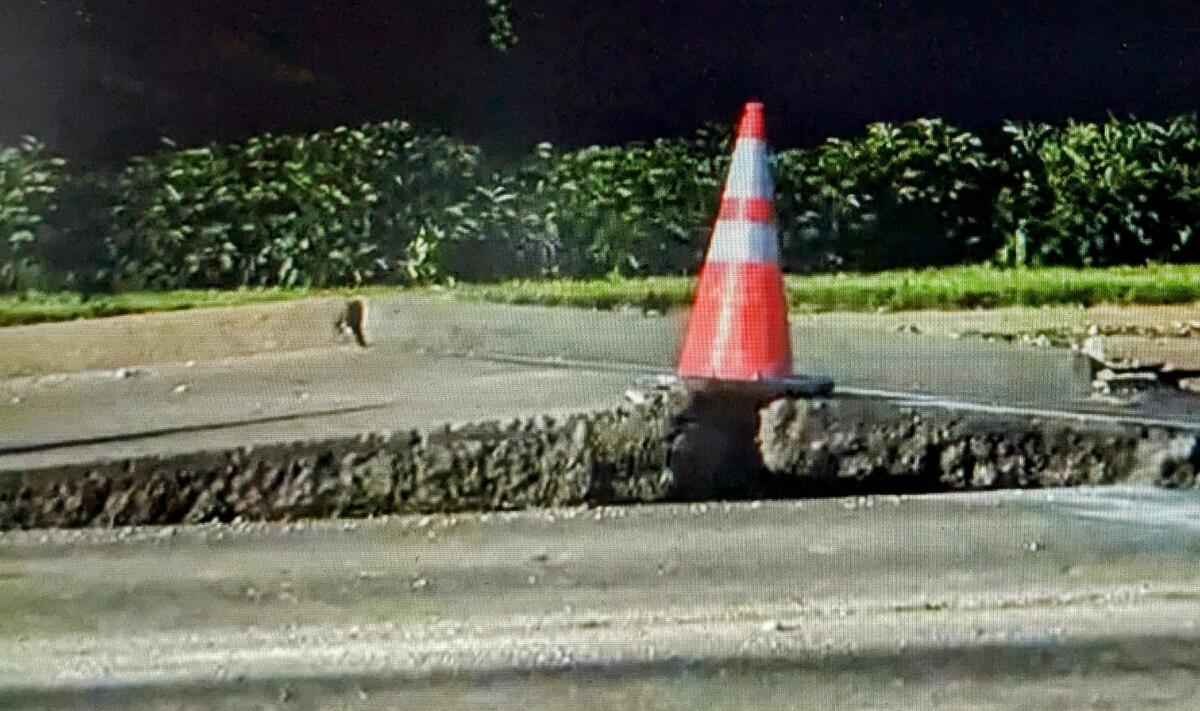
The blistering heat wave that’s settled over much of the country this week has led to multiple reports of highway buckling.

Here’s what happened and how RVers can stay safe.

Latest buckling incidents

On June 23, crews scrambled to repair several buckled sections of Interstate 390 in upstate New York. Patches of pavement popped up between West Ridge Road and the Lake Ontario State Parkway in Greece. Buckling also occurred between the Lakeville and Mount Morris exits in Livingston County, during peak rush hour, no less. Drivers reported flat tires, but no injuries, as concrete slabs heaved into ramp-like formations.

Meanwhile, in St. Louis, Leonor K. Sullivan Blvd., just south of the Gateway Arch grounds, buckled. The street buckled so dramatically on June 24 that part of the street morphed into a makeshift ramp. The pavement damage lifted the street several inches. Downtown St. Louis traffic was forced to detour around the damaged section.

As the heat wave continues, other highways may potentially face the same fate.

Watch the video below.

What is pavement buckling?

Pavement buckling is also called “pavement heave.” Buckling occurs when extreme heat forces road materials to expand greater than the joints and cut lines in the surface. Most highways are built in segments with small gaps designed for thermal movement. But when temperatures soar into the 90s or above for multiple days, the expanding concrete or asphalt literally has nowhere to go but up.

Concrete, especially on older roadways, is most prone to buckling. Blacktop surfaces are more flexible and tend to form bumps rather than split. Moisture that seeps into cracks further weakens joints, making sudden blow-ups more likely as the pavement warps under midday sun.

Current heat wave

Heat domes gripping the Midwest and East Coast have kept daytime highs above 100°F in some areas and in the 90s elsewhere. That sustained heat stresses pavements beyond normal design limits. The unrelenting heat leads to uneven surfaces, sudden potholes, and split slabs. Humidity and recent rains only compound the problem by allowing moisture into pavement joints. The moisture sets the stage for blow-ups when temperatures peak.

Potential hazards for RVers

Encountering a buckled road isn’t just a bumpy nuisance. It can seriously damage tires, suspension, or undercarriage, especially on heavy rigs like RVs.

RVs also have longer wheelbases, making it harder to straddle uneven pavement without bottoming out. At highway speeds, hitting a raised slab can lead to loss of control or trailer sway.

Proactive safety tips

• Slow down and stay alert. When heat advisories are posted (check local alerts), reduce your speed in urban and rural stretches alike. Bumps and surface irregularities can form in minutes and without warning.

• Watch signs. Look for lane closures, repair crews, or signage advising “Uneven Surface” and react appropriately.

• Change lanes carefully. If you spot a buckle on your side of the highway, signal and merge into a smoother lane. Do your best to avoid sudden swerves.

• Report pavement failures. Call state DOT hotlines or 911 for severe blow-ups to ensure crews respond quickly.

• Plan midday breaks. Schedule longer stops around noon to avoid peak pavement temperatures. Visually inspect tires and suspension components each time you stop. Periodically check tire pressure or use a tire pressure monitoring system (TPMS).

• Carry emergency gear. A basic tool kit, spare tire, and air compressor can be lifesavers if minor damage occurs.

Have you ever encountered highway buckling while RVing? Tell us about it in the comments below.

MORE RECENT NEWS FOR RVERS:

RVT1215b

Starlink satellite messaging and data available to all carriers’ subscribers this fall

Are you an avid boondocker? Or do your RV travels take you far away from civilization while en route to your destination? You may find your cell phone can let you down. But starting July 23, 2025, T-Mobile will make its satellite-to-mobile service, called T-Satellite, available across the U.S. The service is designed to provide basic messaging and limited data to users in areas without traditional cell coverage. Satellite messaging and data can come to your phone, regardless of your carrier.

Satellite messaging and data in “gap areas”

More than 500,000 square miles in the country currently lack reliable cell service. T-Satellite uses Starlink satellites to help fill these gaps, allowing users to send SMS, MMS, pictures, and short audio clips when outside normal network range.

The service supports Samsung Galaxy phones (S21 and newer models, Z Flip 3 and up, Fold 3 and later, A36, and X Cover 7 Pro), most Android devices, and iPhones. It works with all major carriers, including Verizon, AT&T, and T-Mobile.

Data service will be added starting October 1, 2025, but will be limited in speed and use. As of now, T-Mobile has specifically mentioned support for a select group of widely used apps—including WhatsApp, Google, AccuWeather, AllTrails, and X (formerly Twitter)—when using the satellite service. Beyond these, the satellite data will allow very limited internet access but it won’t support full, unrestricted browsing or streaming.

Not a “heavyweight” contender

The service is designed primarily for essential communication and lightweight app use rather than heavy data activities. So, while you can expect to check weather, send messages, get updates, and possibly access other lightweight internet services, it won’t handle activities like video streaming, large downloads, or high-bandwidth apps.

T-Mobile customers on the Experience Beyond plan get access at no additional cost. Other users, including those on other carriers, can subscribe for $10 per month.

This satellite messaging and data service aims to provide connectivity options for users in remote or hard-to-reach locations, such as those frequently encountered by RVers and outdoor enthusiasts.

RELATED

RVT1215b

Crowds, long lines expected for Fourth at Arches, Canyonlands

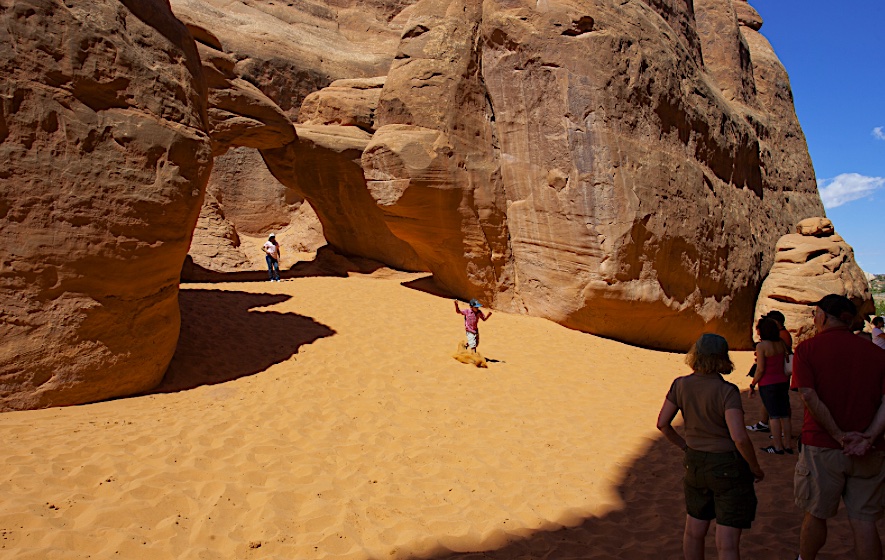
MOAB, Utah— Arches and Canyonlands national parks are preparing for another hot and busy July Fourth holiday weekend. Visitors should expect increased traffic, long lines at park entrances, busy trails, and limited parking at both parks.

Through Sunday, July 6, most visitors entering Arches National Park between 7 a.m. and 4 p.m. will need a timed entry reservation. Reservations can be made online at www.Recreation.gov or by calling 1-877-444-6777. Next-day tickets are released at 7 p.m. daily.

Visitors without reservations may enter the park before 7 a.m. or after 4 p.m., but may experience additional crowding (especially in late afternoon). Reservations cannot be made at Arches’ entrance booths. Timed entry reservations are not required at Canyonlands.

Beginning Monday, July 7, the pilot timed entry reservation system at Arches will pause for seven weeks. Arches’ parking lots and trails can usually accommodate slower mid-summer visitation without needing a reservation system to redistribute crowds. The reservation system will resume on August 28, for the increased visitation expected Labor Day weekend, and end for the year on October 31.

Visiting the high desert in summer requires extra precaution. Plan for your safety by consuming plenty of water and healthy snacks and by avoiding strenuous hikes between 11 a.m. and 6 p.m.

Watch for signs of heat stress, such as dizziness, cramps, fatigue, headache, or irritability. If monsoon rainstorms are forecast, avoid travel on unpaved backcountry roads.

Check the parks’ websites and social media accounts for current road conditions.

RELATED

RVT1215b

RV shipments drop in May, towables down 17 percent

1

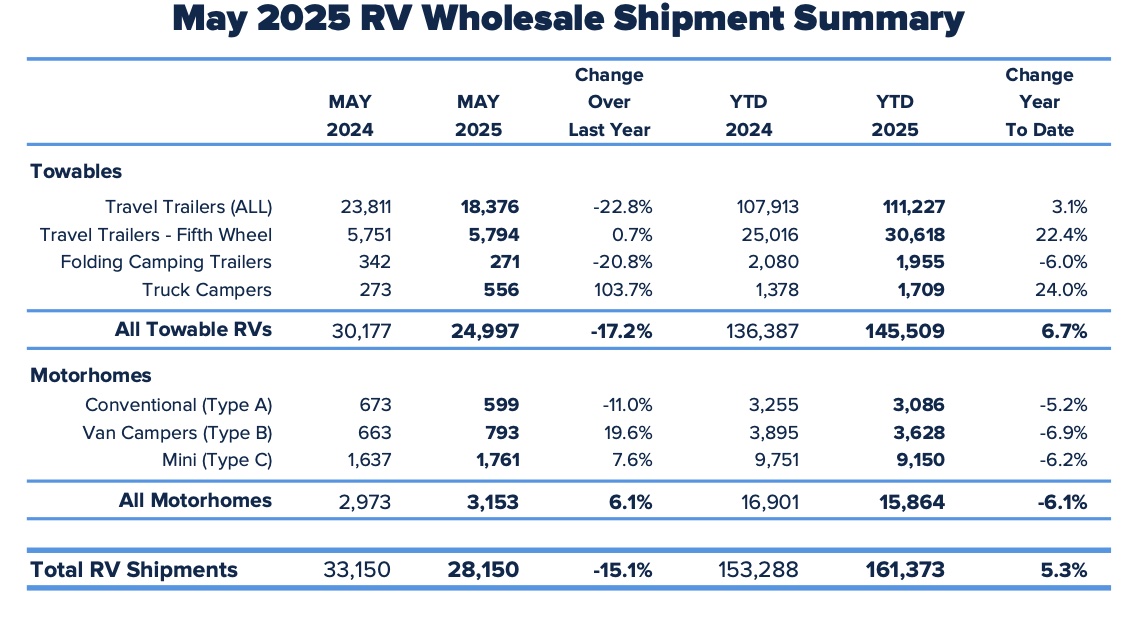
Results of the RV Industry Association’s May 2025 survey of manufacturers showed that 28,150 RVs were shipped, a 15.1 percent decline from the 33,150 units shipped in May 2024. To date for the year, RV shipments are up 5.3% with 161,373 units.

Towable RVs, with 24,997 shipments led by conventional travel trailers, ended the month down 17.2% from a year ago. Motorhomes finished the month up 6.1% compared to the same month last year with 3,153 units. Van camper shipments topped Class A shipments 793 to 599. Class C motorhome monthly shipments were up 7.6% in 2025 over 2024 with 1,761 units shipped.

Below you will find charts showing 2024/2025 month-over-month total wholesale RV shipments.

RV shipments for May 2025
SOURCE: RVIA

You should enjoy these popular RVtravel.com reader polls:

Do you have a favorite campground that you return to often?
How critical is RVing to your enjoyment of life?
Do you drink the RV park/campground water?
Does your RV have a traditional RV absorption refrigerator or a residential fridge?
Have you ever had an ant problem inside your RV?

RVT1215b

Public lands sales overruled — for now

It’s a proposal that has polarized people—and RVtravel.com readers—across the nation. Should public lands be sold to private interests? Some say the big tax bill before Congress has provisions that would allow sales. No matter your view on public land sales, news from Washington will have an effect. Essentially in this bill, public land sales are overruled.

Public lands sales are overruled by Senate parliamentarian

The proposal to sell off millions of acres of federally managed land in the Western U.S. was removed from the “Big Beautiful Bill” this week after the Senate parliamentarian ruled that it violated legislative rules. The plan, introduced by Senator Mike Lee (R-Utah), aimed to allow the federal government to sell more than 2 million acres of public land to states or other entities for use in housing and infrastructure development.

The Senate parliamentarian acts like a referee, keeping the legislative process within legal and procedural bounds—this especially during high-stakes moments like budget negotiations. The parliamentarian ensures that every provision in a reconciliation bill complies with the “Byrd Rule”—a rule that limits what can be included in such bills to items directly related to the federal budget (spending, revenue, or debt). If a provision—like the land sale—doesn’t clearly affect the budget or is seen as a policy change in disguise, the parliamentarian can rule it out.

Senator Lee’s proposal was part of the broader Republican tax and spending package being advanced under the budget reconciliation process. That allows a simple majority vote and avoids the need for a filibuster-proof supermajority. However, Senate Parliamentarian Elizabeth MacDonough ruled that the land sale provisions did not comply with the Byrd Rule.

Senator Lee says he’ll be back

Although this version of the plan has been blocked, Senator Lee has promised to revise and reintroduce the measure. In a post on X (formerly Twitter), he said, “Housing prices are crushing families and keeping young Americans from living where they grew up. We need to change that.” The revised plan, according to Lee, would exclude U.S. Forest Service land and limit Bureau of Land Management (BLM) land sales to parcels within five miles of existing population centers.

Two sides of the issue

The idea of transferring or selling federal lands to state or private entities has long been supported by some Western lawmakers who argue that local governments could manage land more effectively and encourage growth in areas where development is constrained. Wyoming Governor Mark Gordon, a Republican, expressed conditional support, saying such proposals could help “communities that are landlocked.”

However, the plan drew strong pushback from others. New Mexico Governor Michelle Lujan Grisham, a Democrat, called it “problematic,” citing the close ties between New Mexicans and public lands.

Public land advocates were quick to celebrate the parliamentarian’s ruling. Tracy Stone-Manning, president of The Wilderness Society, called it “a victory for the American public,” saying, “Our public lands are not for sale.” Similarly, Carrie Besnette Hauser of the Trust for Public Land, said the ruling protected “decades of bipartisan work to protect, steward, and expand access” to shared natural spaces.

Critics of the original proposal warned it could open lands adjacent to national parks like Yellowstone, Grand Teton, Olympic, and Canyonlands to potential development. Maps circulating online showed federal lands near many popular recreation areas marked as possibly eligible for sale.

Stakes are personal for RVers

For RV travelers and outdoor recreation users, the stakes are personal. Much of the land potentially affected includes places where people camp, hike, fish, hunt, or simply pass through on scenic road trips. Groups such as the Southern Utah Wilderness Alliance and outdoor recreation businesses voiced concern that reducing public access to these areas could negatively impact both quality of life and regional economies that depend on tourism and outdoor activities. Even members of the RV industry have joined in calling for a back-off in lands sales, as mentioned in an earlier RVtravel.com story.

Senator Martin Heinrich (D-New Mexico), who sits on the Senate Energy and Natural Resources Committee, said the proposal could result in people being “excluded from places where they fish, hunt and camp,” adding that it wasn’t even clear that it would deliver meaningful amounts of affordable housing.

The now-blocked provision also revealed divisions within the Republican party. While some members see land sales as a way to ease housing shortages and raise funds, others are wary of losing public access and potential backlash from constituents who use these lands for recreation or ranching.

Meanwhile, the budget bill’s land-related provisions weren’t limited to Lee’s proposal. The parliamentarian also ruled out measures that would have allowed a 211-mile mining road through Gates of the Arctic National Park in Alaska and changed how environmental reviews are handled for offshore oil and gas drilling.

Issue “far from settled”

Although the land sale language has been removed from the current budget bill, opponents of the proposal warn that the issue is far from settled. Advocates like Hauser and Stone-Manning say they expect similar proposals to return in future legislation and are urging the public to remain alert and involved.

With public land sales overruled, federal lands remain under national control. But as discussions continue in Washington, many are keeping a close eye on how future proposals could reshape access to the country’s most iconic landscapes.

Sources for this story include  National Parks Traveler and PBS News

RELATED

RVT1215b

Planning an RV trip to Shenandoah? You’ll need plastic to get in

If you’re planning a summer RV trip to Shenandoah National Park, take note: Starting July 1, the park will no longer accept cash for entrance or campground fees. It’s card or mobile payment only from here on out. Shenandoah will reject cash as of July 1

That means you’ll need to use a debit card, credit card, or a mobile pay app to pay at entrance stations and for reserving campsites. Want to skip the hassle altogether? You can also take care of entrance, campground, and permitting fees online before your trip.

Shenandoah will reject cash—but vendors will still take it

Important detail for RVers: Gift shops, restaurants, and lodges inside the park will still take cash, so you won’t be totally out of luck if you have some bills in your wallet. But for anything involving getting in or parking your rig overnight, you’ll need to go plastic or digital.

According to the National Park Service, this move frees up staff time, cuts down on risk, and puts more of your entrance and camping dollars toward the stuff that matters—road and campground maintenance, trail upkeep, and protecting the places you came to enjoy.

The move echoes that of more and more national park destinations. It’s not without controversy—a lawsuit on the case is still working its way through the legal hoops.

In any event, since Shenandoah will be rejecting cash soon, plan ahead. Before you roll into the park this season, double-check that your cards are working and your apps are updated. It’ll make for a smoother entrance—and more time enjoying those Skyline Drive views.

RELATED

RVT1215