Home Blog Page 279

Drag racers in Grand Teton National Park arrested, luxury cars impounded

14

Grand Teton National Park visitors expected to see sweeping mountain vistas. They hoped to view wildlife in the Grand Teton National Park. Instead, parkgoers dodged souped-up supercars roaring past at breakneck speeds.

This past week, four drivers turned a serene stretch of Teton Park Road into a makeshift drag strip. It took 12 rangers to arrest the wannabe race car drivers. The drivers’ luxury cars were also impounded.

What happened?

On the afternoon of June 24, rangers received multiple reports of high-velocity drag racing along Teton Park Road. This road is one of the park’s main arteries and is shared by RVs, passenger vehicles, bicyclists, and wildlife.

Eyewitnesses described high-end sports cars accelerating to dangerous speeds. This action created hazardous driving conditions for other visitors. They also posed a dangerous threat to grizzly bears, elk, and other wildlife crossing the roadway.

Park rangers from Grand Teton National Park mobilized a coordinated enforcement operation. Twelve officers were deployed to execute traffic stops at different points along the road. Within hours, four individuals were taken into custody, and at least two of the exotic cars were impounded as evidence.

Nu Rally’s supercar tour

Turns out, the reckless drivers were participants in Nu Rally. This private, invitation-only event markets itself as a luxury road trip for supercar and hypercar owners. Nu Rally sponsors at least five rallies each year. Events are designed for supercar owners who expect more than a simple road trip.

Each multiday event takes drivers from one scenic region to another. Drivers enjoy sumptuous accommodations, chef-prepared meals, and a variety of high-end merchandise. Participants also have access to professional photo and video teams built into the cost of the event.

Despite Nu Rally’s rules against racing, footage surfaced on social media showing participants speeding through scenic areas in prior legs of the tour.

Serious risks posed

For RV drivers navigating the park’s winding roads at a modest 45–55 mph, encountering souped-up Lamborghinis or Ferraris blasting past can be jarring. Park Superintendent Chip Jenkins emphasized the broader risks: “This kind of behavior is unsafe, irresponsible, and completely unacceptable in a national park. It puts visitors, staff, and wildlife at serious risk.”

With more than three million annual visitors, Grand Teton National Park is home to threatened species including grizzly bears, gray wolves, and Canada lynx. At high speeds, exotic cars have little chance of safely braking for an animal that darts onto the road. A collision with a grizzly bear could be catastrophic for both vehicle occupants and the bear itself, not to mention the federal property damage and criminal penalties that could follow.

Why RVers care

Teton Park Road is the main route for RVers accessing campgrounds like Colter Bay, Signal Mountain, and Jackson Lake. We rely on predictable traffic. We trust that fellow drivers follow common courtesy and exercise common sense. Reckless drivers can turn a scenic drive into a dangerous gauntlet.

RVers and other park visitors often slow down to spot wildlife grazing near the road. High-speed racers may not anticipate these stops. Sudden braking or swerving to avoid wild animals could cause accidents.

Many stretches of Teton Park Road restrict passing due to curves or elevation changes. Unlawful racing often involves risky overtaking maneuvers that can block traffic or force oncoming vehicles off the pavement.

Safety tips for all drivers

Always stick to the posted speed limits. Reduce your speed, especially in areas marked for wildlife crossings or near tight corners.

If faster traffic is building up behind you, pull into designated turnouts to let them pass safely.

Keep an eye on your mirrors. If you spot a vehicle swerving or accelerating aggressively, maintain your lane. Report the driver to park authorities at the next available pull-out. In Grand Teton, call 307-739-3300 for non-emergency park dispatch or 911 if there’s an immediate threat. Many parks, including Grand Teton, have anonymous tip lines. Your call could prevent an incident involving other visitors or wildlife.

Ongoing investigation

Following the arrests, National Park Service officials indicated that further charges may be coming as they review evidence and interview potential witnesses.

Nu Rally has not publicly commented on the incident at this time. Meanwhile, rangers continue to patrol the park’s roadways. They remind all motorists that safety and respect for the landscape must come before speed.

What do you think will (or should) happen to the high-speed drivers? Share your opinion in the comments that follow.

RELATED

RVT1215b

Wall Street Journal alleges serious quality flaws in Forest River RVs

19

“From 2015 to 2024, Forest River issued more recalls than any U.S. automaker or RV manufacturer—many due to human error rather than flawed parts.”

RVtravel.com publisher Chuck Woodbury will have more to say about this in this Sunday’s newsletter.

On Tuesday The Wall Street Journal reported on deep-rooted quality control issues within the RV industry—especially at Forest River, the second largest RV manufacturer, owned by Warren Buffett’s Berkshire Hathaway.

The article centers around a fire incident involving Jay Nelson, a Montana highway patrolman, whose Forest River trailer caught fire in 2020, allegedly due to faulty wiring. His lawsuit has become the focal point of growing scrutiny on Forest River’s manufacturing practices and safety record.

Recall “insufficient”

Nelson’s legal team claims the company’s wiring issues are widespread, potentially affecting more than one million RVs. They argue Forest River’s recent recall of 41,000 units—prompted after inspecting Nelson’s trailer—was insufficient. They support their claim with field surveys, which found about 60% of sampled Forest River models contained similar wiring problems.

Forest River disputes the scope and validity of these claims and contends the recall affected only two specific models over a 20-year span. A Montana judge is expected to rule soon on whether to grant class-action certification, with a trial scheduled for September.

The leader in recalls

From 2015 to 2024, Forest River issued more recalls than any U.S. automaker or RV manufacturer—many due to human error rather than flawed parts. Examples include misaligned furnace vents, wrong fuses due to supply shortages, and microwaves damaged by incorrectly sized screws.

In one case, workers punctured microwaves they were installing with screws that were the incorrect length. In another, inspectors discovered misaligned furnace flues a month after the employee who was checking them quit. Then, in 2023, the company recalled 50 towable campers after finding that workers had created a fire risk by inserting the wrong fuse into power distribution centers. The reason? The factory had a shortage of the correct fuse.

“Forest River averages 50 recalls a year—many of them from manufacturing errors.”

These problems are linked to the industry’s labor practices: RVs are largely hand-assembled in Elkhart, Indiana, the RV manufacturing hub of the U.S. Workers often earn “piece rate” pay—getting bonuses for hitting production targets and sometimes leaving early—encouraging speed over precision.

Forest River defends its practices, saying many of its highest-quality plants use piece-rate systems and that it conducts thorough inspections before RVs leave the factory. It also notes that the RV Industry Association performs unannounced inspections several times a year. Still, the company has a history of regulatory conflict: In 2015, it paid a $5 million federal fine for failing to properly report defects after issuing internal service bulletins about issues that should have triggered recalls.

Systemic flaws

Critics argue that Forest River’s high volume of recalls points to systemic flaws, not just caution. Michael Brooks of the Center for Auto Safety said it’s “unusual” for a company to treat recalls as a proactive “tool,” arguing they are instead a sign of failed quality assurance.

Consumer experiences reinforce concerns. Buyers reported severe problems soon after purchase—from water leaks to collapsed ceilings and inaccessible fuses—often facing slow or contentious warranty responses. Some, like Allison Paul and Wade Mullins, said their new Forest River RVs required near-total overhauls. One couple, Heather Timmerman and Christy Csernyik, lost their home and pets in a fire, only to learn later their trailer had been recalled for the same wiring defect at the center of Nelson’s case.

Despite Buffett’s ownership and Forest River’s scale—selling more than 100,000 RVs a year—its reliance on fast-paced manual labor and limited automation may be compromising safety and consistency, the Journal concludes.

Read the full article in the Wall Street Journal.

RELATED

RVT1215b

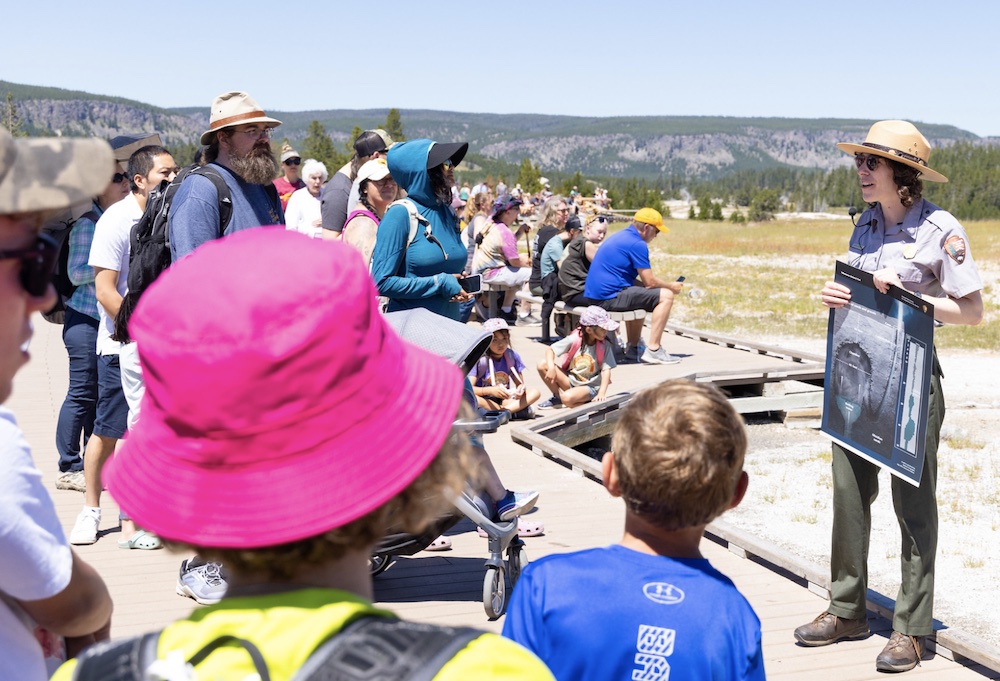
Tips for visiting Yellowstone this Fourth of July

If you will visit Yellowstone National Park this Fourth of July, plan ahead to protect yourself and this wild and awe-inspiring place. Summer is the busiest time in the park, so please pack your patience. Expect crowds at popular areas and lines at entrance stations, construction areas, and roadside wildlife sightings.

Follow these tips to enjoy your visit and protect the park for generations to come:

  1. Leave Fireworks at Home
    Fireworks are not allowed in Yellowstone — even just a spark can ignite a wildfire.
  2. Flood Your Flames
    Campfires are only permitted within established fire rings in campgrounds and some backcountry campsites in Yellowstone. Never leave your campfire unattended and always check to ensure it’s cold to the touch before abandoning: Soak, stir, feel, repeat.
  3. Check Current Fire Weather Conditions
    The current fire danger level in the park is HIGH, which means wildfires can start easily and spread quickly. Please plan your activities accordingly. If you see smoke or fire in the park, report it to rangers or call 911.
  4. Drive and Park Responsibly
    Traffic-related accidents are a common cause of human injury and fatality in the park. Please be responsible and do not drive under the influence of alcohol or substances. Observe posted speed limits and do not stop your vehicle in the road. Use pullouts to watch wildlife, take pictures, and let other cars pass. When pulling over, be sure to park with all four tires fully to the right of the white line. Pack your patience and allow for plenty of time to travel through the park during this busiest time of year.
  5. Check Status of Park Roads
    Summer is road construction and repair season in the West. Road improvement projects or inclement weather may cause temporary closures and traffic delays. Stay informed about current road conditions in Yellowstone:

    • Visit go.nps.gov/YELLroads.
    • Call (307) 344-2117 for recorded information.
    • Receive Yellowstone road alerts on your mobile phone by texting “82190” to 888-777. (An automatic text reply will confirm receipt and provide instructions.)
  6. Give Wildlife Room
    Wild animals are dangerous if you get too close! People have been injured or killed by bears, bison, and elk. It’s your responsibility to respect safety regulations and view wildlife from a safe distance. Always maintain a minimum of 25 yards from all wildlife and 100 yards from bears, wolves, and cougars. If an animal moves closer to you, back away to maintain these safe viewing distances. Follow instructions from park rangers and learn how to watch wildlife safely and travel safely in bear country.
  7. Stay on Boardwalks
    Boardwalks take you to amazing places and keep you safe. People who travel off boardwalks have been severely injured or killed by breaking through the thin ground in thermal basins or falling into hot springs.
  8. Plan Ahead
    All campgrounds and lodging require a reservation and fill up well in advance. Operating hours and service levels can change with little notice. Check the latest information before going to the park:
    Operating Dates
    Current Conditions
    Lodging and Camping
    Places to Go
    Things to Do
    Fishing Permits
    Boat Inspections and Permits
  9. Prepare for Weather Changes
    Unpredictability characterizes Yellowstone’s weather. Expect big temperature swings, rain, or snow during every month of the year and hot, dry weather during the summer months. No matter when you visit, take water to stay hydrated, a warm jacket, rain gear, and lots of layers. Check current weather conditions before you arrive.
  10. No Entrance Reservations Required
    Reservations are not required to enter the park — you just need a park entrance pass.

RELATED

RVT1215b

Love’s ‘campgrounds’ are popular with RV Travel readers

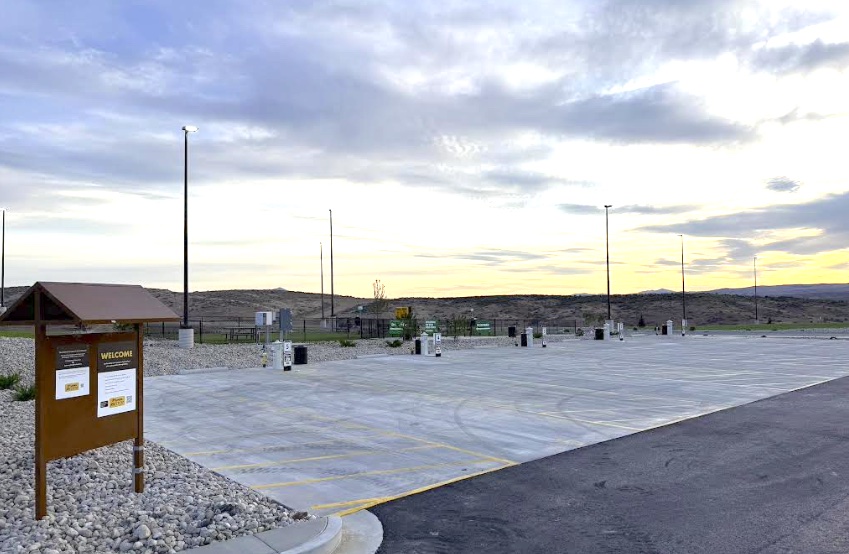
A recent RVtravel.com reader poll reveals strong interest in Love’s RV Stops (campgrounds), with nearly two-thirds of respondents saying they have either stayed at one or plan to in the future. The poll came as Love’s announced the opening of its 100th dedicated RV Stop across the U.S. Since then, a 101st location opened in Winslow, Arizona.

The poll asked: “Have you ever stayed overnight at a Love’s RV Stop?” Among the more than 1,300 respondents:

• 3% said “Yes, many times”
• 10% said “Yes, a few times”
• 10% said “Yes, once”
• 41% said “No, but I’m sure I will at some point”
• 36% said “No, I probably won’t ever”

“We’ve used them about 5 or 6 times,” said an RVtravel.com reader named Bryan. “Some of the Love’s RV Stops have felt like a pay-to-stay Wal-Mart parking lot with hook-ups. Others have felt pretty decent and comfortable. But all have been convenient and were what we needed at the time.”

Reader Jim Johnson commented: “We have stopped at Love’s with RV facilities for fuel and sometimes a meal. So far, they are not located where we would spend a rest night. But as the network expands, I can see us doing so – at least for overnights on our way to somewhere else.”

Love’s RV Stops typically offer full-hookup RV spaces near or adjacent to existing Love’s Travel Stops, giving RVers access to amenities like fuel, food, showers, and convenience items in one location.

The poll results suggest the company’s growing presence is resonating with a large and mobile audience looking for reliable, accessible overnight options.

MORE ON LOVE’S TRAVEL STOPS

RVT1215b

RV Daily Tips. Friday, June 27, 2025

Issue 2675


Today’s thought

“What you do makes a difference, and you have to decide what kind of difference you want to make.” ―Jane Goodall


Need an excuse to celebrate? Today is National Sunglasses Day! Check out these totally weird sunglasses. Bet you’ve never seen anything like them before. (We certainly have not!) 

On this day in history: 1898 – The first solo circumnavigation of the globe is completed by Joshua Slocum from Briar Island, Nova Scotia.


Tip of the day
Have a loose screw? Here’s how to fix it

By Dave Helgeson
I suspect most RVers have a screw loose, and I am not just referring to our questionable mental state of white line fever traveling the country in a house on wheels. The interiors of most RVs are constructed of wood: wood cabinets, vinyl-covered wood paneling, etc. Most also contain cabinet framing with photo-wrapped wood. Basically, it is a picture of nice-looking uniform wood grain wrapped around what is often a piece of soft, inexpensive pine.

If you have a loose screw on a cabinet hinge, the odds are it is the side of the hinge screwed into the cabinet framing. The soft grain of the pine doesn’t hold the screw as well as the hardwood the cabinet door is made from. If you have a cabinet screw loose, it typically won’t do any good to tighten it as there is no longer any solid wood under the photo wrapping for it to bite into. Continue reading.


Ask Dave
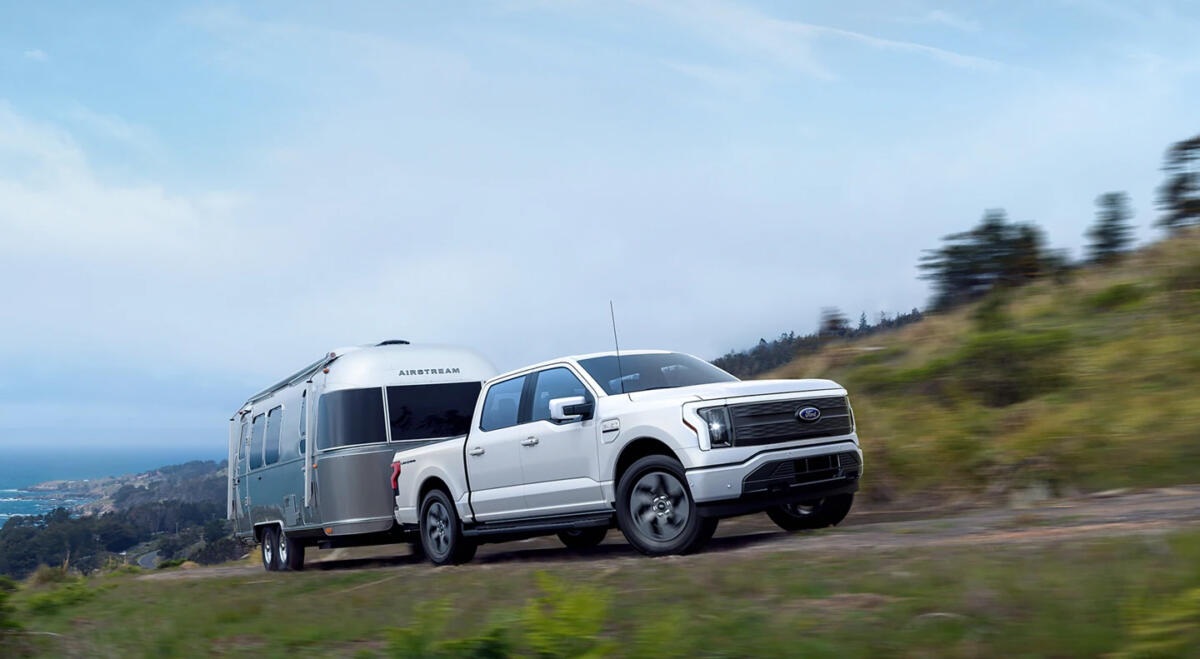
With different truck towing capacities listed online, which is correct?

Hello Dave,
I have a question about towing. I have a 2012 Ford F250 Super Duty. The towing capacity is 12,500 lbs., but on other websites it says it can tow up to 15,800 lbs. with a fifth wheel. Would you please explain. Thank you. —Ronnie, 2020 Forest River Sandpiper 321RL  Read Dave’s answer.


Q: Which U.S. national park has a secret room that stays dry even when the cave around it floods… and was once used to store explosives? Scroll down to find out. 


In the RV shop with Dustin
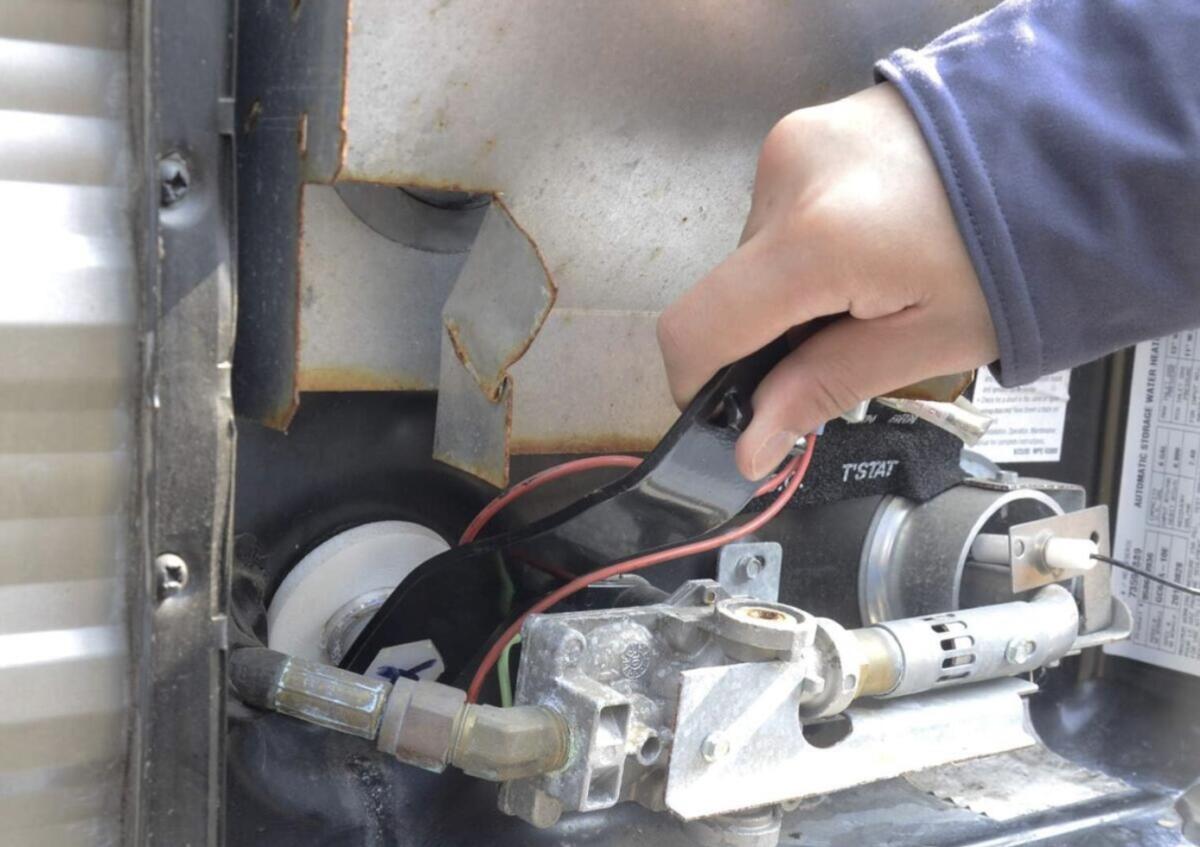
Water heater drain plug and wrench kit makes Dometic water heater repairs easy

Whether you’re a seasoned RV enthusiast or a novice on the road, maintaining your RV’s water heater is a crucial aspect of ensuring a smooth and trouble-free journey. Enter the Dometic Water Heater Drain Plug and Wrench Kit—a game-changer for anyone looking to simplify the process of water heater maintenance. Continue reading to learn more.


Article and video
Cheap, DIY solar generator setup

By Cheri Sicard
Join Alex, of Footprint Hero with Alex Beale, in this video, for a demo of a cheap DIY solar generator that anyone can build to power their camping and RV outings. The challenge here is simple: Stick to a $250 budget to see what kind of solar generator setup someone can build and just how far it will take them. Can this dirt-cheap combo power a fridge, a laptop, or even a TV? Here’s the real-world answer after testing one of the most budget-friendly options out there.


BUMPER SNICKER: “I may be left-handed, but I’m always right!”


Featured article
First Airstream Clipper, owned by a President, resurfaces

By Paul Lacitinola
It is rare that anyone has the opportunity to find, obtain, and restore the very first example of something as iconic as a riveted aluminum Airstream Clipper. This is the backstory of the first Airstream Clipper ever built. This is a fascinating look at the trailer’s history, from presidential ownership to beautiful restoration.


You may have missed these recent popular stories…


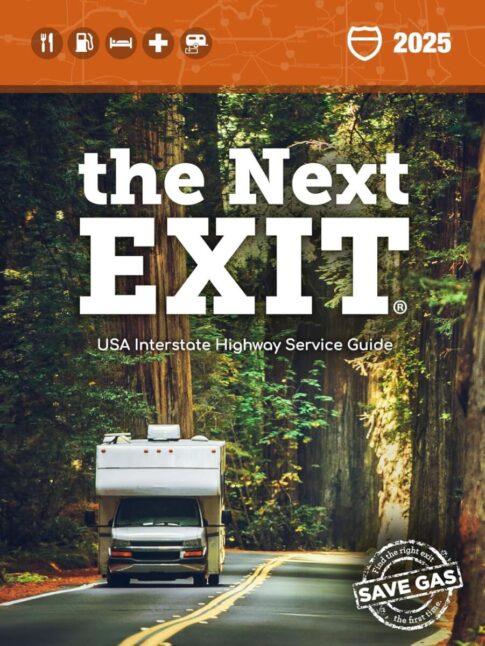
New 2025 edition of the Next Exit is the definitive guide to services along the Interstate
Since 1991, the Next Exit has been THE “go-to” directory to locate what businesses and services are at every Interstate exit in America. In this newly updated 2025 edition, learn what’s ahead of, not behind, you — fuel, food, campgrounds, rest areas, shopping, motels, hospitals, etc. Sometimes a GPS or smartphone isn’t the best for this. Often, this is! This book has been an RVer’s companion for many years. Learn more or order.


Reader poll
When you bought your towable RV, did you buy a vehicle to tow it?

Respond here.


Quick tip
Bring your bedroom slide-out in at night

Here’s a double-header sleeping solution for folks with bedroom slide-outs. Bill and Wanda K. tell us they roll their slide-out in at night (when necessary) to reduce traffic noise—and if the weather is exceptionally cold. Either way, it dampens the noise factor and reduces the need for heat. Thanks, folks!


On this day last year…


Website of the day

23 of the Most Beautiful Gardens in America
These gardens really are stunning! ‘Tis the season to be outside and admire Mother Nature, so get out to some of these gardens and be prepared to be amazed.


? MYSTERY PRODUCT OF THE DAY ?
In 1889, a now-famous man said, “Everything that can be invented has been invented.” Boy, was he wrong! Wait until you see this! What kind of a mind thinks up something like this? P.S. Don’t be scared!


Trivia

British Columbia’s provincial parks receive more than 23 million visits each year. One of the largest park systems in North America, British Columbia has more than 1,000 provincial parks, recreation areas, conservancies, ecological reserves and protected areas covering approximately 14.4% of the provincial land base. Since 2017, more than 1,700 campsites have been added to BC parks and recreation sites.


A: Mammoth Cave National Park in Kentucky! The “Rotunda Room” inside the cave was once used to store munitions during the War of 1812, thanks to its constant dry conditions, even when nearby cave areas flooded. Today, you can visit this room on a guided tour. 


Readers’ pet of the day

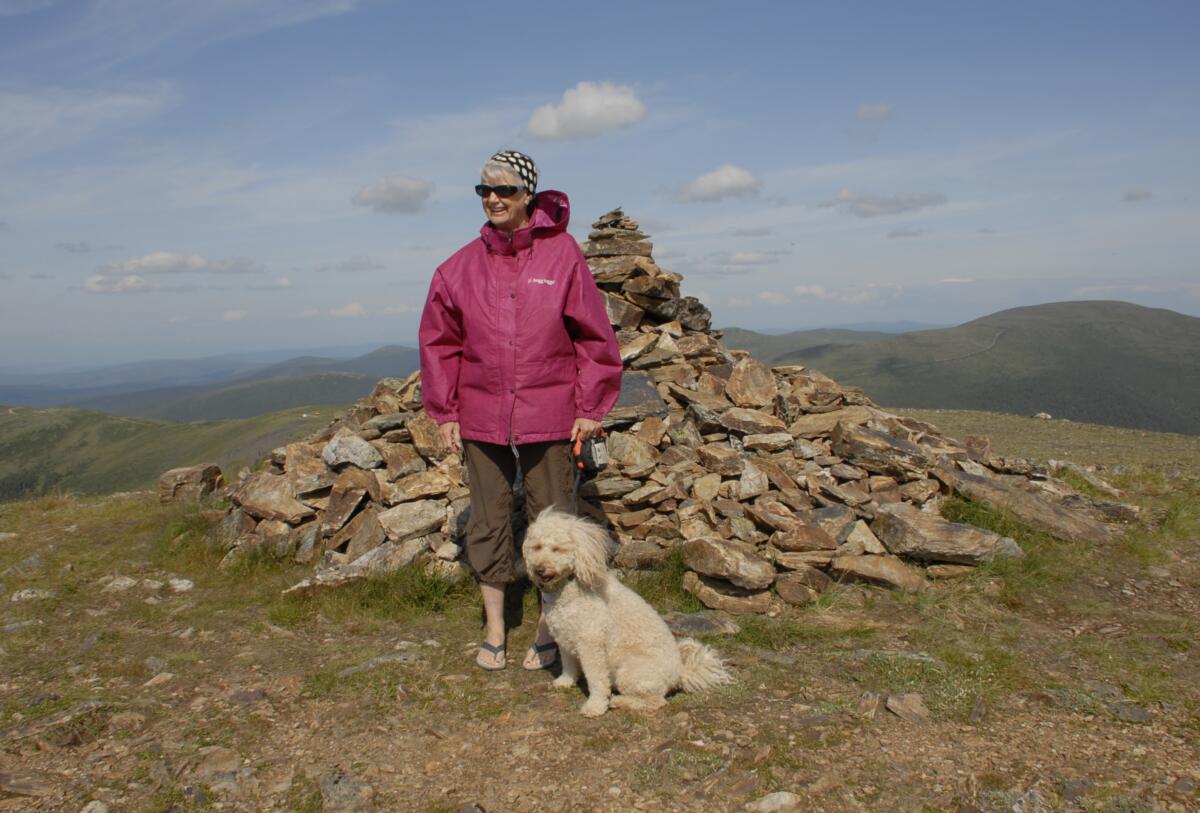
“Our second trip to Canada/Alaska. This is the Top of the World Highway, prior to entering Alaska. We overnight there to enjoy the beautiful scenery! Zoey (Goldendoodle, age 7) is a lucky pup. She has stayed in all but about four states!!” —Nancy Brookshire

Send us a photo of your pet with a short description. No blurry photos and please do not submit your photo more than once. Thanks!

RVing with Dogs group on Facebook. You’ll love it.


Leave here with a laugh


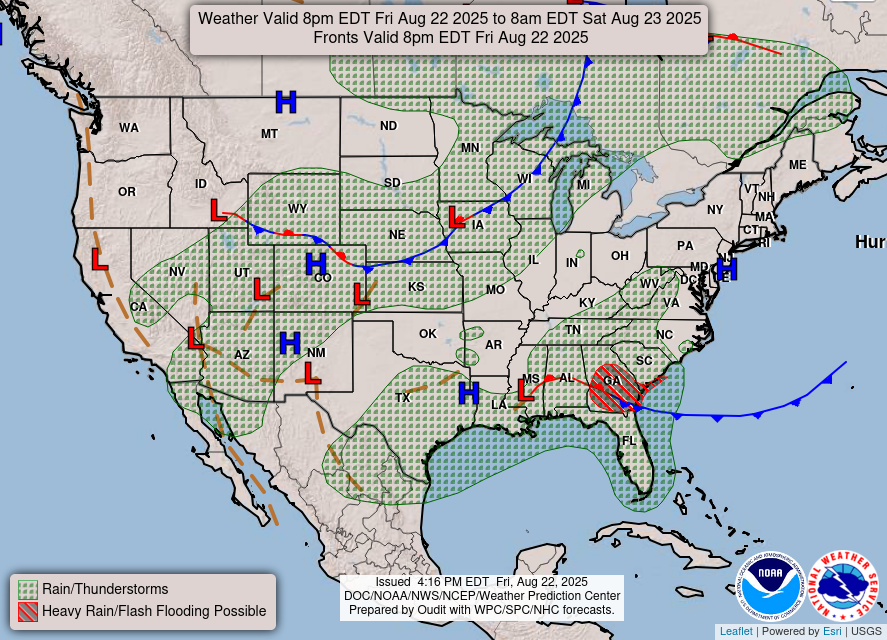
Today’s weather forecast across the nation
THIS MAP UPDATES TWICE A DAY

Visit Current National Radar Weather Map
Current fire and smoke map from AirNow


Did you miss the latest RV Travel Newsletter? If so, read it here.
Oh, and if you missed the Latest News for RVers, make sure to catch up here.


If you shop at Amazon.com we’d appreciate you using this link. We get an itty bitty commission if you buy something, but they add up and help us pay our bills (most importantly our hard-working writers!).


RVtravel.com All-Star Team

Click here for information about our staff and how to contact us.

Our policy on using artificial intelligence.

With different truck towing capacities listed online, which is correct?

Hello Dave, 
I have a question about towing. I have a 2012 Ford F250 Super Duty. The towing capacity is 12,500 lbs., but on other websites it says it can tow up to 15,800 lbs. with a fifth wheel. Would you please explain. Thank you. —Ronnie, 2020 Forest River Sandpiper 321RL

Hi Ronnie,
Figuring out towing capacity use to be fairly easy: You could pull up the towing guides and get the information you needed according to engine size and cab configuration.

However, things have changed and there is much more to it as variables come into play such as rear-end ratio, hitch weight, payload, and more.

I recently went through the “journey” of finding the towing capacity of my 2016 Chevy Silverado, which I was told could tow 12,000 lbs. I pulled an 8,000 lb. trailer and got 6 mpg, and it dropped down to 45 mph on a 6% hill.

After contacting the Recreation Vehicle Safety & Education Foundation (RVSEF) and finding all the codes and weights, I found I only had a towing capacity of 7,800 lbs. So, no wonder my truck was struggling, to say the least. Here is the article detailing the points I needed to consider.

Truck Trailer
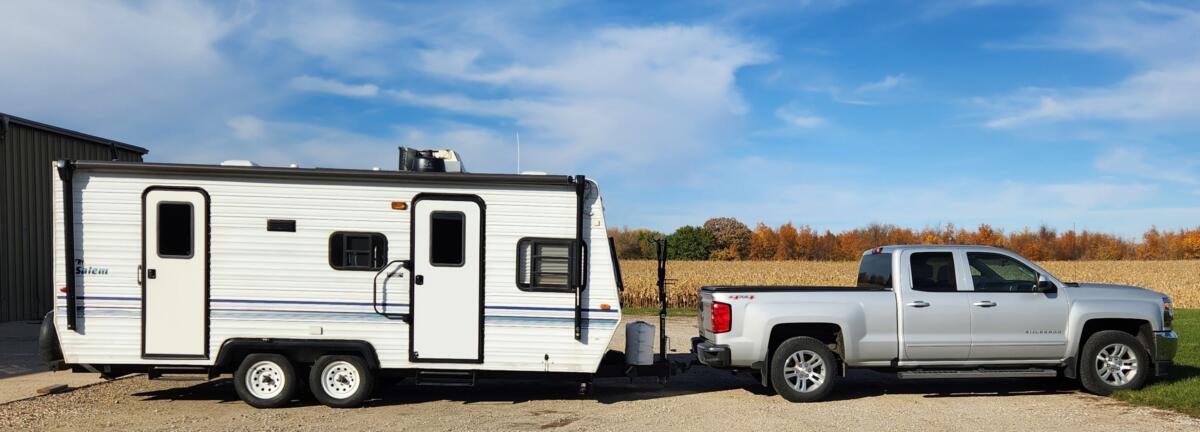
Truck and trailer

Ford has developed the Ford Towing Bootcamp, that is a hands-on training program with four modules covering the basics of towing, weight ratings, towing capacity, and hands-on backing up, connecting and a road course. You can learn more about it here.

They have also developed what I feel is the most comprehensive interactive website to calculate what your Ford truck can tow, how much payload you can have, and other weight information.

You can get some basic towing information in their towing guides available here.

However, there is much more to it, and Ford has developed a calculator that does all the work for you. Go to the main resource page here.

Ford On-line Towing
Ford Online towing capacity (click/tap to enlarge)

Then click on the box to calculate your towing capacity. This will bring up the calculator where you can enter your VIN number and fill in the prompt questions.

Ford Tow Calculator
Ford Towing Calculator (click/tap to enlarge)

This will give you the following information:

  • Truck Gross Vehicle Weight Rating (GVWR)
  • Truck Gross Combined Weight Rating (GCWR)
  • Truck Max Payload

It will then ask you to add the additional weights you might be putting into the truck, such as occupants, cargo, and accessories. Then it will give you the maximum trailer rating and tongue weight calculated with all the weights you have added. It will calculate any Ford vehicle 2020 or newer. It also has a tab for older vehicles.

Since your vehicle is a 2012 and I do not have the VIN, you can go to the “other” tab and put in your VIN number.

Why the higher towing capacity of a 5th wheel?

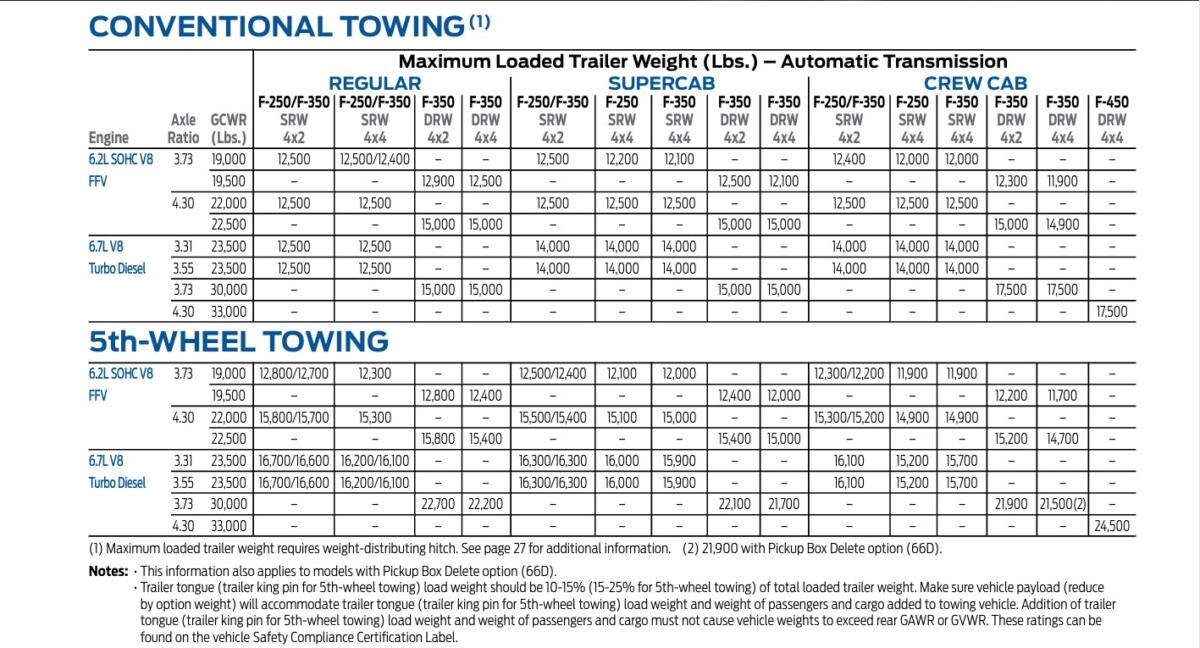
According to the towing guide on the Ford website, there are a few variables when it comes to towing capacity. Here is the page for the F250 for both conventional and 5th wheel towing.

2012F250tow
Ford 2012 F250 towing guide (click/tap to enlarge)

Notice the 6.2L with the 4.30 axle ratio can tow 12,500 lbs. conventional and 15,800 lbs. with a 5th wheel. It depends on the engine size and axle ratio and other variables. You can find this information here.


 You might also enjoy these posts from Dave 


Dave Solberg is a leading expert in the RV industry and the author of the “RV Handbook.”

Read more from Dave here

HAVE A QUESTION FOR DAVE?

Send your inquiries to him using the form below.

Name
Drag & Drop Files, Choose Files to Upload

RVDT2675

Have a loose screw? Here’s how to fix it

By Dave Helgeson
I suspect most RVers have a screw loose, and I am not just referring to our questionable mental state of white line fever traveling the country in a house on wheels. The interiors of most RVs are constructed of wood: wood cabinets, vinyl-covered wood paneling, etc. Most also contain cabinet framing with photo-wrapped wood. Basically, it is a picture of nice-looking uniform wood grain wrapped around what is often a piece of soft, inexpensive pine.

If you have a loose screw on a cabinet hinge, the odds are it is the side of the hinge screwed into the cabinet framing. The soft grain of the pine doesn’t hold the screw as well as the hardwood the cabinet door is made from. If you have a cabinet screw loose, it typically won’t do any good to tighten it as there is no longer any solid wood under the photo wrapping for it to bite into.

What to do when you have a screw loose

Consult your spouse on which screw you have loose. Spouses are always keenly aware of these things.

Next, gather up the following: toothpicks, wood glue, diagonal pliers, and a box knife.

Remove the hinge screws attaching the cabinet door to the cabinet framing. Place the cabinet door out of the way so it won’t get damaged. (Diagram 1)

screw loose in cabinet
Diagram 1 – Cabinet door removed

Apply wood glue to the tip of a toothpick and push it into the hole where you have a loose screw. (Diagram 2) Snap off the excess length if desired.

RV cabinet door repair
Diagram 2

Insert additional glue-covered toothpicks, as needed, until the hole is filled. (Diagram 3)

Diagram 3 – Installing a second toothpick

Let the glue dry overnight or longer.

Using diagonal pliers, snip the toothpicks extending out of the hole off as close to the cabinet face as possible. (Diagram 4) If needed, use a box knife to trim off any excess toothpicks until they are flush with the face of the cabinet framing. Be extra careful not to slip and damage the photo finish.

RV loose screw repair
Diagram 4 – Nip off excess length so it is flush

Place the cabinet door back in position and reattach it by driving screws into the toothpick-filled hole(s). For added strength, you can also add a drop of glue to the tip of the screws before reinstalling. (Diagram 5)

Diagram 5 – Reinstall

Finally, tell your spouse you no longer have a screw loose. Wait for the “Yeah, right!” look from your spouse.

This also works for other clips in the wall

This trick also works for those annoying little, often plastic, clips that hold the mini blinds in the down position during transit. Yep, the ones that poke you in the shoulder when you sit at your dinette or when you lean your head back on the sofa. Sooner or later, you will break one of these off, especially the plastic ones.

Mini blind clip
Plastic mini blind clip just waiting to break!

When you go to replace them, you will likely discover the manufacturer just screwed them into the thin wall paneling and didn’t provide any backing for the screw. As you tighten the screw when installing the new clip you will likely find you are unable to tighten it as there is not enough left of the paneling for the screw to grip. Now, have another screw loose to deal with? Break out the toothpicks and glue!

Author Dave Helgeson must have a screw loose as he has been around RVs his entire life. Sadly, he doesn’t know what to do with something that doesn’t have wheels underneath and a toilet inside!

RELATED

##RVDT2675

Cheap, DIY solar generator setup

By Cheri Sicard
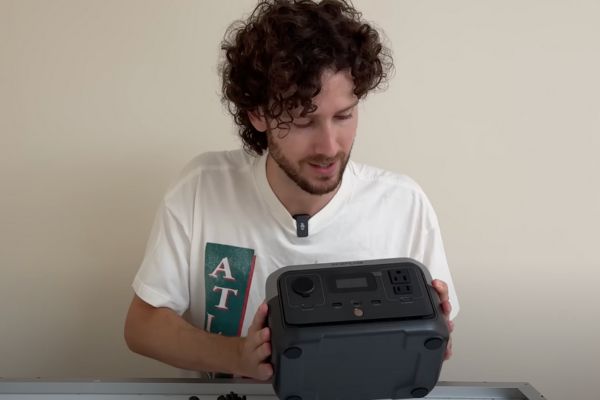
Join Alex, of Footprint Hero with Alex Beale, in the video near the end of this post, for a demo of a cheap DIY solar generator that anyone can build to power their camping and RV outings.

Testing a solar generator shouldn’t break the bank. The challenge here is simple: Stick to a $250 budget to see what kind of solar generator setup someone can build and just how far it will take them. Can this dirt-cheap combo power a fridge, a laptop, or even a TV? Here’s the real-world answer after testing one of the most budget-friendly options out there.

Choosing the power station

The main picks were the EcoFlow River 2 and Bluetti AC 2A. Both are solid, but the River 2 took the win thanks to a slightly higher battery capacity and a bundle deal that included the needed solar charging adapter cable. A $70 coupon sealed the deal.

Side-by-side snapshot:

  • EcoFlow River 2: Higher battery, included accessories, big coupon
  • Bluetti AC 2A: Also reliable, less battery, no adapter bundled

Portable panels cost more. To keep costs down, a fixed 100 watt Eco-Worthy panel made sense. It matched the River 2’s specs for voltage and amps. Here’s how the compatibility checked out:

Quick compatibility list:

  • Panel VOC: 24.5V (within River 2’s 11-30V range)
  • ISC: 5.2A (well under the 8A max)
  • Panel output: 100W (targeted max)

A little shopping magic brought the subtotal to $256, but with free shipping and that $70 coupon, the price landed at $248. It’s not unusual to find these kinds of deals if you keep an eye on coupons and sales.

The package included the sturdy 100-watt Eco-Worthy panel, a longer-than-usual EcoFlow adapter cable, and the compact EcoFlow River 2, plus a car charger and wall charger. The panel felt solid, and the River 2 was expectedly small but had all the key ports.

Connecting everything is easy:

  • Plug MC4 connectors from the panel into the adapter cable
  • Connect adapter’s XT60 end into the River 2’s solar input
  • Move the panel out of shade for best results

When in some shade, no charging showed up. After repositioning for full sun, the panel charged at 62-78 watts, depending on angle.

With one hour of good sunlight, the charge jumped from 28% to 55%. A full recharge took about 3.5 to 4 hours. The EcoFlow app showed live charging numbers, making it easy to check progress while away.

This power station is versatile. It can be charged in several ways:

  1. Car 12V socket: up to 100 watts
  2. Wall AC outlet: up to 365 watts, adjustable in the app
  3. USB-C: up to 17 watts

The EcoFlow River 2 gives two AC outlets, each with an on/off button. Outlets sit close, so big plugs may need creative positioning. The unit runs a small inverter fan but is quiet overall. It also supports 12V DC output for things like small fridges, with live power readouts both on screen and in the app. Outlets can be switched on or off remotely through the app.

Estimating runtime and device wattage

Knowing a device’s watt rating helps estimate runtime. Find it on the label or online. To estimate: [Battery Watt Hours] x 0.85 ÷ Device Watts = Runtime in hours. With a 66-watt fridge and 217 Wh usable (256 Wh x 0.85), expect about 3 hours runtime.

Testing: What can it run?

In real-world testing, the setup powered:

  • Phones, laptops, headphones (all at once)
  • TV (165 watts max) and a small kitchen fridge (~50 watts)

A 1,440-watt blender failed, proving the limitations.

The River 2 offers a 600-watt surge rating for short spikes. EcoFlow calls this X-Boost, and it helps with brief heavy loads, like a hair dryer or power tool. In tests, the hair dryer tripped the system when pushed past its limits, shutting down safely.

When plugged in and powering devices, the River 2 switches to backup mode fast (around 30ms) if grid power drops. Lights briefly flicker on sensitive devices, but most gear like TVs and lamps run smoothly. For high-end electronics, results may vary.

Why not go cheaper?

An earlier $100 setup failed: The power station was dead out of the box. Even raising the limit to $200 still meant no-name brands or tiny panels. The $250 budget proved to be the sweet spot for function, value, and reliability, based on both personal experience and feedback from viewers.

RELATED

RVDT2675

When you bought your towable RV, did you also buy a vehicle to tow it?

17

If you didn’t already own an adequate vehicle to tow a new trailer or fifth wheel you purchased, chances are you had to buy one. Most RVers know that an underpowered tow vehicle will not do the job properly and can even pose a danger. Are we right?

RV salesmen will sometimes tell you when asked if your present tow vehicle is adequate, that it is perfectly fine for towing your new rig. But they can often be far more interested in their commission than your RVing experience after your purchase.

Of course, matching the tow vehicle to the RV isn’t always straightforward. It’s not just about horsepower—factors like payload capacity, axle ratios, wheelbase, braking ability, and the type of terrain you plan to travel all come into play. Some RVers find themselves deep in the weeds of specs and towing guides, only to realize the safest and simplest path is to upgrade their vehicle entirely.

So when you bought your RV, did you buy a new vehicle to tow it? Or were you all set, with no need to spend what can be a lot of money these days on a vehicle substantial enough to tow something as long and heavy as some trailers and fifth wheels.

If you did, indeed, buy a new vehicle, please leave a comment and tell us about your experience including what vehicle you bought and why you chose (or had) to buy it. Please be as specific as you can.

As always, thank you for participating in this poll.

MORE POLLS LIKE THIS:

RVDT2675

Water heater drain plug and wrench kit makes Dometic water heater repairs easy

By Dustin Simpson
Whether you’re a seasoned RV enthusiast or a novice on the road, maintaining your RV’s water heater is a crucial aspect of ensuring a smooth and trouble-free journey. Enter the Dometic Water Heater Drain Plug and Wrench Kit—a game-changer for anyone looking to simplify the process of water heater maintenance.

The Water Heater Drain Plug is perfect tool for Dometic water heater

The Dometic Water Heater Drain Plug and Wrench Kit is designed with one primary goal in mind: to make your RV maintenance tasks hassle-free. No more fumbling with generic tools or struggling to reach awkward angles. This dedicated kit is tailored to perfectly suit Dometic water heaters, providing a seamless experience for both preventive maintenance and winterization procedures.

Effortless drain plug removal

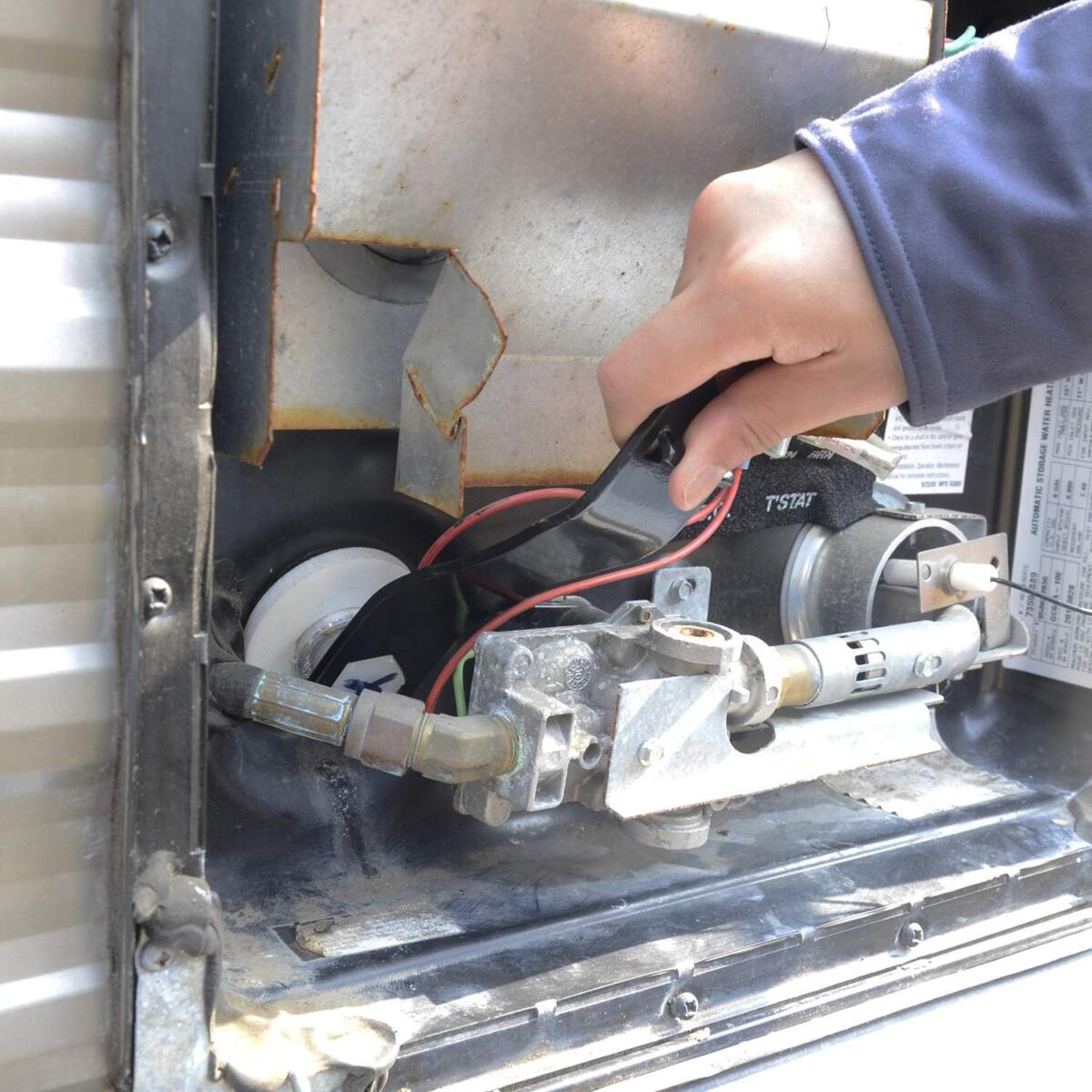
What sets this kit apart is its ingeniously designed wrench. The angled configuration of the wrench allows for easy access to the plastic drain plug of your Dometic water heater. No more contorting your hand or searching for the right angle; this tool is crafted for efficiency. With a simple yet robust design, you’ll find removing the drain plug to be a breeze.

Picture taken at California RV Specialists

Comprehensive kit for all your needs

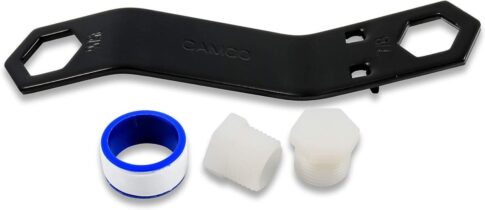
The Dometic Water Heater Drain Plug and Wrench Kit doesn’t stop at just providing a user-friendly wrench. It includes replacement drain plugs to ensure you have everything you need for your maintenance tasks. The kit also throws in some Teflon tape, a small but essential detail that adds convenience to the process, helping you achieve a snug and leak-free seal.

Why you need it

Precision fit: Tailored specifically for Dometic water heaters, this kit ensures a perfect fit every time.

Angled wrench design: The angled wrench simplifies the process, making it easy to remove the plastic drain plug without frustration.

Replacement drain plugs: The inclusion of replacement drain plugs means you’re covered for multiple maintenance cycles.

Teflon tape: This is a thoughtful addition that enhances the sealing process, preventing leaks and ensuring a secure fit.

Amazon Image

How to get your own Dometic Water Heater Drain Plug and Wrench Kit

The Dometic Water Heater Drain Plug and Wrench Kit is now available to enhance your RV toolkit. Whether you’re performing routine maintenance or when it’s time to gear up for winterization, having the right tools can make all the difference. Visit your local RV accessories store or buy one on Amazon to make this valuable addition to your RV gear.

Don’t let maintenance tasks be a source of stress! This makes water heater maintenance much easier.

More from Dustin

Make sure you check out my website, California RV Specialists, and our YouTube channel for more helpful information, and see our published articles on RVtravel.com and other social media pages.

RELATED

##RVDT2675

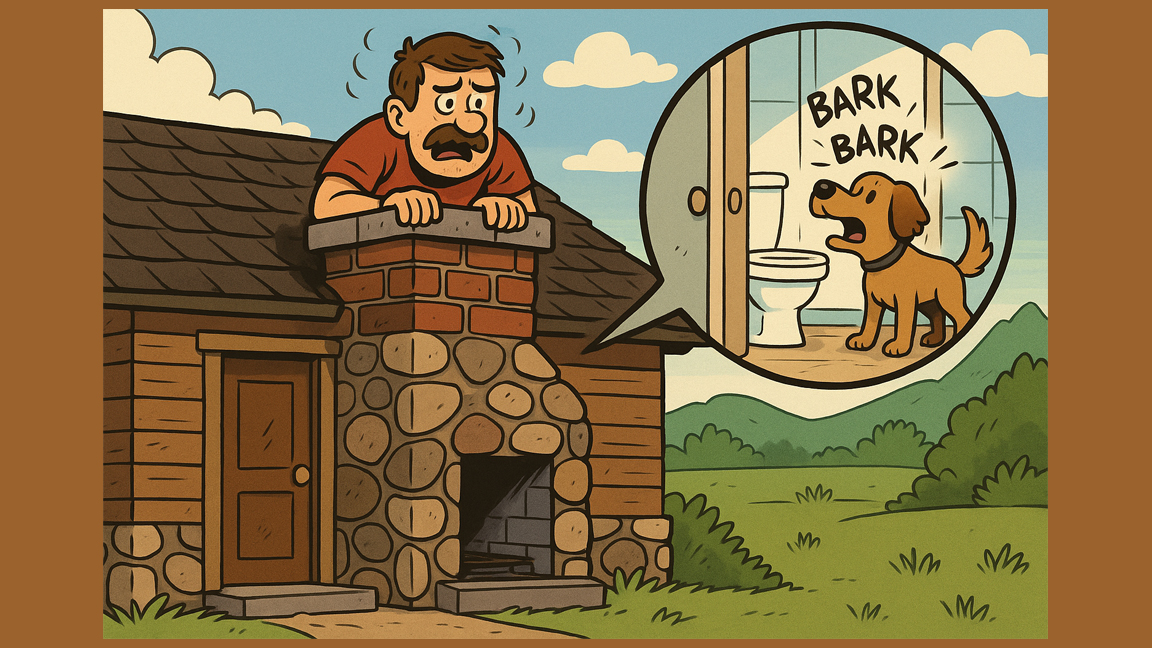
Park’s new lock system traps dog, sparks bizarre rescue attempt via chimney

There’s looking after your furry friend—and then there’s perhaps going overboard. A man in Bristol, Connecticut, found himself in a tight spot—literally—after trying to rescue his dog from a locked bathroom at a city park. He ended up stuck inside the chimney of a public building and had to be rescued by firefighters. Going overboard leads to being stuck in a chimney for a dog.

The incident happened at Rockwell Park, inside a building known as Mrs. Rockwell’s Pavilion. The restrooms in the building are now on an automatic timer, with doors that lock at 10 p.m. every night. The man’s dog somehow got locked inside after the doors shut for the night.

Stuck in chimney for a dog—Why not call for help?

Photo: Bristol Parks, Recreation, Youth and Community Services

Instead of calling police or park officials, the man decided to take matters into his own hands. He climbed onto the roof and attempted to get inside the building by sliding down the chimney. He got stuck near the chimney flue, the area where smoke normally vents from a fireplace or furnace.

On Sunday morning, park employees noticed something was wrong and called police, believing a break-in was happening. Firefighters were called in and had to dismantle parts of the chimney and the building to safely pull the man out. The damage from the rescue was estimated to be between $5,000 and $10,000.

Happily, the man wasn’t hurt—and neither was the dog. But the man was arrested and is now facing charges of burglary, trespassing, and criminal mischief. He was released on bond and is scheduled to appear in court on July 7.

“A crazy scenario”

Erica Benoit, who works with Bristol’s Parks, Recreation, Youth and Community Services, said the whole thing could have been avoided. “It is a bit of a crazy scenario,” she said. “If he had just contacted police in the first place, we might have been able to avoid the situation.” Benoit was quoted in a story by the AP News.

Benoit also explained that while the bathroom doors do lock automatically at night, they can still be opened from the inside—something the man may not have known. Obviously the dog didn’t know it. City staff and emergency services are now reviewing the situation to help prevent anything like this from happening again. No one ever should be stuck in a chimney for a dog.

As for the dog, officials said it appeared completely fine after the unusual overnight ordeal. No word on whether the water level in the toilet bowl was down to quench thirst.

RELATED

RVT1215b

Lake Tahoe bear breaks into RV, injures camper

10

Early in the morning of June 25, 2025, a woman camping at Lake Tahoe’s Eagle Point Campground had a terrifying wake-up call.

A black bear entered the unidentified woman’s trailer around 4:30 a.m. The bear was undeterred by the lady’s screams. Even banging on her pots and pans did not frighten away the bear!

The bear swiped at the woman, leaving cuts and bruises before finally retreating. Tragically, this was just the final incident in a string of escalating encounters. The bear was euthanized.

As RVers and campers head into the wilderness this summer, this incident is a stark reminder: When bears become too comfortable around people, everyone loses.

A bear too bold

According to the California Department of Fish and Wildlife (CDFW), this female bear had been causing problems for months in the South Lake Tahoe area. Since early spring, the overly bold bear triggered numerous 911 calls. She attempted several break-ins into both homes and vehicles.

Notable incidents included:

• June 10: At the Eagle Point Campground, the bear broke into a car. A child was strapped in the car seat inside the vehicle.

• Multiple break-in attempts: The bear was linked through DNA to property damage and intrusion attempts near Cascade Road and other parts of South Lake Tahoe.

• Same morning as this week’s attack: After swiping at the woman in her trailer, the bear later broke into another camper van where teenagers were sleeping. She also harassed others in the campground.

• CDFW had been trying to trap the bear since June 17. Despite repeated attempts by CDFW, State Parks, and the U.S. Forest Service, the bear continued to return to human-occupied areas.

Eventually, a State Parks ranger encountered the bear again on Monday. Armed with DNA evidence confirming this bear was responsible for the most recent attack, the bear was humanely euthanized.

The bear’s cubs: a second chance

The bear’s two five-month-old cubs were subsequently rescued and taken to a rehabilitation facility in Northern California. Wildlife officials hope the young bears can unlearn their mother’s bad habits (like seeking human food). It’s hoped the cubs can eventually be returned to the wild.

“Bear cubs learn everything from their mother, both good and bad,” said Morgan Kilgour, a regional manager with CDFW. “Removing these cubs early gives them a chance to live as wild bears should.”

Why attacks happen

This attack happened because the bear had learned over time that humans mean food. Unsecured garbage, food left in vehicles, and careless campsite habits make it easy for bears to associate humans with meals. Once a bear loses its fear of people, it becomes a safety threat.

CDFW stressed that euthanasia is a last resort. It is only pursued after at least seven hazing attempts had failed.

How RVers can stay safe

To avoid dangerous encounters and protect wildlife, here are practical tips for RVers and campers:

• Always lock it up. Even if you’re just stepping away for a few minutes, lock your RV, trailer, and vehicle doors. When inside your RV, keep door(s) locked if you’re camping in bear habitat. Bears are smart, persistent, and capable of opening doors.

• Secure all food and trash. Use bear-proof containers whenever available. Don’t leave any food, coolers, or scented items (including toothpaste, sunscreen, or lotion) in tents or unlocked vehicles.

• Dispose of garbage daily. Never leave it out overnight.

• Clean up campsites thoroughly. Scrub grills, pick up food scraps, and store cooking gear. Even a forgotten wrapper or sticky pan can attract a bear from a mile away.

• Make some noise. While hiking or moving through the campground at night, be vocal and travel in groups to avoid surprising a bear.

• Report bear sightings. If you see a bear near your site or behaving aggressively, report it to local rangers or call 911 in emergencies. Early reports help wildlife officials manage bear behavior before it escalates.

• Consider carrying bear spray inside your RV and know how to use it. An air horn can also help to scare off a bear.

Have you ever been surprised by a bear while RVing? Tell us about it in the comments below.

RELATED

RVT1215b