Home Blog Page 3

RVers in their 70s aren’t slowing down. They’re changing how they travel

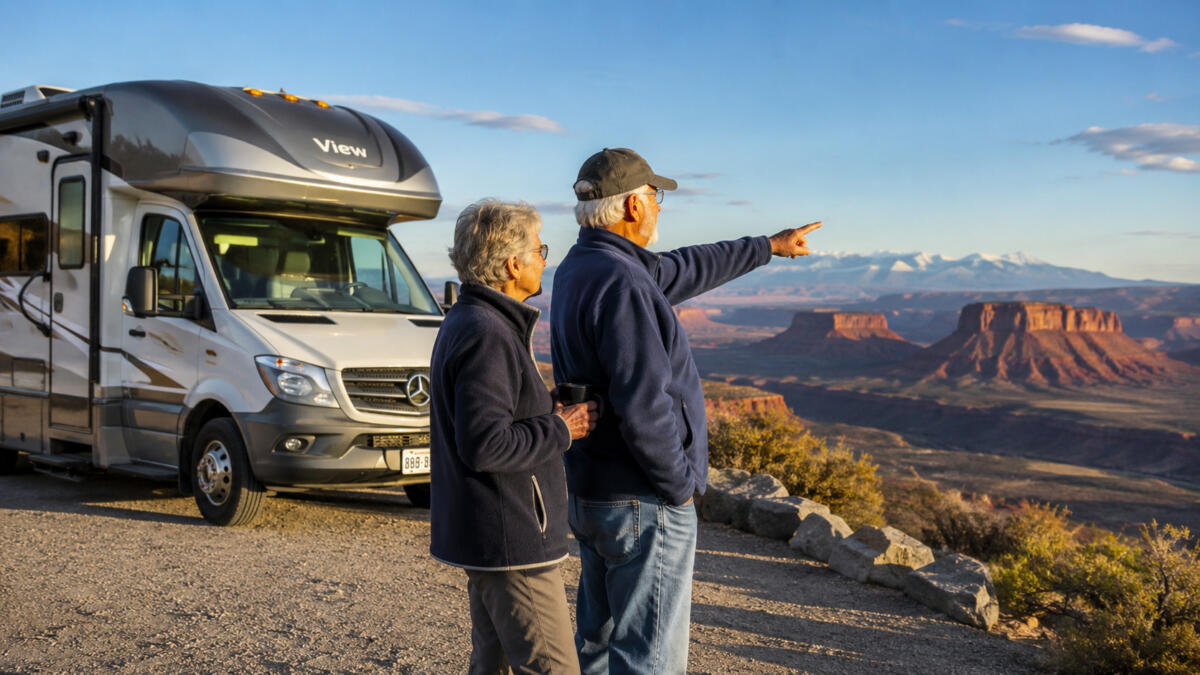
Spend time in RV parks, snowbird destinations, or popular retirement travel areas and you’ll find plenty of RVers in their 70s who are still traveling extensively. For many, the biggest change isn’t whether they travel, but how they travel.

That’s not exactly news. RV travel has long been popular with retirees.

What’s more interesting is how many RVers in their 70s are continuing to travel—and how many are changing the way they do it.

For some, that means fewer 400-mile driving days. For others, it means staying a week or a month instead of moving every few days. Many are choosing comfort over mileage and experiences over trying to check destinations off a list.

They’re still traveling. They’re just doing it differently.

The road gets a little shorter

Ask longtime RVers about their early years on the road and you’ll often hear stories about ambitious travel schedules.

Cross-country trips. Long driving days. Moving every night or two.

For many RVers, those habits begin to change with age.

A day that once involved six or eight hours behind the wheel might now be limited to three or four. Instead of rushing to the next destination, travelers are more likely to linger where they are.

That slower pace often reduces stress and allows more time to enjoy the places they came to see in the first place.

“Many RVers in their 70s are still exploring the country. They’re just doing it at 55 mph instead of 75.”

Longer stays are becoming the goal

Many experienced RVers eventually discover something surprising: Constant movement can be exhausting.

A slower schedule means fewer hookups and un-hookups, fewer setup days, and less time spent planning routes or securing reservations.

It also creates opportunities to become part of a community, even temporarily.

That’s one reason seasonal stays remain popular with retirees. Whether it’s a winter in Arizona, a summer near the Oregon coast, or a month near grandchildren, many RVers are spending more time in fewer places.

Comfort starts winning

Another shift is the growing emphasis on convenience.

Some RVers downsize to make driving easier. Others move to larger rigs that provide more living space during extended stays.

The goal isn’t necessarily covering more ground. It’s making travel more comfortable and enjoyable.

That can mean choosing campgrounds with full hookups, avoiding difficult driving routes, or scheduling more rest days between travel days.

Many experienced travelers learn that they don’t have to prove anything to anyone.

Still exploring

None of this means older RVers are parking their rigs permanently.

If anything, many retirees say the freedom that comes with retirement allows them to travel more than they did during their working years.

The difference is that they’re often traveling on their own terms.

Instead of asking how far they can go in a day, they’re asking whether they need to leave at all.

That’s a mindset many younger RVers eventually discover for themselves.

The lesson

One of the biggest myths about aging is that adventure has to stop.

Walk through an RV park and you’ll find plenty of evidence to the contrary.

Many RVers in their 70s are still exploring the country. They’re still discovering new places. They’re still making plans for next season.

They’re just doing it at 55 mph instead of 75.

Sources
RVBusiness
RV Industry Association demographic research

RELATED

RVT1266b

Gas prices just dropped below $4. Why RVers shouldn’t celebrate yet

For the first time since April, the national average gasoline price has slipped below $4 a gallon.

That’s welcome news for RVers heading into summer travel season. Fuel remains one of the biggest costs of a road trip, and even a modest drop at the pump can make a difference over hundreds or thousands of miles.

But before travelers start revising their budgets, there’s a catch: Nobody knows how long the relief will last.

According to GasBuddy, the national average gasoline price recently fell below the $4 mark as oil prices moved lower following news of a potential agreement between the United States and Iran.

For RVers, lower fuel prices matter. A motorhome getting 8 miles per gallon will burn about 125 gallons of fuel over a 1,000-mile trip. A 50-cent difference in fuel prices can mean more than $60 in savings on that journey.

Good news, but not a guarantee

The recent decline is certainly encouraging for travelers. However, fuel analysts caution that pump prices can change quickly.

Gasoline prices generally follow movements in the oil market, but often with a delay. If oil prices continue to ease, drivers could see additional relief. If conditions change, prices could move higher again.

That uncertainty is why experienced RVers often avoid building a trip budget around today’s fuel prices.

“Cheaper fuel is good news. Counting on it to last is another matter.”

Diesel owners may see less relief

The headlines also focus on gasoline, while many RVers drive diesel-powered motorhomes or tow with diesel pickups.

In many parts of the country, diesel remains noticeably more expensive than regular gasoline. As a result, some RVers may not see the same level of savings reflected in national gasoline averages.

Location matters, too. Fuel prices can vary widely from state to state, meaning some RVers will see greater savings than others.

Enjoy the savings, but keep some flexibility

The drop below $4 is welcome news for summer travelers. After months of elevated fuel costs, any relief at the pump is a positive development.

Still, RVers may want to view the lower prices as a bonus rather than a long-term trend.

If prices continue moving lower, summer travel could become a little more affordable. If not, travelers who leave some room in their fuel budget will be better prepared for whatever comes next.

For now, the national average is heading in the right direction. That’s good news. Just don’t assume the price on today’s sign will be the same one you see at your next fill-up.

Sources
WANE-TV / GasBuddy

Reuters

GAS PRICE ROLLER COASTER RIDE

RVT1266b

RV Daily Tips. Tuesday, June 16, 2026

America’s Original RV Newsletter. Since 2001
Issue 2927 • New issue every weekday


Today’s thought

“Success is stumbling from failure to failure with no loss of enthusiasm.” ―Winston Churchill


Need an excuse to celebrate? Today is National Fudge Day! Here are some of our favorite fudge recipes

On this day in history: 1903 – The Ford Motor Company is incorporated.


Tip of the day
Simple strap hack makes propane cylinder transport easy

By Russ and Tiña De Maris
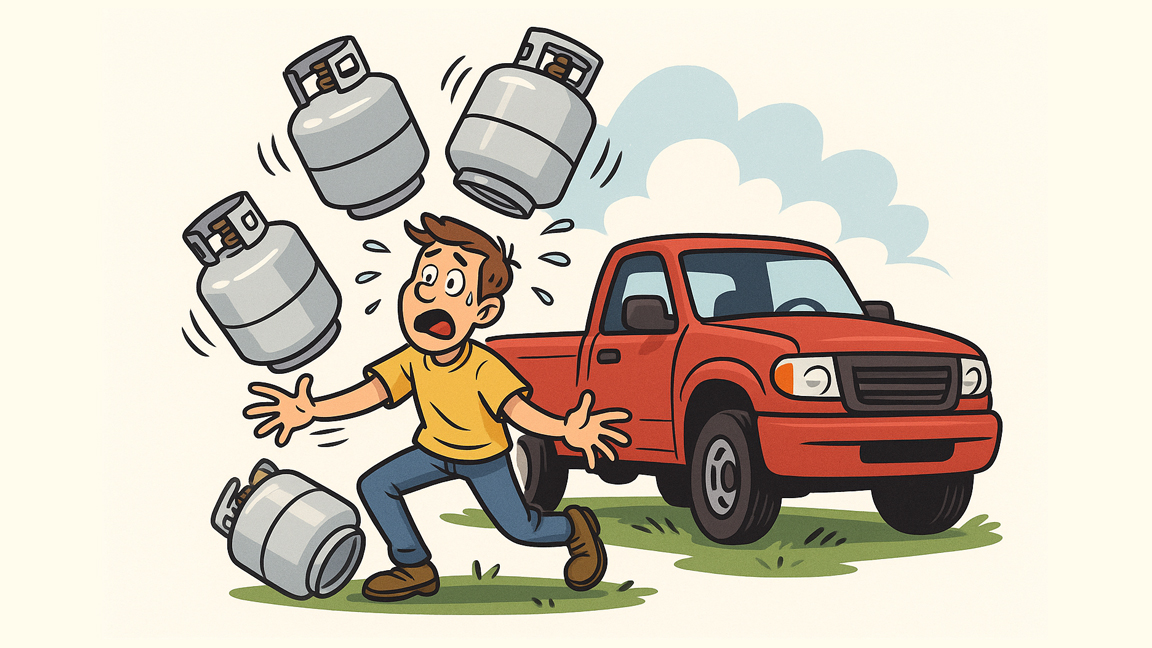
Lugging propane cylinders in the back of the pickup for a refill can be risky. Left on their own, they tend to tip over, and can get into mischief. Federal regulations tell us that transported cylinders need to be secured. Here’s an RVtravel.com reader’s suggestion for fifth wheel owners. This propane tie-down hack is simple! (Plus, we share a tip for non-fifth wheel owners, too.)


Article and video
The viral tortilla cinnamon roll hack really works

The best bite of any cinnamon roll is the center—soft, sticky, and packed with cinnamon sugar. Chef Andrew Gruel put a viral shortcut to the test by turning that idea into a fast dessert with four ingredients: tortillas, cinnamon, sugar, and butter.

The appeal is obvious. There is no dough to make, no yeast to wait on, and no long bake day. It’s also convenient for small-space cooks, like RVers. This looks soooo gooooood.


Featured article
RVers discuss camping vs. glamping, but does the difference really matter?

By Gail Marsh
It’s just a matter of semantics. At least, that’s how I viewed the recent discussion around the campfire. Other folks took the discussion much more seriously as they tried to define what they’re doing in their RVs: camping, glamping, or what?! Continue reading, then let us know what you think.


Trusted by Full-Time RVers
Americas Mailbox offers secure mail forwarding, scanning, and residency services tailored to life on the road, plus tax savings. Learn more.


Ask Dave
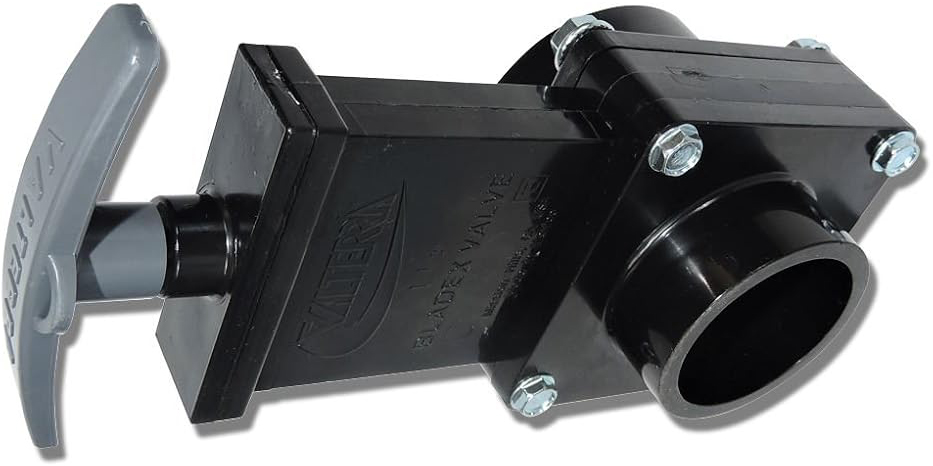
My RV’s gray tank valve handle and rod are missing. How can I drain the smelly tank?

Read Dave’s answer.


Reader poll
Do you listen to music while you drive?

Respond here.

LIKE TAKING POLLS? So do we! Did you know we’ve run more than 5,000 polls on our website over the years? Check ’em out! Have fun!


Quick tip
Watch your rear!

“Here is a tip I use while driving down the highway. I installed a Fresnel lens on the rear window of my 31-foot Class C motorhome to enable me to see close to the rear of the rig. Doing this gives me the added advantage of being able to know when I’ve passed another vehicle and it’s far enough behind to allow me to change lanes. When I can see the headlights of the overtaken vehicle in the Fresnel lens, it’s safe to go. The normal rearview or side-view mirrors do not give a good estimate of how far ahead of the overtaken vehicle you are.” Thanks to Fred C.!


Website of the day

The Best Hike in Every National Park
If you visit a national park, what’s the ONE hike you should do? Probably the one on this list…


? MYSTERY PRODUCT OF THE DAY ?
This takes the meaning of internet cookies to a whole new level! No, your computer doesn’t log your data when you use this, but your stomach is going to grumble every time you hop online! 


And the survey says…

We’ve polled RVtravel.com readers more than 5,000 times in recent years. Here are a few things we’ve learned about them:

• 11 percent do not enjoy visiting small-town museums.
• 28 percent have read John Steinbeck’s book “Travels with Charley.”
• 11 percent have been in an auto accident that sent them to the hospital for more than 24 hours.

Recent poll: Have you ever had to change RV plans because of extreme heat?


Trivia

In Syracuse, New York, at the intersection of Tompkins Street and Milton Avenue, you’ll find an upside-down traffic light. Why? When the first traffic light was installed in 1925, a band of Irish immigrant boys took it upon themselves to put the Irish color (green) over the British color (red). The local alderman allowed for the change but, eventually, the state of New York stepped in and had it reversed to standard conventions. However, by 1928 the light was reversed again and still, to this day, remains upside down.


Readers’ pet of the day

Dsc06883 71afe73958ea540101dcd473ad815a0e“Mandi (Basenji) was very focused on watching a cardinal from our little van motorhome in Everglades National Park, Florida.” —Sylvia Jordan

Send us a photo of your pet with a short description. We publish one each weekday in RV Daily Tips and in our Sunday RV Travel newsletter. No blurry photos, please! Please do not submit your photo more than once. Thanks!


FREE IS GOOD! Ready to explore Maryland? Find everything you need here, including campgrounds, beaches, parks, historic sites, arts and culture, family fun, upcoming events and much more. By mail or online.


The ‘Fasta Pasta’ pasta cooker cooks pasta perfectly; minimal water and no propane
Nanci Dixon writes, “This is my new favorite ‘As seen on TV’ pasta cooker. It really is perfect for the RV!” To cook the perfect pasta all you do is add pasta, water, and microwave. It uses little water and no propane—no “real” cooking involved. Read Nanci’s review of it here. It’s great!


Leave here with a laugh


Today’s weather forecast across the nation
THIS MAP UPDATES TWICE A DAY

Visit Current National Radar Weather Map


Did you miss the latest RV Travel Newsletter? If so, read it here.
Oh, and if you missed the Latest News for RVers, make sure to catch up here.


If you shop at Amazon.com, we’d appreciate you using this link. We get an itty bitty commission if you buy something, but they add up and help us pay our bills (most importantly our hard-working writers!). 


RVtravel.com All-Star Staff

Click here for information about our staff and how to contact us.

WHY WE ASK FOR DONATIONS INSTEAD OF SELLING SUBSCRIPTIONS.

Our policy on using artificial intelligence.

My RV’s gray tank valve handle and rod are missing. How can I drain the smelly tank?

Dear Dave,
The gray tank rod and handle were missing when I got ready to leave the campsite. The tank is 2/3 full but I can’t drain it. I’m trying to find help to fix it, but no luck yet. Smells are coming into the camper. Any advice on how to drain the tank? —Steve, 2014 Keystone Cougar High Country 299RKS

Dear Steve,
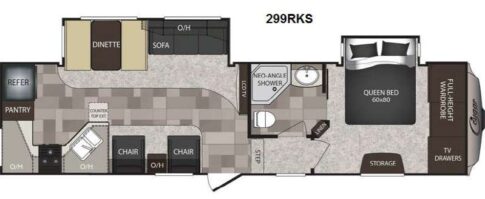
From what I can tell looking at the floorplan, the shower is on the driver side of the rig just behind the front bedroom slide.

Cougar 299RKS

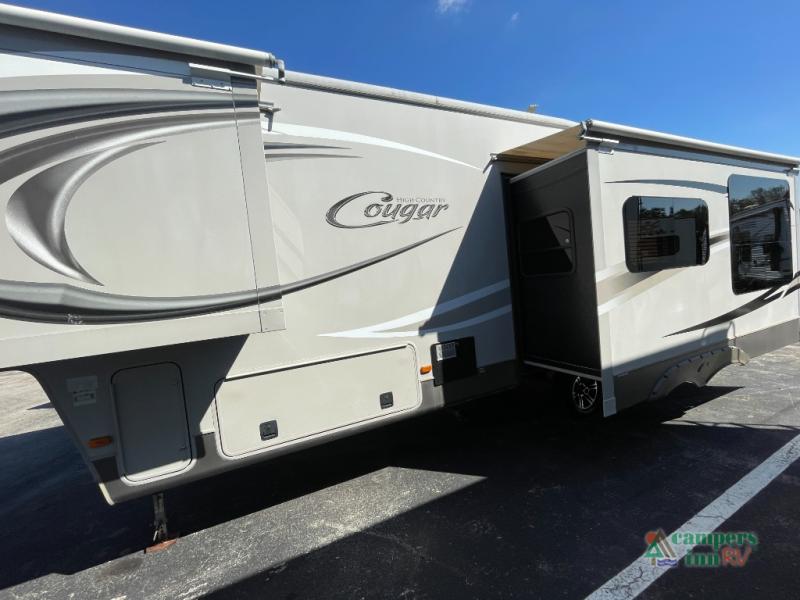
Typically, the gray water holding tank will be directly under the shower for draining purposes. Since it is on the driver side, the dump valve should be in the compartment underneath.

Cougar 299RKS Side
Cougar 299RKS side

Units with a shower on the passenger or curb side most likely would have the holding tank on that side and use a remote valve with a cable, which is a much harder repair.

I believe your unit has the fixed valve, most likely a Valterra gate or spade valve. Since it is the gray water tank, the drain size is 1-1/2”. However, both the 3” black water and gray water drain valves use a threaded rod that is 1/4”-20, which means it has 1/4” threads and 20 threads per inch.

Grey drain valve
Gray drain valve

What you can do

The handle and the rod have threads on both ends and typically the vibration of running down the road loosens them and they unthread. I have seen replacement handles at home improvement stores, Walmart, and even Tractor Supply. You could even go to a home improvement store and get a generic threaded rod that is the same size and use that in an emergency. Our local Ace Hardware has a 24” Steelworks brand for $2.99.

If the rod has broken or the threads are stripped, you have a bigger problem. In that case, I would contact the management of the campground and find someone that has a “honey wagon,” which is a trailer or truck with a hose that will literally suck the water out of the tank through the shower drain hole.

Once you get the tank empty, you will need to replace the gate valve. That is fairly easy, depending on how the manufacturer installed the connecting pipes. Typically, you can remove the four nuts around the valve, pull out the bolts, and pull out the valve. I would replace the entire valve, as you can get one on Amazon for about $18 here.


 You might also enjoy these posts from Dave 

DAVE HAS ANSWERED MORE THAN 1,000 readers’ maintenance and repair questions. Read a directory here. There is so much to learn!


Dave Solberg is a leading expert in the RV industry and the author of the “RV Handbook.”

HAVE A QUESTION FOR DAVE?

Send your inquiries to him using the form below.

Name
Drag & Drop Files, Choose Files to Upload

RVDT2927

Simple strap hack makes propane cylinder transport easy

8

By Russ and Tiña De Maris
Lugging propane cylinders in the back of the pickup for a refill can be risky. Left on their own, they tend to tip over, and can get into mischief. Federal regulations tell us that transported cylinders need to be secured. Here’s an RVtravel.com reader’s suggestion for fifth wheel owners. This propane tie-down hack is simple!

Big bump in the bed is secure point for this propane tie-down hack

propane tie-down
Big bump is the basis for stable support. Bruce McDonald photo.

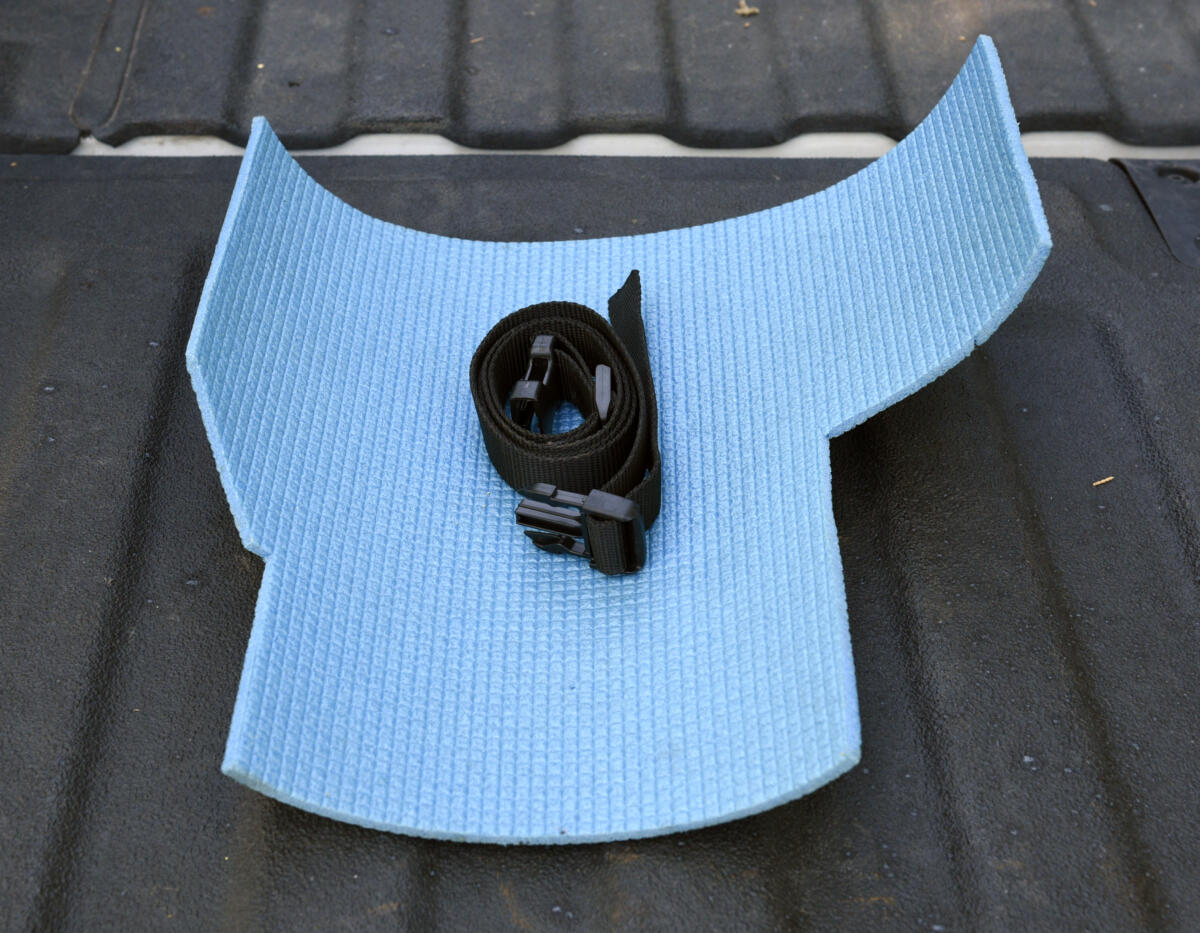
Bruce McDonald says he uses that big bump in the back of his pickup for a secure fixing point. You got it, his fifth wheel hitch. Combining a sturdy nylon strap with a chunk of high-density foam, it’s a simple “wrap-around” idea that keeps the cylinder in place.

You could easily substitute a ratcheting load tie-down strap—no doubt stronger than his nylon strap. Bruce says he’d consider it, “if I was driving more than a couple blocks.” He was concerned that perhaps his setup might not meet U.S. Department of Transportation requirements.

No worries. The DOT doesn’t get real nuanced (pdf) when it comes to support. A simple “Propane cylinders must be secured in a manner that prevents movement during transportation” is all Uncle Sam says.

propane tie-down
Lightweight, and space-saving. Bruce McDonald photo.

Bruce is happy with his nylon strap and foam hack. And he reminds us that it takes up very little space and is lightweight. Kudos to Bruce!

Propane tie-down for non-fifth wheelers

propane tie-down
Frank’s setup is more elaborate, but a great weekend project. Frank Billington photo.

But what if you’re not a fifth-wheeler? Follow this link to Frank’s hack for hauling propane cylinders in his truck that he tows his travel trailer with. Yes, it’s a bit more elaborate, but gets a gold star from many of our readers. You can find out more by clicking here.

RELATED

RVDT2927

The viral tortilla cinnamon roll hack really works

3

By Cheri Sicard
The best bite of any cinnamon roll is the center—soft, sticky, and packed with cinnamon sugar. Chef Andrew Gruel put a viral shortcut to the test by turning that idea into a fast dessert with four ingredients: tortillas, cinnamon, sugar, and butter.

The appeal is obvious. There is no dough to make, no yeast to wait on, and no long bake day. It’s also convenient for small-space cooks, like RVers.

The video at the end of this post shows the full test, including the method and verdict.

Why this shortcut caught on

Gruel came across the recipe while his kids watched a YouTuber test 100 food hacks. This one stood out because it was so simple that it almost felt wrong. A tortilla takes the place of dough, melted butter helps the cinnamon sugar stick, and a quick roll turns each one into a mini spiral.

That simplicity is the whole point. It works as a fast dessert for a weeknight or a potluck party tray. He also pointed out that the base recipe leaves room for extra spice or even dried vanilla.

How the tortilla cinnamon roll bites come together

Andrew started by brushing an oven-safe dish with butter, then mixed white sugar and cinnamon in about a one-to-one ratio. Each tortilla got a full coat of melted butter, then a generous layer of cinnamon sugar. After that, he rolled them tightly, trimmed the ends, and sliced the rolls into even pieces.

Those pieces went into the dish, packed close together like a pan of tiny cinnamon roll centers. He added more melted butter over the top, then baked them at 350 degrees for about 10 to 15 minutes, until toasted and golden.

The frosting makes the hack feel complete

While the bites baked, he mixed whipped cream cheese with milk, sugar, and a little powdered sugar. Heavy cream would work, too. Then he whisked it to smooth out the cream cheese and add some air. A touch of butter went in near the end, after Lauren offered the line that summed up the whole recipe: “Butter makes everything better.”

That last bit gives the frosting more richness. Once the bites came out hot, he spooned the frosting over the top so it could melt into every crack and corner, then finished them with powdered sugar.

The taste test

The first reaction was the smell. The kitchen smelled like Cinnabon, and the centerpiece looked like the inside of a cinnamon roll split into dozens of little bites. William said it tasted like a cinnamon roll. Maverick’s first note was that it was hot, which was fair because they came straight from the pan.

Gruel’s final take was simple. The hack works. The bites were rich, sweet, and fully kid-approved. He even joked that with ice cream and fresh berries, a plate like this could pass for a pricey restaurant dessert!

RELATED

RVDT2927

Do you listen to music while you drive?

23

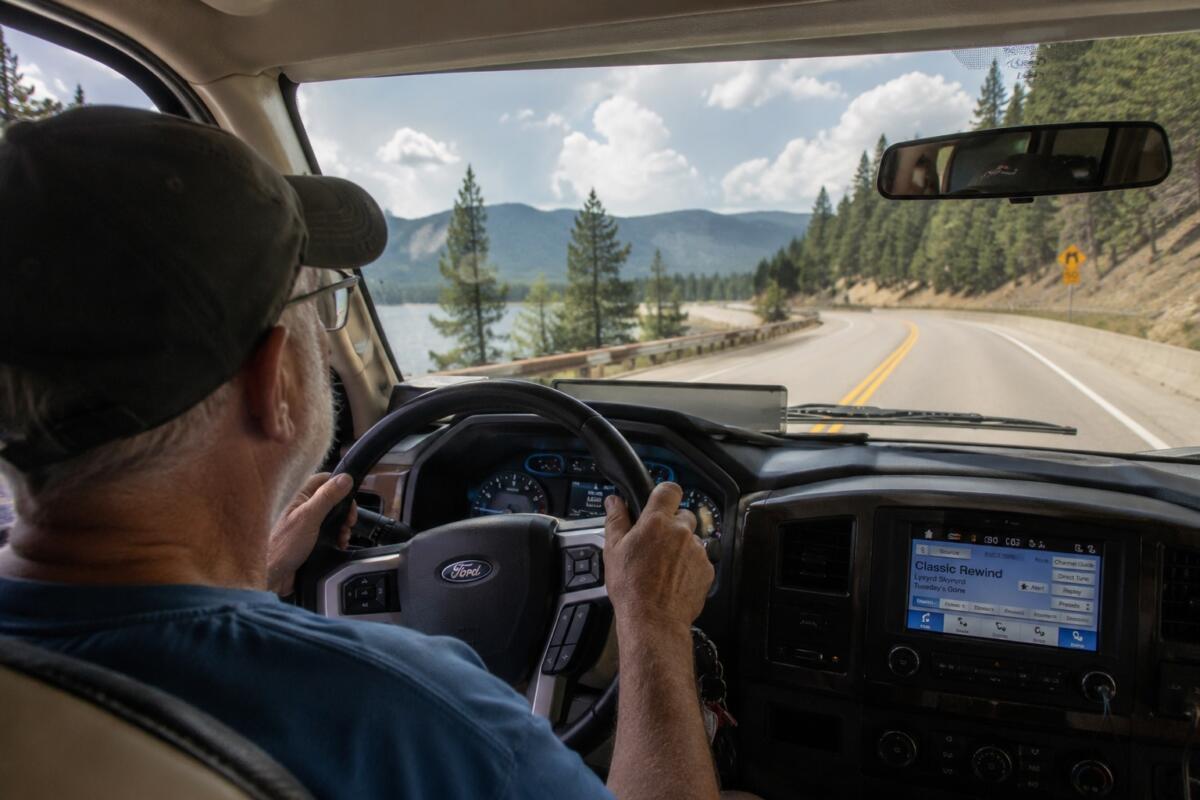
For some, no road trip is complete without the perfect soundtrack playing through the speakers. Whether it’s classic rock, country, oldies, jazz, podcasts, audiobooks, or even complete silence, what fills the cab can make a big difference in the driving experience.

Music has long been part of America’s road-trip culture. There’s something about cruising down a scenic highway with your favorite songs playing that just feels right. Some drivers carefully curate playlists before every trip. Others simply turn on the radio and see what they find. And then there are those who prefer the quiet, enjoying the sounds of the road and the scenery outside the windshield.

Of course, driving an RV can be a little different than driving a car. Long days behind the wheel, changing road conditions, and navigating unfamiliar areas require concentration. Some RVers say music helps them stay alert and relaxed. Others find it distracting, especially in heavy traffic or difficult driving situations.

Technology has also changed how we listen while traveling. Streaming services, satellite radio, podcasts, and audiobooks offer nearly endless entertainment options. Many RVers now spend hours listening to news, history programs, comedy shows, or true-crime stories as the miles roll by.

So what about you? When you’re driving your RV—or any vehicle—do you listen to music along the way? Or do you prefer no music at all? And remember, we’re asking about music today, not podcasts or anything.

Vote in today’s poll, and thanks for participating!

MORE POLLS YOU MIGHT LIKE:

RVDT2927

RV Daily Tips. Monday, June 15, 2026

America’s Original RV Newsletter. Since 2001
Issue 2926 • New issue every weekday


Today’s thought

“A journey is a person in itself; no two are alike. And all plans, safeguards, policing, and coercion are fruitless. We find that after years of struggle that we do not take a trip; a trip takes us.” John Steinbeck


Need an excuse to celebrate? Today is Nature Photography Day!

On this day in history: 1919 – John Alcock and Arthur Brown complete the first nonstop transatlantic flight when they reach Clifden, County Galway, Ireland.


Tip of the day
Sagging, loose cables are a silent threat to your RV’s slide-outs

By Andrew Herrick
Sagging cables are a harbinger of bad things to come. If you roll the dice on your cable-driven RV slide-out, you might get lucky, or you might hear a BOOM!… and now your slide-out won’t move.

Cable-driven slide-out systems are a popular choice for new RV installations. They are lightweight, modular, and easy to install. The BAL® Accu-Slide™ system is the most well-known. It is sold in two configurations: regular and Double Back. Continue reading.


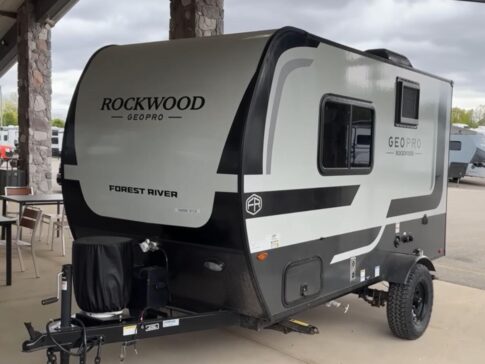
Rockwood Geo Pro 11LE travel trailersRV review
2026 Rockwood Geo Pro G11LE—Simple, small, strange

The 2026 Rockwood Geo Pro G11LE is one of those campers that makes more sense after a closer look. It is a tiny, light trailer that keeps Rockwood’s better build methods while cutting the floorplan down to the basics. That makes it a fit for solo campers, couples, and maybe a small family that wants easy weekend trips, not full-time living. The layout is odd, yet it squeezes in more use than the size suggests. See what you think.


In the RV shop with Dustin
Cool Tools: Use the DeWalt Impact Wrench for daily RV tasks

Join me as I share what we like to call “Cool RV Tools.” These are tools and gadgets that we actually use in the RV industry! We also believe they will be helpful to you when you need to make repairs while out on the road. Previously, I showed you the DeWalt 20 Volt Max Cordless Grease Gun, and today, I’m introducing the DeWalt 20V MAX XR 1/2 in. High Torque Impact Wrench—the powerhouse tool for your daily tasks!


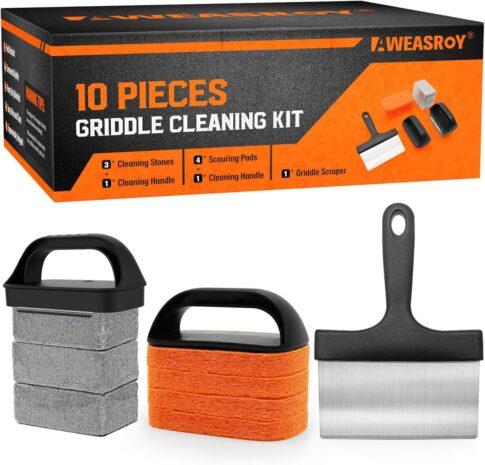
GriddlekitKeep your Blackstone/griddle good-as-new
This griddle cleaning kit helps RVers keep their flat-top griddles in great shape trip after trip. With scrapers, scouring pads, and a pumice grill stone, it quickly removes grease, burnt bits, and buildup without scratching the surface. Clean before and after cooking, and your griddle will last longer. Learn more about cleaning your Blackstone in Gail’s article here, or buy this griddle kit here.


Article and video
RV inspector recommends the best older motorhome brands

High-quality vintage motorhomes aren’t just full of memories—they’re built tough and made to last for years. From solid frames to clever layouts, choosing the right one is about striking a balance between endurance and comfort. With guidance from years of RV inspections and living on the road, certified RV inspector Deb of Deb’s RV Services curated the list in this video that spotlights the 11 RV brands and models that keep rolling mile after mile. (If you don’t want to watch the video, I write about them all in the article, too.)


The latest news for RVers

To read more recent news, click here.


Featured article
7 joyful road trip songs to start your journey

By Cheri Sicard
Welcome to Road Trip Playlists! I will try to mix it up with songs you probably already know and love along with others you may have never heard of. I came up with the idea after having a lifetime of friends come to me for music recommendations. My business partner has even called me the “DJ of his life.” For this road trip playlist, I wanted to focus on joyful songs to get your trip started. Listen here.


RANDOM RV THOUGHT: You know you’re an RVer when a trip to the hardware store for one $3 part somehow turns into a $97 receipt, a new flashlight, a storage bin, two bungee cords, and a gadget you can’t quite explain—but are absolutely convinced you’ll need someday.


Ask Dave
Why does RV water pump run all the time when connected to city water?

Dave helps Matt troubleshoot the possible cause.


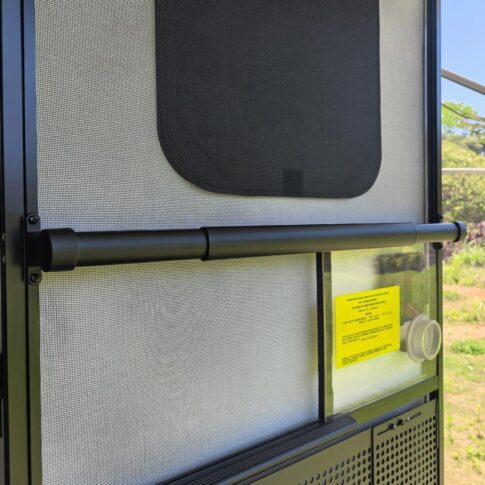
ScreendoorbarReinforce your RV’s screen door in seconds
Give your RV screen door a little extra love. This lightweight aluminum grab bar reinforces and protects your door, helps prevent everyday damage, and adds a comfortable, secure grip. Fully pre-assembled and adjustable to fit most RVs, it installs fast and makes every in-and-out smoother and safer. Learn more or order.


Reader poll
What size bed do you have in your RV?

Respond here.


Quick tip
Bugged by mosquitoes? Try this

We haven’t been able to independently verify this one, but some say using LED lamps and flashlights attract fewer of the little bloodsuckers. Let us know in the comments if you’ve noticed this.


Website of the day

10 Best Places To Go Snorkeling in the U.S.
Let’s make this the year you try something new, shall we? Snorkeling is a fun, beautiful place to start. This list gives you the best states to snorkel in, and the best places to go snorkeling in each of those states.


Monday Motivation

Screenshot


Trivia

Thinking about attending all 11 World Cup events? If so, your field-to-field trip would take you across more than 15,000 miles on up to 20 different interstates. Alas, that would be difficult as some events occur on the same day. A complete road trip would thus require time travel.


? MYSTERY PRODUCT OF THE DAY ?
This made us smile. It’s something we all do, and it’s the best part about being an RVer, isn’t it?


Readers’ pet of the day

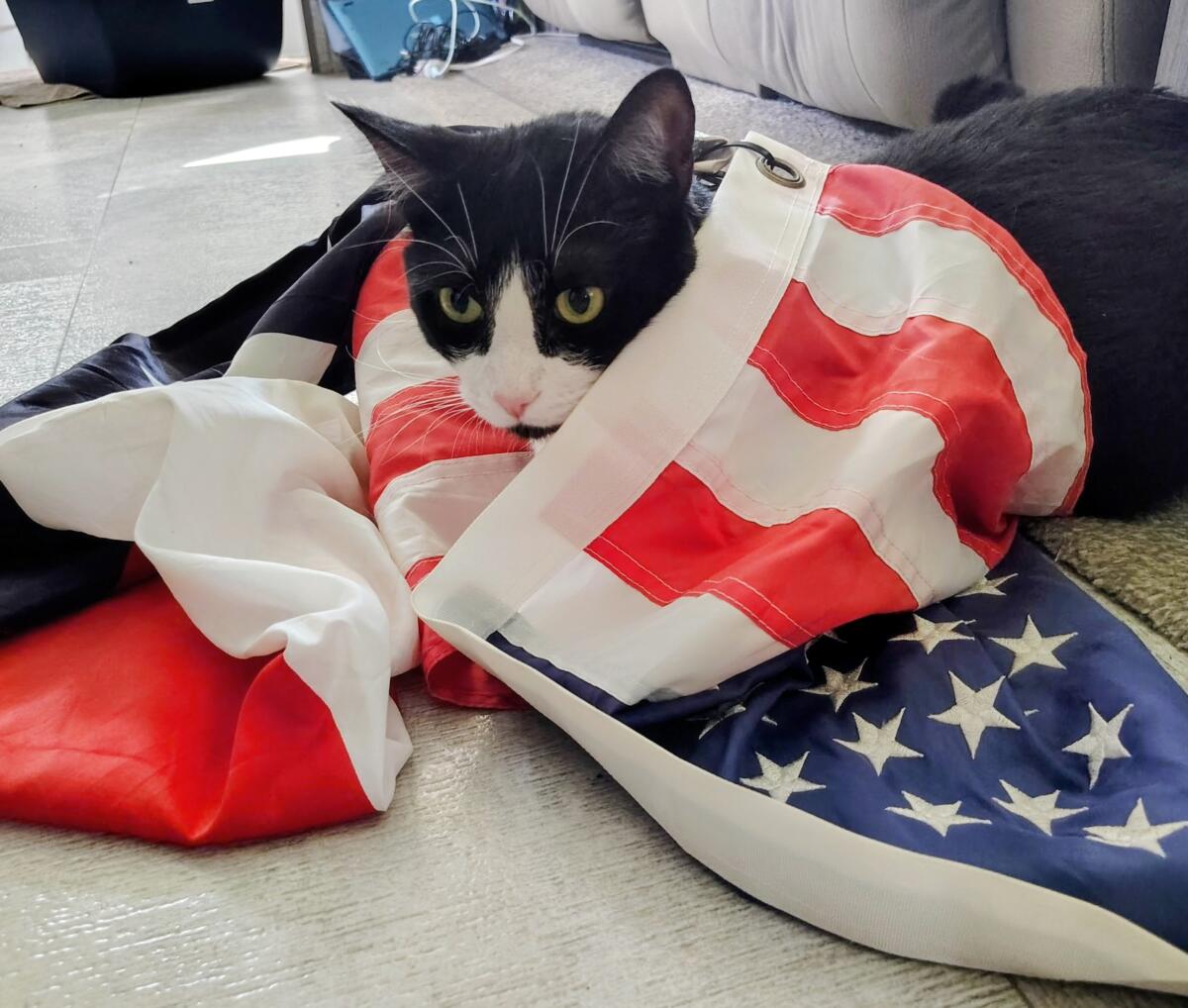
Img 20260602 Bucky E47cf91c0ca18d5bd4b2ac85b016ff2f“We rescued Bucky (Tuxedo, age 2) from our local shelter when he was just 6 weeks old. He fit in the cup holder on our first road trip. He has practically grown up in our travel trailer. He loves being outside on a leash and taking golf cart rides. He’s just an ‘All American Cat’, or he says… ‘Merica!'” —Perry Morris

Send us a photo of your pet with a short description. No blurry photos and please do not submit your photo more than once. Thanks!


Leave here with a laugh


Today’s weather forecast across the nation
THIS MAP UPDATES TWICE A DAY

Visit Current National Radar Weather Map


Did you miss the latest RV Travel Newsletter? If so, read it here.
Oh, and if you missed the Latest News for RVers, make sure to catch up here.


If you shop at Amazon.com we’d appreciate you using this link. We get an itty bitty commission if you buy something, but they add up and help us pay our bills (most importantly our hard-working writers!). 


RVtravel.com All-Star Staff

Click here for information about our staff and how to contact us.

WHY WE ASK FOR DONATIONS INSTEAD OF SELLING SUBSCRIPTIONS.

Our policy on using artificial intelligence.

Why does RV water pump run all the time when connected to city water?

Dear Dave, 
The RV water pump stays on when hooked up to city water even when the switch is off. Also, the pump “hums” when the unit is shut down. It’s not as loud when the pump is actually pumping water through the system—there’s just a hum. The only way to shut it off is by pulling the fuse. I’ve tried pulling the fuse and waiting a few minutes then putting the fuse back in. The pump shuts off, but in a few minutes the hum starts again. Thanks for any help. —Matt, 2007 Newmar Dutch Star 4304

Dear Matt,
If the water pump stays on when hooked to city water, it typically means your water pump check valve is defective or stuck, allowing the pressurized water from the city source to backflow through the pump into the fresh water tank. This would reduce pressure in the line at the pump and it would sense that it needs to run to provide on demand pressure.

The “gremlin” in this situation is, why does it run with the switch off? That should mean there is no 12-volt power going to the pump. Pulling the fuse removes the gremlin. Therefore, it could be one of two things: Either your switch is defective and not shutting off power, or, more likely, is there is another switch somewhere that is on?

Typically your rig will have three water pump switches: one at the monitor panel, one in the bathroom, and one outside in the service center so you can turn the pump on in each of those locations. If any of these switches are in the on or closed position, 12-volt power will go to the pump and make it run when it detects a pressure drop.

water pump
Water pump

Troubleshooting tips

Make sure all the switches are in the off position. If the pump still runs, you most likely have a defective switch. Start with one switch and remove one of the lead wires. If the pump still runs, replace the wire and go to the next switch, remove the wire, and do the same for the third.

Does the water pump work as designed when not connected to a pressurized city water source?

I believe the hum you are hearing when the unit is shut down most likely is water backflowing through the pump and the blade spinning.

I would suggest removing the water pump and replacing the backflow valve and the filter.


 You might also enjoy these posts from Dave 

DAVE HAS ANSWERED MORE THAN 1,000 readers’ maintenance and repair questions. Read a directory here. There is so much to learn!


Dave Solberg is a leading expert in the RV industry and the author of the “RV Handbook.”

HAVE A QUESTION FOR DAVE?

Send your inquiries to him using the form below.

Name
Drag & Drop Files, Choose Files to Upload

RVDT2926

Sagging, loose cables are a silent threat to your RV’s slide-outs

By Andrew Herrick
Sagging cables are a harbinger of bad things to come. If you roll the dice on your cable-driven RV slide-out, you might get lucky, or you might hear a BOOM!… and now your slide-out won’t move.

A quick handshake with BAL® Accu-Slide cable-driven slide-outs

Cable-driven slide-out systems are a popular choice for new RV installations. They are lightweight, modular, and easy to install. The BAL® Accu-Slide™ system is the most well-known. It is sold in two configurations: regular and Double Back.

It’s difficult to verbally explain the Accu-Slide system. (How can cables “push” a room, after all?) BAL has published several free videos demonstrating the mechanical magic. I recommend you watch those videos first if you want to understand the ins and outs (no pun intended) of this system.

That’s the part of the Accu-Slide system you can’t see!

In short, there are eight cables—four inside, four outside—that alternately pull the room in or out depending on the 12V motor’s polarity. It’s a give-and-take system, where the slack on one cable set is taken up by another. The motor, gearbox, cables, and pulleys are hidden behind the fascia trim surrounding your slide-out room.

What causes slide-out cables to break?

Anyway, that’s enough background information. Here’s why sagging cables are so dangerous:

In an Accu-Slide system, two sets of cables attached to adjuster brackets physically pass by each other as the room moves in and out. There’s not much room to pass (imagine two tractor-trailers on a country two-lane highway), so both cable brackets must stay in their lane.

You can see how this adjuster bracket is beginning to skew into the lane of the other bracket!

As one set of cables becomes too tight or too loose, the cable bracket will begin to skew or rotate sideways. Eventually, that cable bracket will “drift” into the lane of the other cable bracket. The two brackets collide as the room moves in or out, and SNAP!—a cable breaks, or BOOM!—the bracket pops. The room either won’t close completely or won’t move at all. Dave Solberg has addressed several of these repair questions here.

Replacing broken Accu-Slide cables isn’t a one-beer job

Fixing a cable-driven slide-out is not an easy task for a newbie. You’ll need to blindly fish a new cable through two pulleys, crimp a new cable and ferrule (circular ring) in place (requires a special tool), and re-tighten all the cables to achieve a proper seal (and to avoid the same problem in the future!). You may need to support the slide-out room with a jack or jockey the room into position. You may need to remove the motor or replace the gearbox, depending on the damage.

It’s not a forgiving system. If you put the wrong chain link on the gearbox sprocket or orient a cable bracket the wrong way, you’ll be right back where you started. Plus, just accessing the mechanical organs usually requires a full dissection of the slide-out room fascia and trim!

How loose is too loose? You want snug, but not guitar-string tight: 1/2″ of play in both up and down directions.

Is your RV slide cable loose? Thankfully, you don’t need to be Thomas Edison to check the calibration of your slide-out room. With the room fully extended or retracted, just check each cable. Each cable should be snug, but not guitar-string tight. Grasp it with your thumb and forefinger and gently push up and down. Each should easily move up and down 1/2” in each direction, or 1” total. If any cable is too tight or too loose, all the cables need to be adjusted.

If you’re not mechanically minded, the cable adjustment will require an RV technician who knows the Accu-Slide system—but better to pay $200 for an adjustment than $1,000 for a system rebuild!

More by Andrew, The RV Engineer:

RVDT2926

RV inspector recommends the best older motorhome brands

By Cheri Sicard
High-quality vintage motorhomes aren’t just full of memories—they’re built tough and made to last for years. From solid frames to clever layouts, choosing the right one is about striking a balance between endurance and comfort.

With guidance from years of RV inspections and living on the road, certified RV inspector Deb of Deb’s RV Services curated the list in the video near the bottom of this page that spotlights the 11 RV brands and models that keep rolling mile after mile. (Yes, I know the video claims 10 best older motorhome brands, but since Deb’s list includes an honorable mention, that makes it 11.)

What sets the best older motorhome brands apart?

A few key details separate reliable motorhomes from the rest:

• Sturdy chassis (Ford E450, Workhorse, etc.)

• Durable build materials (aluminum, fiberglass)

• Thoughtful water and waste tank sizes for boondocking

• Proper insulation for comfort and longevity

• Fewer slide-outs translate to less hassle over time

Regular maintenance and a thorough inspection before buying any used motorhome are essential for getting the most out of any rig.

OK… on to Deb’s list.

Best older motorhome brands

#1 Lazy Daze: Sturdy and simple

Built on an E450 chassis with a gas engine, Lazy Daze motorhomes are known for:

• Aluminum body and roof for lasting strength

• No slide-outs, so there’s less to fix or leak

• Spacious freshwater tanks and easy driving

• 26½ ft., on average, making them park-friendly

• Ideal for three seasons, but not for harsh winters

While lacking modern room-expanding slides, their durability and simplicity have won many loyal fans.

#2 Chinook: Compact, yet tough

Chinooks, sometimes called “baby Lazy Daze,” sit on a Ford or Chevy chassis with a fiberglass shell. Their compact size fits into typical parking spots and makes city drives less stressful. Chinooks lack slides (which means fewer potential repairs), but their smaller tanks can shorten boondocking trips.

They aren’t all-weather, but hold up well with mild insulation. Compared to Lazy Daze, Chinooks are more nimble, but those needing lots of water storage may want to look elsewhere.

#3 Born Free: Safe, solid construction

Born Free Class C motorhomes stand out due to their built-in roll bar—a unique safety feature in case of a collision. They’re built on a Ford E450 chassis, and models may or may not offer slide-outs.

Born Free units boast slightly better insulation for moderate climates, awarding them a spot as well-rounded and secure. The best years run from 1999 to 2010.

The built-in roll bar for added crash protection is a rare feature in this RV class.

#4 Coach House Platinum B+: Comfort with slides

Coach House Platinum B+ motorhomes (E450 chassis) often have a single slide-out for extra space. These slides can leak or misalign, so buyers need to check for any past issues carefully. Coach House Platinum features well-insulated, one-piece fiberglass construction and smaller tanks. Those who boondock should account for limited storage and water.

Slide-out inspection checklist:

  1. Check for prior water leaks or stains around the slide.
  2. Test the slide operation several times.
  3. Inspect slide seals for cracks or wear.
  4. Look for misalignment or uneven movement.
  5. Ask for maintenance records.

#5 Safari Trek: Compact Class A

The Safari Trek is a well-built, smaller Class A motorhome with a gas engine. Its standout feature is the “electro bed” that lowers from the ceiling. When it works, it frees up space during the day, but finding replacement parts can be a pain if it breaks. Some models offer a slide, but most do not. It’s suited for moderate climates, not harsh winters.

Electro bed system

Pros: Maximizes floor space, innovative sleeping arrangement

Cons: Repairs can be tricky due to scarce replacement parts

#6 Bigfoot: All-season champ with smart storage

Bigfoot Class C models, built on a Ford E450 chassis, are prized for four-season insulation and ample interior storage—enough for bikes and larger gear inside the cargo hold.

While some units offer slides, many owners prefer slide-free versions for less maintenance. They’re hard to find and tend to cost more, but their reputation for quality is high.

#7 Phoenix Cruiser: Attractive interiors, flexible layouts

Phoenix Cruiser B+ RVs turn heads with their seamless fiberglass roofs, all-wood floors, and cabinetry. Models often have slide-outs and decent three-season insulation. Their compact design and flexible layouts mean they’re welcome in most national parks and easier to maneuver.

#8 Fleetwood Tioga: The trusted workhorse

Fleetwood Tioga Class C models are best known for solid construction and reliability, often serving as rentals in their heyday. Built on a Ford E450 chassis, most lack slides. Their strong frame and interior toughness put them on the shortlist for anyone wanting simplicity and longevity.

Pros:

• Dependable build, made to handle heavy use

• Fewer moving parts, easier upkeep

Cons:

• Outdated styling in some models

• Somewhat basic amenities

#9 Dynamax Isata: Four-season strength and variety

Dynamax Isata B+ coaches come with engine choices—Ford, Dodge, or Freightliner. They’re recognized for excellent insulation, four-season capabilities, and high-end systems. Downsides include smaller tanks and higher resale prices.

#10 Monaco Dynasty: Full luxury in a classic package

The Monaco Dynasty is a luxury Class A diesel pusher, built on the Roadmaster chassis. These coaches feature dual-pane windows, first-rate insulation, quality cabinetry, and spacious layouts ready for every season. Pre-2009 models retain the best build quality, before Monaco’s ownership change.

Honorable mention: Toyota Sunrader for off-grid adventures

Toyota Sunraders stand out with high clearance and a compact, all-fiberglass body. They’re rare, prized for getting into off-road and tight spaces, but have small tanks that limit extended remote camping. Perfect for weekend getaways or adventurous trips off the beaten path.

RELATED

RVDT2926

What size bed do you have in your RV?

20

The topic of RV beds or mattresses is always a hot topic among RVers. In one RV Service Centers and Repairs report, one reader claimed they thought their RV mattress had been made at a granite quarry—that’s how uncomfortable it was.

While comfort is one thing, size is another major factor when it comes to RV beds. Some RVers are lucky enough to have a residential-size king, while others make do with an RV short queen or even a full-size mattress.

Then there are those with unique setups—split twins, convertible sofas, or Murphy beds that fold down at night and disappear by day. The variety of sleeping arrangements in RVs is almost as wide-ranging as the rigs themselves.

But, anyway, we’re not here today to talk about how comfortable or uncomfortable your RV bed is (but, of course, feel free to leave those thoughts in the comments if you wish). We want to know what size your RV bed is. If you have more than one bed in your RV, we want to know what size your main bed is, or the bed you sleep in the most.

If, for some reason, you sleep on your RV’s dinette bed, tell us about that one! If your main RV “bedroom” has two twins, tell us that! If you sleep in your Class C’s overhead “queen” bed and not the main bed in the back, answer for that.

As always, thanks for voting.

RELATED

RVT2926