Home Blog Page 338

Roadside history: When Burma-Shave entertained America

By Chuck Woodbury
Once, long ago, cars went slow and “super” highways were two lanes.

One of the joys of driving back in those good ‘ol days was reading the Burma-Shave signs by the side of the road. One after another, they told a little upbeat story, all with the punch line “Burma-Shave.”

For those too young to remember Burma-Shave, it was a brushless shaving cream. Today, you’d need to be at least 70 to remember seeing the red and white signs that advertised the product along America’s rural highways and byways. On a nondescript stretch of road, where the best scenery might be a pasture with cows, the sight of Burma-Shave signs ahead was reason for celebration the monotony broken.

Special Seats
Reserved in Hades
For Whiskered Guys
Who Scratch
Their Ladies
Burma-Shave

The first Burma-Shave signs debuted along the American roadside in 1926 in Minnesota, home of the Burma-Vita factory. They were hardly impressive. “We lettered them rather crudely, and tested them on two highways,” said Leonard Odell, the younger brother of Allan Odell, who conceived the signs as a way to advertise the then-little-known shaving cream. “The first batch didn’t even rhyme.”

Burma Shave can

Shave The Modern Way
Fine For The Skin
Druggists Have It
Burma-Shave

These first signs were simply wood planks. Allan Odell had talked his father and company founder Clinton Odell into investing $200 into building them. “But, by golly, it wasn’t long until we were getting orders from those signs, so we concluded that their placement had value,” Allan Odell recalled years later. “In a few months, we switched to folk humor and verse.”

And so began one of the most successful “guerilla” advertising campaigns in history. In 1926, Allan and Leonard set up their first sign shop, painting each sign with a slogan they had composed with their father. Alan hit the road to find locations for the signs, paying farmers $5 to $25 a year to place and maintain them in their fields. Later, the company held contests, offering cash prizes for winning jingles. Entries poured in from across the nation.

Your shaving brush
Has had its day
So why not
Shave the modern way
With
Burma-Shave

At first, the signs were purely a sales pitch. But soon they found their sense of humor, sometimes including a safety message. Signs were most often clustered in a set of six, placed 100 feet apart, each offering a single line of a jingle. At 35 miles per hour, it would take a motorist about 18 seconds to read a message from start to finish.

At the height of the signs’ popularity, about 7,000 stretched across 45 U.S. states. Families who drove past would often read them aloud, soon developing favorites. The signs’ upbeat messages cheered travelers during the otherwise bleak Depression years and then again later during World War II.

From New York town
To Pumpkin Holler
It’s half a pound
For
Half a dollar
Burma-Shave

The signs catapulted the tiny Burma-Vita Corporation into a household word. Little known even today is that the company never had more than 35 employees, yet it was perceived as a corporate giant. Employees either worked in production at the Minneapolis factory or in the field erecting signs. Yet even the road crews, thought to be numerous, never exceeded more than eight vehicles. Crew members were called PhD’s, short for “post hole diggers.”

If your hubby
Trumps your ace
Here’s something
That will
Save his face
Burma-Shave

But as cars got faster and roads evolved into wide superhighways, Burma-Shave signs lost their effectiveness and ultimately their popularity. In 1963, the Phillip Morris Company bought Burma-Vita. The last sign was pulled from its stakes three years later.

And, as you might expect, as the signs went down so did sales of Burma-Shave. And like the signs, they never went back up.

MORE NOSTALGIC POSTS

##RVT1202

RVers discuss the pros and cons of using truck shops for RV repairs

In this column, we summarize some of your emails and comments regarding RV service centers and repairs (we asked you to submit your stories here). We’ll tell you all: the best, the good, the bad and the ugly. At the end of this article, you’ll find a place to submit your own comments. I encourage you to do so.

Keep in mind, we typically only present one side of the story in most of these. Also, any remarks about service centers and mobile techs mentioned are the opinions of our readers and not necessarily RVtravel.com. 

Several readers have written about taking their RV to truck shops for repair work.

Here’s what they had to say:

Truck and bus service centers

Guy D. takes his Class A diesel to a dedicated Freightliner Truck service center. He wrote, “We have a 40’ Tiffin Phaeton and are full-timers. Besides annual service work on the Freightliner chassis and Cummins diesel, which we get done at the Freightliner Oasis locations that specialize in RVs, we get most of the work we need done at the various conventions, such as FMCA, Escapades, and Tiffin Allegro.

“The mobile techs at these venues are all vetted by the organization before they can offer services. Most I see regularly at the different conventions and they tend to be extremely well-qualified. For the past five years, we have always been pleased with the work done. Additionally, many manufacturers have reps and techs at those conventions as well. We have our tires checked by the Michelin people every year as they provide a free inspection service.”

Dan C. likes a local truck shop and wrote, “Have had our 2007 Fleetwood Discovery since 2007. We learned early on to go to a local truck service shop that serves local farmers’ trucks for oil changes and other repairs. They know their business as they have to rely on repeat business from the farmers and truckers in the area.”

Mareen N. mentioned that they took their Winnebago to Freightliner with a myriad of issues. She wrote, “We own a 2011 Winnebago Class A and I’ve never been more grateful to own an RV that is built on a Freightliner chassis.

“This last summer, we were on a long caravan with 24 other RVs and suffered three different issues within a 10-day period, which I’m convinced were all caused by an encounter with a bad road bump. First was a serious airbag leak, then a busted coolant line, and finally a broken shock. Each time, we managed to easily find a Freightliner truck service center nearby that fit us in and got us back on the road so we could catch up to our caravan group. The only delays we had were waiting for parts, but that was only a day or two.”

Ken S. also had great luck with a truck and bus service shop. He wrote, “ATEL Bus & Truck in Greenbelt, MD, has been phenomenal. Their focus is on customer safety and their reputation, which led to our replacing aged-out tires, dry-rotted airbags, leaking seals which in turn contaminated brake shoes, brake drums with heat cracks, bad axle bearings, bad fuel injectors, and more. And they washed my coach and cleaned the interior after the work was done! The owner, Brian, has been great, sending photos and videos along the way and spending hours on the phone educating me on issues and solutions. His team saved us from a potential catastrophe on our upcoming cross-country trip. Repair once, cry once, (continue to) live once.”

John C’s Class C was too small for a truck service center, though. He wrote, “Not sure about whether truck service centers would be a good solution. We had a tire that I could tell was separating and tried to get a few different truck service places (for semis), near St. Marys, GA, and none would help us. They said their gear wouldn’t work on something as small as our 26′ Class C (with 16″ rims). Seems to me, if you can remove tires on semis, you ought to be able to do that on a smaller vehicle.”

Our experience

Truck service shops are a great option and not just for diesel Class As. When we were on our first great escape after retirement in our new-to-us 2004 Coachmen, the brakes were smoking and something was clanking. We had taken a dubious route down a curvy, steep mountain road outside of El Paso, Texas. The brakes had taken such a beating that there was little left to stop at the bottom. As a matter of fact, my husband could not stop the RV at the stoplight at the bottom of the hill.

We limped to Belmont, Texas, and found a truck shop that could get us in the next day. They changed the burnt brake fluid and replaced the brake pads, even though they specialized in commercial diesel trucks.

Now we will always try a truck shop first for mechanical issues. They get us in right away, are sometimes open 24/7, and have access to parts RV repair shops don’t always have. They have the heavy equipment that RVs need.

Truck shops sometimes have local connections for most RV-specific issues, too. We have had a mobile tech working on an issue while the RV was in the truck repair shop. And to top it off, they usually have great snacks in the truckers’ lounge!

Editor’s note

Note from RVtravel.com: If hiring a mobile tech, a small or mega service center, make sure that they are experienced in the issue and have insurance in case something goes wrong. Also, check their warranty policy on the work they perform. Check reviews too and read between the lines—if the review sounds way too good to be true it might be. Compare with several reviews and not just the ones on their website.

Questions for you about RV service

We’ll continue to share stories of your RV service experiences. We want to know:

  • Have you had good luck with great service or not so much?
  • Did you get good service from knowledgeable technicians?
  • Are you waiting to get into a service center or have a mobile tech come out?
  • What has been the average time to get an appointment?
  • Has your RV been in a service center for a while?
  • Are you able to get any mobile techs to come out?
  • Are the service centers able to get parts?
  • When you do get the repairs done, is the price reasonable?

Please fill out the form below and tell us what your experiences have been like. It can be a horror story, an opinion about what’s going on, a positive experience, or anything else related to the topic. We want to know the great, the good, the bad, and the ugly!

Check back next week for more on RV service centers. See you then.

Name
Drag & Drop Files, Choose Files to Upload

RELATED

Last week’s Service Centers and Repairs Report:

##RVT1202

The most unusual Midwest attractions and where to camp nearby

3

Exploring the Midwest usually means a trip to the region’s most popular destinations. For RV enthusiasts seeking something off the beaten path, the region offers a unique collection of unusual places to visit. You’ve gotta see these unusual Midwest attractions.

From a grave nestled in the middle of a road to a towering replica of Italian architecture, these quirky sites promise memorable experiences. Here’s a guide to some of the Midwest’s most unconventional spots and nearby RV accommodations you’ll find near each one.

The Grave in the Middle of the Road – Amity, Indiana

Grave in the middle of the road; Indiana You Tube screen shot

In the small town of Amity, Indiana, an unusual gravesite interrupts the flow of traffic. This is the final resting place of Nancy Kerlin Barnett, who passed away in 1831. When plans emerged to construct a road through the area, her descendants protested moving her remains. As a result, the grave was preserved, and the road was built around it, creating a unique landmark that stands as a testament to familial devotion and local history.

While visiting the area, don’t miss the graves of the first train robbers, the Reno Brothers.

Nearby RV park

Johnson County Park: Located approximately 20 miles from Amity, this park offers RV camping with amenities such as electric hookups, restrooms, and recreational activities.

Nuclear Waste Adventure Trail – Weldon Spring, Missouri

Weldon Springs, MO nuclear waste site Image: energy.gov
photo: energy.gov

For those intrigued by history and environmental reclamation, the Nuclear Waste Adventure Trail in Weldon Spring is a must-visit.

This site was once a uranium processing plant during the Cold War era. Today, it features a 54-acre disposal cell, where visitors can ascend to the summit, the highest accessible point in St. Charles County.

The on-site interpretive center provides insights into the area’s atomic past and its transformation into a symbol of environmental cleanup.

Nearby RV parks

370 Lakeside Park: Situated in St. Peters, just a short drive from Weldon Spring, this park offers full-service RV sites, a serene lake, and walking trails.

Dr. Edmund A. Babler Memorial State Park: Located in Wildwood, this state park provides RV camping with electric hookups amid lush, forested areas.

John Deere Tractor & Engine Museum – Waterloo, Iowa

John Deere Museum in Iowa Museum image
John Deere Museum photo

For machinery enthusiasts and history buffs alike, the John Deere Tractor & Engine Museum in Waterloo, Iowa, offers an immersive experience into the evolution of agricultural equipment.

Situated on the site of the original Deere tractor factory, the museum displays a vast collection of vintage tractors and engines, interactive exhibits, and rare artifacts. All chronicle the company’s journey from its inception to modern innovations. Visitors can engage with hands-on displays, providing a tangible connection to the machinery that revolutionized farming practices. Admission is free, making it an accessible and educational stop for travelers.

Nearby RV parks

Waterloo / Lost Island KOA Resort: This island-themed campground is located directly behind Lost Island Water Park and offers RV sites with amenities such as a swimming beach, dog park, and on-site dining options.

George Wyth State Park: Situated in Waterloo, this state park provides RV camping with modern facilities, hiking trails, and access to fishing and boating.

The World’s Largest Ball of Paint – Alexandria, Indiana

Biggest ball of paint IN Image: YouTube screen shot

In Alexandria, Indiana, visitors can witness (and contribute to) the World’s Largest Ball of Paint. What began as a simple baseball has evolved into a massive, multi-layered sphere, thanks to countless coats of paint applied over the years.

Guests are invited to add their own layer, becoming part of this ever-growing art project. It’s a vibrant testament to community participation and creativity.

Nearby RV parks

Mounds State Park: Located in Anderson, a short drive from Alexandria, this state park offers RV camping with electric hookups, hiking trails, and rich Native American history.

Walnut Ridge Campground: Situated in New Castle, this campground provides full-service RV sites, a swimming pool, and recreational activities.

Leaning Tower of Niles – Niles, Illinois

Leaning Tower of Niles, IL Image: City of Niles
Photo: City of Niles

Travelers seeking a slice of Italy in the Midwest can visit the Leaning Tower of Niles in Illinois. This half-sized replica of the famed Leaning Tower of Pisa was constructed in 1934 and serves as a charming landmark. Surrounded by a plaza and fountains, it’s an ideal spot for photos and a leisurely stroll.

Nearby RV parks

Camp Reinberg: Located in nearby Palatine, this campground offers RV sites with electric hookups, access to hiking trails, and a peaceful natural setting.

Illinois Beach State Park: Situated in Zion, this state park provides RV camping with full hookups, beach access, and scenic views of Lake Michigan.

You should go!

A journey to these unconventional destinations not only adds some adventure to your travels but also offers a deeper appreciation for the unique Midwest stories and histories. So, pack up your RV, set your GPS to these offbeat spots, and prepare for an unforgettable road trip.

MORE MIDWEST TRAVEL DESTINATIONS:

##RVT1202

How to receive RV tax breaks

2

Can you receive RV tax breaks? In other words, is any or all of your RV a tax deduction?

The short answer on RV tax breaks: It’s possible, but…

Yes, you potentially can get tax benefits from owning an RV. But there are many conditions. It’s super important to understand the rules and regulations. And don’t trust your RV dealer. They often oversimplify this to encourage sales.

So, let’s explore the different ways your RV might qualify for tax deductions. Remember, keeping detailed records is key.

#1 Business use

Using your RV as a mobile office can lead to deductions. But what exactly does “business use” mean? It means you’re actively working in the RV. It’s not just about sleeping there while you travel for work. Think of digital nomads or RV travel bloggers. These folks often use their RVs as a primary workspace.

You’ll need to prove this business use to the IRS. That means keeping very careful records. This includes:

  • Mileage tracking: Keep track of every mile you drive for business.
  • Business vs. personal use time: How much time are you really using the RV for work? For example, if you work 8 hours a day in your RV, you can only deduct up to one-third of the expenses.
  • Work camping: Let’s say you use your RV 60% of the time for your business and 40% for personal use. You can only deduct up to 60% of eligible expenses.

There are apps that can help you track mileage and expenses.

#2 RV rental income

If you rent out your RV, you can deduct expenses proportionate to the rental time. This includes things like maintenance, insurance, and repairs related to the rental period. Keep in mind, however, that rental income is taxable. You have to report it on your tax return. Track expenses related to rental vs. personal use. Again record keeping is essential.

Let’s say your RV is in use for 100 days a year. You use it personally for 25 days and rent it out for 75 days. You can deduct up to 75% of eligible expenses. Again, talk to a tax professional to make sure you’re doing everything right.

#3 Depreciation

You can depreciate your RV if it’s used for business or rental purposes. This doesn’t apply to personal use, like family camping trips. Depreciation can significantly reduce your taxable income over time. However, there is a catch. If you sell the RV for a profit after claiming depreciation, you might have to pay back some of the claimed depreciation. Once again, consulting a tax professional is key.

State tax laws: A whole other ballgame

RV tax laws vary significantly from state to state. Some states are more RV-friendly than others. South Dakota and Montana are often mentioned as states with potentially favorable RV tax laws.

Re-registering an RV in another state is possible. But the process and regulations vary. Some states, like New York and California, can be difficult to re-register in.

If you’re buying a high-dollar RV, researching state tax laws can be worthwhile. But don’t be “penny-wise and pound-foolish.” In other words, don’t make a decision based solely on taxes without considering other factors.

Join Josh to discuss RV tax breaks

Below, Josh the RV Nerd separates fact from fiction in regard to RV tax breaks. One disclaimer: Josh is not a tax professional. He’s just sharing some info to help you ask the right questions. Always talk to a qualified tax specialist before making any big financial decisions.

Final thoughts

Potential tax benefits exist, but with very specific rules. Don’t rely solely on YouTube videos (even Josh’s!). Tax preparation is a complex profession for a reason.

RELATED

##RVT1202

Trolley car RV conversion; an incredible studio apartment on wheels

By Cheri Sicard
In the video below, you have to check out Erik’s incredible creation: Squally the Trolley, a meticulously converted vintage trolley turned into a gorgeous, livable space.

Erik’s journey wasn’t easy, but the result is a testament to his vision, creativity, and dedication. He initially looked for a bus, but then he spotted the trolley on Craigslist and had to laugh. “How silly is that?” he thought. But he went to take a look. He ended up making an offer, they accepted, and just like that, Squally the Trolley became his.

Erik admits he thought the build would be relatively straightforward. He was wrong. Everything mechanical needed attention, repair, or replacement. There was a point where he questioned if it was all worth it.

The demolition process was extensive. Tires were off, axles were apart, windows were on the ground, body panels were exposed, the roof was half disassembled, and the floor was gone. It was mandatory to remove it all. Behind the walls, there was rot, mushrooms, and other growth. It took Erik six years of seasonal work to complete the project, working about six months out of the year.

One of the most impressive aspects of Squally is Erik’s commitment to using recycled, salvaged, and found materials. He dislikes the “throw-away” culture of modern building and actively seeks out materials that others discard.

If he sees a piece of wood he likes on a job site, he’ll set it aside, de-nail it after work, and bring it home. In fact, most of the materials in Squally were found for free.

Here’s a breakdown of the costs involved in transforming Squally:

  • Initial cost of the trolley: $9,000
  • Interior build-out: Approximately $32,000
  • Motor and mechanics: Around $16,000

That brings the total to about $57,000. Erik is thrilled with how it turned out and wouldn’t change a thing.

Here are some key facts about Squally:

  • Chassis: 1994 P3500.
  • Length: 25 feet.
  • Weight: A little over 13,500 pounds.

Erik loves the trolley’s “swoopy doop windows” and the quality of its original construction. It’s mostly metal and wood, with very little plastic.

The roof is fiberglass, which was challenging to work with due to its brittleness. He has four solar panels that provide 400 watts of power, three roof vents, and an exhaust port for his fireplace.

The front windows each have their own windshield wiper. Their movements aren’t synchronized, which creates a comical effect, except for one satisfying uniform stroke every 15 minutes.

Under the hood, Erik converted the original 454 engine to a Gen 4 LS, which now pushes over 550 horsepower. It cruises comfortably at 75 mph. Erik calls Squally a “hot rod, for sure.” The new engine also improved fuel efficiency, more than doubling it from 4 mpg to over 10 mpg.

Erik added a few creative touches under the hood, including a storage area for extra fluids. The original wiring was a mess, with no diagrams and corroded terminals, so he had to rewire everything.

Erik replaced the original driver’s seat with a 1920s theater seat. It’s cozy and has built-in armrests. He even added a modified seatbelt. He found the seat in an antique store. People’s reactions at gas stations are always amusing. He embraces the “trolley conductor” persona and enjoys ringing the bell for kids that wave at him as he drives by.

Squally has a side dump exhaust and an outdoor shower with on-demand hot water. A water fill leads to a 40-gallon tank.

The driver’s side reveals some of the trolley’s imperfections. Erik compares its construction to carnival equipment, noting that it was built to look cool, but the construction quality is questionable. The body seams were simply butted up against each other, so he had to drill out the rivets, reseal the panels, and reassemble them. Unlike buses and RVs designed to be dry, the trolley wasn’t designed to withstand the elements.

Its ground clearance is surprisingly good, and Erik added airbags to the suspension to make it even better. The front door and entrance area required extensive restoration, with boxed steel doors faced with reclaimed barn wood and antique door handles with working locks.

Inside the trolley car RV conversion

Erik primarily used materials from the early 1900s or late 1800s. A modified radio houses the light switches, and behind it are the diesel heater, water filters, and circuit breakers.

The galley is made almost entirely from found objects. The perimeter is from a bed frame, and the sink came from an old vanity set. There’s a three-burner stove with an oven that came out of a sailboat, and a light from an old Pullman rail cart, converted from kerosene to electric. A Dometic fridge provides refrigeration. The vertical cabinets have soft-close features.

For heat, there’s a supplemental propane fireplace, but Erik primarily uses the diesel air heater.

The chandeliers are definitely over-the-top, and he’s here for it. At first, they swung when the trolley was in motion, so Erik fixed them in place using lamp stems.

The dining area is designed to feel like it grew there organically. Erik used reclaimed materials like flooring, cabinet pieces, table leaves, and a cranberry box. It was specifically designed for a 6’2″ friend. The table converts into a bed using a French cleat mounting system.

Erik has trunks and cabinets for clothes storage, including under-bed storage on tracks. There’s also a small closet area.

Erik needed a dedicated space for making art. He modified a scroll-top desk, replacing wood with aluminum and cedar to reduce weight. Clasps and bungee cords secure items during travel. He even has a pencil cup on a peg.

The desk houses the electrical systems, including AC power systems, a DC to DC charger, and a Steampunk-inspired grounding cable using a broken oxy-acetylene regulator. There are two 100-amp-hour lithium batteries and an AC to DC converter for charging when solar is limited. A 12V system powers the fridge, lighting, and phone charging.

Erik transformed an old trolley into a home. It took a lot of time and money. But the results are amazing.

What do you think of his creation?  Be sure to leave your thoughts in the comments below.

RELATED

##RVT1202

RVtravel.com readers believe motorhomes have seen their day

24

As the RV industry evolves, one trend is clear: Motorhomes, once a cornerstone of the market, have seen a steady decline in sales over the past four decades. In 1984, motorhomes accounted for nearly 38% of all RVs shipped to dealers. Fast forward to 2024, and that number has plummeted to just 10%. In January 2025, only 2,723 of the 27,629 RVs shipped in the U.S. were motorhomes, averaging less than two per state per day. The question on everyone’s mind is: What happened? And perhaps more importantly: What does the future hold for motorhomes?

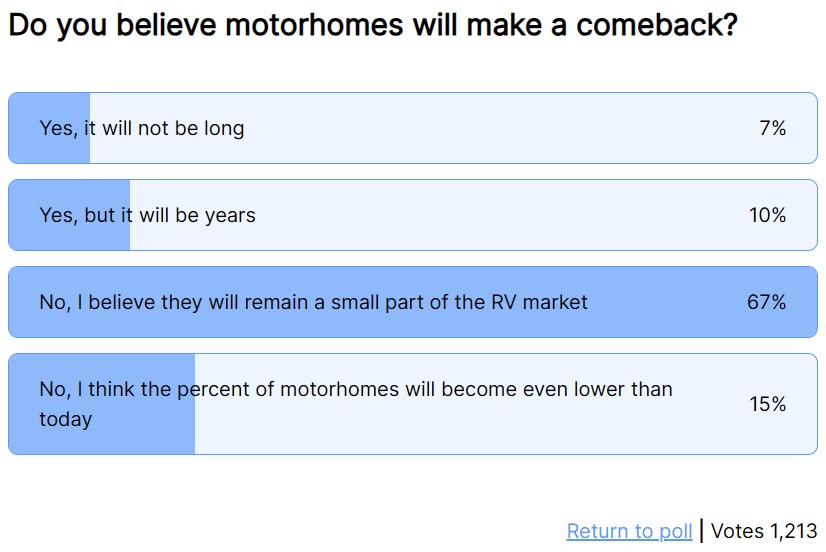
We recently posed this question to our readers and received a range of insightful responses. Along with a poll showing 67% of respondents believe motorhomes will remain a small part of the RV market, these comments paint a vivid picture of the challenges and opportunities ahead for this iconic RV category.

Long-term ownership and declining demand

“I think motorhomes are in a similar situation to SxS UTVs. Most folks who want one have one, and they are a longer-term ownership. You don’t have to replace them so often,” writes Old Wrench.

This perspective highlights a key issue: Motorhomes are durable and often meet owners’ needs for years, if not decades. Unlike towables, which some families might upgrade more frequently, motorhomes are a significant investment that doesn’t require regular replacement (or at least they shouldn’t…).

Safety concerns and logistical challenges

For some, safety is a major factor in steering away from motorhomes. C. Spencer points to crash test videos conducted in Scandinavian countries, calling Class A motorhomes “like toolsheds on wheels.”

“I would never feel safe on the road in one of those. If you’re a family that travels, aside from the safety concerns, there are logistical issues—you can’t go do any sightseeing or shopping without bringing everything with you. You could tow a car, but not really anything that would fit a larger family.”

Motorhomes as a security advantage

Despite safety critiques, Donny sees motorhomes as a security advantage in remote camping situations.

“We sometimes overnight in a rest area when traveling and also do a lot of USFS and BLM camping in off-the-beaten-path areas. Our choice was a motorhome for safety and security reasons. If an undesirable situation were to arise, I felt like we would be sitting ducks in a trailer with no way to get to the tow vehicle. With a motorhome, just jump in the driver’s seat and leave.”

Affordability and practicality

Affordability is another major hurdle for motorhome sales. As J B succinctly puts it, “Who in the hay can afford a fancy new motorhome nowadays? If one has to work for a living, it is a doubtful desire.”

Many readers echoed this sentiment, noting that the high cost of entry, coupled with maintenance expenses, makes motorhomes less accessible for most buyers. Ralph adds that motorhomes are “the least efficient way to travel/camp because you need a toad. Now you’re pushing two engines, two chassis, two vehicles to maintain.” In contrast, towable trailers and fifth wheels are seen as lighter, cheaper, and more practical options.

Fuel costs and market cycles

For MattD, the cost of fuel plays a significant role in motorhome demand. “Does anyone here think there’s a correlation between the cost of fuel and Class A motorhome demand? I mean, we’re talkin’ 6 mpg—that is a big turnoff! If we get fuel costs down, and I mean down consistently, folks may start buying Class A’s again.”

Ron, however, remains optimistic, pointing to historical cycles. “Just look at past cycles. They always have come back.”

The rise of towables

One undeniable trend is the increasing popularity of towables. Lonewolf attributes this to the changing demographics of RV owners.

“Younger campers today—about 40% of today’s RVers are under 40—equals lower-cost entry-level campers. Plus, more households have a pickup in the driveway already, making the jump into the lifestyle quicker and cheaper.”

Kim highlights the versatility of towables, saying, “RV towable trailers have gotten a lot nicer and offer more than they used to. I tow my camper with an SUV that I can use for everyday needs when not camping. It’s nice to disconnect the trailer and use the vehicle for outings.”

A shift in travel preferences

Finally, some readers believe the broader concept of RVing is evolving. D Loyd observes, “I think the entire concept of ‘camping’ or ‘RVing’ is reducing. Taking things like travel speed, convenience, and cost into account, many are simply staying in hotels and flying or driving to their destinations for about the same money.”

Will motorhomes make a comeback?

The poll results suggest a mixed outlook. While 17% believe motorhomes will make a comeback, the majority (67%) think they will remain a niche segment of the market. Meanwhile, 15% predict an even steeper decline. Marie B. remains optimistic about motorhomes’ appeal for certain buyers, sharing her personal experience:

“For us, we didn’t have, nor wanted, a big truck and wanted the convenience of the motorhome. Never have regretted it.”

Whether motorhomes are truly headed toward extinction or simply adjusting to a changing market, one thing is clear: Their role in the RV landscape is evolving. As manufacturers innovate and consumer preferences continue to shift, the future of motorhomes may depend on addressing concerns like affordability, fuel efficiency, and practicality. All we know? The debate is far from over.

##RVT1202

Easily fix your RV’s overhead lighting—No RV tech required!

By Gail Marsh
It began as a single blink. I thought perhaps my eyes were playing tricks on me. Soon, the blinking of the light increased. I wondered if a wire connection had come loose, but we’d been stationary for weeks. Finally, the blinking increased in frequency to the point that it could no longer be ignored—or tolerated. It was time to DIY our RV’s overhead lighting.

Puck lights

Our 2019 Vilano fifth wheel features ceiling puck lights in the main living area. These round, recessed lights fit fairly flush with the ceiling and provide great LED lighting inside our rig.

Lots of lights

In addition to the puck lights in our living area, we have identical recessed lights under some kitchen cabinets, over the island, and also in the ceilings of our bathroom and bedroom. That’s a lot of lights! If one light was going out, it made sense that other lights might burn out eventually, as well. It also made sense to figure out how to fix the RV ceiling lights myself, rather than pay a technician to do it, potentially over and over again.

A little history

In 2012, Airstream began using LEDs for overhead lights in its RVs. Since that time, most other manufacturers have followed suit. LEDs are great for RVs because they only require 4 watts of power. In addition to optimizing battery life, LEDs also outlast incandescent bulbs.

Easy fix

Note: While every RV is different, many manufacturers use similar puck lights. If in doubt about removing and replacing your RV puck lights, ask your local dealer or technician about your lights or refer to your owner’s manual.

Our RV required a 4.5-inch lens with a 3.25-inch ceiling opening. I ordered these lights on Amazon. Here’s how the new light fixture looked when I removed it from the packaging.

I was surprised and happy to discover how easy it was to fix the RV ceiling light. Here’s the step-by-step process I used.

1) Turn off the power.

2) Unscrew the light lens and set it aside. (Be careful. Our lens was made of glass, not plastic.)

3) Remove any screws (if present) that hold the fixture base to the ceiling.

4) Pull downward to remove the light fixture base from the ceiling. The light may have two spring clamps holding it in place. The springs in our light fixture were very strong. I had to pry the light’s electrical base away from the ceiling. When I could see the springs, I compressed them to free the fixture base.

5) Cut the white wire on the old fixture.

6) Use a small wire nut or crimp connector to fasten the new fixture’s white wire to the RV’s white wire. (The picture shows a blue crimp connector. I used it to join the two white wires.)

7) Cut the black wire on the old fixture.

8) Use a wire nut or crimp connector to fasten the new fixture’s black wire to the RV’s black wire. (I preferred the gray wire nut over the crimp connector. The photo shows the wire nut connecting the two black wires.)

9) Push the new light fixture base back into the ceiling and secure it in place with either the screws or the springs or both.

10) Screw the light lens onto the new fixture.

11) Restore power. You should have light!

It felt so good to DIY that RV ceiling light! Do you fix any RV problems yourself? Tell me about it (or them) in the comments below.

RELATED

##RVT1202

Is your life boring, stimulating or somewhere in between?

34

Let’s measure the mental state of the millions and millions of RVtravel.com readers. Okay, maybe not millions, but lotsa thousands.

How is your life? Do you wake up each day energized — ready to greet the day with gusto? Or do you wake up, look at the clock and say to yourself, “Heck, it’s only 11:30. What’s the point of getting up?”

Well, we hope you’re in Group A. But let’s find out. Let’s see if we RVers are a happy, stimulated bunch, or just the opposite — not too excited about our lives.

In our fast-paced world, it can be easy to fall into a routine that’s less than exciting. But maybe you’ve found a way to break free from that cycle. Whether it’s a new RV trip, an exciting campground discovery, or simply taking a moment to enjoy a cup of coffee at sunrise — little changes can make a huge difference in how we feel. So, what’s your secret to staying motivated?

Finding joy in the little things is key for many RVers. The freedom of the open road, meeting new people, or embracing nature’s beauty — these are all great sources of energy. If you’ve tapped into that source, share your tips with us. You never know, you might just be the spark that lights up someone else’s day.

Okay, it’s time to answer. Please feel free to leave a comment. If you have a stimulating life, tell us about it. What keeps you energized? Maybe you’ll provide some inspiration to others who aren’t as enthusiastic about their lives and could use a little motivation.

And remember, it may take a few moments for the poll to load if you’re on a slow connection.

MORE POLLS YOU MAY BE INTERESTED IN

##RVT1202

Check your RV A/C ceiling vents—They’re dirty!

By Dustin Simpson
When was the last time you checked your RV air conditioner’s ceiling vents? If it’s been a while, listen up! Especially since it’s getting close to A/C time!

Join me as I show you how to clean them and check the aluminum foil tape. You’ll also want to go the extra mile and add filters.

Signs of dust and dirt in grill.

Most vent covers can be carefully removed with a flat, standard screwdriver, but some may need to be unscrewed. Once the vent cover is off, clean it in warm, soapy water, and set it aside to dry. The circular vents in the ceiling can be removed by carefully prying them off with a standard screwdriver.

Removing covers to access base screws for inspection.

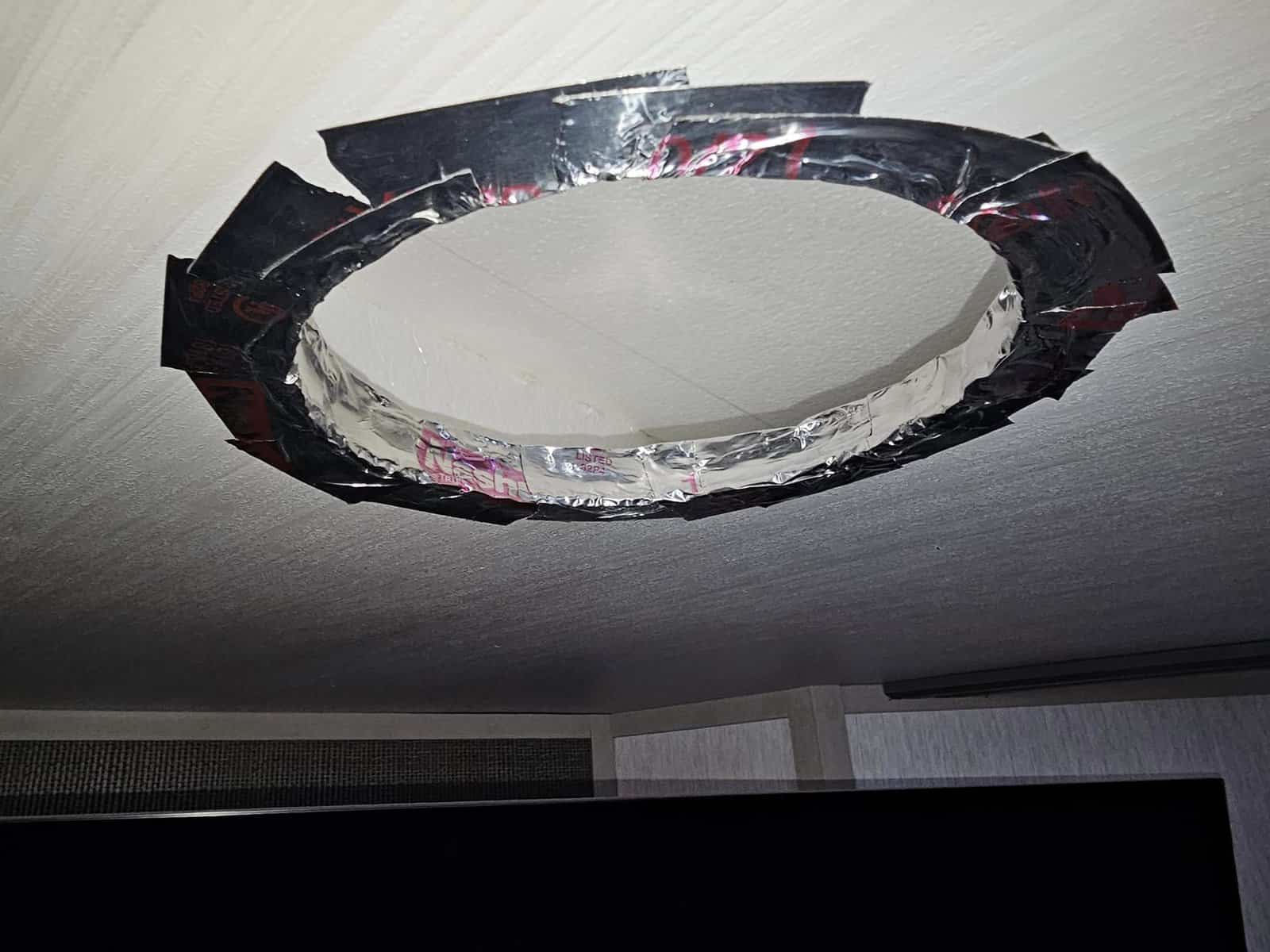
Make sure to check the aluminum foil ducting tape and, if needed, replace or add additional tape to seal off any gaps or voids. Here are a couple of pictures for examples:

Foil tape and duct not sealed correctly.
Foil tape coming loose and not sealed correctly.

Vents sealed examples

Taped up and sealed, the trim ring will hide the tape on this style.
Taped vent and ducting to ceiling panels to prevent air loss.

You can also add additional air filters to catch dirt and debris in the system. Your RV’s air conditioner captures particles as small as three to ten microns, including pollen, dust, mold spores, pet dander and other allergens.

The RVAir Filter has a MERV 6 rating, so you’ll breathe easily wherever the road takes you.

Let this reminder help you remember to check the filters, foil tape, and catch any air loss in your system.

(Click to enlarge.)

DIY products I use to clean RV A/C vents

Below is a video example of using the airflow and temp sensor in your RV.

Hopefully this info was helpful and helps to improve the air conditioning and cooling in your unit.

More from Dustin

Read more of Dustin’s articles here.

RELATED

##RVT1202

How fences tell America’s stories of history and heritage

11

As we RV across the country, we see many, many types of fences. And while an RVer’s motto may well be “Don’t fence me in,” I must admit I’m fascinated by fences.

I love the pioneers’ resourcefulness in building barriers. I marvel at their ingenuity. These fences aren’t just practical—they tell a story of history, innovation, and local character.

Regional fencing

Across the U.S., diverse landscapes and cultural histories have led to a wide range of fencing styles. Farmers, ranchers, and property owners have long used fences not only to protect livestock and crops but also to mark boundaries and reflect regional aesthetics.

As an RVer, you might notice everything from the utilitarian wire fences in open pastures to the decorative wooden rail fences in small towns—all pieces of our country’s living heritage.

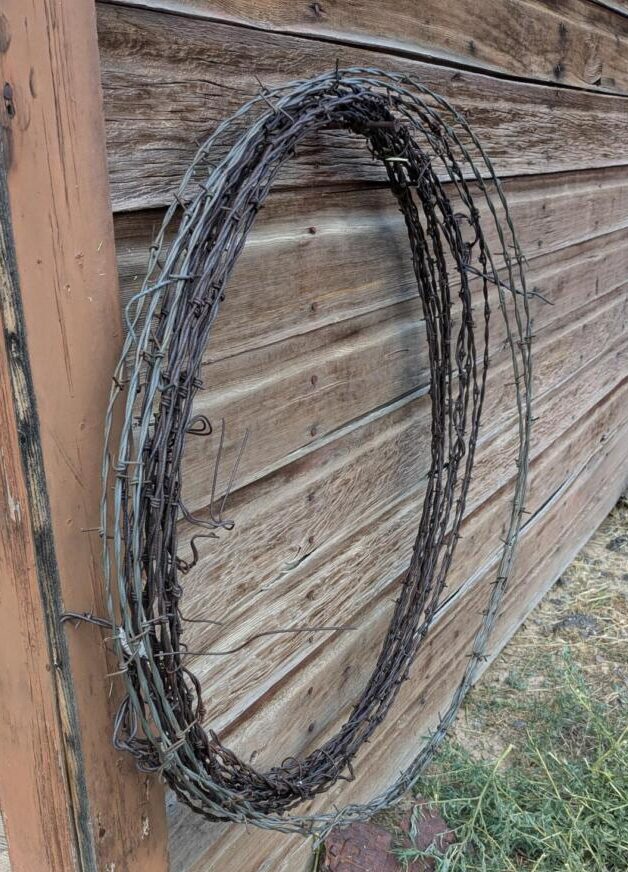
Barbed wire

Barbed wire Gail Marsh photo
Gail Marsh photo

Perhaps the most famous type of fencing is barbed wire. Introduced in the mid-19th century, barbed wire revolutionized land management. It made it affordable to fence vast tracts of open range. The wire’s sharp barbs, spaced along strong, twisted steel wires, provided an effective—and economical—solution for keeping cattle in and intruders out.

Today, you can still see barbed wire fencing defining the horizons of many rural communities.

Wooden fences

split rail fence Gail Marsh image
Gail Marsh photo

Wooden fences come in many shapes and sizes. Each one has its own charm and practicality. One popular style is the split-rail fence, constructed from timber logs that are split lengthwise into rails and stacked in a characteristic zigzag pattern.

These fences not only serve as sturdy boundaries but also evoke a sense of Americana that many RVers find picturesque when traveling through wooded or pastoral areas.

Unique fence varieties

Beyond barbed wire and wooden fences, the American landscape features a variety of other styles. Here are two unique fence styles we’ve seen on our travels:

KY four-board fence lexhorsefarms.com image
lexhorsefarms.com photo

Four-board fences: Common in Kentucky “horse country,” the four-board fence is often painted white or black. This fence contrasts so well with the expansive green pastures, it makes for picturesque photos.

rock and wire fence Gail Marsh photo
Gail Marsh photo

Rock and wire fences: We’ve seen this fence in both Missouri and Colorado, although I imagine the rock and wire fence is popular in other places, as well. I can’t imagine how long it took to gather the rocks needed for this fencing!

Each style of fence has been developed to meet specific needs—whether it’s keeping predators away from valuable crops or ensuring that livestock remain safe and contained.

Fence museums: Journey through history

For those with a curiosity about how fences have shaped our nation, here are two museums that offer unique insights:

  • Kansas Barbed Wire Museum: Located in La Crosse, Kansas, this museum is devoted entirely to the history of barbed wire. It showcases thousands of varieties and details how this “devil’s rope” transformed the American West.
  • Old Fence Rider Historical Center Museum: Situated in Edmore, Michigan, this museum displays historical fencing artifacts alongside broader exhibits on American heritage, offering a nostalgic look at the role of fences in rural communities.

These destinations are perfect for RVers looking to take a cultural detour from the highway, offering a deep dive into how a simple fence can embody the spirit and history of a region.

Final thoughts

Fences are a fundamental part of the American landscape, blending practicality with rich cultural significance. From the ingenious simplicity of barbed wire to the timeless beauty of wooden rail fences, each type has played a role in shaping our country’s history. And for RVers, these fences offer both functional information and intriguing stories—perfect for exploring during your upcoming road trip.

The next time you pull off the highway or park at an RV park, take a moment to appreciate the local fencing. It might just tell you something unique about the community you’re visiting.

Have you noticed unique or interesting fencing as you travel? What other types of fencing have you seen? Tell us about it in the comments section below.

YOU’LL ALSO ENJOY:

##RVT1202

Totally random dinner recipes that sound really, REALLY good

0

Mexican Taco Lasagna

by Amanda Michelle from Hebron, KY

We were surprised at how much we enjoyed this Mexican taco lasagna. It’s basically a layered casserole that takes beef and bean tacos to a new level. This casserole has the flavors of tacos and adds gooey cheese and beans for a hearty meal. It takes a little bit of time to prepare, but it’s still easy enough for a weeknight meal. We topped ours with a little sour cream, taco sauce, and jalapenos, but use your favorite toppings. On the side, we served charro beans and Spanish rice for a full meal. Click here for the recipe.

Glorious Baked Cheese Cauliflower

by Kelly Williams from Forked River, NJ

Kelly named her recipe glorious baked cheese cauliflower… glorious indeed! Tender cauliflower is cooked in a thick homemade cheese sauce. On top are wonderful buttery bread crumbs. This side dish is perfect for any cauliflower lover. Enjoy for a special occasion or a cheesy weeknight side dish. Get the recipe here.

Grilled Cheese Pizza Supreme

by Cara J. Mastrangello from Albany, NY

This grilled cheese is like a supreme pizza in a grilled sandwich – a fantastic idea! We loaded our sandwich with all the suggested toppings and fell in love. But tailor the sandwich with your favorite pizza toppings. Buttery grilled sourdough holds in the gooey cheese, hearty pepperoni, and salty prosciutto. Fresh basil adds a pop of flavor. We added a little sauce inside the grilled sandwich and served some on the side for dipping. If you don’t have a panini press, these can be grilled in a skillet. Here’s the recipe.

Bourbon Braised Pork Chops

by Pauline Greenwood from Iowa City, IA

This is a really flavorful pork chop dish that was quite a pleasant surprise! It elevates a basic pork chop. Braising the pork chops in a mixture of brown sugar, allspice, bourbon, and orange juice creates a deliciously sweet sauce. Browning both sides of the pork chops helps to seal in the juices. Once braised, they were extremely tender. Click here for the recipe.

Buffalo Wing Garlic Toasted Hoagies

by Kelly Williams from Forked River, NJ

These Buffalo wing hoagies are a combination of spicy, cheesy, and crunchy. It’s everything you love about Buffalo chicken and more. The hoagie rolls are toasted with butter, garlic, and parsley, making them fragrant and crispy. Chicken strips are coated with a hot sauce mixture that has a hint of barbecue and chili flavors. Muenster cheese melts on top of the chicken. Top with crunchy lettuce and celery and sprinkle with tomatoes. Blue cheese dressing has a tangy and rich flavor that is great with the Buffalo sauce. A tasty and satisfying sandwich for game day or a casual lunch. Here’s the recipe.

Chili Mac and Beef Casserole

by Freda Gable from Vancouver, WA

Meaty and cheesy, this mac and beef casserole is full of flavor. Filled with ground beef and pasta, it’s a very hearty meal. Taco seasoning and cumin add the flavor you associate with a bowl of chili. Once baked, the shredded cheese on top is nice and melted. And Freda is right, leftovers are just as good. Get the recipe here.

##RVT1202

Game changer: We finally installed lithium batteries

Lithium has been touted as the “greatest thing since sliced bread” for RVs! I am always a little skeptical of the next great thing, though. When we had 990 watts of solar installed on our RV, lithium batteries were still unstable, sometimes catching fire, and couldn’t charge in the cold without elaborate heating measures.

We visited friends who are in the desert for three months without any hookups last week. They are extremely happy with their lithium batteries that keep everything in their 34-foot fifth wheel running smoothly. At least, now that they have learned not to turn on everything, including the microwave, at once.

We camped near them, and I always felt a little sheepish about having to start our loud generator to recharge our house batteries before turning in at night. Those batteries needed to keep our residential refrigerator going and not drop the batteries below half power. After seven years, their age was showing.

We moved on to Quartzsite, Arizona, to dry camp for a few days in the desert and decided to at least see what upgrading the batteries to lithium would cost. It was less than we thought: a little under $3,000 for two, 300-amp-hour Epoch batteries, the lithium battery isolation manager (BIM), and installation. Our existing Magnum inverter could be programmed, and we didn’t need any additional devices. We would replace six 100 amp hour Lifeline AGM batteries.

Johnny, one of the techs at Solar Bill RV Solar, has become a friend over the years, doing work on our RVs. My husband admits he is a dinosaur with technology, so Johnny had me download the apps to read the charging and discharging rate on the batteries. He said I was going to love it, and he was right! I was so excited to see every little thing that was pulling amps or even fractions of amps. I turned on the ceiling fan and it showed the draw! I turned on all the lights, the furnace, and even the microwave! I backed off the microwave right away…

We have never even tried the microwave or the electric coffee pot without the generator running before. He assured us we could do that now. At least separately.

We used the power with abandon, and the next morning we were only down to 79%. I watched the sun rise and the solar started to recharge the batteries again. Evidently, between 11 a.m. and 2 p.m. is happy hour for slurping up the sun’s rays in Quartzsite in early spring.

I turned on the generator and watched them recharge even faster. My husband, the guy who likes full-hookup camping best, was even satisfied that this boondocking thing was okay and not too terribly inconvenient.

Geez—we have a hundred gallons of fresh water, large black and gray holding tanks, a gas stove, water heater, furnace and now almost unlimited electricity. What is not to like?

We liked it so much, I think we may dry camp more and renew our Harvest Hosts membership to cut our six-month RVing costs. The upgrade could pay for itself in a couple of months by eliminating some high-priced RV parks.

MORE ARTICLES ABOUT LITHIUM BATTERIES:

##RVT1202