Home Blog Page 47

The easy way to add a solar panel to a car roof

By Cheri Sicard
For car campers, roof-mounted solar can turn into a project that drags on for days. The Honda Element build in the video at the end of this post from Tristan at SUV RVing took a much simpler route. Instead of building custom brackets or changing the whole roof setup, Tristan tried a clamp-based kit made for roof crossbars. The goal: mount a 100-watt rigid panel fast, keep it solid, and avoid extra noise on the road.

A different way to mount a solar panel

On past builds, our host had used two main ideas. One was mounting a panel directly to a cargo box, which had worked well before. Another was the setup from a Land Cruiser build, where a skinny panel sat on top of a rifle box beside the cargo box.

This time, Tristan wanted something new. The product he landed on was the BougeRV Solar Panel Crab Mounting Kit, a roof-rack clamp system he bought for about $90.

What comes in the crab clamp kit

The kit is simple, and that is part of the appeal.

  • Four Z-shaped brackets
  • Four crab clamps
  • Allen wrenches
  • Printed instructions

The key part is the crab clamp. Each one attaches to a bracket on the panel, then pinches down onto the roof crossbar.

How the panel went on the Honda Element

Our host’s aftermarket crossbars measured 29.5 inches from center to center. Since the factory holes in the panel frame did not line up with that spacing, he marked new hole locations using the panel’s center reference hole and the bracket itself.

Tristan then center-punched each mark and drilled the aluminum frame in stages, first with a small bit, then a larger one. A scrap piece of wood sat under the frame so the drill would not hit the panel below.

Tightening the panel to the roof rack

Once the holes were drilled, the Z brackets went onto each corner of the panel frame. After that, the top bolts on the crab clamps were loosened so the clamps could fit over the crossbars.

The panel dropped into place beside the cargo box, and each corner was tightened a little at a time until everything sat square. The result looked clean and felt solid. Any movement came from the crossbars, not the clamps.

The video also notes a second setup option. By flipping the Z brackets, the panel could sit lower for a tighter profile.

At first, there did not seem to be enough room for recovery boards under the panel. A few days later, Tristan found a way by sandwiching the boards around the crossbars and holding them in place with heavy-duty UV-resistant zip ties, smaller helper ties, and paracord as a backup.

Getting power into the car

For wiring, MC4 extension cables ran under the cargo box, around the crossbar tower, and through a rear gap in the Element. A few zip ties kept the cable tucked into the corner, and one trim piece was loosened so the wire could sit more neatly.

Inside, Tristan chose an MC4-to-Anderson connector instead of an MC4-to-8mm. When plugged into the power station, the display lit up and showed about 60 watts coming in.

Road test and final take

Fuel economy was not the main concern here. Tristan figured any roof gear would cost some efficiency, and this setup did not seem worth worrying over.

The bigger question was wind noise, so to test it out, Tristan drove the Element at 75 to 80 mph on a windy day. There was no extra whistle, and afterwards, the drive panel still felt solid.

For a quick roof-mounted solar setup for car camping, this one really worked.

RELATED

RVDT2887

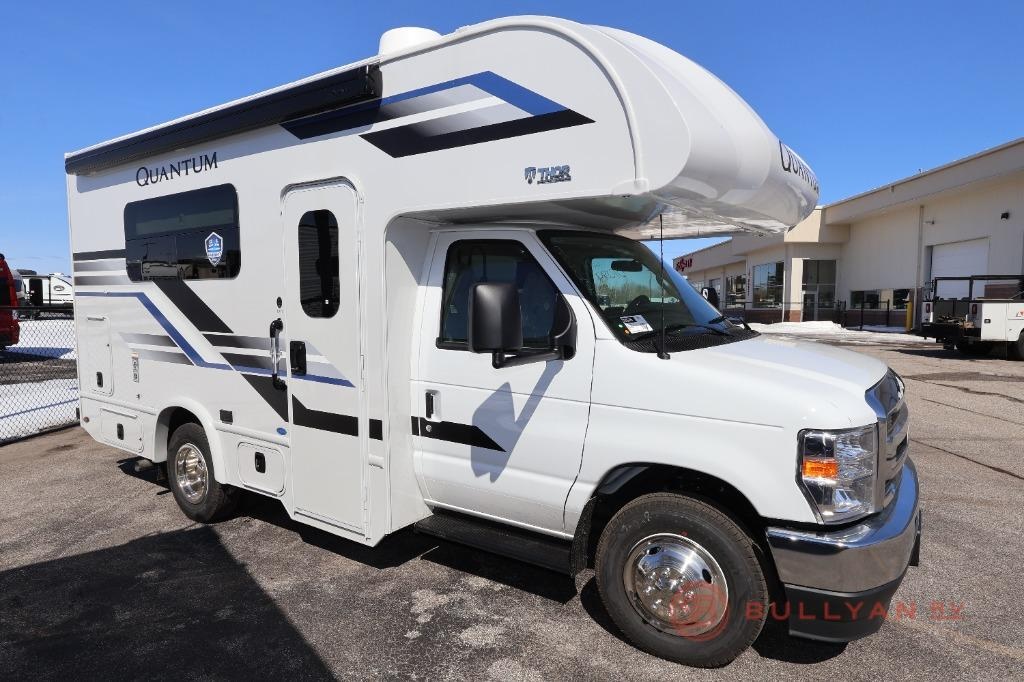
2027 Thor Quantum LX19 Class C review: 21 feet, no slide

Short Class C motorhomes are hard to find. The 2027 Thor Motor Coach Quantum LX19 is thus a rarity. It packs the basics into a 21-foot coach with no slide, which makes it easy to drive, park and fit into almost all campsites. Watch the video at the bottom of this article for a tour.

For downsizing RVers or minimalists who find even the most basic RV amenities a relative luxury, this one might be right on the money.

This video comes from Bullyan RV in Duluth, Minnesota, which sells the motorhome. So keep in mind this is not an unbiased review. But host Chris Yost does a good job showing you the main selling points of the rig.

The coach is powered by a Ford 7.3L Godzilla V8. It also includes an 8,000-pound receiver hitch with a 7-way plug and a 4,000-watt generator, so it has solid towing and off-grid capability for its size.

Outside, the LX19 has a backup camera, ladder prep for roof access, a full walk-on roof, 30-amp service, city water and fresh water connections, black tank flush, propane, and an on-demand tankless water heater.

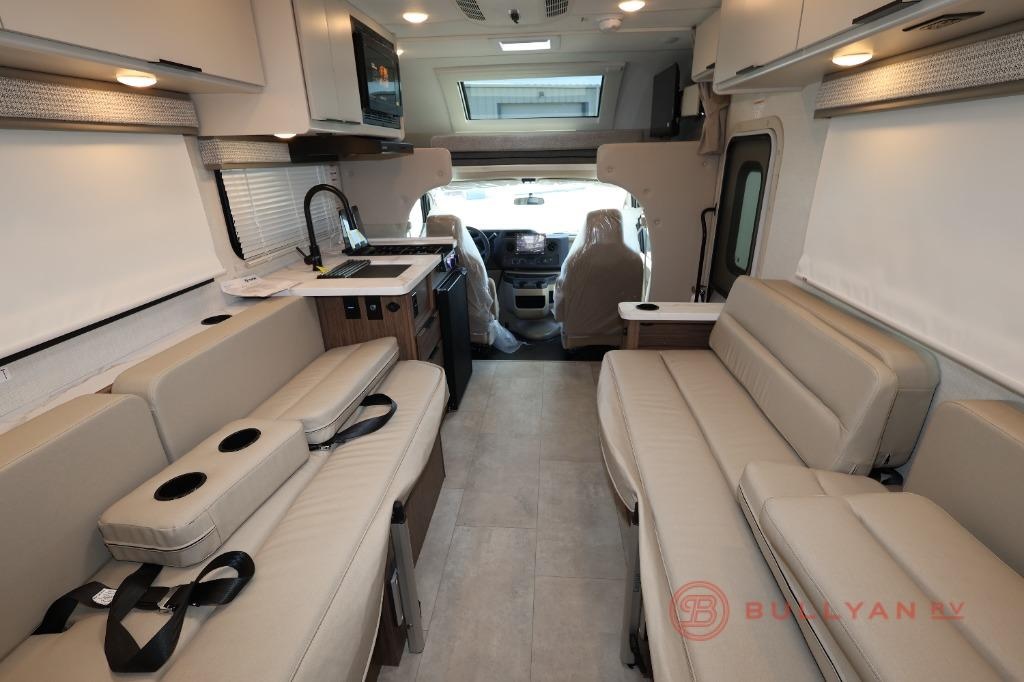
The interior is compact, but it does not look stripped down. The kitchen includes a 12V refrigerator, a three-burner range with cover and backsplash, an adequate sink, a microwave/air fryer combo, and cabinets deep enough for most essentials.

The fridge is too small for much more than short vacations, so that would limit the RV’s use. Still, for some minimalists, it would be more than adequate.

2027 Quantum motorhome interior
2027 Thor Motor Coach Quantum LX19

The rear seating area can serve as twin beds or convert (with some hassle) into a king bed, and the coach has seat belts for six total, counting the cab seats. Why it has six seat belts is a bit of a puzzle.

The wet bath is small, but spacious enough to do the job. Its skylight offers headroom for tall RVers.

Up front, the cab-over bunk can be used for sleeping or gear, and the small TV swings out for viewing from different angles.

Cab details

The cab includes a tilt wheel, touchscreen stereo, backup camera display, power windows, and power locks. An emergency start button can use house battery power if the main starting battery dies.

More details are available on the 2027 Thor Quantum LX19 listing on the Bullyan RV website. Chris Yost, who hosts this video, can be reached at 218-225-8355 or by email.

The MSRP on the RV is $134,666, but put on your negotiator’s cap and get it for a lot less.

RELATED

RVDT2893

Have you ever ridden on a motorcycle?

23

We share the road with motorcyclists every day. Maybe you look at them and think about all the incredible adventures you had during your motorcycle days—or, heck, maybe there’s a motorcycle tucked into the back of your toy hauler right now! Maybe you once dated someone who had a bike, and the two of you took it out every weekend. Or maybe you’d never go near a motorcycle because, let’s be honest, they can be a little intimidating.

For many RVers, motorcycles represent freedom in its purest form. They’re nimble, fast, and perfect for quick trips into town or scenic rides through winding roads. Some folks even prefer traveling with a bike because it’s easier to maneuver than a big rig when you’re exploring a new area. A lot of RVers swear by their bikes for getting the best views and feeling more connected to the journey.

Then again, there are those who’ve had close calls—or know someone who did—and have decided two wheels just aren’t worth the risk. And that’s totally fair. Safety is a big concern, especially when you’re logging long miles and sharing the road with fast-moving traffic. For some, the thrill just doesn’t outweigh the worry.

Still, the culture around motorcycles is strong, especially among campers and RVers. Rally events, scenic rides, and the sheer joy of the open road are big draws for many people. Whether you’re a die-hard rider or someone who just admires from a distance, there’s no denying the appeal.

So tell us: Have you ever ridden on a motorcycle? Do you bring one with you on your RV travels? After you vote, leave a comment and tell us about your answer. We’d love to hear your stories!

Oh, and here’s something else: Did you know you can turn a motorcycle into a camper? It’s true, and here are 10 examples to prove it!

RELATED

RVDT2887

Starlink satellites are becoming a problem in space

For many RVers, Starlink satellites crowding outer space isn’t the first thing that comes to mind when they fire up their dish. All that matters is that you can finally get online in places where cell service never had a prayer.

That alone has changed how a lot of folks travel. Boondocking no longer means going dark. Work-from-anywhere isn’t just talk anymore.

But there’s another side to this story—one that rarely comes up around the campfire.

A recent deep dive by electronics publisher CNET takes a long look at what’s happening above us as satellite internet systems like SpaceX continue to grow. It’s worth a read in full if you have the time. For the rest of us, here’s the short version.

Space isn’t as empty as it used to be

For decades, space felt limitless. A satellite here or there didn’t make much difference. That’s no longer the case.

Starlink alone has launched thousands of satellites into low Earth orbit, with plans for thousands more. And they’re not alone. Other companies—including Amazon—are building their own constellations.

Put it together, and you’re looking at tens of thousands of satellites circling the planet in the coming years. That’s a big shift from how things used to work.

Why experts are starting to worry

The concern isn’t that satellites exist. It’s how many are going up—and how fast.

As more satellites go up, the odds of something going wrong go up with them. Even a tiny fragment moving at those speeds can hit with serious force. One collision can scatter debris—and that debris can set off more collisions.

That worst-case chain reaction even has a name: Kessler syndrome. It’s the idea that one crash creates debris, that debris causes more crashes, and things keep building on themselves. The danger is that it could make parts of space too cluttered to use safely—knocking out satellites we rely on for internet, GPS, weather, and more. Nobody’s saying we’re there yet, but it’s exactly what experts want to avoid.

There’s also the simple reality that, right now, there’s no single “traffic cop” in space. Companies track their satellites and maneuver them to avoid trouble, but the rules are still evolving—and not always consistent.

 The same system that lets you stream a movie miles from nowhere depends on thousands of satellites overhead—and that number is still climbing.

It’s already affecting what we see from Earth

This isn’t just a theoretical problem. Astronomers say the growing number of satellites is already showing up in telescope images as bright streaks across the sky. In some cases, that interferes with scientific observations.

Radio interference is another concern, especially as more satellites begin transmitting data back and forth.

Most RVers won’t notice any of that directly, but for the folks studying the universe, it’s becoming harder to ignore.

Companies are working on it

This isn’t a free-for-all with no effort to manage the risks.

SpaceX, for example, has built automated collision-avoidance systems into Starlink satellites and is working on designs that reduce brightness to limit their impact on astronomy. Satellites are also designed to deorbit at the end of their life rather than linger as space junk—burning up as they come back through the atmosphere. That’s better than leaving debris in orbit, but it’s not entirely a free pass—researchers are now looking at what all that burned-up material means for the upper atmosphere over time.

Those steps matter, and they’ve kept things from becoming a bigger problem so far.

But even supporters acknowledge the scale is changing quickly. What works with a few thousand satellites may get harder with tens of thousands of them.

What this means for RVers

The same system that lets you stream a movie miles from nowhere depends on a growing web of satellites overhead—and that web is still expanding.

Starlink isn’t going away. If anything, it’s becoming more central to how many RVers travel and stay connected. But it’s also part of a much bigger picture that’s still being figured out in real time.

You don’t need to ditch your dish. It’s just worth knowing that the convenience we’ve all come to appreciate comes with some unanswered questions—ones that scientists, regulators, and the companies themselves are still trying to sort out.

Source: Adapted from reporting by CNET (full article available at cnet.com)

RELATED

RVT1258b

RV Daily Tips. Monday, April 20, 2026

America’s Original RV Newsletter. Since 2001
Issue 2886 • New issue every weekday
If you find this newsletter helpful, please consider supporting our work with a donation of your choice. Thank you!


Today’s thought

“Almost everything will work again if you unplug it for a few minutes, including you.” —Anne Lamott


Need an excuse to celebrate? Today is National Lima Bean Respect Day!

On this day in history: 1789 – George Washington arrives at Grays Ferry, Philadelphia, while en route to Manhattan for his inauguration.


Tip of the day
CPAP placement tips for RVers

By Gail Marsh
At a recent RV show, I happened to overhear a wannabe RVer. As her husband began to check out the kitchen storage, she made a beeline for the bedroom. After a brief glance at the bed, she turned around and loudly announced, “Nope! Not gonna’ work!” Then the gal quickly grabbed her husband, headed for the door, and informed him, “Forget this one. It’s got no place for my CPAP machine.”

Finding a spot for your CPAP machine is sometimes challenging, especially when the RV doesn’t have a traditional nightstand. Safe and effective placement of your CPAP is crucial for a good night’s sleep. That’s why you might need some CPAP tips for RVers.


Are ye ol’ eyes giving you problems? Is the small type getting too small to read? (It happens to the best of us.) This will save your day.


More tips from this weekend:


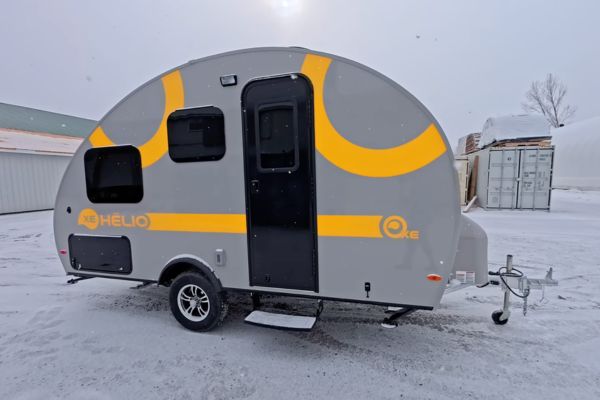
Helio XE travel trailerRV review
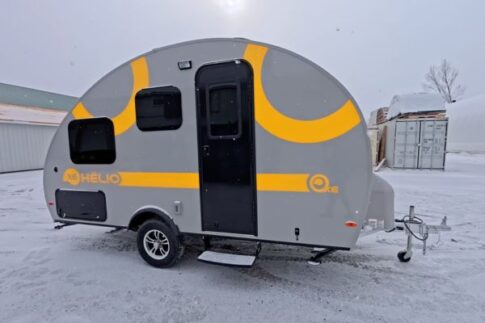
Hēlio XE—a small has-it-all travel trailer you can tow with a car

Finding a camper that stays light without feeling stripped down is tough. That is why the Hēlio XE stands out, because it packs a wet bath, kitchen, dinette, and even an optional bunk into a compact fiberglass trailer you can tow with a car. It feels closer to a full travel trailer than a tiny teardrop or canned ham. For shoppers who want low weight and full standing room, this one deserves a close look.


Roastingreel🔥 Reader favorite
The best marshmallow (and more) roaster! 

This is hilarious! Take your marshmallow or hot-dog-roasting to a whole new level with this roasting reel. Give it a crank at the perfect speed, and you’ll have the perfectly roasted or toasted… whatever… in no time! Makes a great and funny gift. Find it here.


In the RV shop with Dustin
Say goodbye to RV tank sensor issues with these tips

Struggling with inaccurate tank sensor readings in your RV? You’re not alone! Many RV owners experience false readings from their holding tank sensors, leading to confusion and frustration. In this article and video, we’ll explain how holding tank sensors work, why they sometimes fail, and how to properly clean and maintain them to ensure accurate readings every time.


Article and video
Tour a rare ’90s Revcon Trailblazer motorhome

The team from Ambition Strikes bought one of the world’s rarest motorhomes, the Revcon Trailblazer. Its rare features and ’90s charm make it a unique motorhome. Only 67 of the beauties were ever made, and in this video, they give us a tour.


FACTOID: Texas’ King Ranch, at about 1,300 square miles, is larger than Rhode Island.


The latest news for RVers

To read more recent news, click here.


Featured article
Re-wilding: Becoming curious about the big, wide world

By Emily Woodbury
After many years of living smack-dab in the center of New York City, I returned to the beautiful Pacific Northwest and settled back into a place I thought I knew. Washington is a place where you can be in a desert (yes, with rattlesnakes), in the mountains, in a rainforest, on the beach of an island, or in a bustling city, all within two hours. That’s what makes it so special. It’s a hard place to get bored of, or in. Continue reading.


Ask Dave
RV dealership repair misdiagnosis. Who can you trust?

Read Dave’s discussion of RV dealerships’ misdiagnoses.


Bread in a toaster bag inside a yellow toaster Amazon imageTurn your RV toaster into a mini grill
These reusable toaster bags make quick RV meals, with less mess. Grill sandwiches, reheat pizza, warm leftovers or toast snacks without dirtying the toaster—perfect for fast meals without mess. Gail Marsh recommends them here.


Reader poll
Have you taken an ancestry DNA test like 23andMe or AncestryDNA?

Respond here.


Quick tip
Don’t let floor vents be a catch-all

Floor vents gather dust, dirt, and dog-hair, plus the occasional wedding ring. Cover them during the summer months and save work later. –From 100 RV Tips and Tricks (Mack’s RV Handbook). Available on Amazon.


Website of the day

Grief.com
If you or someone you know is grieving, this is an incredibly helpful resource. Find articles, resources, grief groups and more.


Monday Motivation

“The deeper that sorrow carves into your being, the more joy you can contain. Is not the cup that holds your wine the very cup that was burned in the potter’s oven? And is not the lute that soothes your spirit, the very wood that was hollowed with knives? When you are joyous, look deep into your heart and you shall find it is only that which has given you sorrow that is giving you joy. When you are sorrowful look again in your heart, and you shall see in truth that you are weeping for that which has been your delight.” —Kahlil Gibran


? MYSTERY PRODUCT OF THE DAY ?
Ever want to tell your campground neighbors something without saying it to their face? Well, now you can, and the opportunities are endless!


Trivia

Bunny fighter pilotThe British government is responsible for the belief that eating carrots improves night vision. During World War II, British pilots began downing a large number of German aircraft. Their secret: radar. But the Brits told the press it was because of all the carrots their pilots were eating. And so the belief that carrots improved vision, especially night vision, was set. The truth: While carrots are healthy, they alone do not improve vision.


Readers’ pet of the day

20251108 074919 Bdde427360ce9ebc633caa58dd6344ab“This is Willow (Aussalier, age 2). Although she isn’t exactly our dog, Willow and her owner routinely camp with us so she feels like our dog! She loves camping, meeting other people and is the friendliest dog around.” —Dave Riddle [An Aussalier is a designer hybrid dog, crossing a Toy or Miniature Australian Shepherd with a Cavalier King Charles Spaniel.]

Send us a photo of your pet with a short description. No blurry photos and please do not submit your photo more than once. Thanks!


Campinghat
Our current favorite camping hat! Get one for yourself here.

Leave here with a laugh


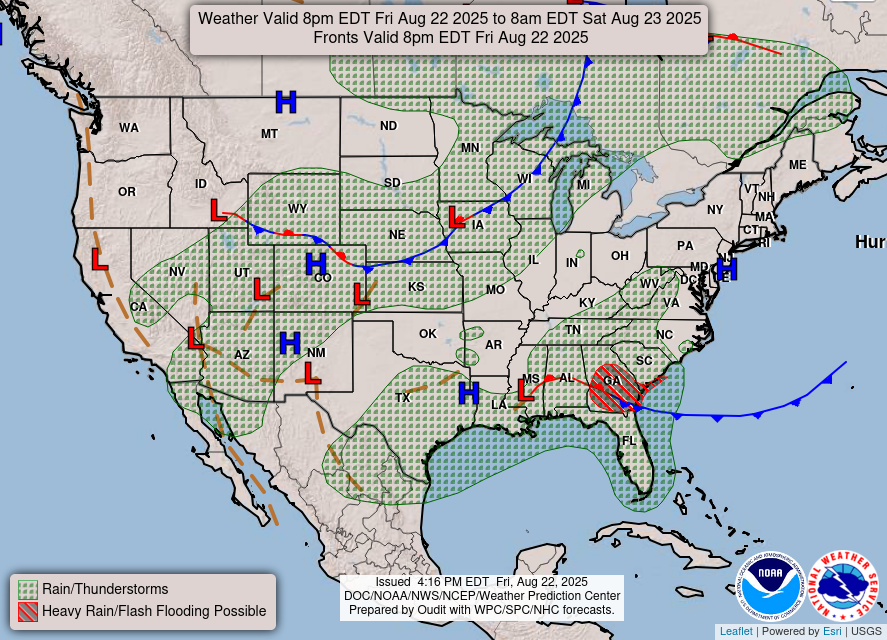
Today’s weather forecast across the nation
THIS MAP UPDATES TWICE A DAY

Visit Current National Radar Weather Map


Did you miss the latest RV Travel Newsletter? If so, read it here.
Oh, and if you missed the Latest News for RVers, make sure to catch up here.


If you shop at Amazon.com we’d appreciate you using this link. We get an itty bitty commission if you buy something, but they add up and help us pay our bills (most importantly our hard-working writers!). 


RVtravel.com All-Star Team

Click here for information about our staff and how to contact us.

WHY WE ASK FOR DONATIONS INSTEAD OF SELLING SUBSCRIPTIONS.

Our policy on using artificial intelligence.

RV dealership repair misdiagnosis. Who can you trust?

Dear Dave,
I am looking to sell my motorhome and purchase a travel trailer. There are a few repairs to the motorhome that I felt should be made and contacted my local dealer for advice and an estimate. I was floored by the cost of the quote. Can you take a look at this and let me know what should be fixed and if it is fair. —Terry, 2016 Thor Challenger

From Dave:
This motorhome is actually the rig we used to shoot RV Lifestyle & Repair Club (RVLR) videos a few years ago installing new lithium batteries, Progressive Dynamics converter, smart TV, and several other upgrades as well as maintenance projects.

Normally I do not get involved with issues related to the price of quotes or work performed by a dealer or service center. There are too many variables such as labor rates and the “gremlins” of diagnostics.

Also, I am not an “ambulance chaser” or “influencer” looking for hot buttons to sensationalize issues for views.

However, this is a unit that I have spent a considerable amount of time upgrading and maintaining. The quote that I reviewed did not make sense.

Defective inverter

Here is the actual description on the estimate:

Voltage Drop On Inverter

Correction: Checked voltage after being plugged in for almost 2 days and voltage was at 12.9 VDC going to the inverter, but no 120VAC coming out. The remote switch doesn’t work either. Inverter has gone bad and is now defective and will need replaced, quote 2.5 hrs to replace inverter and controller.

Labor
Diagnostic .15 hr @ $210 $31.50
R&R Inverter and controller 2.5 hr @ $210 $525
Parts
69-8093 Xantrex Inverter $801.22
69-8105 Xantrex Battery Monitor $516.35
Total $1,874.07


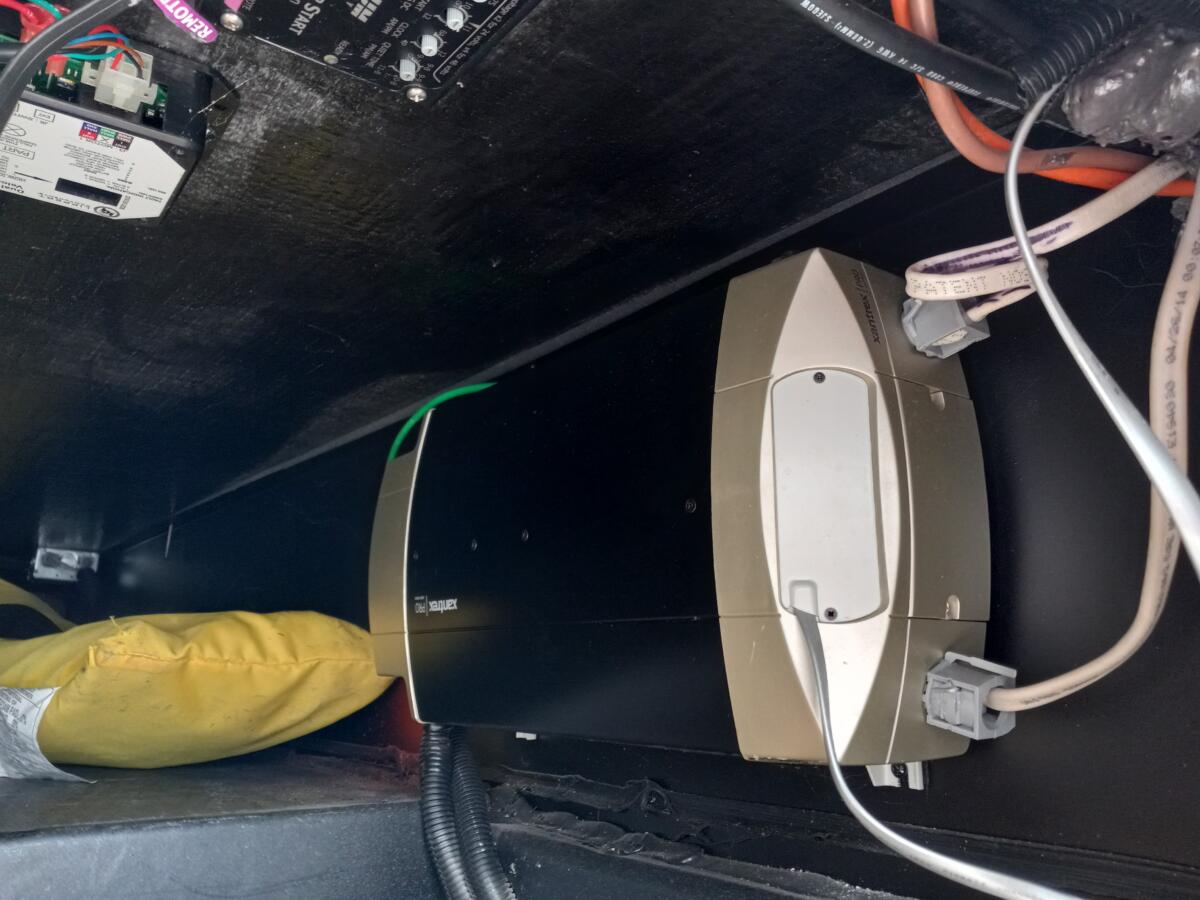
Wow. This is a Xantrex XM 1800 that was mounted in an exterior compartment on the driver side, which we had an issue with during the initial RVLR shootings.

Inverter
Inverter

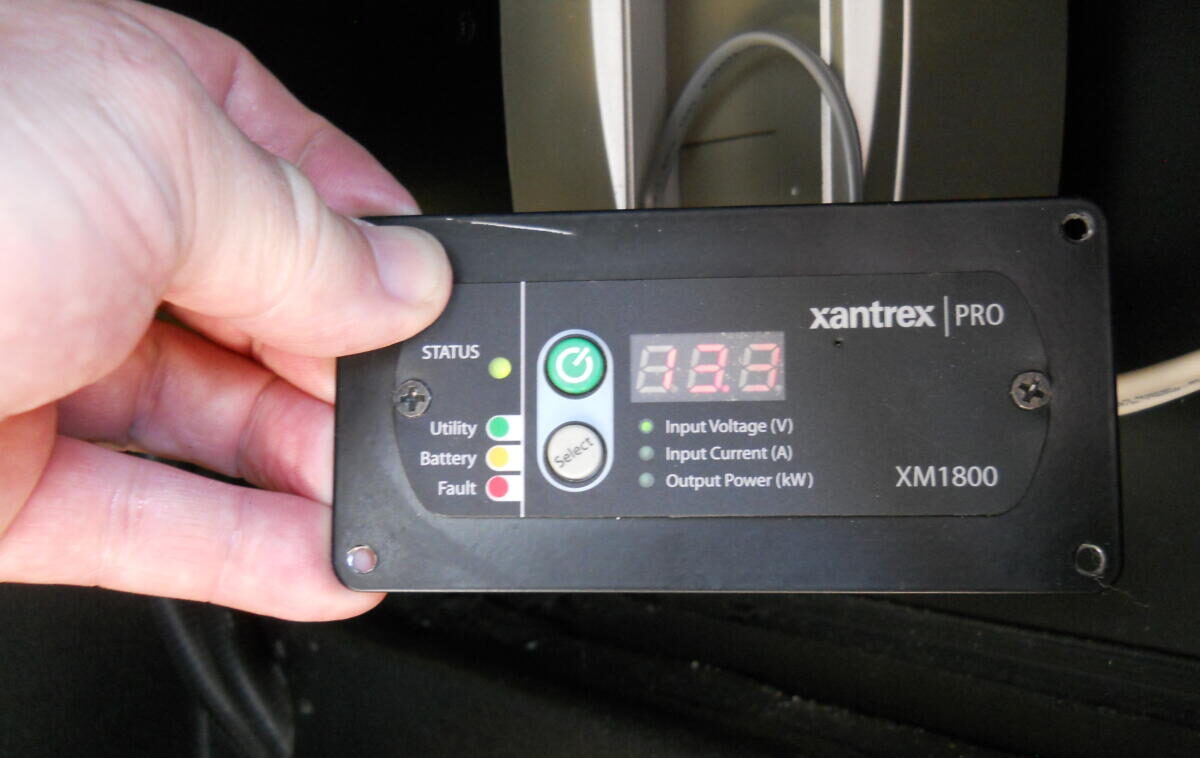
The display inside the rig was showing nothing, no voltage or battery State of Charge (SOC).

The first step was to verify there was voltage at the new batteries, which were Expion 360 Lithium. The meter read 14.6 volts. We took off the access plate on the inverter and connected the display directly to the inverter, disconnecting the longer cord. The display worked, verifying there was an open circuit somewhere in the cord.

Inverter LED
Inverter LED

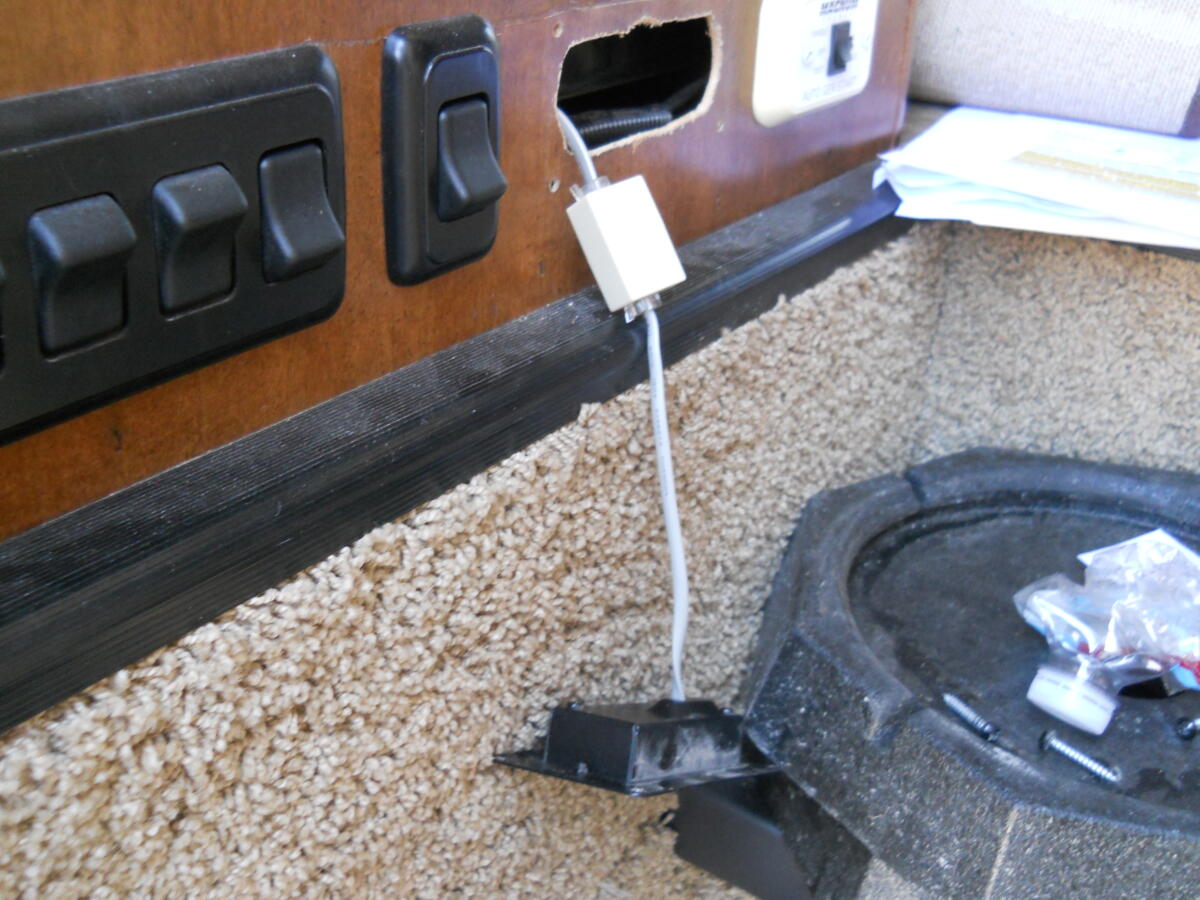
After troubleshooting the cord, we found the $1.25 female/female connection had gone bad!

Phone connection
Phone connection

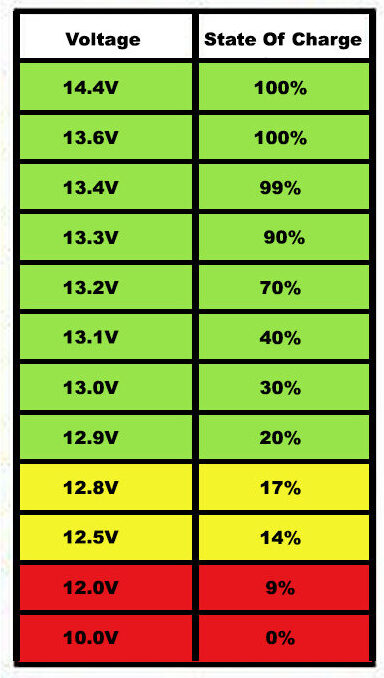
Now the dealership is stating that the inverter is bad as it is only showing 12.9 volts after being plugged in for two days. These are new lithium batteries that have 14.6 volts when fully charged. According to the State Of Charge chart below, this means the batteries are below 80% discharged and the BMS (battery management system) has shut off any charge going into or out of the battery bank.

Lithium SOC

Batteries

Upon my suggestion, my friend took the unit to another dealership. They did more troubleshooting and stated that the batteries were no good. They installed two new flooded lead acid (FLA) batteries and, guess what, the inverter was in perfect working condition!

However, I had him save the batteries as they are guaranteed for 10 years and it has only been 3 years. I believe they just went into low voltage shutdown, as the BMS protected them from a total drain. The batteries just need to be charged at 14-volt or higher charge to wake them up. Leaving them plugged in for two days was a red flag that they did not know what they were doing—especially when there was no verification of the charge profile.

This unit also got a new Progressive Dynamics converter that can be programmed for a lithium charge profile. I believe it had reset to FLA charge.

So, not only was the inverter diagnostics wrong, I believe the battery was misdiagnosed. I will verify that this summer when I get the batteries back for testing.

Who can you trust when the fix is simply swapping parts?


 You might also enjoy these posts from Dave 

DAVE HAS ANSWERED MORE THAN 1,000 readers’ maintenance and repair questions. Read a directory here. There is so much to learn!


Dave Solberg is a leading expert in the RV industry and the author of the “RV Handbook.”

HAVE A QUESTION FOR DAVE?

Send your inquiries to him using the form below.

Name
Drag & Drop Files, Choose Files to Upload

RVDT2886

CPAP placement tips for RVers

4

By Gail Marsh
At a recent RV show, I happened to overhear a wannabe RVer. As her husband began to check out the kitchen storage, she made a beeline for the bedroom. After a brief glance at the bed, she turned around and loudly announced, “Nope! Not gonna’ work!” Then the gal quickly grabbed her husband, headed for the door, and informed him, “Forget this one. It’s got no place for my CPAP machine.”

Finding a spot for your CPAP machine is sometimes challenging, especially when the RV doesn’t have a traditional nightstand. Safe and effective placement of your CPAP is crucial for a good night’s sleep. That’s why you might need some CPAP tips for RVers.

Limited space, big requirements

In RVs, every inch counts. Often, this means that there isn’t a dedicated bedside table. Or, if there happens to be one, it might be too small to safely hold your machine.

The nightstand is just the beginning. Your machine also requires a nearby outlet. Ideally, the CPAP machine should be placed a bit lower than your head. This will help to prevent condensation (commonly referred to as “rainout”) from entering the hose.

Ventilation and accessibility

But wait! There’s more. Doctors advise that CPAP machines should be placed where they can operate with proper ventilation. This helps ensure that the device doesn’t overheat, and that moisture buildup is minimized.

In confined RV spaces, ensuring optimal air flow around the machine may be problematic. (Ideally, the CPAP machine should not be crammed against a wall or mattress, which can obstruct ventilation.)

Also, most experts recommend placing your CPAP machine within arm’s reach so that you can easily adjust the settings during the night.

CPAP tips for RVers

My husband and I have enjoyed five different RVs over the years. Only one featured a usable nightstand, so we’ve had to experiment with manufactured solutions as well as try some DIY fixes to this CPAP placement challenge.

Bed-mounted CPAP solutions

BedShelfie bedside table for CPAP machine Image: Amazon

One ready-made solution is a portable bedside table. Products like the BedShelfie provide a surface that fits well within the tight confines of an RV. The BedShelfie, along with similar products, can clip to your RV bed base or extend under the mattress for support. The tables are designed to be stable and compact while offering sufficient space for your machine. (Note: Always check the usable surface dimensions and weight limitations before ordering.)

Wall-mounted brackets

CPAP specific wall mount shelf Image: Amazon

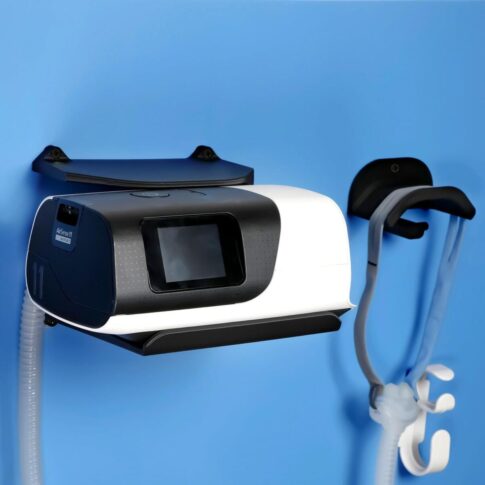
As an alternative, consider mounting your CPAP machine on a wall bracket. Many RVers have experimented with custom brackets made specifically for their make and model of CPAP machine. Ask your provider if such a wall-mounted shelf is available for your CPAP unit.

There are also non-CPAP exclusive wall-mounted shelves that will keep your unit securely in place. Check them out on Amazon.

Portable solutions

Another option is to incorporate a small, movable shelf or a collapsible table that is multifunctional. Portable units (like a TV tray) can serve double duty in an RV. By day, they might serve as snack trays in your living area. By night, the tray moves to the bedroom as a perfect stand for your CPAP machine.

DIY projects

If you prefer to make your own CPAP shelf, here are some things a DIYer can try:

Enlarge what’s there. Currently, our RV has a 5” x 6” nightstand. (I use the term loosely!) It’s too small to hold my husband’s CPAP unit. So, he cut a larger piece of wood and stained it to match our RV’s interior trim. Then he screwed the prepared board right atop the existing nightstand. It works very well.

Borrow a design. Look at manufactured solutions to discover a design that you can duplicate.

Check online videos. For inspiration, Google “DIY solution for CPAP shelf.” When you find a plan that will work with your RV, modify the design to accommodate your particular CPAP unit.

No matter what solution you pursue, be sure that the result is a level, stable surface that allows for good ventilation and is not affected by potential vibrations or accidental dislodgement during the night or day. This is especially important if you have an excitable pet that may bump or pull on your CPAP unit.

What about you?

Do you or your travel buddy use a CPAP machine? Tell us about it in the comments that follow.

RELATED

RVDT2886

For minimalists, this little trailer fits the bill

This little RV will keep you warm in the winter and cool in the summer. It will keep you out of the rain and sun, and it will do it without the frills and electronic gizmos that so many RV manufacturers include these days to one-up their competitors.

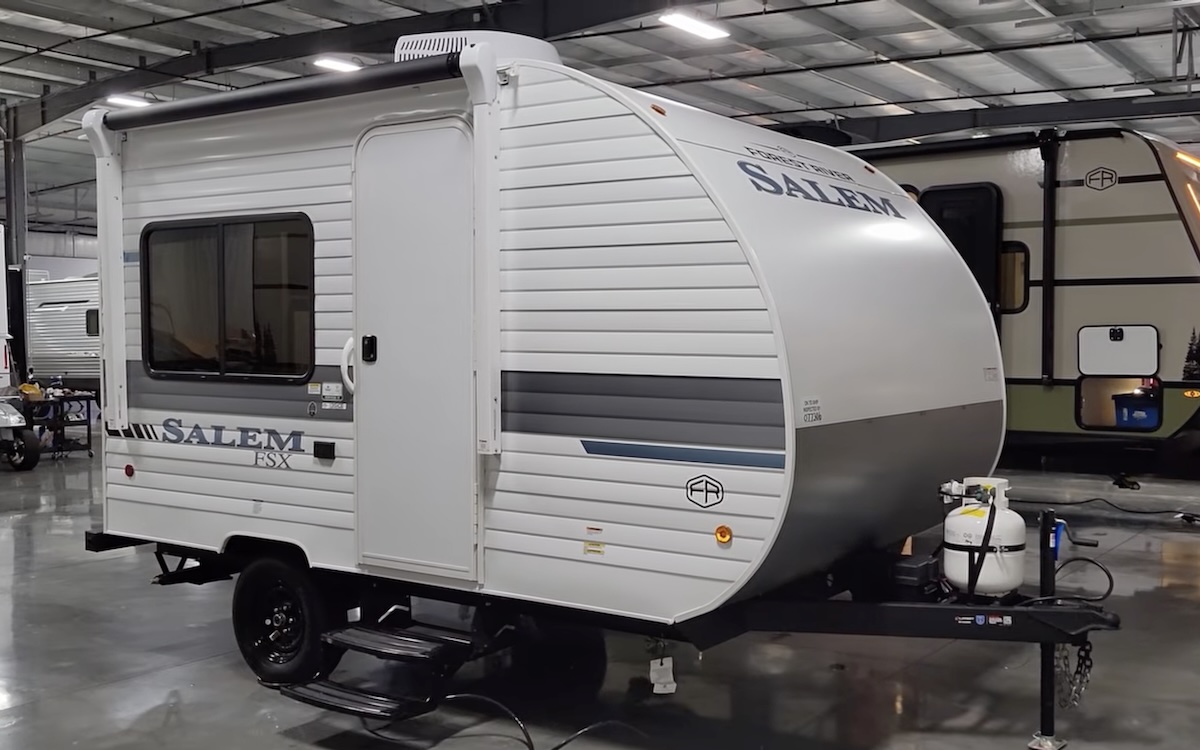
For RVers who want something simple and compact without sacrificing too much comfort, this pint-sized 2026 Salem FSX 135ICE travel trailer might be the ticket.

ScreenshotIn his walk-through video at the end of this article, reviewer Ray from “All About RVs” takes viewers inside this Forest River product. The model is positioned as one of the smallest “full-featured” campers on the market. It is aimed at solo travelers or couples, who can tow it with just about any sized passenger vehicle. Yet, despite its compact dimensions, it manages to include most of the essentials typically found in larger rigs.

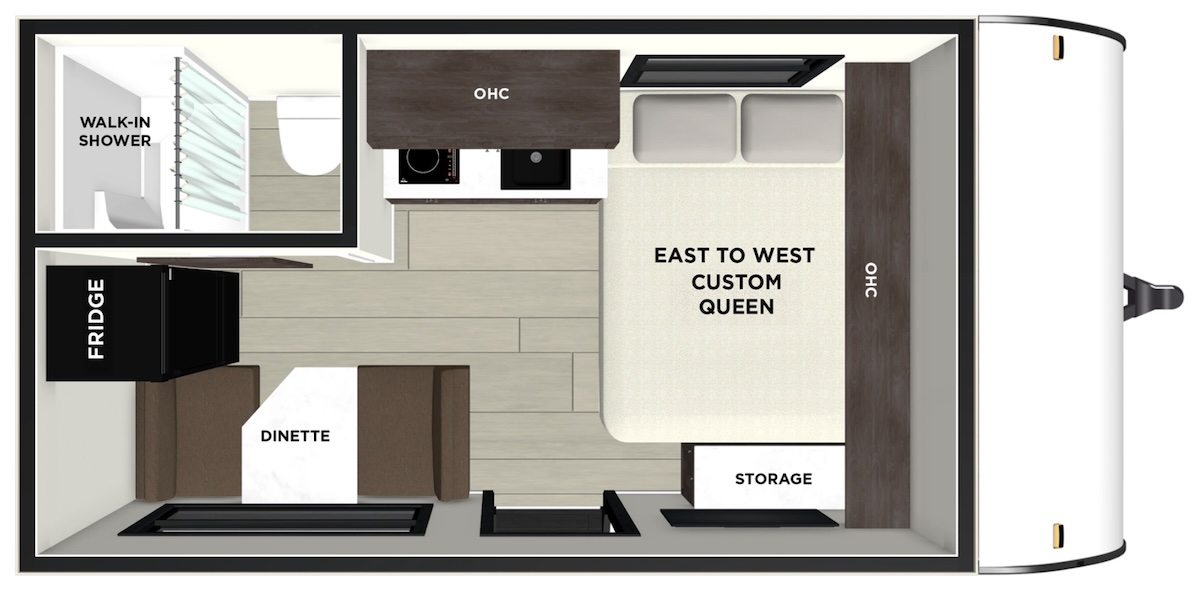
Floor plan in the Salem FSX 135ICE

Inside, the layout is straightforward. The front portion of the wood-framed trailer features a queen bed area that doubles as a seating space, maximizing functionality in a tight footprint. As expected, storage is limited.

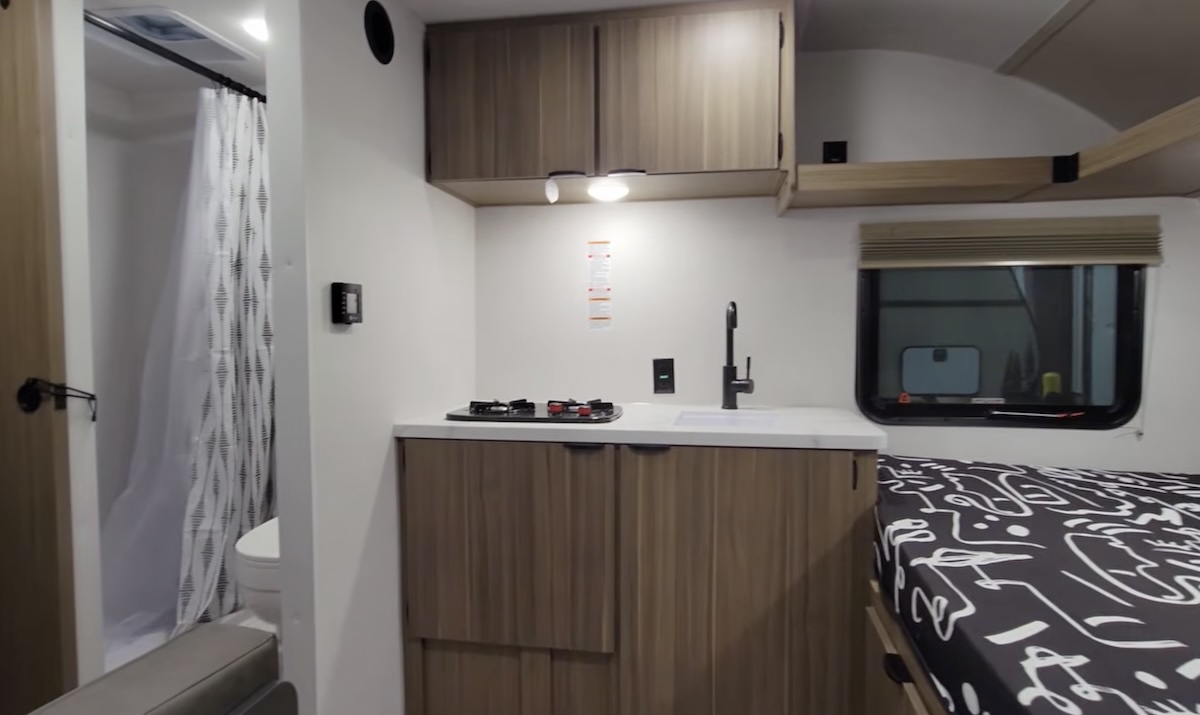
Salem FSX 135ICEThe kitchen is minimal but functional. While compact, it includes key basics such as a two-burner cooktop, 12-volt refrigerator and storage for food and cookware. It’s not designed for gourmet cooking, but it’s more than adequate for simple meals.

The bathroom is adequate, considering there is so little space to work with. Tall fellows may want to sit on the pot before buying the rig to see if their knees fit when the door is closed.

Accessibility

Another key appeal is accessibility. Smaller trailers like the Salem FSX 135ICE can open the door to RVing for those who might otherwise feel priced out or intimidated by larger units. They’re also easier to store, easier to maneuver in campgrounds, and less stressful to tow.

Of course, the trade-offs are clear. Space is tight, and there’s no room for entertaining. The RV is best suited for travelers who spend most of their time outdoors and use their RV primarily as a comfortable place to sleep, cook, recharge and as a cozy shelter when a storm rolls in. Bring a deck of cards and listen to the rain pouring down on the roof and be happy you’re not in a tent.

For weekend getaways to a nearby state park or national forest, this would be perfect. Set up the lawn chairs, take a day hike, and return for a peaceful night’s sleep out of the weather.

The MSRP is $28,282, which nobody ever pays. You can probably get it for half that (or less).

Watch the video below for Ray’s brief walk-through. This barebones RV may be all you need if you only have a few weeks a year to camp.

MORE RV REVIEWS LIKE THIS:

Tour a rare ’90s Revcon Trailblazer motorhome

By Cheri Sicard
The team from Ambition Strikes (1.09M subscribers, 201M views) bought one of the world’s rarest motorhomes, the Revcon Trailblazer. Only 67 of the beauties were ever made, and in the video below, they give us a tour.

This RV sits on a 1995 Ford F350 XLT platform. But here’s a fun fact: It has a rare 7.3L turbo diesel engine. Most Revcons came with the 460 Big Block. The engine is in great shape with only 44,000 miles. The couple even put 2,000 of those miles on during their trip home!

The engine runs smoother and has more power than any other 7.3L engine they’ve driven. What makes it so special? It has original 1990s speed parts. Revcon didn’t just build an RV. They created a hot rod. It even has original Western Diesel gauges and a programmer.

Inside, there are four aftermarket captain’s chairs. They’re super comfortable, like sitting on sofas. There’s also a Sony 10-disc CD changer and an FM modulator. Remember those? The previous owner, Tim, installed a backup camera. It’s a must-have because the mirrors don’t show much around the RV.

What’s it like to drive? In three words: “World’s biggest boss.” It grabs attention but requires focus. These old Fords have loose steering, so driving them takes work. Despite having six wheels, it’s a four-wheel-drive vehicle. More on that later. There’s a shift-on-the-floor transfer case and aftermarket stainless steps. It also features two aftermarket fuel tanks, holding about 85 gallons total.

Chassis and frame: Modified for adventure

When Revcon turned this truck into a motorhome, they modified the chassis. They added an extra frame all the way to the back. There’s also a tag axle with airbags. This helps support the extra weight.

How long is this rig? It measures 31 feet 9 inches.

There are also two 10-gallon propane tanks. One powers the stove, heater, and water heater. The other runs the generator. Other exterior features include leveling blocks and a spare tire with alloy wheel.

The spare tire swings out for access. Inside, the generator is an original propane 3600-watt model. It powers everything, including the microwave and air conditioning.

The RV also has a huge 12-volt battery that powers the water pump, lights, and furnace fan. So far, it’s working great. The house battery charges from a solar panel, the generator, shore power, or the alternator.

One cool discovery was the water heater. It’s a marine-style water heater. It runs on propane, or the engine coolant heats the water while driving.

Interior: A step back in time

Everything in here is teal.

The RV has automatic stairs. The entryway has cubbies for things like slippers, flashlights, and dog leashes. The control panel has a battery check and tank monitors. It also has switches for the water pump, TV/phone outlets, propane water heater, generator, and step. There’s even a propane level indicator. A heater near the entry is great for drying shoes.

The first dinette is used as a breakfast room. The dinette converts into a bed.

There’s a huge pass-through from the RV to the truck cab. You can easily walk into the truck without going outside. Above the truck cab is another bed.

The kitchen features a good-sized sink, a two-burner cooktop with a cover, a large fridge and freezer, and the motorhome’s original microwave and convection oven. On the downside, kitchen storage is limited due to the water heater.

The second dining room doubles as the primary bedroom and a party room. The table converts into a huge bed. There’s an extra sink in the bedroom area that allows for brushing teeth and washing up without disturbing someone sleeping in the front. The storage in the bedroom cabinets is ample, and there’s even a hanging closet for suits and pantsuits.

The RV has a wet bath with a porcelain toilet.

This Revcon Trailblazer is an incredible find. Its rare features and ’90s charm make it a unique motorhome, and the new owners are excited to hit the road and create new memories.

RELATED

RVDT2886

Have you taken an ancestry DNA test like 23andMe or AncestryDNA?

12

Think about your family history for a moment. The stories you’ve heard, the ones you haven’t, and the little mysteries that may still be unsolved. For today’s poll, we want to know if you have taken an ancestry DNA test like 23andMe or AncestryDNA.

If you have, maybe the results surprised you. Unexpected regions, distant relatives you didn’t know existed, or confirmations of stories passed down through generations. For many people, it’s been a fascinating way to connect the dots.

Others are curious but haven’t taken the plunge. Maybe you’ve thought about it, maybe it’s on your “someday” list, or maybe you’re just waiting to hear more from others before deciding if it’s worth it. (All tests are easily available on Amazon, by the way.)

Then there are those of you who prefer to stick with traditional research—or maybe not dig into it at all. Privacy concerns, cost, or simply not feeling the need to know can all play a role. Not everyone wants their DNA sitting in a database somewhere.

And, of course, for RVers especially, there’s something interesting about the connection between travel and roots. You might find yourself visiting places your ancestors came from—or wondering if a destination you love has deeper meaning than you realized.

So what about you? Have you taken an ancestry DNA test, or is it something you’d never consider? Go ahead and vote in today’s poll and if you’ve got a surprising result or story, we’d love to hear it in the comments below. Thanks!

Have you taken an ancestry DNA test like 23andMe or AncestryDNA?

MORE POLLS YOU MIGHT LIKE:

RVDT2886

Say goodbye to RV tank sensor issues with these tips

By Dustin Simpson
Struggling with inaccurate tank sensor readings in your RV? You’re not alone! Many RV owners experience false readings from their holding tank sensors, leading to confusion and frustration. In this article and video, we’ll explain how holding tank sensors work, why they sometimes fail, and how to properly clean and maintain them to ensure accurate readings every time.

How RV holding tank sensors work

Your RV’s holding tanks (fresh, gray, and black) have sensors that monitor the levels of liquid inside the tanks. These sensors are usually mounted on the sides of the tanks and detect when the liquid level reaches a certain height. The information is then sent to a gauge on your RV’s dashboard, giving you a reading on how full each tank is.

However, these sensors aren’t always perfect, and many factors can cause them to give false readings. Buildup inside the tanks, debris, or even moisture can interfere with the sensor’s ability to read accurately.

Common reasons for false tank sensor readings

Sludge and buildup

Over time, waste, soap scum, and other debris can accumulate on the sensors or the walls of the holding tanks. This sludge buildup can create false readings, making it appear as though the tanks are fuller or emptier than they are.

Corrosion or damage

Tank sensors can corrode or get damaged due to harsh chemicals or overuse, causing them to malfunction or give incorrect readings.

Improper tank treatment

Using the wrong chemicals or not cleaning your tanks regularly can lead to residue or scum that blocks the sensors.

Environmental factors

Temperature changes, exposure to moisture, and even dirt and grime on the outside of the tanks can affect the sensor’s performance.

How to clean and maintain your RV tank sensors

Empty the tanks

Before cleaning, make sure your holding tanks are empty. This will give you better access to the sensors and allow for more effective cleaning.

Use a holding tank cleaner

Invest in a holding tank cleaner that’s safe for RV systems. These cleaners are designed to break down waste, grime, and buildup inside the tanks. Some cleaners are specifically formulated to clean the sensors, as well.

Manually clean the sensors

If the buildup is severe, you may need to manually clean the sensors. You can do this by using a long, flexible brush to scrub the areas where the sensors are located. Be gentle to avoid damaging the sensors.

Use a sensor-specific cleaning product

There are products available that specifically target sensor cleaning. These are often added directly to the tank and are designed to dissolve the residue without damaging the sensors.

Flush the tanks

After cleaning, thoroughly flush your holding tanks with clean water to remove any residual cleaner or debris. This will help keep your system functioning properly and prevent future buildup.

Check for damage

While cleaning, inspect the sensors for signs of corrosion or damage. If the sensors appear damaged, you may need to replace them.

Tips for preventing future sensor issues

Use the right tank additives

Always use non-toxic and RV-safe tank chemicals that won’t harm the sensors. Avoid using harsh cleaners that can damage the sensors or corrode the tank.

Clean your tanks regularly

To prevent buildup, clean your holding tanks regularly. Depending on usage, you may want to clean them every 1–3 months.

Avoid overfilling

Overfilling your tanks can cause sludge to build up more quickly. Empty your tanks as soon as they reach about 75–80% full to prevent unnecessary buildup.

Check sensors periodically

Even if you don’t have false readings, periodically check the sensors to ensure they’re still functioning properly. Regular maintenance can help prevent issues from developing.

Install a tank sensor cleaning system

Some RV owners opt for a tank sensor cleaning system that automatically cleans the sensors while they’re using the RV. This can be a great way to ensure your sensors are always clean without needing to perform manual cleaning.

Properly maintaining your RV’s holding tank sensors is essential to avoid false readings and ensure accurate monitoring of your tanks. By following these simple cleaning tips and taking preventive steps, you can extend the life of your sensors and ensure your RV is always ready for your next adventure.

For more expert RV maintenance tips and tricks, subscribe to our channel. Keep your RV in top condition and enjoy stress-free travels!

More from Dustin

Make sure you check out my website, California RV Specialists, and our YouTube channel for more helpful information, and see our published articles on RVtravel.com and other social media pages.

RVDT2886

Helio XE— A small has-it-all travel trailer you can tow with a car

Finding a camper that stays light without feeling stripped down is tough. That is why the Hēlio XE stands out, because it packs a wet bath, kitchen, dinette, and even an optional bunk into a compact fiberglass trailer you can tow with a car.

In the video at the end of this post, we get a tour from Day Hiker From The Six. The big takeaway is simple: The Hēlio XE feels closer to a full travel trailer than a tiny teardrop or canned ham. For shoppers who want low weight and full standing room, this one deserves a close look.

The Hēlio XE makes its case with three clear points. It uses fiberglass and aluminum construction for long-term durability; it offers full standing height for tall campers; and it stays car-towable with a starting dry weight of about 2,050 pounds, a 2,700-pound GVWR, and a 210-pound tongue weight.

Inside, it doesn’t feel bare-bones. It has a bathroom; fresh, gray, and black tanks; a full kitchen; and a separate dinette. Buyers can also choose a bunk version for family use or skip the bunk for a couple-focused setup.

Exterior details and towing setup

The trailer has a bonded fiberglass body with only a small piece of plywood encased in the floor, plus an aluminum chassis. That build should help with longevity and reduce leak worries. Up front, it gets the expected 7-pin connector, safety chains, breakaway switch, manual tongue jack, and a molded cover that holds the battery and a single propane tank.

Along the utility side, the XE gets tinted awning-style windows, a torsion axle, alloy wheels, a solar port, and a separate 30-amp cord connection. Tank sizes are modest, with 13 gallons fresh and 10 gallons each for gray and black. The dump setup is easy to reach, and the sewer hose storage is placed where it is most useful. On the camp side, there is a large under-bed storage compartment, a spare tire, 120-volt outlets, a porch light, and a Maxxair fan.

Interior layout, kitchen, and sleeping space

The layout is simple and smart. The dinette sits to the right of the entry, the mid-bath is straight ahead, the kitchen is on the left, and the rear bed fills the back. That matters because the bed and dinette can stay set up at the same time, something unheard of in a trailer of this size.

The front dinette converts into a bed about 40 inches wide and 72 to 74 inches long. Storage under both bench seats adds useful space for clothes and soft gear. In the rear, the main bed spans the 74-inch trailer width, so it works well for someone around 6 feet tall, though taller sleepers may want to angle a bit.

The kitchen gets solid butcher-block-style counters, a stainless sink with pull-down faucet, and a Dometic stove mounted front to back to free up a bit more workspace. There is open cabinet space below, a shelf above, a microwave, tank monitors, water pump controls, and a rare three-way fridge that runs on 120V, DC, or gas. USB, 12V, and 120V outlets near the bed add convenience.

Helio Roulottes Seriexe Table

The bathroom and bunk option

The wet bath is one of the surprises here. It uses a fiberglass enclosure with toilet and shower, and instead of a bath fan, a duct routes moisture toward the nearby Maxxair roof fan.

The standing room is the headline. The interior height feels close to 7 feet, which is rare in a trailer this small.  The optional bunk version keeps the front dinette and adds a fold-down upper bunk rated for 150 pounds, at roughly 6 feet long.

Helio Roulottes Seriexe Lit

Final thoughts

The Hēlio XE looks like a strong fit for shoppers who want fiberglass construction, low weight, and a more open interior than most small trailers offer. Its weak spots are the smaller tanks, limited overhead storage, and a bed length that may feel tight for taller campers.

Base MSRP starts at $49,900 Canadian, or about $36,000 US, before freight, fees, and options.

Learn more about the Hēlio XE here.

RELATED

RVDT2886