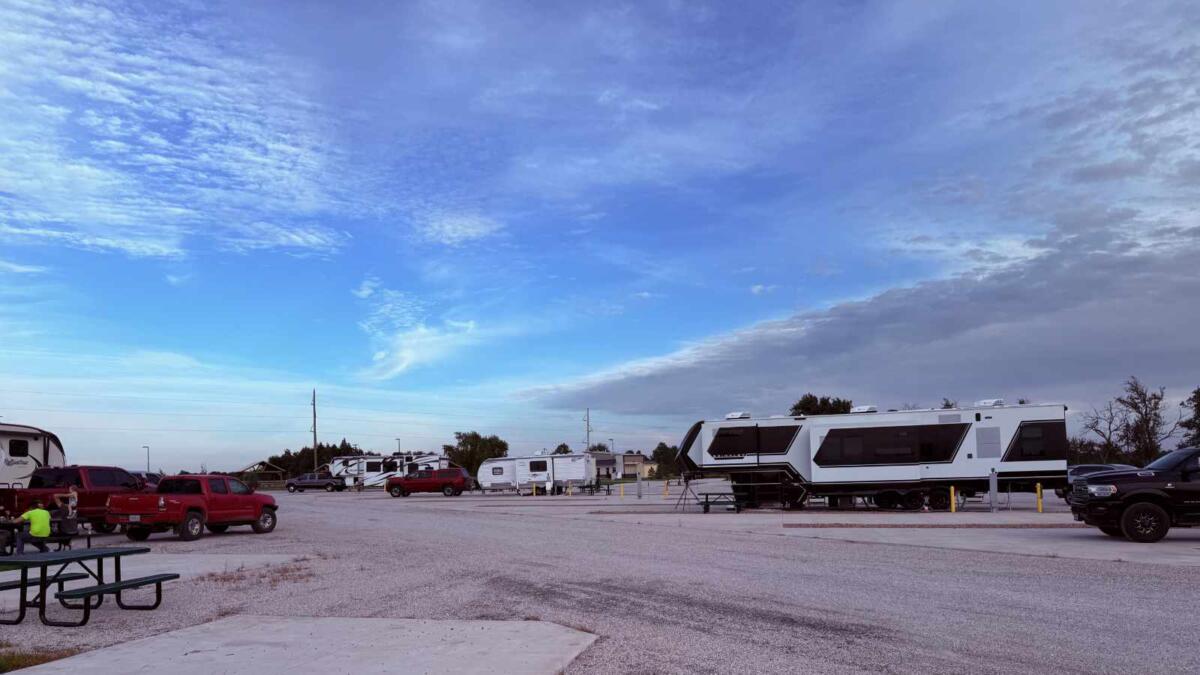
Do you remember your first RV? You must! We know you do—it was your first baby! Now tell us: Was it a motorized RV or a towable?
Your first RV was more than just a vehicle; it was the key to endless adventures. Whether it was a cozy pop-up camper or a luxurious motorhome, it probably came with its own quirks and personality.
Maybe you remember the thrill of packing it up for the first time, stocking the cabinets with snacks and supplies, and plotting out your inaugural trip. Or perhaps your first memory is of the RV’s challenges—learning to back it into a campsite or figuring out how to work the water pump. Either way, those moments are now part of your story.
For some, a first RV was a budget-friendly fixer-upper, bought with dreams of weekend getaways and summer road trips. It might have had a few dents and needed some TLC, but that only made it more special.
For others, their first RV was brand-new, with that fresh-off-the-lot smell and shiny features that felt like pure luxury.
And let’s not forget the sentimental value—many first RVs carried families through milestones like kids’ first camping trips, couples’ anniversaries, or retirement celebrations.
But even if your first RV wasn’t perfect, it probably taught you a lot. Maybe you learned the ins and outs of RV maintenance, how to cook a full meal on a tiny stove, or how to make a small space feel like home. Those early lessons likely shaped the RVer you are today and paved the way for the adventures to come.
After you vote, please leave a comment and tell us what your first RV was. We can’t wait to hear. Thanks!
LIKE TAKING POLLS? So do we! Did you know we’ve run more than 5,000 polls on our website over the years? Check ’em out! Have fun!
By Dustin Simpson
One of our readers, Ty, asked: “We have roof damage due to hail. Insurance has agreed to replace it, but I think it is a lowball settlement with labor cost being quoted at $125 per hour. I called major companies and their going rate is $160 – $180 per hour.
Questions:
What are the current rates?
What is involved in a roof replacement?
Is it really replacing or just total epoxy covering?
I see mobile roof repairs. Are they reliable and good? Or do I need to take it in? I am living in the unit full-time, so taking it in takes planning.
Thanks for your time.”
Ty has a Grand Design Reflection, 30′ fifth wheel.
Dear Ty, I am so sorry to hear about the hail damage to your RV! I hope the following information will be helpful as you navigate through the repair process.
Current rates
Labor rates really depend on where you are located. I’m in California, and the RV repair facilities in my area charge anywhere between $175 – $300 per hour. Additionally, not all RV roof replacements are the same. The number of attachments on the roof (A/Cs, vents, skylights, moldings, etc.) all play a role in the final cost of a roof replacement.
The cost of the roof replacement also depends on how extensive the damage is. Some RV roof replacements can be done without having to replace the wood sheeting beneath the roof membrane, while others will require new sheeting.
My best advice is not to get hung up on the initial numbers your insurance company provides. Contact your trusted and certified RV repair shop and schedule an appointment. They will work with your insurance company and negotiate the true cost on your behalf.
While there are some insurance adjusters who have actually worked in the RV industry, it’s not typical. The initial number you were provided was most likely pulled from the insurance company’s flow chart, and this number is intentionally low to prevent the insurance company from overpaying.
It is a common practice for repair facilities to supplement your insurance company. This supplement captures the difference in labor costs, freight fees, and anything additional that the adjuster didn’t consider during their original estimation.
Roof replacement
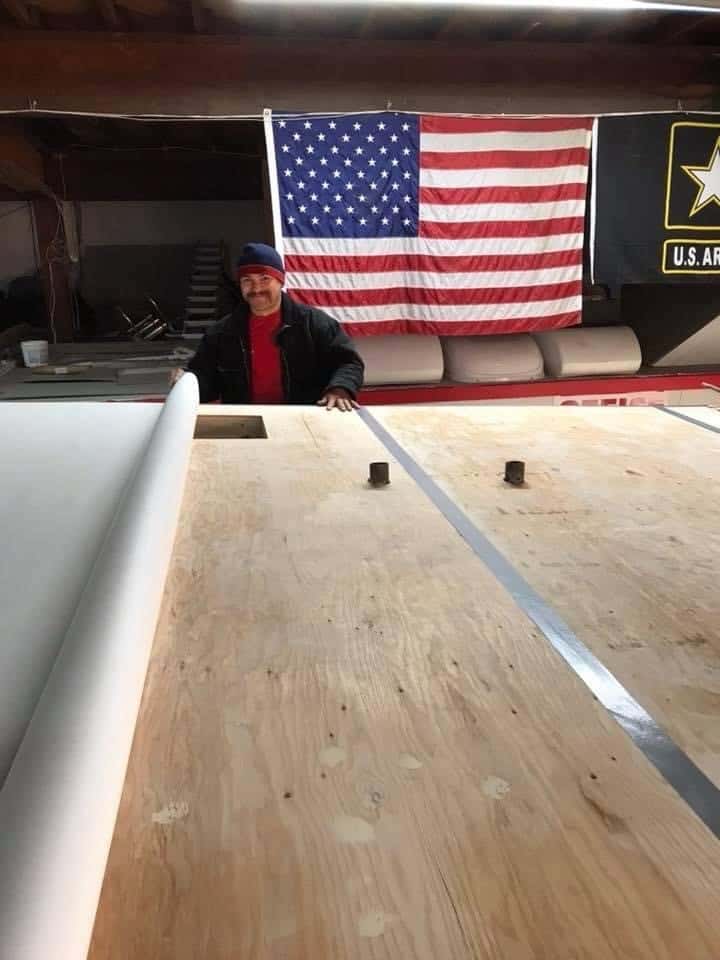
A roof replacement is just that, a replacement of the RV roof.
All items on the roof are removed (A/Cs, vents, TV antenna, satellite, skylights, etc.).
The roof membrane is removed.
The wood sheeting underneath the membrane is then inspected to see if it can be reused or needs to be replaced or overlayed.
A new roof membrane is installed.
All attachments are reinstalled and sealed up.
Roof replacement or epoxy covering?
My repair facility does not perform epoxy coverings, so my response on this might be biased. But in your scenario, I would recommend a full roof replacement. This recommendation is solely based on the theory that someday in the future, either something on your RV roof will break and/or you will want to upgrade something. When that time arrives, you can easily have the item removed and replaced by only disturbing the sealant in that area. You won’t want to disturb that epoxy coating as it will be compromised.
Mobile RV technicians
Some reputable mobile RV technicians exist but, in my experience, they’re hard to come by. Frequently, they are RV technicians who couldn’t handle production or quality standards at a dealership. Mobile technicians in my area have a reputation for not carrying required insurance, collecting or paying sales tax, and everything in between that is required and expected when running a reputable company. Because of this, they can exist one day and be gone the next.
While there are times when mobile technicians are the only option because your jacks or slide outs are stuck in the out position, I would notrecommend getting something like a roof replacement done by a mobile technician. You and your insurance company will want a repair of this magnitude completed by a business that can and will stand behind its warranty.
Full-time RV living and repairs
I would estimate that about 40 percent of my customers live in their units full-time. RV repair is not like Jiffy-Lube. Unless your repair is something small and we have all the required parts and supplies on hand, it’s rare to have RV repairs completed from start to finish the same day.
My best recommendation to you is to find an independent repair shop that does nothave the “luxury” of a large, vast lot. A repair facility with limited space sees its lot as expensive real estate. They won’t want to hold your unit hostage.
For something like a roof replacement, make two appointments with the shop of your choice.
Make one appointment for them to take pictures and measurements for the insurance estimate. This allows them time to negotiate everything with your insurance company and then to order all items in advance.
Make an appointment for the roof replacement.
Some insurance plans may cover all or a portion of hotel accommodations while your unit is being worked on.
Lastly, communicate clearly with your repair facility about your living situation, so they can plan appropriately on their end, as well.
Dustin owns and operates California RV Specialists, an independent RV repair shop located in Lodi, CA. He thrives on sharing his knowledge and enthusiasm of RV repair and maintenance with his team, customers, and virtual friends.
Be sure to check out his YouTube channel where he shares what’s going on in the shop and the product offerings in the store. Dustin is also very active on Facebook. Join his group, RV Repairs and Tips – What’s in the shop!
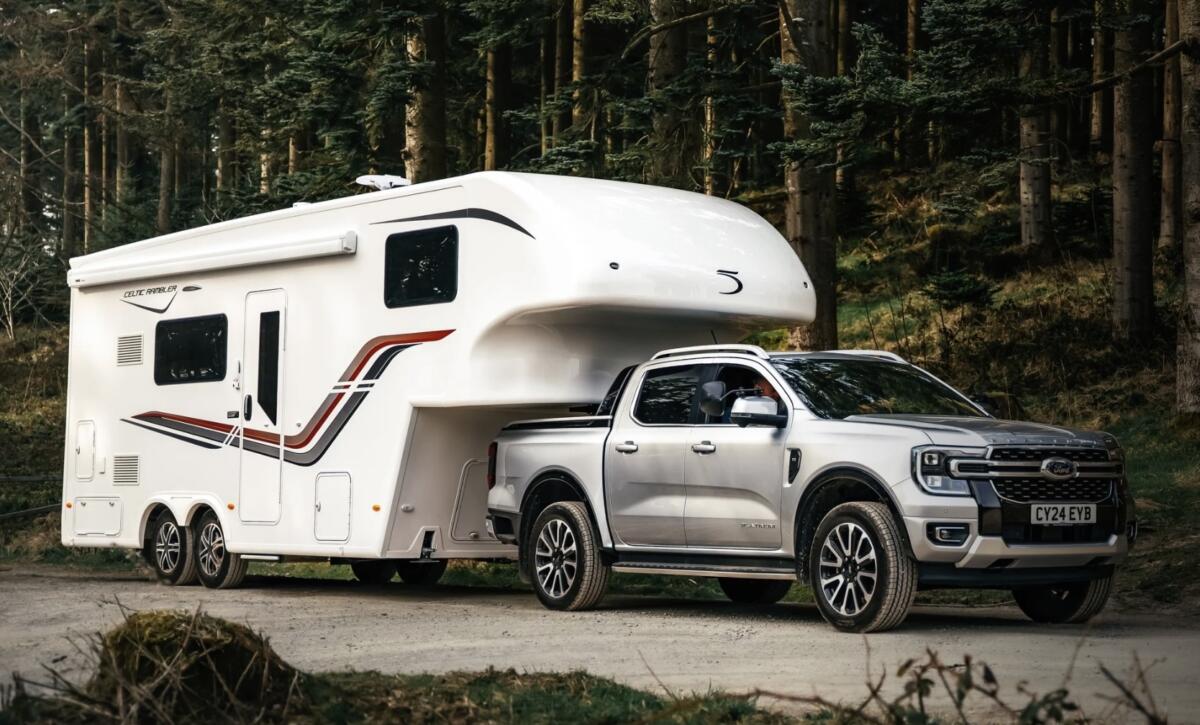
At the Caravan Salon in Düsseldorf, Germany, Myles, of Myles RVs, came across something that still feels unusual in Europe: a true fifth wheel RV. Since this is the largest caravan and RV show in the world, it was the right place to spot one. The surprise was not just that it existed, but how different it looked from a typical U.S. fifth wheel, in size, build quality, and price.
A rare fifth wheel at a European RV show
Big towable RVs are not common in Europe. Most buyers lean toward smaller caravans/trailers or motorhomes, and trucks are far less common, too. In four days at the show, Myles only spotted two half-ton trucks, both in this display.
That makes the Fifth Wheel Co. Celtic Rambler stand out even more. It is described as the only fifth wheel manufacturer in Europe, and its units are built more like made-to-order products than dealer inventory. Buyers can tailor them, then wait about six months to a year for the build. The brand also offers the smaller Dream Seeker, aimed at lighter trucks such as a Tacoma-sized pickup or a Volkswagen truck.
Weight matters more than size
The towing numbers are where things get interesting. This fifth wheel has about a 1,300-pound hitch weight, which is a lot for a half-ton truck. In U.S. terms, that usually pushes buyers toward a 3/4-ton truck, even though the total trailer weight stays under 10,000 pounds.
Here is the quick spec breakdown:
Spec
lbs.
kg
Dry weight
7,275
3,300
Gross weight
9,480
4,300
Payload capacity
2,200
1,000
So, the overall trailer weight looks manageable, but the payload is the real issue once passengers and gear go into the truck.
The interior feels far more upscale than expected
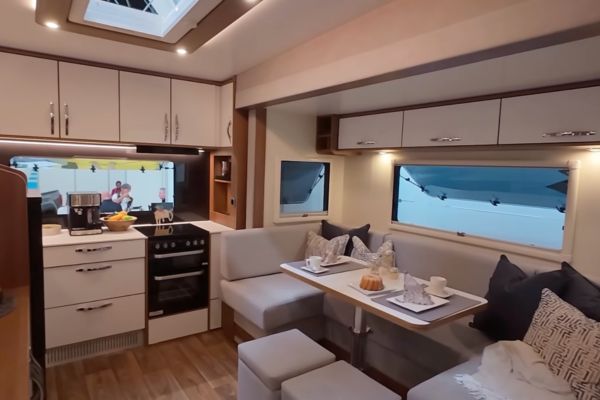
Inside, the Celtic Rambler feels closer to a high-end motorhome than a small fifth wheel. The layout shown had two skylights, two-tone cabinetry, a U-shaped dinette, and materials that looked solid and light at the same time. Myles also found a washer-dryer unit and a dishwasher, which is not something most people expect in a fifth wheel this size.
The kitchen used an L-shaped counter, Corian countertops, a large round sink, a four-burner stove, and double ovens. Meanwhile, the heating system appeared to be Alde radiant heat, not the usual floor vents seen in many U.S. towables.
Upstairs, the bedroom has twin beds that can turn into a king. The bathroom added a full-length mirror, a towel warmer, and a surprisingly roomy shower.
Full fiberglass construction changes the whole conversation
The exterior may be the biggest story. The front cap, roof, underbelly, and even parts of the slide structure appeared to be molded fiberglass. That means fewer seams, cleaner finishing, and a much more polished look than many U.S.-built fifth wheels.
Other European details stood out, too. It uses a cassette toilet instead of a large black tank, likely because weight rules are stricter. It also appears to have independent-style suspension, dual-seal compartment doors, and a 3,000-watt inverter that can run the air conditioner for a time, depending on battery and solar setup.
The price explains why the Celtic Rambler is still a niche product
This is where most buyers would stop and think. The featured unit was listed at around €228,000, and another version showed €157,000. That puts it roughly in the $170,000 to $250,000 USD range, depending on build and conversion.
In short, this is fifth wheel pricing that competes with luxury brands, not entry-level RVs. The tradeoff is clear: Europe offers tighter production, better materials, and far more refined construction, while the U.S. offers many more sizes and prices.
For anyone wondering whether this would sell in the U.S., the answer probably comes down to one thing: how much buyers truly value quality once the price is on the table.
America’s Original RV Newsletter. Since 2001 Issue 1254 If you find this newsletter helpful, please consider supporting our work with a donation of your choice. Thank you!
Today’s thought
“Try not to become a man of success but rather to become a man of value.” —Albert Einstein
Today is important: Today is National Vietnam War Veterans Day. We honor all those who served. “Welcome home.” Also, today is National Mom and Pop Business Owners Day, so go out and support a small, local business.
On this day in history: 1806 – Construction is authorized of the Great National Pike, better known as the Cumberland Road, becoming the first United States federal highway.
BORED?? Well, there is no excuse! Read back issues of our RV Daily Tips Newsletters! More than 2,000 to choose from!
Are Love’s RV Stops worth it? My honest experience on the road
By Tony Barthel
If you’ve been on the road lately, you may have noticed that more and more Love’s Travel Stops are adding accommodations for RVers including overnight accommodations with hookups at some of the company’s 670 locations in 42 states. I have stayed at several Love’s locations and documented my findings, which you can read about here.
A remote desert highway crash showed us a hard truth: Help isn’t always quick to arrive
By Russ and Tiña De Maris
If you travel the kinds of remote desert highways RVers know well, a desert highway crash isn’t something you expect—but it’s something you should be ready for. We were still thinking about getting home when we drove into the dust. It hung across the highway like a curtain—thick, tan, and sudden. Visibility dropped to almost nothing as we climbed into a sweeping grade. Then came the jolt. We hit something in the road… Continue reading this important story and reminder.
Are RVers really “camping” or are we really “glamping”?
By Gail Marsh
In the RV world, this argument never seems to go away: Is RVing really camping? We recently were unintentionally drawn into the discussion: Are you really “camping” if you have TV, air conditioning, Wi-Fi, a private toilet and shower, and all the comforts of home? When asked directly, I demurred. (I’ve witnessed this discussion before and know the potential intensity of the opinions on both sides.) Continue reading.
Today’s RV review… 2026 Lost Pines Sequoia—Tiny home or destination trailer?
By Tony Barthel
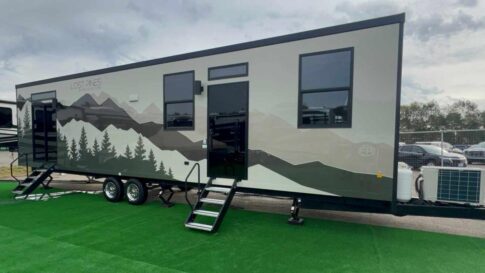
Today’s RV review is of the 2026 Lost Pines Sequoia trailer. I hesitate to qualify this only as a destination trailer, although that’s the most likely use case scenario. But this is something we saw at the RV dealer open house, and we were really taken aback by it. You could easily also call this a tiny house, but it is much nicer than many examples in the tiny house genre. Essentially, this is a very large travel trailer that is also a destination trailer or tiny house. Check it out.
WHAT’S THE ONE THING… you always need on your first day of RVing? You leave the driveway, get out on the open road, and ah… that’s the best feeling in the world. You need this!
Tanner Toons with Tanner Woods
You may share this Tanner Toon, unaltered, on your website, blog or social media with our compliments. The musings from Tanner Woods’ creative mind appear in this newsletter every Saturday and Sunday and in many RV Daily Tips newsletters through the week.
HERE, KITTY, KITTY… Yesterday, we shared a story about a cougar under an RV—and coincidentally received this from reader Larry R.: After buying his first motorhome and taking it out for a test run, he woke up to find fellow campers urgently waving him over to warn him that a 7-foot alligator was sleeping directly beneath his RV. “I now always look under my RV for visitors!”
Are ye ol’ eyes giving you problems? Is the small type getting too small to read? (It happens to the best of us.) This will save your day.
Letter to the editor: Solo travel is booming, but many RVers aren’t ready to go alone
We recently received this message from reader Susan L. Coincidentally, around the same time, we came across new research showing that solo travel is on the rise. Read Susan’s letter and our article, then please consider leaving a comment to share your thoughts with her—we know she’ll appreciate it. Susan starts, “I lost my husband not long ago, and with him went my favorite travel partner….” Continue reading.
How useful are fifth wheel king pin stabilizers?
By Russ and Tiña De Maris One fifth wheel owner we know refuses to set foot in her fiver unless the front end is “supported” with a king pin stabilizer. She knows it’s nuts, but she’s afraid the trailer will topple forward if she puts her weight up there without the support. Not everyone is quite so paranoid, but plenty of fifth wheel folks put a stabilizer under their king pin. Is it worth it?
Does your RV or tow vehicle have a wackeldackel on its dash?
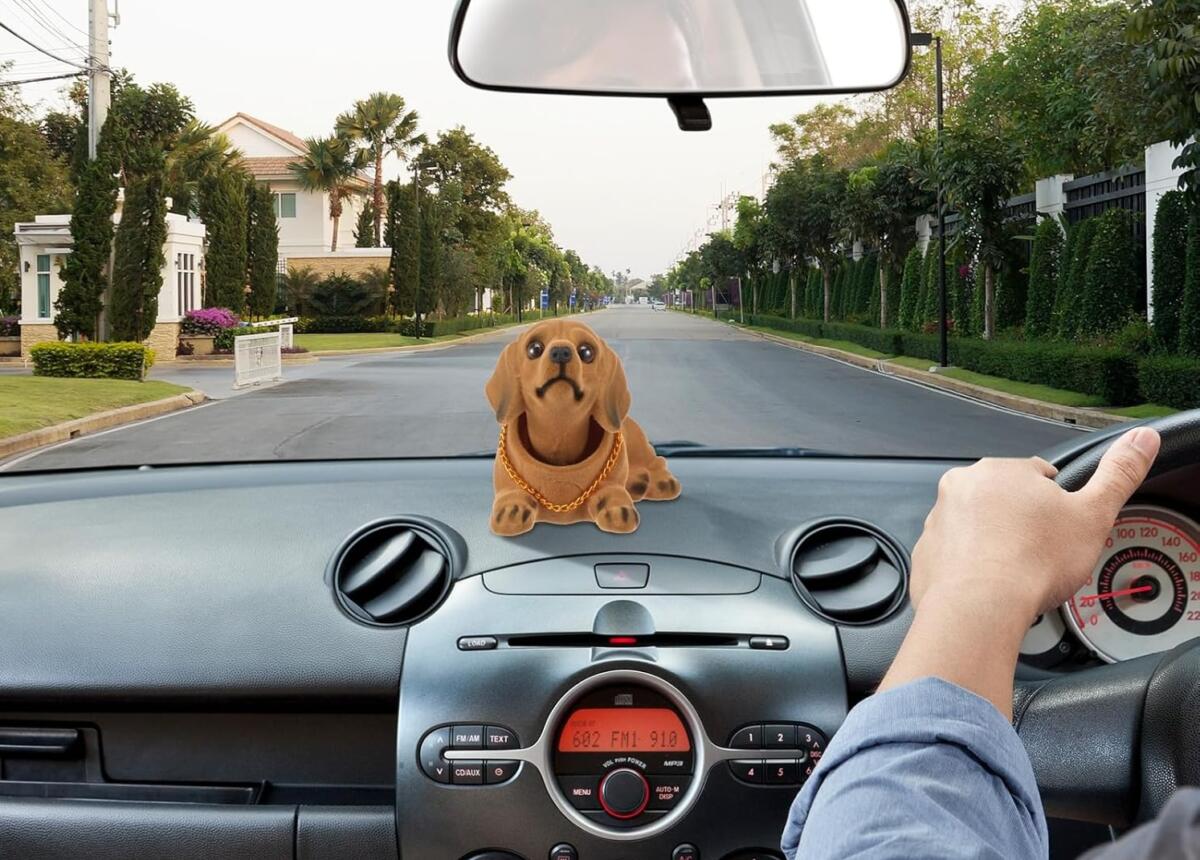
Think back. Did your car, truck, or motorhome ever feature a wackeldackel? The wackeldackel is linked to a much older idea. The German word, wackeldackel, translates to… well, read on to find out, then tell us: Do you have a wackeldackel?
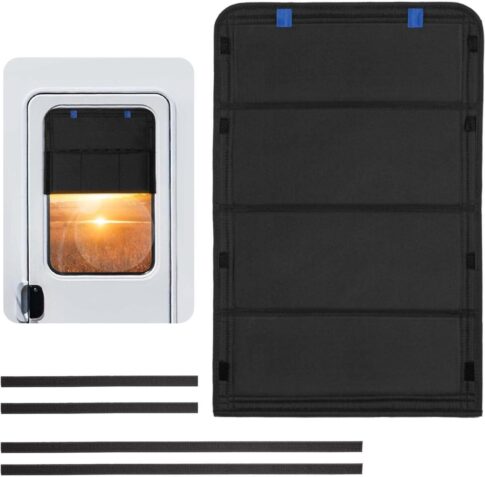
The best window shade for your RV’s door
Block the light without blocking your view. This RV door window shade gives you full blackout when you want it—but, unlike most shades, it folds up so you can enjoy the scenery when you want, too. Easy to install in minutes with no drilling, it helps keep your rig cooler, adds privacy, and lets you switch from “sleep mode” to “view mode” instantly. A simple, smart upgrade for better comfort on the road. Check it out.
Tony’s tips RVing Route 66 for its 100th anniversary— So many options!
Usually, I like to use this space to share tips and tricks or insights into the RV world. However, this week I thought I’d share some tips for those of you planning to venture onto Route 66 in celebration of the 100th anniversary of the Mother Road. Gail Marsh did a great job of detailing the 100-year anniversary celebrations happening along Route 66 in this article. What I thought I’d share are some of the highlights specifically for RVers. (This is an excellent guide!)
Reader poll When RVing, how often do you cook over a campfire?
RV gadgets and gizmos Helpful RV gadgets for those with arthritis or weak hands
By Gail Marsh
My mother-in-law could tear a large Las Vegas phone book in half. Really! I wish I had her amazing hand strength! Maybe you, too, struggle a bit while RVing because of poor grip strength or arthritis. If so, you should know that many devices and gadgets can help! I’ve put together an excellent list of these gadgets.Read on, and you’ll see!
The Kentucky Bourbon Trail is Kentucky’s official distillery tourism network. Built around member stops of the Kentucky Distillers’ Association, the trail is designed so travelers can explore bourbon country by region instead of trying to drive the entire trail. This would be so much fun!
Free museums across the U.S., and where to camp nearby
One of the best parts of RV travel is stumbling into places that feel like a win before you even walk through the door. Free museums definitely fall into that category. USA TODAY readers recently ranked the best free museums in the country. One thing that stands out is how spread out they are. You can enjoy a top-notch museum almost anywhere you travel. For free! Check these out, and see the best campgrounds/RV parks nearby.
? MYSTERY PRODUCT OF THE DAY ? They said what they said! They wanted nothing, so get them nothing! (Too funny!)
Highlights from this week’s RV Daily Tips Newsletter
In the RV shop with Dustin Cool RV Tools: Meet the Spider Tool Holster BitGripper
These “cool tools” are tools and gadgets that we actually use in the RV industry! We also believe they will be helpful to you. Today, we’re looking at the Spider Tool Holster BitGripper. This is a great RV gadget for your drill gun or impact gun. Learn more here.
RV tire safety More information on tire cold inflation pressure
Tire expert Roger Marble explains more about tire cold inflation pressure in response to an RVtravel.com reader’s question, which begins as follows: “I have read a lot of your posts and that makes me think my manufacturer has my cold inflation pressure (CIP) wrong or used too much tire on my unit (maybe not a bad thing).” Continue reading.
READERS’ SAY… “In the article titled ‘Lug nuts on trailer seize up. Lubricate them or use anti-seize?‘ the question is asked, ‘What is the best jack to raise a trailer?’ I bought the Tall Boy that was featured some time ago on RV Travel in this article. It is the best jack I have ever used; no additional blocks are required to increase the height of the jack. Well worth the money!” —Lee A.
**Last day: If you’re near Las Vegas, NV, be sure to see Dave at his always educational and entertaining seminars at the Las Vegas RV Show today, March 29.
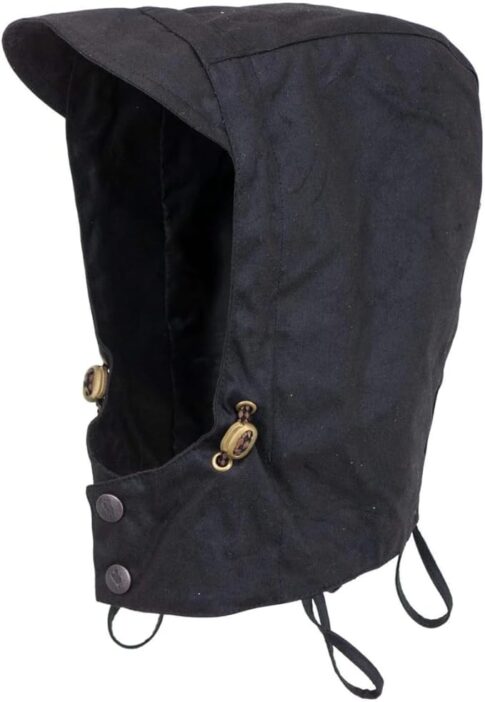
Turn your favorite jacket into a rain-ready one
Does your favorite jacket not have a hood? With rainy spring weather on the way, this removable waterproof hood is an easy fix. Made from durable oilskin with a breathable lining, it snaps onto compatible jackets and adjusts for a snug fit, helping keep wind and rain off your head during campsite chores, walks, or hikes. A simple upgrade for RVers who want to stay dry without replacing the jacket they already love. Check it out.
“We first met Rocky (Not-so-miniature Dachshund) in a Florida campground as a 4-week-old pup, then picked him up in Tennessee when he was 6 weeks. Since we’re full-time, he has been traveling his whole life (he’s now 10 months old). He’s pretty sure he’s the king of the RV.” —Roger Becht
Want to see your pet in this newsletter? Please send us a photo of your pet with a short description. No blurry photos and please do not submit your photo more than once.
Trivia
Movie theater popcorn costs more per ounce than filet mignon in the U.S.
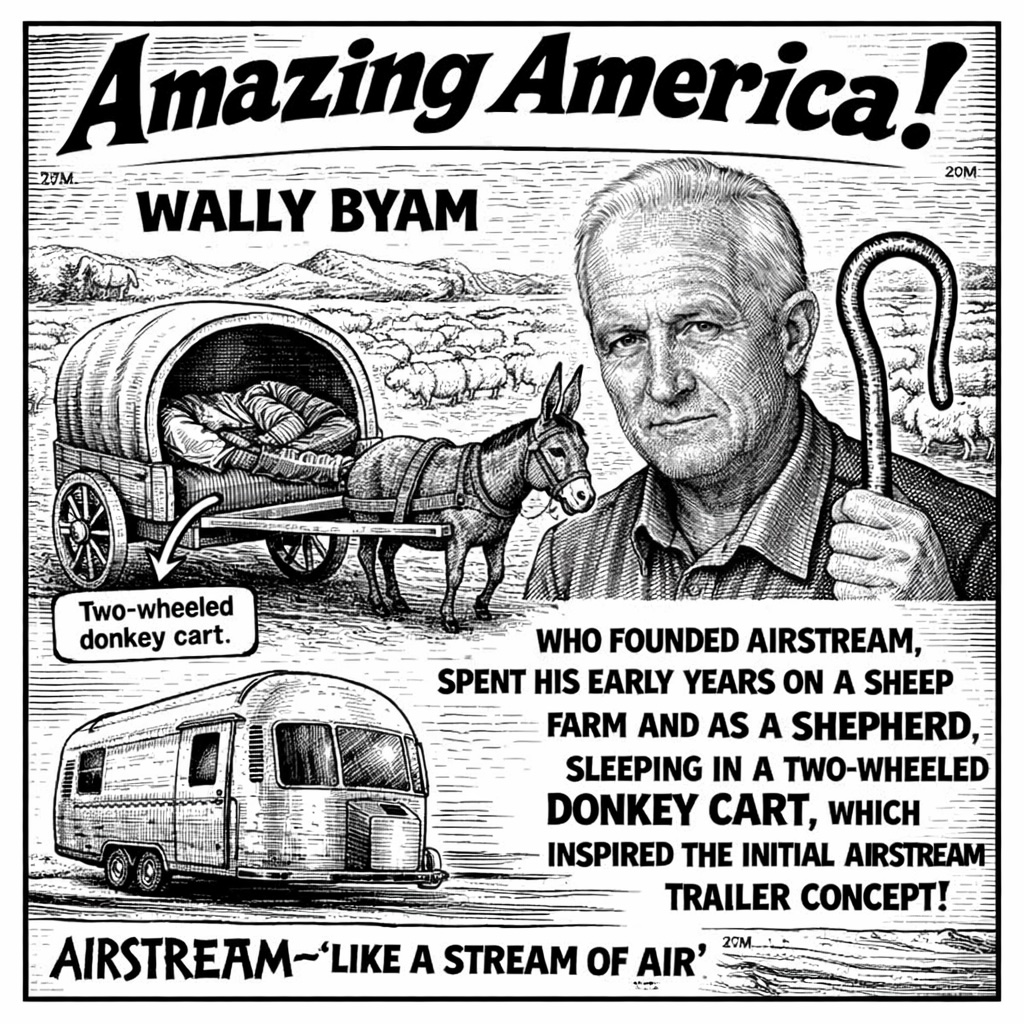
Sunday funny
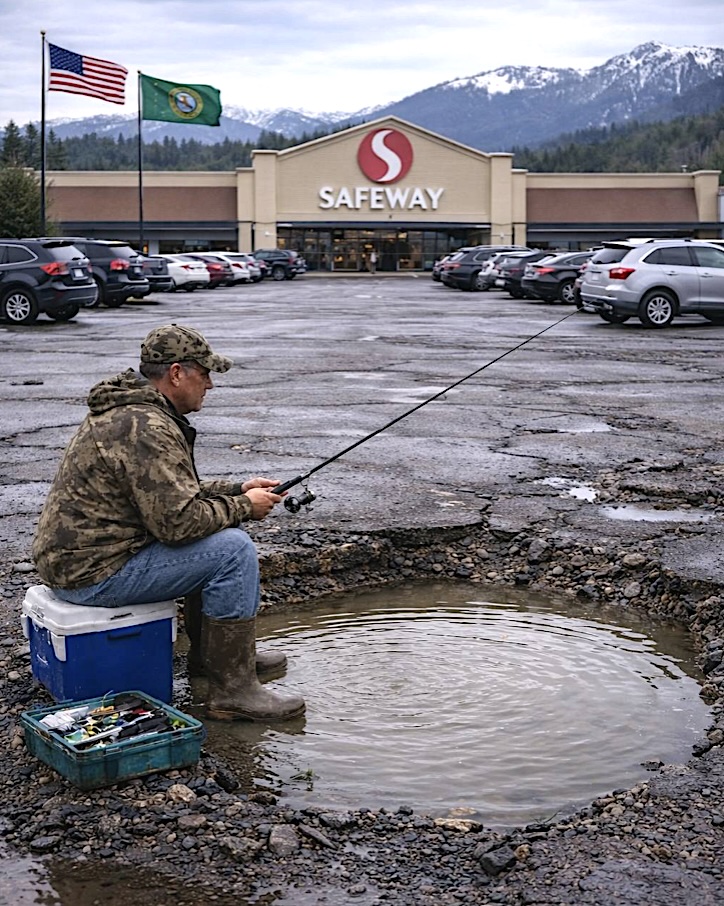
Having fun with A.I. on the Facebook group Washington History.
FREE IS GOOD! Do you have a Love’s app? On Monday, March 30, get a free 20-oz. Cherry Coke Float. Open the app, show the barcode in the app at checkout, and get your free Coke Float. Yum!
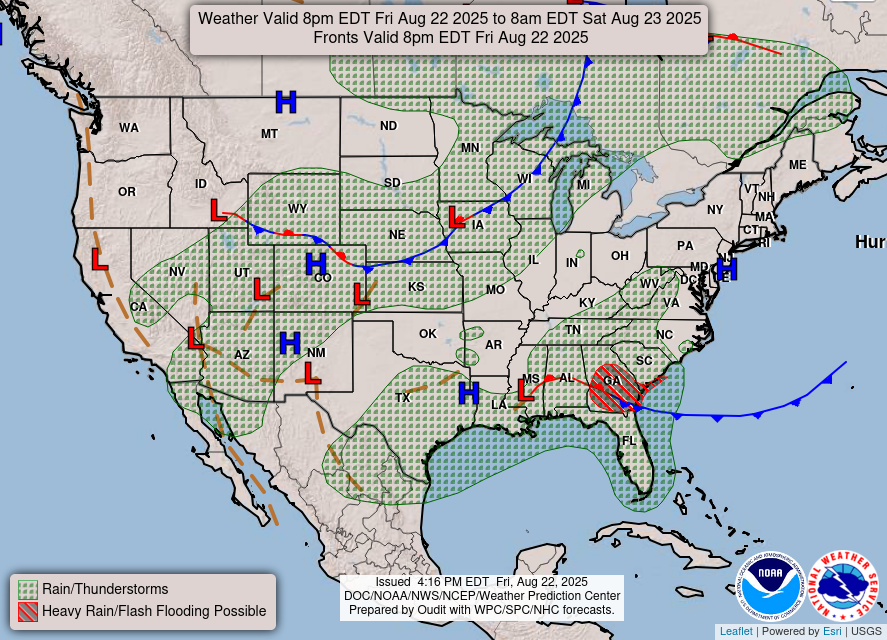
Today’s weather forecast across the nation THIS MAP UPDATES TWICE A DAY
By Russ and Tiña De Maris One fifth wheel owner we know refuses to set foot in her fiver unless the front end is “supported” with a king pin stabilizer. She knows it’s nuts, but she’s afraid the trailer will topple forward if she puts her weight up there without the support. Not everyone is quite so paranoid, but plenty of fifth wheel folks put a stabilizer under their king pin. Is it worth it?
The answer to that question is subjective: Some fiver owners wouldn’t do without, others simply scoff at them. Here are the facts and the fiction.
First, unless your DNA is related to Godzilla’s, there’s no way you’ll “tip over” a fifth wheel by crawling up above the king pin area. The laws of physics (and proper RV design) simply won’t allow it. So, why a stabilizer? Most supporters point to less “rolling” motion when walking in the trailer. But keep in mind that motion in a parked trailer isn’t just affected by a king pin stabilizer.
When you pull into camp and set up any rig, its own running gear, including tires, springs and occasional shock absorbers, are still going to give some bounce. Unless you get the tires out of contact with the ground, the running gear will still “give,” regardless of the number of stabilizers and their location. Most who use a pin stabilizer report reduced “bounce”—but we’ve never heard of one sitting still like a “sticks and bricks” home.
Drawbacks to king pin stabilizers
It comes down to how much bounce reduction is worth to you. King pin stabilizers have their drawbacks, among them:
• Weight: To really get bounce reduction, stabilizers built of steel seem to work best. Users report lighter-weight aluminum stabilizers just aren’t as solid as steel.
• Bulk: You have to store them when traveling. Mama isn’t going to put up with those big old clunkers in the fifth wheel—they’ll be in the back of your tow vehicle taking up space. And while most king pin stabilizers are like tripods, having three legs, many users report the “bipod” two-legged variety of stabilizer that takes less space is less supportive than its three-legged cousin.
• Not useful everywhere: Parked in a site not close to level, you may find the stabilizers won’t work unless they have adjustable legs. If the ground under the front end of the fifth wheel slopes down, they may not reach the pin box. If the ground slopes the other way, the legs may be too long to work.
On the other hand, there is an unexpected benefit of a king pin stabilizer that many have commented on: They no longer bang their heads on the king pin. Of course, they may not be telling us about banging their shins on their stabilizer legs!
If you’ve been on the road lately, you may have noticed that more and more Love’s Travel Stops are putting in accommodations for us RVers. In fact, many of you weighed in on a poll saying that you have already dipped your toes in staying at a Love’s.
The company has committed to RVers with a variety of things, including offering overnight accommodations with hookups at some of the company’s 670 locations in 42 states. These accommodations range from flat pads with water and electric to full RV parks with a number of amenities, including pickleball, dog parks, and laundry facilities.
Even at locations where they don’t offer paid overnight accommodations, many of their facilities offer larger parking spaces so RVers can go into their stores, which typically feature clean restrooms and an extensive number of food and beverage options. Many of these facilities include full fast food operations, but there are always aisles and aisles of snacks of all sorts, from fresh fruit to things I shouldn’t eat but love.
Among the reasons we seek out Love’s on our adventures are the fuel savings—with their free rewards program, they offer 10¢ off per gallon of gasoline and, currently, are offering 25¢ off per gallon of diesel fuel at the retail (not commercial truck) pumps.
What’s at a Love’s Travel Stop?
There isn’t just one format for Love’s. They range from smaller filling stations to enormous facilities that offer overnight parking and fueling for commercial trucks. The company is also growing its locations that offer specific RV-related services, including overnight spots for RVers.
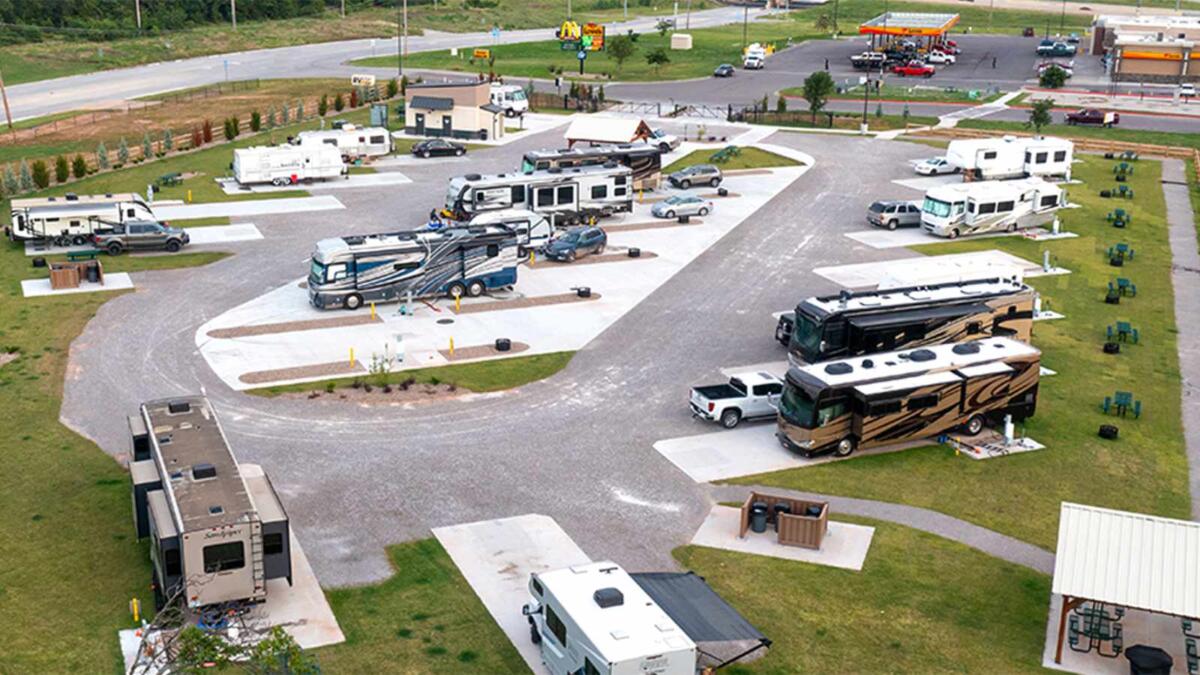
The company has seen a good response to offering sites where RVers can spend the night for a fee. These can be just water and electric or even full-hookup sites. The placement of these is anywhere from in the main lot of the facility to a completely separate RV park with amenities in addition to the basic hookups.
There are often picnic tables, and some have covered areas, pickleball courts, dog parks (I saw someone exercising a horse at one once), and general grassy areas.
Easy to book a site
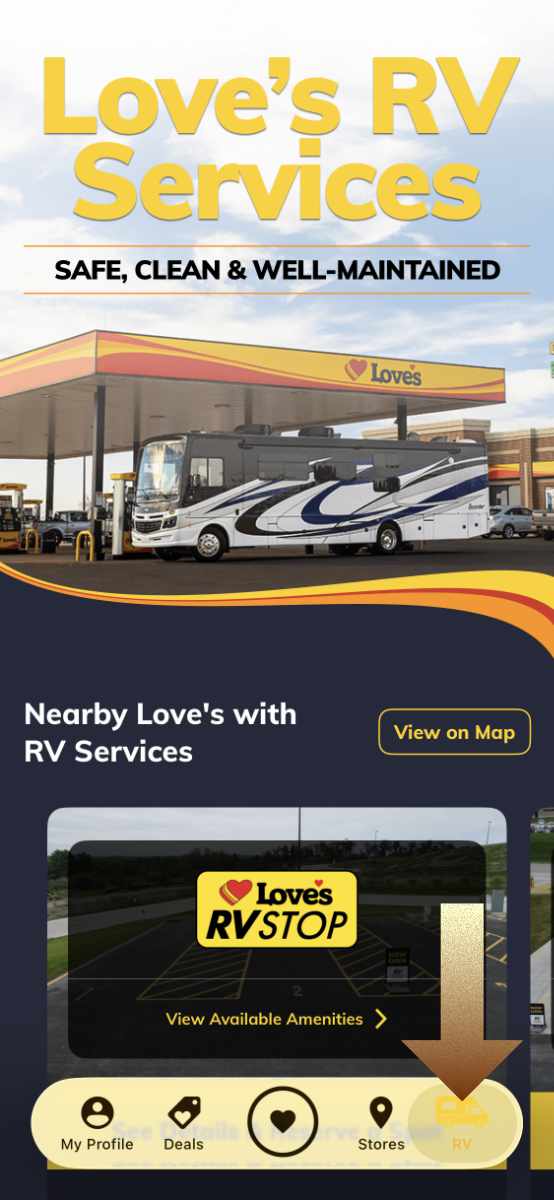
Something consistent in all of their RV facilities is how easy it is to book them. Using the Love’s app, you can simply find a Love’s Travel Stop and book the site right there in the app. The only other system that’s even close to as good as this is KOA, but the Love’s app is the best I’ve experienced.
When you get to your site, you simply check in with the app or a kiosk, and the water and electric are turned on for you. If there are sewer hookups, the sewer connection is unlocked automatically.
At spots where there aren’t sewer hookups at the site, most Love’s have a central dump station, and many of them also offer propane fills as well. I’ve loaded up on propane plenty of times at Love’s.
More locations with fast food
The company is also offering more and more locations with one or two fast food offerings. I’ve seen choices of just about every fast food joint out there at Loves.
Since many of these are also truck stops, they offer showers, and some even have laundry facilities. If you have this vision of a truck stop shower as something you’ll need to take a shower afterward, you haven’t seen how fancy these shower facilities are. They’re nice.
If you listen to the podcast interview I’ve included below, you’ll notice that I mention the coffee multiple times. Love’s has these coffee machines that grind the beans for your specific cup of coffee. Many of the facilities have two of these with three bean choices each. They make some great coffee, by my standards (I’m pretty picky), and the price is really fair. Plus, if you ruin your coffee with creams and flavors and sugars and all of that, they have plenty of choices.
Something I should stay away from, but don’t, are the roller foods. If you picture one of those hot dog rollers from convenience stores of yore, you’ll know the device. But Love’s has a number of things they cook on these, and I’m a fan of all of them. I’m sure they’re not healthy, but life is a terminal condition as it is.
Peggy is particularly fond of their chicken offering, which is a slightly spicy and very tender package of chicken wings and drumsticks. We’ve probably eaten our weight in these over all our travels.
More offerings
Lastly, the company is also expanding the offerings in their facilities, including now offering RV tires and other things we RVers might find ourselves in need of along the way at some locations. There are also some facilities with huge truck washes, and they’ll gladly spiff up your RV for you.
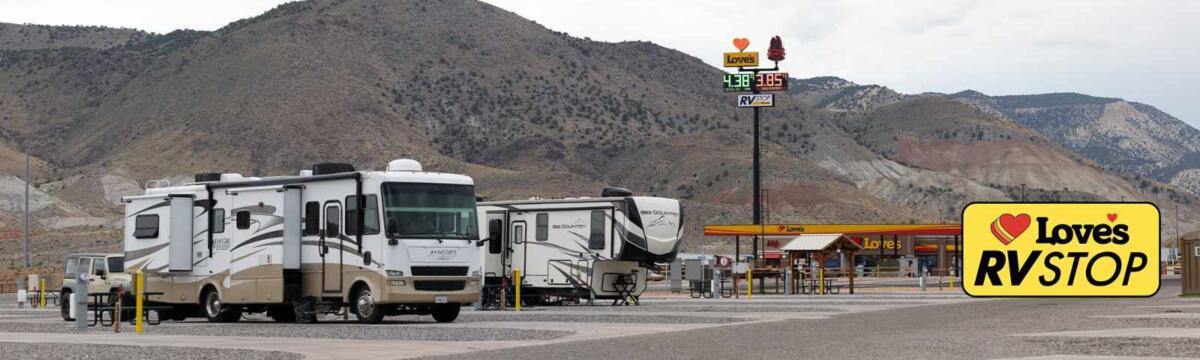
Loves RV Stop (from Love’s)
Who is Love’s?
Love’s is still a privately held company, much like Buc-ee’s, but the Love’s family actually likes RVers. Not that I’m casting aspersions on Buc-ee’s and their “F” rating from the BBB…
Something I’ve found is that it must be a positive experience to work at Love’s, as I’ve found the vast majority of their team members are really nice and polite, and can answer questions and such.
The good, the bad, and the noisy
Let’s be honest, first of all. These are not places I would choose as part of a vacation stay. In other words, they’re not some RV resort where you’re expecting some great peaceful setting along a lake.
What they are is a very, very convenient and well-maintained place to get off the road and rest in your RV.
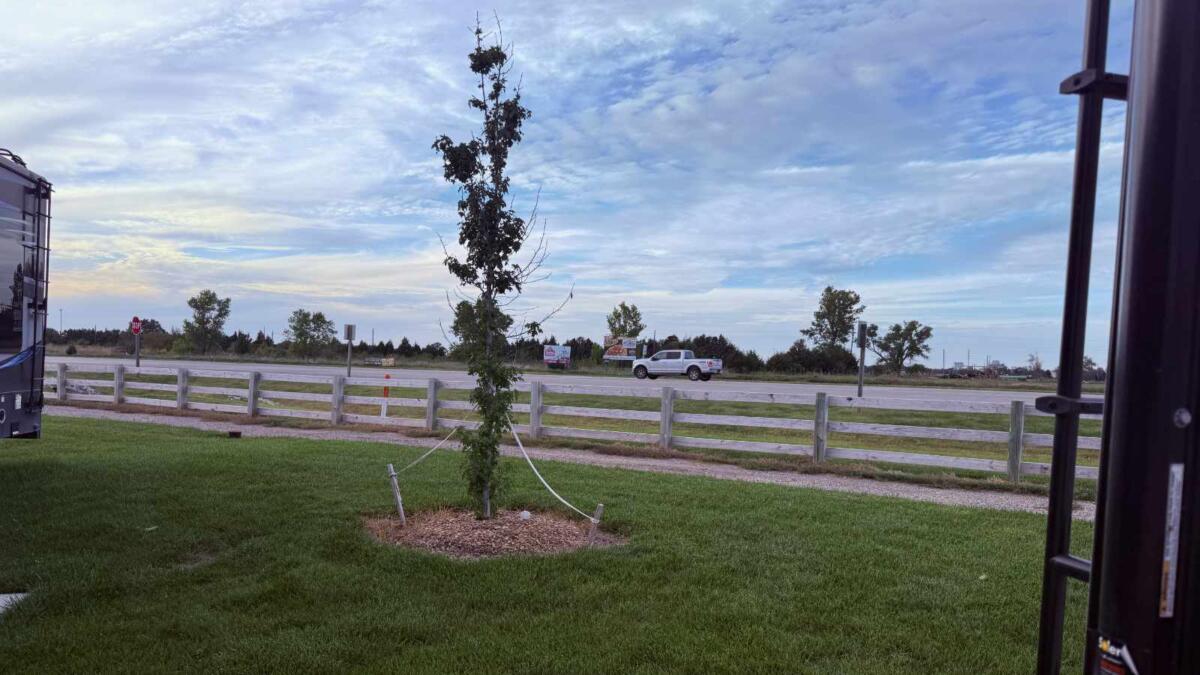
Almost all the Love’s locations are very close to a highway, so, naturally, they’re as busy as the adjacent highways. For the most part, they are very brightly lit, and there is continuous truck traffic. Depending on where the RV sites are located, this can be at some distance from where the trucks come and go—or almost right in the path of where trucks come and go.
They’re also not cheap. I’ve paid from the mid-$40s to the mid-$60s. But something that’s always true: everything works very well, the sites are level, and the place is clean. Since this is a newer venture for the company, the equipment is newer, too.
The goal is really to find a place to rest on your way to wherever you’re going, rather than to seek out a place to share in photos with your friends on Instagram.
But something I haven’t found is that availability is limited. Any time I’ve decided it’s time to get off the road and rest for the night, and there’s a Love’s RV stop, there is a place for me.
The other thing is, if it’s late at night, I can book a reservation right then. If it’s early in the morning, same thing. The adjacent Love’s convenience store and, more importantly, the bathroom therein is going to be open, well-lit, and clean.
Love's RV Stop
1 of 7
An overview of a Love's RV Stop (from Love's)
The Loves app has a specific area just for us RVers
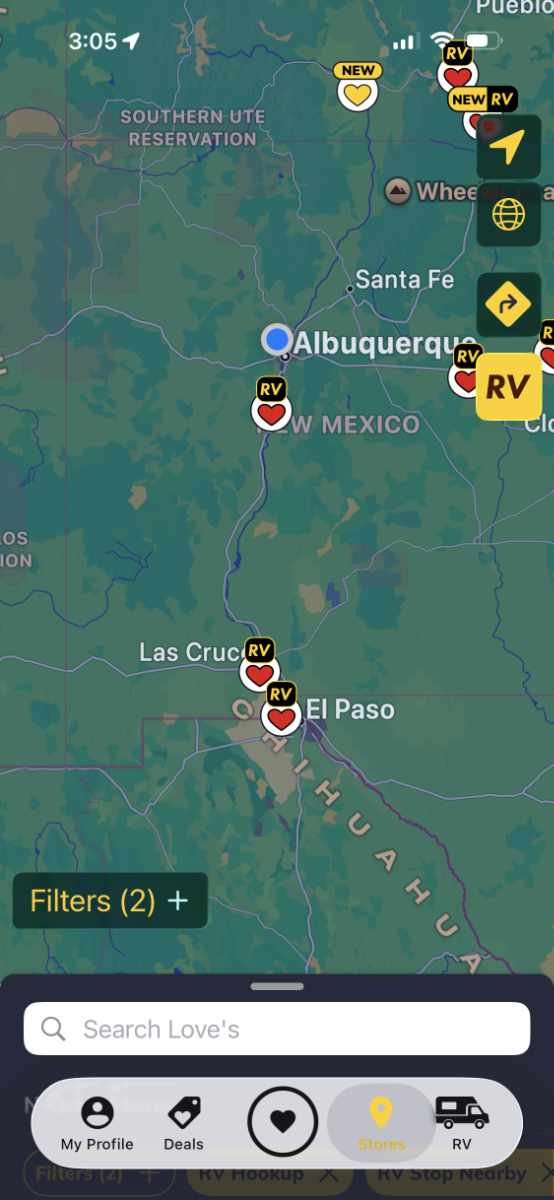
Looking at the Love's app's map where several RV-specific options are listed
Loves RV Stop kiosk check-in (from Love's)
Dog parks and nicer landscaping are present at many of the Love's RV Stops
One of the larger RV campgrounds adjacent to a Love's Travel Stop
Staying at a Love's RV Stop
Learning more about Love’s
If you don’t know, my wife and I do a weekly RV podcast where we try to learn from people in the RV space. We had the chance to speak with Jim Wheeler, Director of RV Operations for Love’s. I’ve included the video interview here, but you can also listen to our audio-only interview with Love’s here. Heck, you could even subscribe to our weekly podcast! What a great way to while away the miles.
While I don’t think that the Love’s RV Stops are going to supplant traditional campgrounds any time soon, I do believe they offer something good. Many of us still don’t make plans before we leave, or don’t plan all the stops, and find ourselves weary after all those miles. With how easy it is to book at Love’s RV Stop and how dependable they are, there is definitely an appeal there. We’ve stayed a number of times and likely will do so again in the future.
My mother-in-law could tear a large Las Vegas phone book in half. Really! I wish I had her amazing hand strength!
Maybe you, too, struggle a bit while RVing because of poor grip strength or arthritis. If so, you should know that many devices and gadgets can help! Read on, and you’ll see!
Why assistive gadgets help
Medical experts who focus on hands and joints emphasize two simple principles. Reduce pinch/grip forces and use leverage or larger handles to shift work to your bigger muscles and joints.
Outdoor RV helpers
Here are some helpful items that may help with outdoor RV chores:
Shore power cords with handles
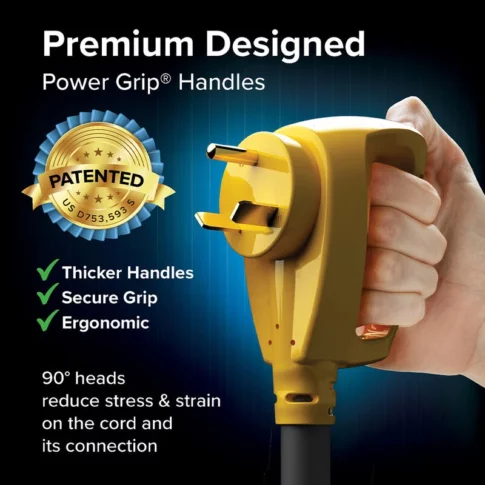
Choose shore-power cords or replacements that have molded pull handles. They make plugging and unplugging your RV power cord much easier than grabbing a small plastic connector. You’ll use much less force with a cord that features an easy-grab handle, like this one.
Quick-disconnect hose fittings
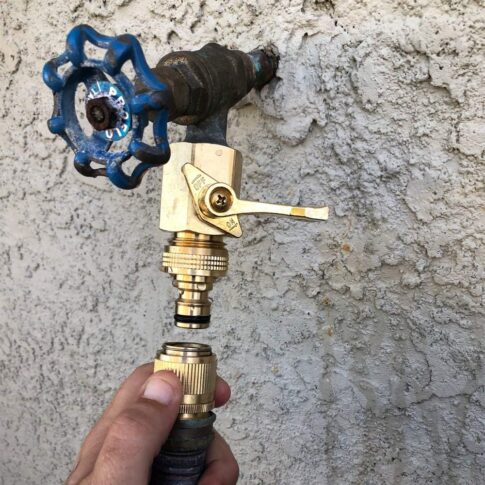
Quick-disconnect hose fittings let you snap your freshwater hose to a hookup without threading tiny threads by hand. Look for brass heavy-duty quick-connect sets made for RVs like this one.
An easy-grip sewer wrench
A sewer wrench can be a huge help when it comes to emptying tanks. The extended handle provides extra leverage to easily remove and/or tighten the sewer cap. There are many different kinds to choose from.
Hose/cord cart/wheel
A small portable reel or wheeled water hose cart eliminates heavy bending and hand-twisting when you stow or remove the water hose from your RV. Lightweight retractable reels or wheeled reel carts may reduce strain.
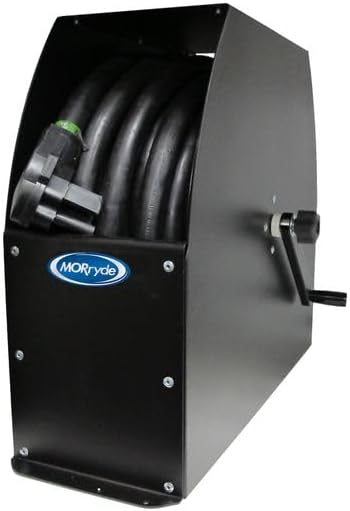
You can also purchase a manual hose reel for your electrical cord. Or check with your RV manufacturer to see if they offer an after-market automatic electric cord reel for your RV model. While a bit pricey, these eliminate the hassle of lugging that heavy electrical cord!
Foldable hand trucks/wagons
Instead of handling 5-gallon water jugs, park chairs, or a bundle of firewood, use a fold-flat hand truck. A hand cart makes a single-person load much safer. Plus, it folds to store neatly in your RV’s basement or under-bed storage space. Check out the Magna Cart folding hand trucks.
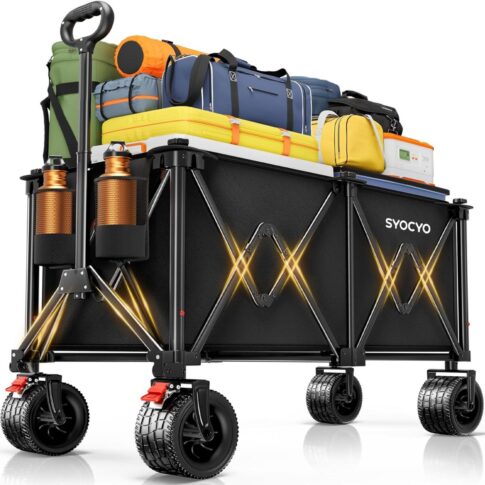
Another item that saves your hands, arms, and back is a collapsible wagon. I like this one because it has wide tires that easily travel in sand or gravel and has a large carrying capacity, as well. You can use it to carry laundry to the wash house, wood to the campfire, or get your picnic, towels, and blanket down to the beach! Afterwards, the wagon collapses to be stored in your RV’s basement.
Bucket caddy
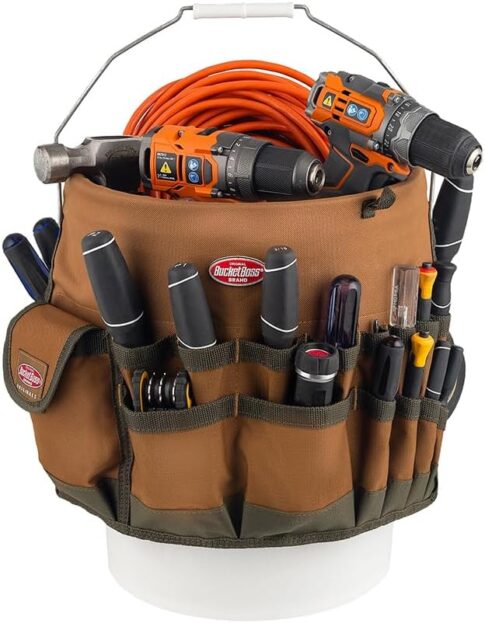
Another handy item is a bucket caddy. This one fits on a 5-gallon bucket to easily carry tools without schlepping them awkwardly in your arms. To make the caddy easier to carry, modify the handle with a short piece of electrical insulation or a small section of pool noodle, slit the long way. The larger modified handle will make carrying your load much easier.
Extra key grip
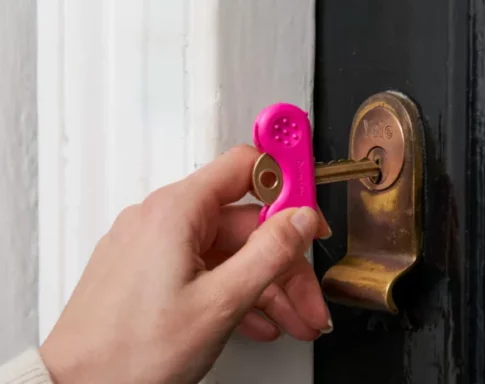
Just recently, I learned about keywings. These ingenious “wings” fit over the head of a key, giving you greater grip and leverage for opening RV storage locks and other locks, too.
Inside the RV
Jar openers
I’ve nearly come to tears trying to open a pickle jar (and other jars, as well). That’s where a compact manual jar opener with a nonslip base will remove lids without requiring a strong twisting force. Jar openers are simple, well-reviewed manual helpers.
Additionally, those who need help opening water bottle lids will find this gadget helpful, and those who have trouble opening their pill bottles will appreciate this.
Doorknob swap
You can make your life a bit easier by swapping round RV interior doorknobs for lever handles. They make entry and interior doors operable with a forearm or one-finger push. If cabinets and drawers are difficult to open, consider swapping them out for a different style.
Special adaptive tools
Utensils, screwdrivers, drawer pulls, and more that feature chunky, soft grips reduce gripping force. Larger diameter handles and lever tools will help protect small finger joints. Search online for “adaptive” or “arthritis” levers and more. Here are some to start your search.
Hand-strengthening moves
Most hand specialists and arthritis organizations recommend gentle, regular exercises that preserve the range of motion and slowly build strength. There are small hand and grip strength gadgets to help.
Start slowly and stop if you trigger a painful flare. Check with your clinician before beginning any new exercise program. Clinically recommended exercises include gentle fist/clench-and-release, finger bends and straightening (finger tendon glides), thumb stretches and squeezing a soft therapy ball for short holds. The Arthritis Foundation and Mayo Clinic offer step-by-step hand exercise guides and photos you can follow.
With a few gadgets, modifications, and perhaps a little exercise, your RV experience can be much less frustrating and so much more enjoyable!
Do you use any of the gadgets or modifications described in the article, or additional accommodations that were not mentioned? Tell me in the comments below.
If you travel the kinds of remote desert highways RVers know well, a desert highway crash isn’t something you expect to come upon—but it’s something you should be ready for.
We were still thinking about getting home when we drove into the dust.
It hung across the highway like a curtain—thick, tan, and sudden. Visibility dropped to almost nothing as we climbed into a sweeping grade. Then came the jolt. We hit something in the road. Not hard enough to lose control, but enough to make your hands tighten on the wheel and your brain start asking questions.
We cleared the dust and pulled over.
So did a handful of other drivers. People stood outside their vehicles, looking back into the haze. Nobody seemed quite sure what had happened—only that something had.
We turned around.
Coming back down the grade, the scene came into focus fast. The dust hadn’t come from the wind. It had come from the crash itself.
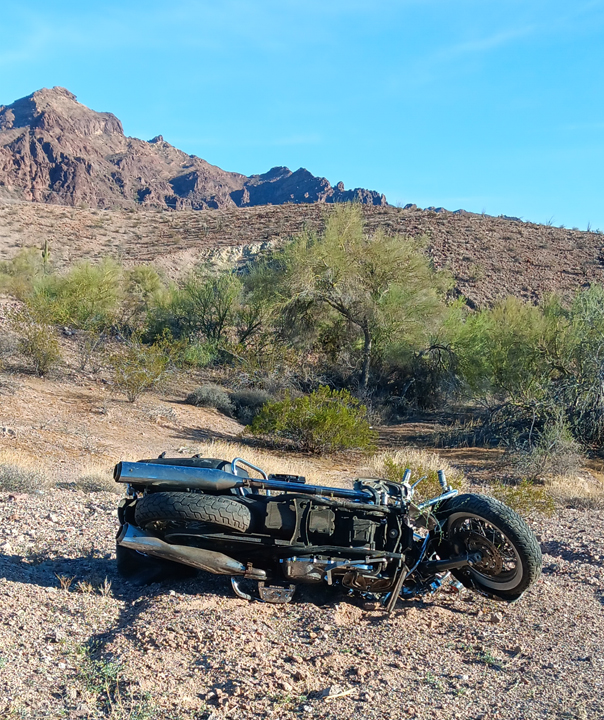
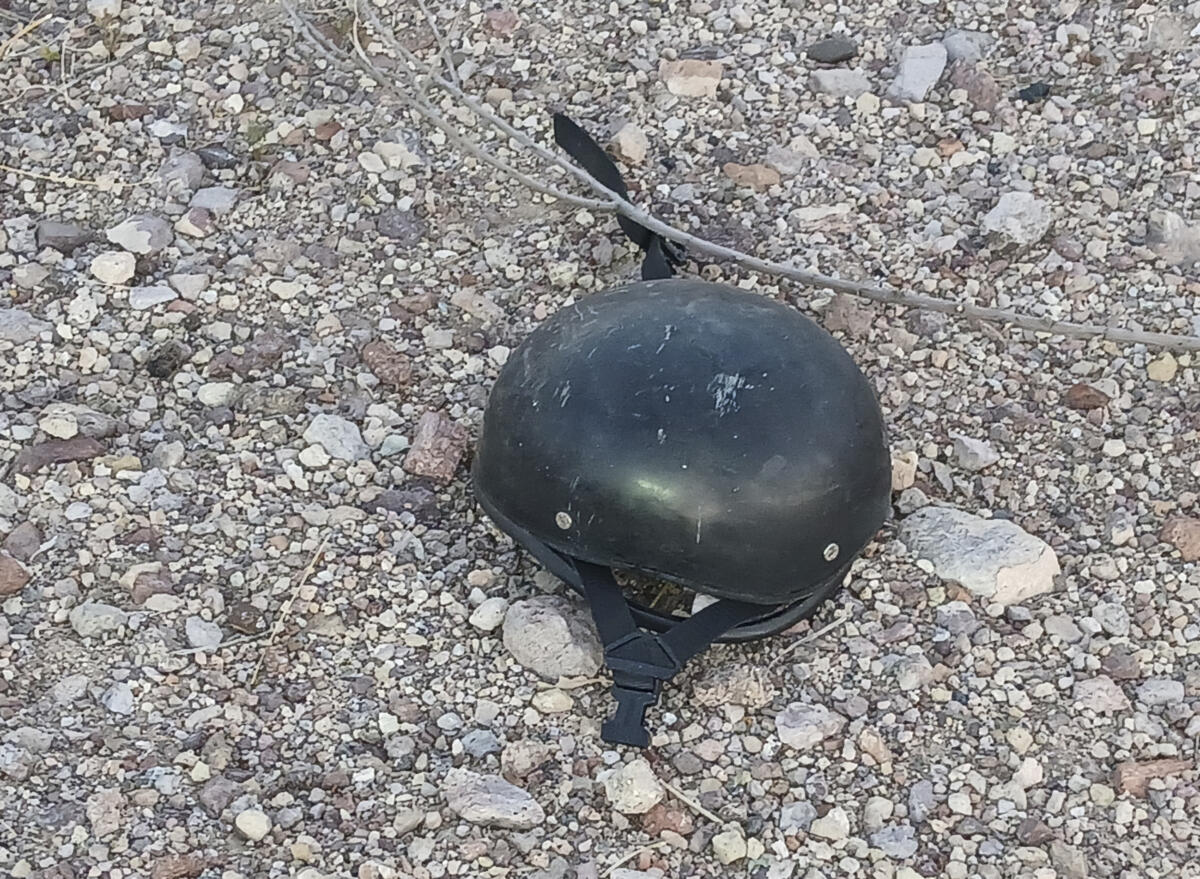
A motorcycle lay off the roadway. The rider—his helmet no longer on—was face down, motionless except for a rough, ragged breathing that carried farther than it should have in the open desert.
Two people were already there.
One, a young man who’d been driving a converted bus, had pulled off immediately and run back. He was on the phone with emergency dispatch, relaying what he could see. Another man stood nearby, helping keep an eye on things.
And then there were the rest.
A line of vehicles. People standing. Watching.
It wasn’t indifference. It felt more like uncertainty—like everyone was waiting for someone else to know what to do.
The moment you realize: This is on us
R&T De Maris photo.
Out there, about 30 miles from anything resembling a town, it hit hard: Help wasn’t going to arrive quickly.
The rider had come down the grade fast, lost control in the curve, crossed the median, and gone down hard beside the road. The impact had thrown up enough dust to obscure part of the highway—and had knocked his helmet free.
There was no ambulance already on the way from a nearby station. No quick response around the corner.
Just us. And a phone call.
The man on the line with dispatch was doing exactly what needed to be done—answering questions, staying calm, passing along instructions. It anchored the scene. Without that, things could have gone sideways fast.
What we could do—and what we couldn’t
For a while, there wasn’t much we could do.
He couldn’t respond. He couldn’t tell us what hurt or what didn’t. But the sounds he made—the labored, uneven breathing, the low moans—made it clear he was in serious pain.
So we did what we could.
We talked to him. Steady, simple words. Letting him know he wasn’t alone, even if we didn’t know whether he could hear us.
It was a hot desert day. No shade. No cover. So we made some—standing where we could to block the sun, using our own bodies to give him a little relief from the heat.
It didn’t feel like much.
But out there, in that moment, it was all we had to give.
When emotion collides with reality
At one point, a woman pulled up, jumped out of her vehicle, and hurried straight toward the rider.
She wanted to help. You could see it immediately.
But she also wanted to act—right now. She moved in to touch him.
The man on the phone raised his voice: “Don’t touch him.” Dispatch was concerned about possible spinal injuries. Moving him could make things worse.
That’s when it turned.
What started as urgency turned into confrontation. She pushed back. Voices rose. For a moment, it felt like the scene might fracture into chaos.
It didn’t—but only because a few people held their ground and kept things focused.
Eventually, she stepped away. But it was a sharp reminder: Good intentions don’t always lead to good outcomes in a crisis.
The long wait nobody plans for
It took nearly half an hour for a state trooper to arrive.
When he did, something else became clear.
Even the first responder was working within limits.
He brought his med kit. He took control of the scene. But he also admitted, plainly, that there wasn’t much he could do. There was no active bleeding to address. No obvious intervention beyond positioning and monitoring.
He had us help straighten the rider’s legs. Then we carefully rolled him onto his side—keeping his airway more protected—and one of the men stayed there, steadying him to keep him from rolling back onto his stomach.
And then we waited some more.
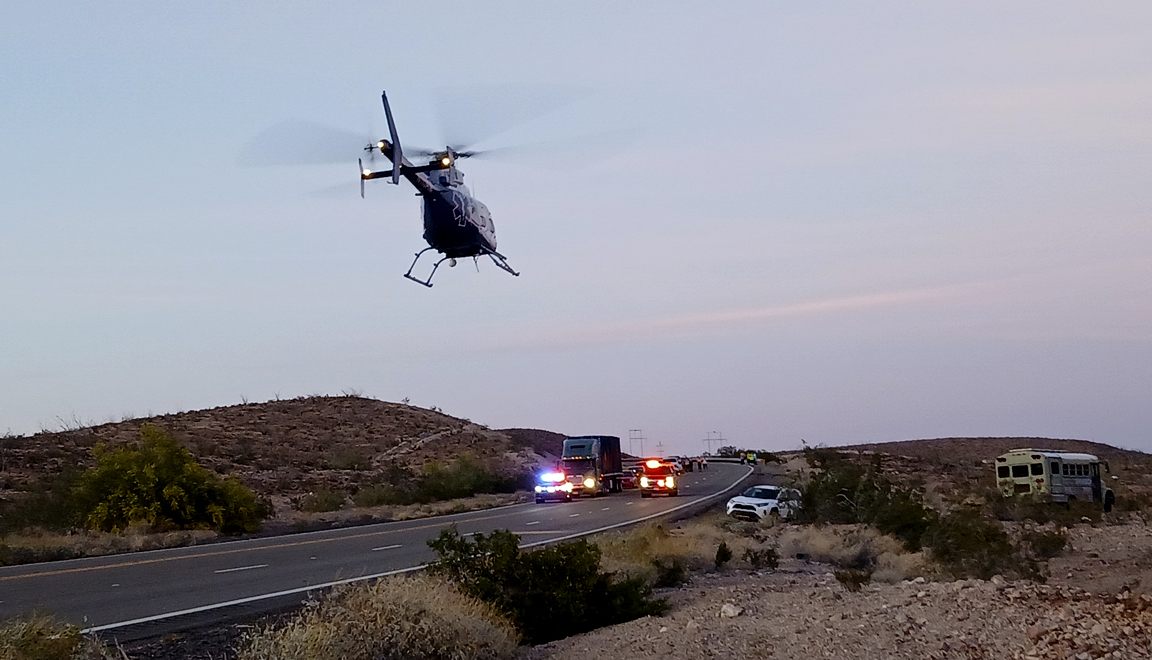
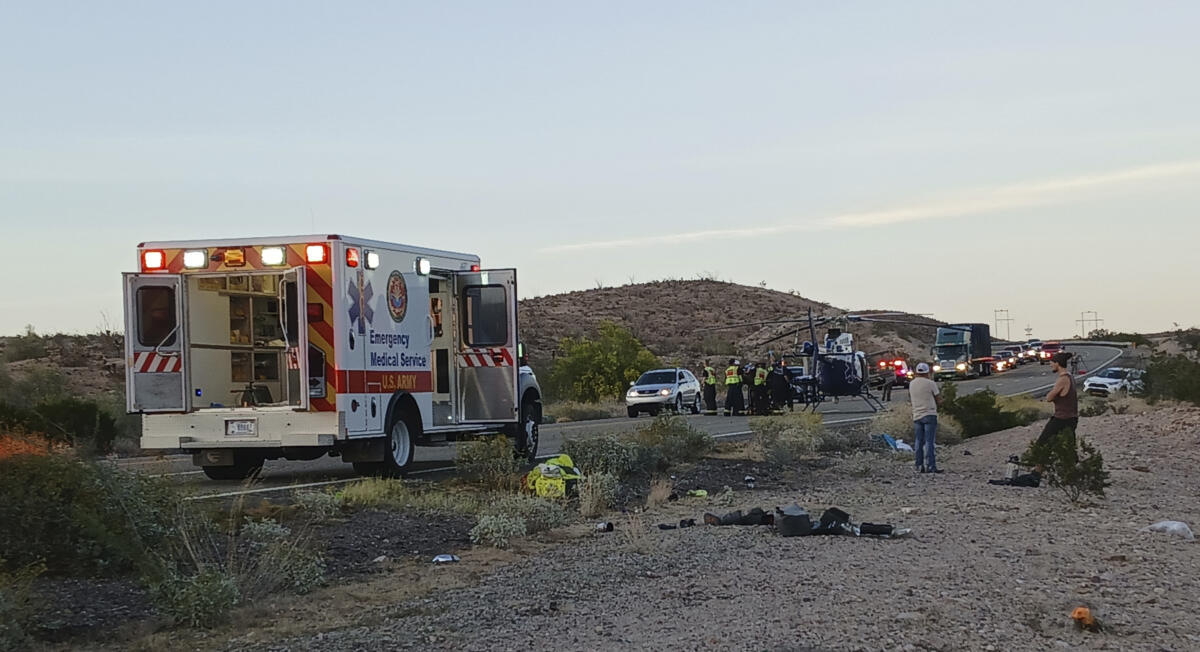
It was still another 15 minutes before help from a nearby military installation arrived—an EMT team and fire apparatus finally bringing the kind of support the situation really needed.
Out there, even when help shows up, it doesn’t always mean the problem is solved.
One more thing we hadn’t considered
By the time the rider was being stabilized in the medic unit, waiting for airlift, another piece of the response showed up.
An accident reconstructionist.
At first, it wasn’t obvious why that mattered. The scene already felt crowded with enough urgency. But then he began looking over the roadway—and it became clear just how much the details mattered.
Parts of the motorcycle were scattered across a wide area. Pieces of gear lay where they had landed. The path of the crash was written out across the pavement and shoulder.
He made a point of saying he appreciated that people hadn’t been moving things around.
And for the few items that had been moved—out of the roadway or out of immediate danger—we were able to show him where they had originally been.
It was one more reminder that even small decisions in those moments can carry weight later.
If you ever find yourself first on scene
R&T De Maris photo.
We’re not medical professionals. But after what we witnessed, a few basics stand out:
Call for help immediately. Give clear location details—mile markers, landmarks, direction of travel.
Protect the scene if you can do so safely. Slow traffic, use flashers, keep others from walking into danger.
Follow dispatcher instructions. They’re your lifeline to trained response.
Keep the area calm and controlled. Fewer people doing the right thing beats many people doing different things.
The hard truth
R&T De Maris photo.
We like to think help is always close.
On a desert highway, it isn’t.
Out there, for a while at least, help looks like whoever is willing to stop, stay steady, and do what they can—no more, no less—until something better arrives.
By Cheri Sicard
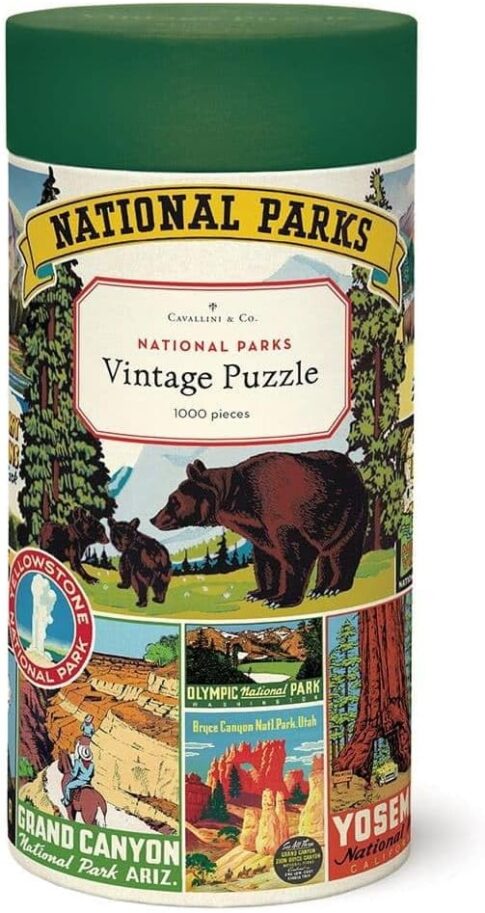
New River Gorge National Park and Preserve in West Virginia is known for hiking, climbing, paddling, and even base jumping. Until recently, it was called New River Gorge National River, which raises a question: Why do some places become national parks while others become national rivers, monuments, or something else?
Those names are not random. In many cases, a National Park Service designation hints at what a place protects, what visitors can do there, and how the land gets managed across its boundaries.
In the video at the end of this post, the team from National Park Diaries explains all.
The big nature designations: parks, preserves, and reserves
National parks are the best-known units in the National Park Service system. They often protect large areas with multiple resources, including natural, cultural, and historical features. Because the rules usually block activities like mining or hunting, national parks tend to be among the most protected public lands in the U.S. That’s why places like Yellowstone and Grand Canyon sit in this category, along with less-visited parks like North Cascades and Dry Tortugas.
National preserves look similar on a map, but the management rules shift. Preserves can allow extractive or consumptive activities such as hunting, mining, or oil exploration, depending on the law that created them. In Alaska, it’s common to see a national park paired with a preserve so that hunting can be allowed in the preserve portion.
National reserves also protect large, resource-rich areas. The National Park Service typically manages them with state or local partners, often through funding or technical help. Only two exist: City of Rocks National Reserve (Idaho) and Ebey’s Landing National Historical Reserve (Washington). New River Gorge’s recent change created a national park and preserve combination, and it was approved in the Lower 48 for only the second time. The other national park and preserve is Great Sand Dunes National Park and Preserve in Colorado.
National monuments and the recreation-focused units
National monuments can confuse people because they cover a wide range of places. They’re also the only National Park Service units a president can establish using the Antiquities Act. (Congress can create them, too.)
Monuments often focus on protecting a single key resource, rather than the broader mix common in national parks. Some monuments are not managed by the National Park Service at all, such as Bears Ears (U.S. Forest Service) and Grand Staircase Escalante (Bureau of Land Management). Within the park system, examples range from Devil’s Tower in Wyoming to the Statue of Liberty in New York City.
National recreation areas put recreation at the center. Boating, hunting, and fishing often show up directly in their enabling laws. Many started around reservoirs created by dams, but the label also fits urban places like Golden Gate National Recreation Area in San Francisco and Gateway National Recreation Area in New York City.
National lakeshores and national seashores also offer recreational opportunities, especially for water and beaches. They often include extensive facilities like roads and parking for access. All four national lakeshores sit on the Great Lakes, while national seashores stretch along the Atlantic, Gulf, and Pacific coasts.
Rivers, trails, and scenic drives
National rivers and wild and scenic rivers are closely related in purpose and management. Both come out of the Wild and Scenic Rivers Act, which protects free-flowing rivers and nearby lands by avoiding dams and major obstructions. Paddling is the headline activity, but hiking is common, too. Hunting can be allowed in some places, depending on the enabling legislation.
National scenic trails protect long-distance footpaths under the National Trails System Act. Only three are managed as full units by the National Park Service, but the best-known example is the Appalachian Trail, which runs through 14 states from Georgia to Maine and draws millions of hikers each year.
National parkways are built for scenic driving. These roadway corridors and nearby parklands let people experience views from the car, including routes like the Blue Ridge Parkway, famous for overlooks and fall color.
Historic places, battlefields, and memorials
National historic sites usually protect specific buildings or smaller places tied to history. One unique example is an international historic site managed by Parks Canada: Saint Croix Island, near the Maine and New Brunswick border, tied to an early French settlement.
National historical parks work similarly, but they’re often bigger, with multiple structures or wider landscapes.
Four military designations cover war-related places: national battlefields, the single national battlefield site, national battlefield parks, and national military parks. Many are tied to the Revolutionary War or Civil War, including Antietam, Gettysburg, and Cowpens. Size varies, even within the same label.
National memorials are commemorative and honor people, places, or events. About one-third are in Washington, D.C., partly because a memorial does not have to sit where the event happened.
To go beyond these 19 labels, the National Park Service also uses 11 other Washington, D.C.-area designations, plus affiliated areas that are usually outside the formal system but may receive National Park Service support. For more background, the Congressional Research Service breaks it down in this report on National Park System designations.
Once the labels make sense, park names start to read like quick summaries of purpose and rules. New River Gorge’s shift shows how a designation can change what’s allowed without changing what people love about the place. With these 19 categories in mind, it gets easier to predict whether a site focuses on ecosystems, recreation, history, or remembrance. The next time someone plans a trip, the designation can help set expectations before they ever arrive.
We recently received this message from reader Susan L. Coincidentally, around the same time, we came across new research showing that solo travel is on the rise. Read Susan’s letter and our article below, then please consider leaving a comment to share your thoughts with her—we know she’ll appreciate it.
Scared to be a solo RVer
“I lost my husband not long ago, and with him went my favorite travel partner.
“We spent years RVing together, but he drove the long stretches, handled the setup, and always made me feel safe no matter where we were. Now it’s just me, and while I know I can keep traveling, I’d be lying if I said I wasn’t afraid.
“The idea of driving long distances alone, pulling into a quiet campground after dark, or spending the night in a remote spot—it all feels very different now. Before, it was a fun adventure; now it seems like a scary adventure.
“Part of me doesn’t want to give this up. RVing was such a big part of our life, and I don’t want to lose that, too. Plus, I love our RV and would be very sad to sell it. But taking that first solo trip feels like a big step.
“Have any of you been in a similar place? How did you build the confidence to go on your own?
“I’d truly appreciate hearing your experiences.” —Susan L.
Solo travel is on the rise
If Susan’s letter struck a chord, you’re far from alone.
Solo travel may be growing in popularity, but that doesn’t mean it comes easily. In fact, a recent survey from Talker Research found that while half of Americans have traveled solo, more than a quarter still find the idea daunting. And for many—especially women and older adults—the hesitation is very real.
Safety concerns top the list. About 26% of people say that’s their biggest worry, followed closely by cost (25%) and simply the fear of being alone (23%). Even specific situations feel intimidating: Walking at night, staying somewhere unfamiliar, and driving long distances all rank high among people’s concerns.
If you’ve lost a travel partner, those fears can feel even heavier.
What’s especially important to remember is this: The same study found that older adults are actually leading the solo travel trend. More Baby Boomers and members of the Silent Generation have traveled solo than younger generations. In other words, many people in the RV community are quietly doing exactly what might feel so difficult right now.
And here’s the encouraging part: Most say it’s worth it.
Among those who have traveled solo, 70% said they would do it again. Many reported feeling more independent, more confident, and even more connected to themselves afterward. Others said solo travel gave them the space to recharge and grow in ways they didn’t expect.
That doesn’t mean jumping straight into a cross-country solo trip. Many experienced travelers suggest easing into it: shorter drives, familiar campgrounds, arriving before dark, and staying connected with friends or family along the way. Some even mix in group experiences or caravan-style travel to build confidence without feeling completely alone. There’s no one right way to ease into it.
If you’re feeling hesitant, that doesn’t mean you’re not capable; it just means you’re human. As one travel expert put it, solo travel “takes a lot of courage,” especially for women and older adults. But it can also be deeply empowering.
And perhaps most importantly, you don’t have to figure it out alone.
What’s your advice?
If you’ve been in this position before—especially after losing a partner—your voice could make all the difference to someone like Susan reading this right now. How did you take that first step? What helped you feel safe and confident again?
Think back. Did your car, truck, or motorhome ever feature a wackeldackel?
The German word wackeldackel translates to “wobbling dachshund.” This vehicle accessory originally featured a small dachshund pup with a cheerfully bobbing head.
Nodders, wackeldackels, and bobbleheads
The wackeldackel is linked to a much older idea. Versions of “nodder” figures go back centuries and have been linked to different cultures. In 17th-century Asia, for example, “temple nodders” featured Buddha and other religious figures. Germany produced bobbleheads as early as the 1920s and exported many to the U.S. By the 1950s, the popularity of nodders had risen in the States.
In the 1970s, German cars sported a wackeldackel on their car dashboards or rear window shelves. The dachshund dog’s spring-mounted head wobbled with every bump in the road, making it a distinctive accessory—and a great advertising tool.
Again, in the late 1990s, the bobbing heads sparked a major comeback in advertising. One ad campaign reportedly sold hundreds of thousands of the little dogs in a matter of months.
Wackeldackel design
A wackeldackel’s design is quite simple. It consists of a stationary dog base that supports a pup’s head, which is affixed to the base by a spring or hook. This enables the head to move in response to a light touch. Over time, this basic bobbing design has been used for sports giveaways, promotional items, and even novelty figures.
Bobbleheads have become highly collectible and feature sports stars, cartoon and movie icons, school mascots, and even politicians. There are dogs and other animals, as well.
Bobbers today
What started as a novelty has morphed into many different iterations. Manufacturers and artisans worldwide now offer nodding-dog figures, pet-portrait bobbleheads, and other “bobbing” novelties.
To mount your wackeldackel on the dashboard, follow the manufacturer’s directions. Choose a spot that doesn’t interfere with airbag deployment or sightlines.
Once you’ve decided on placement, clean the area with isopropyl alcohol before applying any adhesive pad. Check the placement from time to time to ensure it remains securely attached.
Do you (or did you ever) have a wackeldackel in your vehicle? Tell us in the comments below.
Oh, come on. Is camping even fun without a campfire? Right, right. I forgot. Some of us hardly “camp” anymore. Plus, who wants to take the time to make the fire and spend hours cooking over it… the smoke in your eyes, the “hangry” drooling family members…
Oh, wait… That’s part of “camping”! And guess what? It’s still fun! Well, we think so, at least.
For some of you, cooking over a campfire is a must. It’s part of the experience—the crackle of the wood, the smell of something sizzling, maybe a cast iron skillet doing its thing or a foil packet tucked into the coals. It doesn’t matter if it takes longer… that’s kind of the point. Mmm… that smells goooooood.
Others take a more practical approach. You’ve got a perfectly good kitchen inside your RV, maybe even a grill outside, so the campfire is more for ambiance than cooking. It’s nice to sit by, but when it comes to meals, convenience wins for you.
And then there are those of you who fall somewhere in between. Maybe you cook over the fire occasionally—when the weather’s right, when you’re not in a rush, or when you’re in the mood to slow things down and enjoy it.
When you’re RVing, how often do you cook over a campfire? Once a week? Once a month? Rarely? Never?
After you vote, please tell us in the comments what you most often cook over the campfire.
We use cookies to ensure that we give you the best experience on our website. By continuing to use our site, you consent to accepting cookies. We NEVER have or will sell reader's data. For more info, please see our privacy policy page.