Home Blog Page 70

RV review: 2026 Lost Pines Sequoia—Tiny home or destination trailer?

Today’s RV review is of the 2026 Lost Pines Sequoia trailer. I hesitate to qualify this only as a destination trailer, although that’s the most likely use case scenario. But this is something we saw at the RV dealer open house last September, and we were really taken aback by it. You could easily also call this a tiny house, but it is much nicer than many examples in the tiny house genre. 

Essentially, this is a very large travel trailer that is also quite well equipped to be a destination trailer or tiny house. There are three variants in the Lost Pines family, with the Sequoia having no slide. The other two models do have slides, but I am particularly fond of the no-slide format for destination trailers. Seems silly to just leave all that weight hanging off the sides all the time. The Lost Pines trailers fall under Forest River’s Riverstone division and are marketed as a higher-end trailer. 

Interestingly, the model I saw at Open House had a mini split air conditioner. Aside from the really nice exterior appearance, I was thrilled to have seen that. However, the production versions now feature your typical RV rooftop A/C units, although they are Gree brand inverter heat pump units. So, they’re sort of like a mini split, but all in one unit. In the hotel business, these are called PTAC—they’re all-in-ones. 

I know we all wanna go inside. But first, let’s look at how this thing is built. 

Looking under the Lost Pines Sequoia

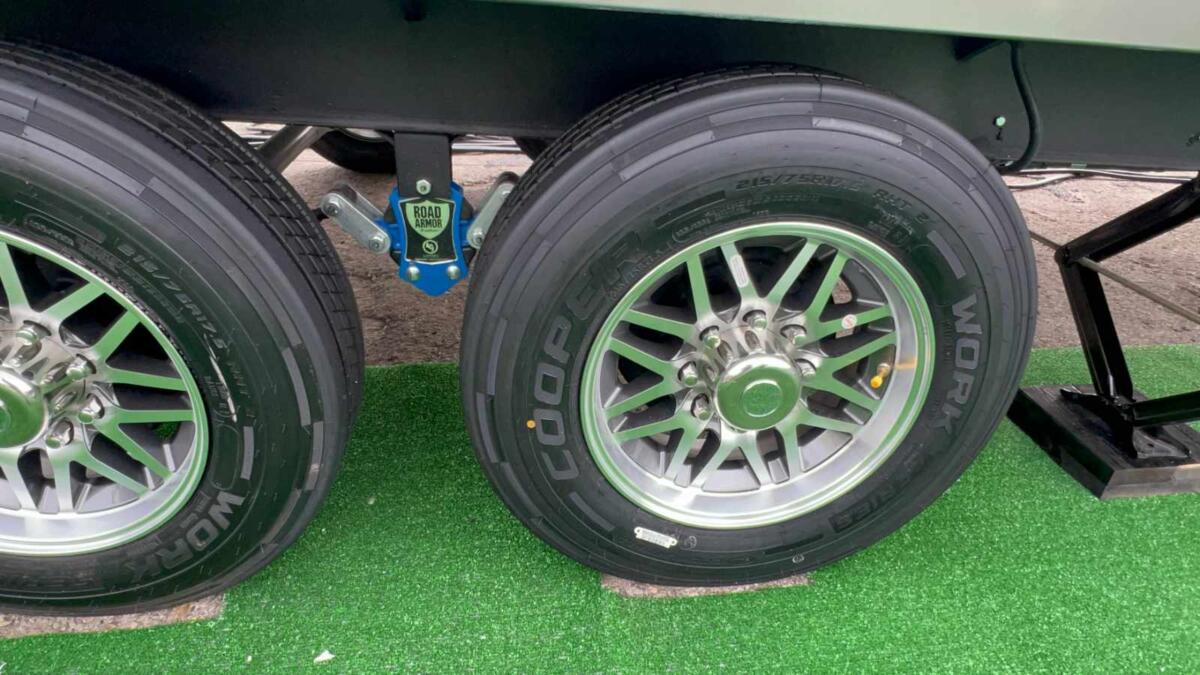
From the road up, this is a two-axle model using a leaf spring suspension with a better Lippert Road Armor upgrade. That means there are bolts that you can grease and a suspension that isolates this giant trailer more from the road. 

One of the interesting things about this trailer is that the entire tongue can be unbolted. So, if it has found a permanent home, you can just remove it. This isn’t that uncommon for destination trailers. 

The underbelly of this trailer is fully enclosed and heated, and there are also heat pads on the holding tanks. I also like that the gate valves for the holding tanks are within the confines of the heated and enclosed underbelly with a single connection point. 

When I saw the prototype, there was a wet bay on the side and the remote cable pulls were inside that compartment. But it seems they’ve been moved to the frame on the production models. Bummer, because if you do skirt this, you’ve now made it more difficult to open the gate valves. 

Someone at Forest River ought to send a spy over to the folks at Alliance. They have figured out that power-actuated dump valves are a feature worth having, especially if you’re throwing around the term “luxury.” 

Exterior

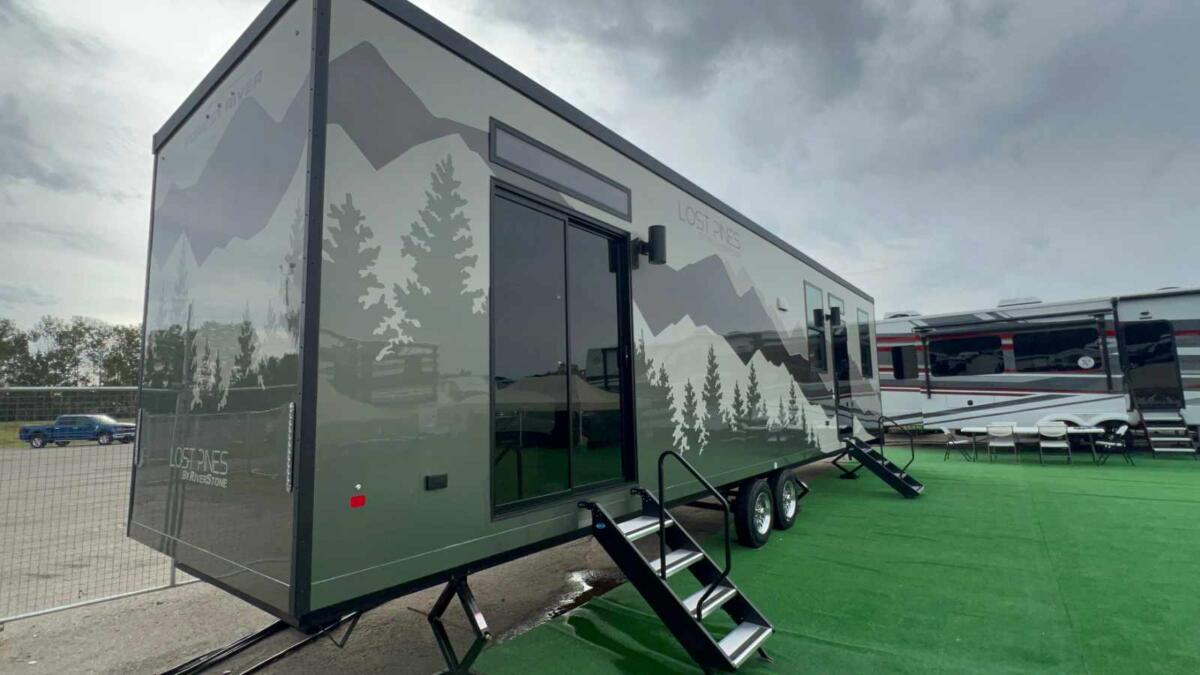
The exterior of this trailer is quite striking and, to my eye, in a good way. I know we all have our own taste, so I recognize this won’t be universally loved. But count me as someone who loves this appearance. 

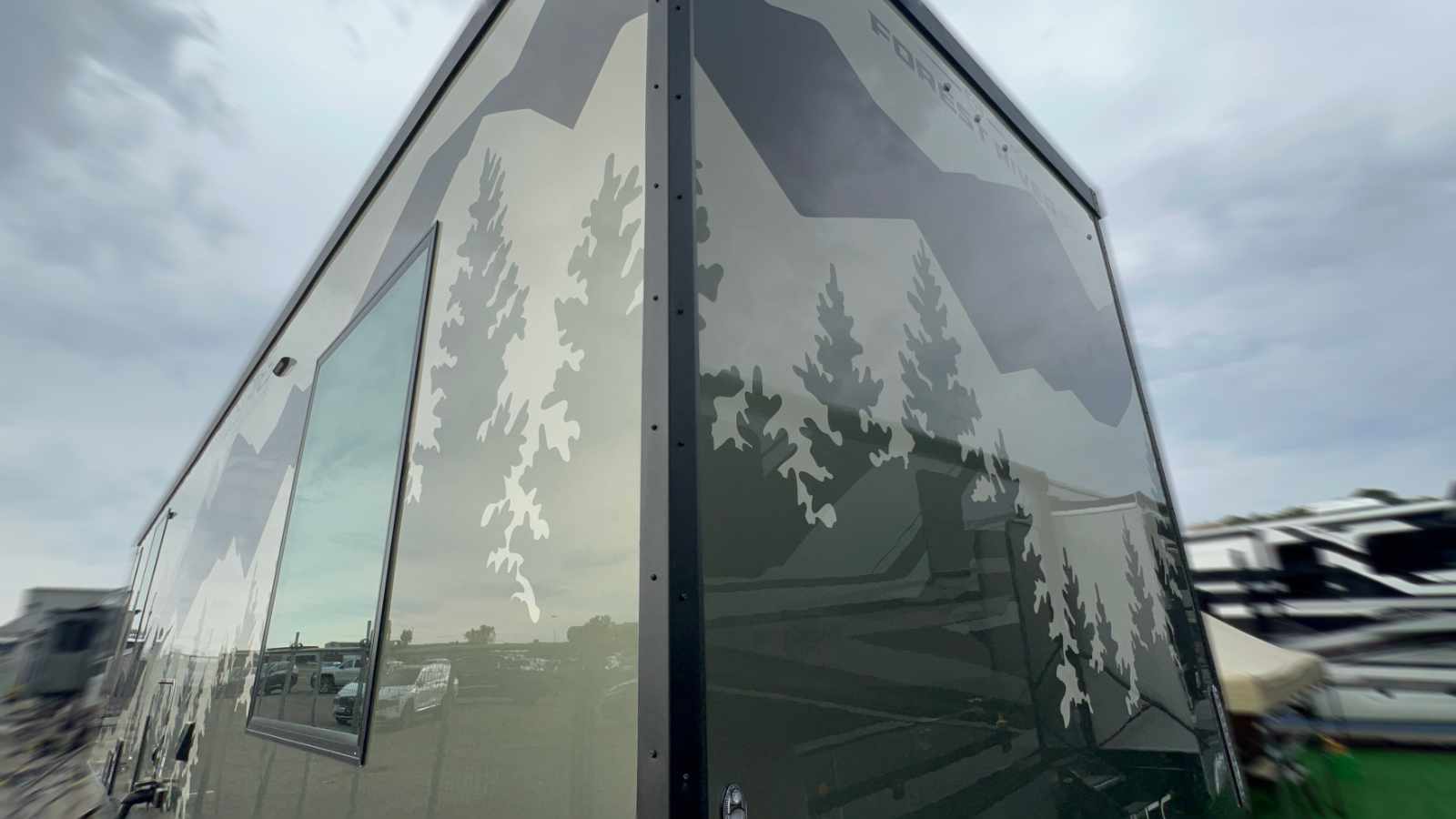
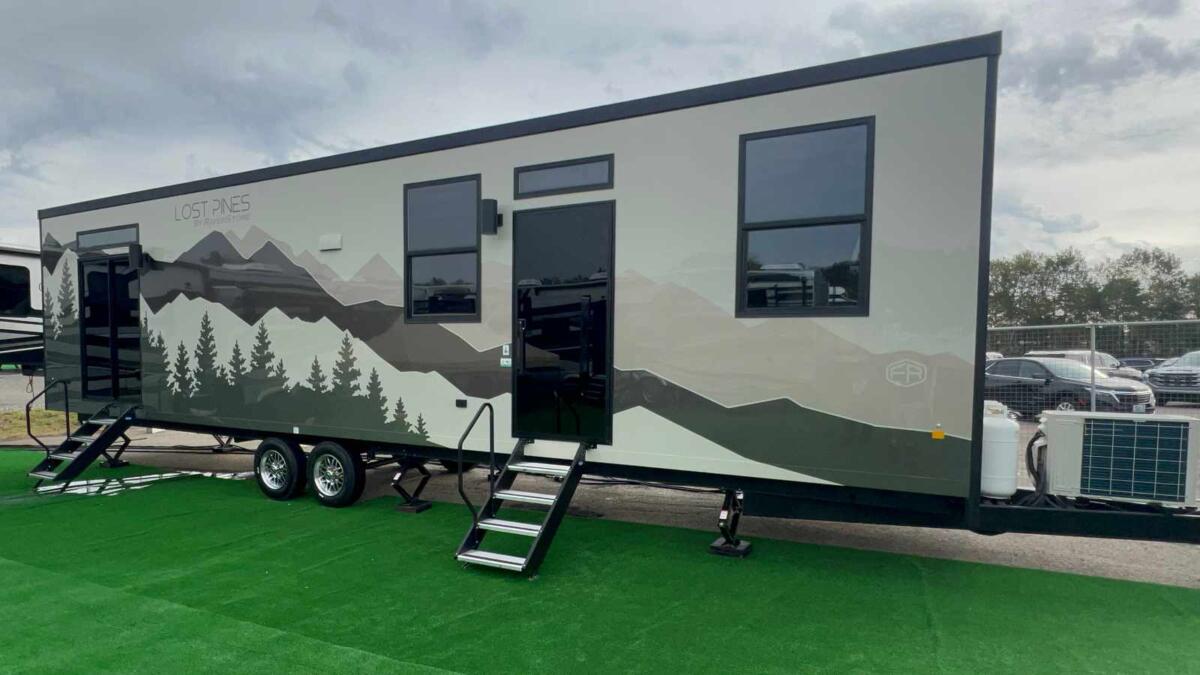
But it’s also a different way to build these things. The walls are 3” thick aluminum studded walls with the exterior having an Azdel substrate and then a high-gloss fiberglass finish. That finish is fully painted with this fancy foresty mountain scene—there are no stickers. 

Further, the corners are an aluminum channel, so there’s also no insert molding. That’s the plastic screw cover stuff which lasts about two summers here in New Mexico. The roof is fiberglass, so with all those details, this is likely to stay good-looking for years to come. Or stay unappealing. Again, your call. 

Another nice thing about the build of this is that the windows are all dual-pane, another nod to being well-suited to temperature extremes. 

On this floor plan, there are two entry doors, both of which are 38” wide. The steps are mounted to a hinge and are easily removed, which makes sense. Many owners of destination trailers don’t use the steps that came with their campers and choose to build a deck instead. But if you do use this as a travel trailer, you certainly can do so, although you’ll have to install and uninstall the steps. 

Oh, and the doors are those ridiculous units with an all-glass exterior yet normal-sized windows from the inside. Whoever thought black glass doors were a good idea needs to be fired, rehired, and fired again just to get the point across. Have you never, ever been in an RV in summer? 

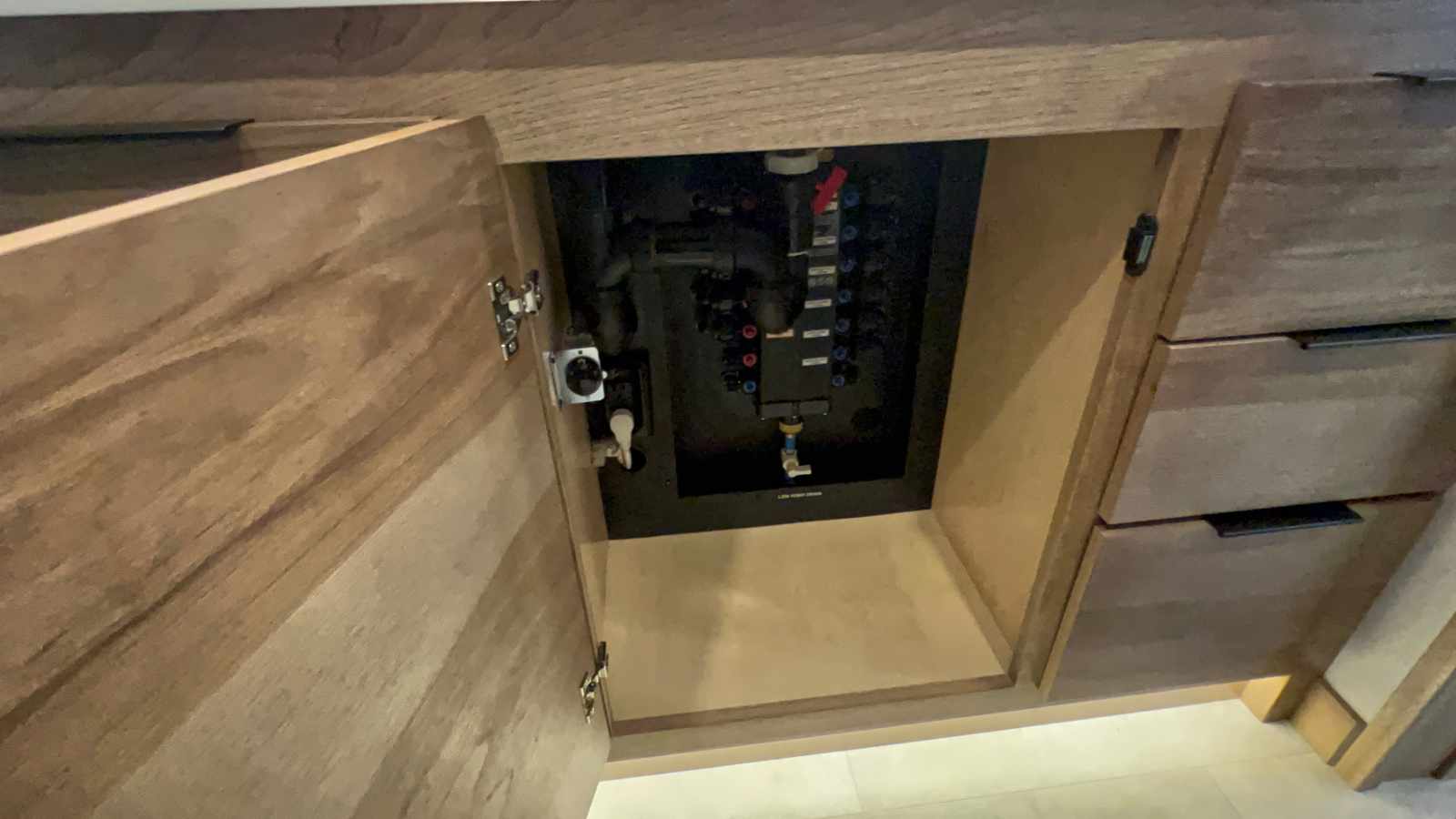
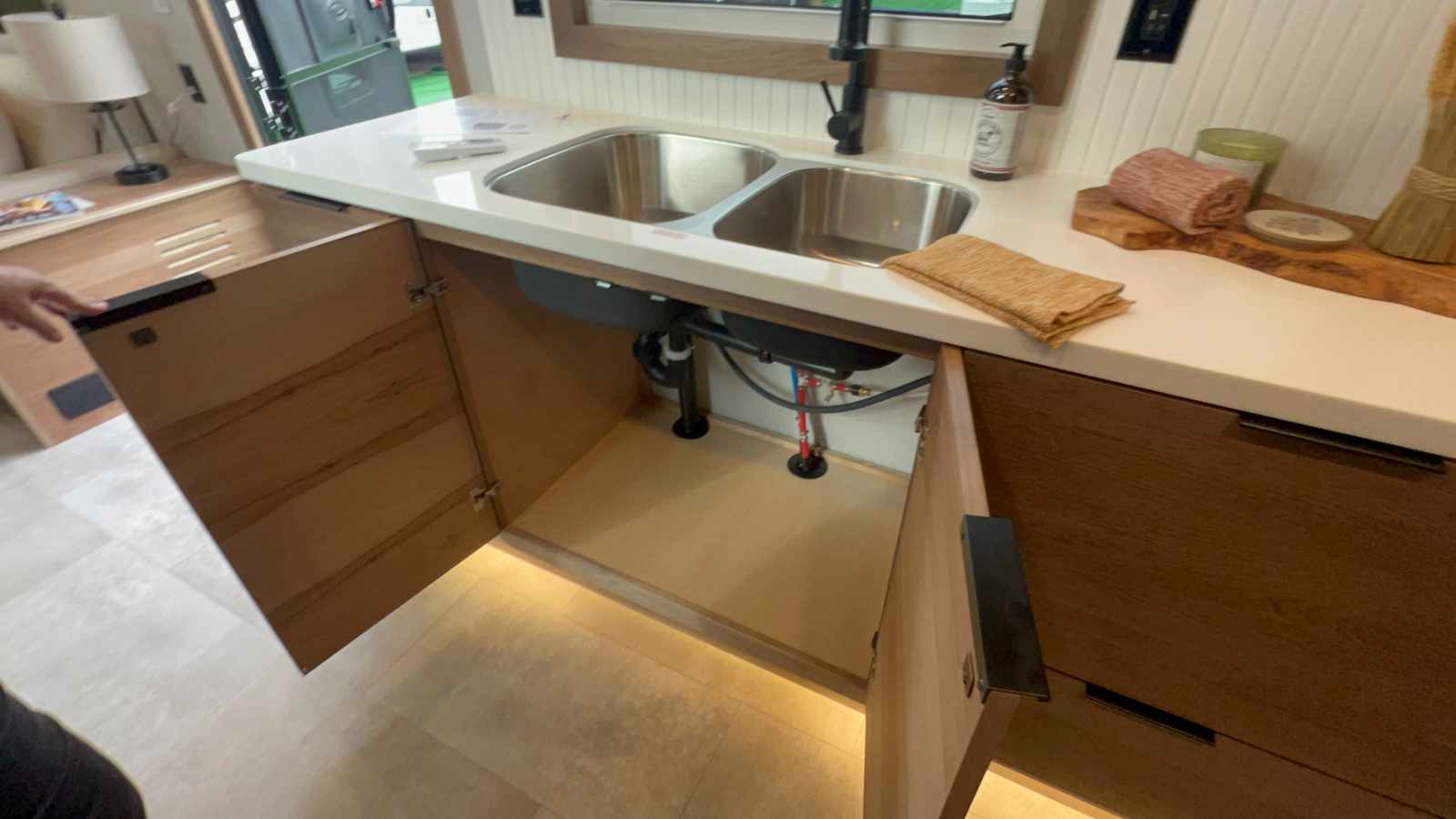
Something else I noticed was that there is a manifold plumbing system. That means you can turn off individual fixtures in this rig, so a leaky faucet or toilet doesn’t have to spell the end of your adventure. I was also quite surprised to see brass fittings inside. This is absolutely best-in-class plumbing. 
What’s inside the Lost Pines Sequoia 

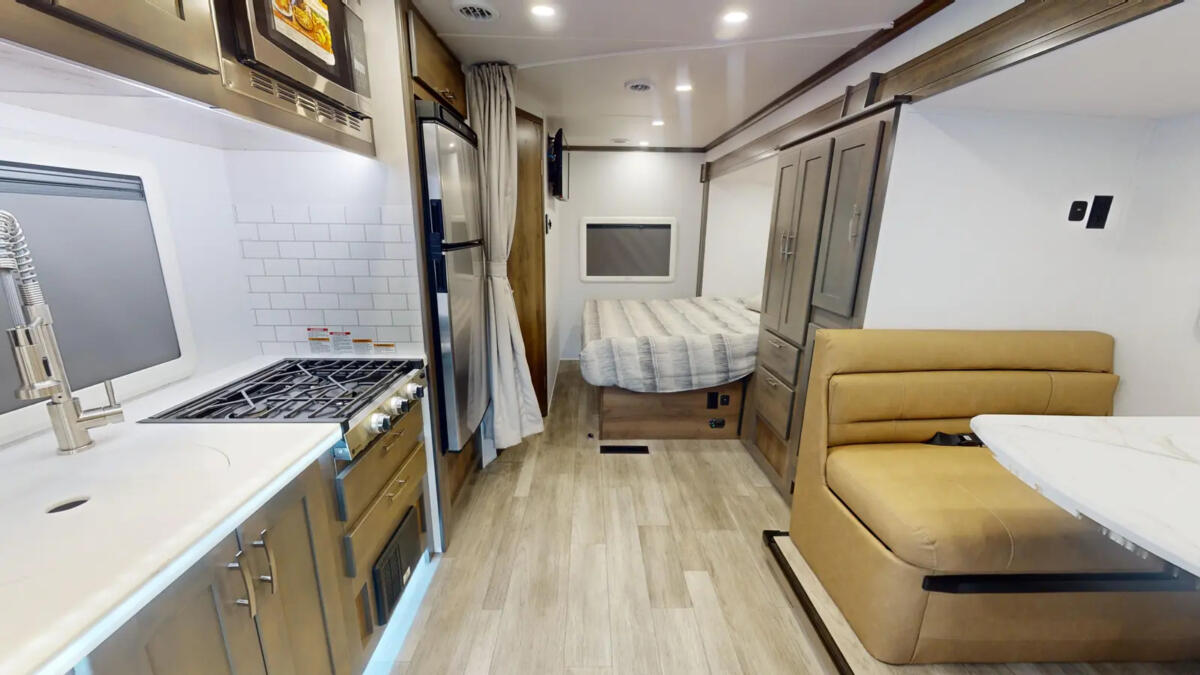
Forest River describes this as a luxury trailer. I always wonder what the criteria are for that term. There’s no butler’s quarters, so what gives? 

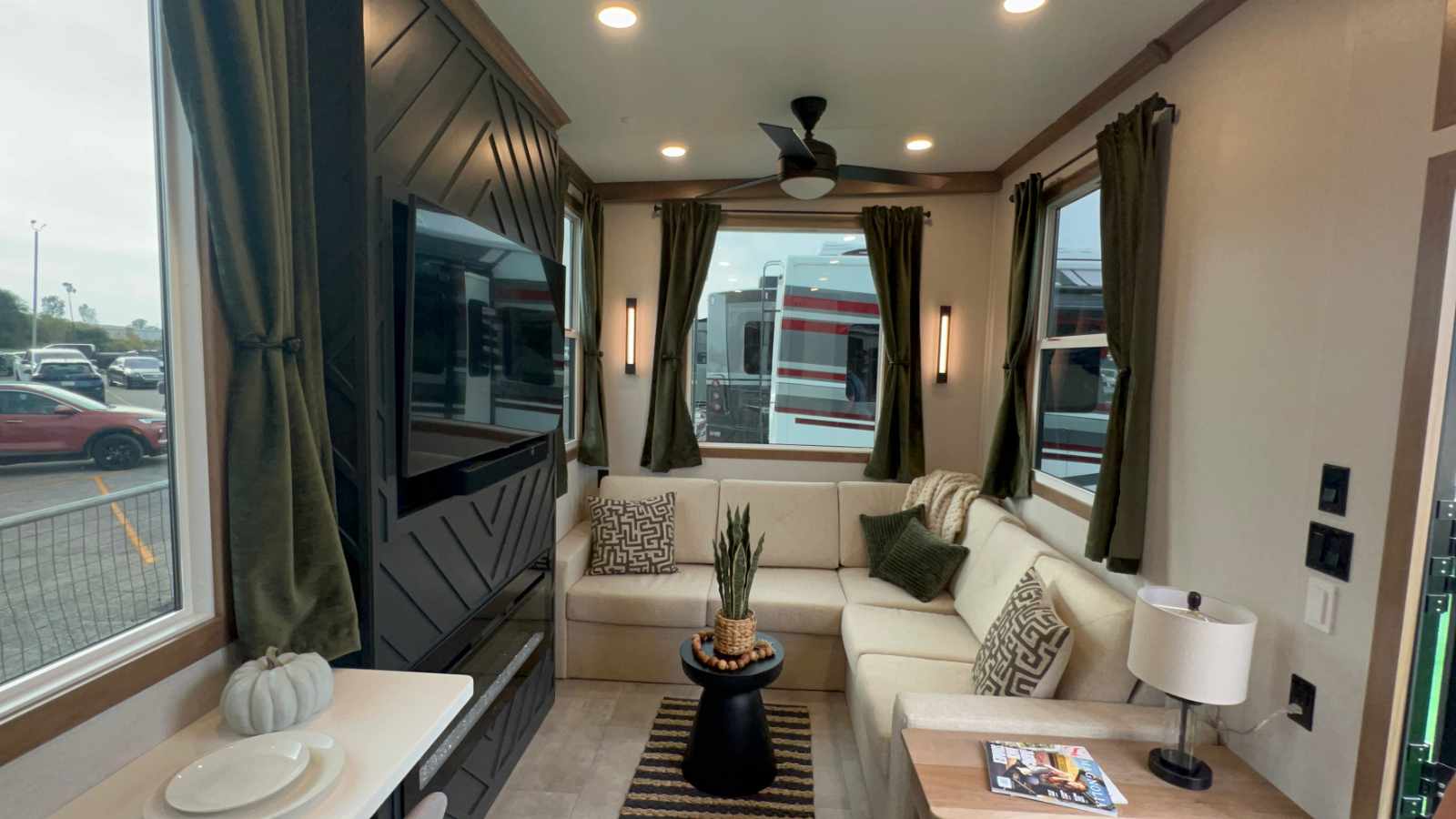
What I did find very nice were the blinds in this, which are a Roman-style shade with magnets so you can raise and lower them easily and in steps. I really liked these. In fact, I liked these more than any other RV window covering I’ve ever seen. Maybe that’s luxury?

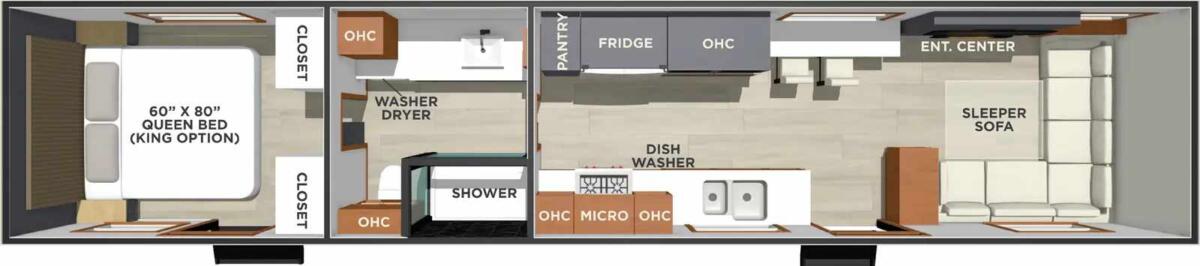
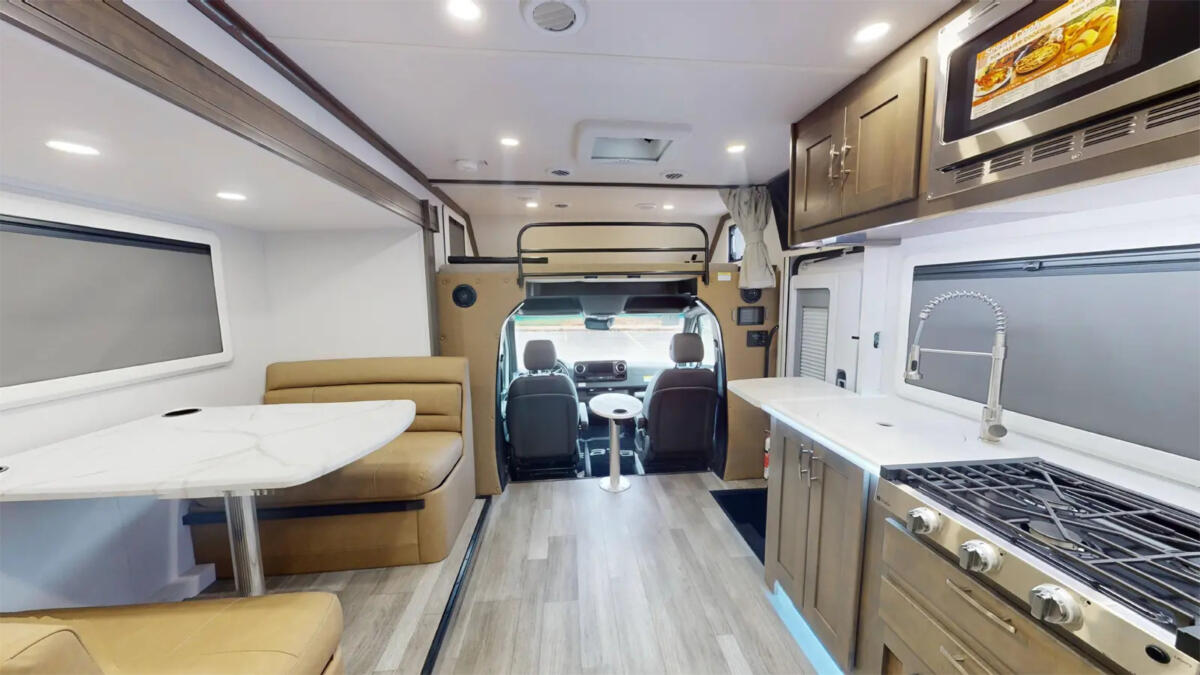
Up front, there’s an L-shaped sofa and a gigantic TV and fireplace. Those large dual-pane windows really open up the space.

Kitchen in the Lost Pines Sequoia

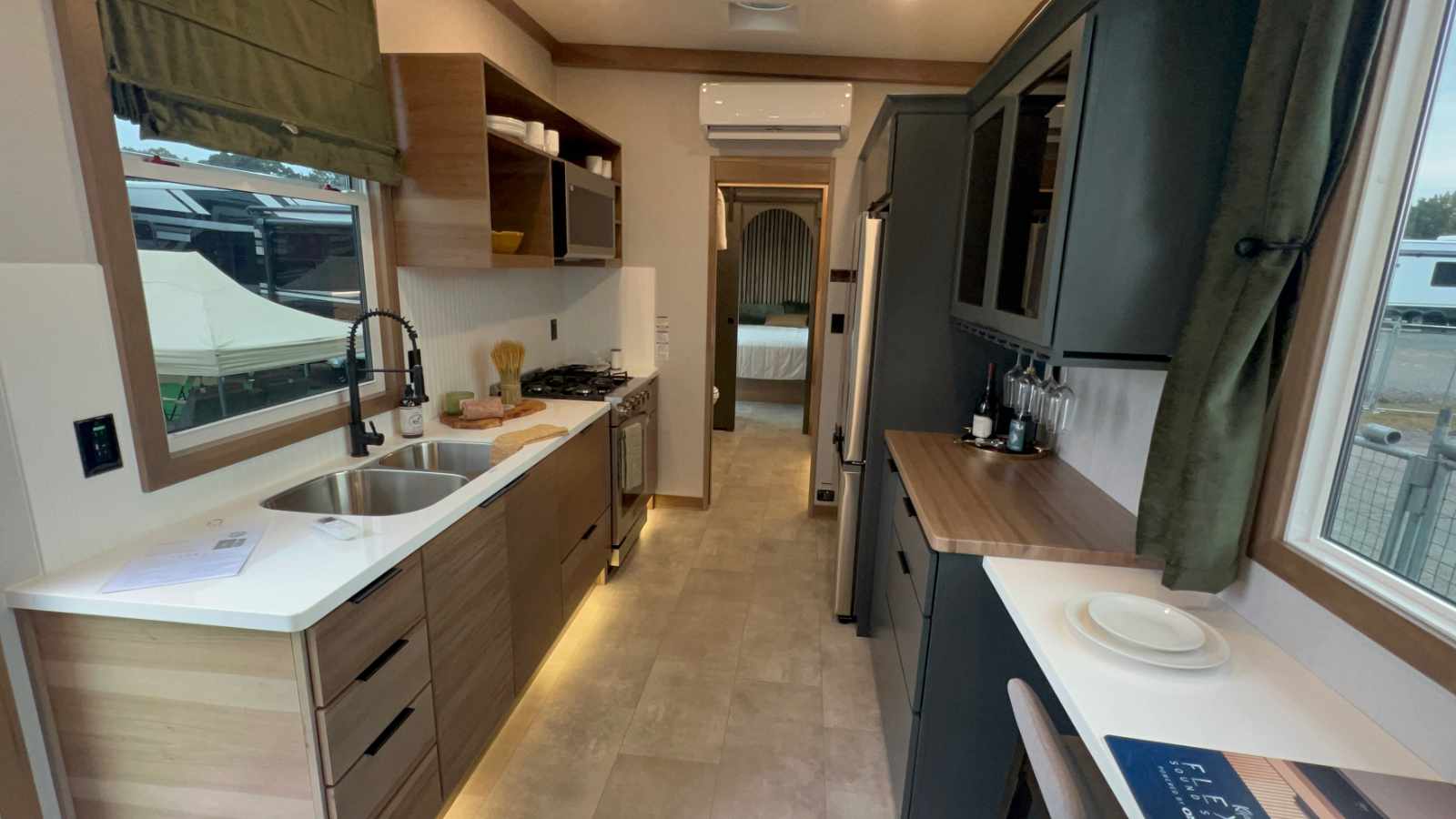
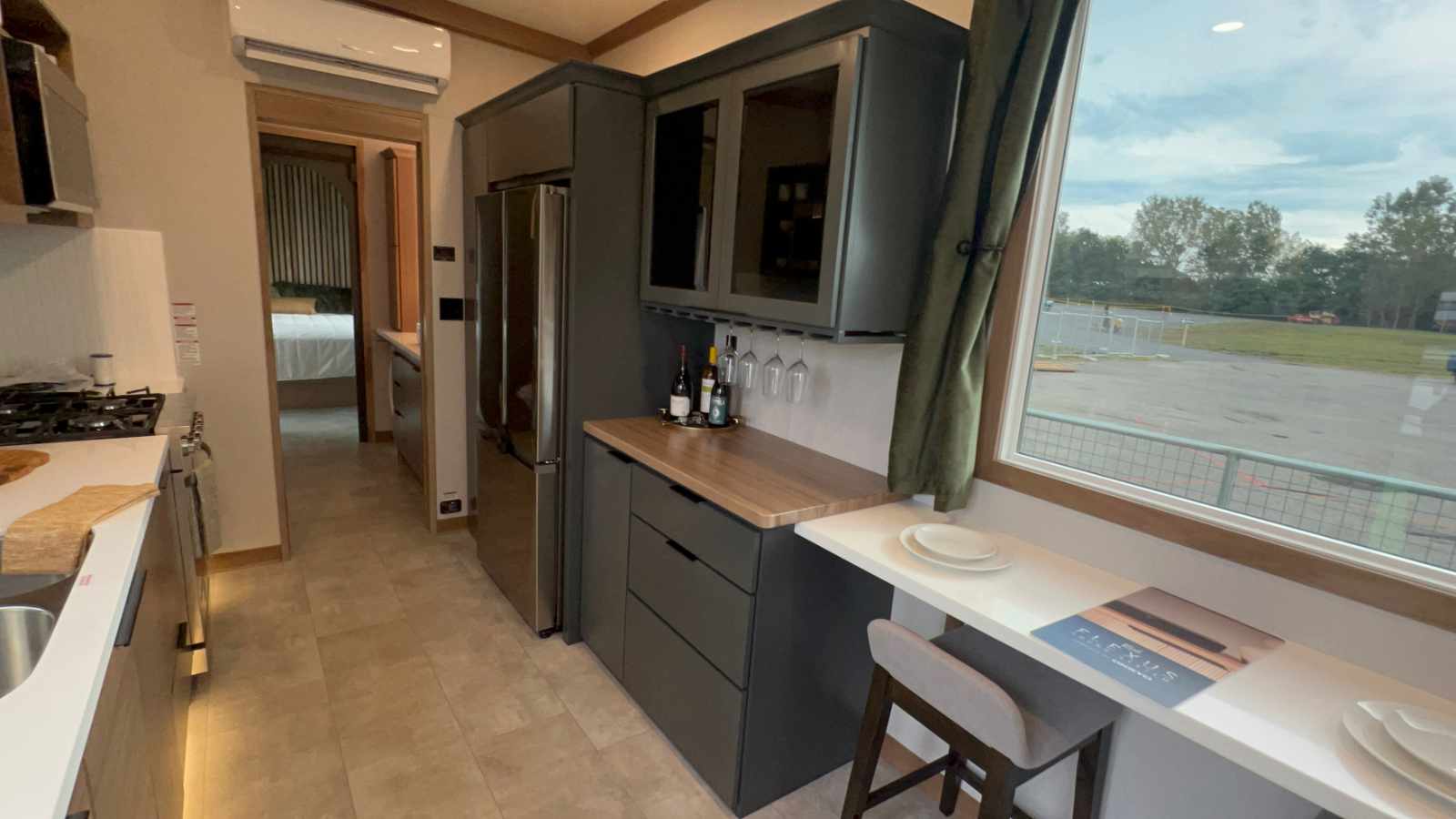
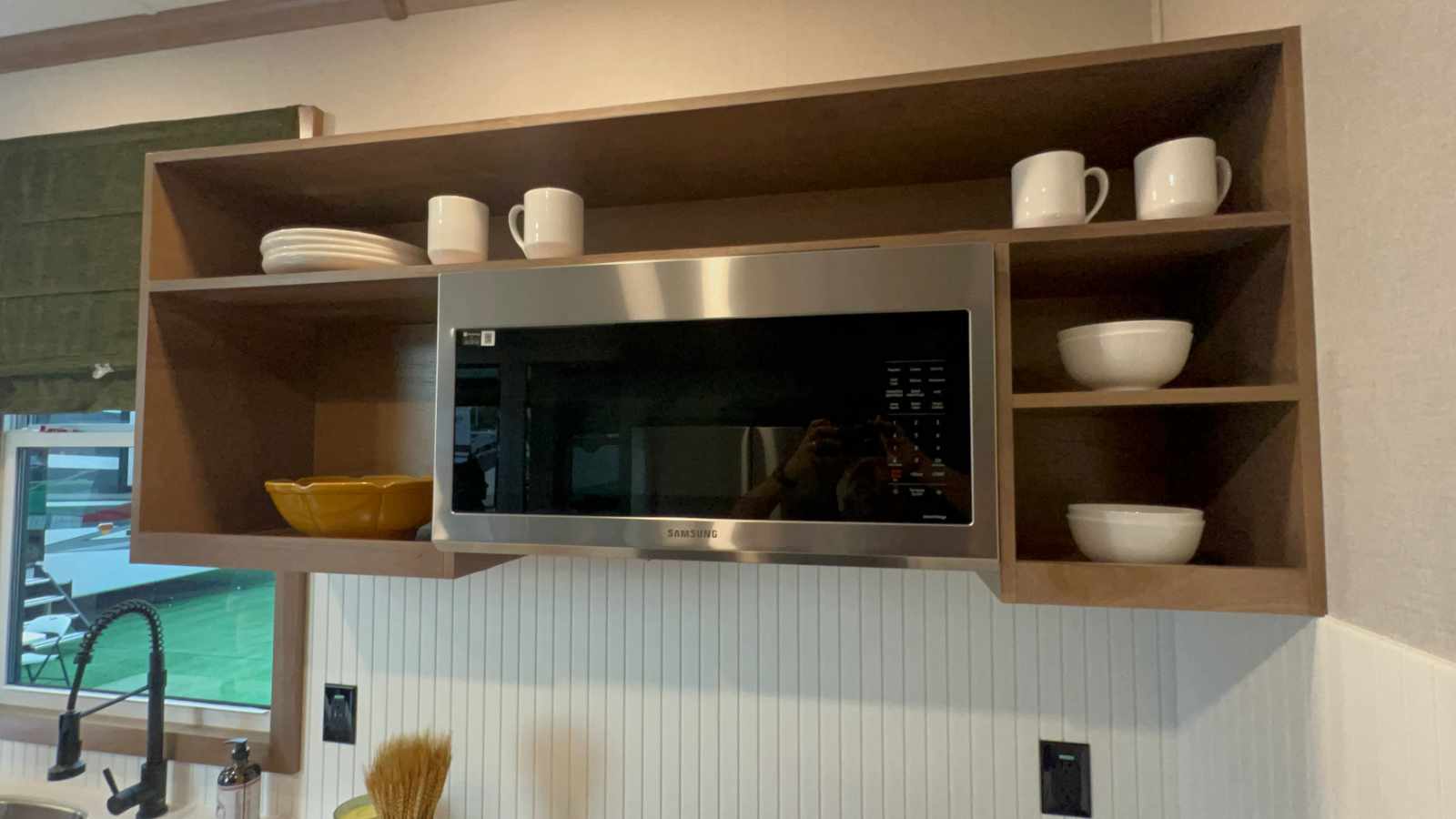
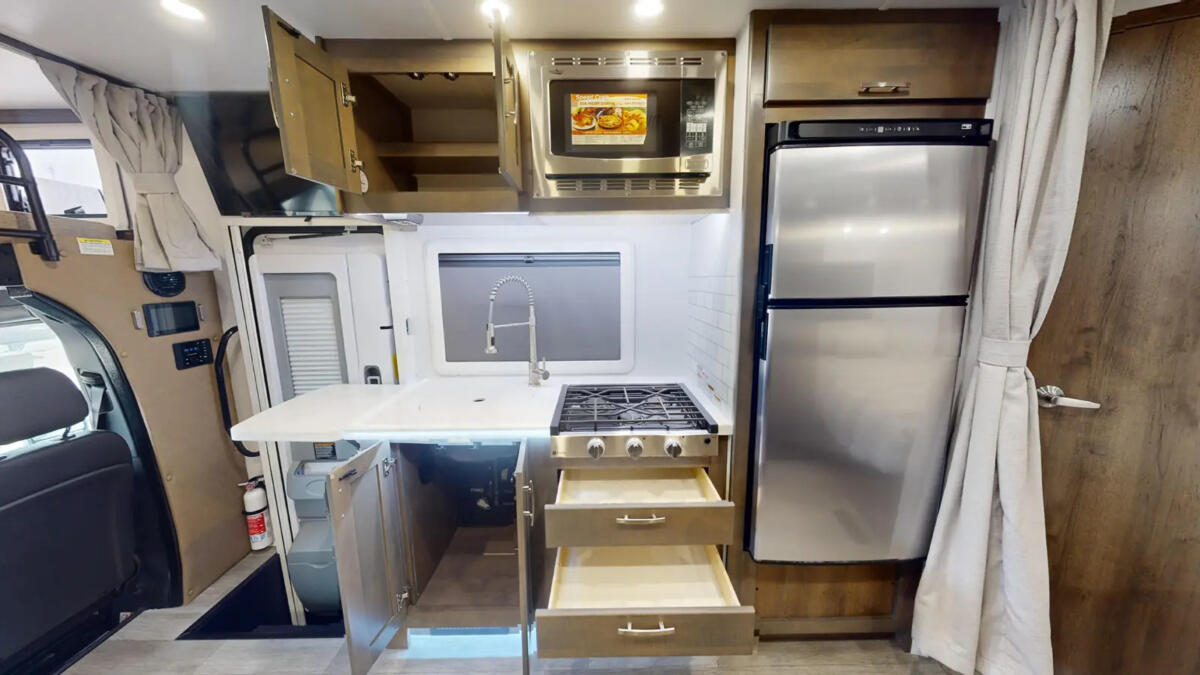
The kitchen in this rig features very residential-feeling appliances. Those include a large four-burner propane stove top with a real oven plus a large residential-sized microwave. There are plenty of drawers and counterspace. All the countertops in here are solid surface. 

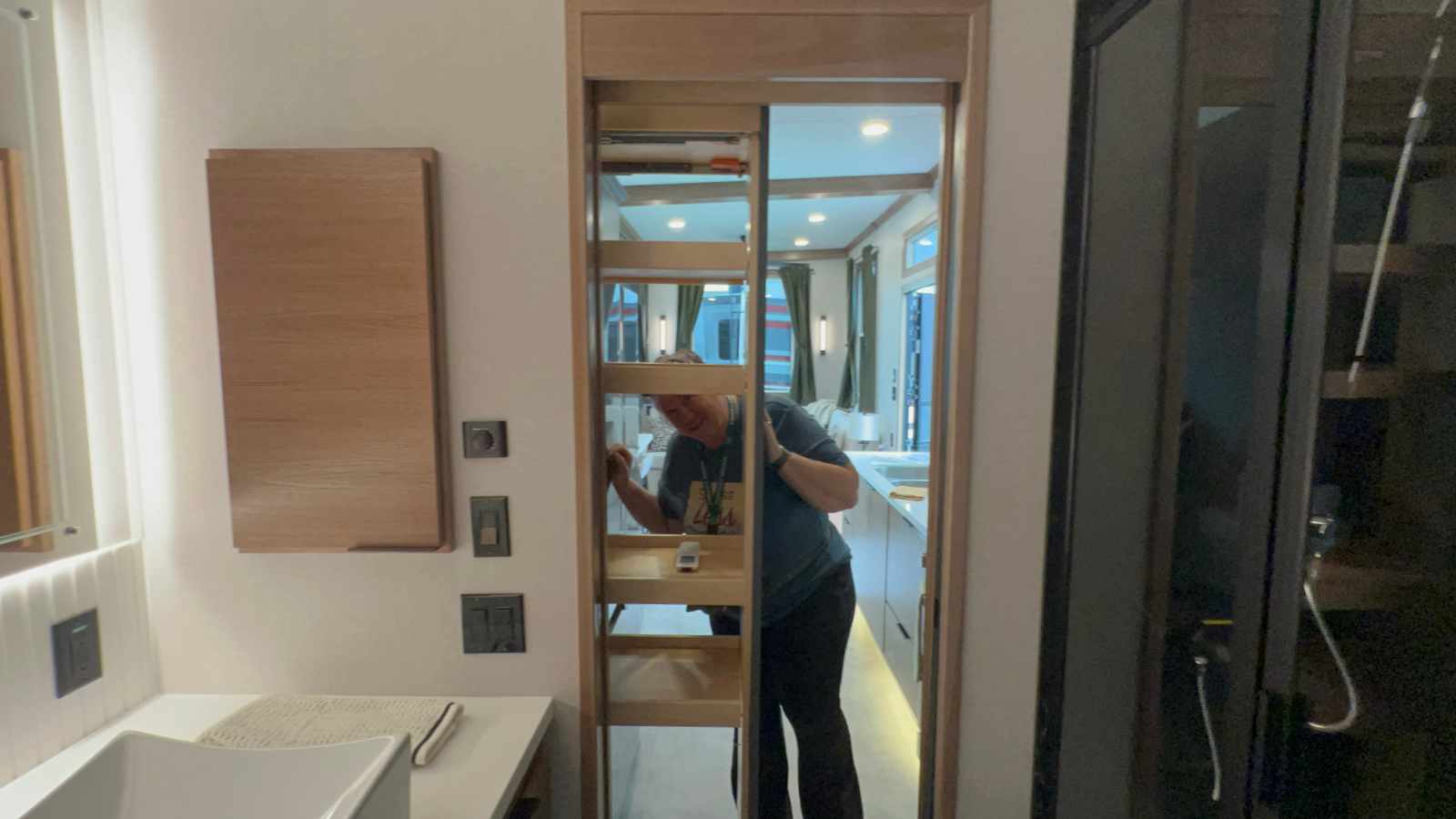
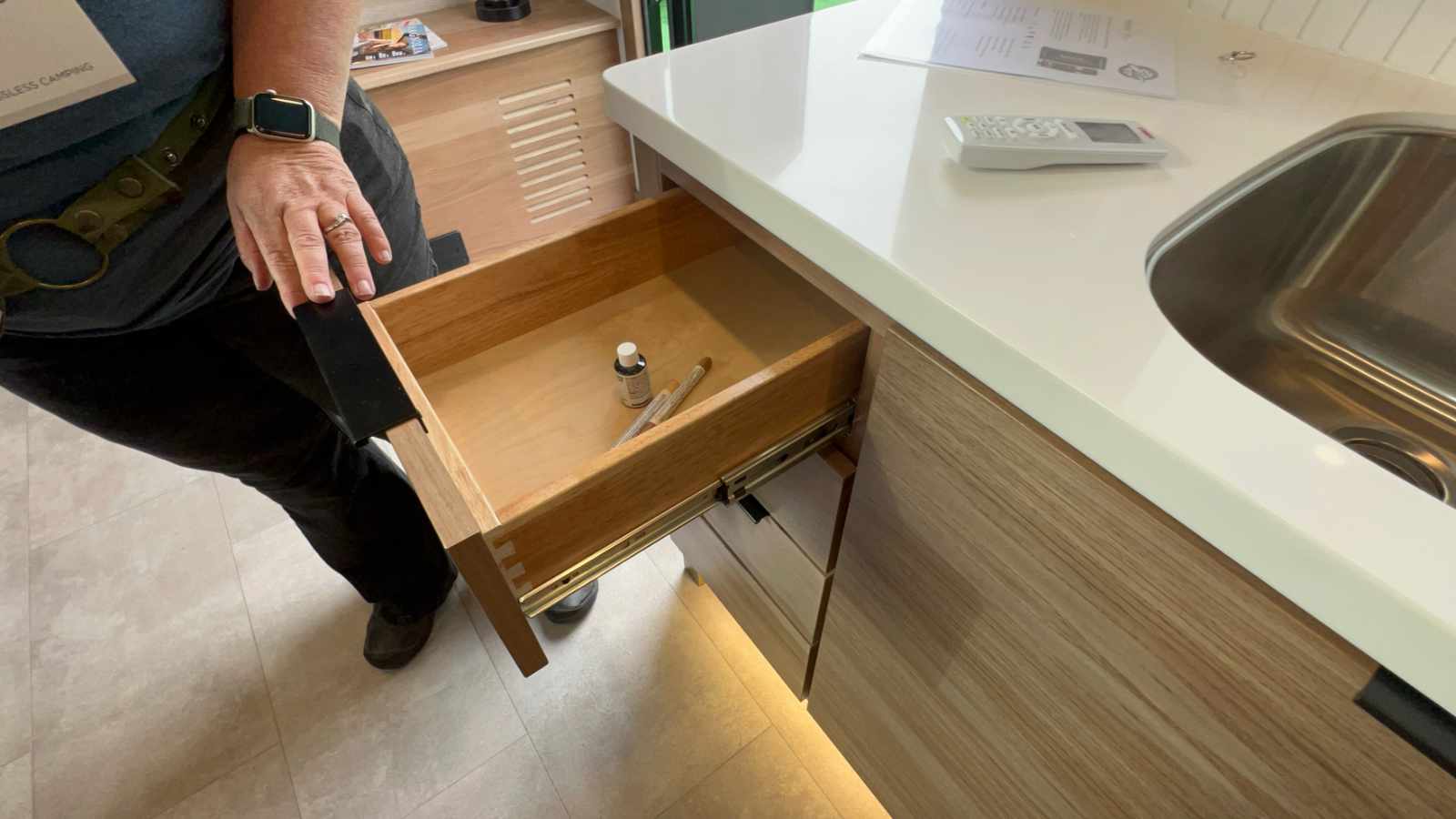
The drawers are an extremely high-quality build with dovetail construction and soft-close function. There’s a big pull-out pantry right next to the refrigerator, although that fridge is, unfortunately, a Samsung. You’d better hope you can get it through the door when it dies. I’m sure you won’t have to wait long for that to happen, especially if you actually use this as a travel trailer. 

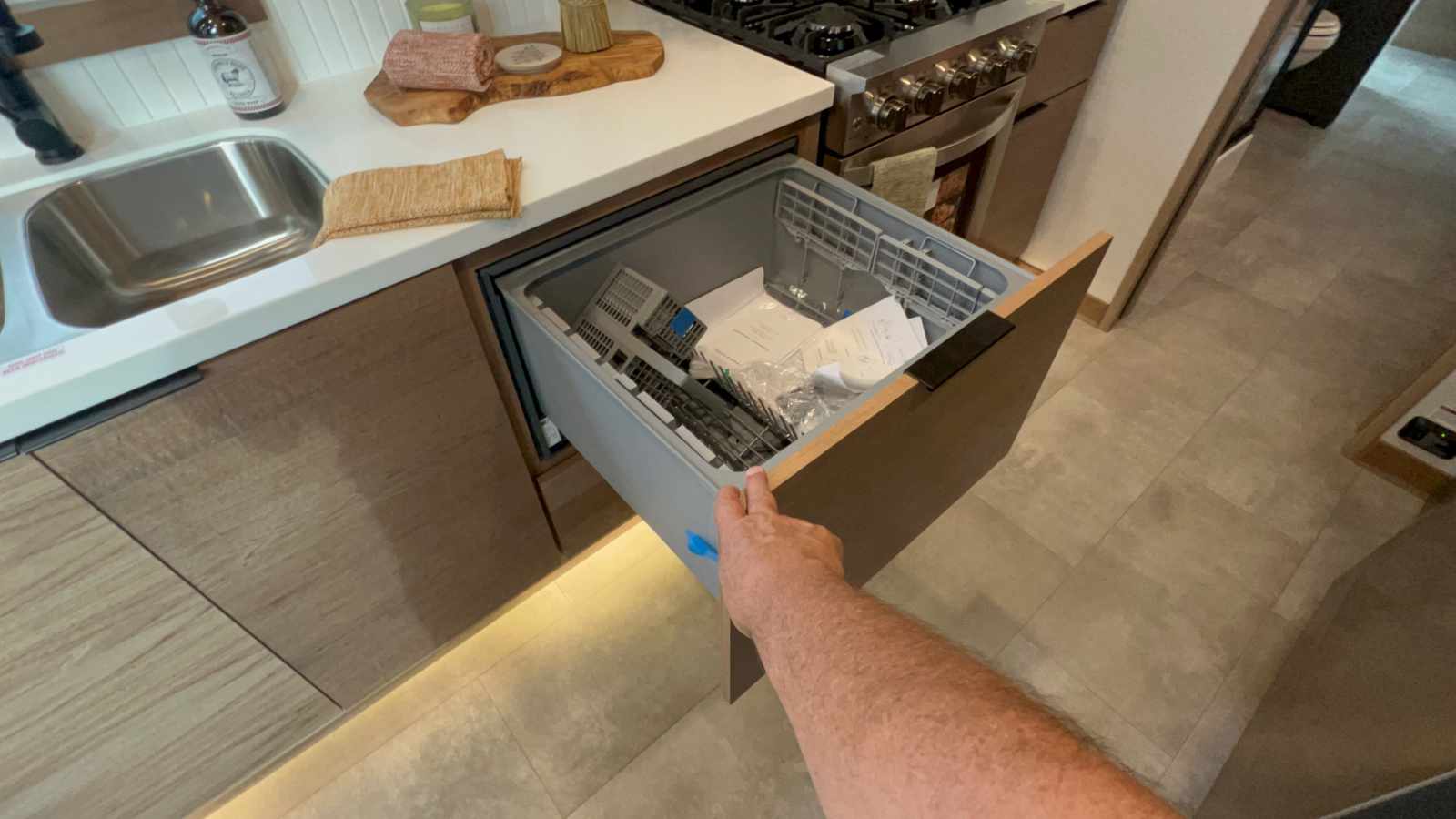
There’s also a dishwasher included in this, and the face of that dishwasher has the same surface as the rest of the cabinetry, so it’s nicely integrated. 

The shelves above the kitchen are interestingly open—with no cabinet doors—which might look good on a model but does little to keep clutter out of view. So, get some fancy pants dishes and, if you plan to use this as a travel trailer, figure out how to pack them up every time you move. 

The detail and construction of the cabinets give this a very high-quality feel. This is a very tasteful space. There is also a nice, large backsplash across the entire kitchen, which makes sense. Again, there are large windows. 

Bathroom in the Lost Pines Sequoia

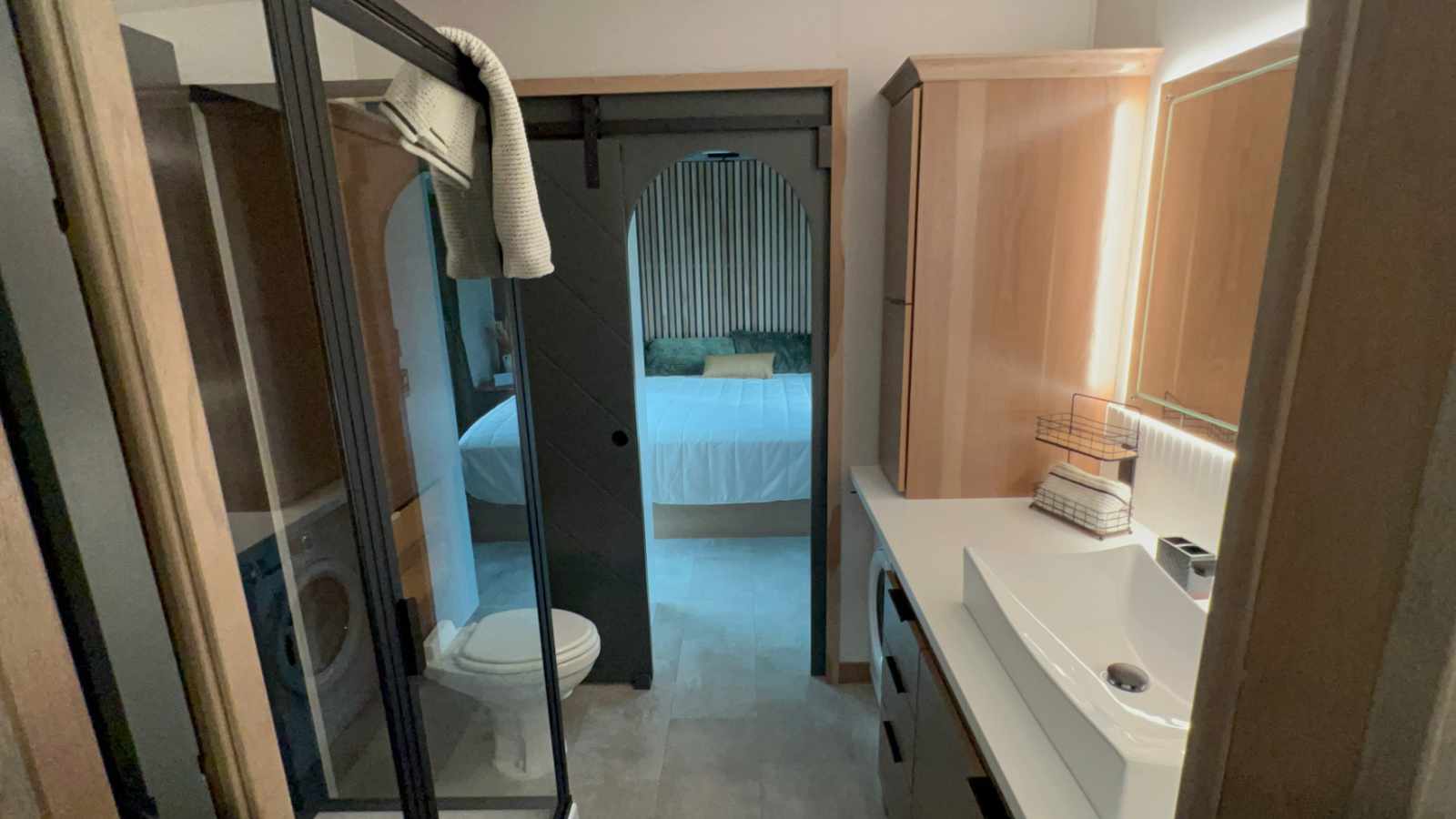
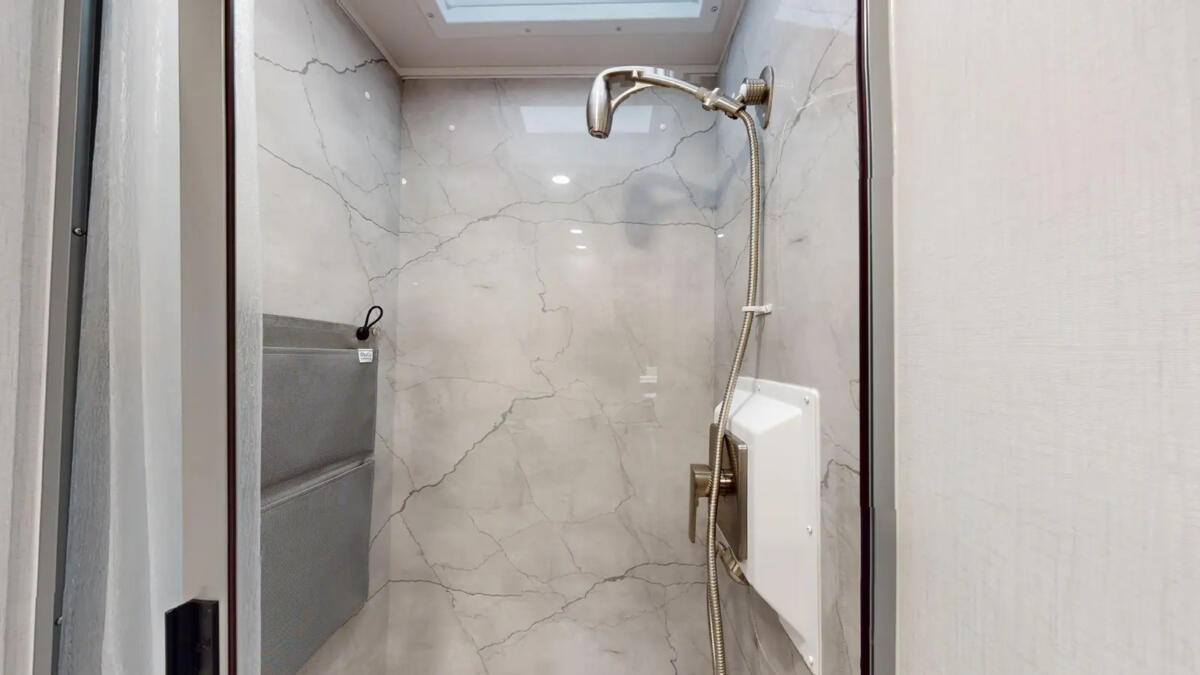
This floor plan mimics the one in my own travel trailer, although it’s much larger, of course, and the bathroom bisects the whole trailer. There is a good amount of space in this bathroom, and the shower walls look like they’re marble. It’s a very elegant space, and the shower itself is quite large. There’s also a huge mirror so you can observe yourself in the shower if you so choose. There is also a medicine cabinet. 

Of course, the toilet is porcelain, and there’s a good amount of space around it. There’s also decent storage in the bathroom. 

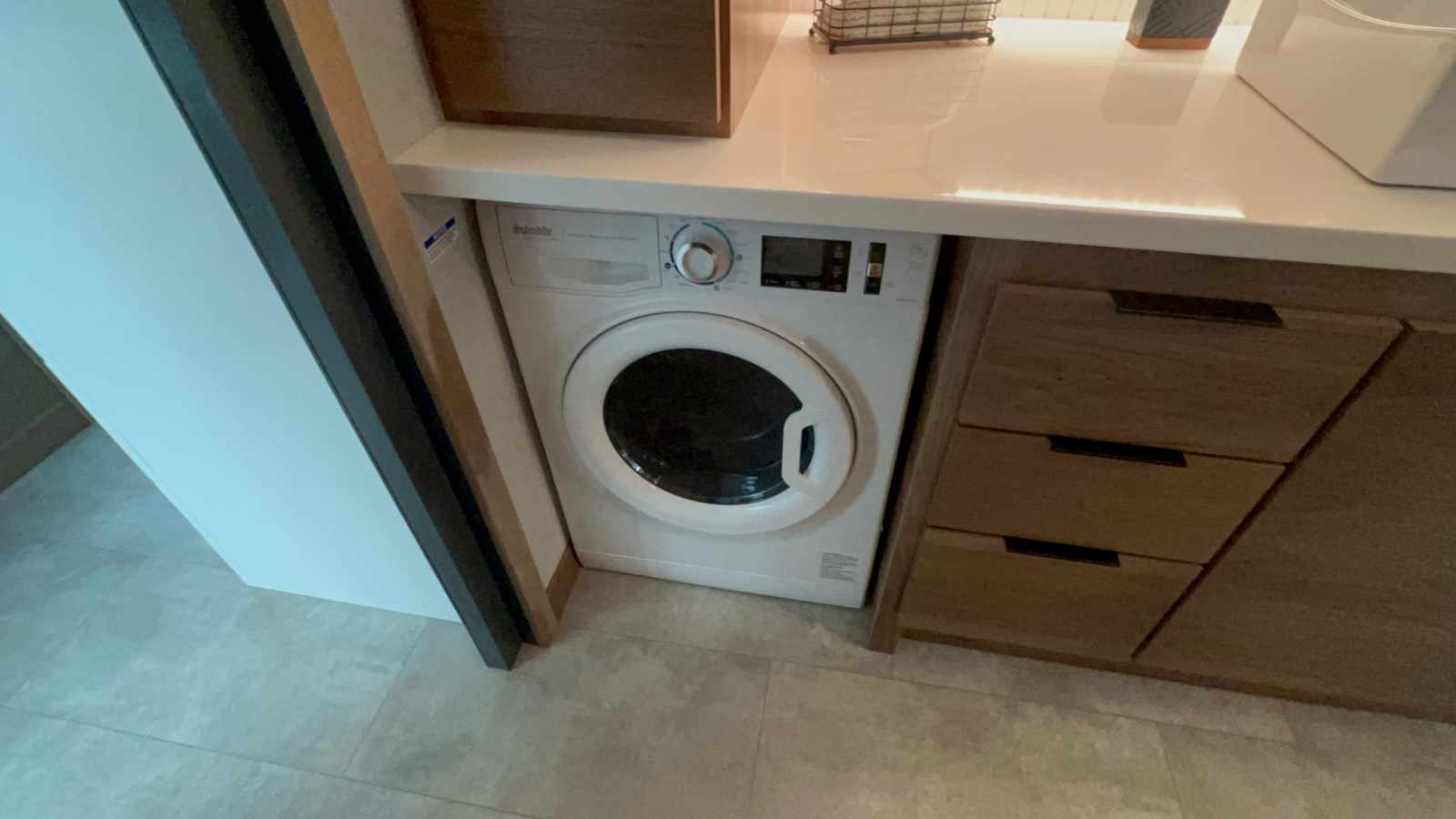
Another feature you’ll find in the bathroom is a combination washer-dryer. 

Bedroom in the Lost Pines Sequoia

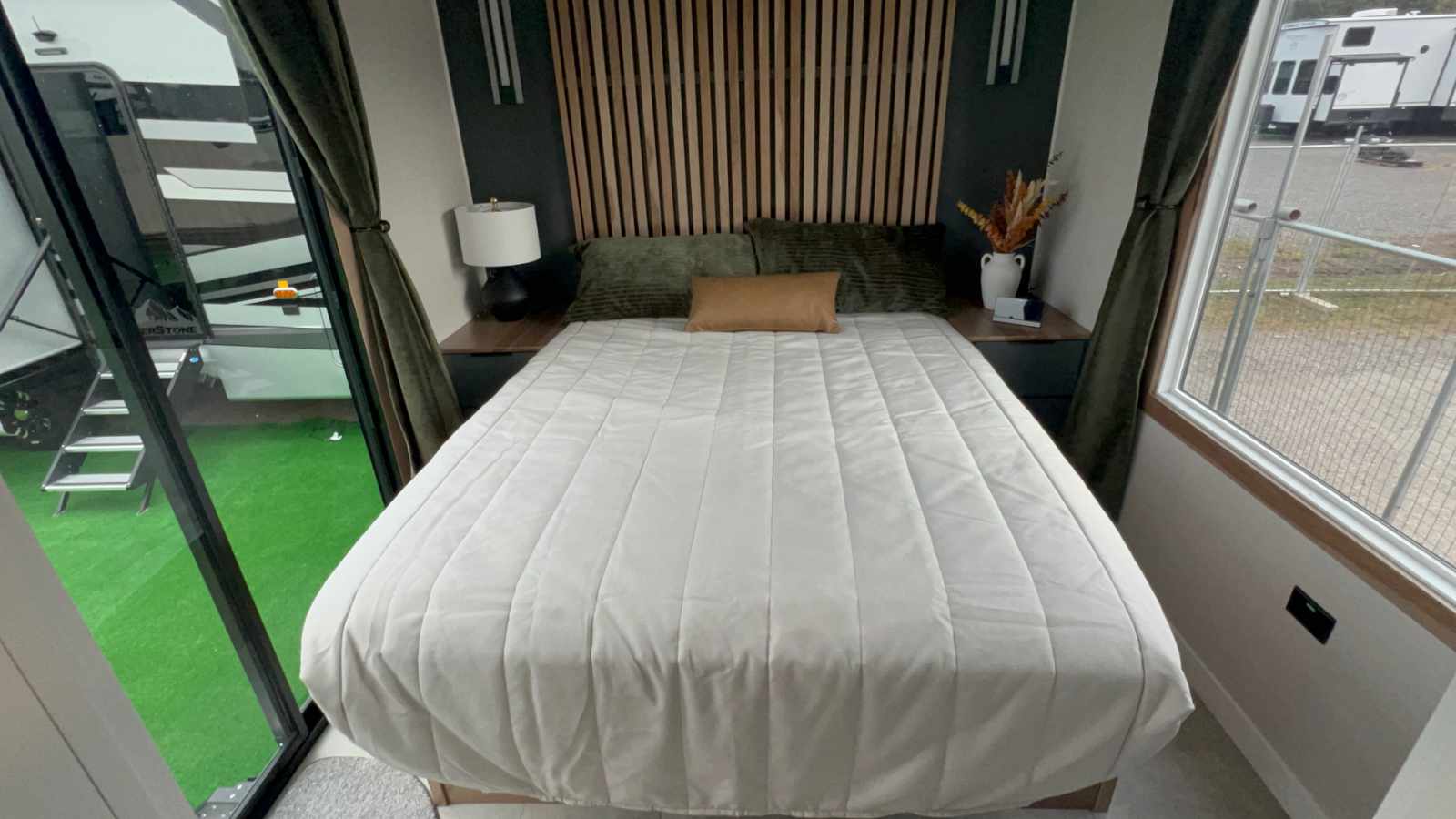
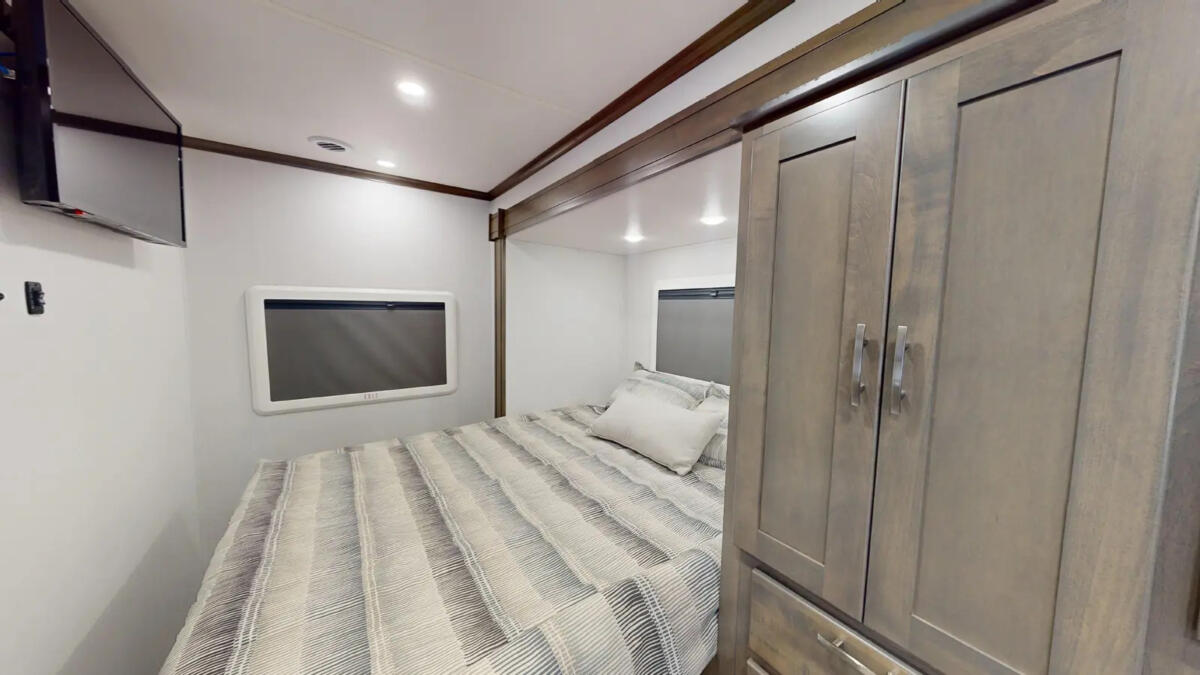
The bedroom in here is available with either a queen-sized or king-sized bed, although I would imagine the larger option would really limit the ability to walk around and utilize this space—except for horizontal purposes. I liked the space in here with the queen. But, again, there are 31 flavors at the ice cream store for a reason. 

There are large cabinets and drawers on the wall of the bedroom by the foot of the bed. There are soft-close mechanisms all around and dovetail drawer construction. The lighting fixtures in this trailer, too, are really nice. As I said, it’s a very tasteful space. 
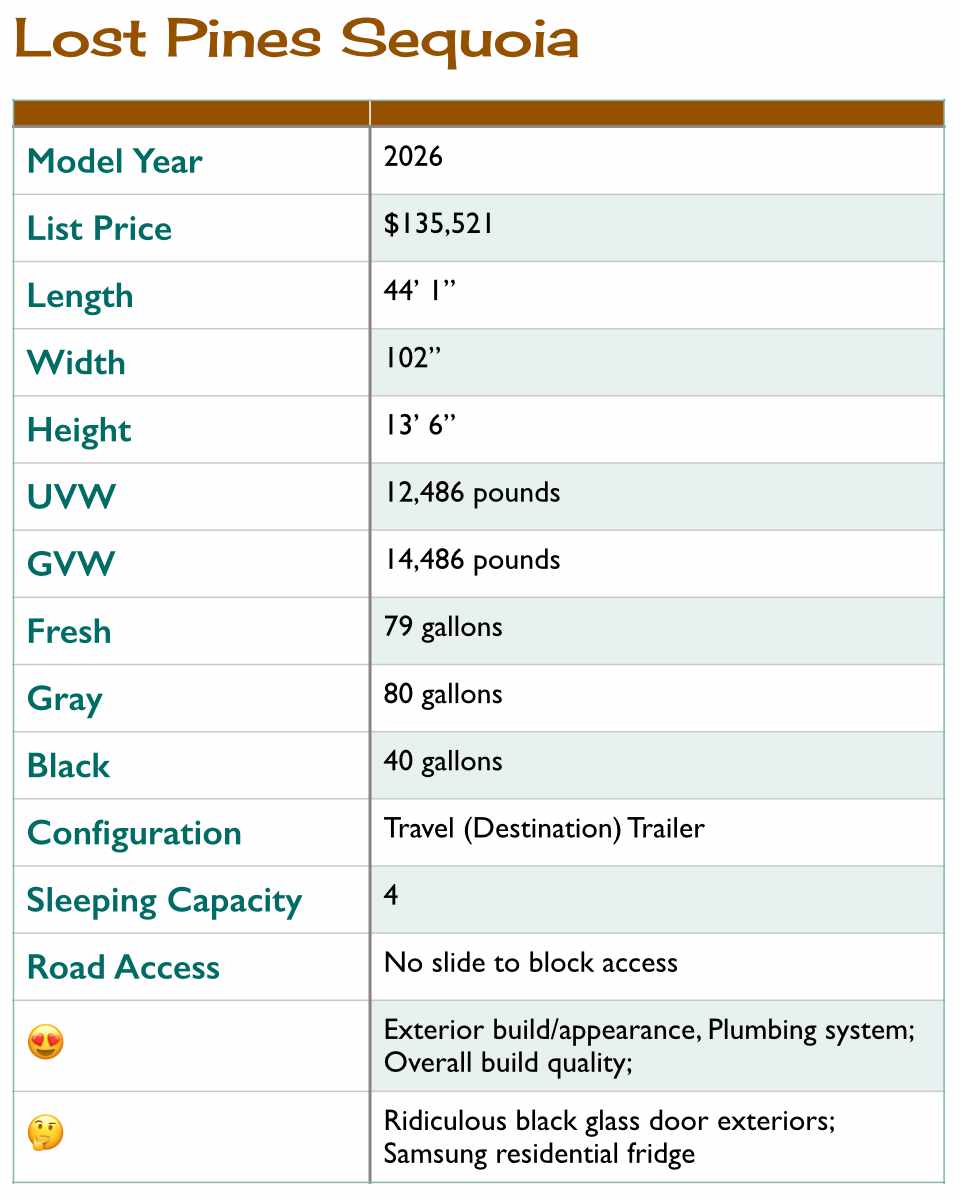
Final thoughts on the Forest River Lost Pines Sequoia

Tiny house. Destination trailer. Travel trailer. This could fit into any of these categories and, no matter what you choose to call it, it’s a very, very tastefully appointed and nicely built rig. 

I suppose if you do want to use it as a travel trailer, you’re going to hope to have oil company stocks because the big slab front on this is going to be one heck of an air dam. But I don’t think that’s really the majority use case here. 

Quite frankly, if you had a nice piece of property and your local regulations permitted this, I could see this being a really nice, easy, and effective way to go from a flat piece of dirt to a fully furnished vacation home in the blink of an eye. Again, local jurisdiction permitting, this could also be a nice accessory dwelling unit, too, if that particular in-law has to stay. 

Also, if you find a great RV park and want to be the king of the trailers, this might just fit that bill, too. 

Whatever the use case, I really, really liked what I saw in this trailer. I would prefer seeing remote pulls for the gate valves that are more easily serviced or are power-operated. Also, seriously, can we all agree that a giant piece of black glass is a really stupid thing to use as a door already? 

But other than minor details, I think this would be a really nice place to call home, vacation home, or, yeah, even travel trailer. 

RELATED

RVT1254
RVing Route 66 for its 100th anniversary— So many options!

3

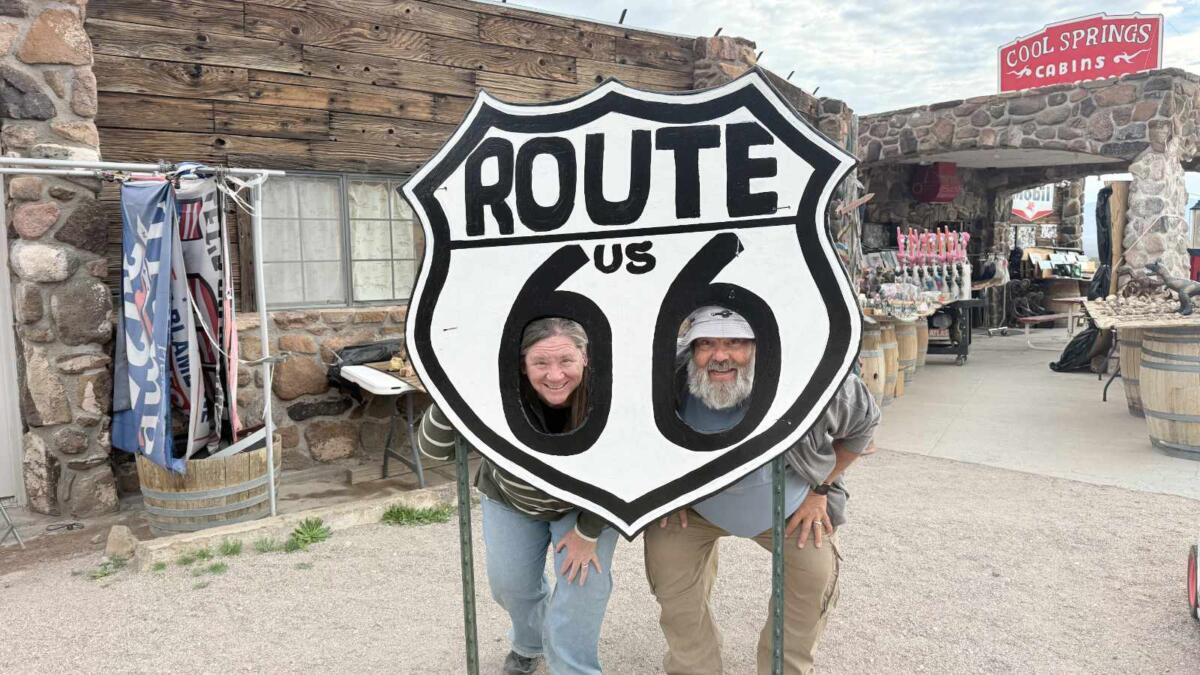
Usually, I like to use this space to share tips and tricks or insights into the RV world. However, this week I thought I’d share some tips for those of you planning to venture onto Route 66 in celebration of the 100th anniversary of the Mother Road. Gail Marsh did a great job of detailing the 100-year anniversary celebrations happening along Route 66 in this article. What I thought I’d share are some of the highlights specifically for RVers. 

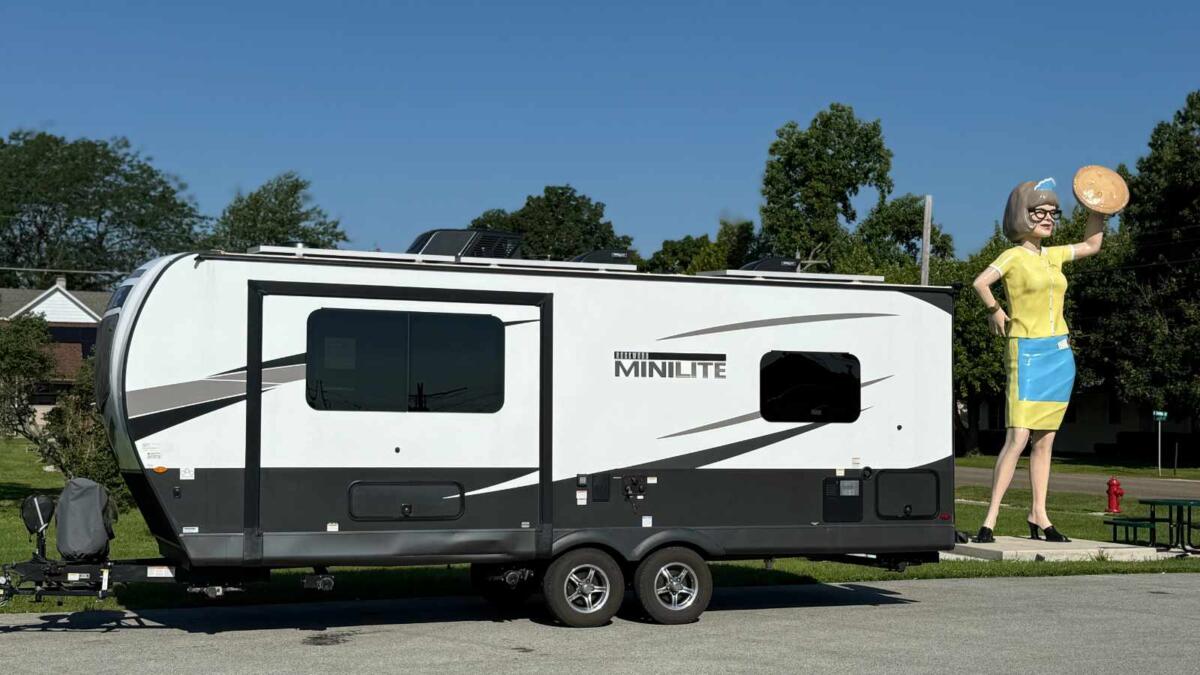
I’ve been up and down the entirety of Route 66 several times with our various travel trailers over the years. I’ve also ventured along shorter sections of the road for specific events or places. 

A brief history of Route 66

Route 66 was officially opened on November 11, 1926—100 years ago. It was a major way to get from Chicago, Illinois, to Santa Monica, California. Over the years, people traversed this official highway, including commercial traffic and those looking for a getaway. 

A lot of the Route was a two-lane road, and there are lots of tales of following slow-moving traffic only to have so much oncoming traffic you weren’t getting by. Driving wasn’t like it is today—you were passing through small towns and across vast stretches of open land. Vast expanses of corn fields and desert were broken up by small towns with facilities to service your vehicle, as well as stops for rest. 

Your car would likely not have had air conditioning. Likely you wouldn’t have made the entire trip without some sort of mechanical issue—either a thrown fan belt, blown tire, or even worse. There was no GPS, and the radio you could get, if any, would have ebbed and flowed with the landscape and local taste. 

Not all the vendors along the Route had your best interests in mind, so a fan belt might not be such a great deal in some places. You’d better have cash because if you did need a tow or to stay the night somewhere or whatever, you weren’t using your debit card—especially since that hadn’t been invented yet. You had cash or maybe traveler’s checks. Remember those? 

Interstate Highway System

After WWII, we Americans saw the Autobahn in Germany as a great way to drive and move goods and military equipment. So we charged forward with the Interstate Highway System. When a stretch of this was completed, sections of Route 66 were bypassed until the entire Route 66 was bypassed in the 1980s. Thus, the highway was decommissioned. 

Fortunately, through people like Angel Delgadillo of Seligman, Arizona, and others, the Mother Road has since gotten a lot of attention. There are many preservation and recreation efforts, especially in light of the centennial. 

The movie Cars reinvigorated interest in Route 66 for many, and there are tributes to the film all over.

What’s on Route 66 today?

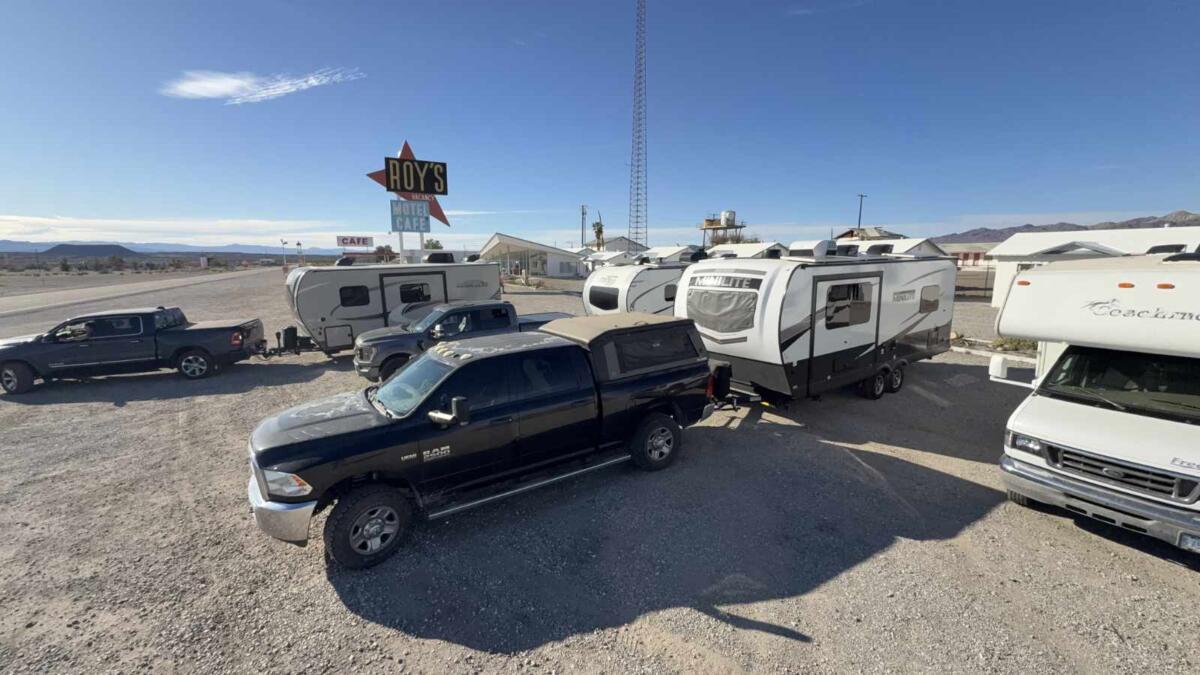
Recently, we led a group of RVers along Route 66 starting in Santa Monica at the pier and heading east through Albuquerque. I know, that’s technically backwards, but consider the source. 

So, let me share that there are multiple experiences you can have along Route 66 as an RVer. 

The most obvious thing some people are going to look for is the historical pieces of the Mother Road. And there are a lot. Whatever your interest in this uniquely American experience, there are still a great number of things from when Route 66 was a major thoroughfare. 

In recognition of the Centennial, some of these old gas stations, motels, and roadside attractions are getting new life breathed into them. In some cases, the neon signs that shone so brightly are shining once again. Quirky motels are becoming refreshed with a new life. The tourist attractions are getting new inventories of all sorts of stuff. 

In fact, I collected probably 50 pins just between Santa Monica and Albuquerque. 

Lots of places disappearing

But there are also a lot of places that were, and are, returning to Mother Earth in various forms, along with a lot of graffiti. There are hundreds of old gas stations that are crumbling heaps of graffiti, which makes sense. There were so many of these in the past. But newer regulations make them difficult to keep open and functional, not to mention the lack of customers. 

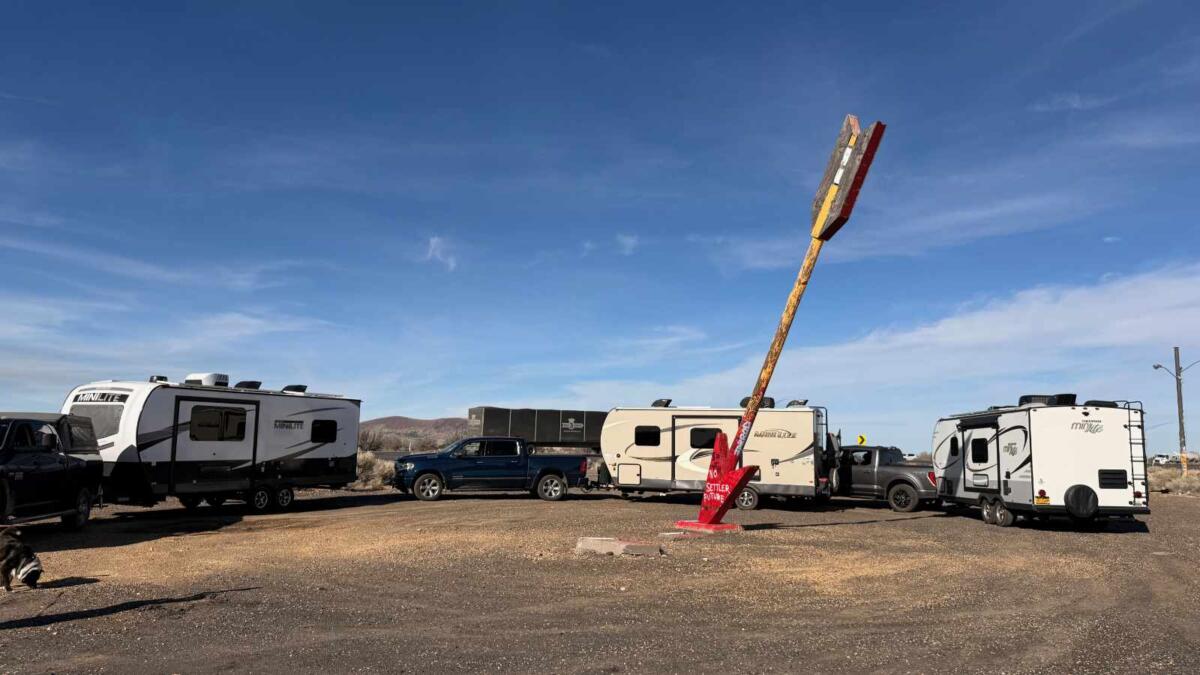
Also, there are some great resources to spot the history of some of these places. But it’s sad when iconic stops, like the Twin Arrows Trading Post, are held together as much by the graffiti on it as anything else. Today, only one of the twin arrows remains standing. 

Do know that over the last 100 years, the road itself was realigned a number of times. There are various “alignments” of Route 66, so if you plan to spend as much time as possible on the original road, you’re going to have to make some choices. There are also places where the road is just gone, and you’ll have to take the Interstate or another alternative. 

Road is fine for RVs

For the most part, the actual road is fine for RVs. But there are some admitted tight spots—for example, driving up to Oatman, Arizona. And there are also occasions where the road just ends. You’ll get to practice your ability to turn your rig around if you didn’t check your map first. There are also a number of portions of the Route, such as old bridges and such, that are foot traffic only at this point. 

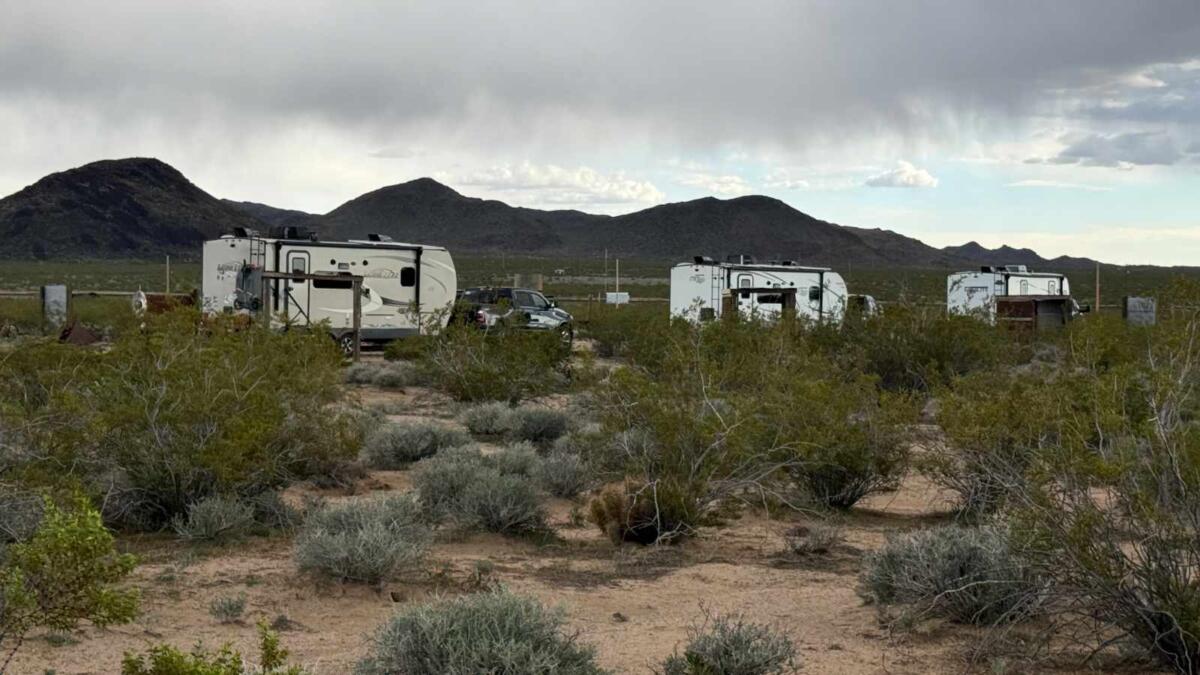
You could also pick highlights and destinations—most of those are RV-friendly. To be honest, we traveled in January and February, which is a less popular time, but there are greater chances of winter still hanging around. However, we had 3-5 travel trailers in our caravan and at no point did we have issues with following the Route nor even finding parking or a place to stay. 

A place to stay on Route 66

There are so many ways to travel along Route 66. We have RVed the entirety of the road several times in our travel trailer. We’ve also chosen segments and just visited those. We have forgone the RV altogether and focused on the old motels. 

We have stayed in RV parks and at Harvest Hosts locations. 

The point of all this is that you can make this adventure what you want. But if a fancy RV park isn’t available, an older one likely will be. We also favor Harvest Hosts as much as possible, but we’ve configured our RV to be able to run the A/C with a nice battery and solar system. 

The closer we’ve gotten to the characters along the Mother Road, the better the adventure has been. Sometimes a tourist destination won’t officially allow you to spend the night, but if you ask nicely and support the business, suddenly an opportunity arises. 

I suspect reservations will get tighter as the summer approaches and, like all popular destinations, the more noteworthy and popular something is, the more challenging it will be to get a seat at the table. 

Only once in all our journeys along the Mother Road did we have an issue with finding a place to rest our heads. That was due to a lack of planning on our part and some miscommunication with the host. 

There’s a new Route 66

Something that’s evident is that there are a lot of new businesses and museums along Route 66. Of course, a few of them could be skipped and you won’t miss much. But then there are some new things that are absolutely worth visiting. 

Every town has some sort of Route 66 museum, but there are a few that are really, really well done. I count the Power House Museum in Kingman, Arizona, and the Oklahoma Route 66 Museum as must-see places. But there are so many others.

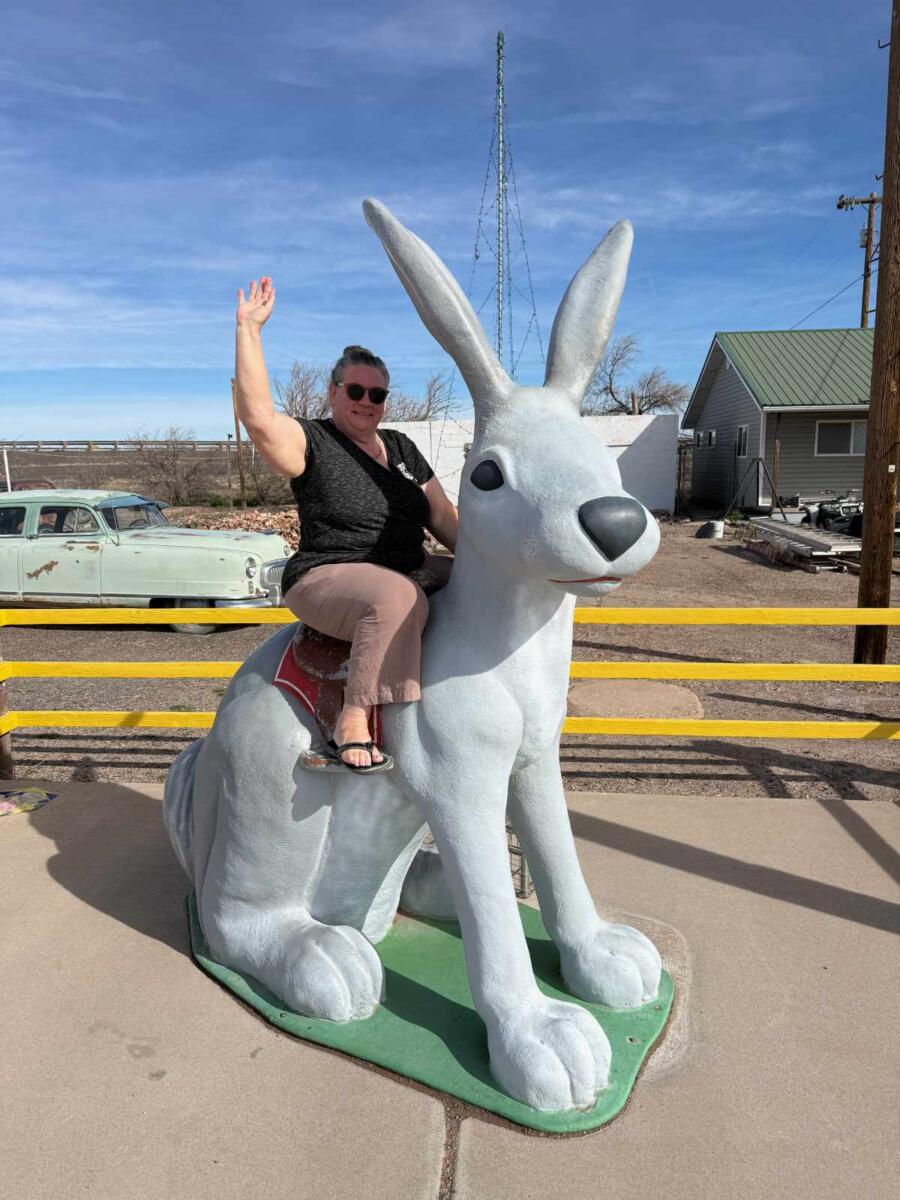
There are also things like the Buck Atom’s Cosmic Curios, American Giants Museum, Uranus Fudge Factory, and countless breweries and diners that are newer but are a fun stop nonetheless. 

Some great resources for Route 66 travel

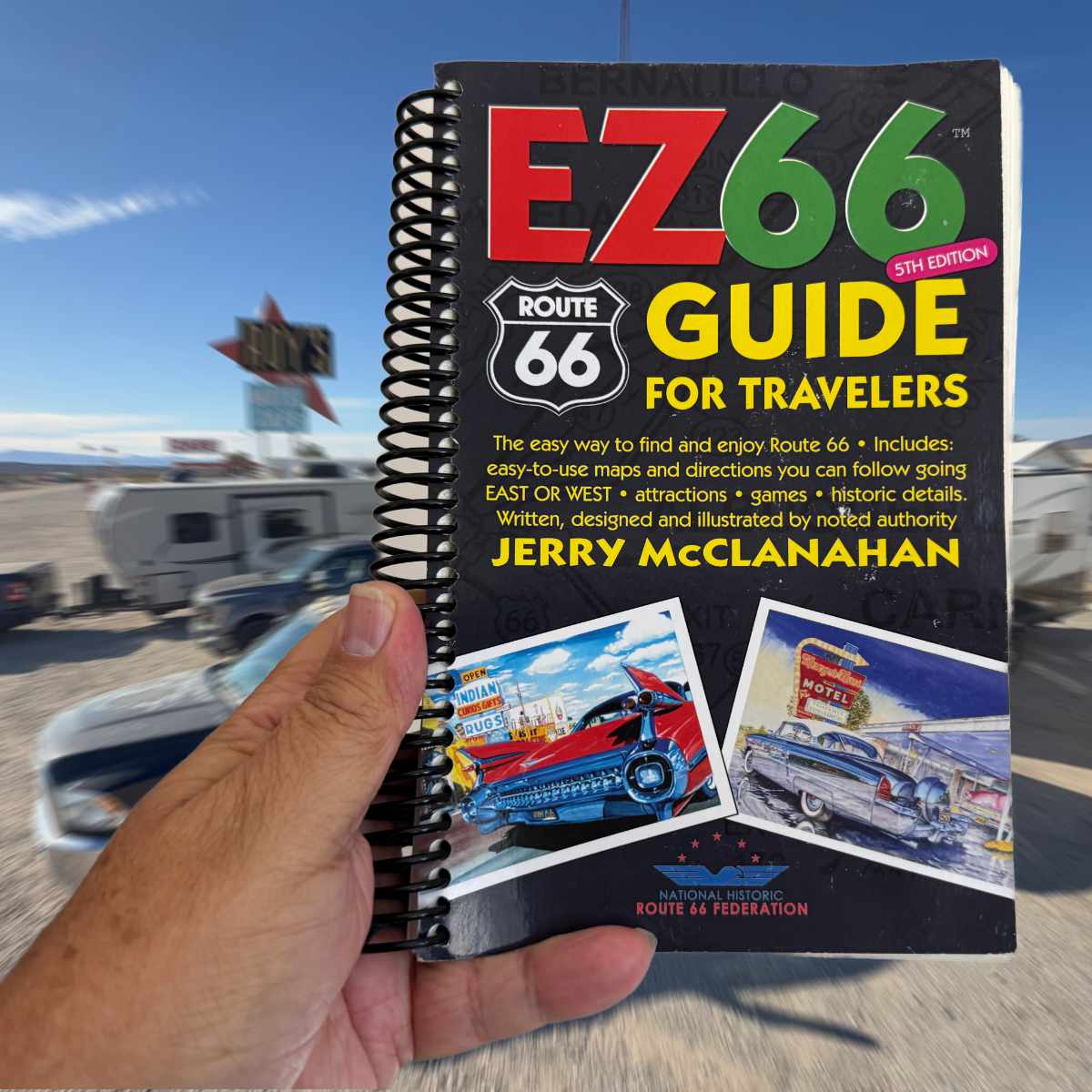
One of the books that’s really been cited as excellent, and it is, is the EZ66 Guide for Travelers. This spiral-bound book can be used no matter which direction you travel on Route 66 and is an outstanding reference. 

As we traveled Route 66 in our RV, we also compiled some of our favorite stops and stays. We did weeks of podcasts and stories about our adventures. 

We’ve also enjoyed the Route 66 podcast, and we love to listen to podcasts as we traverse this fine country. We also recorded many of the StressLess Camping RV podcast episodes about Route 66. 

Apps for Route 66

There were also a few apps Peggy, my wife, liked along the adventure, but not one be-all end-all app. Her favorite was the Route 66 Ultimate Guide (also available for Android).

Like so many things, the way you perceive the history of this country and what made us so special—along with your appreciation for history, kitschy tourist attractions, historic destinations, kooky characters, and the adventure of trying new things that may be old things—will determine how much you would love a Route 66 adventure. 

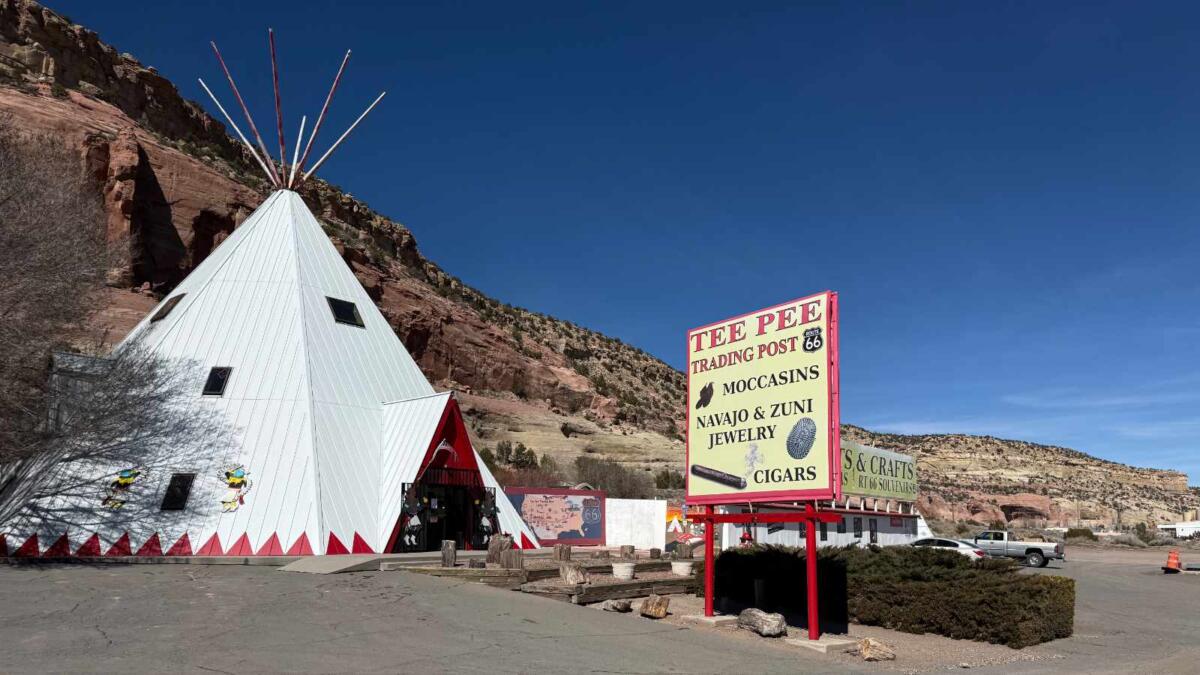
Route 66 is RV-friendly, but there’s a lot to be said for just stopping in some of the old motels along the way. Who wouldn’t want to sleep in a wigwam—and you can do that in Holbrook, AZ, and in San Bernardino, CA. There are places where your car can sleep right alongside you in a carport next to your room, like the Blue Swallow in Tucumcari, NM, and the Boots Court Motel in Carthage, MO—and both of these places have embraced their neon. 

If your idea of traveling includes resorts and accommodations with fancy features, perhaps Route 66 might be something you enjoy vicariously. If you love trying the next wacky diner, hearing the old guys at the counter share stories, and looking into how America got where we are today, then you might be the perfect person to plan a Route 66 adventure. 

RELATED

RVT1254
More information on tire cold inflation pressure

I received this question from an RVtravel.com reader regarding tire cold inflation pressure:

I have read a lot of your posts and that makes me think my manufacturer has my Cold Inflation Pressure (CIP) wrong or used too much tire on my unit (maybe not a bad thing).

5th wheel, GVWR (gross vehicle weight rating) 12,025 lbs.
Tires—Goodyear Endurance ST235/80R/16
CIP—80 psi per label and max CIP on tire
Per the GY load/inflation chart, 80 psi will support 3,420 lbs. per tire.
Fully loaded before a trip on a CAT scale, trailer axles weighed 4,060 front and 4,080 rear, tongue weight 1,800 lbs.

This is what I come up with. Being conservative, I used 2,270 from the chart at 40 psi for my operating pressure. Using your guidelines I used 50 psi as 25% reserve.

I think 40-50 psi is too little pressure. I think I should run 65 psi as CIP rather than the 80 psi on the label. I’m running 80 psi CIP and I had pressure go to 100 psi and temp as high as 130 degrees on TPMS, which both seemed high to me.

Is 65 a good CIP with MOP at 50 based on the info I provided? Does a high (80 psi) CIP cause tires to run hot with high pressures?

I hope I didn’t muddy the waters with my numbers, but I’m finding it difficult to ask the right questions. I would greatly appreciate it if you could help me clear this up. Thank you.

My reply

Thanks for the question. Yes, understanding the Certification Label psi versus information in the tables can be confusing. We need to remember that these different inflations are based on different requirements.

You didn’t provide the Max load that is stated on your Certification label. I am guessing it says something like GAWR 6,850# for each axle. The inflation stated on the label, by law, must be sufficient to support the stated GAWR (gross axle weight rating). ST235/80R16 LR-E tires are rated for 3,420# each at 80 psi.

If you do a search on “MAX inflation” on the RVtravel.com Maintenance posts you will get a number of posts explaining the meaning of “MAX” and why you may be misunderstanding what it means.

I agree that 40 psi is way too low. I would consider 65 to 70 psi CIP more appropriate, assuming that no tire is supporting more than 3,000#. BUT if you are seeing a psi increase from 80 to 100, that might indicate you need CIP of 80. Have you checked your digital pressure gauge for accuracy?

I do not think your RV company put “too much tire” on your RV. If anything, I would be recommending Load Range F LT-type tires for heavy 5th wheel trailers.

No, running “a high psi of 80” will not result in a tire running hot. Excess psi comes from low inflation and excess speed. I consider 65 mph a MAX operation speed for ST-type tires. I also consider that running any CIP below the Certification Label CIP as “consuming” tire life due to interply shear.

You can learn more about tires in RV application on my Blog www.RVTireSafety.net and by reviewing the posts regarding RV Tire Safety on RVtravel.com.

Roger Marble

MORE POSTS FROM ROGER ON TIRE PRESSURE

*****

If you have tire questions, check out Roger’s posts on RVtravel.com. There are hundreds of posts covering everything to do with tires.

If you still have a question for Roger after searching the above posts, send your inquiries to him using the form below.

Name
Drag & Drop Files, Choose Files to Upload

RVT1254
Costco to build its first massive standalone gas station

19

If you’ve ever timed your fuel stop around a Costco run, you’re not alone.

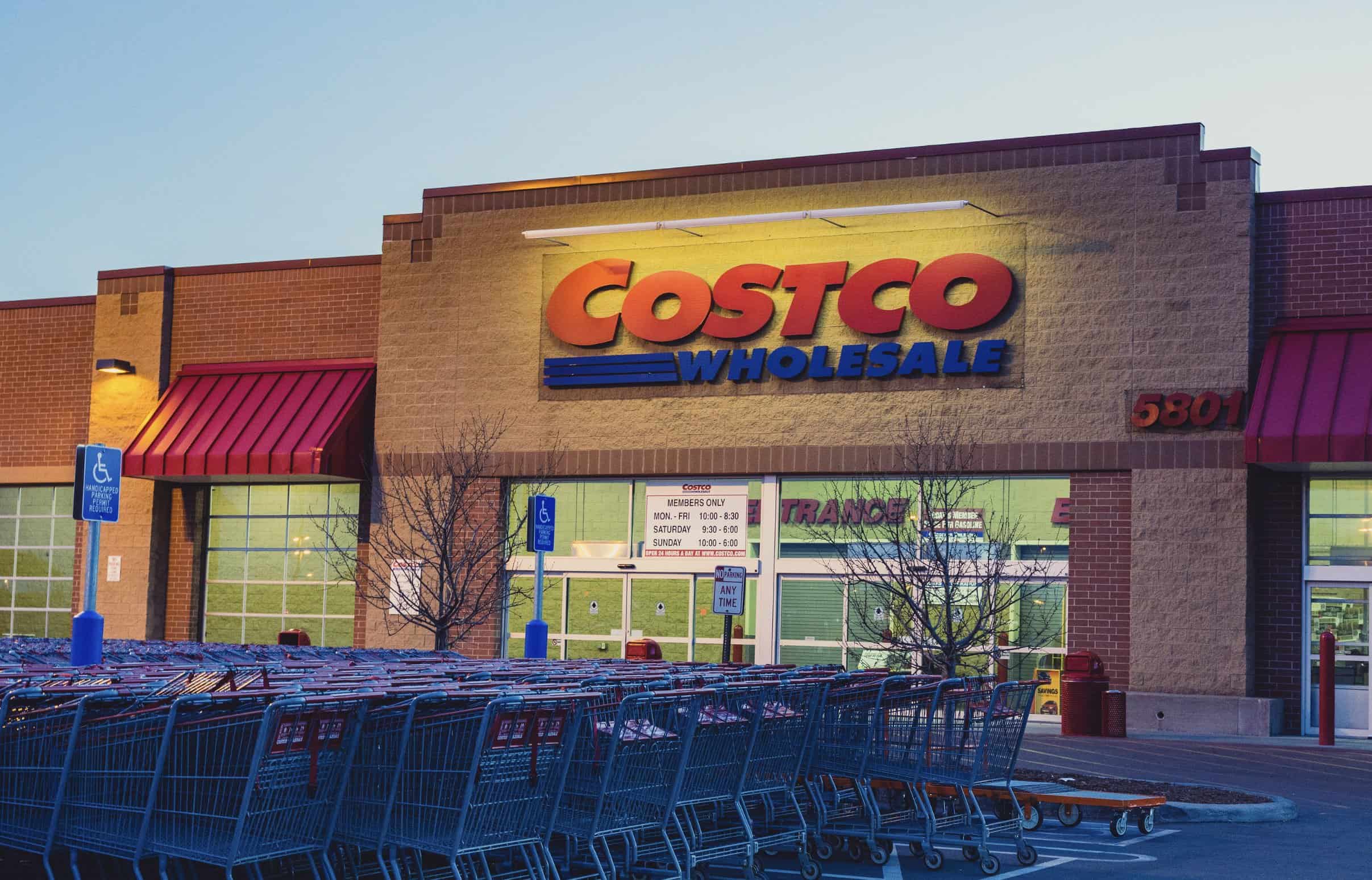
For years, Costco Wholesale has built a loyal following among drivers—especially RVers—thanks to consistently lower fuel prices and high-volume stations. Now, the company is testing something entirely new that could reshape how and where you fill up on the road.

A first for Costco

According to a March 26, 2026, report from CNBC, Costco is building its first-ever standalone gas station. This means it won’t be attached to one of its iconic warehouse stores.

This new location is planned for Mission Viejo, California, and it’s not a small experiment. The site will feature approximately 40 fuel pumps and span roughly 17,000 square feet. It will be one of the largest fuel stations Costco has ever built.

Why standalone?

Costco currently operates hundreds of gas stations, but they’ve always been tied to warehouse locations. That setup works well for shoppers, but it also creates bottlenecks. If you’ve ever tried to maneuver a larger rig through a crowded Costco parking lot, you know the struggle.

The standalone model aims to solve that problem. By separating fuel stations from retail warehouses, Costco can place pumps in high-demand areas without needing space for a full store. Analysts say this move could help attract new members while also keeping existing ones loyal, especially during periods of high fuel prices.

Costco strategy

Gas has always been a key part of Costco’s strategy. The company sells billions of gallons of fuel annually. Prices for Costco fuel is typically significantly lower than competitors, sometimes by 20 to 30 cents per gallon.

Company executives know that Costco’s fuel margins are relatively slim. However, the real payoff comes from membership growth and repeat visits.

What this means for RVers

For RV travelers, this shift could be a big win.

  • More accessible fueling locations. Standalone stations can be built closer to highways and major travel corridors instead of tucked into busy retail centers. That means fewer tight turns, less congestion, and easier entrance and exit with larger rigs.
  • Less crowding. Costco gas stations are famously busy. By adding dedicated fuel-only locations, the company could spread out demand and reduce long waiting times.
  • Potential for RVers. While final designs may vary, larger standalone sites open the door for wider lanes and better pump spacing. This is something many RVers need but rarely get.
  • Strategic placement. The first station is in Southern California, a hotspot for road trips and RV travel. Costco already has plans for additional standalone stations, including another large location in Honolulu.

A broader trend in fuel retail

Costco isn’t alone in seeing opportunity in fuel. Big-box retailers are increasingly investing in gas stations as a way to drive customer loyalty and foot traffic.

Fuel, unlike many retail products, brings customers back frequently. For RVers logging long miles, that frequency increases even more. And when prices are volatile, drivers tend to seek out brands they trust for savings.

That’s where Costco has a clear advantage. Its membership model allows it to undercut competitors while still maintaining profitability through annual fees and bulk sales.

What to watch next

This first standalone station in California is essentially a test case. If it performs well, expect to see more popping up along major travel routes across the U.S.

For RVers, that could eventually mean planning fuel stops around Costco locations without needing to detour into crowded shopping centers.

It’s also worth noting that these stations will remain members-only. You’ll still need an active Costco membership to take advantage of the savings.

RELATED:

RVT1254
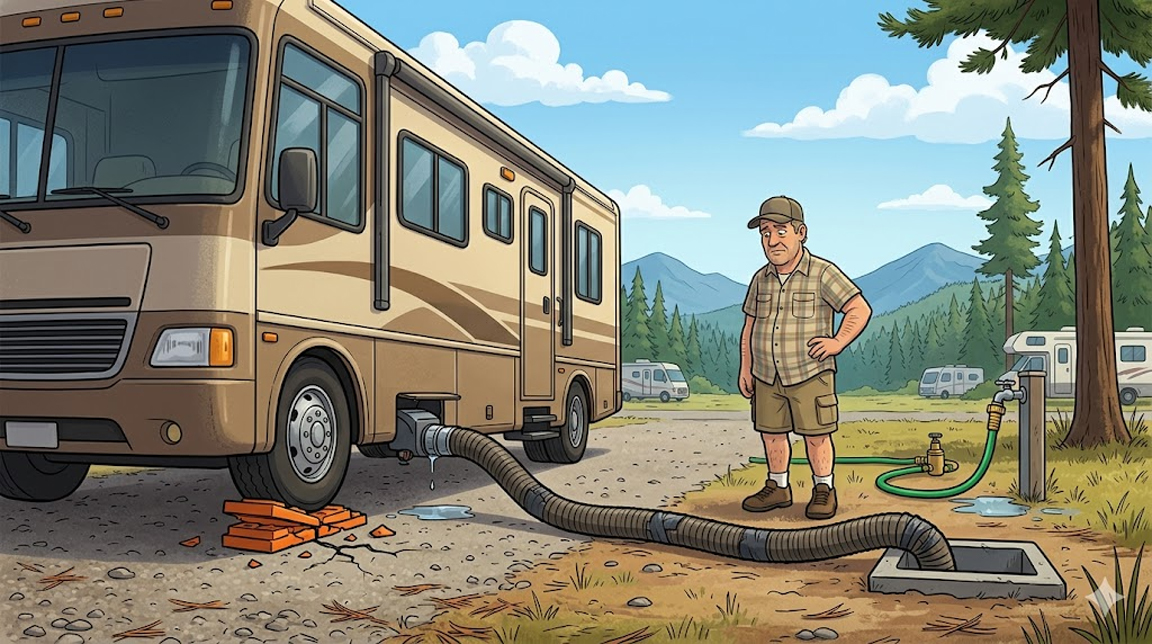
Have you ever had a problem with an RV slideout that delayed your travel?

21

Has this ever happened to you? You’re ready to leave your campsite. Checkout time is upon you. Everything is packed up. It’s time to push the button that retracts your slideout. But, Oh, no! Nothing happens when you do! The slideout is stuck in its “out” position.

You check everything to figure out what could be wrong. You try a few things, but no luck! You once read that when this sort of thing happens you can retract the slide manually, but you can’t remember how to do it. Or you’ve got a bad back and you know getting down under the slide and messing around with it could be very bad news for your spine.

So what do you do? The park has been packed every day since you arrived, so you know the camper who has reserved the spot you’re currently in will be along soon.

This is not good, right?

And let’s be honest—this isn’t just a minor inconvenience. A stuck slide can throw your entire day (or trip) into chaos, especially if you’re on a tight travel schedule or the campground is fully booked. Suddenly, you’re troubleshooting under pressure, hoping for a quick fix while watching the clock and wondering how long the next guest will wait before knocking on your door.

Has this ever happened to you, or something similar where your slide (or slides) was stuck and you couldn’t continue your trip on schedule? If so, after responding to the poll, please leave a comment and tell us your story.

MORE POLLS YOU CAN TAKE:

RVT1254b

Beyond the headlines with Tony Barthel: Campers are changing their ways as RV industry tensions rise

8

In this week’s Beyond the Headlines, I want to first welcome those of you who are bringing your campers out of hibernation back to the camping world. Well, not Camping World, but back among those of us who have been camping.

I got a good reminder from Jason Epperson of RV Miles to check all the batteries around the RV as step one, and that’s especially true of smoke and LP detectors, too.

The battery in these things can fail over the winter, and while we’d normally be annoyed by the chirping of them, you may not have heard that while the RV has been in its winter nap, that battery may have completely died. 

We have reported on several RV fires here, and it’s good to test and likely replace those smoke and LP detector batteries before you set out on your first journey. 

Y’all are being good campers

According to The Dyrt, an app for finding campsites, we campers are being better about utilizing the reservations we’re making. 

In their 2026 Camping Report, The Dyrt reported that only 58.9% of campers said they showed up every time they reserved a site in 2023, but that number jumped all the way to 70.7% in 2024 and 72.9% in 2025. Also, the number of campers who arrived a day or more late fell by 9% last year, and no-shows decreased by 5%.
The report—compiled from the results of surveys conducted with thousands of members of The Dyrt Community, a representative sample of U.S. residents, and camping property managers across all 50 states—also found that short-notice cancellations increased by 22% in 2025. 

Because availability has been such a hot-button topic in the camping industry, The Dyrt asked both campers and property owners the same question: Is it OK to reserve sites on multiple dates, knowing all won’t be used, for the purpose of providing options and flexibility? 

Campers generally don’t support this approach, with 61.3% saying no, 35.5% saying yes as long as they cancel the extra sites well in advance, and only 3.2% saying yes. Camping property owners were slightly more favorable to this idea with less than half (49.8%) saying no, with 36.2% saying yes as long as they cancel with plenty of notice, and 14% saying yes.

California RV Show was a success

According to Woodall’s Campground Magazine, the California RV Show, held March 20-22 at the Fairplex in Pomona, was a resounding success. California is a huge RV and camping market, but has been without a solid RV show since 2020. At that time, the show was considered a manufacturer’s show where companies would bring rigs in. But this was a dealer’s show, although many manufacturers had reps there. There were even some new rigs displayed. [For another eyewitness report, read Dave Solberg’s post.] 

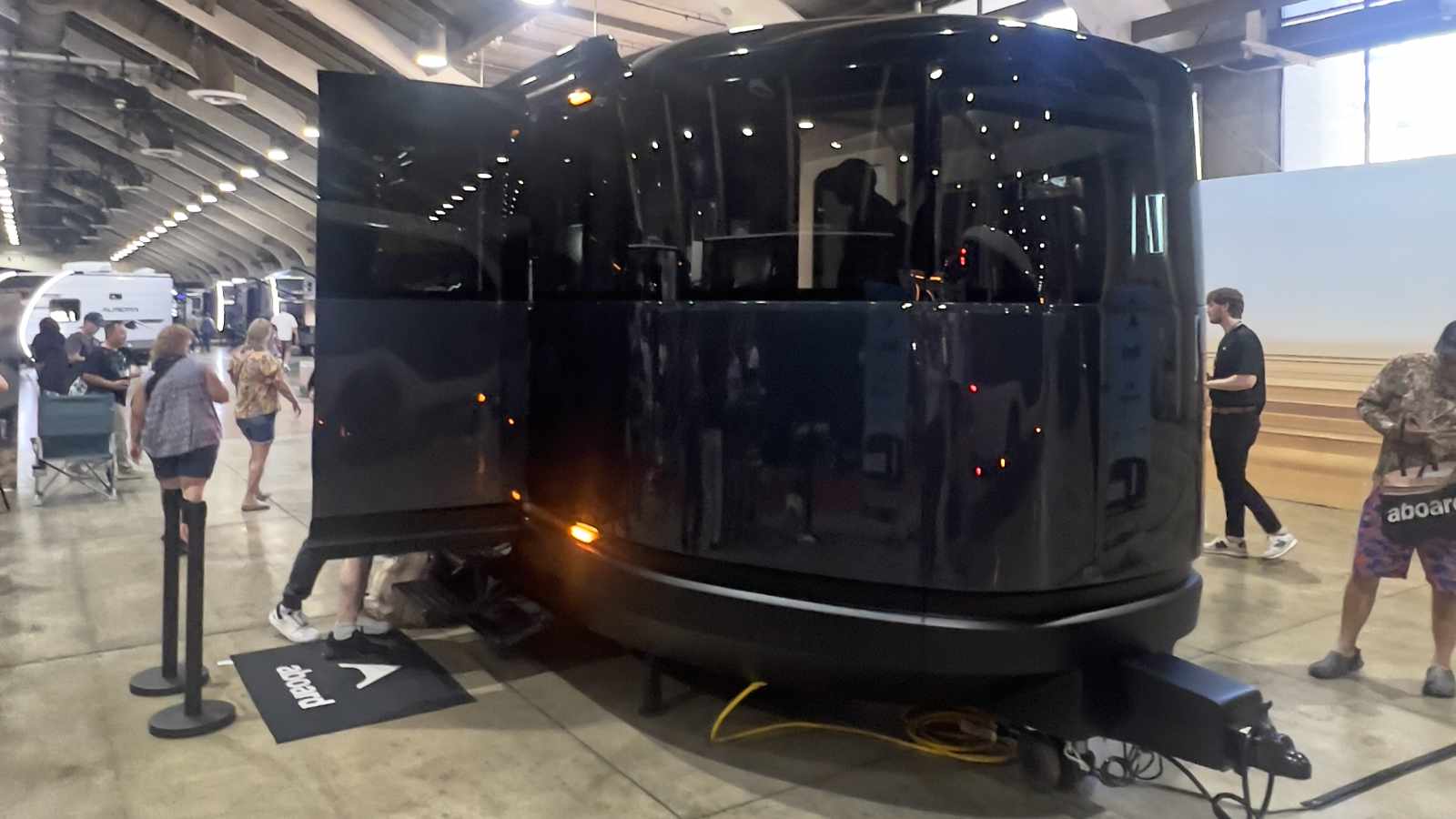
One of the new rigs displayed was the Aboard RV, another of those electric trailers like the Pebble, Evotrex, and Lightship. Again, another new trailer that promises to have a big battery and mitigate the losses inherent in towing a trailer by using electric drive motors. 

A prototype of the new Aboard RV was shown at the California RV Show. Photo by Ingall Bull.

But the Aboard is also like the others in that it uses a lot of Chinese-made parts, seemingly those used in Chinese EV and hybrid vehicle manufacturing, and then assembles those into an RV here in the good ol’ US of A. 

I keep repeating this, hoping the domestic RV industry will take notice. But today’s RV industry is much like Detroit of the 1970s. Quality can be questionable, manufacturing processes are antiquated, customers are grumpy, and the door is wide open to a foreign wave of competition.

Consider that one of my friends who went to the show went specifically to see the new Wingamm offerings, which come from Europe, because domestic motorhomes are just too big. 

Wingamm was one of the companies that said they would be at the show, but my friend just couldn’t find them. 

There are a lot of RV shows at this time of year. If you haven’t already seen it, I shared 10 tips for visiting an RV show, which I think you will find helpful.

Taylor County largest RV park ElmdaleRV parks—big and nonexistent

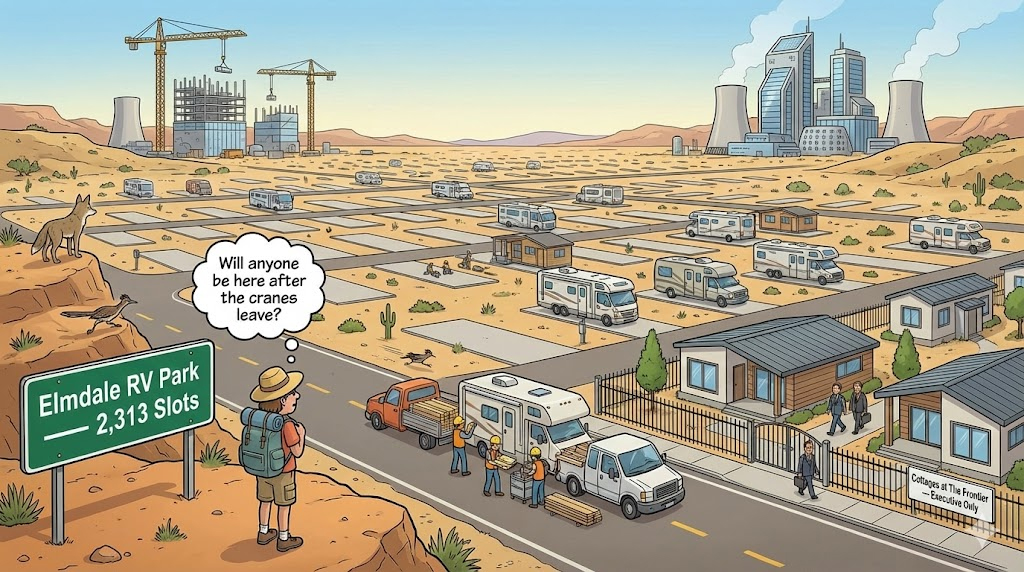
In the past week, we’ve been all over the board with RV park news. There are two ludicrously huge RV parks in Texas, Elmdale with 2,313 sites and The Frontier with 1,000. We just wrote again about those two parks here.

Then we also shared that Northport, Maine, is pushing the brakes on a proposed RV park.

Additionally, Love’s is expanding its offerings to RVers, including overnight accommodations, all over the country. I got to interview the Director of RV Operations at Love’s, Jim Wheeler, for this story (coming in tomorrow’s newsletter).

I bring these up to encourage you all to keep an ear to the ground with regard to your local legislators. While we RVers are familiar with RV parks and what a well-managed park can bring to the community, a lot of people aren’t. I had written that many government decision makers’ only awareness of RVing can be the homeless population they see on the way to the office. Oh boy, did that make some people mad, even though it wasn’t at all intended as a dig against anyone. 

The point is, the more we RVers can educate the people making the rules, the better off we all will be. Many communities don’t even have legislation on the books to cover building an RV park, so it’s almost impossible to do so expediently. This is part of why companies are buying the old parks, making them fancier, and then charging us a lot to stay there. 

Hopefully, we all can be a voice in the community to make our collective lives better. I did an interview with a couple who had to overcome the hurdles of building an RV park in a community that wasn’t really aware of them in this podcast episode. 

As always, I’m looking forward to reading your replies to this and hope you’re already looking forward to a great camping season. 

Stay up to date with all the news headlines for RVers. Click here

To read more from Tony, click here

RVT1254b

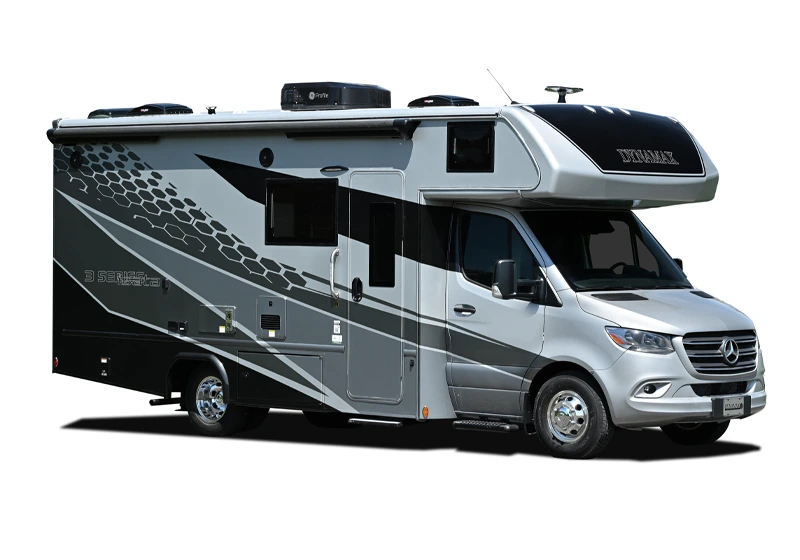
2026 Dynamax Isata 3 24FW— A compact Class C that doesn’t skimp on amenities

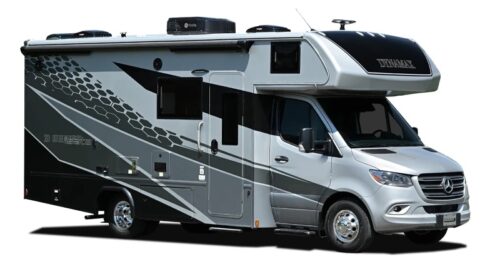
I’ve been looking at several Class C RVs lately, and like most of what I see in the 2026 Dynamax Isata 3 24FW.

In my opinion, this Class C is a good choice for couples who prefer a smaller rig but don’t want to skimp on the amenities. Take a look and let me know what you think.

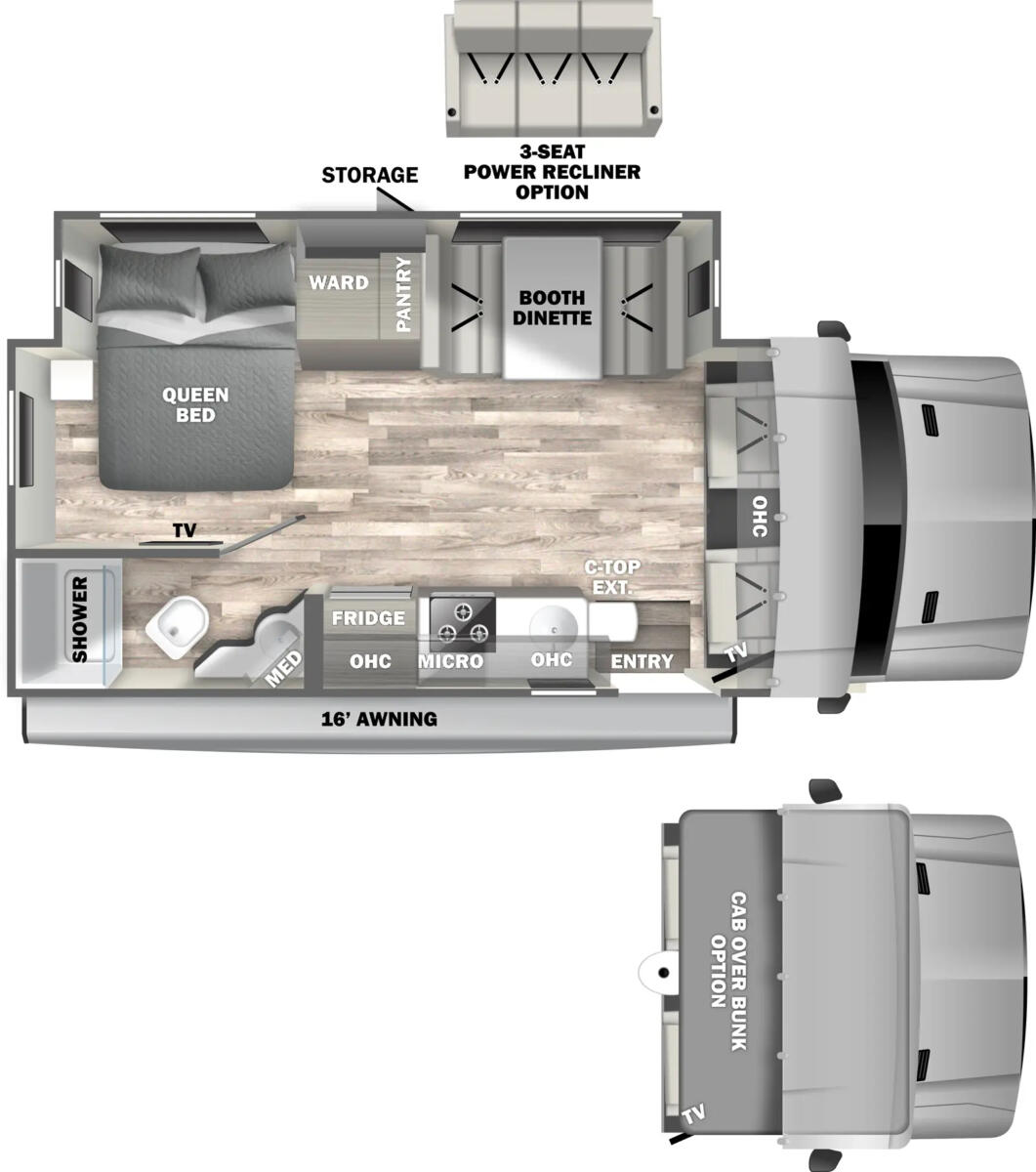
2026 Dynamax Isata 3 24FW floorplan image: Dynamax website

Behind the walls

Dynamax builds the Isata 3 with durability in mind, and the 24FW reflects that approach. The coach uses laminated sidewalls with aluminum framing and block foam insulation. It has a composite fiberglass exterior that eliminates wood in key structural areas.

The floor is also aluminum-framed, and the roof features aluminum trusses topped with a one-piece fiberglass cap. The 24FW includes one full-wall slide, which runs nearly the length of the coach and plays a major role in opening up the interior.

A feature I really like is the windows that open fully. With that feature and the window placement, getting a fresh breeze inside this RV will be easy. There’s also generous basement storage available.

Key specs

• Built on 3500 Mercedes chassis
• Wheelbase: 170 inches
• GVWR: 11,030 pounds
• GCWR: 15,250 pounds
• GAWR front: 4,410 pounds
• GAWR rear: 7,720 pounds
• Fuel capacity: 24 gallons (diesel)
• Exterior length: 24 feet 7 inches
• Exterior height: 11 feet 5 inches
• Exterior width: 94 inches
• Fresh water capacity: 35 gallons
• Gray water capacity: 32 gallons
• Black water capacity: 32 gallons
• Awning size: 16 feet
• MSRP starting at: approximately $199,000 USD

Interior and living space

I like the integrated screen door that greeted me in this RV. One step inside and I immediately noticed the feeling of space—something you won’t get in many Class C’s. The full slide really makes a huge difference! The coach didn’t feel at all tight. Instead, the 2026 Dynamax Isata 3 24FW opens up into a continuous, easy-flowing living area.

I like the upscale finishes with hardwood cabinetry, solid-surface countertops, soft-close drawers, and LED lighting. The clean, light color palette keeps the space feeling bright without feeling sterile.

2026 Isata 3 24fw 01 Copy 2026 Isata 3 24fw 02 Copy

Cab seats

The 2026 Dynamax Isata 3 24FW’s front seats swivel for convenience and extra seating. They come with “boosters,” which is a bit odd to me. I understand that some folks may want to sit a bit higher, but this struck me as unnecessary, although it’s a better height when facing the interior of the RV.

Kitchen

At first glance, I wondered about prep space in this compact kitchen. Countertop space is quite limited unless you use the sink cover. The extra pop-up counter space will help, at least a little.

The Dynamax Isata 3 24FW features a two-door 12V compressor refrigerator, a three-burner gas cooktop with cover, and a convection microwave. I appreciate the stainless sink, though it’s quite small. The residential-style faucet is a good design choice.

Kitchen storage is better than I expected for a Class C coach. There’s a large space under the sink and above-sink storage, too. On the opposite side of the coach, you’ll find more storage for dry goods, and the pull-out drawers are a practical feature that I really like.

2026 Isata 3 24fw 03 Copy

Living room

The living area is centered around an optional three-seat power recliner, with full recline, heat, and massage. (This option was featured in the model I toured and would definitely be my preference.) A dinette comes standard.

Built-in trays on the recliners are convenient, and the middle of the recliner comes down, forming an armrest, and has additional cup holders.

Across from the recliner, you’ll find a smart TV and a Bluetooth-capable sound system. This layout works well for the way we prefer to camp. Most of the time, we prep and cook outside. When we do eat inside, it’s usually in front of the TV.

With the full-wall slide, you won’t be bumping elbows.

Bath

The bathroom was a pleasant surprise. It’s positioned mid-coach and includes a shower, toilet, and sink. (Some smaller RVs use a split-plan bath. I much prefer to have all three fixtures in one space.) The toilet’s position allows plenty of room, the sink top and below storage offers places for bath necessities. There’s a medicine cabinet, as well.

The shower is small, but doable. The skylight helps make the space feel bigger, and I like the upgraded roof vent. Overall, the bath in the Dynamax Isata 3 24FW is practical and makes optimum use of the space. I appreciate that an actual door provides privacy.

2026 Isata 3 24fw 08 Copy

Bedroom

In the rear, the 24FW offers a dedicated sleeping area with a queen-size bed and a gel-infused memory foam mattress. The big downside here is accessing the bed. There is no walk-around space, and that’s a big disappointment to me. However, in a small RV like this, it’s to be expected.

There’s storage underneath the bed, along with wardrobe space and drawers. Reading lights add convenience; however, a CPAP user would need to use a drawer or the closet area for the machine. I do like the privacy divider that separates the bedroom from the main living area.

Dynamax offers an optional cab-over bunk with a mattress and privacy curtain. This adds extra sleeping capacity without changing the core layout. It would be useful for occasional grandkids’ overnights.

2026 Isata 3 24fw 06 Copy

Overall take

The 2026 Dynamax Isata 3 24FW stands out to me because it doesn’t try to do too much. Instead, it focuses on doing the essentials well. I like the smart open layout and the upgraded finishes.

For couples who want a diesel-powered coach that’s easy to drive and comfortable to live in, the 24FW is a well-balanced option.

Here’s a video for you to get a better look. Then please share your thoughts about this Class C RV using the comments below.

RELATED

RVT1254b

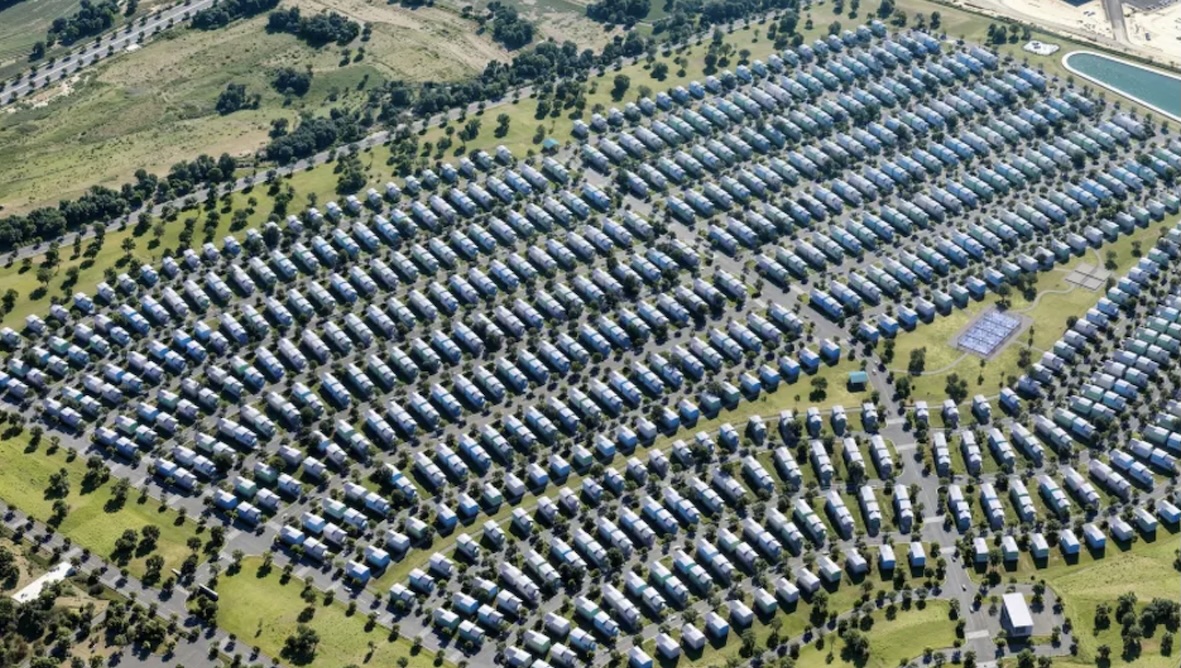
Two huge Texas RV parks may create ‘RV City’

Two massive RV parks tied to the AI boom could soon reshape Abilene, Texas, where traditional housing is hard to come by.

The first park is the $15 million Cottages at the Frontier with about 945 RV sites on 109 acres. The project is designed specifically to house workers for a nearby $25 billion data center campus, one of the largest in the country, expected to employ thousands.

Cottages RV Park in Abilene, Texas
Rendering of Cottages at the Frontier RV Park

The park would include paved roads, walkways and amenities such as a gym, dog park, pickleball courts and green space. Construction could begin soon and run through late summer. Rents are expected to be $1,550 per month.

But wait, there’s more (RV spaces)

Cottages at the Frontier is one of two large RV developments planned along the same road, but it’s the baby of the two. Another nearby project, Elmdale RV Park, would dwarf it by accommodating roughly 2,300 self-contained RVs on 148 acres, making it among the largest RV parks in the country.

The creation of the two parks signals how demand for temporary housing is surging as the data center expands.

Not all are happy campers

Not everyone is pleased. Some residents worry about increased traffic, pressure on water supplies, falling property values and the broader industrialization of the area.

City leaders, however, see the projects as a response to a housing shortage driven by the rapid influx of workers tied to the data center boom, which is transforming the local economy—and potentially turning Abilene into an “RV city.”

RELATED

RVT1254b

Big Amazon RV gear sale runs through March 31— Check out these deals!

The Amazon RV gear sale is underway and runs through March 31. If you’ve been putting off replacing worn-out gear, this may be the time to take a look. We sifted through pages of lookalike items and found a handful that line up with what RVers actually use every trip—water, waste, setup, and safety gear.

Most of what shows up in this sale isn’t flashy. It’s the stuff that wears out, gets forgotten, or quietly makes life easier when it works right. That’s where the better values tend to hide.

One quick note: The “regular prices” we’re using here reflect what these items typically sell for day to day—not the sometimes optimistic comparison prices you’ll see on Amazon listings.

The gear you’ll actually use every trip

If there was a theme to what surfaced, it’s this: The basics are where the action is.

Tank treatments, sewer hoses, rinsers—none of it glamorous, all of it essential. Items like Camco TST Drop-Ins Tank Treatment typically run about $20, but are showing up closer to $15 in this sale—roughly 25% off. The Camco Rhino Ultimate 20′ RV Sewer Hose Kit typically sells in the $80 to $100 range. At $63.64 in this sale, that’s roughly 25–30% off what many RVers would normally pay—a solid discount on a well-equipped all-in-one kit.

Not all that glitters in the Amazon sale ad is genuine buyer gold. A 12V RV Macerator Pump can change how and where you dump. Budget versions usually run $70 to $90, with sale pricing in the mid-$60s—more a small break than a true deal. Brand and build quality matter more than the discount. Looks like some Amazon lackey didn’t do much in the way of homework for the “spring sale.” Here’s how the advert partially brings you in: “Quick Release Sewage Pump with Fresh Water Crushing for Halloween Christmas.” Yep, I’m looking to crush Halloween and Christmas with my fresh water sewer pump!

Where it pays to be a little picky

Water systems showed up again and again—and this is where you don’t cut corners.

A regulator like the RVGUARD Adjustable Water Pressure Regulator typically sells in the $25 to $35 range, with current pricing in the low-to-mid $20s—about 10–20% off what many RVers would normally pay. It’s not a huge discount, but it’s still cheap insurance compared to plumbing repairs.

The Camco EvoFlex Drinking Water Hose typically sells in the $40 to $55 range, with current pricing around $31. That puts it roughly 25–40% below what many RVers would normally pay—a solid discount on a hose you’ll use every trip.

The land of lookalikes

Leveling blocks show up everywhere—different names, similar designs.

Not all leveling systems are the same. Traditional stackable blocks—like the Keltrion Leveling Blocks—often show up in the $45 to $65 range based on current listings, with Amazon pricing around $24.99. That’s roughly 40–60% below what we found elsewhere, making this one of the stronger discounts in the sale.

The ROBLOC Interlocking Leveling Blocks, on the other hand, isn’t a stack-and-build system at all. It’s a drive-on ramp that lets you fine-tune height from about a half-inch up to roughly four inches. We found at least one other listing near $49, compared to $24.99 on Amazon—a noticeable drop, though pricing for this model isn’t widely established.

They work for many RVers, but this is one category where material quality matters. Heat, weight, and repeated use tend to expose the weak ones.

The upgrades you actually notice

Every now and then, something shows up that isn’t just maintenance—it’s comfort.

An RV mattress like the Dyonery RV Mattress typically sells in the $230 to $270 range based on recent pricing, with current Amazon pricing around $229. That’s roughly 10–15% below what many RVers would normally pay—not a huge discount, but still a modest break on an upgrade you’ll feel right away.

The tempting stuff that deserves a pause

Some of the bigger-ticket items look appealing—but this is where you slow down.

Portable inverter generators like the maXpeedingrods Portable Inverter Generator are currently selling across multiple retailers in the $390 to $420 range, with Amazon pricing at $389. That’s only a small break from typical pricing—not a major sale—so reliability and support matter more than the discount here.

Tankless systems like the APUS Tankless RV Water Heater have recently sold in the $300 to $350 range, with current Amazon pricing around $297. That’s only a modest drop—roughly 10–15% at best—so this isn’t a major sale. Installation and compatibility still matter more than the discount here. Some buyers have said these are best used in rigs that only go out a couple of weeks a year, and that replacement costs at failure will eat up any real savings.

The quiet essentials

A few items fall into the “not exciting, but important” category. A backup camera like the Yakry Wireless Backup Camera has been selling in the mid-$60 range, with current pricing around $66. That’s essentially unchanged from recent pricing, making this more of a steady price than a true sale.

A 12V RV Carbon Monoxide Detector typically sells through many retailers in the $58 to $83 range, with Amazon pricing now at $42.99—roughly 25–45% lower than what we found elsewhere, and about 5–10% below its recent price. That makes this a solid value on a safety item you don’t want to skip.

The small upgrade that feels big

If you still crank your tongue jack by hand, this is one to consider.

A 7500 lb. Electric Trailer Tongue Jack typically lands in the $200 to $270 range based on recent and competing listings. With Amazon pricing around $187—and closer to $178 with a coupon—that’s roughly 10–35% below what many RVers would normally pay, making this one of the more meaningful discounts in the sale.

Not everything on sale is a deal

These sale pages are full of duplicates. Same product, different branding. Some of it works fine. Some of it doesn’t.

LED lighting kits and similar add-ons show up often, but they’re more about looks than function. You can buy them cheap, and annoy your campground neighbors by leaving them on alllllll night.

If something on your rig is due—or overdue—this sale window is where these basics tend to dip in price, though what’s actually discounted can shift day to day.

And if you’ve read this piece closely, you’ll see that Amazon’s “sales” aren’t always as big as the company would like you to believe. If you find something that looks good, take a minute and comparison shop. And be sure to read the customer reviews—the price might be “great!” but buying what could be junk for a great price leaves a sour taste in one’s mouth.

The Amazon RV gear sale runs through March 31. If you’ve been putting off replacing the gear you rely on every trip, this may be one of those moments where it makes sense to act before the window closes.

Click here to see every product on sale.

RELATED

RVT1254b

RV Daily Tips. Friday, March 27, 2026

America’s Original RV Newsletter. Since 2001
Issue 2870 • New issue every weekday
If you find this newsletter helpful, please consider supporting our work with a donation of your choice. Thank you!


Today’s thought

“We shall not cease from exploration and the end of all our exploring will be to arrive where we started and know the place for the first time.” —T.S. Elliot


Need an excuse to celebrate? Today is National Paella Day!

On this day in history: 1794 – The United States Government establishes a permanent navy and authorizes the building of six frigates.


Tip of the day
The best magnetic gadgets for your RV

By Gail Marsh
Stick ‘em up! No, this isn’t a robbery tutorial. Instead, here are several great RV tips that use magnets to make life on the road easier.

A couple of years ago, I wrote about magnets in a previous article. Since that time, I’ve collected even more tips for these popular RV helpers.

I like to use magnets because it often eliminates the need for nails or screws. Magnets are easily repositioned and are inexpensive and lightweight, as well. Continue reading for these great tips and gadgets.


NuextRV review
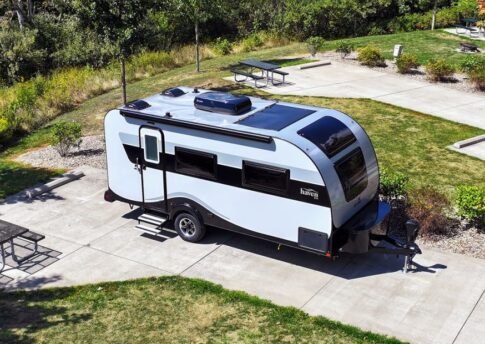
The nüCamp 2026 Haven 220 travel trailer—Big-ticket comfort

The nüCamp 2026 Haven 220 travel trailer looks like a clear step up for couples who want more room than a teardrop without jumping to a huge trailer. Shown at the 2026 Florida RV SuperShow, it mixes nüCamp’s usual fit and finish with big-ticket comfort features, including roof solar, standard lithium, a walk-around queen bed, and a true dry bath. Check it out and take a tour.


MAKE YOUR “OLD” RV FEEL LUXURIOUS AGAIN! One simple change can make all the difference. And if you haven’t replaced the one in your RV in a while, this will make you feel like you’re living in luxury! No, really, this is dangerously luxurious… 


In the RV shop with Dustin
FlexArmor roofs—RV expert’s concerns

While we don’t install FlexArmor on RVs at our repair shop, we do see them from time to time. Check out the video below for an inspection of a FlexArmor roof in the shop. There are certainly some benefits to this upgrade, but as an RV repair shop owner and former technician, I do have some concerns regarding the application.


Article and video
How to build an RV pad on a sloped lot

“A level RV is a happy RV,” set the tone for this project, and Lauren and Sam of A Little Bit Unhitched took that seriously. At their home base in South Carolina, the lot had too much slope, gravel kept getting tracked into the trailer, and parking on grass for long stretches brought extra wear on the tires and gave insects an easier path inside. So they built a level gravel parking pad themselves, and they did it for far less than the price of hiring it out. Here’s how they did it, and what you should know.


RANDOM RV THOUGHT: Some people worry about safety when it comes to RV living—but think about it. In a space that small, you’d likely know right away if something wasn’t right. Meanwhile, homes get broken into all the time without anyone noticing until morning. An RV? Not exactly a burglar’s first choice—especially when they don’t know who (or what) might be inside.


Featured article
Around the Campfire: The meanings and origins of many fun camping idioms

By Gail Marsh
A recent weekend brought several families to the campground. Folks of all ages joined us around the campfire. After brief introductions were made, a young child asked an RVer this question: “Can I see ‘your neck of the woods’?” The RVer had mentioned this phrase during the conversation. The little boy thought it meant a tattoo! A lively conversation followed—all about camping idioms or folk-isms—their meanings and origins. Learn about them here.


Ask Dave
Lug nuts on trailer seize up. Lubricate them or use anti-seize?

Read Dave’s advice.


You may have missed these recent popular stories…


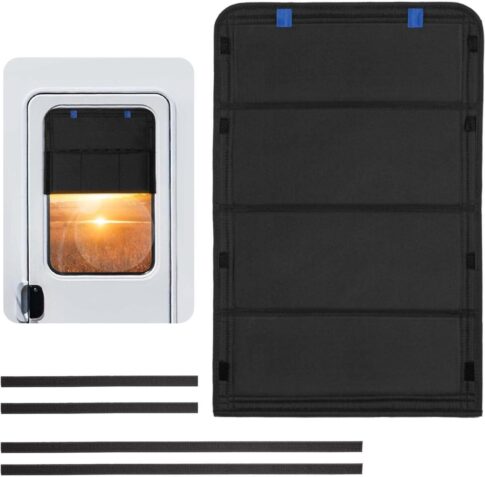
WindowshadeThe best window shade for your RV’s door
Block the light without blocking your view. This RV door window shade gives you full blackout when you want it—but, unlike most shades, it folds up so you can enjoy the scenery when you want, too. Easy to install in minutes with no drilling, it helps keep your rig cooler, adds privacy, and lets you switch from “sleep mode” to “view mode” instantly. A simple, smart upgrade for better comfort on the road. Check it out.


Reader poll
Have you ever seen a ghost?

Respond here.


Quick tip
Don’t pass the gas—valve!

Loyal reader Jeff considers a critical safety factor in RVing is traveling with the LP gas valves closed. To help him remember, he’s had a special “red flag” tag designed, which he hangs in his rig’s electrical power center. Thanks, Jeff!


On this day last year…


Website of the day

festivalnet®: Find Festivals In the USA & Canada 2026-2027
This website is great! Click on your state, or a state you’re headed to, and you’ll see all the fairs and festivals coming up. You’ll find so many fun things to do.


? MYSTERY PRODUCT OF THE DAY ?
Ladies, you’re just a girl who loves… what? We bet it’s this. No, we know it’s this. We are this girl! *Raises hand* Yes, men, don’t worry. You love this too, but you can’t have it!


Trivia

The first commercially successful bottled water in the United States was called “Hunyadi Janos” and was introduced in 1869. This Hungarian mineral water gained popularity for its purported health benefits and was sold in distinctive green glass bottles. The success of Hunyadi Janos helped pave the way for the bottled water industry that we see today.


Readers’ pet of the day

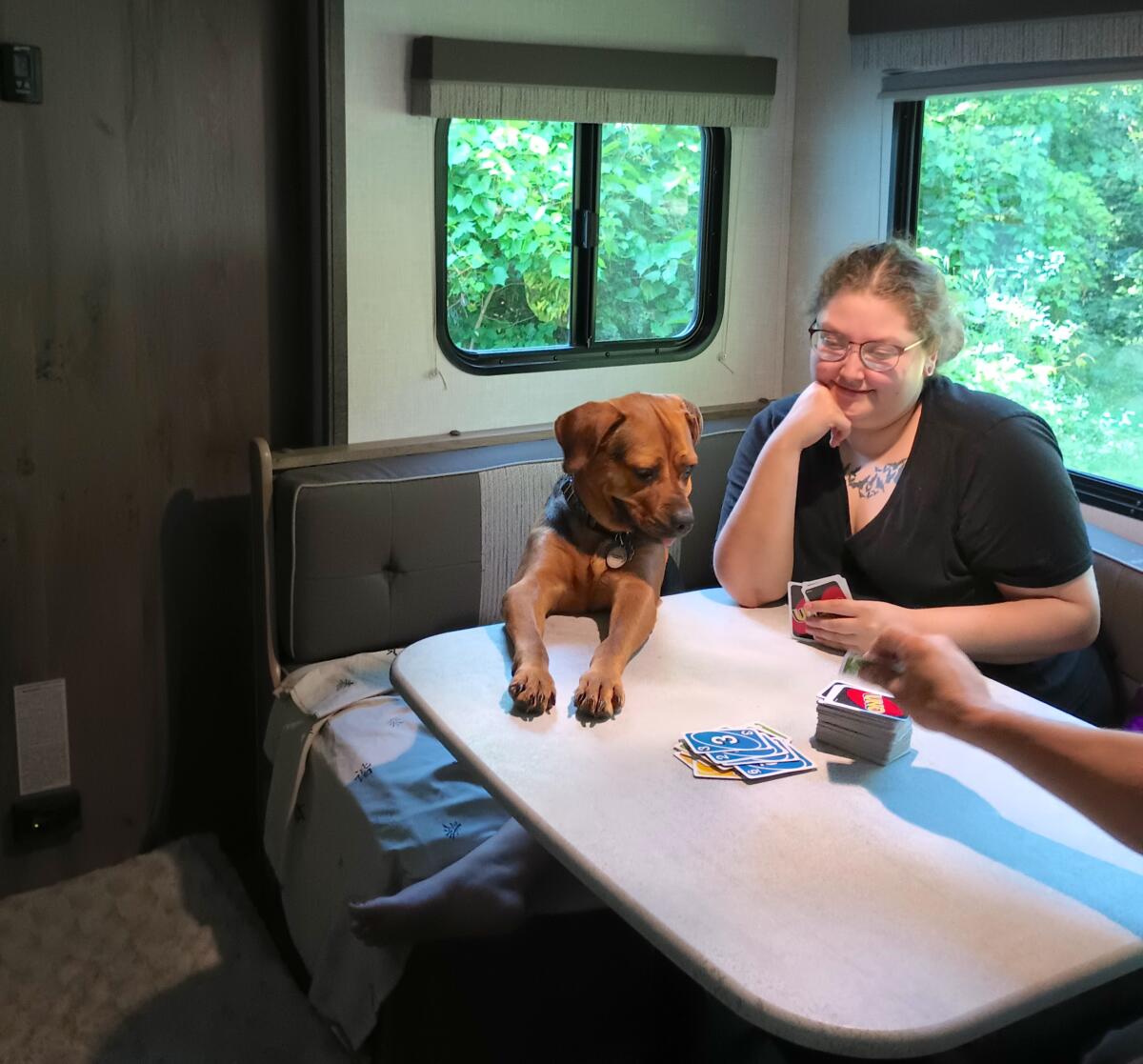
Img 20230703 172559606 Ab2d749993f90aa8f39a28e521b3c79c“Ursa (Staffy mix, age 5), the leader of our pack, took to camping easily and loves to be involved in everything. This was taken during our third trip. She was helping us play Uno!” —Gretchen Lange

Send us a photo of your pet with a short description. No blurry photos and please do not submit your photo more than once. Thanks!

RVing with Dogs group on Facebook. You’ll love it.


Leave here with a laugh

Turn100
Click to enlarge.

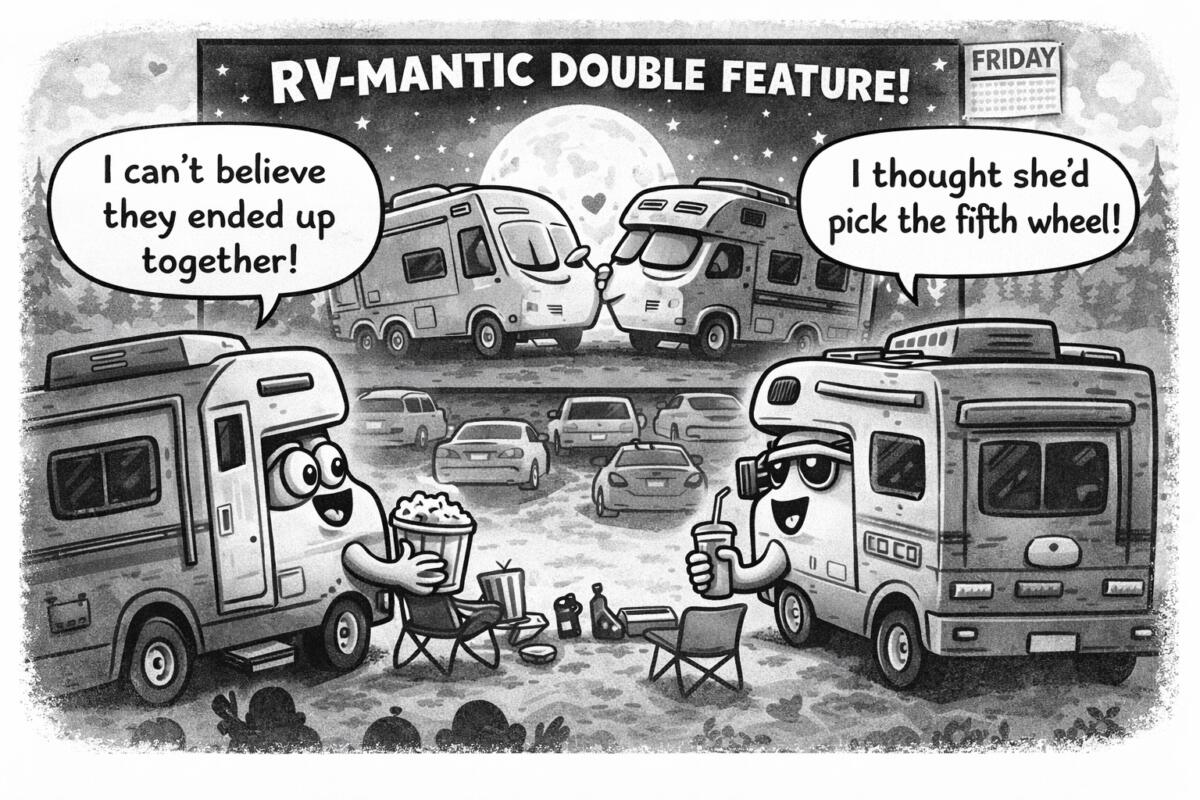
Doublefeature


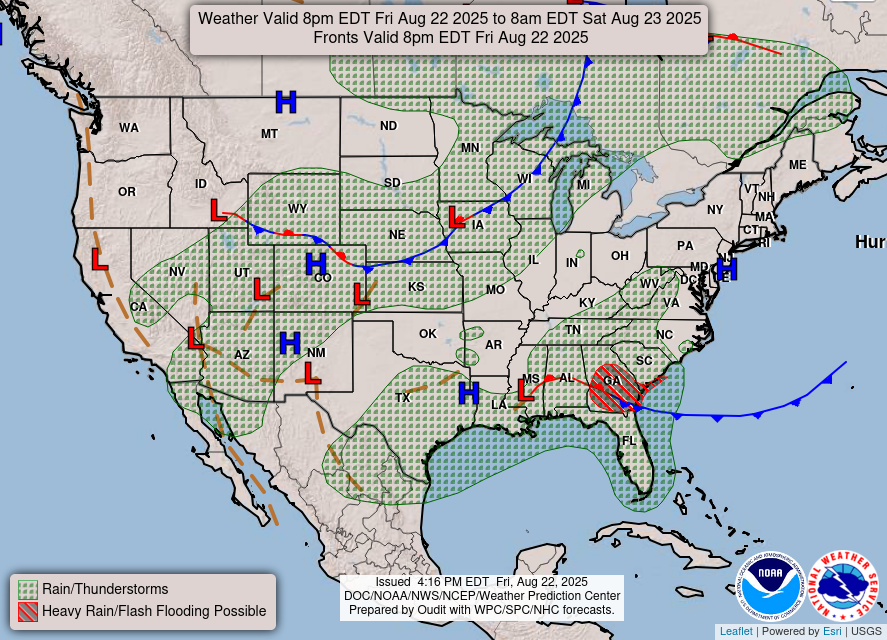
Today’s weather forecast across the nation
THIS MAP UPDATES TWICE A DAY

Visit Current National Radar Weather Map


Did you miss the latest RV Travel Newsletter? If so, read it here.
Oh, and if you missed the Latest News for RVers, make sure to catch up here.


If you shop at Amazon.com we’d appreciate you using this link. We get an itty bitty commission if you buy something, but they add up and help us pay our bills (most importantly our hard-working writers!). 


RVtravel.com All-Star Team

Click here for information about our staff and how to contact us.

Lug nuts on trailer seize up. Lubricate them or use anti-seize?

Dear Dave,
The lug nuts on my travel trailer rims seem to lock up or seize, making them hard to break loose when retorquing or changing a tire. Should I use any type of lubrication or anti-seize product? —Adam, 2023 Forest River Salem

Dear Adam,
This has long been a common topic not only for RV travel trailers, but also for cars, trucks, and motorhomes.

Unlike motorized vehicles, travel trailers and fifth wheels do not have steering and drive tires with different wear patterns, so there is no standard tire rotation pattern. As a result, lug nuts can remain untouched for long periods, even though wheel bearings should still be inspected and lubricated regularly.

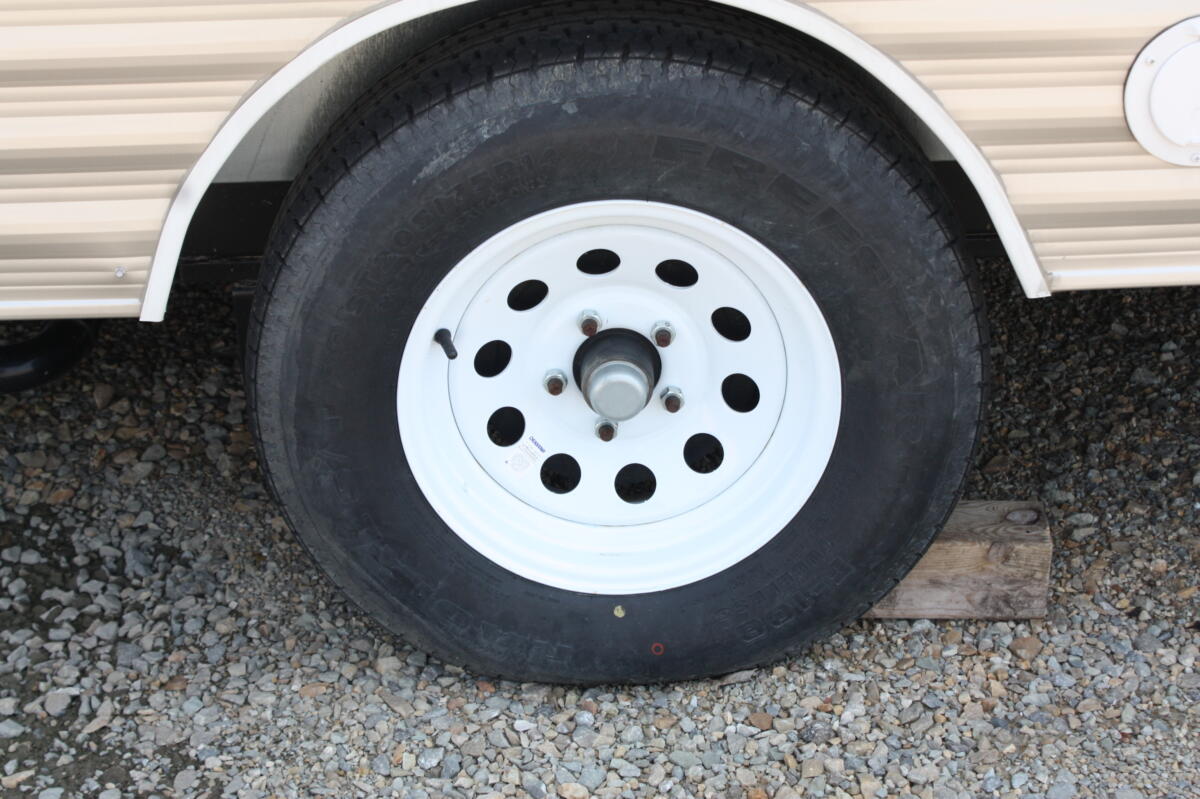
Trailer Tire

However, many trailer owners are unaware that lug nuts should be retorqued monthly while the trailer is in use. According to the Tire & Rim Association, any wheel that has been removed and reinstalled should have its lug nuts retorqued at 10, 25, and 50 miles, and then checked monthly thereafter.

They also advise against using lubrication or anti-seize on the studs or lug nuts. Lubrication reduces friction, which can lead to over-tightening, since torque specifications are based on clean, dry threads.

Another issue some trailer owners encounter is lug nuts loosening over time. This can be caused by factors such as metal fatigue or compression between the wheel rim and brake drum, especially under extreme road conditions and temperature changes. Road vibration, lateral stress from tight turns, and temperature fluctuations can all contribute to this problem.


 You might also enjoy these posts from Dave 

DAVE HAS ANSWERED MORE THAN 1,000 readers’ maintenance and repair questions. Read a directory here. There is so much to learn!


Dave Solberg is a leading expert in the RV industry and the author of the “RV Handbook.”

HAVE A QUESTION FOR DAVE?

Send your inquiries to him using the form below.

Name
Drag & Drop Files, Choose Files to Upload

RVDT2870