Home Blog Page 9

Rattlesnake season is here. Yosemite rangers offer advice

Yosemite National Park is home to the northern Pacific rattlesnake (Crotalus oreganus). It’s the only rattlesnake found in the California park. It uses its venomous bite to capture prey, which helps control the park’s rodent populations. But, if agitated or startled by humans, it will bite. So far this year in California, three people have died from rattlesnake bites.

The snakes are found throughout western North America, ranging from the southern interior of British Columbia in Canada, extending south through Washington, Oregon, and California, and reaching as far as Baja California in Mexico.

Many of the snakes have been recently spotted in the park, including the one in the photo above. “These reptiles are an important part of Yosemite’s ecosystem, but we need to take precautions to protect ourselves, our loved ones, and our pets,” the park advises on its Facebook page.

How to interact with the rattlers

When hiking, wear protective clothing like high boots and heavy pants. Walk or hike in areas where the ground is clear, so you can see where you step or reach with your hands. Never put your hands in areas where you cannot see. Brush, ledges, cracks, or holes are common areas where rattlesnakes can be found resting.

If you hear a rattlesnake, stay still until you can see the snake and then move away. Don’t rely on hearing alone: Some snakes might not rattle even when startled.

Here are a few things you should NOT do if bitten by a snake:

  • DON’T apply a tourniquet.
  • DON’T pack the bite area in ice or ice water.
  • DON’T cut the wound with a knife or razor.
  • DON’T suck out the venom by mouth as infection can occur.
  • DON’T let the victim drink alcohol.
  • DON’T attack or kill the rattlesnake for using its natural defense mechanism.

All rattlesnake bites are a medical emergency. If you or someone you see is bitten, immobilize the bite area, gently wash it with soap and water and apply a cold, wet cloth over the bite if possible. Mark the area of the swelling with a pen and the time and keep the bite at the same level as the heart. Remove anything that might constrict swelling. Most importantly, call 911 or transport to the nearest emergency facility for further treatment and to be treated with antivenin aka antivenom.

Learn more about rattlesnakes at the Rattlesnake Conservancy. And if you are in Albuquerque, do not miss the Rattlesnake Museum in Old Town.

Have you ever encountered a rattlesnake in the wild or been bitten by one? If so, please leave a comment.

RELATED

RVT1265

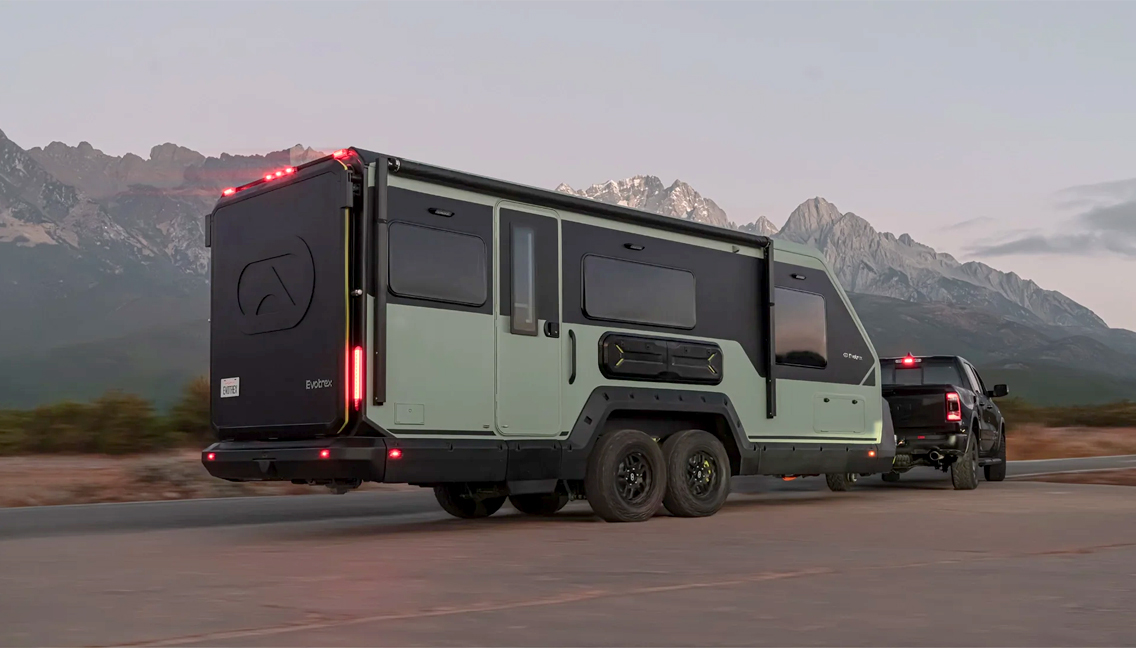
New RV trailer claims it can help electric trucks tow farther

Anyone who follows electric trucks has heard the same concern: Towing an RV can dramatically cut driving range.

A California startup called Evotrex says it may have found a way to help.

The company’s new PG5 travel trailer combines a large battery system with an onboard generator. Evotrex says the setup can provide substantial off-grid power and help electric tow vehicles travel farther between charges. If it works as advertised, it could address one of the biggest questions surrounding EV towing today.

The company recently raised $30 million to move the trailer toward production, but for RVers the more important question is much simpler: Can it really help an electric truck tow farther?

Why towing remains a challenge for EVs

Electric pickups have improved rapidly in recent years. But towing remains one of their toughest assignments.

Pull a large travel trailer at highway speeds and energy consumption can climb dramatically. Weight matters, but wind resistance often becomes the bigger factor. That’s why many EV owners see a substantial drop in range when towing.

Evotrex says its trailer is designed to help address that problem while also functioning as a self-contained power source for camping.

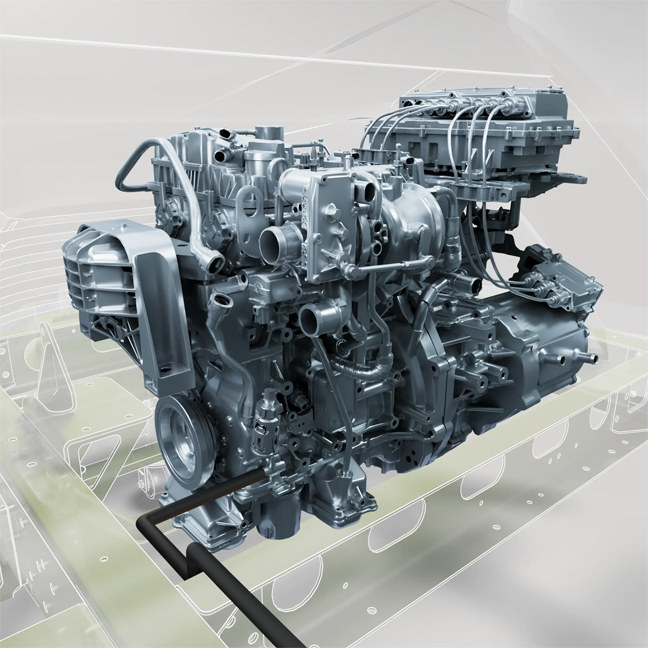
An onboard generator is a key part of the Evotrex PG5’s power system. Unlike all-electric RV concepts, the trailer uses a generator to replenish its batteries when needed, a design the company says can support longer trips and extended off-grid stays. Image courtesy of Evotrex.

The company describes the PG5 as an extended-range electric trailer. According to TechCrunch, the trailer combines a large battery pack with an onboard gasoline generator that can recharge the battery when needed. The goal is to provide power for camping and reduce dependence on charging infrastructure during longer trips.

A rolling power plant?

The off-grid capability may interest many RVers as much as the towing claims.

Today’s campers often travel with more electrical demands than ever before. Air conditioners, Starlink systems, laptops, televisions, induction cooktops, and other devices can place heavy demands on a battery bank.

Evotrex says the PG5 is designed to support extended off-grid camping without requiring campground hookups or frequent charging stops.

Of course, electricity is only one part of the boondocking equation. Fresh water capacity, holding tanks, cargo carrying limits, and campsite access still matter regardless of how much battery capacity an RV carries.

Not the only company chasing the idea

Evotrex isn’t alone.

Several companies are trying to rethink the RV for the electric age. Startups such as Lightship and Pebble have introduced trailers that use batteries, advanced aerodynamics, and other technologies aimed at reducing the impact towing has on EV range.

That growing interest suggests manufacturers see electric towing as a challenge worth solving.

At the same time, RVers have seen plenty of ambitious concepts come and go. Bringing a prototype to market is one thing. Building a reliable RV that survives years of highway travel is another.

“The real test won’t happen in a lab. It’ll happen on the highway.”

What RVers should watch

According to reports, Evotrex plans to spend the next 10 to 12 months testing durability before moving toward production. Customer deliveries are currently expected in 2027.

The trailer won’t be inexpensive. Reports place the fully equipped Premium version at about $160,000.

That price alone will put it out of reach for many RV buyers. Still, new technology often appears first in premium products before gradually moving into more affordable models.

If the system works as advertised, it could make electric towing more practical and give boondockers another way to stay off-grid longer.

But RVers have heard big promises before. The real test will come when these trailers start accumulating miles in the hands of everyday owners. That’s when we’ll learn whether this technology represents a genuine breakthrough or simply another interesting experiment in the race to reinvent the travel trailer.

Sources
TechCrunch: “Anker-backed Evotrex raises $30M to build its off-grid RV”
GlobeNewswire: “Evotrex Raises $30 Million Series A to Accelerate Production of the Evotrex-PG5 Electric RV Trailer”

RELATED

RVT1265b


Love’s introduces mechanical services for RVers

This seems like good news.  Love’s Travel Stops is helping RVers stay road-ready this summer by introducing light mechanical work and oil and lube services at select Love’s Truck Care locations, building on its recent addition of RV tires and batteries.

According to a press release, the company has announced a partnership with Spartan RV Chassis to provide warranty work for Spartan RVs.

“The nationwide reach of Love’s Truck Care locations gives RV drivers easy access to fast service with no appointment required,” said Eric Daniels, vice president of truck care for Love’s. “This summer, RVers can find more value than ever at Love’s, including comprehensive maintenance services, convenient overnight stays at Love’s RV Stops, a variety of food options, dog parks and savings on fuel through Love’s Rewards.”

Services available at Love’s

Oil and lube services are now available at 275 locations, while nearly all 431 Love’s Truck Care locations nationwide offer light mechanical work, including:

• Brake systems
• Select batteries and tires
• Electrical systems
• Suspension systems
• Exhaust systems

Love’s is also adding RV warranty services through a new partnership with Spartan RV Chassis, a brand under the Aebi Schmidt Group and a leading manufacturer of high end Class A motorhomes. Through the agreement, Love’s Truck Care locations will offer Spartan motorhome owners comprehensive maintenance packages, chassis inspections, lube service, and wheel alignment.

An overview of a Love’s RV Stop (from Love’s)

RV Stops

In addition to RV maintenance solutions, Love’s operates a growing network of more than 130 RV Stops (RV parks and dedicated RV overnight parking areas) nationwide, featuring amenities such as Wi-Fi, electric and water hookups and RV dump stations. Some locations also include sport courts, fire pits and grills. Love’s is the only travel stop network that allows RVers to book, pay for and turn on amenities on their phones through the Love’s Rewards App.

With Love’s Rewards, customers can save 10 cents  on every gallon of gasoline, up to  25 cents  on every gallon of auto diesel and earn points on purchases of fuel and in-store items.  It’s  free to sign up  and customers  are not limited to the number of gallons or times they can use the discount, which is unique to Love’s.

To find a location and service, customers can visit loves.com or download the Love’s Rewards App and choose the service filter needed.

RELATED

RVT1265b

RV Daily Tips. Wednesday, June 10, 2026

America’s Original RV Newsletter. Since 2001
Issue 2923 • New issue every weekday


Today’s thought

“Reminds me of my safari in Africa. Somebody forgot the corkscrew, and for several days we had to live on nothing but food and water.” —W. C. Fields


Need an excuse to celebrate? Today is National Egg Roll Day!

On this day in history: 1854 – The United States Naval Academy graduates its first class of students.


Tip of the day
Easy ways to spruce up your RV campsite

If you want your campsite to feel like an extension of home without turning packing into a nightmare, think colorful, compact, and weather-smart.

Lightweight, well-chosen items can turn a bland patch of dirt into a welcoming hangout in minutes. Read on, and you’ll see!


Pause Restart 12RB travel trailerRV review
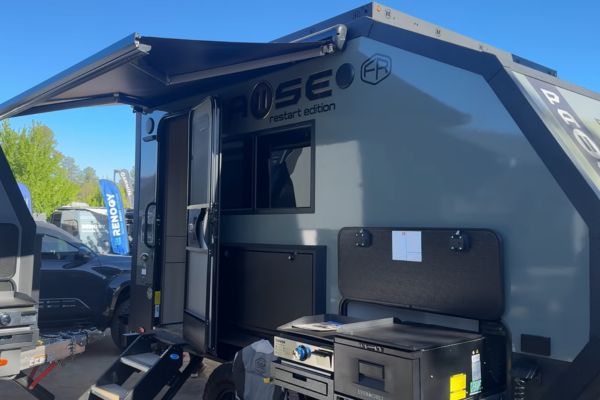
First look at the Forest River Palomino Pause Restart R12RB—a dry bath and more

By Cheri Sicard
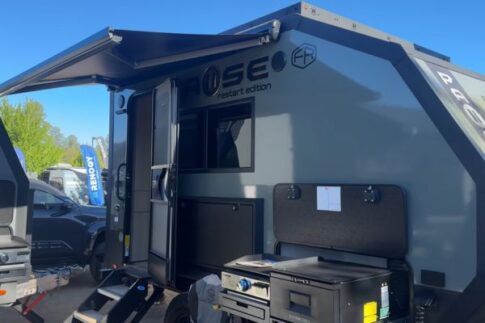
I don’t know how Forest River managed to fit all the features into their Pause Restart 12RB travel trailer. Built in the U.S. and listed at around 4,500 pounds dry, it packs a dry bath, an indoor fridge and freezer, and off-road hardware into a mere 12-foot box! That mix is what makes it stand out. The layout stays simple, but it squeezes in features that are hard to find in this size. Check it out.


In the RV shop with Dustin
Where to find your RV’s awning model and serial numbers

An RV owner in one of my Facebook groups asked, “Where can I find the awning model number and serial number?” You can find your awning model number by opening the awning. Then… 


WindshieldcleanerKeep your windshield clean! 
No more dirty windshield—inside or out! This windshield cleaner comes in three different sizes, and the large, swivel head easily wipes dirt, grime, dust, and whatever else is dirtying up your windshield right off. Too easy! Thank us later. Learn more or order.


Article and video
The pros and cons of the Camco TastePURE 4-in-1 water pressure regulator

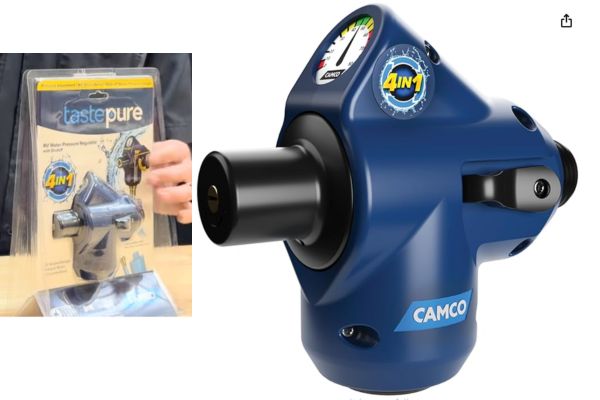
RV water hookups can turn into a pocket full of little brass parts fast. Nick from That RV Tech spotted a new Camco accessory at Menards that aims to replace that pile with a single piece. Here, Camco combined several common RV water hookup parts into one unit. The device includes an adjustable pressure regulator, a shut-off valve, a 90-degree elbow, and a pressure gauge. Here are his thoughts.


Featured article
Consider an electric scooter for your RV travels

By Janet Groene
If you’ve been in any city recently, you’ve probably seen electric scooters all over. They’re all the rage these days, and cities have adopted them for public use. They make it easy to get around, not to mention they’re a whole lot of fun. Let’s talk about those cute new electric scooters for camping. After all, who wants to walk all the way to the camp store when you can hop on a scooter and channel your inner sixth grader? Continue reading.


Campingpajama
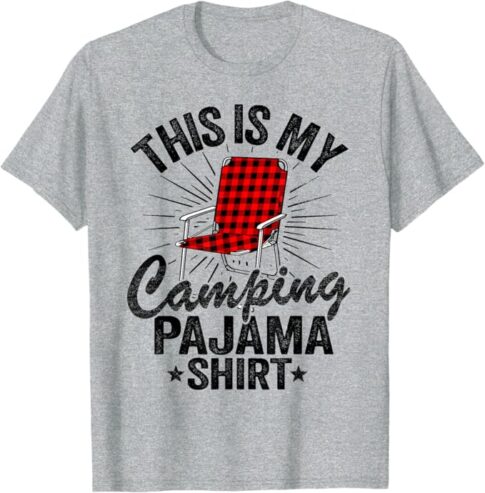
We love this shirt, which comes in many colors and styles for men and women. Learn more or order.

YOU KNOW IT’S TRUE: The difference between “packing light” and “packing for an RV trip” is about 400 pounds.


Trusted by Full-Time RVers
Americas Mailbox offers secure mail forwarding, scanning, and residency services tailored to life on the road, plus tax savings. Learn more.


Ask Dave
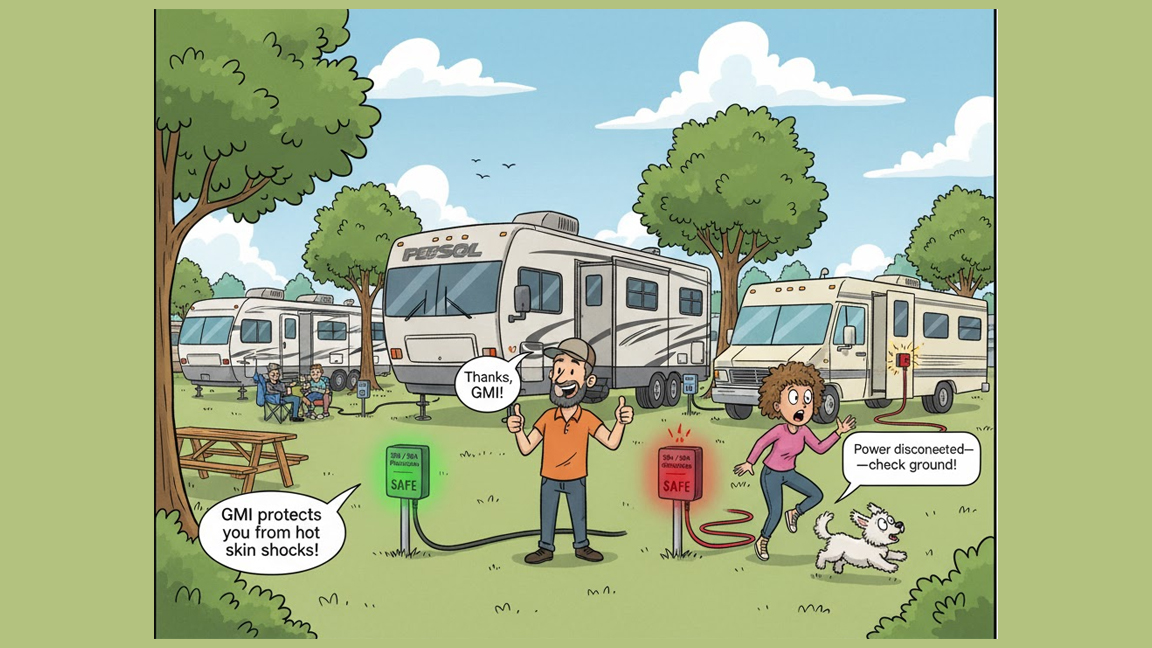
What is a grounding monitor interrupter (GMI) that will be required on all new RVs?

Dave explains here.


Reader poll
How often do you eat a meal at a picnic table?

Respond here.


What about you?
RVtravel.com Missed Connections

Missed Connections are personal messages posted in a paper or online by someone who had a brief encounter with a stranger and wishes they had spoken up, exchanged contact information, or met again. The posts typically describe where the encounter happened, what the person looked like, and what made the moment memorable, in hopes that the other person will see the message and respond. RVtravel.com has more than one million readers each month, and we’re all RVers! Chances are we could bring you together, so what’s your missed connection?


61bs22vnbfl Ac Sl1500Have a hard time opening water bottle lids? 
These will help! Simply push one of these “lids” onto the water bottle lid, and voila, it’ll be much easier to twist off. These are designed with seniors and those with arthritis in mind, and they really help! Here’s an affordable pack of 3.


Quick tip
Electrical circuit not working? Check this out

Got an electrical circuit in your RV that stubbornly refuses to work? You’ve checked the circuit breaker and it’s fine, but still “no juice”? Check in the bathroom and verify that the ground fault interrupter doesn’t need to be reset. Don’t ask how we know about this one.


On this day last year…


Website of the day

30 Best Camping Recipes to Enjoy in the Great Outdoors
If you know The Pioneer Woman, you know she’s hard not to love. And her recipes are always delicious! Comfort food at its finest. Here are 30 of her best camping recipes. You’re going to want to start cooking right after you read this!


Trivia

Japan has the most vending machines per capita. The ratio of vending machines to people in Japan is 1:23.


? MYSTERY PRODUCT OF THE DAY ?
“Hold on, Honey. The future is calling.” These are futuristic (cool!), all right.


Readers’ pet of the day

Img 0794 23d05a6a19db169d435ac76773d8860c“Player (Westie, age 10) loves to go camping with us. This has turned into four months in Florida, and he’s not complaining!” —Beth Wagaman

HELP! WE’RE RUNNING LOW ON PET PHOTOS! Send us a photo of your pet with a short description. No blurry photos and please do not submit your photo more than once. Thanks!

RVing with Dogs group on Facebook. You’ll love it.


Leave here with a laugh

Ain’t it the truth!

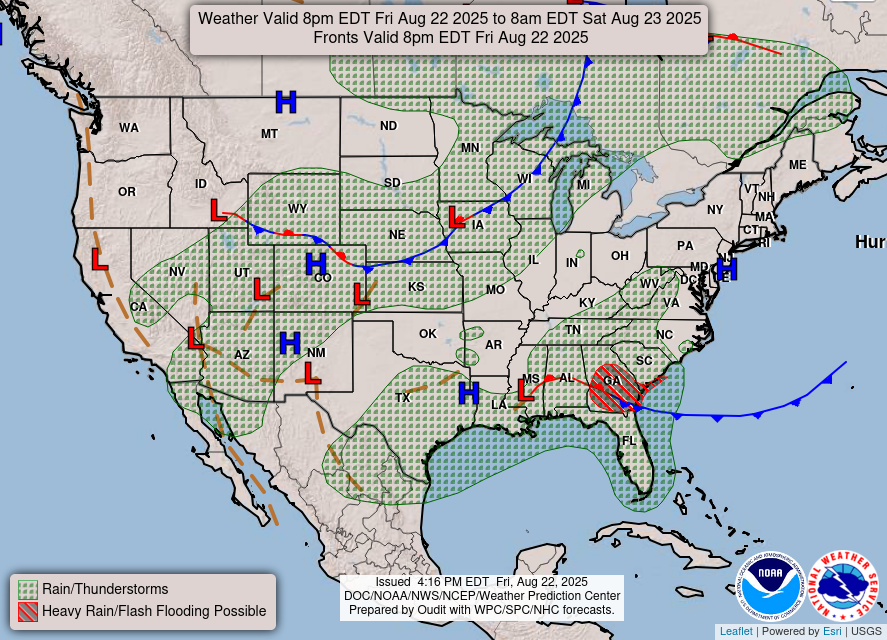
Today’s weather forecast across the nation
THIS MAP UPDATES TWICE A DAY

Visit Current National Radar Weather Map


Did you miss the latest RV Travel Newsletter? If so, read it here.
Oh, and if you missed the Latest News for RVers, make sure to catch up here.


If you shop at Amazon.com we’d appreciate you using this link. We get an itty bitty commission if you buy something, but they add up and help us pay our bills (most importantly our hard-working writers!). 


RVtravel.com All-Star Staff

Click here for information about our staff and how to contact us.

WHY WE ASK FOR DONATIONS INSTEAD OF SELLING SUBSCRIPTIONS.

Our policy on using artificial intelligence.

What is a grounding monitor interrupter (GMI) that will be required on all new RVs?

Dear Dave,
What is a grounding monitor interrupter (GMI) and how will it affect me and my rig?

From Dave:
This is a topic that has been discussed at length by many electrical experts. I have been monitoring it for the past year.

Grounding monitor interrupter requirement

The RVIA recently announced it has approved the Standards and Steering Committee’s recommendation for all new RVs to have a grounding monitor interrupter installed starting January 1, 2027. Here is the explanation of the requirement as listed in the RVIA press release.

It requires all RVs with 30A or 50A electrical service to install a grounding monitor interrupter (GMI), which is a loss-of-ground device. Before electrical current can pass into the RV, a GMI will check that the receptacle has a proper ground connection. During use, the GMI will monitor the ground connection to the RV and, if lost, will disconnect power to the RV….

The requirement was previously delayed because of a lack of fully developed, listed GMIs available for RV use in manufacturing at that time, making compliance with the original NEC date unrealistic. The Standards Steering Committee has continued to monitor the availability of GMIs and feel there will be availability of sufficient GMIs for use in RV manufacturing to meet the new effective date of January 1, 2027, and a mandatory enforcement at the start of each manufacturer’s respective model year 2028 production.

Misinformation in articles

From the research I have done, there is quite a lot of misinformation running through articles regarding where the device should be installed and if older units can be retrofitted. Currently, the only GMI devices are designed to be installed in the RV and not the campground pedestal. Also, there are no devices available to retrofit older units at this time. Efforts are being directed to installation on more than 300,000 new units.

What does this mean for the owner of a unit with a GMI installed?

If the campground source has a bad ground, loose wires, or reverse polarity, the GMI will automatically shut off the power to the rig and you will not be able to run any 120-volt component. It is permanently wired and cannot be disconnected or bypassed. Therefore, it is important for campgrounds to test each pedestal to ensure they are wired correctly.

It is also important for an owner to test the pedestal prior to plugging the unit in. This can be done with a multimeter or an existing emergency management system (EMS) such as the Hughes Power Watchdog or Southwire Surge Guard.

If 30-amp outlet doesn’t work, check the 50-amp outlet

Since the 30-amp outlet in campgrounds is typically used the most, it gets the most abuse, as well. Often these outlets are worn, loose, or corroded. If the 30-amp outlet tests defective and the GMI will not allow power to flow to the unit, it would be good to test the 50-amp outlet. It typically is a more heavy-duty component and may be wired properly. This would allow an owner to use a 50-30 amp adapter to still be able to get power. However, it is important to notify the campground of the faulty 30-amp outlet.

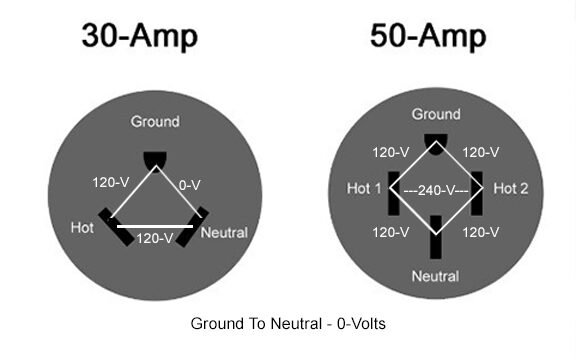
If you plan to use a multimeter to test the outlet, you should find the following voltage readings on a 30-amp and 50-amp outlet. Set the multimeter to the 200-volt AC setting. Place the black probe in the ground slot and red probe in the hot and check the voltage.

30-50-amp voltage chart
30-amp 50-amp voltage chart (click to enlarge)

 More on grounding monitor interrupters 

DAVE HAS ANSWERED MORE THAN 1,000 readers’ maintenance and repair questions. Read a directory here. There is so much to learn!


Dave Solberg is a leading expert in the RV industry and the author of the “RV Handbook.”

HAVE A QUESTION FOR DAVE?

Send your inquiries to him using the form below.

Name
Drag & Drop Files, Choose Files to Upload

RVDT2923

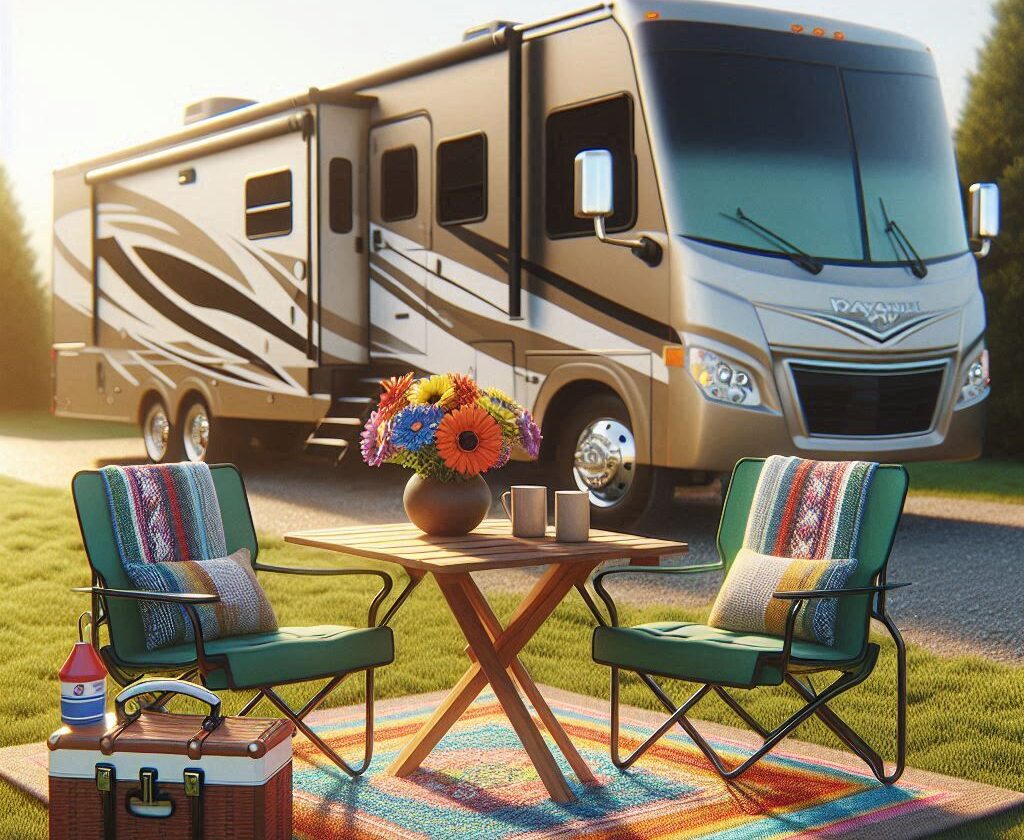
Easy ways to spruce up your RV campsite

3

If you want your campsite to feel like an extension of home without turning packing into a nightmare, think colorful, compact, and weather-smart.

Lightweight, well-chosen items can turn a bland patch of dirt into a welcoming hangout in minutes. Read on, and you’ll see!

Utilitarian tan, black, and gray

Many outdoor site accessories are manufactured in the same “neutral” (dull?) color palettes. You’ll likely see outdoor rugs and step and grill covers in utilitarian black, tan, or gray. That’s fine, until you want something with a bit of personality.

The good news is that a few manufacturers are infusing color into some of the outdoor items RVers use. It’s surprising how adding a few spots of color will energize your outdoor space and coax you to spend even more time there.

Made for the elements

Before we look at specific items, it’s important to remember a few things. First, keep in mind the weight of every item you introduce to your RV experience. After all, you’ll eventually need to pack it up to move to your next destination.

Second, consider your potential campsites. If you’ll RV in rocky terrain, that garden flag will be difficult to push into the ground. Figure out an alternative way to mount it or leave it at home.

Finally, look for items that will last. Outdoor rugs and fabrics that hold up to sun, rain, and heavy foot traffic make life easier at the campsite. Synthetic fibers such as polypropylene (also called olefin) resist fading, shed moisture, and clean up with a quick hose-down. Consumer testing shows these materials perform best for durability and low maintenance, so look for rugs and textiles labeled indoor/outdoor or polypropylene.

Colorful rugs

Have you noticed? Several campgrounds we’ve visited explicitly forbid large, heavy patio mats. (I’m talking about the 8’ x 10’ mats that pretty well cover the entire footprint on your RV campsite.) A campground manager explained it like this: “Even if you stay just a day or two, a mat can flatten or even kill the campsite grass. That ruins the experience for the next RVer who gets that site.”

Rugs help define your “outdoor living room” and bring color underfoot. If a large mat is not allowed, choose a few smaller mats instead. Place one rug at each camp chair or lounge. If you want tried-and-true options with lots of buyer feedback, check popular indoor/outdoor designs that reviewers say hold color and wash off easily. Here are many outdoor campsite rugs.

ScreenshotEarly spring and summer are great times to look for colorful outdoor rugs. I found this one at The Home Depot for $9. Check retailers online, too. You might be surprised to find rugs at unexpected retailers.

Artificial flowers and plants

This was a difficult one for me. I love growing flowering plants. However, my aversion to “fake” flowers has lessened since I found these outdoor flowers that resist fading and look great all season long!

Real plants are lovely but can be fussy (and messy) on the road. UV-rated faux flowers and potted faux palms give you bright, nonfading blooms with zero watering. Also, you have no worries on travel days because there’s zero soil to spill!

faux outdoor flowers Amazon image

Specialty sellers who focus on outdoor-rated silk and polyester arrangements make pieces meant to withstand sun and moisture. Some are perfect for a tabletop arrangement or a colorful accent beside your RV steps.

If you want to skip watering and enjoy color all season, look for the “UV resistant” or “outdoor” label when you shop.

Table covers

I won’t spend much time on tablecloths because you can read about the many choices here. Suffice it to say that a picnic table covered with a brightly patterned cloth packs a big impact at your campsite!

Doormats

outdoor colorful mat Etsy image

Where large grass-killing mats are outlawed, you may want to consider adding a smaller mat at the base of your RV steps. A doormat can catch dirt and sand before it gets into your rig.

The best selection I’ve found is on Etsy—the online marketplace. Many styles are on sale right now, and you’ll be surprised at the variety of choices! Look and see here.

Camp flags and banners

Flags are what I like to call personality on a pole. A small garden flag or personalized campsite banner is one of the easiest ways to stake your turf and show off your personality, interests, and more.
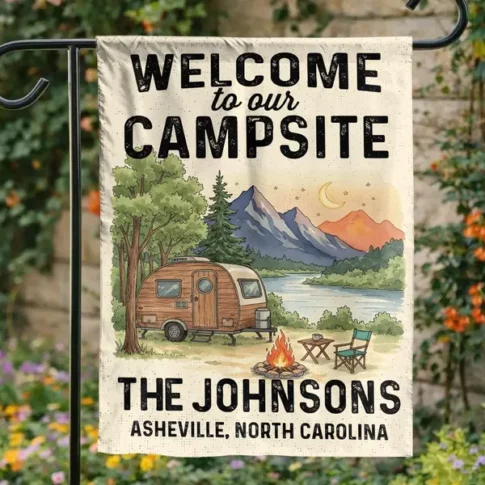
personalized camp flag etsy image

Many crafters on handmade marketplaces (like Etsy) offer double-sided, weather-resistant garden flags. Many can be customized and arrive ready to hang from a small freestanding stake or pole. Personalized flags are lightweight, easy to pack, and make your site feel like “yours” in seconds. Of course, Amazon has a zillion styles, too.

Note: Many campgrounds nix political flags and banners. Check with your camp manager before posting anything even remotely potentially controversial.

Grill covers

A colorful or patterned grill cover protects your cooktop from bugs, dust, and rain while adding a decorative pop. Here’s one that fits our portable grill. Always measure and choose a size with adjustable features.
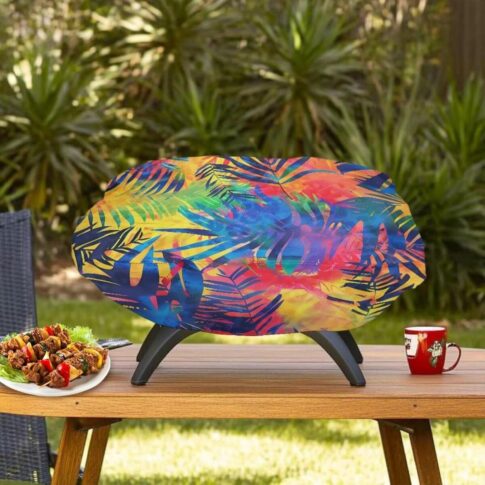
colorful grill cover Amazon image

Tips for packing, setup

Pack by categories: Put all small decor (flags, tablecloth, plants) in one lightweight tote so setup takes under two minutes.

For anything fabric, a quick shake at departure will remove crumbs and dust and keep items ready for the next stop.

When you’re breaking camp, tuck artificial flowers into a box or put them in a place where stems won’t get crushed.

Make it yours and keep it simple

The trick to a pleasant, colorful campsite is to choose durable, compact items that travel well and add color without adding hassle.

Choose one statement rug, one or two accent textiles (tablecloth + towels or throws), a small flag, and a faux floral or two. You’ll have a campsite that feels cozy and personal, and when it’s time to move on, everything stows away — ready for the next sunny pull-through.

How do you make your campsite colorful? Tell us in the comments below.

RELATED

RVDT2923

The pros and cons of the Camco TastePURE 4-in-1 water pressure regulator

RV water hookups can turn into a pocket full of little brass parts fast. Nick from That RV Tech spotted a new Camco accessory at Menards that aims to replace that pile with a single piece. He shares his thoughts in the video at the end of this post.

Nick’s first look at the Camco TastePURE 4-in-1 was positive for one simple reason: It cuts down on clutter. Still, one design problem stood out as soon as it came out of the box.

What the Camco TastePURE 4-in-1 gets right

Camco combined several common RV water hookup parts into one unit. The device includes an adjustable pressure regulator, a shut-off valve, a 90-degree elbow, and a pressure gauge. For RV owners who hate keeping track of separate fittings, that is the whole point. One part can replace several small accessories in the storage bay and make setup quicker at the campsite.

Why the 90-degree elbow matters

The elbow is not there for looks. When a hose sticks straight out from the RV water inlet, its weight can pull down on the connection. A 90-degree fitting keeps that weight closer to the wall, which usually helps in a few ways:

• It reduces stress on the water inlet.
• It helps prevent kinks at the connection.
• It keeps the hose from pulling down on the plumbing.

That is why the elbow part of this design makes sense.

Why the “4-in-1” label feels stretched

Nick’s first critique was the name. After a closer look at the packaging, Camco lists the four functions as pressure adjustment, 90-degree strain relief, shut-off valve, and pressure gauge.

That is how the company gets to “4-in-1,” but he still sees it as more of a 3-in-1. The gauge is part of the regulator assembly, not a separate accessory. For him, counting the regulator and gauge as two separate things feels like a marketing push.

The main problem is bulk at the RV wall

The bigger issue is weight. Because all those parts sit in one assembly, the unit is larger and heavier than a basic brass elbow. In the video description, he notes that it sticks out about an inch-and-a-half from the side of the RV.

That changes the whole strain-relief idea. A part meant to reduce pull on the inlet still hangs off the wall with more mass than a simple elbow. He felt that detail should have been caught before the product hit the shelf.

A simple fix for a future version

Nick’s suggested fix is simple: Add a stand-off foot or brace. If a small support rested against the RV wall, it could help carry the weight and reduce leverage on the inlet over time.

He also noted that an adjustable version might work better on stick-and-tin RVs, where wall depth can vary. For owners who like to tinker, a 3D-printed support could solve the problem.

A good idea that still needs field time

Even with the criticism, Nick’s take stayed upbeat. He likes seeing companies such as Camco try new ideas that make RV life easier, even when the first version misses a detail or two.

He also plans to test it in real use, because a quick bench impression is not the same as a weekend at a campground. Nonetheless, he says that Camco has a good concept here. The 4-in-1 makes RV water hookup simpler, and that alone will appeal to a lot of owners.

The weak point is the leverage hanging off the inlet. If Camco adds better support in a later version, this could become an easy add to an RV water kit.

It’s available on Amazon here.

RELATED

RVDT2923

How often do you eat a meal at a picnic table?

17

Picnic tables, much like the campfire ring, are a place where RVers and campers share some of the best meals and conversation. Wouldn’t you agree? Both gathering places are special to our lifestyle and both places are cherished among family and friends.

Cooking outdoors has many benefits to RVers (no smelly RV, no making the RV 100 degrees…), but eating outdoors has many benefits, too—more mental-health-wise, but still!

There’s something about sitting outside that seems to make food taste a little better. The fresh air, the scenery, or simply just slowing down and enjoying the moment and meal. A simple sandwich at a picnic table overlooking a lake can feel more memorable than a fancy dinner eaten indoors.

Of course, not every picnic table is created equal. Some come with incredible views of mountains, rivers, or sunsets. Others become memorable because of who you shared them with. Years later, you may not remember exactly what was on the plate, but you probably remember the laughter, stories, and people gathered around the table.

How often do you eat a meal at a picnic table? Is it a part of your dinner routine at every campground you go to? Do you tend to eat lunches at picnic tables when you day-trip to new places? Or do you never really eat at a picnic table?

After you vote, please leave a comment. Tell us about your favorite meal at your favorite picnic table—we know you have a memory of it!

MORE POLLS YOU WILL LIKE:

RVDT2923

Where to find your RV’s awning model and serial numbers

By Dustin Simpson
An RV owner in one of my Facebook groups asked, “Where can I find the awning model number and serial number?” You can find your awning model number by opening the awning. Then, on the right-hand side, facing the camper, there should be a small tag with the serial number and manufacturer’s model number.

Product information is located on the tube.

It’s a good idea to take pictures of these awning model numbers and send them to yourself. This information is very important for you to get any replacement parts if needed.

Example of the product information.

Routine inspection and maintenance are so very important when it comes to awnings.

This is a reminder to check your awning hardware, springs and fabric condition every 4–6 months.

Do not wait until it’s too late and you have an issue.

Checklist for RV awning maintenance

1. Know the fabric. Vinyl and acrylic are the two main types of awning fabric.

  • Acrylic fabric is not waterproof, but it is light and breathable, which allows it to dry faster.
  • Vinyl fabric is durable and mildew-resistant, but it should never be stored until it is completely dried.

2. Inspect the fabric regularly for tears. It’s a good idea to closely examine the awning fabric for holes every 3–4 months. This prevents small rips from getting larger and allows for repairs.

3. Clean thoroughly and regularly. We recommend that you hose off your awning every 3–4 months. This prevents dirt from building up and settling in.

4. Secure your awning. Violent wind can wear on awning fabric. To preserve the fabric, it is helpful to secure your awning with a saver clamp or a tie-down kit. You should also ensure that the knobs on the side arms are tightened before every drive.

5. Never leave RV awnings unattended.

6. Make sure you have insurance coverage for awnings.

DIY product links:

Our Facebook groups

These Facebook groups were created to help educate owners about parts, problems, repairs, fixes, and upgrades on RV units. We will be sharing videos that include WHAT’S IN THE SHOP? and SHOP TALK episodes with information on accessories and products that we use and install on the units from the shop.

We try and help as time allows to answer questions and problems. We encourage others to share their experience so we can build a resource page to help everyone.

Please follow us on YouTube, and see our published articles on RVtravel.com and other social media pages.

Please feel free to share your stories, problems, and upgrades with us so we can build a resource page to help others.

Thank you,
Dustin

More from Dustin

Read more of Dustin’s articles here.

RELATED

RVDT2923

First look at the Forest River Palomino Pause Restart R12RB—a dry bath and more

I don’t know how Forest River managed to fit all the features into its Palomino Pause Restart R12RB travel trailer. It packs a dry bath and an indoor fridge and freezer into a mere 12-foot box! It’s listed at around 4,500 pounds dry, and includes off-road hardware. It’s built in the U.S.

That mix is what makes it stand out. The layout stays simple, but it squeezes in features that are hard to find in this size. In the video at the end of this post, the team from ROA Off-Road gives us a tour.

A small trailer with real off-road hardware

The Pause Restart R12RB rides on a Lippert frame with powder coating plus e-coating (electrocoating), so scratches from trail use are less likely to turn into a rust problem. It also gets CURT Beast Mode independent suspension, the same setup used on the larger Restart 17 on dirt and forest roads with good results.

Outside, the trailer keeps the basics in place. There is a spare tire, a rear bike rack, and pass-through storage that also houses the batteries, ladder, power cord, and stabilizer tools. The walls use fiberglass backed by Azdel with a foam layer to reduce thermal bridging.

Outdoor kitchen and off-grid power

Pause kept the outdoor kitchen in these models, which has become a familiar part of the brand’s trailers. It includes a griddle cooktop, an Everchill drawer fridge for drinks, a sink with hot and cold water, and a drop-down table that works as prep space or a place to sit.

Forest River equips the Pause Restart R12RB with 306 amp-hours of Xantrex battery capacity, a Victron 2,000-watt inverter, an MPPT controller, and 200 watts of roof solar. For short trips away from hookups, that is a useful setup.

The interior makes the 12-foot layout work

Pause Restart 12RB floorplanThe first surprise is storage. Right by the door, Pause built a tall wardrobe with shelves, a hanging rack, a large drawer, lower storage, and locking latches on the cabinets. For a 12-foot trailer, that is a lot of usable storage space.

The main living area pulls double duty without feeling cramped. A bench sits across from a sliding table that tucks under the bed, while the small stools work as seats, footrests, or steps up to the east-west queen bed. Blackout curtains, overhead cabinets, under-seat storage, and a swing-out TV help the space feel more finished than bare-bones. One bench also flips into a small bar ledge by the window.

A rare kitchen and bath combo in this size

The indoor kitchen is one of the big reasons this tiny floor plan stands out. It has a microwave, air fryer, and convection oven combo, a large fridge and freezer, a two-burner stove, and a deep sink with a faucet that folds and swivels to save room.

Forest River also added small tech touches that make daily use easier. Pop-up power towers include wireless charging, USB-C, standard USB, and 120-volt outlets.

Then there is the headline feature: a true dry bath. The toilet sits outside the shower, and the shower itself is a good size. In a 12-foot trailer, that is uncommon.

Final thoughts

The Palomino Pause Restart R12RB works because it does not act like a stripped-down micro trailer. It gives buyers a proper bathroom, useful kitchen space, strong storage, and hardware that fits the off-road label.

That is the main takeaway. For campers who want a compact trailer without giving up the basics that matter most, this one makes a strong first impression.

Learn more about the Palomino Pause Restart R12RB here.

MORE RV REVIEWS LIKE THIS:

RVDT2923

When RVers may start seeing the new power interrupter devices

Last year, RVers debated whether grounding monitor interrupters (GMIs) would improve safety or create headaches at campground power pedestals. Now the RV industry has put a date on when the devices are expected to become standard equipment in new RVs.

RV Travel previously reported on the GMI requirement and why it sparked concern among some RVers who worried the devices could reject power from improperly grounded campground pedestals. You can read that earlier report here.

The latest update comes from the RV Industry Association (RVIA), whose board recently approved Model Year 2028 as the target enforcement date for the requirement.

What is a GMI?

A grounding monitor interrupter (GMI) is designed to verify that a proper equipment ground exists before allowing electrical power to flow into an RV. If the device detects a loss of grounding protection, it can disconnect power.

Supporters say the technology could help reduce the risk of electrical shock hazards associated with improperly grounded electrical systems. Critics have questioned how the devices will interact with older campground electrical systems that may have grounding issues.

The requirement stems from changes to national electrical standards that eventually will affect newly manufactured RVs.

The industry sets a date

The RV industry now plans to begin enforcing the GMI requirement with Model Year 2028 RVs.

RVIA originally planned an earlier rollout, but manufacturers and suppliers said listed, production-ready GMI devices were not yet widely available. The new Model Year 2028 date is intended to give the industry more time to prepare.

Under the revised timeline, RV manufacturers now have a clearer target for integrating the technology into future models.

For consumers, that means many RVs built during the 2027 production cycle and sold as 2028 models could begin appearing with GMIs installed.

Remember the GMI controversy?

When RV Travel first reported on the upcoming GMI requirement, reader reaction was unusually strong. Much of the discussion focused on campground electrical systems and how the new devices might interact with older power pedestals.

GMIs are designed to verify that a proper equipment ground exists before allowing power into an RV. If a grounding problem is detected, the device can interrupt power.

Supporters say the technology adds an important layer of electrical safety. Critics have questioned how often campground electrical systems might trigger the devices and whether some parks could face pressure to upgrade aging infrastructure.

The debate highlighted a reality many experienced RVers already know: Campground electrical systems vary widely in age and condition.

“Many RVers worried that older or improperly maintained campground pedestals could fail the grounding checks required by the new devices.”

What campgrounds may need to do

The rollout does not affect only RV manufacturers.

Campground operators may increasingly need to verify that pedestals provide continuous grounding protection and comply with applicable electrical standards.

Industry groups have repeatedly said campgrounds should inspect and maintain their electrical systems to ensure proper grounding.

That doesn’t necessarily mean widespread campground upgrades are imminent. However, it does mean electrical maintenance and testing may receive greater attention as more GMI-equipped RVs enter service.

What happens next?

For now, nothing changes for owners of existing RVs. The requirement applies to newly manufactured units, not RVs already on the road.

But the approval of a Model Year 2028 enforcement date means the countdown has effectively begun. For RV buyers shopping over the next two years, GMIs may become one of the more significant electrical changes to appear in new RVs. Whether RVers view them as a welcome safety feature or a potential campground compatibility headache remains a matter of debate.

One thing is now clear: The debate is no longer about whether GMIs are coming. The industry has now put a date on when RV buyers may start seeing them.

Sources include:
RVIA GMI enforcement announcement

RELATED

RVT1265b

A California county may let people live in RVs full time. Could others follow?

For years, RVers who wanted to live full-time on their own property have often run into the same obstacle: local zoning rules.

Now, one California county is considering a change that could make long-term RV living legal on private property. The proposal under discussion in Kern County could create a legal path for some residents to use RVs as permanent dwellings.

The idea is still working its way through the local approval process. But it raises a bigger question for RVers everywhere: Could other counties eventually follow suit?

A response to housing pressures

County officials say the goal is simple: Create more affordable housing options in rural areas.

Under the proposal, property owners could potentially use RVs as primary residences on private land if they meet requirements involving utilities, sanitation, permitting and other local standards.

This would not create a free-for-all. Residents would still have to comply with county rules governing water, wastewater disposal, electrical service and land use. But it would establish a legal pathway for RV occupancy that many jurisdictions currently prohibit.

That distinction matters.

Across much of the country, living in an RV full time on private property falls into a gray area. Some counties allow it. Others prohibit it outright. Still others permit it only temporarily while a conventional home is under construction.

In fact, many RVers already know that parking an RV on property during a building project is often allowed. Permanent occupancy is where many local governments draw the line—and where zoning battles frequently begin.

A growing trend?

Kern County’s proposal reflects a broader trend that has been gaining momentum in recent years.

Across the country, local governments have experimented with tiny homes, accessory dwelling units (ADUs), manufactured housing and other alternatives as housing costs continue to rise.

Now RVs are entering the conversation.

For some people, especially retirees, seasonal workers and rural residents, an RV can offer a lower-cost housing option than a conventional home. The challenge has often been finding a place where local regulations allow it.

That reality has produced conflicts across the country. Counties regularly face complaints about unauthorized RV occupancy, while residents argue that affordable housing options remain limited.

Why RVers should pay attention

Even if you’d never want to live in an RV year-round, this is worth watching.

Local governments frequently borrow ideas from one another. If Kern County successfully creates a system that balances housing needs with public health and safety concerns, other communities may examine similar approaches.

That doesn’t mean widespread legalization of full-time RV living is around the corner. Many communities remain concerned about infrastructure demands, wastewater management, fire safety and neighborhood compatibility.

Still, housing pressures continue to push local governments toward solutions that would have received little consideration a decade ago.

“Housing shortages are pushing some communities to view RVs as housing, not just recreation.”

The practical realities

Anyone imagining that legal RV living automatically means cheap and easy living should recognize the challenges.

Most experienced RVers already know that parking an RV is the easy part. Water, sewer and electrical hookups are where things get complicated—and expensive.

A permanent RV site typically requires reliable utility service and approved wastewater disposal. Property owners may also face permit fees, inspections and zoning requirements.

Insurance, financing and property tax questions can add another layer of complexity.

In other words, legal RV living often involves much more than simply parking a trailer on a piece of land.

What happens next?

The Kern County proposal remains under consideration, and final rules could change before adoption.

Even so, the discussion highlights an important shift. As housing affordability remains a challenge across much of the country, RVs are increasingly being viewed as more than just recreational vehicles.

Whether Kern County approves the proposal or not, other counties will likely be watching.

For RVers who dream about parking on a few acres and calling it home, that could make this one local zoning debate worth paying attention to.

Sources:
RVBusiness

RELATED

RVT1265b