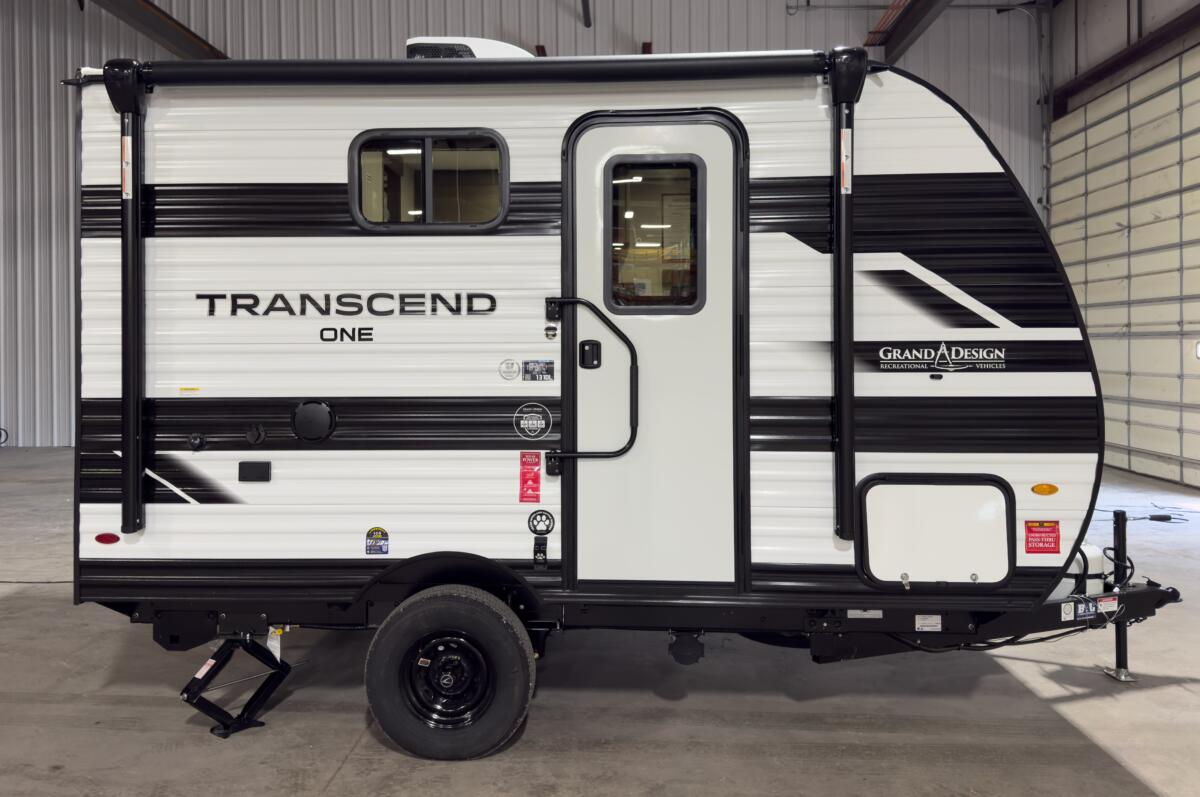
Grand Design’s 2026 Transcend One 131DLis tiny by travel trailer standards, and that’s the point. Josh the RV Nerd at Bish’s RV calls it the smallest thing Grand Design has ever made, coming in under 16 feet tip-to-tail. It’s the kind of camper some people will instantly love, and others will write off in five seconds.
In the video at the end of this post, Josh gives us a tour. See what you think.
This trailer tries to shrink a 20-foot camper’s “basic comforts” into a 15-foot 10-inch long box. That means easier parking, easier towing, and a lower price point. It also means fewer big features and less built-in storage.
Josh jokes it’s ideal for hiding behind the garage when an HOA neighbor starts watching too closely.
2026 Grand Design Transcend One 131DL specs at a glance
Spec
Number
Length
15’10”
Height
10’3″
Width
8′
Ceiling height
6’6″
Awning
9′
Hitch weight
398 lbs.
Empty weight
2,950 lbs.
Max GVWR
4,420 lbs.
Cargo capacity
1,470 lbs.
Fresh tank
37 gal.
Gray tank
37 gal.
Black tank
37 gal.
It’s interesting to me that this tiny trailer has a larger cargo-carrying capacity than many larger trailers, including some Airstream models. That’s probably because this is an otherwise extremely barebones RV.
Towing warning (don’t shop by dry weight)
What matters is the GVWR (gross vehicle weight rating), not the empty weight. Josh recommends not even shopping this model without at least a 5,000-pound tow rating, and more is better.
Inside tour: small, simple, and a bit quirky
This doesn’t feel like a bunkhouse or a roomy couple’s coach. Josh frames it as a solo setup, basically, “me, the dog, and the road.” The front Murphy bed is tucked into a corner, so it’s not built around easy in-and-out access for two people.
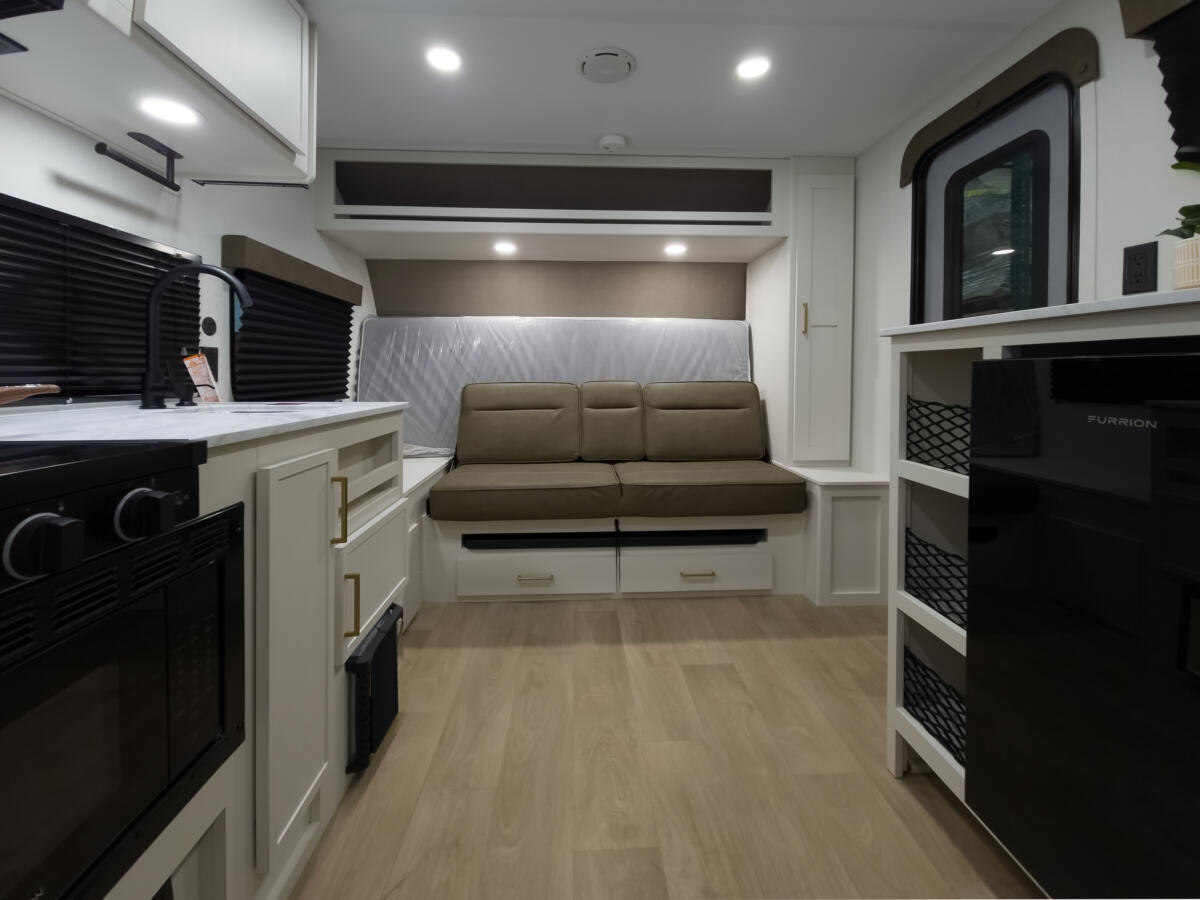
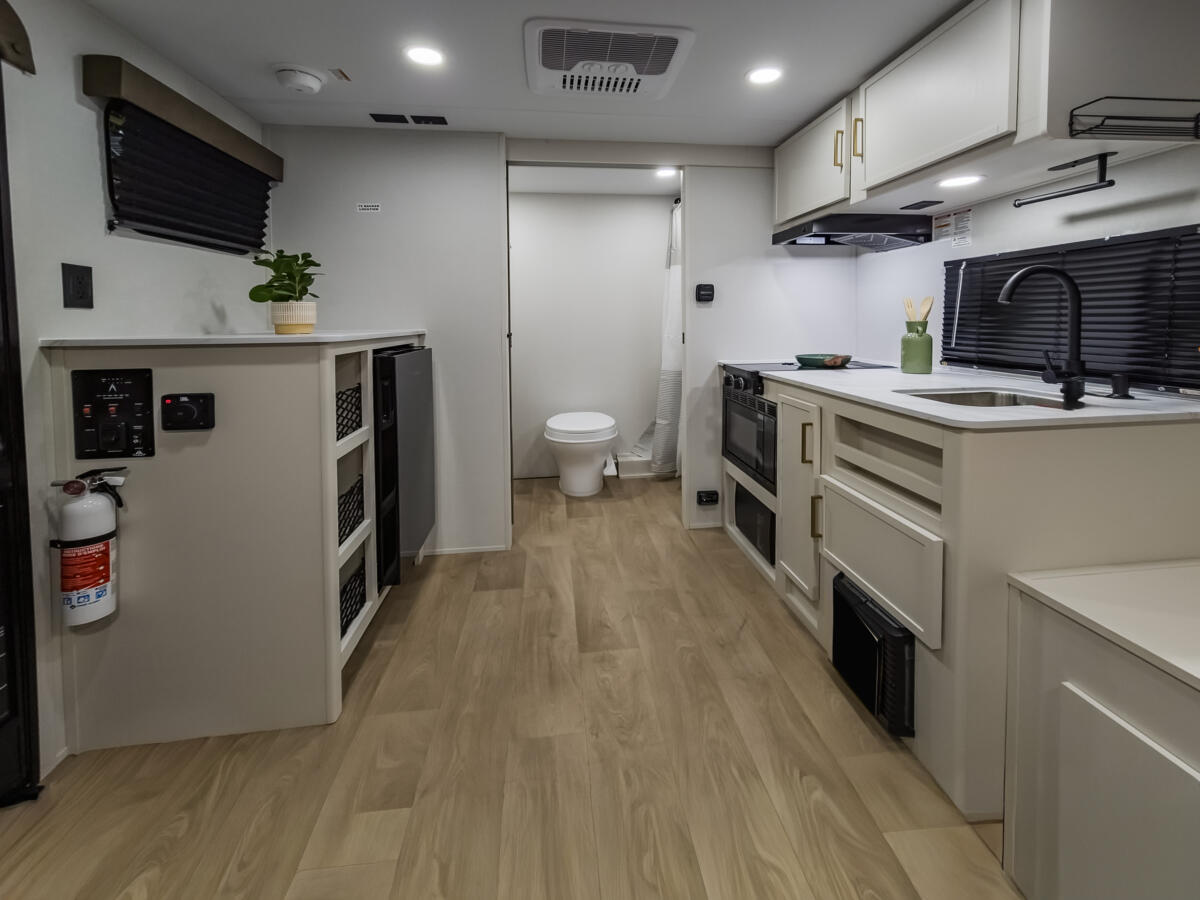
Josh uses a wide-angle view to show how everything connects, while admitting it makes the space look bigger than it feels.
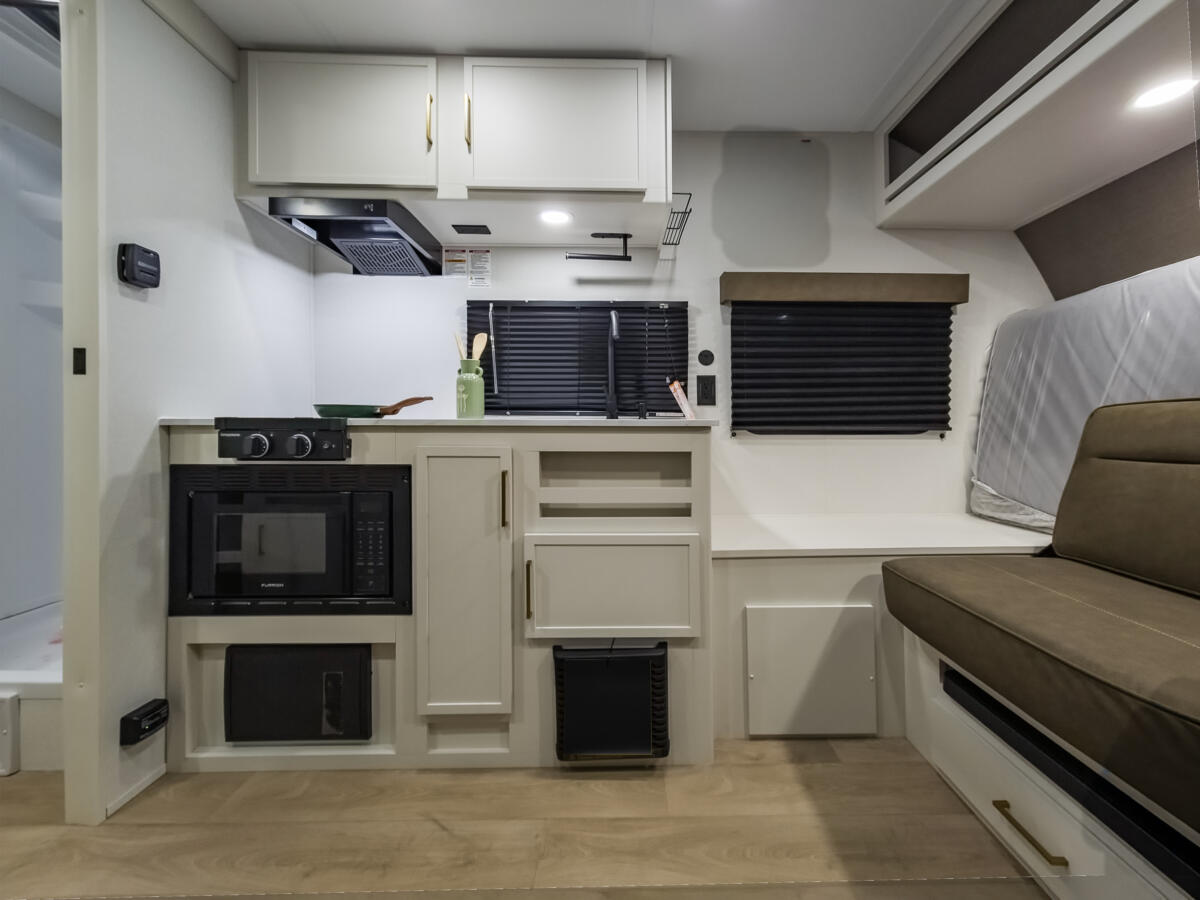
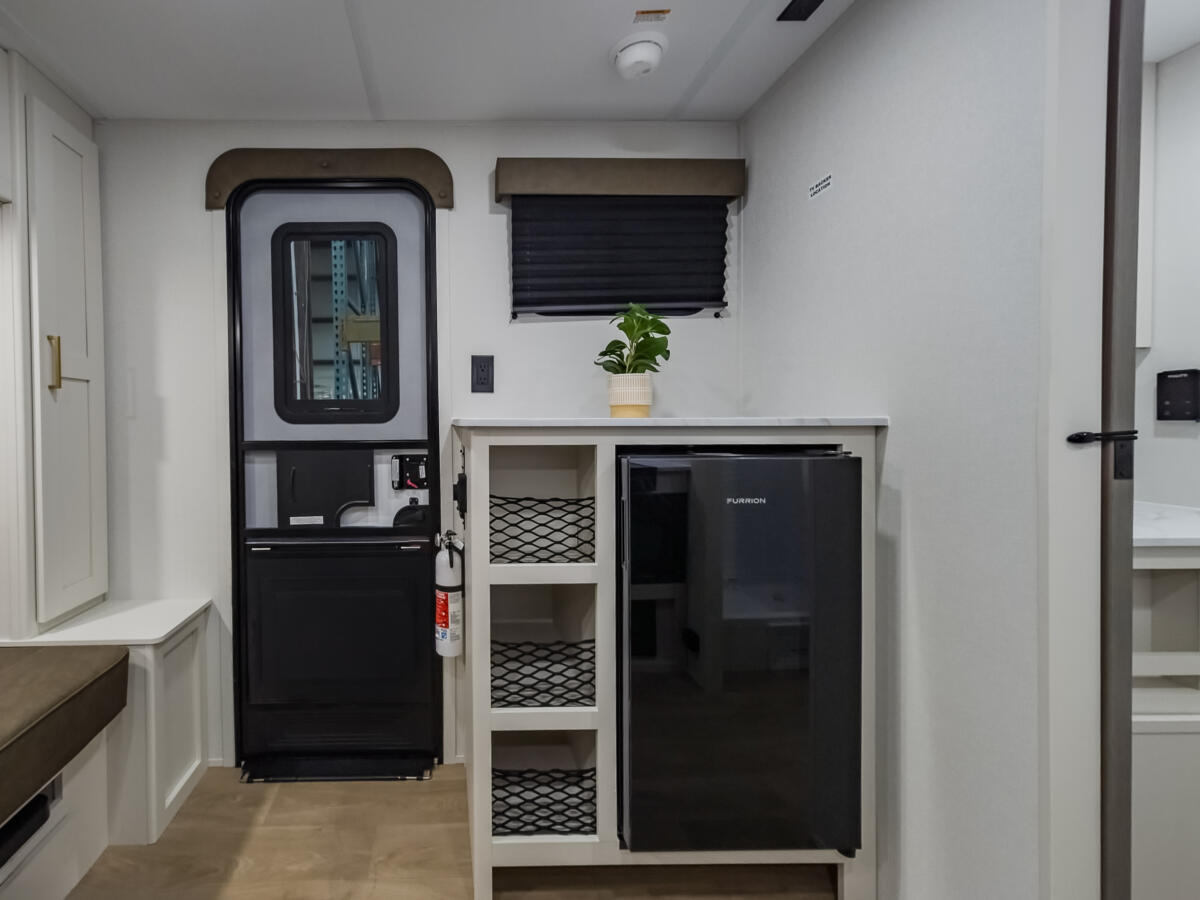
The fridge is a smaller 12-volt compressor unit, closer to hotel-room size, with a small freezer pocket. There’s limited counterspace and little enclosed cabinetry, so open cubbies do a lot of the work. The sink is stainless, and the two-burner north-south cooktop keeps the galley usable.
It also comes with a full power roof A/C. That’s nice for cooling, but it can raise generator needs for boondocking and adds exterior height.
Up front, the sofa, bed, and dining all share the same space. The trailer includes a folding picnic table that can be used inside or outside. Storage is thin, and Josh points out the only real drawer is under the sofa, and it’s built for pet dishes.
Murphy bed: clever, but fussy
This is a rollover-style setup, more like toy hauler bench sleepers than a typical jackknife sofa. The bed uses support legs that need to be set correctly. Josh also warns that the mattress and window shades can fight each other, and it’s easy to snag or damage the pleated nightshades if they’re handled carelessly.
He estimates the bed is about 60 by 80 inches, which opens the door to replacing the folding mattress if someone doesn’t care about keeping the sofa’s function.
Bathroom: Surprisingly good for the size
The bathroom gets a rare compliment. There’s solid space around the toilet, a basic sink, and a vent fan placed over the shower. The vent fan also acts like a skylight, so it feels less cramped.
Storage and exterior features that matter
Inside, there’s a small “shoe garage” near the entry, plus open pockets and cubbies, but no true bedroom storage. Outside, there’s a small front pass-through that’s best for long skinny items like fishing poles, plus motion lighting and a basic docking center.
Other exterior notes Josh highlights:
Gas grill quick connect
1.5-inch rear receiver rated to 150 pounds (fine for bike racks, not heavy cargo trays)
Walkable roof, ladder-prepped
Single sewer outlet and a sewer hose helper tube near the tire
On-demand water heater
Final thoughts
The 2026 Transcend One 131DL is a small, no-slide camper that keeps things simple and stays road-ready at all times. It makes sense for someone who wants the basics in a compact footprint, and has the tow vehicle to match the 4,420-pound GVWR. For anyone shopping this one, Josh advises the best move is to start with the real weight ratings, then decide if the Murphy bed tradeoffs are worth the size savings.
America’s Original RV Newsletter. Since 2001 Issue 1248 Please help support our hard work with a donation of your choice and receive our ad-free edition as a thank you.
Remember: You don’t need to receive an email alert from us to read our newsletters. Just click any time of day directly to www.RVtravel.com. The latest issues will be right there for you.
Today’s thought
“The gladdest moment in human life is a departure into unknown lands.” —Sir Richard Burton
Need an excuse to celebrate? Today is National Gumdrop Day!
On this day in history: 1965 – The maple leaf is adopted as the flag of Canada, replacing the Canadian Red Ensign flag.
New to this newsletter? If so, you can read all of our previous issues from the most recent to all those back to 2016 — more than 1,000 of them altogether.
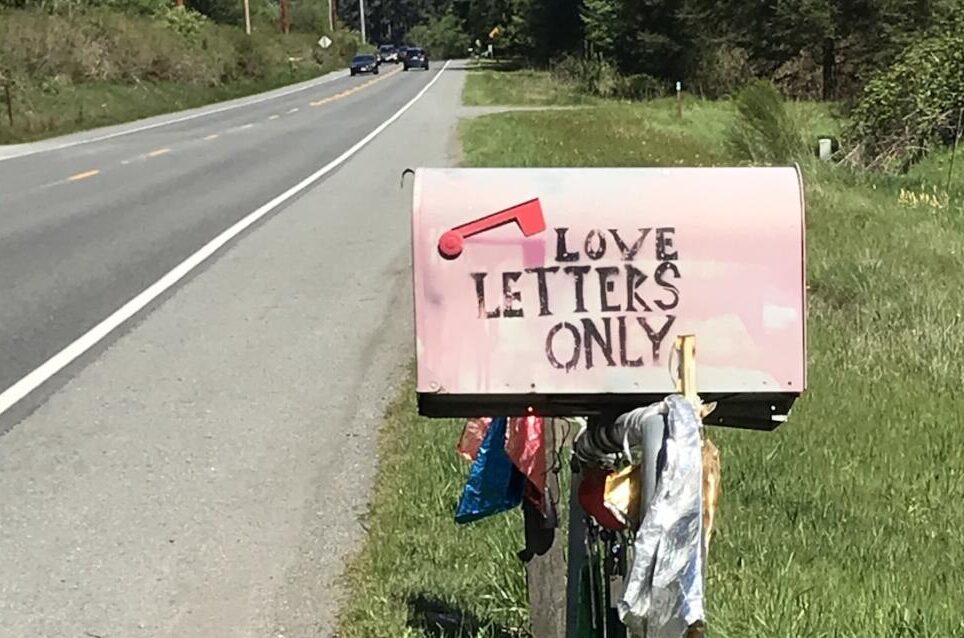
72 years of love: How one couple saved their marriage with 36,000 love letters
This good-news story is about how longtime RVtravel.com readers Joe and Helen Hesketh, from Bellevue, WA, saved their marriage with tenacity, commitment and more than 36,000 love letters. As they celebrate 72 years together, they share a very special tale of finding love again. This is one of our favorite love stories!
The things older RVs did better than newer RVs
Every RVer has heard some version of it at the campground, and here at RVtravel.com, we hear your comments every. single. week.: “They just don’t build ’em like they used to.” Sometimes that’s nostalgia talking, but most often it’s a very real reaction to how RV design has changed—especially over the last 20+ years. The truth is, “older vs. newer” isn’t a simple quality contest. It’s more like a trade… Continue reading.
The most important points to consider when buying an RV lot
Have you ever considered buying an RV lot for when you’re not on the road? The team from Nomadic RV Living produced an invaluable video as a comprehensive resource of the things you need to examine and consider before making a major purchase like this. Cheri summarizes their video here, too. Read or watch.
Tanner Toons with Tanner Woods
You may share this Tanner Toon, uncropped, on your website, blog or social media with our compliments. The musings from Tanner Woods’ creative mind appear in this newsletter every Sunday and in many RV Daily Tips newsletters through the week.
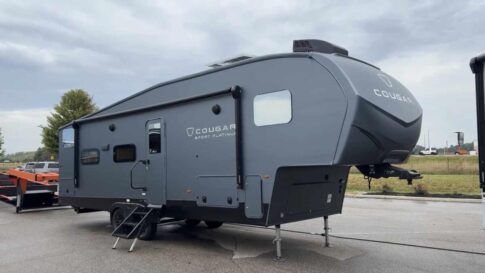
Today’s RV review… 2026 Keystone Cougar Sport 2700BH—Lots o’ sleep space
Today’s RV review is of the 2026 Keystone Cougar Sport 2700BH. What we’re looking at is one of the more affordable fifth wheel offerings in Keystone’s Cougar line. It has a triple-decker bunk in the back that is capable of sleeping six. This trailer has a lot to offer at a really fair price, with a couple of exceptions and a couple of fails on Keystone’s part… Continue reading.
Starlink Mini RV charger powers Starlink Mini and other devices at once
For RVers relying on a Starlink Mini, staying connected during long trips or off-grid adventures can be a challenge. The new JR-CL30 4-in-1 Starlink Mini RV charger delivers stable power to your Starlink Mini. At the same time, it can charge multiple devices, helping you manage connectivity and gadgets on the road. Learn more here.
BE MY VALENTINE, MR. TARANTULA… Of the many curious Valentine’s Day stories, that of the male tarantula is most tragic. A male may travel for up to three months before finding a mate. To attract her, he will tap his legs on the ground to vibrate the soil. If the dance pleases her, a blissful union is consummated. Alas, the female may desire more from her mate than enduring love. Instead, she might eat him.
Even more easy DIY RV tips from smart RVers, part two
By Gail Marsh
What’s better than helpful tips? Helpful tips from actual RVers! Here is the “second edition” of an article I wrote last summer. Thanks to RVers who not only solved problems with their rigs but also took the time to share their tips with the rest of us! Boy, RVers sure are clever!
When it’s not OK to use cruise control
Everyone’s heard the story of the man driving his motorhome down a long, lonesome highway. Feeling a “call of nature,” the story goes, he sets the cruise control, climbs from behind the wheel, and heads to the bathroom. It’s a silly tale, but one with a moral: There are times when you should not use cruise control. One way may not be what you think.
The six critical photos you need to keep on your phone
What is it that most of us carry no matter where we go? Our smartphones! Where we go, it goes. And for that reason, it’s important that we always keep six critical pieces of information in the form of photos on our phones. Find outwhat they are.
Tony’s tips Why your RV questions aren’t getting good answers
How do you get great answers to your RVing questions on social media? Sometimes a question only leads to more questions, not good information. In fact, some of the advice on social media could be downright dangerous. Here’s how to get the best answers to your RV questions.
Jar, bottle, and can opener good for weak hands This jar and bottle opener has eight sizes of circular openings, making it perfect for opening various sized lids. The hooks on the top can be used to open the large-size lids by breaking the air tightness, and can also be used to open ring pull cans. Learn more or order.
Reader poll Do you think popular campgrounds should limit stay length?
This Scotch-scented soap is so exceptionally trendy that you may never want to take it from its box! But if you wash with it, you may find that every scotch drinker who passes by will give you an extra long look.
Every winter, hordes of RVers descend on Quartzsite, Arizona, to camp free on public lands. Here, we join Jamie and Linda from Roaming with Rosie, who put together a video compilation of the best day trips from the boondocking capital.
An RVers’ guide to New Orleans
By Gail Marsh
We’ve wanted to visit New Orleans, but felt overwhelmed to do so. Fortunately, it’s possible to see the city, sample its cuisine, enjoy the music, and experience its unique spirit—all in one trip. Here’s how, and where you can camp near the city.
VERY INTERESTING… If you’d like to get a real sense of the type of people who build RVs in factories, this public Facebook group will provide many insights, as the workers talk (and often complain) among themselves.
Remember this? From the archives: Jaw-dropping super-rare 1970s Camelot Cruiser RV
This super-rare, one of only three, vintage 1970s Camelot Cruiser RV is like a perfectly preserved time capsule of the swinging ’70s in ALL its avocado green shag carpet glory. One hundred percent original, this motorhome was said to have remained in long-term storage before being acquired by the selling dealer in November 2022. Ya gotta see it!
Stick-on drain cover catches hair and food in bathroom and kitchen drains
These stick-on drain covers are perfect for RV sinks and showers. Don’t spend money on plumbing issues when this will prevent them. Stick on a drain cover and leave it on until it needs to be replaced. Learn more in this article by Dave Solberg, or order a pack for yourself.
Highlights from this week’s RV Daily Tips Newsletter
IF YOU’RE NOT SIGNED UP FOR OUR RV DAILY TIPS NEWSLETTER… Well, why not? That’s just blasphemous! It’s our readers’ favorite newsletter for good reason! Sign up here(pretty please?).
Quick tip
A big-trash-bin alternative
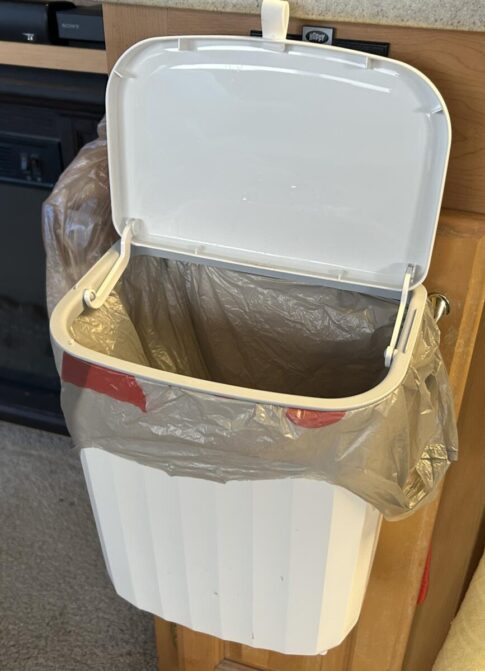
“I was struggling with keeping a trash receptacle in our motorhome…. I searched Amazon and found this Glad Roomate Undercounter Waste Bin, reasonably priced at $18.19, in which regular plastic grocery bags fit perfectly. The lid opens two ways and can either clip to a door or drawer or be mounted with an adhesive strip. We both love the trash bin; it’s made our life in the RV much better.” Thanks for the tip, Chris (and Keri)!
In the RV shop with Dustin Performing RV suspension hanger and bushing inspections
Your RV’s suspension system plays a critical role in safety, handling and tire life. Suspension hangers, shackles, bolts and bushings carry the full load of your RV while traveling, and when these components wear or fail, the results can be costly—and dangerous.
RV tire safety Does your TPMS sometimes lose the signal? Here’s what to do
By Roger Marble I occasionally see posts from people complaining that their tire pressure monitoring system (TPMS) does not always provide a reading from the tires. While there are a number of reasons, I believe the most likely is that… Continue reading.
BUMPER SNICKER: “If at first you don’t succeed, skydiving is not for you.”
For Lovers Only
TO: Heather FROM: Mike “Valentine’s Day is special, like every day I am with you. On July 7th we will celebrate being married 42 years, the best years of my life. You have always been my best friend, and I cherish every day. We have many wonderful memories together, traveling, and watching our kids grow into wonderful adults, and watching them be great parents. Not a day goes by that I don’t feel grateful for you and everything we have and have accomplished together. You mean so much to me. I love you very much and am so happy we found each other. You make me smile. 🙂 You have been the best mom and grandma (GiGi) that anyone can ask for. You are a wonderful woman whom I grow fonder of every day. I love you so much, you are my best friend. Thank you for being with me. Much love.”
This is our final entry in our For Lovers Only series. In case you missed some of our readers’ romantic wishes, you’ll find them here. Thank you to all who contributed—we have loved reading your love notes and stories!
Live webcam New Orleans, Bourbon Street
Readers’ pets of the day
“We have three RV travelers we call the Three Stooges: Bailey, Teddy & Biggie (ages 14, 6, and 2). All three of them love to travel and do nothing but sleep while we’re driving. They all think they are very large dogs in spirit, but all three are just big babies.” —Gary Winkler
Want to see your pet in this newsletter? Please send us a photo of your pet with a short description. No blurry photos and please do not submit your pet more than once.
Trivia
President James Garfield could write in Latin and Greek at the same time, one with each hand. While not common, it is possible, sometimes described as a form of “split-brain” capability.
Sunday funny
And this, folks, is what you call brilliant marketing!
Here are all the For Lovers Only messages we posted from RVtravel.com readers for Valentine’s Day 2026. These appeared in both the RVtravel.com newsletters and our weekday RV Daily Tips editions.
But in case you missed any, here they are again.
To: My Honey Bunny From: Your Always Love “You were 22, never married, no children. I was 42, married for 20 years, divorced for five years, with six children. 17 to 22 years old. We knew each other for two months and got married after discussing all the things that could happen to us because of it. Now, congratulations to us!!! We celebrated 45 years of marriage. 10 grandchildren and 10 great-grandchildren. We are Christians, and the Lord has truly blessed our lives. I love you!”
To: Zoom From: Me (Gil) “You were my high school sweetheart, and after 56 years of marriage, I still see you as that beautiful 16-year-old.”
To: Teresa From: Don “Happy Valentine’s Day to my wife of 52 years.”
To: My Sweety Little Thang From: Your Little Lover Boy (Joe) “Happy Valentine’s Day, my love. Being with you each day is a joy, and I love our life together. Here’s to many more years of love and making each other laugh. LOVE YOU!“
TO: Angela FROM: Denny “Happy Valentine’s Day. Thanks for picking me. I love you.”
TO: Tishy FROM: Big Boy “Can’t wait to get back on the road with you. I love our days of travel. My favorite destination will always be you! Happy Valentine’s Day.”
TO: Wilma FROM: Fuzzy “To my precious, In love with you forever and a day!!!”
TO: Danger Haze FROM: Babe “Happy Valentine’s Day to the love of my life and the best travel companion ever. Here’s to many more adventures!”
TO: Linda FROM: Larry “Thank you to the love of my life for making our adventures so memorable! I love you!”
TO: Julie FROM: Jim “Happy Valentine’s Day! Love you to the moon and back. So looking forward to camping and exploring new places with you in 2026. We have shared many wonderful times, made friends, and memories. I love you, Julie.”
TO: Punkin FROM: Me “52 years ago, I held you in my arms during our first unexpected dance. My heart melted and I knew it was home. Every morning, I thank God ‘for my life …and my wife’. I pray that the music never stops, and this dance goes on forever. I LOVE YOU …always have, always will.”
TO: My Snuggle Buddy FROM: Right Where I Need To Be
“Babe, it’s been over 41 years, and I still want you, need you, and am in love with you! All my love now, always, forever and ever.”
TO: Dave FROM: Pat “I love you so much, you are the best thing that ever happened to me! Here is to many, many more Valentines. Love you!”
TO: ? FROM: Dennis “To the love of my life,
Love comforts, never alarms
Always heals, never harms
Always grows, never diminishes
Love always begins, never finishes
My love is true, and never ends”
TO: Neil FROM: Sweetie Pie “‘Roses are red, violets are blue, my love belongs to Curly Sue. She stirs my soul, she brightens my life, I hope someday she will be my wife. She can’t commit to be all mine, so all I can do is give her time.’ That was 30 years ago, and yes, we are married and still very happy.”
TO: Ed FROM: Rosemary “You are a real sweetheart. You have to be! Happy Valentine’s Day!”
TO: Silver Fox FROM: Tshlaru “Our Happy Valentine’s Day will be spent in our RV. Our favorite place to be! I’m so blessed to have you as my adventure partner. Happy 41st Anniversary to us as well. Let’s do this for another 41 years!”
TO: JT FROM: ET “Thank you for being my dream come true and for our 31 years of living that dream. I love you more than words can say.”
TO: RB FROM: Schookems “Happy Valentine’s Day!!!! 2025 was a rough year with my back surgery, but I APPRECIATE all the love and support you gave me. I know it wasn’t easy. I love you very much.”
TO: Jerry FROM: Kerry “ILYTIABx2!”
TO: Babycakes FROM: Hubby “Where have the years gone? We have just celebrated our 49th anniversary, and I am looking forward to our three-week trip, with our trailer, to warmer climates starting next week. I am hoping for many more years to come with you, my love. Happy Valentine’s.”
TO: Patty, my Wife-ish FROM: Your Husband-ish “Forty-nine years ago, we were first married. We were too young and foolish to fully realize what we had, so we divorced and lived separate lives. Here we are, 75 years old. As a 7-year full-time RVer soon passing through your town last September, I contacted you for a dinner to catch up on our divided lives. Neither of us could have imagined picking up where we left off and re-finding this wonderful love of ours. I am so anticipating sharing this final quarter of our lives together.”
TO: Heather FROM: Mike “Valentine’s Day is special, like every day I am with you. On July 7th we will celebrate being married 42 years, the best years of my life. You have always been my best friend, and I cherish every day. We have many wonderful memories together, traveling, and watching our kids grow into wonderful adults, and watching them be great parents. Not a day goes by that I don’t feel grateful for you and everything we have and have accomplished together. You mean so much to me. I love you very much and am so happy we found each other. You make me smile 🙂 You have been the best mom and grandma (GiGi) that anyone can ask for. You are a wonderful woman whom I grow fonder of every day. I love you so much, you are my best friend. Thank you for being with me. Much love.”
FROM OUR EDITORS: Oh, all of you lucky people, to have somebody so special in your lives. Savor every moment with them!
We’ve wanted to visit New Orleans, but felt overwhelmed by all there is to do. Add to that a few health limitations that need to be factored in.
Fortunately, it’s possible to see the city, sample its famous cuisine, enjoy the music, and experience its unique spirit—all in one trip.
Forget your hiking boots
That’s right, you can leave your hiking shoes back in your RV. New Orleans (like many cities) offers several ways to experience its culture and see the sights. Check out a few favorites listed here.
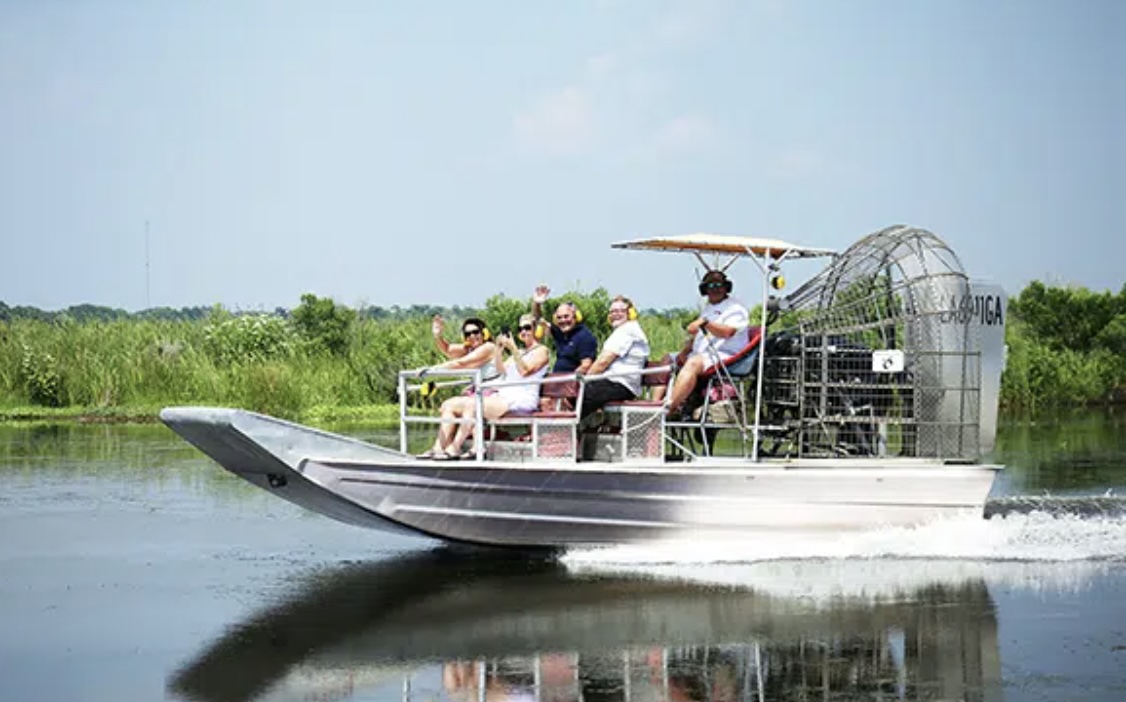
Photo credit: Airboat Adventures
Swamp and bayou airboat rides
Want to see Louisiana marshes and gators without a long hike? Several operators run airboat and guided swamp trips. They’ll pick you up near the city and take you right out into the bayou.
Many companies advertise short drive times from the French Quarter and offer round-trip pick-ups or clearly listed departure points. Tours vary in length from about an hour to longer eco-style outings. Book morning slots for the best wildlife activity.
Google: New Orleans swamp or airboat tours
Hop-on, hop-off, and guided coach tours
Open-top and enclosed bus tours let you loop the French Quarter, Garden District, Warehouse District, and major riverfront sights with ease. Routes are typically timed so buses arrive every 20–40 minutes. You can pick a full-loop ticket or a hop-on pass, depending on your time and mobility. Coaches are a straightforward, low-effort way to get a city overview in a single afternoon.
Google: New Orleans hop-on, hop-off bus
Tripadvisor lists the top 15 New Orleans bus tours here.
Photo credit: Visit New Orleans
Steamboat river cruises
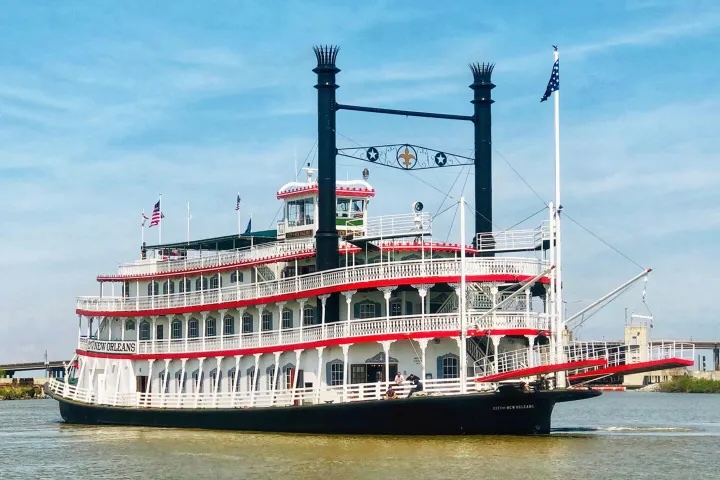
For a different view, take a Mississippi River cruise aboard a historic steamboat. Daytime sightseeing or jazz dinner cruises combine river scenery and music along the Mississippi River. Many cruises board at the riverfront near the French Quarter, so you can park nearby and enjoy a relaxing cruise.
Google: New Orleans river cruises
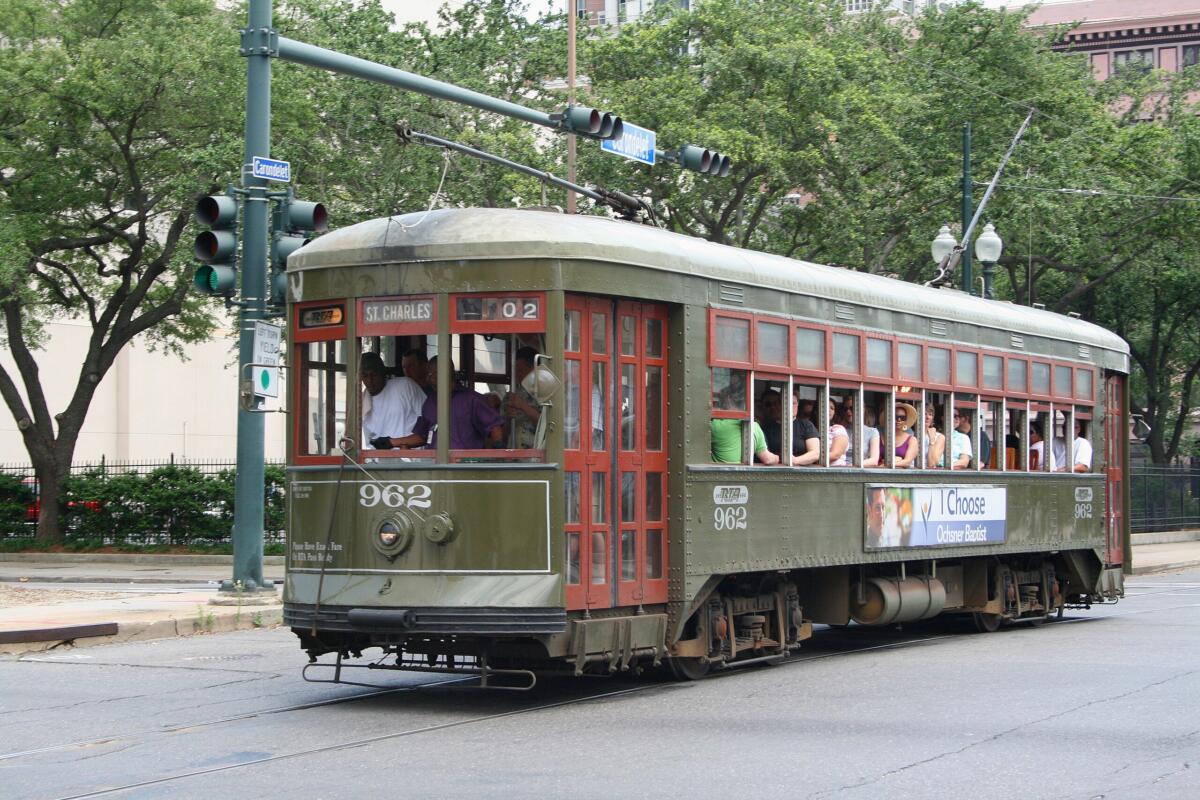
Photo credit: Diego Delso
Historic streetcars and short streetcar loops
Streetcars are part of the New Orleans experience. The St. Charles streetcar winds through Uptown and the Garden District past oak-lined avenues and antebellum mansions.
Streetcars are inexpensive, run frequently, and let you soak in neighborhoods from your seat. Check them out here.
Garden District and historic house tours
If you want mansion views, take the Garden District Driving Tour. You can do this in your tow vehicle or on a guided minibus. The result is the same—big houses, garden squares, and photo stops that are quintessential Big Easy scenes. Many driving tour scripts are available for self-drive loops if you want to be your own tour guide.
Photo credit: Rafal Konieczny
Top free things to do
Jackson Square and St. Louis Cathedral. This historic plaza is a living postcard. You’ll see artists, street musicians, and the cathedral’s façade, which frames the square. This wide-open space includes benches and food vendors for treats and relaxation.
French Market. The long riverside market is free to enter and browse. Visitors love this mostly level, shaded market. It’s ideal for sampling local snacks. Vendor hours are regular and the market area connects easily to riverfront attractions. [If that link doesn’t work, try this one.]
Goldring Woldenberg Riverfront Park
Goldring Woldenberg Riverfront Park offers a wide, paved riverfront park with sculpture, benches, and views of the Mississippi. It’s right by the Aquarium and near many riverboat piers.
Quick logistics tips
Plan pick-ups and drop-offs: Many swamp and airboat operators list pick-up locations or offer shuttle service from the French Quarter. Reserve those to avoid parking hassles.
Buy a day pass for transit: If you plan to use streetcars and buses multiple times, a day pass is usually cheaper and keeps you from waiting in line at ticket machines.
Queue-time matters: Carriage and steamboat boarding windows can form lines during peak tourist times. Try for mid-morning departures if you prefer smaller crowds.
Three nearby RV campgrounds
Here are three RV campgrounds with easy access to the city.
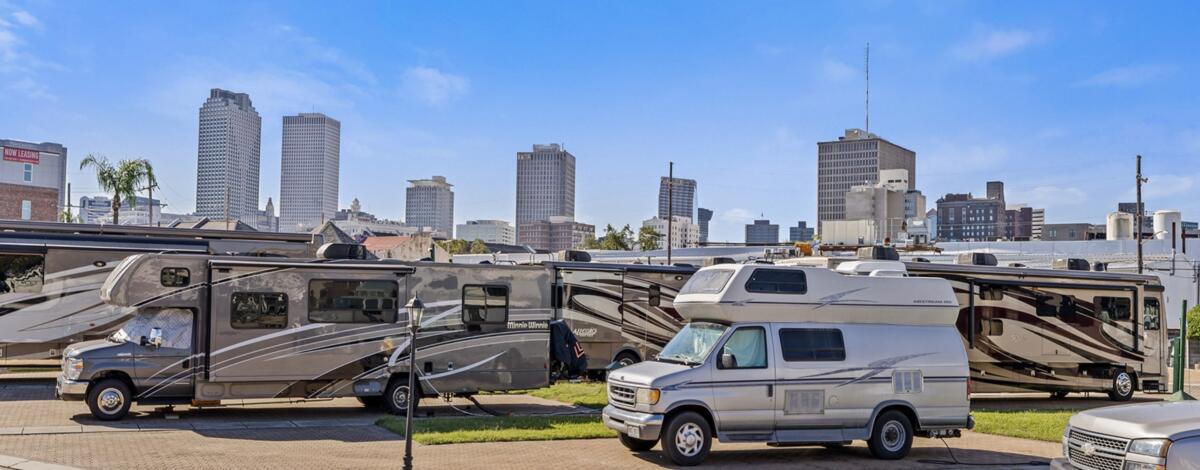
Photo credit: French Quarter RV Resort
• French Quarter RV Resort (closest, walk/drive access). This property brands itself as a short drive from the French Quarter and aims specifically at urban visitors who want fast access to downtown New Orleans. Small parks in this category often advertise gated sites and easy in/out for 5th wheels and motorhomes. Check current site rules for size limits and reservations.
Photo credit: New Orleans RV Resort & Marina
• New Orleans RV Resort & Marina (lakefront, ~10–15 minutes to downtown). A gated resort on the city side of Lake Pontchartrain that advertises a short drive time to the French Quarter and nearby riverfront areas. It’s a practical pick if you prefer a full-service RV resort while staying very close to downtown.
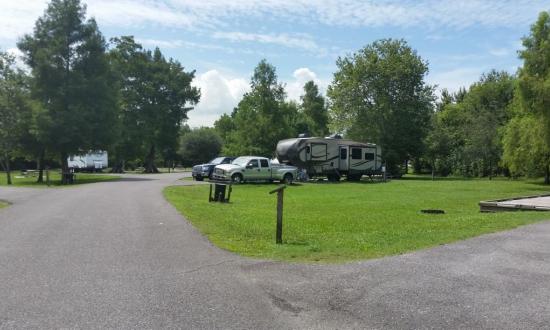
Photo credit: Bayou Segnette State Park
• Bayou Segnette State Park (budget/state park option, 25–35 minutes away). A state park on the West Bank that’s about a half-hour drive to downtown New Orleans (depending on traffic). It has improved RV campsites and a more outdoorsy setting for RVers who want a quieter stay with access to the city.
Final pro tips for RVers
• Always check visitor reviews before reserving tours or other adventures. Note that some attractions and services may close during the off-season.
• If you’re towing, verify park pull-through availability and local bridge/underpass restrictions before you enter the city.
• Expect heavy traffic around festival dates. New Orleans runs several large, free street festivals that can shift traffic and parking quickly.
• For comfort, schedule outdoor cruises and slow tours in the cooler morning hours and save streetcar/riverfront rides for late afternoon.
Have you visited New Orleans while RVing? Tell us about your experience in the comments below.
By Gail Marsh
What is it that most of us carry no matter where we go? Our smartphones, of course! We may leave our purses or wallets behind, but that smartphone? No way! Where you go, it goes. And for that reason, it’s important that you always keep six critical pieces of information in the form of photos on your phone.
So, what are these photos? Read on to find out.
Six critical photos to keep on your phone
Identification
Driver’s license or official state I.D. card. Take a picture of your official identification. This may be a driver’s license or your state-issued identification card. This card is often needed for proving your identity when picking up a prescription, retrieving prepaid tickets, picking up your child or grandchild from school, writing a check, and more. It’s often easier to pull up a photo of your I.D. than to wrestle the paper version out of your wallet. Plus, if you lose the physical copy, you’ll have a photo on your phone.
Insurance
Health insurance cards. Take a photo of your health insurance cards: medical, dental, and prescription. They’ll be easily retrieved from your smartphone when needed. No more hectic scrambling for cards when you visit your doctor, dentist, or pharmacy.
Auto insurance card. We were happy to have taken a photo of our auto insurance card before our RV was destroyed in a violent windstorm. My purse and my husband’s wallet were both inside our totaled RV and, therefore, not accessible.
Personal health
Prescribed medications. Take a photo of the medicines you take regularly. Refer to the photo when you must relay this information to a doctor, when ordering a prescription, and more.
Vehicles
Vehicle license plates and VIN numbers. This information may be needed if your vehicle is stolen or involved in an accident. Unless you have a “vanity plate,” you probably can’t rattle off the license information off the top of your head. You may need this information when securing insurance, checking into a hotel, and more.
Picture of your RV and tow vehicle. A photo will give law enforcement a jump start in locating a stolen rig (heaven forbid). It may also prove useful if your rig is more than ten years old. Some campgrounds require a photo of older rigs before reserving a campground site for you. If your RV or vehicle has any special defining features (bumper stickers, dents, etc.), make sure you photograph those, too.
These are the pictures I consider critical photos to keep on my smartphone. Can you add to the list?
These two ads (one above, one below) popped up in articles I read this week. Who could possibly believe this scheme?
No way do these miracle creams do what they promise. What happened to truth in advertising?
First off, the women, who are supposedly 56, look pretty weathered for typical threshold-level senior ladies. And then the “miracle” transformation? Hah! What a joke! A $38 creme does this? Does it work on old geezer guys, too? Can I really look like I am 30 so I can hustle young women at bars? For only $38? Well, praise the Lord! Send me three bottles!
Sure… for $38!
What person with an IQ over 70 believes this garbage?
Anything goes these days. Lying is okay! Not just ads. Everything!
It’s incredibly discouraging.
And one more…
Her huge size! The world is going crazy! Poor Chelsea. Her huge size? OMG!
Does that mean her feet? Her nose? Her ears? No… it means… well, I ain’t going there.
The ad above keeps showing up on reputable websites. This ads, like countless others featuring well-known women, illustrates one of the big problems with the internet. While it can be used in wonderful ways that enhance our lives, it’s also there for the creeps of the world to exploit in their slimy ways.
And they still manage to sleep at night. I wish them all incurable insomnia.
In one of my journalism trade journals, a quote from George Orwell:
“In a time of deceit, telling the truth is a revolutionary act.”
By Chuck Woodbury If you read my earlier post about this, then you know I discovered the woman above in a 1940s newsreel. Something about her captivated me, so I took a screen shot for no reason in particular other than I found her interesting.
The more I looked at the photo, the more frustrated I became that I could not meet her. Almost certainly, I calculated, if she were still alive she would older than 100. And I didn’t even know her name or where to find it!
I kept that photo around for months. Then I had an idea: I would bring her to life. I went to ChatGPT and asked it to use its artificial intelligence skills to update her photo to what she might look like in modern times.
Here is what it presented to me.
Isn’t that amazing? How could that young woman from the 1940s ever conceive that more than 80 years later a guy would become fascinated with her from her very brief “girl on the street” appearance in a newsreel, and bring her seemingly back to life (keep reading)? She could never have conceived of such a thing, of course.
It gets better
I came upon another website that will animate a photo in whatever way you want. It allowed me to make a very brief “movie” for free, so I submitted the updated photo of my newsreel lady and request it be animated: “Make her walking and reacting to spotting a friend.”
Within a few minutes, here is what appeared. Click the video to play.
Oh, my! I am beyond impressed! Bringing this woman to “life” shook me. How could that happen, and so easily? The more I watch this (and I have watched it many times), the harder it is for me to comprehend that she is not really alive.
I love playing with artificial intelligence, but I fear for how it will be abused. And it will be—it already is. But at this moment, looking at what I was able to so easily do with that black and white image from years ago, I am simply speechless.
I fell in love with this woman, even though she is almost certainly dead. The headline above sounds morbid. But it’s true. It was love at first sight.
That’s her picture above. I found her on an old newsreel called The Story of Pathé — The Birth of News. She walked into scene, unidentified, with another woman at the 44:22 mark. My guess it was in London. She smiled as she walked by. I don’t think there is any way I can learn who she was. The photo above is a single frame from the newsreel.
BE SURE TO READ THIS ALL THE WAY TO END. YOU WILL SEE HOW I BROUGHT THIS WOMAN TO LIFE.
The newsreel was probably (my guess) from the late 1940s, which would make her now older than 100. So she has almost certainly passed on. I wish I could identify her. I read once that looking at a photo of an attractive face makes a guy (some, at least) feel better. Well, when I look her, and her sweet smile, I do feel better, happy. But frustrated, too. Who is she? Or who was she?
When I say I fell in love with her it’s not about romance (and yet if I were to go back in time and I were half my present age, I wouldn’t rule that out).
What I would like to do, if given the opportunity to time travel as a younger man, would be to meet her and invite her to dinner. The restaurant would be a nice place, dimly lit, with a white table cloth and fine silverware, maybe with candles. We’d both be dressed like they did back in the late ’40s. And we’d share a bottle of wine. And we’d talk about our lives. Who is she? Where and how does she live? What are her dreams? Years later, back from time travel, I could look her up and see how things turned out for her.
I would not tell her I was a time traveler
At dinner, I would not tell her that I was from the future, at least not right off. Frankly, she’d think I were crazy and that would be that. No, I would just want to learn all I could about her. I think what is so appealing to me is her smile and the look in her eyes. I have a feeling she was shy. I’ll bet she was nice, sort of the girl-next-door type. I can’t picture her being mean or angry.
I have found photos of people from the past and been able to learn about them through research. Ask me some day about Ham Stewart. It took me a few years to learn who he was. All I had to go on initially was a photo from an antique shop in Boise, Idaho, with this written on the back: “Ham Stewart, cousin.” When I finally learned who he was (after a few years of searching), he wasn’t even close to what I imagined.
But, for now, the photo of this young woman intrigues me, and frustrates me, too. Unless you happen to recognize her as a long lost relative and can tell me about her, I will have to live in frustration.
UPDATE: Bringing her to life
You will not believe what I have done! I have brought this woman to life (well, close) using two basic, free artificial intelligence tools. I told them to update her image to what she might look like today, and then to make her “come alive” as if she were passing by a friend on the street. The result seems unbelievable. But it’s not. You must see this!!!
Every RVer has heard some version of it at the campground, and here at RVtravel.com, we hear your comments every. single. week.: “They just don’t build ’em like they used to.” Sometimes that’s nostalgia talking, but most often it’s a very real reaction to how RV design has changed—especially over the last 20+ years.
The truth is, “older vs. newer” isn’t a simple quality contest. It’s more like a trade: older rigs often did simplicity, serviceability, and repairability better, while newer rigs tend to win on space, convenience features, and some materials that resist water damage better than the old standards.
Here are the biggest areas where many older RVs genuinely had the edge, based on how RV construction and systems have evolved.
1) Simpler systems meant fewer “single-point failures”
Older RVs typically relied on straightforward switches, basic wiring runs, and fewer computerized control modules. Newer RVs often bundle many functions, such as lights, slides, pumps, tank heaters, and awnings, into centralized control systems.
Those systems can reduce wiring and weight, but they also change how repairs work. When one control module fails, multiple systems may be affected at once, and diagnosing the issue often requires specialized parts or technical knowledge.
Why this matters:
A basic switch or relay is often easy to replace or bypass. A failed control module can mean waiting on parts or waiting for a technician familiar with that specific system.
2) Fewer slide-outs meant fewer seals, motors, and alignment issues
Slide-outs transformed RV living spaces and are now almost expected in many models. But they also add complexity.
Every slide introduces:
• Additional wall and roof openings
• Multiple seals that require regular inspection
• Motors, tracks, or gears that must stay aligned
• Higher risk of water intrusion if maintenance slips
Some slide mechanisms have even experienced higher-than-normal failure rates during certain production periods, leading to inoperable slides that can sideline an RV until repairs are made.
Older RV advantage:
Many older rigs had no slide-outs—or fewer and smaller ones—which meant fewer high-maintenance systems and fewer expensive repairs over time.
We hear from many RVers who are starting to look for RVs without slideouts to avoid the additional costly repairs.
3) Corrugated aluminum siding was easier to live with and repair
Many older travel trailers and fifth wheels used wood framing with corrugated aluminum siding, often called “stick-and-tin” construction. It wasn’t flashy, but it was forgiving.
Dents were obvious instead of hidden. Small leaks were often easier to spot and address. Repairs could be made panel by panel, without worrying about large-scale delamination.
Modern laminated fiberglass walls look sleek and tow efficiently, but when water gets inside, damage can remain hidden for a long time—and repairs can be far more extensive.
Older RV advantage:
Exterior damage was often simpler, more visible, and easier to patch, replace, or seal.
4) Older appliances and systems were more mechanical and DIY-friendly
In older RVs, many systems relied on mechanical controls instead of electronic boards and sensors. Today’s RV appliances frequently depend on circuit boards and digital controls, as we mentioned above.
That brings convenience and features, but it also means that when something fails, replacement parts often need to match exactly. Troubleshooting may involve swapping boards rather than repairing individual components.
Older RV advantage:
Fewer electronic layers meant fewer mystery failures and more opportunities for hands-on fixes without specialized tools or parts.
5) Some older materials held up well simply because they were basic and thick
Not all older RVs were built the same, but many used traditional wood-based materials that were heavier, thicker, and sometimes more forgiving when it came to fasteners and repairs.
In recent years, manufacturers have experimented with lighter materials and alternative wall substrates to reduce weight and improve moisture resistance. These newer materials can be excellent when installed and sealed correctly, but quality varies widely by brand and model.
So who wins here?
Older RVs sometimes benefited from sturdier-feeling materials that held screws well and were familiar to repair.
Newer RVs may benefit from moisture-resistant composites that help prevent rot—if the build quality and sealing are good.
6) Older roof systems have a long, proven track record
Rubber roofing has been used on RVs for decades and remains common today. While newer roofing materials exist, many older roof systems are well understood, widely serviceable, and supported by decades of maintenance knowledge.
Older RV advantage:
Not necessarily better materials—but familiarity. Many owners and technicians know exactly how to inspect, clean, seal, and repair these roofs.
The big takeaway:
Older RVs favored “fixable,” while newer RVs favor “feature-rich.”
Older RVs often did these things better:
• Easier troubleshooting
• Fewer complex systems
• More forgiving exterior construction
• More DIY-friendly repairs
Newer RVs often do these things better:
• Larger, more open living spaces
• Modern layouts and conveniences
• Lighter designs in many categories
• Improved moisture resistance in some materials
What do you think?
Are you one of those people saying, “They just don’t build ’em like they used to”? Or do you prefer the more modern RVs with modern features? Tell us in the poll below, and please leave a comment, too.
I recently talked to an RV couple who have been hosting at various campgrounds all over the U.S. I was surprised to learn that they were quitting. They told me, “We’ve had enough!”
Turns out that selfish habits from clueless park guests have changed hosts’ responsibilities into extra work, safety headaches, and daily frustration.
I was eager to hear the couple’s complaints so that I wouldn’t be “that RVer” who frustrates RV camp owners or hosts on future trips.
Here are some real gripes from the people who run RV parks.
Too loud, too late
Campgrounds have quiet hours for a reason: thin walls, nearby babies, and folks who have to drive early. Owners and chains repeatedly call out late-night music, generator noise after hours, and boisterous groups as their top headaches.
If you want a party, book a private spot. Otherwise, keep it quiet after the posted quiet time. Respecting quiet hours lets RVers sleep and reduces manager interventions.
Leaving a messy site
Hosts dread the cleanup after check-out. They often find food scraps under picnic tables, bottles in fire rings, and trash stuffed into grills. Not cleaning up your campsite leaves behind a big, stinky chore that can attract critters.
Do your hosts a favor. Look over your site before you leave. If you burn a pile of wood, double-check for nails or glass before leaving. Remember: clean site, happy host.
Misusing shared facilities
Washing greasy pans in restroom sinks, cleaning fish at picnic tables, or stuffing bulky junk in campground dumpsters are surprisingly common and frustrating to hosts.
Shared bathrooms aren’t dishwashers, and dumpsters aren’t municipal junk yards. Use your RV sinks, ask about fish-cleaning stations, and haul large items to a proper disposal site. That tiny bit of effort saves staff hours of cleanup.
Creative hookups
Makeshift sewer hookups, taped-together hose contraptions, doing oil changes, or draining antifreeze and coolant on-site create sanitation hazards and maintenance nightmares. Leaky or improvised sewer fittings spill wastewater onto sites. Vehicle fluids can poison the soil and complicate groundskeeping.
Bring proper connectors, check seals, and handle vehicle maintenance off-site (or ask the host where it’s allowed). These simple steps protect the environment and the park’s bottom line.
Killing the landscaping
It’s easy to forget that putting down heavy rugs, leaving awnings deployed for days, or tying hammocks to trees damages turf and bark. Hosts often spend time and money repairing dead grass, ruts, and damaged trees.
Use breathable mats. Follow any posted limits on rugs and canopies. Never attach hardware to living trees. Your campsite should look as good when you leave as it did when you arrived.
Unruly pets and poop
Even if Fido is the friendliest pup in the world, owners complain when pets roam off-leash or bark nonstop, or owners skip scooping. Pet rules exist to keep everyone safe and campgrounds sanitary. These park hosts hate having to remind dog owners to pick up after their furchildren. Over and over again.
Keep animals leashed where required. Quiet them down during quiet hours, and always, always carry poop bags to pick up your pet’s mess. It’s basic respect, and it keeps you welcome to come back.
Drone drama
Drones are fast ways to annoy people (noise) and make them uncomfortable (privacy). Hosts report that drones that hover over swimming areas or occupied sites lead to immediate complaints.
If you bring your drone with you while RVing, ask permission before using it. If allowed, obey park rules and fly far away from other guests. When in doubt, keep it packed up.
Golf carts and more
Golf carts and extra vehicles can clog park roads. This causes parking problems and increases wear on narrow lanes.
Similarly, bringing a surprise parade of extra people to your site (unannounced visitors) puts hosts in the awkward position of enforcing occupancy rules.
If you plan to bring guests or carts, check the rules ahead of time. Be sure to register extra vehicles (if required) and park thoughtfully. This avoids safety issues and keeps traffic moving.
Unrealistic expectations
Many campgrounds are small, owner-operated businesses. Calling the office repeatedly after hours or demanding immediate fixes for non-emergencies strains the campground’s staff.
Check in politely and read the rules on arrival. Use emergency contacts only for true emergencies. A little patience goes a long way.
Be this RVer
Treat each campsite like a borrowed yard. Clean up after yourself, follow the rules you agreed to at check-in, secure your gear, and be considerate with noise and lights. Also, bring the right hookups and tools, store bulky trash until you can dispose of it properly, and treat the staff as you’d like to be treated.
Small habits, like wiping down a picnic table, checking your sewer seal, scooping poop, or turning off lights at night, all add up to a positive reputation. Hosts notice the difference.
Yes, you’re on vacation, but you’re also in someone else’s community. Play nice, and the welcome mat will be out next time you roll in.
What is your biggest gripe against campground owners/hosts? Let us know by using the comments below. Thanks!
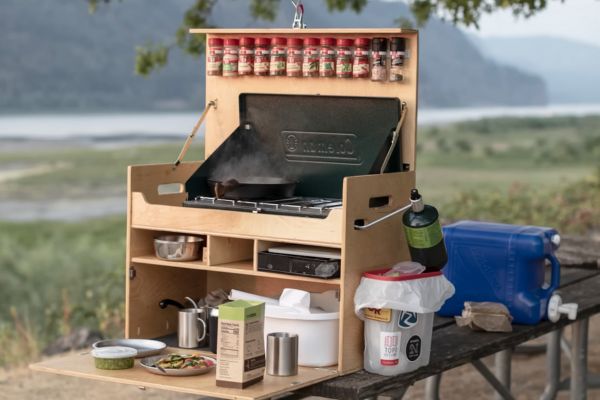
From morning coffee to toasted burritos, Jon Moore’s favorite camp upgrade isn’t a new pan or a fancy stove; it’s a portable camping kitchen that keeps everything in one place. He calls it a chuck box, a nod to old chuck wagons, and the idea is simple: a place for everything, and everything in its place.
For anyone tired of digging through bins at camp, this kind of setup makes cooking feel normal again, even on the road.
In the video at the end of this post, Jon shows how you can make your own chuck box.
What makes this chuck box work so well
Jon built this wooden chuck box as his second version after learning what didn’t work on the first. Gen 1 was bigger and heavier—still useful, just less friendly when space and weight matter.
Gen 2 is built to be easier to live with:
Smaller overall size
Lighter carry and load
More polished layout for full-time road cooking
Materials, size, and the basic build
The camping kitchen box is made from a single sheet of 1/2-inch plywood. It’s sanded, shellacked, glued, and screwed, which keeps it simple and sturdy. Jon says it takes a little woodworking know-how, but it’s not a fussy build.
Gen 2 measures 16 1/2 inches tall, 22 1/2 inches wide, and 14 inches deep. Loaded up, it lands around 35 pounds. For readers who want to build their own, Jon mentions a cut list shared below the video on YouTube.
Flip-down counter, seven compartments, and a “grab it and cook” layout
A flip-down countertop turns the front of the box into a quick prep space, which is a big deal when cooking outside. Inside, seven compartments keep the kit tight and quiet, with smart touches to cut rattles on rough roads.
One compartment holds two stainless steel plates and two camp bowls, with a dish rag tucked behind them to stop clanking. Another compartment keeps the utensil count low on purpose: an egg spatula and a Supoon, which handles both scooping and scraping. A cutting board sits next to a silverware drawer stocked with hand sanitizer, a coffee scoop, a large lighter, fork, spork, long-handled spoon, and knife, plus coal tongs, a can opener, a knife sharpener, trash bags, and rubber bands.
Coffee, fuel, cast iron, and the hidden spice stash
For coffee, Jon packs a kettle, two mugs, and a pour-over brewer—his go-to method. Fuel storage includes two Coleman fuel canisters, separated by coffee filters and a small olive oil container.
The star is the Lodge 2-quart cast iron Dutch oven. He uses the bottom like a general pot for stew or ground meat, and the lid as a frying pan for eggs or toasted burritos. A pair of leather gloves works like oven mitts. Behind the Dutch oven is a spice compartment with chili powder, red pepper flakes, paprika, garlic powder, cilantro, cumin, bay leaves, cinnamon, plus salt and pepper.
Stove fit, plus the trash bin that always comes along
The stove bay is sized to fit a Coleman two-burner stove. Jon also calls out a simple trash setup that follows the chuck box everywhere, a cereal container lined with a bag, inspired by the Bound for Nowhere channel.
Conclusion
Jon’s chuck box shows how a few smart constraints can make camp cooking easier, not harder. By practicing at home and building around what he actually cooks, he ended up with a kit that can handle the same meals he’d make off the road. Anyone curious about building one can start with the cut list and adjust from there.
Think about the last time you tried to book a stay at a really popular campground. You found the dates, clicked reserve… and nothing. Booked solid. Ugh.
For today’s poll, we want to know if you think popular campgrounds should limit stay length?
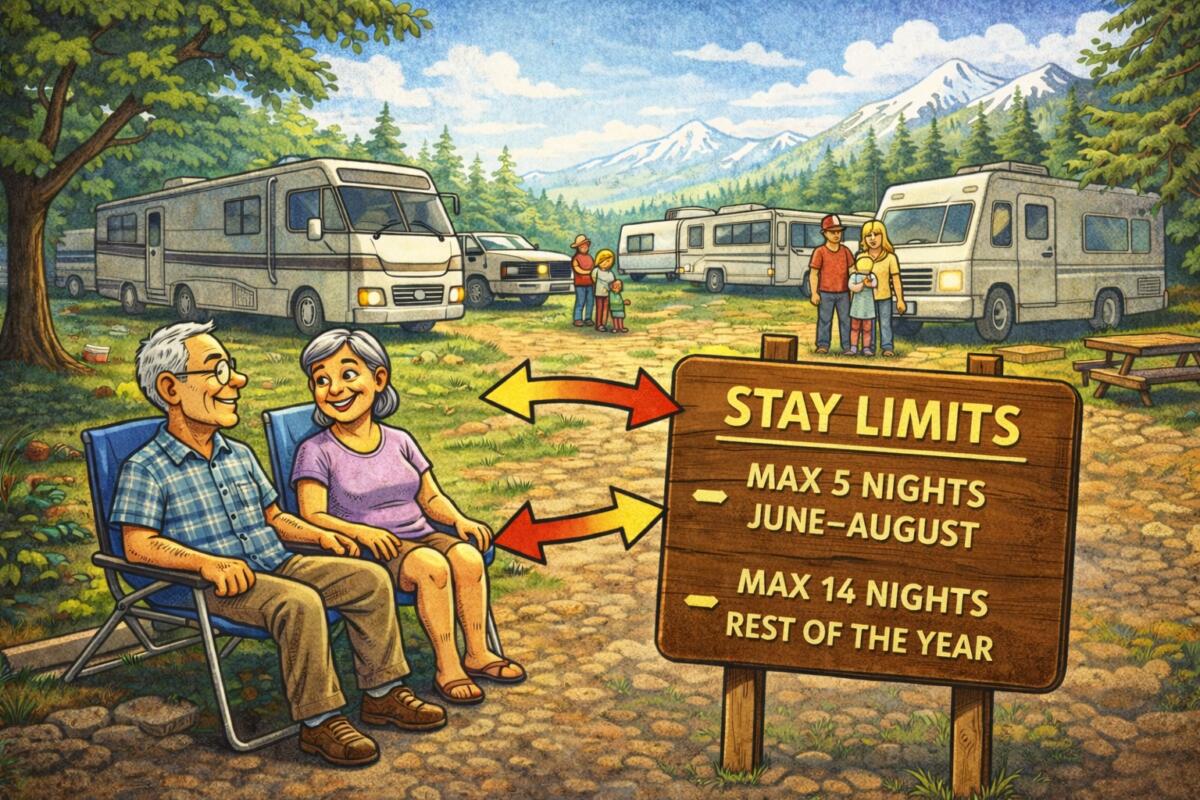
For some of you, the answer is an easy yes. When demand is sky-high, limiting how long people can stay feels fair. Shorter stays can open up more sites, giving more travelers a chance to experience bucket-list parks instead of watching the same reservations sit on the calendar for weeks.
Others agree, but with conditions. Maybe limits make sense only during peak season, holidays, or high-demand months. When crowds thin out, longer stays might help parks maintain steady occupancy and give travelers more flexibility.
Then there are those of you who feel it should depend on the campground itself. A tiny national park campground might need stricter turnover, while a large private RV park could accommodate longer-term guests without affecting availability as much—context matters.
And, of course, some of you don’t think stays should be limited at all. If someone books a site within the rules, they should be able to stay as long as allowed. Longer visits can support local economies, create community among campers, and reduce the stress of constantly moving.
So what about you? Should popular campgrounds limit how long guests can stay—or leave things as they are? Go ahead and vote below, and feel free to share your reasoning in the comments below. We bet his one is bound to spark some conversation…
We use cookies to ensure that we give you the best experience on our website. By continuing to use our site, you consent to accepting cookies. We NEVER have or will sell reader's data. For more info, please see our privacy policy page.




 Jar, bottle, and can opener good for weak hands